



Abstract
The recent experiences and impact of the COVID-19 pandemic provide a valuable lens for understanding the vulnerabilities of informal settlements and how they are positioned to respond to other large-scale hazards. This article explores the body of knowledge on the pandemic in the context of informal settlements, guided by the scoping review strategy. Our findings reveal that COVID-19 has impacted informal settlements in several ways, including increasing loss of income, food insecurity, increased gender inequality, gender-based violence and forced evictions. While there have been numerous responses to the crisis, several pre-existing factors in informal settlements impeded their implementation. We note that lessons from the pandemic provide an important opportunity to address pre-existing vulnerabilities in informal settlements to make them more resilient to both health and environmental shocks.
Introduction
This study examines the body of knowledge concerning COVID-19 in the context of informal settlements. The outbreak of COVID-19 in the last quarter of 2019 had not only been an unprecedented public health challenge but also one of the greatest threats to global development, particularly in the global South (Khetrapal & Bhatia, 2020; Mukarram, 2020; Oldekop et al., 2020).
While the literature on the broader nexus between informality and COVID-19 is still nascent, French et al. (2020, p. 1) noted that ‘informal settlements are emerging as the epicentre in the global battle against COVID-19’. Pre-existing conditions such as overcrowding, poor infrastructure, inadequate housing, lack of appropriate sanitation and poor socioeconomic conditions increase the risks and vulnerability of informal settlements to pandemics, epidemics, natural disasters and associated impacts (UN Habitat, 2021). Further, the vulnerability associated with poor living conditions and the dependence of these populations on informal economic activities impede the implementation of responses to the pandemic.
The global South, where the concentration of informal settlements coincides with a predominantly informal economy, is of particular interest in this analysis. In the informal economy, workers are less likely to have any form of social protection (Sakamoto et al., 2020) and are the first to lose their livelihoods following the introduction of lockdown measures in response to the COVID-19 pandemic (Patel, 2020). The study by Sakamoto et al. (2020) reported an 82 per cent drop in per capita income in informal settlements in Bangladesh because of COVID-19 response measures. Similarly, De Oliveira (2020) reported that the pandemic led to the loss of income of approximately 53 per cent of informal settlements in Brazil.
A survey of the unequal impact of the pandemic in 17 countries in Latin America and the Caribbean found that COVID-19 will ‘exacerbate economic inequality’ (Bottan et al., 2020, p. 1). Bottan et al. (2020) reported that measures to contain the pandemic had a higher negative impact on low-income households (those with income lower than the national minimum wage), with 71 per cent reporting job losses compared to 14 per cent among highest-income households. Echoing the findings of Bottan et al. (2020), Turok and Visagie (2021, p. 1) revealed that ‘townships and informal settlements [in South Africa] have proved more vulnerable than suburbs’.
The living conditions in informal settlements, including ‘space constraints, violence, and overcrowding in slums make physical distancing and self-quarantine impractical, and the rapid spread of an infection highly likely’ (Corburn et al., 2020, p. 384). This contributes to fears that they could experience more widespread infections than formal settlements (Corburn et al., 2020; Ola et al., 2019; Sakamoto et al., 2020; Van Belle et al., 2020). As Sakamoto et al. (2020) argued, the living conditions of residents of informal settlements make it nearly impossible for them to be safe during emergencies. Similarly, their pre-existing vulnerability increases the risks of food insecurity (Franco et al., 2020; Patel, 2020; Stiegler & Bouchard, 2020; Wasdani & Prasad, 2020), evictions (Corburn et al., 2020; Morgan, 2020; Wilkinson et al., 2020) and gender-based violence (Franco et al., 2020; Piquero et al., 2021).
Visagie and Turok (2020) studied the uneven geography of the initial COVID-19 shock and its subsequent trajectory in South Africa. They found that ‘the pandemic and lockdown reflex have magnified pre-existing divisions within cities’ (Turok & Visagie, 2021, p. 1). They also found that lockdown measures to contain the spread of COVID-19 increased the vulnerability of informal settlement dwellers who already experienced poor service delivery amid high levels of poverty and unemployment. They argued that although ‘government social grants have helped to offset the economic disparities’ between informal and formal settlements, ‘the incidence of hunger is still much higher in informal settlements’ partly because ‘only a minority of households have benefited from the special COVID-19 relief’ (Visagie & Turok, 2020, p. 16).
Against this backdrop, this scoping review aims to map the literature based on peer-reviewed publications on the relationship between COVID-19 and informal settlements. The focus is on the location of research, data sources, key findings regarding the reported impacts of COVID-19 in informal settlements, response measures and palliatives to the pandemic, constraints to the implementation of responses and recommendations for future consideration.
Research Protocol
To synthesise the emerging corpus of evidence on COVID-19 in the context of informal settlements, we adopted the scoping review method as described in several studies (Arksey & O’Malley, 2005; Levac et al., 2010; Munn et al., 2018). We implemented a comprehensive review process by following the five stages of the scoping review method: identification of research question, identification of relevant study, selection of studies, charting the data, synthesising and reporting results (Arksey & O’Malley, 2005). In this study, we collected data from peer-reviewed publications by searching the Web of Knowledge (core collection) and Scopus using the search string (‘COVID-19’ or ‘novel coronavirus’) and (‘informal settlement’ or ‘slum’ or ‘favela’ or ‘auto-construction’ or ‘housing informality’).
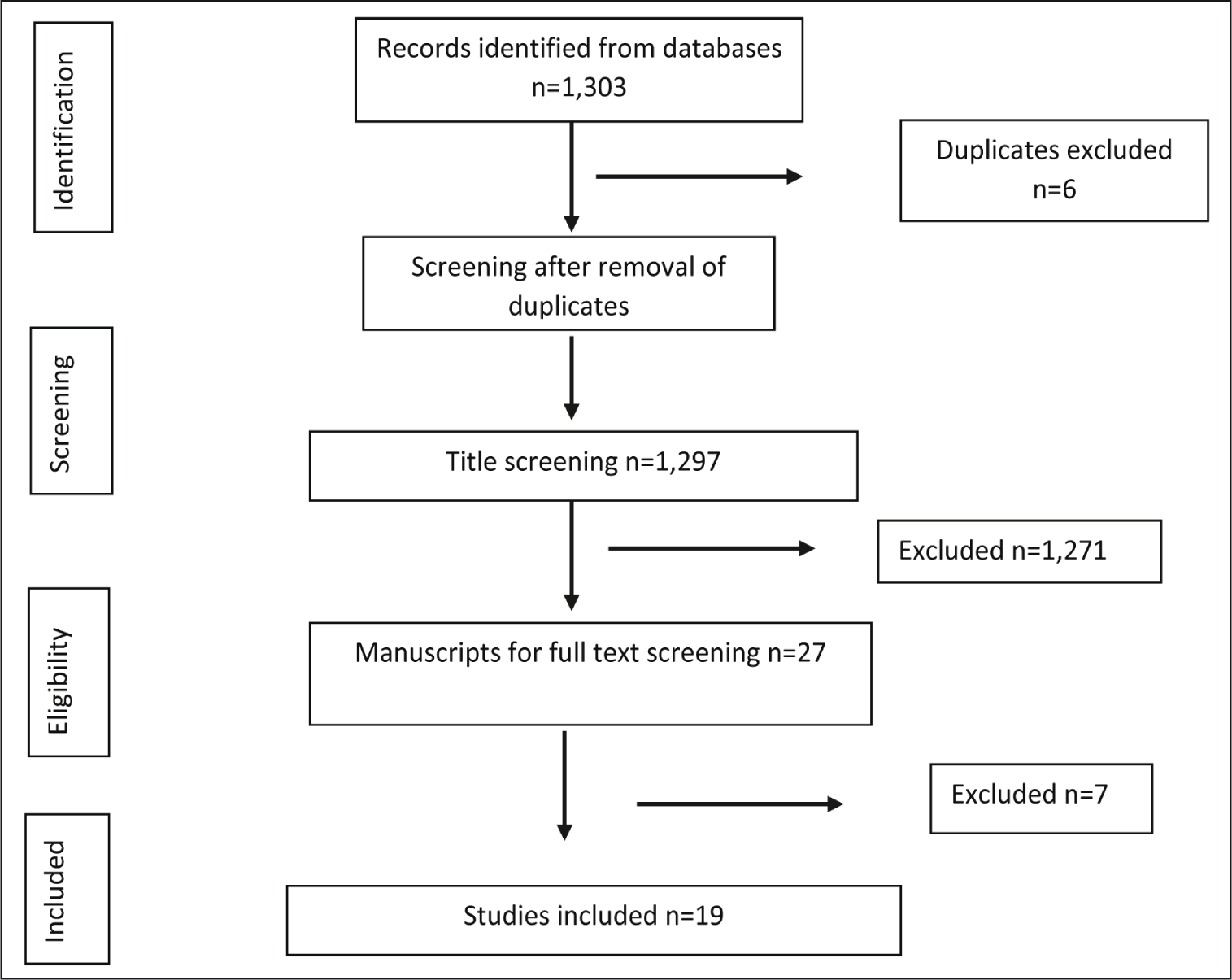
The search covered results from 2020 to October 2021. The results were combined into a single spreadsheet with 1,300 results. We supplemented the information from these databases by searching Google Scholar and identified three additional manuscripts. The screening process employed in the study is outlined in Figure 1. Six duplicates were identified and removed from the database. A further 1,278 manuscripts were excluded during the screening phase because they did not meet the inclusion criteria. The manuscripts excluded did not discuss COVID-19 in the context of informal settlements (n = 1,253), were not written in English (n = 1), were letters to the editors or commentaries rather than peer-reviewed publications (n = 10), or were unrelated to COVID-19 although they addressed issues related to informal settlements (n = 14). The full manuscripts were screened and coded by two authors. This phase entailed extracting information such as the study design, sample size and key findings from the studies into themes. A third person screened and reconciled the differences where two authors had coded the manuscripts differently.
Research Findings
The characteristics of the studies included in the scoping review are shown in Table 1. The qualitative method was the most used (n = 13). Three studies used the mixed methods approach, while three others were quantitative. Multiple data collection methods were used in the studies, including literature review, survey, observation and the geographic information system (GIS). The source of data was not specified in two studies (Salamanca & Vargas, 2020; Wilkinson et al., 2020). Sample sizes were specified in 11 out of the 19 studies. The largest sample size was 2,009, while the smallest was 2.
Characteristics of Included Manuscripts.
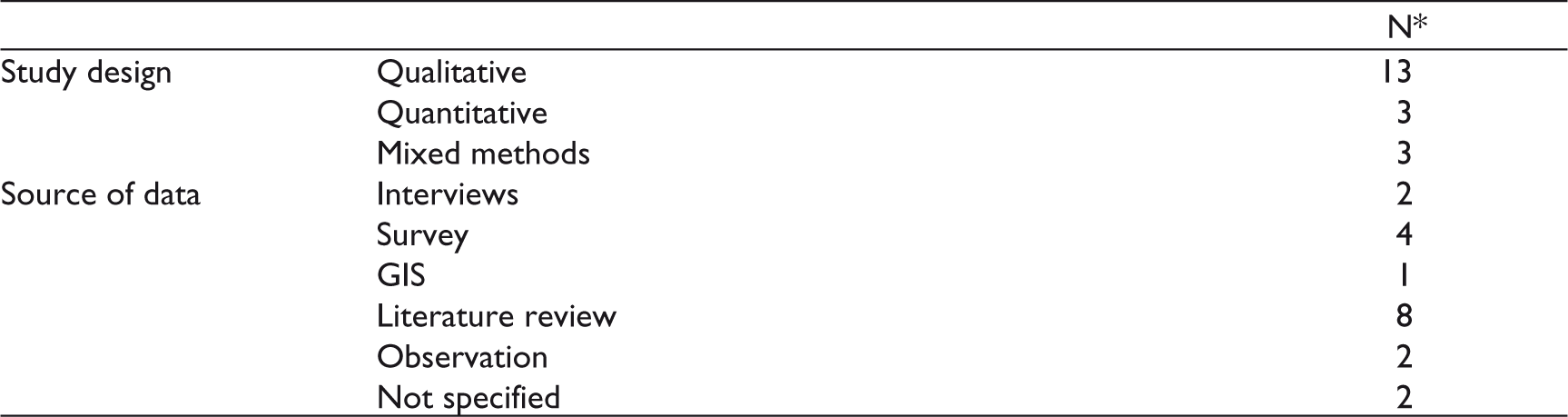
*N = Number of manuscripts.
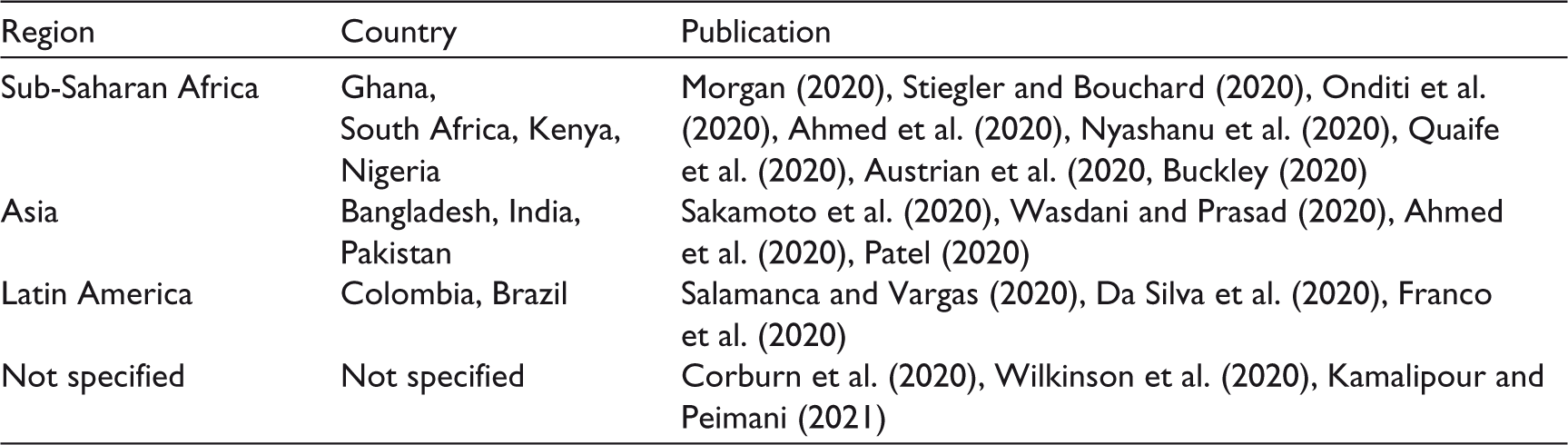
Table 2 provides an overview of the regional distribution of the studies included in the review. The studies were conducted in informal settlements in different contexts in the global South, with sub-Saharan Africa accounting for the highest share (n = 10), followed by Asia (n = 4) and Latin America (n = 3). Three studies did not specify the regional context. None of the studies’ contexts is North America or Europe. In sub-Saharan Africa, Kenya and South Africa have a higher share with four and three studies, respectively, compared to Ghana and Kenya with one study each. In Asia, India accounts for two studies, while Bangladesh and Pakistan have one study each. In Latin America, Brazil and Colombia account for one study each, while one study was conducted at the regional level.
Regional Distribution of Peer-Reviewed Publications on COVID-19 in the Context of Informal Settlements.
Sources of Information About COVID-19
Table 3 outlines the main reported sources of information about COVID-19 used by informal settlement dwellers. Government (Austrian et al., 2020; Da Silva et al., 2020; Onditi et al., 2020) and social media (Ahmed et al., 2020; Austrian et al., 2020; Da Silva et al., 2020) sources were reported in three studies each, while health workers were alluded to as the source of awareness about the pandemic in two studies and NGO sources in a single study. The study by Austrian et al. (2020) in Nairobi, Kenya, found that ‘government messages via radio, TV or SMS were the most likely source and were considered highly trustworthy’. They also found that ‘those with less or no education were significantly less likely to report receiving these messages’, thus presenting an important gap for targeted messaging concerning COVID-19. The same study reported that ‘formal health providers, including community health workers, and NGOs, were listed as some of the most trusted sources of information but were some of the least cited sources of COVID-19 information’ (p. 11). Misinformation about the pandemic via social media platforms was noted as an area of concern (Quaife et al., 2020).
Sources of Information About COVID-19.

N = Number of manuscripts.
Reported Impacts of COVID-19
Table 4 presents an overview of the reported impacts of COVID-19 in informal settlements. Disruptions in the economy leading to the loss of income or livelihood were the most reported impact (n = 14), followed by food insecurity (n = 10; Franco et al., 2020; Patel, 2020; Wasdani & Prasad, 2020). The following excerpt from Quaife et al. (2020, p. 4) summarises the impact of COVID-19 in terms of loss of income and food shortage in Kenyan informal settlements:
Respondents reported substantial food and economic insecurity due to COVID-19 and control measures. Around a third (36%, 76/213) reported the pandemic had caused a complete loss of income, and an additional 50% (107/213) reported partial income losses. Eighty-three percent (177) reported experiencing increases in food prices, and three-quarters of respondents reported eating less or skipping meals due to having too little money for food (74%, 158/213); all but one (157/158) reported that this was due to the situation with COVID-19.
Reported Impacts of COVID-19 in Informal Settlements.
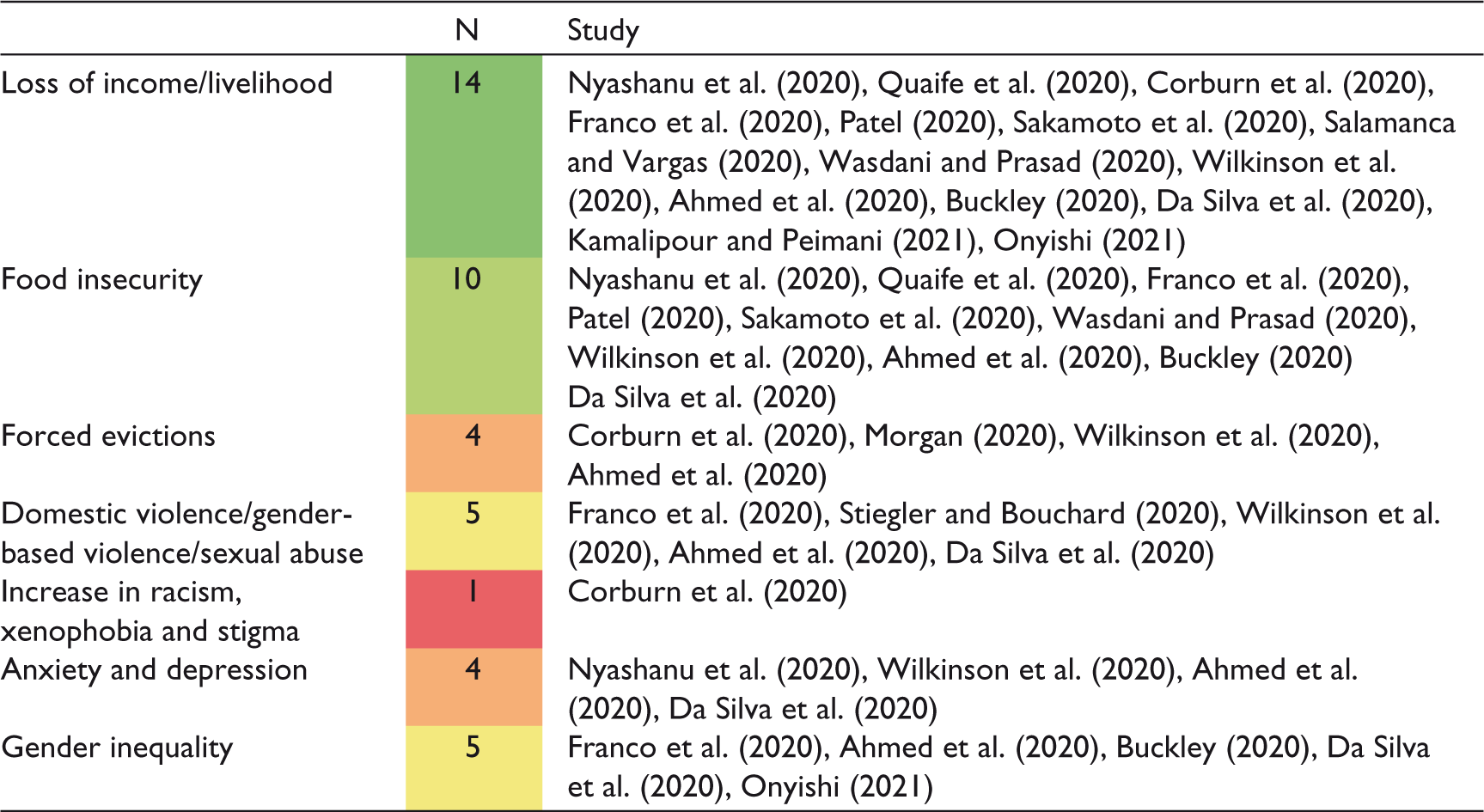
N = Number of manuscripts.
Five studies reported domestic violence, gender-based violence or sexual abuse (Ahmed et al., 2020; Da Silva et al., 2020; Franco et al., 2020; Stiegler & Bouchard, 2020; Wilkinson et al., 2020), while four studies reported forced evictions (Ahmed et al., 2020; Corburn et al., 2020; Morgan, 2020; Wilkinson et al., 2020). Similarly, mental health issues (Ahmed et al., 2020; Da Silva et al., 2020; Nyashanu et al., 2020; Wilkinson et al., 2020) and gender inequality (Ahmed et al., 2020; Buckley, 2020; Da Silva et al., 2020; Franco et al., 2020; Onyishi et al., 2021) were each reported by four and five studies, respectively. Alluding to the impact of COVID-19 on mental health in Brazil, Da Silva et al. (2020) reported that 52.7 per cent felt anxious and 40.4 per cent felt depressed constantly. Looking at low- and middle-income countries in general, Wilkinson et al. (2020, p. 510) revealed that ‘people who have been under quarantine have been found to have long-term mental health challenges’. Only Corburn et al. (2020, p. 350) reported that ‘racism, xenophobia against the poor, migrants, and lower classes have also increased during the COVID-19 pandemic’. Their study broadly focused on the global South.
Reported COVID-19 Response Measures
As shown in Table 5, there were eight reported responses to the COVID-19 pandemic in informal settlements. Most responses represent the recommended epidemiological responses to curb the spread of COVID-19. The most commonly reported response measures were social distancing (n = 12) and lockdown or shelter in one place (n = 12), followed by home or self-quarantine (n = 7). Only five studies reported frequent handwashing as a response, while six studies (Ahmed et al., 2020; Corburn et al., 2020; Franco et al., 2020; Nyashanu et al., 2020; Onyishi et al., 2021; Patel, 2020) reported the use of masks or PPEs. Increased testing (Ahmed et al., 2020; Patel, 2020) and curfew (Ahmed et al., 2020; Onyishi et al., 2021; Stiegler & Bouchard, 2020) as a response to the COVID-19 pandemic were each reported by two and three studies, respectively. Similarly, four studies (Corburn et al., 2020; Morgan, 2020) reported forced evictions by landlords. Wilkinson et al. (2020, p. 510) indicated that informal settlements’ residents experience evictions by their landlords in India and South Africa, where ‘evictions appear to be ongoing’ as crises are ‘used as opportunities to evict vulnerable or unwanted tenants’. According to Corburn et al. (2020, p. 351), ‘forced evictions, sometimes in the name of hygiene and dispersing dense slum populations to avoid communicable disease spread’ can contribute to the spread of diseases.
Reported COVID-19 Response in Informal Settlements.
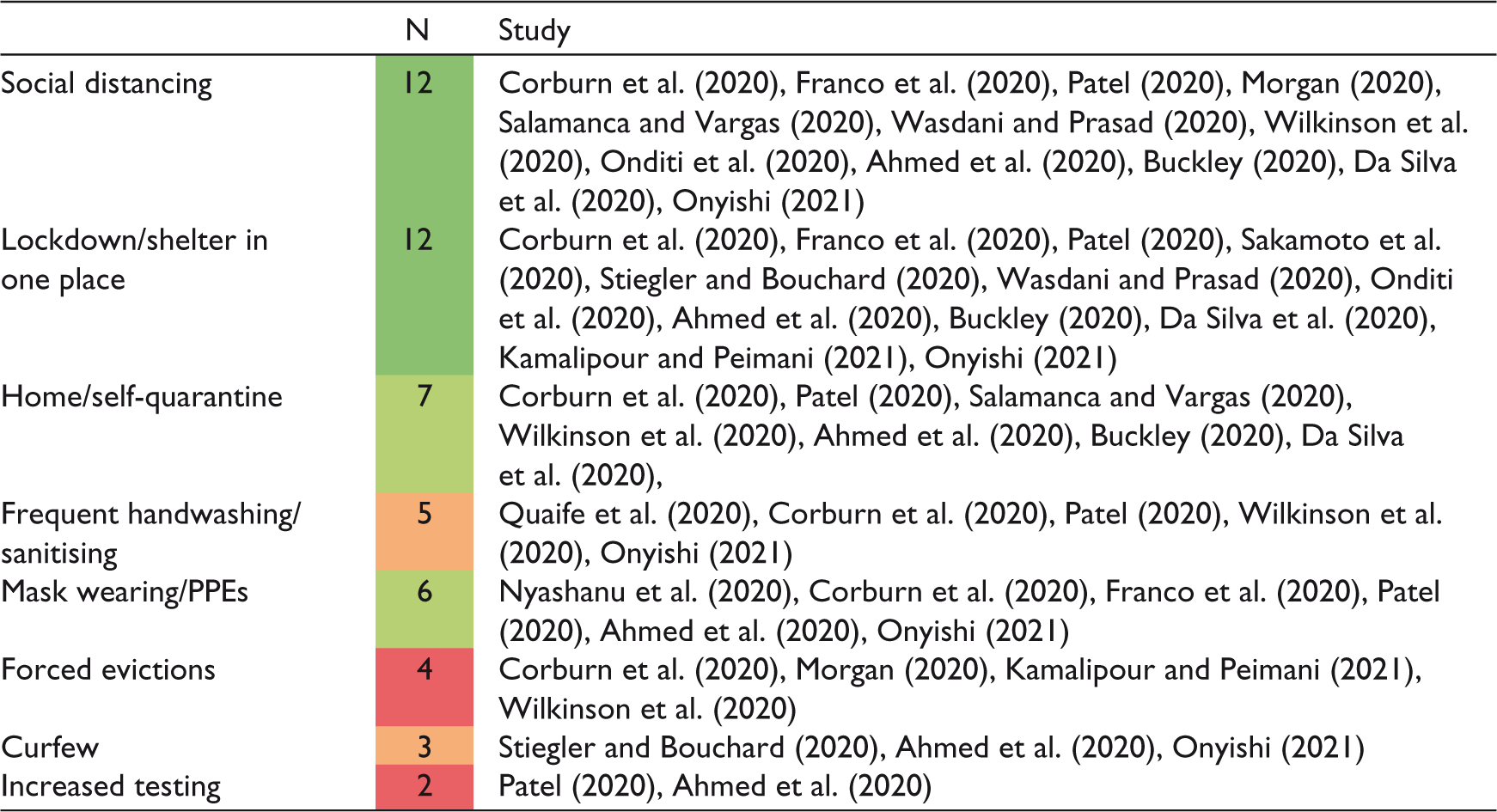
N = Number of manuscripts.
COVID-19 Palliatives in Informal Settlements
Our study identified different forms of COVID-19 palliatives provided by both the government and the non-government sector, including civil society organisations. Table 6 gives an overview of the number of studies that reported palliatives. The provision of food in the form of food parcels and cooked meals was the most reported form of palliative from both the government (reported by eight studies—Ahmed et al., 2020; Buckley, 2020; Corburn et al., 2020; Da Silva et al., 2020; Nyashanu et al., 2020; Patel, 2020; Stiegler & Bouchard, 2020; Wasdani & Prasad, 2020) and the non-government sector (reported by five studies—Ahmed et al., 2020; Corburn et al., 2020; Morgan, 2020; Stiegler & Bouchard, 2020; Wilkinson et al., 2020). Seven of the 18 studies reported financial support mainly from the government. In Bangladesh, for instance, Sakamoto et al. (2020) indicate that the government provided a $588 million stimulus package for the informal sector, where informal settlement residents were mainly employed.
COVID-19 Palliatives in Informal Settlements.
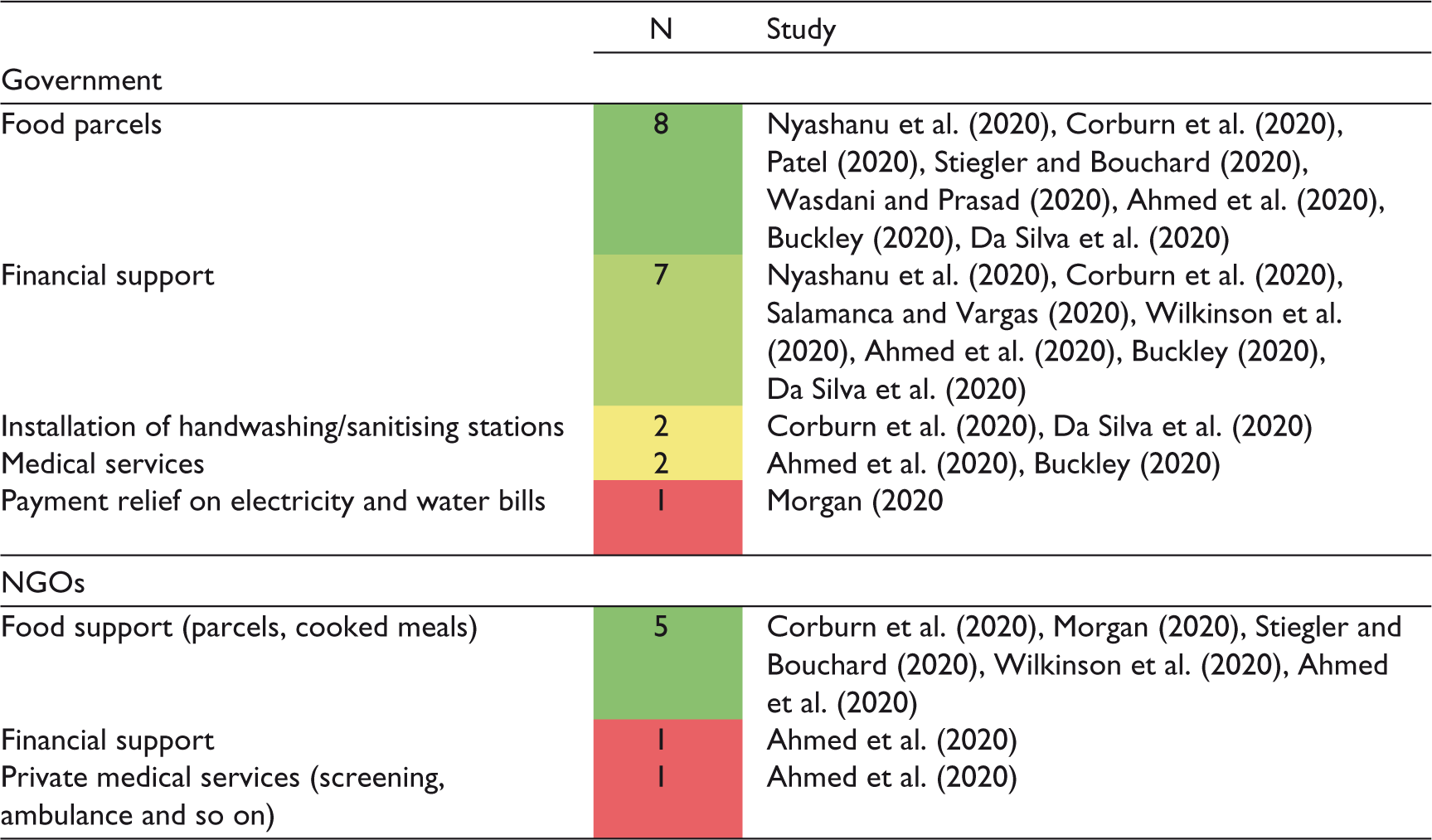
N = Number of manuscripts.
One of the studies (Franco et al., 2020) reported financial support by the non-government sector in Latin America, where social organisations partnered with the private sector (e.g., banks, supermarkets and pharmacies) to source funds and provide financial support to informal settlement (favela) residents. Similarly, private organisations and NGOs in Bangladesh were instrumental in providing financial support, albeit insufficient, to informal settlement residents who were prevented ‘from receiving financial supports from government sources’ because informal settlements are not considered permanent residential areas (Sakamoto et al., 2020, p. 14). Furthermore, the installation of handwashing stations (Corburn et al., 2020; Da Silva et al., 2020) and medical services (Ahmed et al., 2020; Buckley, 2020) were reported as COVID-19 palliatives in two studies each. However, these were not associated with support from the non-government sector.
The COVID-19 palliatives documented in the study are important in responding to other environmental impacts such as climate change. According to Coirolo et al. (2013), climate change adaptation measures such as social protection programmes are important in addressing vulnerabilities in susceptible regions. They note that,
building on the experiences of existing disaster response and the wide use of safety-nets in Bangladesh, there is potential for adapting safety-nets to fill the gaps in the current safety-net framework, including around targeting and administration, towards the end of addressing the medium-term impacts of disasters. (pp. 86–87)
Similarly, addressing water and sanitation deficits has been identified as an important response to the impact of climate change (Hadwen et al., 2015; Howard et al., 2016).
Barriers to the Implementation of COVID-19 Responses in Informal Settlements
The studies we reviewed identified eight barriers to implementing COVID-19 responses in informal settlements (see Table 7). Most studies identified high population densities (n = 15) and poor sanitation (n = 12) as barriers to COVID-19 response. Sakamoto et al. (2020, p. 14) revealed that ‘roughly 10 million people in urban Bangladesh live in slums’ where ‘unhygienic conditions increase the potential for the rapid spread of disease’. Nyashanu et al. (2020, p. 147) presented a similar situation in South Africa where ‘there are about 9,500 people who live in 960 shacks in Plastic View Informal Settlement (PVIS), and this means there are approximately ten people living in a shack of 6–15 m2’. In this context, it is difficult to observe social distancing.
Barriers to the Implementation of COVID-19 Responses in Informal Settlements.
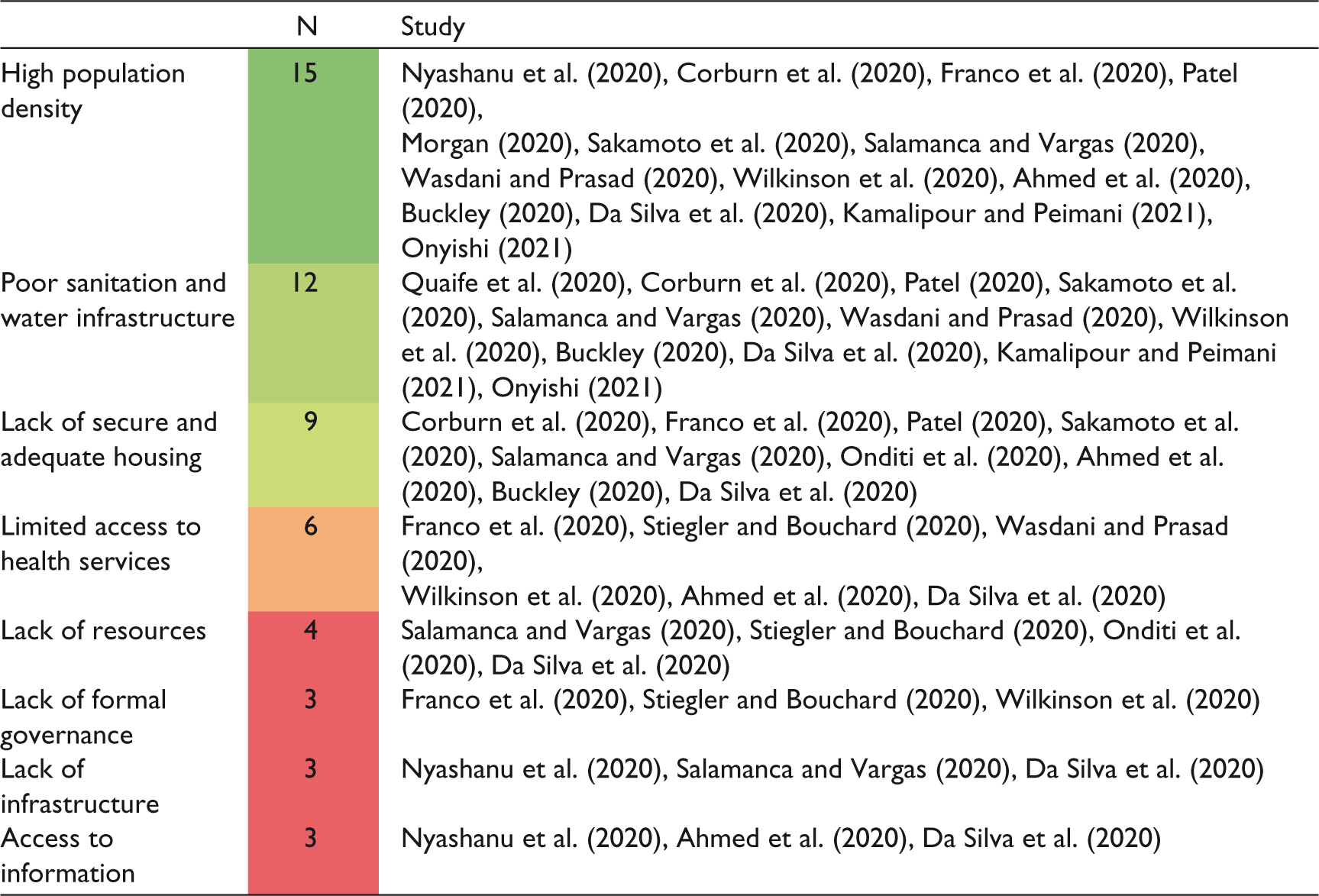
N = Number of manuscripts.
Other barriers include the lack of secure and adequate housing (n = 9) and limited access to health services (n = 6). Three studies reported the lack of formal governance (Franco et al., 2020; Stiegler & Bouchard, 2020; Wilkinson et al., 2020). Wilkinson et al. (2020) alluded to the governance structure of informal settlements in West Africa, for example, where the coexistence and competition of traditional leadership with criminal militia resulted in clashes which affected the inflow of resources and information during both the Ebola and COVID-19 crises. Four studies alluded to the lack of resources (Da Silva et al., 2020; Onditi et al., 2020; Salamanca & Vargas, 2020; Stiegler & Bouchard, 2020) as a barrier to the implementation of COVID-19 response in informal settlements. The lack of transport and other economic infrastructure, as well as access to information, were reported by three studies each as barriers to efforts to address COVID-19 in informal settlements.
Recommendations for Enhancing COVID-19 Response in Informal Settlements
Table 8 shows the recommendations for addressing the impact of COVID-19 in the context of informal settlements in the studies we reviewed. The provision of sanitation and hygiene facilities (n = 7) followed by financial assistance, medical support and the promotion of community engagement (n = 6 each) were the most commonly reported recommendations. Concerning sanitation and hygiene in informal settlements in India, for example, Patel (2020, p. 270) deplored the fact that proportions of households lacking access to improved sources of water (15%) and improved sanitation (16%) ‘are 2 percent higher for water and 12 percent higher for sanitation compared with non-slums and the differences are statistically significant’. In this context, Buckley (2020, p. 360) recommended that ‘basic services such as sanitation, water, and solid waste removal are at least maintained, if not improved’ in informal settlements. Looking at low- and middle-income countries broadly, Wilkinson et al. (2020, p. 518) suggested that ‘financial and non-financial resources (e.g. information, equipment, supportive policymaking) are urgently needed to enable [informal settlement] local residents to develop and implement their own strategies that are feasible and effective in their contexts’.
Recommendations for Enhancing COVID-19 Response in Informal Settlements.
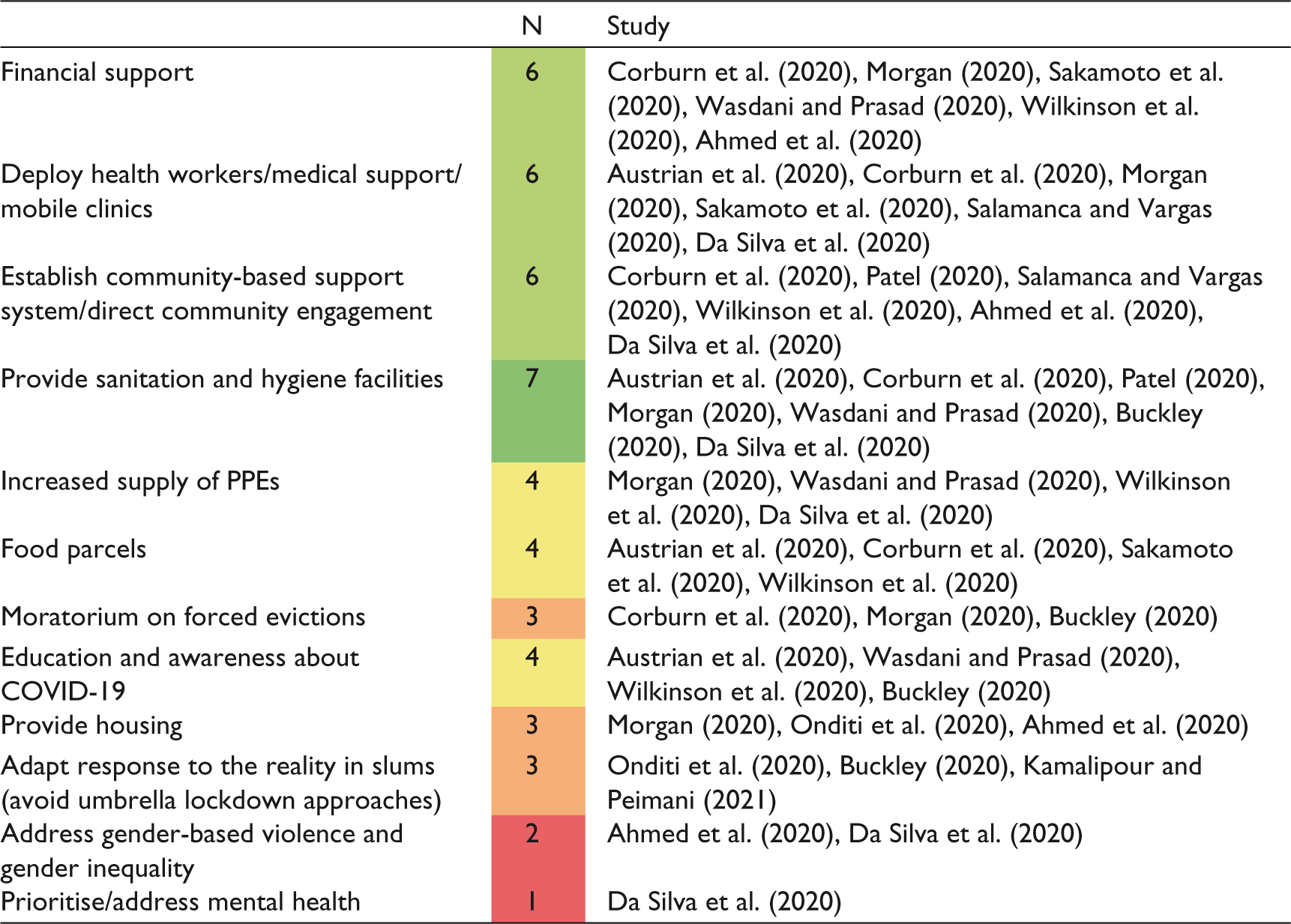
N = Number of manuscripts.
In the case of Bangladesh, Sakamoto et al. (2020) recommended that the international community provide medical support, among other interventions, to densely populated urban slums and refugee camps. Corburn et al. (2020, p. 351) recommended that ‘community-led committees must also be empowered to lead on the public health and disease messaging’ to address COVID-19 in informal settlements in the global South. Providing further recommendations, the study by Nyashanu et al. (2020, p. 143) emphasised the need for COVID-19 education and awareness, noting that ‘health promotion and communication initiatives and pandemic awareness programmes are needed to mitigate the impact of lockdown during a pandemic in informal settlements’.
Furthermore, three studies each reported a moratorium on forced eviction (Buckley, 2020; Corburn et al., 2020; Morgan, 2020) and housing provision (Ahmed et al., 2020; Morgan, 2020; Onditi et al., 2020) as important contributions to the COVID-19 response. The need to adapt this response to the reality of informal settlements rather than implementing umbrella lockdown approaches was reported in three studies (Buckley, 2020; Kamalipour & Peimani, 2021; Onditi et al., 2020), while focusing on gender violence and inequality was reported by two studies (Ahmed et al., 2020; Da Silva et al., 2020). Only one study (Da Silva et al. 2020) reported the prioritisation of mental health.
Discussion
In this study, we implemented a scoping review to examine the emerging body of knowledge on the COVID-19 pandemic in the context of informal settlements. The review synthesised the current body of evidence into six categories discussed below.
Sources of Information about COVID-19
We found that government and social media were the most reported sources of information about COVID-19 in informal settlements, compared to NGOs and health workers. However, the government, community health workers and NGOs are portrayed as the most reliable sources of information, compared to social media and the internet (Austrian et al., 2020). The mistrust in social media as a source of COVID-19 information could be attributed to the unprecedented medical disinformation that has characterised the pandemic (Gottlieb & Dyer, 2020; Grimes, 2021; Tagliabue et al., 2020). This underscores the importance of efficient communication by the government and NGOs to ensure adherence to COVID-19 protocol in the face of increased misconceptions about the pandemic.
Impact of COVID-19
The focus has been more on the socio-economic impact of COVID-19 and less on the health impact, such as the rate of infection, death and recovery in informal settlements. The reported socio-economic impact shows that households in informal settlements have limited capacity to adapt to the shocks associated with the pandemic (Visagie & Turok, 2020, p. 16). They, therefore, bear a disproportionately higher economic burden (Bottan et al., 2020; Visagie & Turok, 2020). The loss of livelihood sources exacerbates other impacts such as food insecurity (Franco et al., 2020; Patel, 2020; Stiegler & Bouchard, 2020; Wasdani & Prasad, 2020). In informal settlements in Brazil, for instance, ‘60% do not have enough stocked food for more than a week’ (De Oliveira, 2020, p. 2). Most informal settlements have limited capacity to store food, and residents rely on informal food vendors to purchase food (Wilkinson et al., 2020). Lockdown measures that restrict movement and the closure of informal food vendors, coupled with the loss of income, heighten food insecurity. Essentially, lockdown measures often leave residents with one of two choices, either risk being infected by the virus by disobeying the lockdown rules or stay at home and be subjected to food insecurity (Wasdani & Prasad, 2020).
Evictions were also reported as an impact of the pandemic in sub-Saharan Africa (e.g., South Africa) and Asia (e.g., India; Corburn et al., 2020; Morgan, 2020; Wilkinson et al., 2020). Many residents of informal settlements who earn daily wages face the possibility of eviction when they are unable to pay their rent. There is a constant fear of the lack of money for food and rent (Stiegler & Bouchard, 2020). Patel’s study (2020, p 271) in India reported that ‘little more than a quarter [of] household in slums are renters. These renters may face an immediate threat of eviction if they cannot pay rents in time’. In some instances, the state used the COVID-19 lockdown as an opportunity to evict informal dwellers (Corburn et al., 2020; UN Habitat, 2021; Wilkinson et al., 2020). Such experiences further expose the poor to a more precarious situation, including the lack of shelter and increased risk of contracting the virus.
Some of the studies cited an increase in reported cases of gender-based violence (Franco et al., 2020; Stiegler & Bouchard, 2020). According to Duque Franco et al. (2020, p. 526), ‘gender inequalities have increased in low-income households as women, already managing an excessive share of domestic and care work, now face the additional burden of COVID-related management’. The study by Stiegler and Bouchard (2020) reported that although there was a decrease in the reported case of violent crimes during the lockdown, there was a marked increase in reported cases of domestic violence. Gender-based violence has been identified as one of the ‘serious psychological and socially disruptive consequences’ of the COVID-19 pandemic (Mittal & Singh, 2020, p. 1). The stay-at-home order to slow the spread of the pandemic increased the risk of gender-based violence, particularly ‘for women already in abusive relationships, or at risk of such abuse’ (Roesch et al. 2020, p. 1). In addition, the loss of livelihood sources and network of social protection during lockdown further increased the risks of gender-based violence (Mittal & Singh, 2020; Roesch et al., 2020).
Response to Prevent the Spread of COVID-19
The studies included in this review reported various COVID-19 response measures consistent with general health guidelines. Frequent handwashing with soap and clean water was among the key COVID-19 prevention guidelines (Corburn et al., 2020; Patel, 2020; Wilkinson et al., 2020). However, pre-existing challenges in most informal settlements make it impossible to adhere to this due to the ‘lack of access to water and sanitation facilities in slums’ (Patel, 2020, p. 270). Similarly, it is difficult to practise social distancing in informal settlements with shared communal water and sanitation facilities (Patel, 2020). The pandemic has revealed the deficit in providing basic services in informal settlements and the implications for responding to emergencies.
Practising social distancing and isolation/quarantine in case of suspected or confirmed cases of COVID-19 are recommended guidelines (Corburn et al., 2020; Morgan, 2020; Salamanca & Vargas, 2020). However, the nature and characteristics of informal settlements make it impossible to abide by these guidelines. Informal settlements are composed of small dwellings with little to no space between units. Households in most informal settlements ‘are often composed of multiple generations living together, meaning that such vulnerable populations as infants and elderly persons live in the same single-room dwelling’ (Patel, 2020, p. 270). A participant in the study by Patel (2020, p. 269) summed this up in the following words: ‘We cannot do it (social distancing) without our shoulders rubbing against the other person, we all go outdoors to a common toilet and there are 20 families that live just near my small house’.
Palliatives to Alleviate the Impact of COVID-19
Various types of support have been offered to residents of informal settlements to alleviate the impacts of the pandemic. COVID-19 palliatives provided include subsidies (Salamanca & Vargas, 2020; Wilkinson et al., 2020). However, an emerging body of evidence indicates that COVID-19-related subsidies have not been sufficient in meeting household needs. In Colombia, for instance, the new subsidy regime did not meet basic needs and people continued to defy lockdown regulations and move around in search of income opportunities. For these people, the concept of working from home is alien, as they must be physically present in their places of work. Similarly, government cash transfers in Kenya were well below the amount needed to support the population (Nyadera & Onditi, 2020). In Ghana, the government absorbed ‘the utility bills-electricity and water bills for all citizens for April, May and June (slum dwellers inclusive)’ (Morgan, 2020, p. 4). However, it was noted that informal dwellers required additional institutional support to navigate the impact of the pandemic and address pre-existing challenges (Morgan, 2020).
Several of the case studies included in our review reported that non-state institutions played a role in responding to the impacts of the COVID-19 pandemic. Support provided by the non-state sector includes food parcels (Corburn et al., 2020; Franco et al., 2020; Patel, 2020; Wasdani & Prasad, 2020), finance (Franco et al., 2020) and medical services (Franco et al., 2020). Steady partnership between state and non-state actors is essential in the immediate response to the pandemic. As Corburn (2020, p. 353) argued, ‘Governments should support existing community-based organisations, faith-based groups and others that may already be providing food support to the poor and ensure they can deliver cooked meals to all those in the informal settlements and living on the streets’. Collaboration could be in providing relief services, including food parcels, financial support through cash transfers, and improved access to safe water and adequate sanitation.
Barriers to the Implementation of COVID-19 Response
While the studies included in this review did not set out to assess the effectiveness of COVID-19 interventions in informal settlements, anecdotal evidence from the studies indicates that pre-existing conditions in informal settlements are barriers to the success of interventions. These include high population density, lack of adequate housing, poor sanitation infrastructure and lack of formal governance. Some studies pointed to the inadequacy of some of the interventions and provided recommendations on ways to respond to the impacts of the pandemic.
Recommendations for the COVID-19 Response
Some of the interventions are targeted at addressing pre-existing challenges such as poverty (Corburn et al., 2020; Patel, 2020; Salamanca & Vargas, 2020; Wilkinson et al., 2020) and deficits in infrastructure, including water, sanitation and hygiene (Austrian et al., 2020; Corburn et al., 2020; Morgan, 2020; Patel, 2020; Wasdani & Prasad, 2020). Others, such as the supply of personal protection equipment (Buckley, 2020; Morgan, 2020; Wasdani & Prasad, 2020; Wilkinson et al., 2020) and educating people about the pandemic (Austrian et al., 2020; Wasdani & Prasad, 2020; Wilkinson et al., 2020), were COVID-19-specific measures. While inadequate housing is a primary challenge in informal settlements, this was cited in only three studies (Ahmed et al., 2020; Morgan, 2020; Onditi et al., 2020) as a way to enhance response to the pandemic. Similarly, no study discussed internal migration as an impact of the COVID-19 pandemic.
Conclusion
This review examined the current body of knowledge on COVID-19 in the context of informal settlements. Our analysis is based on 19 manuscripts that met our inclusion criteria from 1,303 studies. All the studies included in this review focused on the global South. This is not surprising since this is where informal settlements are largely concentrated. The studies reported several impacts of COVID-19 on informal settlements drawing on different methodological approaches. The reported impacts of the pandemic include the loss of livelihoods, food insecurity, gender-based violence, mental health and gender inequality. While there have been several responses to the impacts of the pandemic, pre-existing vulnerability conditions of informal settlements are barriers to implementing COVID-19 responses. We further note that lessons from the pandemic provide an important opportunity to address legacy issues (e.g., poor housing infrastructure, poor access to water and sanitation facilities, etc.) in informal settlements to make them more resilient not only to future pandemics but also to other shocks, including the impacts of climate change.
Footnotes
Declaration of Conflicting Interests
The authors declared no potential conflicts of interest with respect to the research, authorship and/or publication of this article.
Funding
The authors received no financial support for the research, authorship and/or publication of this article.