




Abstract
Extensive research has examined the impacts of the COVID-19 pandemic on precarious informal settlements. However, limited attention has been directed towards its implications in resettlement sites, where relocated residents from poor urban areas often experience long-term vulnerability. This article addresses this gap by investigating how the pandemic shaped ongoing post-relocation integration within a major resettlement site in Santo Domingo, Dominican Republic. The concept of ‘(in)formal reterritorialisation’ is employed to elucidate the complex interplay between formal and informal adaptation endeavours disrupted by the health emergency. Drawing on empirical data, the article untangles how the pandemic exacerbated post-relocation disruptions to social ties and economic mobility, prompting residents to reassess informal settlements as sites of opportunity and solidarity. Conversely, during the outbreak, residents perceived the formal spatial and aesthetic conditions of the resettlement site as providing enhanced protections against the virus, bolstering their sense of belonging and place attachment. The findings underscore the intricate and often-conflicting outcomes that unfold within resettlement territories, critical sites for urban development in the Global South.
Introduction
The resettlement of residents from informal settlements is a complex and contentious urban planning mechanism, provoking significant debate and inquiry. While ostensibly aiming to improve living conditions, such initiatives can heighten socioeconomic risks for marginalised groups (Debnath et al., 2019; Ramanath, 2016). Historically, public health concerns have been important drivers of resettlement operations (Barbosa and Coates, 2021; Yelling, 2012). It is unsurprising, therefore, that the disproportionately adverse impacts of the COVID-19 pandemic within precarious informal settlements in the Global South – coupled with their vilified enduring prevalence in the broader contours of ‘formal’ cities – have kindled a renewed interest in resettlement (Huchzermeyer, 2021; Smit, 2021). Accordingly, resettlement is positioned to remain a major urban planning strategy in cities across developing countries.
The COVID-19 pandemic had severe repercussions within informal settlements, with studies documenting higher infection and mortality rates, along with increased food and tenure insecurity, compared to other urban areas (Corburn et al., 2020; Nunez Collado, 2024). While considerable research has focused on the impacts of the pandemic in these territories, little attention has been given to how it unfolded in resettlement sites, where residents relocated from shantytowns often remain vulnerable long after relocation (Huchzermeyer, 2021). To address this gap, this study examines how the COVID-19 pandemic affected ongoing adaptation and community-building efforts in La Nueva Barquita, a sprawling 54-hectare housing development that accommodates over 1600 families relocated in 2016 from a flood-prone barrio marginado (marginalised informal settlement) in Santo Domingo, Dominican Republic. By examining the impacts of COVID-19 in this community, this article also responds to a recent call in this journal for research extending beyond well-established Latin American geographies to investigate understudied regions, such as Caribbean cities, where Santo Domingo represents the largest metropolitan area (Ortiz, 2024).
Central to this study is understanding how the pandemic moderated socio-spatial processes in La Nueva Barquita. For this, the concept of ‘reterritorialisation’– rooted in the philosophy of Deleuze and Guattari – becomes useful. The term refers to the process through which social, political and spatial orders are re-established or reconstructed following loss and disruption, or ‘deterritorialisation’. If deterritorialisation breaks down existing boundaries, norms or relationships, reterritorialisation refers to how new systems, spaces or orders are built in response to that breakdown (Elden, 2022). Accordingly, in urban studies, reterritorialisation has been recently interpreted to capture ‘the processes and challenges involved in rebuilding the sense of community of residents after resettlement’ (Wang, 2022: 424). Examining urban resettlement through this lens is particularly important given that a weak sense of place and belonging often correlates with a high ‘rebound effect’, wherein relocated residents revert to their former territory through renting, selling or abandoning resettlement housing (Debnath et al., 2019).
In resettlement sites across the Global South, ‘formal’ adaptation strategies, driven by governance structures and the new built environment, often coexist with ‘informal’ processes that arise in response to the disparity between resettlement promises and the realities on the ground (Yang et al., 2023). This phenomenon was particularly evident in La Nueva Barquita. In this article, the terms ‘formal’ and ‘informal’ reflect established interpretations of socioeconomic processes, modes of governance and spatial production that are regulated and sanctioned or spontaneous and outside official control (Acuto et al., 2019; Roy, 2011). Acknowledging the interplay of these forms of socio-spatial production, this article adopts the term ‘(in)formal’. This approach transcends binary and oppositional interpretations, emphasising how formal and informal processes not only interact but also intersect, mutate and coexist, manifesting through both clashes and symbiotic relationships. Drawing on empirical data collected over the past six years, this article foregrounds how reterritorialisation efforts in La Nueva Barquita fluidly oscillated between formal and informal dimensions that were disrupted by the COVID-19 pandemic, ultimately shaping residents’ sense of place attachment.
The following section contextualises this study within the broader discourse on contemporary resettlement, introducing the concept of ‘(in)formal reterritorialisation’ as a useful framework for interpreting community-building efforts in La Nueva Barquita. This is followed by an overview of the territorial context of the study and a detailed outline of the methodology used for data collection and analysis. Drawing on the empirical data gathered, the article examines the impacts of COVID-19 on the ongoing reterritorialisation processes in the resettlement site. The article ends with a reflective discussion.
Situating resettlement and (in)formal reterritorialisation
Debates on the resettlement of residents from informal settlements have predominantly focused on associated socioeconomic risks (Garmany and Richmond, 2020; Nikuze et al., 2019). Less discussed is the persistence of vulnerabilities to health risks in many resettlement sites despite the formalised arrangements (Lueker et al., 2020; Pardeshi, et al., 2020). This paradox is important considering that sanitation and health concerns are often cited as rationales for these interventions (Barbosa and Coates, 2021; Doshi, 2019). Yet, in many cases, resettlement is ‘withdrawing the very health protections for the poor that lend legitimacy to [its] planning’ (Burte, 2024: 706). These predicaments highlight the necessity for both conceptual and empirical understandings of how the COVID-19 pandemic unfolded in resettlement territories, complementing the well-documented repercussions of this crisis within informal settlements.
Scholars have developed various theoretical and analytical frameworks to explore the dynamics and temporalities associated with resettlement, with ‘displacement’ and ‘dispossession’ becoming prominent conceptual lenses (Hooper and Ortolano, 2012; Patel et al., 2015). These frameworks illuminate how privileged groups, often motivated by neoliberal or environmental justifications, appropriate valuable land occupied by ‘informal’ dwellers and redevelop it for the benefit of the elite (Doshi, 2019; Kolling, 2019; Roy, 2011). Consequently, residents from these areas find themselves relocated to formal housing on the outskirts of cities, often grappling with challenges of poor construction and rebuilding their livelihoods, social ties and sense of belonging (Barnhardt et al., 2017; Viratkapan and Perera, 2006). While displacement and dispossession frameworks have been instrumental in capturing the motivations and impacts of resettlement, a stream of scholarship in recent years has argued for expansive framings that portray the fluid, diverse and often-contradictory outcomes of these interventions, which may involve simultaneously negative and positive effects (Beier et al., 2021; Meth et al., 2023; Williams et al., 2022). Displacement and dispossession frameworks can also prove inadequate when analysing communities that actively advocate for resettlement, such as those living under constant environmental threats, as was the case study addressed in this article.
In contexts such as La Nueva Barquita and numerous other resettlement sites in the Global South, residents’ post-resettlement assimilation is often influenced not by feelings of displacement and dispossession but by conflicts between aspirations for social mobility, enhanced urban citizenship and the new socio-spatial order (Nunez Collado and Potangaroa, 2023; Williams et al., 2022). In light of this, there is a need for critical conceptual tools that can capture the intricate and nuanced impacts of resettlement beyond established frameworks. Central to this is the recognition of narratives that reflect residents’ adaptation efforts and agency in shaping their sense of community and belonging (Ramakrishnan, 2014a).
Recent studies informed by Deleuze and Guattari have employed the concept of ‘reterritorialisation’ to examine community-building processes within resettlement sites (Wang, 2022; Wang et al., 2023). Importantly, the resettlement process – whether coercive or not – involves ‘deterritorialisation’, disrupting, for better or worse, the socio-spatial bonds established in former communities (Rogers and Wilmsen, 2020). Consequently, post-resettlement life necessitates ‘reterritorialisation’ or reconstructing a sense of community and adapting to the new socio-spatial reality. Reterritorialisation signifies not only changes in territorial boundaries but also transformations in the relationships between the involved elements (McFarlane, 2011). As Deleuze and Guattari (1984: 508) stated, ‘anything can serve as a reterritorialization, in other words, “stand for” the lost territory’. In the context of resettlement, reterritorialisation has been interpreted to encompass initiatives to promote integration, adaptation and place attachment in new environments. As Wang (2022: 425) elucidates, reterritorialisation transcends dispossession and ‘focuses on whether and how resettled residents rebuild their sense of home and belonging and social relations’.
Previous studies on reterritorialisation often emphasise the formal processes employed to facilitate community-building (Ruiz et al., 2020; Wang, 2022). However, in resettlement sites in the Global South residents often leverage practices rooted in informality – deeply embedded in previous habits and experiences – as reterritorialisation strategies promoting adaptation and place attachment (Kolling, 2019; Yang et al., 2023). This was particularly evident in La Nueva Barquita, where residents, despite the imposition of stringent socio-spatial regulations, actively engaged in spontaneous occupation of public spaces, street vending, informal transportation and unofficial religious gatherings. These individual and collective actions – navigating, reframing and appropriating the resettlement site – helped mitigate the ‘spatiotemporal disruption’ caused by relocation and redefined notions of belonging and sense of place (Ramakrishnan, 2014a, 2014b).
Advancing discourses on resettlement and reterritorialisation requires analytical frameworks that systematically account for dynamic and heterogeneous drivers, impacts, perceptions and adaptation efforts inherent in these processes. Consequently, this article introduces the concept of ‘(in)formal reterritorialisation’ as an analytical base to capture the intricate interplay between formal and informal adaptation tactics post relocation. This conceptual tool recognises the nuanced experiences of residents after resettlement, often involving simultaneous loss and gain, and how these experiences traverse official, hybrid and unofficial realms (Coelho et al., 2012; Meth et al., 2023). The prefix ‘(in)’ in ‘(in)formality’ aims to soften the negative connotations typically associated with informality (Mostafa, 2021). In other words, ‘(in)formal reterritorialisation’ emphasises ‘points of contact’ between diverse forms of socio-spatial production (Acuto et al., 2019: 483). This concept invigorates the analysis of contemporary resettlement operations by foregrounding the agency and negotiability linked to ‘(in)formal’ adaptation manoeuvres, which complement the dominant formal conditions in these sites described more broadly in the literature (Rogers and Wilmsen, 2020; Wang, 2022; Wang et al., 2023).
An important contribution of this article lies in examining how the COVID-19 pandemic influenced (in)formal reterritorialisation processes in a relatively recent resettlement site. Research on the pandemic has emphasised the need for further analysis of its progression across diverse socio-spatial conditions (Orford et al., 2023). Thus, scrutinising the pandemic’s mediating role in ongoing adaptation efforts post resettlement sheds light on the challenges and opportunities inherent in these sites to cope with environmental and health threats (Huchzermeyer, 2021). The case study of La Nueva Barquita offers an ideal setting to illuminate the nuanced and intricate modus operandi of resettlement and reterritorialisation in a contemporary Southern urban frontier, particularly in light of the pandemic’s far-reaching effects.
Territorial context and methods
The spatial context of this study is La Nueva Barquita, a large resettlement site in Santo Domingo, Dominican Republic. This housing estate was constructed for residents relocated from the old barrio marginadol of La Barquita, a community at the crossroads of poverty, informality and constant environmental threats (Figure 1). Emerging in the 1960s and expanding after 1980, La Barquita occupied the floodplains of the Ozama River, rendering it highly vulnerable to floods. In 2012, following devastating flooding that resulted in significant loss of life and material damage – and after years of advocacy from grassroot groups – a resettlement project was announced by the central government. Manifestations of urban marginality in Santo Domingo, the oldest existing European settlement in the Americas, date back to colonial times in the 16th century through sites associated with the slave trade (Nunez Collado and Merwood-Salisbury, 2022). However, most contemporary barrios marginados appeared and expanded in the second half of the 20th century with rapid urbanisation processes (Sletto, 2013). La Barquita emerged during this period.
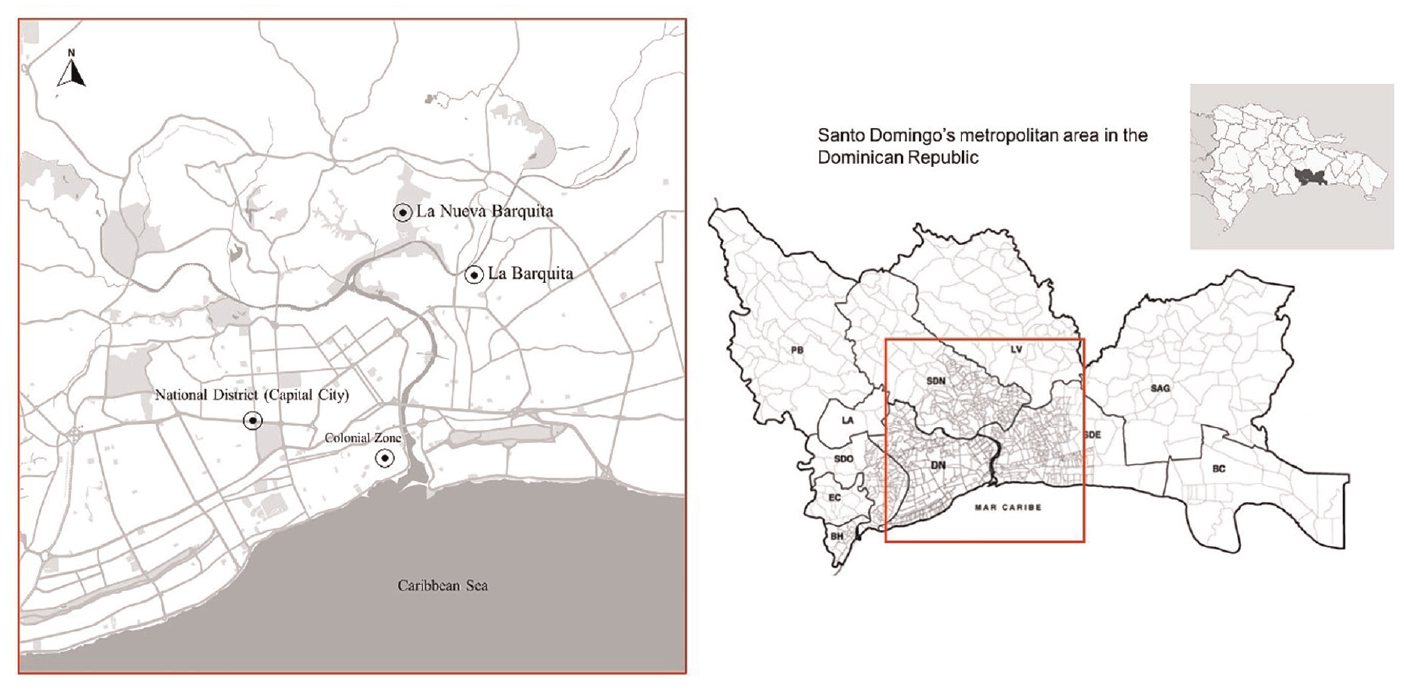
Location of La Barquita and La Nueva Barquita in Santo Domingo.
La Nueva Barquita, located approximately 5 km from the original barrio, was inaugurated in 2016 and accommodates over 1600 families. The project comprises 112 buildings and 1780 apartments, supplemented by a range of amenities including sports facilities, shops, outdoor public spaces, a high school, a hospital, a church, three day-care centres and three wastewater treatment plants. In stark contrast to the old settlement, residents now benefit from consistent access to electricity, water, sanitation and waste collection services.
Post resettlement, the maintenance and upkeep of the community were prioritised through the establishment of a governance body known as el patronato, composed of local residents. This body is responsible for enforcing rules and regulations set by the state, including prohibitions on street vending and mass gatherings in apartments, as well as collecting monthly fees from households to fund maintenance efforts. Residents from the community are employed to perform tasks such as landscape maintenance, ensuring the aesthetic and functional integrity of the estate. Additionally, a military post was established at the community’s entrance to monitor movement and prevent social disruptions. As a nation-building project, La Nueva Barquita was heavily promoted by the central government as a symbol of progress and modernity, serving as a pilot model for future interventions in Santo Domingo’s barrios (Vasudevan and Sletto, 2020).
Data collection and analysis
This article draws primarily from data collected during fieldwork in La Nueva Barquita from October to December 2019, predating COVID-19, and from November 2022 to February 2023, when most pandemic-related restrictions had been lifted in the Dominican Republic and elsewhere. These engagements allowed for a multiplicity of data-gathering strategies such as observation, visual documentation, analysis of local literature covering the community and, importantly, in-depth interviews with resettled residents prior to and after the peaks of the pandemic. The early engagement in the community sought to understand residents’ post-resettlement conditions and could not have anticipated the emergence of a global pandemic. While pre-pandemic data was important to contextualise some ex-ante and ex-post dimensions, the analysis presented here relies mostly on the latter round of interviews that purposely aimed to uncover how COVID-19 unfolded in the community.
During the first data collection phase, 102 households were surveyed. During the second round of fieldwork, leveraging the relationships established previously and the potential for longitudinal comparison, households that participated in the first phase were targeted for interviews covering the impacts of the pandemic on similar indicators as those collected before. In cases when a previous household or participant was unreachable or declined to participate, the apartment next door was approached, thereby introducing new participants. Out of the 40 households that participated in the second round of interviews, 25 had also participated in the first round.
Post pandemic, interviews concluded after reaching 40 households as it was determined that the study had reached a data saturation point where no new qualitative insights were obtained (Francis et al., 2010). This was pragmatically resolved through an overarching question that asked participants ‘What were the main issues or challenges in the community during the COVID-19 pandemic and associated lockdowns?’ After 30 responses, no new issues emerged, providing a practical stage to conclude this round of interviews. While the sample is modestly sized, the collected data provides a good portrayal and fine-grained details of the pandemic’s impacts on the community.
The interviews lasted anywhere from 40 to 90 minutes after informed consent was obtained. These were conducted in the Spanish language, and responses were later translated into the English language. The respondents consisted of 33 males and 69 females prior to the COVID-19 pandemic, and 10 males and 30 females post pandemic. The average respondent’s age in the second round of interviews was 43 years, with the youngest being 19 and the oldest 78. All respondents previously lived in La Barquita. In 2019, respondents had been living in the new community for three years, and by mid-2022, after the lifting of all COVID-19 restrictions, for six years.
The primary data analysis method employed was thematic analysis of interview data, complemented by selective descriptive statistics to provide context for some questions. This approach allowed for the reconstruction of highly specific experiences and challenges faced by respondents. This is particularly important given a recent call for context-specific research and nuanced understandings of local responses to the impacts of the pandemic (Orford et al., 2023). By identifying communalities, patterns and disparities, the discussions that follow reveal important insights about how the pandemic arbitrated ongoing (in)formal reterritorialisation efforts in the resettlement site.
‘De pobre diablo a clase media’: La Nueva Barquita and COVID-19
In La Nueva Barquita, similar to other resettlement sites in the Global South, metaphors and linguistic constructions are valuable tools to understand the aspirations and lived experiences associated with resettlement (Kolling, 2019; Ramakrishnan, 2014a). Residents’ narratives not only depict the ramifications of resettlement, often highlighting clashes with their aspirations, but also catalyse adaptation endeavours. The accounts and metaphors elucidated in this section shed light on tangible aspects of the resettlement journey prior to and during the COVID-19 pandemic. They reveal how the intersection of economic impacts, social ties and spatial and aesthetic norms mediated (in)formal reterritorialisation (Nuijten et al., 2012).
One prevalent metaphor, consistently voiced by research participants, was ‘de pobre diablo a clase media’ (from ‘poor devil’ to middle class). This phrase gained prominence through a nationally shared state-sponsored video aimed at promoting La Nueva Barquita as a nation-building initiative elevating the lives of the urban poor. 1 ‘Pobre diablo’ is a colloquial expression in the Dominican Republic denoting feelings of exclusion and marginalisation. It is a sympathetic term for individuals that seem or feel ‘cursed’, thus unable to attain aspirations of improved urban citizenship (Nunez Collado and Potangaroa, 2023). Accordingly, de pobre diablo a clase media embodies the aspirational facet of the resettlement: a progression up the social ladder. Other widespread metaphors such as ‘de lodo a limpieza’ (from mud to cleanness) and ‘de barrio a ensanche’ (from informal settlement to neighbourhood) further underscore the initial optimistic perceptions of the resettlement. Three years post relocation, while the aspirations embedded in these expressions were tempered by stagnant socioeconomic mobility, they remained potent sources of hope, pride and community cohesion. However, the COVID-19 pandemic significantly disrupted, in expected and unforeseen ways, (in)formal efforts aimed at realising these aspirations.
Economic hardships exacerbated by lockdowns
Fieldwork post pandemic revealed that the majority of research participants and their families adhered to state-imposed social distancing and lockdown measures. Twenty-six indicated that they always complied, eight did so most of the time and six occasionally. However, compliance with these measures came at a cost for many, especially those who were still struggling with the hopeful transition from ‘pobre diablo’ to ‘clase media’. Most respondents reported significant income losses during the peaks of the pandemic. Fourteen shared that they lost their jobs, with six still seeking employment at the time of fieldwork. Moreover, only five respondents were able to work from home during lockdowns. One poignant example of the challenges faced by residents was provided by a respondent who operated a shop in the community: I spent a year with my shop closed, they [el patronato] did not allow us to open it. Also, the police did not accept it. But I had to pay the rent for the space without opening it. I lost a lot of merchandise. And If I did not pay, they charged me a fee for late payment.
Limited job opportunities, particularly for individuals engaged in unofficial and casual work outside the community, increased food security risks (Nunez Collado and Potangaroa, 2023). Furthermore, residents who engaged in street vending within the community, an important (in)formal reterritorialisation strategy, were compelled to cease these activities due to concerns about contagion and police patrols enforcing lockdown regulations. Although informal vending is prohibited by community bylaws, residents had strategically adapted by setting up small shops on apartment balconies or in stairwells. These practices persisted through collective acceptance, illustrating the implicit negotiability between formal regulations and informal practices within the resettlement site.
Adding further pressure, residents were still required to pay community maintenance fees during the months of the pandemic (RD$1000, or about US$20, per month), used to upkeep public spaces. These fees were a significant point of contention prior to the outbreak, as residents complained that they were unable to make ends meet in the new community let alone afford these fees. The pandemic exacerbated this situation. Echoing the sentiments of many, one respondent articulated: The economy was very bad during the pandemic; it was a horrible crisis. No work anywhere, no food, but we had to pay for maintenance. I did not pay because I did not have a job, and they charged me a fee for late payments. The pandemic showed us that we are nothing.
During the pandemic, residents of La Nueva Barquita faced economic hardships similar to those endured by residents of Santo Domingo’s barrios (Burgos and Read, 2021). These challenges further distanced many residents from the aspirational ‘clase media’, prompting a nostalgic reflection on the barrio as a place offering better opportunities for rebuilding income streams. In this context, 15 respondents reported reduced income compared to pre-COVID-19 levels, while 11 maintained the same income. Yet, surprisingly, 14 respondents reported higher incomes. Of this group, most attributed the increase to a government cash transfer programme designed to support vulnerable families. For nine months, during the peak of the pandemic, the Dominican government provided poor households with a monthly amount of between RD$5000 and RD$7000 (US$90 to US$120). The programme benefited many households in La Nueva Barquita, including 24 respondents. Moreover, residents, provided with apartments at no cost, were spared the anxiety of insecure tenure which was prevalent in the city’s barrios. The resettlement, therefore, afforded a degree of protection that eluded many renters in informal settlements. These findings tease the heterogenous effects and perceptions that surfaced during the pandemic in La Nueva Barquita, spanning across formal and informal domains, and mediating imaginations of social change.
Ruptured social ties: From solidarity to isolation
A significant finding from fieldwork conducted prior to the COVID-19 pandemic was residents’ strong perceptions of ruptures in community ties and social bonds, which significantly influenced reterritorialisation efforts. In the former settlement, where constant flooding threats loomed, social ties served as a vital lifeline, helping many to cope with socio-environmental risks. The advent of COVID-19 presented comparable challenges to past threats, yet the networks of solidarity that had characterised the old community were notably less prevalent post resettlement. As one respondent articulated, echoing widespread sentiments, ‘there [in La Barquita] everything was closer and we had more support; when we needed help, neighbours would bring us food, but not here’.
The erosion of social ties post resettlement can be seen as a consequence of deterritorialisation (see Wang, 2022), constraining residents’ capacity for collective mobilisation. Many lamented that it was the transition to apartments in a formal community that eroded social bonds, impacting residents’ perceptions of their ability to withstand emergencies. In this scenario, the intersectionality of previous environmental risks, current health risks and social capital emerged as a significant mediator of residents’ sensitivities regarding the impacts of COVID-19 in the new housing estate. While this theme was frequently raised by most respondents, one succinctly encapsulated the sentiments of many: There we had the cañadas [ravines]. Here it is cleaner. I used to cry every day in my house in La Barquita, but not here. But I had better neighbours there. We cared about each other. There people knew if I was sick, here we are more isolated, everyone alone in their apartments.
Residents’ concerns regarding the deterioration of community ties were compounded by the absence of accessible places of worship in the new community. Whereas La Barquita boasted approximately a dozen evangelical churches, only one Catholic church was built in La Nueva Barquita. Consequently, residents resorted to organising informal gatherings on rooftops and in apartments (prohibited by regulations), essentially creating unofficial impromptu religious spaces. These gatherings, which bolstered residents’ sense of belonging and were viewed as a form of agency and resistance against the new socio-spatial order imposed, serve as poignant examples of post-resettlement (in)formal reterritorialisation. However, these gatherings came to a halt with the onset of the pandemic.
While informal religious gatherings ceased in adherence with health guidelines, many respondents expressed concern over the lack of compliance with these guidelines by certain residents, jeopardising the community’s health. This reflects the diverse socio-spatial behaviours that can co-exist in resettlement sites, some more benign than others (see Nikuze et al., 2019). Defiance of social distancing and lockdown measures without valid reason was viewed not only as irresponsible but as emblematic of the decline in social ties post relocation. Many respondents criticised the prevalence of street parties, despite prohibitions. One respondent, a proprietor of a local colmado (small grocery shop), corroborated these observations by reporting record-high alcohol sales during the pandemic. These developments affected residents’ sense of community and belonging during the pandemic. As one respondent emphasised: There were moments I wanted to leave. People did not respect restrictions; they would go out without regard of what happened to others. The teteo [high-volume music, drinking and dancing] was out of control. People drinking and smoking until late, worse than in La Barquita. It was unliveable, sad.
Shifting spatial dynamics amid COVID-19
Recent studies on resettlement often emphasise formal institutions as key mediators of reterritorialisation (Rogers and Wilmsen, 2020; Wang, 2022). However, as discussed above, informal socio-spatial practices can be equally vital in reterritorialising resettlement sites. Activities like street vending to rebuild livelihoods, informal transport to improve mobility and connectivity and religious gatherings in apartments and rooftops to re-establish social bonds – despite being prohibited by community rules – played a critical role in fostering adaptation and strengthening residents’ sense of belonging in La Nueva Barquita. This dialectical intertwining creates a hybrid urban landscape where different modes of socio-spatial production co-exist. While informal practices in La Nueva Barquita were disrupted by the COVID-19 pandemic, the crisis unexpectedly generated new spatial relationships, reshaping residents’ interactions with their environment.
During the peak of the pandemic –spanning from early 2021 when government restrictions were imposed until February 2022 when they were lifted – movement was predominantly internal for respondents. Only 11 respondents reported leaving the community during this period. Within the estate, visits to colmados were prioritised for food security (Figure 2). Differently from informal settlements across the country, and elsewhere, where residents grappled with the necessity to venture beyond their community for essential services (Burgos and Read, 2021; Duque Franco et al., 2020), in La Nueva Barquita, the comprehensive nature of the project allowed residents to meet most of their needs within the community during the health crisis.
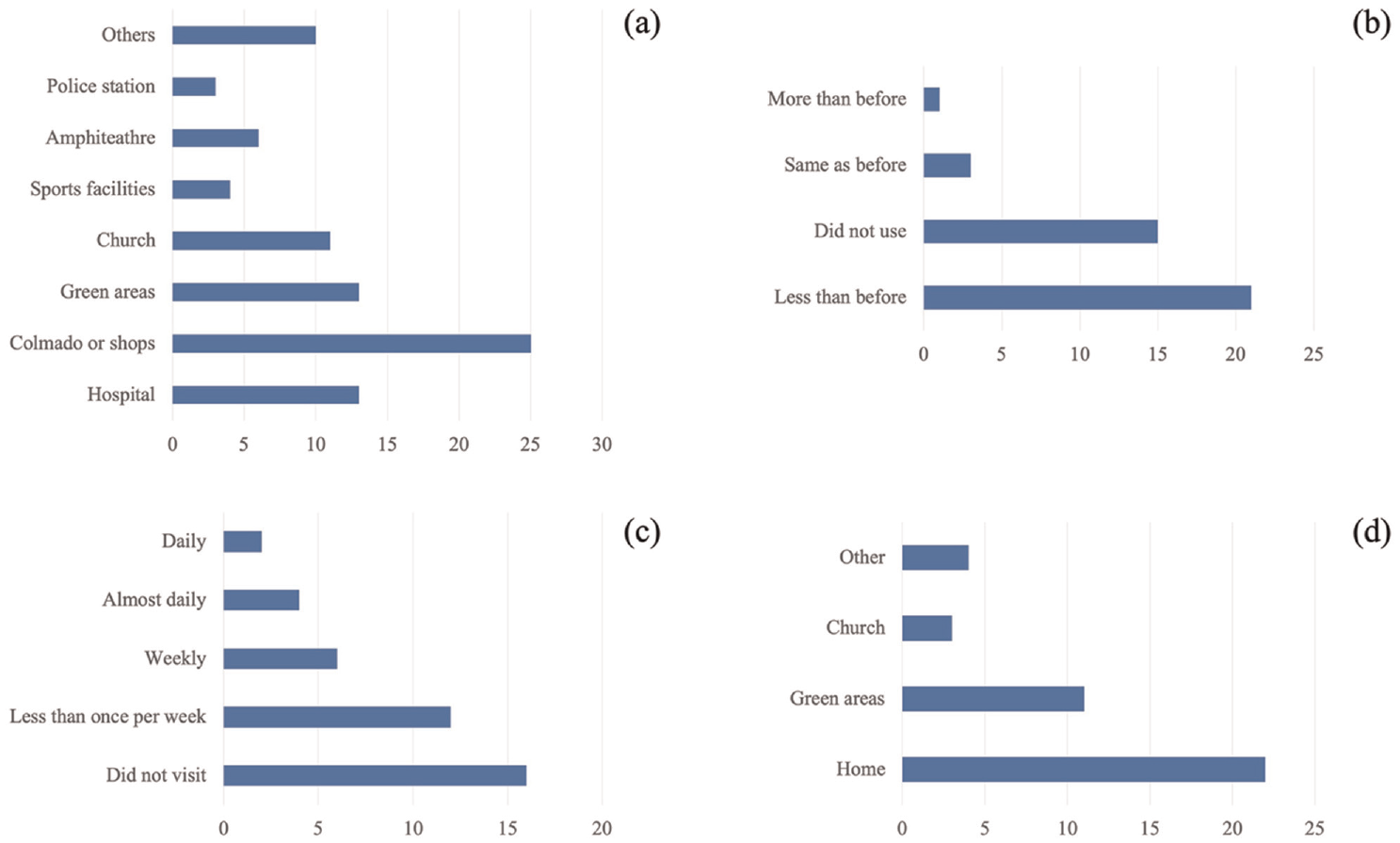
Respondents’ spatial patterns during the COVID-19 pandemic: (a) places most visited, (b) use of outdoor public spaces, (c) frequency of use of outdoor public spaces and (d) favourite space.
With limited movement, respondents overwhelmingly identified their homes as their preferred space in the community during the pandemic. Open public spaces, largely absent in the former barrio but a key addition to the new community (see Figure 3), became less appealing. Before COVID-19, the majority of respondents regarded these public spaces, particularly parks and gardens, as their favourite aspect of La Nueva Barquita (Nunez Collado and Potangaroa, 2023). As one respondent put it, reflecting the sentiments of most, ‘here it is beautiful, it is clean, we have nice parks, we went from living in lodo [mud] to limpieza [cleanness] with fresh air and trees’. This metaphor encapsulated the social dynamics in the community before the pandemic, where residents actively engaged with open public spaces: children played in playgrounds, teenagers utilised sports facilities and adults congregated in patios between apartment buildings.
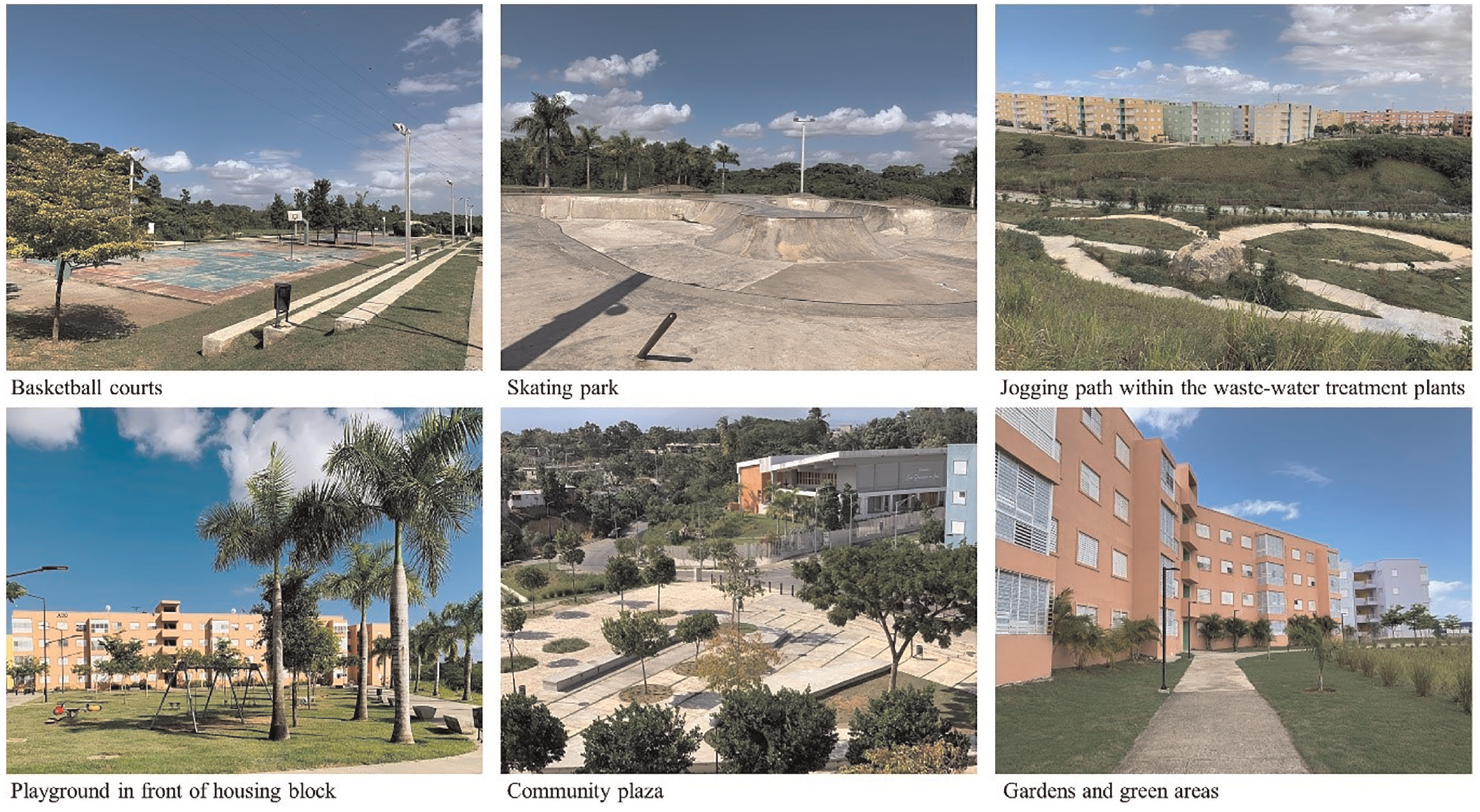
Diversity of outdoor public spaces in La Nueva Barquita.
However, the pandemic brought about a notable shift in residents’ attitudes towards public open spaces, with most respondents indicating reduced or no usage during the crisis (see Figure 2). This finding was surprising given that studies have documented increased visitation rates to outdoor spaces due to their role in mental and physical well-being during the pandemic (Grima et al., 2020; Orford et al., 2023). Moreover, public spaces played a crucial role in coping with COVID-19 in informal settlements, displaying important preventive information and facilitating community interaction (Duque Franco et al., 2020). Yet, despite being abundant and well-kept, open public spaces in La Nueva Barquita were significantly underused during the pandemic due to strong contagion fears.
The improved housing conditions in the resettlement site help explain the behaviour outlined above. Most respondents indicated that stay-at-home orders were not difficult to follow. The resettlement significantly reduced overcrowding, a major risk determinant of COVID-19 contagion and mortality rate in informal settlements (Corburn et al., 2020). Apartments in La Nueva Barquita offer ample living space, ranging from 58 to 76 m2, larger than most resettlement schemes in the Global South (Nunez Collado and Potangaroa, 2023). Moreover, all apartments feature balconies, enabling residents to access fresh air without venturing out. While many resettlement sites across the Global South face challenges such as poor construction quality, inadequate indoor environmental conditions, limited amenities and small housing units (Debnath et al., 2019), residents of La Nueva Barquita have expressed strong support for their community. The quality of the new housing estate played a crucial role in curbing COVID-19 transmission and fostering compliance with preventive measures.
All research participants unanimously affirmed that the new community was better equipped to mitigate health risks compared to the old barrio. When asked to elaborate on the reasons for their perceptions, common responses emphasised the improved spatial functionality of their new settlement, such as ‘reduced overcrowding’ (21 respondents), ‘constant access to basic services like water and sanitation’ (16 respondents) and ‘having a hospital within the community’ (15 respondents). Essentially, the risk determinants identified by numerous scholars as key drivers of COVID-19 contagion and mortality rates in informal settlements (see Corburn et al., 2020; Nunez Collado, 2024) were precisely the aspects acknowledged as significant improvements with the resettlement, helping residents cope with the health risks of the pandemic and fostering a recharged appreciation for the community.
Outlook: Negotiating aspirations of progress and formal aesthetics
For residents of La Nueva Barquita, the perception of an improved built environment signifies a hopeful transition from being labelled as ‘pobre diablo’ towards insertion into the aspirational ‘clase media’. This scenario mirrors observations made in Brazil, where modern aesthetics in resettlement projects were interpreted by beneficiaries as indicative of progress compared to the disorder of the favelas (Nuijten et al., 2012). In this regard, Ghertner (2015) argues that for aesthetic discourses to be effective, they must be embraced by the populations they govern. This was observed in La Nueva Barquita, where residents, despite facing significant socioeconomic challenges, speak positively post resettlement and post pandemic about the community’s spatial and aesthetic qualities.
The COVID-19 pandemic heightened residents’ appreciation for the formal spatial characteristics of their resettlement community. This was often expressed in functional terms but grounded in aesthetic values. Research participants often described La Nueva Barquita in terms of ‘cleanliness’, ‘order’, ‘spaciousness’ and ‘modernity’. They praised the uniformity of straight lines, building materials and clean geometries in the new estate, contrasting these with the chaotic and improvised spatial and built arrangements of their previous barrio. These perceived improvements fostered a greater sense of security, reinforcing the idea that resettlement provided protection beyond just flood hazards. In assessing COVID-19 risks, respondents often compared their current circumstances to their former experiences, citing sentiments like ‘here is cleaner’, ‘there we were always at risk’ and ‘here there is more space’. This relational analysis is critical to make sense of the impacts of resettlement in the Global South (Meth et al., 2023; Ramakrishnan, 2014a). Moreover, this newfound appreciation for the community became a key element of reterritorialisation, reshaping residents’ perspectives and fostering a more positive view of their resettlement. As one respondent articulated, encapsulating the sentiments of most: I am grateful for my [new] apartment. It is modern and clean. Here I am not afraid of the pandemic. Many died in the barrios, but it was safer here because of the space and the order. We have the hospital too. Things are not perfect here and there is still a lot of teteo, but I want my kids to grow up here with no fear. The COVID was a reminder to be grateful to God.
The narratives outlined above are tempered by residents’ uncertainties about the future. This uncertainty does not pertain to a desire to remain in the community – most respondents expressed a wish to stay long term – but rather arises from the ongoing tension between diminished expectations of socio-economic progress and heightened perceptions of security and residential satisfaction. Post resettlement and post pandemic, the state has largely left residents to navigate this tension on their own terms, despite the absence of favourable market conditions for employment or income generation. These dynamics reflect neoliberal processes in which state-led built environment interventions aim to empower beneficiaries as proactive agents in their pursuit of socio-economic mobility. However, these traces of neoliberal governance do not imply a complete absence of state involvement. While the management of local affairs largely falls to residents, the state maintains its presence through public institutions such as hospitals, schools and daycares, as well as a military post that enforces community regulations. Following Clarke (2005: 447), residents in La Nueva Barquita ‘have acquired new legal obligations, been subjected to expanded technologies of surveillance, while some have become the objects of formalized induction’. In this way, the state, aiming to uphold the community’s formal socio-spatial order through strategic absence and permanence, continues to shape everyday life post resettlement and post pandemic.
The conditions of citizen responsibility outlined above are similar to what Rao (2010: 419) has noted in resettlement colonies in India where, as she put it, the state expects resettled residents to ‘play by the rules of an urban bourgeoisie’. Similarly, with La Nueva Barquita the state saw an opportunity to transform a community of disorderly individuals into responsible citizens of the neoliberal city, or as Clarke (2005: 451) put it, citizens that ‘are the product of processes of responsabilisation’. Alongside this new socio-political order, spatial and aesthetic codes fixed in notions of reduced environmental vulnerability, sufficient space, cleanliness and order positively influenced residents’ perceptions of their ability to cope with health risks, enhancing their sense of belonging in the new site. These dynamics, reflecting the heterogenous outcomes of resettlement (Barnhardt et al., 2017; Williams et al., 2022), continue to mediate residents’ post-resettlement and post-pandemic place assimilation processes and their imaginations of social change.
The empirical findings presented herein illuminate the fluctuating nature of reterritorialisation in La Nueva Barquita, characterised by (in)formal socio-spatial processes that were disrupted in both anticipated and unforeseen ways during the COVID-19 pandemic, ultimately influencing residents’ place attachment. Understanding these conflicting and multifaceted dynamics is imperative for urban planners and policymakers navigating the intersection of public health, urban development and community integration in future resettlement operations (Garmany and Richmond, 2020). The discussions herein serve as a cautionary tale against uncritical advocacy for or dismissal of resettlement initiatives. Context-specific dynamics and democratic negotiations are essential for interpreting and informing more inclusive and transformative resettlement interventions.
Conclusion
Despite extensive research examining the risk factors and consequences of COVID-19 in informal settlements, little attention has been paid to understanding how the pandemic has impacted ongoing adaptation efforts in resettlement sites. To address this gap, this article examined the pandemic’s effects in La Nueva Barquita, a celebrated resettlement site in Santo Domingo, Dominican Republic. The analysis presented here responds to calls for greater geographic diversity in studying urban conditions in Latin America (Ortiz, 2024), for context-specific research on how the pandemic unfolded in cities in the Global South (Orford et al., 2023) and for investigations that unpack the intricate, nuanced and often-contradictory dimensions of resettlement (Meth et al., 2023).
The article introduced the concept of ‘(in)formal reterritorialisation’ to highlight the simultaneous engagement of formal and informal processes in contesting, resisting and adapting to resettlement (Yang et al., 2023). In La Nueva Barquita, the COVID-19 pandemic impacted ongoing (in)formal reterritorialisation in various ways. Empirical data demonstrates that the severe disruptions of the relocation, characterised by reconfigured economic forces and the erosion of networks of solidarity, were exacerbated by the pandemic, upholding new socioeconomic dynamics. Moreover, this disruptive event halted street vending, informal transport and informal religious gatherings, thereby hindering residents’ community-building efforts. Nevertheless, in conjunction with the new socioeconomic order, spatial and aesthetic codes – entrenched in notions of reduced environmental vulnerability, ample space, cleanness and geometric order – positively shaped residents’ perceptions of their ability to cope with health risks, enhancing their sense of belonging in the new site.
The experience in La Nueva Barquita underscores the complex dynamics at play in contemporary resettlement sites (Beier et al, 2021; Williams et al., 2022). The resettlement represented a profound socio-spatial rupture, demanding multifaceted adaptation strategies within the new site, navigated through a continuum of (in)formal interactions, movements and forces. Likewise, the COVID-19 pandemic served as a major disrupter of daily life and community-building efforts, further intensifying these transformations. Both the resettlement and the pandemic activated aspirations of transitioning from pobre diablo to clase media, fundamentally reshaping not only social relations but also perceptions of space and opportunity. Together, these disruptions pushed residents to renegotiate their sense of place and belonging, creating new forms of resilience and adaptability in a constantly shifting urban landscape.
There is a risk that, post pandemic, the resettlement of informal settlements is weaponised as a ‘revanchist’ mechanism to drive development-driven projects in the name of public health, further marginalising the urban poor (Shatkin et al., 2023). In light of this, genuine collaboration between the state and communities will remain indispensable for the success of these endeavours. Such collaborations should ease (in)formal reterritorialisation practices, which are crucial lifelines that foster community-building. This is particularly important if resettlement operations are to facilitate socioeconomic mobility. Given the intrinsic links between informal settlements and their host cities, both spatially and within the expanded geographies of capitalism and labour, future interventions in these areas need to transcend the provision of improved built environments and account for socioeconomic processes and governance rationales – both within and outside the resettlement site – that might impede residents’ effective transitions into improved urban citizenship.
Footnotes
Acknowledgements
The author extends gratitude to the editors and the three anonymous reviewers for their insightful comments throughout the review process. Appreciation is also due to residents of La Nueva Barquita for their generosity and willingness to engage in interviews and surveys during multiple visits. Special thanks also go to Professor Rod Barnett for his valuable feedback on an earlier version of this study.
Declaration of conflicting interests
The author declared no potential conflicts of interest with respect to the research, authorship, and/or publication of this article.
Funding
The author received no financial support for the research, authorship, and/or publication of this article.
