




Abstract
The rapid development of information and communication technology has led to the Internet and social media becoming a vital platform for public participation in China. The present research sought to understand the complexity of participation in the network society by taking the cancellation of the number 55 bus route in Shanghai as a case study. Both qualitative and quantitative research methods were used to analyze data from a leading social networking site in China. An analysis of participation patterns led to an understanding of the main characteristics of public participation in the network society, and a statistical analysis of the network revealed the features of elite participants in the planning adjustment. A qualitative approach was also used to explore the communication process, which was influenced by Chinese social capital—guanxi. The case study revealed an uneven pattern of public participation in the network society, and suggestions are provided to enhance fairness and effectiveness in this process.
Introduction
Over the past few decades, the rapid development of information and communication technology (ICT) has gradually led to social and economic transformation on a global scale. In particular, social media has facilitated increased communication and interaction between organizations, firms, and people (Tobias et al., 2016; Zhou and Wang, 2014). As addressed by Castells (1996), there is an emerging network society. Castells indicated that “networks constitute the new social morphology of our societies, and the diffusion of networking logic substantially modifies the operation and outcomes in processes of production, experience, power, and culture” (Castells, 1996: 500). The development of ICT and the emergence of the network society have greatly influenced public participation and urban planning. Since the mid-1990s, new media and technological tools have been applied in urban planning by local governments in Western countries to gain more support from increasingly diverse interested parties, for example, planners, developers, and organizations (Graham and Marvin, 1999). Urban planning has become increasingly interactive and participatory and increasingly dependent on ICT (Geertman, 2002). The application of ICT in public participation in urban planning promotes transparent governance and effective communication between citizens and the government. Different types of networks generated by ICT can engage a large number of actors in the participation process but can also create unequal power relations between actors due to the digital divide. Booher and Innes (2002) refer to “network power,” which comes into being most effectively when three conditions—namely diversity, interdependence, and authentic dialogue—govern the relationship between agents in a collaborative network.
In China, Internet penetration has increased rapidly, from 8.5% in 2005 to 51.7% in 2016, and the “netizen” population has now reached 710 million (CNNIC, 2016). The development of social network sites (SNSs) has facilitated the emergence of the network society in China. SNSs are important communication platforms that act as public and semi-public forums for information sharing (Boyd and Ellison, 2007). An important social function of large-scale networks is their use as a tool to perform powerful collective actions (Gordon and Manosevitch, 2011). Sina Weibo—a Chinese version of Twitter with 249 million users (CNNIC, 2015)—is an important platform for communication and participation. Various levels of Chinese city governments have started their own official microblogs using the Sina Weibo platform to produce an interactive microblog network to market Chinese cities on a tremendous scale (Zhou and Wang, 2014). However, grassroots participants have both clashed and interacted with local governments in urban planning practices through the platform of the Internet and microblogs (Cheng, 2013; Deng et al., 2014). The Internet and microblogs facilitate the engagement of experts and civic organizations in the planning process (Lin et al., 2015). For instance, citizens and civil society organizations in Nanjing used microblogs and city forums to oppose the felling of trees to make way for a new subway project, resulting in project revision and conservation of the trees (Yan and Zhu, 2013). Planners have increasingly recognized the potent role of new media and regarded these media as a participatory platform for engaging the public in the planning process. Online forums, for instance, became an important method of public consultation during the early phase of master planning in Chaohu City (Ma and Hu, 2011). Such forums can enable users not only to maintain a number of ties cheaply and easily but also to create large and diffuse networks of relationships (Mandarano et al., 2010).
Although there is a growing body of literature on the application of the Internet and visualization tools in urban planning (e.g., Lieske et al., 2009; Lin and Geertman, 2015; Rotondo and Selicato, 2010; Tobias et al., 2016), little research has examined the complexity of participation and communication in the planning process against the background of the network society. The wide-scale promotion of public participation in China is also relatively recent: It started only in 2008 with the introduction of the Urban–Rural Planning Law. The present study fills this research gap by examining the complexity of participation and communication in urban planning in the network society, using the number 55 bus route in Shanghai as a case study. After the literature review in the Literature review section, the methodology and case study are outlined. The results of an analysis of Weibo data concerning opinions, participation patterns, the influence of elites, and social capital are then presented. In the final section, we present suggestions for further research and planning practices.
Literature review
The communicative turn of urban planning
Over the last few decades, many scholars have argued that communicative or collaborative approaches should be applied in the planning process (Dijk and Ubels, 2016; Healey, 1992; Innes, 1998; Pelzer et al., 2015; Shin and Shin, 2012). The “communicative turn” in spatial planning can be traced to Habermas’s (1983) theory of communicative rationality. These approaches rely on the hypothesis that stakeholders will arrive at a shared solution if they can deliberate freely and there is no predefined hierarchy (Hanzl, 2007). However, Dijk and Ubels (2016) argued that it is professionals conducting interactive design sessions who enable the construction of a shared basis for collective action in communicative, collaborative, and participatory planning processes.
In line with the above-mentioned possible impacts, many scholars have encouraged wider participation and a less top-down approach in the decision-making processes for urban and territorial planning (Amato et al., 2015; Dijk and Ubels, 2016; Scorza and Pontrandolfi, 2015; Voss, 2014). Communication in the participation process is helpful in building trust and social capital between stakeholders (Chandrasekhar et al., 2014; Koontz and Newig, 2014). Murgante (2012) argued that citizens will not believe in participatory activities if they discover that decisions have already been made before a meeting. Lorusso et al. (2014) also stated that building networks in the everyday lives of stakeholders can create additional social, political, and intellectual capital, whereas Milan (2015) argued that participation can contribute to social sustainability. Furthermore, trust in institutions leads to high-quality participatory processes, which is more important than the degree of participation in terms of limited time and resources (Menzel et al., 2013).
In a Chinese institutional context, attention should be paid to the influence of guanxi on communication. Guangxi refers to social relationships in personalized networks of influence and is a key concept in Chinese society. For instance, Zhai and Ng (2013) and Chua and Wellman (2015) focused on the importance of cultivating guanxi as a specific dimension of social capital in planning practice and everyday life in China. Guo (2001) also stated that members of the most superior social group are always the “elites” who can influence final decisions in Chinese society. However, it is difficult to observe the influence of guanxi on the communication process in planning practice because decision makers rarely reveal anything about their private networks of social capital.
Public participation and urban planning in the network society
The growing development of ICT suggests that interactivity is a key feature of the Internet (Rocha et al., 2015; Shin and Shin, 2012). New technologies offer new opportunities for citizens to participate in urban planning (Borruso et al., 2012; Hanzl, 2007; Hudson-Smith et al., 2002; Kingston, 2002, 2007; Murgante et al., 2011; Vonk et al., 2007). Social networking can improve the participation of users, producing creativity and knowledge circulation (Lorusso et al., 2014). Specifically, social platforms become the main place where ideas are produced and developed (Murgante, 2012). Continuous discourse through social media and blogs have become new forms of citizen participation in the planning process (Murgante and Garramone, 2013). Integrating open-source tools can create a technological infrastructure that enables a high level of interaction among users (Hanzl, 2007; Kingston, 2007; Scorza and Pontrandolfi, 2015).
Here, it is assumed that the influence of the network society on planning can take on various forms, such as the use of IT as planning support systems for decision making as well as planning (participation processes) of urban space in virtual networks. Albrechts and Mandelbaum (2005) studied the processes and methods of urban planning against the background of the network society. They indicated that openness of social structure and decentralization is one key feature, minimizing the administrative hierarchy and thus enhancing participatory democracy. Mandarano et al. (2010) suggested that a real-time information exchange and a relatively more equal network structure can be formed based on SNSs, breaking traditional social boundaries. However, Berry (2004) argued that the decision-making process in the network society is not necessarily one of equal participation. For instance, the process could be under the control of certain leaders rather than promoted by the general public. The digital divide is another key challenge because inequalities exist between social groups in terms of access to, or knowledge of, ICT (Castells, 1989).
According to Mitchell, in the 21st century humans live not only in the “reality” of cities with reinforced concrete construction but also in a “soft” city formed by digital communication networks (Shen, 2010). However, the high speed of information transmission in the network society challenges the limitation of time and breaks down the boundaries of spaces, thus blurring the physical boundaries of communities. The virtualization of the material world presents urban space with both new challenges and new opportunities.
Western scholars (e.g., Innes and Boorher, 2002; Verma and Shin, 2004) have further connected communication planning with the network society. Using digital technologies in the planning process can build a form of digital social capital (Borruso et al., 2012; Mandarano et al., 2010). It should also be noted that the result of participation is strongly related to the predisposition of a community to use these ICT tools (Soligno et al., 2015). Chinese scholars (e.g., Cheng, 2013; Deng et al., 2014; Hu et al., 2015) have also suggested that collaborative planning and public participation through the Internet and social media have an increasingly vital influence on planning practice and theory in China. They showed that stakeholders can participate in planning and also connect and communicate with each other in the participation process through social networks. Thus, participants’ opinions can be influenced by the initial ideas and can also be influenced by the opinions of others. However, Hu et al. (2013) argue that government power in China is still decisive and remains the impetus behind the growth of market and civil society. It is therefore necessary to reveal the complexity of public participation in the network society in China through the lens of empirical studies.
Public participation in transportation planning
Most decisions related to transportation cannot be made using traditional approaches (Cascetta et al., 2015). Several scholars have developed different approaches to promote and evaluate public participation in transportation planning (Luca, 2014; Quick et al., 2015). In China, an increasing number of public transportation projects have encountered public resistance because of the social and environmental costs. Most local governments have recently implemented public participation as a governance principle and formulated related laws and regulations (He et al., 2016). Although the influence of stakeholders on transportation planning has not yet been revealed by empirical studies (Wei et al., 2016), He et al. (2016) have conducted a case study on the role of participants in the decision-making process for high-speed railway projects in China.
Background and research methods
Background of the case
The focus of the planning was whether the number 55 bus route should be discontinued due to the development of a subway system in Shanghai. The 55 bus route was launched in June 1952. It originally connected Wujiaochang to the Bund and was later extended to Xinjiangwan and Shiliupu. More than half of its stops overlapped with those of three other bus lines, namely numbers 61, 147, and 910. Over the decades, many work units (danwei), such as Tongji University, were established along the 55 bus route (Figure 1). The “55 bus route” thus became a special term that has carried the collective memory of generations of Shanghai residents. Its adjustment was discussed by many citizens on the Internet and ultimately changed the planning.
The No. 55 bus route and the other three routes.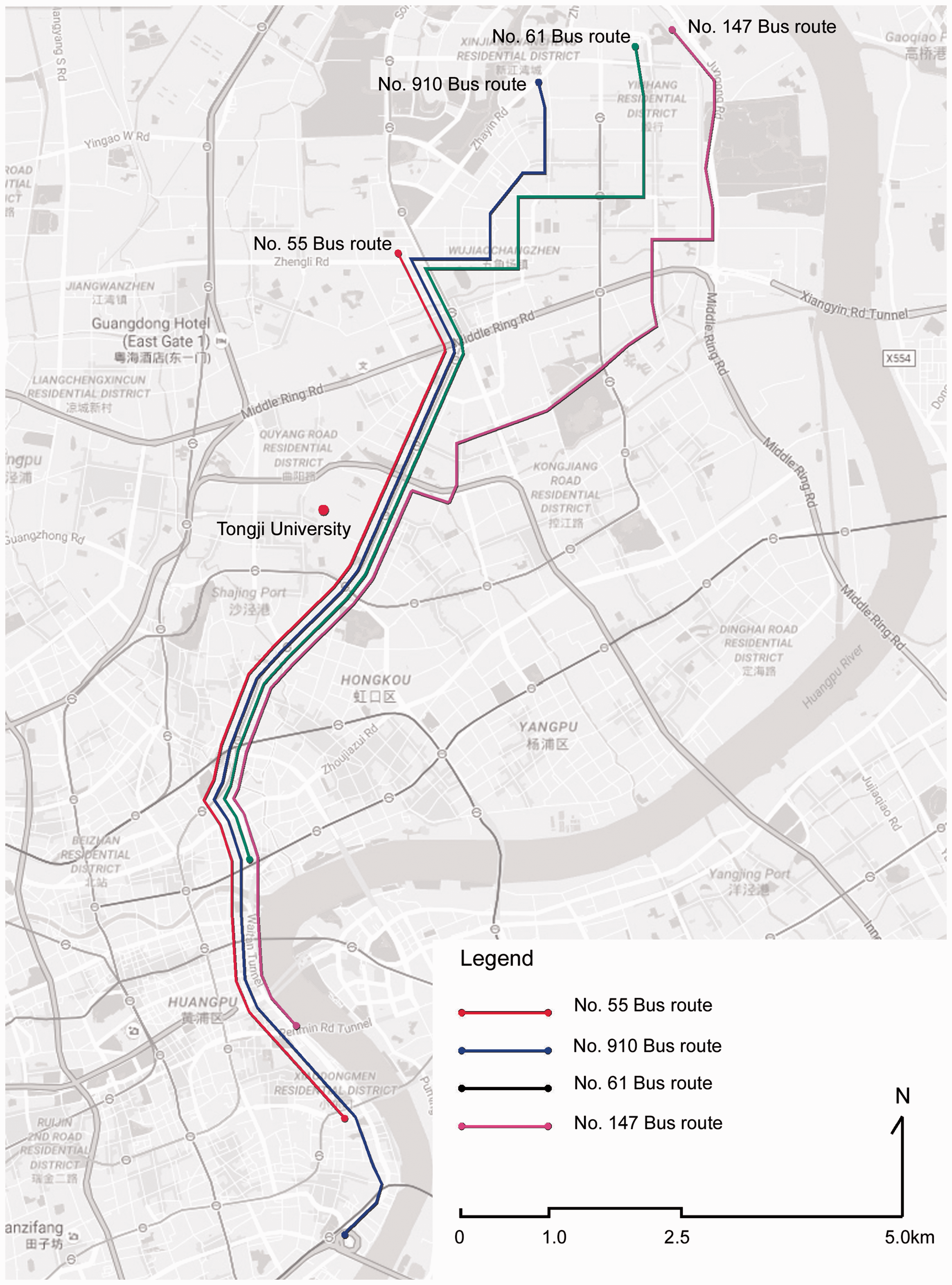
Overview of the Number 55 bus route planning process
According to the Regulations of Shanghai Bus and Tram Transportation (RSBTT), the Shanghai Transportation and Harbor Bureau (STHB) must listen to the opinions of citizens and interested parties when making its annual plan for bus lines. The Service Codes of Shanghai Bus and Tram Transportation (SCSBTT) also state that a bus enterprise that wishes to suspend or cancel a bus service must seek a permit to do so from the STHB. According to the RSBTT, the STHB should listen to the opinions of citizens and interested parties when making its annual plan for the creation and adjustment of bus lines. The SCSBTT also state that a bus enterprise that wishes to suspend or cancel a bus service must seek a permit to do so from the STHB. The bureau must then elicit the public’s opinion on the proposed suspension or cancelation and, in light of that feedback, issue, or refuse to issue a permit. However, the involvement of the public in the planning process is not insufficient in the case of the adjustment of the 55 bus route; thus, bottom-up participation occurs through social media.
This planning event comprised four stages, namely the formal planning initiative, feedback from a limited number of stakeholders, bottom-up participation and communication through social media, and the final decisions by the authorities (see Figure 2). In the first stage, the STHB planned to merge the 61 and 147 bus routes, in accordance with the requests of transportation enterprises in 2011. This merger would have resulted in the cancellation of certain bus routes because the newly established subway lines had lured a large number of passengers. It should be noted, however, that the number 55 bus route was not included in the initial plan, even though more than 80% of its stops overlapped with those of the number 61 and 147 bus routes. In the second stage, the message about the plan that would merge the number 61 and 147 routes was posted in Sina Weibo and other social media to obtain comments from citizens. The plan was also handed to district government officials, residential communities, and transportation supervisors. It was then adjusted according to the suggestions from some citizens, and approved by local officials. However, there was insufficient participation at this stage, which only engaged a few citizens who posted 32 messages in Weibo. The third stage began on 16 March 2012, when Shanghai Publishing again announced on Weibo that the number 55 route would be merged with the 147 bus route. The popular Shanghai magazine WOW also posted on a Weibo message titled “Abolition of the number 55 bus route,” which was forwarded 1015 times by Weibo users. Many of these users believed that the memory of the number 55 bus route would be destroyed if the route were cancelled. Furthermore, in the following few days, the users stirred great opposition to the plan on Weibo. The message and the discussion on the Internet evoked many people’s memories and attracted the attention of some scholars. Ultimately, the plan to cancel the number 55 bus route was revised again after Mr. Y called for a debate on the issues with relevant parties. Mr. Y sent the results of the online discussions to STHB, which later announced that the 910—a route that almost exactly overlapped the original 55 route—would be renamed the 55.
Four stages of the planning process.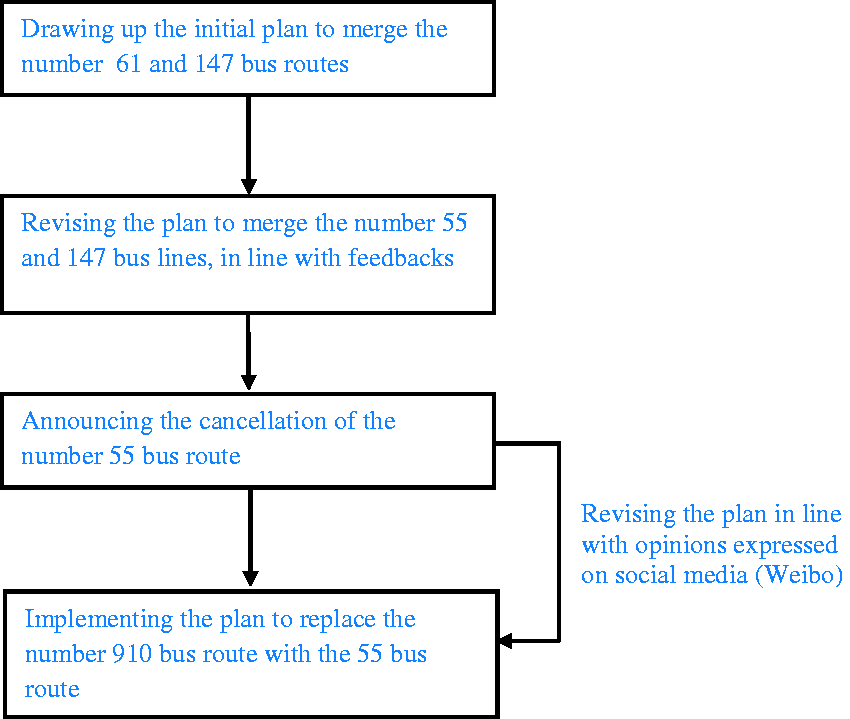
The entire planning process showed that the formal engagement of a small number of citizens in the second stage was insufficient, resulting in bottom-up participation in the third stage. Large-scale participation and communication through social media in the third stage completely changed the initial plan and led to the final decision in the fourth stage. Therefore, this paper mainly studies the participative and communicative process through the platform of social media in the third stage.
Research methods
To reveal the planning process of the 55 bus route on the Internet, we used both qualitative and quantitative research methods, including mapping and description, social network analysis, and a nonparametric test for an actor-based approach. Data were mainly collected from Sina Weibo and included 1015 messages posted by 945 actors/users. The data sources were the content of the messages, the information transmission and relationships between actors, and the participants’ individual features.
According to the data source, an actor’s out-degree indicates the number of messages posted and the in-degree indicates the number of messages addressed with the symbol “@” in the platform. This relational data set was visualized and analyzed by UCINET, which is a software package for the analysis of social network data. The analysis revealed the exact information diffusion pattern of the participation process. A network pattern can always be reflected by a power law regression equation by analyzing the relationship between the degree and rank of participants (Barabási and Albert, 1999). We defined Dk as the network degree for an actor who ranks k, with the characteristics of a power law distribution. The regression equation can be formulated as Dk = cċk−α. In this equation, a large value of the coefficient α indicates a distinct hierarchical structure in the network in which a few leaders can affect the final results, whereas a small value of α indicates a decentralized pattern in which each user has a more equal effect on the planning process.
Second, actors’ individual features and opinions were identified and analyzed. We read all 1015 comments from Weibo and recorded the meaning of each post. Because the network society has an open social structure (Albrechts and Mandelbaum, 2005), it is possible to engage a large number of participants holding diverse views on a specific topic. For this case study, actors’ opinions were classified and analyzed. To reveal the influences of particular Internet elites, information was also gathered about the number of followers they had, where they lived, and their jobs and educational backgrounds. Specifically, a nonparametric test was used to explore the participants’ communicating behaviors during the event. Through this method, we could examine whether the process and results of the case study represent networked power (Castells, 2011) and whether the elites played a dominant role in the network. Because the elites were a sample of all actors, we used a chi-square goodness of fit test to determine whether the observed value was significantly different from the expected one. It was then possible to determine the differences between the Internet elites and other actors in the planning process.
Public participation and communication in the process
Analysis of the opinions on Weibo
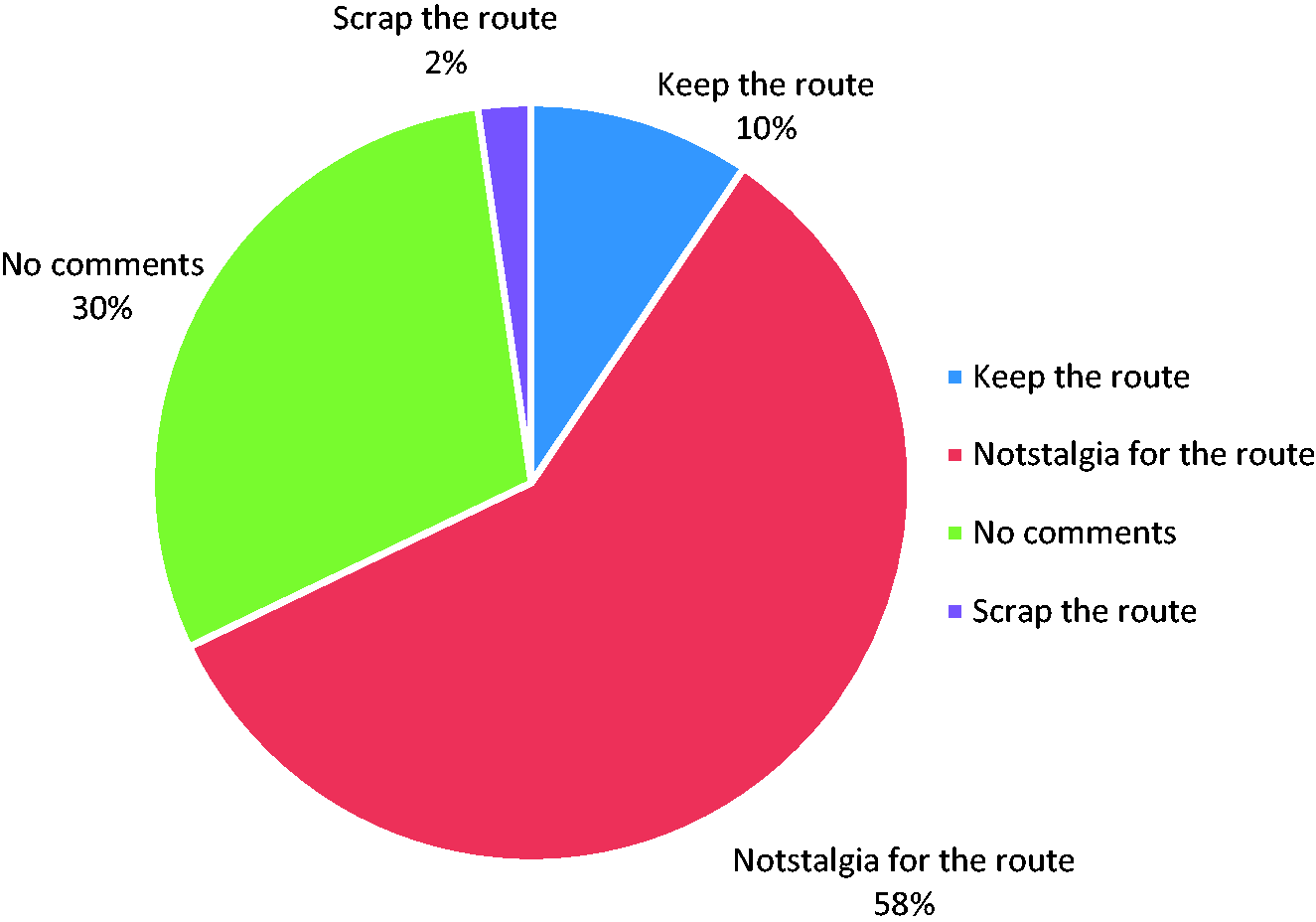
The study involved 945 participants who produced 964 Weibo comments. Most participants held one of four opinions (Figure 3):
The majority (58%) expressed their nostalgia for the number 55 bus. The initial Weibo message was titled “Shanghai’s number 55 bus will be discontinued. Have you ever been on the bus?” This title stirred the feelings of most of the participants and made them miss the bus route, which carried the city’s history and had long connected many old urban areas. Approximately 10% of the participants, many of whom were planners or other professionals, wanted to keep the bus route. After Mr. Y posted a Weibo message calling for the continuation of the 55, 96 Weibo users agreed with this opinion and became supporters of continuation. Twenty-three participants (2%) were against keeping the number 55. They held that it was unfair to change the name of the 910 bus to the 55, but their voices were much weaker than those of the supporters. Of the participants, 303 (30%) forwarded the message without posting any comment. They had their own opinions or wanted to keep the bus route. They played a role in transmitting information during this process.
Different opinions on Weibo.
Participation patterns in the network society
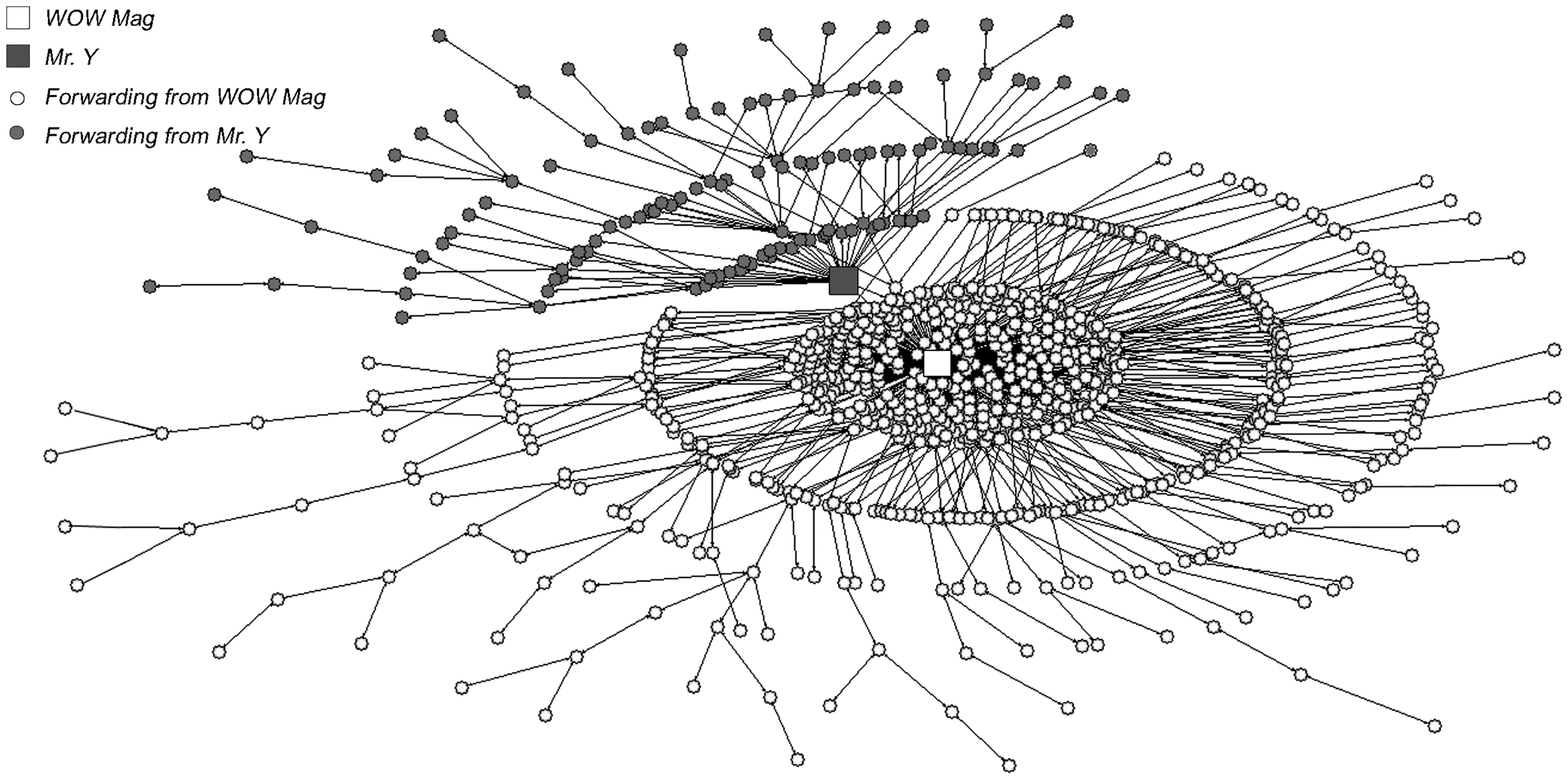
This participative event involved 945 Weibo users and formed an interconnected network. Although WOW magazine initiated the event and became the center of the network, Mr. Y was a key node in the network in the process of information dissemination and was crucial to the success of the event. However, Mr. Y did not receive the initial message from WOW but from one of his contacts on Weibo, Mr. Z in Shenzhen. This finding suggests that participants from other cities also played an important role in the dissemination of information.
Open structure of a network
Most of the participants forwarded only one message (Mr. Y posted four messages). Thus, the Internet and social media provided online participants with a similar opportunity to participate in the planning process. Information transmission was mainly through an interwoven network rather than a fixed channel. As indicated by Castells (1996), the structure of a network is open and able to expand without limits and integrate new nodes that can communicate within the network and share information. The network created in the number 55 bus route event was more open and decentralized than that of traditional top-down planning in China. The event engaged 945 participants who were interconnected with each other and became nodes in the information diffusion network (Figure 4). However, we should note that the network was open only to the netizen population and excluded people who were not familiar with the Internet and social media.
Transcending the limitation of space and time The structure of the diffusion network of participants.
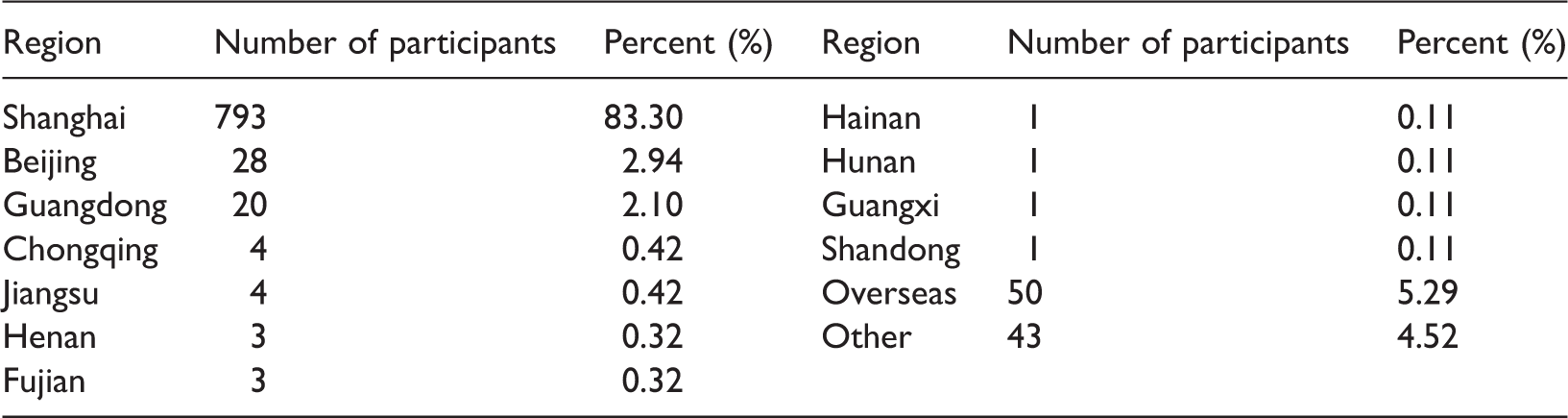
Geographical distribution of the participants.
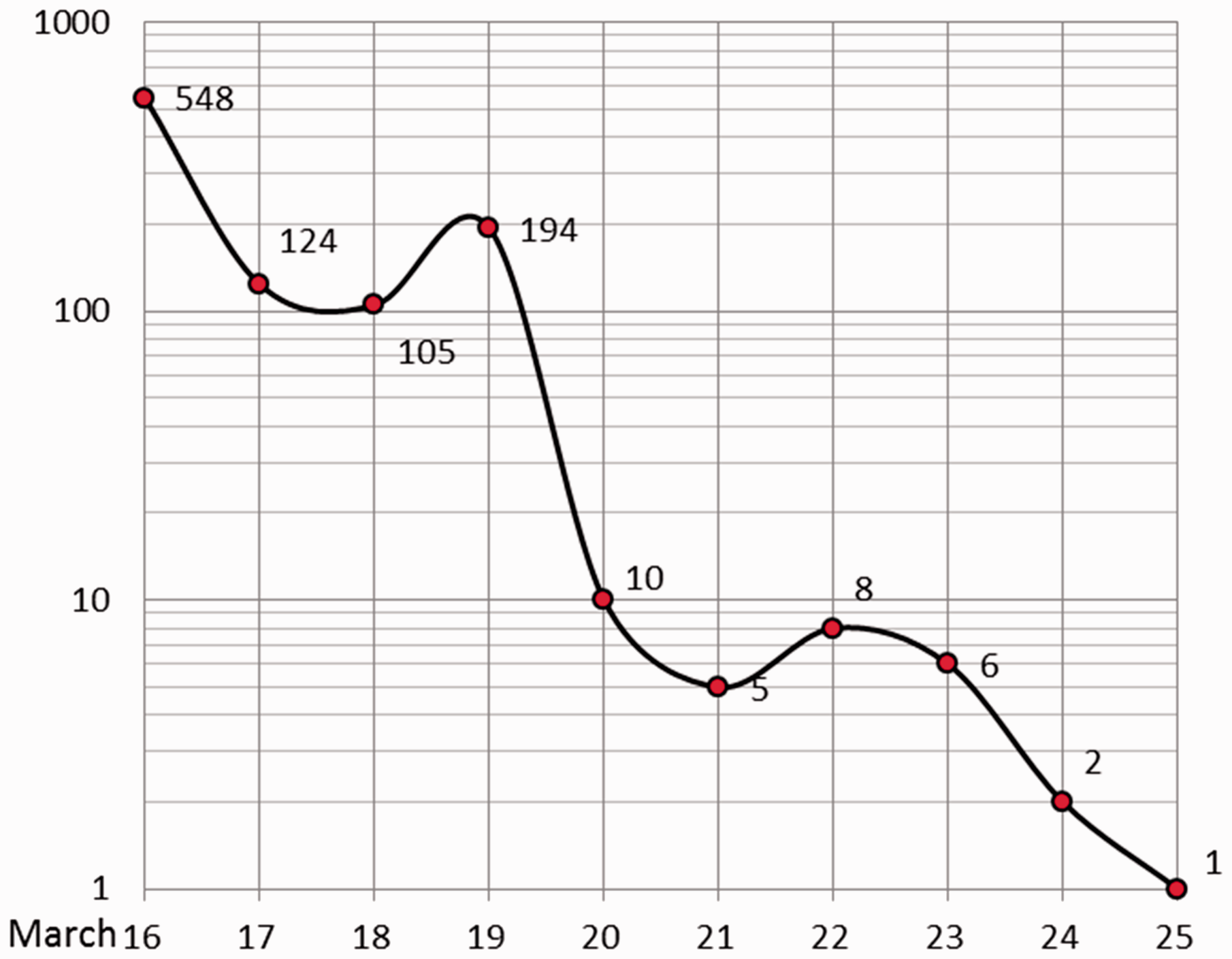
Participation in the network society can also transcend the limitation of time. The participants in the bus 55 event forwarded Weibo messages and commented on the planning practice at all times of the day. Information transmission during the event was also very fast. This finding suggests that participation in the network society can overcome the time constraints of face-to-face meeting in the planning process. However, the period of participation was also relatively short (Figure 5). Because of the rapid speed of information dissemination, people received many messages in a short time. Therefore, interest in the case quickly declined, resulting in the short length of the participative process. Furthermore, some stakeholders might have been excluded because they might not have heard about it in time.
Unequal power and the different positions and influences of various actors The number of messages forward during the event.
WOW and Mr. Y played the most important roles in the event and became the two main power centres (Figure 4). To further illustrate the different influences of actors in terms of forwarding messages in the network, we measured the distribution patterns according to the number of followers (Df), the sum of linkages/total degree (Ds), the number of messages posted (out-degree, Dout), and the number of messages forwarded (in-degree, Din; Figure 6). The distribution patterns of followers (Df) and the total degree (Ds), which respectively reflect cyber power and actual behavior, were explored using a log–log scale. Both patterns show the distinct characteristics of a power law distribution because R2 is greater than 0.8. Thus, the powers of actors are uneven in the information diffusion of this planning event, and positions in the network can determine the planning participation effect.
The distribution patterns: followers (Df), sum of linkages/total degree (Ds), number of messages posted (out-degree (Dout)), and number of messages forwarded (in-degree (Din)).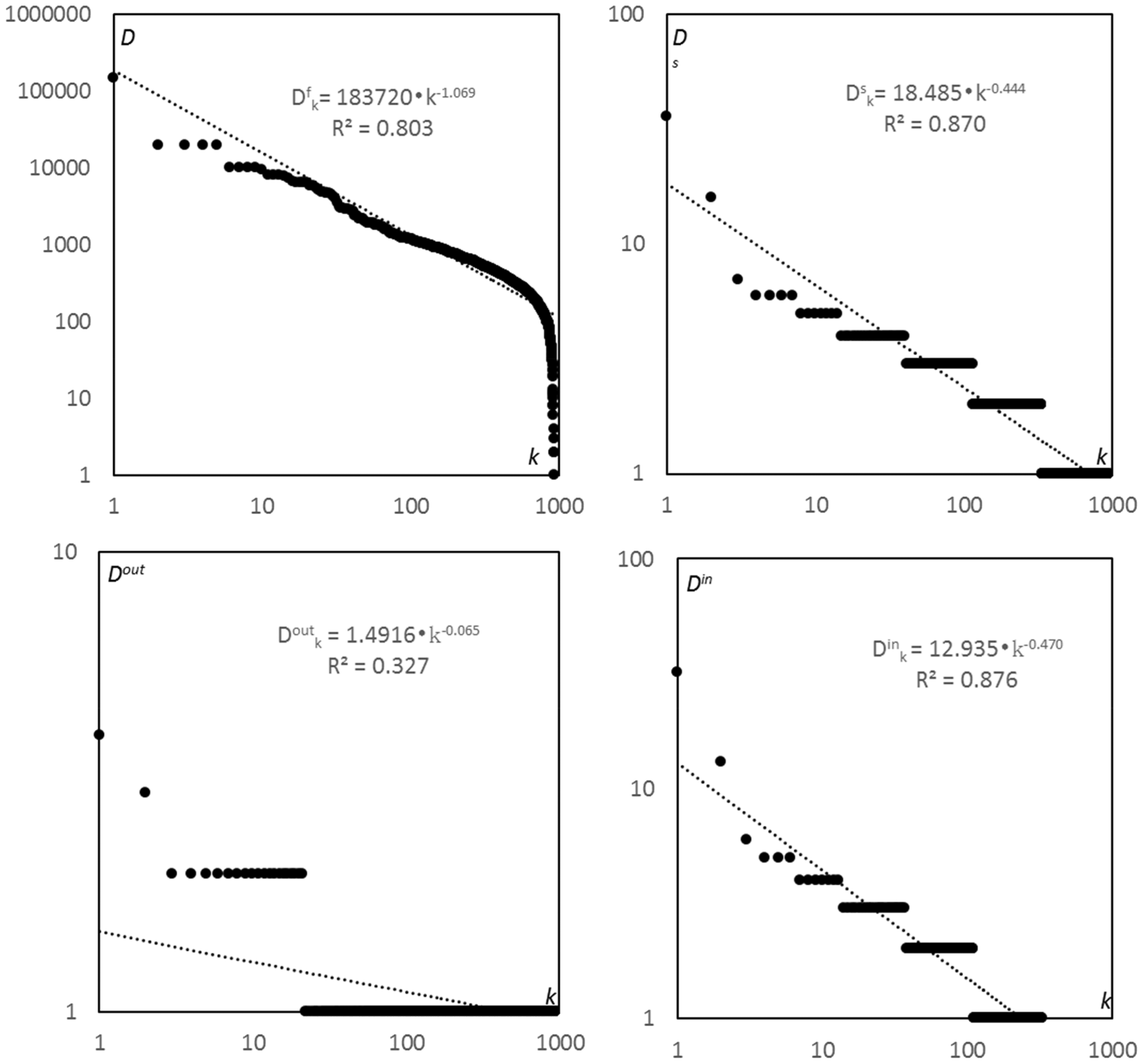
We then took the number of messages posted (Dout) or forwarded (Din) as the measurement of degree and created a log–log scale map according to the formula of the power law regression equation (see the above formula (1)). The results show that the distribution pattern of messages posted did not have the characteristics of a power law because the coefficient of determination (R2) is only 0.327. This finding suggests that the majority of participants posted a similar number of messages. However, the distribution pattern of messages forwarded is quite different, with an R2 of 0.876. This value suggests that the influence of various actors was significantly different because the messages of some actors were forwarded a greater number of times than those of other actors. In other words, some actors could play crucial roles and influence others. Therefore, “networked power” (Castells, 2011)— which is a form of power exercised by certain nodes over other nodes within a network—was formed in the case study (see the following section).
Networked power and the roles of elites in the participation process
During the overall process of information transmission, Mr. Y played a crucial role and influenced decision making regarding the number 55 bus route. Mr. Y posted four messages that were directly and indirectly forwarded by 151 Weibo users. In the network society, it is difficult for public comments to affect decision making if there are no power centers such as strong leaders and elites who collect public opinions and communicate with the masses and the decision makers. Berry (2004) indicated this difficulty as one of the defects of the network society and argued that it is difficult for views based on a network to play an important role in the decision-making process without effective organization and cooperation. Most of Mr. Y’s connections on Weibo are planners, architects, professionals, and public authorities with similar values, interests, and backgrounds. This finding reflects an important characteristic of the network society, namely that a group or community with similar values can be created and represent a collective identity. As indicated by Castells (1996), programmatic identity construction indicates the process by which social actors build a new social status or redefine their current one based on information and then seek a comprehensive social reform. In the bus 55 event, the clustering of participants with similar values and backgrounds reflects programmatic identity construction. In addition to Mr. Y, WOW magazine was a power center that gathered and influenced the majority of the participants.
The foregoing analysis suggests that elites played a crucial role in the network. In other words, “networked power” (Castells, 2011)—a form of power exercised by certain nodes over other nodes within a network—was formed in the event. We further analyzed the features of the elites, i.e. those with the largest number of followers, which usually reflects the power of a participant in the world of microblogs (Jansen et al., 2009). We used a chi-square goodness of fit test to determine whether the behavior of the top 50 elites was significantly different from that of the other participants.
The distribution of opinions of the top 50 elites.
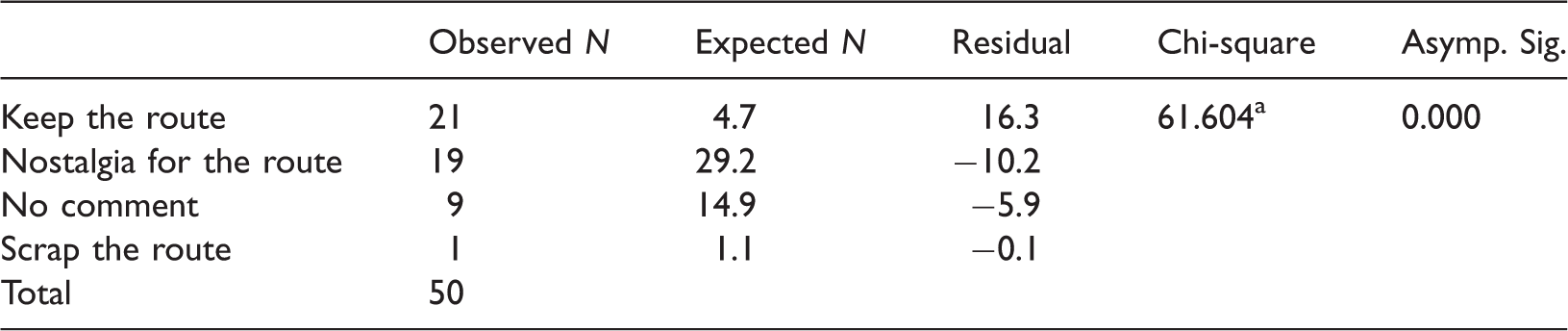
aAsymp. Sig.
Number of messages posted by the top 50 elites and the number of their messages forwarded.

aAsymp. Sig.
Residence of top 50 elites.

aAsymp. Sig.
Effects of guanxi on the participation process
We also observed the effects of guanxi, which reflects social capital, particularly the personal connection of Mr. Y in the participation process. Why was the plan revised again by the STHB a few days later? One of the reasons is that communication among network elites from Tongji on Weibo placed considerable pressure on the STHB. However, we found another important reason: Mr. Y knew Mr. Zhou and Mr. Zhang very well, and as they are the deputy directors of the STHB, Mr. Y could directly discuss the planning with them. The text of the fourth message posted by Mr. Y on Weibo clearly revealed the guanxi between Mr. Y and the two leaders: What you have done is so effective that opinions on the adjustment plan of the number 55 bus route has been reported [to the STHB]…The 910 and 55 bus routes will be merged into a new line called the number 55 bus route … Thanks directors Zhou and Zhang for listening to the public’s opinions. Everyone from Tongji, please forward this message.
Thus, both opinions on the Internet and guanxi resulted in the final plan. According to the procedures for addressing citizen opinions, STHB officials formally respond within 30 days. But the guanxi between Mr. Y and the two STHB leaders allowed this issue to be resolved in less than 10 days. In other words, online participation and communication generated values, built consensus, and caught the attention of public authorities, whereas the social capital of Mr. Y was crucial for the final decision.
Discussion
Public participation in the network society can involve a large number of actors, including experts, planners, and citizens. New tools for information dissemination, such as the Internet and social media, have overcome spatial and temporal communication limits among users. Anonymity has eliminated discrimination caused by gender, age, wealth, and ethnicity associated with face-to-face communications (Sfez, 2007). Communicating via the Internet can reduce the risk of problems arising during face-to-face contact, as well concealing personal information and reducing conflicts in public places (Graham and Marvin, 1999).
However, the network society also has some negative aspects, such as fostering a narrow group mentality. The network society features problems such as group mentality (which may prevent objective appraisal of unusual, minority, or unpopular opinions due to crowd pressure) and dependence on qualified leaders and effective cooperation approaches (Berry, 2004). Because of anonymity and efficiency, people can search for information without being influenced by factors such as society’s traditional values. Thus, groups of people with similar characteristics can easily form in the network society. A member of a group might be keen to participate in collective actions, but fear that he or she may be excluded by the group. This consciousness usually leads to a narrow group mentality.
The case study involved two major groups of participants. One included WOW magazine—which was the main node—and citizens who can use the Internet and social media. The other group comprised elites, such as planners and other professionals, who formed a virtual planning–practice community. These two groups, particularly the elite group, played a crucial role in the final decision making. However, the analysis also showed that the network society makes it easy for people to form a collective community and participate in the planning process without the limitations of space and time. Still, it is debatable whether these two groups represented the interests of the majority of citizens in Shanghai, and it is quite possible that the elite group represented a narrow group mentality. This participation process excluded most citizens who could not access the Internet and social networks. Planners and professionals also paid attention to the collective memory of the number 55 bus, but it is not clear who paid attention to the users of the 910 bus route (formerly the 55 bus route).
The case study also shows that city image as a symbol becomes a consumption phenomenon in the network society. Consumption theory (Baudrillard, 1998) combines consumption and symbolism into a single concept, in which a commodity is mainly consumed and reflected as a type of symbol. Public transportation should theoretically emphasize solving the travel problems of local citizens, although the majority of participants in the planning practice were not the actual users of the bus route and focused on the symbol of “the number 55 bus route.” Should a bus route be maintained for the collective memory of a certain group who may not even use the bus? It is debatable to support keeping the bus route simply because of its function as a symbol. Perhaps the collective memory of the bus route makes such a participative event in the network society valuable. The study of place-making and landscape has been linked to the study of memorialization and social memory (Gordon, 2001). The production of memorials is a necessary enterprise at a time when traditional mechanisms for the dissemination of memories are dying out (Simpson and Corbridge, 2013). Memorialization is chiefly performed through the construction or preservation of particular memory sites.
Finally, participation in the network society reflects the importance of social capital. Social capital that exists in the social structure is invisible, but makes cooperation between people possible. Social capital includes three elements: relationship, trust, and norms (Mandarano et al., 2010). Of these three, norms are currently absent from many online participation processes in China. The establishment of effective and feasible norms could guarantee that network participation is fair, just, scientific, and effective.
Prospects of public participation in the network society
With the rapid development of ICT, the Internet lifestyle will become even more popular. At the same time, the public is increasingly concerned about urban planning, which is related to their quality of life. Public participation in the network society will thus become increasingly important, and the government should support various forms of participation and promote transparent governance. Different types of participation tools and platforms—such as web-based planning support systems (Lin and Geertman, 2015) and crowdsourcing participation platforms—can be developed to support citizen participation and the cooperation of various actors in the planning process. New types of GIS (geographic information system), Web 2.0, and mobile phone apps, as well as their precursors, rely on user-generated content, are community-based, and are designed to harness and communicate a collective wisdom (Epp, 2012).
Feasible regulatory norms and institutional design (Healey, 1997) should also be formulated to guarantee that participation is near the usage and planning context, for which the real impacts supported by real-time tools on planning practice should not be exaggerated (Pelzer et al., 2015; Tobias et al., 2016). Although a network formed in the participation process is open and feasible, and can engage anyone who accesses one of its nodes, it is also very easy to form power centers and be influenced by strong leaders. One should therefore look carefully at who participates in and influences the network, who is excluded from it, and how to engage the affected people. In-depth fieldwork and face-to-face meetings are still needed to understand the actual situation facing a group and communicate with more actors. In addition, affected stakeholders should actively participate in the planning process and become nodes in the network to express their own opinions or interests in a rational, collective way.
Footnotes
Declaration of conflicting interests
The author(s) declared no potential conflicts of interest with respect to the research, authorship, and/or publication of this article.
Funding
The author(s) disclosed receipt of the following financial support for the research, authorship, and/or publication of this article: This project is supported by National Natural Science Foundation of China (No.51478189), Natural Science Foundation of Guangdong (No. 2014A03031326), Fundamental Research Funds for the Central Universities (No.2015ZZ0022), and State Key Laboratory of Subtropical Building Science, South China University of Technology (No. 2015ZB06, 2015ZC08).