



Abstract
As the world faces increasing environmental, social and financial crises, as a result of climate change, deepening unrest about inequality, and the cost of living crisis, there are growing calls for organisations to play a role in responding to them. Scholars in the field of sustainable human resource management (HRM) have elaborated various avenues through which the field of HRM can contribute to this response. One such contribution HRM can make to global grand challenges is through contributing to the United Nation’s Sustainable Development Goals (SDGs). Of particular relevance for HRM is SDG8, which calls for decent work. In this study we empirically explore why, how and what influences HR managers in international non-governmental organisations (INGOs) to seek to enact fair reward, a key component of decent work. Based on our analysis, we find evidence that HR managers can be strategic actors in enacting fair pay, and we identify a complex interplay between HR managers and their context in the behaviours underpinning this enactment. HR managers adopt one of at least three identified roles to proactively enact fair reward (visionary, gatekeeper or technical consultant). Each role adopts differing strategic and fairness enactment behaviours to navigate the constraints posed by the context in which they work, including focussing on influencing different justice dimensions, and leveraging disruption in the external environment. By drawing out the key role HR managers can play in enacting fairness, we offer support for the importance of HRM in contributing to decent work and global grand challenges. Ultimately our study offers support for a common good HRM, in which HR manager actions are influenced and driven by challenges beyond the scope of their organisation. We offer empirical support and theoretical development related to how context shapes HR manager roles at work.
Introduction
The United Nations 2030 Agenda for Sustainable Development offers a road map for moving towards addressing global grand challenges such as poverty, inequality and climate change. The agenda offers a detailed and comprehensive consideration of what needs to be done to address these challenges, as well as offering a framework for how societies can and should work together for the greater good. Over the past decade the field of human resource management (HRM) has developed in ways that identify how HRM could (and should) engage with the Sustainable Development Goals (SDGs), including through the development of various models, such as socially-responsible HRM (Shen and Benson, 2016), sustainable HRM, common-good HRM (Aust et al., 2020), and triple-bottom line HRM (Bush, 2020). However, while this work has been important for conceptualising and debating the role of HRM in sustainability, it has overwhelmingly focussed on the role of the private sector and MNCs in influencing change. While there is undoubtedly an important role for the private sector to play in addressing the SDGs (Ghauri and Cooke, 2022), there are likely to be important insights from other sectors which have been missed in the extant literature (Cooke, 2018). One such sector is the non-profit sector, including international non-governmental organisations (INGOs) where organisations are actively working towards the SDGs through their programmatic activities. Their emphasis on the SDGs may extend to their internal operations, for example in an attempt to align their policies and practices with their overall social values (Ridder et al., 2012). Therefore studying such organisations may offer insights into how HR activities can support enactment of sustainable HRM goals. In this paper we follow the World Bank (1995) and Accountability Charter (2005) in defining INGOs as non-profit organisations that work across international borders to deliver aid, develop local communities, respond to natural and human-made disasters, and advocate for the rights of individuals that are vulnerable and/or marginalised. Estimates suggest there are at least 350,000 INGOs around the globe, some of which have substantial size, scale and reach within the global policy context (Hammad and Morton, 2011; Morton, 2013).
In this paper we focus on the mechanisms through which HR managers within INGOs might be influencing progress towards the SDGs. We focus specifically on SDG8 (economic growth and decent work) because a focus on decent work aligns closely with the everyday goal of HR managers to create safe and healthy workplaces. Our aim is to examine why, how, and what influences HR managers to seek to enact fair reward within their organisations, paying attention to the context in which they are operating as well as the strategic and fairness enacting behaviours they utilise. We refer to this as ‘enactment’ throughout the paper, because to enact means to put into practice, and we want to capture the sense of action behind what these individuals do, beyond advocacy or influencing, in order to move towards fairer reward policies.
Decent work is positioned as the centre pin of the International Labour Organization (ILO) Declaration on Social Justice for a Fair Globalization (ILO, 2022a). The ILO (2022b) identifies a human centred approach building on the concept of decent work as fundamental for shifting towards global equality and sustainability, and for addressing the post-pandemic recovery. Decent work is work which is ‘productive and delivers a fair income, security in the workplace and social protection for families, better prospects for personal development and social integration, freedom for people to express their concerns, organise and participate in the decisions that affect their lives, and equality of opportunity and treatment for all women and men’ (ILO, 2022c). Through their oversight of workplace policies and practices, HR managers are likely to play a key role in integrating decent work, for example through ensuring workplaces are safe and healthy for employees. In this study we focus on fair reward as a key component of decent work. In line with SDG subgoal 8.5 we define fair pay as ‘equal pay for work of equal value’, while recognising the potential variability in preferences for different approaches to reward (e.g. equality, equity or need-based), as well as the challenges in defining the relative value assigned to different jobs (McWha-Hermann, 2023). We specifically consider why, how and what influences HR managers to seek to enact pay fairness within their organisations.
Developing fair global reward systems is a key issue for international organisations and is topical within the literature on multinational corporations (MNCs; Bonache and Zárraga-Oberty, 2017), as well as in social enterprises (Bonache and Zárraga-Oberty, 2020) and INGOs (McWha-Hermann et al., 2022). For INGOs within the international development and aid sector this topic is particularly prominent, as their organisational models are centred around expatriation: the use of employees (typically from the global north) to work for sustained periods in the global south (Oelberger et al., 2017). For these INGOs fair reward is likely to be particularly salient because fairness sits at the core of their organisational mission, having been established to address issues such as human rights, environmental protection, provision of humanitarian response, and other causes (Teegan, 2003). With their social mission comes the expectation of egalitarian HRM practices, including in their reward management (Akingbola, 2013). However, historically INGO reward practices have not met these expectations, particularly when considered in a global context (McWha-Hermann and Cook-Lundgren, 2022). Hence INGOs offer an interesting context in which to explore how HR managers might contribute towards the strategic enactment of SDG8, in a setting where the enactment of fair policies should be supported but where there is evidence that barriers to change may exist nonetheless.
HR managers also offer an interesting avenue for exploring the ways through which INGOs shift towards fairer reward, by considering the influence these managers may have in setting reward priorities through influencing the structure, implementation and enactment of a reward strategy (Caldwell, 2001). While strategic and operational HR roles have historically been pitted in opposition to one another, where HR managers trade-off between them, there is emerging evidence that they may be undertaken concurrently suggesting that HR managers can embed change agendas at multiple levels throughout an organisation (Cayrat and Boxall, 2023). Furthermore, there is evidence that HR managers can act as ethical stewards, balancing ethical action towards employees with the needs of the business (Kramer, 2014). Managers can play a critical role in shaping employee perceptions of fairness, including in reward management (Scott et al., 2009, 2014). By practicing distributive, procedural, informational and interpersonal justice behaviours they can have a direct impact on the level to which employees perceive organisational practices to be fair. By combining these different strands of research there is an implication that HR managers could play a pivotal role in influencing how fair reward is enacted in organisations. What remains to be understood is how and why HR managers are driven to address reward fairness in their organisation.
This study seeks to answer the following research question: why, how and what influences HR managers in INGOs to seek to enact fair reward within their organisations? We pay particular attention to the context in which they are operating and its influence, as well as the strategic and fairness enacting behaviours they utilise. To do this, we engaged in in-depth interviews with a group of HR and reward managers who self-identify as wanting to implement fair reward in their organisations (regardless of their organisation’s strategic objectives). Studying managers who are actively interested in fair reward and change enables an exploration of the types of strategies used to influence the change, and the contextual factors that serve to support or constrain those strategies.
Based on our findings, we contribute to the literature in at least three ways. First, we highlight empirically the dynamic, proactive, strategic ways HR managers can act in order to influence change in their organisations. We show how they can actively take opportunities to contribute to social and sustainable goals beyond those of their organisation (and in support of common good HRM). Second, we contribute theoretically by identifying a taxonomy of at least three possible and distinct roles that HR managers can adopt in seeking to enact fairness: visionary, gatekeeper and technical consultant. We contribute to understanding how HR managers position themselves into these roles, and the importance of contextual factors (including globally disruptive events) on role enactment. Furthermore, we identify an interplay between organisation needs and context, and individual HR managers’ commitment to fairness, suggesting that HR managers dynamically engage in strategic behaviours to influence fairness, emphasising different dimensions of justice in order to work within their organisational context.
This paper is organised as follows; it begins with an overview of the literature on fair reward, decent work and common good HRM, drawing out the connections between these different concepts and their strategic imperatives. We then consider the literature on how global reward is structured, in order to highlight the challenge HR managers face in structuring reward fairly. Having positioned these challenges, we then review existing literature on HR roles, to show how HR managers might address them. Following this review, the research methodology and data analysis methodology is explained. This is then followed by a presentation of the research findings, which identify some key contextual factors, their effect on HR managers, and how these factors can impact the strategic role and fairness enactment behaviours HR managers adopted. Finally, the paper is concluded with a discussion of the findings in light of existing research.
Fair reward, decent work and common good HRM
HRM has a place in assisting businesses to become more socially responsible and sustainable, by establishing people-management practices that take ‘development of social, environmental and human capital into account’ (Guerci and Carollo, 2016: 212). Research into this area has increasingly gained pace as the global context has changed significantly over the last 10–15 years placing more emphasis on businesses to be both profitable and socially and environmentally sustainable (Aust et al., 2020). Recent calls for a common good HRM recognise that HRM can and should be shaped around goals beyond those of the organisation, such as the global challenges the SDGs aim to address (Aust et al., 2020). Through its emphasis on equal and fair employment relationships, opportunities for participation, and work quality through maintenance of the psychological contract, common good HRM broadly mirrors and prioritises the components of decent work. In doing so it mirrors calls from the ILO (2022a, 2022b) for an emphasis on social justice and decent work as fundamental for shifting towards global equality and sustainability.
In this paper we focus on fair reward as an opportunity to understand how concepts of decent work and common good HRM can be operationalised in everyday HR activities, addressing recent calls for greater insight into the context in which strategic and operational HR roles are integrated (Cayrat and Boxall, 2023). Fair reward speaks directly to issues of inequality, and the potential of a wage to address broader socioeconomic inequality (Carr et al., 2017; Yao et al., 2017). At an individual level, fairness is multi-faceted and complex. It not only includes fair remuneration, but also broader issues such as fairness with regards to promotion and access to training and social benefits. Historically, fairness has been situated within the organisational justice literature, though many organisational scholars use the terms interchangeably (Goldman and Cropanzano, 2015). Fairness refers to individuals’ moral evaluations of conduct, while justice is defined as adherence to rules of conduct (Goldman and Cropanzano, 2015). The organisational justice literature has identified four justice dimensions or ‘rules’ (distributive, procedural, informational and interpersonal) which shape perceptions of fairness within an organisational context (Colquitt et al., 2001).
Typically, fair reward has focussed on distributive justice and considerations of when employee perceptions of inequity are triggered (Colquitt et al., 2001). Distributive justice refers to the fairness of how resources are allocated. The roots of this can be found in Adams (1965) equity theory which looks at individual equity judgements based on comparisons of the ratio of inputs and outputs against those of a comparator. Operationally, distributive justice can be challenging for organisations to manage because individuals’ social comparators can vary (Blau, 1994). A powerful social comparator could be the employee’s colleagues (Adams, 1965). Perceived salary inequity between colleagues links with reduced employee motivation, engagement and productivity (Lawler, 2011). However, equity judgements can also be made using external comparators within the broader labour market but outside the organisation, and these can also impact important organisation outcomes. For example, where an employee perceives their salary is inequitable, their turnover intentions are likely to be higher (McGinnis Johnson and Ng, 2016; Roberts et al., 1999). Conversely, reward practices which are perceived to be fair are linked with a more productive, effective and engaged workforce, which is linked to reduced turnover (Chen et al., 2011). Fair reward is also linked with higher job satisfaction and work engagement (Colquitt et al., 2012). Additionally, it has been shown to increase employees’ citizenship behaviour, meaning they are more likely to voluntarily go above and beyond the requirements of their job role (Organ, 1990). For both employees and organisations, then, the distributive justice literature indicates the importance of fair reward for avoiding negative outcomes and enhancing positive ones, and for considering both internal and external comparators as potential sources of perceived inequity.
Distributive justice does not operate in isolation from other justice dimensions. Procedural justice, which is the perceived fairness of decision-making processes, judged by gauging whether procedures are consistent, accurate, unbiased, and correctable and provide mechanisms for voice and input, has been shown to increase the satisfaction of negative distributive outcomes (Thompson and Heron, 2005). Similarly, offering employees control over their reward package through avenues such as flexible benefit schemes, led to increased employees’ perceptions of procedural justice in comparison to those with fixed benefits (Cole and Flint, 2004). Furthermore, the information and communication of pay decisions moderated the effects of poor equity and procedures, indicating a further role for the interactional justice dimension (Thompson and Heron, 2005). Thus, fairness is multi-faceted, and multiple justice dimensions likely have a role to play in shaping individual perceptions of fair reward.
In addition to the multi-faceted nature of fairness, other factors influence perceived fairness. For example, individual preferences for equality versus equity in how pay is structured impact perceptions of fairness (Kim et al., 2018). Furthermore, there is evidence that organisational context plays a role in shaping perceptions of fairness (Wu and Wang, 2008), as well as individualistic versus collectivistic cultural attitudes for whether pay should be structured around performance or equality (Giacobber-Miller et al., 2003). Oltra et al. (2013) argue that framing fairness around individual perceptions is too narrow in focus, and fails to capture the full extent of inequality in global organisations. Instead, Oltra et al. (2013) draw out the social responsibility placed on organisations to ensure employees are treated fairly within and across both national and organisational contexts.
Developing and implementing fair reward systems is therefore not straightforward, because fairness is multifaceted and subjective. However, fair reward is increasingly recognised as a challenge with which INGOs need to grapple if they hope to contribute to social responsibility and addressing inequality.
Structuring global reward
For global organisations such as MNCs and INGOs, designing a reward strategy which is considered fair across multiple different contexts is a continual challenge, not only because of the issues with subjectivity as already described, but also because of the legal and institutional differences that arise from operating in different locations (McWha-Hermann et al., 2021; Oelberger et al., 2017; White, 2005). In designing their strategy, international organisations face a tension between navigating between what is globally fair and contextually relevant, while also considering how to fairly remunerate a globally mobile workforce.
Most of what is known about structuring global reward comes from the literature on expatriate management in MNCs, where national and international staff tend to be rewarded on different pay and benefits scales (Bonache and Zárraga-Oberty, 2017). While national staff are rewarded according to the local market, international staff are typically rewarded through a balance-sheet approach, where consideration is paid to their current salary and considers their personal circumstances when setting their salary in the new country (Bonache et al., 2009).
For HR managers prioritising an equality perspective, the proposition of structuring reward around an employee’s country of origin is problematic, though such practices originated in an attempt to ensure international staff were remunerated in a way that compensated for personal sacrifices related to moving abroad (Bonache and Zárraga-Oberty, 2017), and to recognise that these employees may be comparing their pay with their home-country rather than within the new country (Phillips and Fox, 2003). However, changes to the nature of expatriation, such as increased self-initiated expatriation, suggest this is likely to be outdated (McNulty, 2014). Furthermore, there is ongoing criticism around fairness of traditional approaches to pay to different groups of workers, and indeed, there is empirical evidence that use of the balance-sheet approach undermines employee wellbeing, engagement and satisfaction (Carr et al., 2010). As a result new approaches to reward are emerging, for example the local-plus and localisation approaches, where reward for both national and international employees is oriented to the local market (McNulty, 2014; Zárraga-Oberty and Bonache, 2018).
INGOs have typically utilised the same approaches to structuring reward as those taken by MNCs (Fenwick, 2005; Oelberger et al., 2017). However, there is recent evidence that new approaches are being used in INGOs, in a quest to address the challenge of fair reward. These ‘hybrid approaches’ shift away from using expatriate/international reward and prioritise a localised approach (McWha-Hermann et al., 2022). The emergence of these changes may be particularly important as HRM within INGOs grows in influence (Bartram et al., 2017), and as we begin to understand the role of social values within HRM (Ridder et al., 2012).
Within the context of shifting approaches to global reward is an important question related to how these changes are driven within organisations, and in particular the role that HR managers might play in initiating and driving that change.
HR manager roles within organisations
The strategic HRM literature has long debated the role of HR managers within organisations, often characterised via a trade-off between HRM roles. Ulrich’s (1997) discussion of the HR business partner model identified four key roles for HRM, a mix of strategic HRM roles (strategic partner and change agent) as well as operational HRM roles (administrative expert and employee champion). Strategic roles help formulate and execute business strategy, whilst roles such as ‘administrative experts’ ensure efficient HR processes are maintained. These roles are historically positioned in opposition to one another, where HR managers opt to undertake one or other (but not both), though the joint value to the organisation of each role is recognised (Wach et al., 2022). Recent research has identified an emerging integrative view of HRM roles whereby strategic and operational roles are enacted alongside one another in synergy rather than HRM roles being considered as either one or the other (Cayrat and Boxall, 2023). We respond to calls to understand the context within which HR managers engage in strategic and operational roles (Cayrat and Boxall, 2023). The context of fair reward management may offer insights into how HR managers enact strategic and operational roles, with the purpose of managing a complex HR operational task (reward management) while strategically promoting changing reward practices towards social responsibility and legitimacy.
HR managers play a key role within the HR ecosystem in balancing multiple complexities, and supporting internal stakeholders (line managers, employees, etc) to meet their goals and needs (Jo et al., 2023; Snell and Morris, 2021). Relational HRM emphasises the advisory role the HR function plays to colleagues within the organisation (Jo et al., 2023) Alongside this relational role, HR managers can play an important role in change management due to their knowledge of the workforce and best practice of managing people (Antila, 2006; Balogun and Hope-Hailey, 2004; Long et al., 2013). They deliver strategic value by managing both the content of change (i.e. the HR practices which support the change), and the change process itself (Alfes et al., 2019). HR managers implement both large complex change programmes which span the whole organisation, as well as smaller, incremental improvements like the redesign of a reward strategy (Caldwell, 2001). Through providing strategic and operational support to the integration of new practices HR managers are well positioned to influence the strategic direction and enactment of HR policies and practices, such as reward management (Jamali et al., 2015; Wright et al., 2001), including within the INGO sector (Akingbola, 2013; Bartram et al., 2017; Ridder and Baluch, 2017).
Underlying an HR manager’s ability to provide strategic value is the extent to which HR is viewed as legitimate within their organisation. HR’s struggle for legitimacy and power underlines the different strands of research within the strategic HRM literature on the roles which HR managers should enact to increase their influence, such as ‘change agent’, and those they actually do enact (Heizmann and Fox, 2019). Where HR lacks legitimacy within an organisation their change initiatives are met with cynicism and reduced effect, limiting their ability to operate strategically (Heizmann and Fox, 2019; Sheehan et al., 2014; Truss et al., 2002). However, HR are still able to deliver strategic value through effectively managing change by adapting their roles to fit the context within which they are situated (Alfes et al., 2010; Caldwell, 2001). For example, Caldwell (2001) drew four different roles related to change (based on HR vision vs expertise, and transformative change vs incremental change). Influencing the different roles adopted were factors such as the seniority of the HR professional and the type of change they were managing. Other recent research has identified a key role for the political and economic contexts in which HR managers operate (Vincent et al., 2020). Overall this suggests the importance of context for shaping the role an HR professional adopts, and indicates that HR professionals may adapt their approach depending on what they hope to accomplish, thus still delivering some strategic value.
Within this strategic role played by HR managers, is a key role in enacting fairness in organisations. Managers have discretion over whether they choose to violate or adhere to justice rules, and do so in anticipation of valued outcomes such as effecting compliance in others, creating and maintaining their own identities, or because they believe some actions are the ‘right thing to do’ (Scott et al., 2009). If and how managers enact justice varies according to the amount of influence they have over their own behaviours and decisions, again implying a role for context in constraining or supporting their actions (Scott et al., 2014; Shen and Cho, 2005). This study therefore explores why, how and what influences HR managers to seek to enact fair reward within their organisations. We pay attention to the context in which they are operating as well as the strategic and fairness enacting behaviours they utilise. In doing so we seek a contextualised understanding of the pathways through which HR managers make the decision to try to make their reward fairer, and how they attempt to influence their organisation to do so.
Method
Research context and design
In light of the lack of previous research in this area, we took an inductive and exploratory approach, allowing ‘the opportunity to “unpack” issues. . . and to explore how they are understood by those connected to them’ (Ritchie and Lewis, 2003: 27). We used an interpretivist approach to gain a contextualised understanding of why, how and what influences HR managers to seek to enact fair reward (Hennick et al., 2020).
Using purposeful sampling, a group of HR managers were identified and approached to volunteer in the research because of their knowledge and interest in enacting fair reward within their INGO context (Creswell et al., 2017). Participants were drawn from an existing academic-industry partnership in which INGO HR managers collaborate openly to share best practice related to fair reward. The partnership includes an online forum with more than 75 members representing INGOs of different sizes and programmatic foci, located around the globe. A representative subset of members was taken to help to identify patterns applicable to all INGOs who have committed to remunerating fairly (Fink, 2003).
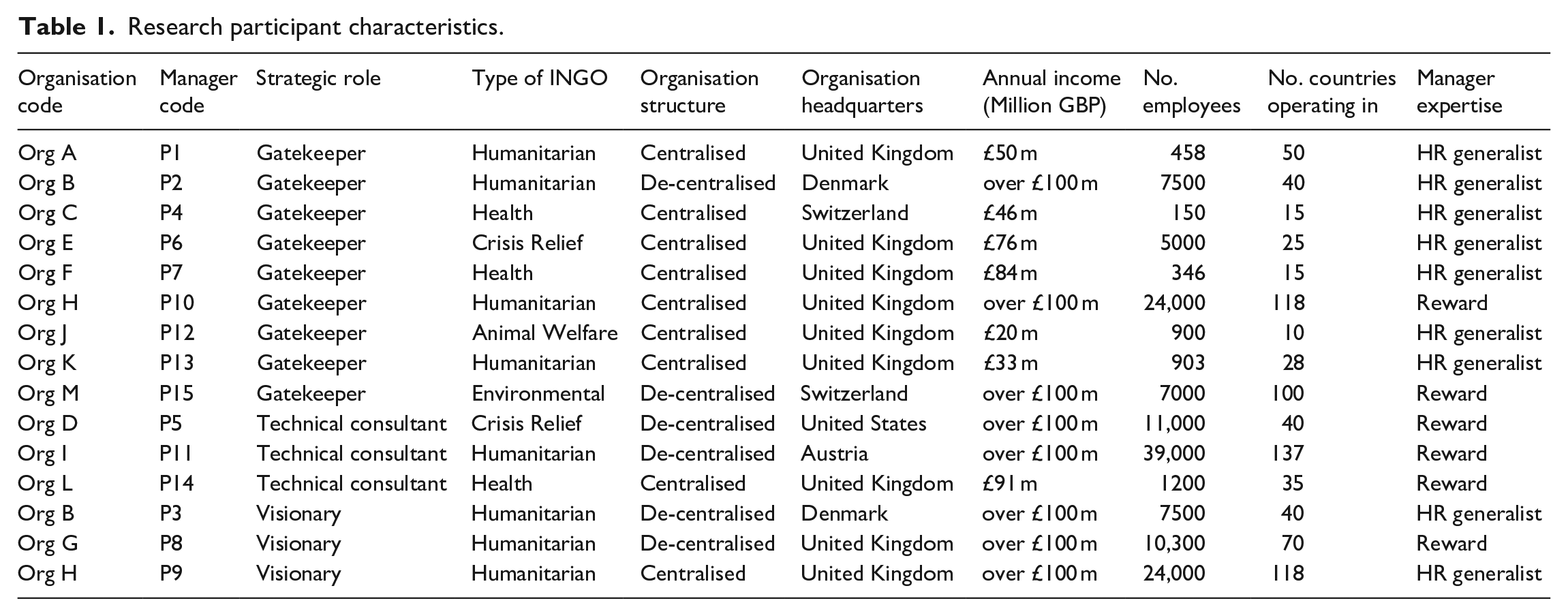
We opted to use a purposeful sampling approach in order to gain a breadth of perspectives. Organisations from which participants were drawn ranged in size, specialism and organisational structure. The HR managers differed in seniority and technical expertise (see Table 1). By collecting multiple perspectives our sample allowed for holistic insight into the diverse methods used by HR managers (Guest et al., 2013). We focussed on recruiting senior HR professionals across international development and aid organisations, and we ensured that we had a range of participants who were reward and non-reward specialists to reflect the current nature of reward management in INGOs.
Research participant characteristics.
Data collection
Fifteen in-depth semi-structured interviews were conducted with HR managers. The sample allowed for a breadth of perspectives whilst also offering insight into different sized organisations, with differing organisational missions. However, the sample size remained small enough to conduct in-depth interviews allowing for greater depth of information and a more comprehensive understanding of the behavioural and contextual influences on HR manager behaviour (Hennick et al., 2020).
Participants were identified based on their role within the organisation having to be either an HR or reward professional, with the ability to have a direct impact on the organisation’s reward strategy. The participants were approached by email by the first author, with an invitation to participate. The study was conducted in accordance with our university’s ethical guidelines. Given the sensitivity of the conversations around reward practices and policies, and the fact the HR managers were discussing challenges surrounding strategic reward issues, full anonymity for the participants and their organisations was provided. Due to the COVID-19 pandemic and the global dispersion of the participants the interviews were conducted via zoom and varied between 60 and 120 minutes. Interviews were recorded and transcribed.
A set of semi-structured interview questions were developed. The questions focussed around the participants’ experiences related to fair reward, including their thoughts about the topic itself and how they contemplated it in their work role. In order to frame the discussions of fair reward, we referred to the Principles and Standards of Fair INGO Reward (McWha-Hermann et al., 2021), as a common point of reference for thinking about their organisations current position and their future aspirations. Developed collectively within the sector, the principles and standards emphasise (and operationalise) ethical reward, transparency, equity, sustainability and compliance and risk (https://www.project-fair.business-school.ed.ac.uk/principles). Hence, in the present study, the principles and standards provided a foundation from which to explore the enactment of fair reward. Open questions were used, allowing participants to provide extensive answers to enhance the quality of the data (Grummitt, 1980), these were interposed with probes designed to elicit more elaborate responses (Qu and Dumay, 2011). Aligned with the exploratory nature of this study, the interview structure allowed a ‘flexible’ approach, offering the opportunity to probe deeper into the role of contextual factors and the behaviour the HR managers utilised (Bryman and Bell, 2011).
Data analysis
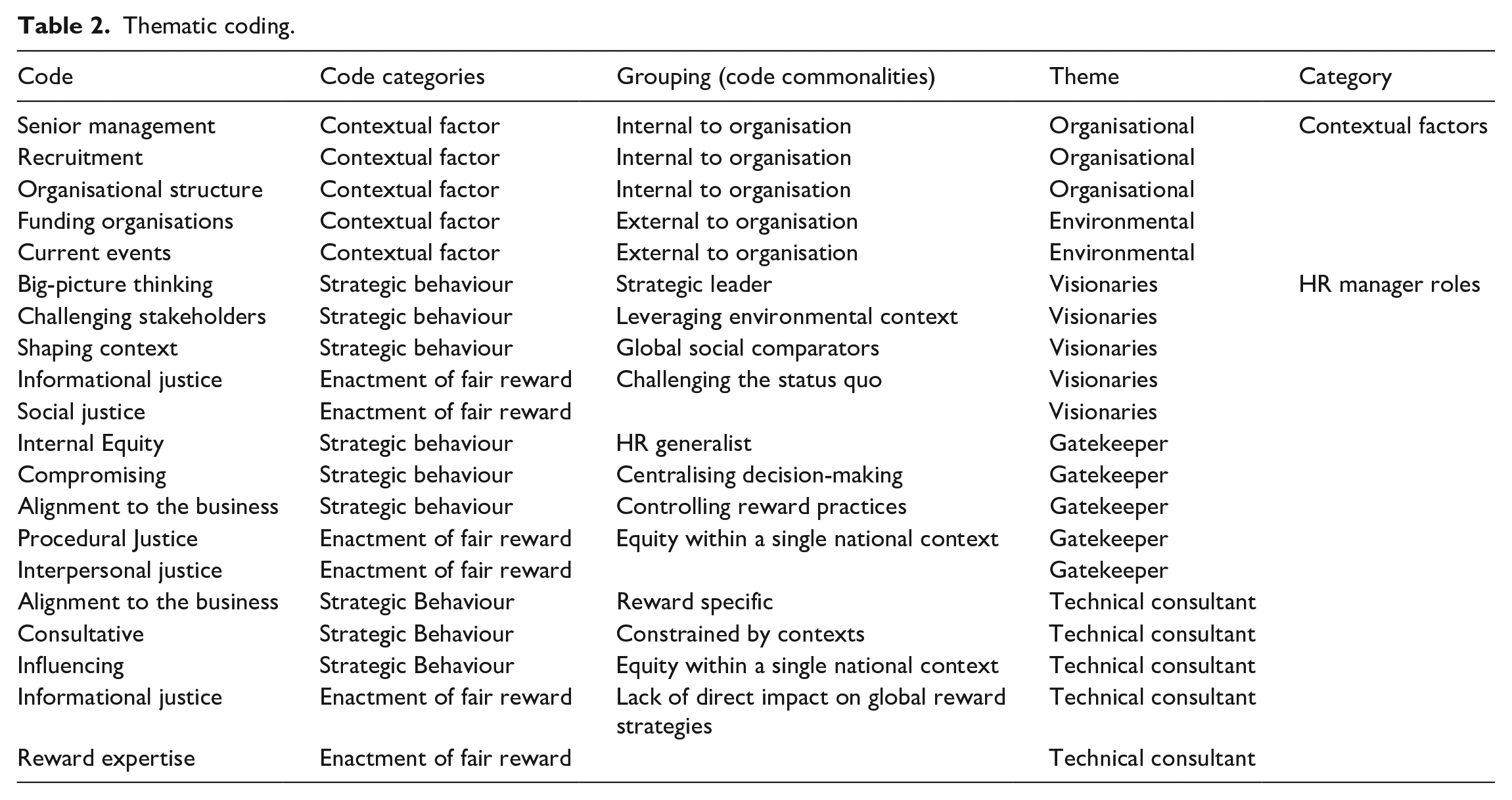
The interview transcripts were analysed with NVivo, using a thematic analysis method (Braun and Clarke, 2006). Through several rounds of analysis, interviews were reviewed and coded line-by-line, to generate codes based on patterns in the data (Saldana, 2016). During the first phase of analysis initial codes were generated. This round of coding focussed on constraining and supporting factors related to day-to-day experiences of managing reward. During the second phase of analysis we focussed on how HR managers reacted to these factors, and drew out behaviours on how they were seeking to enact fair reward. From there, the coded data was categorised and reviewed to allow commonalities to be drawn between codes which subsequently were grouped and eventually became the themes. Overall, the codes were pulled inductively from the data and the themes were derived by analysing the relationships between codes, comparing for commonalities, and synthesised related to how contextual factors impacted the enactment of fair reward and what role the HR manager played in developing and implementing it (Braun and Clarke, 2006; Saunders et al., 2016). A review of the codes and the full data set then took place, ensuring that any missed data applicable to themes was found and the data set supported the themes. The themes were then named, facilitating the generation of ‘grounded’ findings (Braun and Clarke, 2006). These are set out in Table 2.
Thematic coding.
Findings
The findings reveal three possible roles HR managers play in seeking to enact fair reward in INGOs: visionaries, gatekeepers, and technical consultants. We identify a complex interplay between HR managers and the contexts in which they operate, which has consequences for how HR managers can strategically enact fair reward. HR managers therefore adapt the enacting behaviours which they engage in based on aspects of the context. In the following section we first outline the key contextual factors identified through the interviews, as these set the scene for the role an HR manager adopts. We then illustrate the possible three roles HR managers play in seeking to enact fair reward in INGOs and how these are influenced by unique combinations of contextual factors.
Contextual factors
This research found two categories of contextual factors: organisational and environment. The former encompassed three sub-factors which originated within the organisation and the latter two sub-factors which impacted the INGOs but arose in their external environment. These are set out below.
Organisational factors
Organisational factors were contextual factors found within the organisation ranging from organisational stakeholders to structure. They were found to act as constraints on the enactment of fair reward. Senior managers were mentioned by all HR managers as a barrier, or potential barrier, to enacting fair reward. This was because without the support of senior managers, who were in control of ‘the purse strings, [and] the manpower planning’, the HR managers felt they lacked the funding and support to alter reward practices. Backing from senior management was crucial for change, but while some senior managers agreed in principle to the introduction of fairer reward practices, in practice they still wanted to retain the final decision-making power which led to exceptional cases, detracting from the controls the HR managers put in place.
‘the leadership board member will ask for an exception for either a job grade, or more likely, the salary that the person will be paid at and we lose those battles’ (P5)
Furthermore, the organisational structure of the INGOs had a marked impact on how HR managers could enact fair reward. Eight organisations had centralised control of their reward management, with five others operating in de-centralised organisations where reward decision-making power lay with individual subsidiaries. Where reward decision-making power was decentralised and lay with individual subsidiaries, participants reported the structure inhibited their enactment of fair reward because each subsidiary wanted to retain its identity and autonomy, resulting in the HR managers not having the power to enforce the adoption of practices. This is explained by P8:
‘the complication is they [the subsidiaries] all want to keep their own identity. So, they call themselves [the name of the INGO] externally, but the processes, the ways of working, policies, everything’s different’
Despite being responsible for overarching guidance, the de-centralised, consultative nature of the organisation slowed decision-making, making enactment of fair reward a difficult process to implement. Contrastingly, centralised organisations supported the enforcement of a set of global minimum working conditions, reflecting the minimum levels countries had to implement. P14 outlines this when discussing ensuring that salaries are modest but within market value:
‘we have done a lot of the reward work centrally, which has enabled us to keep a really close eye on reward and make sure that a) it’s competitive but b) that it’s not too competitive’.
For P14 the centralised nature of HRM meant less negotiation and interaction was needed with subsidiaries’ management to set ‘fair pay’. P14 goes on to say:
‘I was at [another organisation] previously for 10 years. It was much more in the countries of [that organisation], which was great for empowerment. But there really wasn’t the sort of clarity about whether countries were not paying enough or paying too much’.
Participants from all organisations associated standardisation and centralised HRM as providing a better platform to administer fair reward management, but the extent to which they could practice this relied on their organisational structure.
All participants cited recruitment challenges, which forced them to alter salaries to secure the necessary skills and talent. Often it affected internal equity, as salary offers above the standard salary range were made to secure candidates. Despite undermining fairness, the majority of managers viewed this as a strategic necessity to support the delivery of the organisations’ social mission and maintain competitiveness;
‘for us trying to find really good IT people is so hard, and we have to bend our pay policy, left, right and centre to get people, because we seem to find it so difficult to recruit for. So you go, there’s a skills shortage, you bend. Obviously, you’re going to do that because you’ve got a business to run’ (P12).
Environmental factors
Environmental factors were those sitting outside of the organisation, but which HR managers identified as impacting on their reward management practices. Funding organisations were identified as playing a key role in creating salary disparities by stipulating salary conditions for employees working on the projects they were donating to. Often the salaries they dictated sat outside the standard remuneration for those roles, causing differences in pay between similarly qualified employees. For example, sometimes funders required that candidates were hired internationally and contracted as expatriates, entitling them to higher remuneration packages. HR managers found it impossible to refuse the funding organisations’ demands as it affected their ability to deliver the organisational mission, despite their personal views;
‘donors require that the [recruitment] process is international, which I don’t believe by the way, I think it’s really not sustainable, they will tell you they really want an expat and you’re like, actually, but you want to promote development of capability in country, so we should develop and train someone in country, don’t ask us to get expats’ (P1)
In addition to limitations set by funding organisations, the global events of COVID-19 and the anti-discrimination campaign ‘Black Lives Matter’ (BLM), were also reported to have impacted fair reward practices. For example, inequities in employee eligibility for benefits such as private medical care were exposed by the COVID-19 pandemic, prompting change. The need to provide all employees with a basic level of medical cover irrespective of employment status as a national or international worker, allowed HR managers to push their senior management teams to implement minimum benefits criteria for their national employees. This resulted in COVID-19 enabling a step towards equalising benefits across staff groups. Furthermore, BLM impacted fair reward positively by raising organisational awareness of issues surrounding diversity, inclusion and racial equality. Some HR managers reported that BLM acted as the stimulus for making the topic of diversity explicit within their organisations. Prior to BLM, participants highlighted that the importance of diversity was implicit, assumed as important because of the philanthropic mission of the organisations and the variety of locations in which they worked. One participant described an interaction with an employee on the topic:
‘They asked “are we going to put a statement [on BLM] out from [our organisation]”, and I had to tell them that it hadn’t been thought about. Probably because of the work we do, we mainly work in Africa, so it is the core of our business. Yeah, of course black lives matter because actually that is what we are doing every day. So you know, we [senior management] haven’t discussed that’ (P7)
By making the topic of diversity explicit, BLM also catalysed action against inequality, because organisations needed to be seen to be taking ‘concrete action’ as a result of criticisms of systematic inequality within the INGO sector. This extended beyond BLM, to enable movement towards gender pay inequality and broader conversations with management about inequities in pay:
‘the equity piece between national staff and international staff, it isn’t acceptable, and is kind of less acceptable now that ever was before, with the most recent situation with the Black Lives Matter movement’ (P9)
Finally, HR managers reported that the social nature of COVID-19 and BLM allowed them to evidence their necessity to the business and gave them more authority to push for changes to enact fairer reward practices. They therefore leveraged these globally disruptive events to drive forward changes in fair reward, drawing on the enhanced legitimacy gained through their role as people management experts in the time of crisis.
HR managers’ roles
Working within the context of the different organisational constraints, this research suggests that HR managers can play an instrumental role in shaping INGO strategies around fair reward. However, participants differed in their strategic and fairness enactment behaviours, as well as the methods they utilised to push fair pay agendas, which were influenced by the characteristics of their organisations. We identified three possible HR roles, which each engaged in different strategic behaviours. The strategic behaviours were actions taken by the HR managers to influence their environments and they linked closely to multiple techniques HR managers used to enact fair reward within their organisations. The research revealed that HR managers’ fairness enactment behaviours demonstrated the prioritisation of different organisational justice behaviours including procedural, information and interactional, as well as a focus on different social comparators. The strategic and fairness enactment behaviours of each of the possible roles is illustrated in Figure 1.
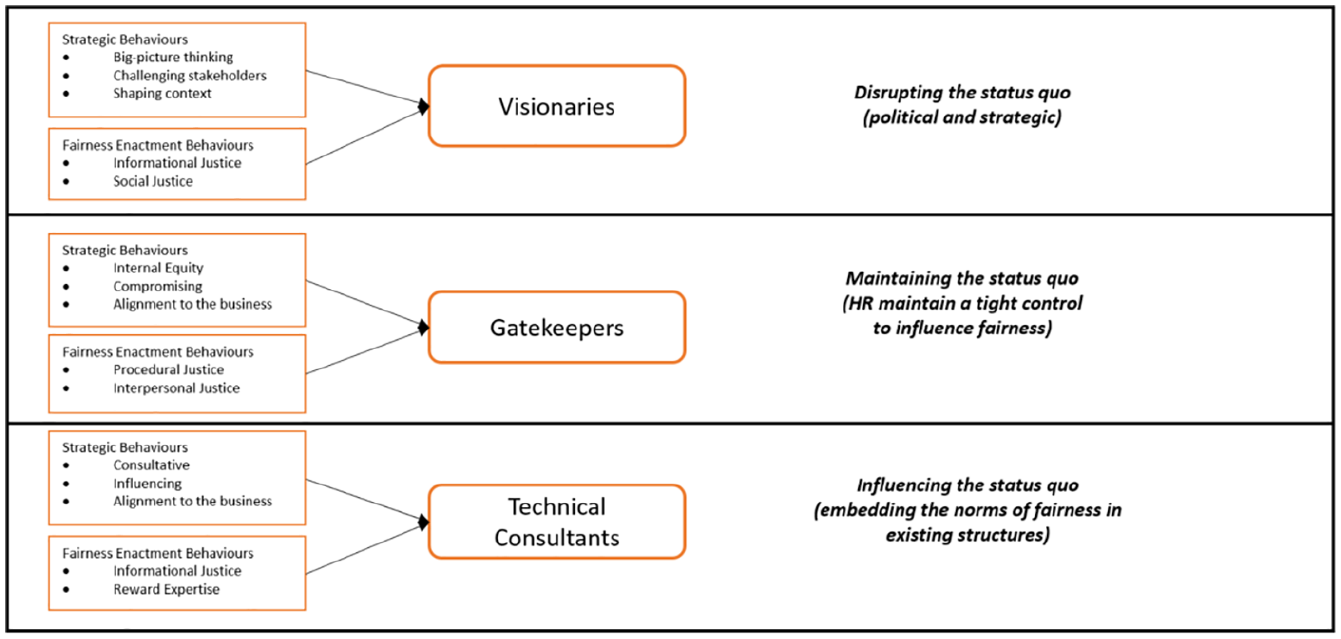
Strategic and fairness enactment behaviours associated with HR roles.
Visionaries
Visionaries were characterised by their ‘visionary’ strategic focus, seeing fair reward as aiding social justice. Generally, they were senior HR generalists, often from organisations with a higher annual income and a de-centralised organisational structure. They took a big picture perspective, focussing on a vision of fairness from a social justice perspective, and held a challenging, thought leadership approach to shift the organisation towards it. These HR managers stressed the moral necessity of establishing equity between international and national employees, seeing it as essential to tackling the social inequities which their organisations’ mission was to address. Driven by their moral mission, visionaries challenged and shaped their contexts to assist their enactment of fair reward. They were comfortable challenging stakeholders, including senior managers:
‘[during the COVID-19 crisis] we spent an inordinate amount of time on this group of expats at a time when we have national staff who don’t have healthcare. We don’t really have a plan for if they get sick - what are we going to do? It raised a lot of questions and we’re having these discussions as a management group, I’m not shy about raising these questions’. (P3)
Visionaries were the most active of the HR managers in leveraging environmental contextual factors, particularly current events, to facilitate the enactment of fair pay. For example, BLM provided the HR team ‘momentum’ (P3) to continue to push the fair reward agenda to address issues of inequity between national and international employees. Visionaries used COVID-19 to push for minimum standards in health benefits:
‘what that did is it gave us that leverage to say to the SLT [Senior Leadership Team], for an organisation of our size, and with our income, it’s just not acceptable to have any staff member who doesn’t have adequate medical coverage, or life insurance. And that then enabled us to start the project to implement global insurance for medical life across all of our countries’ (P9)
Visionaries emphasised the use of informational justice to enact fair reward. A particularly strong example was the focus on changing terminology in order to foster a sense of equity between international and national employees, illustrated by statements such as, ‘we deliberately talked about positions and not people’ (P3). Visionaries have a vision for how fair reward should look and are working at deep structural levels to influence change.
When faced with challenges in establishing fair pay visionaries took a big picture approach, prioritising the maximisation of social justice. For example, when faced with restrictions from funding organisations which reinforced pay disparities between local and international employees, P9 stated:
‘can we live with that slight friction in the country reward system in order to receive funding in order to deliver support to 10 million more children in the country?’
Finally, visionaries highlighted the need to share moral responsibility across the organisation for addressing inequities in reward. While they articulated the vision, they recognised the importance of embedding it at all levels of the organisation. For example, P3 articulated this when discussing setting up training for employees who work with funding organisations with the aim of influencing the funding organisations to become fairer in their requirements around reward.
‘we’re working with our donor compliance team and our grants management team, to develop talking points for all our colleagues who are dealing with donors, so they can sell this [reduction of inequitable reward practices] and we [HR] have to be strong advocates of this approach. . .I think our voice would be much stronger if there were many of us going to the donors with that message’
Gatekeepers
Gatekeepers were HR managers who tended to be generalist HR professionals, without technical reward management skills. Often working in smaller, centralised INGOs which tended to utilise more national employees, focussing on localisation as a way to reduce the international and national inequity in their reward systems.
Their name derives from how they enacted reward, emphasising the desire to have control to ensure internal equity was maintained. For gatekeepers, internal equity was defined as equity between colleagues working within one national context: ‘equality of pay is an internal equity with the rest of the staff’(P7), which is the necessary focus. As a result within subsidiaries ‘people are more comfortable working with their colleagues’ (P7). Gatekeepers emphasised alignment within offices (rather than between them), and the nature of the organisations in which they work meant there was limited interaction across different country offices.
Unlike visionaries, gatekeepers struggled with confronting challenges to their policies (designed to create internal equity) that arose from stakeholders within, and outside, the organisation, such as senior managers and donors: ‘Managers push for something that is not very equitable in the short term and go outside the policy. Unfortunately, I did let it go’ (P1). Only P7 and P13 spoke of engaging in challenging behaviour and disagreeing with senior managers and arguing against the ‘appetite from senior roles to create some privilege to them [salaries]’ (P13).
As a result, trying to uphold internal equity was a constant battle of compromise and strategic flexibility to support the business. Gatekeepers were often forced to forgo their personal desire for internal equity and compromise to support the business’ and stakeholder needs. This was described by P1 who was forced to recruit international staff with different reward and benefits at the request of funding organisations and questioned: ‘why are we [the organisation] not pushing back and walking the talk?’
Equally, P15 described that the challenge of recruiting talented employees took precedent over internal equity;
‘if they have already someone[they want to hire], then the policy has been thrown aside. So, for this area I will put my hands up and say ‘I’m not going to be accountable, management makes that decision’
P15′s comment on the ultimate decision-making power lying with senior managers demonstrates a wider trend within the gatekeepers that as HR they either felt, or actually did, lack the strategic authority to influence decision-making. This was further emphasised by P7 who stated when it comes to ensuring fairer reward practices that ‘if HR wants to make a difference in the sector, we need to get into the table to discuss with finance, with project managers, with technical expert. . .they [HR Managers] are not at this level’.
Gatekeepers demonstrated a strong focus on procedural justice by stressing that fair reward involved procedures and practices that were consistent and standardised. To facilitate this, they tried to maintain centralised control over reward decisions. This was seen when dealing with ‘exceptions’. These ‘exceptions’ were employees who sat outside of the normal reward structure. Having centralised control ensured that ‘exceptions’ were only granted when there was reasonable justification. It was believed without centralised control organisational stakeholders would have too much discretion over reward practices, leading to variances which they believed not to be equitable practice, as stated by P12;
‘I think if I was to let go of a central reward system, I would guarantee you I would see performance related pay coming in everywhere. I would see different tier systems coming in. And it would turn into a kind of meritocracy of people being paid for performing better than others’
However, gatekeepers also frequently described moral dilemmas, which often arose out of contextual issues such as recruiting. Here their enactment of fair reward was challenged because they were required to operate outside procedural boundaries: ‘Well, this is unfair, this person is getting paid so much more than everybody else. How can I justify that? Because I don’t feel I can’ (P13).
To try to mitigate these dilemmas they used mechanisms which gave them flexibility in assigning reward packages but within controlled limits, so as to maintain equity. For example, some implemented a policy on fixed percentage rise on salaries (e.g. 10%) to enable remuneration packages to be increased in order to hire exceptionally skilled candidates. However, participants acknowledged at times still needing to operate outside this policy and having to make, an ‘organisational, a strategic decision, you could call it a subjective decision’ (P6), to allocate an even higher (inequitable) salary. This often required putting aside their personal opinion.
In addition to focussing on creating procedures to nudge towards fairer pay decisions (despite ongoing use of exceptions to those policies), gatekeepers also prioritised the importance of interpersonal justice to enact fair pay. This included using individual communication via telephone to explain complex pay decisions and overcome different national cultural attitudes towards pay. Emphasising the need to explain to managers and candidates why they were not authorising ‘exceptions’ to salaries, assisted overall in reducing salaries by ‘big amounts’ (P7). This enabled them to monitor equity between colleagues and reduce the introduction of ‘exceptions’ into their reward systems where possible.
Technical consultants
Technical consultants were predominately based in larger, de-centralised INGOs. These participants reported particular difficulty with being constrained by their organisational context, with the de-centralised structure requiring navigating complex organisational politics in an effort to promote fair pay agendas. Technical consultants were employed in reward-specific roles, with specific reward expertise.
Technical consultants were characterised by their focus on influencing distributive justice within one national context rather than trying to impose consistent practices across the organisation as a whole. This may be because technical consultants tended to work in larger organisations with multiple subsidiaries in complex locations. As a result, they did not place as much emphasis on organisation-wide internal equity but instead used their specialist skill set to try to equip organisational stakeholders (such as senior managers) to make fair reward decisions. In doing so they acted as internal reward consultants, despite working in objectively the same roles as other participants:
‘I still see myself like a consultant, I don’t force the member associations to do anything, I advise them, I give them tools, I give them professional opinions to then implement’ (P5)
This was in stark contrast to gatekeepers whose primary focus was to maintain control of internal equity. The reward strategies technical consultants managed were strongly influenced by the desires of the organisation’s management, rather than being driven by their own vision for internal equity:
‘we’re going to give our advice, we’re going to sometimes speak loudly and firmly that this is what we think is the right answer is, but at the end of the day, it’s the manager, the leader that gets to choose’(P5)
They employed influencing skills to drive their strategic agendas and influence their contexts, which demonstrated a lack of power they had over enforcing wider organisational reward strategies. P11 embodied this when explaining the tactic of convincing ‘stronger’ departments, namely finance, that certain methods of action are less risky, so they would endorse practices of fair reward which in turn would assist with senior management indirectly supporting fair reward strategies: ‘So that was successful because I connected to finance processes, HR is too weak, finance is strong enough’. As a result of the constraints the context put on them, they focussed on slow, incremental change of pay practices to become fairer, using other stronger stakeholders to give their reward practices legitimacy.
To enact fair reward technical consultants described using informational justice, in particular different terminologies to alter employee perceptions. Similar to visionaries, terminology was a seen as a powerful tool for portraying perceptions of fairness: ‘in any reward system we should keep a close eye at the terminology, because people will misunderstand you if they want to, because they will just not hear it’.(P11). Despite their relative lack of influence at a policy level, technical consultants found other methods to influence including addressing symbolic structural issues such as terminology.
Using strategies underpinning informational justice enabled technical consultants to signal to subsidiaries if they were enacting fair reward. For example, using a ‘scorecard’ system which measured subsidiary reward practices and awarded a colour depending on their level of compliance against measures with green being 95% or above, yellow 90%–95% and red if its below 90% (P5). Similarly, P11 utilised a similar practice with making recommendations of which subsidiary managers should be allocated pay funds based on their compliance with the head office’s organisational reward principles. Participants described these types of methods as beneficial to transferring reward practices globally.
Technical consultants used their technical reward expertise to influence employee perceptions of reward management practices. They spoke about ensuring the entire pay package was considered when measuring equity across contexts (i.e. taking a total reward approach), as the benefit requirements vary from country to country rendering cash pay comparisons incomparable. Furthermore, a need to consider allowances that were linked to base pay which could ‘inflate the package’ (P14).
Discussion
The findings of this study unearthed a complex dynamic between HR managers and the context of the organisation in which they work. The unique combination between the HR manager and their context impacted the strategic role and fairness enactment behaviours they employed. Our analysis therefore indicates that in seeking to enact fair reward in their organisations HR managers can play a critical role, but they must navigate various aspects of their specific organisational and environmental context, and adapt their behaviour in response, in order to maximise the potential impact they can have in enacting change. This supports earlier in-depth analyses of the ‘HR change agent’ roles which shows that depending on the type of change, the level of seniority the role of the HR Manager can change (e.g. more or less proactive, more process or content focussed) (Alfes et al., 2010; Caldwell, 2001). The conceptual framework below (Figure 2) shows the ‘below surface’ dynamic between the contextual factors and the HR manager’s role as visionary, gatekeeper or technical consultant, which ultimately dictates how the ‘above surface’ enactment of fair reward is displayed. The findings suggest that INGO contextual factors, both internal and external to the organisation, directly impacted how HR managers framed equity and their adoption of strategic behaviours in order to navigate and influence fair pay agendas.
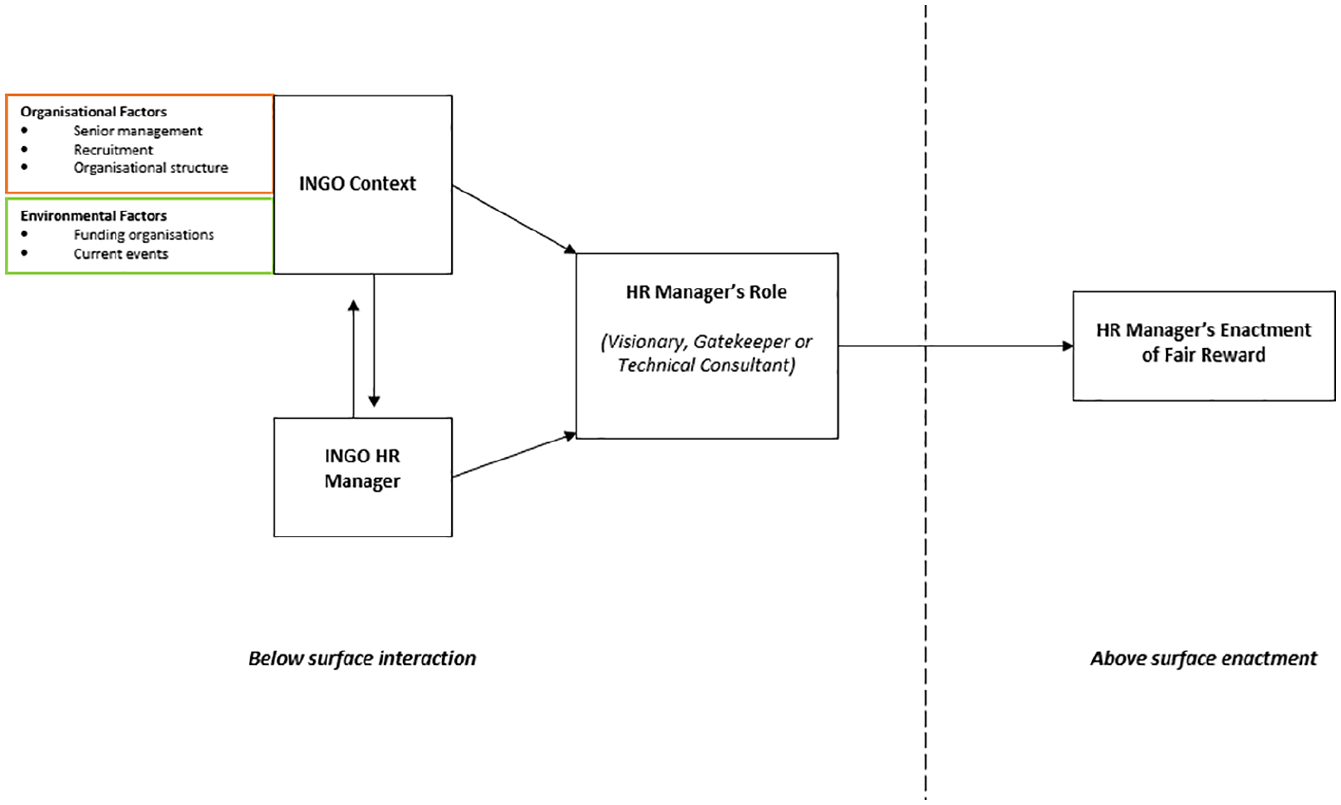
Conceptual framework of fair reward enactment in INGOs.
Contributions
Overall, this research contributes to a broader understanding of the processes through which HR managers can seek to enact fair reward in at least three ways. First, we contribute empirical evidence that HR managers can be dynamic, proactive, strategic actors for change agendas not initiated by organisations, in this case the introduction of fairer reward practices. None of the participants were reactively implementing fairer reward practices because the organisation/senior management had requested it. Rather, these HR managers framed themselves as proactive agents of change. The strategic proactivity of participants was a result of them actively balancing the needs of the organisation with the ethical and fairness impacts of their reward practices on employees (Sheehan et al., 2014). In line with Kramer (2014) we find that HR take a proactive change role when they act as ‘ethical stewards’, balancing ethical action towards employees with the needs of the business. Our research findings position HR managers as active shapers of reward methodologies and fair reward practices, thus providing evidence in support of common good HRM (Aust et al., 2020), indicating that HR managers seek to actively influence their organisations towards social and sustainable goals.
Second, we identify at least three roles through which HR managers engage in order to promote fair reward practices in their organisation: visionary, gatekeeper and technical consultant. Our theoretical contribution is to identify the influence of the contextual conditions within which HR managers operate, and how managers leverage and navigate these conditions to take on different HR roles in the organisation (Cayrat and Boxall, 2023). The different HR roles also signal differing methods for dealing with the ambiguity and complexities of HRM’s duty to reduce INGO labour costs whilst simultaneously contributing towards creating fairer reward practices (Kramer, 2014). The end goal for all roles was the same – fairer reward systems – however the process through which HR managers worked towards this was restricted by the context. Despite the constraints organisational contexts placed on the ability to enact fair reward, we found evidence that HR managers strategically leveraged disruptive environmental contextual factors in order to promote the enactment of fair reward. Both BLM and COVID-19 acted as a tool for raising the profile, legitimacy and internal importance of HRM, enabling advancement of fair reward practices. HR managers grasped these disruptive events and leveraged them in order to shape discussions of fairness within the organisation. The social nature of these macro-environmental events offer HRM a greater opportunity for input into the business strategy as health and diversity are their areas of expertise, consequently raising their internal profile and strategic influence (Baluch, 2011; Jo et al., 2023; Sheehan et al., 2014), as well as reflecting the broader shift within HRM towards employee- and society-orientation (Cooke et al., 2023). Thus, we find evidence that HR managers take dynamic strategic actions to leverage events in the environment in order to combat their historic struggle for recognition and respect, in doing so facilitating the advancement of their fair pay agendas (Brewster and Lee, 2006). Building on events related to COVID-19 and BLM allowed HR managers to prove their necessity to the business and provided them authority to push for changes to enact fairer reward practices (Vincent et al., 2020). Ultimately, HR managers in our study made use of unexpected environmental events to strengthen HRM, but their organisational context remained a major constraint for implementing fair pay.
Finally, we show the interplay between organisational needs and context, and managers’ individual commitment to fairness. In doing so we further extend existing theory on strategic and operational HR roles, to include a combination of contextual and individual conditions that influence role enactment (Cayrat and Boxall, 2023). The interplay between organisation needs and context, and individual HR managers’ commitment to fairness, shaped how HR Managers defined and operationalised equity in their organisation. Distributive justice was still of overarching importance (Colquitt et al., 2012), however, the three strategic roles used different social comparators in defining and addressing equity. Visionaries focussed on measuring distributive justice from a global perspective, particularly between international and national employees, whereas technical consultants and gatekeepers concentrated on internal equity between colleagues in one country. The latter’s focus meant they emphasised procedural justice to a greater extent, using methods of standardisation and consistency. In contrast, visionaries focussed on social justice. Furthermore, the context played a major role in influencing their framing of equity, and its enactment. For example, the extent to which an HR manager operated in a de-centralised or centralised organisation impacted their ability to enact procedural justice. HR managers in centralised organisations had control, so emphasised standardisation and consistency to fair reward practices. In comparison, technical consultants operated in de-centralised INGOs, constraining their ability to impose set reward procedures, making procedural justice difficult to uphold. Contextual factors thus restricted the amount of influence HR managers had on the organisation’s behaviours and decisions (Shen and Cho, 2005). Thus, at times, the HR manager’s context dominated their ability to establish procedures to facilitate their enactment of fair reward.
Practical implications
As well as important empirical and theoretical contributions, our research offers key practical insights for HR managers looking to influence reward policies and practices to be fairer. Though our findings indicate that HR managers ability to influence change is constrained by their organisational and environmental context, our findings also suggest that even when in restrictive contexts HR managers can play an active role in enacting fair reward. Furthermore, with careful attention, HR professionals are able to leverage some contextual factors to give weight to, and demonstrate the value of, their strategic objectives, as was seen with HR managers using COVID-19 and BLM to further their fair reward agendas.
Additionally, for those operating in more restrictive organisational contexts, our research suggests that informational justice is more easily leveraged than distributive or procedural justice, hence may be a useful starting point. For example, technical consultants emphasised the importance of reviewing terminology to influence employee fairness perceptions on the distribution of their salary. Through leveraging different facets of justice, HR managers’ can play an active role in enacting fair reward, even when constrained by their context, positioning them as critical actors in shaping fair reward agendas and strategies.
A second important practical implication of our study is that our findings demonstrate that HR managers are driven by grand challenges beyond their organisations, such as poverty and inequality, and can engage in influencing organisations to align with these broader goals. Our research helps to provide insights that support HR managers to navigate the contextual constraints they face, and support them to influence change. In doing so we strengthen the links between every day HR practices, and global grand challenges.
Limitations and future research
Despite the new insights this study brings, some limitations have been identified. Firstly, there are inevitably limitations related to the chosen sample. Within our research we identified three possible roles HR managers could play in enacting fair reward. However, there may be limitations due to our small sample size, including the potential for additional roles which did not emerge in our sample. Furthermore, given the dynamic interaction between the roles and the context, future research should examine the potential that the roles may change depending on the situation. Additionally, our sample predominately consisted of INGOs headquartered in the global north (United Kingdom, Europe and the United States). Therefore, future research should investigate whether HR managers adopt other roles and/or enact fair reward differently in organisations located/headquartered in the global south.
Secondly, our sample was limited to HR managers who self-identified as being interested in enacting fair reward, and who were motivated to do so. As a result, the findings of this study may not be reflective of all HR managers. Nonetheless, the study offers promise for identifying pathways for HR managers to influence fairness, and offers insights into how research can support HR managers to influence global grand challenges.
Thirdly, there could be personal factors that shape HR managers’ strategic orientation or their enactment of fair reward. For example, individuals may have personal standards of ethics which informs their response to fairness (Colquitt et al., 2001). Furthermore, Scott et al. (2014) suggest that managers violate and adhere to justice actions for ‘hot’ or ‘cold’ motives. Additionally, personal characteristics such as gender, age, seniority and educational qualifications may influence the social capital of HR managers to influence change within their organisations. Therefore, future research could consider if and how such personal factors may influence why HR managers work in particular types of organisations, or may influence the strategic role they adopt, and their ability to influence and enact fair pay.
Finally, future research could explore how these behaviours differ or align across different sectors. Our study has focussed on INGOs, however INGOs operate with a social mission and rely on funding organisations to finance their operations and who can impose contractual terms on them in return for funds (Baluch, 2011). Furthermore, there are likely to be other contextual factors unique to INGOs that are critical in shaping and constraining HRM practices, though these have yet to be established in the literature (Akingbola, 2013). This suggests there could be different contextual influences in INGOs than in MNCs, which may impact how HR managers enact reward management.
Conclusion
This study draws out the dynamic role HR managers can adopt in order to pursue fair reward within their organisations. We demonstrate why, how and what influences HR managers in INGOs to seek to enact fair reward and highlight a complex interplay between the manager and their context in doing so. Across a range of different roles, HR managers demonstrate their effectiveness in influencing fair reward within their organisations. Visionaries use political and strategic approaches to disrupt the status quo, gatekeepers maintain a tight control of fairness in order to maintain the status quo, and technical consultants aim to influence the status quo by embedding norms of fairness in existing structures. What underpins and links these roles is their commitment to shaping fairer reward, albeit through different strategies. Our participants saw this to be their responsibility, as custodians of fairness in their organisations. Our research findings reflect clear parallels with a common good HRM approach and provide potentially important insights into the dynamic and strategic ways HRM can impact societal grand challenges.
