




Abstract
This study draws on arguments from common good theory to explore the sustainable human resource management (S-HRM) reporting. Specifically, the purpose of the study is to determine how to improve the common good authenticity of sustainability reporting in HRM. Our qualitative data consist of sustainability reports from the 40 most sustainable corporations from the Global 100 index. In the reporting data, we identified four HRM themes, and several aligned HRM practices, with measures that support common good values. Our research strengthens the connection between the common good values and CGHRM by comprehensively defining and explaining the common good values. By doing so, we emphasise the need for a humanistic-ethical orientation expressed by treating employees with respect and dignity. We also identify areas in which current reporting falls short, including the outside-in perspective of CGHRM.
Keywords
Introduction
As social, environmental and economic sustainability challenges become increasingly apparent worldwide, many companies have committed to integrating sustainability into their management systems and reporting on their efforts to stakeholders. Human resource management (HRM) is one of these management systems, as the human resources (HR) department potentially has a critical role in implementing sustainability within organisations (Stahl et al., 2020).
The evolution of sustainable HRM (henceforth, S-HRM) research (Ehnert, 2009) has developed in three stages from socially responsible HRM, (e.g. Latan et al., 2022) to green HRM (e.g. Renwick et al., 2016) and to triple bottom line HRM (Elkington, 1997). These stages aim to consider how social, environmental, and economic perspectives are relevant to long-term organisational success (Ehnert, 2009). However, recent global challenges have pinpointed the need for a new way of thinking (Pham et al., 2023). Therefore, Aust et al. (2020: 3) introduce a research stream called common good HRM (CGHRM), which ‘could be essential in driving progress toward addressing sustainable development goals (SDGs) in sustainable HRM’. Aust et al. (2020) argue that CGHRM reverses the perspective of the HRM system from inside-out (meaning a profit orientation and the economic purpose of the firm itself) to outside-in (meaning an orientation towards grand challenges affecting the common good globally); the goal of the outside-in orientation is to contribute to grand challenges (e.g. climate change, overpopulation, environmental problems and social inequity), where CGHRM places equal value on collective and individual interests.
The common good approach considers the moral responsibilities of the company to a broad set of stakeholders (O’Brien, 2009), which may lead to a positive change in implementing sustainability in the HRM system. Therefore, companies are seen not only as having to make a profit (economic approach) but also as needing to meet moral obligations in conducting business (ethical approach) towards a more humanistic orientation in management (Albareda and Sison, 2020). Moral legitimacy helps convince stakeholders of the ethical acceptability of their business or the particular HRM practices that they are carrying out. Hence, moral legitimacy may give companies a social licence to operate (Melé and Armengou, 2016). Melé and Armengou (2016) argue that companies are generally seen as legitimate institutions which contribute to the common good in different ways (e.g. by providing jobs and careers, developing knowledge, skills, and abilities and creating wealth). Consequently, definitions of the common good clearly point out the importance of all groups who partake in the common good and their wider flourishing (Finnis, 1986; Melé and Armengou, 2016).
Because multiple stakeholders have high expectations for sustainable and transparent organisational practices, there is a need to improve HRM systems by including stakeholders to participate (Sison and Fontrodona, 2013). Stakeholders mainly rely on data reported by the company when evaluating the legitimacy of its activities. For example, employees may expect that if their organisation is socially responsible towards external stakeholders, it will also be socially responsible towards its employees (Zappalá, 2004). However, some organisations may only protect their brand and corporate reputation to attract employees and customers and be less socially responsible towards their current employees (Royle, 2005). Although employees are seen as a primary stakeholder in many HRM models, reporting is still shareholder-driven due to a lack of transparent reporting criteria (Parsa et al., 2018). So far, S-HRM reporting seems to follow traditional HRM reporting by reporting on HRM activities on diversity management, training and development, and health and safety (Ehnert et al., 2016), but not so much attention has been paid to solving grand challenges and addressing the common good. It remains unclear whether large listed companies that focus on the interests of shareholders are able to implement CGHRM (Aust et al., 2020). As argued recently by Lu et al. (2023), there have been positive movements toward common good in business, but empirical studies on the role of common good values in HRM are scarce (see Hollensbe et al., 2014).
The purpose of this study is to determine how to improve the common good authenticity of sustainability reporting in HRM. Thus, the aim is to integrate common good theory and values into S-HRM reporting, and into CGHRM. Two research questions are explored: (1) how does the current S-HRM reporting capture common good values? and (2) to what extent the reporting is incomplete? Our theoretical contribution strengthens the link between common good values and CGHRM in S-HRM reporting, by integrating the common good values into HRM practices. In conclusion, we advocate an approach marked by a humanistic-ethical orientation, which stresses human beings as the primary concern of CGHRM.
The remainder of the paper is structured as follows. The following parts of the paper review the common good approach in S-HRM and S-HRM reporting. The method part describes the data and analysis and is followed by the findings. The paper ends with a discussion and conclusions.
Common good in sustainable human resource management
According to the common good approach, organisations should address global challenges that are collectively faced (Albareda and Sison, 2020). The theory of common good (Melé, 2009, 2012; Sison and Fontrodona, 2013) focuses specifically on organisations when talking about the relationship between the community’s and the persons’ good in order to contribute to the interests of society while helping the common good of all who partake and persons’ flourishing (Sison and Fontrodona, 2013). The common good refers to resources that require some kind of cooperation and collective knowledge from employees (Pham et al., 2023). CGHRM is a new concept that looks not only to the outcomes but also to the purpose (the reason ‘why’ behind a given direction) of the firm (Aust et al., 2020). Hence, drawing on classical teleological philosophy, the purpose of what firms do is oriented towards promoting conditions for people (individuals and wider collectives) to flourish (eudaimonia) via cooperation within a community (Melé, 2009).
In regards to any given business, Sison and Fontrodona (2013: 612) describe that when speaking of a firm, its common good is intrinsic (i.e. it cannot exist outside the firm or independently of its members), practical (an activity to be performed), and social (it depends on a group or community acting in a coordinated way). Creating conditions (e.g. human condition, Melé, 2009) which support the common good needs to take into account important values (e.g. dignity, solidarity, reciprocity). Economic, environmental, organisational and human conditions (Melé, 2009) are enhanced by HRM practices and values that empower people to feel connected to a common good. Common good outputs impact social and ecologically sustainable development (Aust et al., 2020; Lu et al., 2023). Hence, sustainability in HRM relates to the overall purpose of business, organisational values, and an outside-in perspective (Aust et al., 2020) which elevates the importance of multiple stakeholders (Järlström et al., 2018).
The priority of a shareholder has typically been profitable performance, but employees, customers, and society might value broader goals such as making a difference, improving lives or reducing harm (Hollensbe et al., 2014; Mariappanadar et al., 2022). A growing number of stakeholders are aware of SDGs as being a business’s concern, if not a priority. Hence, with regard to a business organisation’s purpose, business and society are interdependent. Correspondingly, caring and sharing can offer fulfilment at the collective level (e.g. employee volunteering) because there is the reciprocal relationship between each person, the organisation, and the wider community (Argandona, 1998). Hollensbe et al. (2014: 1229) state: ‘. . .the common good aims to promote the good of society as a whole’. This means that common good in the context of the firm is about fulfilling the company’s purpose.
Overall, sustainability means adopting a longer-term perspective on the business’s survival and treating employees fairly, respectfully and considering their well-being (Ehnert, 2009). Furthermore, it means enabling conditions which do not fuel tension, but rather quality cooperation among individuals and their development (with attention given to individual’s uniqueness and dignity). This also includes the cultural environment which supports virtue-related aspects such as friendship which supports collaboration (Bolade-Ogunfodun et al., 2022) as well as the common good linked with different individuals and their groups internally (and externally) at an organisational level (Argandona, 1998; Pham et al., 2023). According to Stahl et al. (2020: 5) ‘HRM practices can be considered responsible or sustainable in so far as they contribute to social welfare, environmental protection, and long-term economic prosperity, and irresponsible or unsustainable if they harm social, environmental and economic well-being’. Taken from this, a key concern emerging from the S-HRM literature is the intent to do good for society and avoid harm.
As CGHRM is a relatively new viewpoint on S-HRM (Lu et al., 2023; Pham et al., 2023), its implementation as an HRM model is unclear. However, Aust et al. (2020) describe CGHRM as having four distinct principles (1) the outside-in perspective (meeting grand challenges), (2) equal and fair employment relationships (aiming at trusting relationships and organisational success), (3) opportunities for stakeholder participation and democratic workplace representation (local solutions for global challenges) and (4) maintaining a psychological contract in terms of protecting human needs in employment (including security, safety and meaningful work). These four principles take the common good approach by highlighting societal effects and challenges, especially when the perspective is outside-in. CGHRM also relies on common good values (see Aust et al., 2020; Hollensbe et al., 2014). Hollensbe et al. (2014) provide a comprehensive list of common good values that make people feel connected to a common good: Dignity (viewing each person as a someone, not a something), solidarity (recognising that other people matter), plurality (valuing diversity and building bridges), subsidiarity (exercising freedom with responsibility), reciprocity (building trust and trusted relationships), and sustainability (being stewards of people, values and resources). These values may potentially help HRM to achieve common good purposes (human and social goals). Hence, little is known about how the common good values (Hollensbe et al., 2014; Lu et al., 2023) can be applied to HRM systems (e.g. strategies and practices) and reporting, in order to advance CGHRM.
HRM in sustainability reporting
Global companies are under increasing pressure to report on how fairly and ethically they treat their workforce (Parsa et al., 2018). They need to publicly disclose information about their sustainability and accountability as a way of standing out as responsible actors and employers. Correspondingly, companies take different strategies in reporting to ensure their legitimacy (Lindblom, 1993).
The importance of sustainability reporting has increased over the past decade (Du and Yu, 2021), but it has not yet received essential principles of the common good, as no standards or rules have been set for such reporting. Hence, sustainability reporting often replicates reporting habits from annual reports, but there is considerably more reporting on issues such as human rights, ethical issues, diversity and inclusion (e.g. Ehnert, 2009; Ehnert et al., 2016; Parsa et al., 2018).
At the senior management level, reporting is an opportunity related to legitimacy. With reporting, a company seeks to legitimate the means and ends of the organisation through both substantive practices (e.g. that provide complete and comprehensive information even if it is less favourable to the organisation) and symbolic practices (e.g. being general/minimal in nature, and that emphasise good news), which vary depending on the company’s attempts to extend, maintain, or defend its legitimacy (Ashforth and Gibbs, 1990; Dowling and Pfeffer, 1975). Therefore, reporting on S-HRM can be seen as a process of legitimation through adopting certain strategies (Brown and Deegan, 1998; Lindblom, 1993; Parsa et al., 2018). For example, Lindblom (1993) has presented four strategies which a firm may utilise in reporting. Applying to HRM, the firm may seek to inform its stakeholders about actual changes in its HRM policies and practices; it may seek to change the perceptions of stakeholders without changing actual HRM practices; it may seek to manipulate the perceptions of stakeholders by directing attention to different issues or topics; or it may seek to change expectations regarding its HRM-related performance.
A number of previous studies have focused on sustainable reporting in HRM (e.g. Diaz-Carrion et al., 2018; Ehnert, 2009; Ehnert et al., 2016; Mariappanadar et al., 2022; Parsa et al., 2018) and identified a diverse set of policies or practices. For example, the analysis by Diaz-Carrion et al. (2018) revealed 98 HRM practices under six HR policy areas: (1) staffing, (2) training, (3) performance appraisal and career management, (4) compensation, (5) work–family balance and diversity promotion and (6) occupational health and safety. Similarly to Parsa et al. (2018), Ehnert (2009) and Diaz-Carrion et al. (2018) showed HRM practices which seem to be focused more on internal stakeholders rather than external ones. The main reason may be the direct influence that organisations have over their own workforce. Although work–family balance or work–life balance are mentioned, the point of view is the individual as an internal stakeholder rather than the community (e.g. family members or friends) flourishing (Melé, 2012). However, Parsa et al. (2018) and Ehnert (2009) raise up also employee relations and human rights, which include those of external stakeholders (e.g. workforces in global value chains). These findings illustrate the challenge in defining S-HRM practices and the value of reporting.
Parsa et al. (2018) found that some companies do not report key details because they claim that sharing this information is not a legal requirement as indicated by their home government. Hence, the authors conclude that companies seem to be more motivated to enhance legitimacy than transparency and comparability. Likewise, Mariappanadar et al. (2022) recently studied the quality of occupational health, safety and well-being disclosures. They argued that companies merely disclose sententious information about well-being issues and rarely attempt to translate their claims into outcomes. These studies are significant in the sense that they direct attention also to negative phenomena and harmful outcomes for stakeholders. This critical stance also highlights that if we do not recognise all the different groups that are part of or influenced by the company, we cannot identify what the common good is.
Overall, standards (such as the Global Reporting Initiative (GRI) or Global Compact) guide reporting. The EU mandates comprehensive reporting by large, listed companies on their activities related to people and the environment. A renewed EU directive (EU, 2023) has strengthened rules for reporting: Companies must adhere to European Sustainability Reporting Standards by 2024. Globally, the EU leads in standardising non-financial reporting, with the U.S. also facing increasing pressure to report on Environmental, Social and Governance (Harper Ho, 2020). However, the U.S. lags due to institutional history and a market focus on financial performance. Despite this, many publicly traded U.S. companies voluntarily report on non-financial issues, often following GRI standards (Harper Ho, 2020). However, voluntary reporting elevates concerns about the credibility of information, giving rise to issues like greenwashing (Sethi et al., 2017).
In our empirical part we study how the world’s most sustainable corporations report on HRM. Further, we demonstrate how common good values are integrated into the reported HRM practices.
Research method
Data collection
Corporate Knights (2021, the Global 100 index) has ranked the world’s most sustainable corporations since 2005 based on publicly disclosed information without submissions or payments from the companies involved. The listing is done by an independent actor, and it is transparent in its ranking methods. The companies are screened for their financial health, product categories, and misconduct and are scored on 24 key performance indicators which are intended to ensure that the companies act sustainably. The transparency of the list was the main reason why the list was chosen as our data source.
Our data consist of the sustainability reports of the top 40 companies on the list (see Table 1). The reports were retrieved from the companies’ own websites mainly for years 2019–2020 or, if available, 2021. If a sustainability report was not available, the annual report was selected. The main reason for using public reports was to enable a larger sample than would have been obtained with interviews. Concerning European companies, the reports were published before the new EU directive (EU, 2023) took force. The previous reporting directive was applied until the new rules took force and, therefore, the reports of Europe-based companies complied with the previous directive. Since there are no universally agreed standards in reporting on S-HRM, there may be variety in the contents of the reports. There may also be a gap between reporting and practice. We acknowledge this gap and aim not to evaluate the actual activities of the companies. Thus, our analysis focuses only on the reported material.
2021 Global 100 ranking.
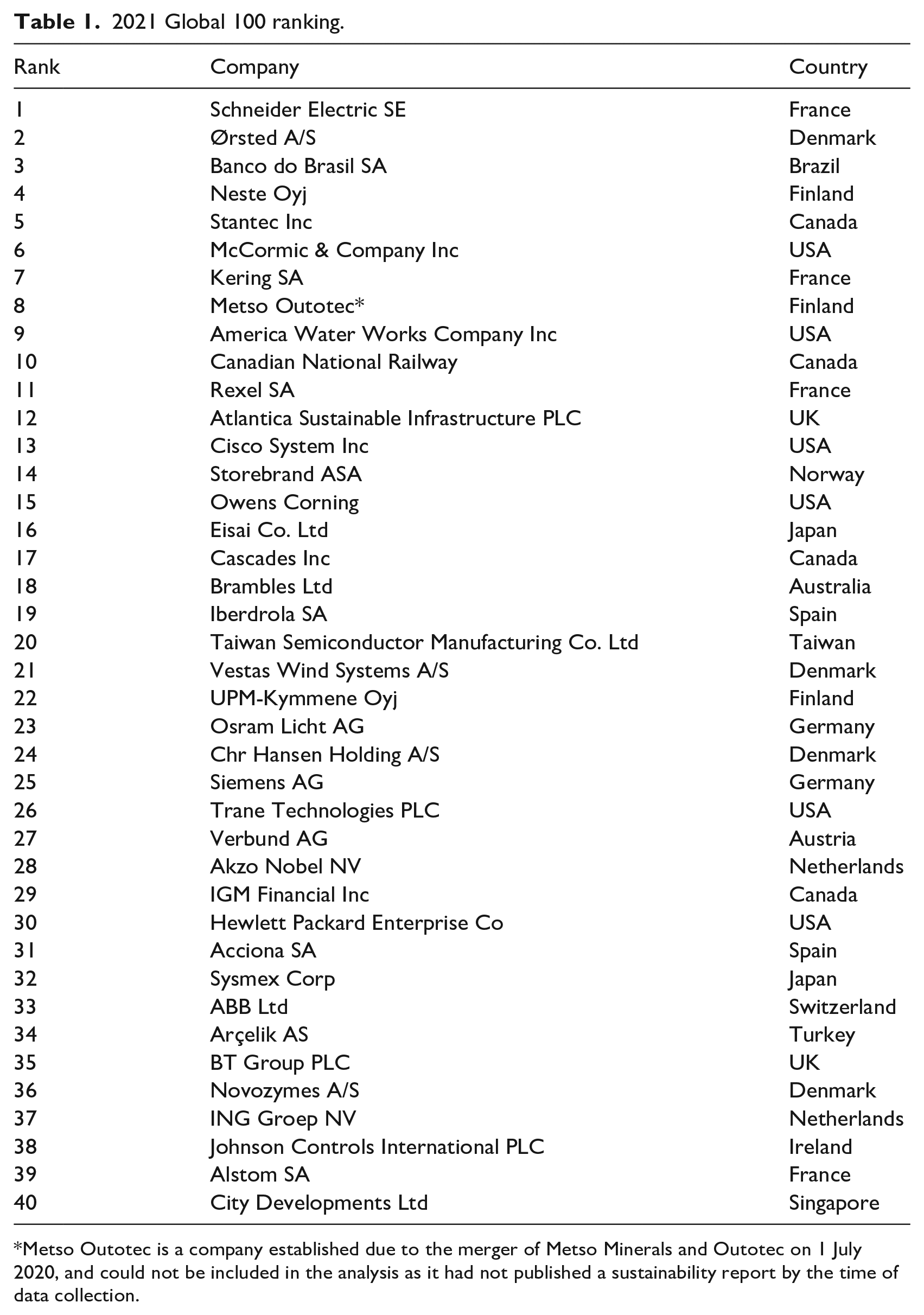
Metso Outotec is a company established due to the merger of Metso Minerals and Outotec on 1 July 2020, and could not be included in the analysis as it had not published a sustainability report by the time of data collection.
Analysis
The reporting data were analysed using data-driven qualitative analysis (Elo et al., 2014; Miles and Huberman, 1994). In the first phase, data were extracted from the people or employee section of the sustainability reports – the part including information on HRM. The amount of data relating to ‘people matters’ varied from 1 to 40 pages in the reports. This textual data formed the raw data for the analysis.
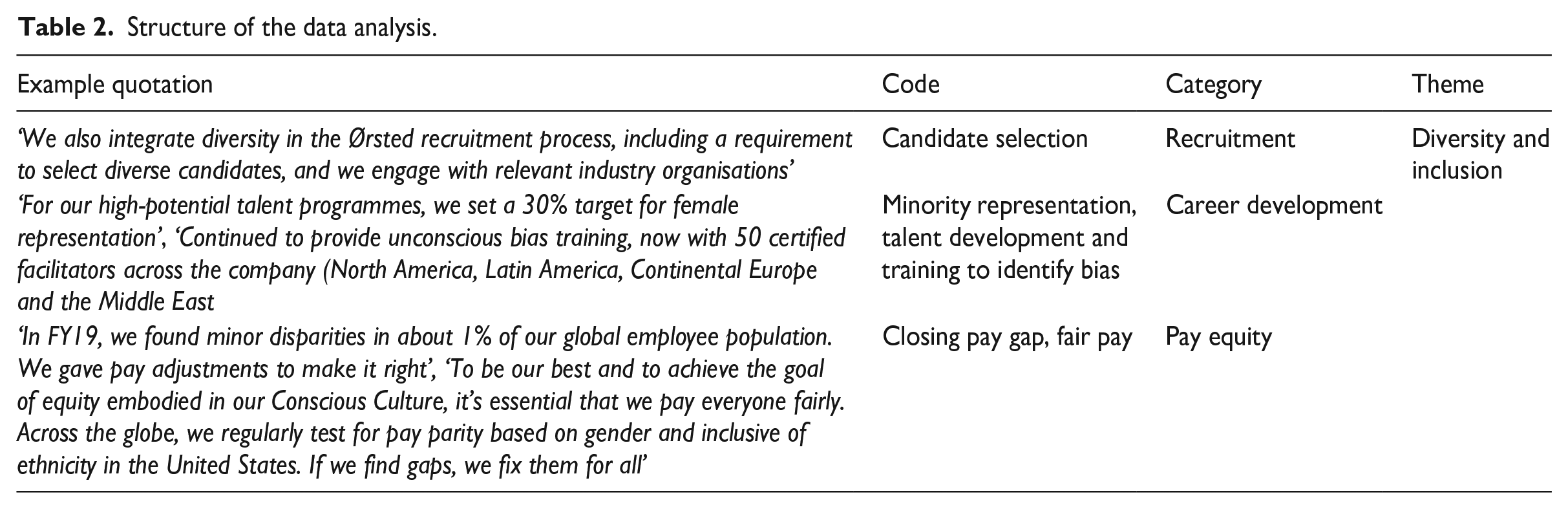
The preparation phase in the analysis included a thorough reading of the reports one by one to get the overall picture. Based on multiple readings, codes and categories began to emerge and the analysis proceeded by coding the data (e.g. ‘. . .we found minor (pay) disparities in about 1% of our global employee population. We adjusted pay to make it right’ ➔ closing pay gap). Next, the codes were grouped under categories (e.g. closing pay gap and fair pay ➔ pay equity), and then the different categories were grouped into themes (e.g. pay equity, recruitment, career development ➔ diversity and inclusion). Some of the categories could have been categorised into more than one theme, but categorisation was done based on the presumed outcome of each category. Finally, measures related to the categories (here HRM practices) were identified. Thematic saturation (Hennink and Kaiser, 2022) was reached after analysing the first 20 corporations. This was confirmed by continuing the analysis to the top 40. An example of the structure of the analysis is shown in Table 2 below.
Structure of the data analysis.
Findings
The findings are presented via four main themes: (1) employee development, (2) employee engagement, (3) diversity and inclusion and (4) health and well-being. We begin with employee development, which includes HRM practices aiming to develop employees’ capabilities through training, experimental learning, and performance reviews. Quotations are used to illustrate what was reported.
Employee development
Training aims to develop employees’ competencies and capabilities and to improve their performance. Training is offered through training platforms and programmes, scholarships for higher education and university partnerships.
Employees who have worked at Owens Corning for at least 1 year are eligible to apply for the Owens Corning Employee Scholarship for a higher education degree. Recipients are selected based on manager recommendations, a statement of career goals, demonstrated leadership, and past academic performance. (Owens Corning)
The platforms and programmes referred to for example, onboarding and leadership, and corporate social responsibility (CSR). University partnerships were described as two-way relationships with mutual benefits, such as knowledge sharing.
Employee training is measured in terms of the supply, accomplishments, and outcomes of training. Supply was measured according to the number of training modules available, the proportion of employees with access to training, the monetary value of the training, and the number of higher education scholarships available.
Accomplishments refer to metrics on the amount of training overall (e.g. hours or days per year) and whether this was inclusive of all employees or only a select few, including metrics such as the percentage of employees in training programmes, the percentage who have received training, completed modules or hours of training, and the required amount of training (e.g. ‘We require every employee, including our union-represented employees, to receive a minimum of 20 hours of training each year’ – American Water Works Company Inc.). Training accomplishments are also measured by the number of interns employed through university partnerships.
Finally, training is measured by the outcomes achieved (achieved degrees or career progression). The outcomes are measured by, for example, a learning and development index, the progression of employee performance, and by the likelihood that they will be promoted after participating. Additionally, training outcomes are measured by the actions taken after training on specific topics.
All participants in Storebrand Leadership Weekly participated in the research project ‘Technology-based Management Development’. A 360-degree evaluation of managers before and after the programme documented a positive development in 12 parameters for ‘management’ and ‘management performance’, relating to productivity, efficiency and satisfaction of employees. (Storebrand ASA)
Experimental learning targets employee development and consists of mentoring and coaching (enabling professional development and working toward career goals) and internal mobility (opportunities to apply for new positions and learn new competencies or assume more responsibilities).
Cisco’s Career Advisory services allow employees to meet one-on-one with trained Career Advisers to receive personalised career development support. Working together, employees and Career Advisers assess an individual’s strengths, skills, experience and goals. They then create an Action Plan to help the employee meet their goals, which may include specific development opportunities. (Cisco Systems Inc.)
Our analysis did not identify any specific metrics for experimental learning.
Performance reviews target employee development and securing talent in organisations. It occurs through performance evaluation (including communicating its results to employees and agreeing upon the latter’s development plans), succession planning and feedback. This process is often very structured and regular.
Employee performance is appraised twice yearly using Professional Performance Management Review by Skills and Results (Gestão de Desempenho Profissional por competências e Resultados – GDP), which measures the employee’s contribution to the achievement of results in two dimensions: Skills and Targets. (Banco do Brasil)
Succession planning seeks to secure talent in the organisation and to create career paths for employees. However, it often only relates to succession planning for senior executives and aims to ensure that they have opportunities for growth and development.
The metrics identified for the performance review process and succession planning focus on the percentage and number of employees included in the process and the number of succession candidates for certain roles.
As mentioned in the method section, some of the HRM practices could fit into more than one of the themes. For example, performance reviews might also be seen as part of employee engagement, but here they targeted employee development and securing talent in organisations and are therefore placed under employee development.
Employee engagement
The practices in employee engagement seek to increase employee satisfaction with the employer and to ensure that employees have a voice through creating a democratic workplace where everyone’s opinion is respected and everyone can come as they are. The reported HRM practices in this theme are giving voice to employees (through employee surveys), employee volunteering, and rewarding. Although retention is not an HRM practice as such (but rather an outcome of the practices included in employee engagement), it was reported as a practice for employee engagement.
Giving voice to employees mainly occurs through employee surveys, such as annual or more frequent pulse surveys. Surveys enable the employer to gather employee feedback and understand what works well and where improvement is needed.
We measure employee satisfaction and motivation through an annual employee engagement survey to ensure they can thrive in their working environment. We measure the perception of Ørsted as a workplace, including daily tasks, workload, and relationships with managers. The responses are used to identify actions at the manager, department, and company level. (Ørsted A/S)
The measurement of giving voice to employees through employee surveys occurs through participation in (the percentage of employees taking part in the surveys) and the results of the surveys. Participation also provides information about a change in response rates. The results refer to overall employee satisfaction and areas needing improvement. Some companies also report aspects other than engagement, such as commitment or organisational support.
Employee volunteering as an HRM practice refers to opportunities to do volunteering work during work hours. Although it has a broader meaning for the society around the company and its external stakeholders, it is also a way to enhance employee engagement and create a sense of purpose and meaningfulness among employees. Employee volunteering can include volunteering in the community where the organisation operates or donating money. Mentoring was also identified as an opportunity to volunteer.
Goal: Achieve 80% community impact participation, as measured by employees’ actions, including advocating for causes they care deeply about, volunteering, donating, and participating in programmes that positively impact external communities by 2020. (Cisco Systems Inc.)
The measures included the input given to employee volunteering and the impact achieved. Input is measured by the number of actions taken, the percentage of employees participating, the monetary donations and the value of the work, and the number of hours or occasions volunteered. The impact is measured by the number of people impacted by the employee volunteering.
Owens Corning employees volunteered 8401 times in 2019, up 17.8% from 7132 in 2018. They devoted 31,152 hours of volunteer time, an increase of 14.1% from 27,305 hours in 2018. The work is valued at $25.43 per hour, totaling $792,204. (Owens Corning)
Rewarding refers to employees’ reward and recognition. This practice involves different types of monetary rewards, including long- or short-term incentives, one-time payments and share options.
In addition to the short-term incentive scheme, UPM provides two long-term incentive plans: Performance Share Plan (PSP) for senior executives and Deferred Bonus Plan for other key employees. Run annually, the plan covers approximately 400 employees. (UPM-Kymmene)
Generally, rewarding measures were not reported. However, some companies reported metrics such as the number of employees covered by their reward systems. Employee retention, as an outcome of employee engagement, is measured by the retention rate or the number of employees leaving the company. Concerning the common good, those who have left the company can also be reported with demographics, such as age, position, or gender, describing respect for diversity.
Diversity and inclusion
Diversity and inclusion includes HRM practices promoting equality and seeking to create a diverse, inclusive working culture. This theme includes recruitment, career development and pay equity, which might also be viewed in other themes. However, here they are included in diversity and inclusion because firms reported them as HRM practices promoting a diverse and inclusive working culture. The firms seemed to focus on diversity either as a concept or as an all-encompassing entirety, or they chose certain groups and aimed to ensure their inclusion.
We must continue to embrace and promote an inclusive and diverse culture to drive innovation and growth and attract and retain the best talent. We promote a company culture of being comfortable with one’s self, allowing everyone to constructively challenge ideas and raise concerns. As a company that serves diverse communities, we respect those community differences and strive to reflect the communities we serve. (American Waterworks Company)
Recruitment is identified as a fundamental way to create a diverse workforce. As noted earlier, a diverse and well-treated workforce is important for the common good and should be a concern of good HRM. The companies reported that they aimed for diversity in the recruitment process. Specifically, they reported seeking diverse candidates (a certain proportion of women or minorities in each recruitment process) to ensure the overall diversity of the workforce.
Diversity is an important part of our approach. In every candidate search, we interview a diverse selection of candidates and write job postings that neutralise bias. For example, for every open position at the Vice President level and above, we interview at least one qualified woman. We also assemble diverse interviewer panels, as research shows they are more effective for hiring candidates across the full spectrum of diversity. (Cisco Systems Inc.)
The metrics for recruitment targeting diversity and inclusion include both descriptive and progressive measures such as the percentage of minorities (e.g. ethnicity or gender) in new hires and the percentage growth in hiring minorities in a given period, tracking if this has improved or worsened. In addition, the share of multinational teams or growth in these teams is used as a way to measure the diversity of recruitment.
With the reorganisation, the number of teams with multinational membership increased by 20% compared to the previous year, and approximately 10% of our teams are now multinational. (Neste)
Career development as an HRM practice overlaps with the employee development theme. However, career development specifically refers here to actions taken to achieve and safeguard diversity and inclusion in the organisation. Career development relies here on talent development and training to identify bias. Talent development aims to achieve and maintain equality and is guided by two principles: to develop people and to ensure equality. Success is accomplished by ensuring a proportion of minorities in talent programmes and creating targeted opportunities for minority groups.
Training to identify bias is a way to promote career development and offers employees ways to identify unconscious bias and knowledge about things that could prevent them from acting equally and in an inclusive manner.
Continued to provide unconscious bias training, now with 50 certified facilitators across the company. (Stantec Inc.)
Career development is measured by the proportion of minorities promoted, in leadership positions, and in talent development programmes. Companies also report on the goals they have set for minority representation (e.g. at certain career levels). Meanwhile, training to identify bias is measured by the amount of training or by the number of employees attending training: ‘. . .more than 600 employees have already participated in Unconscious Bias training’ (Owens Corning).
Pay equity refers to the current state of an organisation or its aim to ensure that there are no unexplained pay gaps or differences in how people are paid. Unexplained pay gaps mean that differences in pay cannot be explained by experience, job grade, or other factors that naturally affect salary. Companies reported either having closed the gap or that they were aiming to do so.
Schneider Electric develops a gender pay equity plan to reduce the pay gap and ensure a fair remuneration between genders. (Schneider Electric SE)
The metrics regarding pay equity focus on both the wages and the framework set to review any disparities. Additionally, pay equity is measured by average wages according to gender, age, and country, aiming to increase transparency.
Health and well-being
Health and well-being focuses on the practices and measures in place to ensure the health and well-being of employees. These practices include health services and partnerships, health programmes and training, and work arrangements.
Health services and partnerships refer to services the employer provides for its employees and the partnerships utilised to do so. The services focus on physical, social, and psychological aspects of health and well-being. Some companies describe the services offered in detail, for example, counselling.
. . .confidential counseling sessions to our employees free of charge for up to six visits. Counseling can be conducted face-to-face or through telephone sessions and covers a range of topics, including traditional counselling services for stress management, depression, grief, or addiction: work/life integration challenges, including a child and elder care, home repair or adoption. (Owens Corning)
Health services metrics are the number of people using the services, the number of healthcare centres providing the services, and the number of employees experiencing stress. Stress experiences could be seen as an example of a sensitive measure.
Health programmes and training are practices used to support employees in caring for their health and well-being.
. . .a programme that encompasses the four elements of health: food, exercise, mindfulness, and connection to others – focuses on small, sustainable, healthy changes that can have a big impact and encourages participants to create an individual action plan specific to their challenges and goals. (Cisco Systems Inc.)
Health programmes and training metrics include the number or percentage of employees participating in the programmes and training and the number of events organised as part of the programmes and training.
Work arrangements to improve health and well-being refer to work-related flexibility and planning to support employees’ work–life balance. Providing flexible working conditions that allow people in different age groups, family situations, or otherwise in all stages of life to combine work and personal life is also rooted in the concept of the common good. Arrangements aiming for health and well-being and support for work–life balance include flexible working time and family leave. Regarding family leave and some other practices, it should be noted that regulations vary in different countries. Local regulations are not taken into account in this study.
Flexible child bonding leave. The time an employee receives to care for a newly born or adopted child is now based on the role they will play as a caregiver, rather than gender. Moms and dads who are primary caregivers in many countries receive 13 weeks of paid leave (in addition to disability leave for birth moms). Supporting caregivers receive 4 weeks off. In addition, employees can take 3 days off to welcome and celebrate a new grandchild. (Cisco Systems Inc.)
Flexible work arrangements are measured by the percentage of employees employed on a part-time basis. Family leave is measured by the percentage of employees covered by family leave policies.
Of our 1742 employees, only 59 (3%) are employed on a part-time basis (of which 50 are female). This is due to employee preferences. (Storebrand ASA)
Overall, sensitive issues (such as experienced work stress) as well as progress and developmental aspects are less reported.
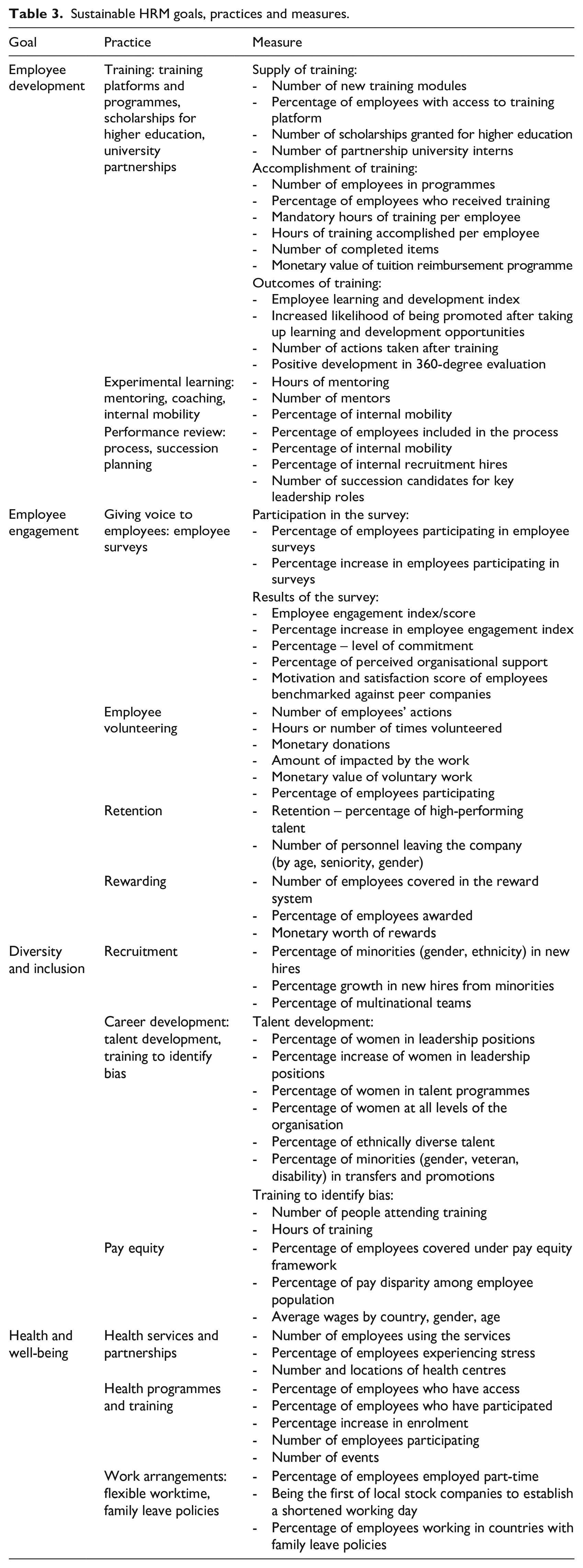
As a summary, Table 3 illustrates and combines the main findings. Some of the findings related to HRM practices also support CGHRM values. The HRM practices related to dignity are for example, work arrangements (flexible worktime, family-leave policies which enable e.g. taking care of family members.), health programmes and training, and scholarships (for an employee to conduct formal training or degree). The concept of dignity signifies treating others with respect (thus ‘everyone can come as they are’). The practices related to solidarity are for example, university partnerships (specifically contributing to universities, and hence, societies), and employee volunteering. The practices related to plurality are policies and practices against discrimination which aim to maintain and increase diversity among employees (e.g. recruiting minorities and diverse talents); career and talent development (e.g. female representation in leadership programmes); training to identify bias; and monitoring pay equity (e.g. average salaries by gender). The practice of giving voice to employees (e.g. employee surveys) reflects democracy and participation related to subsidiarity. The HRM practices related to reciprocity are flexible work arrangements, health programmes and services, university partnerships (internships and employee education), and employee volunteering. These practices create mutual benefits for multiple stakeholders and the common good. Finally, CSR training, mentoring and couching, and health programmes and services are practices related to sustainability.
Sustainable HRM goals, practices and measures.
Up to now, SDGs have not been so visibly linked to HRM practices in reporting data and they are thus not part of the sustainability value. Integrating all of the common good values into HRM practices more clearly in reporting could increase the trustworthiness and the transparency of reporting.
Overall, our findings are in line with the three principles of CGHRM (Aust et al., 2020): equal and fair employment relationships (e.g. pay equity), opportunities for participation and a democratic workplace (e.g. employee voice), and maintaining a psychological contract in terms of protecting human needs in employment (e.g. training and career development). Conversely, an outside-in principle was not clearly apparent in our data.
Because our analysis focused only on the people and employee sections of the reports (the internal workforce) where HRM has a direct control, the external workforce in supply chains was excluded (human rights section in reports). However, according to common good theory, human and labour rights covering both internal and external workforces are vital in themselves, and inherent parts of the common good. These workforces’ rights and their dignity must be enhanced and respected to strengthen the common good (see Parsa et al., 2018 for details).
Discussion
Our study continues the research stream that has investigated sustainability reporting practices in large companies (e.g. Ehnert et al., 2016; Parsa et al., 2018). In awareness of the importance and the limitation of reporting data, the aim of the study was to explore how well the most sustainable organisations’ reporting data incorporates common good theory and values to advance the common good authenticity of S-HRM reporting. The findings indicate that the main themes (employee development, employee engagement, diversity and inclusion and health and well-being) of the reporting data corresponded to concerns in common good theory (Albareda and Sison, 2020; Frémeaux and Michelson, 2017; Melé, 2009; Sison and Fontrodona, 2013). The themes with related HRM practices concern CGHRM’s attention to the protection of human needs in employment which is also consistent with related aspects of moral legitimacy (such as attention to meaningful work and growth), and the values of the common good (see Aust et al., 2020; Hollensbe et al., 2014; Melé, 2009). However, the common good theories prioritise the dignity of each person as someone and not something (Hollensbe et al., 2014), thus not merely linked with HRM practices, but as a core management ethical value. Therefore, contrary to earlier CGHRM research (e.g. Aust et al., 2020; Lu et al., 2023), our study integrates common good values more comprehensively into HRM practices (Hollensbe et al., 2014). Thus, our theoretical contribution strengthens the link between the common good values and CGHRM in S-HRM reporting. Hence, integrating the common good values into HRM practices could be a mechanism to increase trustworthiness and transparency of reporting.
When considering S-HRM reporting, importance should be placed on the dignity and centrality of the human person (Melé, 2009), which is important in itself, but also in light of HRM literature. The centrality of the human person acknowledges the importance of widely adopted ethical labour practices that enable human rights and dignity for both internal and external employees. This goes beyond the problem of reporting. In line with this, our empirical data did not consist of labour practices and human rights directly. However, these include important aspects, the presence of which demonstrates true corporate accountability. Hence, CGHRM should pay attention to both internal and external human rights, labour practices, and decent work. In terms of global supply chain workers, but also regarding ethical labour in the internal workforce, it is important to note that a stronger inclusion of this concern as part of HRM increases attention directed to an ‘outside-in’ orientation. However, if HRM practices and reporting should move away from a purely shareholder orientation, and thus close the gap between reporting and practice, it is critical to note that over-reporting may also be problematic and unwise, as current practices show that over-claimed disclosures do not always reflect the reality of organisational culture or humanistically oriented common good practices (Parsa et al., 2018).
Considering how the ideas of the common good theory may add common good authenticity of S-HRM reporting, there are insights which can critically show limitations of the current inside-out perspective, and insights which validate the relevance of the outside-in perspective (Aust et al., 2020). The inside-out perspective is limited, as it prioritises the profit orientation and economic purpose of the firm itself, while viewing the employees through an individualistic lens. Instead, the theory of the common good of the firm (Albareda and Sison, 2020; Frémeaux and Michelson, 2017; Melé, 2009; Sison and Fontrodona, 2013) proposes that firms are considered communities of persons who work together, collaborating for the common good. The common good approach is not opposed to individualistic values that pay attention to the distinctiveness of each employee, but considers the purpose of meaningful work and employees’ needs to be integral to the purpose of the organisation. Therefore, common good theory bridges and aligns with concerns of the outside-in perspective and adds theoretical depth to CGHRM, by stressing the protection of human needs in employment (specifically via attention to meaningful work and growth). This means that the Aust et al.’s (2020) claim about outside-in perspective is important and has potential for further theorisation, especially in the form of a critique of the inside-out approach through common good theory. For example, the relevance of CGHRM to stakeholders has not yet been developed in full detail.
Because we focused on sustainability reports, less is known about how the HRM practices were implemented, changed, or perceived by employees in these companies. Hence, companies may use reporting as a way to legitimate HRM practices without actually changing them (Lindblom, 1993). In line with Parsa et al. (2018), the reporting style in the studied reports was mainly descriptive (e.g. percentages), lacking progress (excluding some measures such as percentage growth in new hires from minorities) and sensitive issues (e.g. bullying, mental health, burnout) related to HRM. Likewise, with a few exceptions (e.g., Development of learning index), the studied reports lack qualitative and future oriented components. They do not reveal long term self-improvement aspirations or commitment to improve employees’ treatment and well-being. Correspondingly, the descriptive reporting with measures seemed to follow a more economic approach than an ethical one (Albareda and Sison, 2020).
However, the main themes and practices support the idea that companies illustrate an ethical purpose to take care of employees. While there is evidence about common good related aspects and values, these are presented in a fragmented rather than holistic way, and priority given to the flourishing of people and communities (considering their uniqueness and dignity) is not demonstrated. It is thus very difficult to determine which organisations maintain or improve their cultural environment, and nurture virtue-related aspects of collaboration that enable good practices and the growth of crucial virtues, such as charity, friendship and fairness. These all contribute to the flourishing of individuals, their groups, and entire organisations (Argandona, 1998; Bolade-Ogunfodun et al., 2022; Pham et al., 2023).
The reporting seems to be targeted mainly to shareholders, which may affect what is reported and how. Due to concern for metrics and ranking as well as marketing and reputation pressures, firms tend to choose reporting strategies according to the salience of stakeholders (Järlström et al., 2018) rather than authentic common good values. Hence, it seems that companies are still not making full use of the possibilities of reporting. Based on moral legitimacy, CGHRM may offer a more transparent and substantive means (e.g. comprehensive information about less favourable issues) to gain, maintain or defend legitimation (Ashforth and Gibbs, 1990; Dowling and Pfeffer, 1975) if common good values (and principles) and the views of multiple stakeholders are more consciously applied.
Practical implications
The CGHRM approach shows the importance of connecting several stakeholders as an important value of common good (reciprocity), such as business leaders, society representatives, employees and HRM professionals, whose joint efforts are made for the sake of joint value creation (Bridoux and Stoelhorst, 2022). Common good values could be integrated into managerial and HRM systems as well as organisational culture. For example, ethical culture would entail moving gradually from a culture of control and autocracy to one of mutual responsibility based on the values of sustainable social interaction. Practical contribution means creating CGHRM practices that have effect also in the wider context of the firm (e.g. society, family members and health care providers). Examples of these include CGHRM practices such as employee volunteering (e.g. certain amount of worktime per week or month), recruiting people with disabilities who would otherwise not cope with working life, recruiting minorities (age, gender, race etc.), and forming university partnerships for training. Further, we suggest that leaders and HR professionals should be trained to understand CGHRM so that they can integrate it into the management system and organisational culture. In this consideration HR professionals’ focus would be to help management develop a more ethical approach toward each and all of the employees and their dignity and humanity.
Concerning reconsideration of the roles of HRM in practice, we suggest that more emphasis be placed on the mandate of HR going beyond good management of human ‘resources’, toward balancing moral and economic aspects of the common good (see Albareda and Sison, 2020; Bridoux and Stoelhorst, 2022). This could even mean that HR professionals themselves need to cultivate the kind of moral maturity, virtues, and integrity, that enable them to play a role as a catalyst for sustainable organisational performance amidst complex demands (Akrivou and Bradbury-Huang, 2011), and to do so with a humanistic management orientation, and from within a personalist virtue ethic of service (see Akrivou et al., 2022). Such professional purposes and dispositions require not just strategic transformation of the agenda of HRM, but also virtuous new leaders who rely on wider education.
As a practical contribution, we suggest that implementing common good values and SDGs as part of the HRM system (e.g. strategies and practices) and organisational culture could support outside-in perspective of CGHRM. While acknowledging that over- versus under-reporting is still under debate, we note that companies are still missing an opportunity to report how they aim to contribute to resolving the sustainability challenges we collectively face.
Limitations of the study and suggestions for further studies
A limitation of this study is that it is almost impossible to evidence new conceptual developments in the academic literature (such as the common good) in and through organisational reports, especially since the concept of the common good is not yet deeply or sincerely embraced by businesses or the national economy; this means any such effort is a priori, which cannot produce ideal findings. A methodological limitation of the study concerns the sample itself. It is important to acknowledge that even in the most sustainable firms, utilitarian rather than moral criteria seem to dominate (Aguilera et al., 2022). Hence, the list was skewed towards large global companies which traditionally aim to produce profit. Thus, the viewpoints of small and medium-sized enterprises are lacking. Therefore, there is a need for further studies which cover CGHRM in companies of different sizes and regions, taking into account legal and regulatory aspects more fully. The common good approach might also be more visible in unlisted companies, for example in family-owned businesses.
Further, our analysis excluded workplace safety because safety issues are subject to local regulations and the company’s geographical location, meaning they are not comparable between companies. By contrast, health and well-being was a major part of our analysis since it is commonly viewed as part of HRM. Future studies could focus on workplace safety issues in different contexts.
Because reporting serves certain powerful stakeholder groups, it may be aligned to their expectations and values. Therefore, it is important to maintain a healthy scepticism when reading sustainability reports. Companies may manipulate their results to present themselves in a favourable light in order to gain legitimacy and portray themselves as more sustainable than they actually are (Moneva et al., 2006; Parsa et al., 2018).
At present, CGHRM is a theoretical concept which is still unclear in research and practice and requires more empirical research in real business contexts (e.g. case studies). However, the sustainability reports studied here increase the transparency of S-HRM practices, which offers important windows on CGHRM. In communicating HRM practices, companies construct reality (Hines, 1988) regarding what these sustainable or common good HRM practices ought to be. Reporting, especially by the most sustainable global companies, can play a favourable role in shaping and improving practices.
Conclusions
To conclude, we advocate an approach for a humanistic-ethical orientation which stresses human beings and their flourishing as a primary concern of CGHRM. Correspondingly, the common good approach encourages HR professionals and managers to treat people with respect and dignity and consider them as whole persons, thus enabling them to reach their full potential (see Hollensbe et al., 2014; Melé, 2009). Although there may be potential hindrances to implementing the common good approach in practice (Aust et al., 2020; Lu et al., 2023), strengthening the link between common good values and CGHRM in S-HRM reporting could be a way to ‘promote the wellbeing of the society and individuals within and outside of business’ (Hollensbe et al., 2014: 1228). In particular, focusing on sustainability as a common good value could facilitate the integration of sustainability challenges (SDGs) and CGHRM, and support the outside-in perspective.
