




Abstract
Children are diagnosed at increasingly earlier ages with autism spectrum disorder, characterized by diminished levels of social orienting and engagement. Parent-mediated interventions incorporating the use of responsive parent behaviors have shown promise for use with young children with autism spectrum disorder to increase a variety of social-communication behaviors. This study examined the manner in which parents acquired and used a set of responsive parenting techniques with their young children with fidelity and investigated the associations of fidelity use of these techniques with changes in child joint engagement outcomes. Although parents began the training phase demonstrating low levels of responsive parenting behaviors, they acquired and implemented a specific set of responsive parent techniques with their children with ongoing fidelity, and the use of these techniques was collaterally associated with increased levels of joint engagement in two of the three participant children. Implications for research and practice are discussed.
Keywords
Over the past several decades, researchers have targeted parent–child interactions through the use of parent-implemented interventions as a means of naturally integrating interventions for young children with autism spectrum disorder (ASD) into the home environment to provide the frequency and intensity of intervention as recommended by the National Research Council (Lord & McGee, 2001). Children with ASD manifest early and pervasively low levels of joint engagement, defined as episodes of attention with a communicative partner to an object or event of common focus for the purpose of shared social attention (Adamson, Deckner, & Bakeman, 2010). There are thought to be two distinct joint engagement states: supported joint engagement (SJE) during which the child and the parent actively share attention to an object or event but the child does not consistently acknowledge the presence of the parent and coordinated joint engagement (CJE) during which the child and the parent share attention to an object or event of shared focus while both initiate and respond to bids for shared attention in a balanced and consistently reciprocal manner (Adamson, Bakeman, & Deckner, 2004). Within the Adamson et al. model, SJE represents a unique early context for social learning as children attend to a shared focus of interest with an adult communicative partner. They are concurrently exposed to a myriad of social symbols and affect relevant to the object or event of shared interest (e.g. words, sounds, gestures) even though they may not be acknowledging the adult through alternating gaze or other reciprocal social behaviors. It is thought that during this relatively low-demand engagement context children may gain access to the meaning of communicative symbols about objects and events, before they are fully equipped to fluently coordinate social engagement with another. As children gain experience with sharing attention in SJE, they begin to more frequently initiate and respond to bids for joint attention in CJE (Adamson et al., 2004). This transition from SJE to CJE represents a critically important step for children with ASD, as children with ASD are far less likely to manifest CJE over time (Adamson, Bakeman, Deckner, & Romski, 2008).
Emerging research on parent-implemented interventions suggests that parent responsive behaviors during social interactions with their young children with ASD are associated with increases in child overall joint engagement (SJE + CJE; Patterson, Elder, Gulsrud, & Kasari, 2013) as well as social initiations (Ruble, McDuffie, King, & Lorenz, 2008) and language acquisition (McDuffie & Yoder, 2010; Siller & Sigman, 2008). Further, a recent study has suggested that the use of responsive parenting techniques may differentially impact language outcomes of various populations of young children with ASD. Specifically, responsive comments during episodes of joint engagement were uniquely associated with improvements in child language in minimally verbal toddlers (using <5 words), while directives for language following a child’s focus of interest were associated with improved language outcomes in toddlers demonstrating a higher level of verbal development (Haebig, McDuffie, & Ellis Weismer, 2013).
In an ongoing effort to identify variables impacting long-term child outcomes, researchers continue to examine how best to teach parents to use responsive techniques to increase joint engagement and joint attention to facilitate the acquisition of language over time (e.g. Enhanced Milieu Teaching: Kaiser, Hancock, & Nietfeld, 2000; Responsive Teaching: G. Mahoney & Perales, 2005; PLAY: Solomon, Van Egeren, Mahoney, Quon Huber, & Zimmerman, 2014). Interventions such as these typically require a parent to maintain face-to-face proximity, to actively follow in on child-selected play activities, to imitate and/or mirror child behaviors and/or to provide simple word models as well as expansions of child language and play acts. Fostering joint engagement through the use of such responsive techniques during social interactions likely requires a change in pre-existing interaction styles of many parents of children with autism. Descriptive research on parenting styles of children with ASD has revealed that parents of children with ASD often display a higher level of directive behaviors than those with typically developing children (Freeman & Kasari, 2013). In addition to evidence supporting the use of responsive parental behaviors to improve outcomes of children with ASD (Haebig, McDuffie, & Ellis Weismer, 2013; Patterson et al., 2013; Ruble et al., 2008), a directive parental style has been associated with lower levels of child engagement, social initiations, and language acquisition in typically developing populations (Landry et al., 2012; G. K. Mahoney, 2013).
Learning to use a parent-implemented model typically consists of acquiring the use of multiple techniques that, once learned, are used together fluidly within parent–child interactions to maintain joint engagement. For example, the approach used by Kasari et al. (2010; Joint Attention, Symbolic Play, and Engagement Regulation (JASPER)) teaches parents to use a series of techniques over the course of 10 teaching modules. Initial techniques predominantly follow the child’s focus of interest while maintaining physical proximity; parents learn to recognize and provide temporally contingent responses to child cues, imitate/mirror child behaviors, and provide language/play models. Later techniques teach parents to enhance reciprocal interactions and finally to incorporate the use of prompts in the context of child-selected play.
Similarly, Ingersoll and Dvortcsak (2010) developed Project ImPACT, a modular approach designed for use by parents. This approach includes a hierarchical series of techniques over the course of 22 sessions beginning exclusively with the child-led interactive techniques of remaining face-to-face, imitating child behaviors, and providing language models in the form of comments. The modules advance to techniques requiring a reciprocal response from the child such as turn taking or requesting in the context of restricted access to a preferred object. The final modules focus on a group of direct teaching techniques to elicit social communication while keeping a focus on child-selected activities. In a recent study designed to evaluate the efficacy of Project ImPACT, Ingersoll and Wainer (2010) examined the way parents acquired five individual sets of techniques and how use of the techniques was associated with spontaneous language. Importantly, they noted that all but a single parent demonstrated use of one or more of the study techniques at moderate or even high fidelity in baseline, although overall parent fidelity scores remained below mastery fidelity, which required a score of either a 4 (uses consistently but misses some opportunities) or a 5 (uses throughout session). Further, they noted that parent fidelity scores temporarily declined with the introduction of each new set of techniques. This information highlights a need to more fully address the fact that parents present to parent training programs with a pre-existing behavioral repertoire of parenting techniques.
Given that many responsive techniques (e.g. following child’s choice of activity, imitating child behaviors, infusing animation and positive affect, and offering non-directive verbal models) are derived from the child development literature, parents of both typical children and those with ASD may also already have these behaviors in their repertoires. However, parents of children with ASD may be less likely to display them frequently in interaction with their children because the pattern of parental responsiveness may be disrupted due to child behaviors. As such, some types of parent behaviors will need to be taught or reinforced by trainers attempting to teach a responsive style (e.g. following a child’s lead, joining in child-selected play, providing non-directive language models) and some behaviors may need to be “unlearned” (e.g. the frequent use of prompts and questions) in order for the intervention to be performed with fidelity. Furthermore, the acquisition of a new technique may influence the way a previously learned technique is performed. For example, teaching a parent to create opportunities to request by putting a preferred item out of reach may decrease the degree to which that parent effectively follows the child’s lead. Although the results of the Ingersoll and Wainer (2013) study provide encouraging results with regard to associations of increased spontaneous language with the cumulative acquisition and use of these techniques, it important to note that parents moved in and out of mastery fidelity for the use of individual techniques over the course of the intervention as each technique was introduced. Indeed, although the use of modular packages such as these is often associated with improved developmental outcomes, little is known about how parents acquire and use these techniques in the context of baseline parenting styles, and how the use of any given technique may influence the use with fidelity of other techniques cumulatively over time.
The importance of maintaining fidelity over the course of a modular intervention must not be overlooked as use of parent-implemented techniques with fidelity, that is, to execute them accurately and consistently, is associated with improved developmental outcomes (Carroll et al., 2007; Wainer & Ingersoll, 2013). By assessing parental intervention fidelity, researchers document that parents can indeed perform the techniques as they were intended to be used (e.g. Carroll et al., 2007). However, parent-training programs do not necessarily ensure that the strategies are learned and performed with fidelity (Schultz, Schmidt, & Stichter, 2011). Furthermore, researchers do not consistently evaluate training protocols for the purpose of optimizing parent learning (McConachie & Oono, 2013; Meadan, Ostrosky, Zaghlawan, & Yu, 2009; Rocha, Schreibman, & Stahmer, 2007). Importantly, there have been recent calls from the research community to refine and individualize the way in which parent-implemented interventions are designed, taught, and acquired by parents to optimize durable parent implementation over time (McConachie & Oono, 2013; Meadan et al., 2009).
The current study
This study involved coaching parents to use a set of interactive techniques as described by Ingersoll and Dvortcsak (2010) designed for Project ImPACT, a parent-mediated social communication intervention program. This program was chosen because it was designed specifically as a parent-training program for children with autism. Although this model consists of both interactive and direct teaching techniques, this study focused solely on the interactive techniques of the program, which are designed to increase social engagement generally. The current study is grounded in the need for a clearer understanding of how parents acquire and implement responsive intervention techniques and the importance of the development of supported and CJE in the acquisition of joint attention and language. The research questions are as follows: (1) Can parents incrementally learn to implement a cumulative set of responsive intervention techniques with fidelity in home-based settings? (2) What changes in child engagement states are observed when parents use techniques such as these with fidelity?
Method
Participants
Three parent–child dyads were included in this study. Families were recruited through flyers distributed to Part C professionals and pediatricians in the area. To be included in the study, children needed to be between the ages of 1 and 5 years and parents were required to provide documentation of a diagnosis of autism/ASD with no comorbid diagnoses. Initially, the first four participant dyads meeting study requirements were enrolled. During the first weeks of the study, one participant dyad withdrew due to time constraints and a second parent was discovered to have had previous parent training with an older sibling. Therefore, at week 3, a participant dyad on the waiting list was enrolled.
Carl
Carl was a 22-month old White male, living at home with his parents, a stepfather, and two older half-siblings who also had a diagnosis of autism. The adults in this family all worked from home to facilitate the services provided to their children at home. Carl was diagnosed at 17 months old by an outside agency using the Autism Diagnostic Observation Schedule-2 (ADOS-2; Toddler Module) after a sudden loss of recently acquired social-communicative skills and began receiving 6–8 hours of home-based Part C therapeutic services weekly. Carl’s therapeutic targets at the time of the study start included the use of single words and/or signs to communicate his wants and needs, increased length of play episodes, and increased positive affect. Carl enjoyed being read to and consistently interacted with a variety of simple toys. Carl’s mother was 37 years old and held a professional degree. His father was 34 years old and held a bachelors degree.
Dan
Dan was a 38-month-old Asian male, living at home as the only child of his parents who came from Hong Kong. Dan was diagnosed with autism at the age of 26 months by an outside agency using the ADOS (Module 1) and received 12–18 hours of ABA-based therapeutic services in classroom and clinic settings throughout the week. He also participated in a community preschool program 3× weekly with a therapeutic support service provider. Dan’s therapeutic goals included using 3–5 word phrases for functional communication. Dan engaged in frequent “scripting” but did not remain in social interactions without considerable support. Dan preferred to engage with his iPad, but also consistently manipulated cars and play figures. Carl’s mother was a 34-year-old graduate student at a local university and his father was a 36-year-old professional with a graduate education.
Ann
Ann was a 53-month-old White female, living at home with her parents and a typically developing eight-year-old brother. Ann was diagnosed with autism at the age of 27 months by an outside agency, using the ADOS (Module 1). She attended a private specialized preschool classroom that included both children with ASD and typical peers 4× weekly. She also received an additional three hours per week of private clinical therapeutic services. Therapeutic goals included the use of 1–2 word phrases for the purpose of functional communication. Ann preferred physical activities such as spinning on her swing and jumping on her trampoline. Ann’s parents found it difficult to keep her engaged in play that was not physical in nature. Ann’s mother was a 45-year-old education professional with a bachelor’s degree and her father was a 46-year-old professional with a graduate degree.
Setting and materials
Study sessions took place in the participants’ homes. In baseline, parents were asked to play with their children as usual, in any area of the house they preferred. During the intervention phases, parents were taught to design play spaces that increased proximity to their children during play and offered access to a specific selection of preferred play materials. Materials used during the sessions included the intervention parent manual (Ingersoll & Dvortcsak, 2010) and a selection of items used by the researcher to demonstrate study techniques (e.g. bubbles, balloons, clear containers). Aside from the occasional use of these materials to demonstrate specific techniques during the didactic sessions, instruction and coaching were conducted with materials already available in the family home.
Experimental design and procedures
A concurrent multiple-baseline design across participants (Hensen & Barlow, 1984) was employed to examine the degree to which parents learned and used a set of interactive techniques (Ingersoll & Dvortcsak, 2010) over the course of six instructional modules with their young children with ASD. The first two participant dyads began the baseline phase at the same time, as described below, and the later-recruited third dyad entered baseline three weeks after the first two. The first participant dyad was moved into the first intervention module phase when baseline parent fidelity scores reflected steady state responding (i.e. at least three consecutive data points reflecting a stable pattern). The next two dyads entered into the first intervention module sequentially and in the same manner. Each participant pair then advanced through the six intervention phases in order as each parent achieved criterion fidelity for each instructional module. Collateral data were concurrently gathered for each phase of the intervention to examine joint engagement state child outcomes.
Baseline
During the baseline phase, three 10-minute play samples were recorded weekly in participants’ homes with no coaching/feedback. Parents were asked to play with their children as usual, in the areas of the home that they preferred.
Intervention
The first author taught parents (all mothers) to learn and use a set of interactive techniques with their children derived from Ingersoll and Dvortcsak’s Project ImPACT (2010). The techniques were introduced in six instructional modules. In Module 1 (Follow/Face to Face) parents were taught to arrange the children’s environments to facilitate interactions, to follow their children’s lead while refraining from questions or directives, and to remain face-to-face with their children. In Module 2 (Imitate/Animate), parents learned to imitate their children’s actions and to animate their own communicative acts during play interactions. In Module 3 (Model/Expand), parents learned to incorporate simple language models and to expand child communications. Module 4 (Balanced Turns) introduced reciprocal turn taking strategies, including modeling and expanding play during parent turns. Module 5 (Communicative Temptations) taught parents to create opportunities for a child to initiate communication by restricting access to desired objects or events in a playful way. Although another Module called Playful Obstruction was also included in the original Project ImPACT model, it was blended into the teaching of similar techniques designed to limit access to preferred objects within the Module 5 protocol in order to practically group strategies designed to limit access to desired objects. Importantly, all techniques were taught and used cumulatively over the module phases, so that a parent might move in and out of each technique based on the child’s engagement in the interaction. Module 6 was a Wrap Up session focused on the integrated use of all of the techniques.
During the intervention phase, each didactic lesson was preceded by a 10-minute play sample in which parents were asked to play with their children using the techniques learned to date, using materials already present in the family home and in the area of the home that they preferred. No coaching was given during the play sample, and each sample was followed by ∼10 minutes of feedback, which consisted of corrective as well as reinforcing comments about use of the techniques from the most recent Module, as well as the use of previously learned techniques. Following this, a 1-hour lesson included a 10-minute review of the topic from the previous week, 30 minutes of description of the new topic, 10–15 minutes of demonstration by the first author of the new techniques, 10–15 minutes of practice as the first author coached the parent, and several minutes devoted to assigning homework. Two to three play samples occurred later in the same week, also recorded with no coaching/feedback and followed with ∼10 minutes of feedback.
Follow-up
A follow-up play sample was recorded two to four weeks after the last didactic lesson for each participant dyad, and a parent satisfaction form was completed at that time.
Dependent measures
Parent fidelity scores
Parent fidelity was measured during the play samples, using the 21-item fidelity form developed for Project ImPACT (Ingersoll & Wainer, 2013, pp.365–366), modified to include only the items focusing on the interactive techniques and employing the 5 point Likert-type scale format (1 = does not implement; 5 = implements throughout session) included in the published form. The fidelity form was divided into modules, and fidelity for every module was assessed during every session. Items in each Module were averaged to yield a score of 1–5. Parents needed to attain a score of 4–5 for each Module topic for three consecutive sessions to advance to the next lesson. Cumulative total fidelity consisted of averaging the average scores for each module to give equal weight to each module in the cumulative total.
Child engagement states
Definitions of engagement states.a
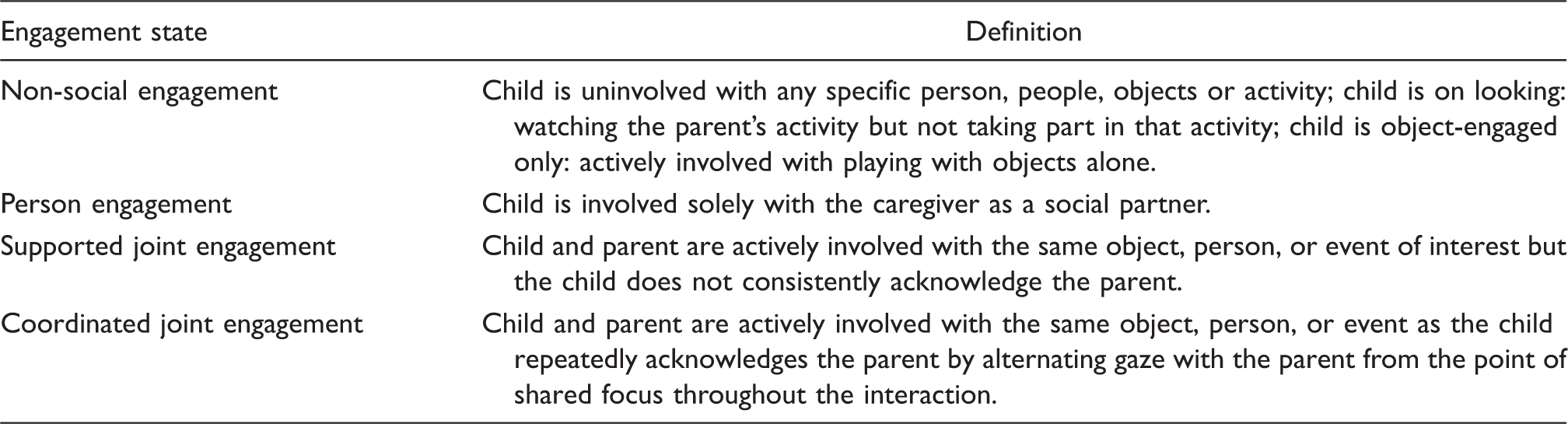
Adapted from: From Interactions to Conversations: The Development of Joint Engagement During Early Childhood, Adamson L. B. et al. (2014).
Inter-observer reliability
For the purpose of establishing parent fidelity inter-observer agreement (IOA), the first author coded all sample videos for parent fidelity using the parent fidelity scoring form. A graduate student participated in training with the first author until 80% agreement was reached using non-study related video samples. She then coded 33% of randomly selected baseline and intervention sessions for parent intervention fidelity. IOA was defined as the number of observer agreements divided by the total number of observer agreements (if the code per item was within 1 point of the primary author’s score) plus disagreements, resulting in a total percent agreement score. Average agreement: Carl’s mother – 96.8% (range: 90.4–100%), Dan’s mother – 95.7% (range: 90–100%) and Ann’s mother – 88.14% (range: 81–95%).
Finally, engagement state duration agreement was calculated as a point-by-point interval agreement per second of the 600-second play sample for each engagement state, and a percentage was calculated accordingly for each state. Total IOA for engagement states: SJE – 96% (range: 93–100%), CJE – 84% (range: 73–99%), PE – 89% (range: 78–100%) and NSE – 90% (range 86–88%). The slightly lower range floor values for several of these state categories may be considered acceptable when coding involves multiple behaviors with complex definitions such as these (e.g. Kazdin, 1982). In this sample, several of the behaviors occurred at a low frequency (CJE, PE) for some children, which gave weight to small disagreements (e.g. 15 seconds vs. 0 seconds in a play sample = 0% agreement).
Procedural fidelity
The student coder rated 33% of randomly selected intervention session videos to assess implementation fidelity using the form provided by Project ImPACT (Ingersoll & Wainer, 2013). This form was used to rate the degree to which the first author implemented the coaching with fidelity across 20 items related to preparedness, the prescribed use of didactics, demonstration, parent practice, constructive feedback, and warmth of interaction, also using a Likert-type scale ranging 1–5. Average fidelity/session was 4.5 (range: 4.2–5).
Social validity
Parent satisfaction form
Each of the three participants completed a parent satisfaction form upon termination of the study to assess how they felt about aspects of the intervention and whether they noticed an improvement in the social communication skills of their children.
Parent implementation questionnaire
Each parent participant also completed a questionnaire at the termination of the study asking them how often, on average, they used the techniques throughout the week, how they were able to implement them across family routines, and how often other professionals provided other educational or clinical services.
Results
Mean parent fidelity scores.
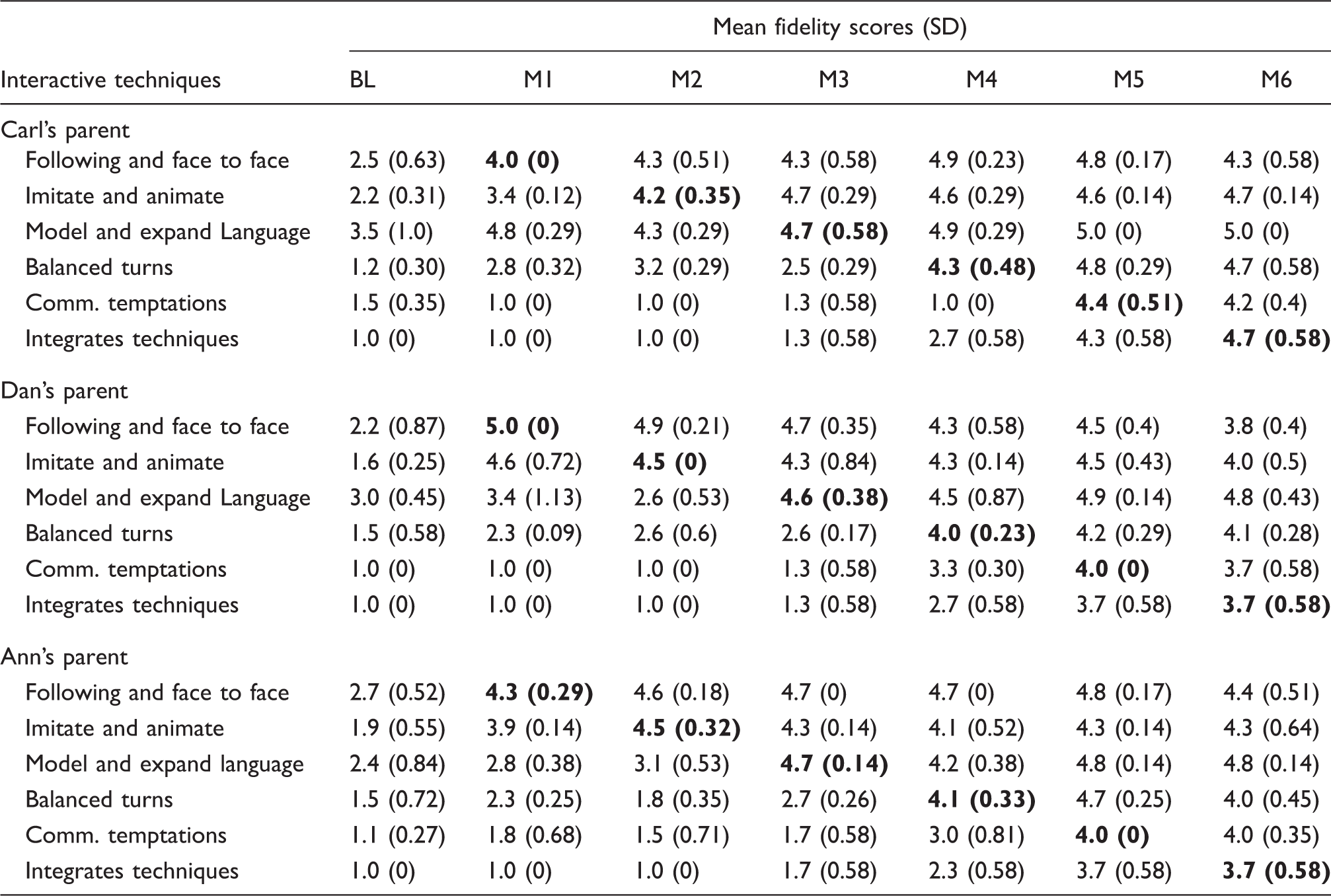
BL: baseline. M#: module number.
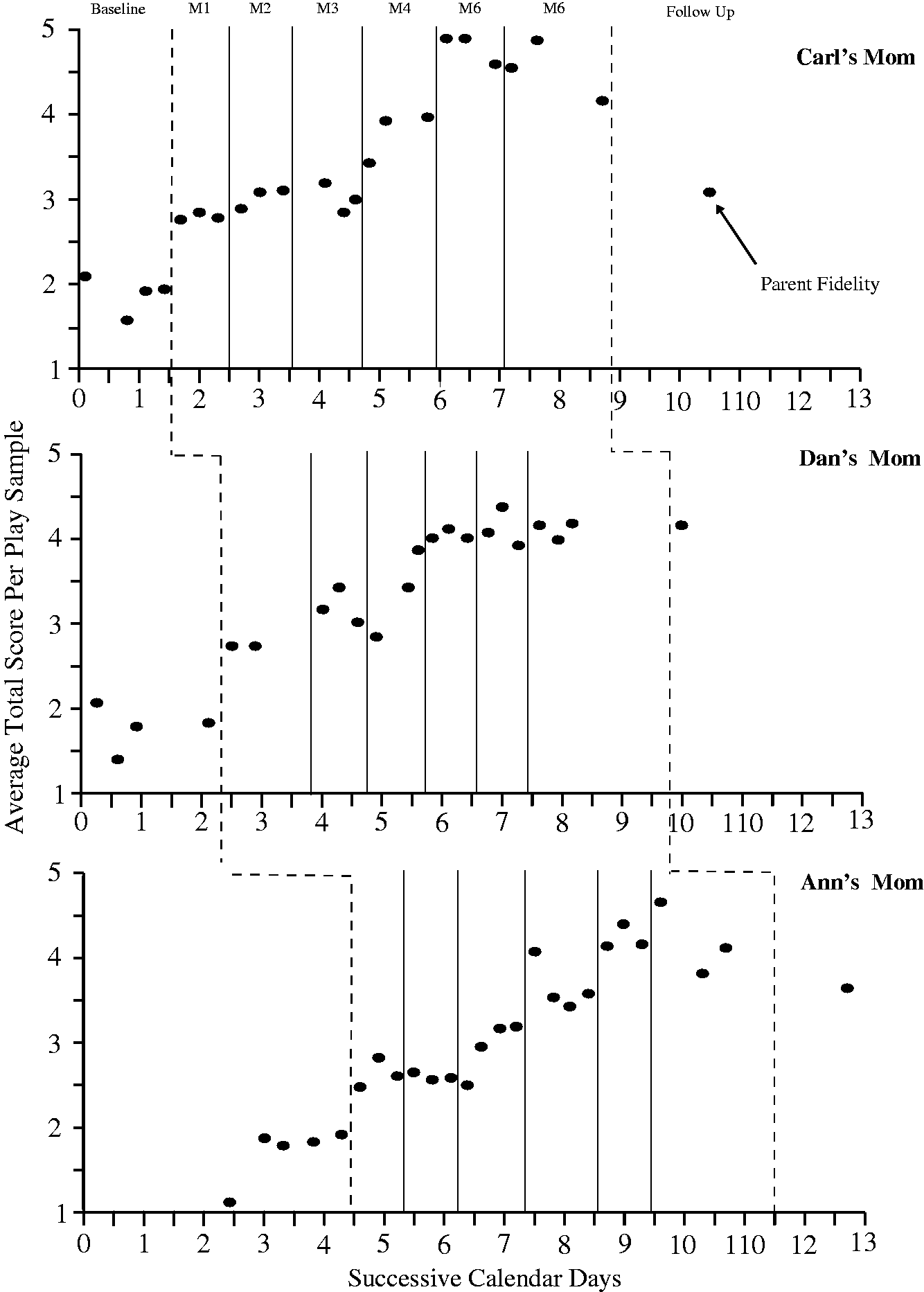
Average parent fidelity per session.
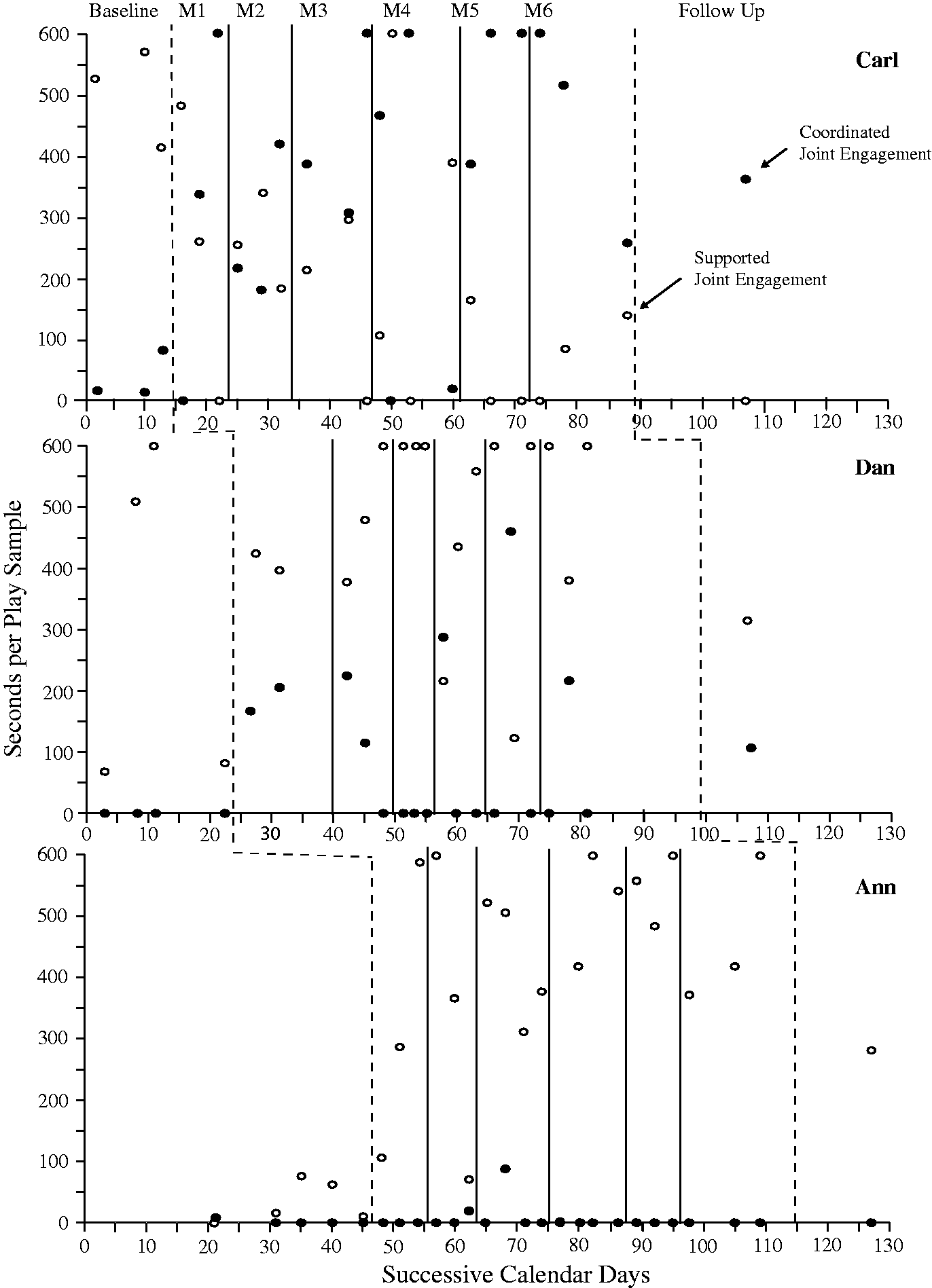
SJE and CJE duration per session.

PE and NSE duration per session.
Parent fidelity
Carl’s mother demonstrated relatively low levels of fidelity in baseline with regard to acquisition of the discrete Module techniques, with the exception of Model/Expand Language. Specifically, of the first three techniques, both Following/Face to Face and Imitate/Animate were manifested at low levels (implements occasionally) while Model/Expand Language was displayed at moderate levels of fidelity (implements half of the time but misses many opportunities). Of the second three techniques, Balanced Turns, Communicative Temptations, and Integrated Use were all used at low levels or were not seen in the baseline phase.
An immediate increase in fidelity was observed for all of the first three techniques with the onset of Module 1. Balanced Turns showed a small increase as well at this time, while the use of Communicative Temptations and Integrated Use remained low. Scores for the first three techniques remained elevated with a slight additional increase in Model/Expand in Module 3, and cumulative fidelity scores increased accordingly, remaining elevated at a stable rate until the introduction of Module 4 (Balanced Turns). With the introduction of Module 4, the use of Balanced Turns showed a marked increase, while use of the previously learned techniques was maintained at fidelity levels. Similarly, the onset of Module 5 (Communicative Temptations) was associated with a marked increase in Module 5 scores, as well as an increase in Module 6 scores, to criterion to mastery fidelity levels. Mastery criterion was maintained through Module 6 for the use of all learned techniques (see Table 2).
Cumulatively, fidelity scores were relatively low in baseline and increased in a stable manner. Overall fidelity data demonstrated three discernable rises in level with little or no data overlap between phases: upon the introduction of Module 1, which plateaued across Modules 2 and 3 until another clear increase was seen upon the introduction of Module 4, and a third marked increase with the introduction of Module 5, which was maintained at a high but slightly decreasing level in Module 6. Cumulative fidelity was maintained at only moderate fidelity at follow-up (see Figure 1).
Dan’s mother also demonstrated low fidelity in baseline for all of the techniques except Module 3 (Model/Expand), which was recorded at moderate fidelity. Like Carl’s mother, fidelity for all of the first 3 techniques increased with the introduction of Module 1, although the use of Model/Expand decreased in Module 2 when Imitate/Animate was introduced. As expected, fidelity scores for Model/Expand increased to mastery levels in Module 3, and use of previously learned techniques was maintained at master criterion levels. Similarly, use of Balanced Turns was associated with increases in fidelity for that technique to mastery levels, again demonstrating mastery fidelity levels of previously learned techniques. Upon introduction of Communicative Temptations in Module 5, and through the Integrated Use of the techniques in Module 6, fidelity for these newly-introduced techniques fell just below mastery criterion levels, although mastery use of previously learned Module techniques was maintained (see Table 2). Due to holiday travel plans, this parent was unable to schedule additional sessions during Modules 5 and 6 to attain full mastery fidelity.
Cumulative fidelity data demonstrated a marked rise with the introduction of Module 1, and plateaued until the second data point in Module 3, where another marked increase was seen. This rise was again maintained through Module 4, although a slight decrease in overall fidelity was noted through Modules 5 and 6, despite the fact that previously learned techniques continued to be performed with fidelity. Dan’s mother concluded the intervention phase with just-below mastery fidelity scores. Mastery fidelity was demonstrated at follow up (see Figure 1).
Finally, Ann’s mother demonstrated uniformly low fidelity scores for all techniques in baseline. Upon the introduction of Module 1, Following/Face to Face increased to master criterion levels, and the use of Imitate/Animate also increased to near-criterion levels. After the introduction of Module 2, Imitate/Animate increased to criterion master levels, and fidelity use of Following/Face to Face while refraining from questions and directives was maintained. As expected, Model/Expanding increased to mastery fidelity in the Module 3 phase. Likewise, mastery criterion for Balanced Turns was achieved in Module 4, while the fidelity use of previously learned techniques was maintained. Like Dan’s mother, Ann’s mother performed the use of Communicative Temptations at a borderline mastery level in Module 5, and fell just short of mastery fidelity with respect to Integrated Use in Module 6, although previously learned techniques were performed with fidelity (see Table 2). Like Dan’s mother, holiday plans prevented the scheduling of additional Module sessions for the purpose of attaining full master fidelity.
With regard to cumulative fidelity, parent data demonstrate an immediate increase in level and trend with the onset of Module 1, which was maintained at a stable level through Module 2. Each subsequent Module until Module 6 demonstrated a clear and non-overlapping increase in trend and level across Module phases. In contrast, the introduction of Module 6 showed a leveling off of cumulative scores and a slight decline at the conclusion of the intervention phase. Like the other mothers, mastery fidelity was maintained across phases for all previously learned techniques (see Figure 1).
Child engagement states
During baseline interactions with his mother, Carl maintained a high level of SJE with only sporadic instances of CJE (Figure 2). With the onset of the first intervention module, Carl immediately increased the time he spent in CJE. The duration of time spent in CJE increased variably but positively in level and trend until the final module, where it showed a decreasing trend. Concurrently, SJE decreased immediately upon the introduction of the first module phase, and continued to decrease variably but consistently across the study phases. In follow-up, increased levels of CJE were maintained, and SJE remained relatively low. Carl’s time in PE and NSE states was relatively low in duration throughout intervention phases (Figure 3).
During the baseline phase, Dan also spent most of his time in SJE with virtually no time in CJE (Figure 2). With the start of Module 1, time spent in SJE showed a gradual decrease in level and trend with significant overlap with baseline levels until the last data point in Module 2, when SJE rose again to maintain predominantly high levels, showing considerable variability in each subsequent phase. In follow-up, Dan demonstrated that time spent in SJE did not change significantly from baseline levels. Concurrently, CJE duration showed a sharp increase with the onset of Module 1, and the first two data points of Module 2, but began to variably decrease towards baseline levels over the course of the intervention, but with several spikes in duration throughout phases. In follow-up, time spent in CJE was only slightly increased as compared to baseline. As with Carl, there was a low level of frequency of both NSE and PE across baseline and intervention phases (Figure 3).
In contrast, Ann spent virtually no time in joint engagement in baseline. The majority of her time was spent in periods of NSE (Figure 3), during which she preferred to spin in her swing and listen to music or to walk around the room and engage only briefly with objects. She demonstrated some PE engagement in baseline but demonstrated a very small amount of time in SJE. With the introduction of Module 1, Ann demonstrated an immediate increase in the duration of SJE (Figure 2) and a gradual decrease in NSE. This increase in SJE and decrease in NSE states continued in level and trend, with considerable variation, across modules. Ann’s data demonstrated clear maintenance of increased duration in SJE in follow-up and a continued decrease in NSE time. Very little CJE was observed, and PE states showed an inconsistent pattern throughout, with sporadic increases in modules 2 and 4 but relatively infrequent overall.
Maintenance and social validity
Parents reported highly variable rates of maintenance of the intervention techniques. Carl’s mother said that the family used the techniques throughout the day for a total of 30 hours a week, and that they had asked their other service providers to familiarize themselves with the techniques. In contrast, Dan’s mother said that it was hard to use the techniques at home since Dan received a high number of intensive services throughout the week outside the home, and that they used the techniques up to 6 hours a week. Similarly, Ann’s mother stated that time was a problem since Ann received intensive services throughout the day outside the home. Ann’s mother said that she spent roughly 5 hours a week using the techniques with her daughter. Despite these differences in daily implementation, all three parents reported the techniques to be both useful and effective and that they thought their children’s social communication skills had improved during the course of the intervention.
Discussion
During the course of this study, we examined the degree to which parents learned to implement a cumulative set of responsive intervention techniques at home with fidelity, identified patterns in the way parents acquired and used intervention techniques, and investigated associations of parent use of these techniques with child joint engagement. Results indicate that parents learned these techniques cumulatively with fidelity and maintained fidelity use of learned techniques as new techniques were introduced during home-based trainings, although variations were detected in the acquisition of later-introduced Modules. As expected, parents entered the training manifesting consistently low levels of following their child’s lead, maintaining frontal proximity to their child, and imitating their child’s actions, although they were more likely to already model and expand child language in baseline. Study data suggest that parent “unlearning” of previously acquired parenting behaviors may have subsequently influenced how new responsive parent behaviors were acquired and manifested at the onset of the intervention phase, and that groups of techniques may share synchronous mechanisms of action, informing the way behaviorally related groups techniques might be taught. Finally, results indicated positive changes in level and duration of joint engagement with parent use of this set of interactive techniques in two of the three child participants.
Patterns of parent fidelity acquisition
The fact that all three parents entered the parent training phase demonstrating low rates of Follow/Face to Face and Imitate/Animate aligns with evidence that parents of children with ASD may be less likely to responsively follow the lead of their child during play interactions (Freeman & Kasari, 2013). As discussed, a responsive style has been associated with gains in both joint engagement (Patterson et al., 2013) and language (McDuffie & Yoder, 2010; Ruble et al., 2008; Walton & Ingersoll, 2014), especially in minimally verbal populations of children with autism (Haebig et al., 2013). Interestingly, two of the three parents already displayed some use of Model/Expand language in baseline, and as such was the only technique that parents consistently displayed in their behavioral repertoire before the onset of training. These findings align in part with those of Ingersoll and Wainer (2013) who found that many of the participating parents demonstrated moderate or even high levels of fidelity use of Model/Expand in baseline, although in that study some parents also demonstrated moderate or high fidelity levels of other techniques as well. Furthermore, use of Balanced Turns and Communicative Temptations was consistently lower in baseline than the use of any of the first 3 techniques, perhaps because the use of these techniques involved a more behaviorally specific procedure rather than the manifestation of a natural parenting behavior (e.g. the act of providing a verbal model).
During the intervention phase, parents learned each Module topic with fidelity within three to four home training sessions, and unlike participants in the Ingersoll and Wainer (2013) study, parent participants did not exhibit a decline from high fidelity levels (score of 4–5) of previously learned techniques when new topics were introduced. These results add support to previous research demonstrating that modular parent training interventions can be feasibly taught to parents for use with ongoing fidelity (Dawson et al., 2010; Kasari, Gulsrud, Wong, Kwon, & Locke, 2010; Schertz, Odom, Baggett, & Sideris, 2013) and that parent-implemented training can be effective in home-based as well as clinical settings (Meadan et al., 2009; Schertz & Odom, 2007).
Regarding individual patterns of technique acquisition, an immediate rise in the use of both Follow/Face to Face and Imitate/Animate was seen after the introduction of Module 1, and this rise in overall fidelity remained stable even after the introduction of Module 2 for all three parents. This plateau continued for Carl’s parent as she was already manifesting fidelity levels of Model/Expand in Module 3, and showed a slight rise in scores of Dan’s and Ann’s parents scores for this Module. Subsequently, Dan’s and Ann’s parents fell just short of full mastery of fidelity in Module 5 (Communicative Temptations), impacting Module 6 scores (Integrated Use) for those parents.
As a means of understanding possible mechanisms for these patterns of acquisition, the reader may recall that the Module techniques were grouped in a relatively hierarchical manner with regard to developmental complexity: The first three Modules (Follow/Face to Face, Imitate/Animate, and Model/Expand) were taught first and in successive order, and involved an exclusive focus on child behaviors with no specific expectation of reciprocation on the part of the child. Upon introduction to the Module 1 topic, which taught parents to refrain from questions or directives and to follow the lead of the child in play while remaining face to face, it may be that by engaging in Follow/Face to Face while refraining from directive behaviors, parents used imitation as a natural replacement behavior without being directly instructed to do so. This observation may serve to inform the manner in which teaching parents to follow in on child-selected activities and refraining from questions and directives may synchronize well with teaching parents to instead imitate their children’s behavior. Although the introduction of Module 3 was associated with a distinct rise in the scores of Dan’s and Ann’s parents, the relatively contiguous level and trend of the first three Modules for all of the parents suggests that the behaviors involved in the use of these techniques as a group may share considerable overlap in the manner in which they are learned and manifested. In other words, the responsive behaviors that embody the use of these three techniques (e.g. following in on child interests, imitation/animation, providing non-directive comments) may be naturally used in combination as a whole by parents of young children to enhance dyadic engagement/synchrony (e.g. Leclere et al., 2014; Moore et al., 2013).
In contrast to these exclusively child-led techniques, Module 4 taught parents to initiate bids for reciprocal exchanges in the form of turn-taking or trading in the context of their children’s focus of attention, setting up the expectation that children will tolerate adult bids to take a turn or trade objects, although no specific response was required. Subsequently, Module 5 taught parents to create opportunities for children to initiate communication by limiting access to objects or events in playful ways, and to return to previously learned techniques if the child did not respond. As discussed, Dan’s and Ann’s parents did not consistently implement the Module 5 techniques during play samples, although they did continue to use previously learned techniques with fidelity. It is important to note that by encouraging a child to communicate either non-verbally or verbally to access unavailable objects or events of shared focus, parents were taught to look for a contingent behavior in response to the use of that technique, even if they did not actually require it. As such, although Modules 1, 2, and 3 involved a group of exclusively responsive parent behaviors, Module 4 introduced the expectation that a child would engage in or at least tolerate reciprocal exchanges with the use of Balanced Turns, without changing the focus of play. Finally, Module 5 techniques were likely the most mechanistically distinct from the first three strategies in that parents were taught to introduce an opportunity to communicate through restricting access to child-preferred activities. This was done by teaching parents to playfully limit access to an object, putatively placing a non-verbal demand on the child as they waited for a communicative response. This progression represents a gradual trend away from exclusively responsive parent behaviors towards those that, although still following child’s interests, became increasingly adult-initiated (e.g. by playfully putting a desired object out of reach). Finally, Module 6 taught parents to implement all 5 of the learned strategies together in a fluid manner based on the social responses of their child: if they implemented a Module 4 or 5 technique and the child left the interaction, a parent was taught to return to the first Module strategies to regain social engagement. Considering this structural format with regards to the manner in which techniques were learned and used, it is notable that Carl’s parent was the only one who learned and maintained full Module 5 technique mastery fidelity, and performed it adequately in Module 6 to integrate use of all techniques together. Given that Carl was the only child who consistently manifested CJE, it may be that Ann’s and Dan’s mothers found the use of Communicative Temptations more challenging and refrained from using it consistently. Indeed, it is likely that they experienced less success with the use of a technique designed to elicit an initiation, due to the fact that their children spent most of their time in SJE, where children do not routinely acknowledge the presence of a communicative partner, and consistently escape bids for shared attention (e.g. Adamson et al., 2001, 2004, 2008).
Alternatively, the fact that two of the three parents displayed a decline in fidelity in Modules 5 and 6 may suggest that the sheer number of introduced techniques became increasingly overwhelming, resulting in a reduction in fidelity in newly taught techniques toward the end of the intervention. Both possibilities add support to a mounting call by researchers to more effectively individualize parent-implemented strategies with regard to how parents are best able to durably acquire the use of progressive modular techniques, as well as to determine more precise methods to apply intervention techniques to the unique developmental level of each child with ASD (Kasari, 2015; Morgan et al., 2014; Zwaigenbaum et al., 2015).
Joint engagement states
As is typical for groups of children with ASD, the three child participants in this study represented a heterogeneous sample with regard to initial levels of joint engagement. As discussed, early joint social engagement occurs in the context of SJE, and typically progresses to CJE, a more complex level of engagement in the form of CJE, during which children consistently initiate bids for shared attention. Children with ASD often acquire SJE over time, but may never consistently manifest CJE (Adamson et al., 2008). As is often the case for early learners with autism, Ann spent most of her time in baseline non-socially engaged. In contrast, though Carl and Dan were already engaging in SJE in baseline, they were not yet demonstrating consistent episodes of CJE (Adamson et al., 2004). Parents in this study learned to follow their children’s focus of interest across study modules; to refrain from questions and directions, to imitate child behaviors, to model language/play and to implement techniques designed to enhance child reciprocity in a progressive manner. Although the child participants began the intervention with notably different baseline engagement profiles, the use of a range of responsive techniques was appropriate not only for Ann, who was predominantly non-socially engaged in baseline, but for Carl and Dan who although they had already learned to stay in SJE interactions, did not yet actively coordinate joint engagement. In line with the Adamson et al. (2004) model, we saw that although Carl was predominantly demonstrating SJE in play with his mother in baseline, he was already showing the beginnings of CJE. The subsequent bloom of CJE occurring with the use of the study techniques may reflect an emerging capacity to engage in reciprocal interactions paired with the novel opportunity to spontaneously generate social initiations, as his mother instituted use of the techniques, which included the withdrawal of directives and prompts. In continued support of this model, Ann was predominantly socially non-socially engaged at the onset of the study, and demonstrated an increased ability to sustain SJE in association with the use of the techniques, a critical advance in her progress towards more complex levels of social interaction. Although both Dan and Ann may require extended practice in this protected context beyond the length of the study, a primarily responsive intervention limited to the use of the first three techniques may continue to be appropriate for use with them as early learners until they demonstrate an increased ability to coordinate joint engagement. Once children become fluent coordinators of joint engagement, they spontaneously emit joint attention initiations through alternating gaze, gestures, sounds, and words (Adamson, Bakeman, Deckner, & Nelson, 2014; Adamson et al., 2008). It may be that the successful use of techniques designed to move beyond responsive following of child-selected play into creating opportunities for reciprocity or communicative initiations may be contingent on the degree to which children have adequately learned to tolerate the social presence of another in the context of object play in SJE, and on their readiness to begin to actively coordinate joint engagement. Indeed, these results align well with previously discussed evidence that responsive parent behaviors may be uniquely effective for early learners, and that more adult-directed techniques may be more effective as children become more fluent communicators (e.g. Haebig et al., 2013). Assessment of a child’s developmental level with regard to predominant engagement state (e.g. non-social/object engagement, supported or CJE) may offer an exceptionally relevant way to individualize intervention strategies for a heterogeneous population of children, a need repeatedly identified as a priority for autism research now and in the years to come (Kasari, 2015; Landa & Kalb, 2012; Zwaigenbaum et al., 2015).
Limitations
The dyad participants in this study differed from each other in several significant ways, including child age (22–53 months), the fact that Carl was cared for at home full time by the parent who received the parent training, and by the fact that each child received a variety of outside services, ranging from developmental Part C services to intensive behavioral services throughout the day. Furthermore, Carl’s parent reported a far higher number per week of hours of implementation generalization than did either Dan or Ann’s parent. These differences underline a central difficulty in the analysis of how the use of parent-implemented intervention approaches are active to influence child outcomes of any kind. Future research should seek to document the extent to which parent-implemented techniques are actually incorporated into the daily lives of children with ASD, and may benefit from studies focused exclusively on young children cared for exclusively at home, and who have not yet received outside services, as a means of establishing a higher level of experimental control. Furthermore, the current study measured child outcomes during the same period of time parents were learning to use the study techniques, and children were only exposed to the full use of the intervention package for 1–2 weeks before the conclusion of the intervention phase. Future study designs of parent-implemented intervention packages should include a post-training phase during which parents have mastered the use of all techniques with full fidelity as a means of demonstrating stronger experimental control in association with child outcomes. Finally, the parents included in this study were highly educated, limiting the degree to which these conclusions may be relevant to other families across cultural and economic profiles.
Conclusion
The results of this study contribute to the evidence base in several important ways. Results indicate that parents, although they began the study with low levels of responsive behaviors overall, learned to use a set of responsive interactive techniques with generally good fidelity over time, and were able to retain fidelity use of earlier-learned techniques when new techniques were introduced. This finding adds support to a growing body of evidence that parent-implemented interventions teaching parents to use responsive techniques designed for use with young children with ASD can be effectively taught and used by parents in the context of their own homes and in a modularly designed sequence (Meadan et al., 2009; Schertz, Reichow, Tan, Vaiouli, & Yildirim, 2012). Similarly, the finding that parents began the training with variable levels of baseline technique use highlights an ongoing need to tailor the design of parent-training protocols based on individual parent behavioral profiles. Furthermore, given the fact that parents in this study acquired the use of the first three techniques in a relatively contiguous manner, and appeared to learn subsequent and mechanistically different techniques in an increasingly variable way offers researchers additional insight into how this array of parent-implemented techniques may best be taught and used.
Finally, the fact that two of the three children demonstrated changes in level and increases in duration of joint engagement underlines the need for further research to investigate exactly how the use of specific responsive parent techniques, ranging from exclusively child-led to increasingly adult-initiated while still following in on child focus, may be active to increase level and duration of specific joint engagement states in a heterogeneous population of children with ASD.
By more completely understanding the way parents acquire and use intervention techniques such as these, and through an increasingly detailed understanding of how joint engagement is best supported though specific kinds of adult-child interactions, researchers will be optimally positioned to isolate effective methods to individualize interventions targeting joint engagement in young children with ASD.
Compliance with ethical standards
All procedures performed in studies involving human participants were in accordance with the ethical standards of the institutional and/or national research committee and with the 1964 Helsinki declaration and its later amendments or comparable ethical standards.
Informed consent
Informed consent was obtained from all individual participants included in the study.
Footnotes
Declaration of conflicting interests
The author(s) declared no potential conflicts of interest with respect to the research, authorship, and/or publication of this article.
Funding
The author(s) disclosed receipt of the following financial support for the research, authorship, and/or publication of this article: The research is supported through the Office of Special Education (OSEP), grant number 05.22291.070460.