




Abstract
Objectives
Extracurricular activities (EA) are crucial for medical education, fostering professional and personal growth. They complement formal curriculum structures, addressing students’ social, psychological, and academic needs. Understanding students’ motivations for choosing EA is essential for creating effective educational strategies. Our study examined medical students’ engagement in EA, focusing on the most common activities, perceived importance, and the motivations and challenges faced.
Methods
This was a cross-sectional study, employing both quantitative and qualitative designs, involving a convenience sample of medical students from Brazil. Data collection was carried out using an anonymous, structured electronic form to gather information on the sociodemographic profile of students and aspects related to EA participation. The analysis included both descriptive statistics and qualitative content analysis, providing detailed insights into student motivations and their experiences with EA.
Results
Out of 221 study participants, 82.4% were actively involved in EA. Sports (44.8%), scientific events (39.4%), artistic activities (33.5%), and participation in scientific programs (28.1%) were prominent choices, with students dedicating 8.5 h per week. Students under the age of 28 (P = .017) and those without a previous academic degree (P = .036) showed a higher frequency of involvement in EA, as confirmed by logistic regression analysis revealing significant associations for these variables (OR = 1.16, 95% CI: 1.02-1.32, P = .017; and OR = 0.88, 95% CI: 0.78-1.00, P = .036, respectively). Motivations for EA participation were primarily driven by a desire to enhance curriculum vitae and develop essential professional skills. Challenges such as time management and academic adjustment were common among medical students.
Conclusions
Our findings highlight the widespread involvement of medical students in EA, illustrating a diverse range of interests. Younger students and those without previous academic training are more likely to participate. Motivations include enriching the curriculum and refining skills, yet challenges such as time management and adjusting to academic demands are significant, especially for new students.
Introduction
Extracurricular activities (EA) are those in which students engage outside of the formal academic curriculum, aimed at enhancing both their professional and personal development. 1 They represent valuable opportunities to improve students’ interdisciplinary competencies, encompassing the cultivation of social, humanistic, and leadership proficiencies, in addition to cognitive refinement.1,2 When conducted in sync with the curriculum, these activities transcend the boundaries of the formal content offered by the core curriculum, enriching the students’ education and setting them apart from their peers. 3
In Brazil, the National Curricular Guidelines for Medical Courses 4 stimulate initiatives such as tutoring, internships, scientific initiation programs, extension activities, and related courses. Aligned with these initiatives and the perspective of minimizing student stress, 5 some medical schools have been restructuring their curricula to include what are known as “green areas”, or periods of free time designated for leisure activities and personal development. 6 Therefore, these extracurricular activities, carried out in parallel with curricular subjects, can fill these “green areas,” positively influencing social, psychological, and academic aspects, including friendships, mental health, interpersonal skills, leadership, and collaboration.1,2,7
Given the duality between two motivational perspectives—intrinsic (based on interest and inherent pleasure in the action) and extrinsic (stemming from the pursuit of consequences or outcomes distinct from the action)—there is a pressing need to understand the motivations that influence medical students’ choices of extracurricular activities. This comprehension is crucial because it sheds light on the challenge faced by educational institutions in developing effective academic strategies that are in tune with the generational, collective, and individual needs of students. 8 Understanding these motivations can help in designing curricular and extracurricular programs that better address students’ needs and foster their engagement and satisfaction.
Considering that medical students’ choice to engage in EA is based on both intrinsic and extrinsic motivations, this study was designed to assess the engagement in EA of medical students, investigating the most commonly performed activities, the perceived importance, and the motivations and challenges faced by these students. A deeper exploration of these aspects will contribute to a more comprehensive understanding of the role of EA in medical education and how they can be effectively integrated to support students’ overall development.
Materials and methods
Study design and sampling methods
This is an observational, cross-sectional study, incorporating both quantitative and qualitative natures, conducted from May 2022 to February 2023. The reporting of this study follows the Strengthening the Reporting of Observational Studies in Epidemiology (STROBE) statement 9 (Supplementary File 1).
A convenience sample of all private medical schools in Salvador, Bahia, Brazil (n = 4) was used, representing 67% of all medical courses offered in 2021. 10 All medical students from these schools (n = 2000) were invited to participate in the study through the snowball method, a nonprobabilistic sampling technique where study participants recruit other participants.11,12 This nonprobabilistic technique is frequently used in virtual research to recruit participants with specific characteristics, allowing the sample size to gradually expand as participants recruit others who are also suitable for the study. Upon completing the data collection, we received a total of 250 responses, resulting in a response rate of 12.5%. After excluding 29 responses for noncompliance, the final sample consisted of 221 participants (Figure 1).

Flowchart detailing the methods of the study.
To assess the reliability of our findings, we calculated the margin of error for our sample a posteriori. Using a confidence level of 95%, a total population of 2000 medical students, and a sample size of 221 participants, the calculated margin of error was found to be 6.22%. Despite the smaller sample size obtained, the study offers valuable information about the population.
Participants
The study used a convenience sample of students from four private medical schools in Salvador, Brazil. Participants were included if they met the following criteria: (a) were 18 years of age or older, and (b) were regularly enrolled in the course. Exclusion criteria included students who did not provide complete responses to the questionnaire or who submitted duplicate responses.
Procedures and measurements
Data collection was conducted via an anonymous, structured electronic form. This instrument was distributed in virtual groups on social networks and through messaging applications, making student participation voluntary. This strategy enabled us to reach more respondents, thereby expanding the sample and increasing the reliability of the results.
The data collection instrument comprised 45 questions (Supplementary File 2), drawing on studies about the profile of medical students13,14 and a previous study on EA in medical education. 7 Of these questions, nine addressed the sociodemographic profile of students, including behavioral, health, family, and educational environment-related factors. The remaining 36 questions focused on issues related to the practice of EA. While completing the instrument, students were asked to select the set of EA they were involved in during the academic term. The EA were primarily grouped into nine distinct categories (Figure 2). Additionally, students had the opportunity to list other EA not included in these categories by specifying the activity under the ‘Other’ category. Despite this possibility, none of the students who participated in the study utilized the ‘Other’ category to list additional activities.
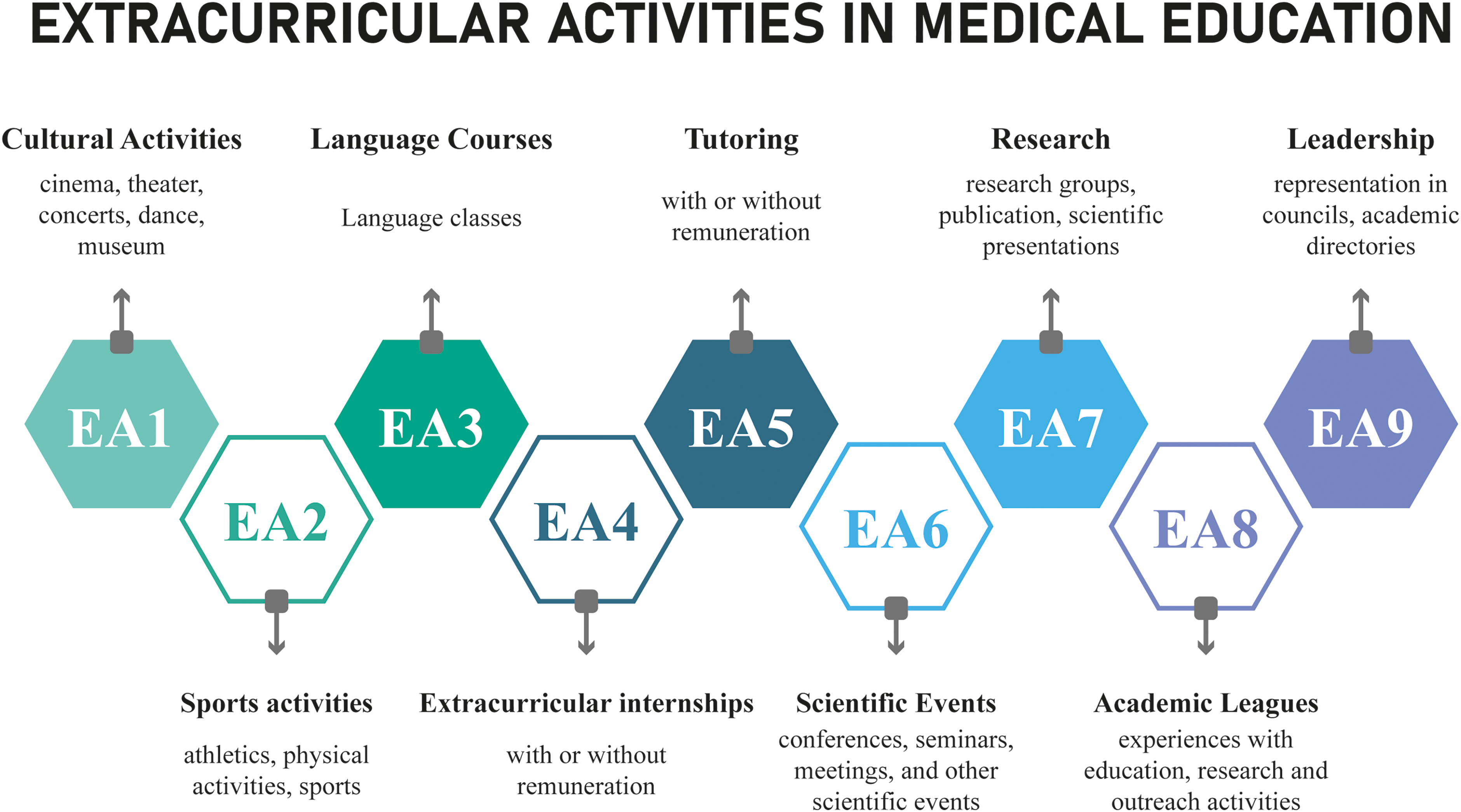
Categorization of extracurricular activities in medical education. ea: extracurricular activities.
Regarding the structure of the questionnaire, there were four specific inquiries for each of the EA categories. For each group of activities selected by the students, the questionnaire included three objective questions: whether the student participates in the activity, the hours devoted to it weekly, and the level of importance assigned using a five-point Likert scale. This scale ranges from “not important” to “very important”, facilitating a precise evaluation of each activity's significance. A fourth question explored the motivations behind engaging in the activity. Qualitative assessment of motivation associated with each activity aimed to deepen understanding of student participation motives.
In situations where students did not participate in any specified activities, participants were prompted to explain their decision by identifying the determining factors influencing their choice to abstain from EA involvement.
It is important to highlight that the questionnaire used was specifically developed for this study. However, it was based on the Brazilian curricular guidelines for medical courses. 4 Prior to its application, the instrument underwent an internal validation process within a research group led by experienced professionals in the field of medical education. This process involved discussions and thorough revisions of the research instrument to ensure the clarity, relevance, and appropriateness of the questions in the context of the study. Although the validation was not conducted externally, the thoroughness of the internal review process contributes to the methodological rigor of the study, thereby enhancing the reliability and accuracy of the collected data.
Data analysis
Statistical analyses were performed to examine associations between sociodemographic, academic, and EA involvement among medical students. All statistical analyses were performed using IBM SPSS software, version 25.0.
The normality of the continuous variables was assessed using the Kolmogorov‒Smirnov test. Variables with a Gaussian distribution are presented as the mean and standard deviation (SD), while those with a non-Gaussian distribution are presented as the median and interquartile range (IQR). Categorical variables are described as absolute numbers (n) and percentages (%).
Engagement in EA was considered the primary outcome. The chi-square test was used to identify significant associations between EA participation and categorical variables such as age, sex, marital status, and academic background. Additionally, logistic regression analysis was performed to further evaluate the relationship between sociodemographic characteristics and EA engagement, with results expressed as odds ratios (OR) and 95% confidence intervals (CI). Bonferroni post hoc correction was applied to account for multiple comparisons.
For the analyses, the variable “age” was dichotomized into two groups: “under 28 years” and “28 years or older,” reflecting the age distribution in our sample and the different levels of academic maturity and responsibilities. A P-value of <.05 was considered statistically significant for all tests.
For content analysis, the Bardin method 15 was used. The process began with a comprehensive and directed reading of the discourses associated with each group of activities, aiming to structure the themes addressed and identify patterns among the responses. Subsequently, coding was conducted by segmenting the units of registration, highlighting similarities in the motivational justifications expressed in the discourses, and recording the frequency of their occurrence. The justifications were subsequently grouped into analytical categories through a semantic grouping process, aiming to understand the most frequently mentioned elements. Finally, the results were subjected to inferential, reflective, and critical analyses, allowing for a deeper interpretation of the data (Figure 3).
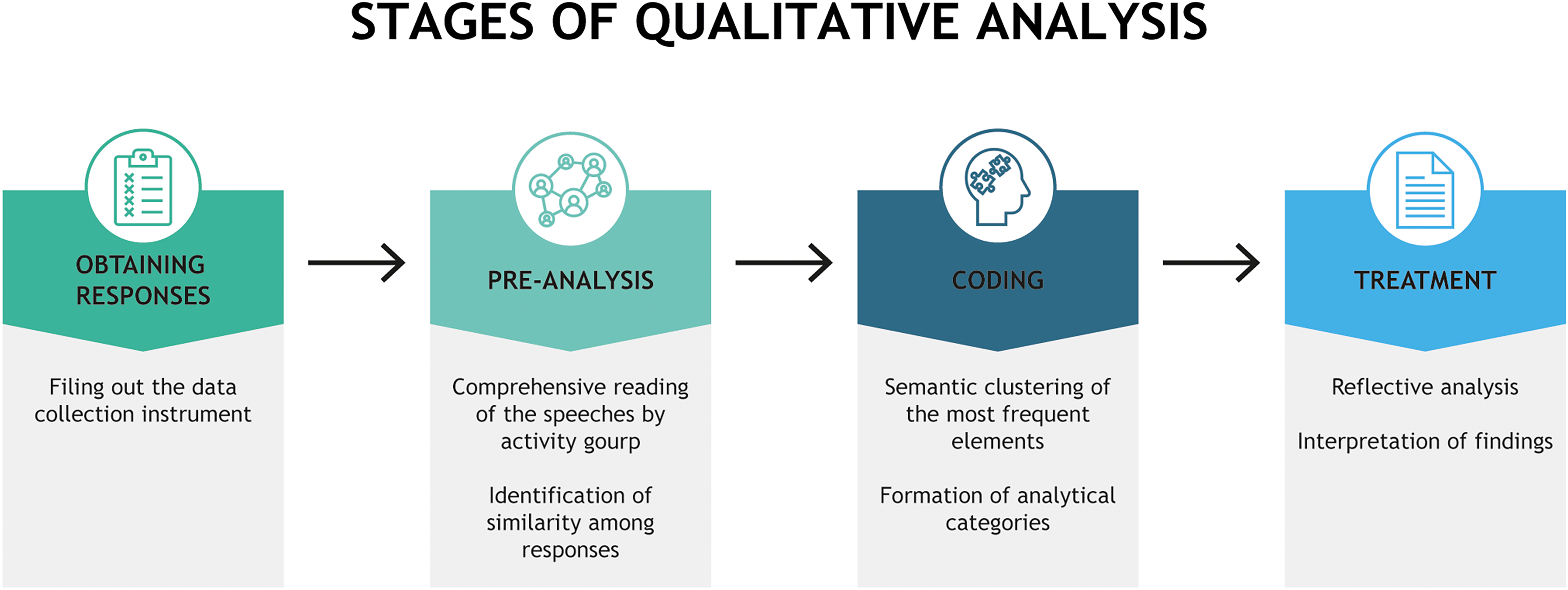
Process of content analysis of the discourses of participating medical students.
Ethics approval and consent to participate
This study was performed in accordance with the Declaration of Helsinki and with Resolutions 466/12 and 510/16 of the Brazilian Health Council. Furthermore, it was approved by the Brazilian Research Ethics Committee (protocol number 57511922.5.0000.5032). Data confidentiality and participant privacy were ensured by restricting access to information exclusively to the researchers involved and assigning a random number to each participant. To ensure autonomy, participants were given access to the data collection instrument via a link distributed by the researchers before starting the survey, allowing them to review the questionnaire items before deciding to participate. These stringent measures were implemented according to ethical principles and research guidelines to protect participant well-being and ensure the scientific validity of the study, in compliance with the General Data Protection Law (LGPD). Additionally, all participants were fully informed about the study's objectives and methods and provided their consent by signing the Informed Consent Form.
Results
We analyzed 221 responses to the questionnaire from students at private medical schools, predominantly enrolled in the preclinical phase of the course (66.1%), which represents the first two years of the medical school curriculum in Brazil.
Among the participating students, the mean age was 27.5 ± 7.8 years, with the majority being female (69.7%), single (73.8%), or without children (79.2%), without financial dependence (79.6%), without a history of previous undergraduate education (50.2%), and dedicating themselves exclusively to studies (67.0%) (Table 1). No missing data were observed for any of the variables of interest, ensuring a complete dataset for analysis.
Sociodemographic and academic profiles of medical students seeking extracurricular activities (n = 221).

n: absolute number; %: percentage; MA: mean; SD: standard deviation; *Under 28 years: Generation Z (born between 1997 and 2012); **Academic cycles: preclinical (first and second years of the course), clinical (third and fourth years of the course), and internship (fifth and sixth years of the course); ***Medical students who have other graduation degrees, which could be in any other subject.
Among the study participants, 82.4% were involved in extracurricular activities (n = 182), with a prevalence of engagement in sports activities (44.8%), participation in scientific lectures and seminars (39.4%), involvement in artistic and cultural activities (33.5%), and participation in scientific initiation programs (28.1%) (Figure 4).
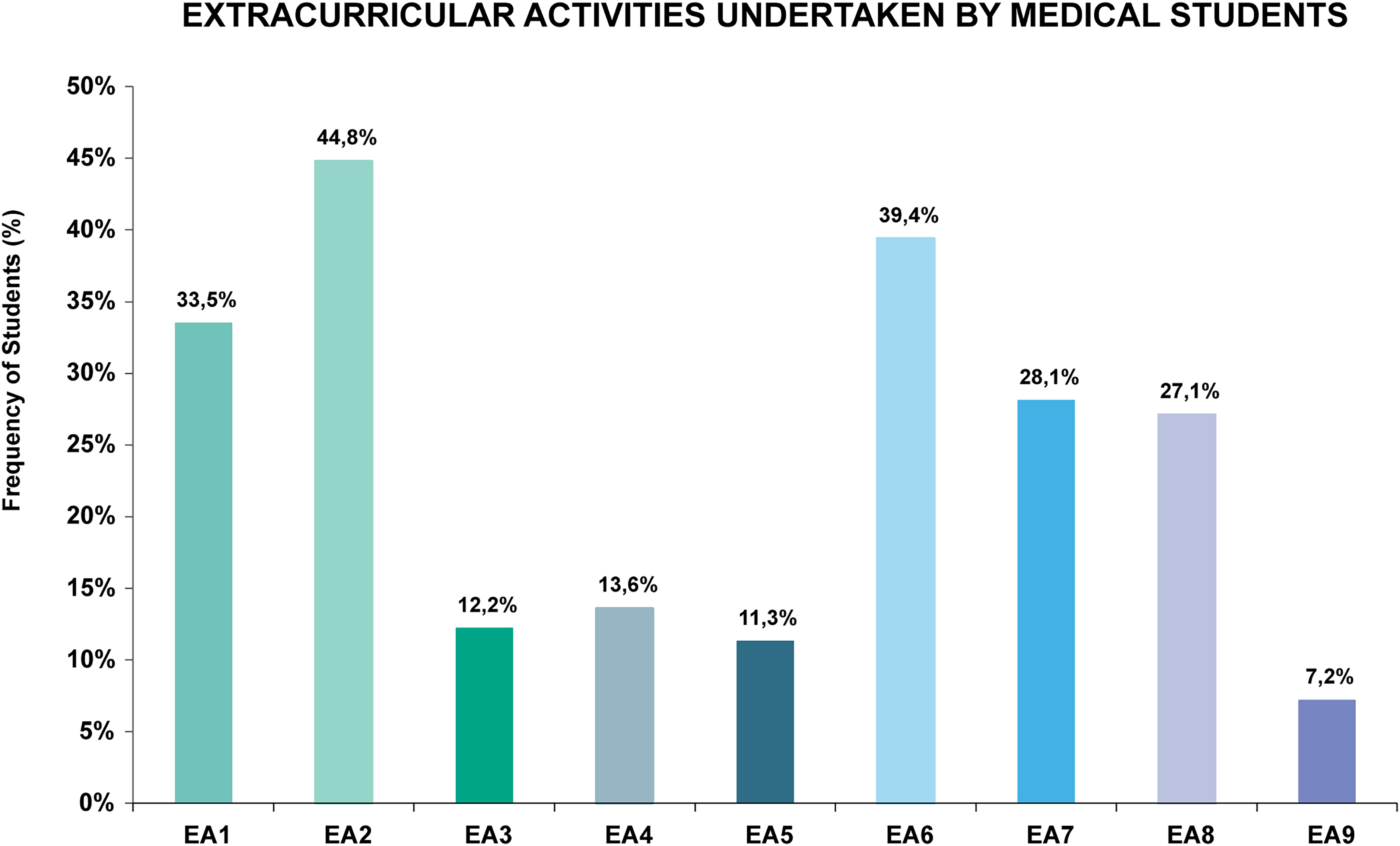
Participation of medical students in extracurricular activities (n = 182*). EA1: artistic and cultural activities; EA2: sport activities; EA3: language courses; EA4: extracurricular internship**; EA5: tutoring; EA6: scientific events; EA7: research; EA8: academic leagues; EA9: leadership. *Total participants involved in extracurricular activities; **Extracurricular internship refers to a voluntary clerkship that offers additional practical experience beyond the formal curriculum, enabling students to acquire hands-on skills and insights beyond their required academic courses.
It was found that students dedicate a median weekly workload of 8.5 h to extracurricular activities, with the longest time being dedicated to extracurricular internships, with a median of 8.0 h per week (Table 2).
Weekly workload dedicated to each extracurricular activity performed by medical students.

*Extracurricular internship refers to a voluntary clerkship that offers additional practical experience beyond the formal curriculum, enabling students to acquire hands-on skills and insights beyond their required academic courses. IQR: interquartile range.
Concerning the degree of importance attributed to EA undertaken by students, language courses, extracurricular internships, sports activities, and scientific initiation stand out. More than 50% of the students who participated in these activities considered them to be very important (Figure 5).

The importance attributed by medical students to the extracurricular activities performed.
When analyzing the association between participation in EA and students’ sociodemographic, family, and academic characteristics, it was observed that students under 28 years old (59.3% vs 40.7%, P = .017) and those without a previous academic degree (53.3% vs 46.7%, P = .036) tended to be more frequently involved in these activities. Although not statistically significant, single students (75.8%), those without children (80.8%), those without financial dependents (81.3%), and those with exclusive dedication to their studies (68.7%) showed higher participation in EA (Table 3).
Associations between participation in extracurricular activities and the sociodemographic, family, and academic factors of students.

*Data presented in absolute number (n) and percentage (%); **Academic cycles: preclinical (first and second years of the course), clinical (third and fourth years of the course), and internship (fifth and sixth years of the course); ***Chi-square test.
To assess both statistical and practical significance, we calculated effect sizes alongside our statistical tests. The OR for engagement in EA revealed meaningful associations with sociodemographic factors. Specifically, being under 28 years of age was significantly linked to higher participation in EA (OR = 1.16, 95% CI: 1.02-1.32, P = .017), suggesting a moderate effect size. Similarly, the absence of a previous academic degree was associated with engagement (OR = 0.88, 95% CI: 0.78-1.00, P = .036), indicating a smaller yet relevant effect. In contrast, other variables such as sex, marital status, having children, exclusive dedication to studies, and financial dependents did not demonstrate statistically significant associations with EA participation. This analysis underscores the importance of age and prior education in influencing students’ involvement in extracurricular activities, providing insights that extend beyond mere statistical significance (Table 4).
Analysis of sociodemographic, family, and academic factors associated with engagement in extracurricular activities among the medical students assessed.
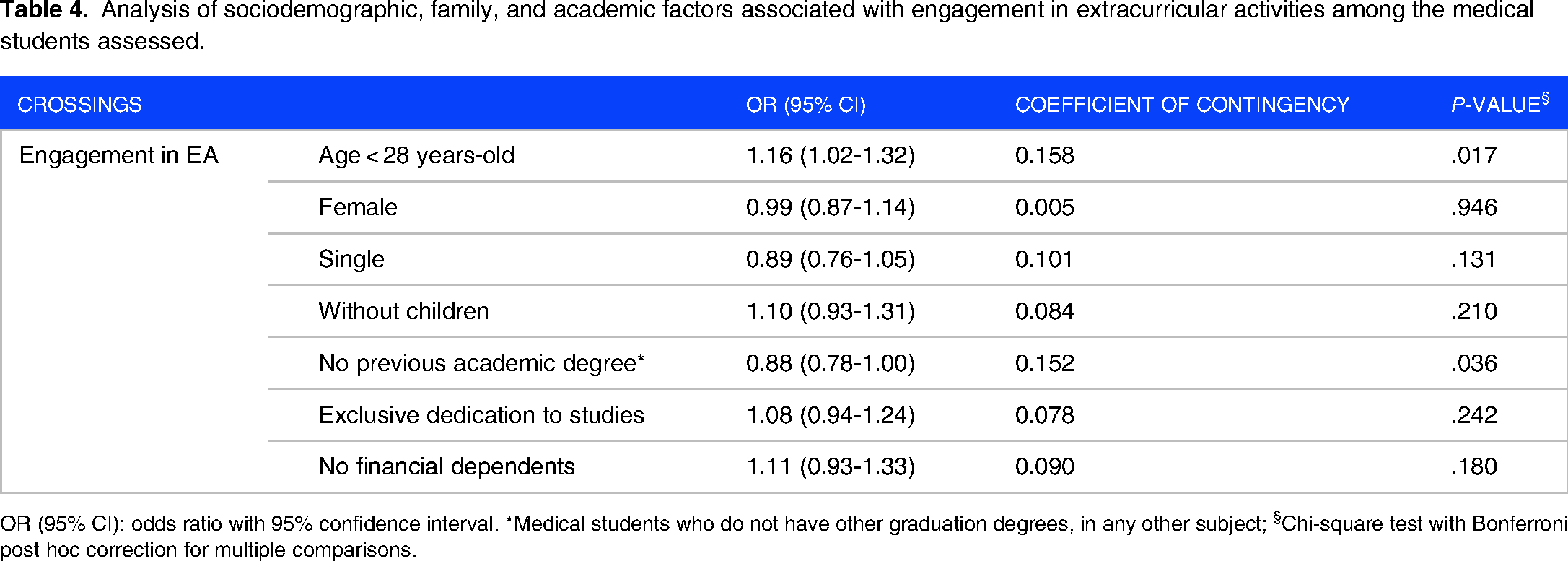
OR (95% CI): odds ratio with 95% confidence interval. *Medical students who do not have other graduation degrees, in any other subject; §Chi-square test with Bonferroni post hoc correction for multiple comparisons.
When analyzing perceptions of participation in extracurricular activities, among the 182 participants who reported involvement, the most commonly cited motivations included seeking physical, mental, and social well-being, personal fulfillment, and scientific and professional improvement. Conversely, by analyzing the discourse of the 38 students who did not participate in activities outside the curriculum, challenges related to time management, adaptation to academic routine, and lack of available spots or opportunities offered by medical schools were identified. Additionally, some students noted the desire to prioritize their studies and the scarcity of time in the initial semesters of the course.
Discussion
This study aimed to investigate the engagement of medical students from four private educational institutions in Salvador, Bahia, Brazil, in EA. This city is of particular importance because it represents a large contingency of medical students, compared to other Brazilian cities. 16
The results revealed that most participants involved in EA were in the early semesters of the course, predominantly women, single, without children, and without financial dependents. This suggests that these activities are primarily undertaken by individuals with greater time flexibility and fewer financial constraints, dedicated solely to their studies. Family responsibilities appeared as a potential challenge for balancing academic demands. 13
Additionally, the study found that medical students under 28 years of age, particularly those without a prior academic degree, are more actively engaged in extracurricular activities compared to students aged 28 years or older. This suggests that older students may be less involved in extracurricular activities due to additional responsibilities or a more career-focused approach. These differences in priorities and motivations indicate the necessity for tailored strategies to engage both groups in extracurricular activities.
Most students actively participate in EA, highlighting its significant role in the educational landscape, consistent with previous research emphasizing medical students’ inclination toward such activities8,17–19. Furthermore, participants dedicated an average of eight hours per week to EA, demonstrating both the perceived importance of these activities and students’ effective time management skills during their education. Despite the increased workload of medical courses in Brazil, from 5400 in 2007 to 7200 h in 2014 following changes in the national medical curriculum guidelines, 4 students maintained a similar average amount of time dedicated to EA as observed in studies before the curricular change. 20 Nevertheless, qualitative findings revealed challenges related to time management, adaptation to academic routines, and limited availability of opportunities within medical schools. These factors may influence students’ participation and perceptions of EA, particularly in the initial semesters of the course.
The study also emphasized a diverse range of EA reported, including sports, scientific events, artistic activities, and scientific initiation programs. These activities reflect students’ pursuit of academic and professional enrichment beyond the formal curriculum, highlighting their holistic approach to education. In light of these findings, considering that EA may be intramural (within the precincts of the medical school or affiliated hospitals) or extramural (outside either the institution or in the community at large), it is essential to consider the context in which these activities take place, as this can influence their effectiveness and the challenges encountered.
Sports activities were prevalent among students, meeting leisure and well-being needs, supported by research indicating their positive impact on students’ quality of life and mental health21–25. Scientific courses and events were also widely practiced, enhancing students’ professional development by exposing them to diverse medical specialties and aiding in career decision-making.26,27 The study emphasized the importance of research and scientific initiation for practical skill development and evidence-based practice, crucial for producing future physician-scientists.7,26 Despite lower participation rates compared to other extracurricular pursuits, involvement in scientific activities contributes significantly to evidence-based clinical practice, reducing professional errors.26,28 Although not investigated in this study, concerns about research and scientific initiation participation align with recent findings among medical students, where involvement in research groups lagged behind other activities like academic leagues. 26 This reflects a broader trend in Brazil, where public universities lead in research output compared to private institutions. 29 Despite the low percentages of students involved in research and tutoring in this study, these figures align with the average reported in a systematic review encompassing students from developed and developing countries. 30
Participants in this study highlighted motivations for engaging in EA, emphasizing curriculum enhancement and professional skill development. These motivations include expanding knowledge, improving professional competence, and enhancing academic resumes. Personal interests such as self-esteem, fulfillment, and financial incentives from scientific research also influence student participation.7,8,18,31 Engagement in EA has been associated with increased self-efficacy among medical students, indicating a positive impact on confidence and competency beyond standard curriculum requirements. 19 The study underscores EA's contribution to medical education by fostering personal and professional growth, including the development of interpersonal skills.1,2,32,33 Understanding students’ preferences, motivations, and challenges related to EA can inform more effective strategies, promote broader participation, and enrich the overall educational experience.
Finally, it is important to note some limitations of this study. The majority of participants were in the early years of the course, indicating a period of adjustment to the routine and workload, as well as a limited availability of extracurricular activities. Moreover, 64.2% attended institutions offering scientific research subjects from the start, possibly biasing information. This might suggest even lower participation rates in such activities than reported, highlighting concerns raised. The study focuses on exploring motives driving medical students’ engagement in extracurricular activities without quantifying intrinsic or extrinsic motivation, a persistent gap in literature. Additionally, community outreach activities were notably absent from student responses, potentially influenced by the sample from private medical schools where these activities aren't mandatory. Despite these issues, the study provides valuable insights into commonly performed extracurricular activities, their perceived importance, and student motivations and challenges.
Finally, it is important to note some limitations of this study. While the sample covers a significant portion of medical courses in Salvador, Bahia, Brazil, it is limited to private institutions, which may affect the generalizability of the results, especially for students from public institutions or other countries with different curricula. Additionally, the snowball sampling method might introduce some biases, as participants tend to recruit peers with similar traits, which could influence the findings and potentially overestimate engagement in extracurricular activities. Despite this, it is important to consider that most participants were in the early years of their course, a period characterized by adjustment to academic routines and limited availability of extracurricular activities. Moreover, 64.2% attended institutions that included scientific research subjects from the start, which might further bias the information and suggest that the actual participation rates could be even lower than reported, highlighting concerns raised. Another important point is that private medical schools tend to represent a more affluent population group, which might not reflect the socioeconomic diversity found in public universities. These factors reinforce our reflections on the challenges and limitations in measuring extracurricular engagement among medical students.
The study explores the reasons driving medical students’ engagement in extracurricular activities without quantifying intrinsic or extrinsic motivation, a persistent gap in the literature. Additionally, community outreach activities were notably absent from student responses, possibly influenced by the sample of private medical schools where these activities are optional. Despite these issues, the study provides valuable insights into commonly performed extracurricular activities, their perceived importance, and student motivations and challenges.
Conclusion
Our findings highlight the widespread involvement of medical students in EA, with those related to sports, scientific events, artistic and cultural activities, and scientific initiation being more frequently performed, reflecting diverse interests and extracurricular involvement. Younger students and those without previous academic training are more likely to participate in EA. The main motivations for participation in these activities were closely linked to curriculum enhancement and the development of professional skills and competencies. However, the challenges faced by students, such as time management and adaptation to academic routines, were particularly evident, especially for new students. This narrative sheds light on the transformative impact of EA in developing well-rounded medical professionals.
Supplemental Material
sj-docx-1-mde-10.1177_23821205241296980 - Supplemental material for Engagement in Extracurricular Activities During Medical School: A Cross-Sectional Study on Student Motivations and Challenges
Supplemental material, sj-docx-1-mde-10.1177_23821205241296980 for Engagement in Extracurricular Activities During Medical School: A Cross-Sectional Study on Student Motivations and Challenges by Natália Machado Oliveira, Dayanne de Aguiar Viana, Jade Rodrigues Santos, Luiz Fernando Quintanilha, Rodrigo Francisco de Jesus, Katia de Miranda Avena and Bruno Bezerril Andrade in Journal of Medical Education and Curricular Development
Supplemental Material
sj-docx-2-mde-10.1177_23821205241296980 - Supplemental material for Engagement in Extracurricular Activities During Medical School: A Cross-Sectional Study on Student Motivations and Challenges
Supplemental material, sj-docx-2-mde-10.1177_23821205241296980 for Engagement in Extracurricular Activities During Medical School: A Cross-Sectional Study on Student Motivations and Challenges by Natália Machado Oliveira, Dayanne de Aguiar Viana, Jade Rodrigues Santos, Luiz Fernando Quintanilha, Rodrigo Francisco de Jesus, Katia de Miranda Avena and Bruno Bezerril Andrade in Journal of Medical Education and Curricular Development
Footnotes
Authors’ contributions
All authors participated in the conceptualization of the study and contributed to the manuscript. Oliveira NM, Viana DA, and Santos JR were responsible for conceptualization, data curation, investigation, and drafting, reviewing, and editing the manuscript. Quintanilha LF and de Jesus RF contributed to the conceptualization and drafting, review, and editing of the manuscript. Avena KM and Andrade BB were involved in the conceptualization, formal analysis, methodology, validation, drafting, reviewing, and editing the manuscript and supervised the study.
Consent to participate
All participants provided written informed consent to participate in the study. They were fully informed about the study's objectives, methods, and their rights as participants before consenting. The requirement for written consent was reviewed and approved by the Ethics Committee of the Higher Education Supporting Institute of Bahia—IMES (protocol number 57511922.5.0000.5032).
Consent for publication
Not applicable. This study does not include any data, images, or videos from individual participants that would require consent for publication.
Funding statement
The author(s) disclosed receipt of the following financial support for the research, authorship, and/or publication of this article: The work was supported by the Intramural Research Program of the Oswaldo Cruz Foudation, Brazil. The publication fee was supported by the Multinational Organization Network Sponsoring Translational and Epidemiological Research (MONSTER) Institute, Brazil. K.M.A. is a research fellow from the MONSTER Institute. B.B.A. is a senior scientist from the National Council for Scientific and Technological Development (CNPq), Brazil. The funders had no role in the design, data collection, data analysis, and reporting of this study.
Declaration of conflicting interest
The author(s) declared no potential conflicts of interest with respect to the research, authorship, and/or publication of this article.
Data availability
The data that support the findings of this study are not publicly available due to privacy and ethical restrictions. However, they are available from the corresponding author upon reasonable request and with the approval of the Ethics Committee of the Higher Education Supporting Institute of Bahia—IMES (protocol number 57511922.5.0000.5032).
Ethical considerations
This study complies with the Declaration of Helsinki and Resolutions 466/12 and 510/16 of the Brazilian National Health Council (CNS). The research project was approved by the Ethics Committee of the Higher Education Supporting Institute of Bahia—IMES (protocol number 57511922.5.0000.5032). The autonomy, confidentiality, and privacy of all participants were respected throughout the study. Prior to participation, all individuals were fully informed about the study's objectives and methods and provided written informed consent.

Supplemental material
Supplemental material for this article is available online.
References
Supplementary Material
Please find the following supplemental material available below.
For Open Access articles published under a Creative Commons License, all supplemental material carries the same license as the article it is associated with.
For non-Open Access articles published, all supplemental material carries a non-exclusive license, and permission requests for re-use of supplemental material or any part of supplemental material shall be sent directly to the copyright owner as specified in the copyright notice associated with the article.
