




Abstract
Introduction
Pregnancy can cause various physical and physiological changes. It affects confidence, resulting in depression and disturbing health not only for a mother but also for her fetus. These will also determine the ability of the mother to take care of her baby after delivery.
Objectives
To analyze the husband's contributions to stimulate the wife's confidence in experiencing role transition.
Methods
This research used a quantitative method with a cross-sectional design. The research was conducted in Central Java. There were 150 respondents of pregnant mothers. The variables of this study were the husband's factors and the wife's self-confidence, which were collected by demographic questionnaire and spiritual well-being scale questionnaire (SWBS) with a total sampling technique. The data were analyzed using a multinominal regression Test.
Results
Husbands were 58% at the age of early adult (26–35 years old), 76% graduating from secondary school level, 61.3% working as private employees, and 70% well supporting their wives. Most respondents (48.7%) had good self-confidence shown by the relationship of all husband's characteristics covering age, education, occupation, and support with the wife's self-confidence in facing role transition and had a value of <0.05.
Conclusion
The husband's age in a productive period with a good husband's education and occupation level could make the husband have mature thoughts, and he can calm his wife based on correct knowledge so that the wife is not worried about facing them and feels confident. Nurses can motivate and educate husbands to always provide support to their wives in facing pregnancy.
Introduction
Pregnancy is a physiological process experienced by mothers causing various responses in both physical and psychological responses. Responses to changes will be obviously seen in primigravida pregnancy in response to role transition (Pangesti, 2018). Although pregnancy is enthusiastically awaited and greatly expected by a couple, role transition requires greater responsibilities affecting the self-confidence of those with primigravida pregnancy. Disturbed self-confidence is a crisis that possibly causes a mother's depression (Aydemir & Onan, 2020). Psychological problems with self-confidence to role transition resulting in depression possibly disturb the health of both the mother and her fetus in the womb (Dinni & Ardiyanti, 2020). Self-confidence problems experienced by a mother also determine a mother's ability to take care of her baby after delivery (Shafaie et al., 2017). Maternal self-confidence is related to health and role greatly essential for adaptation ability during pregnancy periods (Izadirad et al., 2017). Maternal self-confidence is one factor that has a role in responding to severe stress, depression, and pressure during pregnancy periods and possibly influences fetal well-being (Law et al., 2019).
Nurses, as part of health service providers, optimize interactions within the nuclear family in dealing with pregnancy, birth to parenting from pregnancy to adult children, and play a big role in providing education through various learning media to reduce the stress experienced by pregnant women in facing role transitions (Missler et al., 2020).
Review of Literature
Self-confidence problems are experienced by many pregnant mothers. The data showed that 65% of pregnant mothers had low maternal self-confidence (Hables & Hassan, 2020). Another study in Malang also showed that only 26.67% of pregnant mothers had high self-confidence (Hikmah & Yuliani, 2019). Problems dealing with self-confidence to role transition were also seen in research mentioning that only 25.8% of primipara mothers could have their role in a good category (Trisetyaningsih et al., 2017). The previous research also mentioned that 72% of pregnant mothers did not feel happy with their body changes (Kirk & Preston, 2019).
Role transition is a process of change from the pregnancy period that continues during childbirth, which is a period in which the mother experiences a transition process toward achieving her role as a mother. The transition from a woman to a mother is an event that requires adjustments from biopsychosociocultural and psychological aspects (Yulizawati et al., 2022).
Husband and wife's feelings greatly impact this transitional period because husbands and wives who feel sad and anxious will always think negatively so that it can be stressful and have an impact on health. Meanwhile, husbands and wives who feel happy and have positive feelings can always be grateful, happy during pregnancy, and able to care for each other. This can lead to increased interest in pregnancy, childbirth, and child rearing, value relationships and time with wife, and positive recognition of the changes associated with becoming parents, and they are grateful for a supportive environment so that the transition becomes very easy. But, usually, women who are pregnant will tend to worry easily, this is where the husband's role is to provide support and keep his wife's feelings positive (Nakamura et al., 2023).
The ability to face role transition is greatly influenced by the husband's factors. The husband or spouse is an important factor in achieving role, physical, psychological, and material supports greatly meaningful in the life of a pregnant mother as well as emotional, facility, and informational supports (Mandey et al., 2020). Husband is the main economic pillar of the family. A working husband with adequate income in the family influences the ability to fulfill daily needs, including health service facilities (Faisal et al., 2018). Husband's support is one factor greatly influencing and needed both in verbal and nonverbal forms. Intimacy and existence of husband will psychologically influence the creation of comfort and harmonious interactions within the family (Ratulangi, 2019; Tolongan et al., 2019).
The results of research in 2024 show that husbands’ support can balance the emotions of working mothers (Prasiska et al., 2024). Research in 2022 shows that primigravida mothers who give birth accompanied by their husbands have a lower risk than primagravida mothers who are not accompanied by their husbands (Lestari et al., 2022). The results of studies conducted in Belgium, Germany, Iceland, the Netherlands, Sweden, and England) show that good interactions with partners make patients feel happy and increase self-confidence, thus having a positive impact on women's psychosocial well-being (Leinweber et al., 2023). Studies in Iran show that husbands’ support is a predictor of adaptation to the mother's role (Ahmadpour et al., 2022). Research in Turkey has shown that women's adaptation increases during the prenatal period, and prenatal involvement and support can increase maternal self-confidence (Teskereci et al., 2022). This shows that husbands play an important role for wives, but no studies have shown the role of husbands during primigravida pregnancy.
The adaptation period during pregnancy is more about how a mother adjusts to the physical changes that she experiences and the difficulties that arise during pregnancy. These changes often bring a woman to significant emotional changes because becoming a mother is very happy, especially when waiting for the presence and birth of a baby. However, women often feel worried about the changes that occur and are related to the birth and care of their infants. Therefore, during this transition period, they were greatly influenced by the support of their husbands as the closest person (Fidora & Ningsih, 2019).
Husband's support is very important because apart from making the wife comfortable and calm, good or bad husband support can be caused by various factors, one of the key factors is the demographics of the patient such as age, education, and occupation because husbands who are of a productive or mature age can have maturity in thinking and emotionally so that they can calm a worried wife, husbands with good education can have high knowledge so that they can influence the wife's health behavior so that the wife's behavior is appropriate and minimizes danger in pregnancy and birth, and husbands who have jobs can guarantee the needs of the wife, because a pregnancy must be in line with financial preparations, so the wife is not worried about the needs of the birth, but unfortunately there has been no further research on the demographic factors of the husband during the role transition period (Triharini et al., 2023).
Reflections from several previous studies show that the husband's support is an important factor for wives, but there have been no studies that show or pay attention to the relationship between the distribution and characteristics of husbands to achieve the wife's role transition, especially in primigravida pregnancies. This research aims to analyze the husband's contributions to stimulate the wife's confidence in experiencing role transition.
Methods
Design
This analytic observational research used a cross-sectional design and was conducted in Central Java, Semarang City. The data were collected in July 2022, and data collection was carried out from July 21, 2022, to July 27, 2022.
Research Questions
How can husbands’ contributions to wives’ self-confidence be stimulated?
Sample and Settings
The study population consisted of pregnant women in the city of Semarang, the total population of pregnant women was 150, and the number of respondents is the total number of pregnant women in one of the working areas of the Public Health Center in Central Java, Semarng City, Indonesia; all populations that meet the inclusion and exclusion criteria are used as respondents. A total of 150 respondents participated in this study, and the sampling technique was total, because the number of pregnant women who met the criteria was only 150; all mothers who met the criteria were considered respondents.
The inclusion criteria were as follows: (1) first to third trimester of gestation and (2) having a husband who is still alive and living in the same house. The exclusion criteria were as follows: (1) history of psychiatric disorders and (2) educational background in the health sector.
Variables/Instruments
The independent variables of this study were the husband's age, husband's education, husband's occupation, and husband's support, with the dependent variable being the wife's self-confidence. This study has four hypotheses: first, from the husband's age to the wife's self-confidence; second, the husband's education on the wife's self-confidence; and third, from the husband's work on the wife's self-confidence.
The instruments used to measure all the variables in the study were collected by administering a questionnaire. All the instruments in this article gained permission from the author for use and modification in this study, and the process of translating the questionnaire from English to Indonesia (Indonesia is the language that the respondent understands) uses the WHO translation guidelines as a reference (World Health Organization, 2022). Various husband factors were collected by administering a questionnaire on demographic characteristics. The fathers’ ages were classified by age; late adolescent (17–25 years); early adult (26–35 years); late adult (36–45 years); and early elderly (46–55 years).
The husbands were categorized into three groups: (1) primary; (2) secondary; and (3) tertiary. The husband's occupation was categorized into six categories: (1) state civil servants; (2) teachers or lecturers; (3) private employees; (4) entrepreneurs; (5) farmers, traders, or fishermen; and (6) unemployed. The instrument measures husbands’ support using a questionnaire developed by (Nursalam, 2020), which was adapted to husbands’ support for pregnant women. The instrument used to measure the level of husbands’ support consisted of 12 statements. As for the dependent variable, namely, the wife's self-confidence is measured using a questionnaire instrument used to measure the level of personal confidence of pregnant women using the Spiritual Well Being Scale (SWBS) instrument adopted from the SWBS (Spiritual Well Being Scale) (Malinakova & Kopcakova, 2017), and adjusted for personal beliefs in pregnancy. The questionnaire on personal trust consists of seven statements. The wife's self-confidence variable is scaled ordinal with indicators of values 7–19 (poor), values 20–27 (adequate), and values 28–35 (good).
The results of the validity test for the husband's factor or husband's support questionnaire had a validity value of 0.426–0.845 and a reliability of 0.751, and the results of the wife's confidence questionnaire had a validity value of 0.468–0.779 and a reliability of 0.744.
Data Collections
Various attempts have been made to solve any research bias with multiple inclusion and exclusion criteria, narrowing down the biases and ensuring that the criteria were satisfied for the respondents. The researcher collected the primary data for this study. A total of 150 questionnaires were distributed in July 2022, data collection was carried out from July 21, 2022, to July 27, 2022. The data were collected in the following steps: (1) conduct research permits in Semarang City Health Office; (2) after obtaining permission for the ethical process at the Faculty of Nursing, Universitas Islam Sultan Agung Ethics Committee Institute; (3) pass the ethical test, the data collection process for Pregnant women and husbands in Semarang city who meets the inclusion and exclusion criteria, respondents first received an explanation from researchers about the research carried out in full, an explanation carried out orally and in writing; after the respondents understands the research being conducted, the researcher is given informed consents in writing, and then the patient who agrees to be a respondent can sign the informed consent sheet, which is in accordance with the ethical principles of research, namely informed consent, anonymity, confidentiality, fidelity, and autonomy; (4) the data that has been collected is then checked for completeness, then the data is processed with SPSS 26 using multinominal regression test.
Data Analysis
Data were analyzed using various tests for descriptive analysis using univariate tests, the data were not tested for normality because all data were on a categorical scale; therefore, for data with a categorical scale (nominal or ordinal), a normality test was not performed. Before carrying out further multinomial logistic regression analysis, we first tested whether the model formed was in accordance with the data (fit) or the goodness of fit test and pseudo R square values using the alpha 5% or <0.05, to verify that the model was appropriate, followed by a test for significance testing parameters with the first simultaneous test, which was carried out to check the β coefficient simultaneously or simultaneously on the response variable with an alpha value of less than 5% or 0.05. Subsequent analysis using a partial test was carried out to examine the significance of the β coefficient, where it was previously observed that the simultaneous test results explained that all predictor variables had an effect on the response variable. In the partial test, the effect of each predictor variable on the response variable is observed.
Ethical Consideration
This research has passed the ethical clearance test by Faculty of Nursing, Faculty of Nursing, Universitas Islam Sultan Agung Health Research Ethics Committee on 19 July 2022 under No. 307/ KEPK-A.1-S1/FIK/VII/2022 and has obtained the respondents’ consent through Informed Consent, and thus, respondents first received an explanation from researchers about the research carried out in full, an explanation carried out orally and in writing; after the patient understands the research being conducted, the researcher is given informed consent in writing, and then the respondents who agree to be a respondent can sign the informed consent sheet, which is in accordance with the ethical principles of research, namely informed consent, anonymity, confidentiality, fidelity, and autonomy.
Results
Sample Characteristics
Table 1 showed that respondents’ husbands were 58% at the age of early adult (26–35 years old) and 34% at the age of late adolescent (17–25 years. Respondents’ husbands were 76% graduating from secondary school level (Junior or Senior High School). Respondents’ husbands were 61.3% working as private employees and 70% had good supports.
Husband's Characteristics to Wife Experiencing Role Transition (n = 150).

Table 1 shows that the majority of respondents have good self-confidence, 48.7%, but there are still respondents who have sufficient self-confidence, 36.7%.
The calculation results in Table 2 show that of the 150 pregnant women, the majority (78%) were of productive age, 72.6% had secondary education (Junior High School/High School), and 47.4% were not working.
Wife's Characteristics (n = 150).
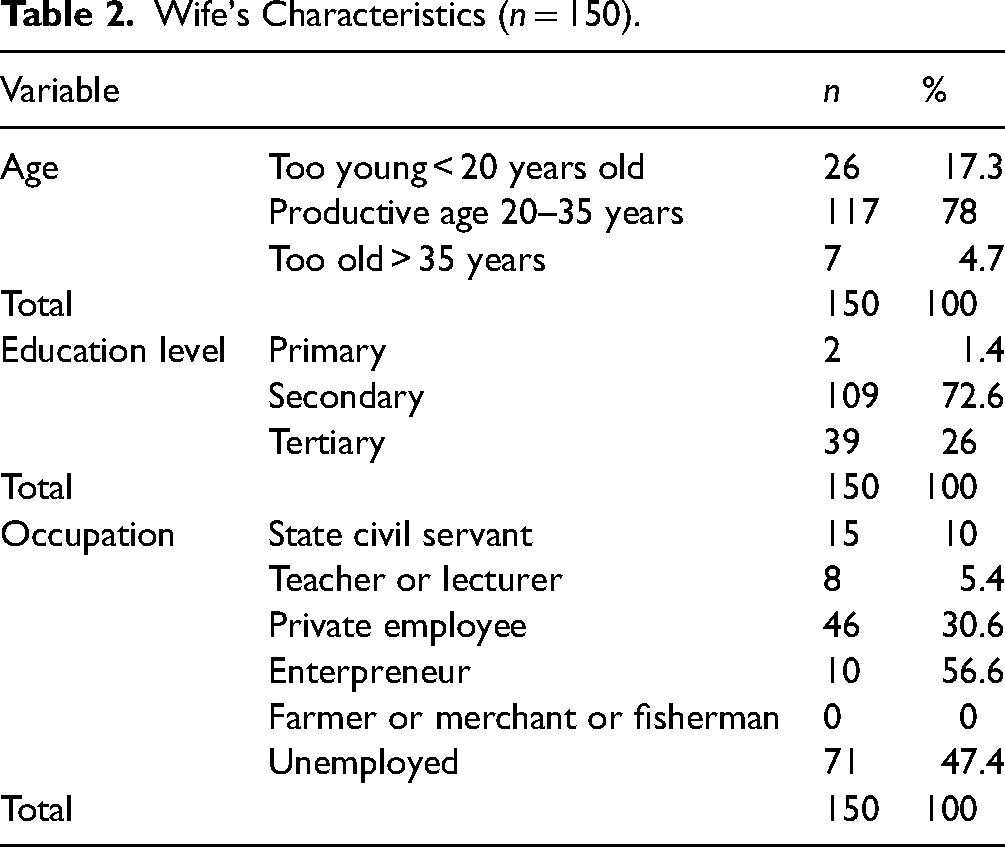
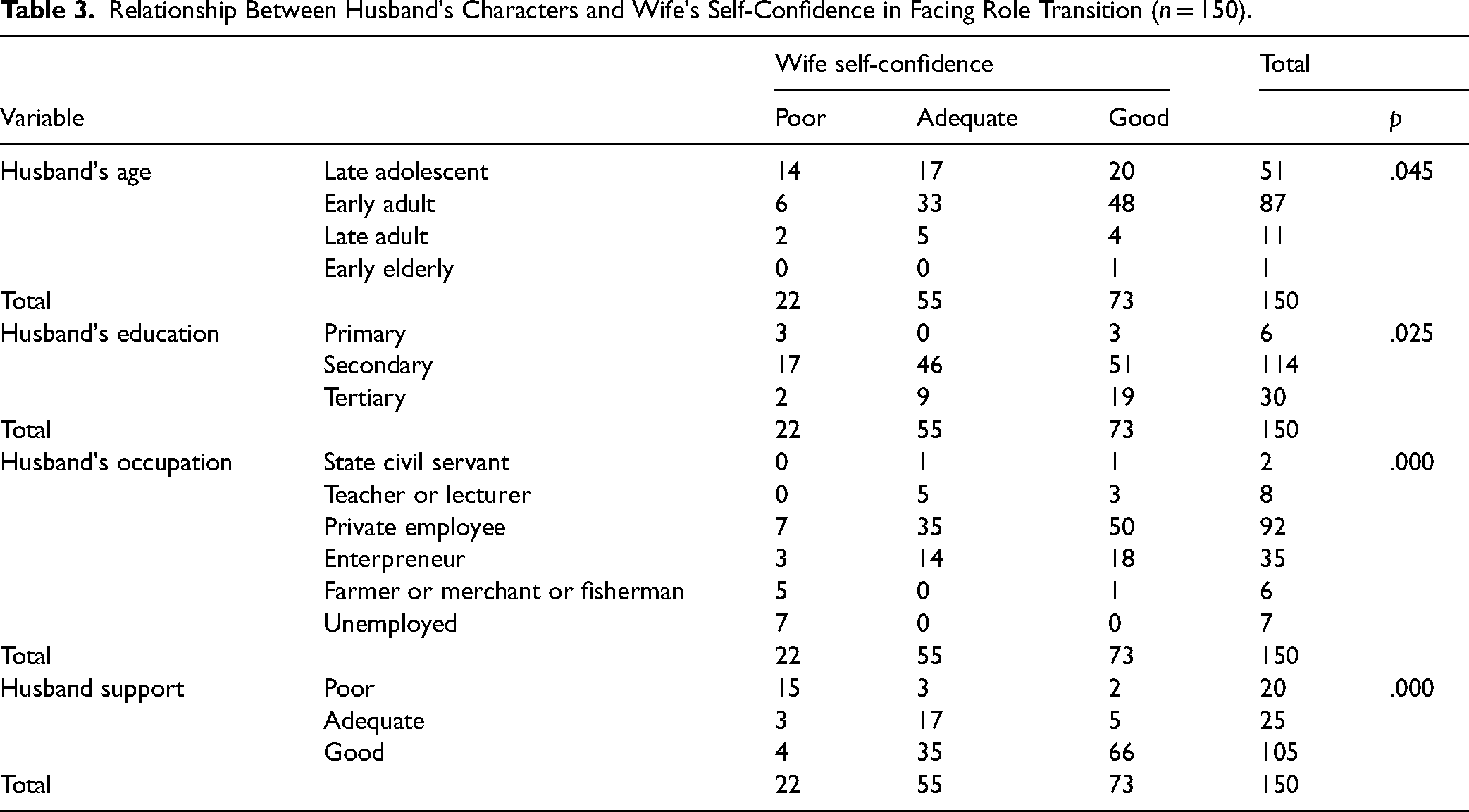
Table 3 showed that there was a relationship between all husband's characteristics covering age, education level, occupation, and support with the wife's self-confidence in facing role transition with the value of <0.05.
Relationship Between Husband's Characters and Wife's Self-Confidence in Facing Role Transition (n = 150).
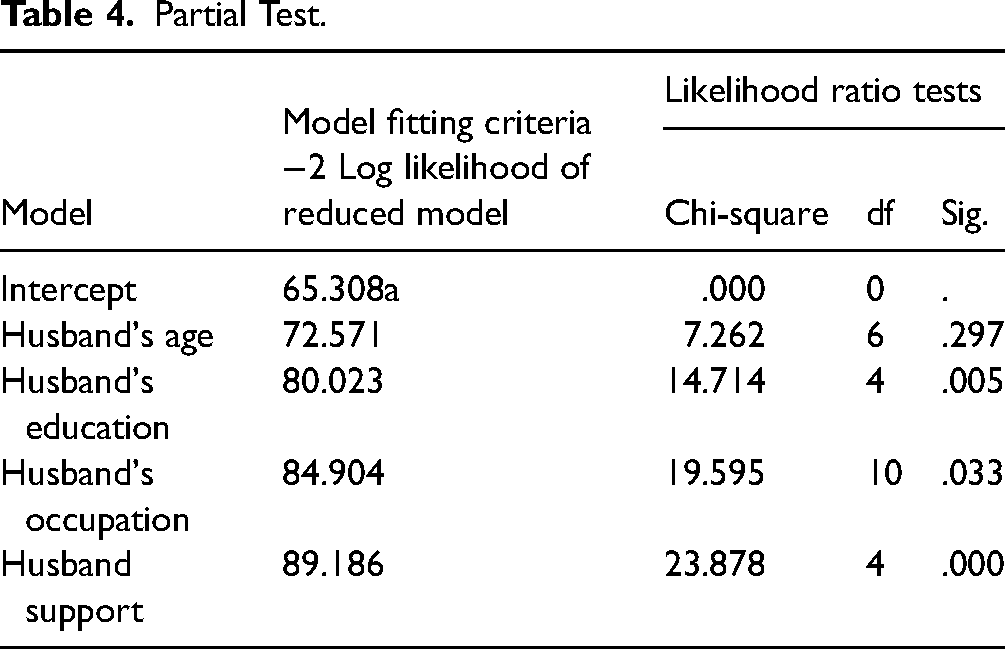
Partial Test.
Goodness of Fit Test
Before doing further multinomial logistic regression analysis, the created model was tested to see whether or not the model fit the data.
Parameter Significance Testing (Partial Test)
This test was conducted to examine the meaningfulness of coefficient β partially. The results of the simultaneous test previously explained that all predictor variables influenced response variables. The partial test sees the influence of each predictor variable on the response variable.
Based on Table 4, the partial test showed the values of the chi-square on those five independent variables were bigger than those of the chi-square table, meaning that those five statistically used independent variables significantly influenced response variables. Besides, in significant column for all variables had the values of 0.0. Those values were smaller than alpha (5% or <0.05) so H0 was rejected. It meant that independent variables statistically and significantly influenced response variables. In addition, based on Table 4 it also shows that chi-square statistics is the difference of −2 log-possibility between the final model and the reduced model. The reduced model was created by eliminating the effects from the final model. Null hypothesis is that all parameters from those effects are 0. This reduced model is equivalent to the final model since eliminating the effects that do not improve the degree of freedom.
Discussion
The research results showed that respondents’ husbands were 58% at the age of early adult (26–35 years old), yet 34% at the age of late adolescent (17–25 years old). Meanwhile, respondents’ husbands were 76% graduating from secondary school level (Junior/Senior High School), 61.3% working as private employees, and 70% having good supports. Accordingly, pregnancy is a physiological process causing various responses both physically and psychologically. Responses to changes will be seen as obvious at primigravida pregnancy to role transition (Pangesti, 2018). Although pregnancy is enthusiastically waited and greatly expected by a couple, yet role transition requires greater responsibilities affecting the self-confidence of primigravida mothers. Disturbed self-confidence is a crisis that possibly results in a mother's depression (Aydemir & Onan, 2020). Psychological problems with self-confidence in role transition lead to depression and disturb the health of both the mother and her fetus in the womb (Dinni & Ardiyanti, 2020). Self-confidence problems experienced by mothers will also determine a mother's ability to take care of her baby after delivery (Shafaie et al., 2017). Maternal self-confidence is greatly related to health and has an essential role in the adaptation ability during pregnancy periods (Izadirad et al., 2017). Maternal self-confidence is one factor that has a role in responding to severe stress, depression, and pressure during pregnancy periods influencing fetal well-being (Law et al., 2019). Accordingly, the research results also showed that 48.7% of respondents had good self-confidence and 36.7% of them still had adequate self-confidence.
These were in accordance with the results of research conducted by (Hables & Hassan, 2020) mentioning that self-confidence problems are experienced by many pregnant mothers. The research found the data that 65% of pregnant mothers had low maternal self-confidence (Hables & Hassan, 2020). Another study in Malang also showed that only 26.67% of pregnant mothers had high self-confidence (Hikmah & Yuliani, 2019). Problems related to self-confidence to role transition were also seen in research conducted that only 25.8% of primipara mothers could have their role in good category (Trisetyaningsih et al., 2017). The previous research also mentioned that 72% of pregnant mothers did not feel happy with their body changes (Kirk & Preston, 2019).
This research also showed that there was a relationship between all husband's characteristics covering age, education level, occupation, and support with the wife's self-confidence in facing role transition with the value of <0.05. Thus, the ability to face role transition was greatly influenced by the husband's factors. Similarly, Mandey et al. (2020) also mentioned that the husband or spouse was the most important supporting factor in reaching role, physical, psychological, and material supports, which were highly meaningful for the life of pregnant mothers as well as emotional, facility, and informational supports (Mandey et al., 2020). Husband is the main economic pillar of the family. A working husband with adequate income in the family influences the ability to fulfill daily needs, including health service facilities. Husband's support is one factor greatly influencing and needed both in verbal and nonverbal forms. Intimacy and the existence of a husband will psychologically influence the creation of comfort and harmonious interactions within the family. In addition, husbands’ support can contribute to increasing wives’ self-confidence because husbands are able to provide physical and psychological comfort, share information, and provide advice; therefore, this support is very important because pregnant women or wives can feel comfortable and not anxious so that they can continue to be confident in facing the birth of children because they feel that they have significant support from their husbands (Nurhayati Dawenan & Shanti, 2022).
The higher the husband's social support received by primiparous mothers, the higher the mother's confidence, providing social support from husbands has a positive relationship and impact on mothers, where mothers will feel more enthusiastic and increase the sense of comfort and the burden faced by mothers is reduced, social support functions as a source to control feelings of stress and control individuals to more effectively deal with various stressful conditions such as pregnancy, childbirth, and breastfeeding (Annisa & Hermaleni, 2023).
The husband's support and knowledge about childbirth are correlated with anxiety facing childbirth in primigravidas, this means that the level of anxiety before childbirth in primigravidas can be low if the individual has high husband support and adequate knowledge about the birth process, the support provided by the husband can reduce the level of anxiety during childbirth. Additionally, adequate knowledge can provide opportunities for pregnant women to obtain helpful information. Support from the husband has been proven to be one of the factors that can reduce the level of anxiety facing childbirth, especially in the context of prenatal care, this is because the husband is considered the wife's closest source of social support. Husbands have an essential role in supporting their wives with enthusiasm and full concern, and they can also strengthen their relationship by going for walks and conversing casually. Emotional support from husbands positively impacts wives’ psychological comfort and safety. The husband's support and anxiety regarding childbirth show that in the context of this research, the husband's support is indeed related to the level of anxiety regarding childbirth (Hafsa et al., 2024). The husband's support is a factor that can increase the mother's mental readiness, reduce anxiety levels, and create a sense of security and comfort in facing the birthing process. The husband's practical support and role have been proven to increase the mother's psychological or mental readiness to face the birthing process. Husbands also have a crucial role in providing support, including instrumental support, items that can help or make things easier for their wives, and needed services. Support from husbands can potentially motivate pregnant women to access information and receive antenatal care. The husband's support is practical and involves informational support, such as providing reading materials such as magazines or books about pregnancy or helpful advice for the wife. Apart from that, emotional support is also an important part, with husbands providing feelings of love, empathy, and trust to their wives during pregnancy. Husbands also become a place for wives to vent their complaints during pregnancy. Support from the husband has a significant impact on the mother's psychological response, mainly because the third trimester is associated with concerns regarding pregnancy risks and preparation for the upcoming birth. In this period, the emotional aspect becomes crucial in preparing oneself or increasing awareness of everything that will be faced. The husband's support will motivate mothers to seek information and access antenatal care services, including participation in classes for pregnant women. This is because the husband's support is the primary key to maintaining the mother's positive emotions during pregnancy and ensuring the fetus's condition remains strong and healthy.
Strengths and Limitations
Many studies have been carried out on the husband's support but need to be examined further with regard to the contribution of the husband's factors to the achievement of the wife's role transition, especially in primigravida pregnancies, and this research is able to explore the other side, namely from the direction of the husband's contribution, so it has a lot of updates, especially in primigravida pregnancies. This research provides a detailed examination of the husband's role in supporting his wife during primigravida pregnancies, focusing on how the husband's contributions impact the wife's role transition and self-confidence. It offers updated perspectives on this specific dynamic, filling a gap in existing studies by highlighting the husband's influence. This research dissects in depth the role of the husband in his wife's trust, and has not yet touched on other aspects such as the role of the family, so in future research, it is hoped that it can examine other roles such as aspects of the family or the work environment of pregnant women. . The study does not consider other significant factors such as family dynamics and the work environment, which could also affect the wife's self-confidence and transition process. These aspects are crucial for a comprehensive understanding and should be explored in future research to provide a fuller picture of the factors influencing the wife's role transition. This is because seeing the magnitude of the husband's contribution in stimulating the wife's self-confidence in facing the role transition period, but the wife's self-confidence can also be caused by other factors that have not been studied in this study, such as aspects of the family and work environment of pregnant women, so that future researchers can conduct in-depth investigations.
Implications for Practice
This research shows that the husband has a very large contribution in stimulating the confidence of the wife in facing the role transition period, so these results can have an impact or have implications for maternity nurses, husbands, and nursing practitioners. The research highlights the substantial positive impact of the husband's support on the wife's confidence throughout pregnancy and childbirth. Nurses should therefore recognize this role and work to motivate and educate husbands, ensuring they understand how to provide effective support to their wives. Therefore, for husbands, the study underscores the importance of the husband's active involvement in enhancing his wife's confidence during pregnancy. Husbands are encouraged to acknowledge their significant contribution and to be more engaged in supporting their wives. Therefore for nursing practitioners, nursing practitioners should focus on building the pregnant wife's self-confidence by educating her husband and providing comprehensive support to the wife, this involves training husbands on their supportive roles and ensuring they are well prepared to assist their wives effectively.
Conclusions
Pregnant women's confidence in facing a transitional period of parenthood, which really needs support, can be stimulated by their husbands. The husband plays an important role in increasing the wife's self-confidence: the husband's factor can stimulate the wife's self-confidence because the husband's age is still in a productive period with a good husband's education level, which can make the husband have mature thoughts so that he can calm his wife based on correct knowledge about pregnancy and the birth of children so that the wife is not worried about facing them and feels confident. The husband's guaranteed job also makes the wife feel calm because she feels that the need for childbirth and children can be fulfilled, and a husband who continues to provide support to his wife by always accompanying her can make the wife feel comfortable and not alone. This is what makes husbands make a big contribution in stimulating the wife's confidence in facing the role transition period. Pregnant women's confidence during the transition to parenthood heavily relies on support, which can be significantly enhanced by their husbands. Several factors contribute to this positive impact: the husband's age and educational background play crucial roles. A husband in a productive phase with a good education can provide mature, informed support, offering reliable information about pregnancy and childbirth. This reassurance helps alleviate the wife's concerns and boosts her sense of preparedness. Additionally, a husband's stable employment contributes to the wife's security by ensuring that financial needs related to childbirth and child-rearing are met. This financial stability allows the wife to focus more on her well-being and reduces stress, further building her confidence as she transitions into motherhood. The continuous presence and support of the husband are also vital. Active involvement, such as attending appointments and providing emotional support, helps the wife feel less isolated and more comforted. This consistent support ensures that the wife does not face the challenges of pregnancy alone, which enhances her overall comfort and confidence. Beyond emotional and financial support, the husband's engagement in learning about pregnancy and understanding his wife's changes can further boost her confidence. A husband's genuine commitment to understanding and supporting his wife strengthens their relationship and improves the wife's confidence.
Footnotes
Acknowledgments
The authors would like to express their gratitude to all participants in this study and the hospital for their help in completing this research.
Author Contributions
SW: the conception and design of the study, or acquisition of data, or analysis and interpretation of data, drafting the article or revising it critically for important intellectual content, and final approval of the version to be submitted. YSA: the conception and design of the study, or acquisition of data, or analysis and interpretation of data, drafting the article or revising it critically for important intellectual content, and final approval of the version to be submitted. MT: the conception and design of the study, or acquisition of data, or analysis and interpretation of data, drafting the article or revising it critically for important intellectual content, and final approval of the version to be submitted. NN: the conception and design of the study, or acquisition of data, or analysis and interpretation of data, drafting the article or revising it critically for important intellectual content, and final approval of the version to be submitted.
Data Availability
The datasets generated during and or analyzed during the current study are available from the corresponding author upon reasonable request.
Declaration of Conflicting Interests
The authors declared no potential conflicts of interest with respect to the research, authorship, and/or publication of this article.
Ethical Consideration
This research has passed the ethical clearance test by the Faculty of Nursing, Universitas Islam Sultan Agung Health Research Ethics Committee on 19 July 2022 under No. 307/ KEPK-A.1-S1/FIK/VII/2022 and has obtained the respondents’ consent through Informed Consent, thus respondents first received an explanation from researchers about the research carried out in full, an explanation carried out orally and in writing; after the patient understands the research being conducted, the researcher is given informed consent in writing, and then the respondents who agree to be a respondent can sign the informed consent sheet, which is in accordance with the ethical principles of research, namely informed consent, anonymity, confidentiality, fidelity, and autonomy.
Funding
The authors received no financial support for the research, authorship, and/or publication of this article.
