




Abstract
Introduction
Staff turnover is a major obstacle to the success of Saudi Arabia’s health transformation agenda and the realization of Saudi Vision 2030. Nurses’ and midwives’ intentions to remain with the organization are heavily influenced by their sense of structural empowerment and resilience.
Objectives
To gain insight into the perspectives of nurses and midwives working in the Obstetrics and Gynecology departments of a selection of Saudi Arabian governmental hospitals about structural empowerment, resilience, and intentions to stay in their current positions.
Methods
Qualitative Descriptive Phenomenology. Purposive sampling was used to choose eighteen nurses and midwives working in the OB/GYN department in three government hospitals in the Eastern Province of Saudi Arabia. Semi-structured interviews were conducted to gather the participants’ perceptions. Colaizzi’s steps were used as a data analysis method.
Results
The narratives of the selected participants generated five major themes: (a) “nurturing physical and physiological,” (b) “developing psychological,” (c) “managing financial,” (e) “restructuring organizational,” and (f) “enriching professional and occupational.”
Conclusions
The emerging major themes highlighted the perceptive elements of nurses and midwives that keep them empowered, resilient, and determined to stay in their organization. A failure to fulfill any one of these elements will affect the others. To improve organizational outcomes, empowerment and resilience must be obtained.
Introduction
Nurses and midwives worldwide have spoken out about the difficulties they encounter in the workplace. Yet, the contributions of these people to healthcare and the provision of high-quality patient care cannot be overstated (Hansson et al., 2021). Access to trained nurses and midwives is crucial to maternal health (Gilkison et al., 2018; Liberati et al., 2019). Nonetheless, it is becoming increasingly more work for healthcare organizations to retain nurses and midwives, leading to widespread workforce shortages (Callander et al., 2021; Harvie et al., 2019).
The practice of midwifery is complex, requiring a high level of clinical and organizational acumen. However, it is a gratifying job that helps workers feel good about themselves in their careers (Cramer & Hunter, 2019; Hansson et al., 2022). The provision of high-quality midwifery enhanced maternal health, and emotional and practical support to patients and their families are all within the purview of a midwife's professional responsibilities (Joseph, 2019). In Saudi Arabia, registered nurses constitute the largest proportion of healthcare professionals (Alluhidan et al., 2020). Most workforce studies include midwifery under the broader umbrella of “advanced nurses practice.”
Poor retention contributes significantly to the difficulties associated with nursing workforces (Castro Lopes et al., 2017). It is expected that by 2030, the world will need nine million more registered nurses and midwives to address the present healthcare professional shortage, which would put a heavy burden on the Saudi healthcare system. Given these rising needs, the Saudi government must swiftly offset them with smart policies and bold measures or face the consequences of a critical shortage of qualified nursing professionals.
Review of Literature
Empowerment and resilience could enhance nurses’ and midwives’ intent to stay in their organizations. Researchers have discovered that a more empowered work environment results from structural empowerment (García-Sierra & Fernández-Castro, 2018; Li et al., 2018). According to Kanter’s (1993) perspective, nurses must have access to enabling structures to address these issues. Moreover, management must equip workers with the resources to do their jobs well. According to proponents of this theory, an individual’s work habits and outlook are shaped more by their organizational context than by their personal traits.
The current state of the nursing profession requires a higher degree of resilience (Dyrbye et al., 2019; West et al., 2020). According to Foerster and Duchek (2018), resilience is best defined as “positive adaptation in the face of danger or adversity.” The ability to remain positive and optimistic in the face of adversity has been shown to substantially impact nurses’ plans to remain in their current positions (Mills et al., 2017; Yu & Lee, 2018). In their studies, Hezaveh et al. (2020) and Pallant et al. (2015) claimed that Nurses’ and midwives’ improved professional effectiveness is often linked to their increased resilience after experiencing empowerment.
Resilient nurses are less likely to become emotionally exhausted, are more invested in their profession, and can anticipate and prevent issues. The subsequent improvement in both aspects of their lives is a further retention incentive (Yu et al., 2019). To improve trust, loyalty, and productivity in the workplace, it helps to understand the nuances of individual positions better (Fragkos et al., 2020; Gholami et al., 2019).
According to the literature, positive effects on nursing outcomes can be attributed to enhanced structural empowerment and higher resilience. Organizational resilience appears to be boosted by structural empowerment (Kang & Han, 2021; Rangachari & Woods, 2020; van den Berg et al., 2022).
Kang and Han (2021) conducted a study to investigate the moderating effects of structural empowerment at the organizational level and resilience at the individual level on the relationship between workplace bullying and nursing outcomes; the findings of the study indicated that higher structural empowerment and higher resilience had a significant effect on nursing work outcomes. Another study by van den Berg et al. (2022) explored the effects of structural empowerment on organizational resilience. It is revealed that structural empowerment positively affects organizational resilience. Moreover, these findings suggest that structural empowerment can have beneficial consequences other than improving resilience, such as increasing staff commitment, engagement, and job performance.
Several studies have also shown that nurses who bounce back from setbacks are likelier to remain in the field (Alharbi et al., 2020; Ang et al., 2019; Tseng et al., 2018). Indirectly influencing turnover intent by bolstering social support and job happiness, resilience has been shown to affect nurses’ plans to remain in their current positions (Udod et al., 2021; Zhao et al., 2021).
As the complexity and volume of requests placed on midwives, as well as their working hours and the availability of trained midwives rise, new approaches have been created to enhance maternity care and alleviate the stress placed on midwives. When not enough qualified midwives are available, employers turn to foreign recruits (Altaweli et al., 2014).
Developing workplace strategies to improve nursing practice, increase commitment to the organization, and promote safe, high-quality healthcare will be possible if nursing leaders recognize the value of structural empowerment and its relationship with resilience and intent to stay in the organization (Gholami et al., 2019). Yet, there has been a dearth of research on OB/GYN nurses’ structural empowerment or working conditions (Al-Otaibi, 2023; Corbally et al., 2007; Moura et al., 2020). To fill this knowledge gap, studies should investigate whether and how structural empowerment, resilience, and nurses’ intentions to stay in their current employment are related.
By comprehending the significance of structural empowerment and its connection to nurses’ intentions to continue working, nursing leaders may develop workplace initiatives that improve nursing practice, inspire organizational commitment, and advance safe, high-quality care (Albasal et al., 2022). Finally, this study looks at the first-hand accounts of nurses and midwives to bridge this knowledge gap and learn more about their perspectives on structural empowerment, resilience, and their plans to stay in healthcare organizations. Therefore, the current study’s researchers aimed to explore nurses’ and midwives’ perceptions regarding structural empowerment, resilience, and intent to stay in Saudi Arabia's healthcare organizations in depth.
Theoretical Considerations
The framework of this study was anchored by Kanter’s (1993) Theory of Structural Empowerment, arguing that employee behavior and attitudes are shaped by their access to power structures. The latter include opportunity, information, resources, support, and informal and formal power. This theory is an excellent theoretical foundation that delves exclusively into the work environment, providing this research study an excellent lens in examining the specialized world of the nurse's and midwives work environment.
Methods
Research Design
The present study used a descriptive phenomenological approach. Descriptive phenomenology is an approach to philosophy and science that looks at people's first-hand accounts of experiencing a phenomenon (Creswell & Creswell, 2018). As such, it gives more attention to the minute details than the overall context of the occurrences (Salvador et al., 2022).
Research Question
The participants answered the grand tour question, “What are the perceptual dimensions of the nurses and midwives working in the obstetrics and gynecology department toward structural empowerment, resilience, and intent to stay in the organization in selected government hospitals in the Eastern Province of Saudi Arabia?”
Sample
“Data saturation” is the term qualitative researchers use to denote the point at which they believe further sampling will not generate new information (Polit & Beck, 2017). Researchers estimate between 10 and 50 participants are sufficient to reach data saturation in a phenomenological study (Creswell & Creswell, 2018). In qualitative research, the primary factor that limits the sample size is saturation, which was achieved as no new information emerged from the participants during the interviews, and data revealed repeat rather than supplemented information that had already been extracted from the participants.
The study used the purposive sampling technique to include nurses and midwives practicing in OB/GYN units from three government healthcare hospitals in the Eastern Province of KSA. These three governmental hospitals, which have more than 500 beds capacity and serve thousands of mothers, are considered the area’s major governmental-funded maternity hospital. They are also recognized as mother-friendly hospitals as midwives provide high-standard and quality delivery care. Therefore, these hospitals are accredited and support the research's interest.
Meanwhile, Polit and Beck (2017) define purposive sampling as selecting participants based on the researchers’ judgment about the most informative potential participants. The researchers employ their knowledge about the population in purposive sampling to make selections. Researchers might purposely select people judged to be particularly knowledgeable about the issues under study (Polit & Beck, 2017).
The researchers assumed that midwifery and OB/GYN unit practices and environments are relatively comparable and under the broader umbrella of “advanced nurses practice”; thus, the researchers expect similar perceptions and experiences toward structural empowerment, resilience, and intent to stay in the organization.
The researchers selected eighteen female nurses, as no male midwives or OB/GYN nurses work in Saudi Arabia. According to the Report on the Midwifery Workforce in the MOH for 2019 (Altaweli et al., 2020), We recruited participants according to the following inclusion criteria and research requirements : (1) registered nurses or midwives; (2) having at least three years of experience in the OB/GYN department is a beneficial criterion for ensuring that the participants provided broad, rich lived experiences regarding the phenomena understudy; (3) willingness to share their thoughts on the topic at hand; and (4) fluent in English. Participants from many walks of life were able to broaden their understanding of the experiences and perspectives of others by using this method (Alqahtani et al., 2022). The process of selecting participants was based on a list of nurses and midwives proposed by nursing unit supervisors from three government healthcare hospitals. The researchers contacted each nurse and midwife through email. All participants signed their informed consent. No one has withdrawn from the study.
Ethical Consideration
The researchers sought permission to carry out the study and record the interviews from the ethics bodies of King Saud University’s Institutional Review Board (Ref no: KSU-HE-22-785) and Governmental Hospitals (Ref No: EXT-MS-2022-001)-(Ref No: H-05-HS-065). As an added layer of anonymity, participants were assigned color-coded numbers and pseudonyms. Participants were also free to share any experiences, views, or opinions they had regarding the topic being studied (e.g., emotions and morals).
Data Collection
Between December 2022 and January 2023, data was collected. Individual, in-depth phenomenological interviews were used to examine the participants’ perceptions and experiences. This led to the participants’ insights, which enabled a better understanding of structural empowerment, resilience, and intent to stay in the OB/GYN department, as well as its various associated factors.
A pilot study was conducted to establish construct validity in the qualitative interview (Dikko, 2016). Two participants were asked the initial draft of the interview questions; thus, piloting helped a researcher discover questions that needed clarification, or inappropriate. Therefore, semi-structured interview guides were developed and tested. The results of this piloting are presented in Table 1.
Interview Script.
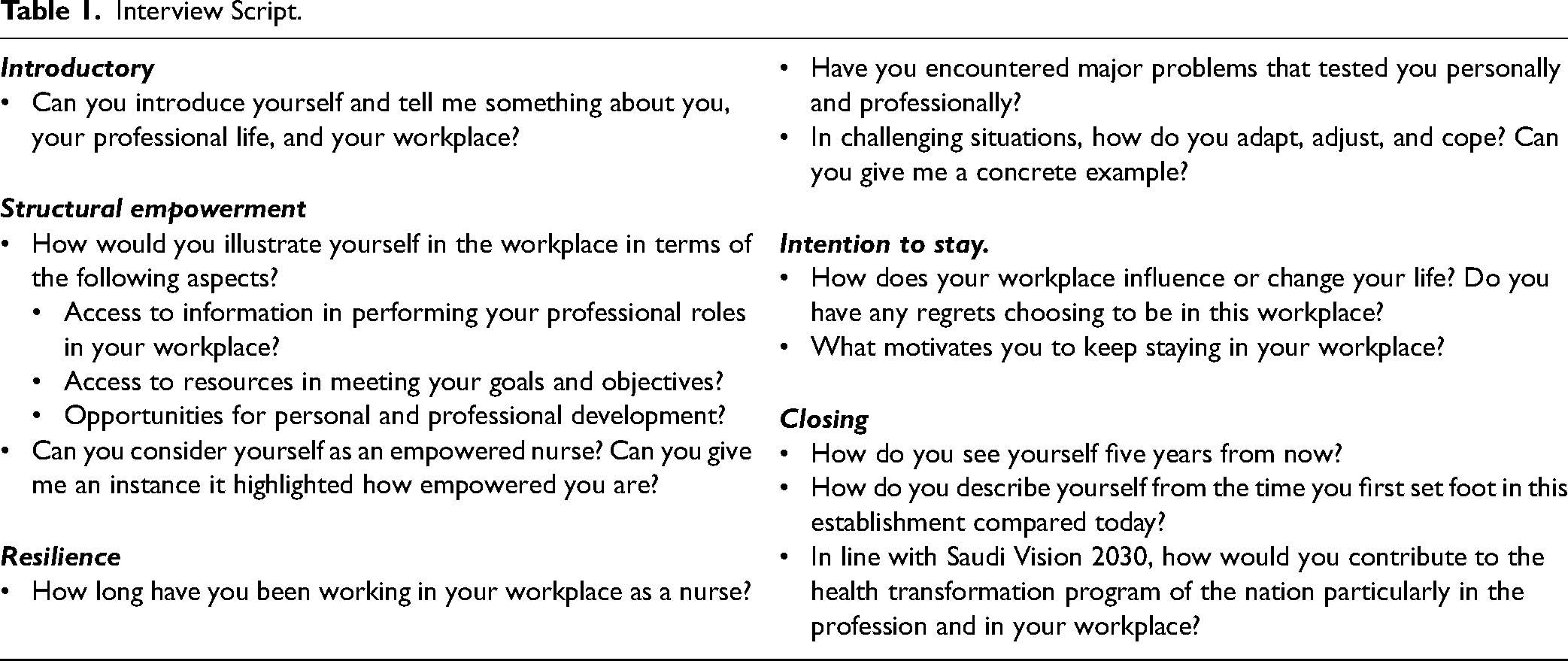
The process to select participants was based on a list of 31 candidates proposed by the nursing unit managers. The researcher devised a schedule for the interview sessions after determining the appropriate amount of time to get the necessary approvals, permits, and informed consents. In addition, participants were told about the purpose of the study, its aims, the methods used, and the data analysis to maintain transparency throughout the process. The interview schedule was created based on the availability of the participants as well as the most convenient time, which was typically during the participants’ off-duty hours either before or after the scheduled shift.
During the face-to-face individual interview sessions, which ranged in length from 30 to 60 min and took place in the participant's workplaces, only the researcher and the participant were present. The interview settings were chosen based on the environment in which participants felt most at ease when discussing their past experiences and current perspectives (Salvador & Alqahtani, 2020). As a last step, the researcher utilized an audio-recording equipment, as was mentioned earlier, to document the interview sessions. Field noted was utilized all throughout the interview processes. Finally, all data interviews were collated and analyzed until such time the point of saturation was achieved.
Rigor
By adhering to the standards of credibility, confirmability, dependability, and transferability, the researchers ensured the study was conducted in a rigorous scientific manner. Credibility was ensured by transcribing the interviews on the same day they took place. In recognizing implicit biases, the researchers kept notebooks of introspective thoughts. The findings can be used in a variety of contexts, which is why the researchers enlisted the help of two nurse and two midwives from different parts of the country. Similarly, the study enlisted the aid of three external reviewers to verify the data for validity, applicability, and consequences. All data, including interviews, transcriptions, and field notes, were documented by the researchers to ensure consistency and reliability, so that same results might be obtained if the data were checked. The transcribed file and the published direct quotations used to convey the substance of the phenomena were available for participants to verify (Salvador et al., 2021). Lastly, COREQ guidelines, which are a unified set of criteria for reporting qualitative research, were applied (Tong et al., 2007).
Data Analysis
Colaizzi's method for qualitative data analysis served as the basis for the construction of the data saturation procedure that was used on the acquired information (Colaizzi, 1978) The researchers started the analysis by reading and rereading the material independently to get a better understanding of what the dialogue was about overall. Second, the most important words, phrases, and statements that were found to be associated with the phenomena were isolated and subjected to repeated analysis, with the primary focus being on the meanings that were derived from the data (Salvador, 2022; Salvador et al., 2022). Third, preconceived positions were suspended and placed within brackets to forecast hypothetical deductive technique. In addition, preconceived positions were guided through an inductive sequence to eliminate potential biases and tendencies. In addition, formulated meanings have been collated in Excel sheets to facilitate the speedy identification of items that share the same conceptual framework. In the fourth step of the process, the final decision of themes and topic clusters was put through a “thorough explanation” so that the fundamental structure of the phenomena could be clarified in an all-encompassing manner. As a final stage, the results of the qualitative data analysis were disseminated to the participants so that they could be validated and checked by the members of the group.
Results
A total of 18 nurses and midwives were interviewed; most were married (66.7%), while (33.3%) were single, ranging between 4 and 23 years of experience in nursing service. Concerning participants’ educational background, most participants (77.8%) had a bachelor's degree in nursing/midwifery, while the remaining participants (22.2%) had a Master's or postgraduate qualification. The participant demographics are summarized and displayed in Table 2.
Socio-Demographic Data of Participants.

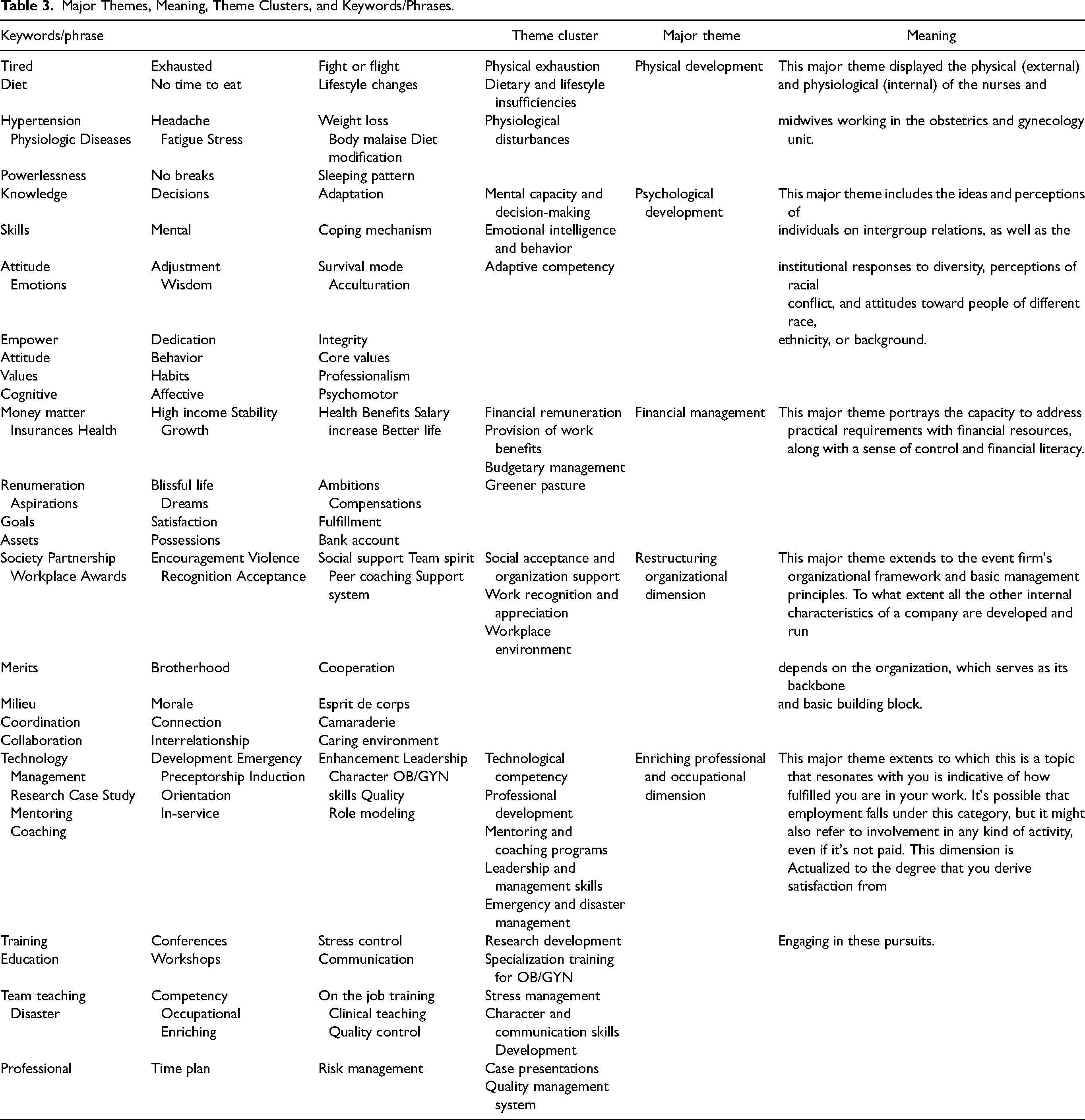
Twenty-four theme clusters representing the participants’ perspectives regarding their experiences with structural empowerment, resilience, and intention to stay ultimately coalesced into five major themes. There were five main themes that surfaced, which include the following five areas: (a) “nurturing the physical and physiological dimension,” (b) “developing the psychological dimension,” (c) “managing the financial dimension,” (d) “restructuring the organizational dimension,” and (e) “enriching the professional and occupational dimension.” Keywords, theme clusters, major themes, and operational meanings are listed in Table 3.
Major Themes, Meaning, Theme Clusters, and Keywords/Phrases.
Theme 1: Nurturing the Physical and Physiological Dimension
This theme displays the physical (external) and physiological (internal) of the nurses and midwives working in the OB/GYN unit. A physical dimension is a quality individuals ascribe to physical quantities to classify or differentiate them. Force, mass, and length are all examples of physical dimensions. Moreover, physiological dimensions pertain to the internal bodily changes experienced and manifested by an individual like developing hypertension and other lifestyle diseases (diabetes miletus). This theme generated three theme clusters:
Physical Exhaustion
Physical exhaustion pertains to the feeling of intense and continuous fatigue. This form of exhaustion fully depletes individuals. When physically weary, individuals lack energy, motivation, concentration, and interest. Mental tiredness and stress are frequently coupled with physical exhaustion. Because I am extremely stressed. If I go home, there will be no more power and no more energy. Yes, I will go home. It's really all my energy. It's already consuming the world. (p. 15)
Dietary and Lifestyle Insufficiencies
Dietary and lifestyle insufficiencies Signify the lifestyle of the participants that includes good food, frequent physical activity, and balancing the calories that ingest with the calories the body utilizes. We are trying our best, but by the time we are going home, we are exhausted. We are tired. For example, we didn’t have time to eat, or even drink water yesterday; we left 1 h after our duty. (p. 18)
Physiological Disturbances
Physiological disturbances pertain to the internal bodily changes experienced and manifested by an individual like developing hypertension and other lifestyle diseases. It changed my life because a few years ago, followed by the stress, I was diagnosed as being pre-diabetic because of that stress. Yes. And that was a slap in my face—that I must be cooler to myself, and I must live with that stress not affecting my life more because I'm even stressful at home because of that pressure, the stress, and the conflicts. (p. 9)
Theme 2: Developing the Psychological Dimension
This major theme includes the ideas and perceptions of individuals on intergroup relations, as well as the organization responses to diversity, perceptions of conflict, and attitudes toward people of different race, ethnicity, or background. This theme generated three theme clusters:
Mental Capacity and Decision-making
Mental capacity and decision-making pertains to the sufficient intellect and memory to comprehend the circumstance in which one finds oneself and the nature, purpose, and consequence of any act or transaction one intends to enter.
Of course, I’m taking decision for myself even sometimes. Mostly because the nurses or the midwife especially how many years we are working here. Plus, I can judge with everything here. Even the consultant, if he will do something, I’m not comfort about his decision. I will stop him. (P15)
Emotional Intelligence and Behavior
Emotional intelligence and behavior show the ability to recognize, control, and express one's emotions, as well as to handle interpersonal connections with discretion and compassion. I am empowered because my colleagues are helping. Sometimes the doctor is also more helpful to us. (P7)
Adaptive Competence
Adaptive competence illustrates capacity to respond constructively to a quickly changing environment and emerge stronger as a result. Now I have control over this one. For example, when I was just promoted as head nurse here and hadn’t really adapted to the work, I felt like I didn’t have time to finish my duties, so I came in on the weekends, for example, to do some duties. (P14)
Theme 3: Managing the Financial Dimension
This major theme portrays the capacity to address practical requirements with financial resources, along with a sense of control and financial literacy. This theme generated four theme clusters:
Financial Remuneration
Financial remuneration refers to money earned for services provided, whereas non-monetary remuneration refers to other perks awarded to the employee. We interact with patients and with a lot of students, we are doing evaluations, we are doing case studies, a lot of things, but we don’t receive any additional money in return for what we are giving. (P10).
Provision of Work Benefit
Provision of work benefit pertains to the additional types of remuneration or bonuses provided to workers in addition to their standard salary and earnings. Nurses should not resign if the benefits are okay and the staff are satisfied with their salary, okay. Especially for the new one. A lot of opportunity in the other countries and their salary is good. That is why they are leaving. (P12)
Budgetary Management
Budgetary management illustrates the capacity to properly plan, organize, direct, and control the financial capacity of a person. Really, it makes me more mature. And it makes me more responsible with money. Because of this, all the hard work that I’ve learned and experienced here makes me believe that earning money is not that easy. (P6)
Greener Pasture
Greener pasture denotes any place or condition that is more favorable or beneficial. Because I’m just here in Saudi Arabia to earn, to save, and to support the projects I have in the Philippines. But of course, I still want to settle down in my own country. (P6)
Theme 4: Restructuring the Organizational Dimension
This major theme extends to the event firm's organizational framework and basic management principles. To what extent all the other internal characteristics of an organization are developed and run depends on the organization, which serves as its backbone and basic building block. This theme generated three theme clusters:
Social Acceptance and Organizational Support
Social acceptance and organizational support refer to having friends and family members to lean on in times of trouble can help an individual keep things in perspective and boost confidence. Having a social network to lean on improves well-being and reduces the impact of setbacks in life. It's a very friendly environment. We are working as a team, and by 3 years later we are just growing up, so we are now charging and have big responsibilities. All here are supportive of us. If you need anything, they will just help us. (P5)
Work Recognition and Appreciation
Work recognition and appreciation centers on the individual, whereas acknowledgment on their accomplishments. Any promotion can give me more responsibilities and more challenges. A new job, a new role. (P14)
Workplace Environment
Workplace environment refers to the overall context, including the people interact with and the facilities that used, in which you accomplish your duties. The health, relationships, productivity, and effectiveness of workers can all be affected by these factors. We need to know our rights, and we need to have a look at the policy, because before, when I was newly graduated, they forced me to do, what you call it—not shift—when you're forced to work—overtime. I cannot say no. (P1)
Theme 5: Enriching the Professional and Occupational Dimension
This major theme recognizes employee satisfaction and enrichment through work in their workplaces. It might also refer to involvement in any kind of activity, even if it's not paid. This dimension is actualized to the degree that derives satisfaction from engaging in these pursuits. This theme generated eleven theme clusters:
Technological Competency
Technological competency refers to a baseline level of familiarity and facility with technological tools and processes. Let me tell you, I believe that we still require professional development, for example, if we are faced with a new diagnosis; we must attend online classes offered by the organization, participate in national and international symposiums, or attend a workshop to improve our skills related technology. (P1)
Professional Development
Professional development refers to the process of enhancing personal qualities and professional abilities Of course, I will provide additional training and programs for them. Of course, I will send them even outside the kingdom to pursue another scholarship. I will give them courses to improve. (P15)
Mentoring and Coaching
Mentoring and coaching illustrates the developmental strategies that rely on one-on-one interactions to improve an individual's competence, expertise, or performance at work. Mentoring program, we need to mentor the new interns because they come with their supervisors, so we could have the chance to mentor them. (P1)
Leadership and Management Skills
Leadership and management skills show the abilities needed to coordinate the efforts of multiple parties to complete a project. Skills necessary for leadership include the ability to connect with others and inspire them to “buy in” to a shared vision or mission. Ah, if they offer us, as I’ve told you, classes to improve our skills like time management, I think this is what would empower us more and keep us in the workplace. (P1).
Emergency and Disaster Management
Emergency and disaster management pertains to the managerial duty to design the infrastructure that helps communities prepare for and recover from disasters. At least ACLS. Yes, BLS and ACLS are the same, but at least the ACLS will be advanced. It will focus on the medication and on the reading of the ECG. (P6)
Research Development
Research development shows the result of an organization or individual's efforts to learn something new, which they can then use to develop an existing or brand-new product, service, or system. Yeah, I’m telling you that they are trying to develop, and to build something new. Before, we didn’t have nursing research. As a participant, we are involved in physician research. Now they want us to build our own research using our names in nursing. (P4)
Specialized Training for OB/GYN
Specialized Training for OB/GYN illustrates the training that could enhance the competency in obstetrics and gynecology, like cardiotocography Because I am a maternity nurse, this is really what we are focusing on for the CTG reading. So, I can read the CTG if there are abnormalities, but I’m not that confident that this reading will be different because there are a lot of terms in reading this CTG.(P6)
Stress Management
Stress management pertains to the several methods for handling stress and hardship (adversity) are provided. Of course, we need the workshop, especially in the delivery room, to learn how to deal with an obstetric emergency. (P15)
Character and Communication Skills
Character and communication skills denotes to the set of skills individuals employ while communicating various types of data. Like when we have different points of view as me and one of my colleagues regarding an issue aspect of ER. And we have so many colleagues, they have poor communication skills. Either it is by verbal or by written.(P9)
Case Presentations
Case presentations shows a formal way for medical staff like doctors and nurses to share patient data with another. We are doing a monthly presentation. One nurse will give a presentation inside the unit once a month. Every year, we also participate as a nursing department with a presentation topic. It will be presented to all nursing departments.(P14)
Quality Management System
Quality management system portrays a set of measures taken to ensure a product or service ensures high standards in the unit. Our quality nurses told me we should be very particular with the endorsement. I admit that there are some discrepancies for the endorsement that time because we were very exhausted. (P6)
Discussion
Interviews, field notes, and a few direct observations of documentation all contributed to the data set of this qualitative study. Analyses and interpretations were performed on the data, and the auxiliary data sources were used to provide background information for the interviews, frame the discussion, and generate questions. Consequently, our discussion answers the qualitative research's grand tour question, which entails the discussion of emergent themes. Five themes were generated and depicted the nurses and midwives as it represents different dimensions pertaining to structural empowerment, resilience, and intent to stay: (a) physical and physiological, (b) psychological, (c) financial, (d) organizational, and (e) professional and occupational.
Nurses and midwives promote their own health (physical and psychological (through self-care. The first significant theme is referred to as the nurturing physical and physiological dimension, and it represents a dimension that encompasses two vital components: physical (external) and physiological (internal) of the nurses and midwives working in the OB/GYN unit. The ability to take care of one's physical and physiological needs (activities of daily living, diet, lifestyles; relaxation, and sleep) despite environmental and internal stimuli is the first dimension that emerged from the perceptions of the participants, which symbolizes a person's physical and physiological wellness.
Kernisan (2018) and Williams (2014) pointed out that personal hygiene (such as shaving, brushing teeth, and taking a bath), work and social responsibilities (such as going to work), and leisure activities (such as participating in sports) are all examples of activities of daily living. According to Abraham Maslow's hierarchy of requirements, outlined by Kremer and Hammond (2013), a person's most basic needs are those that keep their body functioning. If one fails to provide for these requirements, their body will not function optimally. To sum up this emerging theme, one's ability to monitor vital signs (blood pressure, heart, pulse, and respiratory rate, and temperature) and recognize the signs and symptoms or warning signs of health alterations is bolstered by knowledge of and familiarity with the physical and physiological dimensions.
Hence, a person's appreciation and realization of the correlation between a healthy and stress-free lifestyle and the individual's instrumental activities of daily living in preventing physical exhaustion, good nutrition, and health status to improve diet and lifestyles and enough sleep and rest in preventing physiological drowsiness can be enhanced as pointed out by (Wilson, 2016). In our study, the benefits of caring for one's physical appearance and maintaining a healthy lifestyle are numerous and varied, including increased self-determination, self-confidence, self-esteem, and a sense of fulfillment. Consequently, a positive outcome on this dimension might strengthen a person's sense of empowerment, resilience, and intention to stay. This consists with Gottlieb et al. (2021), who stated that nurses’ physical health is related to empowerment.
The second major theme, the developing psychological dimension, displays the affective-emotional or affective-motivational status of the individual. Laschinger et al. (2014) stated that psychological empowerment is the response to certain empowering conditions and an outcome of structural empowerment. This emergent theme portrays the lived experiences of the nurse and midwives in pursuit of their cognitive (intellectual), affective (emotional), and psychomotor (skills) well-being.
The participants expressed various challenges with communication, perceptions, core values and coping mechanisms, and acquisition of competencies. Each participant has shared their own experiences with regard to this second theme. Many perceptions were extracted from the detailed textual descriptions of the participants; nevertheless, one commonality emerged from these points of view; the determination to be successful and to learn new things. All the participants have shared their perspectives concerning the personal experiences they have had at the OB/GYN units they each work in. Their experiences added to their pools of knowledge, which were plainly explained through the narratives they talked about their indecision.
Furthermore, this emerging theme depicts the instilled core values of nurses and midwives based on their corresponding value formation based on cultural heritage, customs and traditions, familial development, and societal norms; additionally, it depicts the coping adjustments and processes undertaken and realized by the participants in living and working as nurses and midwives in the OB/GYN units.
Nurses and midwives are experiencing burnout (Geraghty et al., 2019). Therefore, the consequences of the barriers to the ability of midwives to provide quality care have been found to result in burnout and distress, which can negatively affect their retention (Filby et al., 2016). Therefore, social and professional support from work colleagues and supervisors is an essential factor that helps midwives cope with the barriers in their workplace environment (Halperin et al., 2011).
The managing financial dimension is the third main theme, and it describes the capability of resolving practical requirements with financial resources, together with a feeling of control and understanding of finance. The participants were adamant that the continuity of their separate works would continue to serve as a steppingstone to greater success in the foreseeable future.
Because of this, the financial aspect of nursing and midwifery requires nurses and midwives to maintain economic stability.
According to Kanter's theory of structural empowerment, access to resources such as money, materials, and supplies is another empowering work structure (Kanter, 1993). Employees desire a compensation system that they perceive as fair and commensurate with their skills and expectations. Pay and money is a significant consideration of the reward system in an organization because it provides employees with a tangible reward for their services and a source of recognition and livelihood (Fiske, 2018). Thus, employees tend to work harder when a percentage of employee salaries depend on performance. Though, it may greatly impact some workers because they might stop performing greatly when pay reliant on performance is withdrawn (Adriaenssens et al., 2015). Moreover, nurses should have access to adequate resources: supplies, materials, money, and sufficient time to perform duties, and nurse managers should have adequate staff within budgetary constraints for nurses to provide adequate patient care, with material resources available to perform their essential duties (James & Bennett, 2022).
On the other hand, the restructuring organizational dimension is the fourth essential theme, and it focuses on the structure and fundamental administrative methods that serve as the fundamental building blocks and the backbone of the company. In other words, the organizational dimension is concerned with the culture and climate inside the workplace. The preceding describes the social links that the participants have with the individuals who work around them at the location where they are employed.
According to the mindfulness theory of relationships, an individual's capacity to socialize, communicate, and interact with others is an indispensable element in determining their overall well-being. This is because interpersonal skills focus on an individual's interactions with other people and how that individual engages in social activities, communicates, and socializes with others (Brown & Ryan, 2003).
In the current study, nurses and midwives have a strong support system inside and outside the organization. This is consistent with Roji & Jooste (2020), who showed that the participants felt that support within their team makes staff members stronger and more resilient and is in line with findings reported by Albasal et al. (2022), who found that nurses reported informal power as the highest perceived dimension of structural empowerment, perhaps related to social interaction between the staff nurses and their peers, and reflecting a healthy level of communication with healthcare team members. A strong network of friends is another sign that overall interpersonal relationships are going well. All the participants have their support systems, which may consist of their friends, workmates, and groups, that are willing to allot time for them, listen to their exciting and happy stories, help them resolve their shortcomings, and be their confidante in times of pain and sorrow.
All the participants are provided with the motivation and the confidence they need to carry on with their life journeys by the support system. Most participants believe they need organizational support for their growth and development, such as a strong support system, recognition, and appreciation for their excellent performances. Kanter's theory (1993) defines structural empowerment as the following workplace characteristics: formal and informal power, access to information, opportunities to learn and personal development, and supportive relationships (e.g., superiors, peers, and subordinates). Therefore, structural empowerment is based on an empowered social structure in the work environment, resulting in improved work performance (Goedhart et al., 2017). Moreover, to improve structural empowerment, nurse managers are expected to support nurses to access all sorts of resources, to enable them to access the information they need, and to provide them with opportunities to achieve professional development (Arslan Yürümezoğlu & Kocaman, 2019).
In terms of environmental safety and security, these are considered essential needs of an individual. Kremer and Hammond (2013) mentioned in their article that shelter is an important physiological, safety, and security human need that should not be taken for granted. In general, the participants do not have any problems regarding their respective environmental safety and security. Therefore, organizational safety and security increase the nurses and midwives structural empowerment, resilience, and intention to stay in their workplace.
The enriching professional and occupational dimension is the fifth and final key theme that emerged from the perspectives of the nurses and midwives. This fundamental theme extends to the extent that this topic resonates with the participants’ job fulfillment markers. In addition, this topic depicts the well-being of the participants in the workplace, particularly regarding the contentment they derive from their respective work positions and the future they are currently making to address their professional and occupational responsibilities in their lives. This topic depicts the participants’ well-being regarding the contentment they derive from their respective work positions. Personal development was identified by Bevan et al. (2022) as a driving passion with the potential to alter one's circumstances drastically. He stressed the need for dedication as the primary factor in achieving one's goals.
Keeping oneself motivated to advance in one's career might be facilitated by making progress toward that goal a regular part of one's routine. Carino (2017) defined professional development as “the ongoing process of acquiring knowledge and skills necessary to perform one's occupation successfully.” This includes “formal” educational opportunities like courses and seminars and “informal” learning settings like readings and discussions with peers in one's field. Mentoring and coaching, community-based action projects, instructional and reflective supervision, technical assistance, consultations, and coursework are all elements of professional development.
Despite the many challenges nurses and midwives’ face—such as a lack of professional development opportunities at their organization—all the participants seek personal and professional development. To address this challenge, participants travel to attend conferences on a national and international level and further, their education to better position themselves for roles in the kingdom and beyond. For this reason, the professional and occupational dimension depicts the participants’ present and future professional and personal endeavors. According to Ross et al. (2019), this factor, when satisfied, can lead to a healthy work-life balance. As a result, it includes getting along with one's coworkers and doing what is right on the job.
Participants’ employment goals, including whether they intend to remain in their current position or pursue a different career path within or beyond the nursing field, are also reflected in this dimension. Like how a person's well-being can be improved by pursuing professional advancement, personal and professional development encompasses all that pursuit. With this crucial component of professional and occupational health in mind, nurses and midwives can better their drive for success, boost their sense of empowerment and resilience, and realize their full potential in their careers, which makes them decide to stay in the workplace.
Taken together, these main themes offer a synopsis of the varied experiences of nurses and midwives working in the obstetrics and gynecology departments of several hospitals in the Eastern Province of KSA, as seen in Figure 1. Each participant in this study led a healthy lifestyle, as evidenced by their appearance, health, and self-assurance descriptions. Almost all of them improved their understanding of themselves and others and picked up useful knowledge they may use immediately (Al-Otaibi, 2023). The participants’ plight to success was made easier by their willingness to be open and honest with their loved ones and regular contacts regarding their relationship status. Their organizations provide them with a secure income and benefits, so they do not have to worry about their financial future. Their detailed narratives of their experiences ring true with the conviction and determination essential to accomplish their personal and professional goals and aspirations. They have maintained a positive working relationship with the rest of the staff members because of their hard work, perseverance, teamwork, patience, and honesty. With these results, it is clear that fulfilling all the emergent perceptual dimensions will increase structural empowerment, resilience, and intent to stay in healthcare organizations.

OB/GYN RNs’ perceptual dimensions toward structural empowerment, resilience, and intent to stay.
Strengths and Limitations
For this qualitative study, it is the first study that examining the perceptions and experiences of nurses and midwives related to structural empowerment, resilience, and intent to stay. Thus, the analysis provided in our study is the first of its kind. The perspectives and experiences of nurses and midwives were of primary interest. Since this qualitative investigation only involved three hospitals in Saudi Arabia's Eastern Province, its results may only generalize to some nations.
Implications for Practice
Healthcare organizations must recognize the need for continued occupational and professional staff development and growth, which positively impacts new staff wanting to seek learning and enhance their clinical and leadership skills. Accordingly, further studies on these topics should include participants from more regions of Saudi Arabia. In addition, research on the psychological empowerment of midwives is needed. Future studies must explore other factors that predict intent to stay, such as psychological empowerment. It is also essential to develop and implement a national staff empowerment standardizing policy to fully transform the healthcare services system in Saudi Arabia. A policy of this type will save significant resources and provide insight into coping strategies to prevent adverse employee turnover outcomes and create retention strategies; as a result, it will contribute to future research in the same area to achieve Saudi Vision 2030.
Conclusions
The purpose of this study's findings is to persuade nurses and midwives to stay in their current positions by highlighting the need to build a culture of empowerment and resilience. The emerging major themes highlighted the perceptive elements of nurses and midwives, such as physical, physiological, psychological, financial, organizational, professional, and occupational, that keep them empowered, resilient, and determined to stay in their organization. A failure to fulfill any one of these elements will affect the others. As a result, nurses and midwives may experience weariness, burnout, workplace hostility, and a general lack of motivation.
Footnotes
Acknowledgment
The authors thank the study participants for their contributions, and dedication for sharing their lived experiences, which can shed light for other registered nurses and midwives in the kingdom to continue striving harder to achieve the Saudi Vision 2030.
Declaration of Conflicting Interests
The authors declared no potential conflicts of interest with respect to the research, authorship, and/or publication of this article.
Ethical Consideration
The researchers sought permission to carry out the study and record the interviews from the ethics bodies of King Saud University's Institutional Review Board (Ref no: KSU-HE-22-785) and Governmental Hospitals (Ref No: EXT-MS-2022-001)-(Ref No: H-05-HS-065). Participants signed an informed consent form before data collection. As an added layer of anonymity, participants were assigned color-coded numbers and pseudonyms. Participants were also free to share any experiences, views, or opinions they had regarding the topic being studied (e.g., emotions and morals).
Funding
The authors received no financial support for the research, authorship, and/or publication of this article.
