




Abstract
In this study, we provide insights on how servant leadership may promote employee performance. We investigate whether the associations between increases in servant leadership and employees’ task and adaptive performance are mediated by changes in the two antipodes of employee well-being: work engagement and burnout. We utilized a two-wave survey data (N = 2453) collected from 34 organizations and latent change score modeling as an analytical approach to examine associations among within-person changes. Our findings showed that increased perceptions of servant leadership were associated with increases in work engagement and decreases in burnout. Increases in work engagement were associated with increases in task performance and four subfacets of adaptive performance (i.e., stress management, reactivity, creativity, and interpersonal adaptivity). Decreases in burnout were associated with increases in task performance. Our findings suggest that improved servant leadership practices may foster employees’ task and adaptive performance especially through the promotion of work engagement.
Abundant evidence has shown leadership to have a substantial impact on employees’ performance, well-being, and motivation (Inceoglu et al., 2018; Oreg & Berson, 2019). In this study, we focus on servant leadership (Greenleaf, 1977), which represents leaders’ behaviors characterized by humility and concern for others, empowerment, stewardship, and holding people accountable for the outcomes of their work (van Dierendonck & Nuijten, 2011). More than in other leadership approaches, servant leadership is about serving the followers and thus put their well-being first rather than, for instance, the achievement of organizational (short-term) objectives (Greenleaf, 2002; Hoch et al., 2018; Stone, 2004). Due to its distinctiveness from other leadership approaches, servant leadership has also shown “more promise as a stand-alone leadership approach that is capable of helping leadership researchers and practitioners better explain a wide range of outcomes” (Hoch et al., 2018: 502). Accordingly, accumulating evidence has linked servant leadership with an array of outcomes, such as higher trust, organizational commitment, job satisfaction, and lower turnover intentions even over and above other leadership constructs, including transformational, authentic, and ethical leadership (Eva et al., 2019; Hoch et al., 2018; Lee et al., 2020). Research on servant leadership has therefore potential to provide new insights on how to create meaningful workplaces characterized by not only high but sustainable performance.
Extant studies have provided essential insights regarding how servant leadership may also yield favorable organizational outcomes, such as higher employees’ task-specific proficiency behaviors, that is, job and task performance (Eva et al., 2019). However, whereas employees’ task performance is essential for organizational success, it does not sufficiently describe the range of human performance at work. This is especially true in today’s work life, which is characterized by constant changes in organizational structures, team composition, and the content of one’s work and thus necessitates adaptability.
For both organizations and individuals, it is therefore essential to understand how to promote employees’ ability to change their behaviors to meet the demands of new environments, that is, adaptive performance (Charbonnier-Voirin & Roussel, 2012; Pulakos et al., 2000). This study provides new evidence on how organizations, through servant leadership behaviors, may help employees not only to perform better in their tasks but also to better manage stress, take effective action, generate new ideas, and consider others when adapting to changing organizational circumstances (Charbonnier-Voirin et al., 2010). We further extend this understanding by examining whether servant leadership may foster employees’ task and adaptive performance via two antipodes of employee well-being: work engagement and burnout.
Wherein work engagement is a positive affective-motivational state of mind characterized by vigor, dedication, and absorption at work (Schaufeli et al., 2002), burnout is characterized by exhaustion and negative attitudes toward work (Demerouti et al., 2010b). Importantly, studies have found work engagement and burnout to be associated with a range of individual and organizational outcomes, such as psychological and physiological health, absenteeism, and job performance (Bakker et al., 2014). Yet, less is known about do burnout and work engagement similarly shape different types of employee performance, such as employees’ adaptivity, which limits our understanding regarding the benefits of employee well-being.
We draw from servant leadership theorizing (Greenleaf, 1977; van Dierendonck, 2011), the broaden-and-build theory (Fredrickson, 1998), and the conservation of resources theory (Hobfoll, 1989) and test the hypothesized model (Figure 1) by utilizing a two-wave survey data (N = 2,453) collected from 34 organizations undergoing various changes at work. In so doing, the current study contributes to theory, research, and practice.
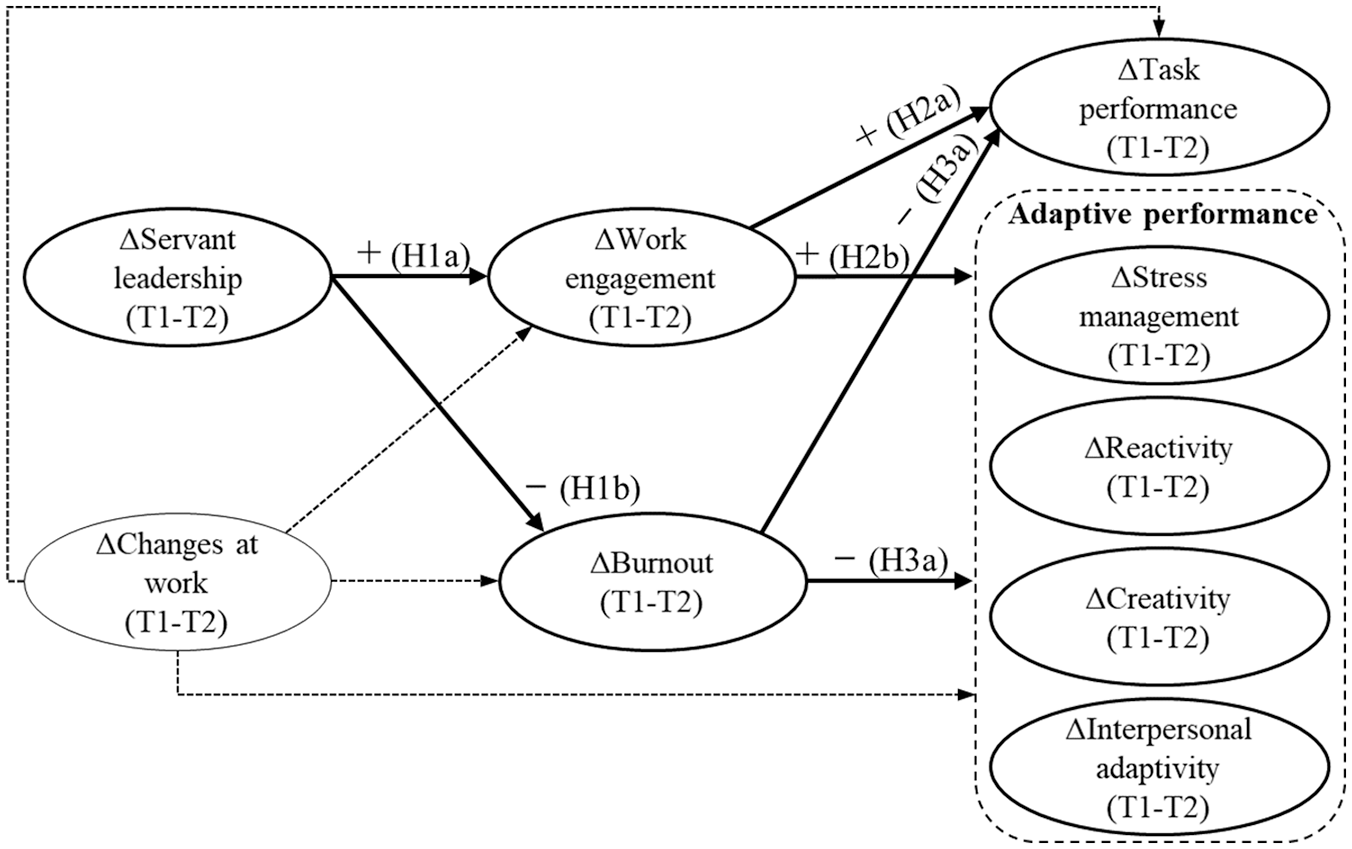
Research model.
First, we contribute to servant leadership theorizing and research by extending the current theoretical understanding regarding the processes (i.e., employee well-being) through which servant leadership influences an array of employee performance behaviors (i.e., task and subfacets of adaptive performance). Whereas the theory suggests that servant leadership benefits through fostering employee well-being (Greenleaf, 2002), we extend this theoretical understanding by providing evidence whether such processes may occur via servant leaders fostering the positive (i.e., work engagement) or buffering against the negative (i.e., burnout) dimensions of employee well-being. We provide new evidence regarding the importance of servant leadership amid turbulent times as we examine employees’ change-related behaviors, that is, adaptive performance. This knowledge is essential not only for leadership and performance scholars but also for change managers seeking the most impactful approaches to promote well-being and performance and ultimately, the success of change endeavors.
Second, by contrasting Fredrickson’s (1998) broaden-and-build theory with Hobfoll’s (1989) conservation of resources theory, we illuminate the relative impact of employee well-being (i.e., work engagement broadening the array of performance behaviors) and ill-being (i.e., burnout associated with conserving effort and lower performance) on employees’ task and adaptive performance behaviors. As there is no evidence regarding the simultaneous impact of work engagement and burnout on dimensions of adaptive performance, and only scarce evidence regarding task performance (Hakanen & Koivumäki, 2014), our study informs organizations and research interventions whether they are best advised to focus on promoting work engagement or preventing burnout to foster employee performance. By this more fine-grained investigation of various performance dimensions, we embed work engagement and burnout to a wider nomological net of employee performance (Parker & Griffin, 2011).
Third, as organizational changes are dynamic events that unfold over time, it is important to examine the drivers and consequences of how employees’ perceptions and reactions evolve over time during such events (e.g., Kaltiainen et al., 2020). By utilizing two-wave data and examination of within-person changes across time, we provide new insights on how evolution (i.e., increases or decreases) in employees’ leadership perceptions, well-being, and performance are associated. This examination reveals the dynamic benefits of cultivating servant leadership and employee well-being across organizational change processes and is likely to provide a more accurate picture regarding cause-and-effects in contrast to study designs that measure and model only absolute scores at specific time points (Henk & Castro-Schilo, 2016). Importantly, through repeated measurement design we further the current understanding regarding the antecedents and impact of changes in servant leadership, burnout, work engagement, and employee performance as most existing studies are cross-sectional or have measured constructs only once (Bakker & Costa, 2014; Carpini et al., 2017; Eva et al., 2019).
Servant leaders as engagement promoters and burnout mitigators
Servant leadership is about going beyond one’s self-interest and “Begins with the natural feeling that one wants to serve, to serve first” (Greenleaf, 1977: 13). Thus, at the core of servant leadership theory is the concern for the needs, well-being, and growth of the followers (Laub, 2018; Mayer, 2010). The fundamental premise is that servant leaders are primarily driven by empathy, altruism, and a sense of community, and thus servant leaders show authentic concern for the followers (Greenleaf, 1977; Hoch et al., 2018). Servant leaders aim to empower and nurture growth, for example, by giving feedback, showing appreciation, providing optimal challenges, and by making followers accountable for their performance, so that followers will become more encouraged and self-directed (van Dierendonck, 2011).
Servant leadership boosts well-being and motivation by fulfilling the basic psychological needs of their followers: autonomy, relatedness, and competence (Van Dierendonck et al., 2009). As postulated in the self-determination theory, the satisfaction of these basic needs is the psychological energetic resource for individuals to experience optimal well-being and flourishing (Deci et al., 2017), whereas frustration of these needs depletes energies (Deci & Ryan, 2000). Indeed, studies have widely tested this proposition and shown that through psychological need satisfaction, servant leadership is associated with favorable outcomes such as higher well-being (e.g., Chiniara & Bentein, 2016; Rivkin et al., 2014; van Dierendonck et al., 2014). Studies have also shown need satisfaction to be associated with higher work engagement and lower burnout (Van den Broeck et al., 2008). Taken together, servant leaders fulfill followers’ psychological needs as they promote self-directedness (autonomy), interpersonal acceptance, and respect (relatedness) and personal and professional growth (competence), and thereby foster work engagement and mitigate burnout.
Accordingly, studies have found servant leadership to be associated with higher work engagement (Eva et al., 2019; Hoch et al., 2018). Regarding burnout, the evidence is more scarce, as we were able to identify only three cross-sectional studies which all found servant leadership to be associated with lower burnout (Babakus et al., 2010; Bobbio et al., 2012; Rivkin et al., 2014). Notably, existing servant leadership studies have not examined work engagement and burnout simultaneously.
Furthermore, we expect servant leadership to share unique proportions of variance with indicators of employee well-being (i.e., work engagement and burnout) when examined simultaneously with employees’ perceptions of the extent of changes at work. Changes at work, such as changes in the organization’s structure, teams, and in the content of work, typically represent a demanding condition for the employees. On the basis of the Job Demands-Resources Model, demanding job conditions are associated with psychological ill-being at work, such as higher burnout, as they require sustained psychological effort (Demerouti et al., 2001). Accordingly, studies have found the extent of changes to be associated with higher exhaustion and lower work engagement (Xanthopoulou et al., 2007) and indirectly associated with lower general adaptive performance via higher strain (Schraub et al., 2011). Similarly, organizational changes are associated generally with detrimental psychological consequences among the employees (Oreg et al., 2011). As it is likely that increases in changes at work harm employees’ well-being, we control for this well-known stressor to achieve a clearer picture regarding the role of servant leadership for employees’ well-being.
Taken together, as we expect servant leadership to foster well-being, we predict that increases in servant leadership are associated with favorable changes in employees’ well-being (i.e., increases in work engagement and decreases in burnout) over and above the impact of changes at work. Thus, we hypothesize:
How servant leadership may foster task and adaptive performance: the missing link of employee well-being
Despite the current evidence illuminating mediating mechanisms between servant leadership and performance (Eva et al., 2019), this is the first study to examine whether servant leadership could foster employees’ task and adaptive performance via promoting work engagement and mitigating burnout. By comparing these alternative underlying mechanisms, we extend current theoretical understanding regarding the potentially favorable effects of servant leadership on employee performance via employee well-being.
Furthermore, the vast majority of research examining the roles of servant leadership, work engagement, and burnout for employee performance has focused on task performance or organizational citizenship behaviors (Bakker et al., 2014; Christian et al., 2011; Hoch et al., 2018). This gap necessitates research on adaptive performance, which is essential for organizations to succeed sustainably in today’s world of constant changes at work. We examine adaptive performance in terms of managing work stress (i.e., remaining composed), reactivity (i.e., taking effective action), creativity (i.e., generating new, innovative ideas and approaches), and interpersonal adaptivity (i.e., tailoring own behaviors to work more effectively with others) in changing situations (Charbonnier-Voirin & Roussel, 2012; Pulakos et al., 2000).
As changes in the structure of the organization, team composition, and in the content of one’s job typically disrupt day-to-day activities at work, such changes at work are likely to impact not only employees’ well-being but also their behaviors, manifested for instance as lower performance (Oreg et al., 2011; Schraub et al., 2011). Therefore, we control for the influence of changes at work on employee performance as we similarly do for employee well-being.
Work engagement as an antecedent of task and adaptive performance
We draw from the broaden-and-build theory (Fredrickson, 1998, 2001) to postulate that work engagement, as a state of mind characterized by positive emotions, promotes employees’ task and adaptive performance. According to the theory, positive affective states and psychological well-being in general broaden people’s thought–action repertoires, that is, the ways people think and behave (Fredrickson, 1998). As positivity builds resources through the broadened cognitions and behaviors, it leads to better performance (Wright & Cropanzano, 2007).
It is reasonable to expect work engagement to produce similar benefits. As engaged employees are highly motivated and experience positive emotions such as pride, joy, interest, and inspiration at work, they have the necessary resources and willingness to show effort at work (Bakker et al., 2014; Van den Heuvel et al., 2010). Put differently, work engagement enables employees to move from thought to action, and thus achieve better performance (Demerouti et al., 2010a).
Accordingly, studies have linked work engagement with higher task performance (Christian et al., 2011; Lichtenthaler & Fischbach, 2019). Although work engagement has been postulated to increase adaptive performance (Van den Heuvel et al., 2010), substantially less empirical evidence exists concerning this relationship. While this is the first study to examine the associations between work engagement and different subfacets of adaptive performance, Eldor and Harpaz (2016) found work engagement to be positively associated with general adaptivity. Similarly, Kaya and Karatepe (2020) showed servant leadership to be associated with higher work engagement, which in turn was related to higher interpersonal adaptivity over time among customer-contact employees. While this study provides essential insights, there is still need to shed light on whether similar associations are found (a) for various facets of adaptivity, (b) when considering simultaneously the role of burnout as a potential link between servant leadership and adaptivity (see Hypothesis 3), and (c) when examining whether changes in a given construct may foster changes in another, rather than focusing on specific levels of the constructs at specific time points.
Drawing from the broaden-and-build theory (Fredrickson, 1998) postulating that broadened thought–action repertoires, representing a phenomena occurring over time, promote performance, and the existing research, and together with the hypothesized relationship between increases in servant leadership and work engagement (Hypothesis 1a), we expect:
Burnout as an antecedent of task and adaptive performance
To postulate why burnout would be related to task and adaptive performance, we draw from the conservation of resource theory (COR; Hobfoll, 1989). In COR, burnout is seen to occur as a result of insufficient resources to cope with (job-related) demands, and lack of resource gains following resource investments (Hobfoll, 2002). Those with low resources are motivated to avoid further loss of resources and thus refrain from investing resources (Hobfoll, 1989). Therefore, those who increasingly suffer from burnout, which is associated with low resources and resource loss (Hobfoll, 2002), are likely to show decreases in behaviors that require utilization of such resources (Wright & Cropanzano, 1998). Such behaviors include performing at current tasks, managing stress at work, taking effective action, solve problems creatively or adapt own behavior to foster interpersonal relationships.
Accordingly, studies have shown burnout to be associated with lower task performance (Bakker et al., 2014; Swider & Zimmerman, 2010; Taris, 2006). Apparently as the sole study on burnout and adaptive performance, Demerouti et al. (2014) found burnout to be associated with lower interpersonal adaptivity in their cross-sectional study design. Based on the COR theory (Hobfoll, 1989) positing energy conservation process occurring over time, and the aforementioned research literature, and together with the hypothesized relationship between increases in servant leadership and decreases in burnout (Hypothesis 1b), we predict:
Method
Sample and procedure
For the study, we collected two-wave survey data (N = 2,453) from employees of 34 Finnish municipalities. The invitation to participate in the survey was sent to all the organizations’ employees. The participants were from a wide range of public sector occupational groups, including social and health care (36.7 % of the sample), education (12.8 %), culture (23.6 %), technical services (13.3 %), and administration (9.6 %). We expected the chosen time gap between the measurement time points, 18 months, to be sufficient for within-person changes to occur in the focal constructs. This research was conducted with the permissions by the participating organizations and the ethical review committee of the Finnish Institute of Occupational Health. Participants were guaranteed confidentiality as only researchers had access to participants’ responses, which was stated in the invitation letter and at the beginning of the surveys.
At Time 1, 10,920 out of 86 400 employees participated. Out of the 10,920 respondents, 4,369 employees provided their email addresses to the researchers for the follow-up survey. Among those, 2,453 (56%) responded also at Time 2 which was the sample utilized in this study. Respondent’s mean age was 48.4 (SD = 9.6), most were female (85.5%), years of tenure on average was 12.2 (SD = 10.4), most (91.8%) had a permanent job contract, and 19.7% held either a supervisor or management position. The majority (56.9%) had a degree either from a university or university of applied sciences, whereas 38.2% had upper secondary school or vocational education.
To assess whether the conclusions of this study could have been affected by non-response bias (Goodman & Blum, 1996), we examined whether there were differences between those who participated at Time 2 (N = 2,453) and those who did not (N = 1,916) among respondents who provided their email addresses at Time 1 for the follow-up survey (see Appendix 1). The results did not indicate that the possible non-random sampling would have influenced our main findings.
During the data collection, the participating organizations went through a range of organizational changes. The main driver of these changes was nationwide municipality reforms which aimed at fostering the financial viability of the municipalities by increasing the number of inhabitants per municipality. This led to several mergers and new forms of co-operation with other municipalities, including different types of reorganizations such as employee transfers and outsourcing. At the same time, several services were digitalized, which led to new requirements regarding employees’ know-how. Altogether, there were changes in workplaces’ structures and processes, team compositions, and in the content of every-day work.
Measures
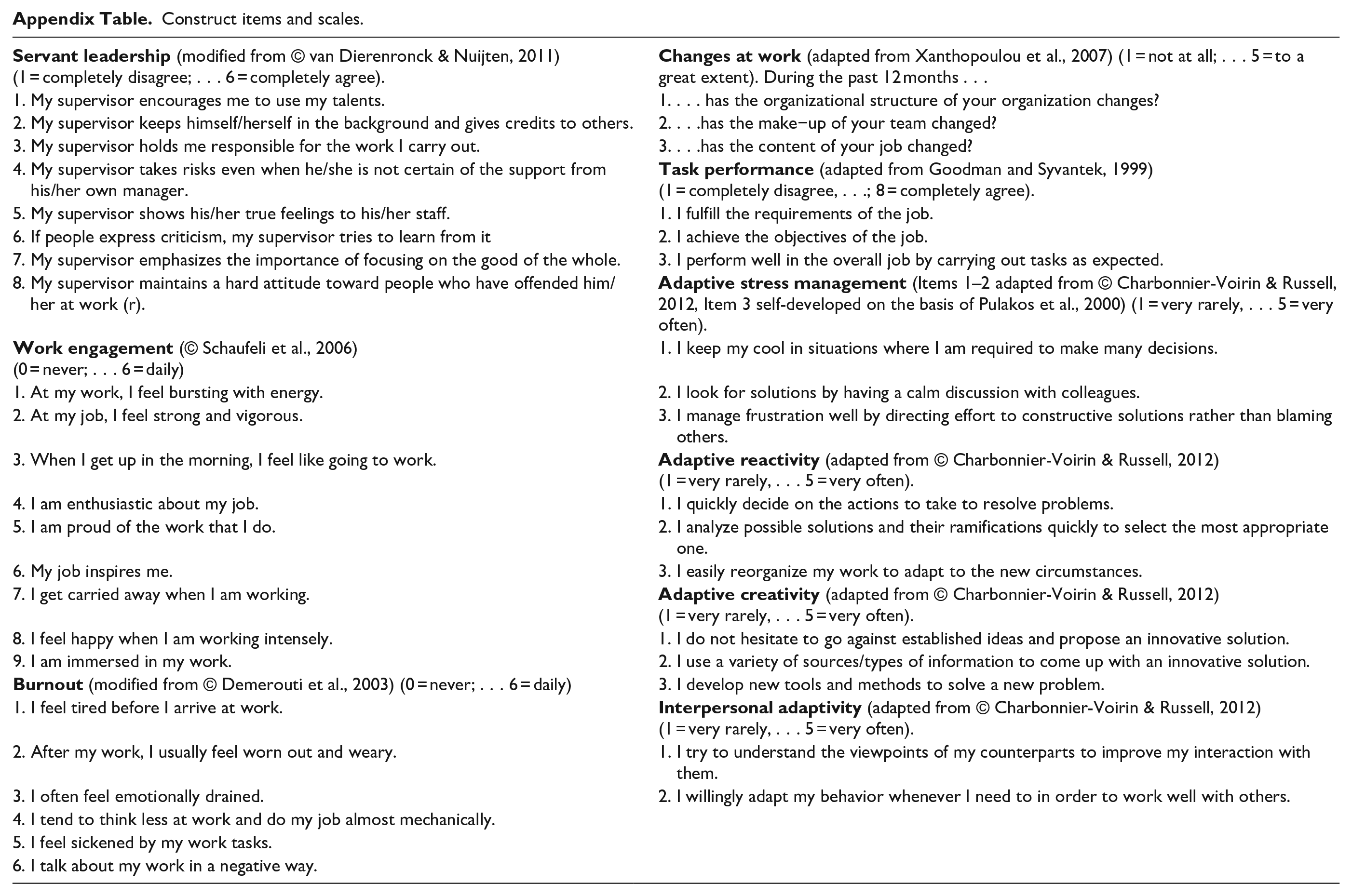
Cronbach alphas, together with correlations, are presented in Table 1. For a full list of construct items and response scales, see Appendix 2.
Means, standard deviations, Cronbach alphas, and zero-order correlations.
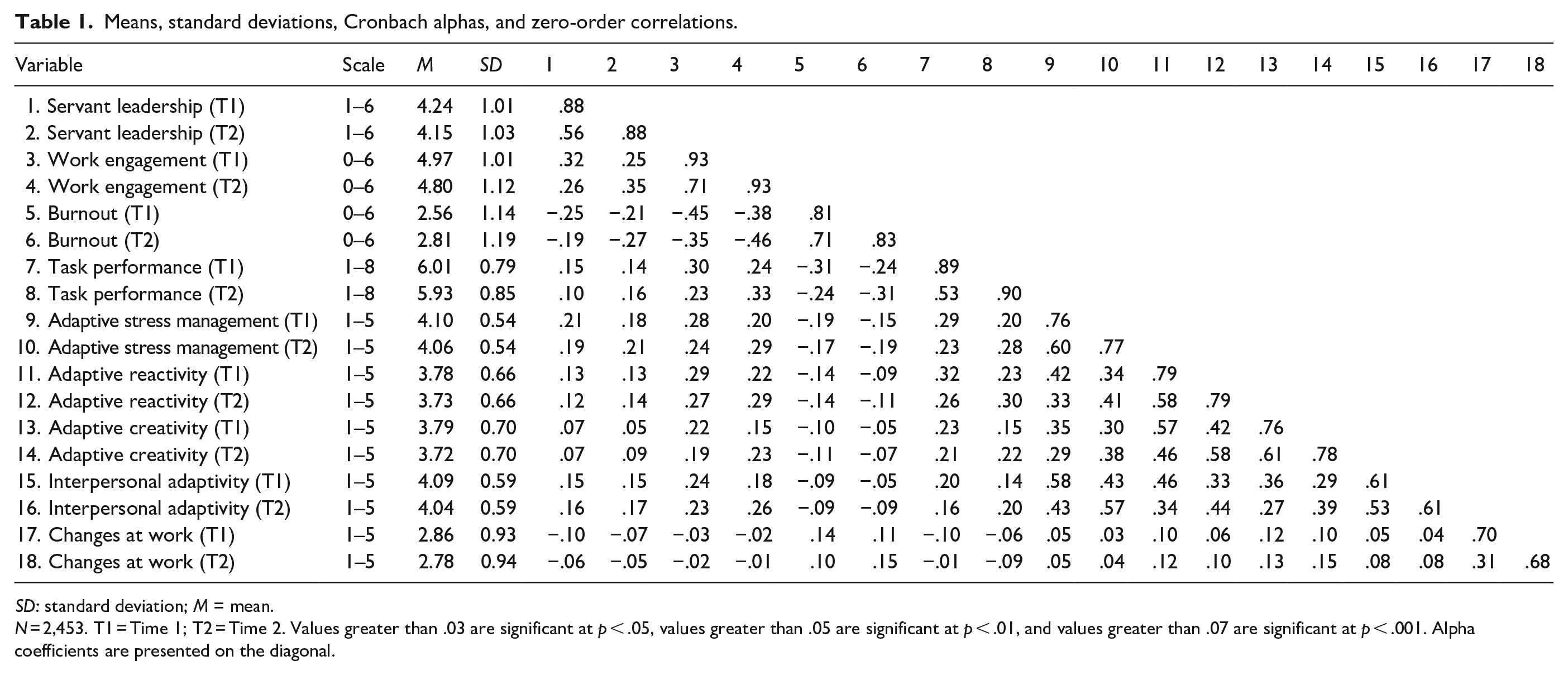
SD: standard deviation; M = mean.
N = 2,453. T1 = Time 1; T2 = Time 2. Values greater than .03 are significant at p < .05, values greater than .05 are significant at p < .01, and values greater than .07 are significant at p < .001. Alpha coefficients are presented on the diagonal.
To measure servant leadership, participants were instructed to rate their immediate supervisors on eight items drawn from the scale by van Dierendonck and Nuijten (2011). Each item represented one of the eight servant leader characteristics: empowerment, standing back, accountability, courage, authenticity, humility, stewardship, and interpersonal acceptance. The utilized scale was based on the author’s previous research, wherein a sample of over 10,000 participants the utilized measure was found to be highly correlated (r = .96, p < .001) with the original 30-item scale. For work engagement, we utilized a nine-item version of the Utrecht Work Engagement Scale (Schaufeli et al., 2006) capturing the dimensions of vigor, dedication, and absorption. Burnout was measured by six items from the Oldenburg Burnout Inventory (Demerouti et al., 2003) tapping into exhaustion and disengagement. For burnout, we included only negatively worded items as it reinforced the conceptual distinction from work engagement (Demerouti et al., 2010b). We measured task performance by three items adapted from Goodman and Svyantek (1999). Adaptive performance subfacets were measured with altogether 11 items of which 10 items were adapted from Charbonnier-Voirin and Roussel (2012) and one item was self-developed (see Appendix 2). We measured changes at work with three items adapted from Xanthopoulou et al. (2007) that tapped into changes in the organizational structure, team, and in the content of one’s job.
Analysis
For testing our hypotheses, we utilized latent change score modeling (LCSM; Henk & Castro-Schilo, 2016; McArdle, 2009). These structural equation model analyses were conducted using Mplus version 8 and for model estimation, we used the maximum likelihood estimation with robust standard errors as it is robust to non-normality (Muthén & Muthén, 2017) which was present in some of the measurement indicators. We estimated covariances among the items’ residuals over time as recommended for structural equation modeling with repeated measures (Little, 2013). For model comparison analyses, we utilized Satorra-Bentler chi-square difference test (Satorra & Bentler, 2001). Changes at work, which we controlled for, was regressed on all dependent latent change scores. For mediational analyses concerning Hypotheses 2 and 3, we calculated the bias-corrected 95% confidence intervals using 2,000 bootstrapped samples (Selig & Preacher, 2009).
The utilized LCSM was the most suitable analytical approach as it captures within-person changes in a construct across two time points and enables us to examine relationships among such within-person changes (Henk & Castro-Schilo, 2016; McArdle, 2009; Selig & Preacher, 2009). In the model, we regressed the observed items at Time 1 and Time 2 on their respective latent factors. Latent change scores were constructed by (a) estimating the covariance between Time 1 latent factor and latent change score, (b) regressing Time 1 latent factor and the latent change score on latent factor at Time 2 with path coefficients fixed to 1.0, (c) and fixing the residual of the Time 2 latent score to zero (Henk & Castro-Schilo, 2016). The resulting latent change score represents within-person changes across Time 1 and Time 2 and is free of measurement error. LCSM does not suffer from the same limitations as residual change scores or change estimates drawn from subtracting two scores from each other which do not map well with within-person phenomena (Henk & Castro-Schilo, 2016).
Results
Preliminary analyses
As shown by the mean levels in Table 1, burnout increased, whereas all positive constructs (i.e., servant leadership, work engagement, employee performance) decreased over time. All these changes were also statistically significant at p < .001 (contact the first author for details). Confirmatory factor analyses supported the hypothesized eight-factor model of servant leadership, work engagement, burnout, task performance, and the four adaptive performance subfacets loading on their respective latent factors at Time 1 and Time 2 as it resulted in good model fit (see configural model in Table 2). All factor loadings were above .40. Factor analysis revealed that residuals of some of the items with very similar wording (e.g., “I quickly decide on the actions to take to resolve problems” and “I analyze possible solutions and their ramifications quickly to select the most appropriate one”) were correlated. We estimated error covariances between such seven item pairs within Time 1 and Time 2 (see Table 2 for details).
Tests of measurement invariance over time.
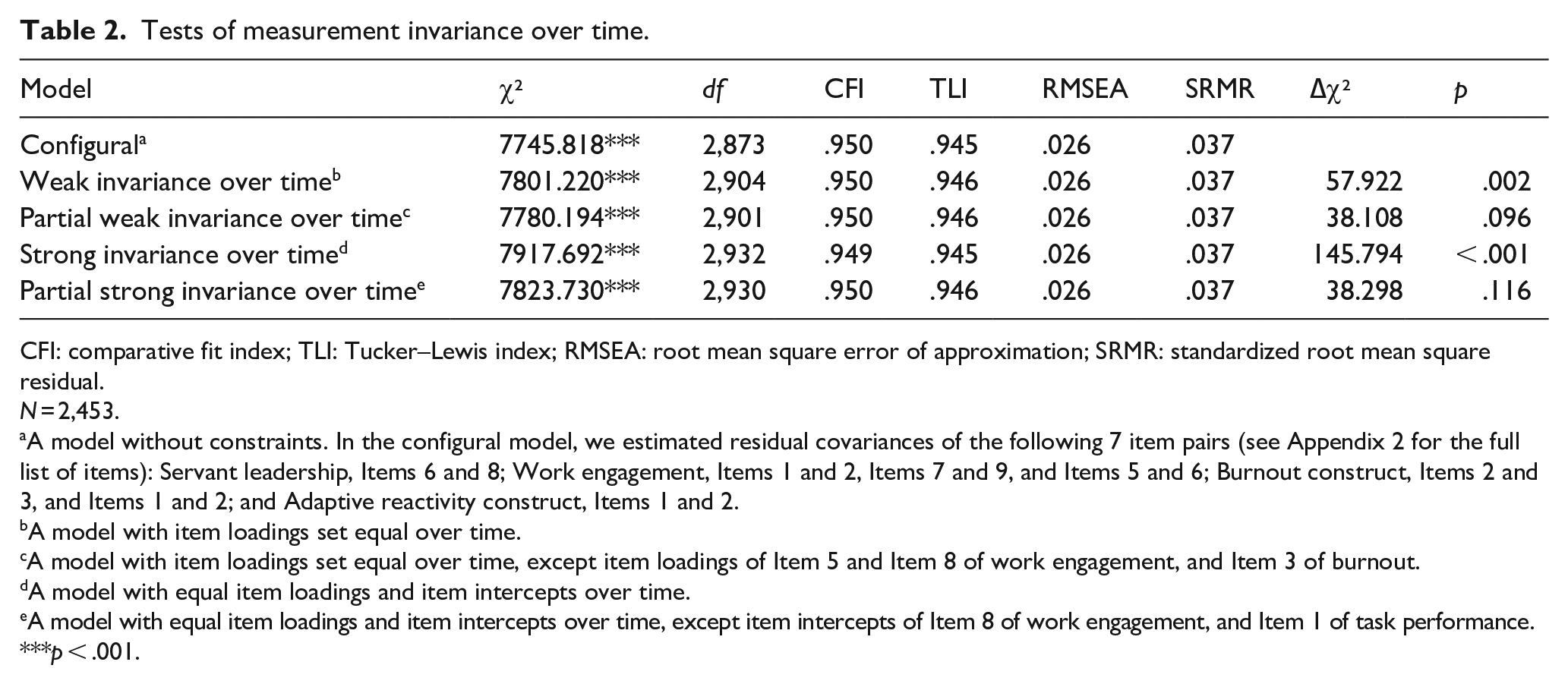
CFI: comparative fit index; TLI: Tucker–Lewis index; RMSEA: root mean square error of approximation; SRMR: standardized root mean square residual.
N = 2,453.
A model without constraints. In the configural model, we estimated residual covariances of the following 7 item pairs (see Appendix 2 for the full list of items): Servant leadership, Items 6 and 8; Work engagement, Items 1 and 2, Items 7 and 9, and Items 5 and 6; Burnout construct, Items 2 and 3, and Items 1 and 2; and Adaptive reactivity construct, Items 1 and 2.
A model with item loadings set equal over time.
A model with item loadings set equal over time, except item loadings of Item 5 and Item 8 of work engagement, and Item 3 of burnout.
A model with equal item loadings and item intercepts over time.
A model with equal item loadings and item intercepts over time, except item intercepts of Item 8 of work engagement, and Item 1 of task performance.
p < .001.
Next, we tested for the over time measurement invariance of the measurement model (Table 2). Sufficient measurement invariance over time is necessary for meaningful interpretation of changes as it indicates that the possible changes in the latent constructs are not due to the same measurements (i.e., construct items) being interpreted differently at different time points (Little, 2013). We were able to establish partial strong invariance (i.e., equal factor loadings and item intercepts over time) by estimating three item loadings and two item intercepts freely over time (see Table 2 for details). As the model presented a sufficient indication of measurement invariance over time (Little, 2013), we proceeded to test the hypotheses.
Hypothesis testing
The full mediation model (see Figure 2) provided a good fit with the data, χ²(2,991) = 8096.919, p < .001, comparative fit index = .948, Tucker–Lewis index = .945, root mean square error of approximation = .026, standardized root mean square residual = .043. In the partial mediational model, we included paths from servant leadership to the five employee performance constructs. Partial mediational model did not improve the model fit statistically significantly, ∆χ²(5) = 2.83, p = .726, in comparison to the full mediational model. Furthermore, in the partial mediation model all the estimated paths from servant leadership to performance were not statistically significant (p values ranging between .193 and .976). Following the rule of parsimony, we concluded that the fully mediated model (Figure 2) was preferred.
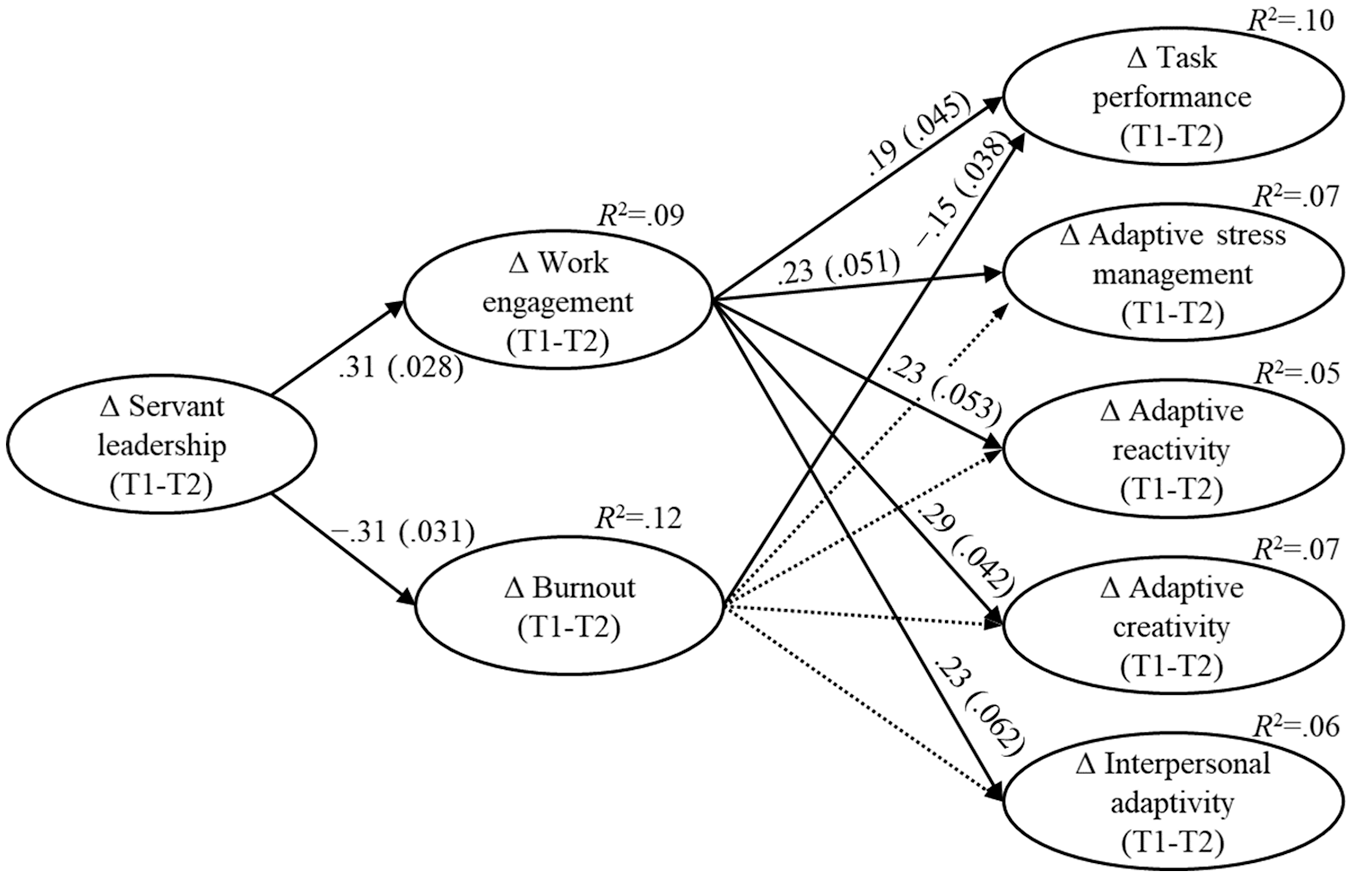
Full mediation model testing for Hypotheses 1−3. N = 2,453. Standardized path estimates with standard errors in parentheses are presented. Values equal to or greater than .05 are statistically significant at p < .01 and values greater than .11 are significant at p < .001 Dotted paths represent paths whose estimates are p > .05 and are thus not statistically significant. T1 = Time 1; T2 = Time 2. Symbol Δ refers to within-person changes. For clarity, omitted from the figure are control variable (i.e., Δ changes at work T1−T2), latent variables at Time 1 and Time 2, latent factors’ items, and residual covariances between latent change scores (i.e., between work engagement and burnout, and among employee performance constructs).
As shown in Figure 2, changes in servant leadership were positively related to changes in work engagement and negatively to changes in burnout, thus supporting Hypotheses 1a and 1b. Regarding Hypotheses 2a and 2b, changes in servant leadership were positively related to changes in work engagement, which subsequently were positively associated with changes in task and adaptive performance subfacets. These indirect associations were also statistically significant (Table 3). Thus, Hypotheses 2a and 2b were supported.
Standardized coefficients for indirect effects.
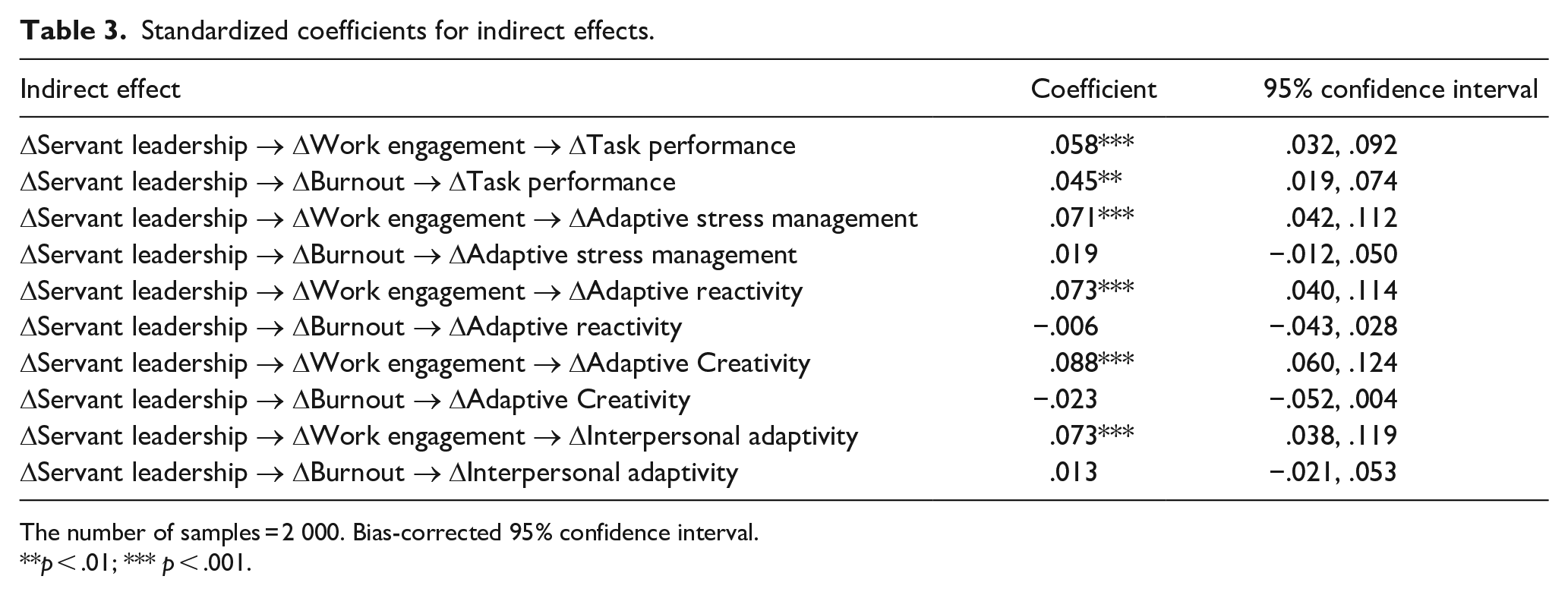
The number of samples = 2 000. Bias-corrected 95% confidence interval.
p < .01; *** p < .001.
Changes in servant leadership were negatively related to changes in burnout, which were negatively related to changes in task performance (Figure 2). This indirect association was also statistically significant (Table 3). This finding provided support for Hypothesis 3a. However, similar associations between changes in burnout and adaptive performance subfacets were not found, and the related indirect associations were also not statistically significant (Table 3). Thus, Hypothesis 3b did not receive support.
Post hoc analyses
As this is the first study to examine the relationships from work engagement and burnout to task performance and several subfacets of adaptive performance simultaneously, we further analyzed whether the estimated paths shown in Figure 2 differed statistically significantly from each other. For this, we utilized model comparison analyses in which we compared the freely estimated model (Figure 2) with models wherein specific paths were constrained equal. We first reverse coded burnout scales as it enabled us to compare the strength of the estimates.
First, servant leadership appeared to foster work engagement and mitigate burnout to the same extent as the paths from servant leadership to work engagement and burnout did not differ statistically significantly, ∆χ²(1) = 0.15, p = .700. Similarly, work engagement and burnout did not differ in the strength of their associations with task performance, ∆χ²(1) = 0.10, p = .753. However, the paths from work engagement to adaptive performance were statistically significantly different in comparison to paths from burnout to adaptive performance subfacets, ∆χ²(4) = 21.54, p < .001, suggesting that work engagement had a stronger impact on adaptive performance. Finally, burnout appeared to be a stronger predictor of task performance rather than adaptive performance, as the path estimates from burnout to task performance were statistically significantly different from the paths from burnout to adaptive stress management, ∆χ²(1) = 5.48, p = .019, adaptive reactivity, ∆χ²(1) = 16.69, p < .001, adaptive creativity, ∆χ²(1) = 26.44, p < .001, and interpersonal adaptivity, ∆χ²(1) = 6.34, p = .012.
Discussion
This study sheds light on the processes (i.e., employee well-being) through which empowering managerial actions (i.e., servant leadership) are likely to promote desired employee behaviors (i.e., task and adaptive performance) during organizational changes. Specifically, five of the six hypothesized relationships received support. Through increases in employees’ work engagement, increases in servant leadership were related to increases in task and all adaptive performance subfacets (i.e., stress management, reactivity, creativity, interpersonal adaptivity). Furthermore, via decreases in burnout, increases in servant leadership were associated with increases in task performance. However, changes in burnout were not found to be related to changes in the subfacets of adaptive performance.
Extending the understanding of employee well-being as a missing link between servant leadership and employee performance
Whereas servant leadership is theorized to benefit organizations via promotion of employee well-being (Greenleaf, 2002), our examination of employee well-being as a multidimensional construct extends this theoretical understanding by comparing two mediational mechanisms, namely work engagement and burnout. Our results suggest that the potential positive impact of servant leadership on employee performance is rather explained by servant leaders fostering the positive (i.e., work engagement) than buffering against the negative (i.e., burnout). While servant leadership was related to increases in work engagement to the same extent as it was to decreases in burnout, and work engagement and burnout were associated with task performance to the same degree, work engagement had statistically significantly stronger associations with adaptive performance in comparison to burnout (see “Post Hoc Analyses” section and Figure 2). As we show that the potential effects of work engagement and burnout on adaptivity therefore do not appear to be simply polar opposites, we contribute to previous findings that have focused solely on work engagement as a mechanism between servant leadership and (interpersonal) adaptivity (Kaya & Karatepe, 2020). Our simultaneous examination of burnout and work engagement, and their associations with task performance and four subfacets of adaptive performance, provide a more fine-grained insight regarding the relative costs and benefits of these two antipodes of employee well-being on employee performance.
Work engagement as a stronger driver of adaptive performance?
Perhaps the main reason why work engagement was more strongly associated with adaptive performance than burnout is that adaptive behaviors (i.e., managing stress, reacting effectively, being creative, and considering others) are not part of the prescribed job-role. Performing adaptively therefore is more dependent on whether employees have a surplus of resources, such as energy, motivation, and positive emotions, which all are associated with work engagement. Engaged employees are willing and motivated to go “the extra mile” and perform adaptively (Bakker et al., 2014). For the first time, our study shows that work engagement appears to motivate employees to exert higher effort in both task and adaptive work performance, suggesting that engaged employees not only continue to complete the prescribed job tasks in turbulent conditions but also find ways to adapt to the changes (Parker & Griffin, 2011). As one of the few studies examining the benefits of work engagement during organizational changes, our findings provide further rationale for cultivating engagement in turbulent times (see Kaltiainen et al., 2020).
Despite the non-significant associations between burnout and adaptivity in our main analyses (Figure 2), our data do not warrant the conclusion that burnout would not have any impact on adaptive performance. Rather, burnout was negatively correlated with all the adaptive performance subfacets (Table 1). Our findings extend the current understanding as the results suggest that the positive impact of work engagement on adaptive performance is greater than the negative impact that burnout has. For practitioners and researchers alike, this finding suggests that for employees’ adaptivity it is insufficient to focus solely on the prevention of burnout as promotion of work engagement may bear greater importance. We therefore encourage scholars examining the link between well-being and adaptivity to study also the impact of employees’ positive mental states (Fredrickson, 1998).
Burnout more strongly associated with task than adaptive performance
Interestingly and relatedly, our findings suggested that increases in burnout were more strongly associated with decreases in task performance than adaptive performance (see “Post Hoc Analyses” section and Figure 2). At first glance, this finding appears to contradict the process wherein employees who experience burnout focus on the most important tasks and reduce inputs on behaviors that are discretionary (Demerouti et al., 2014). One could thus expect increases in burnout to be associated with decreases in adaptive performance, as they represent discretionary behaviors rather than decreases in obligatory task performance behaviors. This is not what we found in this study. Unlike existing research, we however examined the associations between burnout and task and adaptive performance during organizational changes. Perhaps the ongoing organizational changes in the examined organizations made adaptive behaviors (i.e., managing stress, reacting efficiently, finding creative solutions, and maintaining interpersonal relationships) salient and highly relevant to the employees as such behaviors are likely to foster coping and positive change-outcomes for the individual (Jundt et al., 2015). This may have led employees suffering from burnout to prioritize adaptive behaviors over task performance.
This same process which may have enhanced the association between burnout and task performance may also explain why both burnout and work engagement were related to task performance to the same extent. This finding contrast prior research that has found work engagement to be more strongly associated with task performance (Hakanen & Koivumäki, 2014; Mastenbroek et al., 2014) and general performance (Lichtenthaler & Fischbach, 2019). Our findings underline the value of examining multidimensional aspects of well-being and different performance types in various contexts.
The importance of servant leadership during organizational changes
In addition to providing further evidence regarding the importance of servant leadership as an emerging leadership construct, this is one of the rare studies that does so in the context of organizational change. Specifically, our findings show that perceiving supervisors increasingly as servants was related to increases in work engagement and decreases in burnout during organizational changes (Figure 2). Notably, these associations were found while taking the effect of changes at work into account. As the extent and type of organizational changes in the examined 34 organizations and among the 2,453 participants naturally varied, controlling for the effect of changes at work provided a clearer and more generalizable picture regarding the role of servant leadership on well-being.
Our findings suggest that organizations going through turbulent times are likely to benefit from selecting and developing servants as leaders (Keith, 2008). This contradicts with views of servant leadership being suited only for stable organizational environments (Smith et al., 2004). Rather, servant leadership appears to be beneficial for cultivating employees’ work engagement and protecting against burnout during organizational changes, which often are detrimental for employees’ psychological well-being (Oreg et al., 2011). This positive effect on psychological well-being pays dividends later via increases in employee performance, which is essential for organizations to succeed in their change endeavors. Other research has suggested that increases in servant leadership may be achieved through evaluating leadership applicants’ need to serve and motivation to lead and providing leadership training on the topic, such as promoting leaders’ self-determination (van Dierendonck, 2011). Enhancing leader’s identification with the organization may also promote servant behaviors (Peterson et al., 2012) in addition to cultivating organizational culture of low power distance and consideration of others (van Dierendonck, 2011).
Associations among changes in servant leadership, well-being, and performance
As we utilized repeated measures study design and analyses of within-person change processes, we aimed to provide insights on how the cultivation of servant leadership may foster changes in employees’ well-being and performance during organizational changes that represent dynamic events that unfold over time. By this, we sought to address the interest of practitioners and academics alike regarding the drivers of change, which cannot be achieved by measuring constructs only once nor via cross-lagged panel modeling which does not separate within-person changes from between-person differences (Berry & Willoughby, 2017). Our findings encourage organizations to increase and maintain servant leadership practices during organizational changes as it may lead to performance increases through the cultivation of employee well-being. By this we contribute to understanding regarding servant leadership, which is “being held back by an over-reliance on cross-sectional, single respondent survey designs” (Eva et al., 2019: 124), burnout as “most studies do not regard burnout as an ongoing process that unfolds over time” (Bakker & Costa, 2014: 112) and employee performance, wherein existing research is vague regarding the implications of changes in the drivers of performance (Carpini et al., 2017).
Analyses of within-person changes also provide a more accurate test of psychological theories that typically postulate what happens within a given individual, rather than expecting solely differences between persons (Curran & Bauer, 2011). This applies to the theoretical perspectives utilized in this study as well, as servant leadership is proposed to foster employees’ well-being, which subsequently leads to a broadened array of thought–action repertoires in case of work engagement and to the conservation of energy in case of burnout. All these theoretical notions exemplify processes that occur within individuals and over time, thus warranting analyses of within-person change processes to appropriately test such propositions.
Limitations and future research
Like all research, our study is not without limitations. First, as we did not conduct an experimental study with randomized control and treatment groups and were not able to collect data with more time points, our results provide only preliminary evidence of how the examined change processes may be causally related. We encourage future research to examine whether, for instance, manipulation of servant leadership either via vignette study designs (van Dierendonck et al., 2014) or supervisory training may have similar effects on well-being and subsequent performance. Randomized studies would also control for the potential common cause effects, that is, take into account third variables which may be the common cause for both independent and dependent variables. Nevertheless, the achieved measurement invariance and examination of within-person changes in our study increase our confidence in inferring causal associations (Little, 2013). Future longitudinal studies with more measurement time points could examine associations between prior and subsequent changes (Selig & Preacher, 2009). Studies with shorter or longer time lags would shed light on whether shorter time lags would produce stronger associations, and if the associations necessitate sufficient passage of time or if they diminish with longer time lags.
Second, our measures were collected with the same method from a single source which increases the risk of common method bias. To mitigate this somewhat debated risk, we utilized repeated measures design across different contextual circumstances and emphasized the confidentiality of the responses in the survey instructions (Spector, 2006). While measurements of perceptions of servant leadership, and experiences of work engagement and burnout necessitate the use of self-report measures, future research would benefit from incorporating measures of performance from other sources as well, such as ratings by the supervisors or objective data. Given the difficulties to construct objective measures of performance for the examined occupational groups (e.g., social and health care services), we did not have access to such performance data.
Third, we were not able to account for the potentially nested (i.e., clustered) structure of our data as some of the participants may have shared the same supervisor as we did not have access to this information. However, given that we collected data from 34 organizations with a vast amount of such small units sharing the same supervisor, the likelihood that such clusters exist in our data to an extent that it would impact our results is likely relatively low.
Whereas changes at work typically represent a strain to the employees, future organizational change research would benefit from measuring also whether changes are appraised as personally beneficial or harmful by the employees (Kaltiainen et al., 2020). While typically all organizational changes require effort and are thus associated with energy costs, some changes may also be associated with a potential for growth and mastery and thus represent a challenging demand, which can foster positive well-being at work (Crawford et al., 2010). This could also increase our understanding regarding the conditions for servant leadership to moderate the association between changes at work and work engagement.
We also encourage future studies to shed light on the situational factors that may influence the impact that well-being at work has on work performance. For instance, work context may inhibit the positive impact of work engagement on performance if employees are not provided with the necessary equipment and goals to perform well (Parker & Griffin, 2011). More studies are warranted to illuminate the potential moderators or mediators regarding the impact of burnout on adaptive performance. Whereas those suffering from burnout have typically low personal resources, for example, low levels of energy and negative emotions, organizational resources such as supporting HR practices may enable such employees to engage in adaptive behaviors.
Conclusions
This study provided new insights regarding the importance to promote servant leadership in organizations going through changes. Our findings suggest that servant leadership benefits not only employees through fostering well-being at work, but also organizations via boosting employee performance. Importantly, we extended the understanding regarding drivers of different types of employee performance behaviors as we covered employees’ task-specific performance and four subfacets of adaptive performance including managing stress, reacting efficiently, solving problems creatively, and maintain interpersonal relationships during times of change. Such adaptive behaviors are increasingly important for organizations’ sustainable performance in volatile environments. Our results emphasized the importance to promote employees’ positive work well-being as increases in work engagement were found to be associated with increases in all performance types. Put differently, our findings show that promotion of servant leadership is a promising pathway for re-enchanting workplaces. In such workplaces, employees are resourceful, motivated, happy, and active agents that are able and willing to change their behavior to meet the new demands of the changing work environment. This study supports the premise at the heart of servant leadership theory: Investing in employees comes first and after that positive organizational outcomes follow—and this may be even more the case during times of changes and uncertainty.
Footnotes
Appendix 1
To assess the potential non-response bias and its impact in our study, we examined whether there were differences between non-respondents (N = 1916) and respondents (N = 2453) at the follow-up (Goodman & Blum, 1996). Those who participated at both time points, reported at Time 1 slightly higher levels of work performance (M = 6.01) than those who did not respond (M = 5.92), t(4366) = 3.72, p < .001, and higher adaptive creativity (M = 3.79) in comparison to non-respondents (M = 3.70), t(4358) = 4.41, p < .001. There were no other statistically significant differences between the two groups regarding the levels of the other seven hypothesized constructs. The two groups were also rather similar in terms of demographics. Whereas there were no differences in tenure, t(4180) = .90, p = .366, nor in having a supervisory position, t(4321) = .82, p = .408, those who participated at both time points were slightly older (M = 48.44) than non-respondents (M = 47.39), t(4339) = 3.42, p = .001, more highly educated (M = 2.86) than non-respondents (M = 2.76), t(4348) = 3.60, p < .001, and had a permanent contract of employment more often (M = 1.08) than non-respondents (M = 1.13), t(4339) = 3.83, p < .001). Most importantly, the found differences in the means of the constructs were all rather small. For instance, in task performance, which was measured on a 7-point scale, the difference was .09, yet statistically significant due to relatively large sample size. Furthermore, cross-sectional paths coefficients in a structural equation model between the hypothesized constructs at Time 1 resulted in the same conclusions for both groups, and did not differ statistically significantly when we compared with a structural equation model wherein these paths were freely estimated to a model where the paths were set equal between the groups, ∆χ²(12) = 7.946, p = .789. Taken together, these analyses did not indicate that the main conclusions of the study would have been affected by non-random sampling due to attrition.
Appendix 2
Construct items and scales.
(1 = completely disagree; . . . 6 = completely agree). |
|
| 1. My supervisor encourages me to use my talents. | 1. . . . has the organizational structure of your organization changes? |
| 2. My supervisor keeps himself/herself in the background and gives credits to others. | 2. . . .has the make−up of your team changed? |
| 3. My supervisor holds me responsible for the work I carry out. | 3. . . .has the content of your job changed? |
| 4. My supervisor takes risks even when he/she is not certain of the support from his/her own manager. | (1 = completely disagree, . . .; 8 = completely agree). |
| 5. My supervisor shows his/her true feelings to his/her staff. | 1. I fulfill the requirements of the job. |
| 6. If people express criticism, my supervisor tries to learn from it | 2. I achieve the objectives of the job. |
| 7. My supervisor emphasizes the importance of focusing on the good of the whole. | 3. I perform well in the overall job by carrying out tasks as expected. |
| 8. My supervisor maintains a hard attitude toward people who have offended him/her at work (r). | |
| 1. I keep my cool in situations where I am required to make many decisions. | |
| 1. At my work, I feel bursting with energy. | 2. I look for solutions by having a calm discussion with colleagues. |
| 2. At my job, I feel strong and vigorous. | 3. I manage frustration well by directing effort to constructive solutions rather than blaming others. |
| 3. When I get up in the morning, I feel like going to work. | (1 = very rarely, . . . 5 = very often). |
| 4. I am enthusiastic about my job. | 1. I quickly decide on the actions to take to resolve problems. |
| 5. I am proud of the work that I do. | 2. I analyze possible solutions and their ramifications quickly to select the most appropriate one. |
| 6. My job inspires me. | 3. I easily reorganize my work to adapt to the new circumstances. |
| 7. I get carried away when I am working. | (1 = very rarely, . . . 5 = very often). |
| 8. I feel happy when I am working intensely. | 1. I do not hesitate to go against established ideas and propose an innovative solution. |
| 9. I am immersed in my work. | 2. I use a variety of sources/types of information to come up with an innovative solution. |
| 3. I develop new tools and methods to solve a new problem. | |
| 1. I feel tired before I arrive at work. | (1 = very rarely, . . . 5 = very often). |
| 2. After my work, I usually feel worn out and weary. | 1. I try to understand the viewpoints of my counterparts to improve my interaction with them. |
| 3. I often feel emotionally drained. | 2. I willingly adapt my behavior whenever I need to in order to work well with others. |
| 4. I tend to think less at work and do my job almost mechanically. | |
| 5. I feel sickened by my work tasks. | |
| 6. I talk about my work in a negative way. |
Declaration of conflicting interests
The author(s) declared no potential conflicts of interest with respect to the research, authorship, and/or publication of this article.
Funding
The author(s) disclosed receipt of the following financial support for the research, authorship, and/or publication of this article: This research was supported by the Finnish Work Environment Fund (grant 115352). We thank Lotta Harju and Piia Seppälä for their central role in the research project.
