




Abstract
The COVID-19 crisis has created instability in nurses’ workplace well-being (WWB) and work–family relationships. Exploring effective leadership tailored to the needs in a special context is significant to address these issues. Therefore, we examined how the interaction of self-sacrificial leadership (SSL) and self-leadership (SL)—explaining in the integration of conservation of resources and self-determination theories—related to thriving at work (TAW), WWB, and work–family conflict (WFC). A multi-wave questionnaire was distributed to 405 nurses working at a large hospital in China. The results indicate that (1) SSL brought more WWB and less WFC, (2) TAW mediated the correlations between them, and (3) SL stimulated more TAW than did SSL and weakened the influence of SSL on TAW. Alongside improving the understanding of the role of SSL and SL during the COVID-19 pandemic, we facilitate management interventions to practitioners.
Keywords
Introduction
Researchers have been interested in how to promote followers’ workplace well-being (WWB), involving “not only job satisfaction but also the positive emotions that an individual experiences regarding work” (Zheng et al., 2015), as well as ameliorate their work–family conflict (WFC), that is, when “work demands restrain individuals from fulfilling responsibilities and roles related to family” (Greenhaus & Beutell, 1985) during crises (Eby et al., 2016; Hogan, 2020; Lindström & Giordano, 2016). The recent COVID-19 pandemic underscored this issue’s importance, especially for nurses who provided the most direct and close care to infected patients (K. R. Choi et al., 2020). They faced workloads much higher than usual on a daily basis and several challenges such as shift work, longer working hours, high workloads and demands, staff shortages, and harsh working environments (Kramer & Kramer, 2020; Yildiz et al., 2021). All of these undoubtedly reduced nurses’ WWB and exacerbated their WFCs (Liu et al., 2022; Sahin et al., 2021). Researchers have recognized WFC as a source of stress in nursing, which may impair their physical and mental health (Gonnelli & Raffagnino, 2017), diminish their quality of work (Zandian et al., 2020), and even increase burnout and turnover (Amoo et al., 2018). Poor WWB likewise exacerbates nurses’ intention to leave the organization (Holland et al., 2019). Therefore, it is crucial to identify factors that can improve nurses’ WWB and ameliorate their WFC during such a macro-crisis.
The underlying assumption of past literature may be that negative work environment factors such as conflict, job stressors, work schedule variability, weekend hours, long work hours, and abusive supervision are among the primary drivers of WWB (negative relationship) and WFC (positive relationship) (Michel et al., 2011; Raffenaud et al., 2020; Schulte & Vainio, 2010; Shih et al., 2022; Sonnentag et al., 2023; Y. C. Zhang & Liao, 2015). Although addressing these factors may have positive results, it is difficult or impossible for organizations to implement relevant initiatives in reality. For instance, during the COVID-19 pandemic, hospitals could not change the stressful environment, long hours, and difficult schedules. Nevertheless, these issues can be addressed by strengthening the external and internal resources for nurses (Kotzé, 2021). Research shows that, amid a crisis, leadership is critical in supporting employees to overcome difficult situations (Williams et al., 2017) and an effective leadership style can contribute to the organization’s success (Elbaz & Haddoud, 2017; Garbaa et al., 2018). Among the various leadership styles, self-sacrificial leadership (SSL) has not been studied comprehensively yet. Yang et al. (2023) called for future research that precisely examines the impact of SSL in different types of organizational crises, especially external crises. Furthermore, self-leadership (SL), as a non-traditional leadership style, can provide individuals with powerful internal resources, particularly during the COVID-19 pandemic (Harunavamwe et al., 2020; Inam et al., 2023). Accordingly, in this study, we considered SSL as an external resource and SL as an internal resource, examining how their interaction enhanced nurses’ WWB and mitigated their WFCs. In addition, we utilize the conservation of resources (COR) theory and self-determination theory (SDT) to better understand the mechanisms underlying these relationships.
The purpose of this study was to examine how SSL and SL improved the low WWB and high WFC among nurses during the COVID-19 pandemic. To achieve this, we drew on COR theory and SDT as the theoretical foundations and used a multi-wave data collection approach for validation. The study makes several important contributions to existing research. Perhaps most prominently, by considering a combination of external resources (SSL) and internal resources (SL) as an effective crisis-coping strategy, this study deepened our understanding of the relationship between the two resources and contributes to the literature on WWB and WFC. Second, by examining managers’ self-sacrificial behaviors aimed at alleviating the stress caused by the COVID-19 pandemic, this study validates the view that SSL often occurs during organizational crises (De Cremer & van Knippenberg, 2004; Matteson & Irving, 2006) and answers Yang et al.’s (2023) call to focus on the role of SSL in external crises. Third, we integrate COR and SDT as an integrative theoretical framework to explore the interactive effects of two different resources, making “work resources” more concrete and further defining how SSL affects various outcomes. Last but not the least, this study’s sample and context provided a unique opportunity to explore the relationship between two different types of leadership and nurses’ WWB and WFC during this uncertain time.
Theoretical background and hypotheses
Self-sacrificial leadership
SSL refers to a management style in which “leaders voluntarily, temporarily or permanently, give up their personal interests, privileges, and well-being for the welfare of their organizations and team members” (Y. Choi & Mai-Dalton, 1999, p. 479; R. Li et al., 2016, p. 760). This leadership style is often used during organizational crises and can effectively address the organization’s uncertainty and complex challenges (De Cremer et al., 2004; Matteson & Irving, 2006). During the COVID-19 pandemic, many examples of SSL emerged. For example, Marriott’s CEO gave up his salary, provided hotel rooms for free to front-line employees to help fight the pandemic, and called on other executives to take pay cuts to help the business weather the storm. This series of initiatives reduced costs by a total of $140 million, providing short-term relief to Marriott’s financial and operational pressures. Meanwhile, instances of front-line healthcare managers making huge sacrifices in terms of time, money, and health to help relieve the tremendous work pressure of their subordinates were countless. Their self-sacrificial behaviors set an example of strength for their subordinates and provide them with a better physical and mental state in helping the COVID-19 patients. These examples demonstrate SSL’s prevalence and effective impacts during COVID-19.
Although some researchers have pointed out the conceptual overlap among SSL, servant leadership, and transformational leadership in that they all include or advocate for a certain level and form of leaders’ sacrifice, they differ fundamentally in their focus and the motivation behind the sacrifice (Yang et al., 2023). Self-sacrificial leaders are more likely to emphasize achieving ethical self-transcendence and may be motivated to achieve the greater good for the organization (Halverson et al., 2004; Matteson & Irving, 2006). Servant leaders focus on their followers and meeting their development goals and interests. Finally, transformational leaders prioritize achieving organizational goals, and their behavior is often motivated by the desire to support the achievement of organizational vision and goals by serving the interests of the organization (Arnold & Loughlin, 2010; Matteson & Irving, 2006; Smith et al., 2004; van Dierendonck et al., 2014).
Previous studies have overwhelmingly concentrated on exploring the outcomes of self-sacrificial leaders in four main categories: (1) follower work attitudes (e.g., organizational commitment and organization-based self-esteem; Halverson et al., 2004; He et al., 2018), (2) employee work behaviors (e.g., creativity, organizational citizenship behavior, voice, and work engagement; X. Chen et al., 2020; He et al., 2018; Liang & Fan, 2020; J. Zhang et al., 2020), (3) leader-related outcomes (e.g., leaders’ effectiveness, employee evaluations of leaders, and leaders’ prosocial impacts at work and conflicts at home; De Cremer & van Knippenberg, 2004; Janson et al., 2008; Lanaj et al., 2021), and (4) performance outcomes (e.g., innovative performance and organizational social capital; Jiang et al., 2019; Mostafa & Bottomley, 2020).
Although prior research has delved more into the outcomes of SSL, few studies have investigated the impact of SSL on employee problems triggered by external crises. Therefore, the current study bridges this gap by exploring how SSL improves employee WWB and alleviates their WFC resulting from the COVID-19 pandemic. Figure 1 presents the theoretical model of this study.
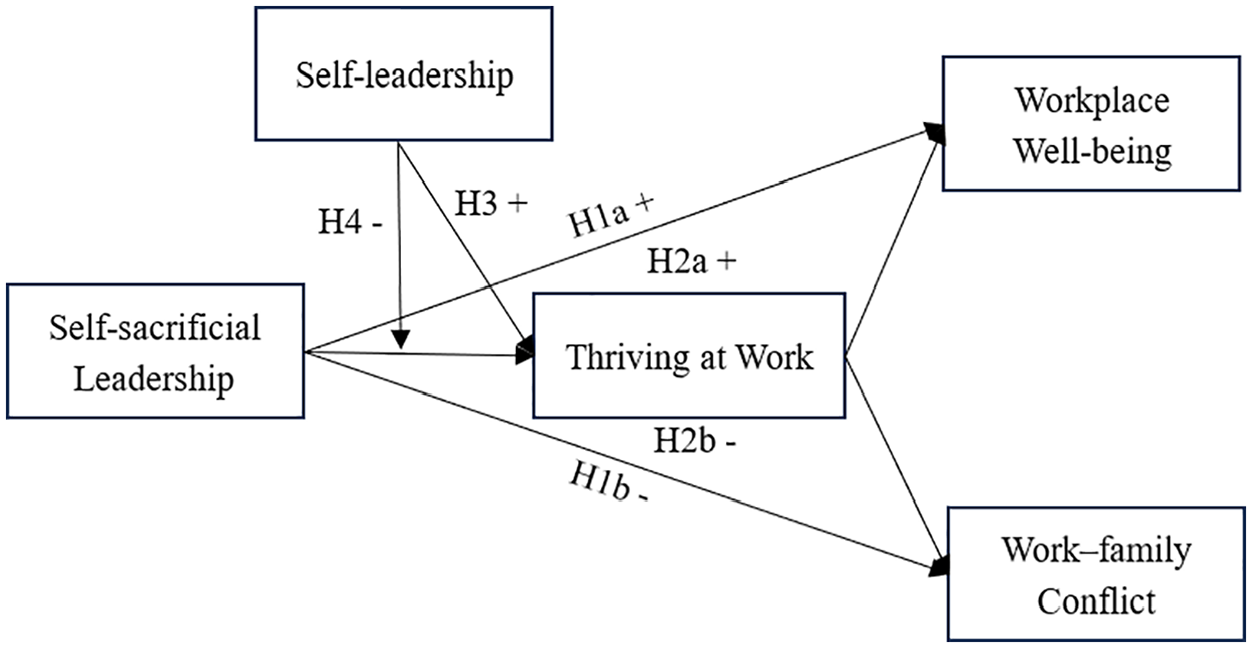
Theoretical model.
Self-sacrificial leadership and workplace well-being/work–family conflict
COVID-19 is one of the most devastating stressors in health care and has had a powerful contextual impact on people (Y. F. Chen et al., 2021). During the pandemic, hospitals worked extended hours to save lives, resulting in shift work and long working hours. In addition, nurses coped with high workloads and demands, staff shortages, and negative workplace environments. These are some of the many stressors that placed tremendous work pressures on nurses (Alrawashdeh et al., 2021; McKnight et al., 2020; Yildiz et al., 2021) and led to a significant decrease in their WWB (Mo et al., 2020; Rogers et al., 2022). Moreover, the demanding tasks and work environments as well as the heavy workload led to WFCs when the nurses could not balance their family responsibilities (Karakurt et al., 2022; Yildiz et al., 2021). Furthermore, nurses were deep in the mire of lost resources during this period. The acquisition paradox principle of the COR theory states that the loss of resources magnifies the value of acquisitions. Therefore, resource acquisition is significant when the loss is high (Hobfoll, 1989). Thus, we argue that self-sacrificial leaders can provide nurses with timely and adequate work-related support and resources in a resource-draining environment involving reduced WWB and increased WFC, like during the COVID-19 pandemic.
Specifically, self-sacrificial managers create greater work-related motivational resources in the face of crises by demonstrating their behavioral characteristics. For example, in difficult times, the leaders forego their interests and bear personal costs for their subordinates’ well-being (e.g., pay more benefits, increase bonuses, or subsidize household goods). They also care about the needs of their employees and addressing group concerns (e.g., they focus on their employees’ physical and psychological stresses and occasionally console employees’ families to improve family relationships) (Lanaj et al., 2021). In addition, they volunteer to take on a more significant division of labor (Y. Choi & Mai-Dalton, 1998). Aligned with the COR theory, regaining resources allows individuals to recover from losses and gain more resources (Hobfoll, 1989). During the pandemic, when nurses perceive the supportive resources for work and family provided by their managers, they will subsequently demonstrate an increased sense of WWB and experienced lesser WFC (Leung et al., 2020; Matthews et al., 2014). Therefore, we hypothesized as follows:
Hypothesis 1a. During the COVID-19 pandemic, managers’ SSL has a positive relationship with nurses’ WWB.
Hypothesis 1b. During the COVID-19 pandemic, managers’ SSL has a negative relationship with nurses’ WFC.
The mediating role of thriving at work
Thriving at work (TAW) represents a positive psychological state in which the individual experiences both vitality and learning (Spreitzer et al., 2005). For nurses, chaos and uncertainty create stress and challenges to TAW. In such cases, self-sacrificial leaders focus on the interests and needs of their subordinates, soothing them emotionally and providing them with the resources needed to accomplish their tasks (Hobfoll, 1989). When leaders meet their subordinates’ needs, they improve their moods and restore their vitality at work. In addition, following the prosocial motivation of self-sacrificial behavior states that self-sacrificial leaders are willing to help employees achieve their work goals and visions (Rosati, 2009). This willingness means that such leaders provide appropriate resources to promote their employees’ development during difficult times (Rosati, 2009). In this context, one of the most critical manifestations of employee development is the experience of a state of “learning” (Birdi et al., 1997). Consequently, influential self-sacrificial leaders typically provide subordinates with the opportunities and resources they need to learn and grow, encouraging them to take the initiative and promoting a learning atmosphere. Thus, when nurses faced heavy workloads and scant nursing expertise during the COVID-19 crisis, the leaders provided as many supportive resources as possible to enhance the nurses’ vitality and facilitate their learning and growth, allowing them to thrive more at work.
Then, TAW also motivated nurses to store more resources for their work by learning to continuously absorb and utilize new knowledge, skills, and abilities and be more competent in their job of caring for the COVID-19 patients (Basinska & Rozkwitalska, 2020). Furthermore, individuals experiencing higher vitality have been found to better cope with frustrating events and stressful situations (Zhu et al., 2023). Therefore, nurses with higher vitality were less likely to be depressed or distressed by the dilemmas caused by COVID-19. Consequently, those thriving at work tended to be more competent, resilient, and proactive and were therefore more likely to experience higher levels of WWB (Yousaf et al., 2019).
Furthermore, individuals with a higher TAW are able to experience more positive emotions and perceive that they are capable of solving problems through the knowledge and skills they have learned, which also provides more personal resources for solving work and family problems (O’Neill & Rothbard, 2017). Specifically, a high level of vitality was found to regulate nurses’ emotions when working during the pandemic and reduce the impact of adverse emotions on the work environment, whereas a high learning ability promoted their efficiency and success in treating patients (Z. D. Zhang et al., 2022). Furthermore, a high level of thriving has also helped nurses cope with the lack of family responsibilities and family life, brought about by high workloads during the pandemic, with positive emotions and solve any family problems, thus leading to the fulfillment of their family roles (Z. D. Zhang et al., 2022). Thus, when work and family domains overlap, TAW provides nurses with positive coping strategies that reduce WFC (Xu et al., 2020).
In summary, consistent with the COR theory, SSL as a supportive resource can be helpful in acquiring and maintaining other resources (TAW, a psychological resource) and thus curb the loss of the original resources (high WWB and low WFC) (Hobfoll, 1989; Hobfoll et al., 2018). Accordingly, we hypothesized as follows:
Hypothesis 2a. During the COVID-19 pandemic, nurses’ TAW mediates the relationship between managers’ SSL and nurses’ WWB.
Hypothesis 2b. During the COVID-19 pandemic, nurses’ TAW mediates the relationship between managers’ SSL and nurses’ WFC.
The role of self-leadership
The COR theory asserts that individuals seek to protect and accumulate scarce resources (e.g., personal identity resources, conditioned resource) to cope with the dilemmas created by stressors (Hobfoll, 1989; Karatepe & Karatepe, 2010). In this study, we viewed SSL as a conditional resource for nurses, defined as an external supportive resource that positively affects nurses’ TAW. Moreover, external support as well as internal personal resources can improve employees’ abilities to manage and buffer work stress (Kotzé, 2021). Therefore, we introduced SL as an internal personal resource (a personal characteristic resource) to examine the combined effect of internal and external resources.
SL is a non-traditional view of leadership, yet it is similar to the traditional view of leadership in that they both emphasize the use of specific strategies to change behaviors, attitudes, or outcomes (Knotts et al., 2022). However, it is unique in that the entire process of action involves only the individual and no one else, and the individual is the initiator of the influence and uses appropriate behavioral, cognitive, and intrinsic motivational strategies to lead themselves effectively (Neck & Houghton, 2006; Stewart et al., 2011). Neck and Houghton (2006) emphasized three strategies in SL: (1) behavior-focused strategies that underscore improving employees’ self-awareness and managing behaviors that are associated with challenging and necessary but unpleasant tasks; (2) natural reward strategies that allow for their greater intrinsic pleasure in completing tasks; and (3) constructive thinking strategies including the use of mental imagery and the development of efficient self-talk, with attention to positive beliefs and assumptions.
Past research has shown that employees who use these strategies cope better with stress and reflect stronger work motivation (e.g., self-efficacy), more positive work attitudes (e.g., job satisfaction and job engagement), and better work outcomes (e.g., task performance and creativity) (DiLiello et al., 2006; Inam et al., 2023; Kotzé, 2021; Marques-Quinteiro et al., 2019; Prussia et al., 1998). Compared with external influence, SL focuses on the internal influence process (Knotts et al., 2022). In summary, we therefore view SL as a personal internal resource for nurses. We further introduce the SDT (Deci & Ryan, 1985) to understand the interaction effects of the two resources. Specifically, we argue that SL as an internal personal resource can directly contribute to nurses’ TAW and that SL as a psychological resource can diminish the positive impact of SSL as an external support resource on TAW.
Self-leadership and thriving at work
Drawing on SDT, we argue that, as a personal internal resource, nurses’ SL can promote TAW by satisfying the three basic psychological needs during situations such as the COVID-19 pandemic (Deci & Ryan, 2000). First, nurses with high SL tend to be autonomous as they are usually free to self-direct and self-motivate in their work (Manz, 1986), inspiring them to strive for achievement (Stewart et al., 2011) and satisfying their need for autonomy. Second, nurses with strong SL are more likely to achieve long-term career success; they are often flexible in implementing the abovementioned three strategies to guide their work (Murphy & Ensher, 2001; Raabe et al., 2007), satisfying their need for competence. Third, research shows that individuals with high autonomy develop more positive relationships with others (Deci et al., 2017; Hodgins et al., 1996), thus satisfying their need for relatedness. Therefore, nurses with high levels of SL can satisfy all the three needs simultaneously. During the COVID-19 pandemic, when nurses experience full autonomy, competence, and relatedness, they will fell energized, acquire knowledge related to treating COVID-19 patients, and learn new nursing skills for self-development (Wang et al., 2021). Consequently, nurses with strong SL can experience greater TAW.
Hypothesis 3. During the COVID-19 pandemic, nurses’ SL has a positive association with TAW.
The moderating role of self-leadership
According to another important corollary of SDT, internal resources are highly related to individual internal motivation, while external resources stimulate external motivation more directly (Deci et al., 2017; Deci & Ryan, 1985). During the COVID-19 period, nurses’ high SL implied that their internal resources were adequate. When faced with demanding work tasks, they were less sensitive to external factors; instead, more personal internal resources preferentially stimulated their internal motivation and thus drove their behavior (Kotzé, 2021). In contrast, SSL represents an environmental factor, an external resource more closely associated with employees’ external motivation (Iqbal et al., 2022). In addition, two dimensions of TAW—learning and vitality—are temporary internal attributes that manifest a positive emotional state within the individual (Spreitzer et al., 2005; Spreitzer & Porath, 2014; Walumbwa et al., 2018), making them more sensitive to intrinsic motivation. However, when nurses have weak SL, they may be more inclined to rely on superiors and organizations. In crisis settings, such nurses prefer to receive direct support and help from the organization rather than leading themselves to break through difficult situations (Gündemir et al., 2019; Sergent & Stajkovic, 2020). Lower levels of SL can cause them to lack intrinsic motivation and turn to external motivation, which relies more on external resources. In such a case, the presence of a self-sacrificial leader may be an effective stimulus to nurses’ TAW (Walumbwa et al., 2018). Such leaders have sacrificed their time, energy, and money to attempt to maintain a comfortable work environment for the first-line nurses under the pressure of the pandemic, thus enabling them to engage more energetically in their nursing work. Meanwhile, the abundance of resources allows for more learning opportunities.
Hypothesis 4. During the COVID-19 pandemic, nurses’ SL will moderate the relationship between managers’ SSL and nurses’ TAW, such a positive effect will be weaken when SL is high (vs. low).
The moderated mediation model
Combining the mediating path of TAW (connecting SSL with WWB/WFC) and the moderating approach of SL (the effect of SSL on TAW), we constructed a moderated mediation model (see Figure 1). Specifically, based on the COR theory and SDT, during the COVID-19 pandemic, nurses with high SL will show strong intrinsic motivation due to the satisfaction of internal resources. Moreover, this inherent motivation will decrease SSL’s positive effect as an external supportive resource on TAW, further diminishing the positive and negative indirect connections of SSL to WWB and WFC, respectively. Accordingly, we hypothesize as follows:
Hypothesis 5a. During the COVID-19 pandemic, nurses’ SL will moderate the indirect effect of managers’ SSL on nurses’ WWB, such that this indirect relationship is weaker for nurses with high SL and stronger for nurses with low SL.
Hypothesis 5b. During the COVID-19 pandemic, nurses’ SL will moderate the indirect effect of managers’ SSL on nurses’ WFC, such that this indirect relationship is weaker for nurses with high SL and stronger for nurses with low SL.
Method
Participants and procedure
We collected data for this study using a questionnaire. The participants were full-time nurses from different departments in a large general hospital in northwest China during the COVID-19 pandemic. Participants were assured of their anonymity in the survey and that the data would be used for research purposes only. We collected data in a way that protected confidentiality and anonymity, using codes to identify participants. Other than the investigators, no individuals or organizations accessed the data.
To reduce common method bias, we used a three-wave study design, with a 2-week interval between each wave. We distributed the questionnaire between December 2020 and January 2021 through an online survey platform (www.wjx.com). The participants completed the questionnaire on their computer or cell phone by clicking on the link. The questionnaire asked all participating nurses to report on their experiences at work since the pandemic had begun. The measured variables included SSL, SL, TAW, WWB, WFC, and proactive personality (PP). At time 1, the participants reported their basic demographic information and assessed their leaders’ SSL, self-reported SL, and PP. At time 2, we collected participants’ self-assessed TAW. Finally, at time 3, participants self-evaluated their WWB and WFC.
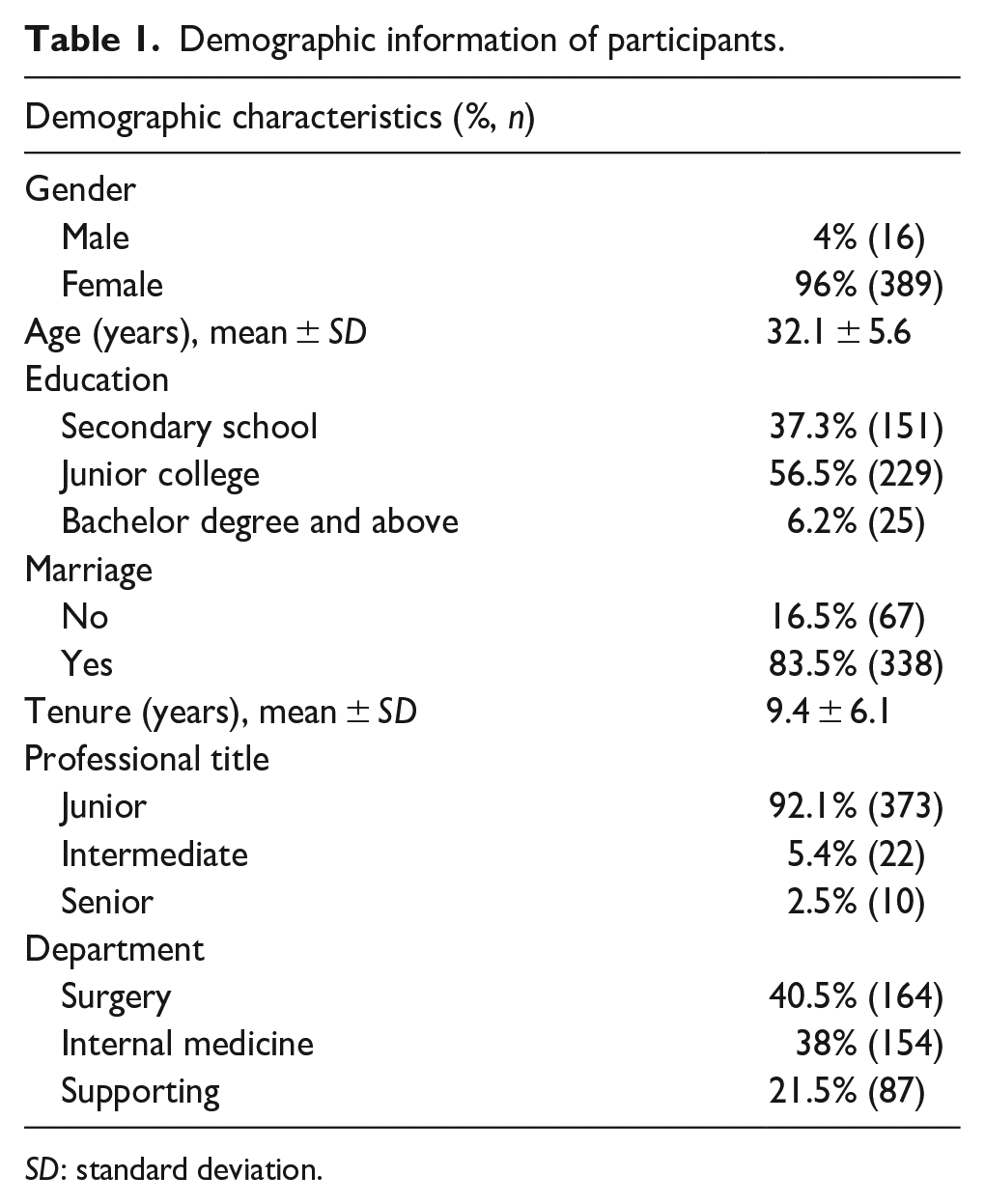
We initially distributed the questionnaire to 561 nurses. After 3 survey rounds, we received 465 respondents with a response rate of 83%. We then sorted the dataset, removing entries containing straightlining/non-differentiation and missing values in a tabular fashion to prevent systematic measurement errors. Finally, we obtained 405 matched valid questionnaires. Table 1 shows the detailed demographic information.
Demographic information of participants.
SD: standard deviation.
Measures
We used a structured questionnaire for data collection. Except for the control variables, we adopted a 7-point Likert-type scale (1 = strongly disagree; 7 = strongly agree) to measure the other main variables. In addition, we adopted Brislin’s (1980) translation-back translation procedure and translated the original scales into Chinese.
Self-sacrificial leadership
We adopted the five-item scale developed by De Cremer and van Knippenberg (2004) to measure SSL. A sample item is, “My supervisor is willing to make personal sacrifices in the team’s interest.” Cronbach’s α was .956.
Thriving at work
To evaluate TAW, we referred to the ten-item scale adapted from Porath et al. (2012), which includes the learning (five items) and vitality (five items) dimensions. A typical item for learning is, “I find myself learning often.” An example item for vitality is “I have energy and spirit.” Cronbach’s α was .961.
Workplace well-being
We used Zheng et al.’s (2015) six-item scale to assess WWB. An example item includes, “In general, I feel fairly satisfied with my present job.” Cronbach’s α was .944.
Work–family conflict
We assessed WFC referring to the five-item scale developed and validated by Netemeyer et al. (1996). An example item includes, “My job produces strain that makes it difficult to fulfill family duties.” Cronbach’s α was .947.
Self-leadership
We measured SL by adapting Houghton et al.’s (2012) nine-item scale. Sample items include “I work toward specific goals I set for myself,” “Sometimes I picture in my mind a successful performance before I actually do a task,” and “I try to mentally evaluate the accuracy of my beliefs about situations I am having problems with.” Cronbach’s α was .922.
Control variables
We discussed participants’ demographic information as the control variable, including gender, age, education, marriage, organizational tenure, professional title, and department. We also controlled PP as an important personality trait variable because extensive literature has concluded a positive association between PP and TAW (Abid et al., 2021; Y. F. Chen et al., 2021). We evaluated PP based on Seibert et al.’s (1999) 10-item scale. A sample item is, “No matter the odds, if I believe in something, I will make it happen.” Cronbach’s α was .950.
Analysis
First, we performed confirmatory factor analyses (CFAs) applying AMOS 24.0 to examine the discriminant validity among the core variables. Then, we used PROCESS Macro (Hayes, 2013) to examine all hypotheses. In addition, we examined the mediating and moderated mediating effects based on the bootstrapping results. We performed randomized iterations 5,000 times and calculated the 95% confidence intervals (Preacher et al., 2010).
Confirmatory factor analysis
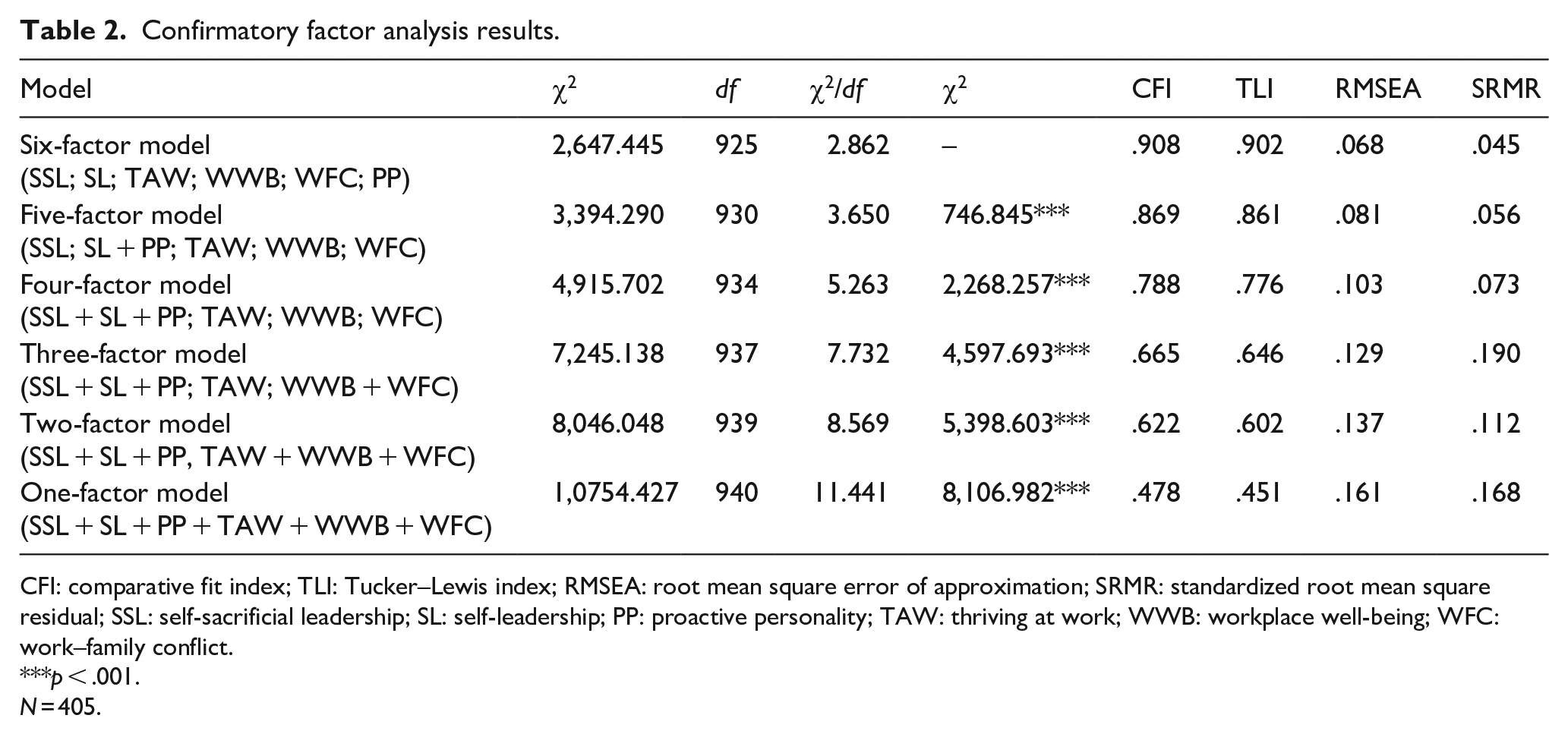
The CFAs were conducted to evaluate the discriminant validity of the six core constructs: SSL, SL, TAW, WWB, WFC, and PP. The results showed that all the six-factor model fitted indices passed the threshold (χ2/df = 2.862, comparative fit index [CFI] = .908, Tucker–Lewis index [TLI] = .902, root mean square error of approximation [RMSEA] = .068, standardized root mean square residual [SRMR] = .045) and outperformed the other five competitive models. This indicates that the five variables have good discriminant validity. See Table 2 for details.
Confirmatory factor analysis results.
CFI: comparative fit index; TLI: Tucker–Lewis index; RMSEA: root mean square error of approximation; SRMR: standardized root mean square residual; SSL: self-sacrificial leadership; SL: self-leadership; PP: proactive personality; TAW: thriving at work; WWB: workplace well-being; WFC: work–family conflict.
p < .001.
N = 405.
To test the common method bias problem, we also tested the fit of the one-factor model (i.e., all the indicators were loaded on one factor). The rationale behind the “one-factor procedure” is that if method variance accounts for a significant amount of covariation among the measurements, the CFA results should show that the one-factor model fits the data well (Podsakoff et al., 2003; Podsakoff & Organ, 1986). Here, the one-factor model in the CFA (Table 2) demonstrated a poor fit (χ2/df = 11.441, CFI = .478, TLI = .451, RMSEA = .161, SRMR = .168). Therefore, the common method bias was not a major problem in this study.
Results
Descriptive statistics
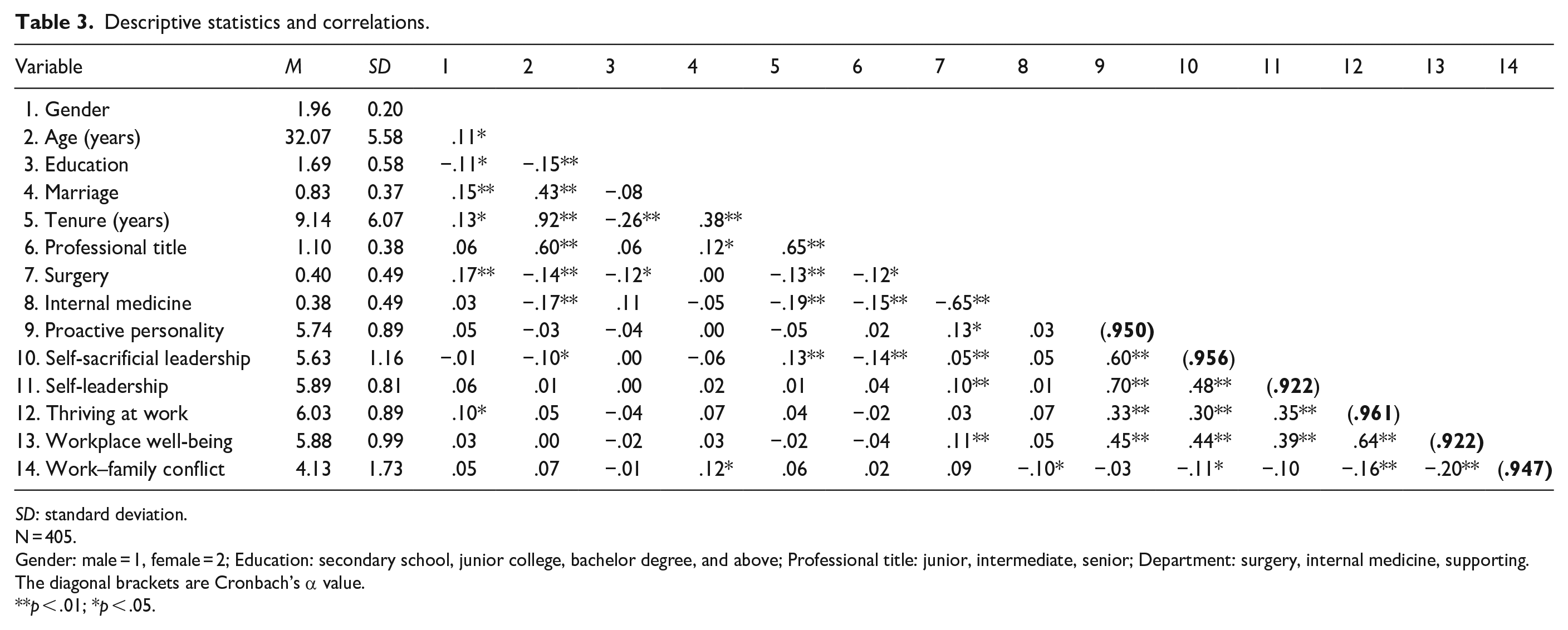
Table 3 provides the descriptive information and bivariate correlations for all the variables.
Descriptive statistics and correlations.
SD: standard deviation.
N = 405.
Gender: male = 1, female = 2; Education: secondary school, junior college, bachelor degree, and above; Professional title: junior, intermediate, senior; Department: surgery, internal medicine, supporting. The diagonal brackets are Cronbach’s α value.
p < .01; *p < .05.
Hypothesis testing
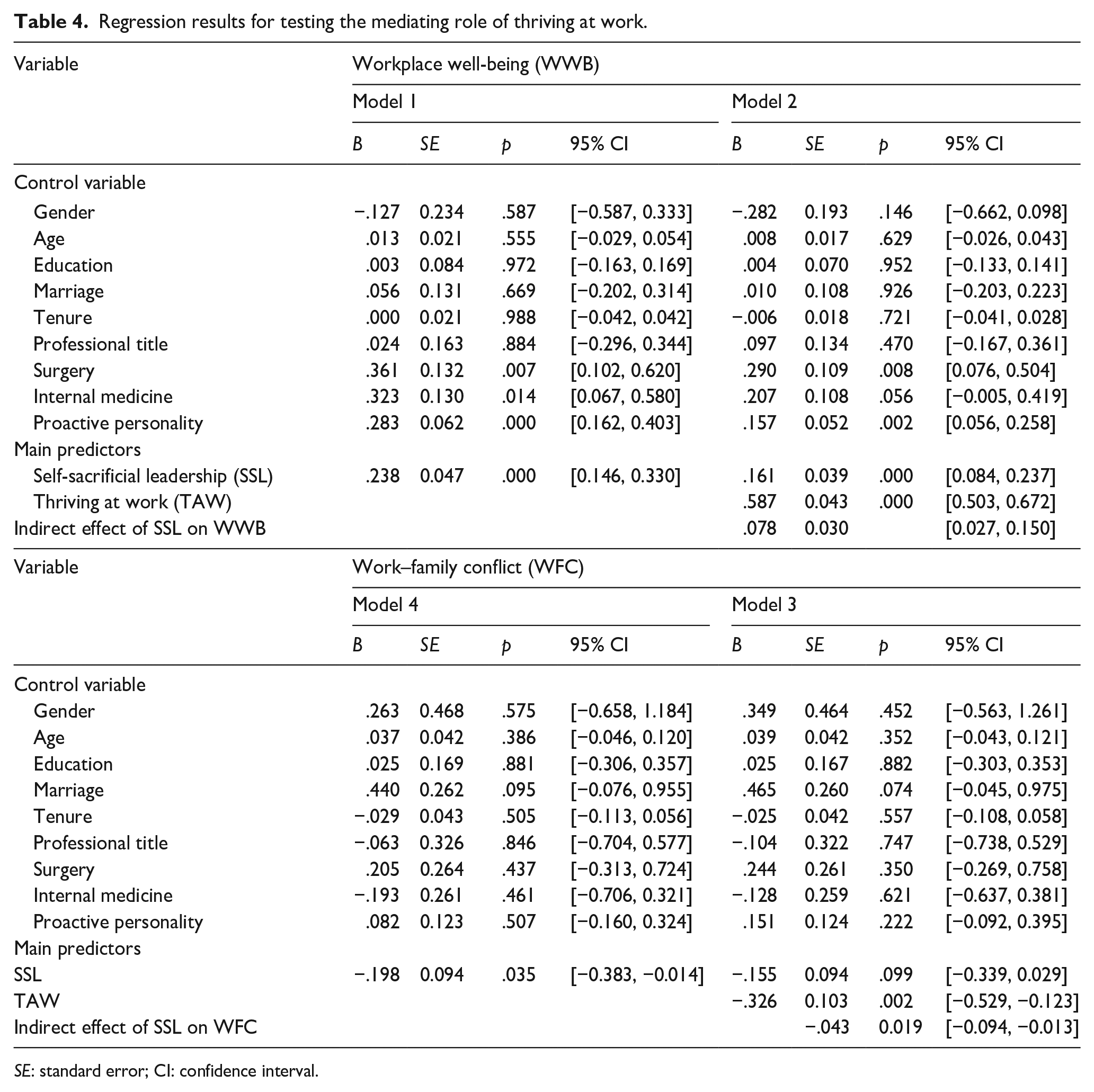
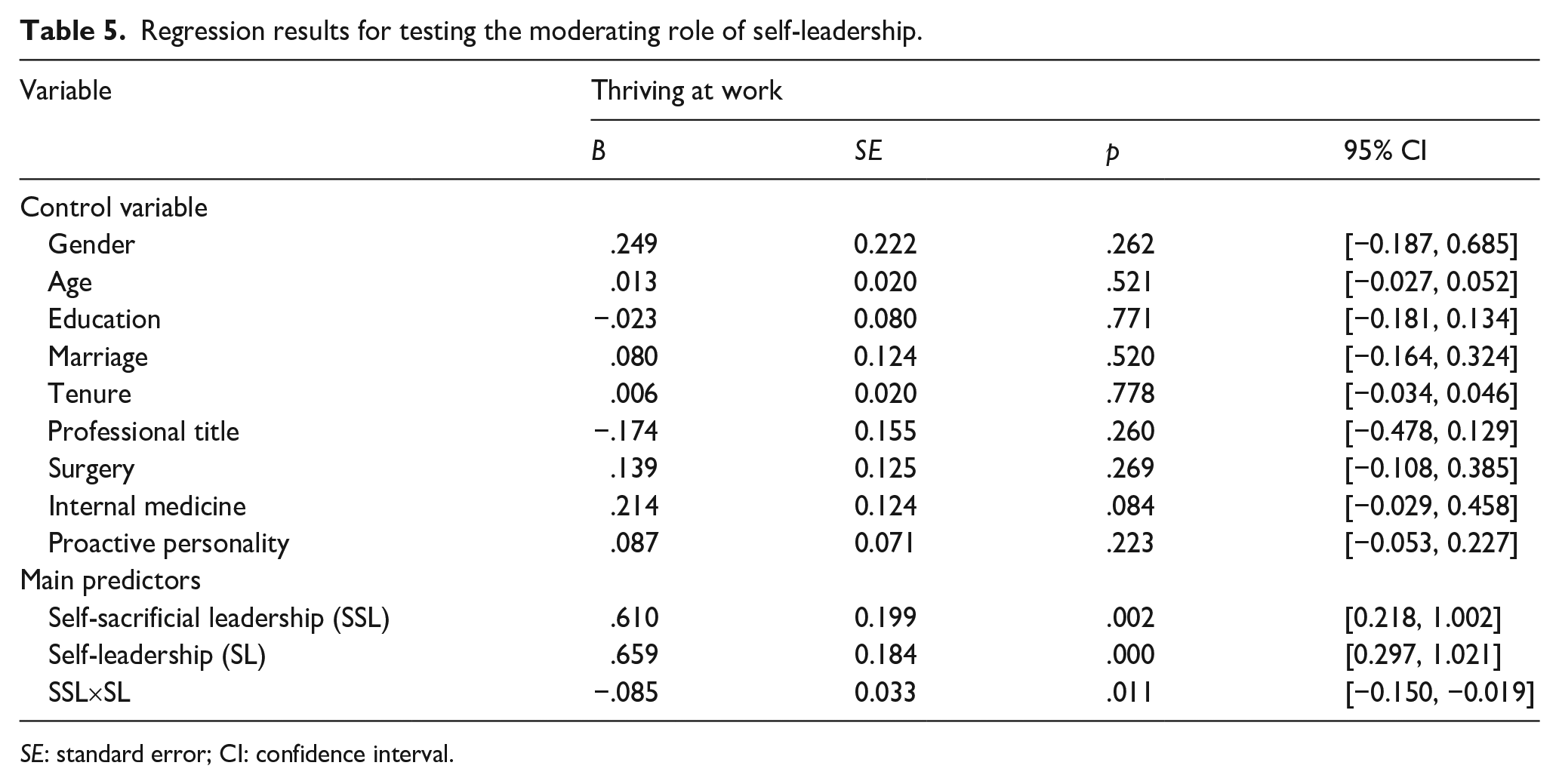
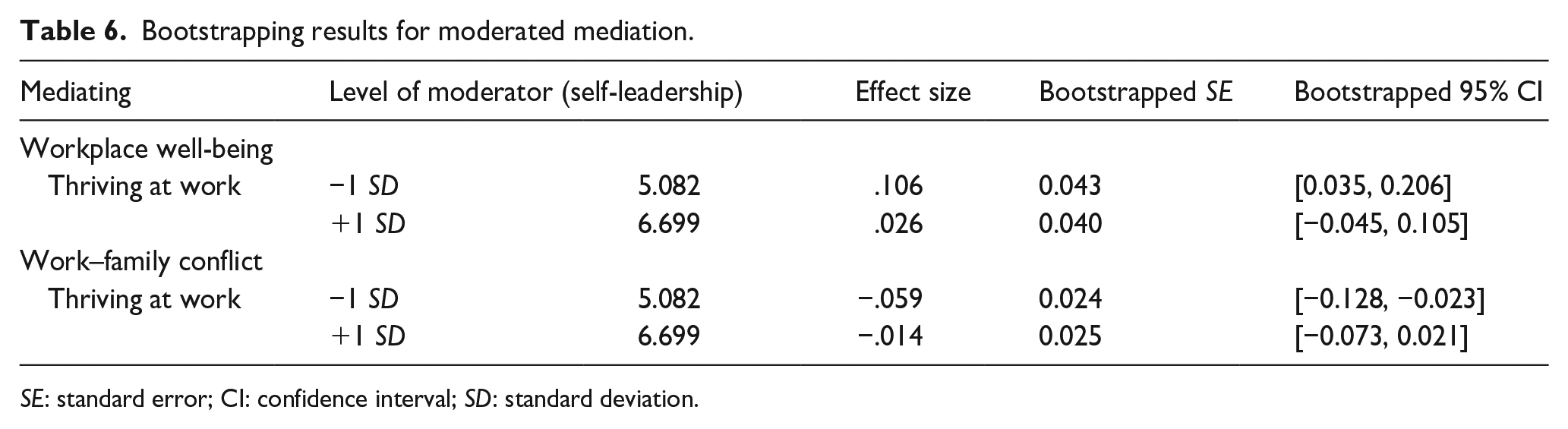
We examined all hypotheses using PROCESS macro (Hayes, 2013), with bootstrapping 5,000 times, and present the results of the moderated mediation model in Tables 4 to 6.
Regression results for testing the mediating role of thriving at work.
SE: standard error; CI: confidence interval.
Regression results for testing the moderating role of self-leadership.
SE: standard error; CI: confidence interval.
Bootstrapping results for moderated mediation.
SE: standard error; CI: confidence interval; SD: standard deviation.
Hypothesis 1 predicted a significant positive relationship between SSL and WWB (Hypothesis 1a) and a significant negative linkage between SSL and WFC (Hypothesis 1b). Table 4, Model 1, shows that there is a significantly positive correlation between SSL and WWB (B = .238, SE = 0.047, p < .001, 95% CI = [0.146, 0.330]), supporting Hypothesis 1a. Furthermore, Table 4, Model 3, illustrates a negative association between SSL and WFC (B = −.198, SE = 0.094, p < .05, 95% = [−0.383, −0.014]), thus supporting Hypothesis 1b.
Next, we applied SPSS-PROCESS to examine the mediating effect of TAW. Hypotheses 2a and 2b assumed that TAW had a mediating role in the relationship between SSL and WWB as well as WFC. According to Table 4, Model 2, TAW mediates the positive effect of SSL on WWB (B = .078, SE = 0.030, 95% CI = [0.027, 0.150]), and the direct effect of SSL on WWB is significant (B = .161, SE = 0.039, 95% CI = [0.084, 0.237]), indicating a significant partial mediating effect of TAW, thus supporting Hypothesis 2a. Similarly, Table 4, Model 4 indicates that SSL impacted WFC through TAW (B = −.043, SE = 0.019, 95% CI = [−0.094, −0.013]), while the direct effect of SSL on WFC was not significant (B = −.155, SE = 0.094, 95% CI = [−0.339, 0.029]), indicating a significant full mediating effect of TAW and thus supporting Hypothesis 2b.
Then, we examined the boundary conditions proposed in Hypothesis 3 and Hypothesis 4, that is, whether SL is positively related to TAW and moderates the impact of SSL on TAW. Table 5 shows that both SSL (B = .610, SE = 0.199, p < .01, 95% CI = [0.218, 1.002]) and SL (B = .659, SE = 0.184, p < .001, 95% CI = [0.297, 1.021]) were positively related to TAW, but the positive effect of SL on TAW was greater than the effects of SSL. Moreover, Table 5 depicts the results of the moderation paths. These results demonstrate that the interaction effect of SSL and SL on TAW was negative and significant (B = −.085, SE = 0.033, p < .05, 95% CI = [−0.150, −0.019]). In addition, the simple slope for the moderating effect in Figure 2 reflects that SSL had a weaker association with TAW when SL was at a high level rather than at a low level. Thus, the results support both Hypothesis 3 and Hypothesis 4.
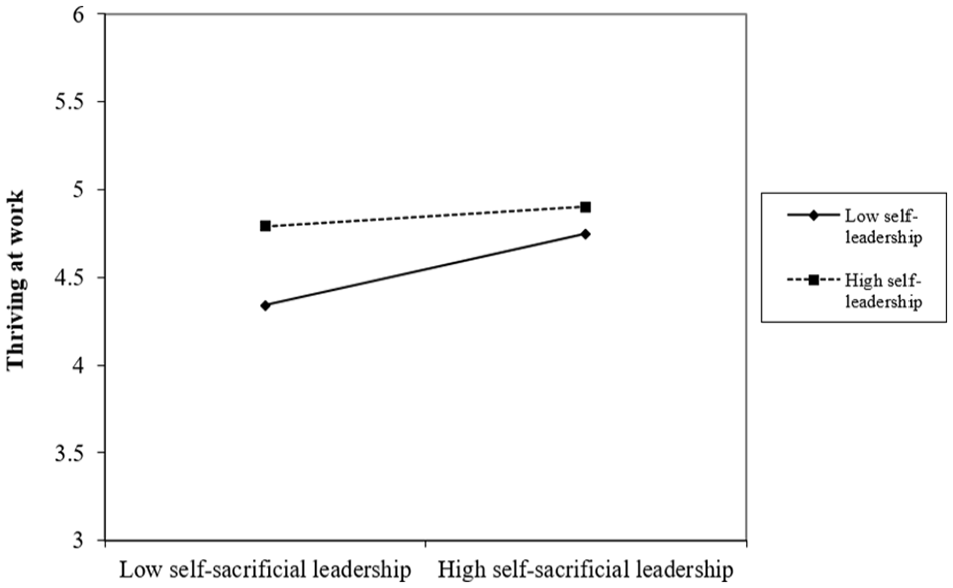
Interaction between self-leadership and self-sacrificial leadership in predicting thriving at work.
Finally, Table 6 shows that the indirect effect of SSL on WWB through TAW was significant for low (−1 SD, 5.082) (B = .106, SE = 0.043, 95% CI = [0.035, 0.206]) but not for high (+1 SD, 6.699) levels of SL (B = .026, SE = 0.040, 95% CI = [−0.045, 0.105]). The indirect influence of SSL on WFC through TAW was significant for low (−1 SD, 5.082) (B = −.059, SE = 0.024, 95% CI = [−0.128, −0.023]) but not for high (+1 SD, 6.699) levels of SL (B = −.014, SE = 0.025, 95% CI = [−0.073, 0.021]). Thus, these results support Hypotheses 4a and 4b.
Discussion
Based on the COR theory and SDT, the present study examined the relationship and underlying mechanism between SSL and nurses’ WWB as well as WFC during the COVID-19 pandemic. The findings suggest that a manager’s SSL style is an effective strategy to cope with nurses’ low WWB and high WFC caused by the COVID-19 pandemic. In this process, nurses’ TAW can link their connection. Furthermore, nurses’ SL was a negative moderator in the indirect relationship between SSL, WWB, and WFC via TAW.
Theoretical implications
The present study makes several significant theoretical contributions. First, it provides significant insights into the importance of external and internal resources by considering the value of SSL and SL during the COVID-19 crisis. Specifically, by integrating COR theory and SDT, this study conceptualized SSL as an external supportive resource and SL as an internal personal resource and examined the effect of external supportive resources when internal personal resources are sufficient during the COVID-19 pandemic. Interestingly, we found that when nurses’ SL was high, the positive relationship between managers’ SSL and nurses’ TAW was diminished (Hypothesis 4). Furthermore, the positive and significant direct effect of SL on TAW was even stronger than the direct effect of SSL (Hypothesis 3). These findings reveal that while external supportive resources are important in times of uncertainty, abundant internal personal resources play an even more vital role in managing the crisis and uncertainty (Training-Industry, 2020) by equipping individuals with effective coping strategies. Marques-Quinteiro and Leon’s (2023) empirical study of SL in the COVID-19 pandemic also provides additional support for the vital role of internal psychological resources during crises. Previous research has shown that external supportive resources and internal personal resources can improve employees’ ability to manage and mitigate stress (Kotzé, 2021). However, existing studies lack an in-depth exploration of the interactive effects of these two resources. The present study not only clarifies the importance of internal resources in crises but also compensates for the exploration of the interaction effects of different types of resources. Furthermore, by explaining how SSL and SL improve the preservation and acquisition of psychological resources such as TAW, this study validates the inference of COR theory that “resources can help to acquire and maintain other resources” (Hobfoll, 1989; Hobfoll et al., 2018).
Second, this study extends the exploration of self-sacrificial leaders in dealing with external crises. In recent years, the literature on SSL has mainly focused on organizations facing internal crises, such as declining performance (Gündemir et al., 2019), restructuring of organizations (De Cremer et al., 2009), and supplier changes (Halverson et al., 2004). However, Yang et al. (2023) highlighted that although internal crises are more likely to occur, external crises hit organizations harder. Therefore, focusing on the role of self-sacrificial leaders in external crises may be more effective in helping an organization overcome such problems. In this study, the COVID-19 pandemic was used as a backdrop to examine SSL in dealing with nurses’ WWB and WFC caused by this pandemic. The findings suggest that SSL significantly increased nurses’ WWB and mitigated their WFCs during the COVID-19 crisis (Hypothesis 1), which is consistent with the findings that SSL significantly determines nurses’ well-being (Iqbal et al., 2022) and such leadership may be effective in responding adequately to crises. Also, our research advances the literature on SSL in external crises. Furthermore, it validates previous findings that “self-sacrificial leaders tend to have a more effective leadership style when an organization is experiencing an internal or external crisis” (Y. Choi & Mai-Dalton, 1999, p. 404).
Third, this study contributes to the literature on the underlying mechanisms between SSL and work outcomes by revealing how SSL affects nurses’ WWB and WFC. The results support the explanatory power of TAW in the relationship between SSL and nurses’ WWB as well as WFC (Hypothesis 2). The COR theory helps to explain this process, as a leader’s external supportive resources help their subordinates acquire internal psychological resources, thus enabling them to maintain a favorable psychological state; the acquisition of internal psychological resources plays a linking role in this process. Notably, compared with the fact that TAW plays a partial mediating role between SSL and WWB, the full mediating role of TAW between SSL and WFC reinforces the importance of TAW for nurses with high levels of WFC. Research indicates that TAW is an essential factor that influences healthcare professionals’ career development and planning, and it benefits organizations by improving performance and reducing healthcare costs (Russo et al., 2018). However, the COVID-19 pandemic severely diminished nurses’ TAW (Sahin et al., 2021). Therefore, TAW should be taken seriously, considering its importance in nursing. Accordingly, the COR theory was applied in this study to explain the mediating role of TAW in conveying the impact of SSL on WWB and WFC. In doing so, we strengthened the exploration and theoretical explanation of the underlying mechanisms between SSL and outcomes. Furthermore, Yang et al. (2023) coded and synthesized prior research to categorize three distinct groups of mediators between SSL and outcomes: identity-based, affective-based, and relationship-based pathways. However, the existing studies on affective-based pathways have only examined affective commitment and elevation. Therefore, Yang et al. (2023) called for more explanatory factors to include in this dimension, such as positive affect, moral pride, gratitude, and compassion. Accordingly, this study enriches the types of mediation of the affective-based dimension by introducing TAW (which represents an individual positive affective state; Kleine et al., 2019) as the mediator.
Practical implications
This study also contributes some valuable insights for practitioners. First, it found that the self-sacrificial behaviors of leaders promoted nurses’ WWB and mitigated their WFC during the COVID-19 pandemic, demonstrating the effectiveness of SSL in a crisis. Therefore, if leaders show more self-sacrificial behaviors, employees caught in a dilemma of losing resources due to a crisis may stop the loss of their original resources because of the work-related and psychological resources they have gained. Considering this, leaders can attempt to demonstrate more self-sacrificial behaviors at their workplace, especially in times of crisis, for example, by performing more and earning less, taking more risks and assignments, and minimizing personal benefits and privileges. In addition, organizations should also provide routine leadership training programs to foster leaders’ self-sacrificial behaviors and instruct them that achieving the organization’s ultimate goals trumps personal gain. However, the above training should also focus on developing optimal levels of self-sacrifice in leaders, as excessive self-sacrificial behavior may cost them their comfort and lead to exhaustion (Mostafa & Bottomley, 2020).
Second, the findings reveal that SSL positively and negatively influenced subordinates’ WWB and WFC, respectively. This influence was through subordinates’ TAW, suggesting that TAW can be an important way for SSL to improve subordinates’ WWB and reduce subordinates’ WFC. Therefore, organizations can focus on encouraging employees to thrive at work. Previous studies found that personal characteristics and relational resources influence subordinates’ TAW, with leader–member exchange (LMX) and perceived organizational support being most closely related to it (Kleine et al., 2019). Thus, to promote subordinates’ TAW, in addition to encouraging leaders’ self-sacrificial behaviors, which can serve as the perceived organizational supportive resources by employees, management can create high-quality LMX relationships as well. On the one hand, creating high-quality LMXs can help employees obtain more challenging assignments from their superiors, facilitating more learning opportunities. On the other hand, it enhances a working climate of mutual respect and trust between employees and their supervisors, promoting subordinates’ vitality at work (J. Li, 2015).
Third, this study identified important direct and moderating effects of SL. These findings remind organizations that developing nurses’ SL is also a feasible way to promote their TAW. More importantly, they caution organizations about the importance of developing the individual employee’s inner psychological resources during a crisis. Thus, managers can consider SL as a personal attribute in the assessment, recruitment, and selection processes. However, the focus should be on creating more specific SL training interventions and encouraging the self-study on SL skills to achieve an overall optimal level, such as developing SL skills exercises (Goldsby et al., 2021; Stewart et al., 1996). Specifically, referring to Neck et al. (2019), Self-Goal Setting Exercise, Self-Reward/Punishment Checklist, Cues Exercise, Self-Observation Checklist, Natural Rewards Exercise, Negative Self-Talk Exercise, Beliefs Exercise, and Thinking Patterns Exercise can be developed.
Limitations and future research
There are still some limitations that future research could address. First, this study used cross-sectional data. Although using multi-wave data helps avoid common methodological biases to an extent, future research could adopt longitudinal data to reveal causal associations. Second, this study highlights the value of SSL in crisis context of the COVID-19 pandemic. Whether the findings apply to ordinary situations is for future studies to compare and examine. Finally, all the samples in this study were limited to nurses, so the results are specific and remain to be tested for applicability to other professions.
Conclusion
Are extra-leadership skills required to manage an organization in crisis contexts? If so, what are they? The current study argues that SSL and SL are consistent with the leadership skills needed in a crisis context. Furthermore, it explores their role in improving nurses’ WWB and alleviating WFC. The results confirmed our speculations that operationalizing self-sacrificial behaviors produces positive effects, which translates into stronger TAW, further improving WWB and alleviating WFC. Simultaneously, individual SL can substitute the role of SSL.
Footnotes
Acknowledgements
The authors would like to thank the nurses working at a large general hospital in the northwest China for their participation.
Declaration of conflicting interests
The author(s) declared no potential conflicts of interest with respect to the research, authorship, and/or publication of this article.
Funding
The author(s) disclosed receipt of the following financial support for the research, authorship, and/or publication of this article: This research received grants from the National Natural Science Foundation of China (No. 71872119).
