




Abstract
Objective
To investigate local perceptions of the causes and prevention of the COVID-19 pandemic in Guji Society, West Guji Zone, Bule Hora district.
Methods
The researcher conducted a qualitative study using in-depth interviews and key informant interviews, focus group discussions, and case study with 46 informants, of which 22 were women and 24 were men. The informants were recruited using purposive sampling. The data was analyzed by qualitative description.
Results
The findings indicate the wrath of Waaqaa (God), evil spirit attacks, Gadaa party's omen, the virus, and unknown forces are thought to be the causes of the virus. The local amelioration and prevention mechanisms reported by the informants were rituals of praying for God's mercy and social distancing, along with using face-masks, keeping hygiene, and getting vaccines.
Conclusion
The local community's perceptions about the COVID-19 pandemic's causes and prevention methods are based on myths, assumptions, and belief systems that contradict medical science concepts and prevention methods. As a result, this scenario would result in potential risk factors like susceptibility to the virus, severe health complications, and psychological and socio-economic adverse impacts.
Background
The coronavirus pandemic is the event that has had the greatest negative influence on people's lives all across the world in terms of psychological torment and health complication. Since it was confirmed in Wuhan, China, the virus has spread rapidly throughout the countries, posing a threat to all nations regardless of their technological advancements and development status. After many people had caught the virus in China, where it most likely began, the pandemic crossed borders and spread to the rest of the world and African countries, including Ethiopia, causing unprecedented disruptions in people's social, economic, and health conditions. The WHO report illustrates that from 3 January 2020 to 14 January 2022, there were 453,128 confirmed cases of COVID-19 in Ethiopia, with 7109 deaths. 1 This data shows how the pandemic has had an adverse effect on the country's health and the socioeconomic lives of its people in multiple ways. The acute impacts brought by the COVID-19 pandemic include economic depression, health complications, and psychosocial shocks that have acutely petrified people across the world.2,3 However, hygiene measures, social distancing, and vaccination have been efforts exerted to ameliorate and prevent the pandemic's impacts in global and local contexts. 4 Since COVID-19's first cases were confirmed in Ethiopia, the country has enforced social distancing, hygiene measures for self-protection and the protection of others, and the use of face-masks in public areas, though not as insistently enforced as they were during the first months of the pandemic outbreak.
People of various occupations, educational levels, ages, and residential categories, as well as the society of the study area, have different perceptions and experiences of disease causation and prevention. For instance, the causes of illness and diseases are divergently interpreted to have come from curses in some of the African countries, 5 envy, witchcraft, and sorcery among Melanesian Dobuans, 6 and taboo violation in many other contexts, 7 taking the diverse prevention mechanisms.
Even though perceptions reflect how a community in a given territory views a disease and its prevention, more knowledge and understanding of the real nature of diseases is critical in efforts to prevent and control diseases in the long run. As a result, investigating and comprehending the respective people's perceptions of any human ailment and/or pandemic is critical to developing effective prevention mechanisms and minimizing the risks associated with it. One of the areas in southern Ethiopia where coronavirus cases have been confirmed is the Bule Hora district in the West Guji Zone. As far as local perceptions of the COVID-19 pandemic are concerned, there was no an empirical study conducted to point out people's perceptions of the pandemic's causation and prevention, as well as the associated risks in Guji society, Bule Hora district. The question of how Guji people perceive the COVID-19 pandemic, in particular, deserves scholarly attention. Thus, investigating how people perceive this case across rural and urban areas and suggesting further appropriate interventions is a very important research dimension. As a result, this article looks into perceptions of Guji society on the causes and prevention of the coronavirus and its associated risk factors in Bule Hora district, West Guji Zone, Southern Ethiopia.
Methodological Approach
Study Area
This study was carried out in the Bule Hora district, West Guji Zone, in Southern Ethiopia. The following is map of the study area (Figure 1).
The indigenous people of the area are the Guji, who are ancestrally considered a branch of the Oromo nation and speak the Oromo language, one of Ethiopia's most widely spoken languages. The Gadaa system, an indigenous institution that UNESCO inscribed as intangible cultural heritage in 2016, is a hallmark of the classic civilization of the society through which people lead their lives. Since time immemorial, this indigenous institution has ordered and regulated society's social, political, economic, environmental, and religious aspects.8–11 It is still relatively intact and viable in the Guji society where this study was conducted.12,13 Specifically, in the face of pervasive and formidable external influences as a result of global socio-cultural changes, the Gadaa system has persisted to the present day without departing from its century-long tradition in Guji society. There have been five culturally configured parties in the system, branded as Baallii Shanan or Lubaa, that each assumed Gadaa leadership and administered the society for eight years. Halchiisa, Roobalee, Harmuufaa, Dhallana, and Muudana are the members of the Lubaa/Gadaa parties that rotationally handover power and administer society. The term of office for one Gadaa party is eight years, after which the next Luba takes power by replacing the previous party.
Similarly, the Gadaa system's peaceful power transferring events continue sequentially among the parties mentioned above. Once a given Lubaa assumes power and transfers it after eight years to the next party, the cycle takes 40 (forty) years to turn back to this party, because power handover is a rotating process that only goes in sequential order. Power is usually transferred peacefully, accompanied by diverse rituals and ceremonial events. The Guji people, where Gadaa system practices are viable, are divided into three phratries based on mythically narrated genealogical categories: Uraagaa, Maatti, and Hookkuu, though few scholars added Alaaba as a fourth category that is pronominally considered to be a part of the Uraagaa phratry in narratives of the Guji myth of origin. This classification has no geographical basis, but it can be traced back diachronically to the Guji myth of origin in Girja land. Gujo, the ancestor of Guji society, had three sons and one daughter, whose names were Uraago, Maatto, Hookku (Tulloo), and Adaadaa. The Guji phratry classification later evolved into Uraaga, Maattii, and Hookku, which are derivations of the names of the three Gujo sons mentioned above. Presently, the people live not only in the West Guji and Guji Zones, but also in the western parts of Bale Zone and Wondo district of West Arsi Zone in Oromia regional state, as well as in the South Nations, Nationalities, and Peoples Region around Dilla, Gamo Gofa, Wondo Genet, and Lake Hawassa. 10
Methods of Data Production
Non-probability sampling, particularly purposive sampling, was used in this study to easily access knowledgeable community elders, adults, and adolescent groups in rural and urban areas. There were twenty-two women among the forty-six informants interviewed. Purposive selection was used to select the informants from rural and urban areas of the district and distribute them in age as well as sex categories. During the fieldwork, contact with informants was facilitated by field-guiders at various times, places, and occasions. The researcher conducted a qualitative study using in-depth interviews and key informant interviews, focus group discussions, and case study with 46 informants, of which 22 were women and 24 were men. The informants were recruited using purposive sampling. In-depth interviews were conducted to gain a complete understanding of people's perceptions of COVID-19 causes and prevention. In addition, four key informants, two from urban and two from rural areas, were interviewed several times. Seven community elders and Gadaa leaders participated in focus group discussions (FGD). During data collection, the researcher considered social distancing, using face-masks, and using hand sanitizer throughout the fieldwork. Secondary data is obtained from literatures to supplement the empirical data. As soon as data collection began, ideas were sorted and organized into groups based on similar themes. Finally, the data was presented thematically and analyzed by qualitative description.
Results and Discussion
Perceptions on Coronavirus Causation
The data shows that people's perceptions of the pandemic's cause are associated with Waaqaa (God's) retribution, evil spirit attacks, viruses, omens of the ruling Gadaa party, and unknown hidden forces. The following table illustrates how informants from different categories across rural and urban areas perceive the cause of the COVID-19 pandemic in the study area.
Wrath of Waaqa (God)
As illustrated above (Table 1 and Figure 2), the majority of informants’ particularly elderly informants from urban and rural areas, perceive that the main cause of the virus is God's wrath against people who have engaged in behaviors and actions badly abhorred by Waaqaa. Similarly, most rural and urban adults and adolescents perceive that the virus occurred as a result of the outrage of Waaqaaa for colossal wickedness, trespasses, and intensification of immoralities across the nations. In the Guji belief system, Waaqaa is the creator of all living things, non-living things, and the universe in general. As a result, people believe that Waaqaa is a source of life who takes care of people's health, stability, fertility, reproduction, and livelihood. They widely believe that Waaqaa saves them from any potential harm and protects their lives. It is perceived that if Waaqaa's devotees or people in general atrociously commit sin (cubbuu) against him or their fellow humans, he will punish them by death, plague, war, or other forms of agony, despite the fact that he is thought to be a merciful divine being. The key informants reiterated that the outrage of Waaqaa could appear in many blithering ways, among which diseases, drought, war, and accidental deaths are common. As a result, this outlook plays a momentous role by regulating people's thoughts and maintaining their relationship with Waaqaa, whose knowledge, power, and wisdom are believed to be beyond human imaginations. Illustrated in the table, most urban and rural community elders, adults, and adolescents perceive that the wrath of Waaqaa is the main cause of the COVID-19 pandemic.
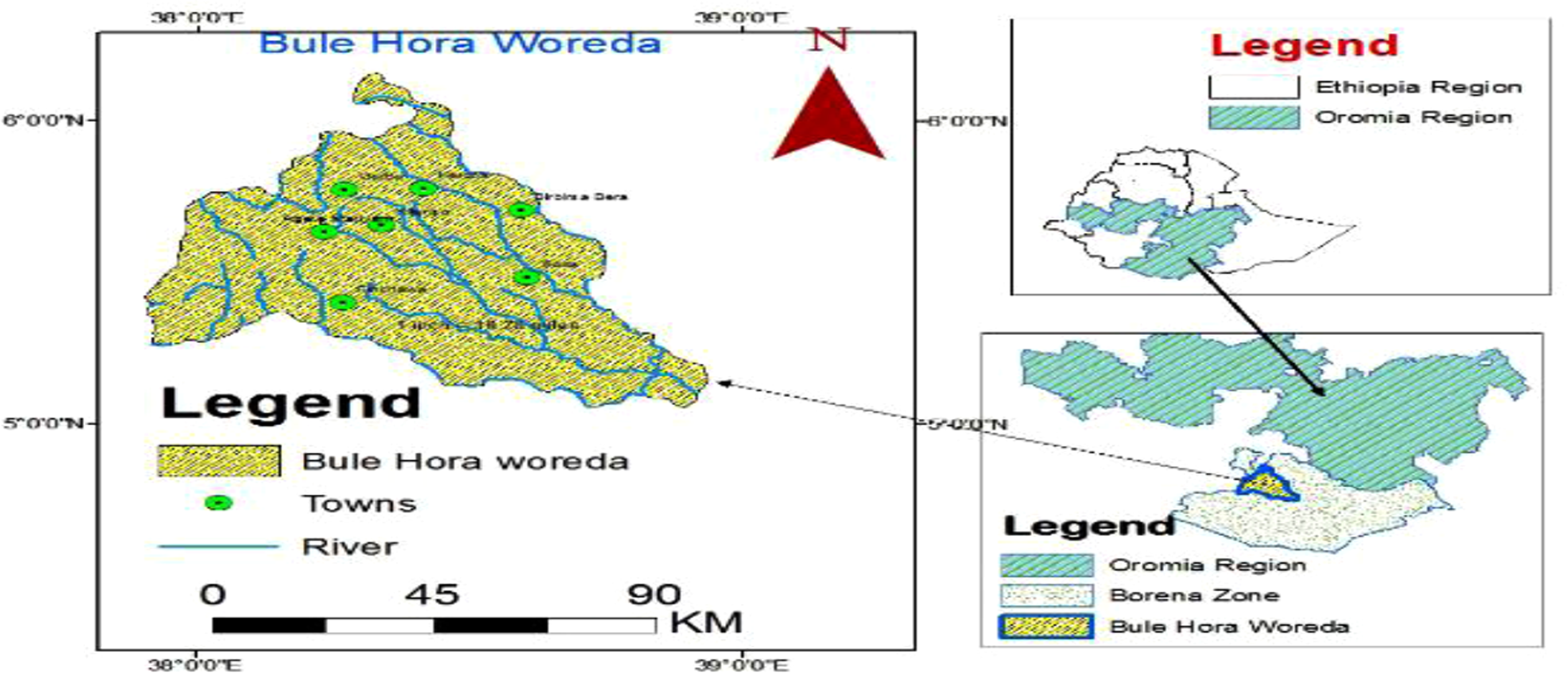
Map of the study area, Source: Ethio-GIS and CSA, 2007.

Summary of informants’ perceptions of causes of the pandemic in the study area.
Informant s’ Reflection on Causes of the COVID-19 Pandemic.

The informants, who uphold perceptions attributing the occurrence of the COVID-19 pandemic to the wrath of Waaqaa, deny the existence of other supplementary causes. They noted that every inauspicious and auspicious omen and incident that happens in society is associated with divine power intervention and chastisement, including the outbreak of the pandemic. Inhuman treatments, prejudice, hatred, homicide, partiality, discrimination, miscarriage of justice, twisting the truth, deceiving and cheating widows, poor and voiceless groups of people, and disgracing the elders are believed to have caused the outrage of Waaqaa in the Guji belief system. It is stated by the informants that everybody should adhere to the will of Waaqaa (fedha waaqaa) so as to save themselves and others from the flaming outrage of Waaqaa. The will of God, as thought in Guji society, is coterminous with caring for others, respecting humanity regardless of any background, serving justice, respecting the truth, and abhorring evil thoughts, behaviors, and actions that have the potential to hurt people and/ or other natural features in one way or another. There is a widespread belief that any action or behavior that contradicts God's will and deviates from socially accepted values, norms, and belief systems will cause harm and distress, including illness, sudden death, drought, infertility, and instability. This idea has influenced how people in the study area perceive the COVID-19 pandemic.
From this vantage point, the pervasiveness of corruption, violent crime, exploiting and twisting justice, defaming people, disgracing elders, deterioration of immoralities, encroachment on sacred landscapes, and exacerbation of ethnic as well as individual hatred have resulted in the coronavirus outbreak because of Waaqaa's retribution. This conviction insinuates that the coronavirus would not have occurred somewhere else and spread to the Guji land if there had not been a high prevalence of violating Waaqaa's will. This thinking is thus primarily congruent with a punitive theory of disease causation, which typically makes Waaqaa's wrath responsible for the causation of disease elsewhere. Disease, according to punitive theory, is thought to occur as divine retribution for any ghastly action, 14 which is similar to the etiological perceptions reflected in Guji society. Generally, the data indicates that there has been limited understanding of the pandemic by the rural and urban informants on the real-nature of the pandemic when it is seen from a medical-science perspective. This limited knowledge of the real nature of the virus and perceptions that contradict medical science's etiological perspective is not helpful to duly prevent the pandemic and its associated risk factors.
Evil spirit attack
There were informants from rural and urban areas who noted that the evil spirit attacks had caused the occurrence of the pandemic across the world at large and in the study area in particular. Most of these informants have religious affiliations and espouse a belief that evil spirits exist in some spaces and inflict potential harm in multiple ways. Since time immemorial, the belief system advocating the existence of evil spirits has permeated within society. Two supernatural powers are believed to exist in the universe: Waaqaa (God) and Sheexana/Durrisaa (evil spirit, demon, Satan). Waaqaa is thought to be the creator of the universe, omnipotent, omniscient, and omnipresent, who always loves and cares for people's health, peace, fertility, reproduction, and overall well-being, whereas Sheexana is deemed as an exploiter and disruptor of peace, fertility, stability, health, and reproduction, as well as the enemy of human happiness.
In the community, Durriisaa is widely perceived as a spiritual being that despises people's prosperity, fertility, health, and peace. Similarly, some informants stated that the coronavirus is an attack by an evil spirit that works against people's happiness, health, fertility, and prosperity. It is steadfastly asserted that the coronavirus is nothing and has nothing to do with pathogenic viruses, the Gadaa party's omen, and Waaqaa's wrath, but is instead an attack of evil spirits aimed at reducing the number of people and putting them under one demon spiritual kingdom. People perceive that evil spirits will come from the wilderness, caves, and inner parts of seascapes and oceans to attack humans. They found that evil spirits work in many more ways to afflict a person's health and socio-economic conditions. Evil spirits sometimes appear in the form of plagues, and other times work through technologies for the alleged reason of maintaining human wellbeing.
From this point of view, some informants contended that the outbreak of the pandemic is a vivid agenda of what they called “illuminati” from the demonic world that works to dominate the world's people in one way or another by frightening them and disseminating threats throughout nations. It is perceived by the informants that the outbreak of the pandemic is a foreshadowing of the illuminati's agenda, which they think works to dominate people through the implantation of microchips under the guise of the pandemic vaccination. As to the informants, the main reason why evil spirits afflict the virus is to introduce a vaccination system through microchip implantation technology under-guise of virus prevention through technology support. That is why the informants’ associates claim that evil spirits work through technology. They explained that the Illuminati is nothing but the association between demonic spirits and people who form an alliance with them and actively work for them through knowledge and technology support. Furthermore, they noted that nowadays, unlike in the past eons, evil spirits have been embedded, and working within the global system and technology to attain their mission and silently dominate the people under the guise of technological sophistication and innovation. According to this perception, the implicit target of evil spirits is to horrify people, and escort them to a one-world system formation in which the illuminati would take control of human minds and hearts under the disguise of vaccination through microchip implantation. Based on this assumption, they prognosticate that the microchip implantation program that is implicitly taken as an evil spirit program will be given to people across the world as a prevention mechanism for the pandemic. In fact, the informants from both urban and rural areas who vigorously contested this notion are those who are affiliated with religious institutions and ideas. As a result, they firmly argue that people should not be vaccinated, not to be members of the Illuminati, but rather they should only pray for God's mercy, who is omnipotent to stamp out the virus. Leaving religious perspectives adherents and future researchers to debate this issue, the data obtained from informants indicates that people's perceptions in the study area contradict medical science etiological notions.
Pathogenic viral
Most urban adult and adolescent informants stated that the cause of coronavirus is undoubtedly a microorganism (virus). This group of informants has been influenced by medical science etiological notions and has access to media, medical information, and modern educational exposures that have led to their adoption of this notion. The number of informants who adhere to this idea was small, and this indicates that the people who have a real understanding of the nature and causation of the COVID-19 pandemic, are very limited. They are adamant that the coronavirus (COVID-19) is caused by a virus that first appeared in China in 2019 and then spread to other parts of the world through social movements and contacts. The informants who support this perspective state, everybody should maintain social distance, use face-masks in public areas, keep hand hygiene, and get vaccinations as these are important methods to prevent the virus.
Furthermore, this group of informants objected to the widely held belief that coronavirus is caused by God's wrath or evil spirit attacks as ridiculous thinking and a mythical assumption. This clearly shows that local people's knowledge is more prone to local myths and belief systems, attributing the outbreak of the virus to supernatural wrath and evil spirit attacks, belittling its microorganism etiological dimension, which is scientifically proven and acceptable. It is clear that the less people understand about the real nature of the COVID-19 pandemic and its causes, the more vulnerable they are to it and its associated risks like susceptibility, severe health complications, and psychological and socio-economic adverse impacts.
Unknown sources
The perception reflected by some urban adolescent and rural adult informants focuses on referring the cause of the virus to hidden, unknown sources. This states that the cause of the coronavirus is unknown and even difficult to know. As explained by the informants, only Waaqaa knows where the COVID-19 pandemic began, and why it has been spreading across the world, resulting in many losses. As to this perception, human knowledge is very limited in understanding everything that happens on the Earth, and it is even impossible to know everything that happens. Consequently, the informants contend that the causes of the pandemic are beyond human comprehension and must be left to Waaqaa, whom they believe is an omniscient being who knows everything. The informants believe that people should not strive to know how to prevent and deal with the pandemic and vaccinations anymore, but leave it to supernatural power, which is the only way to escape from the virus and prevent it in general. As to this perception, the current social way of life should continue unabated, and people should not suffer from maintaining social distance to prevent themselves and other people due to the prevalence of the virus. It can be extrapolated that unless supported by awareness-raising platforms and public advocacy, this perception will persist and will contradict modern medicine's etiological view of the pandemic's occurrence.
Omen of ruling Gadaa party
As noted by some informants, particularly by rural elders, urban elders, and rural adults, the omen of the ruling Gadaa party is a cause of the virus. This thinking would appear to be absurd if it were seen from the biomedical point of view that takes microorganisms as causative agents. How can an omen be taken to be a cause of the pandemic? Sometimes, perspective matters. In the Guji belief system, there is an association between some kinds of omens and the tenure of the Gadaa parties that assume power in sequential rotation.
This means that throughout their respective tenures, each of the five Gadaa parties has its own distinct and predictable omen. predetermination model, there is a yearlong belief that the omen of each Gadaa party changes as tenure changes from one party to the other. This means that events such as wars, droughts, pandemics, and accidents are predetermined to occur because they are mythically associated with omens of some Gadaa parties’ tenures. If something unfavorable happens in society, the first question to be asked is whether a similar incident occurred or not, and whether the expected omen of the ruling Gadaa party coincided with what happened. Because the belief system of society holds that there are tenures characterized by and ascribed to disease, war, drought, and accidents.
Among the Gadaa parties, Muudana's tenure is thought to have been marked by war and drought, Halchisa's by peace, abundance, and fertility, Dhallana's by ample rain, abundance, and war victimization, Harmuufaa's by drought, and Roobale's by a full of diseases. 10 The elderly informants, on the other hand, noted that the Harmuufaa party, which is presently on the power of the Gadaa leadership (particularly in 2021/22, when this paper is being written), is associated with disease episodes and social instabilities. This means that whenever the Harmuufaa party comes to power, local and national social instabilities and disease outbreaks are pretty much inevitable. As to this outlook, the outbreak of the virus is perceived as a result of an omen of the Harmuufaa Gadaa party's tenure in which the outbreak of diseases is inevitable. This conviction further states that whenever the Harmuufa Gadaa party assumes leadership power for eight years, the aforementioned incidents will inevitably occur. As a result, when something inauspicious such as war, pandemic, or drought happens in society, it is perceived as ‘expected incident in the tenure of the ruling Gadaa party’ which is locally stated as, ‘Kaayoo Gadaa tanaati.” In general, informants’ perceptions that correlate the ruling Gadaa party's omen with the outbreak of the pandemic contest with medical etiological perspective, but unlike other opposing views, this perception does not disregard and reject medical science understanding and prevention principles.
Multiple Perceptions on Prevention
The data obtained from the informants demonstrates that the people of the study area have multiple and diverse perceptions about how to prevent the pandemic. These include ritual performances, prayers in religious institutions, and the application of self-protection and other people's protection principles such as social distancing and maintaining hygiene. The following table indicates a summary of data obtained from different categories of informants on prevention mechanisms.
Ritual performances for prevention
The informants who have correlated the occurrence of the virus with the omens of the ruling Gadaa party and the wrath of Waaqaa mainly took the traditional rituals as a means of preventing it. As stated in the Table 2, traditionally, there have been rituals such as the slaughtering of bulls, hulluuqaa (ritual of passing through a certain route), and the puffing ritual that are recommended by the informants as productive mechanisms of preventing and/or eliminating the virus.
Views of the Informants
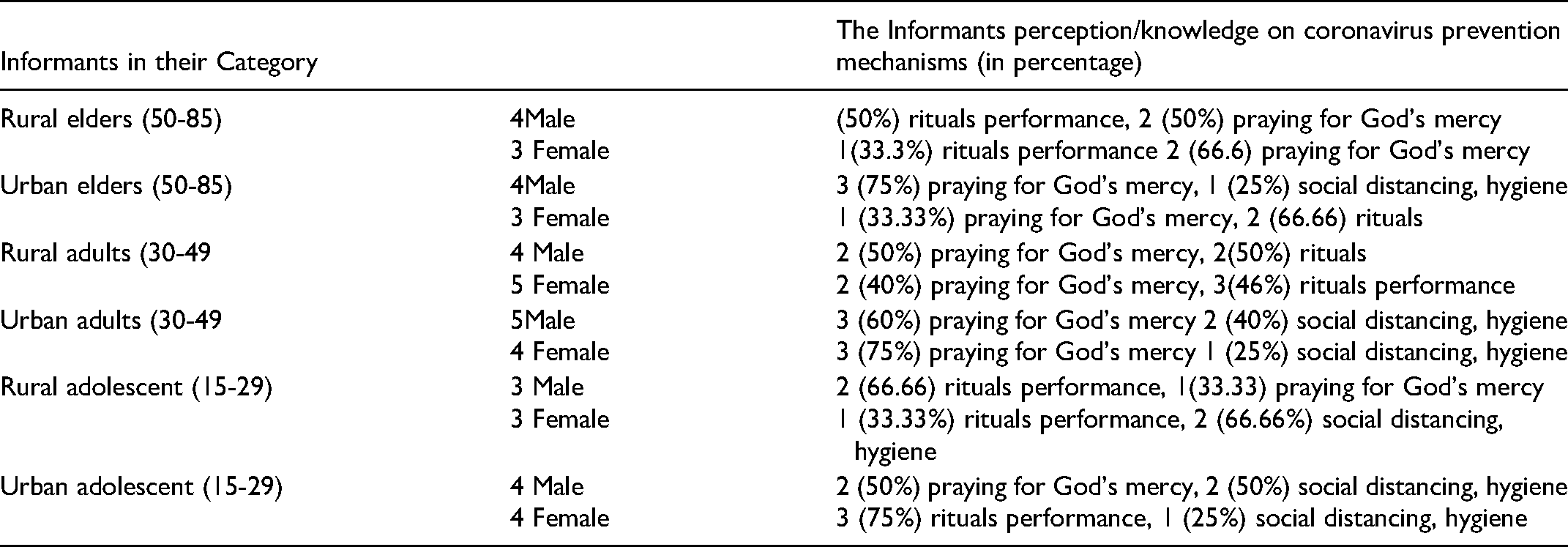
The slaughtering ritual
Multiple slaughtering rituals are commonly performed in Guji society for different purposes (Hinnant, 1977; Jemjem and Dhadacha, 2011). The slaughtering ritual performed to prevent and control the virus is highly connected to domestic animals, some of which have identical colors. The color of the animal to be slaughtered for this ritual has a symbolic correlation with the incident for which the slaughtering is conducted. The informants, mostly rural and urban elders, rural adults, and adolescents, noted that the best way to prevent and ward off a COVID-19pandemic is through the slaughtering rituals that are usually performed by the Gadaa leaders of the society on behalf. They further stated that the community elders have to slaughter grey-black and grey-red bulls (Korma Bulee Daalachaafi Bulee diimaa) and supplicate to Waaqaa, who has absolute divine power to stamp out the pandemic and its associated risk factors. It is widely perceived that unless community elders slaughtered the bulls of these colors and carried on a ritual of repentance before Waaqaa, the pandemic would not be eliminated and controlled.
Ritual of the grey-black and grey-red bulls
As pastoral and semi-pastoral people, the Guji people have a tradition of slaughtering cattle for the reception of special guests and themselves to eat occasionally. On the other hand, cattle have been an integral part of their rituals, serving cultural functions in the Guji since time immemorial. In Guji culture, a grey-black bull is usually slaughtered for the ritual of repentance that people undertake to propitiate Waaqaa on one hand and cleanse themselves of stern wickedness and trespasses on the other. It is perceived that this ritual would rinse out long existing iniquity (cubbuu cubuxxe) from the people and prevent the potential threats. The informants remarked that the virus is an outrage of the Waaqaa for colossal violations of Waaqaa's will, intensification of wickedness, inhuman treatment, conspiracy, and homicide across space and through time. Consequently, they perceived that the virus could not be controlled and prevented through other mechanisms except by the ritual of slaughtering grey-black and grey-red bulls. The slaughtering is nothing by itself but is part of praying to Waaqaa, which is mainly conducted by people to please and propitiate him. The informants raised the possibility that there could be premonitions that were likely to appear during the ritual and insinuate the practitioners as to whether the pandemic would be eliminated or controlled or not. Unless the ritual is performed and the possible omens associated with them are critically identified as well as properly reacted to, it is impossible to know whether the virus will be prevented and controlled before it causes severe adverse effects. For instance, the informants noted that reading the suet and critically looking into the way that blood flows on the ground during the slaughtering should be taken into consideration to know the existing omens and identify to what extent the coronavirus could afflict people and how long it takes to be eliminated. In the Guji culture, a grey-red bull is typically slaughtered to avoid the potential threats and incidents that are not yet fully happening but are appearing through harbinger birds and other sources of premonition. The informants stated that this form of ritual has to be conducted to prevent the COVID-19 pandemic and avoid its pervasive risk factors.
Hulluuqqaa ritual
As noted by the informants, the other preventive ritual to be conducted by Guji elders on behalf of their society to prevent the coronavirus is the hulluuqaa ritual, which is conceptually understood as a ritual of averting inauspicious omens. Hulluuqaa is an Oromo language term, which refers to passing beneath creepers tied overhead on the trees as a symbol of escaping from inauspicious omens, risks, and threats. The informants perceive that this ritual is imperative to prevent and control the virus. It is the firm belief of the elderly informants that once the elders perform this ritual and pass through the route, inauspicious omens and adverse incidents, including the coronavirus, cannot afflict the people and continue with them. This ritual is seen as a symbolic performance that indicates the real escape of people from all potential harm, including the pandemic outbreak. For this reason, some informants strongly perceive that performing rituals is one way of preventing the virus. It is thought by the people that Waaqaa would quash any potential threat and the prevalence of the coronavirus if the elders conducted the ritual. The passage through creepers is traditionally coterminous with averting premonitions of misfortune and adverse incidents.
Mead puffing ritual
Mead has dual functions, serving for mundane drinking and ritual purposes in Guji society. Mead puffing ritual is one of the aspects of mead fermentation purposes that have been widely conducted in society for cultural implications. As stated by the informants, the mead puffing is a ritual to be conducted to prevent the COVID-19 pandemic. As to this perception, senior Gadaa leaders (Yuubotaa) community elders and concerned stakeholders should summon the assembly who are authorized to conduct this ritual on behalf of the entire people to avert the pandemic. They say that the puffing ritual has been playing a significant role in the Guji and is believed to be a potent practice to quash the pandemic. Mead, the important ritual drink prepared by women, is locally known as Bookaa and is usually brewed from pure honey. In the Guji tradition, during ritual, the mead is poured and filled in the Qorii, the wooden bowl, and then given to the community elders, or Gadaa leaders, since they are fully authorized personages to lead the ritual procedures by taking mead in their mouth and puffing it over the attendants, on land, and to the sky. The informants stated that this ritual has to be performed to prevent and control the pandemic that has been petrifying the global communities. Because during the ritual, the community elders and Gadaa leaders supplicate Waaqaa, saying, “Oh God, let you cleanse all our wickedness and trespasses and save us from the pandemic infliction.” Generally, unless this ritual is performed in addition to the aforementioned rituals, the informants believe that the coronavirus can not be averted.
Praying for God’s mercy
There were informants who linked the occurrence of coronavirus to God's wrath, viewing it as a way for God to punish people for violating justice, truth, and morality and committing heinous sins. Most of the informants from rural and urban areas stated that praying for God's mercy is the best way to avert a COVID-19 pandemic and all possible harms and risks. It is an unshakable belief of the informants that the prevalence of inhuman treatments, prejudice, discrimination, partiality, homicide, and hatred are serious sins that have been widely committed by people everywhere and resulted in the outbreak of the pandemic. The informants noted that any attempt made to prevent and control COVID-19 pandemic could not be fruitful unless fought against through repentance and praying for God's mercy, which they believed was the only way to save oneself and others from the deadly disease. These informants are those who have religious affiliation and believe that divine intervention is the only thing that saves people from any threat or hurly-burly. From their point of view, all believers, through their own religion and belief system, have to kneel down before God and pray for his mercy, which is the only way to save themselves from the pandemic and its associated risk factors. They believe that if people bow down before God to receive his mercy from their whole hearts, God will immediately quash the pandemic and instead offer this power of calmness to the land. As a result, the informants stated that people should not attempt in vain to control and prevent the pandemic through different means like social distancing, keeping hygiene for self-protection and protection of others, and wearing face masks, except by firmly praying for God's mercy. This indicates that once people pray for and receive mercy from God; he will avert the pandemic and restore the health of people. Generally, the perception of people indicates that the prevention of the pandemic will only be successful through other means except praying for God's mercy, who is healer and rescuer.
Social distancing and hygiene
There were informants who contended that the cause of the pandemic was an invisible microorganism or virus that acutely infects human internal organs and then results in serious health complications up to death. Unlike the perceptions of other informants who correlate the occurrence of the pandemic with evil spirits, hidden unknown sources, and the wrath of God, this group of informants underlined that microorganisms are the cause of the pandemic that can only be prevented and controlled through scientifically proven and medically advised principles. These principles include social distancing, wearing facemasks, keeping hygiene for self-protection and protection of the person through regular hand washing and hand sanitization. According to this thinking, people should seriously maintain social distance, wear face masks, and keep their hygiene for protection on one hand, and the government has to enforce these principles to save people's lives on the other. This perspective is strongly aligned with mainstream or medical science knowledge on the prevention of the COVID-19 pandemic.
Pandemic Risks and Local Perspectives
As indicated in the findings, most of the informants contended and interpreted the occurrence of the virus as the result of God's wrath against people for their sinful experiences, evil spirit attacks, and the ruling Gadaa party's omen. These perspectives, in fact, mostly undermine the scientific etiology and prevention principles in a manner that exposes people to the piggybacks of the virus and its associated risk factors. The potential risks include, the prevalence of the pandemic and its adverse multidimensional impacts, the susceptibility of people to the virus, severe health complications, losses of lives, and adverse impacts on the socio-economic life of people. Because, the local perceptions contradict the medical and scientific approaches to understanding and preventing the pandemic, this in turn paves the way for the spread of the pandemic and the prevalence of its associated risks that acutely affect the health and psychological aspects of people's lives. From the medical science perspective, it is underlined that unless people attentively keep social distance, practice hygiene for self-protection and the protection of others, wear face-masks, and get vaccinated, there is no way to prevent and control the pandemic. This indicates that the more people apply medical science principles to prevent COVID-19 pandemics, the more they control their prevalence and the associated risk factors aforementioned. The more people give less attention to medical perspectives on preventing the virus, the more they become susceptible to its associated risks. It is an unquestionable fact that upholding medical science notions of the pandemic contributes to its prevention, whereas adhering to mythically deep-ingrained belief systems that gainsay medical principles and vaccination may underpin the prevalence of the pandemic and its adverse impacts.
Discussion
As far as perceptions of people about phenomena and incidents that happen in a particular locality are concerned, there could be diverse outlooks on why people face various challenges in their daily lives and how they interpret these challenges. In fact, perceptions determine people's perspectives and dictate the way they deal with misfortune and tragedy. Perception per se is subject to change, mostly following the formidable socio-cultural changes that happen through education, the media, innovation, technology, and globalization.
The findings of this study indicated that there have been multiple and contesting perceptions in Guji society on the causation and prevention of the coronavirus. As briefly discussed earlier, the rural informants correlate the occurrence of the pandemic with the outrage of God, evil spirit attacks, and the ruling Gadaa party's omen. Congruent with this finding, 15 remarks that “it has been a deep-rooted belief among the Guji that any disruption in their relationship with non-human things in nature (wildlife, rivers, sacred spaces, forests, spirits, and so on) would displease Waaqa and invoke punishment in the form of drought, famine, disease, and war.” This shows how the perceptions and lived experiences of society are inextricably connected to supernatural power. In addition, these perceptions are widely reflected by urban dwellers in the Bule Hora district in relation to the COVID-19 pandemic. On the other hand, people with religious affiliation in rural and urban areas perceive the coronavirus as not a real disease, but rather a result of God's retribution and evil spirit attacks. Moreover, there is a perception that microorganisms (viruses) and hidden, unknown sources are the causes of the virus. These narratives reveal that there are multiple and diverse perceptions of the pandemic within society about its nature and prevention. The multiplicity and diversity of local perspectives on the causes and preventions of illness and disease are not an exception to the area, but rather pervasive across space and time. For instance, the causes of illness and diseases are divergently interpreted to have come from curses, 5 envy, witchcraft, and sorcery among Melanesian Dobuans, 6 and taboo violation in many other contexts, 7 taking the diverse prevention mechanisms.
The comparative study conducted in Ethiopia, on religious interpretations of COVID-19 notes that the virus is a chastisement of God for the wrong-deeds of people. 16 Similarly, most theological and cultural studies interpret the outbreak and spread of the coronavirus across the world as the wrath of God against the sinful actions and behaviors of human beings,17–19 which is similar to the findings of this study. Attributing disease and illness to God's retribution is a widespread perception in African culture. For instance, mental illness is perceived as a punishment by God in Nigeria's Karfi village for sinful deeds and behaviors. 20 Similarly, in most African countries, the occurrence of illness and diseases is described in terms of the influence of the spirit of ancestors, witches, and sorcerers. 21 The perception that illness and disease are associated with supernatural powers is not confined to some global countries. Even in developed countries, like America, people correlate the prevalence of HIV AIDS with God's wrath. 22 On the other hand, Basit (2020) noted that terrorists interpret the coronavirus as God's chastisement that happens to challenge the governments that ideologically disagree with them and fight with them. This shows how the COVID-19 pandemic is differently perceived and interpreted in diverse cultural and social contexts.
On the other hand, the studies conducted in Ethiopia, Uganda, and Ghana illustrated that people on different occasions perceive evil spirit attacks as the cause of the COVID-19 pandemic5,23,24 which is comparable with the finding of this study. As stated by, 25 the virus itself is an evil-spirit that wonders between heaven and earth to afflict people at any cost. In this regard, the research carried on in Zambia shows that the congregations and pastors interpret the coronavirus as an evil spirit attack that can only be prevented through prayers to God and obeying his will. 26 In a manner that is similar to these research findings, 27 noted that some people believed that COVID-19 was created by the Illuminati group for the purpose of bringing the world population to its knees and to bring about a New World Order that entails one world religion and one world government. This view strongly supports the assumption that evil spirit attacks in general and the illuminati group in particular are responsible for the outbreak of the pandemic. Furthermore, as 28 points out, disease causation in African indigenous belief systems includes attacks from bad spirits, ancestors angry with relatives for mistreatment, witchcraft, people with evil powers, invocation curses, and disobeying taboos. This demonstrates that perceptions of disease and illness as evil spirit attacks and divine wrath are pervasive in African cultures, contradicting medical science notions.
As illustrated in the findings, some informants contended that the cause of the COVID-19 pandemic was a microorganism/virus. This knowledge, by its very nature, coincides with the medical science perspective that assumes diseases are the results of deviations in the normal functioning of biological variables. 29 This indeed corresponds with the germ theory of biomedicine, which postulates that every disease is caused by specific, identifiable agents such as bacteria or viruses.29,30 This thinking is built on medical science propensity that adheres to the scientific mechanism of combating the virus. It is a fact that this perception disagrees with the aforementioned ideas of disease causation and encourages preventive principles like social distancing, keeping hygiene, wearing face masks, and getting vaccination. Obviously, it is impossible to bring the diverging and multiple perceptions on the causes and preventions of the COVID-19 pandemic under a single univocal perspective because perception diversity will always exist as long as social life exists. Consequently, it is helpful to look at the underlying assumptions behind diverse perceptions of disease causation and its prevention to critically identify whether the assumptions contribute to the prevention of the disease or underpin its further prevalence implicitly.
Conclusion
In the foregoing discussions, many issues were raised and discussed, focusing on local people's perceptions of the causes and prevention of the COVID-19 pandemic. As indicated in the perceptions, the wrath of Waaqaa/God, evil spirit attacks, omens of the ruling Gadaa party, viral pathogens, and hidden unknown forces are causes of the virus. On the other hand, performances of rituals, praying for God's mercy, and social distancing, as well as vaccination, are prevention mechanisms identified in the findings. As discussed in the findings, most of the rural dwellers who participated in this study hold the conviction that the wrath of God, omens of the ruling Gadaa party, and evil spirit attacks are mostly causes of the pandemic. This thinking is widely shared among people, though it contradicts medical science's etiological notions and prevention principles. It more overemphasizes local assumptions, myths and belief systems than the medical thought and principles. This scenario could expose people to high susceptibility risk factors, resulting in severe health complications, loss of lives and socio-economic adverse impacts. In general, these perceptions have underemphasized medical science understanding and virus prevention in society as a whole.
However, there are dimensions in which medical science understanding and a scientifically supported perspective on preventing the virus have vibrantly appeared in the area. In spite of this, the identified perceptions mostly attribute the occurrence of coronavirus to local assumptions; myths, and belief systems that diverge from medical science's knowledge of the virus's prevention. These thoughts vividly indicate that there are many assignments ahead of the government and other stakeholders on awareness creation to equip people with an understanding of the virus that enables them to fittingly avert its spread. As a result, it is reasonable to conclude that deep-seated belief systems, myths, and assumptions about disease occurrence and any misfortune in Guji society have dominated people's thinking about why the COVID-19 pandemic occurred and how it can be avoided. The awareness creation endeavors previously conducted were insignificant in terms of the expected outcome, and poorly organized in disintegrated ways that could not equip the rural and urban dwellers with knowledge of preventing and controlling the virus.
Generally, the underfunded and ill-equipped healthcare system, unpreparedness of health institutional frameworks and a weak media campaign on public awareness creation made the situation worse through poor and disintegrated attempts. Thus, the integrated and well-planned awareness creation platforms have to be widely organized and supported by governments, medical professionals, media agencies, non-governmental organizations, and other concerned stakeholders to raise public awareness and implement the effective as well as consentaneous mechanisms of preventing the pandemic and its associated risk factors.
Footnotes
Acknowledgements
I wholeheartedly appreciate and thank my informants who freely shared their perceptions with me during the fieldwork.
Disclosure
Gemeda Odo Roba who conducted this study is an assistant professor of Social Anthropology at Bule Hora University. He is a sole author of this article.
Funding
There is funding source secured for this study.
Informed Consent
I obtained informed consent from the informants who took part in this study. When I first met the informants in the field, I briefly explained the purpose of the research to them and kindly requested that they reflect on their feelings on the study topic. After all, they were ecstatic to be a part of this research. All key informants and focus group discussants freely agreed to participate in the study to share their knowledge voluntarily. In fact, research participants should be given the option of learning about the study's overall outcome and results, and thus I obtained informed consent from all of my informants.
Declaration of Conflicting Interests
The author(s) declared no potential conflicts of interest with respect to the research, authorship, and/or publication of this article.
Funding
The author(s) received no financial support for the research, authorship, and/or publication of this article.
