



Abstract
Heat transfer in clothing can be influenced by posture change of the human body and garment pattern design. In this study, the volume of the air gaps and the contact area were investigated for different arm postures of a thermal manikin using a three-dimensional body scanner, and the effect of garment pattern design was analyzed. Furthermore, the local thermal insulation of different body parts of the thermal manikin was tested for six kinds of arm postures when the manikin was dressed in various experimental garments. Both arm postures and garment styles had a strong effect on the local air gap distributions. The air gap volume decreased, and the contact area increased with the growth of protraction angles of arms. The human tests also indicated that the range of arm motion was improved, and better flexibility was perceived compared with the original style. A significant positive correlation between thermal insulation and air gap volume (r = 0.753, p < 0.001) was found.
Introduction
Air gaps entrapped between the skin and the inner surface of clothing act as a microclimate, playing an important role in the process of heat transference from the human body to the environment. Moreover, air gaps (ease between the body and garment) determine body mobility by fulfilling the space demand of physical activity. The three-dimensional (3D) scanning technique has been successfully applied to measure the air gaps between human skin and the inner surface of clothing. 1 By imposing 3D scans of the nude and dressed human body, the thickness and volume of air gaps and garment contact area can be determined accurately by advanced 3D scan post-processing.2,3
Air gap distributions depend mainly on body geometry and garment style, mechanical properties of the fabric 4 posture change, and movement of the human body.5,6 The overall or local effect of air gaps on clothing heat transfer properties has been investigated. Havenith et al. 7 found that when a wearer was sitting or walking against the wind, the thermal insulation of tight clothing was lower by 6%–31% than that of a loose piece. Mah and Song8,9 studied the effect of garment style and fit on thermal protection by measuring air gaps between a female mannequin and protective coveralls. The air gap size had a positive correlation with time to burn injury, and inappropriate fit made some areas of the female mannequin more susceptible to burns than others. Moreover, body dimensions change with posture alteration 10 and the garment needs more air space to allow room for body movement. Li et al. 5 investigated the impacts of body motions on air gaps in protective clothing by simulating the leg movement of running. The degree of knee joint flexion was found to affect the deformation of skin, and thus, the change of air gaps between skin and clothing. In the study of Mert et al., 11 the distribution of the air gaps in regular and loosely fitted T-shirts, sweatpants, jackets, and trousers, along with alterations in nine postures, were investigated. The results proved that body posture had a strong effect on air gaps. In addition, a mathematical model was proposed to estimate the possible heat transfer coefficient for the observed air layers and their change with posture. Although great progress has been achieved by scrutinizing the effect of garment properties and body postures on clothing thermal function, few researchers have mentioned the interactive impacts of the garment pattern design and postures required for given work on air gap distributions and their relationship with the heat transference of different body parts.
In this study, the air gap volume and the contact area of body parts, together with their correlations with local thermal insulation, were investigated for different arm postures. The effect of garment pattern design was analyzed to see the interaction between arm postures and garment style. The study chose a 34-segment thermal manikin, which was scanned by a 3D body scanner to measure the thermal insulation of garments at the same time.
Materials and Methods
Experimental Fabric and Garments
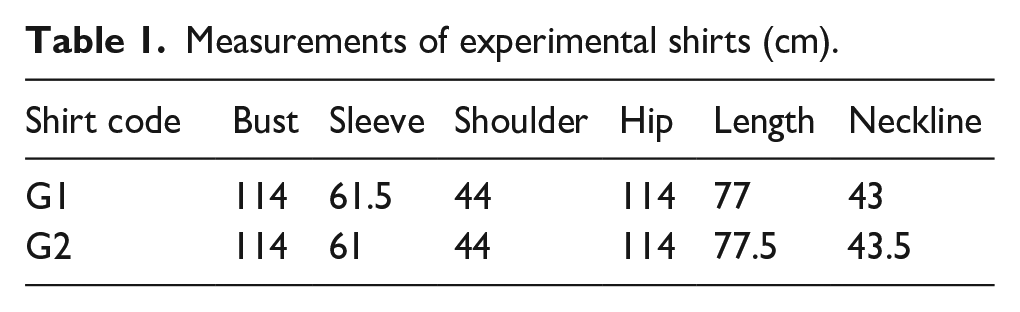
Two men’s shirts made from the same fabric, but in different styles, were prepared as experimental garments. The selection of fabric was based on the typical textile used in Chinese police shirts, which is a plain-woven fabric made of 80% cotton and 20% polyester. The fabric weight was 136 g/m2, thickness was 0.37 mm, and the air permeability was 208 mm/s (YG461E permeability tester, China), with a thermal insulation of 0.13 clo (sweating guarded hotplate, Measurement Technology Northwest, USA). Two styles of shirts were designed. One was an ordinary police shirt (G1) with long sleeves and buttoning up at the front (Figure 1), while the other one (G2) added pleated folds (width of 3 cm and length of 20 cm) at the back and inserted gussets (width of 7 cm and length of 20 cm) at the underarm positions (Figure 2). Both shirts had similar measurements as listed in Table 1. During the test, the manikin was dressed with the same long pants, and the sleeve cuffs of the experimental garments were buttoned up. To simulate the real work situation of a traffic policeman, a belt was fastened around its waist, which was equipped with a torch, handcuff, spontoon, and interphone, with a total weight of 3.5 kg (Figure 3).
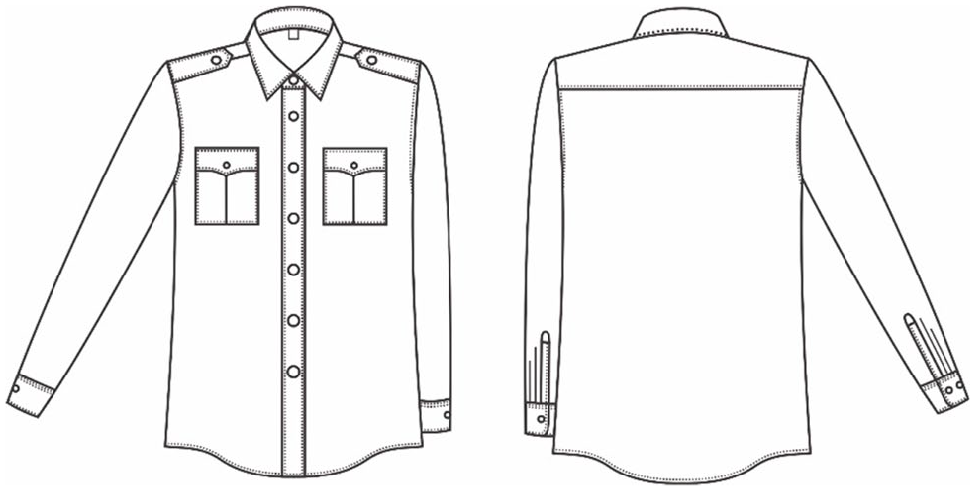
The style charts of experimental shirt G1.
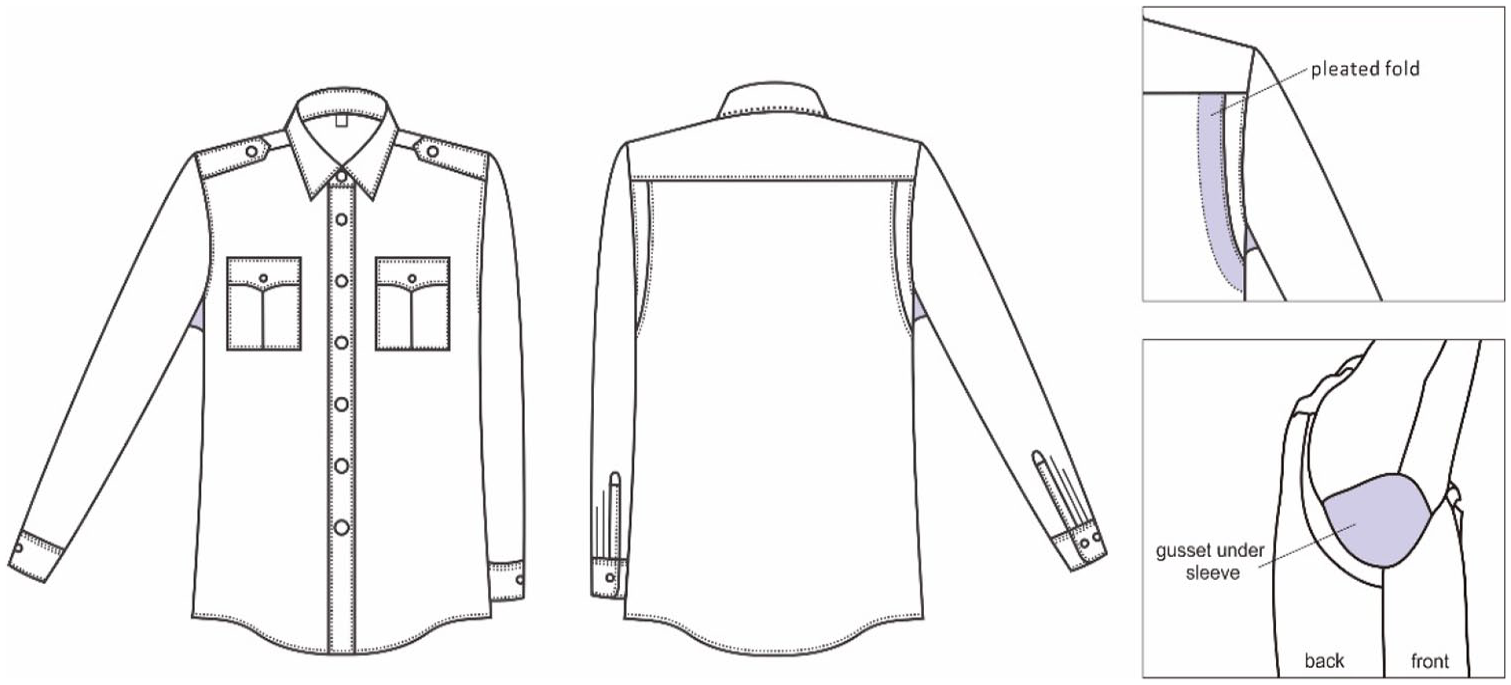
The style charts of experimental shirt G2.
Measurements of experimental shirts (cm).
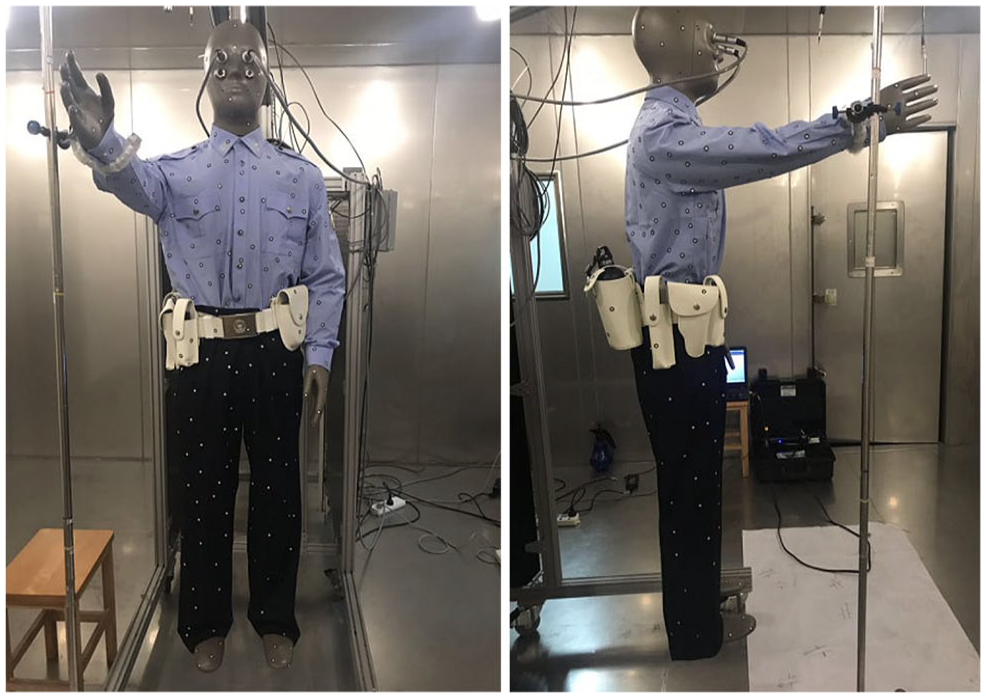
The dressed manikin under test.
Participants
Eight male college students (age: 22 ± 1 yrs, body height: 175 ± 3 cm, bodyweight: 65 ± 5 kg, chest circumference: 95 ± 3 cm) volunteered to participate in this study. The experimental objectives and procedures were explained to each participant in the form of written information before tests, and all participants signed an informed consent document. The experimental protocol and procedure were approved by Donghua University.
Thermal Manikin
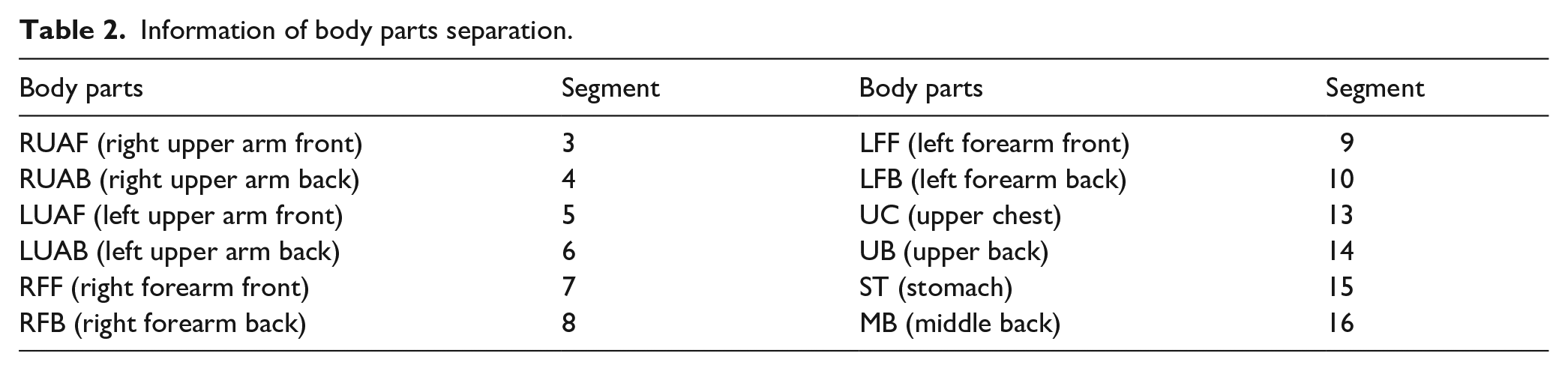
To simulate the body postures and measure local thermal insulation, a 34-segment Newton thermal manikin (Thermetrics LLC, Seattle, WA, USA) was used (Figure 4). The manikin’s arm position can be changed by rotating shoulder joints in the sagittal plane. Its segmental surface temperature was individually controlled, and the segmental heat loss was recorded by ThermDAC software. The total surface area of the manikin was 1.697 m2. Table 2 shows the selection of body parts studied to analyze the effect of arm posture on local thermal insulation.
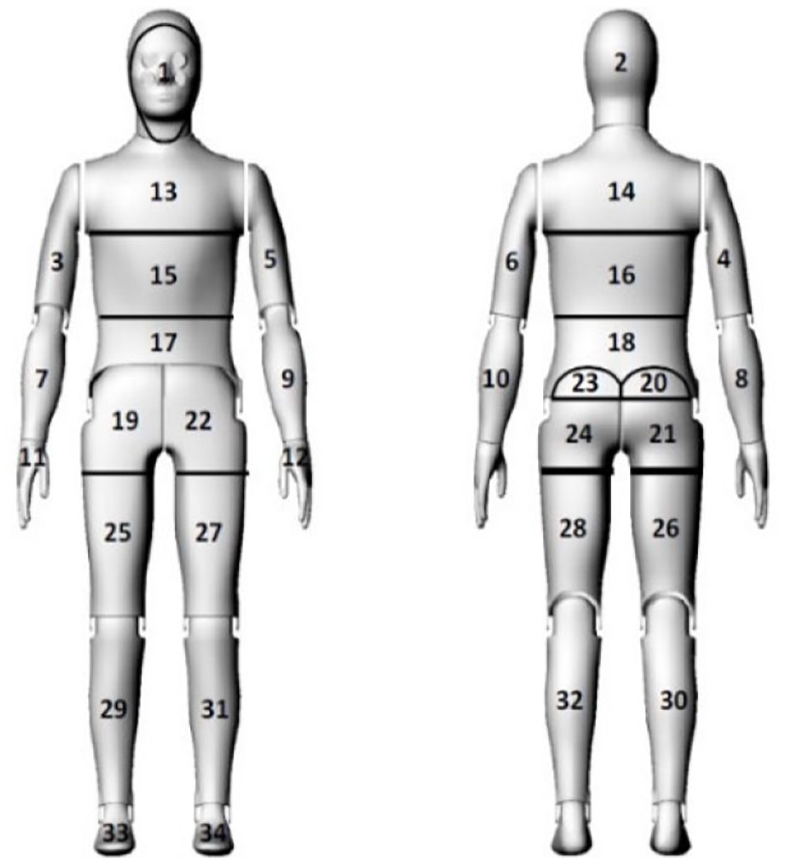
Schematic chart of the 34-segment Newton manikin.
Information of body parts separation.
3D Scanning Procedure
In this study, six arm postures were chosen to simulate traffic policemen’s command postures. As there were restrictions on the direction of the manikin joint motion, only the protraction motion of the manikin arms was tested. Table 3 shows the selective postures with various angles of the shoulder joint and their relevance to real-life situations. Posture M0 was upright standing and acted as a reference, whereas the angle of the right shoulder joint was increased by 45° each time from M1 to M3, followed by the angle of the left shoulder joint further being increased by 45° each time from M4 to M5. To guarantee the posture’s consistency between each measurement, a U-shaped arm holder was mounted on a metal stand to support the manikin’s arms (Figure 3). Before the experiment, a metal stand was placed on the given marks of the floor, and the U-shaped holder was adjusted to a certain height from the floor to guarantee a desirable angle of the shoulder joint (from 45° to 135°). A digital goniometer (IP54, Elecall, China) was used to check the angle of the shoulder joint, and the height of the U-shaped holder was adjusted accordingly until the desired angle was achieved. In this way, the height of the holder was recorded with adhesive tape for each testing angle of the shoulder joint. During the test, the recorded position was used as an anchor point to ensure the nude and clothed scans were exactly at the same posture.
Selective upper body postures for manikin test a .
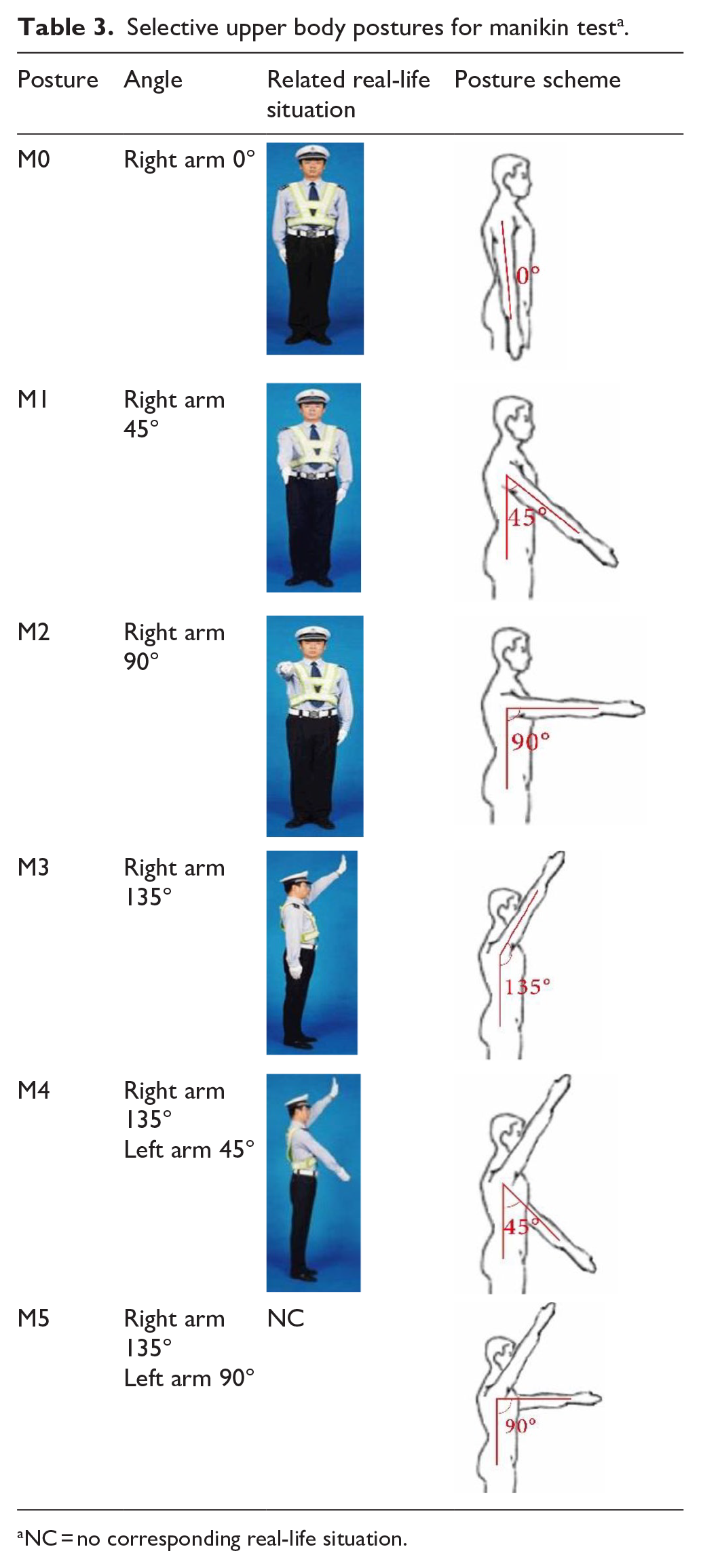
NC = no corresponding real-life situation.
Selective Upper Body Postures
A hand-held 3D body scanner with a resolution of 0.05 mm (Handy Scan 700, Creaform Inc., Canada) was used to capture the clothed and nude manikin shapes in the relevant postures. Before the tests, the round retroreflective markers were randomly placed on the manikin and garment surface every 2 cm (Figure 3) to define positioning features. Since the scanner had a small view area, it had to be moved around to scan the full size of the manikin. A circle around the manikin was drawn on the ground, along which the scanner was held to capture the 3D image of the nude and clothed manikin from head to feet.
The scanning included two steps, namely (i) scanning the nude manikin in a given posture to get surface images of the naked body, and (ii) scanning the re-dressed manikin three times for each garment at the same posture to obtain surface images of the garment. The 3D scans were post-processed using the software Geomagic Qualify 2016 (Geomagic, USA) to obtain some required parameters such as the contact area and the air gap thickness. This procedure consisted of the following steps: (i) cleaning of 3D scans’ surface by removing scanning artifacts and closing surfaces with deficiencies; (ii) super-imposing of 3D scans of the nude and dressed manikin using uncovered body parts as reference shapes; (iii) slicing super-imposed manikins manikin into body parts (Figure 1); and (iv) computation of the contact area and the distribution of the air gap thickness for each body part. Air gap thickness was defined as the average distance between points on the surface of the nude and dressed manikin, which can be calculated automatically by using a 3D comparison tool in Geomagic software.
Thermal Manikin Test
The tests were conducted in an environmental chamber at a temperature of 20 ± 2°C, relative humidity (RH) of 50% ± 5%, and air velocity of 1.0 m/s. Before the experiments, all test garments were laundered in cold water and ironed, and then hung in the environmental chamber for 24 h. Each test was repeated three times to reduce measurement errors.
The tests were divided into two parts, viz. the 3D scanning and thermal insulation tests. The detailed experimental procedures were as follows:
(1) Scanning the nude manikin in a randomly given posture to obtain its surface image.
(2) Beginning the thermal insulation test in constant temperature mode with the surface temperatures of all segments set to 34℃. After the climate chamber reached equilibrium, the thermal insulation of the nude manikin was tested with the same posture to get thermal resistance of the boundary air layer.
(3) Dressing the manikin in one of the experimental uniforms, and adjusting the manikin arm posture to the same angle as in step (1). Scanning the dressed manikin again to obtain the surface image of the garment.
(4) Waiting for the climate chamber to reach equilibrium and testing the thermal insulation of the dressed manikin with the same posture to get the total thermal resistance of the garment.
(5) Changing to another experimental garment and repeating steps (3) to (4). Only one posture was tested each day, and six working days were needed to test all postures.
Human Arm Mobility Test
To investigate the impact of wearing different styles of garments (G1 and G2) on arm mobility, a series of human participant tests were conducted. The test was conducted in an environmental chamber at a temperature of 20°C ± 1°C, RH of 35% ± 5%, and air velocity below 0.3 m/s. The participants’ joint angular displacements at the shoulder were analyzed by a 3D motion capture system (MVN, Xsens Technologies B.V., The Netherlands) while they performed arm exercises (four tasks). The selected 3D motion capture system measures range of motion (ROM) data in precision with the following accuracy: static accuracy in roll/pitch: 0.2°; static accuracy in heading: 0.5°; and dynamic accuracy: 1° root mean square. The participants first donned an MVN Lycra suit, which had been designed to link 17 inertial sensor motion trackers over the whole body. Then they wore one of the experimental garments. The arm motion tasks (Table 4) were each repeated six times for each garment condition, with 5 min between two consecutive postures to avoid fatigue according to the pilot study. After each posture, every participant was asked to give a local flexibility rating of upper-back, underarm, and upper-arm using the subjective scale (Figure 5).
Schematic diagram of the arm motion tasks a .
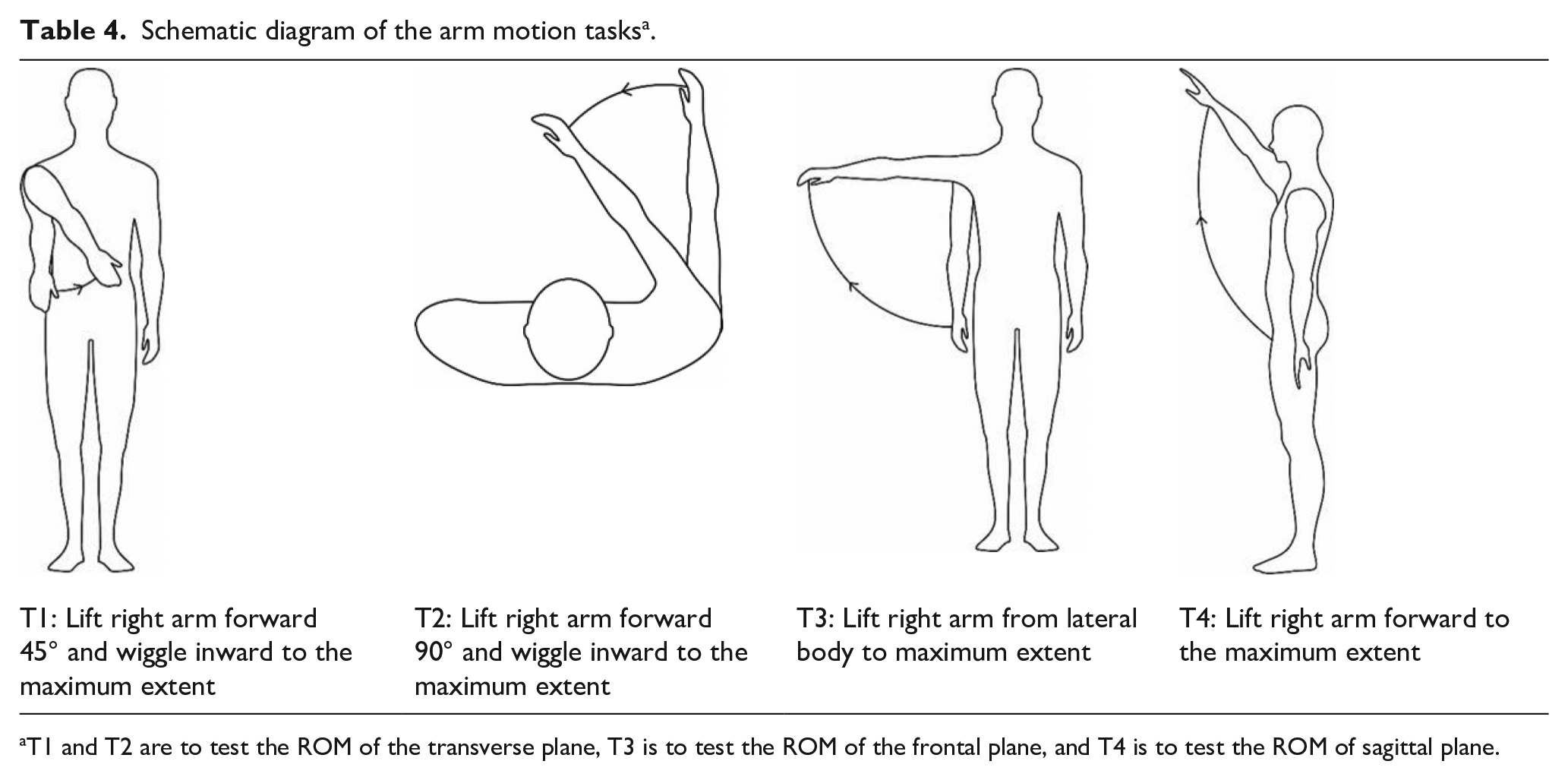
T1 and T2 are to test the ROM of the transverse plane, T3 is to test the ROM of the frontal plane, and T4 is to test the ROM of sagittal plane.
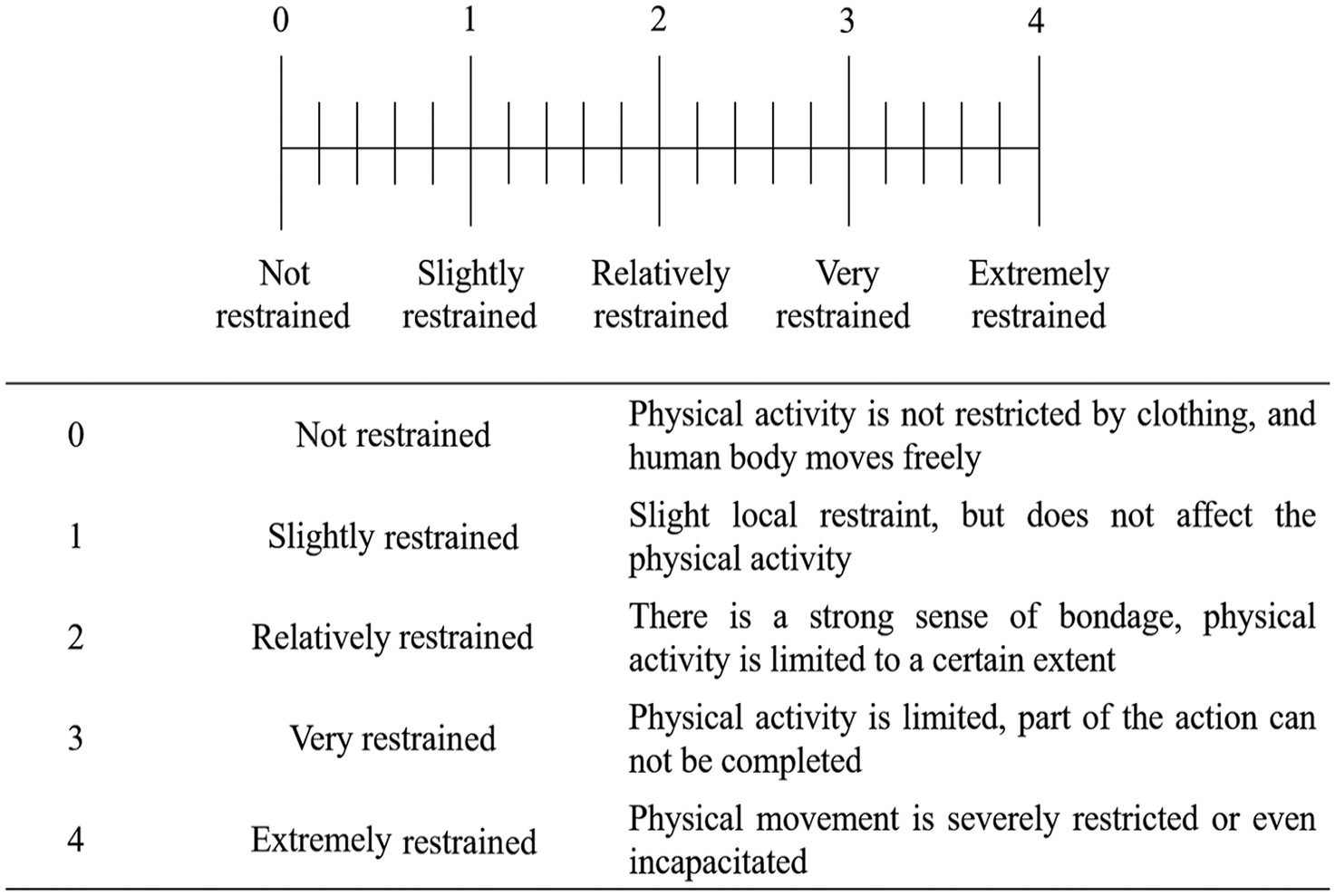
The subjective rating scales of mobility restraint.
In this experiment designed to evaluate the impact of garment style on upper limb mobility, garment style and arm motion tasks served as independent variables, and ROMs at the shoulder in three cardinal planes served as dependent variables.
Data Analysis
Percentage of Contact Area
Air gaps are located between the human skin and the inner surface of the garment. The bigger the contact area between skin and garment, the smaller the ease allowance available under the garment is. Considering the thickness of the fabric, the air gap thickness below 2 mm was defined as skin in contact with the garment. By applying alignment and 3D comparison tools in Geomagic software, the contact area was calculated as the percentage of the area where the distance between scanned nude and clothed manikin was less than 2 mm (equation (1)).
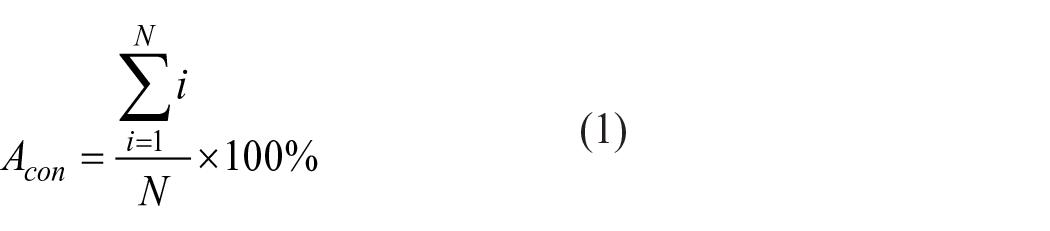
where Acon is the percentage of contact area (%), i is the number of 3D scanning data points with an air gap thickness less than 2 mm, and N is the total 3D scanning data points of the manikin.
Air Gap Volume
The volume of air gaps under the garment was calculated as the volume difference between the scanned clothed and the nude manikin body.

where Vair is the volume of the air gaps (cm3), Vcl is the volume of the clothed manikin (cm3), and Vnake is the volume of the naked manikin (cm3).
Statistics
For the manikin test, the independent variables were garment types (two levels: G1 and G2) and postures (six levels: M0 to M5). The dependent variables included local air gap volumes, contact area, and thermal insulation of each body part. All data were first tested for normality of distribution and homogeneity of variance using the Shapiro–Wilk test and the Levene test, respectively.
The air gap volume, contact area, and thermal insulation were analyzed using one-way repeated measure analysis of variance (ANOVA), with arm posture being a repeated measurement variable. Data were tested for sphericity, and if the assumption of sphericity was violated, Huynh–Feldt or Greenhouse–Geisser corrections were undertaken to adjust the degrees of freedom for the averaged tests of significance. When a significant main effect was found, Bonferroni’s post hoc analyses were performed to account for multiple comparisons. A linear regression analysis was performed to predict the relationships between arm posture and air gap sizes of local body parts. Mean air gap volume and contact area data for the shirts G1 and G2 were compared using a paired t-test.
Repeated ANOVA were used to compare shoulder joints in the three planes of motion (ROM) between the two garment styles for each of the four-arm motion tasks. Flexibility ratings were analyzed using a Wilcoxon signed-rank test to find the main effect of garment style. The statistical analysis was performed using IBM SPSS Statistics 24 (IBM, USA). In all analyses, p < 0.05 was used to establish significant differences. Data were reported as the mean ± standard deviation.
Results and Discussion
The Effect of Garment Style on Arm Mobility
The ROMs of the shoulder joint of the two experimental garments during four arm motion tasks are presented in Figure 6. A two-way repeated measure analysis of variance indicated that the arm motion types had a significant main effect on the ROM (F (3, 21) = 1458.5, p < 0.001). As motion T1 and T2 were used to test the ROM of the transverse plane, they were significantly smaller than T3 (frontal plane, p < 0.001) and T4 (sagittal plane, p < 0.001). Garment styles significantly influence the ROM of the shoulder joint (F (1, 7) = 68.47, p < 0.001), and the ROM of garment G1 was significantly smaller than G2 (p < 0.001).
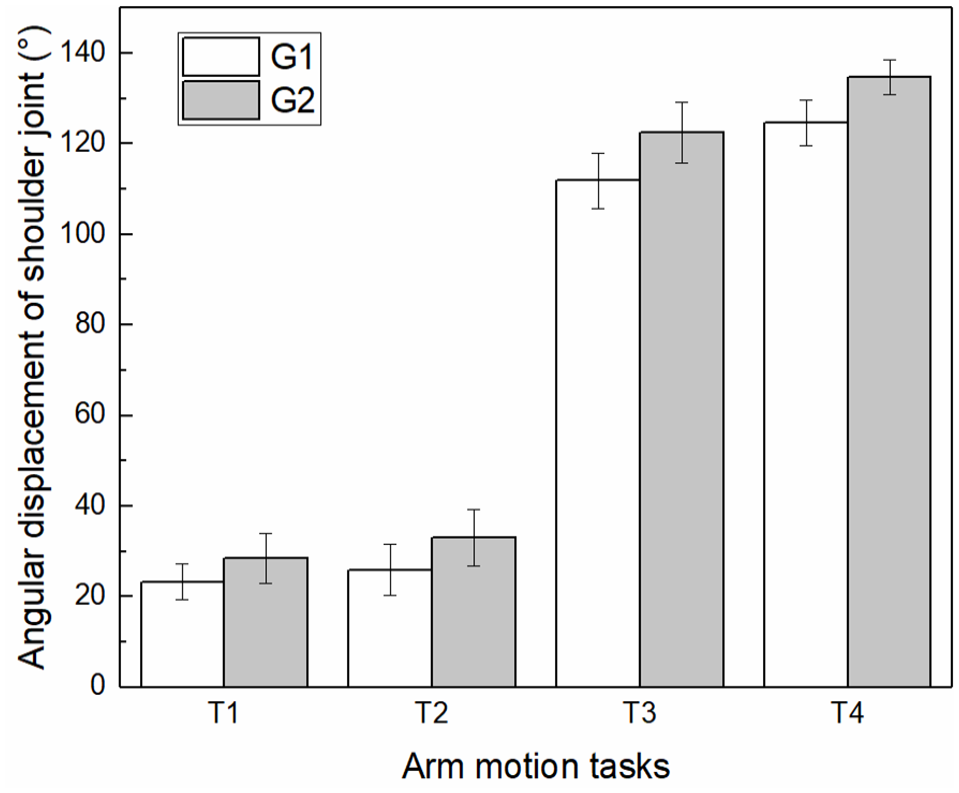
Shoulder joint range of motion for the two garment types (G1 and G2) during four arm motion tasks.
Subjective flexibility ratings of the three body parts are shown in Figure 7, where garment G1 was perceived as less flexible than G2 for the three body parts (upper-arm, underarm, and upper-back) as expressed in terms of semantic labels. The main effect of the garment type on the flexibility of body parts was analyzed by Wilcoxon signed-rank test by collapsing the data over arm exercising tasks (four levels). The results showed garment G2 had significantly less restraint than G1 for the upper-back segment (Z = –2.83, p = 0.005) and under-arm segment (Z = –2.99, p = 0.003), while the flexibility of garment G2 was not significantly different from G1 for the upper-arm segment (Z = –1.73, p = 0.084).
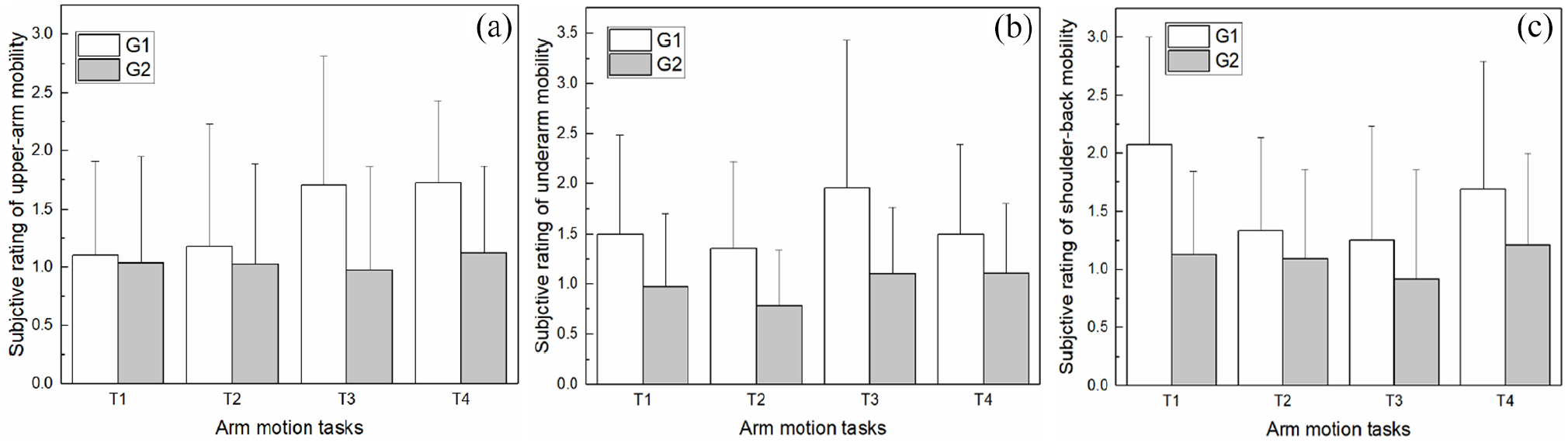
The subjective rating of motion flexibility of three body parts: (a) upper-arm, (b) under-arm, and (c) upper-back.
According to the experimental results, as G2 had added pleated folds at the back and inserted gussets under the arm, it showed a greater ROM and better flexibility was perceived at upper-back and under-arm segments.
Effect of Arm Posture and Garment Style on Air Gap Distributions
The results of this study showed that the effect of arm postures on the air gaps under the garment was relevant to the body regions (Figure 8). For garment G1, the influence of posture change on the air gap volume and contact area was greater in the front regions than in the back regions of the body. ANOVA revealed that arm posture had a significant effect on the air gap volume (F (1.87, 20.57) = 8.27, p = 0.003), and contact area (F (1.88, 20.66) = 8.83, p = 0.002) as well. Bonferroni’s post hoc analysis indicated that arm posture M5 resulted in a significantly smaller air gap volume than M0 (p = 0.035), whereas M5 and M6 resulted in a significantly greater contact area than M0 (p < 0.05).
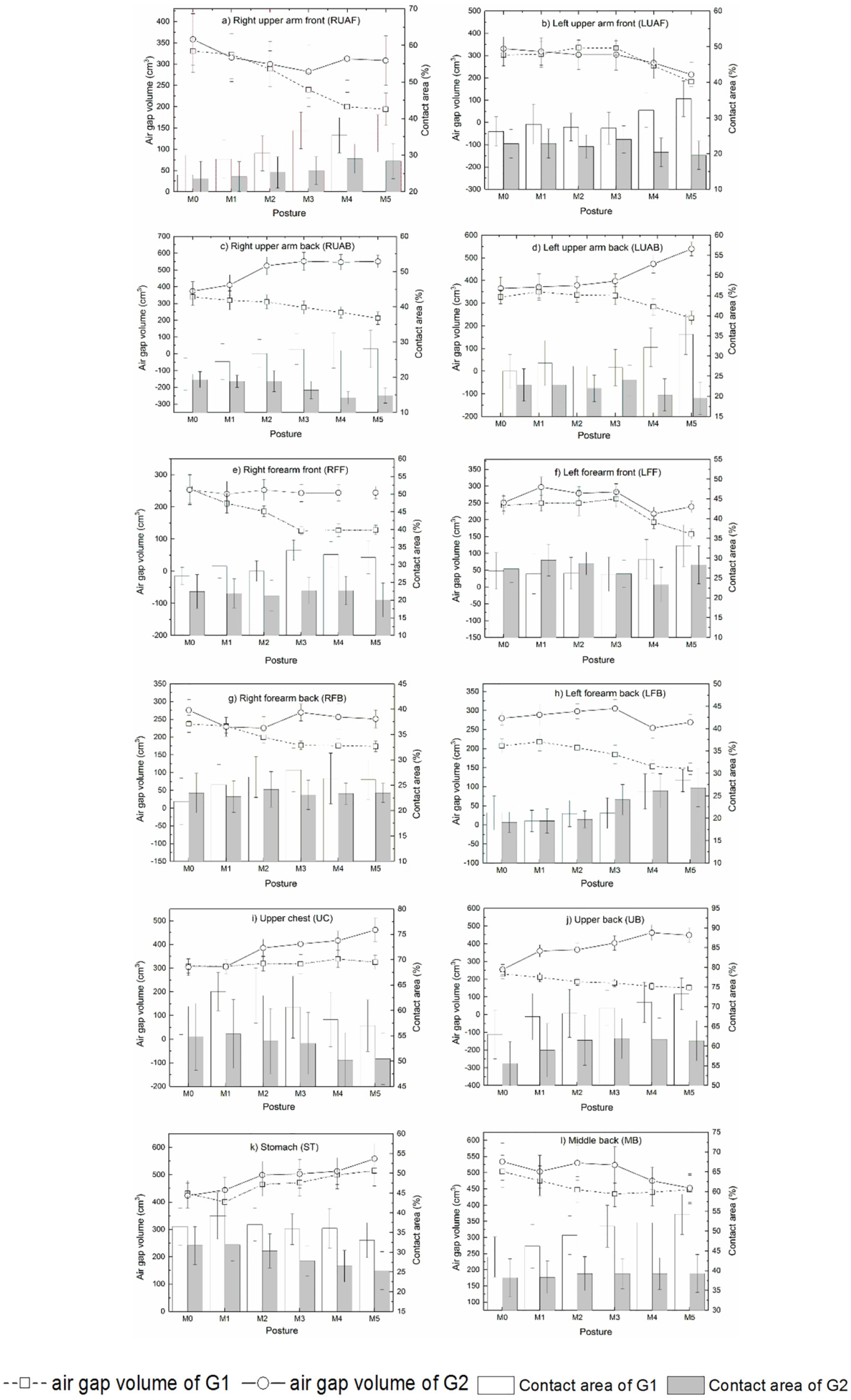
Mean air gap volume and contact area of individual body parts for the relevant postures. Error bars denote standard deviation.
Furthermore, linear regression analyses were conducted to identify the effect of arm posture (M0–M5) on air gap volume of local body parts. Linear negative relationships were observed between air gap volume and arm posture at RUAF (r2 = 0.957, p = 0.001), RUAB (r2 = 0.971, p < 0.001), RFF (r2 = 0.87, p = 0.007), RFB (r2 = 0.836, p = 0.011), LFB (r2 = 0.869, p = 0.007), UB (r2 = 0.968, p < 0.001), and MB (r2 = 0.649, p = 0.045). With the increase of arm protraction angles, the air gap volume linearly decreased at the segments of the right arm and the back of the trunk. On the contrary, positive linear relationships were observed at UC (r2 = 0.744, p = 0.046) and ST (r2 = 0.822, p = 0.013), which indicated the air gap volume of the front trunk was increased with the forward movement of arms. No significant linear relationships (p > 0.05) were detected at left arm segments (LUAF, LUAB, and LFF), as a result of the unilateral effect of protracting the right arm from 0° to 135° (M0–M3). The results indicated that the air gaps at the arms and back were compressed and the ease allowances under garments were reduced during arms protracting forward at the sagittal plane.
For garment G2, after inserting gussets at the under-arm positions and adding pleated folds at the upper back, it was observed that the air gap volumes increased and the contact area decreased compared with G1. The paired t-test demonstrated that the air gap volumes of G2 were significantly larger than G1 (t (71) = –7.668, p < 0.001), and the contact area of G2 was significantly smaller than G1 (t (71) = 11.237, p < 0.001). ANOVA revealed that arm posture had no significant effect on the air gap volume of garment G2 (F (1.54, 16.92) = 2.027, p = 0.169) and on the contact area as well (F (1.49, 16.33) = 0.61, p = 0.692). This indicated that when the garment was provided with enough local ease allowances, the mobility of arm movement will be improved as shown for G2, which had greater ROM and better flexibility.
Both arm postures and garment styles influenced the local air gap distributions under the garment. The ordinary shirt G1 that is currently worn by Chinese traffic policemen showed a smaller activity space at the upper arm and back of the trunk with the increase of arm protraction angle. The revised shirt G2 with added gussets and pleats improved the mobility of arms. As the significant increase of air gap volume and decrease of contact area were found for garment G2, so the arm movement flexibility was enhanced with the augmentation of arm motion angle.
Effect of Arm Posture and Garment Style on Local Thermal Insulation
According to Figure 9, the thermal insulation varied in different body parts and arm postures. For garment G1, the thermal insulation of UB was the lowest in all body parts as a result of its smallest air gap volume and largest contact area, whereas, the thermal insulation of ST was the highest due to its largest air gap volume and smallest contact area. ANOVA revealed that arm posture had a significant effect on the thermal insulation (F (2.03, 22.28) = 4.06, p = 0.031). Bonferroni’s post hoc analysis indicated that arm posture M5 resulted in significantly less thermal insulation than M0 (p < 0.05).
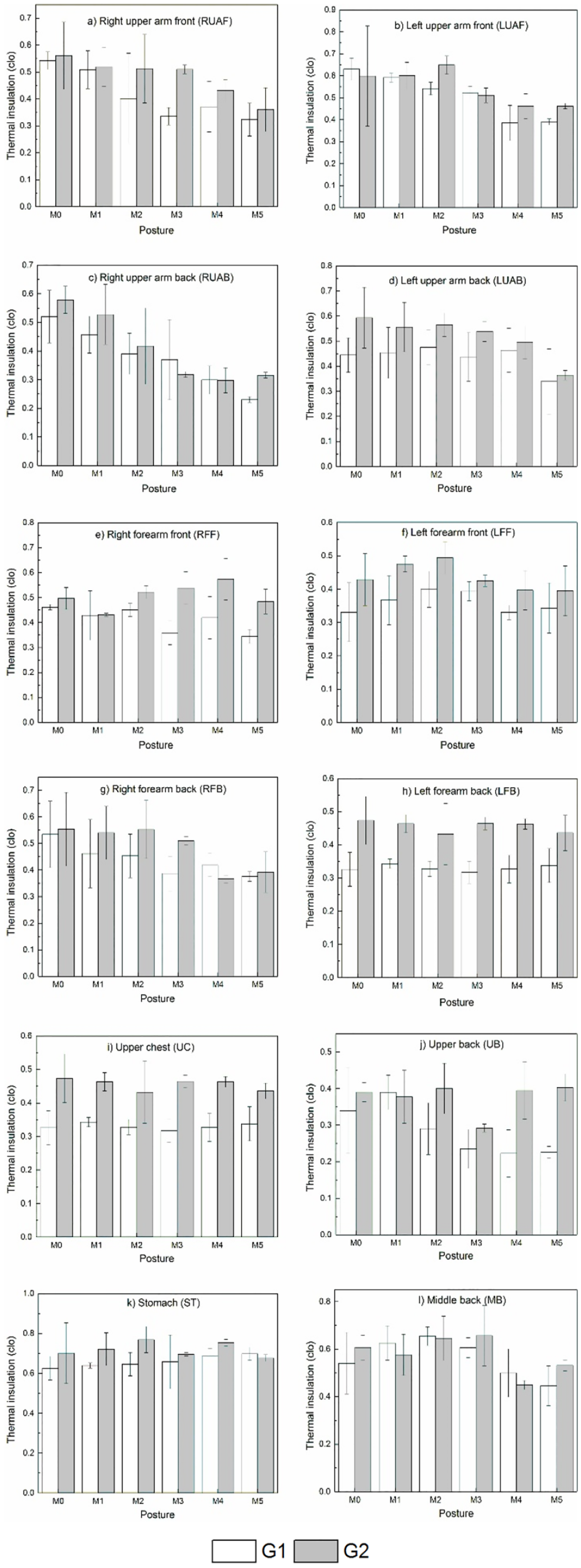
Mean thermal insulation of individual body parts for the relevant postures. Error bars denote standard deviation.
Furthermore, linear regression analyses were conducted to identify the effect of arm posture (M0–M5) on the thermal insulation of local body parts. Significant linear negative relationships were observed between thermal insulation and arm posture at RUAF (r2 = 0.915, p = 0.01), RUAB (r2 = 0.993, p < 0.001), LUAF (r2 = 0.981, p = 0.001), and UB (r2 = 0.871, p = 0.024). On the contrary, a significant positive linear relationship was observed at segments UC (r2 = 0.939, p = 0.005) and ST (r2 = 0.739, p = 0.04). No marked relationships were found at other body parts (p > 0.05). With the increase of arm protraction angle, the thermal insulation of most body parts decreased according to the reduction of air gaps under the garment, whereas the thermal insulation of UC and ST were enhanced corresponding to the increase of air gap volume.
For garment G2, it was observed that the thermal insulation of UB was the lowest, and that of ST was highest in all body parts. The paired t-test indicated that the thermal insulation of G2 was significantly larger than G1 (t (71) = –4.543, p < 0.001) as a result of the revised pattern design of G2. Garment style influenced not only local air gap sizes but also thermal transfer from the skin to the garment. ANOVA revealed that arm posture had a significant effect on local thermal insulation of garment G2 (F (2.43, 26.80) = 6.721, p = 0.003). And notable negative relationships were observed between thermal insulation and arm posture at segments RUAF (r2 = 0.86, p = 0.007), RUAB (r2 = 0.88, p = 0.006), LUAF (r2 = 0.69, p = 0.041), and LUAB (r2 = 0.77, p = 0.021). But for other body parts, arm posture did not influence local thermal insulation, indicating that local thermal insulation did not change considerably for most body parts when arms were performing movement from M0 to M5. The revised pattern design of G2 vastly improved the local thermal insulation property compared with garment G1.
Both arm posture and garment style influenced the local air gap distributions, which in turn affected the local thermal insulation of the garment. Pearson’s correlation analysis indicated a positive correlation between air gap volume and thermal insulation (r = 0.753, p < 0.001), and a negative correlation between the contact area and thermal insulation (r = –0.79, p = 0.002). Linear regression analysis was conducted to define local thermal insulation of the garment by air gap volume and contact area (equation (3)), yielding an explained variance of 72%:

where Icl is the local thermal insulation of the garment (clo). Garments with larger air gap volume (Vair) and lower contact area between body and garment (Acon) could contribute to the higher thermal insulation of the garment.
Conclusion
Air gaps entrapped between the human skin and the clothing function as an insulating material to isolate the human body from the external thermal environment. The human body is not static, but doing constant movement. By simulating the arm postures of traffic guidance, air gap distributions under the ordinary policeman’s shirt (G1) changed with the arm postures. First, the motion angle of the shoulder joint influenced air gap sizes, the air gap volume decreased, and the contact area increased with the growth of protraction angles of the arms. Second, the direction of arm motion influenced air gap distributions and the air space at the front of arms and upper back of the trunk was significantly compressed with the forward movement of the arms. Finally, the garment style influenced air gap distributions. By adding pleated folds at the upper back and inserting gussets at the under-arm positions, the air gap volume of the revised garment G2 was markedly increased. The human tests also indicated that the range of arm motion was improved, and better flexibility perceived at the upper-back and under-arm segments was achieved.
A garment with a larger air gap volume and smaller contact area usually has greater thermal insulation because of the lower thermal conductivity coefficient of static air. This was verified by the significant positive correlation between air gap volume and thermal insulation (r = 0.753, p < 0.001), and a negative correlation between the contact area and thermal insulation (r = –0.79, p = 0.002). The change of the local air gap distributions in turn affected the local thermal insulation of the garment. With the increase of protraction angle of arms, the thermal insulation declined with the decrease of air gap volume.
When the ambient temperature was higher than the mean skin temperature, the revised garment with added gussets and pleats not only provided better activity flexibility to satisfy a wide range of arm movement but also better thermal insulation from the radiative heat from the sun. This research explored the interactive effect of arm posture and garment style on air gap distribution and thermal insulation of different body parts by the combination of 3D body scanning and manikin testing, which provided a scientific foundation for designing thermal function garments with better mobility and thermal properties.
Footnotes
Declaration of conflicting interests
The author(s) declared no potential conflicts of interest with respect to the research, authorship, and/or publication of this article.
Funding
The author(s) disclosed receipt of the following financial support for the research, authorship, and/or publication of this article: The authors are deeply grateful for the support from the Fundamental Research Funds for the Central Universities of China (number 2232022G-08).