




Abstract
Heat transfer from the human body, especially through the evaporation of sweat from the skin, is often restricted when protective clothing is used, which may result in overheating. For this reason, it is important to consider the parameters of protective clothing as input data in physiological models, such as predicted heat strain. The two most important parameters are thermal insulation and evaporative resistance with clothing area factor strongly influencing both. These parameters were determined for two clothing ensembles using a (dry) non-sweating thermal manikin. First, the clothing area factor was determined using the photographic method. Second, thermal insulation was measured in both static and dynamic conditions, and multiple equations for predicting dynamic thermal insulation from static ones were evaluated. Third, methodology for measuring evaporative resistance based on pre-wetted skin was adopted and multiple corrections were assessed. Finally, sensitivity analyses were completed using PHS to determine the impact of different equations on the duration limited exposure. For the thermal insulation measurements, we found that predictive equation (32) from ISO 9920 was the most accurate, but choosing the correct equation for protective clothing proved challenging. Although a manikin’s surface temperature is widely used for calculating evaporative resistance, the skin temperature should be used instead, since it is correct from a physical point of view and there is a difference of up to 15% in the results. Because these measures are used in thermal risk analyses conditions, a high degree of accuracy and a knowledge of the inputs must be guaranteed.
Introduction
Heat stress is the net heat load to which a person is exposed and is caused by various factors, such as high ambient temperature, the duration of exposure, worn protective clothing and equipment and heavy labor. The physiological response to a heat stress is called a heat strain and it has an impact on a human body via heat transfer processes [1–3]. In hot conditions, evaporation is the main pathway for heat dissipation from the human body into the environment [4,5]. Multiple physically demanding jobs, e.g. firefighting or agricultural work, are often carried out in hot working environments. In many cases, less permeable, well insulating protective clothing is used. However, these types of clothing often result in reduced sweat evaporation, leading to an elevation in skin temperature, core temperature and/or sweat rate [4]. Combined with insufficient water replacement and resting periods, this can lead to work-related disorders and various serious diseases (cardiac issues or chronic kidney disease (CKD) [6–8], for example) in the long term.
To prevent occupational disorders, various heat stress prediction models (e.g. PHS) [9] and thermo-physiological prediction models, such as the Fiala model [10] or the FMTK model (an abbreviation in Czech for the Fiala-based thermal comfort model) [11], also contain clothing properties as some of their most important input parameters. This is why clothing parameters should be measured with the highest possible degree of precision to mitigate prediction errors [12–14]. As it is important to protect workers’ health, the main purpose of these models is to calculate the maximum exposure to a given environment with a given activity level without endangering the subject. Today, more emphasis is being placed on this area of research as weather conditions continue to change and extreme climatic events (e.g. hurricanes, heat waves) become more commonplace [15,16]. Multiple methods for measuring or estimating of clothing properties are currently in use, but the most realistic option involves using a thermal manikin with detailed body segmentation [12,17–19], since a thermal manikin accurately represents the shape of the human body and its movements in real-life situations. Non-sweating thermal manikins (i.e. manikins that lack a built-in sweating system) are often used as they are simpler, more affordable and more commonplace around the world. In both thermal insulation and evaporative resistance measurements, the manikin’s surface temperature is heated to a constant temperature, and the heat flux in each zone is recorded continuously. For the evaporative resistance measurements, a pre-wetted skin method is incorporated to simulate the evaporation of sweat from the body’s surface [20].
The measurement of resultant total thermal insulation (Itr) is well established as it is part of the ISO 9920 standard [21] and can be repeated with an accuracy of 4% between repetitions. Although it can be used as input data for the physiological modelling to simulate reality as closely as possible, it is an expensive method with regard to time and the extra equipment necessary to enable the manikin to walk, equipment that is not accessible for many laboratories. Obviously, a reliable alternative is needed. One option is to calculate the resultant total thermal insulation values (Itr) from the static total thermal insulation values (It).
There are multiple equations (32) to (36) available in the standard ISO 9920 [21] that can be used to predict the resultant total thermal insulation (Itr) from non-moving manikin values. Equation (33) from the standard can only be applied to a nude manikin or very low insulated clothing. The rest of the equations differ depending on the properties, such as thermal insulation and air permeability, of the clothing ensembles being tested, or on properties of the environments in which the clothing sets are being measured or used, e.g. low wind speed (Table 1). Standard EN 342 from 2004 [22] includes a similar equation with a similar purpose: predicting resultant thermal insulation (Itr) for cold protective clothing.
Overview of multiple investigated equations from standards for predicting resultant thermal insulation from total thermal insulation values.

Another important clothing parameter that has an impact on heat stress and physiological modelling is evaporative resistance [5, 20]. At present, there is no dedicated EU standard for measuring this quantity, highlighting the fact that more research is needed in this field. Two calculation methods for the evaporative resistance of clothing are provided in the ASTM standard from 2010 [23] – the mass loss method and the heat loss method. The mass loss method was removed from the newest version of the ASTM standard [24]. Its omission was probably related to the challenges associated with using the mass loss method to calculate the localized values for separate body parts, which were added to this new ASTM standard [24], as well as to reduce the number of discrepancies between laboratories caused by different measuring and calculation methodology [25]. According to Wang et al. [26], the exclusion of the mass loss method was not an ideal solution as this method is inherently correct from a physical point of view.
It was previously reported that measuring evaporative resistance in non-isothermal conditions (Tmanikin ≠ Tambient ≠ Tsk) may cause significant error as clothing insulation changes dramatically with absorbed moisture; therefore, isothermal conditions should be used [27–29]. However, we were unable to set up isothermal conditions (T manikin = T ambient = Tsk) for our thermal manikin since most of the available manikins are only able to control manikin’s surface temperature and not the wetted skin temperature. For this reason, a so-called isothermal condition (T manikin = T ambient ≠ T sk ) had to be used instead. Issues connected to the manikin’s surface temperature reach beyond the measurement setup where this temperature is also used incorrectly in the calculations of evaporative resistance via both of the methods that were mentioned. Because the water (simulating sweat) evaporates from the pre-wetted skin of the manikin, the skin temperature should be used in the calculations. Multiple corrections from different researchers and for different sweating simulation systems were presented to mitigate this and other possible errors [26,29–35].
Material characteristics of individual garments also play significant role on a heat stress of the workers. For example, it was previously reported that increase in an air permeability (porosity) of an over-garment causes an increase in a ventilation, and thus increases in the heat dissipation from a human body [36, 37]. Porosity and capillary drift have strong effects if we look on a material in detail, however when we consider clothing system, then due to many layers and airgaps present in the ensemble, the influence of a specific material and its porosity is partially reduced. That is probably the reason why porosity is included in the moisture performance evaluation of textile materials, but if we look in any standards and methods for measuring parameters of clothing ensembles, then porosity is not considered specifically in any of these. When measuring evaporative resistance of an ensemble on a thermal manikin, in as stable state as possible, we obtain total evaporative resistance values of the whole ensemble, including the effects of layers, pores etc. As the aim of this paper was related to a standardized and repeatable manikin testing and related calculations to define a technical parameter of an ensemble, we will not focus on the material parameters and layering of the garments in the ensembles in this paper.
The aim of this study was to identify, and possibly enhance, reliable and applicable methods to obtain protective clothing parameters by means of a non-sweating thermal manikin using pre-wetted skin. Both the mass loss and the heat loss methods were used to calculate whole-body total evaporative resistance in this study. Verification of multiple equations used for predicting resultant total thermal insulation (Itr) from total thermal insulation (It) on protective clothing from ISO 9920 [21] was also conducted. Our findings can be used to achieve more precise and reliable physiological predictions for people working in hot environments and possibly enhance the prevention of health problems in both the short and the long term. Published data concerning clothing parameters could be used to estimate values for similar protective clothing ensembles for use in physiological modelling where clothing properties are not available.
Methods
Study design
Measurement of the total (It) and resultant (Itr) thermal insulation and evaporative resistance (Ret) by means of a non-sweating thermal manikin. Measurement of the clothing area factor (fcl) by the photographic method and calculation of intrinsic values. Measured values are considered as reference values. Investigation of multiple equations from different standards to predict resultant thermal insulation (Itr) from total thermal insulation (It). Assessment of multiple published corrections for the evaporative resistance calculation in both the mass loss and the heat loss methods. Sensitivity analyses to demonstrate the impact of clothing parameters on the duration limited exposure using the PHS model.
Equipment
This study provides relevant information concerning methodology and measurement procedures for three important clothing parameters. The thermal manikin TORE [38] at Lund University, Sweden (Figure 1), which was used in this study, is made of plastic covering a metal frame inside that supports the body parts and joints. It is the size of an average Swedish male from the first half of the 1980s. The manikin is 1.71 m tall and weighs around 32 kg. The body surface area of 1.772 m2 is divided into 17 zones. The climatic chamber at Lund University, with dimensions height × width × length: 2400 × 2360 × 3200 mm, was used for the measurements. The chamber can be adjusted from +5 to +60°C and the temperature standard deviation (SD) from the set value is less than ±0.2°C. The relative humidity in this chamber can be adjusted from 10 to 95%, depending on the temperature and the humidity SD from the set value is less than ±5%. Air velocity can be adjusted between 0.1 and 0.7 m/s.

Tested clothing: (a) underwear for both systems (provided by the laboratory); (b) sugarcane harvester’s outfit (glove on only one hand and leg protector on only one leg – sugarcane is held by the hand with the glove and cut by machete in the other hand, the leg protector covers the leg in the direction of the machetés swing); (c) pesticide sprayer’s protective cover all on top of underwear; (d) pesticide sprayer’s complete outfit, complete with outer protective layers.
First, the manikin was placed inside the climate chamber in an upright posture with the arms hanging freely (Figure 1(a)). This posture is typically reported in the literature and standards for investigating the thermal properties of clothing in static conditions. The manikin´s arms and legs were connected to an articulated stand to enable measurement of the resultant total thermal insulation under walking conditions (Itr). Next, for the evaporative resistance investigation, the articulated stand was not used in order to make room for a scale, which was installed under the manikin to provide mass loss data acquisition. For this reason, the resultant evaporative resistance values were neither measured nor estimated by the ISO 9920 standard [21], as it was not possible to verify the accuracy of the estimations. For these measurements, the manikin’s pre-wetted skin was used since the thermal manikin TORE has no sweating system. Finally, the manikin was taken out of the chamber to measure the clothing area factor (fcl) as described in the following chapter.
Two different clothing ensembles used by agricultural workers – sugarcane cutters (SC) and pesticide sprayers (PS) were measured, those being the most common types of work in the cultivation of sugarcane fields (Figure 1(a) to (d)). Tested ensembles were obtained from a company that provides protective clothing for workers in the sugarcane fields of Latin America, where very warm (more than 34°C) conditions prevail. The size “large” was chosen as the best fit for the manikin.
Determining the clothing area factor (fcl)
The clothing area factor (fcl) is defined as the ratio of the area of a dressed manikin to a nude manikin. This parameter is one of the factors influencing the heat and mass transfer between the skin and the ambient environment. Obtained clothing area factor values allowed us to calculate the intrinsic thermal insulation (Icl) and the resulting intrinsic thermal insulation (Iclr) according to equation (7) in ISO 9920 standard [21] for each set

where It is the total thermal insulation of the clothing [m2K/W], Icl is the intrinsic thermal insulation [m2K/W], Ia is the thermal insulation of the air layer [m2K/W] obtained by measurements made of the nude manikin and fcl is the clothing area factor.
Several methods for determining the clothing area factor (fcl) exist, such as the 3D scanning method, the photographic method, or its estimation by calculation [12,39]. With respect to the unusual shape of the sugarcane workers´ clothing, we decided to use the photographic method. This method provides high degree of accuracy without the need for specialized equipment. While in the early use of this method up to six photographs were taken from different sides and angles, an acceptable accuracy could also be achieved using photographs from only two positions: 0° – front side of the standing manikin and 90° – right/left side of the standing manikin (Figure 2) [40]. All photographs were taken with the same camera (Nikon D-3700, Nikon, Japan) from the same position. The distance of the camera stand from the manikin was 4 m and the camera itself was placed at the height of the center of the manikin. The pictures were then processed in a photo editing program (Photoshop CC 2018, Adobe Systems, USA) and the clothing area factor (fcl) was calculated by comparing the number of black pixels on the nude versus the dressed manikins.
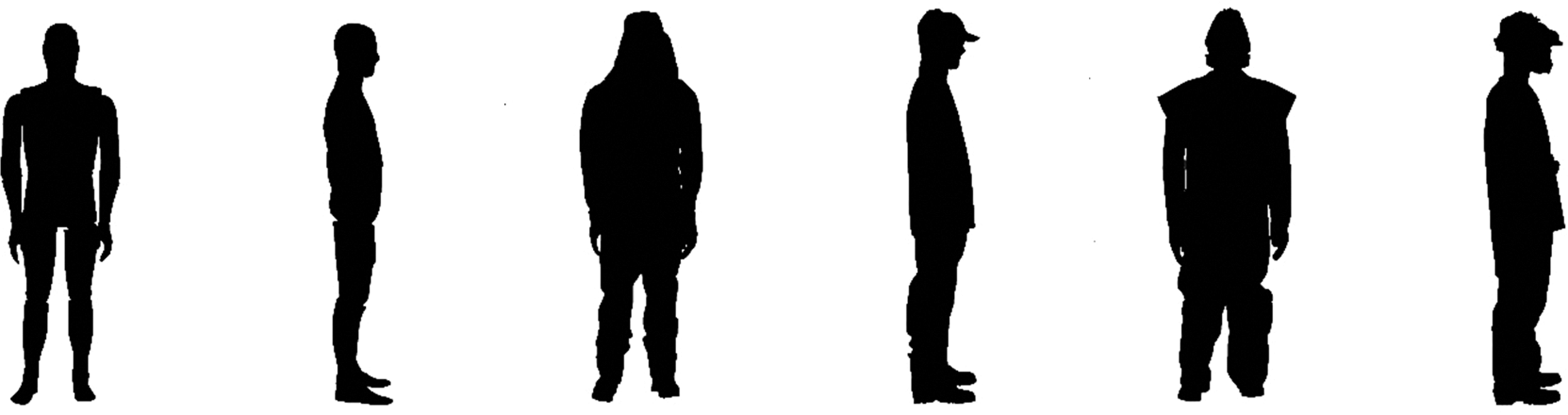
Edited photos of the nude manikin, SC – the sugarcane cutter´s outfit, and PS – the pesticide sprayer’s outfit, which were used to count black pixels for the clothing area factor (fcl) calculation.
Thermal insulation measurement and evaluation methodology
The heat loss method (using the global calculation method) was used to determine both the total thermal insulation (It) and the resultant total thermal insulation (Itr). The procedure is described in ISO 9920 [21] and all parameters were set within the required ranges. The manikin's surface temperature was set and maintained at 34 ± 0.1°C. The ambient temperature was set and maintained at 20.0 ± 0.1°C (checked against the average of three temperature measurements taken at 0.1, 1.1 and 1.7 m above the level of the sole of the manikin's foot) with 0.21 ± 0.08 m/s air velocity aimed at the manikin's back (measured at 1.2 m above floor level). The relative humidity inside the chamber was maintained at 40 ± 5%. A walking speed of approximately 3.5 km/h (step rate set at 90 steps/min) was used for the resultant total thermal insulation (Itr) measurement.
Two applicable options (Table 1) to predict the resultant total thermal insulation (Itr) for clothing ensembles SC and PS were examined in this study. First, with regard to the total thermal insulation range given in the standard (from 1.2 to 2.0 clo), equation (32) was selected for both ensembles. The second option examined was equation (35), which is recommended for protective clothing and clothing with low air permeability. This applies to our clothing ensembles, especially PS. For the nude manikin, equation (33) from the standard was always used. Equations (34) and (36) were not suitable for our clothing sets and environmental parameters. A comparison of the resultant total thermal insulation (Itr) was drawn between the values from the two predictive equations (32) and (35), from the standard ISO 9920 [21], and the values obtained from our measurements. A similar comparison was done for the resultant intrinsic thermal insulation (Iclr) using measured clothing area factor (fcl) values. Despite the fact that the clothing ensembles did not fit the description of standard EN 342 [22] for cold protective clothing, we decided to apply this standard as well to evaluate the error compared to ISO 9920 [21]. The equations used in this article are presented below and are labeled in the same way as in the relevant standards




Evaporative resistance measurement methodology
Non-sweating manikins (manikins that lack a dedicated sweating system) can be effectively used to determine evaporative resistance using pre-wetted skin. Despite this method not being standardized, it has been presented in a variety of publications and was used for sweat simulation [41] in our study. The tight-fitting skin (thickness d= 0.9 mm, 95% cotton, 5% elastane) covered the manikin's entire body except for the hands and feet. To simulate sweat on these body parts, gloves (100% cotton) and socks (67% cotton, 30% polyester, 3% elastane) were used. Before each test, the skin was wetted with 925 ± 15 g of water with no drippage.
The thermal manikin was placed inside the chamber in the same upright position and in the same place as for the previous measurement (thermal insulation). However, this time the whole manikin system was placed on a scale to monitor mass loss throughout the measurement (the mass loss method was used only for one of the three measured repetitions as the extra equipment needed was not available for the rest). Both the thermal manikin's surface temperature and the ambient temperature were set to 34 ± 0.2°C to ensure so-called isothermal conditions [26,33]. Relative humidity was maintained at below 50% to provide good evaporation from the manikin's wetted skin. The air velocity was raised compared to the thermal insulation tests, to 0.54 ± 0.16 m/s to ensure even humidity distribution inside the climatic chamber. Evaporative resistance was only measured in static conditions as the measurement setup (with the scale) did not allow for the use of a walking stand.
Evaporative resistance calculation
There are two calculation methods for clothing evaporative resistance provided in the ASTM standard from 2010 [23] – the mass loss method and the heat loss method [42].
Heat loss method
Two corrections, for the skin temperature of the manikin [29,31] and for the heat gains from the environment [33], (both of which are present when using pre-wetted skin), are examined in this study and explained in detail below.
Evaporative resistance was calculated by the heat loss method from the area-weighted heat loss observed from the thermal manikin software. According to ASTM standard [24], the total evaporative resistance should be calculated from equation (1) from the manikin's surface temperature as it assumes that isothermal conditions are used (Tmanikin = Tsk).


As there is a temperature gradient between the wetted skin and the environment, part of the heat needed to evaporate the water from the skin is also taken from the environment through conduction, convection, and radiation mechanisms as presented in Figure 3. In some cases (e.g. impermeable clothing, high insulation clothing), evaporation is negligible. This may cause the manikin's power regulation to be episodic, which may, in turn, cause the manikin's surface to overheat and exceed the set temperature. Thus, the effect presented above (Figure 3) can be reversed, and the manikin may exhibit extra dry heat loss instead. That is why another correction for the evaporative resistance calculation was proposed and is presented as equation (3). We get the final equation (4), for calculating the corrected evaporative resistance by incorporating both equations (2) and (3) into equation (1)



The heat transfer mechanism between the manikin surface, the wetted skin, and the environment in a so-called isothermal conditions (Ta = Tr = Tmanikin ≠ Tskin) without clothing, adapted from Wang et al.[33].
A comprehensive overview of the corrections and the comparison of heat loss vs. mass loss are presented in the review article by Wang [43]. Other proposed corrections (e.g. for moisture in the clothing, for skin fabric) by Wang et al. [26,3233,43] are more complicated to incorporate into practical measurements (importance of measuring skin fabric parameters, wet thermal insulation of clothing etc.) and were not considered in this study. With the use of the clothing area factor (fcl), the whole body intrinsic evaporative resistance could be calculated for both clothing sets.
Mass loss method
This method is based on the measurement of mass loss rate and its subsequent conversion to evaporative heat loss by multiplying the latent heat of the vaporization of water. The ASTM standard [23] uses the manikin's surface temperature for the calculation of the saturated vapor pressure p
sk
. The evaporative resistance calculated from the mass loss method is calculated based on equation (5)

To be correct from a physical point of view, this calculation should be corrected in the same way as in the heat loss method, using the predicted skin temperature based on equation (2). Ret,m_skin is the evaporative resistance, which is calculated based on equation (5) with the manikin's surface temperature (Tmanikin) being substituted for the predicted temperature of the wetted skin (Tsk).
Data analysis
All thermal insulation values presented in this study are the averaged values of two independent measurements with a difference lower than 4% between them as required by the ISO 9920 standard [21]. For the evaporative resistance measurements, the values presented, including standard deviation from the heat loss method, were calculated as an average of three independent measurements. However, the mass loss method was measured only once for each clothing ensemble as a control measurement; therefore, no standard deviation could be presented.
Sensitivity study
PHS simulations were conducted as sensitivity analyses to observe the impact of the clothing properties, obtained by the different equations and corrections, on the workers’ maximum exposure time. The maximum exposure time was evaluated using two different criteria: (a) D_Tre is the time it took an average worker to reach a core temperature limit of 38°C (occupational exposure limit), (b) Dwl_50 is the time it took an average worker to reach the limit for water (sweat) loss. All parameters for PHS simulations except for measured clothing parameters [resultant intrinsic thermal insulation (Iclr) and moisture permeability index (im), calculated from the measured thermal insulation and evaporative resistance] were constant and corresponded to the environmental parameters during lunch time in the sugarcane fields of Latin America (Table 2). Parameters defining the human body were chosen based on an average male with a posture, walking speed and metabolic production corresponding to work in a sugarcane field. To analyze the difference between multiple predictive equations for the resultant intrinsic thermal insulation (Iclr), the intrinsic evaporative resistance (Recl) values were set to a constant for each clothing ensemble. To investigate the impact of the corrections on the evaporative resistance, the opposite approach was used: the resultant intrinsic thermal insulation (Iclr) was set to a constant value and the intrinsic evaporative resistance (Recl) was changed according to the corrections.
Constant input parameters for the PHS model for sensitivity analyses of the impact of measured clothing properties on predicted exposure time.

Results
Thermal insulation
In Table 3, the total (It) and intrinsic (Icl) thermal insulation and the total (Itr) and intrinsic (Iclr) resultant thermal insulation results, both predicted (Itr_p, Iclr_p) and measured (Itr_m, Iclr_m) are presented. The table gives the complete database of all obtained values. A comparison of the measured and calculated values, both by the standard equation (32) of ISO 9920 [21] (applied based on the clothing insulation range) and by equation (35) of the same standard (used based on the low permeability of the clothing sets being measured) was conducted. The percentage difference (Figure 4) was evaluated based on the resultant intrinsic thermal insulation values, calculated using a clothing area factor of 1.26 for SC and 1.41 for PS, the values having been obtained by the photographic method because these values are used as input data for the PHS model. The difference between the predicted and measured values was −3.6 and −0.6% for SC and PS, respectively, when equation (32) was used and 27.9% and 27.3% for SC and PS, respectively, when using equation (35). Similarly, equation (33) was used for the nude manikin to predict total resultant thermal resistance (It), and this value was again compared to the measured value. In this case, the difference was 3.5%. When using the equation from the EN 342 standard [22] (used for cold protective clothing), the difference between predicted and measured values for resultant intrinsic thermal insulation was 16.3% and 18.8% for SC and PS, respectively.
Database of total thermal insulation (It), resultant total thermal insulation (Itr), and resultant intrinsic thermal insulation (Iclr) values obtained by measurements and by multiple predictive equations from different standards.


Percentage differences between measured resultant intrinsic thermal insulation (Iclr_m) and predicted values from equation (32) from ISO 9920 (Iclr_p(32)), from equation (35) from ISO 9920 (Iclr_p(35)) and from the equation in the EN342 standard (Iclr_p(EN342)).
The total thermal insulation of the manikin's skin, which was used for the evaporative resistance calculation was measured only in static conditions and reached 0.131 m2K/W.
The sensitivity analysis was done based on the PHS simulations (Table 4), with all parameters set as constants, except for resultant intrinsic thermal resistance, which was changed according to the equations. The core temperature limit (D_Tre) was not reached during any of the simulations in the selected environmental parameters when clothing set SC was used. However, when clothing set PS was used, the core temperature limit was reached in all cases within 25 to 30 min.
Results from PHS simulations using constant intrinsic evaporative resistance (Recl_m) as measured by the mass loss method with multiple values of resultant intrinsic thermal insulation (Iclr) based on different predictive equations.

Evaporative resistance
All data for both ensembles are presented in Table 5. Three different values for total evaporative resistance, calculated by the heat loss method and using different corrections, are shown. First, Ret,h_manikin values were calculated from equation (1b). Second, Ret,h_skin values were obtained by incorporating the correction for skin temperature [equation (2)] into the previous equation (1b). Third, Ret,h_skin+envi values were determined according to equation (4). Finally, two values were obtained from the mass loss method. Ret_m and Ret_m_skin were calculated according to equation (5), using the manikin's surface temperature and the predicted skin temperature, respectively. The total evaporative resistance of the manikin, wearing only pre-wetted skin, was also measured and calculated from equation (1b) using the heat loss method – 8.2 m2Pa/W. Because this value was only measured once (when testing the entire measurement setup), no statistical analyses could be applied to it. All intrinsic evaporative values (Recl) were calculated using the clothing area factor (fcl) and are also presented in Table 5.
Database of total (Ret) and intrinsic (Recl) evaporative resistance, obtained by both the mass loss and the heat loss methods, using various possible calculations and corrections.

Note: Ret,m and Ret,h_manikin are the evaporative resistances calculated by the mass loss and the heat loss method using the manikin´s surface temperature, Ret,m_skin and Ret,h_skin are the evaporative resistances calculated by the mass loss and the heat loss methods using the predicted skin temperature of the manikin and Ret,h_skin+envi is the evaporative resistance calculated by the heat loss method based on the correction for gains from the environment. Additionally, all of these values were recalculated using the clothing area factor (fcl), and their intrinsic values are given as well.
Percentage differences between evaporative resistance calculated by the mass loss method using the manikin's surface temperature, a common method at present, and other types of calculations using different corrections are shown in Figure 5. The average deviation and percent deviation were also calculated for five presented calculation methods for both sets, reaching 2.05 and 8.49 for the SC ensemble and 2.42 and 2.92 for the PS ensemble, respectively.

Percentage differences between evaporative resistance calculated by the mass loss method using the manikin´s surface temperature (a common method that is currently favoured), evaporative resistance calculated by the mass loss method using skin temperature (Ret,m_skin), evaporative resistance calculated by the heat loss method using the manikin´s surface temperature (Ret,h_manikin), skin temperature (Ret,h_skin), and skin temperature with a correction for environmental gains (Ret,h_skin+envi).
The sensitivity analysis was done based on the PHS simulations (Table 6) with all parameters set as constants except for the intrinsic evaporative resistance, which was changed according to the corrections mentioned in the ‘Evaporative resistance calculation’ section. Both the core temperature limit (D_Tre) and the water loss limit (Dwl50) could be used for the evaluation as both were reached for both sets in most cases.
Results from PHS simulations using constant measured resultant intrinsic thermal insulation (Iclr) and multiple values of intrinsic evaporative resistance (Recl) based on different corrections used for its calculation.

The PHS model is simple compared to other physiological models [10, 44, 45] and it would seem that its simplicity demands further consideration. Simplicity might be the reason why a small change in the input data, e.g. pre-set metabolic energy production, causes a considerable change in the final maximal exposure time.
Discussion
Differences between calculated and measured resultant thermal insulation values
We found that the difference between measured values of the resultant intrinsic thermal insulation and those calculated according to equation (32) in ISO 9920 ranged from −0.6 to −3.6%. The difference decreased with the rising total insulation of the clothing being evaluated. The accuracy of the prediction from equation (32) is sufficient; however, it is not clear which of the equations from ISO 9920 should have been used for our ensembles. From the perspective of thermal insulation, equation (32) from ISO 9920 is the best fit. On the other hand, equation (35) is meant to be applied to specialized clothing with impermeable layers. When we used equation (35), however, the difference between the predicted and the measured values was significantly higher: −27.9% for SC and −27.3% for PS. Moreover, a similar predictive equation also exists in the standard for cold protective clothing, EN 342 [22]. The difference between the predicted and the measured values of the resultant total thermal insulation for both sets was lower when using this equation (Figure 4) than equation (35) of the ISO 9920 standard. Obviously, the equation from the standard for cold protective clothing yields results that are closer to the measured ones than equation (35), which is meant to be used for impermeable clothing. Our findings underscore the difficulties associated with choosing the correct equation for a given application. To avoid confusion in the future, a versatile and robust predictive equation for protective clothing needs to be developed. Such an equation could then be applied to the predictive models to enhance their accuracy.
In the next step, a sensitivity analysis was carried out to measure the impact of the inputs on the resulting PHS. Based on water loss criteria, the sensitivity analyses showed that there was very little difference in the exposure time in the SC ensemble. The most significant time difference between predictions based on the measured value and any of the predictive equations was 42 min [measured vs. the equation (35)], which is relatively small but not negligible, especially in relation to an 8-h workday. The core temperature limit was not reached for the whole working day when the SC clothing set was used. For the PS set, even though there were relatively high differences in absolute values between the results from the measurements and the calculations, no significant differences were found in PHS predictions while using these values. The exposure time based on water loss did not change at all and the core temperature maximum exposure time varied by only 5 min (Table 4). However, we cannot conclude that these error margins have a negligible impact on the PHS predictions. As seen in Figure 5, a small change in metabolic production can cause, in some cases, a significant change in the resulting exposure time. This stems from the simplicity of the PHS model, and it would be of a great interest to carry out a similar analysis on a more sophisticated physiological model. However, the more complicated models are not affordable for many researchers.
Differences between evaporative resistance values obtained using multiple corrections
First, two methods for measuring evaporative resistance were compared (Table 5). For the SC ensemble, the same results were obtained (with a difference of 0.002%) by both methods when the corrections were not used (Ret,h_manikin = Ret,m = 26.7 m2Pa/W). For the PS set, the difference between the heat loss method (Ret,h_manikin = 83.7 m2Pa/W) and the mass loss method (Ret,m = 87.4 m2Pa/W) was slightly higher, amounting to 4.4% (Figure 5).
Second, we investigated the discrepancies caused by the use of multiple corrections (Figure 5). In the mass loss method, the differences between values calculated from the manikin's surface temperature and from the manikin's skin temperature were 13.2% for the SC ensemble and 4.4% for the PS ensemble. Similarly, the heat loss method involved differences of 13.7% and 8.6% for SC and PS respectively. Moreover, when the correction for gains from the environment was used in the heat loss method, the differences compared to the raw values (calculated from the manikin's surface temperature) were even higher 21.2% for SC and 8.7% for PS. We could see that the percentage differences between both the mass loss and the heat loss method are not significant when the same temperature (either the surface temperature or the skin temperature of the manikin) is used for their calculation. However, calculations based on the manikin's surface temperature should not be used as this is not correct from a physical point of view. Water evaporates from the manikin’s skin and not its surface, thus the vapor pressure of saturated skin needs to be used in the calculations. As we were neither able to control nor measure the manikin’s skin temperature with the manikin available to us, it was necessary to use the predicted skin temperature instead.
The results from the sensitivity analyses (Table 6) support our conclusions about using the manikin's surface temperature. For the SC ensemble, the core temperature criteria were not reached when the manikin’s surface temperature was used in either the mass loss or the heat loss method, whereas when the predicted skin temperature was used in both methods, the maximum exposure time was only around 55 min. This represents a huge difference and could result in very inaccurate PHS predictions, which would have the potential to adversely affect the health of the sugarcane workers. As seen in Figure 5, a small change in the input metabolic production in the PHS model can, in some cases, cause a significant jump in the exposure time. Moreover, in one case for the SC ensemble, a lower evaporative resistance value resulted in a lower exposure time, which should not have been the case. These uncertainties are probably caused by the simplicity of the PHS model and should be taken into account when using this model in real-life situations. The PS ensembles insulation was relatively high and also contained multiple impermeable layers, meaning heat transfer between the skin and the environment was negligible and the corrections mentioned had almost no effect on the calculated evaporative resistance values, something that was supported by the results from the sensitivity analysis. As the impermeability of the clothing set has a significant impact on the PHS predictions, there were no differences in exposure time based on water loss criteria and the core temperature limitation was reached fairly quickly (at around 30 min) in all cases.
Results from this study show the need to correct for the pre-wetted skin temperature in the calculations of both methods in order for them to be physically correct. Other corrections should not be needed as they do not improve the results further although creating a larger clothing database would be advisable. However, the correction for the pre-wetted skin temperature can be omitted when impermeable and high insulated clothing is used. These results are in conformity with the conclusions by Wang et al. [33], who stated that the corrections should not be needed for impermeable or high insulated clothing (>2.5 clo). Although our measurement on the PS set supports this statement, it was previously concluded on the basis of only one measurement [33]. Therefore, we recommend further tests with high insulated and impermeable clothing being carried out for verification. Actually, although it might be interesting to pinpoint the exact cut-off point in the thermal insulation range from which corrections are no longer necessary. The corrections have minimal impact when high insulated and impermeable clothing is used, and therefore they can be used in all cases.
The same clothing ensembles were also used in the study presented on the 12i3m – 12th International Meeting on Thermal Manikins and Modeling, Empa, St. Gallen, Switzerland [46].
Conclusion
Three clothing properties that are important for heat stress modelling – clothing area factor, thermal insulation, and evaporative resistance were measured for two clothing ensembles currently used by workers in sugarcane fields. First, for the thermal insulation measurements, we found that equation (32), a predictive equation from ISO 9920 standard is the most accurate for our ensembles; however, there is considerable confusion when determining the most suitable equation from this and other standards when protective clothing is used. Although, there was no significant difference in the resulting PHS predictions when using different equations for calculating the input thermal insulation, an advanced physiological model should be used to verify these results as differences in absolute values were significant in some cases. A new versatile equation for predicting resultant thermal insulation for various kinds of protective clothing should be developed in the future to avoid confusion when choosing from multiple equations. Second, both the mass loss and the heat loss methods for calculating evaporative resistance were used and some proposed corrections for the heat loss method were included. Even when there is no significant difference between the values calculated by the heat loss method and the mass loss method using the manikin’s surface temperature, these calculations should not be used because they cannot accurately represent realistic physical conditions. The correction for the pre-wetted skin temperature should be used instead, especially in cases where there are no impermeable layers and low insulated clothing is being considered. Results of the PHS sensitivity analyses showed that using the manikin’s surface temperature with such clothing can cause inaccurate predictions and is potentially dangerous when used in real-life situations. Usage of other corrections depends largely on the type of clothing being measured, and more investigation involving a more extensive set of data is needed.
Footnotes
Authors' note
Kalev Kuklane is now affiliated with Institute for Safety (IKV), Zoetermeer, Netherlands.
Declaration of conflicting interests
The author(s) declared no potential conflicts of interest with respect to the research, authorship, and/or publication of this article.
Funding
The author(s) disclosed receipt of the following financial support for the research, authorship, and/or publication of this article: This research was supported by two projects (RV9080000301, FSI-S-17_4444) at the Brno University of Technology, Czech Republic.
