




Abstract
In spite of the rise of new media in a B2C context, companies still prefer to handle complaints privately. As such, many complaints are handled via email resulting in a professional communication genre of its own. In this study we performed a cross-cultural genre analysis to understand the specific discourse structure of the moves within response mails to complaints, on the one hand, and the importance of the communicative function of Conversational Human Voice within this genre, on the other. With this aim, we collected authentic organizational email replies to complaints from telecom companies active in the UK and Spain (36 and 44 emails respectively). The results indicate that the British and Spanish data sets show a similar discourse structure in terms of move frequency. The submoves that are prototypical for all data sets are Greeting, Explanation, Conclusion, and the closing submoves Sign-off and Signature. The data sets differ mainly in their frequency for the interpersonal submoves Empathy, Gratitude, and Apology, which are more prevalent in the English corpus, and the more business-oriented moves, such as Contact reason, Marketing, and Future contact, which are mainly present in the Spanish corpus. This suggests that organizational email replies to complaints are a rather conventionalized genre, with some linguacultures putting more effort in company-customer interactions by using more interpersonal submoves. Regarding the cross-cultural analysis of the expression of Conversational Human Voice we observed an influence of the respective linguacultures in the sense that the Spanish data are less personal and less invitational than the English mails, although they present more empathetic intensifiers. Furthermore, both data sets show only a limited extent of informal language. We evaluate these findings in the light of previous work.
Introduction
Providing excellent customer service is increasingly becoming a key differentiator for companies in today’s competitive market (Sheth et al., 2020; Van Vaerenbergh et al., 2018), especially considering the long-term trend toward higher levels of consumer complaints (Ombudsman Services, 2020; UK European Consumer Centre, 2017). Recent academic studies and industry reports have shown that high-quality customer service, which includes complaint management, leads to higher levels of customer satisfaction, loyalty, and subsequently to increased revenue and growth (Cambra Fierro et al., 2014; Microsoft, 2019; Van Vaerenbergh et al., 2018). Therefore, it is of increasing importance for a company to respond adequately to complaints and to rectify errors through service recovery (Zhang & Vásquez, 2014).
While traditional customer service channels, such as in-person interactions and telephone conversations, are losing significance, digital channels are on the rise (CCMC, 2020; The Institute of Customer Service, 2022). Surprisingly, email remains the most important digital channel, despite the growing importance of social media in customer service (The Institute of Customer Service, 2021). For example, a recent large-scale report shows that 10.1% of British consumers used email for customer service purposes in the last 3 months, while only 0.7% used social media (The Institute of Customer Service, 2022). Email as a medium for online complaint handling offers four advantages over most other forms of digital media (Vela Delfa, 2016): (1) Customers and customer service employees can share sensitive data (e.g., bank account numbers, names of employees), (2) email is appropriate for more complex situations, in which one needs to write more lengthy complaints or responses compared to other media with a restricted amount of words, such as X (previously called Twitter), (3) email can be saved for future reference or evidentiary purposes, and (4) email allows the conversation to be hidden from a public view, a feature especially appreciated by firms. One of the disadvantages of email is its low level of media richness compared to traditional channels (see media richness theory, Daft & Lengel, 1986). The lack of non-verbal and paraverbal communication strategies, such as facial expressions and tone, in email makes it difficult for customer service employees to convey empathy and understanding (Jensen, 2009), which is a crucial aspect of effective customer service (Gelbrich & Roschk, 2011; Orsingher et al., 2010).
To overcome this challenge, employees can use a Conversational Human Voice (CHV), which is described by Kelleher (2009, p. 177) as “an engaging and natural style of organizational communication as perceived by an organization’s publics based on interactions between individuals in the organization and individuals in publics.” The concept of CHV is an increasingly important focus in studies on managerial responses on social media, which includes but is not limited to complaint handling, in which employees use communicative strategies to emphasize their personal connection and involvement with the customer. This genre is also known as webcare, which is defined by van Noort and Willemsen (2012, p. 133) as “the act of engaging in online interactions with (complaining) consumers, by actively searching the web to address consumer feedback (e.g., questions, concerns and complaints).” Studies on webcare show that CHV has a positive effect on customer satisfaction, purchase intentions, attitude toward the brand, and organizational reputation (Crijns et al., 2017; Huibers & Verhoeven, 2014; van Noort & Willemsen, 2012; Willemsen et al., 2013). For example, Sung and Kim (2018) showed that using interpersonal communication strategies, such as a conversational tone, results in higher levels of organizational personification, which, in turn, leads to an increased perception of organizational relationship investment. While most of the studies on webcare focus on public social media (e.g., Crijns et al., 2017; Huibers & Verhoeven, 2014), some focus on private social media interactions between customer and company (e.g., Hachmang et al., 2019; Liebrecht & van Hooijdonk, 2022). The current study is based on the assumption that the private digital professional genre of email responses to customer complaints can be categorized under webcare as well, because it comprises an online interaction with customers in which consumer feedback is addressed. Given the low level of media richness in emails, the genre could therefore benefit from a high level of CHV.
Despite the importance attributed to CHV in webcare, there remains a paucity of research on the role of the linguacultural 1 background of both the employee and the customer in the way webcare texts are realized and perceived (Liebrecht et al., 2021). The few studies that focus on this topic found that CHV-related strategies are not realized and appreciated in the same way across linguacultures (Van Herck et al., 2021; Cenni & Goethals, 2020; Kniesel et al., 2016). The present study addresses this gap by providing new insights into how email responses to customer complaints are given shape in different linguacultures. In particular, this study uses a mixed-method discourse approach to examine and compare the structure (using a move analysis) and the linguistic aspects (using a CHV analysis) in a corpus of British and Peninsular Spanish emails. This allows us to link CHV as a webcare strategy to the communicative functions of the genre and interpret the results cross-culturally.
Moves and Conversational Human Voice in Response Emails to Complaints: A Review
Service research on how companies can effectively respond to negative reviews or complaints is rapidly growing, in response to the changes observed in this field of business communication as mentioned in the introduction (Sparks & Bradley, 2017). Genre analysis can help here, as this research technique enables to reveal both the generic structure (moves) and the linguistic features of the communicative function of each move in the structure (Thumvichit & Gampper, 2019). Move analysis is the most common application of genre analysis (Upton & Cohen, 2009). The term “move” was introduced by Swales (1990, 2004, p. 228) who defines the term as “a discoursal or rhetorical unit that performs a coherent communicative function in a written or spoken discourse.” These moves can consist of various smaller units, which are called steps by Swales (1990), strategies by Bhatia (1993), and submoves by Van Herck et al. (2022). In this study, we will use the latter term. Socio-cultural differences between languages can also be part of a genre analysis, as different cultures and their respective languages will not necessarily structure (moves) nor express (rhetoric) their complaints in the same way (Biber et al., 2007).
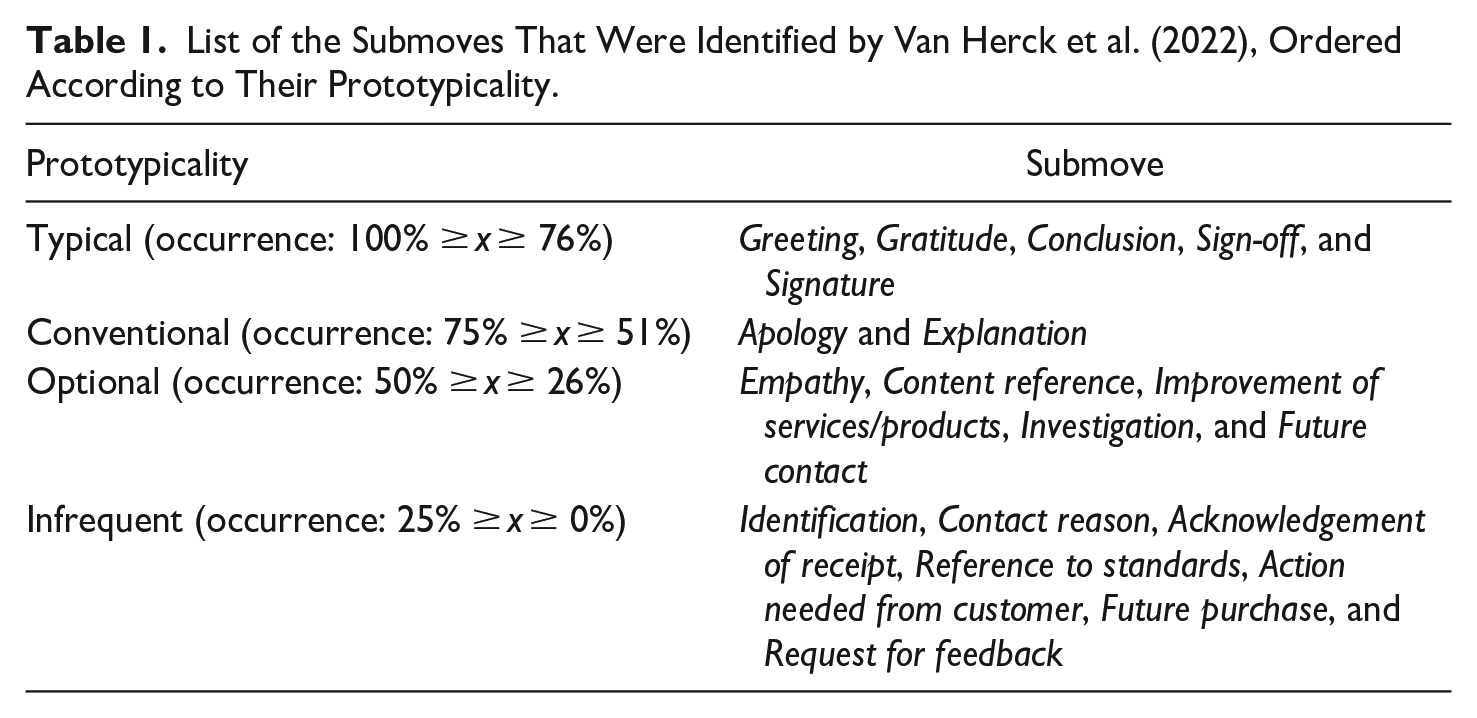
Concerning the move analysis of organizational response messages to negative feedback from customers, most studies focus on managerial responses to (negative) online reviews on travel review websites, such as Tripadvisor (e.g., Thumvichit & Gampper, 2019; Zhang & Vásquez, 2014). However, as far as response emails to customer complaints are concerned, research in the domain of genre and move analysis is limited. Only recently Van Herck et al. (2022) studied the moves and submoves of 150 English response emails to complaints sent by sixteen companies in the United Kingdom belonging to various industries, namely delivery, e-retail, telecommunication, and travel. Considering the similarities between the two genres, Van Herck et al. (2022) built upon the results of Zhang and Vásquez (2014) and De Clerck et al. (2019), which led to a framework of 6 moves (Opening, Acknowledging complaint, Brand positioning, Transactional complaint handling, Concluding remarks, and Closing) and 19 submoves Van Herck et al. (2022). 2 A part of the data set used in their study is used in the current one (more specifically, the emails from the telecommunication industry). Based on their frequencies, Van Herck et al. (2022) divided these submoves into four symmetrical categories of prototypicality (in equal parts of 25%), namely typical, conventional, optional, and infrequent. Table 1 shows the 19 submoves ordered according to their prototypicality. The move structure analysis of the mails in this study will be based on this division.
List of the Submoves That Were Identified by Van Herck et al. (2022), Ordered According to Their Prototypicality.
Apart from the moves, the current study will also focus on the linguistic expression of CHV in complaint handling. More specifically, the CHV dimension will be examined for each submove separately as well as for the message as a whole, in order to establish its role and place in the structure of a complaint handling email. As the CHV literature focusing specifically on complaint emails is scarce, we base ourselves on the identification tool that van Hooijdonk and Liebrecht (2018) designed. They investigated the personal and open communication style in 480 webcare conversations, including communal questions, problems, concerns, and complaints, between 20 Dutch municipalities and their citizens.
To investigate CHV, van Hooijdonk and Liebrecht (2018) developed a linguistic operationalization that they perfected in two other studies (Liebrecht et al., 2021; van Hooijdonk & Liebrecht, 2021) and that is based on three strategies previously identified in van Noort et al. (2014): personalizing the message, using informal language, and applying invitational rhetoric. Personalization refers to the extent to which individuals come forward in the conversation, thus increasing the personal dimension of the message. It can be achieved by greeting the recipient with their name, rather than with a generic form of address, but also by signing the message personally and not just with the name of the organization (Strauss & Hill, 2001). Also, the use of personal and possessive pronouns in the first person (Packard et al., 2018), rather than the impersonal third person to refer to the organization, and the explicit use of the second person rather than using impersonal phrases are manifestations of personalization. The second strategy, informal language use, attempts to mimic face-to-face spoken language in written texts to create an illusion of closeness (Pérez Sabater et al., 2008). Linguistic elements that contribute to this are the use of informal words and phrases, the use of emojis, the imitation of sound, the use of interjections, and the lax handling of grammatical rules (e.g., the omission of auxiliary verbs) and spelling conventions (e.g., the use of capitals and the omission or repetition of punctuation marks). In their operationalization of the third strategy, invitational rhetoric, van Hooijdonk and Liebrecht (2018) include the speech acts Thanking, Apologizing, and showing Sympathy/Empathy. However, these overlap with the moves presented in the coding scheme in Van Herck et al. (2022). Therefore, for analyzing the strategy Invitational rhetoric, we decided to focus on the social cues that aim to stimulate the dialogue or that want to influence the interaction positively by using humor. Additionally, we take into account pragmatic elements that act as empathic intensifiers, such as reinforcing adverbs, adjectives, and subordinate clauses, and as such increase the level of personal engagement of the different moves. Previous research shows this has a positive effect on the client’s positive, neutral, or negative sentiment toward the company (Hachmang et al., 2019).
As shown in the introduction, using CHV in webcare positively affects important customer outcomes, such as customer satisfaction, reputation, and organizational relationship investment. CHV is thus, according to the literature, a communicative genre requirement of a digital professional response to a complaint. However, webcare strategies are not realized in the same way across linguacultures. Although insufficient cross-cultural research has been conducted on webcare communication style, as is also pointed out by van Hooijdonk and Liebrecht (2021), some studies support this claim. For instance, notwithstanding the lack of focus on cross-cultural factors, Kniesel et al. (2016) investigated the use of CHV in an experiment about hotel reviews with German participants and observed that they preferred the corporate voice over the more personal one. This tendency is confirmed in a cross-cultural study by Van Herck et al. (2021) on differences in communicative styles, albeit not explicitly framed as a study on CHV, between English and German email responses to customer complaints as they observe more we-references in the German data. In this context, it may be relevant to refer to Hofstede’s cultural dimensions theory, as Germans score notably higher on the individualism-collectivism scale than the British (Hofstede Insights, 2023). Furthermore, the study by Van Herck et al. (2021) also concludes that the English mails show a more person-oriented style, which is in line with the results of a study by Cenni and Goethals (2020) on responses to negative hotel reviews in English, Dutch, and Italian.
The above-cited research provides a first glimpse of the move structure and possible CHV characteristics of response emails to customer complaints in a B2C context. However, further research is needed to explore general trends and differences across languages as to how universal factors present in any speech act vary in their application to culture-specific communication (Scheu-Lottgen & Hernández Campoy, 1998). With this study, we aim to contribute to this cross-cultural challenge with a comparison between British English and Peninsular Spanish. Although a lot of research has already been done based on English-language data, a recent overview study by Garcés-Conejos Blitvich (2021) on conflict in Spanish communication shows that research on digital communication in Spanish, let alone on webcare, is still in its infancy. According to Garcés-Conejos Blitvich (2021, p. 379) this is mainly due to the fact that the models that are being used for pragmalinguistic analyses in Spanish are “not digitally native,” meaning that they were developed for the analysis of language in general and consequently failed to grasp to the specific features of digital data. As for the comparison between languages, research in Spanish on cross-cultural pragmatics with English has been a productive area of study (Márquez Reiter & Hidalgo Dowling, 2020). However, research in this area shows several limitations, as it mainly focuses on oral and/or elicited data and overemphasizes comparing and contrasting speech act structures and usage. In doing so, it neglects important discursive aspects such as communicative possibilities and choices in terms of relational involvement and commitment (Mugford, 2020). The study by Freytag (2020) on politeness in directive speech events in British English and Peninsular Spanish workplace emails is an exception to these shortcomings, as its metapragmatic approach leads to a better understanding of the pragmalinguistic and pragmastylistic choices of the actors by assessing contextual factors. Clearly, our study shows similarities with Freytag’s in terms of the discursive approach and also in terms of the professional genre the data belong to. However, our case involves a B2C complaint handling context as opposed to the internal B2B directive context in Freytag’s study, resulting in very different communicative purposes and actors’ profiles. Furthermore, our study is innovative because it not only focuses on the level of discursive commitment based on the presence of CHV but considers this in close interaction with the submoves and their communicative functions. This will allow us to draw cross-cultural conclusions on structure, content, and style as determining genre features of response emails to complaints in British English and Peninsular Spanish.
Regarding cross-cultural differences between the two linguacultures, there are some interesting insights from previous research that can be linked to the aspects of CHV that we will investigate in this study, although the criticisms mentioned above compel to consider these with caution. Studies comparing the two linguacultures build on the framework that was developed within cross-cultural pragmatics by researchers such as Blum-Kulka et al. (1989) and House (2000, 2006) on the cultural and linguistic factors that shape polite language use and the linguistic strategies to enhance interaction. It is commonly recognized that there are certain features that differentiate the linguacultures of British English and Peninsular Spanish. For instance, British English speakers tend to use negative polite and indirect language to prevent causing offense or confrontation, while focusing on the needs of the addressee. In contrast, Peninsular Spanish speakers often use positive politeness and direct language as a means of protecting the speaker’s positive face by demonstrating confidence and assertiveness. (In)directness is associated in the literature with positive and negative politeness cultures. Positive politeness cultures, such as Peninsular Spanish (Lorenzo-Dus et al., 2011), are linguistically characterized by explicit, unambiguous expressions such as unmitigated imperatives, and pragmatically by being limited to the message itself, without submoves, such as the presence of ritualistic thanking (de Pablos-Ortega, 2010). Negative politeness cultures, such as the British one, opt for implicit linguistic expressions, such as hedging, and pragmatically for imposition avoidance, for example, through the use of conventional customary expressions of formal deference (conventional indirectness) (Blum-Kulka et al. 1989; House, 2006; López Sánchez, 2010; Márquez-Reiter, 2002). Related to this, is the role of personal relationships in communication: Spanish speakers may prioritize building personal connections and trust before engaging in business or professional interactions, resulting in a more personal and communicatively engaging style, while British English speakers may prioritize professionalism and efficiency and prefer a more impersonal and formal approach. However, a personal approach in Peninsular Spanish is not a synonym of informality, as Spanish speakers place a high value on respect and formal language use in many contexts, particularly in business and academic settings. This is reflected in the use of formal pronouns (e.g., usted instead of tú), the use of titles and surnames, the use of formulaic language versus colloquial expressions, and the use of full forms instead of abbreviations (Giménez-Moreno & Skorczynska, 2013; Lorenzo-Dus & Bou-Franch, 2013).
We can conclude that it is generally assumed that the communicative style of speakers of Peninsular Spanish is more informal and direct than that of speakers of British English in many situations (Montero-Fleta et al., 2009; Pérez Sabater et al., 2008). This is in line with the statement mentioned above that Spain has a positive politeness culture, as opposed to British culture which is characterized by negative politeness. However, there are also quite a few studies (see López Sánchez, 2010) that argue that most languages, including Spanish, mainly use conventional indirectness, and thus formality, as their default communication strategy. The already cited study by Freytag (2020) on directive business emails in British English and Peninsular Spanish is particularly interesting in this respect, as it comes to the surprising conclusion that the British English writers reveal a higher use of imperative forms and that, all in all, a high level of directness is conveyed in the mails of both linguacultures. These results prompt the author to question the traditional dichotomy between negative and positive politeness cultures and “highlight the importance of taking into account the context in which linguistic strategies are chosen before drawing generalizing conclusions on language groups that may support stereotypical judgments” (Freytag, 2020, p. 109).
To sum up, the current study uses the insights from this literature review on move analysis, CHV, and linguaculture research to perform a contrastive analysis of both the moves and the expressions of CHV in a corpus of British and Peninsular Spanish reply emails of telecom companies to complaints, starting from the following research questions:
To what extent is the move structure of Spanish and British response emails to customer complaints similar regarding the structure and typicality of the moves and submoves?
To what extent are the expressions of CHV similar between the two data sets in terms of their nature and frequency?
How does CHV interact with the different moves and submoves throughout the two data sets?
In the methodological section that follows, we first introduce the corpus and then discuss the coding instruments that will allow us (1) to perform a contrastive discursive move analysis of the genre for the two linguacultures, and (2) to link CHV as a webcare strategy to the different communicative goals of the genre and interpret it cross-culturally in the light of previous research.
Methodology
Data Collection
We collected an authentic data set consisting of 36 British and 44 Spanish email responses to customer complaints, written by five and seven telecommunication companies in the UK and Spain, respectively. The English data were collected between November 2017 and January 2018 and are a subset from a larger data set, which included more industries aside from the telecommunications sector used for the current study. The larger data set was compiled by one of the authors (Van Herck et al. 2022). The Spanish data were collected between February 2020 and March 2020. The main topics of the emails concerned billing problems, contractual issues, and problems with product or service quality.
We specifically chose to focus on the telecommunications industry because it is a commonly used service and the industry is known to receive a high amount of customer complaints (Citizens Advice, 2016; Europa Press, 2020), especially in Spain (Garín-Muñoz et al., 2015; Gijón et al., 2013). For example, a survey by the Spanish independent consumer organization Organización de Consumidores y Usuarios indicates that 54% of the respondents have filed a complaint over the past 5 years due to a problem with their telecom provider, showing that it is the service that generated the most problems for consumers (Gobierno España, 2019).
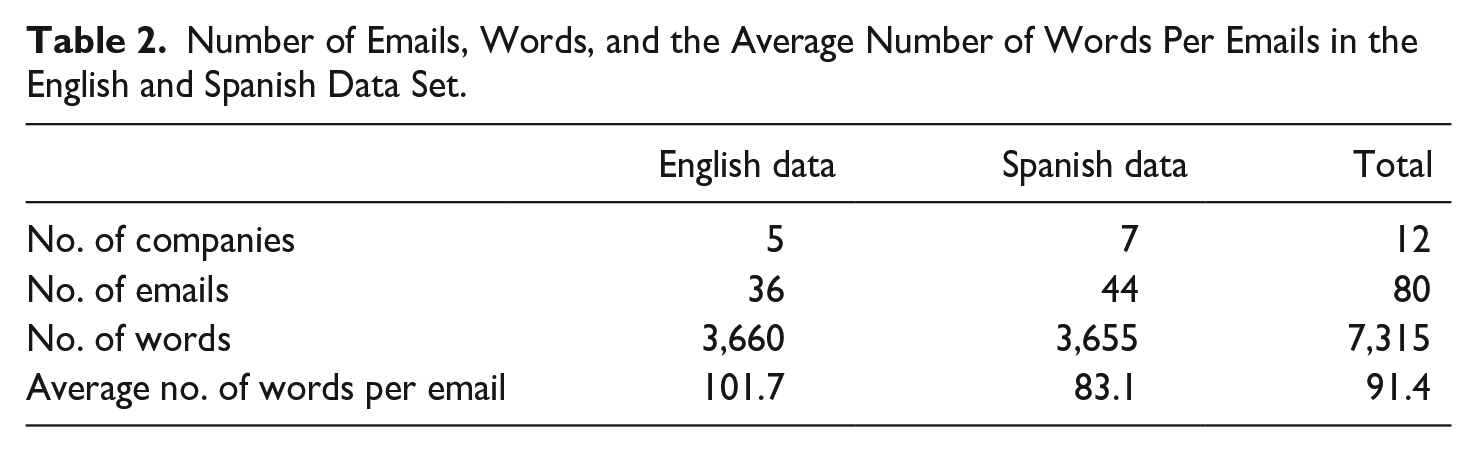
In contrast to public complaints on social media, complaint interactions via email are harder to find, because of their private nature. Nevertheless, we were able to collect both data sets because some customers made the responses they received to their complaints public by posting them as a screenshot on social media. We collected the English data (in a previous study) and Spanish data (in the current study) either on the official pages of the telecom company on Facebook or on X (previously called Twitter) by searching for the official username of the telecom company in the search bar along with search terms such as #complaint, #customerservicefail, #fail, #customerexperience for the English data and #queja (complaint), #reclamación (complaint), #reclamar (file a complaint), #insatisfecho (dissatisfied), and #respuesta (reply) for the Spanish data. The emails that were included in the data set met certain requirements: (1) They had a distinct beginning and ending (i.e., the emails were not cut-off in the middle of the text), (2) they were not an automatic message sent immediately after submitting a complaint, (3) the content made it clear that it was a response to a customer complaint (as opposed to, for example, a question), and (4) the date of the related Facebook post or X (previously called tweet) (and therefore the response) was no older than 2015, ensuring that the data set is relatively recent. After collecting the data, the images were converted to a textual document using an online OCR tool and were subsequently manually checked for transcription errors. This process resulted in a data set of 80 emails containing 7,315 words (see Table 2).
Number of Emails, Words, and the Average Number of Words Per Emails in the English and Spanish Data Set.
We ensured privacy in our study in the following ways: (1) by selecting only publicly available customer-company interactions on social media to which the companies publicly replied, (2) by anonymizing all emails, (3) by focusing only on the textual properties of the data, not personal information, 3 and (4) by using screenshots of the emails, making it impossible to reverse search the textual material on social media and link it back to a specific company, employee, or customer.
Coding Procedure and Analysis
The study combines techniques of linguistics and insights of webcare communication to examine the discourse-pragmatic strategies used by customer service representatives in email responses to complaints. The research utilizes a mixed-method approach, consisting of two parts: (1) a discourse analysis of the various moves in the emails to identify their communicative functions and (2) a CHV analysis that looks at linguistic and paralinguistic features to examine the level of personal engagement and commitment expressed by the messages. We discuss the coding instruments below. The study then compares and interprets the results in relation to previous research on webcare and linguaculture.
Coding Instruments
In a first step, we used move analysis to analyze the data by assigning primary communicative functions to text segments and determining segment boundaries, or discourse units of analysis, based on factors such as the communicative function, new topic introduction, and formatting markers, such as indentation and white space (Biber et al., 2007; Upton & Cohen, 2009). In our analysis, we found that sentences may contain multiple submoves and that a single submove can also span multiple sentences. In certain cases, two communicative functions are closely intertwined, making it difficult to separate them. In the following example, the submove Content reference co-occurs with Apology (underlined or bold, respectively): “
To streamline the analysis, we established a limit of two submoves per segment. Furthermore, we observed that a single submove can appear multiple times within a single email. For example, it happened several times within the data sets that there were multiple instances of the submove Conclusion within one email. The data were coded using a framework developed by Van Herck et al. (2022), which was partially based on the coding schemes of previous studies, starting with Zhang and Vásquez (2014), who focused on responses to negative hotel reviews, and later De Clerck et al. (2019), who focused on email responses to customer complaints in a business-to-business context. Their coding schemes were adapted to the different context of email responses to customer complaints in a business-to-consumer context. In the current study, we made small adjustments to this framework, based on the new Spanish input. This resulted in a list of 6 main moves and 20 submoves. Table 3 shows the definitions and examples (in both languages) of the submoves; it also shows the most common order of the submoves as they occur in the emails.
Overview of Moves in the English and Spanish Data Sets With Definitions and Examples (Partially Based on Van Herck et al. 202).
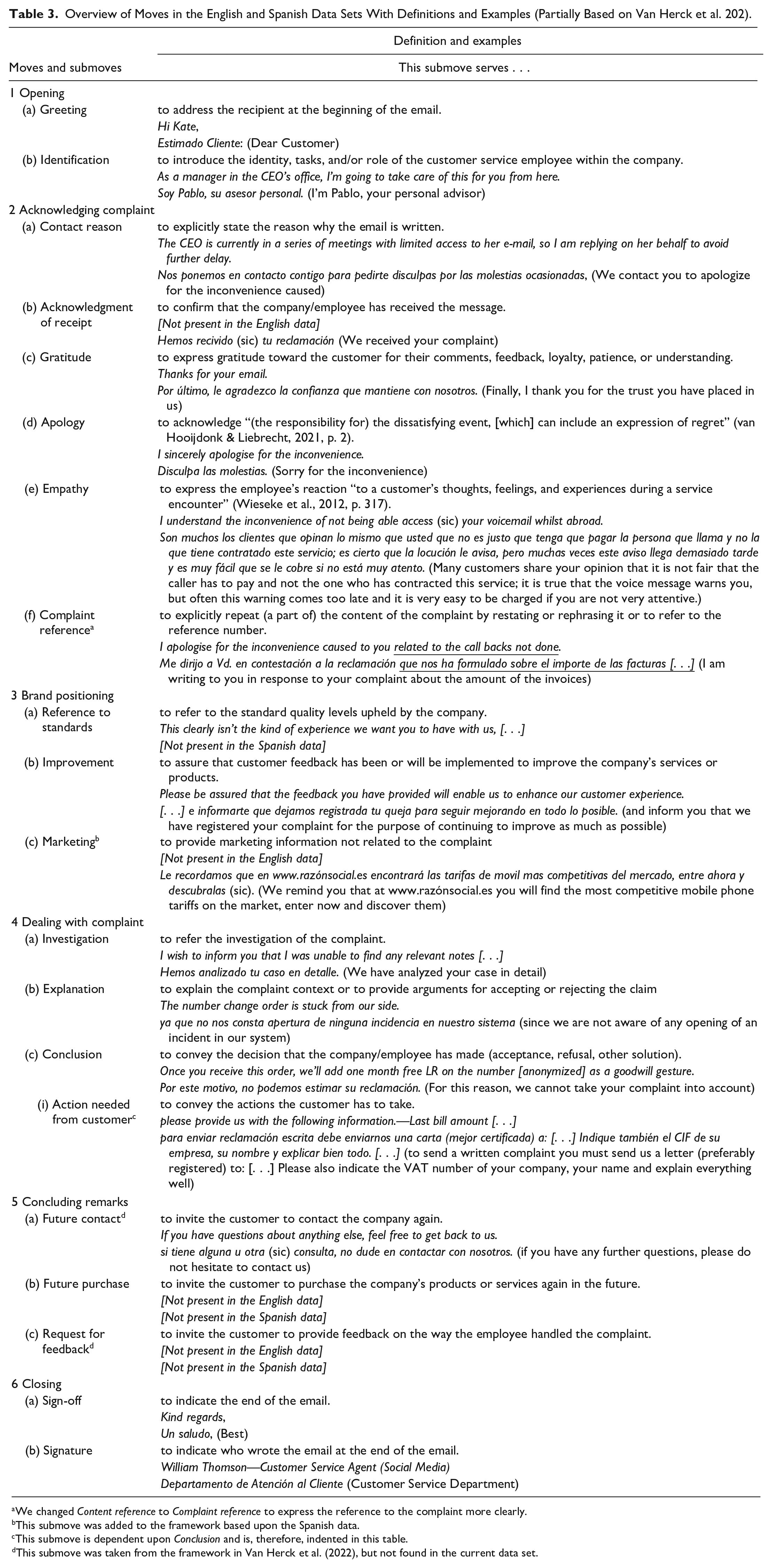
We changed Content reference to Complaint reference to express the reference to the complaint more clearly.
This submove was added to the framework based upon the Spanish data.
This submove is dependent upon Conclusion and is, therefore, indented in this table.
This submove was taken from the framework in Van Herck et al. (2022), but not found in the current data set.
In a second step, we analyzed the CHV elements based on the framework developed by van Hooijdonk and Liebrecht (2018) and Liebrecht et al. (2021). We adopted their tripartite division (i.e., personalization, informality, invitational rhetoric) (see Table 4), but made some adjustments to fit the unique characteristics of the data:
We split up their category Personal addressing employee by using first-person pronouns into the first-person singular and plural pronouns, because it reflects the employee’s identity in a more detailed way (Jensen, 2009).
We split up their category Contractions and Abbreviations, because the Spanish language does not offer the possibility to contract words in an informal way similar to English. Therefore, we wanted to keep the category Abbreviations comparable in both languages.
We added the category Informally addressing the customer (tú). Although this is not possible in English (you can be used both formally and informally), it is essential to count these language specific occurrences of informality in the Spanish corpus in order to avoid bias in comparison with the British data, which express informality in other ways.
We split up the category Stimulating dialogue (SD) into SD: Direct, in which the employee explicitly says that they will contact the customer directly in the near future, SD: Indirect, in which the employee says that the customer may contact the company if they need further assistance (which is indirectly stimulating the dialogue), and SD: Call to action, in which the customer is explicitly told to act (e.g., to send their account information).
We added the categories Informal greeting and Informal sign-off.
We removed the categories Acknowledging, Apologizing, Showing sympathy, or empathy, because these are speech acts that are already accounted for in the move analysis.
We added the category Showing sympathy or empathy: Intensifier, because this emphasizes cues that express an empathic tone.
We added the category Showing sympathy or empathy: Personal engagement, because this emphasizes the personal involvement of the employee.
Overview of CHV Elements in the English and Spanish Data With Examples (Partially Based on van Hooijdonk & Liebrecht, 2018; Liebrecht et al., 2021).
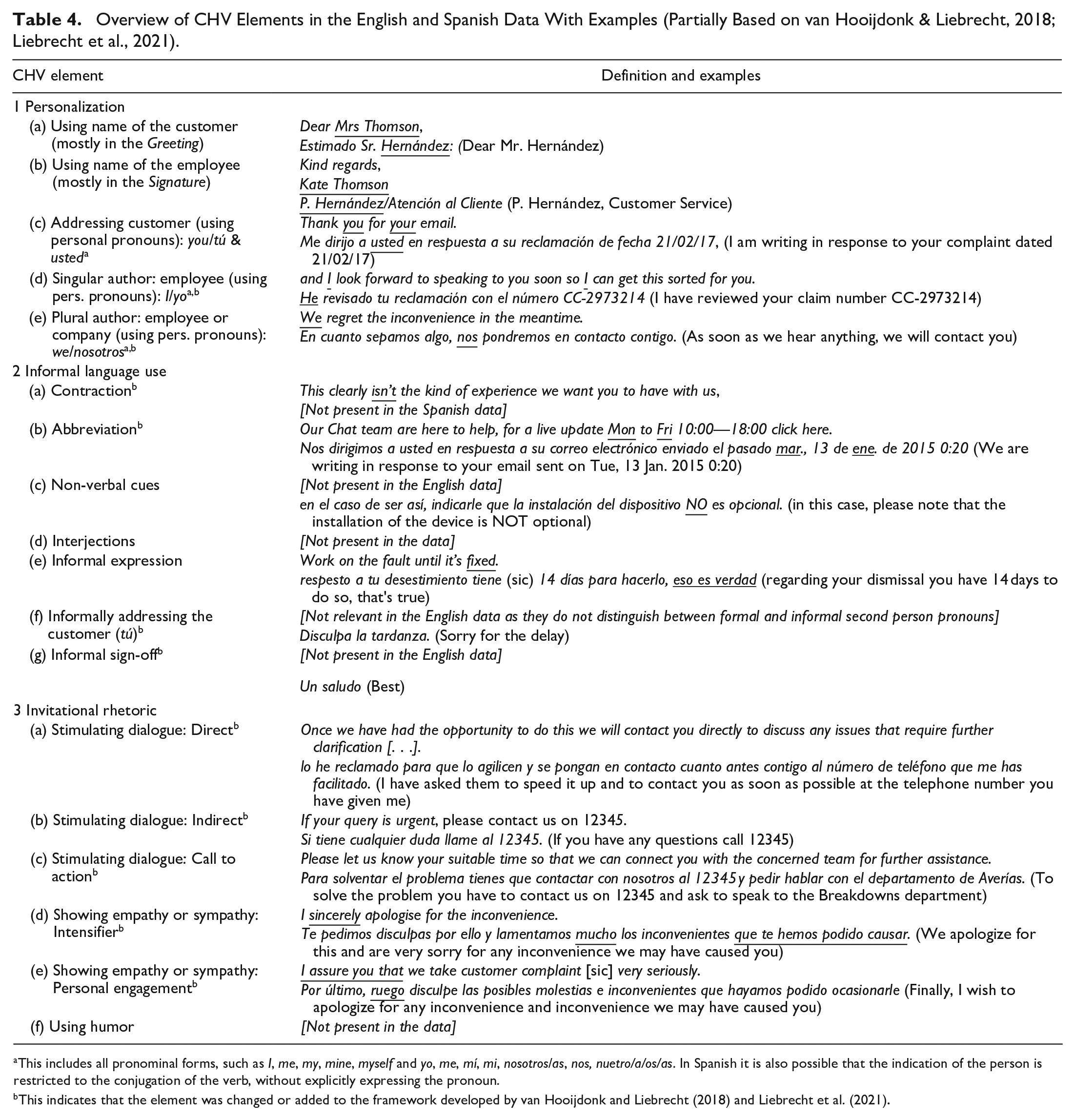
This includes all pronominal forms, such as I, me, my, mine, myself and yo, me, mí, mi, nosotros/as, nos, nuetro/a/os/as. In Spanish it is also possible that the indication of the person is restricted to the conjugation of the verb, without explicitly expressing the pronoun.
This indicates that the element was changed or added to the framework developed by van Hooijdonk and Liebrecht (2018) and Liebrecht et al. (2021).
We employed an iterative, collaborative approach for coding the data set, both for the move analysis as the CHV analysis (Baarda et al., 2021). After a first round of independent coding, we discussed and resolved any discrepancies until we reached a consensus. After coding, we calculated the frequency of the moves and the CHV elements. Tables 5 and 6 show how many emails contain a specific submove or CHV element.
Comparison of Move Frequency in the Data Set: Number of Emails Containing a Submove in Percentages and Absolute Numbers and Results for the Chi-Square Tests.
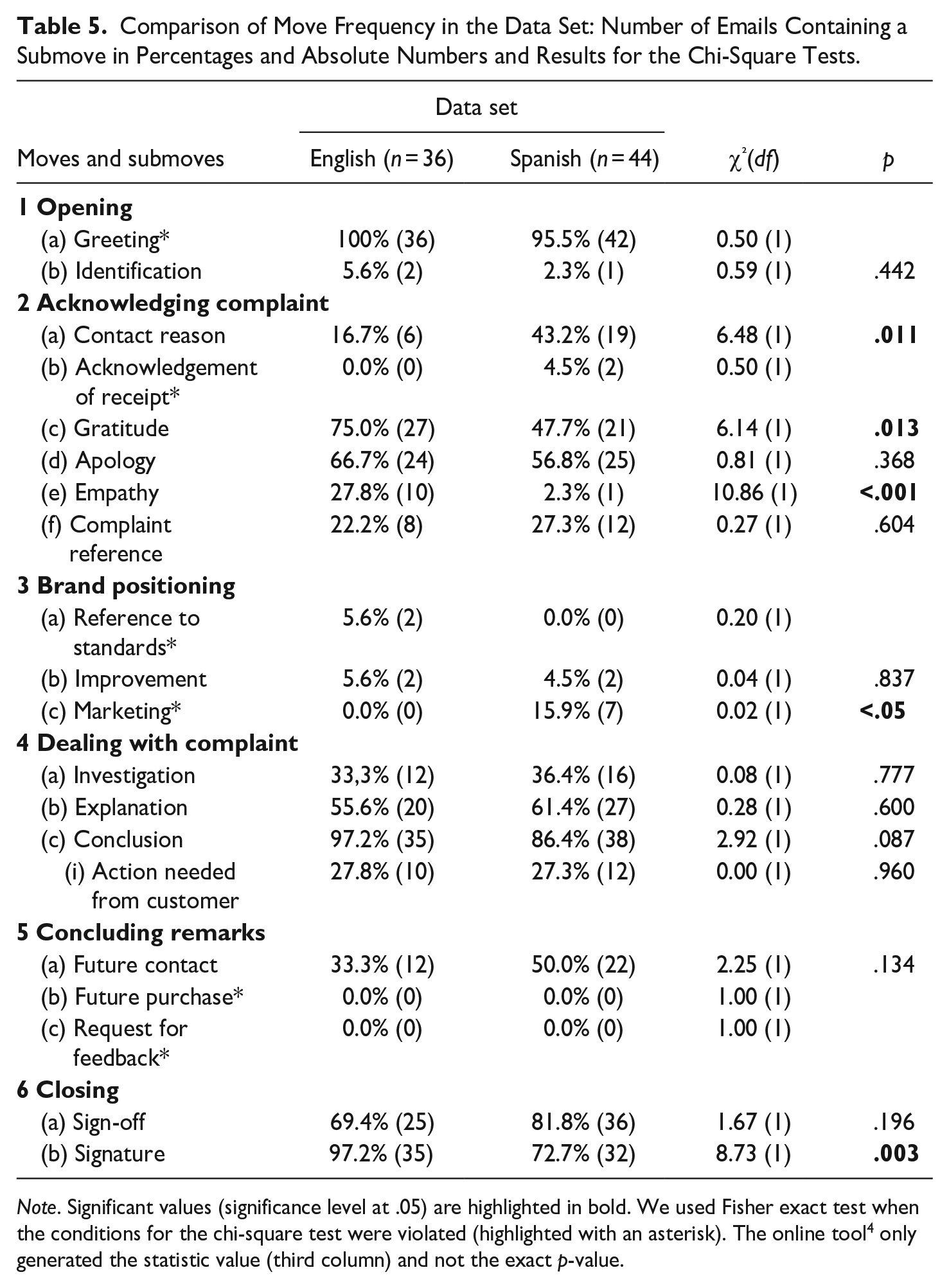
Note. Significant values (significance level at .05) are highlighted in bold. We used Fisher exact test when the conditions for the chi-square test were violated (highlighted with an asterisk). The online tool 4 only generated the statistic value (third column) and not the exact p-value.
Number of Emails in the Data Set Containing a Specific CHV Element in Percentages and Absolute Numbers and Results for the Chi-Square Tests.
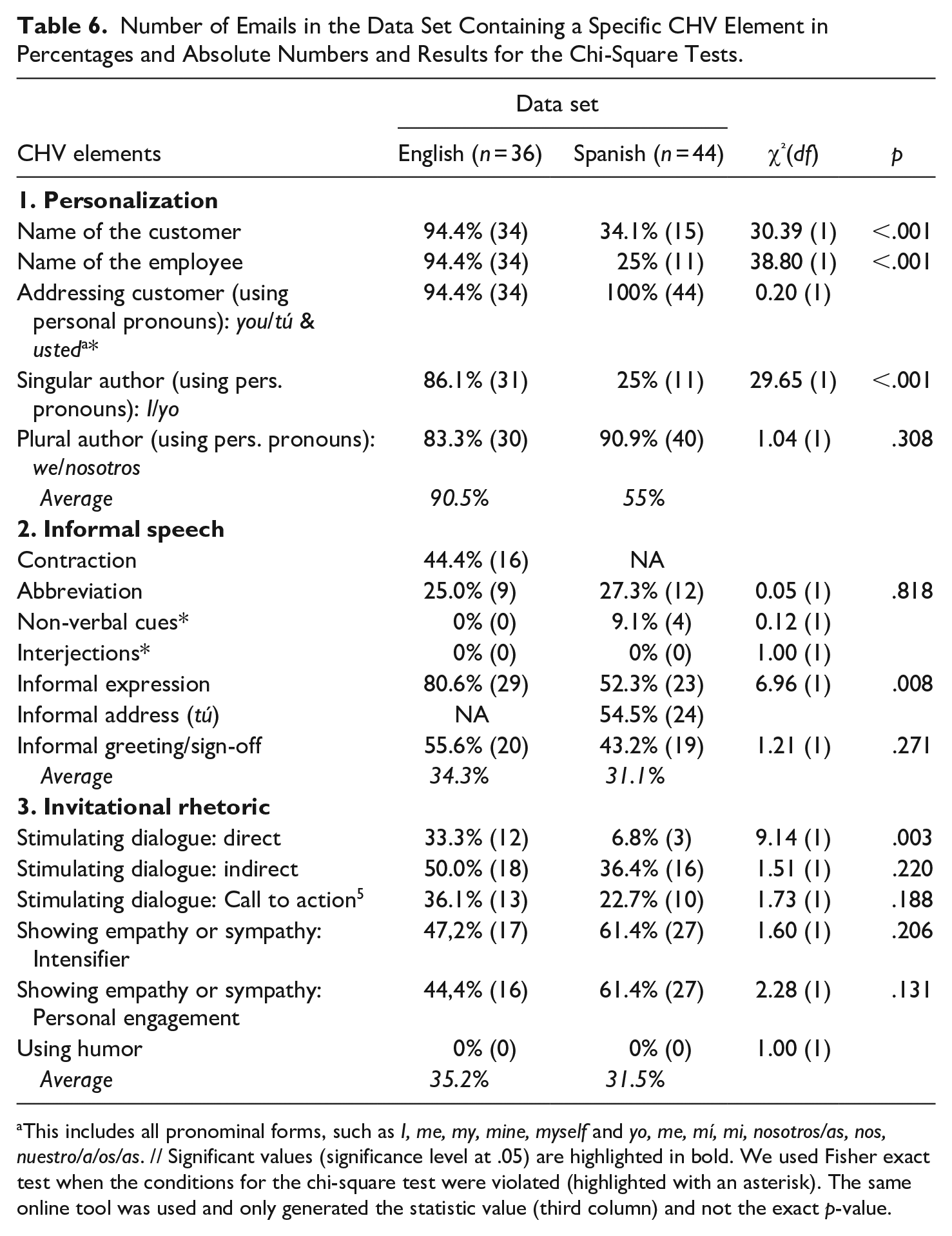
This includes all pronominal forms, such as I, me, my, mine, myself and yo, me, mí, mi, nosotros/as, nos, nuestro/a/os/as. // Significant values (significance level at .05) are highlighted in bold. We used Fisher exact test when the conditions for the chi-square test were violated (highlighted with an asterisk). The same online tool was used and only generated the statistic value (third column) and not the exact p-value.
Results
Move Analysis
As described in the literature review, we compare the prototypicality and move frequency of the British and Peninsular Spanish response emails below (see Table 5), based on the coding scheme of Van Herck et al. (2022).
These results show that the Spanish data have a similar prototypical structure as the English data. However, although the same submoves are typical (i.e., Greeting, Conclusion, Sign-off, and Signature, occurring in over 75% of the emails), the following observations stand out. Gratitude, a typical submove in the English data, occurs in less than 50% of the Spanish emails. The submove Signature occurs significantly more often in the English data. In addition, the submove Marketing only occurs in the Spanish data and the submove Contact reason appears significantly more frequent in the Spanish data. In contrast, the submove Empathy appears only once in the Spanish data, whereas in the English data it is an optional move (27.8%).
CHV Analysis
Below we present the results of the three dimensions identified in the literature as essential to CHV: Personalization, Informality, and Invitational rhetoric (Table 6).
Personalization
The results in Table 6 show that personalized elements are used in more than 90% of the English emails. In contrast, this percentage is significantly lower in the Spanish data (55%). The English data set also shows a greater variety in terms of types of personalization than the Spanish data. In particular, the use of names, both of the customer as well as the employee, and the use of the first person singular contribute to this difference (see example 1). In contrast, the use of the first person plural (we/nosotros) and the use of personal address, either in the second person (you/tú) or in the polite form usted, show a similar frequency in both data sets. Here we would additionally note that the use of the customary Sign-off formula Yours sincerely, which contains a second person pronoun, was not coded for this dimension, as it is no more personal than the alternatives Kind regards or Best regards.
Dear Mrs Thomson, I apologise that Miles Smith is out of the office. Please be advised that your case will be re-assigned to another manager within the CEO Team within 48 hours. I apologise for any delay and inconvenience that this may cause. Regards, Craig Hughes
Informal Speech
The dimension Informality is less present in both the English and Spanish data sets in comparison with the dimension Personalization (respectively 34.3 and 31.1%, see Table 6). In the English data, informality is mainly achieved through the use of contractions, colloquial expressions, and an informal greeting (e.g., Hi Susan). In the Spanish emails, by contrast, it is mainly the use of the second person singular tú that defines informality, together with an informal way of greeting or signing off.
Invitational Rhetoric
Regarding the dimension Invitational rhetoric, both corpora show a similar percentage (respectively 35.2 and 31.5%). In the British corpus, this is mainly due to the different categories of stimulating the dialogue, given that the English employees engage in both direct ways, by reaching out themselves to the client for follow-up, and indirect ways, by inviting the client to continue the dialogue. In the Peninsular Spanish corpus, it is mainly empathy-enhancing elements, such as intensifiers and expressions of personal engagement, that realize this dimension and thus make the frequent use of formulaic expressions just that little bit more authentic (see example 2). These intensifiers are also present, albeit to a lesser extent, in the English corpus, but they are counterbalanced by the presence of mitigators (see example 3), which weaken the empathic content. In turn, these mitigators are virtually non-existent in the Spanish corpus. Here we can mention that mitigators in general are also considerably more frequent in the English data (30.6 vs. 2.3%). Finally, we cannot find the element humor in either of the data sets.
(2) Lamentamos
(3) I apologise for
Distribution of CHV Among the Different Moves
When linking both analyses together, we find that CHV elements are typically linked to a small set of submoves. While it is evident that using the name of the customer is only related to the Greeting, there are some interesting connections. For example, in both languages, the use of personal pronouns is mainly linked to the submoves Gratitude, Apology, Explanation, and Conclusion, and the use of colloquial expressions is associated with Gratitude and Conclusion. This means that the CHV elements tend to be not homogeneously distributed among the different submoves.
Discussion
Move Analysis
The results of the move analysis show that the reply email to a complaint seems to be a fairly standardized genre with a rather similar move structure in both data sets. However, English emails present a tendency to more interpersonal submoves, especially Empathy, Gratitude, and Apology, which, moreover, are mostly expressed in a personal, that is, not formulaic, way, as shown in the following examples:
(4) I can imagine you’re probably feeling quite frustrated by now.
(5) Thanks for your patience in this matter—it’s much appreciated.
(6) I am ever so sorry about the issues encountered with your order.
This can be explained by typical features of English linguaculture such as the orientation toward the addressee, which, on the one hand, focuses on the interactional aspect of communication by expressing empathy and thanks, and, on the other hand, strives for consensus by acknowledging that a mistake has been made and apologizing for it (Van Herck et al., 2021; House, 2000, 2006). However, since Spain is generally considered in the literature to be a rapprochement culture that, among other things is characterized by a communication style of proximity and personal involvement (Barros García & Terkourafi, 2014), the same presence of interpersonal moves could have been expected in the Spanish data, at least regarding the submoves that express empathy and apology. The fact that Gratitude as a submove is significantly less frequent in the Spanish corpus should not be surprising, given the tendency in Peninsular Spanish not to give thanks in professional encounters, as is confirmed in pragmatics studies on the absence of ritualistic thanking in Peninsular Spanish (de Pablos-Ortega, 2010; Hickey, 2005; Placencia & Mancera Rueda, 2010). Moreover, according to a recent study by Hernández Toribio and Mariottini (2018), thanking in Spanish online reviews would mainly function as a strategy to soften the expression of a criticism. Our corpus does not contain any criticisms because the data consists of responses to complaints. Therefore, this factor—which possibly triggers a “thank you” in a professional encounter—is not present in the corpus. Furthermore, the Spanish corpus puts more emphasis on business-oriented submoves, such as Contact reason, Marketing, and Future contact, logically accompanied, because of their repetitive and preformulated nature, by a more frequent use of formulaic expressions. Although these expressions show elements of CHV, they appear less genuine, as they are standard formulas in moves that have a commercial finality, as shown in example 7.
(7)
This result may seem strange bearing in mind the literature review, which overall agrees that Peninsular Spanish is characterized by an informal and engaging style (Lorenzo-Dus & Bou-Franch, 2013; Montero-Fleta et al., 2009; Pérez Sabater et al., 2008). However, as adequately pointed out by Freytag (2020), context is a decisive factor, and there is research evidence that Peninsular Spanish speakers, in certain professional contexts, feel torn between the choice of pretending to be engaged and personal on the one hand, while still using language that is perceived as sufficiently deferential on the other (Fernández Amaya, 2022). Moreover, a study by Hernández López and Fernández Amaya (2019), albeit in a tourism context, shows that the expectations of Spanish customers in oral service encounters are that a balance is achieved between an involved and supportive style on the one hand, and respectful language characterized by the use of formulaic language and expressions of deference, on the other. If this expectation of customers holds true for service encounters in general in Spain, then it is logical that service encounter professionals will try to take this into account. So this can certainly explain the high content of formulaic language in this data set, and we can assume that this linguacultural influence is reinforced by the fact that business emails are a written and formal genre.
Personalization
Regarding the Personalization dimension, the literature review made clear that service research recommends this aspect of CHV to promote human connection. In our data, we find that this is indeed very present in the English data set, but only to a limited extent in the Spanish data. This may mean that the English employees are more likely to approach the customer as an individual, while the Spanish employees act as a collective. This can be linked to the theory of strategic self-presentation (Goffman, 1959, 1974), specifically in the context of business communication, which states that in an organization it is possible to choose to communicate externally either through an individual identity or through an organizational identity (Van Herck et al., 2021; Jensen, 2009; Sherblom, 2009). According to this theory, the former allows to come across as more personal, but the advantage of the latter is that the message can be more powerful by emanating from a corporate voice. The choice of one or the other may of course also be influenced by the cultural identity of the employees, namely individualism versus collectivism, as suggested by van Hooijdonk and Liebrecht (2021). Given that British society is rated as a rather individualistic culture and Spanish as rather collectivistic, this cross-cultural feature may also explain the difference between our two data sets (Hofstede Insights, 2023).
Informal Speech
As for the dimension of Informality, we note that it is of minor importance in both the British and Peninsular Spanish data sets in relation to CHV. Paralinguistic elements such as capital letters and exclamation marks are present only to a very limited extent (Spanish) or not at all (English), and interjections and emoji are completely absent. Also, informality in the English corpus is mainly given shape by contractions and colloquial expressions, whereas in the Spanish corpus it is the use of the second person singular tú which predominantly accounts for this dimension. As stated above, previous research shows that the communicative style of Peninsular Spanish speakers has been generally characterized as more informal and direct than that of speakers of British English across a range of speech situations. Therefore, we had initially expected a difference between the two data sets here. However, since the response to a complaint email is a formal written genre, the low level of informality in both data sets should not be surprising. Studies on other genres of webcare, namely organizational social media posts, do show a higher degree of informality (Einwiller & Steilen, 2014; Sung & Kim, 2018). Also, a contrastive study by Lorenzo-Dus and Bou-Franch (2013) of email correspondence between students and their teachers in Spain and England shows that the linguistic indirectness displayed by the English in request strategies, which is generally associated with respect-building in negative politeness cultures as stated in the literature review, was matched with informality, and hence a sense of closeness, where the unmarked directness of the Peninsular Spanish participants was combined with a more formal style. In our study, linguistic (in)directness was not included in the CHV model, but this could provide an additional perspective for cross-cultural research. We can thus conclude that formality/informality is an important dimension for cross-culturally describing the characteristics of different genres within webcare communication. However, whether it should be an essential part of CHV in each of those genres and in what way the dimension is best realized is something that should be investigated further experimentally.
Furthermore, we noted that the Spanish corpus presents numerous typos and language errors due to sloppiness and hasty response behavior (see example 8). These are present in almost every email and are considerably more frequent than in the English corpus (respectively 86.4 and 44.4%).
(8) Relacionado con su servicio le informamos que los
Although incorrect language is in no way CHV promoting, and as such was not included in the coding scheme, it is from a sociolinguistic perspective an aspect of informal speech (Hymes, 1962). An empirical study by Cambra Fierro et al. (2014) on factors considered essential by customers of the Spanish mobile service sector in order to be willing to spread positive word-of-mouth after being served due to a complaint, shows that the element of “perceived effort,” with professional and effective communication as part of this, is very important. Moreover, it proves to have an impact on other possible factors, such as “perceived justice,” which is the subjective evaluation of the fairness of the response by the complainant. Typing and language errors detract from the quality of the response and the customer may thus feel treated as second-class, which will reduce their perception of “perceived effort.”
Invitational Rhetoric
As far as the dimension of Invitational rhetoric is concerned, the English employees take significantly more initiative than the Spanish ones to assist the customer, either by committing to take action themselves, or by inviting the customer to do so, or even explicitly prompting them by means of a call to action. This is considerably less the case in the Spanish corpus, where, moreover, there are even two occurrences in which the customer is explicitly asked, with paralinguistic elements, namely by means of capital letters, to above all not respond but to wait (see example 9).
(9) Estimado Cliente: En referencia a su peticion 8345582, le informamos que no podemos atender su solicitud, ya que no nos consta apertura de ninguna incidencia en nuestro sistema. POR FAVOR NO RESPONDER A ESTE EMAIL. Para cualquier peticion o consulta debe dirigirse a hola@razónsocial.com o llamando al 12345. Un saludo Equipo razónsocial
(Dear Customer: In reference to your request 8345582, we inform you that we cannot attend your request, as we are not aware of any incident opening in our system. PLEASE DO NOT REPLY TO THIS EMAIL. For any request or query, please contact hola@razónsocial.com or call 12345. Best regards, razónsocial Team)
This goes completely against what this dimension of CHV prescribes, which is to keep the dialogue going. Moreover, the fact that these emails were posted on social media by the customers to express their dissatisfaction with how the complaint was handled suggests that this is indeed a strategy that should be avoided. The Invitational rhetoric dimension in the Spanish corpus is rather implicit and is mainly realized through empathically reinforcing elements that merely suggest an invitation to interact. Thus, unlike in the English corpus, where the submove Empathy is explicitly present in almost a third of the messages which according to the literature is an important parameter of Invitational rhetoric, we find that in the Spanish emails showing engagement is secondary to the other communicative goals of the message, as empathic elements are merely used to reinforce other submoves but do not account for a submove in their own right. An explanation for this could be that Spanish employees have a harder time finding a balance between professionalism on the one hand and personal involvement on the other in service encounters. We find evidence for this claim in the already cited study by Fernández Amaya (2022) on the beliefs of receptionists in hotel service encounter interactions in Spain regarding desirable behavior and good customer service. The results of this study indicate that the receptionists feel torn between what they see as their professional task and role on the one hand, that is, showing deference and formality specific to the communicative genre of service encounters, and on the other hand a person-oriented communication style in general, which means being involved and supportive (i.e., using relational talk). Thus, despite the fact that Spanish culture is one of rapprochement, characterized by supportive and close relationships, as already cited above, in a professional context this appears to be put under pressure by the employee's belief that this is incompatible with the requirements of task and role, which results in a task-oriented style, characterized by the preference for formal and deferential strategies over personal involvement. As indicated in the literature review, British linguaculture is less subject to this paradox, as they do not see combining a formal and indirect style of deference as incompatible with an interactional orientation toward the addressee (House, 2000, 2006).
Additionally, in examining this dimension, we found that only the English corpus uses mitigators that somewhat attenuate empathic content, and that the use of mitigators in general is significantly higher than in the Spanish corpus (see example 10).
(10) We
This result is consistent with the literature review that characterizes England as a negative politeness culture, reflected in its preference for implicit linguistic expressions, such as hedging, as opposed to positive politeness cultures, which includes Spain (Blum-Kulka 1989; Brown & Levinson, 1987; House, 2006; López Sánchez, 2010; Márquez-Reiter, 2002). Finally, we do not find humor as an Invitational rhetoric strategy in either data set, which could be due to the genre. Humor was included in the studies by van Hooijdonk and Liebrecht (2018, 2021) and Liebrecht et al. (2021) but their models serve the purpose of analyzing webcare on social media. This makes the interaction very different from email since in the latter the recipient does not expect a real dialogue that unfolds itself in several posts, but rather a unique and immediately all-solving response. As a result, the use of humor in a reply email could even be interpreted as misplaced as it could give the impression that the complaint is not taken seriously.
Distribution of CHV Among the Different Moves
Finally, we found that CHV in both data sets is concentrated in a limited number of moves. Nevertheless, it can be argued that the English corpus manages to do so in a more convincing and authentic way, partly because it puts more effort into moves with an intrinsically higher content of CHV such as Empathy, Apology, and Gratitude since the communicative finality of each of these moves aims at engagement, and partly by making more use of the Personalization dimension, both of which can be expected to have a positive effect on the appreciation of the recipients. In contrast, in the Spanish corpus, we found that several elements of CHV are concentrated in moves with a pronounced commercial finality and are frequently expressed using formulaic phrases. This leads to considerable heterogeneity in the use of CHV between moves in both corpora, but this could be perceived by the recipients as unprofessional only in the Spanish corpus, because of the abrupt changes in style. For instance, we found that in the Spanish corpus customers are first unabashedly brushed off in the conclusion in a very direct and personal way, only to end the email immediately afterwards with a formal and unpersonal goodbye formula that thanks for the trust and mentions that the contact persons will be delighted (“encantados”) to keep themselves available in case of further questions (see example 11).
(11)
It is this inconsistent combination of directly and informally dismissing a complaint, redirecting to an impersonal website service and using an ungenuine formulaic phrase, exacerbated by the sloppy and hasty writing, that might make recipients think of this email as customer-unfriendly and unprofessional. Nevertheless, this finding should be somewhat put into perspective in the light of previous contrastive research on service encounters in the United Kingdom and Spain, which shows that in the latter the expression of disagreement is more frequent and also more accepted than in Anglo-Saxon culture (Hernández López, 2008; Hernández López & Placencia, 2004).
Conclusion
In this study, we compared the move structure (frequency and typicality) and dimensions of CHV (Personalization, Informality, and Invitational rhetoric) in a British and Peninsular Spanish corpus of response emails to complaints from the telecom sector. The move structure proves to be very similar for the two data sets, thus indicating an advanced degree of cross-cultural standardization of the genre, despite the differences in terms of the interpersonal submoves Empathy, Gratitude, and Apology, which are significantly more prevalent (or tend to be more prevalent for Apology) in the English corpus, and the more business-oriented submoves, such as Contact reason, Marketing, and Future contact, which are mainly present in the Spanish corpus. Furthermore, we can conclude that as an important finding from this study CHV is deployed in both linguacultures, but not in the same way. The English corpus is more personal than the Spanish one and more explicitly invitational. The Spanish corpus presents more empathetic intensifiers but seems to struggle to find the right balance between an overtly involved style and a professional approach. Regarding informality as a CHV feature, both data sets seem to prefer to adopt a formal communication style, although the numerous spelling and linguistic errors in the Spanish corpus cause an impression of informality on the reader, but as a mere feature of unintentional unprofessionalism rather than to create closeness.
We conclude this study in the belief that its originality lies in the fact that it combines an analysis of the move structure and the various speech acts present in it with a pragmalinguistic and pragmastylistic approach that seeks to reach a better understanding of the role CHV can play in fulfilling the different communicative goals of the genre, as they are expressed in the moves and submoves. This discursive approach can be applied to other forms of webcare communication (e.g., social media posts, chat messages) in order to achieve a profound description of the different professional genres and their features within digital service recovery discourse. Furthermore, this study makes a significant contribution to service research on webcare, as previous research works mainly with English-language data and explicitly mentions the need for more cross-cultural research (Liebrecht et al., 2021). Since the current study is purely descriptive, it naturally raises the question of how these differences will be perceived cross-culturally by message recipients. Based on our results, it could be argued that, in order to achieve a balance between a professional service and an engaged communication style, it is appropriate (1) to use CHV that is as authentic as possible, (2) to do so all throughout the move structure, and (3) to empathically reinforce this CHV through the use of personal and engaged intensifiers. Cross-cultural experimental research is needed to verify these claims. Finally, there are also opportunities here for AI research and applications. Chatbots are increasingly used in webcare communication. Generative AI that takes into account cross-cultural idiosyncrasies in terms of structuring the response as well as CHV sensitivities could well make the difference for a company in this respect.
Footnotes
Acknowledgements
We would like to express our gratitude to the double-blind peer reviewers for their insightful and constructive feedback. We would also like to thank Charlotte Laebens for her contribution in compiling and coding the Spanish corpus. All remaining imperfections and shortcomings are of course entirely the responsibility of the authors.
Declaration of Conflicting Interests
The author(s) declared no potential conflicts of interest with respect to the research, authorship, and/or publication of this article.
Funding
The author(s) received no financial support for the research, authorship, and/or publication of this article.