




Abstract
When companies respond to consumer complaints on social media, many others can observe this online complaint handling (‘webcare’). Therefore, public service recovery messages not just affect the initial consumer’s satisfaction, but also observers’ perceptions, and companies’ webcare responses need to be carefully crafted. In online business communication, emoji are increasingly used. To explore how different kinds of emoji – in interaction with tone of voice – affect observers’ evaluations of companies as visual signalling cues, two experiments (N = 1,202) were conducted. Findings reveal that emoji expressing emotions can make companies come across as more human and personal, but emoji have an overall negative impact in webcare, mostly via lower perceptions of professionalism. Yet an informal or personal language style (‘conversational human voice’) turns these negative effects around. Companies should thus be cautious with using emoji when responding to online complaints and should rather focus on using the appropriate tone of voice.
Keywords
Introduction
In the interactive online environment of social media, companies try to build collaborative relationships with consumers by engaging in conversations in response to online messages about them or directed to them (i.e., ‘webcare’; Van Noort & Willemsen, 2012). These messages cannot only be seen by the consumer who posted the message, but also by others who observe conversations between organisations and other social media users in their timelines (Van Noort et al., 2014).
When posting a public service recovery message to a consumer complaint, organisations do not directly engage in a conversation with observers; nevertheless, in the one-to-many communication context of social media, observers form an opinion about the organisation when seeing such webcare. Following Signalling Theory, Javornik et al. (2020) showed that these observers develop perceptions of the organisation and its online complaint handling based on the tone of voice used in the interaction. When an organisation adopted an engaging and natural style of communication in their webcare (i.e., a conversational human voice (CHV); Kelleher, 2009), observers indicated that the consumer was treated well in the interaction, which subsequently impacted their satisfaction with the observed complaint handling.
One of the elements that can nowadays be used to create a sense of CHV in webcare are emoji (e.g., 

 ) – small pictograms, ideograms, logograms, or smileys that have been standardised as characters by Unicode and have become ubiquitous in computer-mediated communication (CMC). When writers switch their keyboard from letters to emoji, they can search the emoji library for the character they want to add. Interestingly, webcare employees frequently make this effort: in 2016, 47.9% of the webcare responses of tourism companies on Facebook and 26.7% of these companies’ Twitter responses contained an emoji or emoticon (Dijkmans et al., 2020). Although emoji could serve as signalling cues on which observers base their evaluations of companies, one could wonder whether companies do well in devoting time and effort to incorporating suitable emoji in their webcare.
Consider, for example, the service recovery message in Figure 1 in response to a consumer complaint. It includes several emoji: a thumbs-up gesture, green heart, star, and winking face. Although the consumer’s reason for approaching the company was initially negative, they express their appreciation for the webcare response through a Like and a message of thanks. The emoji here do not seem to have harmed the initial consumer’s evaluation of the company’s webcare.
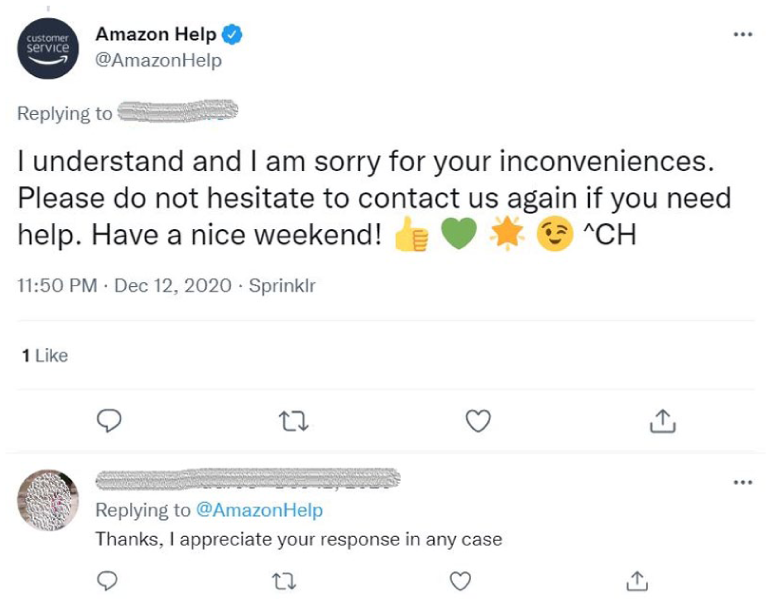
Webcare response with emoji.
Yet emoji use is so pragmatically fraught that it may be risky in online business communication. Prior research shows that when using emoji in professional emails, the sender can come across as more warm and friendly, but also as less competent and professional (Aretz & Mierke, 2019; X. Li et al., 2019; Riordan & Glikson, 2020). Little is known, however, about how observers perceive emoji in public company messages in the one-to-many communication context of social media, and whether specific emoji types affect their perceptions differently. The current research addresses this knowledge gap. On the one hand, emoji may improve observers’ perceptions of a company since they decrease the formality of the writing and enhance a company’s ‘humanness’. After all, emoji use allows companies to adapt their communication style to the register of social media (Fournier & Avery, 2011). On the other hand, observers may also perceive emoji use by companies as unprofessional, which could be detrimental for company evaluations. In addition, the impact of emoji in online business communication could depend on the type of emoji used, since emoji differ in the extent to which they convey sentiment (i.e., evidently emotional emoji like 

 or non-emotional emoji like

 ). By means of two large-scale online experiments (N = 1,202), the present paper aims to expand current knowledge on the mechanisms underlying signalling cues in webcare communication by answering the following research question: how do different kinds of emoji in service recovery messages impact observers’ evaluations of companies, and how do emoji interact with other tactics of conversational human voice?
Theoretical Background
Emoji in Computer-Mediated Communication
One of the main goals of human communication – both interpersonal communication and business communication, such as webcare – is to build and maintain relationships (Habermas, 1984; Van Noort et al., 2014). When senders compose a message, they can use verbal and nonverbal cues to reach this goal. While verbal cues can be seen as content cues that impart information, nonverbal cues can support or counter messages. In oral face-to-face communication, people’s body language, gestures, facial expressions, and tone serve as nonverbal and paralinguistic cues. Yet in writing, these nonverbal cues are lacking, which could disrupt the interpretation of a communicative utterance for the receiver decoding a message. In order to compensate for this lack of nonverbal social cues, writers can use surrogates (Walther, 1996), called textual paralanguage: ‘written manifestations of nonverbal audible, tactile, and visual elements that supplement or replace written language and that can be expressed through words, symbols, images, punctuation, demarcations, or any combination of these elements’ (Luangrath et al., 2017, p. 98). In CMC, writers can compose faces with punctuation marks such as :-) and/or numbers and letters such as XD. These emoticons (i.e., visual textual paralanguage; Luangrath et al., 2017) enable writers to add sentiment to messages (cf. Fuoli & Bednarek, 2022; Lo, 2008).
Senders now have more advanced emoticon-like visuals at their disposal in CMC, called emoji. These colourful pictograms originated in Japan; the word ‘emoji’ is a contraction of 絵 ‘e’ (‘picture’) + 文 ‘mo’ (‘write) + 字 ‘ji’ (‘character’/‘letter’). Emoji gained worldwide popularity in the 2010s, after being added to several mobile operating systems by leading software companies such as Apple, Android, and Google. According to Emojipedia, there are currently over 3,700 emoji. The usage of emoji increases every year (Emojipedia, 2025). Emoji are functionally similar to emoticons, as they can compensate for the lack of nonverbal signals (facial expressions, gestures) in written CMC (Walther & D’Addario, 2001), but they can also represent objects, animals, food, places, activities, flags, and symbols. Such emoji can be added for illustrative purposes (e.g., I am on my way by bike  ) or to replace one or more words (e.g., I am on my way ; Pohl et al., 2017). They are now an integral part of informal digital writing, used to complement or sometimes replace text.
Emoji in Online Business Communication
Emoji are no longer restricted to interpersonal CMC; they are increasingly used in company messages – either directed to a wide audience such as in advertising (Das et al., 2019) and social media marketing (e.g., X. Huang et al., 2022; X. Wang, Cheng, et al., 2023), or to individual consumers in customer service communication via email (e.g., X. Li et al., 2019) or chatbots (e.g., Y. Li & Shin, 2022; Liu et al., 2023; Yu & Zhao, 2024; Zhou et al., 2024). Webcare is a particularly interesting kind of online business communication, since organisations should mind both the consumer to whom they respond and others who can observe these conversations on social media (Van Noort et al., 2014). Through webcare, organisations thus simultaneously engage in customer service and in reputation and relationship management, because a webcare response shows its entire audience how an organisation treats its consumers (Van Noort et al., 2014).
In their conceptual framework of textual paralanguage, Luangrath et al. (2017) state that the use of visual textual paralanguage, which includes emoji, can affect perceptions of a company positively (for example, perceptions of warmth) and negatively (perceptions of incompetence). These expectations were confirmed by several empirical studies on emoji use in online business communication (e.g., Aretz & Mierke, 2019; X. Li et al., 2019; Riordan & Glikson, 2020). For example, in four empirical studies in the context of customer service (e.g., written communication via email), X. Li et al. (2019) demonstrated that the addition of emoticons and emoji in service employees’ messages increased their warmth as perceived by consumers, but simultaneously decreased their perceived competence compared to messages without these visuals.
Companies are thus in a delicate balance when responding with emoji to consumer messages. On the one hand, emoji can help companies increase their social presence, making them come across as more warm, friendly, likeable, agreeable, helpful, and social (Aretz & Mierke, 2019; X. Li et al., 2019; Riordan & Glikson, 2020), which include the main principles of good customer care (Cameron, 2000). Emotional emoji can elicit positive feelings in consumers (such as using a smiling-face emoji  ; Smith & Rose, 2020) and can even stimulate consumer forgiveness (for example with a pleading-face emoji
  ; K. Y. Wang, Chih, & Honora, 2023).
On the other hand, emoji in responses to consumer messages can make companies seem less professional and less competent. Although companies adjust their communication and language use to the interpersonal online environment where interlocutors communicate in an equal and informal way (Fournier & Avery, 2011), consumers still value brands that appear competent, are consistent, and maintain their own personality (Jakic et al., 2017). Especially in a customer service context where consumers approach companies to find solutions for their problems, it makes sense for them to prefer service recovery messages that contribute to their belief that their complaints will be solved satisfactorily. Emoji could undermine this belief. This would at least hold for the perception of emoji by the initial consumers to whom companies respond, since previous research focussed on one-to-one business communication through email (Aretz & Mierke, 2019; X. Li et al., 2019; Riordan & Glikson, 2020). It is still unknown how emoji in business communication on social media, such as webcare, are perceived by observers.
In addition, previous research mainly studied the effects of emotional emoji as visualised with facial expressions, like 

 (e.g., Beattie et al., 2020; X. Li et al., 2019; Liu et al., 2023). But companies also use non-emotional emoji, like

 (e.g., Casado-Molina et al., 2022; Dijkmans et al., 2020). In their Emoji Sentiment Ranking, Novak et al. (2015) show that emoji differ strongly in their affective meaning, ranging from negative via neutral to positive. Emoji depicting objects, symbols, flags, places, food, and animals tend to express less (positive or negative) sentiment than faces, hearts, and people (Jaeger et al., 2019). Little is known about how people perceive different emoji types in online business communication. Only X. Wang, Cheng, et al. (2023) investigated the use of emotional versus non-emotional (i.e., ‘semantic’) emoji in companies’ social media content. They showed that emotional emoji increased consumer engagement by evoking more emotional responses, whereas non-emotional emoji were perceived as more credible, but only in promotion content. Following the work of Sampietro (2019), emotional emoji may serve the illocutionary domain, which means that they mark the meaning of a message (e.g., the message’s positive or negative sentiment; Lo, 2008; Walther & D’Addario, 2001). In contrast, non-emotional emoji may serve Sampietro’s (2019) stylistic domain, since they can enable companies to adjust their tone of voice to consumers’ informal register without interfering with the message’s sentiment and without losing their credibility. To examine this line of reasoning, we need to make a distinction between emotional and non-emotional emoji to study how emoji affect observers’ perceptions of webcare responses.
Emoji as Signals in Webcare
In contrast to initial consumers who voice a complaint online, observers have limited information about the issue (Bergh et al., 2014). To form their opinions about an organisation, they tend to rely on other cues (Einwiller & Steilen, 2015; Hogreve et al., 2019). This can be explained by Signalling Theory (Spence, 1973), which posits that in case of asymmetric information, people rely on specific signals to reduce their uncertainty and still make inferences about a situation (Bergh et al., 2014). Since observers have such an information asymmetry when seeing an online complaint (Javornik et al., 2020), companies could try to improve their perceptions by deliberately using certain signalling cues in their service recovery messages (Luangrath et al., 2017).
Not only whether and what organisations respond can impact observers’ perceptions, but also how. Javornik et al. (2020) demonstrated that when companies use an ‘engaging and natural style of organizational communication’ (i.e., conversational human voice (CHV); Kelleher, 2009, p. 177) in their webcare, observers perceive the communication exchange as fair, which leads to higher levels of satisfaction with the complaint handling compared to webcare without CHV. CHV also improves other perceptions, such as social presence (i.e., ‘the degree of salience of the other person in the interaction’; Short et al., 1976, p. 65) and evaluations of companies (i.e., consumers’ general impression of a company; e.g., Dijkmans et al., 2015; Javornik et al., 2020; Van Noort & Willemsen, 2012; Oh & Ki, 2019). Note that Javornik et al. (2020) implemented various tactics of interpersonal communication in their experimental materials to create a sense of CHV: personalisation (e.g., using the consumer’s name or personal pronouns), informal language (e.g., abbreviations and emoji), and invitational rhetoric (e.g., expressing empathy; Liebrecht et al., 2021; van Noort et al., 2014). Emoji are visual elements that have been proven to evoke a sense of CHV (Liebrecht et al., 2021), but it remains unknown whether only this visual cue can already influence observers’ perceptions of a company. The current study addresses this knowledge gap.
Previous webcare research has hardly focussed on the effects of emoji relative to other CHV elements. As yet, there seems to be only one study on the impact of emoji in webcare: K. Y. Wang, Chih, and Honora (2023) showed that when organisations use an informal communication style supplemented with an emoji in online service recovery, customers perceive the company as more sincere, which heightens perceptions of the company’s empathy and, in turn, customer forgiveness. However, participants in this vignette study were asked to pretend they were a customer, not an observer, and only the effects of one specific emotional emoji, the pleading face , were examined. Our two large-scale online experiments add to this knowledge by investigating the mechanisms that could explain the relations between emoji use and the types of emoji used in webcare messages and observers’ perceptions of companies. We first examined the effects of emoji separately (Study 1) and then in relation to other CHV tactics (Study 2).
Study 1
Hypotheses and Research Question
Study 1 sought to extend signalling theory within webcare by investigating emoji as potential signalling cues. The research question (
With regard to the presence of emoji in webcare, we expected a positive mediation effect via perceived CHV on company evaluations (
Next to mediation effects regarding the presence versus absence of emoji in webcare messages, we also expected mediation effects regarding the impact of specific emoji types (emotional vs. non-emotional) on observers’ company evaluations. Compared to non-emotional emoji in webcare, we expected that the relation between emotional emoji and observers’ company evaluations would be positively mediated by perceptions of CHV (
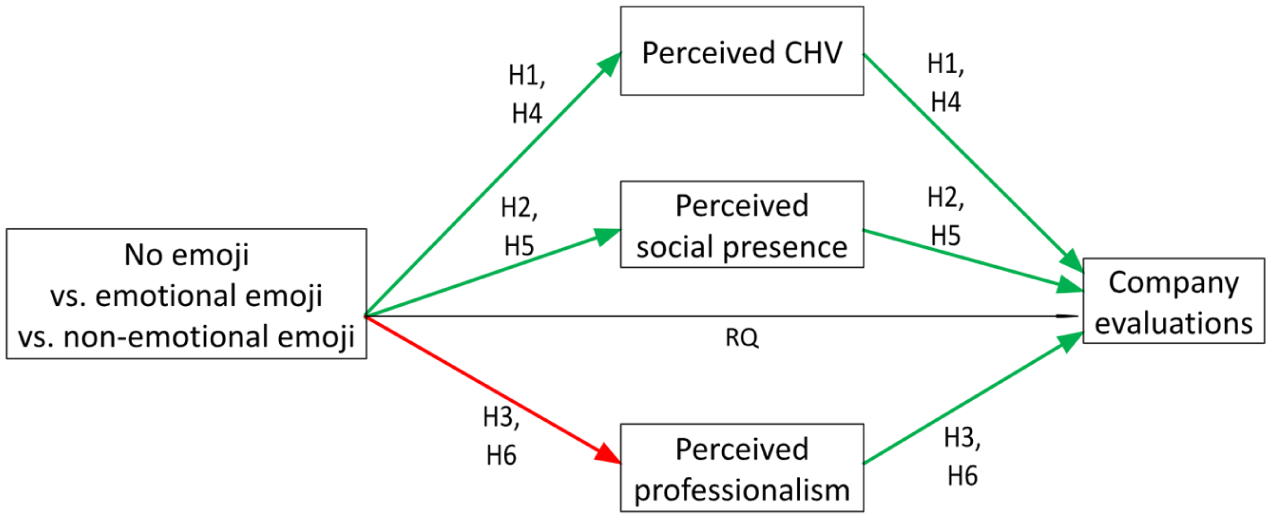
Conceptual model of Study 1.
Method
A single-factor experiment with a between-subjects design was conducted in which participants were exposed to one of three conditions, which were manipulated for emoji type: webcare without emoji, with emotional emoji, or with non-emotional emoji. To increase the generalisability of the results, each participant was exposed to fictitious webcare responses to four online consumer complaints in the same condition. Participants thus observed the company-consumer interactions. After each webcare conversation, the dependent variable company evaluation and then the mediating variables perceived CHV, social presence, and professionalism were measured by means of an online questionnaire. The study was approved by Tilburg University’s Research Ethics and Data Management Committee. Supplemental Materials can be found on OSF.
Participants
Participants (N = 601) from English-speaking countries were gathered via the online recruitment platform Prolific. In terms of gender, 65.1% of the sample was female (n = 391), 34.4% was male (n = 207), and 0.5% identified as ‘other’ (n = 3). The sample’s mean age was 33 years (range = 18–80, SD = 12.16). The level of education varied from secondary/high school or lower (32.1%, n = 193) and bachelor/undergraduate (46.8%, n = 281) to master (17.5%, n = 105) and other (3.7%, n = 22). Most participants had been exposed to webcare (86.1% indicated sometimes or more often; only 13.9% indicated rarely or never), but were not used to sending complaints to companies on social media themselves (65.9% indicated rarely or never; 34.1% indicated sometimes or more often). 1
Materials
Four webcare scenarios were created in which each conversation started with a consumer complaint about a customer service topic (e.g., a wrong delivery and a damaged product) and an explicit request for help directed to a company, followed by the company’s reactive response (Van Noort & Willemsen, 2012). The complaints were directed to four fictitious for-profit companies in different industries (CBS, 2014), to prevent existing attitudes and enhance the generalisability of the study.
The consumer complaints were written in English, in an informal language style so that emoji would not be out of place in companies’ service recovery messages. The complaints were intentionally designed without any emoji, since emoji use by consumers may affect attitudes towards emoji use in ensuing webcare messages (Jakic et al., 2017; Kroll et al., 2018). To prevent any effects of consumer gender, we used gender-neutral consumer names and avatars in the consumer messages. The conversations were visualised as Facebook posts, because this social medium is greatly used for webcare (Hachmang & Keuning, 2020).
The webcare messages across the different topics were written in a similar structure, without any repetition in language. The responses contained a moderate amount of all three CHV tactics (personalisation, informal language, invitational rhetoric), matching the conventional tone of voice of for-profit companies on social media (Huibers & Verhoeven, 2014). To ensure the external generalisability, each company account contained a blue checkmark indicating that the authenticity of the account was verified (Facebook, n.d.). Other features, such as the number of likes and shares, were set to zero.
The three experimental conditions differed in emoji use. Next to a no-emoji condition, we created webcare responses with either emotional or non-emotional emoji. The emotional and non-emotional emoji were selected on the basis of literature (e.g., Beattie et al., 2020; Casado-Molina et al., 2022; Dijkmans et al., 2020; X. Li et al., 2019; Liu et al., 2023) and Novak et al.’s (2015) Emoji Sentiment Ranking. Emotional emoji consisted of faces, gestures, and hearts (e.g., 

 ) that marked the sentiment of a message; non-emotional emoji consisted of several objects and symbols (e.g.,

 ) which matched the content of the message and only served illustrative purposes. Three to four different emoji were added to the webcare messages, so that the emoji use would stand out, but not be excessive or compromise the external validity. The emoji were put in varying places so as to make the messages look more real, but among the conditions, the emotional and non-emotional emoji were put in the exact same places, as shown in Figure 3. A post-hoc manipulation check among 100 participants confirmed the validity of the emoji manipulations in our experimental materials and the realism of the webcare conversations.
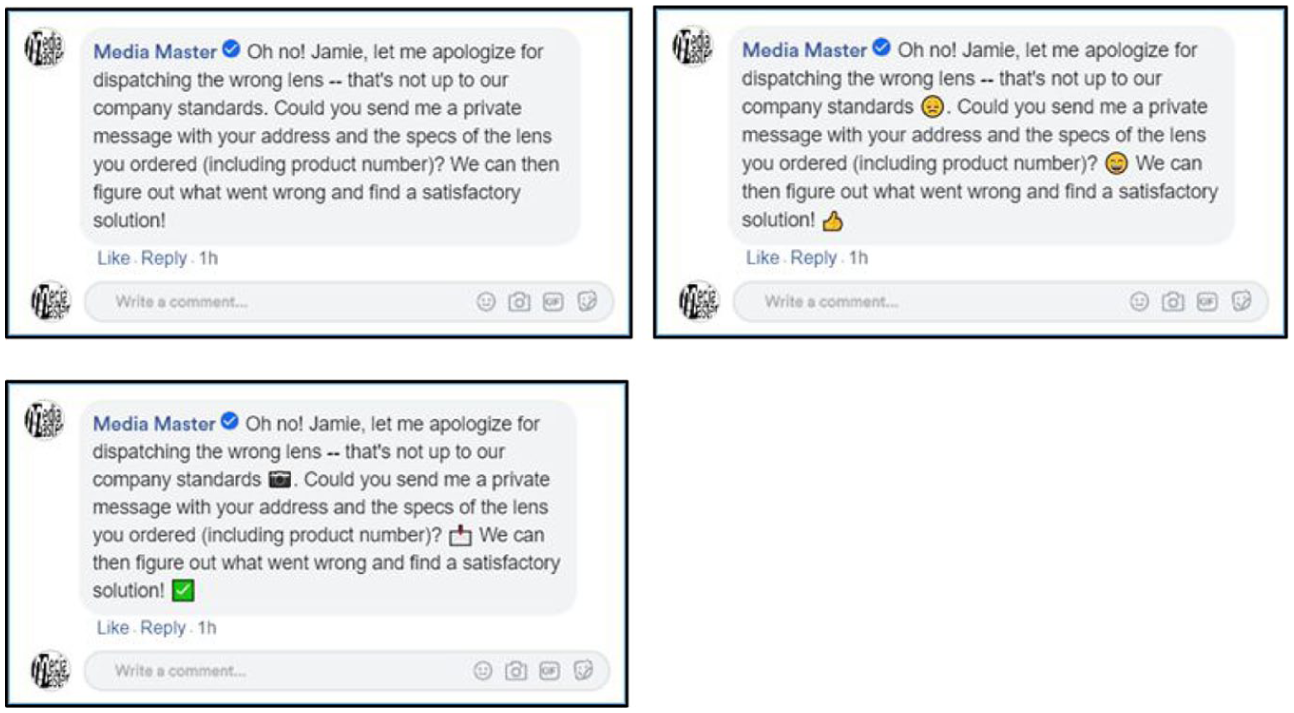
Examples of a webcare response containing no emoji, emotional emoji, or non-emotional emoji.
Instruments
The dependent variable and three mediating variables were measured with (adapted) existing scales after each webcare conversation on 7-point Likert scales ranging from ‘Strongly disagree’ to ‘Strongly agree’.
The dependent variable company evaluation was measured with the five items of Van Noort and Willemsen’s (2012) brand evaluation scale. The statement ‘Based on this webcare conversation between a customer and [COMPANY NAME], I would say that. . .’ was followed by, for example, ‘the company is favourable’ (M = 5.23, SD = 0.79).
Perceived CHV was measured with 6 out of the 11 items of the CHV scale by Kelleher and Miller (2006). Like other scholars (e.g., Dijkmans et al., 2015; Schamari & Schaefers, 2015), we only included items that were considered relevant in the context of our study. The statement ‘Based on this webcare conversation between a customer and [COMPANY NAME], I would say that. . .’ was followed by, for example, ‘the company uses conversation-style communication’ (M = 5.81, SD = 0.65).
Perceived social presence was measured with five items adapted from Gefen and Straub (2003). These are based on Short et al.’s (1976) original semantic differentials (impersonal – personal, unsociable – sociable, warm – cold, insensitive – sensitive). The statement ‘Based on this webcare conversation between a customer and [COMPANY NAME], I would say that. . .’ was followed by, for example, ‘the company conveys a sense of human warmth’ (M = 5.57, SD = 0.81).
Perceived professionalism was measured with four items derived from Wu et al. (2015): ‘Based on this webcare conversation between a customer and [COMPANY NAME], I would say that. . .’, followed by, for example, ‘the company can apply professional abilities to handle customers’ needs’ (M = 5.38, SD = 0.79).
After a principal component analysis (PCA) with oblique rotation (oblimin) and reliability analysis of the scales (company evaluation: α = .904; perceived conversational human voice: α = .888; social presence: α = .919; professionalism: α = .888), we decided to maintain the measurement of the constructs with all items based on the literature. Subsequently, a mean variable per construct was created for data analysis.
Procedure
The questionnaire was created in the survey platform Qualtrics and distributed through Prolific. Our pre-screening requirements selected participants who were adult native English-speaking Facebook users. Participants were informed that they were taking part in a survey on company responses to online consumer complaints. After giving informed consent, participants were randomly assigned to one of the three conditions. The survey started with demographic questions about participants’ gender, age, education, and nationality. These were followed by questions about their active and passive experiences with sending complaint messages to companies on social media, and observing other consumers’ complaints. The dependent and mediating variables were measured after exposure to each of the four scenarios. At the end of the survey, it was disclosed that the webcare scenarios and companies in the stimuli were fictitious. Participants’ average completion time was 10 min (SD = 5.51). They received financial compensation through Prolific upon completion of the study.
Statistical Analysis
The data were analysed with IBM SPSS Statistics using Hayes’ (2017) Process application. We applied model 4 with Helmert coding, which compares levels of the multi-categorical independent variable Emoji with the mean of subsequent levels of the variable. Specifically, (a) the no-emoji condition was compared to both emoji conditions combined and (b) the emotional emoji condition was compared to the non-emotional emoji condition, which matches the comparisons expressed in the hypotheses.
Results
Descriptive Statistics and Preliminary Analyses
The descriptive statistics showed a rather high mean score for the dependent variable and the three mediating variables (see Table 1). Irrespective of the condition participants were exposed to, these variables were assessed above the average score of 4 on 7-point Likert scales.
Study 1: Averages and Standard Deviations for Dependent and Mediating Variables Per Condition.
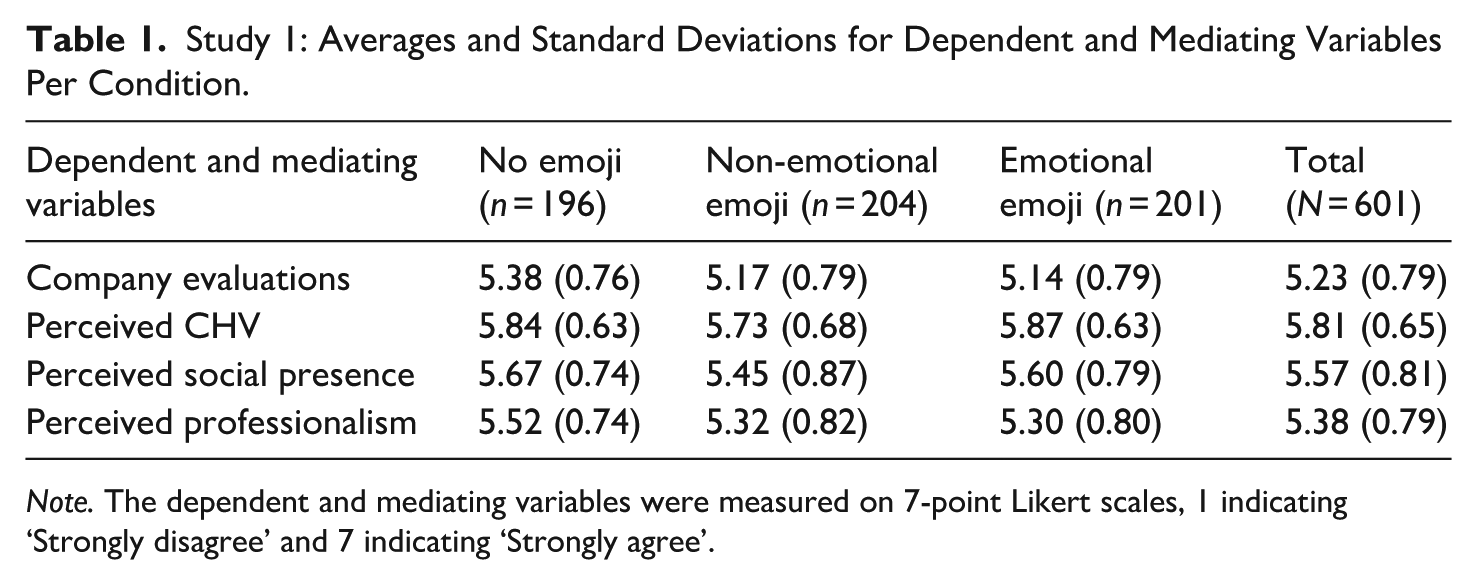
Note. The dependent and mediating variables were measured on 7-point Likert scales, 1 indicating ‘Strongly disagree’ and 7 indicating ‘Strongly agree’.
Before testing the hypotheses, we checked the direct effects of emoji on company evaluations. A negative main effect of all emoji on company evaluations was found (b = −0.10, SE = 0.05, p < .05). Company evaluations were lower in the conditions with emoji (M = 5.15, SD = 0.79) than in the condition without emoji (M = 5.38, SD = 0.76). No significant difference between emotional emoji and non-emotional emoji on company evaluations was found (b = −0.08, SE = −0.05, p = .145). 2 Table 2 summarises the findings of the analyses with Process (Hayes, 2017). 3
Study 1: Results of Mediation Analysis for Company Evaluations (Bold = Significant).
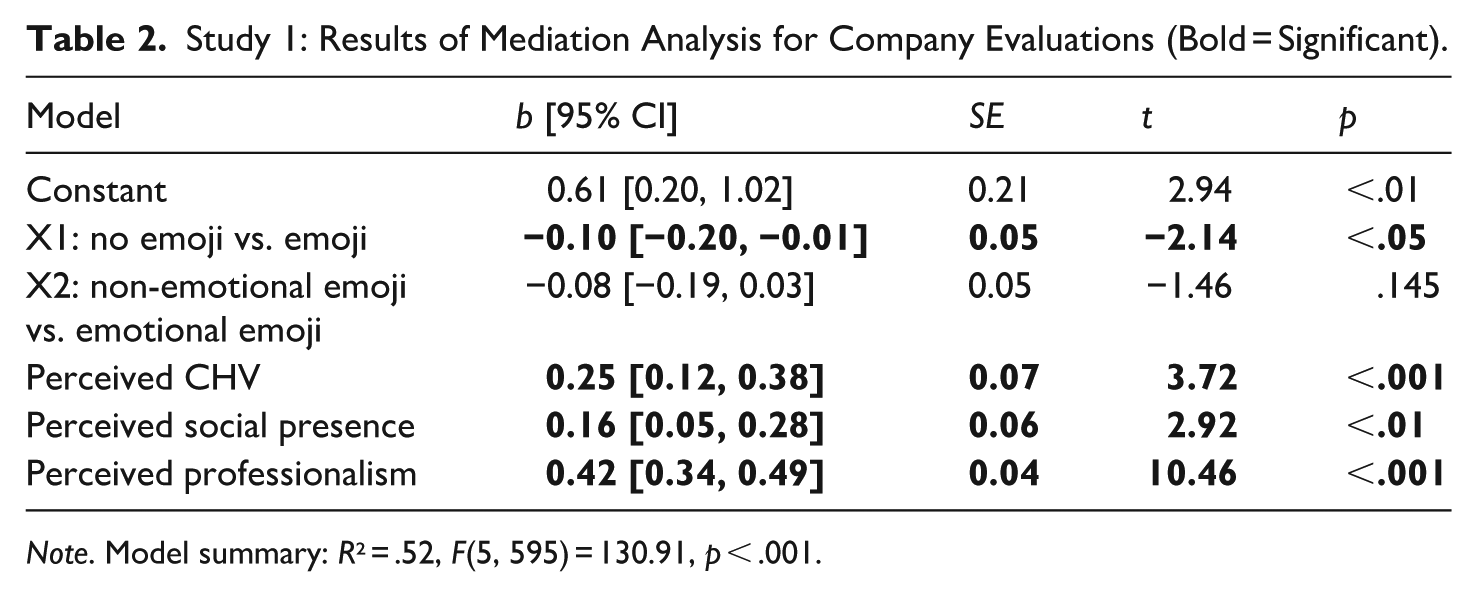
Note. Model summary: R² = .52, F(5, 595) = 130.91, p < .001.
Hypothesis Testing
No effect was found of the presence (vs. absence) of emoji on perceived CHV (b = −0.04, SE = 0.06, p = .505). Also, no indirect effect of the presence of emoji via perceived CHV on company evaluations was found (b = −0.01, SE = 0.01, 95% CI [−0.04, 0.02]). These results provide no support for the expected mediating effect via perceived CHV as formulated in H1.
In contrast, a negative effect of the presence of emoji on social presence was found (b = −0.14, SE = 0.07, p < .05). Perceived social presence was lower in the conditions with emoji (M = 5.53, SD = 0.83) than in the condition without emoji (M = 5.67, SD = 0.74). Moreover, a negative indirect effect of the presence of emoji via social presence on company evaluations was found (b = −0.02, SE = 0.01, 95% CI [−0.06, −0.001]). These findings contradict H2, since emoji were expected to positively affect observers’ company evaluations via more perceived social presence, but the opposite was found.
Regarding professionalism, a negative effect of the presence of emoji was found (b = −0.21, SE = 0.07, p < .01). Perceived professionalism was lower in the conditions with emoji (M = 5.31, SD = 0.81) than in the condition without emoji (M = 5.52, SD = 0.74). Also, a negative indirect effect of the presence of emoji via professionalism on company evaluations was found (b = −0.09, SE = 0.03, 95% CI [−0.15, −0.03]). These findings are in line with our expectations as formulated in H3: emoji negatively affected company evaluations via less perceived professionalism.
With regard to the comparison of emotional and non-emotional emoji, a positive effect of emotional emoji on CHV was found (b = 0.14, SE = 0.06, p < .05). Perceived CHV was higher in the condition with emotional emoji (M = 5.87, SD = 0.63) than in the condition with non-emotional emoji (M = 5.73, SD = 0.68). Furthermore, a positive indirect effect of emotional emoji via CHV on company evaluations was found (b = 0.04, SE = 0.02, 95% CI [0.00, 0.08]). These results provide support for H4: in comparison to non-emotional emoji, emotional emoji positively affected company evaluations via more perceived CHV.
With regard to social presence, a marginally positive effect of emotional emoji was found (b = 0.15, SE = 0.08, p = .057). Perceived social presence was higher in the condition with emotional emoji (M = 5.60, SD = 0.79) than in the condition with non-emotional emoji (M = 5.45, SD = 0.87). In addition, a positive indirect effect of emotional emoji via social presence on company evaluations was found (b = 0.03, SE = 0.02, 95% CI [0.00, 0.06]). These findings support H5: emotional emoji positively affected company evaluations via more perceived social presence compared to non-emotional emoji.
Lastly, no significant difference was found between emotional and non-emotional emoji on professionalism (b = −0.02, SE = 0.08, p = .770). Also, no indirect effect of emotional emoji via professionalism on company evaluations appeared (b = −0.01, SE = 0.03, 95% CI [−0.08, 0.06]). The data thus provide no support for the expected mediating effect via perceived professionalism as formulated in H6.
Study 2
Hypotheses and Research Questions
The goal of Study 2 was twofold. First, this second online experiment allowed us to cross-validate the findings of Study 1 with another independent sample. Second, since the webcare responses in Study 1 were designed to incorporate a moderate amount of all three CHV tactics (personalisation, informal language, invitational rhetoric; Van Noort et al., 2014), Study 2 aimed to test how these tactics interact with emoji as potential signalling cues. Therefore, the research question
In the literature, emoji are distinguished as elements of CHV and more specifically classified as an expression of informal language (Liebrecht et al., 2021). Therefore, it can be argued that the presence of emoji in webcare responses without CHV could violate observers’ expectations, because they can feel that companies are not coherent in their verbal and visual discourse (‘multimodal coherence’; Bateman, 2014). The findings of K. Y. Wang, Chih, and Honora (2023) seem to support this assumption, since their study showed that an emoji was more effective in improving customer perceptions when combined with informal language; the emoji effect disappeared when formal language was used. In other words, consumers may experience an expectancy violation when a verbally formal webcare response is visually informal by containing emoji. Accordingly, we expected that without a CHV tactic, emoji in webcare would negatively affect observers’ evaluations of the company (
Regarding the effects of CHV tactics on the relationship between emotional versus non-emotional emoji in webcare and observers’ company evaluations, there was hardly any prior research to guide us in formulating hypotheses. The only exception was the study by K. Y. Wang, Chih, and Honora (2023), which revealed positive effects of a single emotional emoji compared to no emoji on sincerity, empathy, and customer forgiveness, but this study did not distinguish between CHV tactics or emoji types. Therefore, we decided to not propose hypotheses here, but a subquestion (
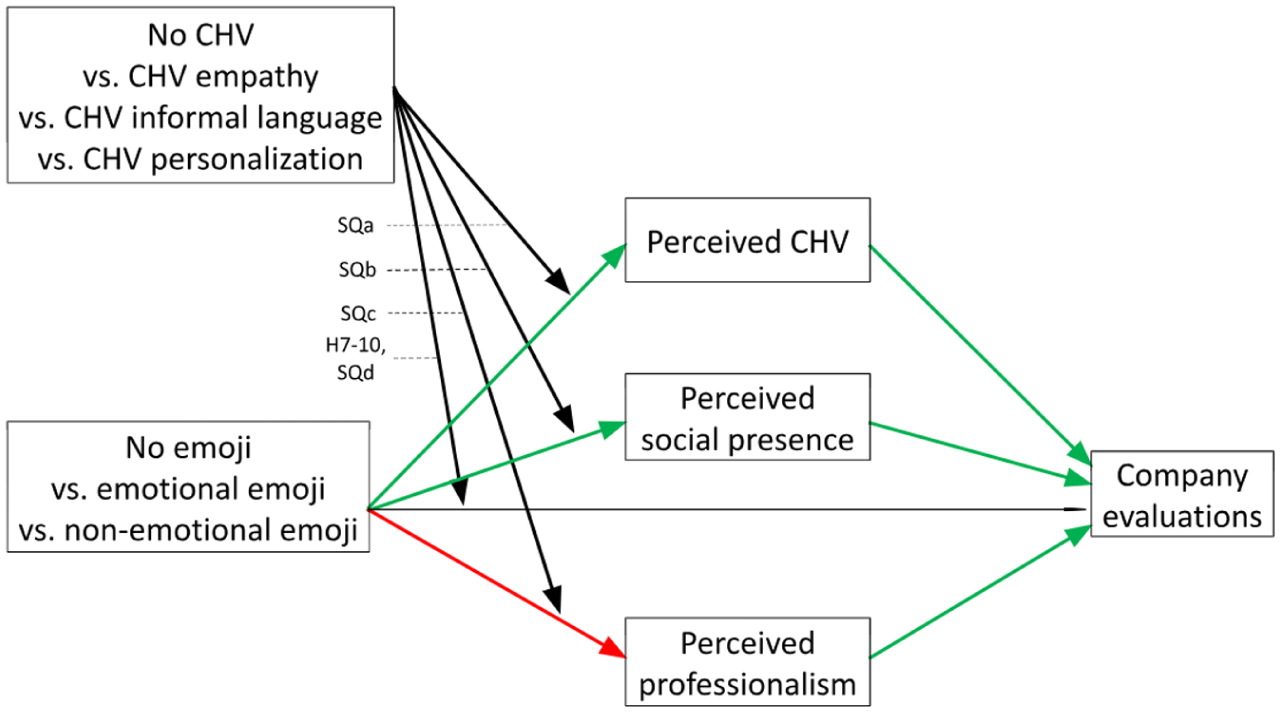
Conceptual model of Study 2.
Method
An experiment was conducted conforming to a 3 (emoji type: none/emotional/non-emotional) × 4 (CHV tactic: none / invitational rhetoric: empathy / personalisation / informal language) between-subjects design. Participants were randomly exposed to 1 of 12 conditions. Similar to Study 1, each participant saw fictitious webcare responses to four consumer complaints within the same condition. They again took an observer’s perspective on the webcare conversations. Participants’ company evaluations and perceptions of CHV, social presence, and professionalism were again measured after each webcare conversation through an online questionnaire. This study also received ethical approval of Tilburg University’s Research Ethics and Data Management Committee. Again, Supplemental Materials can be found on OSF.
Participants
Another independent sample of participants (N = 601) was recruited via Prolific. Most of the sample was female, 67.4% (n = 405), while 32.3% was male (n = 194), and 0.3% selected ‘other’ (n = 2). The mean age was 38 (range = 18–79, SD = 13.71). With respect to education, this sample was composed of mostly bachelor/undergraduate (52.6%, n = 316) and subsequently of secondary/high school (29.0%, n = 174), master (15.5%, n = 93), and other (3.0%, n = 18) participants. Similar to Study 1, participants overall reported having little active experience with webcare (i.e., sending complaints to companies on social media: 69.2% [n = 416] indicated rarely or never; 30.8% [n = 185] indicated sometimes or more often), but more passive experience with webcare (i.e., seeing others’ complaints to companies on social media as an observer: 86.0% [n = 517] indicated sometimes or more often; only 14% [n = 84] indicated rarely or never). 4
Materials
The materials were identical to Study 1, including the differentiation between different types of emoji (emotional vs. non-emotional), except for the presence of CHV tactics in the webcare responses. While all responses in Study 1 contained a moderate amount of CHV, Study 2 differentiated between four levels of CHV: personalisation, informal language, invitational rhetoric by expressing empathy, and none. To ensure a systematic and literature-aligned operationalisation of CHV, we employed Liebrecht et al.’s (2021) taxonomy, developed through an integrative review of 38 empirical research papers. Building on Kelleher’s (2009) definition of CHV and its operationalisation by Van Noort et al. (2014), Liebrecht et al. (2021) identified several linguistic elements that fall into three main CHV tactics: personalisation, informal language, and invitational rhetoric.
Personalisation was operationalised as the service recovery message addressing the consumer (e.g., Dear Robin) and the use of first-person pronouns and second-person pronouns as indirect objects (e.g., I, me, you). Informal written language consisted of the use of abbreviations (e.g., OK, asap), contractions (e.g., couldn’t, that’s), and symbols (e.g., &, +). Since some elements of invitational rhetoric were crucial to the company’s webcare response (an apology and stimulating dialogue), this CHV tactic was operationalised by the addition of empathic expressions (e.g., ‘Oh no!’, ‘Such a pity that . . .’). The three CHV tactics were absent in the no CHV-conditions. The conditions with emoji contained the same emoji as in Study 1, to ensure the comparability of both experiments.
Instruments
The same instruments were used to measure the dependent and mediating variables as in Study 1. Cronbach’s alpha analyses showed that for Study 2, the internal consistency of the items was excellent for all variables: evaluation of the company (α = .926, M = 5.07, SD = 0.80), perceived CHV (α = .925, M = 5.48, SD = 0.74), perceived social presence (α = .943, M = 5.21, SD = 0.86), and perceived professionalism (α = .917, M = 5.27, SD = 0.79).
Procedure
Participants were again gathered via Prolific with the same pre-screening requirements. After providing informed consent, participants were randomly assigned to 1 of the 12 conditions in Qualtrics. After answering demographic questions and questions relating to their webcare experiences, participants assessed four scenarios on the dependent and mediating variables. At the end of the questionnaire, participants were informed about the fictitious nature of the companies and scenarios in the stimuli. Their average completion time was again 10 min (SD = 5.82) and participants were rewarded with financial compensation through Prolific.
Statistical Analysis
The data were again analysed using IBM SPSS Statistics with Process (Hayes, 2017). We applied model 8, which allowed us to enter CHV tactic as the moderator in the model. Similar to Study 1, Helmert coding was applied to compare the presence versus absence of emoji, as well as the use of emotional versus non-emotional emoji. Indicator coding was applied to the moderator: each level of the multicategorical variable CHV was compared to the reference level ‘no CHV’.
Results
Descriptive Statistics and Preliminary Analyses
Descriptive statistics of the dependent and mediating variables are presented in Table 3. Similar to Study 1, most participants gave positive assessments of the companies on all four variables in all conditions, with average scores around or above 5 on 7-point Likert scales.
Study 2: Averages (and Standard Deviations) for Dependent and Mediating Variables Per Condition.
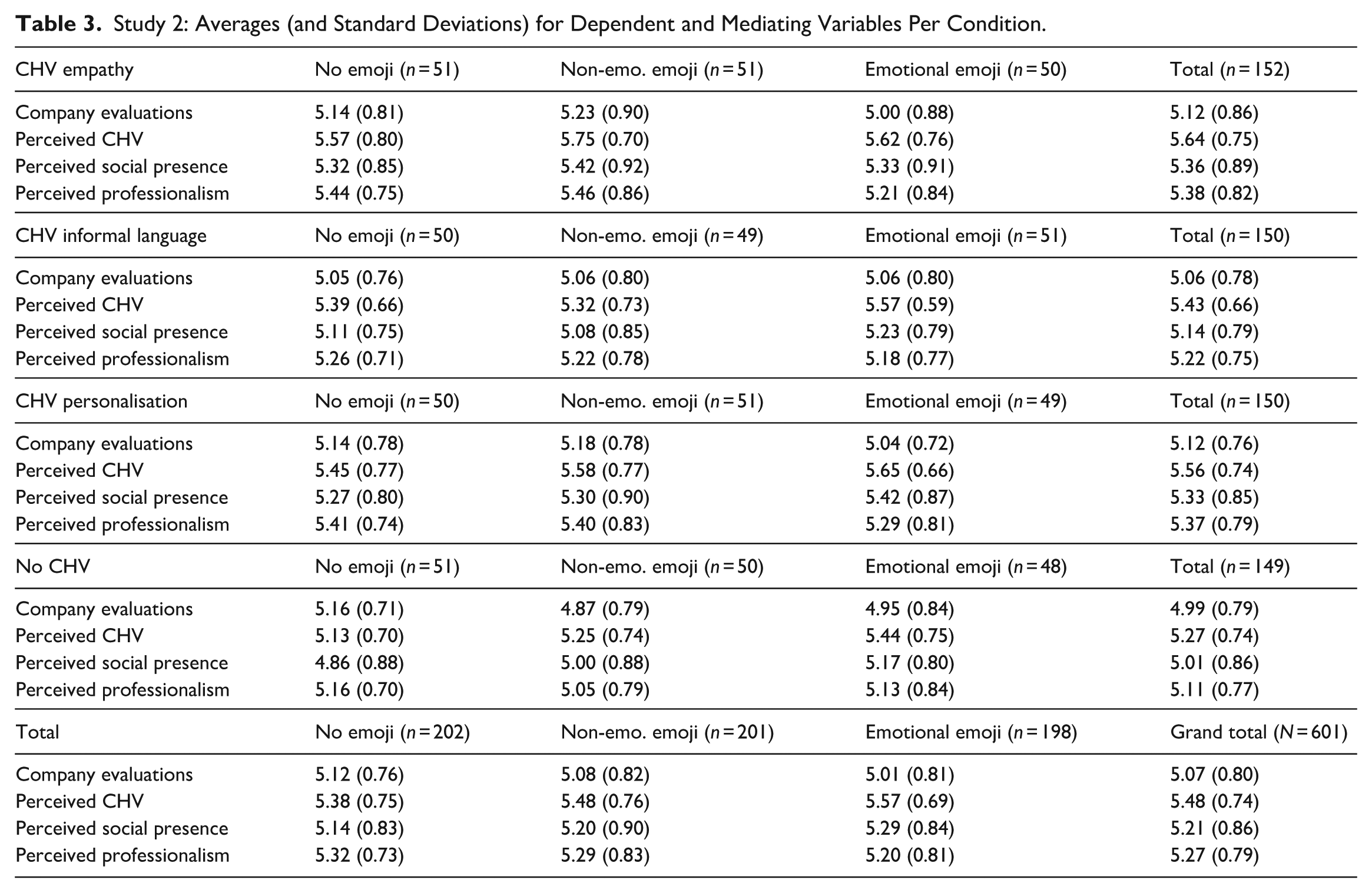
Before testing our hypotheses and subquestion on how CHV tactics interact with emoji, we tested the effects of the CHV tactics on the three mediating variables. Positive effects of two CHV tactics were found, namely empathy (a key element of invitational rhetoric) and personalisation, on all three mediating variables. Perceptions of CHV turned out to be positively affected by empathy (b = 0.37, SE = 0.08, p < .001) and personalisation (b = 0.29, SE = 0.08, p < .001), but not by informal language (b = 0.15, SE = 0.08, p = .07). Perceived CHV was higher in the conditions with empathy (M = 5.64, SD = 0.75) and the conditions with personalisation (M = 5.56, SD = 0.74) than in those without CHV (M = 5.27, SD = 0.74). Next, positive effects were found on perceptions of social presence – effects of empathy (b = 0.35, SE = 0.10, p < .001) and personalisation (b = 0.32, SE = 0.10, p < .01), but not of informal language (b = 0.13, SE = 0.10, p = .19). Perceived social presence was higher in the conditions with empathy (M = 5.36, SD = 0.89) and the conditions with personalisation (M = 5.33, SD = 0.85) than those without CHV (M = 5.01, SD = 0.86). Finally, perceptions of professionalism turned out to be positively affected by empathy (b = 0.26, SE = 0.09, p < .01) and personalisation (b = 0.25, SE = 0.09, p < .01), but not by informal language (b = 0.11, SE = 0.09, p = .25). Perceived professionalism was higher in the conditions with empathy (M = 5.38, SD = 0.82) and the conditions with personalisation (M = 5.37, SD = 0.79) than without CHV (M = 5.11, SD = 0.77). In short, empathy and personalisation, but not informal language, had positive effects on the mediating variables. The findings of the analyses with Process are summarised in Table 4.5,6
Study 2: Results of Mediation Analysis for Company Evaluations (Bold = Significant).
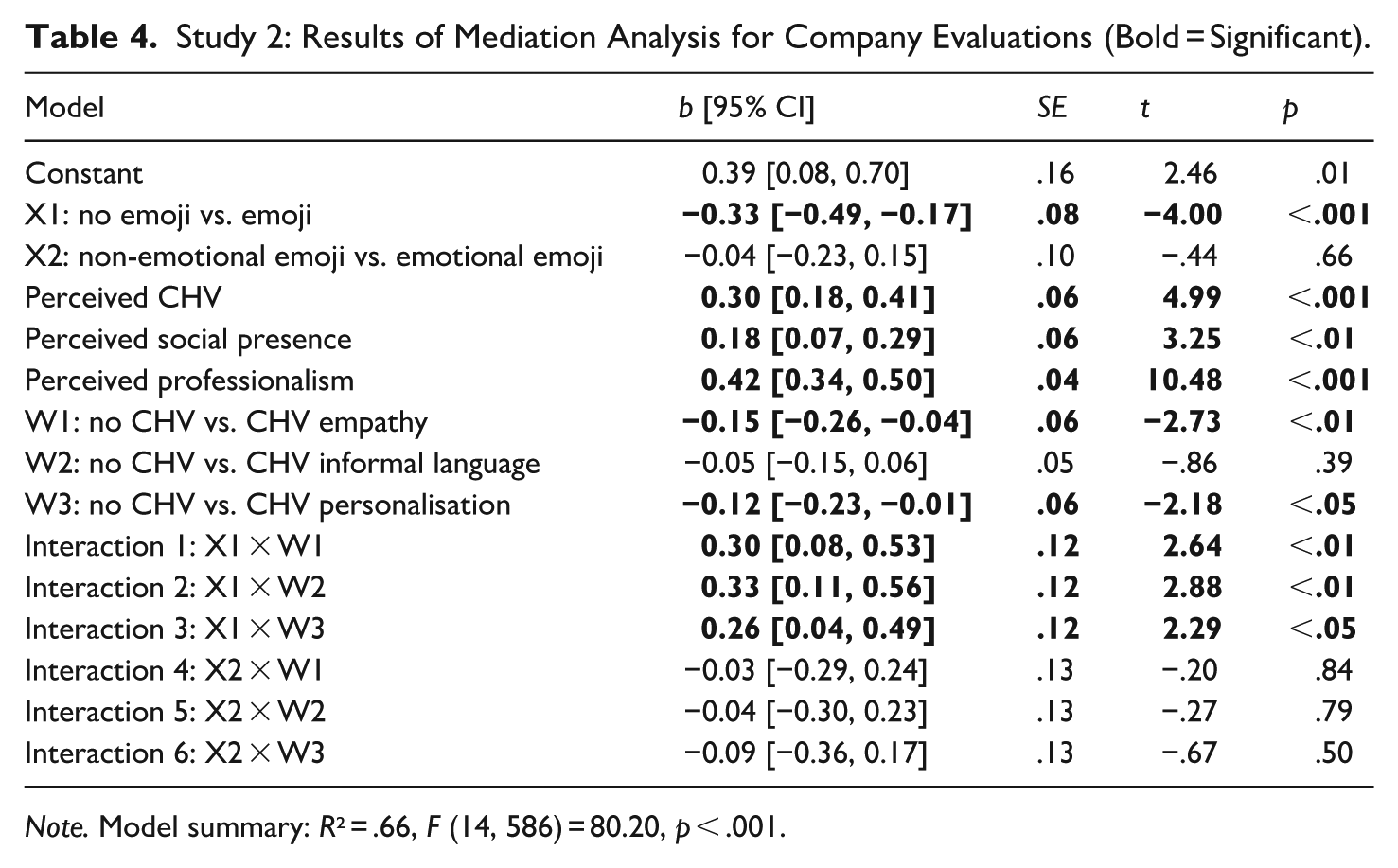
Note. Model summary: R² = .66, F (14, 586) = 80.20, p < .001.
Hypothesis Testing
We then tested our hypotheses on the effects of emoji in interaction with CHV tactics on observers’ company evaluations. A conditional negative effect of emoji on company evaluations was found for the conditions without CHV (b = −0.33, SE = 0.08, p < .001). Company evaluations were lower in the no CHV-conditions with emoji (M = 4.91, SD = 0.81) than in the no CHV-conditions without emoji (M = 5.16, SD = 0.71). In other words, CHV had a significant moderating impact on the relationship between emoji use and company evaluations. This confirms H7, in which we expressed our expectation that without CHV in webcare responses, emoji would negatively affect company evaluations.
The data provide evidence that some CHV tactics can turn effects of emoji on company evaluations from negative into positive, supporting H9 and H10, but not H8. Three interactions (1–3 in Table 4) between presence vs. absence of emoji and CHV tactics were significant, showing that the effects of emoji on company evaluations were moderated by the use of CHV tactics in webcare responses. When informal language (b = 0.33, SE = 0.12, p < .01) or personalisation (b = 0.26, SE = 0.12, p < .05) was added to the webcare messages, the negative effect of emoji on company evaluations that was present in the conditions without CHV was not found: the effects of emoji, in fact, were positive. This was not the case for empathy (b = 0.30, SE = 0.12, p < .01), where emoji still showed negative effects on company evaluations. These interactions have been visualised in Figure 5, showing that when the CHV tactics informal language or personalisation were manifestly incorporated in webcare, emoji no longer harmed company evaluations.
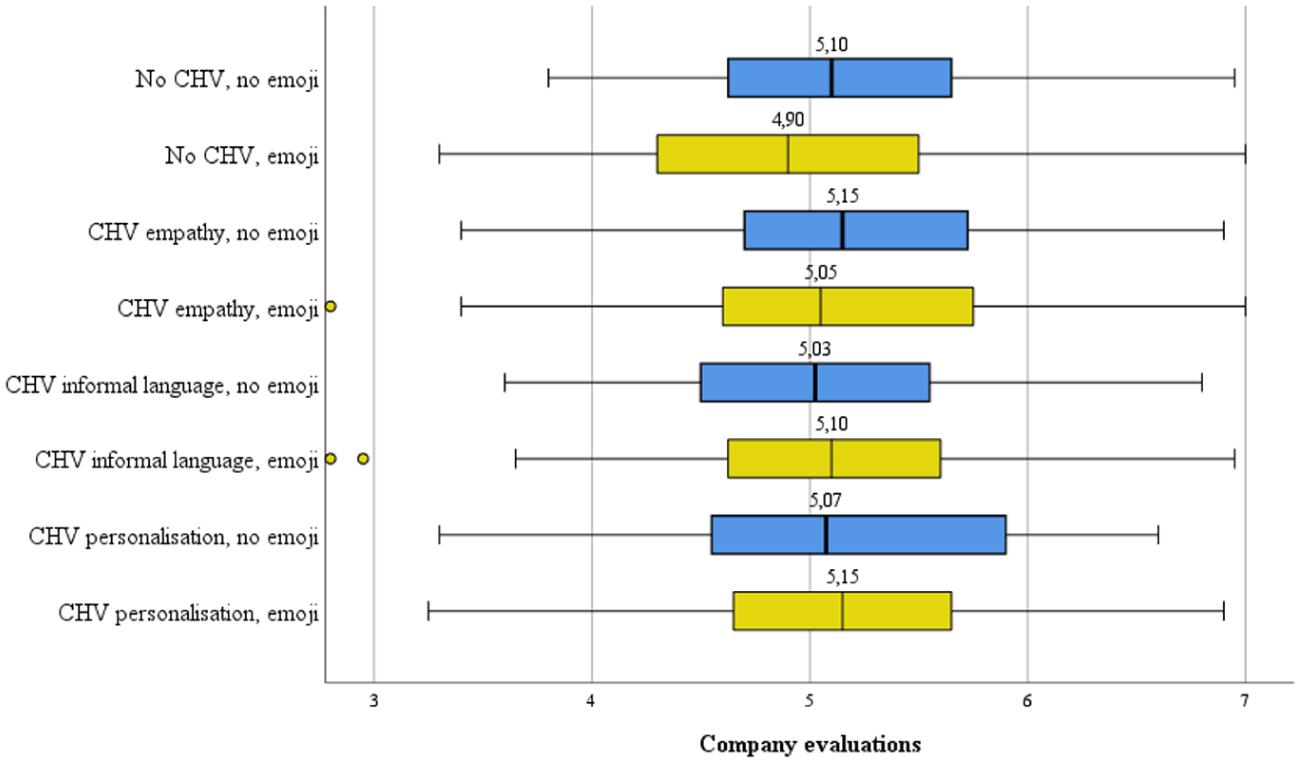
Interactions between emoji and CHV on company evaluations (with median value above the box).
Finally, we conducted analyses to answer our SQ on how the relationships between different kinds of emoji and observers’ company evaluations and perceptions of CHV, social presence, and professionalism are affected by CHV tactics. The addition of different CHV tactics to the regression model resulted in the disappearance of significant differences between emotional and non-emotional emoji, as can be seen for company evaluations from the three non-significant interactions (4–6) between emoji type and CHV tactics in Table 4. This contrasts with what was found in Study 1, which used a moderate amount of CHV in all stimuli.
Discussion
Summary of Findings
Two complementary studies experimentally examined the effects of emoji and different types of emoji (emotional and non-emotional) in webcare, specifically in service recovery messages to handle online complaints, on observers’ company evaluations as well as on their perceptions of the conversational human voice (CHV), social presence, and professionalism of companies. We can conclude from both studies that using emoji in public webcare responses to consumer complaints overall has detrimental effects on observers’ company evaluations. While Study 1 showed that emoji have a negative impact on company evaluations in webcare with a moderate amount of CHV, Study 2 refined these findings by showing that emoji also have such a negative impact when CHV is largely absent from webcare or the only CHV tactic applied is invitational rhetoric, but not when the CHV tactics personalisation or informal language are abundantly present.
Our findings revealed that emoji not only harm company evaluations in general, but can also harm perceptions of professionalism and (surprisingly) social presence. If emoji are nevertheless used in webcare messages, Study 1 shows that it is important to select emotional emoji (such as faces and gestures) rather than non-emotional emoji (such as objects and symbols), because with a moderate level of CHV emotional emoji were shown to positively affect observers’ perceptions of social presence and CHV, which in turn enhance their company evaluations. Yet both studies show that for overall company evaluations and professionalism, it makes no difference whether emotional or non-emotional emoji are used – all emoji harm consumers’ company evaluations and detract from a professional image.
The lack of effects of emoji type (emotional vs. non-emotional) on the mediating variables in Study 2 contrasts with the effects of emoji type on perceived CHV and social presence that were found in Study 1. This discrepancy between the findings of the two studies shows that CHV tactics have a bigger impact than emoji types. Study 2 revealed that the CHV tactics personalisation and empathy were positively related to perceived CHV, social presence, and professionalism, whereas such effects were lacking for the CHV tactic informal language, irrespective of emoji use. These results also indicate that verbal and visual informal elements contribute less to CHV perceptions than other CHV tactics.
Implications for Research
These studies extend the current body of literature on signalling theory, on the one hand, and emoji in online business communication, on the other hand. More specifically, this research expands knowledge on the impact of companies’ public customer service messages on social media (i.e., webcare), in which observers can use emoji as signals to develop perceptions of organisations. Since observers cope with information asymmetry when reading webcare conversations online (Bergh et al., 2014), they rely on other cues to form opinions about an organisation, such as the mere act of responding to consumer complaints, response speed, response frequency, content quality, and communication style – all can be considered signalling cues (Hogreve et al., 2019; Javornik et al., 2020; Jeesha & Purani, 2021; C. Li et al., 2017; S. Li et al., 2022). The current studies extend this knowledge by finding that the mere use of emoji can serve as a signalling cue as well, albeit in a rather complex way, since the presence of emoji generally harms company evaluations, but this effect depends on the type of emoji used and the presence or absence of different CHV tactics.
Our findings on professionalism confirm but also deepen prior findings of Glikson et al. (2018), X. Li et al. (2019), and Aretz and Mierke (2019), who demonstrated that emoticons and emoji in introduction messages to coworkers, service employees’ messages, and job-related messages respectively lowered the sender’s perceived competence/assertiveness, as compared to messages from which these visual elements were absent. Our results suggest that emoji use as such in companies’ service recovery messages with a moderate level of CHV negatively affects perceptions of professionalism, in accordance with Glikson et al.’s, Li et al.’s, and Aretz and Mierke’s findings, regardless of whether the emoji express emotions (as in the studies by Glikson et al., 2018; Li et al., 2019; Aretz & Mierke, 2019, which included just facial emoji). It can thus be concluded that lower perceptions of professionalism can be explained by the mere presence of emoji rather than by the type of emoji.
Furthermore, we expected the use of emoji in webcare messages, and particularly emotional emoji, to positively affect perceptions of social presence (based on previous findings on perceived warmth by X. Li et al., 2019; Aretz & Mierke, 2019) as well as CHV (based on previous findings of Liebrecht et al., 2021). Our research partly confirms these expectations, since emotional emoji indeed increased these perceptions in comparison to non-emotional emoji, but not when both emoji types were compared to no emoji. In fact, the opposite effect was found for social presence, showing that emoji use in general weakened observers’ impressions that the complaining consumer was communicating with a real person. Although this was unexpected (going beyond Glikson et al.’s (2018) finding that smiley-face emoji do not always increase perceptions of warmth in business communication), it is important here to differentiate emotional emoji from non-emotional emoji. The former are conduits for ‘affective labour’ (Stark & Crawford, 2015) by adding emotions to a message and mimicking nonverbal behaviour in a face-to-face setting (Walther, 1996), which is valuable in service recovery contexts where employees try to handle complaints in a warm and friendly manner (Cameron, 2000). As such, it makes sense that only emotional – especially facial and gestural – emoji contribute to social presence. Non-emotional emoji, in contrast, do nothing in terms of affective labour and usually simply illustrate the text (Pohl et al., 2017), for example a camera emoji in a message about a camera. Since non-emotional emoji tend to have no added informational value (except when used to replace text, e.g., ‘so sorry about your ’, which did not occur in our materials), but webcare employees have to take effort to add them, the use of non-emotional emoji may come across as unnatural and contrived, thus resulting in lower perceptions of social presence. Our more comprehensive approach to emoji, including not just faces, may therefore explain the ostensible discrepancy between the negative effect we found on social presence and the positive effects X. Li et al. (2019) and Aretz and Mierke (2019) found on warmth.
No significant differences in perceived CHV were found in Study 1 between webcare messages with or without emoji, which contrasts with theory on CHV suggesting that emoji are one of the many features that can be used to create such a conversational human tone of voice in webcare (Liebrecht et al., 2021; Van Noort et al., 2014). However, although Liebrecht et al. (2021) showed that emoji can contribute to perceptions of CHV, compared to other verbal features such as message personalisation and invitational rhetoric, the contribution of this visual informal feature was only minor. Our experiments show that in the midst of other CHV tactics, which differs from Liebrecht et al. (2021), the added contribution of emoji to CHV is insignificant, but the use of emotional emoji was shown in Study 1 to contribute to perceptions of CHV.
Our studies explored emotional and non-emotional emoji in combination with CHV tactics. In fact, emoji are nonverbal elements that can achieve CHV through informal language (Liebrecht et al., 2021). Results show that all emoji can harm observers’ perceptions of the professionalism of companies, whereas only emotional emoji can increase perceptions of CHV and social presence, just like empathy and personalisation. Accordingly, emotional emoji can contribute to all three CHV tactics, while non-emotional emoji can only add an informal tone to webcare.
The effects of emoji use, as found in Study 2, depend on the communication style used in the surrounding service recovery message. Observers expect a company’s visual discourse, including emoji, to be consistent with their verbal discourse. Such expectations of ‘multimodal coherence’ (Bateman, 2014) in online business communication affect attitudes towards emoji use. If the informal indexicalities of emoji are not coherent with the formality of the writing, this is problematic, but if emoji use fits the style and register of a message, the effects are positive. Study 2 showed that observers consider emoji to fit with informal language and personalisation. This corresponds with the findings of K. Y. Wang, Chih, and Honora (2023) that an (emotional) emoji generated positive effects on perceptions of sincerity, empathy, and subsequently customer forgiveness when used in a message with an informal communication style. It is also in line with research by Glikson et al. (2018) which suggests that emoji use need not only fit the writing context, but also the social context: they found that in introduction emails to coworkers, smiley-face emoji only negatively affected perceived competence in formal contexts and only positively affected perceived warmth in informal contexts.
Implications for Practitioners
Companies should be keenly aware of the one-to-many communication context of social media, which means that their public webcare messages are not only seen by the consumer who posts the initial message, but also many others who observe these interactions in their social media timelines (Van Noort et al., 2014). Such observers form impressions of organisations, inter alia based on the language elements – both verbal and visual – that are used in webcare responses. First and foremost, practitioners are advised to use CHV tactics in their service recovery messages, since our research shows that the tactics of empathy and personalisation (not informal language on its own) enhance company evaluations: CHV serves as a signalling cue which gives observers the impression that companies treat their customers well (Javornik et al., 2020) and subsequently increases their satisfaction with the observed complaint handling.
Zooming in on the role of emoji in webcare, the complexity of our findings demonstrates that companies walk a fine line between personal and professional when using emoji in online business communication. It may be best for companies not to use emoji when handling online complaints. After all, the results showed that emoji in general harm observers’ evaluations of companies, mainly through lower perceptions of professionalism. In addition, since selecting emoji that match the content and tone of a message takes precious time, we recommend webcare employees not to use emoji at all, especially if they are under time pressure and the company’s main aim is to send a signal of being trustworthy.
Instead of using emoji, it seems more prudent to focus on including several CHV tactics in webcare responses. The current research has revealed that verbal CHV features have stronger effects than the visual feature of emoji, and previous literature has shown convincing evidence that using such a personal and engaging communication style has beneficial effects for companies (e.g., Liebrecht et al., 2021; Javornik et al., 2020). The CHV tactics of personalisation and invitational rhetoric are crucial to incorporate in webcare messages, as our study has shown that these tactics contribute more to readers’ perceptions of CHV than (verbal or visual) informal language elements. Companies could enhance the personalisation by addressing the customer (i.e., greeting personally, using second-person pronouns) and the webcare employee (i.e., using first-person pronouns, a personal signature, and adding contact information). Invitational rhetoric can be achieved with expressions that show the company is open to dialogue, an acknowledgement of the customer’s message, apologies in case of a failure, expressions of sympathy or empathy, carefully including humour, and closing a conversation with well-wishing (Liebrecht et al., 2021).
Nonetheless, if companies decide to use emoji in their webcare, they are advised to select emotional over non-emotional emoji and to incorporate them together with other CHV tactics, specifically an informal language style and personalisation. Emotional emoji enhance perceptions of humanness (i.e., CHV) and warmth (i.e., social presence) without lowering perceived professionalism any more than non-emotional emoji. This is a useful insight for practitioners, since research has revealed that in comparison to competence-oriented responses, warmth-oriented webcare responses in service recovery improve observers’ perceptions of the company’s service and their evaluation of the service recovery (R. Huang & Ha, 2020). In that regard, emotional emoji such as smiley faces, gestures, and hearts (
 ) could serve as positive signalling cues compared to non-emotional emoji such as objects and symbols (

 ); that is, when they are used in informal and/or personalised webcare messages, preventing any multimodal incoherence.
Limitations and Directions for Future Research
While this paper has made valuable contributions to scientific knowledge of the signalling effects of emoji in service recovery messages on observers’ company evaluations, several additional factors could be taken into account in future research. We examined the use of emoji by for-profit companies selling products (food, furniture, electronics, shoes), but emoji may have different effects when used by non-profits or NGOs (Molina, 2019). Furthermore, even among commercial companies, the effects of emoji may differ, depending on their brand personality (sincere, exciting, competent, sophisticated, rugged; Aaker, 1997), target group (youths vs. older audience), and products (high- vs. low-involvement products; Zaichkowsky, 1985). For instance, emoji may be a better match for brands associated with excitement than brands linked with the values of competence and sophistication, for younger rather than older target groups, and for companies selling low-involvement rather than high-involvement products. All this can be tested in future experiments.
Our studies implemented a distinction between emotional and non-emotional emoji. However, one could wonder whether faces, gestures, and hearts should all be grouped together as emotional emoji. For example, other scholars distinguished face versus non-face emoji (Kaiser & Grosz, 2021; Riordan 2017a, 2017b), although this means that gesture and heart emoji will be classified with non-face emoji, even though they resemble facial emoji by functioning as paralinguistic markers and expressing emotions. A distinction between embodied emoji (i.e., faces, gestures) and non-embodied emoji would not be ideal either, because hearts would be classified as non-embodied emoji, although they express emotions similar to faces and gestures (e.g., 


 ). To complicate matters further, even objects and symbols might be emotionally resonant. Our pilot study revealed that certain objects can evoke positive emotions (e.g., soccer ball
  , engagement ring
  ) or negative emotions (e.g., syringe
  , bomb
  ) for some users. Although our manipulation checks confirmed our distinction between emotional and non-emotional emoji, future research could refine emoji classifications. Also, we examined the effects of emotional versus non-emotional emoji, so we do not know how observers perceive webcare responses that contain both emoji types.
Finally, the effects of emoji in webcare may depend on consumers’ emoji use in their initial messages. If a consumer message contains emoji, it may be less harmful for companies to use emoji in their response. This relates to Communication Accommodation Theory (Giles et al., 1991), which postulates that language users adjust their communicative behaviour to the setting, theme, or conversation partner to move closer to the interlocutor by aligning their verbal or nonverbal language (i.e., convergence). Jakic et al. (2017) found positive effects on perceptions of trust when a company accommodated to the consumer’s verbal language style, which was explained by perceived relationship investments, such as interaction effort and benevolence. A content analysis of a corpus of actual webcare conversations could analyse whether companies indeed accommodate their emoji use to consumers, and the effects of nonverbal accommodation with emoji can be examined in an experimental setting. Such follow-up studies could continue to explore the effects of different types of emoji in companies’ service recovery messages to online consumer complaints, and could further unravel the mechanisms underlying emoji as signalling cues for observers of webcare.
Conclusion
This study has shown that the use of emoji and conversational human voice in companies’ responses to consumer complaints interact in affecting how companies are perceived on social media. It proves that emoji are used as signalling cues by observers and has major implications for online service encounters.
Supplemental Material
sj-docx-1-job-10.1177_23294884251372546 – Supplemental material for How Emoji in Company Responses to Online Consumer Complaints Affect Observers: Emoji as Visual Signalling Cues in Webcare
Supplemental material, sj-docx-1-job-10.1177_23294884251372546 for How Emoji in Company Responses to Online Consumer Complaints Affect Observers: Emoji as Visual Signalling Cues in Webcare by Lieke Verheijen and Christine Liebrecht in International Journal of Business Communication
Footnotes

Ethical Considerations
These studies received ethical approval from the Research Ethics and Data Management Committee of Tilburg School of Humanities and Digital Sciences (REDC approval #2020.177 and #2020/177a).
Consent to Participate
Respondents declared their informed consent and agreement with the stated terms before participating in the studies.
Author Contributions
Both authors have contributed equally to creating the materials, analysing and reporting the data, and writing the manuscript.
Funding
The authors disclosed receipt of the following financial support for the research, authorship, and/or publication of this article: The research was carried out with the help of a small research grant from the Centre for Language Studies of Radboud University (The Netherlands), under Project Code RG2020-28.
Declaration of Conflicting Interests
The authors declared no potential conflicts of interest with respect to the research, authorship, and/or publication of this article.
Data Availability Statement
Supplemental material
Supplemental material for this article is available online.
Notes
Author Biographies
References
Supplementary Material
Please find the following supplemental material available below.
For Open Access articles published under a Creative Commons License, all supplemental material carries the same license as the article it is associated with.
For non-Open Access articles published, all supplemental material carries a non-exclusive license, and permission requests for re-use of supplemental material or any part of supplemental material shall be sent directly to the copyright owner as specified in the copyright notice associated with the article.
