




Abstract
Objective:
This study aims to compare the color change (ΔE) of 5 resin cements (Panavia SA, Panavia V5, RelyX U200, Variolink NLC clear and +1) after thermocycling. Changes in color of specimens were determined after 10,000 cycles of thermocycling by spectrophotometer in the CIELAB.
Materials and Methods:
Ceramic disks, simulating laminate veneers, with thicknesses of 0.5, 0.7, and 1.0 mm (A1, IPS e.max) were fabricated. Color differences (ΔE) between the control and test groups were calculated. Data were statistically analyzed by 2-way analysis of variance (ANOVA). Also, Tukey’s multiple comparison tests were applied to know the difference between the groups (α = 0.05).
Results:
The factors of cement type and thickness of ceramic showed significant influence on ΔE values (P < .05). After thermocycling, all resin cements, except benzoyl peroxide including resin cement (Pan SA), were showed clinically acceptable to color change limits (ΔE < 3.3). On evaluating the effects of ceramic thickness on color change after thermocyle aging, control group (no ceramic thickness) showed color change (P < .05) visually.
Conclusion:
Amine-reduced, amine-free and lacking benzoyl peroxide resin cement showed minimal color change and better color stability.
Keywords
Introduction
Recently, all-ceramic restoration became very popular due to excellent esthetic appearance and optical properties. 1 Choice of all ceramic material depends on mechanical property and characteristic optical behavior of material.2,3 The feldspathic ceramic, first available among all ceramic materials, has showed excellent optical properties. 4 However, it has low flexural strength and high brittleness rate. Thus, the scientist and researchers are focused on increasing mechanical properties of ceramic materials and also preserving excellent optical properties.2,3 As a result of new studies, all ceramic materials such as lithium disilicate, fluorapatite, zirconium oxide glass-ceramics, and combinations of these materials have been developed. Recently, heat-pressed glass-ceramic lithium disilicate reinforced ceramics (IPS e.max press) became more popular among all ceramic materials due to optimum esthetic properties and high strength in extremely thin thickness restoration cases. 2 Lithium disilicate has many available degrees of translucency providing high level esthetic outcomes. Due to microstructure of new all-ceramic material, 60% acicular lithium disilicate in glass matrix, the strength of material increased and it can be used for the variety of indication.3,5
Primarily, optical properties of all ceramic materials affected various factor such as translucency or opalescence of material, thickness of restoration, and the choice of resin cement for the luting process.6,7 In the long-term process, the discoloration of restoration is caused not only by extrinsic factors but also by intrinsic factors. The long-term exposure of extrinsic factors (smoking, beverage, food component) may have potential to stain restorative materials. 8 The amount of discoloration effects which were caused by extrinsic factors depends on physicochemical characteristics of material (water sorption rate, surface roughness).8,9 Intrinsic factors of ceramic restoration are generally related to resin cement material properties such as the chemical structure of resin cement (photoinitiator and filler type, composition of matrix), polymerization type, conversion rate, and the presence of unreacted monomer.10-13 In addition, thermal change, UV irradiation, and humidity may cause intrinsic discoloration by physicochemical reaction on the surface or deeper layer of material under long-term environmental conditions. 14
There are many studies about long-term water storage 15 or accelerated aging 16 on the color of composite resin. They concluded that it had adverse effect the color of composite resin. However, the evaluation of the color stability of resin cement after thermocycling is limited.
The purpose of this study was to determine the effects of thermocycling on the color change (∆E) of 5 resin cements (Panavia SA, Panavia V5, RelyX U200, Variolink NLC clear and Variolink NLC +1) under different thickness types of (0.5, 0.7 and 1.0 mm and A1 shade) lithium disilicate glass ceramic restoration.
The authors hypothesize that (a) accelerated aging has no effect on color stability of different type of resin cement and (b) resin cement subjected to accelerated aging may change final color of different thickness type of (0.5, 0.7, and 1.0 mm) ceramic restoration.
Materials and Methods
Ethical Clearance
The study proposal was approved by the Ethical Committee of the Atatürk University, Faculty of Dentistry, Erzurum.
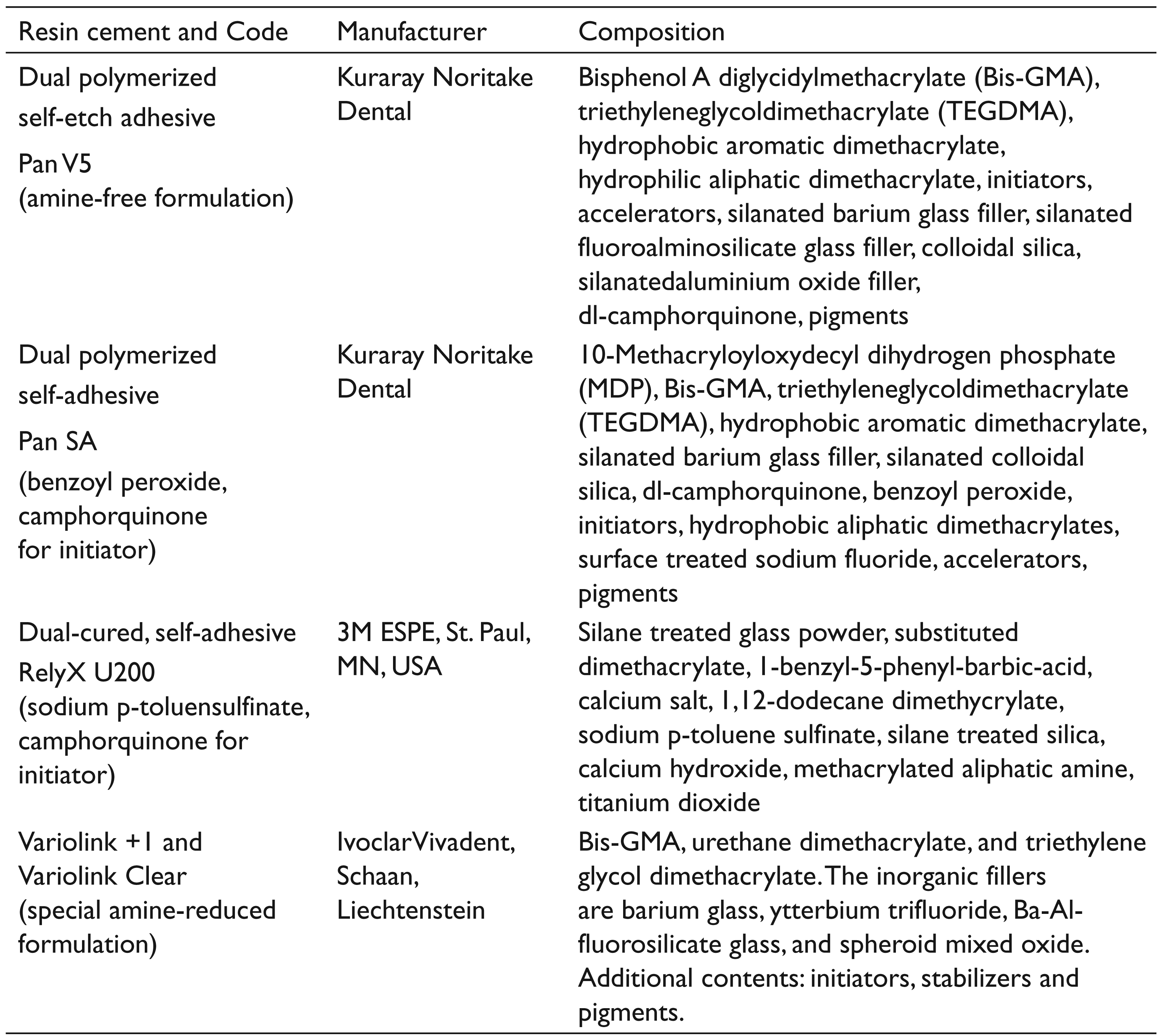
In this study, 5 types of resin cements (Panavia SA, Panavia V5, RelyX U200, Variolink NLC clear and Variolink NLC +1) and a brand of lithium disilicate glass ceramic (A1 shade, IPS Empress Esthetic, Ivoclar, Schaan, Liechtenstein) were used (Table 1). Table 1 shows the manufacturer, polymerization type, composition, and definitions of the used materials.
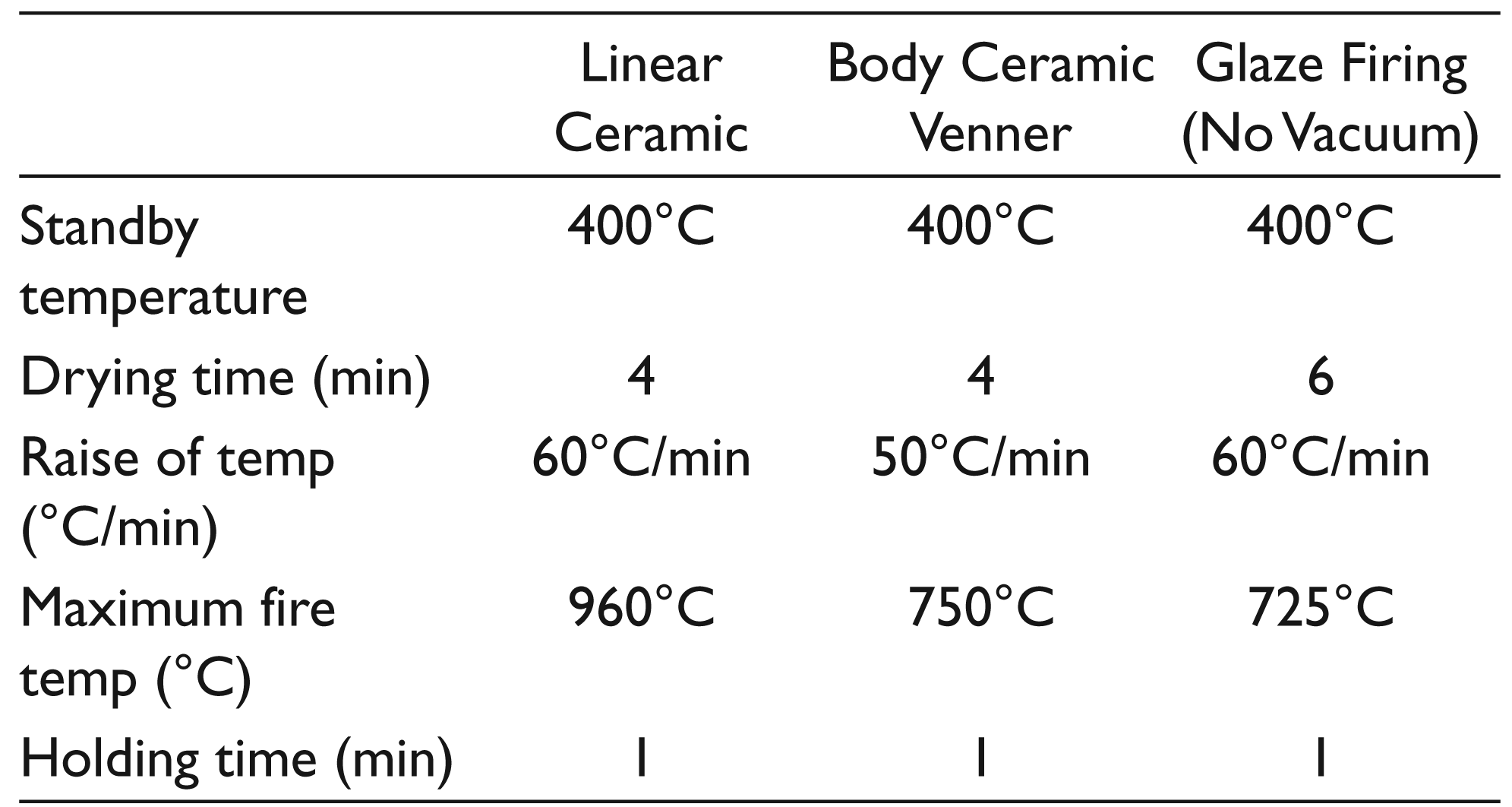
According to the manufacturer, using lost wax and heat-pressed techniques (Table 2), a total of 15 disk-shaped (0.5, 0.7, and 1-mm thick and 15-mm diameter, n = 3) lithium disilicate glass ceramic specimens were fabricated, and the dimension of the sample was confirmed by a digital calliper (Mitutoyo Corp., Tokyo, Japan). Surface of samples were standardized with 200, 400, 600, and 800 grits silicon carbide paper under running water.
A power analysis showed that 128 specimens were required to detect a significant difference in the color change of the resin cements after thermocycling between the 5 resin cement materials and 4 types of thicknesses of lithium disilicate glass ceramic specimens (a total of 20 groups). However, in this study, a total of 200 samples of resin cements were fabricated using the custom-made silicon mold (n = 40, per thickness n = 10). Totally 1000 times, per specimen for 5 times, surface color was measured by using CIELAB system. Silicon mold with a hole (15 mm diameter, 1.5 mm thickness) in the center was used as a spacer for resin cement. Five resin cements (Panavia SA, Panavia V5, RelyX U200; Variolink NLC clear and Variolink NLC +1) were mixed and then a small amount of resin cement was placed within the hole. All samples were prepared according to the manufacturer’s instruction (Table 1). Resin cements were polymerized directly using the LED curing unit (Woodpecker, Guangxi, China) with an intensity of 850-1000 mW/cm2 at 4 points. After the polymerization procedure, the resin cement sample was removed from the silicon mold. The surface of samples was standardized by using a series of carbide paper (200, 400, 600, and 800 grits) under running water. To ensure standard thickness, resin cements were checked using a digital caliper with 0.01 mm resolution. All samples were stored in distilled water (37±1°C, 24 h) for 1 day.
Before the colorimetric measurements, the resin specimens were subjected to ultrasonic cleaning for 10 min in distilled water with an ultrasonic cleaner (Ultrasonic Cleaner, Serial Num: 2297, Biem Ultrasonic Makine San., Turkey) and then, they were dried in air for 10 s. Each polished surface of specimen color was measured using the CIELAB system on a white background (CIE L* = 96.68, a* = –0.18, and b* = –0.22). To simulate the clinical conditions, the lithium disilicate glass ceramic specimens (0.5, 0.7, and 1 mm thickness) were placed on the resin cement disk. Without cementation, all the measurements were carried out with spectrophotometer (Vita Easyshade, Vident, USA) on each specimen surface 5 times (L1*, a1*, b1*). The calibration of the spectrophotometer was adjusted according to the manufacturer’s instructions before each of the measurements. After the color measurement of each sample, resin cement samples were subjected to thermocycling for 5000 cycles at temperature changing between 5°C and 55°C with a dwelling time of 30 s and transfer time of 5 s. Following the thermocycling process, spectrophotometric measurements were repeated for each sample to determine color differences at the identical areas (L2*, a2*, b2*). The color differences (∆E) were calculated by a software with 3 coordinates [L*, a*, and b* (L* brightness, +a* redness, –a* greenness, +b* yellowness, –b* blueness)] using the following formula: 17
Code, Manufacturer and Compositions of Resin Cement
Heating Application of IPS E.Max Ceramic Veneer Recommended by the Manufacturer (IvoclarVivadent AG, Schaan, Liechtenstein)
∆E* = {(∆L*)2 + (∆a*)2 + (∆b*)2}1/2
where ∆L* is the change before L1* and after L2* thermocycling, ∆a* is the change before a1* and after thermocycling a2*, and ∆b* is the change before b1* and after b2* thermocycling . All data were analyzed by 2-way ANOVA and post-hoc Tukey HSD test by using SPSS 16.0 software (IBM Corporation, Armonk, NY, USA). Statistical significance was preset at α = 0.05.
Results
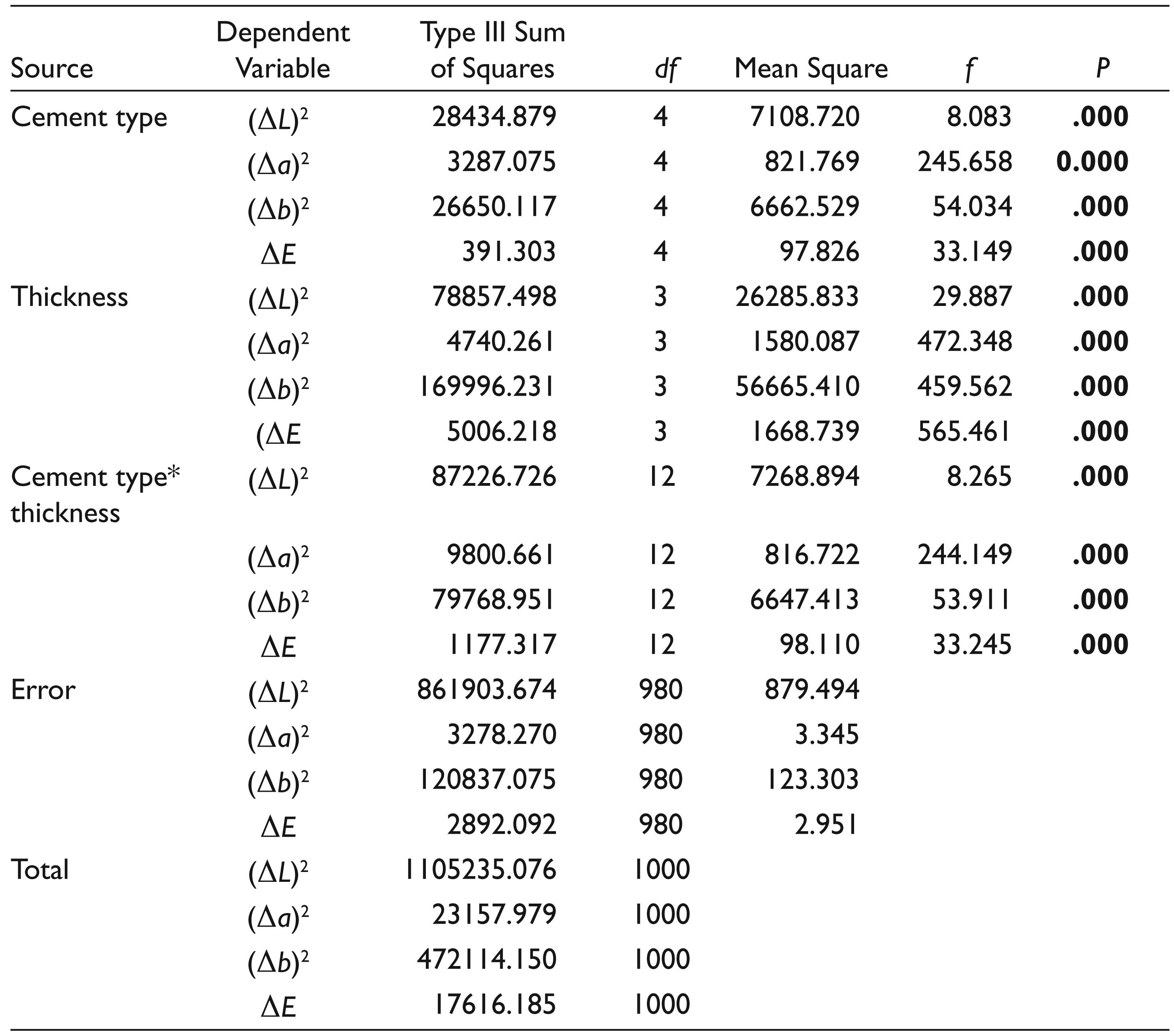
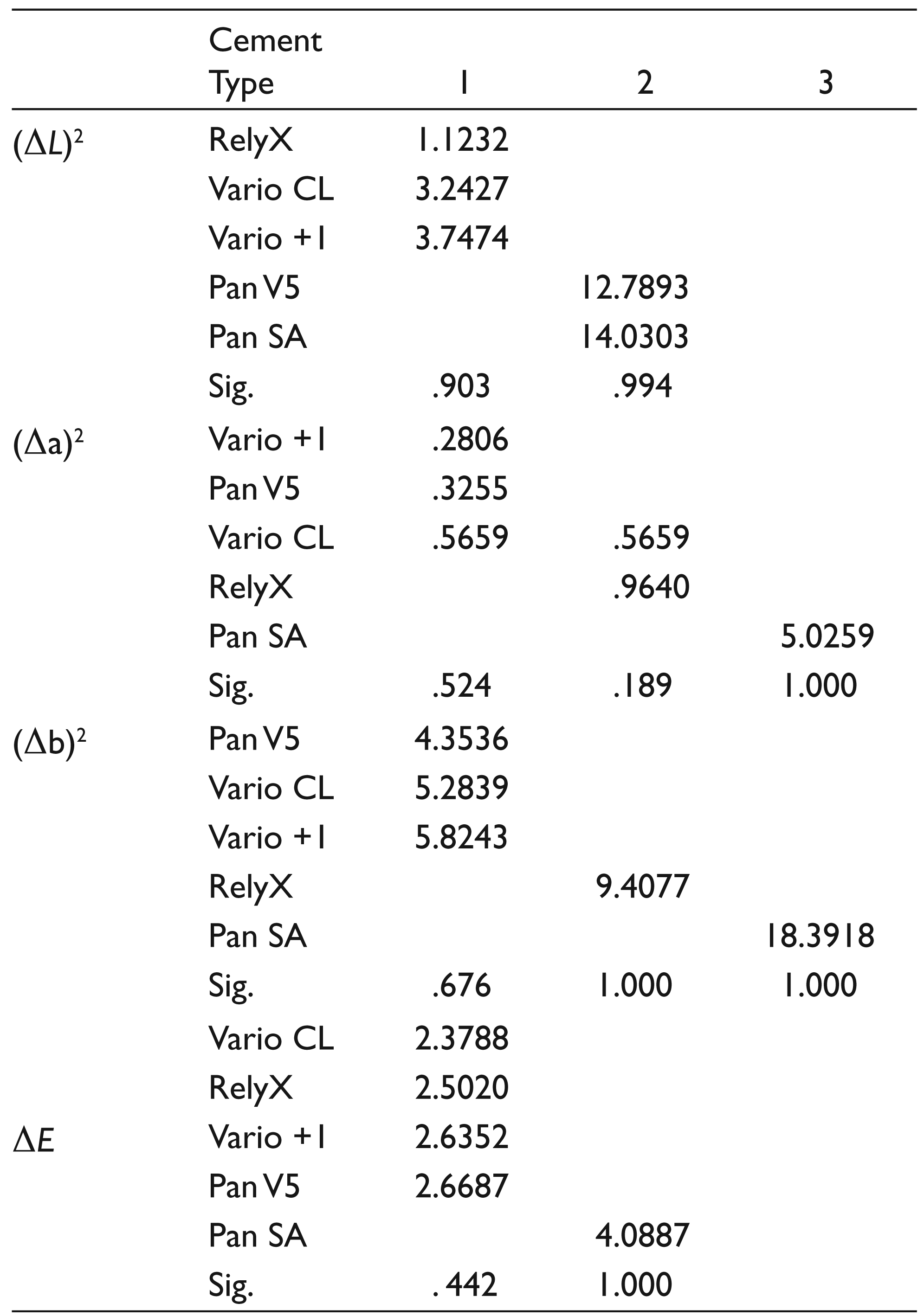
After thermocycling, the statistical analysis with 2-way ANOVA (Table 3) showed statistically significant difference in cement type, thickness, and cement type* thickness correlations. The statistical analysis of mean (∆L)2, (∆a)2, (∆b)2, ∆E, and thickness of ceramic group with Tukey HSD post-hoc multiple comparison tests are summarized in Table 4. The post-hoc analysis of (∆L)2 showed difference between Pan V5, Pan SA cement group and RelyX, Vario CL, Vario+1 group. For the post-hoc analysis of (∆a)2, Pan SA cement group (5.02) showed greater change than the other groups. The Vario +1 group (0.28) presented the lowest value. For the post-hoc analysis of (∆b)2, Pan SA cement showed highest change (18.39), whereas Pan V5 cement exhibited lowest change (4.35). For the post-hoc analysis of ∆E, while Pan SA group had the highest ∆E value at 4.08, Vario CL group had the lowest ∆E value at 2.37. The RelyX, Vario +1, and Pan V5 group had mean ∆E value of 2.50, 2.63, and 2.66, respectively. Only Pan SA cement had no clinically acceptable (∆E > 3.3) color change after accelerated aging.
Statistical Analysis of 2-Way ANOVA
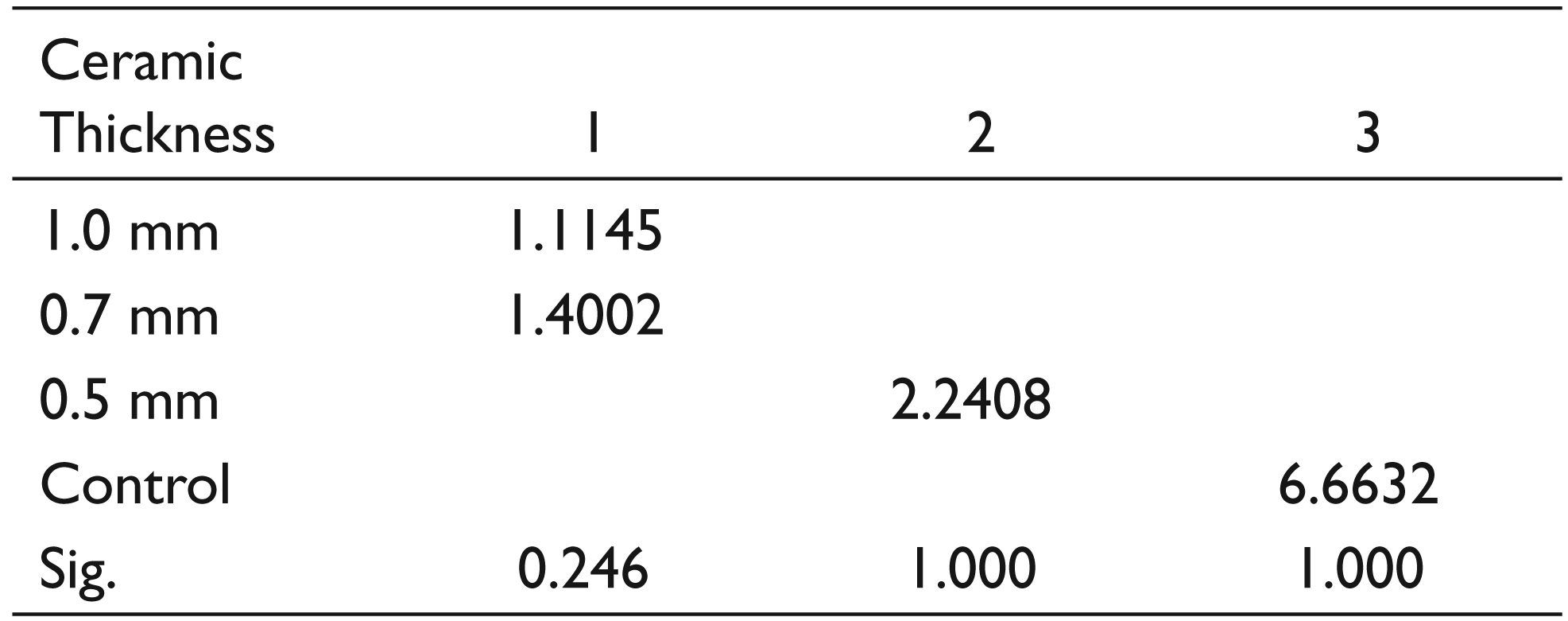
on evaluating effects of ceramic thickness on color change after ageing, control group (no ceramic thickness) showed greatest ∆E value (6.66) and had visually changed color (Table 5). Reverse correlation was observed between increase in thickness of ceramic and decrease of ΔE value. The ΔΕ value of 0.5 ceramic thickness (2.24) was statistically significant than 0.7 mm (1.40) and 1 mm (1.14) ceramic thickness (P < .05). After accelerated aging, however, all resin cements color change values (∆E) under different ceramic thicknesses were clinically acceptable color change values (∆E < 3.3).
Discussion
Based on the results of this study, the first hypothesis, accelerated aging has no effect on color stability of different types of resin cements, was rejected. Also, the second hypothesis, resin cement subjected to accelerated aging may change final color of different thickness types of (0.5, 0.7, and 1.0 mm) ceramic restoration, was accepted.
Traditionally, the color of material has been measured by the spectrophotometer using the CIEL*a*b* (CIELAB) three coordinate system to calculate the color change differences (∆E) using ∆L (change of brightness), ∆a (change of redness/greenness), and ∆b (change of yellowness/blueness) parameters.
According to the type of polymerization, resin cements are classified as chemically cured, light cured and dual cured (both chemical and light), 18 and also resin cements are classified into three categories according to the application: (a) etch and rinse adhesive resin cement, (b) self-etch adhesive resin cement, (c) self-adhesive resin cement adhesive system. 19 The selection of resin cement type is a more important step and it may unpredictably change the final color of ceramic restoration depending on the chemical composition of resin cement. Most of dual- or self-cured resin cement compositions include benzoyl peroxide and tertiary amines which is the combination of different amine used to initiate the polymerization reaction.11,20-23 For chemical polymerization, aromatic amine reacts with benzoyl peroxide, while more stable aliphatic amine reacts with comphorquinone to occur light polymerization. However, the remaining unreacted carbon double bonds and unreacted benzoyl peroxide or amine lead to the discoloration of restoration in time. The light-cured resin cements only have more stable aliphatic amine.20,21,24,25 Previous studies reported that light-cured resin cement has better color stability than dual-cured resin cement due to its chemical composition.25,26 In accordance with the pervious study results, special amine-reduced formulation of light-cured resin cement (Variolink N LC Clear) has showed least ∆E value of color change after thermocycling. Followed by Variolink N LC Clear, RelyX U200 resin cement showed more stable color change in terms of ∆E value. It may be related to RelyX U200 features, which observed low water sorption and solubility in a previous study. 27 On contrary to this study, Malkondu et al. 7 reported that RelyX U200 resin cement exhibited clinically unacceptable color change at 0.6 mm thick monolithic zirconia.
Tukey HSD Post-Hoc Multiple Comparison Tests
Correlations Between Ceramic Thickness and Color Change (ΔE)
Recently, some manufacturers have been developing the amine-reduced or amine-free initiator system and lack of benzoyl peroxide in cement composition. Last studies concluded that the amine-reduced and amine-free initiator system and lack of benzoyl peroxide cause minimal discoloration and better color stability.28-30 This study confirmed the results of earlier studies that amine-reduced (Variolink N LC Clear and +1), amine-free Pan V5 and lack of benzoyl peroxide in RelyX U200 resin cement showed clinically acceptable (∆E < 3.3) color change after accelerated aging.
In this study, for standardization only, 1 type of disk shape of resin cement (15 mm in diameter and 1.5 mm in thickness) was used. It was chosen according to the ISO standards 31 and spectrophotometry requirements. However, simulating clinical thickness of laminate veneer, the three types of ceramic thicknesses (0.5, 0.7, and 1.0 mm) were fabricated. Another aim of the study is to evaluate the effect of accelerated aging on subjected resin cement on final color of ceramic restoration under different types of thicknesses. As per the result of this study, no ceramic thickness showed greatest ∆E value (6.66) and had visual color change. Reverse correlation was observed between the increase in the thickness of ceramic and decrease of ΔE value. However, all resin cement color change values (∆E) under different ceramic thicknesses showed clinically acceptable color change (∆E < 3.3).
According to Table 4, the ∆L (change of brightness), ∆a (change of redness/greenness), and ∆b (change of yellowness/blueness) values showed differences after thermocycling for Pan SA cement. It may be related to their chemical composition;unreacted benzoyl peroxide or residual amines might have caused color change after thermocycling.5,20,24 The highest ∆b (change of yellowness/blueness) values were observed for Pan SA and RelyX U200 after thermocycle aging. Also, it may be related to camphorquinone photoinitiator which showed yellow color change overtime. 32 No change was observed in ∆L, ∆a, and ∆b values for Vario CL and Vario +1 cement after thermocycling. Pan V5 cement showed more stable ∆a and ∆b values, while color change was observed in ∆L value after thermocycling. The increase of ∆L value of Pan V5 and Pan SA may be related to polymerization, and cross-links between carbon atoms continue after initial light activation during 24 h. 33
The limitation of the present study is that the thermo-cycle aging effect on the color change of resin cement was evaluated only for 5 types of resin cements under 4 thicknesses of lithium disilicate glass ceramic specimen. Further study is needed to evaluate different resin cement material under different thicknesses of newly developed CAD–CAM resin and ceramic hybrid material or monolithic zirconia.
Conclusions
Within the limitations of this study, the conclusions of this study are as follows:
When ∆E value was evaluated after thermocycling, all resin cements, except benzoyl peroxide including resin cement (Pan SA), showed clinically acceptable color change limits (∆E < 3.3). The thermocycle aging significantly affected and caused color change in Pan SA cement (P < .05) Amine-reduced (Variolink N LC Clear and +1), amine-free Pan V5 and lacking of benzoyl peroxide in RelyX U200 resin cement showed minimal color change and better color stability. When the effects of ceramic thickness on color change were evaluated after thermocyle aging, control group (no ceramic thickness) showed color change visually (P < .05). Also, reverse correlation was observed between increase in the thickness of ceramic and decrease of ΔE value.
Declaration of Conflicting Interests
The author(s) declared no potential conflicts of interest with respect to the research, authorship, and/or publication of this article.
Funding
The author(s) received no financial support for the research, authorship, and/or publication of this article.