




Abstract
The evolving landscape of rugby union, shaped by rule changes that encourage faster and more dynamic gameplay, has redefined key performance indicators (KPIs) for team success. This study explores the role of linebreaks as a critical KPI by analysing 34 matches from the 2018/2019 season of a consistently high-performing team. We distinguish between dynamic linebreaks, occurring in open and unstructured phases of play, and static linebreaks, which emerge from set pieces such as scrums and lineouts. Using detailed match data and video analysis, our results reveal that dynamic linebreaks are strongly associated with larger score differentials, regardless of match location, emphasizing their decisive impact on team success. In contrast, static linebreaks are more effective in home games, suggesting a home-field advantage in executing structured plays. These findings underscore the growing importance of fast-paced, open-play strategies in modern rugby. By prioritizing dynamic play phases, teams can enhance their adaptability and offensive efficiency across various competitive environments. This study provides practical insights for coaches and performance analysts, offering a strategic framework to optimize attacking play and maximize success in professional rugby.
Introduction
Since rugby union transitioned into the professional era in 1995, the sport has undergone substantial changes, particularly in its pace and structure. Rule modifications aimed at making the game faster and more engaging for fans have significantly influenced the style of play. For example, recent studies indicate a 33% increase in the time the ball is in play, along with a 60% rise in passing frequency and a significant reduction in kicking and scrummaging (World Rugby Annual Report, 2019). These shifts emphasize the increasing importance of fluidity and dynamism in modern rugby, where quick transitions and open play scenarios take precedence over more structured set pieces like scrums and lineouts. In this evolving context, it is crucial to reassess the key performance indicators (KPIs) that effectively evaluate team success in today's game, as traditional metrics may no longer capture the complexities of modern play. Understanding these evolving KPIs is essential for coaches and analysts to develop informed strategies that align with the dynamic nature of rugby, ultimately influencing performance and outcomes on the field.
In this context, KPIs have become vital for guiding tactical and strategic decisions in rugby. These indicators enable coaches, analysts, and players to evaluate performance across various facets of the game, highlighting the need for continual adaptation as the sport evolves. Existing literature has examined several KPIs in rugby, including ball possession, tackle success, and linebreaks, recognizing them as crucial determinants of match outcomes (Bishop and Barnes, 2013; Hughes et al., 2012; Jones et al., 2004). Research consistently demonstrates that winning teams typically exhibit superior performance in these metrics compared to losing teams. However, researchers have found significant variation in which KPIs are most predictive of success, depending on the specific context and level of competition. For example, Watson et al. (Watson et al., 2017) found a strong correlation between ball possession and successful performance, while Vaz et al. (2010) highlighted the importance of reducing errors and minimizing ruck participation. This diversity in findings exemplifies the complexity of performance analysis in rugby, where a multitude of factors interconnect to shape match outcomes.
While general KPIs have been extensively studied, research addressing the situational context of key match events remains relatively scarce. One such underexamined metric is the linebreak, which occurs when an attacking player breaches the defensive line while in possession of the ball. Linebreaks have been recognized as a critical KPI; research by Ortega et al. (2009) demonstrates a positive correlation between their frequency and match success. However, existing studies often treat linebreaks as uniform events, overlooking the specific conditions under which they occur. This represents a critical gap in the literature, as linebreaks arising from dynamic phases of play, marked by rapid transitions and defensive disorganization, are likely to influence match outcomes more profoundly than those originating from structured, static phases such as scrums and lineouts (den Hollander et al., 2016; Wheeler et al., 2010). Despite their potential significance, the impact of dynamic versus static linebreaks on team performance remains largely unexplored, leaving coaches and analysts without actionable insights to optimize strategies for different phases of play.
Dynamic phases, such as counterattacks following turnovers or open play scenarios, often create defensive imbalances, offering greater opportunities for linebreaks. In contrast, static phases, which include set pieces like scrums and lineouts, are typically more structured, allowing defences to reorganize and limit attacking options. The distinction between these two contexts is particularly important in modern rugby, where the ability to exploit moments of disorganization in the opposition's defence has become increasingly critical for success.
This study aims to address this gap by first investigating the relationship between several commonly used KPIs, such as ball possession, turnovers, fouls, and rucks, and their association with team success. Secondly, it focuses on differentiating between dynamic and static linebreaks, providing a more nuanced understanding of how the origin of these events specifically influences match outcomes, with particular attention to their role in team performance. We hypothesize that linebreaks occurring during dynamic phases of play will have a more significant positive impact on team success, as these situations provide greater opportunities to exploit defensive vulnerabilities. Additionally, we examine the moderating effect of match location (home vs. away), given that previous research has highlighted the influence of home advantage on tactical decision-making and performance (Gómez et al., 2011; Morton, 2006). By expanding the scope of performance analysis in rugby, this study offers valuable insights for coaches and performance analysts, allowing them to tailor their strategies to capitalize on dynamic play and enhance their teams’ chances of success.
Materials and methods
Data collection
The data used in this study consisted of 34 matches played by one professional rugby team competing in the Top 14 and the European Champions Cup during the 2018/2019 season. These matches were recorded by French television, and the videos were retrieved for subsequent detailed analysis. The team faced a range of opponents from both domestic and international competitions, offering diverse match conditions and levels of competition.
Key performance indicators (KPIs)
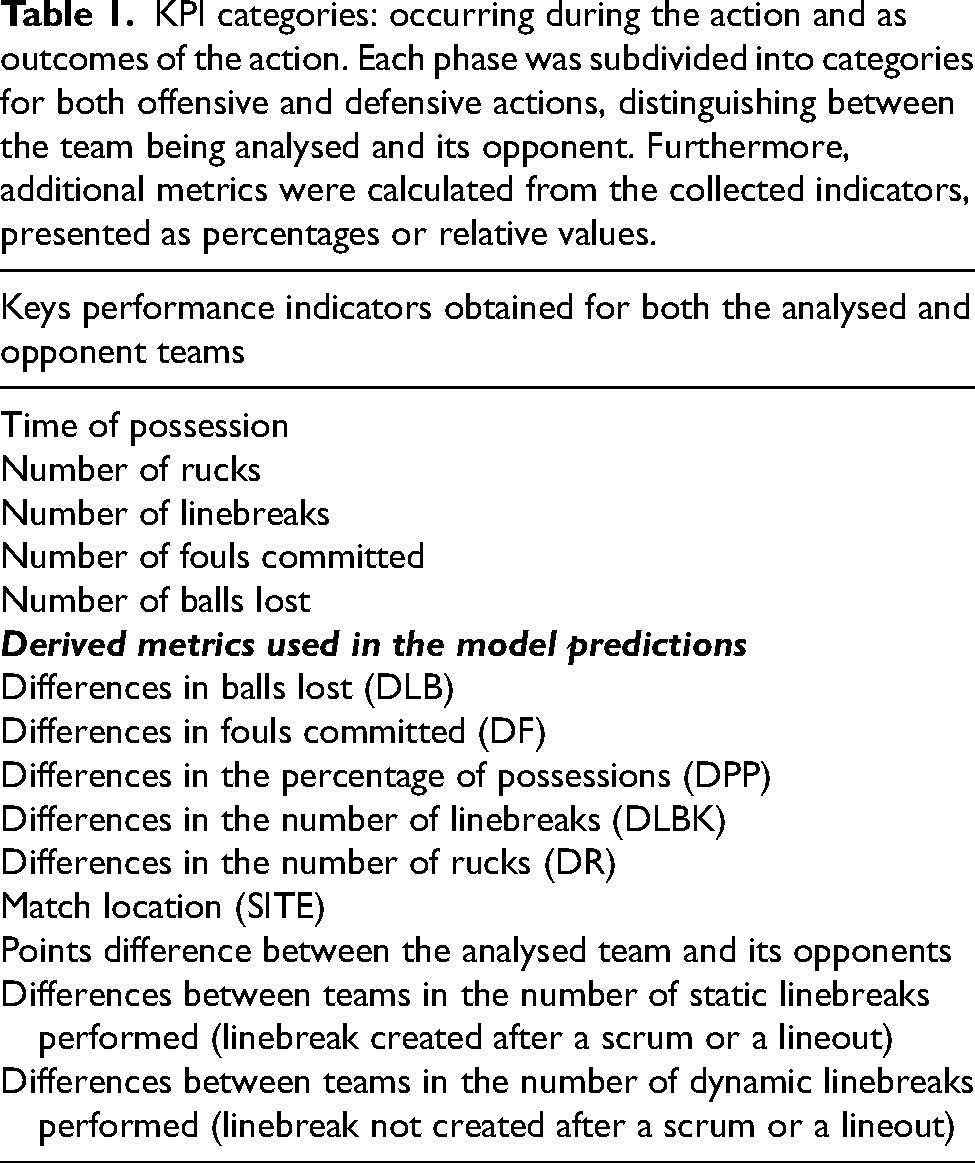
KPIs were collected from each match by a single experienced analyst using StaToul 2.1 software, a video analysis tool developed by the Centre de Recherches sur la Cognition Animale (CRCA) at the Université Paul Sabatier Toulouse III (CNRS). The KPIs were defined based on previous literature (Colomer et al., 2020; Watson et al., 2017) and in consultation with rugby professionals, including coaches, conditioners, and video analysts. These KPIs were categorized into two phases: KPI occurring during game progression, and KPI resulting from the outcome of each action (Table 1). From those we derived the metrics we later used in our model prediction (Table 1).
KPI categories: occurring during the action and as outcomes of the action. Each phase was subdivided into categories for both offensive and defensive actions, distinguishing between the team being analysed and its opponent. Furthermore, additional metrics were calculated from the collected indicators, presented as percentages or relative values.
Operational definitions
Linebreak: a linebreak was defined as any successful breach of the defensive line by an attacking player carrying the ball without being immediately tackled. A minimum gain of 5 meters beyond the initial defensive line was required for it to be counted as a linebreak.
Rucks: the total number of rucks was recorded for both teams. A ruck was defined as a phase following a tackle in which at least one player from each team contests possession while remaining on their feet.
Possession Percentage: this was calculated by dividing the total time a team held the ball by the total match duration. The difference in possession percentages between teams was determined by subtracting the opposing team's possession time from the analysed team's possession time.
Fouls: they were categorized as either committed by the analysed team or suffered (committed by the opposing team). Similarly, fouls were recorded for both teams.
Additional derived metrics included the differences in balls lost (DLB), differences in fouls committed (DF), differences in the percentage of possession (DPP), differences in the number of linebreaks (DLBK), and differences in the number of rucks (DR). Match location (SITE) was recorded as either home or away.
Statistical analysis
All statistical analyses were conducted using R version 4.1.2.
KPI model
The relationship between KPIs and points differences was examined using a linear regression model separating winning and losing teams. The predictors retained from the literature and included in the model were: DLB, DF, differences in possession percentage (DPP), differences in linebreaks (DLBK), differences in rucks (DR), and match location (SITE). The dependent variable used in the models is the final points difference (winning margin), calculated as the analysed team's score minus the opponent's score.
We used the Akaike Information Criterion corrected for small sample sizes (AICc) to choose the best model for our data. This method helps compare different models by giving each one a score. The AICc score reflects how well the model fits the data while avoiding overfitting. It combines two things: how closely the model matches the data (called the likelihood) and a penalty that increases when a model has more parameters. A lower AICc means the model fits the data better without being too complex.
If no single model clearly outperformed the others (for example, when the second-best model had an AICc score within two points of the best model), we used model averaging. This means we took the estimates from all models and combined them into one overall estimate, using weights based on the models’ AICc scores. Models with lower AICc values were given more weight, so they influenced the final estimate more, while models with higher AICc had less influence (Burnham and Anderson, 2004).
In other words, we used information from all models rather than picking just one. By combining information (i.e., coefficient estimates) from multiple models, model averaging provides a more reliable estimate when no single model is clearly the best.
This procedure allowed us to retain only the significant predictors identified for final model diagnostics and result interpretation. We carried out all model selection and averaging using the MuMIn package in R (Kamil Bartoń, 2010). We also checked the residuals of the final model for normality using the Shapiro–Wilk test, and for equal variance (homoscedasticity) using the Breusch–Pagan test.
Dynamic vs Static Linebreaks model
Given the evolving nature of rugby, we conducted an additional analysis to examine the differential impact of dynamic and static linebreaks on match outcomes. Dynamic linebreaks were defined as those occurring during open, unstructured phases of play (e.g., counterattacks following turnovers), while static linebreaks were defined as those occurring in more structured set-piece situations, such as scrums or lineouts. A single linear regression model was used to assess the relationship between both dynamic and static linebreaks and their interaction with match location (home vs. away) on the points difference. (home vs. away).
Results
Descriptive statistics
The team analysed played a total of 36 matches during the 2018/2019 season, including 29 wins, 2 draws, and 5 defeats. Only 34 of those matches were analysed due to a lack of video recordings. Among these 34 matches, the team won 28, drew 2, and lost 4. The average points difference across all matches was 8.88 ± 14.32 points (mean ± standard deviation), with the total number of points scored per match averaging 46.94 ± 15.96. Possession time was nearly balanced, with the analysed team controlling 50.94% ± 3.94 of possession, while their opponents held the remaining 49.06%.
The team was responsible for 44.63% ± 14.12 of the balls lost during these matches, committed 50.29% ± 8.64 of the fouls, and engaged in 48.16% ± 8.79 of the rucks. In terms of offensive performance, the analysed team generated 61.78% ± 21.45 of the total linebreaks during the season.
Performance indicator impact on point difference
The model selection approach failed to identify a single best model (Table 2). The model averaging approach (Table 3) revealed that differences in the number of linebreaks (Estimate = 2.270, SE = 0.779, p = 0.005) and match location (home vs. away) (Estimate = 8.858, SE = 4.241, p = 0.044) were statistically significant predictors of the points difference between teams. The linear model built using these parameters respected linear regression assumption (Shapiro-Wilk normality test : W = 0.97571, p-value = 0.6342 ; Breusch-Pagan test : BP = 0.8887, df = 2, p-value = 0.6412).
Model selection to predict points differences between opposing teams through Akaike's information criterion corrected for small sample size (AICc). Differences in balls lost (DLB), differences in fouls committed (DF), differences in the percentage of possessions (DPP), differences in the number of linebreaks (DLBK), differences in the number of rucks (DR) and match location (SITE).
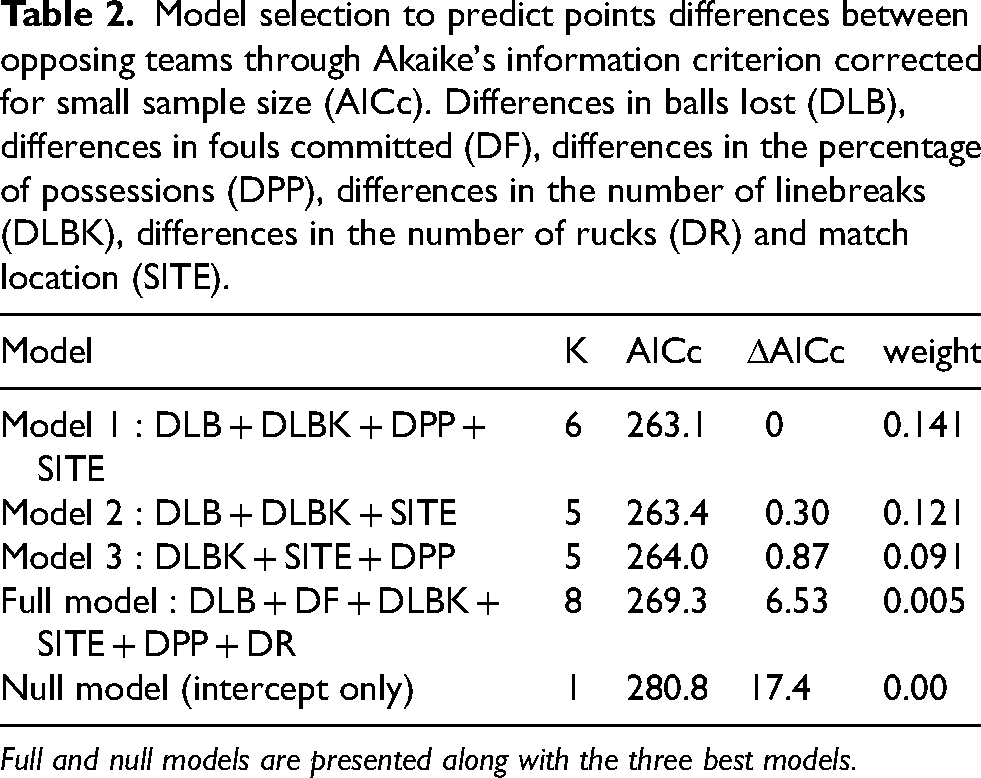
Full and null models are presented along with the three best models.
Model averaging summary. Estimates, standard errors and the associated statistics (p-value) for each coefficient. Differences in balls lost (DLB), differences in fouls committed (DF), differences in the percentage of possessions (DPP), differences in the number of linebreaks (DLBK), differences in the number of rucks (DR) and match location (SITE). Alpha value set at 0.05.
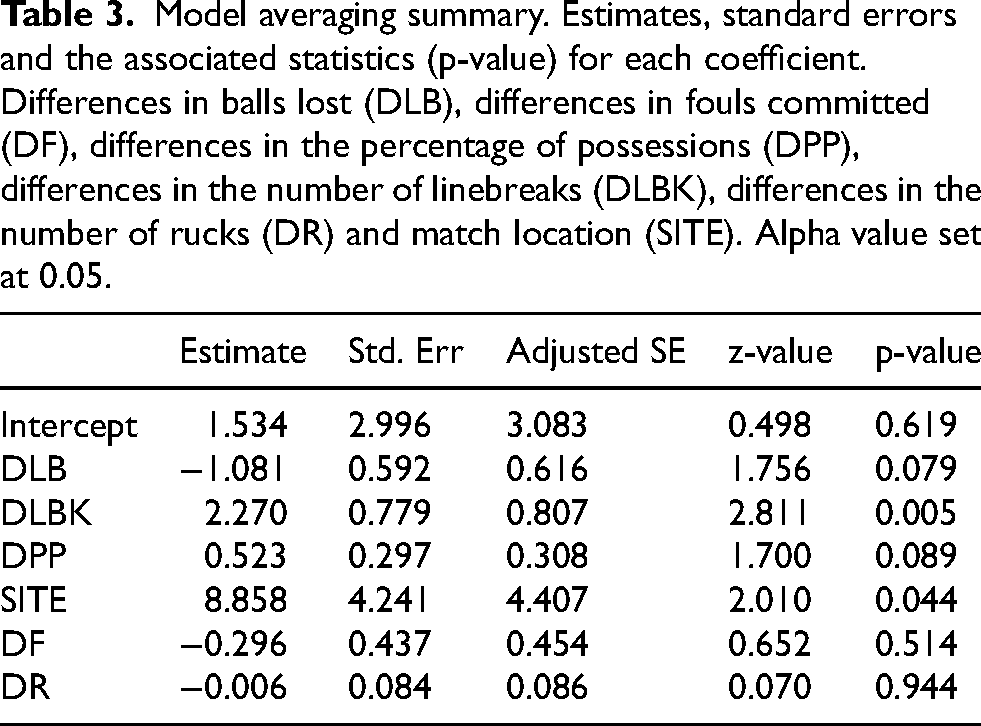
For each additional linebreak performed by the analysed team compared to the opponent, the points difference between teams increased by an average of 2.270 (95% confidence intervals : 0.9603418–3.921295). Additionally, playing at home conferred a notable advantage, with teams scoring on average 8.858 more points than when playing away.
Dynamic vs. Static Linebreaks
A significant positive relationship was found between the difference in dynamic linebreaks and the points difference between teams (Table 4) (Estimate = 2.620, SE = 1.130, p = 0.028), irrespective of whether the match was played at home or away (Estimate = −0.699, SE = 1.719, p = 0.687, Figure 1). Teams that created more dynamic linebreaks consistently outperformed their opponents in terms of points scored.
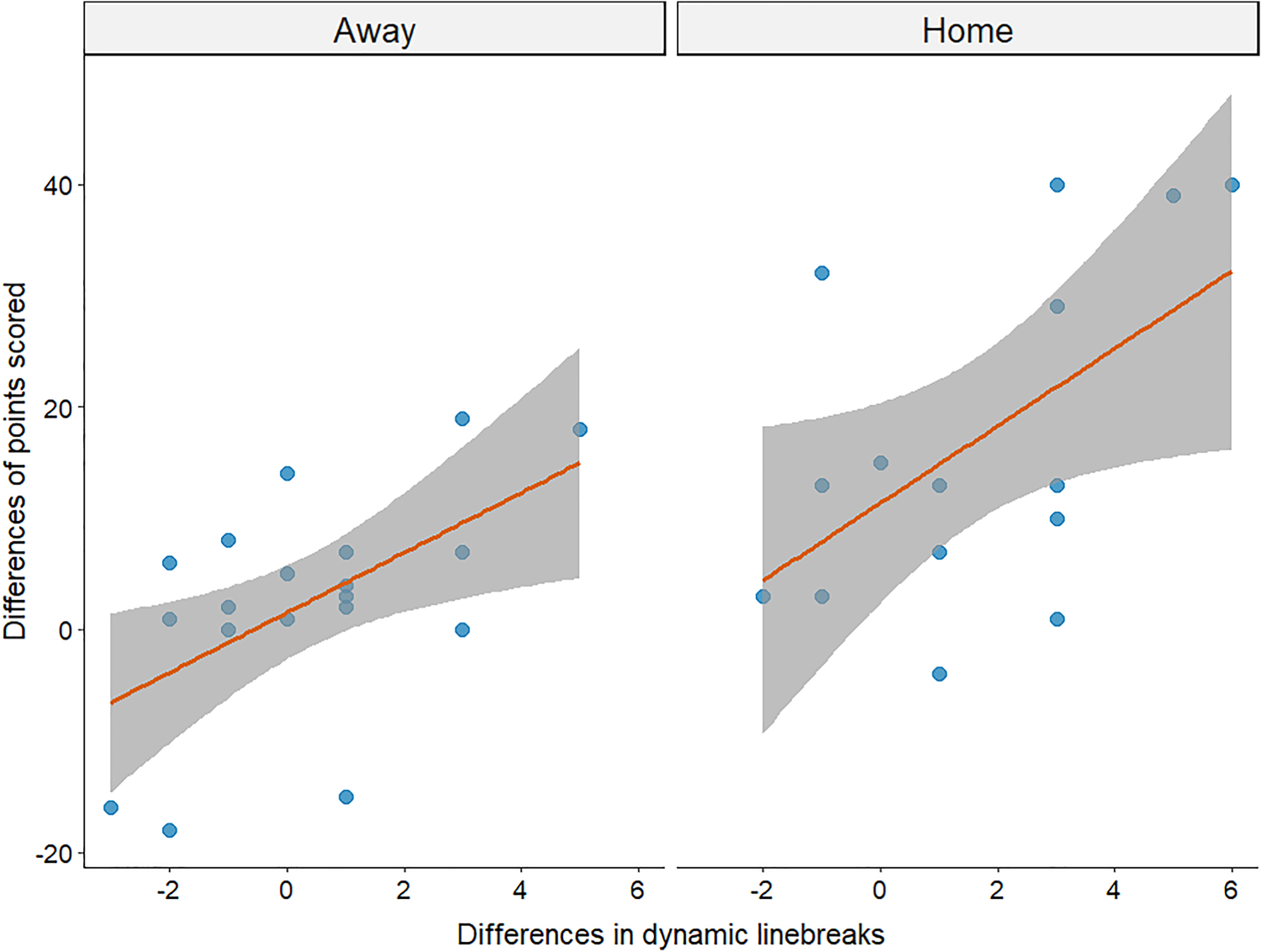
Difference in dynamic linebreaks compared to the difference in points depending on the location of the match.
Model summary Dynamic vs. Static Linebreaks. Estimates, standard errors and the associated statistics (p-value) for each coefficient. Differences in static (DLBK_static) and dynamic (DLBK_dynamic) linebreaks as well as their interaction with match location (SITE). Alpha value set at 0.05.
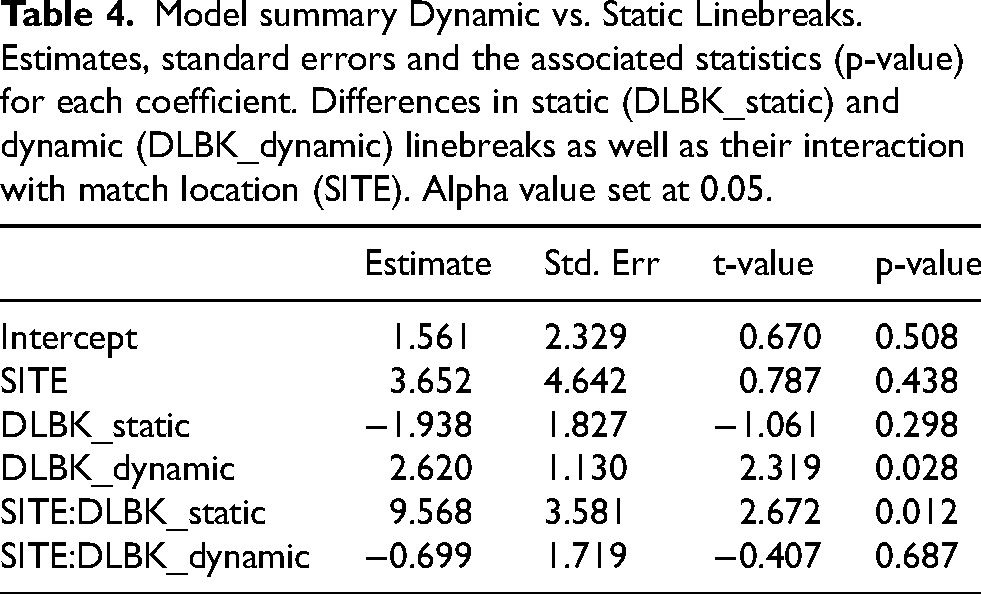
In contrast, static linebreaks had a significant positive effect on the points difference between teams only when the match was played at home (Estimate = 9.568, SE = 3.581, p = 0.0124, Figure 2). This suggests that the team's ability to capitalize on structured phases of play was enhanced when playing in familiar surroundings, potentially due to increased confidence and a more favourable tactical environment. The linear model built using these parameters respected linear regression assumption for homoscedasticity (Breusch-Pagan test : BP = 5.3159, df = 5, p-value = 0.3786) and almost for normality (Shapiro-Wilk normality test : W = 0.92992, p-value = 0.03112).
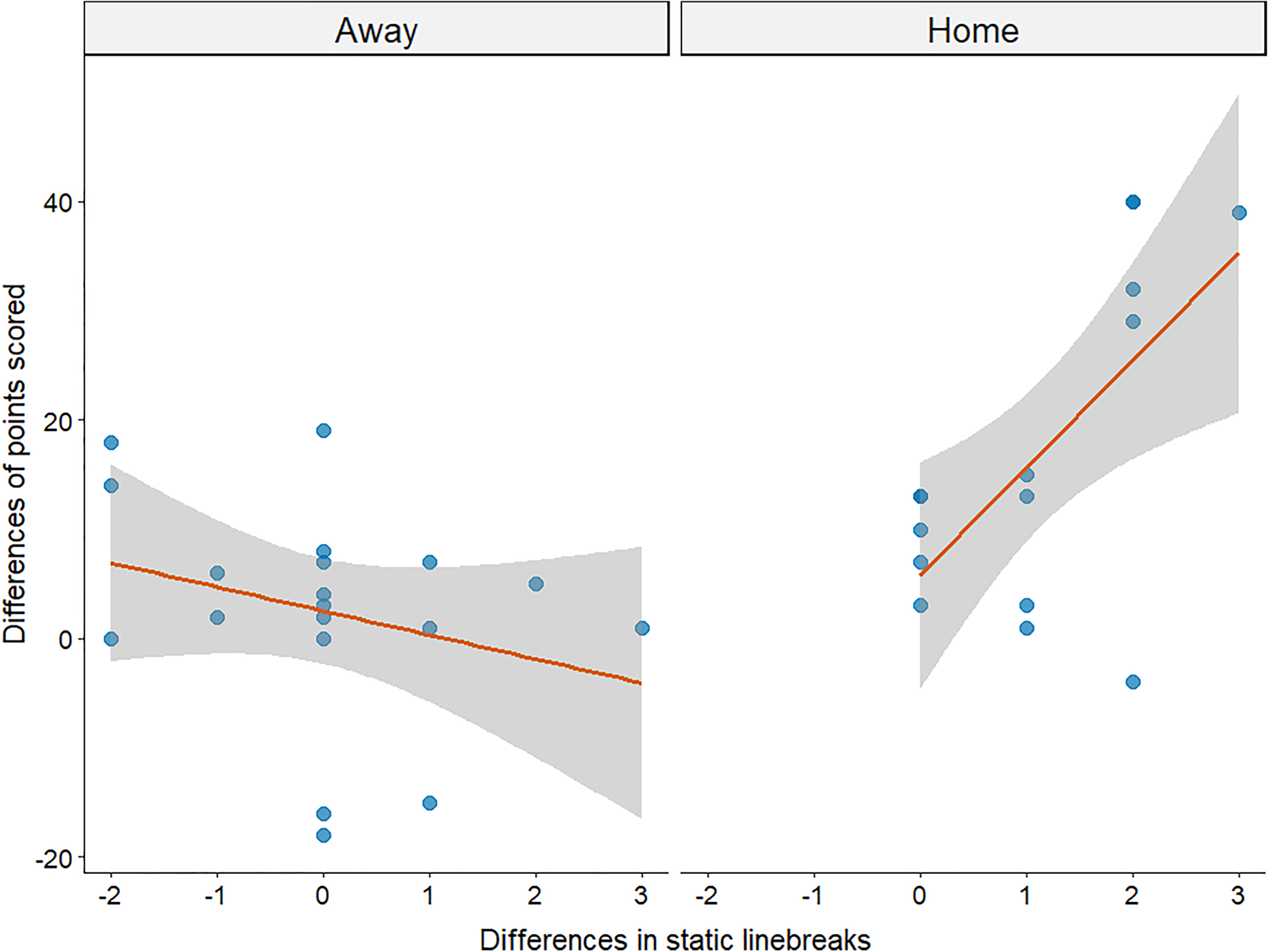
Difference in static linebreaks compared to the difference in points depending on the location of the match.
Discussion
This study aimed to investigate the relationship between various KPIs and the success of a specific winning team in rugby union, with particular attention given to linebreaks, especially those occurring in dynamic versus static phases of play. Our results confirm that linebreaks are a critical performance indicator, affecting the differences in points between two opposite teams. Notably, linebreaks occurring during dynamic phases, characterized by fluid and rapid transitions, were more strongly associated with positive match outcomes, regardless of match location. In contrast, linebreaks originating from static phases, such as scrums and lineouts, only had a significant impact on match outcomes when games were played at home. These findings provide new insights into how the context of key events, particularly linebreaks, can influence the success of a rugby match. These findings demonstrate that the impact of linebreaks on points difference is moderated by match location. Static linebreaks are more effective at home, likely due to the ability to execute structured plays with precision in familiar conditions. On the other hand, dynamic linebreaks influence match outcomes regardless of location, highlighting their universal importance as a tool for breaking defensive lines. This interaction suggests that teams should adapt their tactical approach by focusing on structured opportunities at home and prioritizing dynamic play in all contexts where unpredictability and player creativity are key.
Theoretical implications: the changing nature of rugby
The results of this study highlight a broader change in the tactical landscape of modern rugby, where there is an increasing emphasis on speed, unpredictability, and transitions. This trend mirrors similar developments in other team sports, such as football and basketball, where teams leverage rapid transitions and moments of defensive disorganization to create scoring opportunities (Gómez et al., 2011; Wheeler et al., 2010).
The increasing emphasis on dynamic play in rugby may signal a shift away from the traditional, more structured aspects of the game, such as set pieces like scrums and lineouts. In the faster-paced modern game, the ability to capitalize on unstructured phases, where defences are in transition and more vulnerable, appears to offer a significant advantage. The benefits of dynamic linebreaks suggest that teams capable of quickly adapting to open-play situations are better positioned for success. This reinforces the notion that contemporary rugby values flexibility, quick decision-making, and agility over rigid adherence to structured phases, reflecting the evolving nature of the sport. It is important to note, however, that since the time of data collection (2018/2019), international rugby has continued to evolve. Notably, the team that won the Rugby World Cups in both 2019 and 2023 did so with a tactical approach heavily oriented around set-piece dominance, territorial kicking, and structured defence. This demonstrates that while dynamic, open-play strategies offer advantages in certain contexts, structured and physical game plans remain highly effective at the highest levels of competition. Our findings should thus be interpreted as reflective of one successful approach, rather than a universal model, and in the context of a particular time frame and team profile.
Furthermore, these findings suggest a tactical evolution in which teams are placing greater emphasis on creating dynamic opportunities rather than relying on traditional, structured phases. This shift could have significant implications for how teams approach match preparation, moving the focus from set-piece dominance to developing skills in quick transitions, situational awareness, and off-the-ball support. Future research could investigate whether these trends persist and, if so, how they will influence coaching strategies and team dynamics moving forward.
Practical implications for coaches and performance analysts
The results of this study have important implications for coaches and performance analysts, especially when it comes to shaping training and match preparation. The significant impact of dynamic linebreaks on match success highlights the need for coaches to focus on developing their team's ability to create such opportunities during open, unstructured phases of play. Training drills should prioritize speed in transitions, quick decision-making, and exploiting moments of defensive disorganization. This could involve simulating counterattacks following turnovers, encouraging players to quickly identify gaps in transitioning defences and capitalize on these opportunities.
Another key practical implication is the importance of developing off-the-ball movement. While a linebreak typically involves one player breaching the defensive line, its success often relies on the coordinated support from teammates. Coaches should emphasize the significance of player positioning and movement in supporting the ball carrier and maintaining momentum after the linebreak. These elements are particularly crucial during dynamic phases, where the unpredictability of play requires heightened situational awareness and teamwork to sustain pressure on the defence and convert linebreaks into scoring opportunities.
The results show that when teams play at home, they can use structured plays like lineouts and scrums more effectively, especially to break through defences during still moments in the game. Teams might do better by adjusting their tactics to suit home conditions, where they know the field well and have the crowd's support. In these situations, planned plays can be carried out with more accuracy. On the other hand, when playing away, teams might focus more on fast, flexible moves, since breaking through defences in open play depends more on players’ skills and less on where the game is played. Indeed, it has been demonstrated in football that in terms of game structure, home matches are characterized by a more structured (higher number of levels in patterns) and varied (longer patterns, each composed by different events) game. On the contrary away matches presented a more stereotyped game, with simpler patterns and fewer changing in the game tactics (Diana et al., 2017).
Study limitations
While the findings of this study provide valuable insights into the role of linebreaks and other performance indicators in rugby, several limitations should be considered. First, the dataset was based on a single professional team competing in the Top 14 and European Champions Cup during one season. This focus on a single team limits the generalizability of the results, as the tactical approach and playing style of this team may not be representative of other teams in different contexts. For instance, teams that prioritize structured, set-piece dominance may experience distinct relationships between performance indicators and match outcomes compared to teams that focus on dynamic, open play. Therefore, the insights drawn from this study should be interpreted with caution when applied to other teams with different strategies or levels of competition. In addition, the analysed team finished in the upper part of the league table during the 2018/2019 season and recorded a strong win-loss record (28 wins, 2 draws, and 4 losses out of 34 analysed matches), which further indicates that the findings primarily reflect the performance profile of a high-performing team. This may limit the generalisability of the conclusions to lower-ranked teams or those with different tactical styles.
Furthermore, the team analysed in this study was known for its fast-paced, dynamic style of play, which may have influenced the prominence of dynamic linebreaks in the results. Teams with more traditional, slower-paced approaches, relying more heavily on rucks and set pieces, might not experience the same advantages from dynamic phases of play. To gain a more comprehensive understanding, future research should incorporate data from multiple teams across various leagues and competitions to determine whether the trends observed in this study are consistent across different tactical contexts.
Another limitation is the sample size, which consisted of 34 matches from a single season. While this provided a robust dataset for analysis, a larger sample size spanning multiple seasons would allow for a more comprehensive analysis of how performance indicators vary over time and in different competitive environments. Additionally, other contextual factors such as player fatigue, weather conditions, and referee decisions could further influence the effectiveness of dynamic versus static linebreaks and should be considered in future studies.
Future research directions
Building on the findings of this study, future research should aim to expand the dataset by incorporating matches from multiple teams and seasons, across different levels of competition. This would help to generalize the results and assess whether the observed trends in dynamic and static linebreaks apply broadly across professional rugby or are specific to certain tactical styles.
Additionally, future studies could adopt a more qualitative approach by conducting interviews with coaches and players to gain deeper insights into the tactical decisions made during matches. Such interviews could explore how teams prepare for different match environments (home vs. away) and how in game adjustments are made to exploit weaknesses in the opposition's defence. Understanding the psychological aspects of dynamic play, such as the ability of players to make quick decisions and adapt to unstructured phases, could also add a valuable dimension to the performance analysis literature.
Finally, future research could investigate how other factors, such as player fatigue, weather conditions, and team morale, interact with performance indicators to influence match outcomes. Understanding these interactions could provide a more holistic view of what drives success in professional rugby and offer further insights into optimizing team performance.
Conclusion
This study highlights the critical role of linebreaks for a winning team, particularly those originating from dynamic play, in determining match outcomes in rugby union. Coaches and performance analysts should emphasize strategies that enhance a team's ability to generate dynamic linebreaks, while recognizing the situational advantages of structured plays in home matches. As rugby continues to evolve into a faster, more dynamic sport, these insights offer valuable guidance for teams seeking to optimize their performance across both structured and unstructured phases of play. Beyond the specific findings related to the 2018/2019 season, the methodological framework proposed in this study contributes to performance analysis research by offering a replicable approach to distinguishing between different types of linebreaks and integrating multiple performance indicators through model averaging. This approach remains relevant regardless of evolving tactical trends and can inform future analyses across different competitive contexts.
Future research involving a broader range of teams and qualitative analysis will further refine our understanding of rugby performance indicators and their implications for team success. Our results demonstrate that dynamic linebreaks have the strongest impact on points difference, with an estimated coefficient of 2.262 (SE = 1.130, p = 0.028). This means that for each additional dynamic linebreak compared to the opponent, the team's score margin increases by more than two points. This finding underscores the strategic importance of dynamic linebreaks and suggests that coaches should prioritize training routines aimed at improving players’ ability to create and exploit dynamic play situations.
Footnotes
Acknowledgements
We thank Saad Drissi for granting the video of all games of this study and Florent Lokteff for helping collecting them.

Author contributions
The authors have accepted responsibility for the entire content of this manuscript and approved its submission.
Funding
The authors received no financial support for the research, authorship, and/or publication of this article.
Declaration of conflicting interests
The authors declared no potential conflicts of interest with respect to the research, authorship, and/or publication of this article.