



Abstract
This study evaluates the effectiveness of the Green School Program (GSP) as a tool for Education for Sustainable Development (ESD) in achieving the Sustainable Development Goals (SDGs). Focusing on 98 primary and secondary schools in Beijing’s Xicheng District, it employs a multiple, descriptive case study approach supported by statistical analysis. The research assesses various aspects of ESD for 2030, such as policy implementation, learning environments, educator roles, youth engagement, and local initiatives. An innovative aspect of the study is the use of remote sensing technology to assess educational quality. The findings highlight effective methods for measuring ESD and provide China’s experiences and recommendations to contribute to global school-based sustainable development efforts, suggesting the importance of stakeholder collaboration in advancing SDGs. The study offers significant insights into the operational assessment of ESD in schools and contributes to global sustainable development initiatives.
Keywords
Introduction
The degradation of the global ecosystem and the exacerbating impacts of climate change have culminated in a broad consensus on the imperative of Sustainable Development Goals (SDGs) worldwide (UN, 2015). This shared commitment to addressing environmental and ecological crises has positioned sustainable development as a collective human endeavor shaping our common destiny (Lee et al., 2016). Concurrently, the concept of Education for Sustainable Development (ESD) has emerged as a matter of paramount importance (Rieckmann, 2017). Schools as the crucibles of knowledge dissemination and intellectual cultivation, play a pivotal role in advancing SDGs (Avelar et al., 2019). ESD equips young learners with a responsible outlook toward future generations, fostering sustainability awareness, values, and action-oriented engagement in sustainable development (Rieckmann, 2017). In the global discussions on how to achieve SDGs, ESD is implemented through the Green School Program (GSP) to embody the principles of sustainable development (Mathar, 2006). The conception of GSP inherently aligns with the principles underpinning SDGs (Gough, 2020).
China actively engaged in sustainable development (Velikova, 2021; Wang & Shi, 2020), implementing initiatives following the UN’s introduction of the concept in 1972 (Huang & Lee, 2020). Significant milestones like the Earth Summit in 1992 led to documents such as the Rio Declaration and Agenda 21, emphasizing sustainable development (UN, 1992). China solidified its commitment through the National Environmental Promotion and Education Action Plan in 1996 (MEE, 2016). The proposal for the Decade of Education for Sustainable Development by the World Summit on Sustainable Development laid the groundwork for GSP (Combes, 2005). Subsequently, the GSP Guide outlined principles and evaluation criteria (MEE, 2004). The concept of “ecological civilization,” introduced in 2007, further propelled GSP development (Xinhua News Agency, 2007). The Rio+20 Conference in 2012 reinforced sustainable development, including policies related to ESD (UN, 2012). In 2015, the UN introduced SDGs, including quality education (SDG 4) with subgoals related to ESD (UN, 2015). After the UN Decade of ESD, initiatives like the Global Action Plan for ESD (2015–2019) and UNESCO’s frameworks aimed to advance ESD towards SDGs achievements (UNESCO, 2014; UNESCO, 2016; UNESCO, 2019). In 2020, UNESCO formalized a roadmap for the ESD for 2030 (UNESCO, 2020). China’s comprehensive launch of GSP mandated adherence to established standards in all schools nationwide (MOE&NDRC, 2020). The Berlin Declaration on ESD in 2021 sought to promote global ESD for broader SDGs attainment (UNESCO, 2021).
The GSP epitomizes practical initiatives aligned with the concept of sustainable development (Zhu et al., 2020). While the nomenclature of projects promoting ESD may vary from country to country, such as China’s Green Schools and France’s Sustainable Development Schools, Germany’s Eco-Schools, their core essence and alignment with SDGs remain consistent (Floris, 2022). In the ongoing global exploration of SDGs implementation, China’s GSP continually elevates its organizational leadership, system construction, promotion and education, operation and management, and other facets related to sustainable development (MOE&NDRC, 2020).
The previous studies have highlighted the link between ESD and GSP initiatives for advancing SDGs, emphasizing education’s pivotal role in fostering sustainability. The background of the green school movements underscores its objective of nurturing a green future through education, highlighting the interconnectedness between ESD and GSP (Floris, 2022) and the educational institutions’ role in contributing to sustainability through GSP (Gough, 2020). Correspondingly, the role of GSP in promoting ESD, sustainability awareness, and well-being offers insights into their intersection and contribution to broader societal goals (Kerret et al., 2014).
Studies on GSP revealed varied impacts across economic, environmental, and social dimensions (Gough, 2005, 2006; Rickinson et al., 2014). Schools participating in these programs often achieve measurable economic benefits through resource savings and environmental impacts (Gough, 2005; Henderson & Tilbury, 2004). Other studies assess the social and educational impacts of GSP, such as enhanced self-esteem, environmental literacy and reduced absenteeism among students, and innovative teaching practices as well as more sustainable content in the curriculum, demonstrating its effectiveness in promoting ESD (Goldman et al., 2018; Huang & Lee, 2020; Mathar, 2006; Rickinson et al., 2014).
Moreover, studies shed light on the practical implications of fostering ESD through green schools, highlighting country-specific dynamics (Gough, 2020). For instance, in the US, these schools not only reduce environmental impact and costs but also prioritize environmental education and improve student and staff well-being (Coyle, 2020). Similarly, the green school movement in Spain revitalizes defunded environmental education programs, emphasizing eco-citizenship (González-Gaudiano, 2020). Australian green schools focus on resource sustainability education, while universities actively integrate SDGs into academic curricula and student activities (Gough, 2020). In Israel, certified green schools receive government grants, emphasizing curriculum, lifestyle plans, community engagement, and leadership (Tal, 2020). The inception of China’s GSP in 1996 was influenced by the ISO 14000 international concept and inspired by the European Eco-schools (Henderson & Tilbury, 2004). China’s GSP prioritizes comprehensive environmental management across schools, integrates environmental education into the curriculum, emphasizes professional development, and focuses on the greening of school grounds (Henderson & Tilbury, 2004).
However, the green school movement encounters several interconnected challenges. Firstly, there’s the issue of ensuring comprehensive school engagement and sustained participation in green school programs (Gough, 2020). Moreover, educators face resistance to adopting new pedagogical approaches, notably socially critical pedagogy, which hampers transformative education efforts (Edwards, 2016). This resistance links to a broader problem: environmental education or education for sustainable development lacks prioritization in most governments’ educational agendas (Gough, 2020). Furthermore, there’s the challenge of broadening the scope of green schools beyond a singular environmental focus towards embracing the wider education for sustainable development agenda (Henderson & Tilbury, 2004; Howard, 2019).
Existing studies have emphasized the symbiotic relationship between ESD, GSP, and the pursuit of SDGs. They emphasize the pivotal role of educational institutions in promoting sustainability and advocate for ongoing research and implementation of GSP to advance global sustainable development agendas. However, there exists a gap regarding the need for more practical sustainable development action cases and exemplary experiences. Additionally, there is a necessity for the creation of evaluation methods capable of evaluating the effectiveness of ESD initiatives. Our research objectives are as follows: 1. Utilizing primary and secondary schools in Beijing’s Xicheng District as a case study, we aim to present practical examples of ESD. Through this case study, we intend to assess the five priority actions of ESD for 2030. 2. Based on the performance of the GSP in primary and secondary schools in Beijing’s Xicheng District, we conduct a comprehensive evaluation of the Chinese GSP Evaluation System. This evaluation elucidates the system’s strengths and weaknesses, summarizes the characteristics of its GSP construction, and provides a basis for exploring ESD evaluation method. 3. We seek to offer China’s experiences and recommendations to contribute to global school sustainable development initiatives.
Theoretical background
Agency theory and its application to GSP effectiveness
In the evaluation of the GSP, Agency Theory has been integrated as a critical lens for analysis. Originating from economics and organizational theory, Agency Theory examines the relationship between principals (e.g., school boards or policymakers) and agents (e.g., school administrators and teachers) (Panda & Leepsa, 2017). The theory is particularly concerned with potential conflicts of interest that may arise from misalignments in goals, incentives, and information between these parties (Panda & Leepsa, 2017; Shapiro, 2005).
Within the context of our study, Agency Theory is employed to understand why the GSP might not be as effective as intended, despite the clear definition of primary and secondary indicators. Several factors are identified as potential culprits: • Goal Misalignment (Holmström, 1979): Administrators may prioritize traditional academic metrics over the sustainable development goals advocated by the GSP, leading to a divergence from the program’s intended outcomes. • Incentive Mismatch (Linder & Foss, 2013): Without proper incentives or recognition for promoting the GSP, agents may lack the motivation to implement the program effectively. • Information Asymmetry (Hendrastuti & Harahap, 2023): Principals may not have a deep understanding of day-to-day school operations, making it challenging to accurately assess the performance and efforts of agents in advancing the GSP.
Through the lens of Agency Theory, the study can delve into the potential barriers within the implementation process of the GSP and propose targeted improvements. For instance, redesigning incentive mechanisms aligns the goals of agents with those of the GSP, enhancing transparency allows for better oversight by principals, and improving agent commitment to GSP objectives through education and training.
Furthermore, this research explores how institutional design and policy interventions can mitigate conflicts of interest between principals and agents (Cuevas-Rodríguez et al., 2012) and establish clear evaluation criteria and feedback loops to enhance the effectiveness of the GSP.
GSP fostering ESD and promoting sustainable practices in schools
Presented in Figure 1, the role of GSP in fostering ESD and promoting sustainable practices within schools is pivotal in cultivating a culture of sustainability awareness and responsibility among students (Gough, 2020; Kerret et al., 2014). GSP serves as catalysts, providing a structured framework to infuse sustainability principles into school curricula, infrastructure, and daily operations (Gough, 2020). These programs offer experiential learning opportunities that immerse students in real-life sustainability practices, nurturing their understanding of ecological concepts, resource conservation, waste reduction, renewable energy utilization, and other sustainable actions (Gough, 2020; Kensler & Uline, 2016). By integrating ESD into the fabric of school activities and curriculum, GSP not only raises sustainable consciousness but also empowers students to become proactive agents of change, fostering a generation equipped with the knowledge, skills, and motivation to contribute towards a more sustainable future (Gough, 2020; Rieckmann, 2017). GSP fostering ESD and promoting sustainable practices in schools.
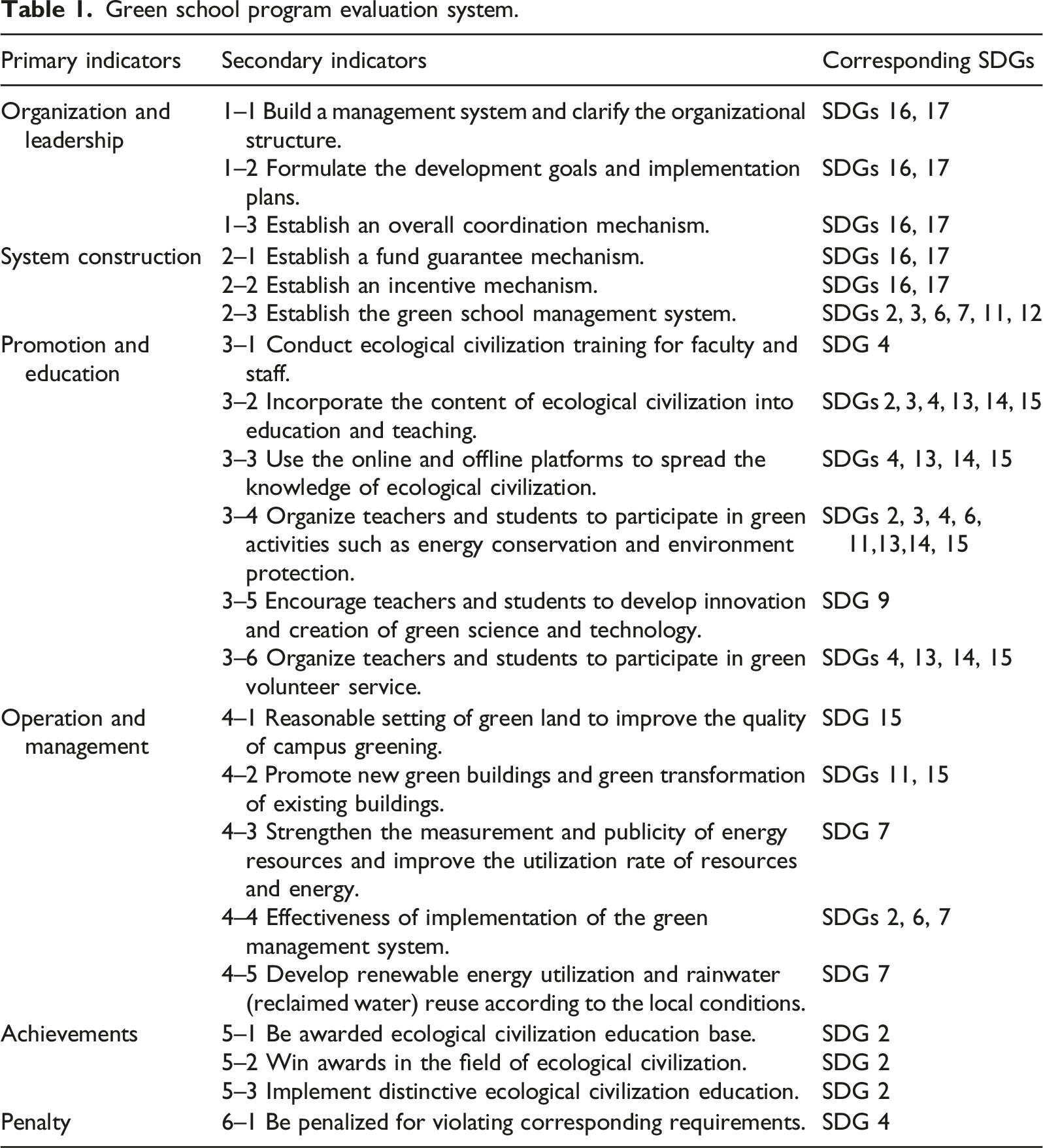
Green school program evaluation system
Green school program evaluation system.
The relationship between school campuses, the green school program evaluation system, and SDGs
SDGs represent global development objectives that provide clear direction and requirements for global sustainable development (UN, 2015). However, they are primarily high-level goals and lack operational specificity, making their implementation challenging. They require further elaboration and translation into practical actions at specific operational levels. The Green School Program Evaluation System constitutes a specific set of goals under the broader framework of school-level objectives within the SDGs (Table 1). It not only offers a clear development direction for campus sustainability but also provides concrete implementation recommendations (Huang & Lee, 2020).
Primary and secondary schools serve as the cradle for nurturing young talent and play a crucial role in shaping the future of society and global human development (Oder, 2005; Yamniuk, 2017). They are particularly conducive to the promotion and dissemination of sustainable concepts (Teksöz, 2022). As the physical embodiment of educational institutions, campuses encompass comprehensive learning and living systems (Gorgati & Savid-Buteler, 2016). Students engage in various learning and social activities within the campus environment (Furlong et al., 2003). Therefore, the experiences and practices of campus construction hold significant practical and reference value for broader regional sustainable development efforts.
Campus sustainability initiatives not only form an integral part of the SDGs but also significantly complement the shortcomings in concrete implementation strategies for these goals. The relationship between school campuses, the Green School Program Evaluation System, and SDGs is depicted in Figure 2. The relationship between school campuses, the green school program evaluation system, and SDGs.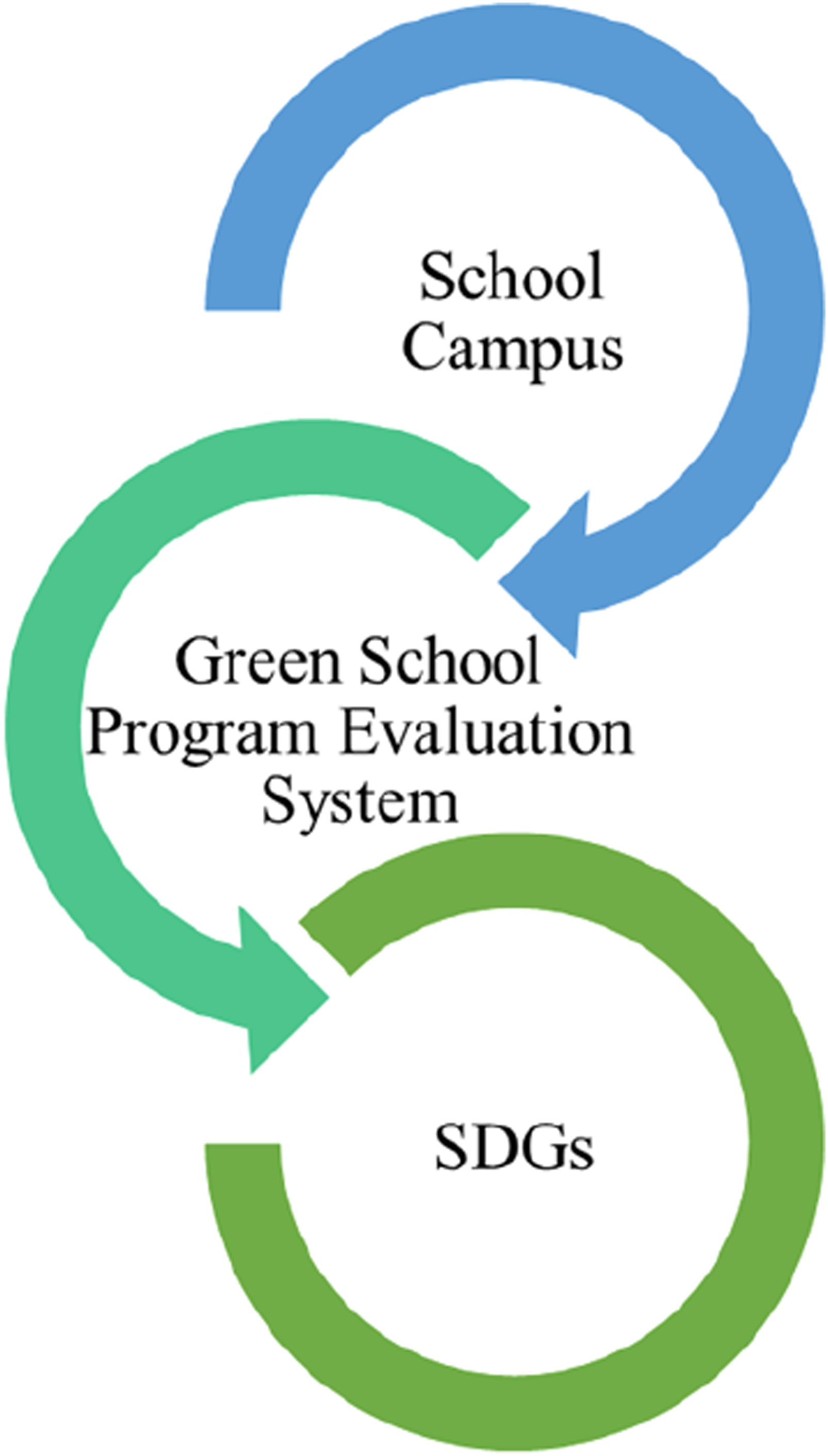
Research methods
Research questions
What practical examples of ESD exist in primary and secondary schools in Beijing’s Xicheng District, aligning with the five priority actions for ESD by 2030?
How does the performance of GSP in Beijing’s Xicheng District’s schools contribute to a comprehensive evaluation of the Chinese GSP Evaluation System? What are the system’s strengths and weaknesses, and how can these insights enhance methods for evaluating ESD?
How can China’s experiences in implementing sustainable development initiatives in schools provide valuable recommendations for global school-based sustainable development efforts?
Methods
This research employs a multiple, descriptive case study supported by statistical analyses, structured into three steps.
Step one (answer to Research Question 1, presented in Section 4.1): Using primary and secondary schools in Beijing’s Xicheng District as a case study, qualitative analysis is conducted. Based on the self-evaluation report and supporting materials including text, images, videos, or other evidence which each school submits, this study employs a general inductive approach to analyze the five priority actions advocated by ESD for 2030 including advancing policy, transforming learning environments, building capacities of educators, empowering and mobilizing youth, and accelerating local-level actions. The general inductive approach simplifies the analysis of qualitative data by condensing extensive materials into summarized form, linking evaluation goals with findings, and uncovering underlying structures in the data. This method is straightforward and systematic, offering reliable and valid results (Thomas, 2006). This analysis aims to synthesize the best practices of ESD in China.
Step two (answer to Research Question 2, presented in Section 4.2): The Green School Program Evaluation System (Supplemental Table S1) is used for quantitative analysis, involving both self-evaluation and expert evaluation of schools. The self-evaluation by schools was conducted between July and August 2021. Each school assigns scores to each indicator in the evaluation system (Supplemental Table S2) and provides self-evaluation report and supporting materials as mentioned in step one. An expert panel dispatched by the Beijing Municipal Education Commission conducts expert reviews. Using the same evaluation system, the expert panel performs a second evaluation based on the reports, supporting materials, and on-site observations, and subsequently provides expert evaluation scores (Supplemental Table S2) and improvement suggestions. Data from self-evaluation scores and expert evaluation scores are processed and analyzed using SPSSAU software. Green school imagery is created using ArcGIS software for different categories of primary and secondary schools. ArcGIS is a geographic information system software used for mapping, analyzing, and visualizing spatial data. It offers tools to manage geographical information, enabling users to create, edit, analyze, and share spatial data and maps. Green space areas of primary and secondary schools are computed using Google Earth Engine. Remote sensing images of primary and secondary schools are generated using Baidu Maps software. These quantitative analyses provide specific indicators for GSP in Beijing’s Xicheng District, identify strengths and weaknesses in their construction, and summarize the ESD evaluation development.
Step three (answer to Research Question 3, presented in Section 5): This step involves a deeper exploration of the relationship between GSP and sustainable development. It moves from an initial campus perspective to a broader development perspective, considering how to achieve SDGs. The positive implications of GSP on ESD are analyzed. Furthermore, the research aims to provide Chinese experiences and recommendations for global school sustainability development initiatives which is presented in the Discussion and Suggestion part of this article.
Participants
Xicheng District in Beijing was selected as the research area. Xicheng District, the leader in quality education in the Chinese capital, Beijing, represented the most advanced ESD level in China (Modern Education News, 2022). There are 107 primary and secondary schools in Xicheng District, among which 98 schools participated in the GSP evaluation. 9 schools were unable to participate in this evaluation for specific reasons. About 91.59% of Xicheng’s primary and secondary schools participated in evaluation. Basically, it can represent the overall ESD performance of Xicheng District, which represents the best ESD development situation in Beijing and China. The 98 schools included 52 primary schools, 40 middle and high schools, 2 special education schools, and 4 vocational schools.
Findings
Excellence cases for ESD 2030 in China
Using general inductive approach to analyze the self-evaluation reports and supporting materials submitted by schools, the specific practices of Chinese schools in five priority action areas are summarized as follows.
Advancing policy
The following three policies proposed by the Chinese government would accelerate the realization of SDGs in educational institutions, communities, and other learning places.
China national plan for implementing the 2030 Agenda for sustainable development
The Ministry of Foreign Affairs of the People’s Republic of China issued the China National Plan for Implementing the 2030 Agenda for Sustainable Development in 2016 (CNP for 2030) (MFA, 2016). It integrates ESD into policies that explicitly address the achievement of the SDGs. The CNP for 2030 proposes that by 2030, China must ensure that through ESD and sustainable lifestyles, all learners acquire the knowledge and skills needed to promote sustainable development, human rights, gender equality, promotion of a culture of peace and non-violence, global citizenship, and appreciation of cultural diversity and of culture’s contribution to sustainable development (MFA, 2016). Implementation measures of the CNP for 2030 include deepening education reform, improving education quality, strengthening school physical and aesthetic education, and enhancing students’ sense of social responsibility, innovation spirit, and practical ability as key tasks throughout education (MFA, 2016).
China education modernization for 2035
The Central Committee of the Communist Party of China (CPC) and the State Council issued China Education Modernization for 2035 (CEM for 2035) (CCCPC&SC, 2019). The blueprint adopts a series of policies to strengthen synergetic relationships among formal, non-formal, and informal education. CEM for 2035 states that China must actively promote establishing a community with a shared future for humankind, and deal with worldwide challenges including politics, economy, security, and climate (CCCPC&SC, 2019). China continues to advance the implementation of the 2030 Agenda and is creating new opportunities for international cooperation (CCCPC&SC, 2019). Moreover, quality and inclusive education are provided for binding people and cultural exchanges (CCCPC&SC, 2019). The goals of CEM for 2035 are as follows: by 2020, the overall strength and international influence of education should be significantly enhanced, the average years of schooling for the working-age population should be significantly increased, and important progress should be made in the modernization of education. On this basis, after another 15 years of efforts, by 2035, the overall modernization of education should be realized, and China will become a major country in education, human resources, and talent (CCCPC&SC, 2019).
Green school program action plan
The Green School Program Action Plan integrates ESD into education quality assurance criteria to ensure that education institutions are monitored and assessed for progress on ESD (MOE&NDRC, 2020). The Green School Program Action Plan requires primary and secondary schools to cultivate the concept of sustainable development, strengthen ESD for young people, strive to improve the sustainability competencies of teachers and students, and influence and drive all society to participate in sustainable development (MOE&NDRC, 2020).
Transforming learning environments
China has applied the whole-institution approach to transforming the learning environment by aligning it with sustainable development principles, learning contents, pedagogies, and facilities (Müller et al., 2022).
Adhere to the idea that building a sustainable development campus is everyone’s responsibility
Each school department takes action and measures according to the whole school’s sustainable development plan (Yuan et al., 2021). The administrative department arranges the work, conveys the tasks, and summarizes the phased work in a timely manner. The teaching department implements discipline penetration and teacher training about sustainable development. The operation department is responsible for campus environment maintenance, environmental education equipment, and facilities. The student development department spreads sustainable development culture and cultivates teachers’ and students’ sustainability awareness, responsibility, and action (Tan et al., 2014).
Construct systems to instruct ESD actions
The schools formulate the implementation system to establish sustainable development schools, such as through energy-saving management systems, garbage classification systems, grain conservation systems, recycled water utilization systems, etc. (Li & Xue, 2022). Under these systems, the schools hold various forms of teacher training, student lectures, and education activities to practice sustainable development.
Supervision and examination ensure ESD quality
Supervision and examination of results related to sustainable development are strengthened regularly so that the measures of ESD can be effectively implemented and reflection can promote quality education (Kardos, 2012). Supervision and examination require everyone on campus to participate in feeling, experiencing, evaluating, and optimizing sustainable learning and living styles, using evaluation to promote critical thinking and problem-solving skills among faculty and students.
Building capacities of educators
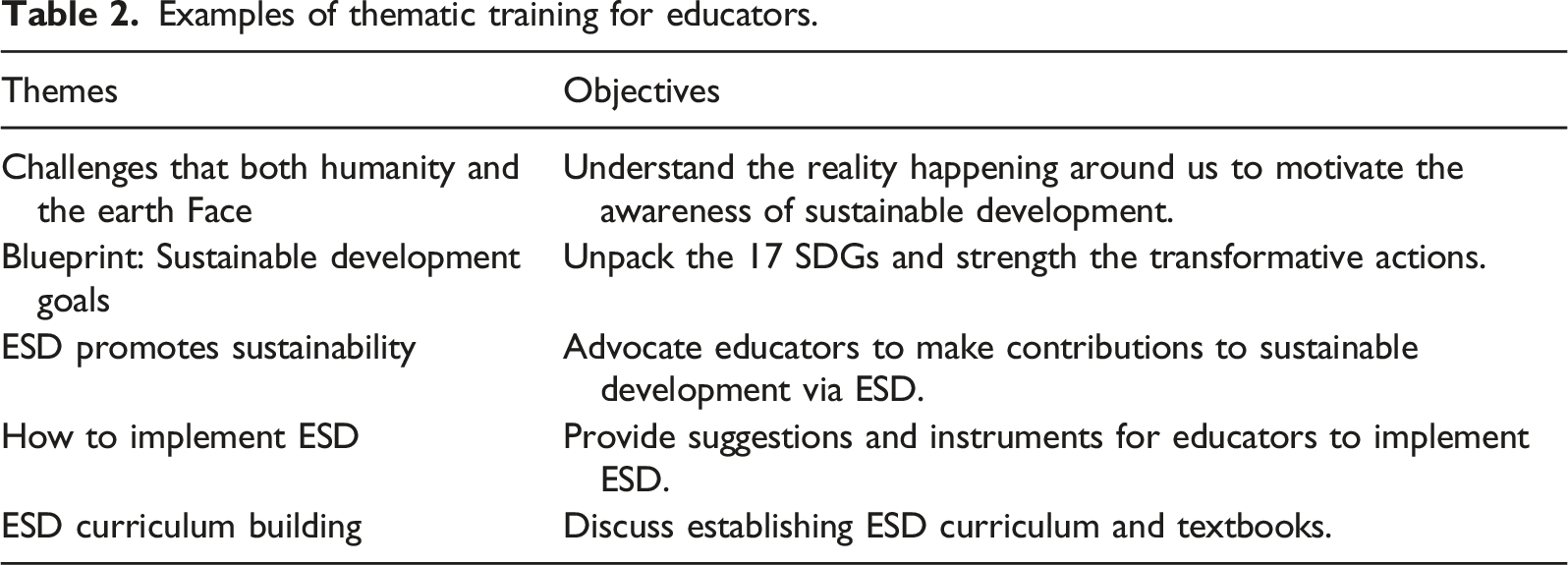
Chinese educators should understand the core contents of each SDG and the intrinsic connection of the 17 SDGs. In addition, they need to know how transformative actions occur and which pedagogical approaches can be adopted (Larrivee, 2000). A series of initiatives have been undertaken to build the ESD capacities of teachers and staff.
In-service teacher training is provided
Examples of thematic training for educators.
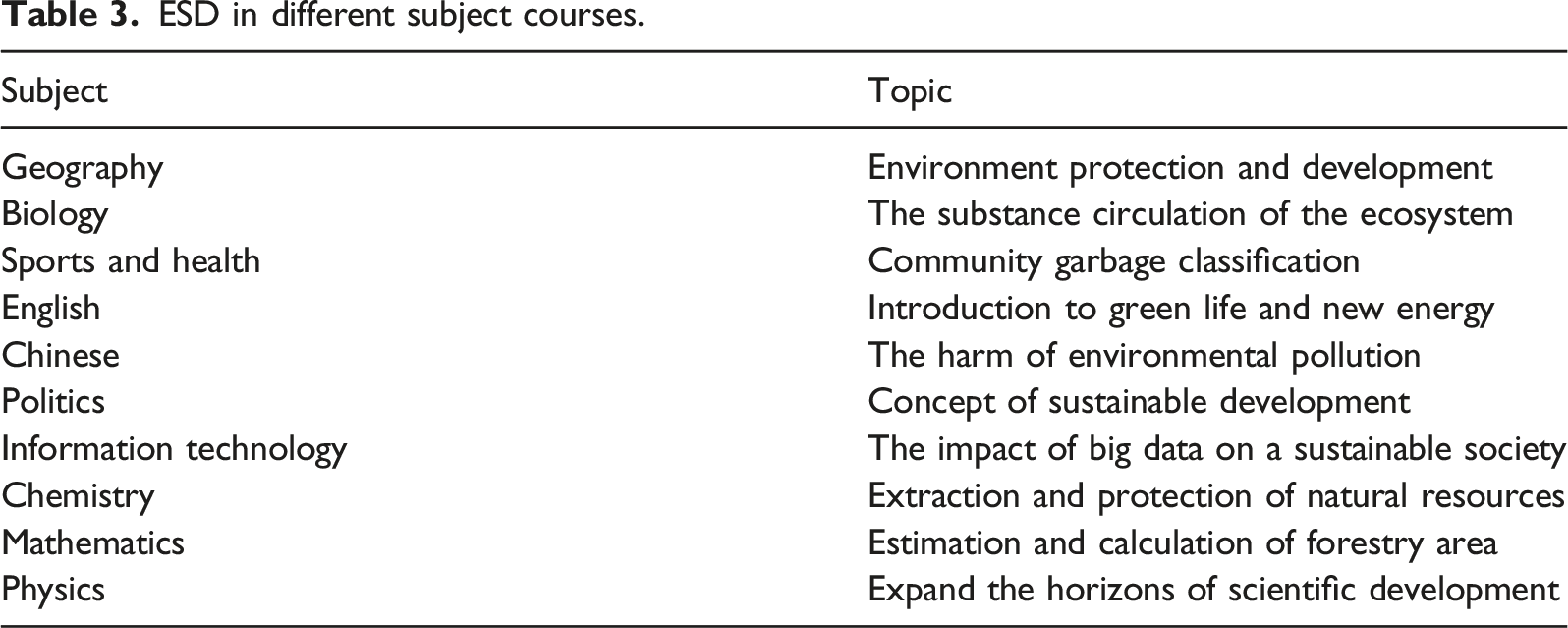
The educators integrate ESD into their capacity-building teaching and activities
ESD in different subject courses.
Empowering and mobilizing youth
Empowering and mobilizing young people is critical to implementing ESD in China.
Young people share messages on sustainability challenges
The students place posters, reminder boards, videos, etc. in stairwells, elevators, and entrances to communicate sustainability concepts, taking corresponding actions within their power to deal with the issues related to SDGs. Moreover, in the STEAM course, students in groups conduct research and experiments on sustainable development projects under the guidance of teachers. They display their achievements publicly in different forms such as essays, reports, or presentations to spread sustainability concepts.
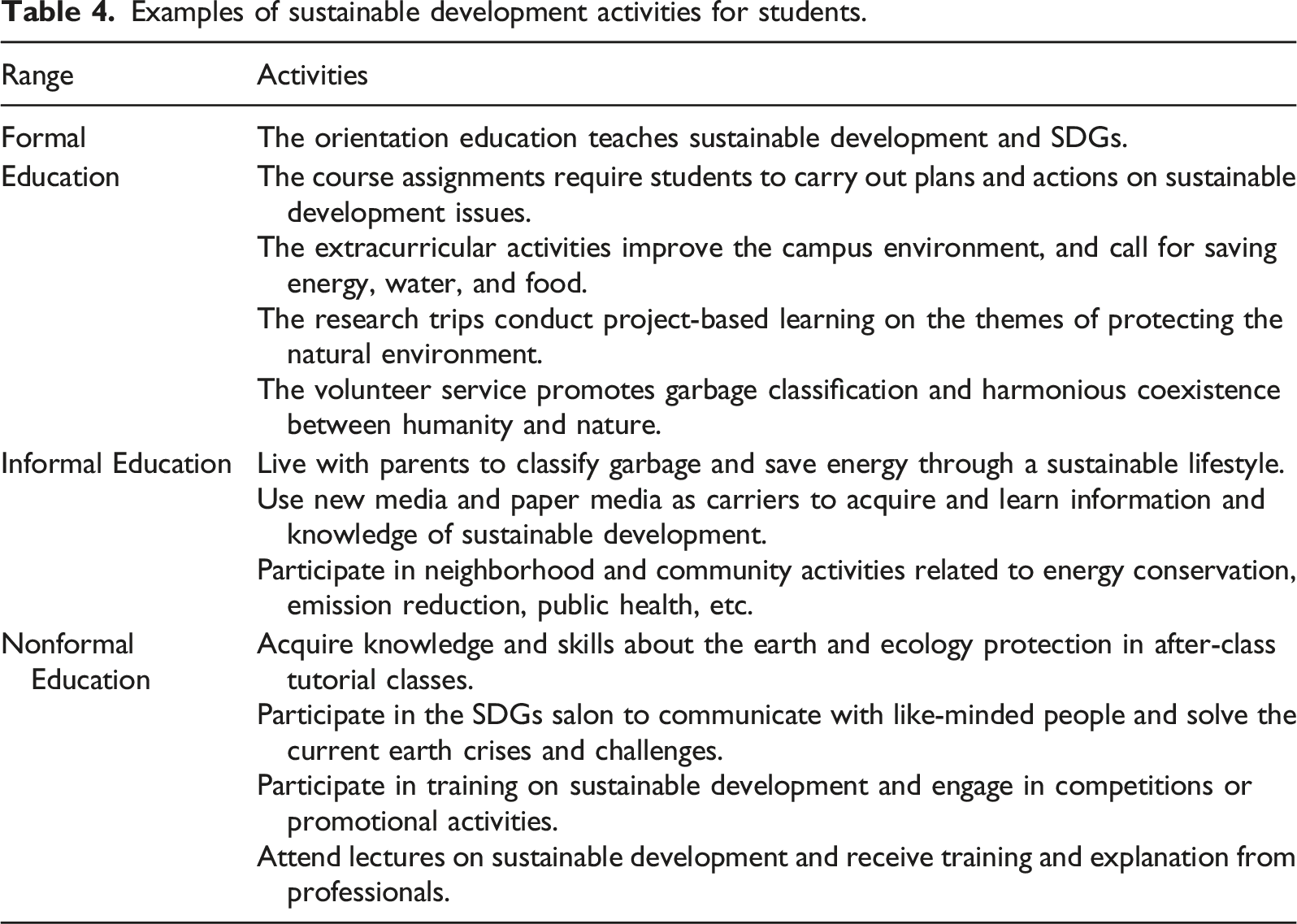
Mobilize young people to participate in sustainable development actions
Examples of sustainable development activities for students.
Accelerating local level actions
Through the practical actions of students, people in the community will be motivated to achieve lifelong learning and sustainable development (Noguchi et al., 2015). The following is a brief description of some student activities that can be used for reference.
Green holiday youth volunteer activity
Young volunteers visit nursing homes for the elderly, martyrs’ tombs, railway stations, etc., scrubbing illegal advertisements, cleaning up unsanitary areas, picking up garbage, removing “white pollution”, watering flowers and trees on the roadside, making publicity posters for the protection of flowers and plants, sending out environmental protection proposals to the public, so that everyone can take action to protect environmental health.
Donate the waste and return the green activity
Students collect waste newspapers and drink bottles and turn them into the school monthly for cash. They send the saved money to their peers in Ningxia, where they can buy saplings to form a “friendship forest” in Ningxia.
Learning center for sustainability in communities
At the learning center, students promote sustainable lifestyles and provide volunteer service. Community residents can learn knowledge and skills such as pet waste disposal, garbage sorting, energy conservation, and emission reduction at the learning center.
Green school program evaluation results
In this study, a series of data processing methods for presenting results were employed to ensure a comprehensive and accurate evaluation of the effectiveness of the GSP. The selection of each method was based on its specific capacity to reveal the impact of the GSP in various aspects. Below is the logic behind the choice of these data processing and presentation methods:
Frequency and descriptive analysis
The frequency, mean, standard deviation, and median of self-evaluation and expert evaluation scores were analyzed using SPSSAU software. This analytical approach provided a fundamental understanding of the schools’ self-assessment and expert assessment, revealing the strengths and areas for improvement in the implementation of the GSP.
Cluster analysis
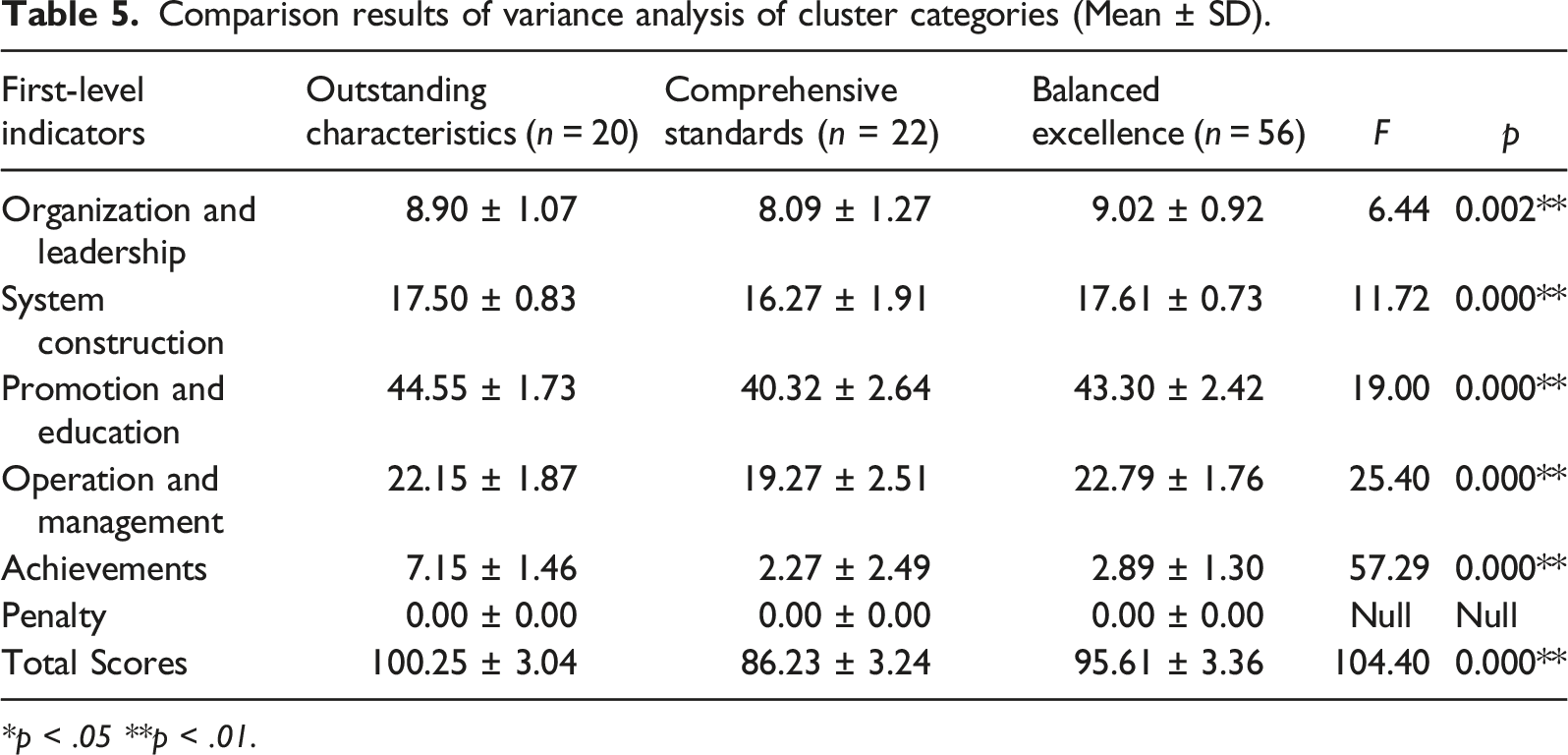
Through k-means cluster analysis, the 98 schools were categorized into three distinct groups to identify the characteristics of schools that excel in the implementation of the GSP. This method aids in understanding the differentiated strategies and outcomes among various schools in their GSP implementation.
Boxplot analysis
Boxplots were utilized to visually display the distribution characteristics of the data and to explore outlier data. This method assists in identifying potential advantages and issues within the data, providing directions for schools to maintain or improve upon.
Path analysis
Path analysis was employed to examine the correlation between the primary indicators and the total scores. This method not only uncovers the relationships between different indicators but also helps to understand which factors are most critical for the successful implementation of the GSP.
Variance analysis
Univariate analysis of variance was conducted to study differences in indicators and total expert evaluation scores across various clusters, school types, and evaluation subjects. This helps to identify school types that are performing well or need improvement in the implementation of the GSP.
Remote sensing analysis
Innovatively, ArcGIS software and Google Earth Engine were used for remote sensing image analysis to visually present the geographical distribution and green space area of schools. This approach provides a macro perspective for assessing the sustainability of the school environment.
By integrating these methods, the study evaluates the implementation effects of the GSP from multiple angles and offer targeted improvement suggestions for schools. The selection and application of these methods are designed to ensure that the research findings are not only theoretically grounded but also provide clear guidance for practical application.
Frequency and descriptive analysis
The frequency, mean, standard deviation, and median of the self-evaluation and expert evaluation scores were analyzed by SPSSAU, seeing Supplemental Table S2.
In the self-evaluation scores, the indicators whose mean reached the total score indicated that the schools believed that they performed better in system construction, promotion and education. In the expert evaluation scores, the indicators whose mean reached the total score indicated that the schools performed well in some relevant aspects of organization and leadership. In the self-evaluation scores, the indicators with a mean lower than 50% of the total score indicated that the schools believed that using renewable energy and building a utilization system of recycled water, as well as ESD achievements still needed improvement. In addition to the above aspects, experts also assessed that the greening maintenance level needed to be increased.
Whether in self-evaluation or expert evaluation scores, the first-level indicators ranked from the highest to the lowest were the zero penalty, the system construction, promotion and education, organization and leadership, operation and management, and achievements. This indicated that primary and secondary schools were outstanding in system construction and promotion and education when implementing ESD.
Cluster analysis
Comparison results of variance analysis of cluster categories (Mean ± SD).
*p < .05 **p < .01.
Boxplot analysis
Using SPSSAU, the boxplot was displayed to visually display the distribution characteristics of the data and to explore the outlier data. The boxplot comprised five numerical points: the minimum observation value, 25% quantile (Q1); median, 75% quantile (Q3); and maximum observation value. See Figures 3–5 for the boxplots of the total scores and scores of the six first-level indicators in different categories of the schools. The interquartile range (IQR) was Q3 minus Q1. If the data were less than Q1 minus 1.5 times the IQR, they were outliers. Schools with outliers must pay attention to the corresponding indicators and their subsequent improvement or the advantage to be maintained. The boxplot of total scores and first-level indicator scores by clusters. The boxplot of total scores and first-level indicator scores by school types. The boxplot of total scores and first-level indicator scores by evaluation subjects.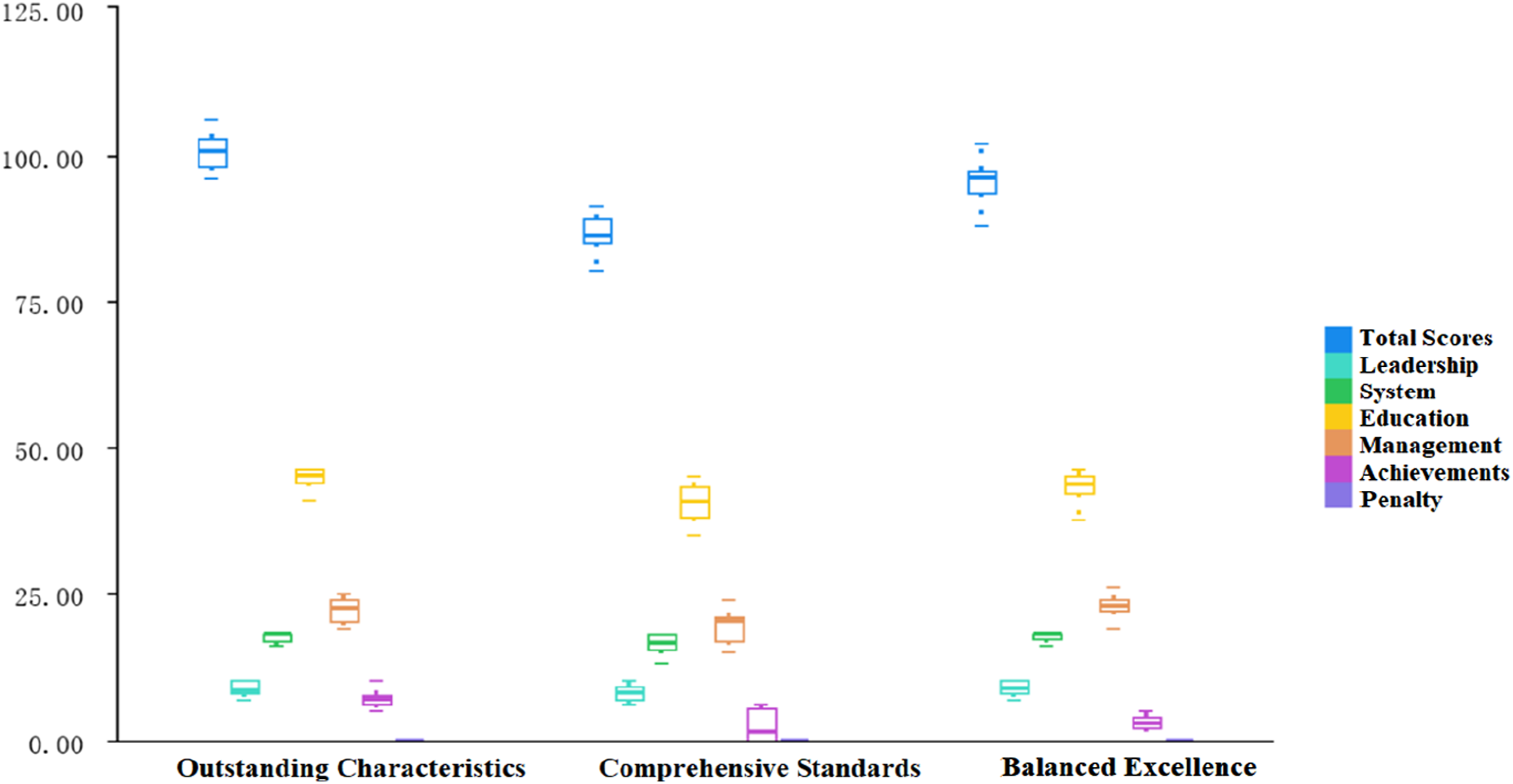
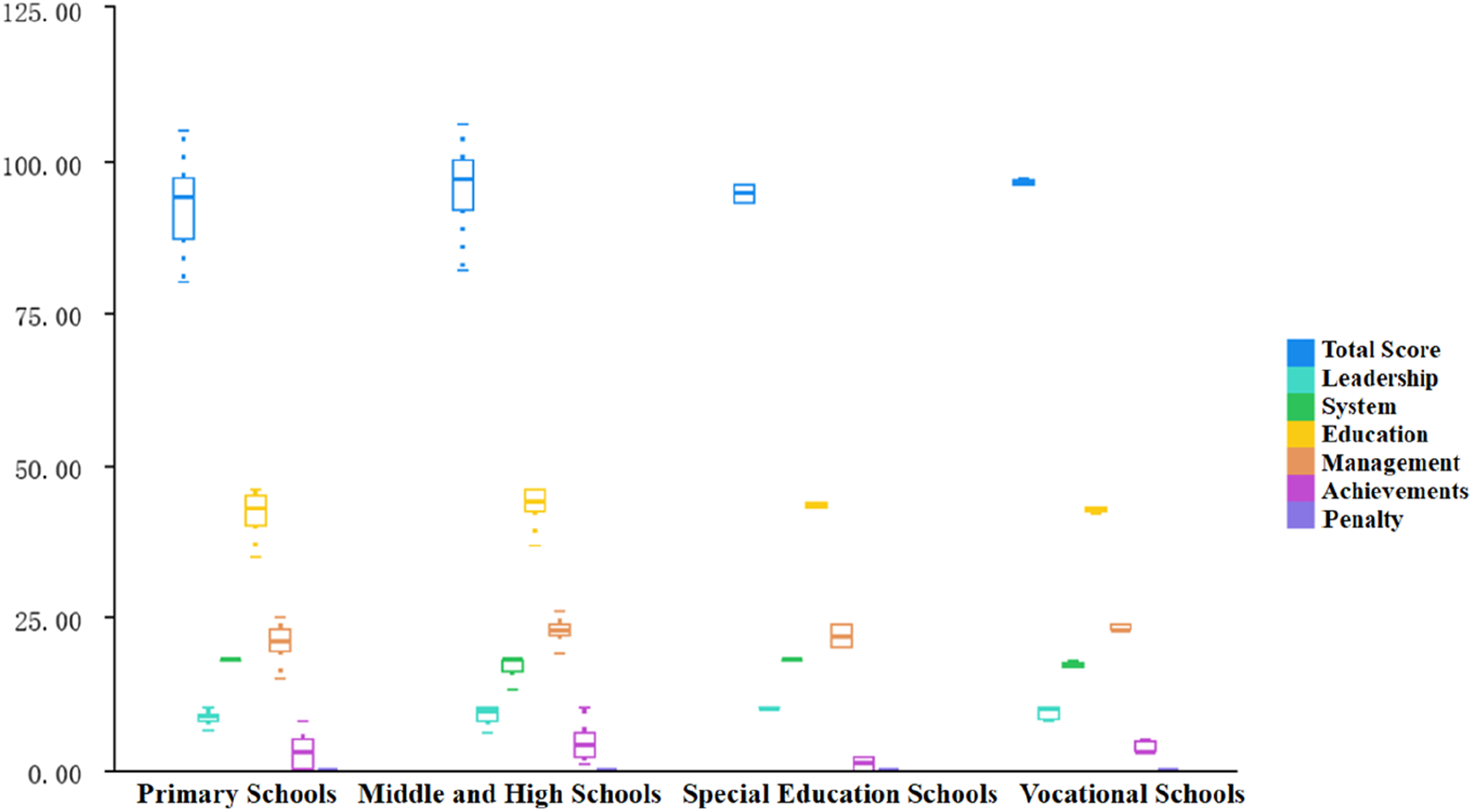
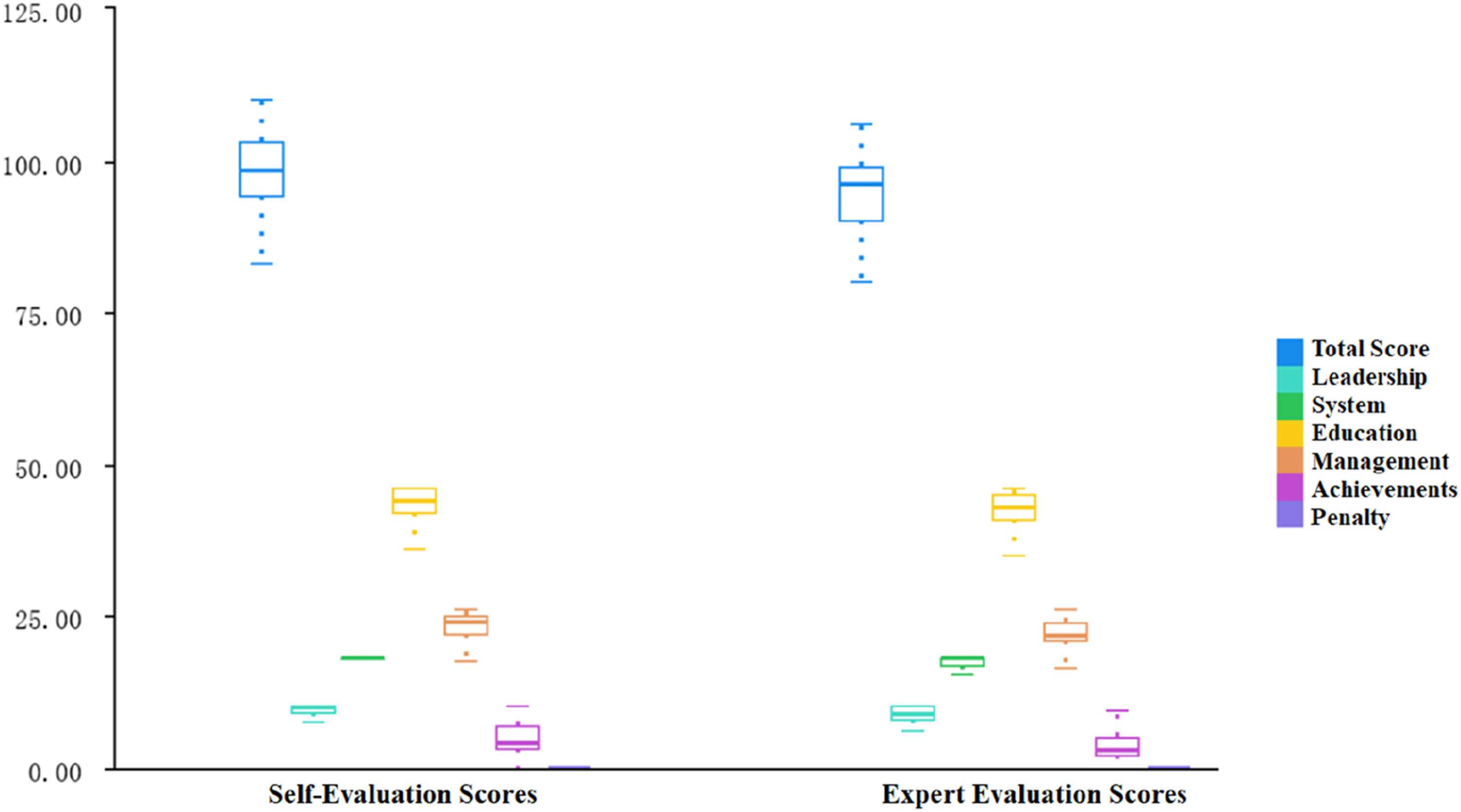
Table S3, S4, and S5 display a summary of the outlier values.
From Table S3, eight schools with lower assessment scores in System Construction within the category of Balanced Excellence schools have been anonymized and are not displayed here. Upon reviewing expert evaluation suggestions, it was found that School A had not established a funding guarantee mechanism for the creation of green schools, which was not included in the basic budget; Schools B and C had insufficient incentive mechanisms for green school creation; Schools D and E had not formalized a management plan for the “Clean Plate Campaign.” Outstanding Characteristics and Balanced Excellence schools each have one school with a lower assessment score in the area of promotion and education, which are treated anonymously and not disclosed here. Upon reviewing the expert evaluation recommendations, it was found that School F’s “Clean Plate Campaign” was not effective; there is a need to enhance the participation of teachers and students in campus greening, beautification, and purification efforts, as well as the involvement of students in ecological civilization practice activities and teachers and students in green technology competitions. School G’s ecological civilization training for faculty and staff was found to be inadequate, necessitating an increase in the involvement of teachers and students in speech contests, essay competitions, creative design activities, and encouraging students to read extracurricular literature on ecological civilization. It is suggested to increase activities related to the popularization of plastic pollution prevention and control and the invention and creation of green technology. It is also recommended that the school establish a regular activity and service base for teaching practice in collaboration with surrounding communities, organize teachers and students to actively participate in social public welfare activities for the protection of the ecological environment, and enhance the awareness and satisfaction of teachers and students regarding ecological civilization.
From Table S4, ten primary schools with lower assessment scores in organization and leadership and system construction have been anonymized and are not displayed here. Upon reviewing expert evaluation suggestions, it was found that School H needs to supplement the annual targets and timeline for the creation of green schools and integrate the creation of green schools into the performance management system. School I needs to establish a funding guarantee mechanism for green school creation and improve the green management system. School J needs to improve the funding guarantee mechanism and incentive mechanism for green school creation. Other primary schools with lower scores also need to improve the funding guarantee mechanism, incentive mechanism, and management system for green school creation. There are two middle/high schools each with lower assessment scores in promotion and education and operation and management, which have been anonymized and are not displayed here. Upon reviewing expert evaluation suggestions, it was found that School K needs to strengthen green maintenance, energy resource statistics and monitoring, implementation of waste classification management, and the “Clean Plate Campaign” in the canteen. At the same time, it is suggested to increase the use of renewable energy for electricity, heating, and domestic hot water needs, construct a comprehensive utilization system for recycled water, and a rainwater collection and utilization system.
Form Table S5, by comparing the number of schools that self-assessed as lacking in system construction, it is evident that most schools believe there is room for improvement, suggesting that higher-level departments need to provide more specific support and guidance for system construction. Upon reviewing expert evaluation suggestions, it was found that Schools L, M, N, and K all lack teacher incentive mechanisms and need to improve the “Clean Plate Campaign” management system and green office system. School O needs to strengthen green maintenance, energy resource statistics and monitoring, waste classification management, reduce the use of disposable items, utilize renewable energy, and construct a recycled water system. Schools P and Q need to reasonably set up green land, improve the quality of campus greening, carry out green transformation; establish measures for the statistics and publicity of energy and resources; practice the “Clean Plate Campaign”; utilize renewable energy and construct a recycled water system. There are three schools with higher assessment scores in the first-level indicators in the expert evaluation. These three schools, as district-level or above ecological civilization education bases, the schools and teachers and students have received many district-level or above ecological civilization awards and titles, and have carried out characteristic ecological civilization education activities.
Path analysis
Pearson correlation table of first-level indicators and total scores.
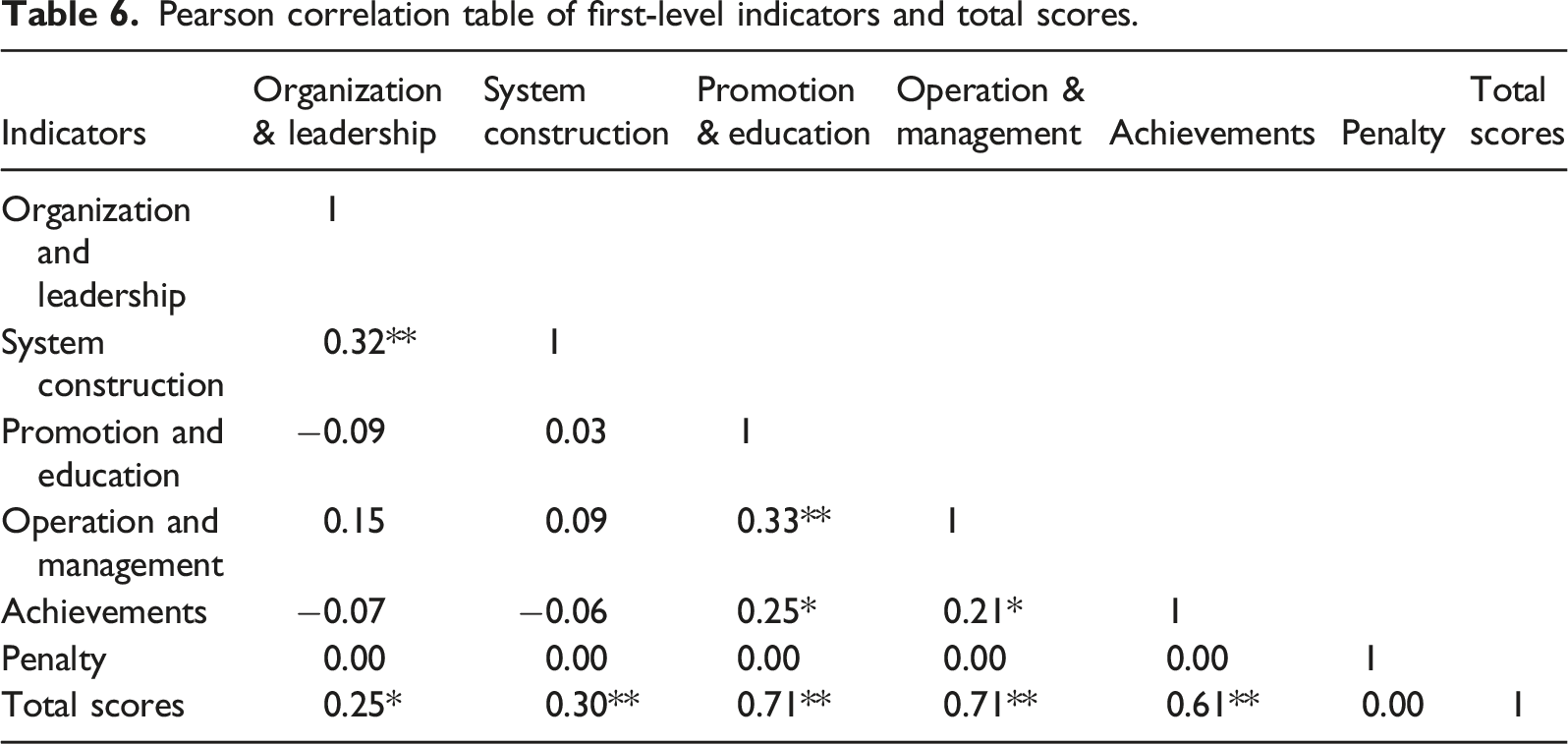
Using SPSSAU, the path analysis of the influence relationship of the primary indicators and total scores is shown in Figure 6. The numbers in Figure 6 are standardized path coefficients, and the positive and negative signs represent positive or negative relationships. The * sign indicates significance (*p < .05, **p < .01). If it is significant, it means there is a significant relationship between the indicators. Otherwise, it means there is no relationship. In Figure 6, the straight line represents the influence relationship, and the curve represents the covariance relationship, namely, the correlation relationship. According to the correlation in Table 6, the path model was corrected. As shown in Figure 6, the total score was significantly positively affected by five first-level indicators. Organization and leadership was related to system construction, promotion and education, operation and management, and achievements formed their respective influential zones. This finding suggested building connections between these two zones and strengthening the guidance of the top-level indicators such as organization and leadership and system construction on execution-level indicators such as promotion and education, operation and management, and achievements. The top-level indicators cannot be separated from execution-level indicators, and the actual implementation of execution-level indicators can promote the design and planning of top-level indicators. These two zones promote each other and jointly further the development of ESD. Path model of first-level indicators and total scores.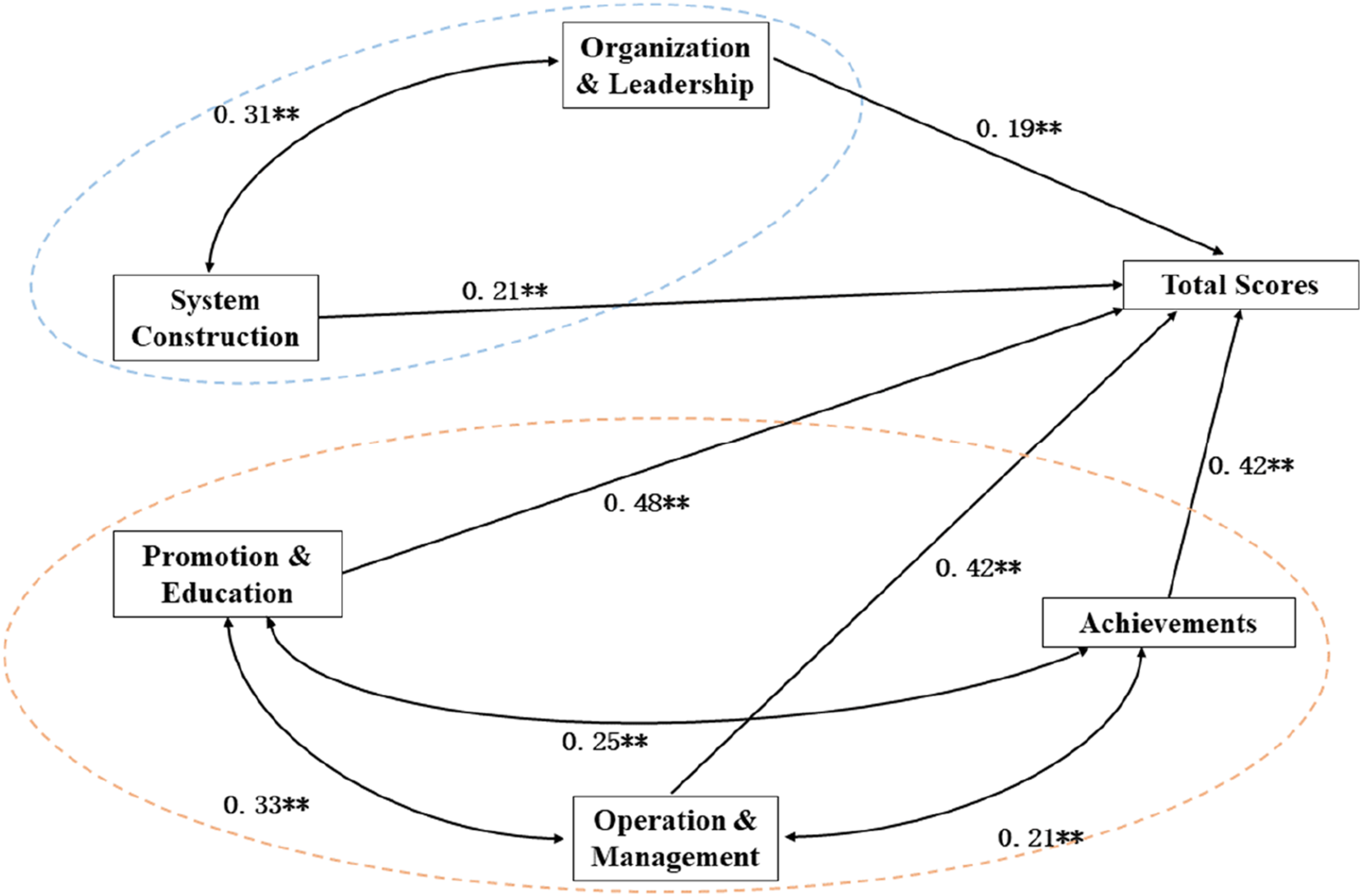
Variance analysis
Using SPSSAU, univariate analysis of variance was conducted to study the differences in indicators and the total expert evaluation scores by different clusters, school types, evaluation subjects. Supplemental Table S6 suggests that the comprehensive standards schools must learn from the outstanding characteristics schools and balanced excellence schools in most indicators. The balanced excellence schools and comprehensive standards schools should also learn from the outstanding characteristics schools in indicators related to achievements. Supplemental Table S7 shows that different types of schools had different performances and advantages in different indicators. Meanwhile, different types of schools had deficiencies in corresponding indicators. Primary schools must learn from the experiences of middle and high schools and vocational schools in the following ways: establishing a conference system to study green schools; implementing garbage classification management; practicing grain conservation. Middle and high schools must learn from the experience of primary schools in the following ways: creating incentives for staff and students; establishing a grain conservation management system. Vocational schools should learn from the experience of primary and middle and high schools in the following ways: organizing green technology invention and creation activities. Middle and high schools and vocational schools have carried out distinctive ecological civilization education activities, which also provide guidance to primary and special education schools. Supplemental Table S8 indicated that the self-evaluation scores were significantly higher than the expert evaluation scores in all indicators. This indicated a certain gap between the schools’ perceptions and their actual performance. The self-evaluation was relatively optimistic, while the actual situation was not ideal, which easily hid the problems and incompleteness in ESD implementation.
Remote sensing analysis
Map distribution
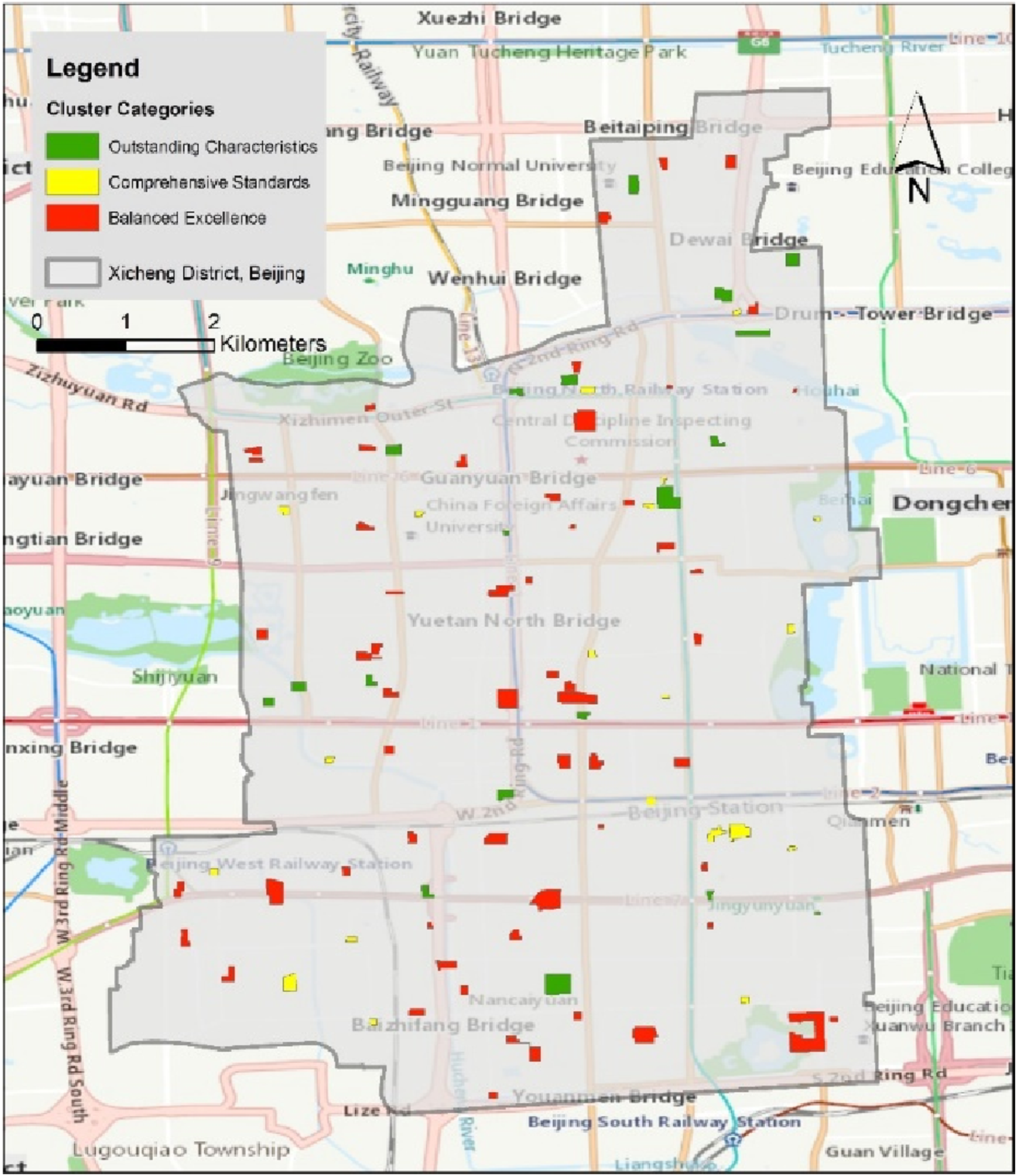
The ArcGIS software was applied to map the schools. Figures 7 and 8 show the map distribution of primary and secondary schools participating in this study. Figure 7 shows the school distribution of different types. The 98 schools covered the entire area of Xicheng District in Beijing, achieving full coverage of ESD implementation in Xicheng District. Figure 8 shows the distribution of different cluster schools. Given the exemplary performance of the outstanding characteristics schools in most indicators, this suggested assigning the outstanding characteristics schools in the south to lead the ESD development of these two regions. Distribution of different types of schools. Distribution of different clusters of schools.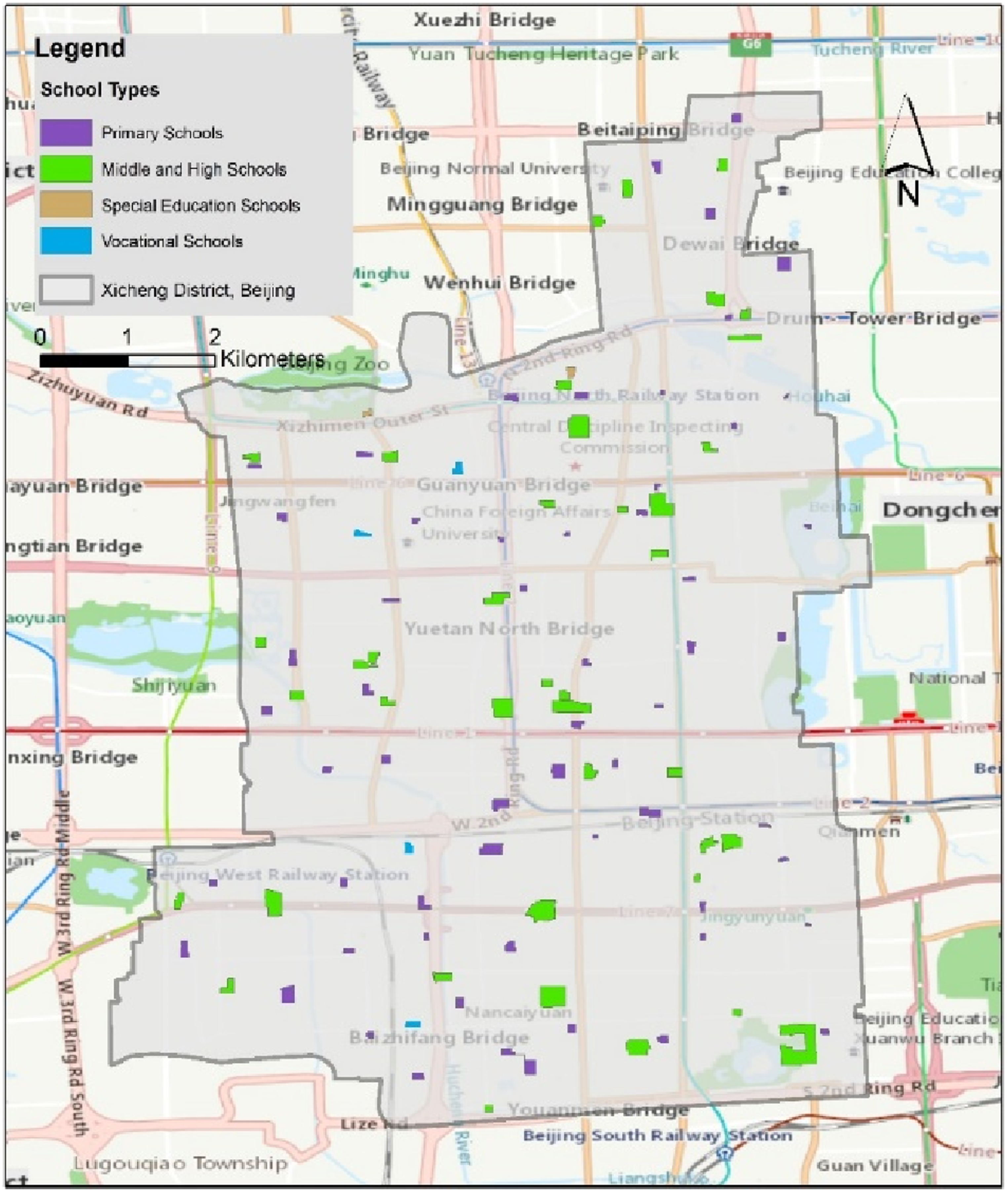
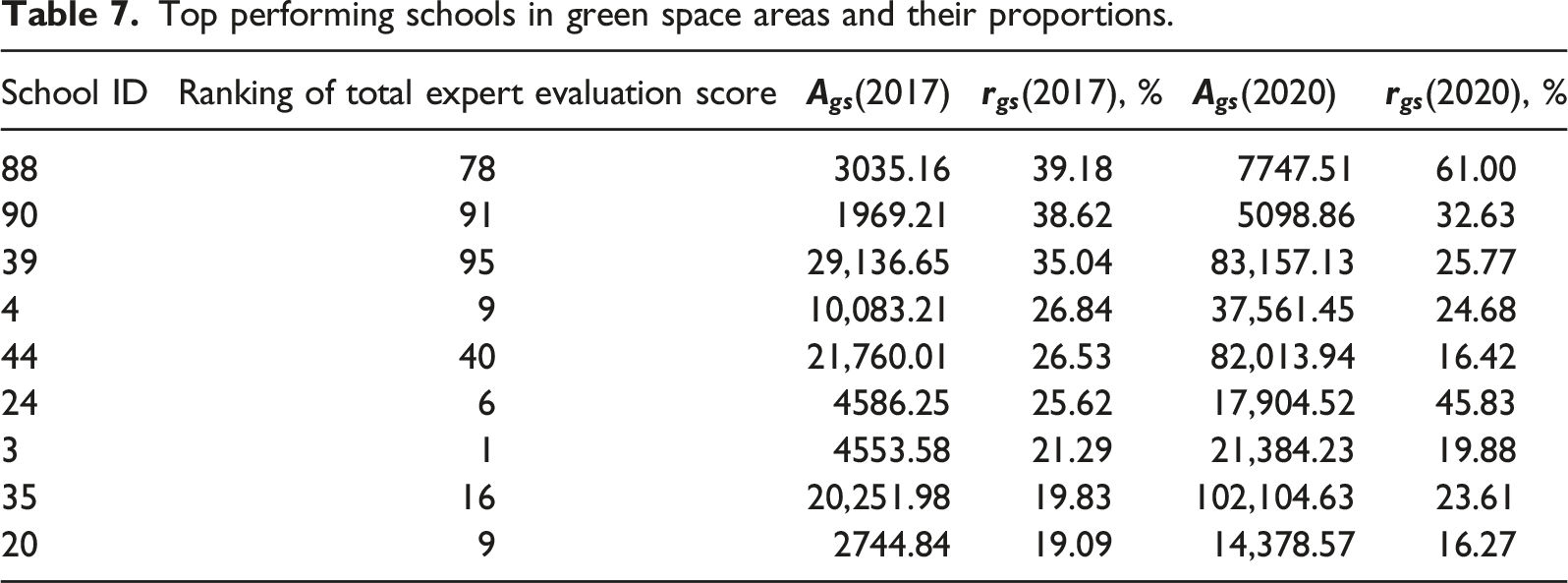
Green space calculation with remote sensing imagery
We calculated the areas of the different land covers of each school using From-GLC Plus land-cover data sets (Yu et al., 2022), which were produced from remote sensing imagery. The From-GLC Plus maps include 10 land-cover types, i.e., cropland, forest, grassland, shrub, wetland, water, tundra, imperious, bare land, ice, and snow.
In this study, indices of green space were calculated according to the following formulas.

Top performing schools in green space areas and their proportions.
Based on the school address, high spatial resolution remote sensing images were captured by Baidu Map software. Figure 9 shows only three schools as examples to illustrate the remote sensing images. Remote sensing images can directly capture the degree of green space. Examples of remote sensing images.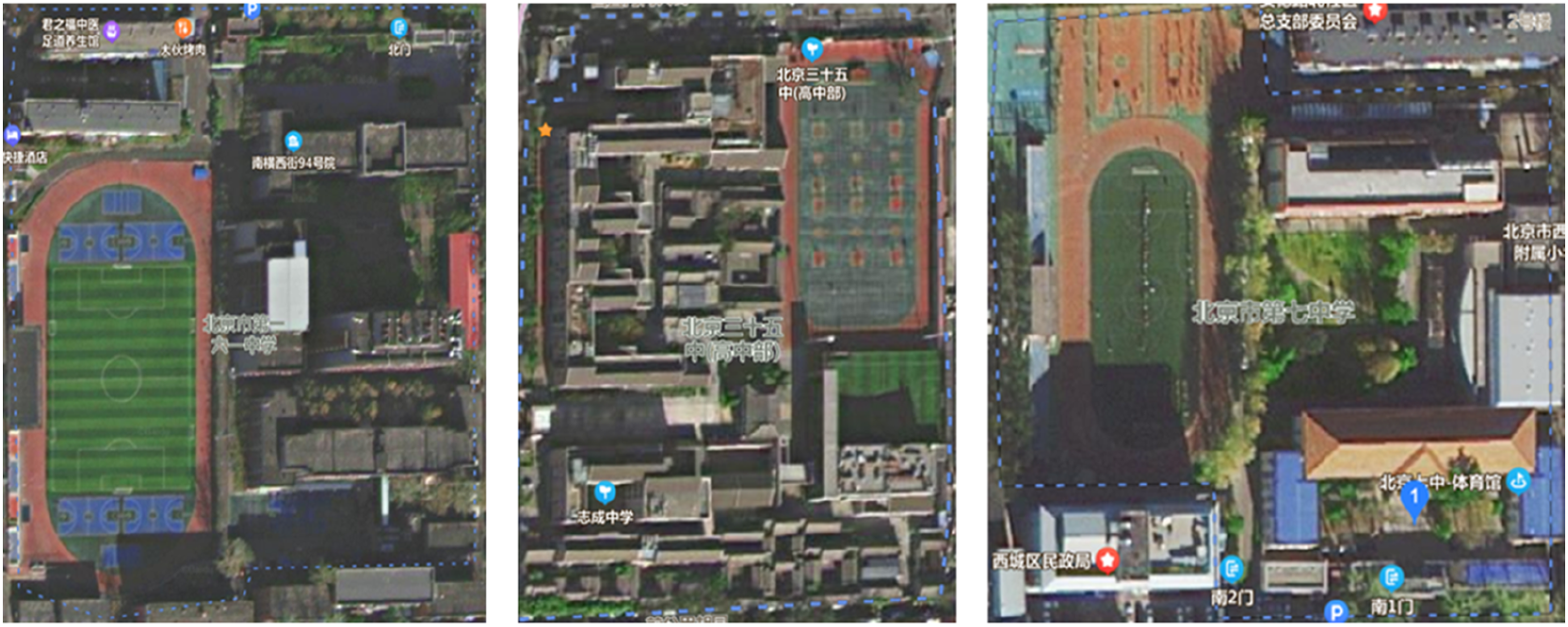
Discussion and suggestion
Using the general inductive approach, our study has systematically synthesized qualitative and quantitative data to elucidate the relationship between the GSP and sustainable development. This method has enabled us to distill key insights on the positive implications of GSP on ESD and to formulate informed recommendations based on the Chinese experience.
Develop an ESD evaluation method
The evaluation method in this study is replicable and operational. It comprehensively measures the ESD development of schools. statistical analysis provides objective data analysis; remote sensing technology visually observes the map distribution and degree of green space of schools; a general inductive approach can extract schools’ practice cases in five priority action areas of ESD for 2030.
The multi-factor and multi-subject aspects make the evaluation more targeted, objective, and scientific (Hao et al., 2022). First, the multi-factor evaluation method makes demands on all stakeholders. The evaluation method detects the degree of ESD proposed by the UN in national education policies, curricula, teacher education, and student assessment (Imara & Altinay, 2021). The evaluation method also puts forward requirements for leadership, management, institutions, and outcomes, so that the evaluation factors of ESD are richer and more in line with the sustainable development requirements for all stakeholders (Kioupi & Voulvoulis, 2019). Second, the multi-subject evaluation, including the school subjects, expert team, remote sensing technology, and research team, increases the objectivity and professionalism of the evaluation.
Taking the schools in Xicheng District of Beijing as examples, the evaluation method identified the advantages and problems to be solved. For example, the outstanding characteristics schools led the sustainable development in the Xicheng region, and whole schools performed better in saving water resources. However, the schools’ self-evaluations were too optimistic to reveal the reality. It is suggested to enhance the link between the top designer and the executive level to promote a circle of guidance and feedback.
Remote sensing technology was used for the first time to evaluate and detect the quality of education, which is an innovation combining ecology and education. Remote sensing technology can also be tapped for more potential to assist educational progress (Kholoshyn et al., 2019). Subsequent studies will focus on the temporal and spatial changing of the campus environment.
Provide practical examples of ESD for 2030
In terms of policies, China’s three policies on ESD, starting with the end, are highly planned and guide departments at all levels. They are also innovative measures at the national level and reflect the advantages of the socialist system in concentrating resources to accomplish great things. China’s policies require the participation of various functional departments, reflecting the whole-institution approach (Kohl et al., 2022). In response to the Green School Program Action Plan, Green School Program Evaluation System was developed, which benchmarked the SDGs, as shown in Table 1. It was found that the Green School Program Evaluation System contained most of the SDGs, but it lacked SDGs 1 (no poverty), 5 (gender equality), 8 (decent work and economic growth), and 10 (reduced inequalities). It is recommended that China incorporate these economically and socially relevant SDGs (Berglund et al., 2014) into ESD when formulating policies.
Regarding learning environment, the culture, institutions, and supervision are considered forces to create a sustainable learning environment (Li et al., 2022; Sergiovanni, 2007). The campus culture is everyone’s responsibility and enhances the awareness of sustainable development for all (Alshuwaikhat & Abubakar, 2008). We must develop a set of institutions to guide action and make it more effective (Ren & Xin, 2012). Supervision and evaluation uncover the problems to be solved and provide positive feedback for sustainable development (Jin & Bai, 2011; Li & Rao, 2023).
In terms of educators, although training and teaching practice help educators improve their sustainable development competencies, the professional growth of educators is still not sufficient (Rieckmann, 2018). It is recommended to provide more targeted and operational teacher education support (Birdsall & France, 2018; Luo & Li, 2024). Moreover, countries, regions, and schools are also advised to build on existing training and to support educators in multi-disciplinary and cross-disciplinary learning in conjunction with their specialties (Brunsgaard et al., 2014; Tan, 2017; Van Der Wende, 2014).
In terms of young people, it is suggested that the awareness, competencies, and actions of young people on sustainable development should be enhanced (Barth et al., 2007). Based on existing education and learning, a more systematic practice, suitable for young people, including formal, informal, and nonformal ESD should also be created (Affeldt et al., 2017; Yamada, 2024; Yuan et al., 2022).
In terms of local action, it is suggested that more policymakers, educators, and young people should be involved in influencing and motivating communities and local people (Lou, 2013). The typical cases and practices summarized in this study reflected Chinese youth taking the initiative. In the future, more people should engage in community actions to spread the idea of sustainable development to local people, provide knowledge and skills and jointly create a better home (Spring, 2012).
Provide the experience for schools worldwide
The evaluation of ESD should be normalized and improve the building of sustainable schools (Mahat et al., 2016). Combined with formative evaluation and summative evaluation methods, quantitative and qualitative evaluation must be conducted to provide regular feedback and supervision for schools and help them implement ESD for the long term (Chang, 2008).
The problems related to ESD should be addressed at the source, and comprehensive measures should be taken related to all aspects (Eilam & Trop, 2010). The common problem found in this study was the need for a water recycling system. After the field investigation, we found that some schools in the Xicheng District of Beijing were housed in antique buildings, and the building structure was not suitable for the transformation of the water system. Such problems brought about by history or culture cannot be solved overnight by the school itself. Instead, it is necessary to find the source of the problems and give full play to the collective strength of all parties (Kezar & Holcombe, 2018).
Educational influence and leadership are suggested as leverage to bring together families, communities, schools, educators, and policy makers to promote sustainable development (Mader et al., 2013). Establishing sustainable schools is a systematic project that requires the participation of all society (Henderson & Tilbury, 2004). Scholars and enterprises can hold lectures, visits, observations, and practice activities appropriate to the age and characteristics of students to improve the effectiveness of sustainable development activities (Pavlova, 2013). A curriculum relating to sustainable development can improve the quality of education and school efficiency (Martin et al., 2009). Scientific research and innovation can explore the essence of ESD and promote its development (Cebrián & Junyent, 2015). Policies and incentive mechanisms can be introduced to encourage the practice of ESD.
Research limitations and future research directions
The representativeness of the evaluation objects in this study is limited to some extent. Although the 98 schools represent the highest level of China’s ESD and can provide a reference for global ESD, the school area evaluated in the study was relatively limited. It is necessary to expand the research area and increase the sample size of schools. The number of different types of schools must also be increased, and special education schools and vocational schools should be studied in depth by setting up separate sub-research (Ibrahim, 2008). Meanwhile, the qualitative evaluation should be supplemented with more theories and methods to support distinguishing excellent ESD cases objectively and scientifically (Carey, 2017). When using remote sensing technology to evaluate ESD, the selection of the data set affects the results. In the follow-up study, more in-depth and comprehensive consideration and selection of data sets should be carried out, and remote sensing technology and education must be deeply integrated to study the spatial and temporal changes in the campus environment related to ESD (Jahn et al., 2010).
Conclusions
Utilizing primary and secondary schools in Beijing’s Xicheng District as a case study, practical examples of five priority actions of ESD for 2030 are presented. In terms of policies, China’s three ESD policies are highly planned, guiding various levels of government departments and reflecting the advantages of the socialist system in resource consolidation for significant endeavors. In the learning environment, campus culture, institutions, and oversight are considered influential in creating a sustainable learning environment. Regarding educators, despite training and educational practice contributing to their ESD competencies, the professional growth of educators remains insufficient. It is recommended to provide more targeted and practical education support. For young people, it is suggested to enhance their awareness, competencies, and actions related to sustainable development. Based on existing education and learning, a more systematic approach suitable for young people, including formal, informal, and non-formal ESD, should be established. In terms of local action, more policymakers, educators, and young people are encouraged to get involved in influencing and motivating communities and local residents.
Based on the performance of the GSP in primary and secondary schools in Beijing’s Xicheng District, this evaluation clarifies the system’s strengths and weaknesses, summarizes the characteristics of its GSP implementation, and provides a basis for exploring its development model. This study has developed an operational evaluation method for measuring the ESD. This method is replicable and provides a comprehensive assessment of ESD in schools. Statistical analysis offers objective data analysis, while remote sensing technology visually examines the distribution and extent of green spaces in schools. A general inductive approach extracts practical examples of schools’ efforts in the five priority action areas of ESD for 2030. The use of multiple factors and stakeholders makes the evaluation more targeted, objective, and scientific.
Using primary and secondary schools in Beijing’s Xicheng District as an example, this evaluation identified strengths and areas for improvement. Notably, certain outstanding schools have taken a leadership role in promoting sustainable development in the Xicheng district, and overall, schools have made progress in conserving water resources. However, self-evaluations by the schools were often overly optimistic and did not reflect the reality. It is suggested to strengthen the connection between top-level decision-makers and implementers to facilitate a cycle of guidance and feedback. The innovative use of remote sensing technology for evaluating and assessing the quality of education, combining ecology and education, offers further potential for supporting educational progress. Future studies will focus on temporal and spatial changes in the campus environment.
In conclusion, this study aims to provide examples and recommendations from China’s experience to contribute to global initiatives for sustainable development. The evaluation of ESD should be standardized and involve collaboration among various stakeholders to promote the achievement of SDGs. Combining quantitative and qualitative evaluation methods, including formative and summative evaluation, is essential for providing regular feedback and supervision to schools, aiding in the long-term implementation of ESD. Addressing ESD-related issues at their source and implementing comprehensive measures is crucial. Leveraging educational influence and leadership can bring together families, communities, schools, educators, and policymakers to promote sustainable development. Establishing sustainable schools is a systematic endeavor requiring the involvement of the entire society.
Supplemental Material
Supplemental Material - Promoting education for sustainable development through the green school program to achieve SDGs: Insights from a case study of Beijing’s primary and secondary schools
Supplemental Material for Promoting education for sustainable development through the green school program to achieve SDGs: Insights from a case study of Beijing’s primary and secondary schools by Xinqun Yuan, Le Yu, Xiyu Li, Jie Luo, Hanshi She, Jun Yang, Zhen Lin, Jun Zhao, Feng Zhao, Ran Meng, Yanjie Zhang and Yuanyuan Zhao in International Journal of Chinese Education.
Footnotes
Declaration of conflicting interests
The author(s) declared no potential conflicts of interest with respect to the research, authorship, and/or publication of this article.
Funding
The author(s) received no financial support for the research, authorship, and/or publication of this article.
Data availability statement
The data that support the findings of this study are available from the corresponding author upon reasonable request.
Supplemental Material
Supplemental material for this article isavailable online. Table S1: Green School Program Evaluation System; Table S2: Mean, standard deviation and median of each indicator; Table S3: Summary of outliers in cluster schools; Table S4: Summary of outliers across different types of schools; Table S5: Summary of outliers in self- and expert evaluation; Table S6: Variance analysis of different cluster schools; Table S7: Variance analysis of different type schools;  : Variance analysis of different evaluation subjects.
References
Supplementary Material
Please find the following supplemental material available below.
For Open Access articles published under a Creative Commons License, all supplemental material carries the same license as the article it is associated with.
For non-Open Access articles published, all supplemental material carries a non-exclusive license, and permission requests for re-use of supplemental material or any part of supplemental material shall be sent directly to the copyright owner as specified in the copyright notice associated with the article.
