



Abstract
To gain a comprehensive understanding of the current status of inclusive education for children with autism in Beijing from the perspectives of parents, a questionnaire-based survey was administered to 202 parents residing in Beijing, whose children have autism. Their experiences with inclusive education, sentiments towards acceptance and support, and preparedness for educational transitions were explored. The results revealed that inclusive education served as the primary educational placement for the majority of children with autism. However, parents perceived a low frequency and efficacy of support extended by mainstream school teachers. Limited acceptance and insufficient professional support continued to pose significant challenges for children with autism in mainstream educational settings. Additionally, there appeared to be a deficiency in the provision of guidance for parents of children with autism concerning educational transitions. It is therefore recommended that efforts be made to enhance the operational mechanism of inclusive education in Beijing and to offer guidance to parents and their children with autism during the process of educational transition.
Introduction
Autism is a profoundly intricate neurodevelopmental disorder, typically manifested in the early stages of childhood. It is characterized by enduring deficits in social communication and interaction, coupled with repetitive behavioral patterns and interests. The symptoms of Autism Spectrum Disorder (ASD) can lead to severe repercussions, including challenges in interpersonal communication and adaptive flexibility. According to a study conducted by the World Health Organization (WHO), approximately .76% of children globally are affected by ASD (Baxter et al., 2015). Furthermore, epidemiological surveys in China have indicated a prevalence rate of approximately .70% for ASD among school-aged children aged 6–12 (Zhou et al., 2020).
In 1994, the Salamanca Statement and Framework for Action on Special Needs Education advocated for inclusive education reform (Peng & Lei, 2013). Furthermore, China has embraced the inclusive education movement through the practice of “Learning in Mainstream Classrooms” since the 1980s, which played a central role in China’s special education system. The Special Education Enhancement plan, carried out in two phases from 2014 to 2020, further propelled the progress of inclusive education. Beijing, being a forerunner in this domain, has instituted a dual enrollment system for students in special education schools (Beijing Municipal People’s Government [BMPG], 2023), allowing students with special educational needs to transfer between mainstream schools and special schools based on individual needs. Investigating parents’ views and attitudes toward inclusive education can yield targeted recommendations for the inclusive education of children with autism (Liu et al., 2023). Hence, this research endeavors to conduct an exploratory study on parents of children with autism in Beijing so as to gain comprehensive insights into the current status of inclusive education from their perspective. To achieve this, a questionnaire survey was conducted to gather information on the views and experiences of parents of children with autism regarding inclusive education.
Literature Review
Providing specialized educational support services that cater to the needs and satisfaction of children with autism presents a considerable challenge. According to statistics released by the U.S. Department of Education for the years 2018–2022, only 40% of children with ASD in mainstream classrooms receive services for 80% or more of their time, a figure that falls below the overall level of 64% for all children with disabilities (US Department of Education [USED], 2019a). This suggests that inclusive education for children with autism encounter more significant challenges compared to other children with disabilities. Prior researches have indicated that factors such as the enactment and enforcement of relevant laws and regulations for the educational placement of children with autism, the severity of their disabilities, and the allocation and utilization of inclusive education resources (Mao et al., 2021), school leadership styles and practices (Lambrecht et al., 2020), the acceptance of children with autism by mainstream school teachers, students, and parents, the development of social support systems, and parental involvement (Mathur & Koradia, 2018; Peters & Forlin, 2011) can all potentially influence the quality of inclusive education for children with autism.
Inclusive education, as the favored educational placement for the majority of parents with autistic children (USED, 2019b), necessitates support from various sectors to yield the anticipated outcomes. Certain parents of children with autism perceived a deficiency in timely and professional support from mainstream schools during the process of inclusive education. This encompassed issues such as teachers’ attitudes being insufficiently proactive (Su et al., 2018), inadequate special education knowledge and teaching competencies (Hou & Deng, 2017), lack of communication with parents (Falkmer et al., 2015), and a scarcity of inclusive education resources tailored to the development of children with autism (Mao et al., 2021). There also existed an equity gap in the provision of inclusive education support between urban and rural areas (Alduais & Deng, 2022). Concurrently, parents of children with autism aspired for inclusive attitudes from both typical children and their parents, and they hoped that typical children can play a positive role in integrating autistic children into school life (Gómez-Marí et al., 2022). They harbored concerns about their children being ostracized or suspended from school due to behavioral issues (Starr & Foy, 2012), as well as the potential decline in acceptance as children undergo physical and psychological transformations during adolescence (Able et al., 2015). Additionally, parents of children with autism have heightened expectations for policy-related issues (Su et al., 2014). They were particularly concerned about the enforceability, comprehensibility, and operability of autism education policy implementation (Guo et al., 2020), regional equality in policy welfare, the educational placement and guarantee mechanisms for children with autism in preschool and compulsory education (Ma, 2011; Su et al., 2018). Well-established laws and regulations (Commonwealth of Australia [COA], 1992; Ruddock, 2005; Huang, 2015; Ministry of Education Singapore [MOE], 2018) and inclusive education support programs provide reassurance to parents (Morris et al., 2020).
Educational transitions refer to the shifts and connections between different stages of growth and development for children with special needs, forming a comprehensive and coherent lifelong special education system (Mu et al., 2022). The satellite class model in Australia (Roberts et al., 2008), and Singapore (Li & Tang, 2020), as well as the Early Intervention Program for Infants and Children (EIPIC) centers employed evidence-based practices, such as providing comprehensive training and support to parents or caregivers of children diagnosed with ASD, have demonstrated remarkable effectiveness in facilitating the smooth transition of children with autism to inclusive education (Nah et al., 2021).
By 2019, the proportion of students with autism in inclusive education in Beijing had significantly escalated to 7.5% (Chen et al., 2019). Existing research has identified a lack of resources available for children with autism in inclusive education, and there existed a certain disparity between the experiences of parents and the self-evaluation of mainstream teachers regarding inclusive education (Mao et al., 2021). Additionally, the reintegration of children with autism from mainstream schools to special education schools should not be overlooked (Guan et al., 2022). Parents of children with autism felt troubled by their children’s educational and rehabilitation issues, and they also bore significant economic and psychological pressures (Li & Zhao, 2019; Ruddock, 2005; Wei, 2021), thus more support is necessitated.
The sense of achievement among parents of children with disabilities concerning inclusive education serves as an indicator of the effectiveness of inclusive education. Gaining insights into their perspectives and attitudes is of paramount importance. Moreover, addressing the needs of parents of children with autism can aid in proposing recommendations for refining the mechanisms of inclusive education, promoting enhancements in the quality of inclusive education, and boosting the sense of achievement for children with disabilities, including those with autism, and their families. Consequently, this research is designed to delve deeper into the perceptions and needs of parents of children with autism concerning the current status of inclusive education and the preparation for educational transitions. It also seeks to explore specific measures to continually augment the quality of inclusive education.
Participants and Method
Participants
The research primarily targeted parents of children with autism in Beijing. Prior studies have often encompassed parents of all students with disabilities as research participants, conducting surveys by disseminating questionnaires to schools. However, the number of questionnaires collected from parents of children with autism was limited. Consequently, this research employed convenience sampling. In September 2021, a survey questionnaire was disseminated through WeChat groups for parents of children with autism using the “Wenjuanxing” platform. Participation in the survey was voluntary. Given that there were a few parents of children with intellectual disabilities and cerebral palsy in the WeChat group, questionnaires from 5 non-parents of children with autism were excluded post-collection. Eventually, a total of 202 valid questionnaires were collected. The majority of respondents were parents (198 individuals, 98%), while a small number were grandparents (4 individuals, 2%). Among them, 168 respondents were from urban areas (83.2%) and 34 were from suburban areas (16.8%).
Method
The survey questionnaire was constructed based on three dimensions: placement methods, acceptance and provision of inclusive education resources by schools, and preparation for educational transitions. The content encompassed demographic information of children with autism, educational placement and experiences with inclusive education, the level of acceptance by teachers and peers during the inclusion process in mainstream schools, the availability of inclusive education support, and the primary challenges encountered in inclusive education. It also covered early intervention, parents’ access to policy information, and avenues for educational guidance.
Statistical Analysis
The data collected from the questionnaire were coded for further analysis, with corresponding codes assigned to multiple-choice questions. The level of acceptance, frequency of support provided by mainstream teachers, and effectiveness of support were coded utilizing a Likert scale with values ranging from “exclusion, neglect” to “very accepting,” assigned values of 1–5. The frequency of support provided by teachers to children with autism, ranging from “none or very little” to “frequent,” and the effectiveness of support, ranging from “none or very little” to “very effective,” were coded with values of 1–5. SPSS 26.0 was employed for data analysis.
Results
Basic Information on Educational Placement for Children With Autism
The age distribution of 202 children with autism in Beijing, as reported by their parents, was as follows: 2–6 years old, 86 individuals (42.6%); 7–12 years old, 100 individuals (49.5%); 13 years old and above, 16 individuals (7.9%). Among them, 160 children were boys (79.2%) and 42 were girls (20.8%). There was no significant difference in the gender ratio of children with autism across the three age groups (χ2 = .501, p = .775).
Types of Educational Placement Institutions
Types of Educational and Rehabilitation Institutions for Children With Autism [n (%)].
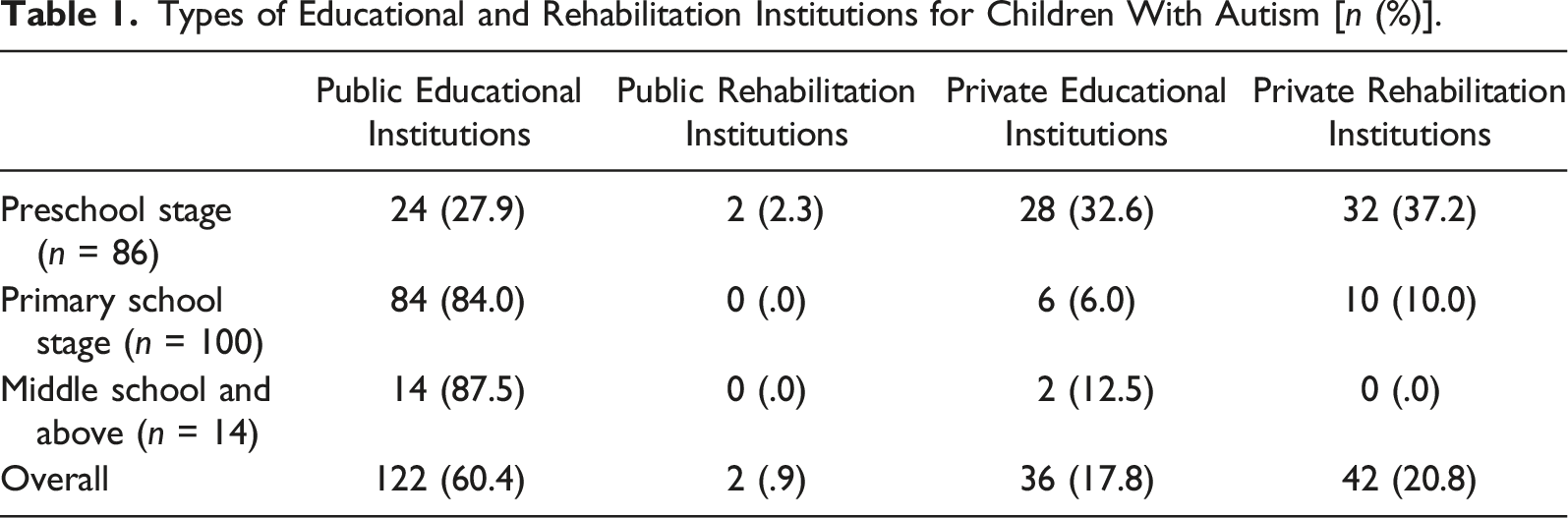
In recent years, there has been a shortage of kindergarten admissions, with both public and private kindergartens favoring the enrollment of typical children. Parents have reported that children with autism have a greater chance of being accepted into private kindergartens.
Inclusive Education Experience
Based on the educational experiences of children with autism, they can be broadly categorized into three types of educational placements: ongoing inclusion in mainstream schools or kindergartens, previous inclusion in mainstream schools or kindergartens but currently attending special schools or rehabilitation institutions, and always in special institutions. The survey revealed that 37 children with autism (18.3%) had previously attended mainstream schools but were subsequently transferred, either voluntarily or involuntarily, to special schools. This phenomenon is commonly referred to as “reversion” (Fu & Xiao, 2016) in the academic community.
Main Difficulties Identified by Parents of Children With Autism in Inclusion in Mainstream Schools [n (%)].
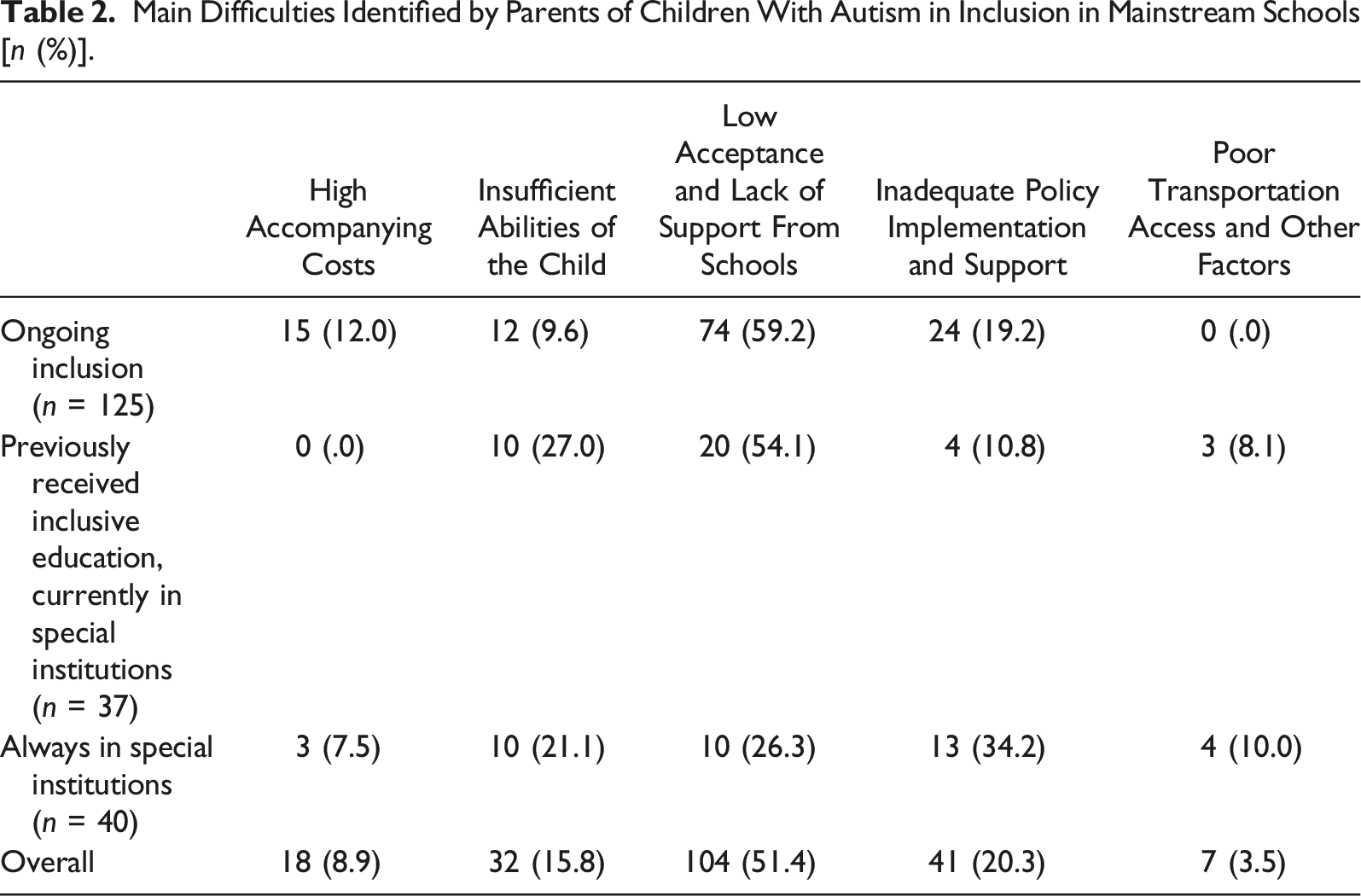
The researchers classified the primary difficulties mentioned by parents in the open-ended questions. These challenges were ranked in descending order based on the percentage of respondents: limited acceptance and inadequate support from schools, insufficient professional assistance, policy-related obstacles such as lack of comprehension or implementation, insufficient capabilities of the child, high financial costs, transportation issues, and other factors. In addition to school-related factors, parents also highlighted the absence of relevant school policies to support inclusive education, such as the lack of an accompanying system. Some parents also expressed a lack of knowledge regarding where to access information on relevant policies. Based on the information provided by parents, it was discovered that the current cost of employing special education assistant teachers was approximately 10,000 yuan per month (equivalent to approximately USD 1385), and the subsidies provided by the Disabled Persons’ Federation were inadequate to cover these expenses. Despite encountering numerous difficulties, 125 parents (61.9%) of children with autism continued to advocate for inclusive education in mainstream schools or kindergartens, while 37 parents (18.3%) have experienced a transformation from hopeful anticipation to disappointment, leading them to transfer their children from mainstream schools to special schools.
Support for Children With Autism in Mainstream Schools
Acceptance and Support From Teachers
The parents of the 125 children with autism, who were consistently studied in mainstream schools or kindergartens, reported a moderate degree of acceptance. The acceptance hierarchy, in descending order, was as follows: homeroom teachers (3.17 ± 1.167), subject teachers (3.09 ± 1.466), classmates (3.08 ± 1.243), and parents of classmates (2.92 ± 1.724).
Support Provided by Homeroom Teachers to Children With Autism (M ± SD).
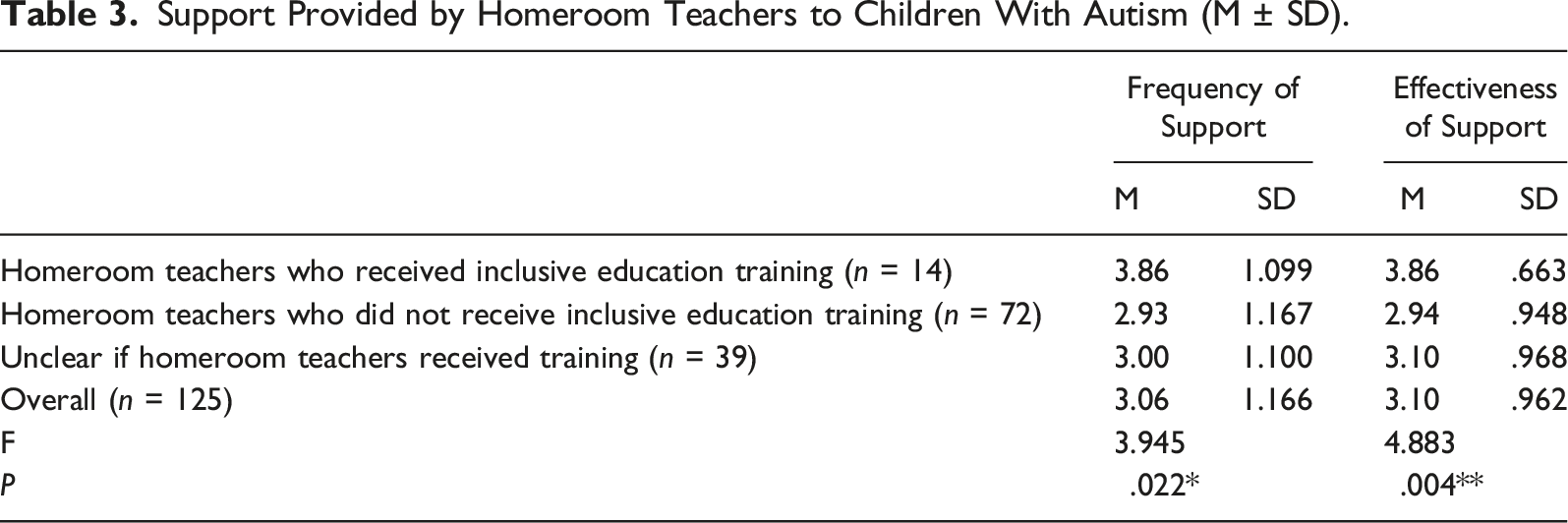
However, it was crucial to acknowledge that the recognition of the need for acceptance of children with special needs did not invariably translate into tangible and effective actions. Numerous studies have demonstrated that while teachers may harbor positive attitudes toward inclusive education at a theoretical level, they may display inconsistencies in their actual practices. Teachers frequently expressed that they lacked the requisite professional skills and necessitate guidance and support (Forlin et al., 2011; Guan et al., 2017; Li & Tang, 2020). It was discovered that homeroom teachers who underwent training in inclusive education provided significantly higher levels of support, both in terms of frequency and efficacy, compared to those who did not partake in such training.
Availability of Inclusive Education Resources
Availability of Inclusive Education Resources for Children With Autism [n (%)].
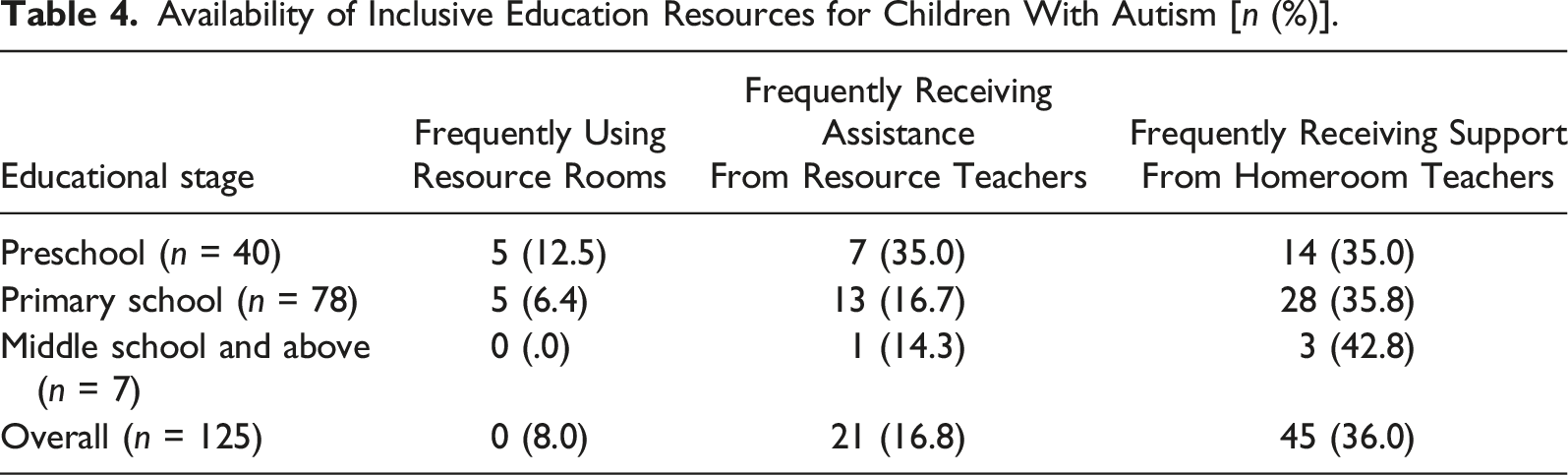
The findings suggested that strategies such as relocating children with autism to resource rooms for interventions or having resource teachers provide in-classroom support are not frequently employed. Rather, it was more common for homeroom teachers to provide support to children with autism in their daily educational activities. Implementing timely professional training for homeroom teachers or appointing teachers with special education backgrounds who are proficient in subject teaching as homeroom teachers in inclusive classrooms can yield improved inclusion outcomes. However, the lack of inclusive education resources tailored to the developmental needs of children with autism in schools (Mao et al., 2021), as well as the failure to provide individualized educational services that meet parental expectations (Hay & Winn, 2005; Peters & Forlin, 2011), persist as ongoing challenges. Contrary to previous studies findings, parents of children with autism provided less positive feedback regarding the professional support offered by schools compared to parents of children with other types of disabilities.
Transition Preparation in Inclusive Education for Children With Autism
Early Intervention for Children With Autism
Early Intervention for Children With Autism With Different Experiences in Inclusive Education [n (%)].
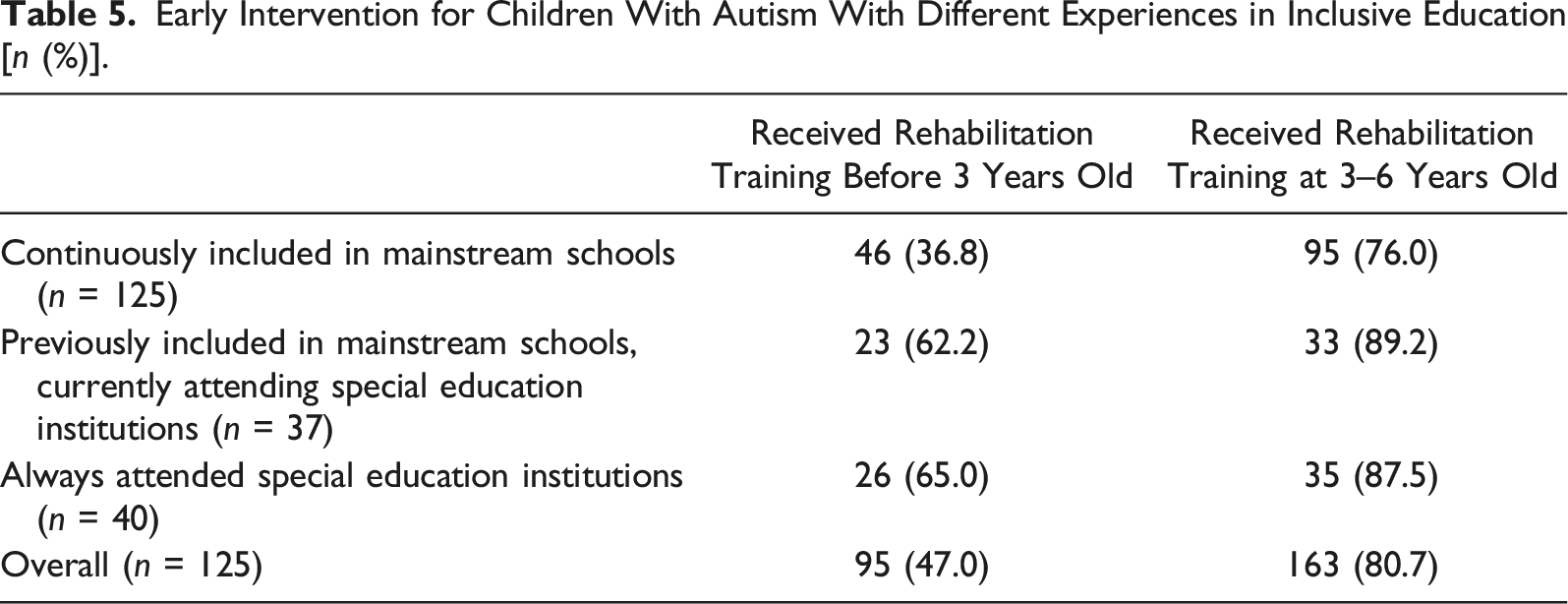
Parents of children with mild autism often opted for inclusive education as the preferred educational setting. However, symptoms of mild autism might not be immediately noticeable, and parents might not become aware of their child’s condition until just before entering kindergarten or even before starting primary school. Consequently, the number and proportion of children receiving early intervention was low. The findings of a national epidemiological survey on Autism Spectrum Disorder (ASD) in China also revealed that 90% of newly diagnosed children with ASD attend mainstream primary schools (Zhou et al., 2020). Conversely, parents of children with moderate to severe autism tended to seek intervention and support at an earlier stage.
Parental Awareness of Policies and Regulations
Guidance Received by Parents of 125 Children With Autism who are Continuously Included in Mainstream Schools or Kindergartens [n (%)].
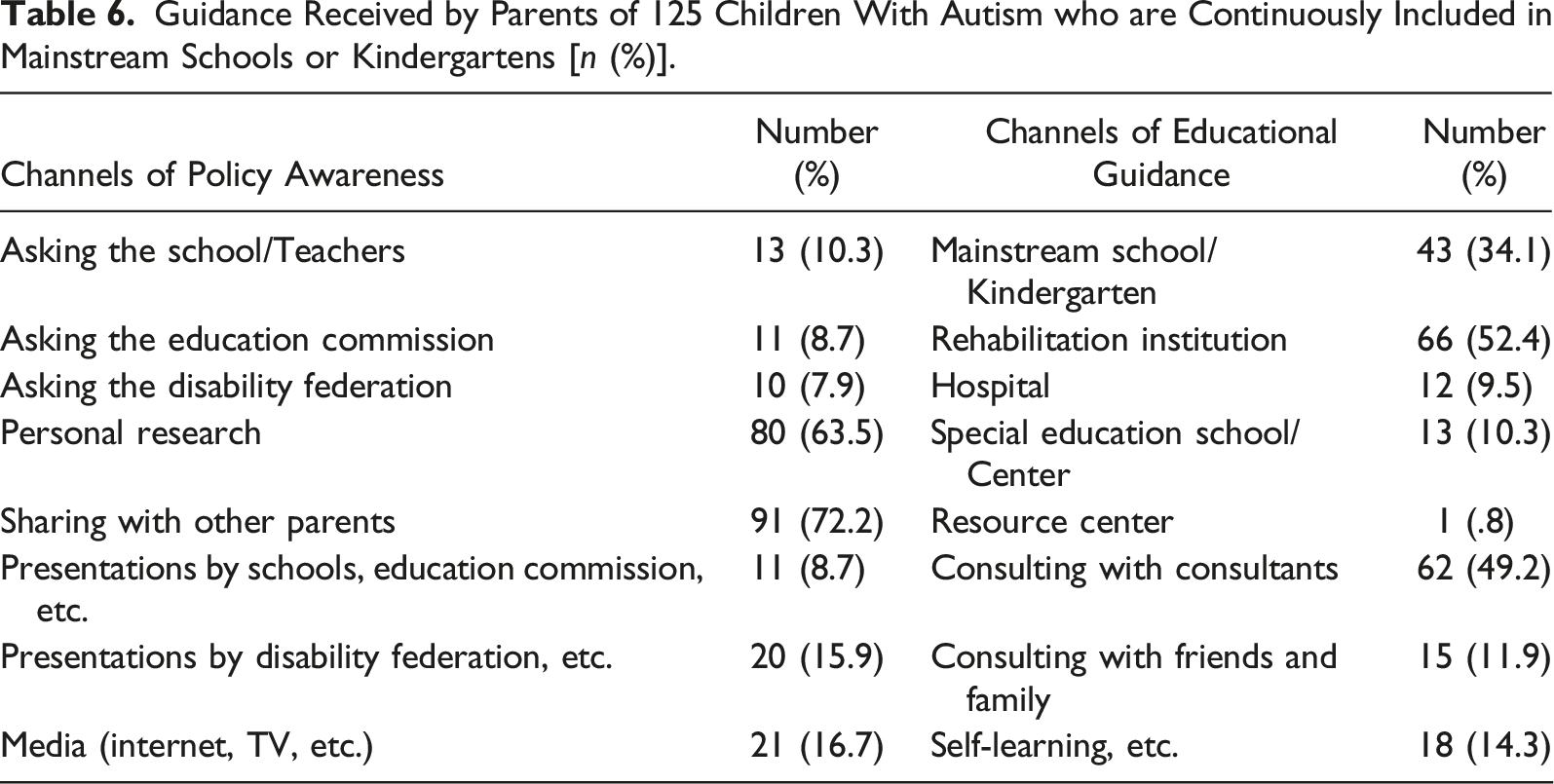
In terms of receiving educational guidance, approximately half of the parents obtained guidance from rehabilitation institutions or individual consultants, while 43 parents (34.1%) received guidance from mainstream school or kindergarten teachers. The role of schools in guiding family education necessitates enhancement.
Parents of children with autism often experienced feelings of being “misunderstood, judged, rejected, and unsupported,” leading to a sense of shame and sustained psychological pressure (Wang, Tong, & Shan, 2020), which negatively impacted both parents and children (Guo et al., 2020). Parents seldom explicitly expressed their needs and sought assistance (Yao & Liu, 2018), but they were more inclined to seek help and support from other parents who shared similar experiences. The number and proportion of parents who acquired policy and regulation information from other parents with analogous experiences were significantly higher than other channels. They aspired to comprehend policies and related information and were more predisposed to exchange information within a community of parents with similar experiences.
Educational Planning by Parents of Children With Autism
Educational Planning by Parents of Children With Autism [n (%)].
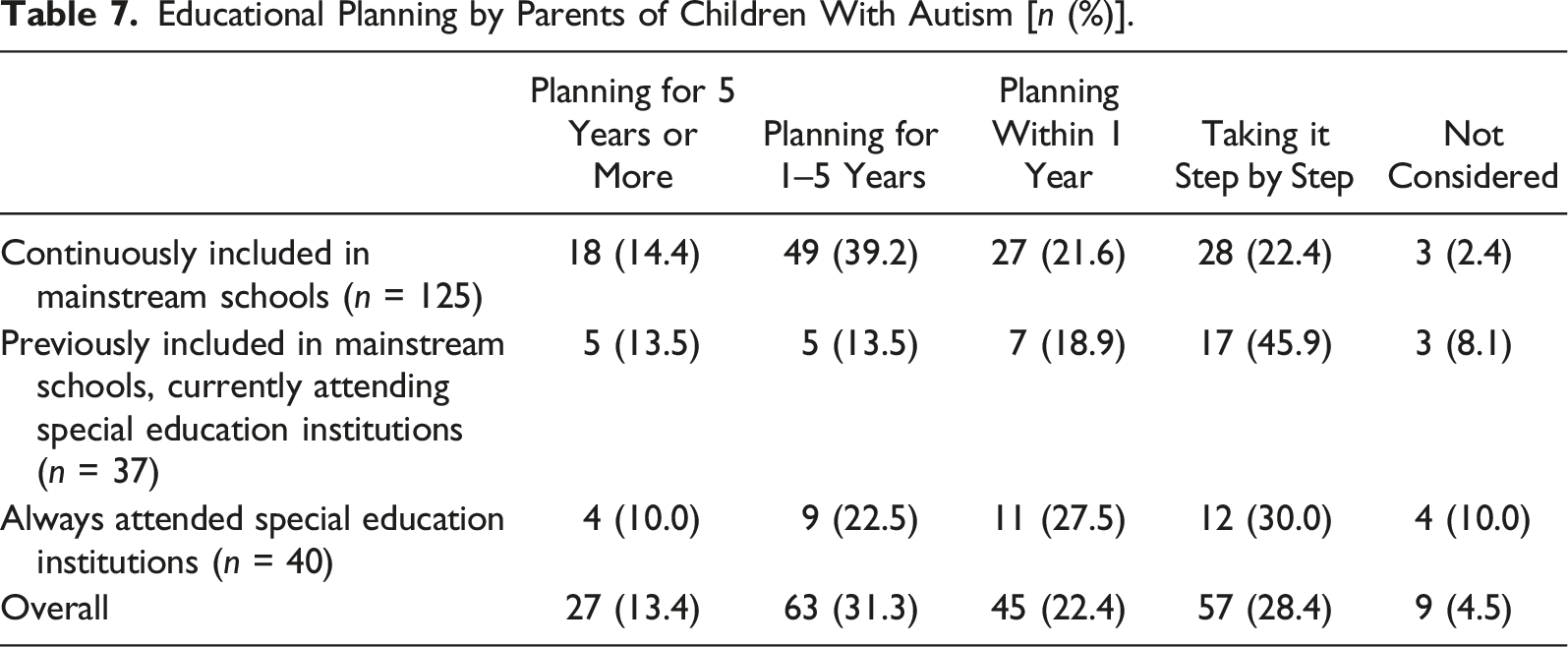
Considering the methods through which parents of children with autism acquire policy information and guidance, it is evident that they receive limited authoritative and professional guidance when making educational plans.
Discussion
Transitioning From Advocacy to Mandates: Enhancing the Management Mechanism to Improve the Quality of Inclusive Education
The policy of zero rejection in school enrollment safeguards the right to education for children with autism, yet the level of acceptance of these children by teachers requires further enhancement. Throughout the process of inclusive education, receiving systematic training in inclusive education, developing Individualized Education Programs (IEPs), and implementing universally designed classroom teaching plans are not yet obligatory requirements. This may lead some teachers to perceive inclusive education as an additional workload, which could influence their attitudes toward inclusive education and directly affect the frequency and efficacy of the support they provide.
The issue of inadequate professional resources for inclusive education remains significant. This research found that parents generally perceived that their children received insufficient support at school, and the majority of parents reported that teachers did not develop or implement IEPs. The lack of fundamental knowledge and skills in inclusive education among teachers is still prevalent. Prior studies have also suggested that teachers feel they lack the capability to develop and implement IEPs and are unsure of how to adjust classroom teaching strategies (Yan et al., 2017). The lack of knowledge and skills in educating children with autism represents the most substantial challenge for teachers in implementing inclusive education (Chen et al., 2020; Yang & Zhao, 2019; Zhang, 2019). Conversely, homeroom teachers who have received training in inclusive education are more likely to provide support to children with autism, which aligns with the findings of previous research (Li et al., 2019). Knowledge of inclusive education has not become a mandatory course for mainstream school teachers, and the training was predominantly attended by resource teachers and a handful of homeroom teachers. The relevant teacher training system urgently requires clear regulations and requirements based on actual needs (Alduais & Deng, 2023). Simultaneously, guidelines for the introduction of accompanying personnel and the involvement of external professionals should be issued promptly.
Emphasizing Screening and Planning: Multi-Sector Collaboration in Providing Educational Transition Guidance
Early intervention during the period of heightened neural plasticity is more beneficial for improving the core symptoms of children with autism (Xu et al., 2021) and preparing them for school life (Estes et al., 2015; Sun et al., 2013). Numerous studies have demonstrated that early intervention programs could assist children with autism in better adapting to inclusive environments (Deng & Gopinathan, 2016; Disabled People’s Association, Singapore [SDA], 2016; Qiu & Wei, 2019). Early diagnosis also enables parents to provide simple rehabilitation training for their children in daily family life, thereby reducing the financial burden on families (Lambrecht et al., 2020; Mao et al., 2021). Typically, children with milder symptoms who can receive continuous inclusive education may not exhibit conspicuous signs that alert their parents, which delays the optimal intervention period for the child. Therefore, it is imperative for the healthcare sector to bolster early screening for autism, identify and intervene with children with autism at an early stage, and promptly inform parents about the potential abnormal behaviors that may occur in early childhood. This aids parents in detecting the risk of autism in their children early on, intervening promptly, and providing guidance and support for the educational transition.
Schools should augment the professional competence of teachers in inclusive education or procure services from professional institutions to provide parents with suitable educational guidance services. This includes assisting parents in preparing for the transition from early childhood to primary school and from primary school to secondary school.
Insights
Supporting children with autism in inclusive education depends on the actions of teachers, which can be influenced by various factors. However, existing researches often concentrate on analyzing the reasons from the perspective of the type and severity of the student’s disabilities, without sufficient exploration of school management mechanisms or social management mechanisms. It is recommended that relevant management departments promptly clarify training requirements, establish accompanying personnel systems, and performance evaluation systems for inclusive education work, or issue guidelines to ensure that teachers have the additional time and energy required for inclusive education work.
Preparation for educational transitions relies on multi-sector collaboration. The work of education commissions, health commissions, and other government departments needs to increase the proportion of elements related to “parental work” for children with disabilities. Publicizing the avenues for obtaining help and guidance, assisting parents in understanding the advantages and disadvantages of educational placements, and making long-term educational plans. The policy promotion and the work content of management departments need to align with the needs of parents while maintaining a certain degree of forward-thinking and guidance. Organizing and utilizing parent communities to disseminate policy information promptly enables children with autism to transition smoothly between different educational stages and environments.
Conclusion
The majority of parents in Beijing, whose children have autism, opted for inclusive education in mainstream schools for their children. The primary challenges encountered in the inclusive process included the low level of acceptance by schools and insufficient frequency and efficacy of professional support. Not many parents obtained policies information sourced from official channels, and some parents remained unaware of the necessity for early intervention to enhance their children’s ability to adapt to inclusive environments before they entered mainstream schools. These phenomena underscored the pressing need to enhance the support mechanisms for implementing inclusive education policies and the social support system for guiding educational transitions to parents and their children with autism.
Limitations and Prospects
Due to the restrained willingness of parents of children with autism to actively participate in surveys and seek assistance, this research encountered certain challenges in sampling, resulting in a limited sample size. Compared to qualitative research, questionnaire surveys are restricted in their capacity to profoundly understand the experiences and sentiments of parents of children with autism in the process of inclusive education. Therefore, further improvements are needed in future research.
The “Action Plan for the Development and Improvement of Special Education during the 14th Five-Year Plan,” forwarded by the General Office of the State Council (General Office of the State Council [GOSE], 2022), includes gradually establishing an accompanying personnel system to better support the integration of children with autism into mainstream school, provides a foundation and guidance for improving the mechanisms of inclusive education work. This theme also serves as a direction for further in-depth research in the future.
Footnotes
Declaration of Conflicting Interests
The author(s) declared no potential conflicts of interest with respect to the research, authorship, and/or publication of this article.
Funding
The author(s) disclosed receipt of the following financial support for the research, authorship, and/or publication of this article: This work was supported by the Comprehensive Project on Disability Affairs by the China Disabled Persons’ Federation Research on the Current Status and Countermeasures of Educational Transition for Children with Autism in the Compulsory Education Stage (2023) [23 & ZC054].
Ethical Statement
Disclaimer
There is no copyrighted material, and the measures used in the research are original. Besides, all quoted materials, summarized or whatsoever, have been fully cited in the text and in the list of references.
Disclosure Statement
This manuscript is a previously unpublished work and no other submission or publication will be made. All of the authors participated in the study and they have agreed to the content of the manuscript. No potential conflict of interest was reported by the authors.
