




Abstract
This study aims to understand experiences of inclusion for autistic school students. The study reports on findings from three surveys, one conducted in 2021 with the general population (N = 1983) and two conducted with parents/carers of autistic school students, one in 2020 (N = 2212) and one in 2021 (N = 528). The general population had a favourable attitude towards autistic students receiving supports in school. However, the lived experience of autistic students, as reported on by their parents, highlighted significant gaps in the provision of support. Qualitative data from the 2021 survey with parents of autistic students found that system-level challenges were pervasive, and a lack of inclusion and support caused significant harm to autistic students. Although the perspective is that of the parent rather than the student, this study may provide insight into the experiences of autistic students who otherwise may not engage with traditional research methods. Future research should seek to hear directly from autistic students themselves and to explore case study examples of schools that are excelling in the area of supporting autistic students. These exemplars could be used to advocate for the provision of support in schools and referred to in professional development for school leaders and teachers.
Lay abstract
This study explored the experiences of inclusion for autistic students in Australian schools. Our survey in 2021 with the general public (N = 1983) found that people agree that autistic students should receive support in schools. Our surveys with parents of autistic students, one in 2020 (N = 2212) and another in 2021 (N = 528), found many barriers within the school system that make it hard for autistic children to feel included and supported. This lack of support negatively impacts the well-being of autistic children. It is important to note that this study focused on the perspectives of parents, not the students themselves. Future research should identify and learn from schools that are doing a great job supporting autistic students. These examples could be used to advocate for better support for all autistic students and to help train educators to be more effective in meeting the needs of these students.
Background
Inclusion in education is a human right, a legal entitlement and a core component of educational policy and agenda (Australian & Government, 1992, 2005; UNESCO, 1994; UN General Assembly, 2015). In Australia, inclusion means that a young person with a disability can participate in education on the same basis as a student without a disability through the provision of reasonable adjustments. Adjustments can be made in the classroom, in the playground, to excursions and camps and to the premises (Victorian State Government, Department of Education, 2023). Although what constitutes a reasonable adjustment is not explicitly stated, an adjustment is defined as reasonable if it balances the needs of all impacted (Commonwealth of Australia [COA], 2006).
An increasing focus on inclusive education has seen an increased prevalence of autistic students in mainstream schools during the last decade (Garrad et al., 2022). In 2018, the Australian Bureau of Statistics (ABS) estimated that there were approximately 106,600 autistic young people (aged 5–20 years) who were attending school, and an estimated 59.2% of these young people were being educated in mainstream schools (ABS, 2019). These figures likely under represent actual numbers as not all autistic students will disclose their diagnosis, and others may not have a formal diagnosis.
A meta-synthesis reporting on the experiences of autistic young people enrolled in mainstream post-primary schools internationally described mainstream school as being a complex social environment that is crowded, chaotic and sensorially challenging. Many students spoke about the negative impact mainstream school had on their mental health and an absence of feelings of belonging (Horgan et al., 2023). Furthermore, a systematic review on results of modifications and adaptations at school and classroom levels for autistic students (Petersson-Bloom & Holmqvist, 2022) found that most studies focused on teachers’ attitudes towards inclusive education and understanding or developing social skills in autistic students, rather than examining how the environment can be modified to support autistic students. A study with elementary school students in Serbia found that students were more likely to socially distance themselves from autistic peers compared to students with other disabilities, highlighting the exclusion that can be experienced as young as 7 years old (Kovacevic & Rdovanovic, 2023).
The current study
This study reports on findings from three Australian surveys: one with the general population in 2021 (Study 1; N = 1983) and two with parents/carers of autistic school students in 2020 (Study 2; N = 2212) and 2021 (Study 3; N = 528). The intention of the 2020 survey was to inform an Australian Senate inquiry into the services, support and life outcomes for autistic Australians (COA, 2022). The intention of the 2021 surveys was to compare the general population’s attitudes towards the inclusion of autistic people against the actual lived experiences of autistic people. This article reports on a subset of the data focused on inclusion of autistic students in school.
The research questions were as follows:
RQ1. What are the general population’s attitudes towards the inclusion of autistic students in mainstream primary and secondary schooling?
RQ2. What are autistic students’ lived experience of inclusion/exclusion in primary and secondary schooling?
Community involvement and positionality
The measures for this study were developed by, and in consultation with, the autistic community. This is important given the problematic nature of many existing measures (Jones et al., 2022). The 2020 survey questions were informed by the key areas that the Federal Senate Select Committee on Autism were investigating including the area of education (COA, 2022). The questions, and response options, were developed through an iterative process of drafting, reflection and discussion with autistic researchers and autistic representatives of the 12 member organisations of the Australian Autism Alliance (AAA). The Alliance members prepared an initial map of topics against the Select Committee’s Terms of Reference and key areas of concern to be explored in the survey. The research team prepared a draft version of the survey for the autistic representatives to consult on with members of their organisations. There were five rounds of revisions, which included adding questions to ensure all areas of interest were covered, deleting and/or merging questions to minimise participant burden, and refining wording for clarity. The survey was conducted for the AAA under the direction of an autistic academic.
The 2021 survey questions were informed by previous studies of community attitudes reported in the academic literature (see Jones et al., 2022, for further detail). The first wave of the survey was conducted in 2017 to inform the strategic planning and advocacy activities of a non-government autism advocacy and support organisation (results reported in Jones et al., 2021) and was then repeated in 2021. An Expert Autism Panel provided feedback on the 2017 survey questions to make improvements to the 2021 surveys. The Panel was led by an autistic autism researcher and was administered by an autistic autism advocate. The research team undertook an extensive and iterative process of reviewing and revising the questionnaire in collaboration with the Panel. This process included a series of meetings (face-to-face and online), document reviews and email discussions to ensure that the final questions reflected the issues of importance to the autism community, and that the wording of the questions was clear, appropriate and respectful. This resulted in a number of changes to item wording and response options from the 2017 survey, while retaining the key questions. The research team consists of both autistic and non-autistic researchers. The research team are neurodiversity affirming and this is the lens that they brought to the analysis of the data (Thom-Jones & Lowe, 2024). That is, we see autism as a difference, not a deficit; we undertake research from a strengths-based perspective, recognising that the educational barriers facing autistic people are largely structural and societal not inherent to the individual; and we believe that research and education should be inclusive, empowering and trauma-informed.
Study 1
Method
Participants
Participants were adults aged 18 years and older recruited in 2021 through the Life in Australia panel, a probability-based online survey panel that is generalisable to the Australian adult population. Of the 1983 participants, more than half identified as female (52.6%), and the majority were born in Australia (70.8%) and resided in a metropolitan area (66.9%).
Measures and procedures
The questions were developed specifically for this survey but informed by previous studies reported in the academic literature. In relation to autistic children in schools, participants responded to two knowledge/belief statements and eight attitudinal statements. The knowledge statements asked whether they believed it was true, untrue or they were unsure that: ‘all autistic children should go to a specialist school’ and ‘schools can refuse the enrolment of an autistic child’. The attitudinal statements described specific school adjustments and asked to what extent they agreed or disagreed that mainstream schools should make these adjustments, on a 5-point Likert-type scale ranging from strongly agree to strongly disagree.
Analysis
Descriptive statistics were used to summarise the data and chi-square tests were performed to analyse responses based on key demographic data including sex, age and educational attainment. Results have been presented for the chi-square analyses that reached statistical significance (p < 0.05). All analyses were performed using IBM SPSS Statistics 27.
Findings
Almost one in five mistakenly believed that schools can refuse to enrol an autistic child (18.4%), and almost as many agreed that all autistic children should go to a specialist school (16.2%).
The majority of the participants (82.2%–91.6%) agreed or strongly agreed that mainstream schools should support autistic children through the provision of adjustments. In relation to educating others about autism, the majority of the participants agreed or strongly agreed that mainstream schools should educate other students to understand, accept and include autistic children (92.3%), provide professional development in autism for school leaders and educators (91.6%) and educate other parents to understand, accept and include autistic children (89.5%). In relation to provision of supports, the majority agreed or strongly agreed that schools should provide autism accessible environments such as quiet rooms/spaces for students (89.4%), provide mental health and well-being support, such as buddying and mentoring for autistic students (89.0%), provide regular parent, student, teacher communication and meetings (84.8%) and provide adjustments such as curriculum, assessment and exam conditions for autistic students (82.2%). However, of concern, 10.3% felt that mainstream schools should be allowed to refuse to enrol an autistic child (see Figure 1).
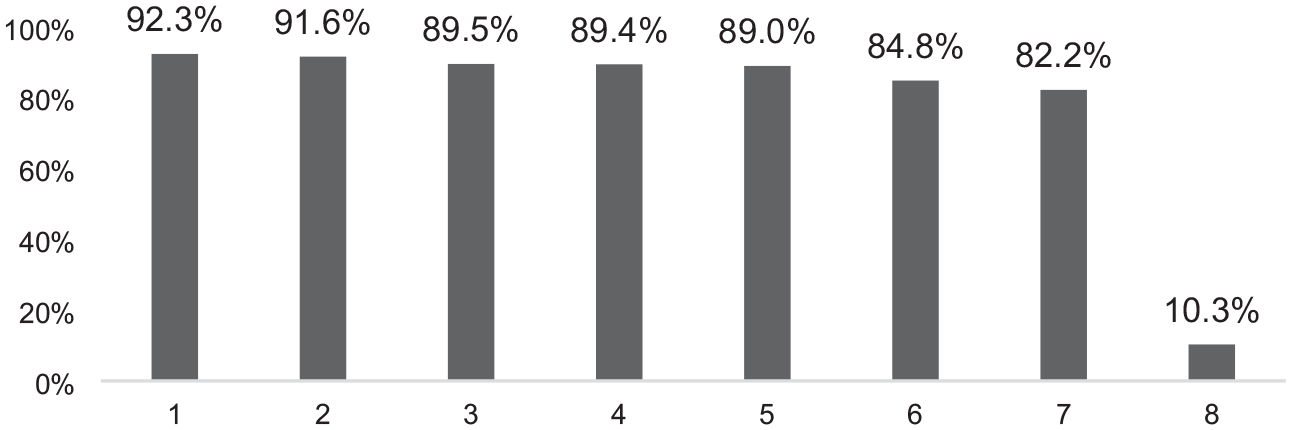
Extent to which the general community agree/strongly agree that support should be provided to autistic children in school (2021 survey).
Females were more likely than males to strongly agree that mainstream schools should provide professional development to school leaders and educators (p < 0.05). Younger respondents were more likely to strongly agree that mainstream schools should educate other parents to understand, accept and include autistic children (p = 0.006), provide autism accessible environments such as quiet rooms (p = 0.014), provide adjustments to curriculum, assessment and exam conditions (p = 0.006), and provide mental health and well-being support (p < 0.05). Participants with higher educational attainments were more likely to strongly agree that mainstream schools should provide professional development in autism for school leaders and educators (p < 0.001), autism accessible environments (p = 0.045), mental health and well-being support (p = 0.022) and adjustments such as curriculum, assessment and exam conditions (p < 0.001).
The majority of participants indicated that they believed it to be false that all autistic children should go to a specialist school (67.4%) and that schools can refuse the enrolment of an autistic child (51.9%). However, a fifth of respondents (21.9%) were unsure whether all autistic children should attend a specialist school, and 39.8% were unsure whether schools can refuse the enrolment of an autistic child.
Study 2
Method
Participants
Recruitment was conducted via social media and mailing lists through advocacy groups, including state-based groups (such as AMAZE (Victoria) and Autism WA), and community groups, and thus the consent rate is unable to be provided. Data were collected in June 2020. A total of 2212 family/carers reported on behalf of autistic persons enrolled in primary or secondary schooling, with the majority aged between 6 and 12 (73.7%).
Measures and procedures
The AAA used an online survey that included both discrete choice items and the opportunity for open-ended responses. Participants indicated the type of schooling their child attended and whether the child’s autism diagnosis was disclosed to the school. Participants indicated which specific adjustments had been made for their autistic child in schools from discrete choice items and specified the adequacy of the adjustments made on a 6-point Likert-type scale. Participants also responded to an item on the quality of the transition support from primary to secondary school on a 5-point Likert-type scale, and a binary item on whether they felt that the autistic student had been discriminated against when seeking access to education.
Analysis
Descriptive statistics have been used to summarise the quantitative survey data. Percentages were calculated by dividing the frequency by the total number of valid responses for each question. The total number of valid responses from which the percentage is calculated from is indicated by ‘nr’ while the total number of respondents who completed the survey or are represented in the survey is indicated by ‘N’.
Findings
Family/carers (N = 2212) predominantly reported that their child attended mainstream school (nr = 1597, 72.2%), followed by 10.9% in special schools, 9% in dual schools (i.e. mainstream and special) and 3.3% in home school. Autistic family/carers (nr = 23) were more likely to homeschool autistic students, while non-autistic family/carers (nr = 229) were more likely to send autistic students to special schools (Fisher’s exact test, p < 0.001). Almost all parents disclosed their child’s diagnosis to the school (nr = 2113; 98.8%), with non-autistic parent/carers (nr = 1953) being more likely to do so (Fisher’s exact test, p < 0.001).
Respondents were asked whether the school had made specific adjustments for the autistic student. Figure 2 displays the results for the 1581 family/carers of autistic students who attended mainstream schools and had disclosed their diagnosis to the school. The most commonly reported adjustments included having a contact person/teacher at the school, followed by provision of an education aide and curriculum, assessment and exam adjustments. The least frequently reported adjustments were providing information/education to other students on how to support/assist the student at school (10.2%), promoting mental health and well-being, such as support including buddying and mentoring for autistic students (12.0%), having robust and effective methods to deal with bullying (13.4%) and providing professional development in autism for school leaders and educators (14.2%).
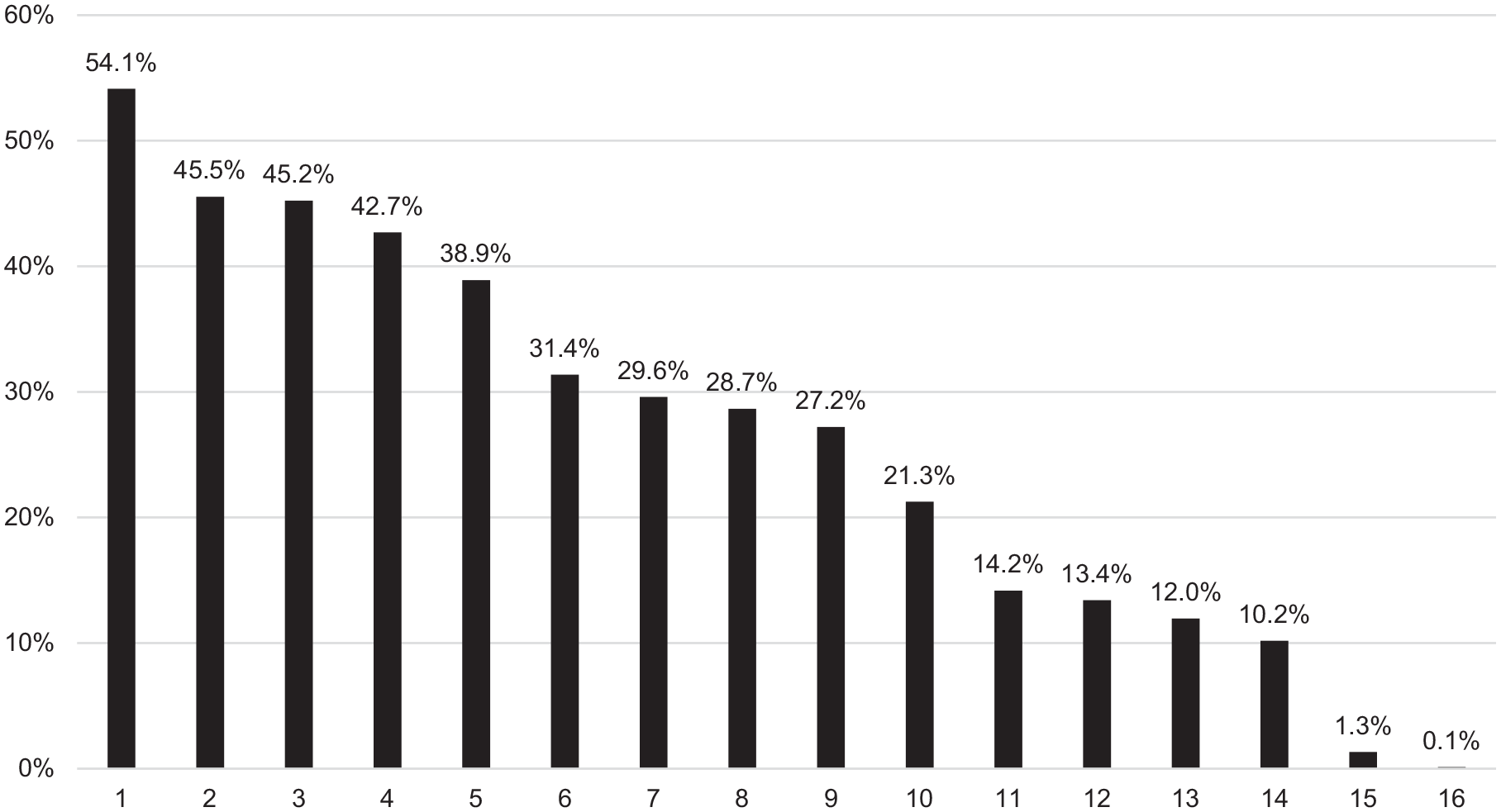
Adjustments made for autistic students in primary and secondary school (Study 2, nr = 1581).
When asked about the adequacy of the adjustments made, less than half of the parents/carers indicated that the adjustments were completely (8.0%) or mostly (29.1%) adequate, while one-fifth indicated that the adjustments were not at all (12.7%) adequate or that no adjustments were made (7.5%). In terms of transition support from primary to secondary school, almost half of the participants indicated that the support was poor (22.3%) or that no support was provided (23.5%), with the remainder reporting that the support was okay (25.4%) or that it was good (26.0%). Autistic parent/carers were more likely to report that autistic students had been discriminated against at school or when seeking to access an education (χ2(1) = 5.431, p = 0.020).
Study 3
Method
Participants
For the 2021 survey, participants were recruited through Amaze (non-government advocacy and service provision organisation for autistic people and their supporters in Victoria, Australia) mailing list, autistic social media groups and a range of other autism organisations and communication channels. Data were collected between 15 June and 19 July 2021. Five hundred and twenty-eight family/carers reported on behalf of 336 (42%) autistic persons in primary school and 192 (24%) in secondary school.
Measures and procedures
Similar to Study 2, participants indicated the type of schooling their child attended, whether the child’s autism diagnosis was disclosed to the school and which specific adjustments had been made for their autistic child in schools from discrete choice items. Rather than questions about adequacy of provided supports and discrimination at school as in Survey 2, participants responded to questions about the type of school attended, how many schools they had attended and whether they had ever changed schools due to a lack of autism support from the school. In addition, participants were invited to add anything else they would like to say about autism and education through an open-ended question. The qualitative question was included to deepen and personalise understanding of autistic students’ experiences of education, thus adding context, illustration and utility to the quantitative results (Schoonenboom & Johnson, 2017). As this lengthened the survey, and thus the burden on participants, the question about reasons for not currently attending school was changed from open-ended to fixed-choice, and the questions from the 2020 survey in relation to transition experiences were not included.
Analysis
Descriptive statistics have been used to summarise the quantitative survey data. Percentages were calculated by dividing the frequency by the total number of valid responses for each question. Responses to the open-ended question varied from a single sentence to a paragraph. Two hundred and seventy-five responses were imported into NVivo for analysis. Reflexive thematic analysis (RTA) was used, and an inductive approach was taken where the coding and theme development was driven by the data content (Braun & Clarke, 2022). RTA acknowledges the active role researchers play in the interpretation of patterns and has been found to be well suited to studies aiming to amplify participants’ voices (Jordan et al., 2024; Mansour et al., 2025). In step 1, C.S.G. read all of the responses to identify preliminary patterns. During step 2, C.S.G. generated initial codes, analysing each response line-by-line. In step 3, C.S.G. reviewed initial codes to determine where they could be combined/re-coded, grouping codes by broader, emergent themes. In step 4, some themes were discarded because not enough data were present to support them, and themes with substantial overlap were merged. During step 5, S.T.-J. reviewed the themes to ensure coherence and adequate data support for the findings; and then C.S.G. and S.T.-J. discussed and finalised the themes and subthemes.
Findings
Family/carers (nr = 528) predominantly reported that their child attended mainstream school (74.2%; 47.7% in public and 26.5% in private schools), followed by 12.9% in special schools, 2.5% in dual schools (i.e. mainstream and special) and 2.1% in home school. Of the autistic students who were currently enrolled in mainstream schools (nr = 392), family/carers reported that 97.1% had disclosed their diagnosis to their school. Approximately one-third (34%) of family/carers reporting on behalf of an autistic person who was either currently enrolled in primary school or who had been enrolled in primary school (nr = 523) reported that they had to change primary schools at least once due to a lack of autism support from the school.
Respondents were asked whether the school had made specific adjustments for the autistic student. Figure 3 displays the results for the 381 family/carers in the 2021 survey who indicated that the autistic student they were reporting on behalf of had disclosed their autism diagnosis to their current mainstream school. The only adjustments that were provided to more than half of the autistic students were the provision of an individual learning plan (ILP) and provision of regular parent, student, teacher communication and meetings. Only 6.6% of respondents reported that schools provided information/education to other students on how to support/assist the student at school, and less than one-fifth reported that the school made adjustments to the sensory environment (18.9%), provided professional development to school leaders and educators (16.3%), effectively managed bullying and social exclusion (14.7%), provided a behavioural support plan (14.7%) and provided buddying/mentoring to promote mental health and well-being (11%).
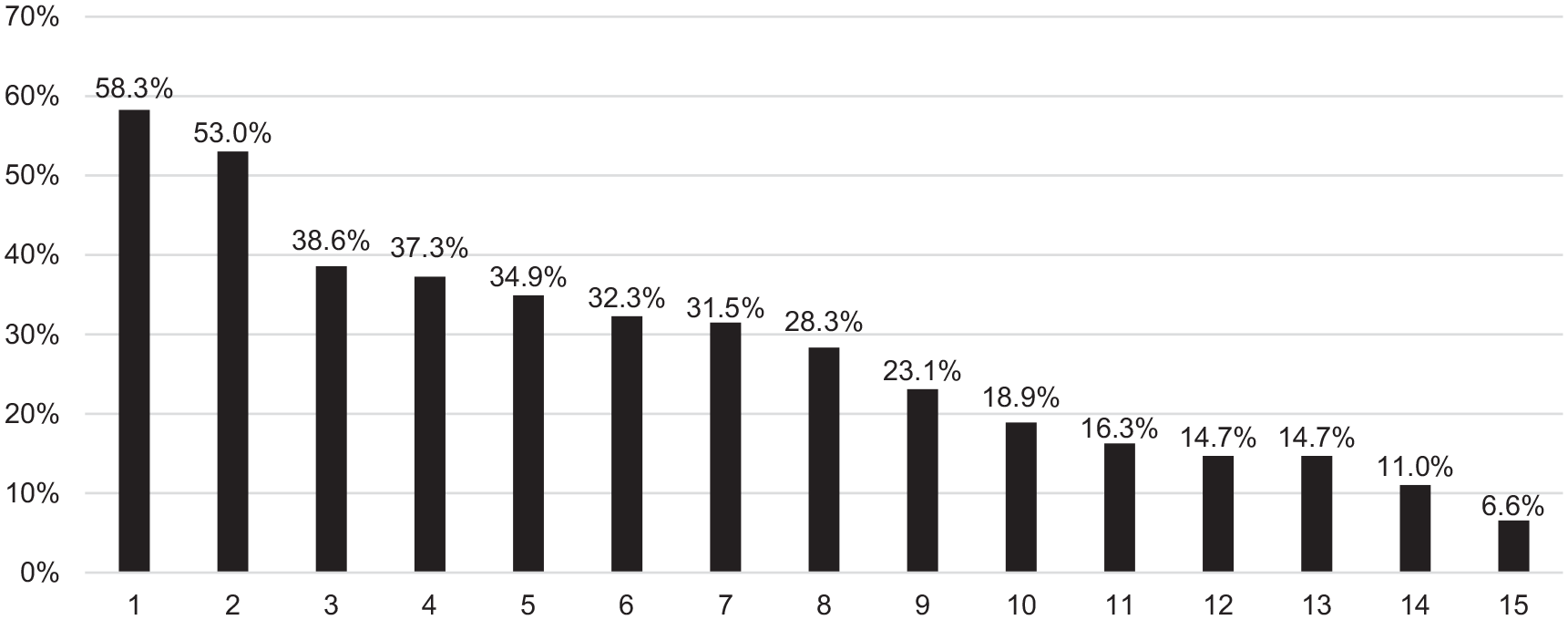
Adjustments made for autistic students in primary and secondary school.
Qualitative findings
Analysis of the 275 responses from the open-ended question resulted in the identification of two core themes and eight subthemes (see Figure 4).
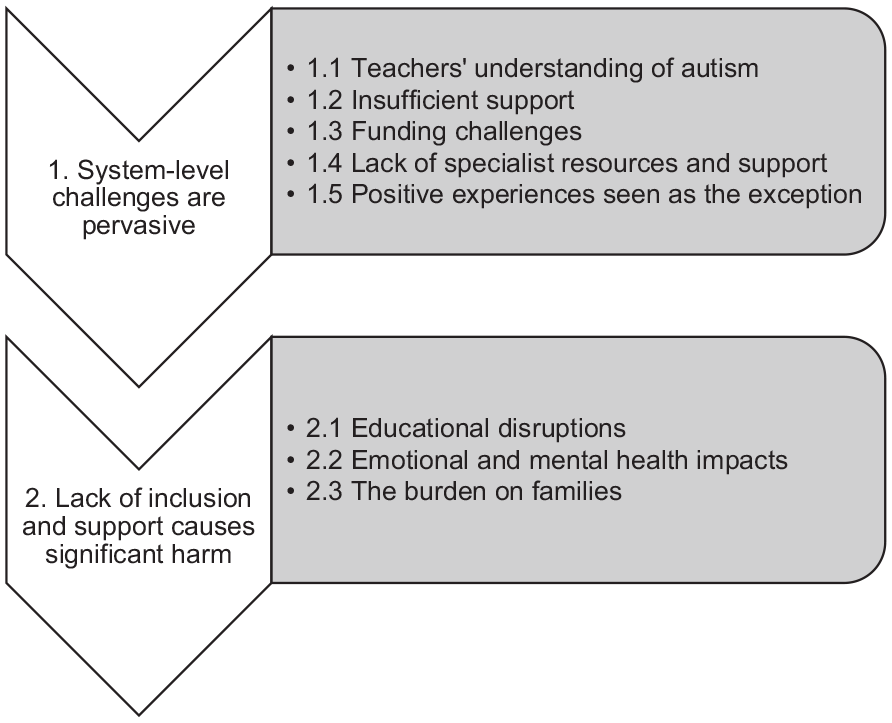
Thematic map.
Theme 1: system-level challenges are pervasive
Participants described a range of systemic barriers that hinder autistic students’ access to appropriate education and support. These challenges include teachers’ understanding of autism, inconsistent school support, funding disparities and the need for specialist resources.
Teachers’ understanding of autism
Teachers’ understanding of autism was described using terms such as ‘patchy’, ‘a mish mash’ and ‘limited’, with misunderstandings of autism also present among peers and the wider community. Participants expressed frustration with teachers’ lack of understanding of autism and the supports and adjustments autistic students need to learn at school and flourish as individuals:
Having to continually advocate for my son to his school is exhausting. I shouldn’t have to educate his school and teachers about what neurodiversity is. . . . I was astounded when I was informed that no sensory room or break-out space is offered at my son’s school. Children must sit in the principal’s office if they need support to regulate their emotions. This is not OK and should be a mandatory inclusion in schools. (ref 9_non-mainstream primary school) I really wish there was professional development involving actually autistic professionals and teachers at our school. Many teachers say that they understand how to teach ‘ASD kids’ (their words) and just saying that shows that they have little understanding of what it is to be autistic and attending school . . . (ref 13_mainstream secondary school)
Insufficient support
A recurring theme was insufficient support, with specific examples including schools not effectively dealing with bullying and insufficient support for mental health challenges. However, there was a strong sentiment and recurring description of schools more generally providing insufficient support for autistic students. For example,
School is
Related to schools providing insufficient support was the inconsistency experienced depending on the school, principal and individual teacher. As explained by one participant,
. . . The accommodations a child receives depends on 2 things, the quality of the principal and the ability of the parent to advocate for their child. (ref 2_mainstream primary school)
Funding challenges
The allocation of school funding for autistic students differs based on the students’ learning and behavioural needs. Inconsistencies exist between eligibility criteria for the National Disability Insurance Scheme (NDIS) and state-based targeted funding programmes (Australian Parliament House [APH], 2022). Participants highlighted challenges and gaps in funding and resource allocation for autistic students, particularly noting issues with the NDIS in a primary school context:
Unless the child receives external funding for additional support, there only appears to be support or intervention offered if the child is behaviourally challenging. My child’s primary school says it has no obligation to offer an IEP [Individual Education Plan] or learning support . . . NDIS does not assist with SLDs as that is supposed to be covered by the education department. (ref 23_mainstream primary school) . . . Government funded Covid tutor was promised this year, but removed without comment . . . autism doesn’t come under the school’s disability program, so they have no one to organise any help. (ref 141_mainstream secondary school)
Lack of specialist resources and support
Participants also identified specific areas where gaps exist in the provision of supports and resources. These included the need for specialist staff and support outside of the classroom. For example,
The school has been very resistive to allowing [a] therapist into school to help my son. Teachers are not therapists, however they want to run everything inhouse. (ref 7_mainstream primary school) It would be good if there were structured activities at recess and lunch times. Currently the students are left to wander around aimlessly, and they would benefit from personal activities. (ref 1_non-mainstream secondary school)
While some participants expressed the need for more autism-specific schools as they are ‘full [and] cannot get him in’ and ‘needed with levels of autism e.g., a level 2 autism school and level 3’, other participants emphasised the solution as the need for ‘proper inclusion’. For example, one participant described how children in support classes in mainstream school are ‘treated too differently’.
Positive experiences seen as the exception
While some parents did report positive school experiences, these were often described as ‘the exception to the rule’ or ‘a rare gem’. Some participants shared instances where their autistic child received supportive and accommodating treatment from teachers who were ‘open’ and ‘willing’ to meet their child’s needs. Specific examples of positive support included the presence of ‘an appointed wellbeing coordinator’, schools demonstrating flexibility in plans to help students transition back after lockdown, staff being ‘well educated about autism’, and having ‘skilled teachers and leadership’, and their work with Augmentative and Alternative Communication (AAC) devices.
Theme 2: lack of inclusion and support causes significant harm to autistic students
This theme highlights the wide-ranging negative impacts that a lack of inclusion and support has on autistic students. These negative impacts are educational, social, emotional and physical.
Educational disruptions
Educational impacts include changing schools, changing to home-schooling, insufficient education and in some cases an absence of schooling. An illustrative example is provided below:
We changed schools in kindergarten because the private Anglican school told us to leave as they could not assist our child when he was diagnosed and I disclosed. We switched to catholic who then palmed him off to [name of specific school]. [Specific school] sent him to home base where he learned nothing in 2 years. We pulled him out ourselves moved him to public school in year 2 where he was out on partial enrolment of 3 hours a day as they had no funding support as had to wait till June to apply for next year placement. We were then placed in SSP school for 2 years where he got the support he needed for year 3 and 4. Then department of education sent him back to mainstream school in support class for year 5 and 6. Due to all these delays in early years of education our son is now learning at year 3 level going to high school in 2022. (ref 4_non-mainstream primary school)
Emotional and mental health impacts
Parents described the emotional impact a lack of support, inclusion and accommodations had on their child, including ‘worsened mental health’, ‘extreme anxieties’ and ‘trauma’. In several cases, the emotional and physical toll on the child was severe and long lasting. Parents reported ‘irreparable damage’ caused by ‘bullying, rejection and isolation experienced’. Physical harm in one instance included ‘multiple bruises’ from ‘repeated physical bullying/abuse . . . and they seem not to relate autism to the bullying’. One parent shared that their child had ‘multiple visits to ED’ due to escalating anxiety, while another described how their child ‘tried to end her life two times in the last year because of teacher’s actions or inaction’.
The burden on families
Parents described the personal impact of having to continually advocate for their child, with the process described as ‘exhausting’, ‘stressful’, ‘time consuming’, ‘unbelievably frustrating’, ‘an uphill battle’ and ‘spoken down to, so I have given up’. This toll impacts the whole family:
I have asked for a raft of things from the school but have been denied . . . The one private school we thought might be appropriate also put up a lot of barriers. My experience at both our first primary school and current secondary school has been akin to gaslighting. The trauma associated with these ongoing battles flows down to our kids and leaves us exhausted and disempowered. (ref 2_mainstream secondary school)
Systemic barriers, such as insufficient teacher understanding, lack of support, and insufficient funding and resources, significantly hinder autistic students’ access to appropriate education. These challenges cause significant harm to autistic students and their families, including educational disruptions, emotional and mental health issues, and a considerable burden on families.
Discussion
This study drew upon data from three Australian surveys to understand attitudes towards, and experiences of, inclusion for autistic school students. The general population’s views were generally favourable towards the inclusion of autistic students in mainstream schooling. There was particularly strong support for educating students, teachers and parents to understand, accept and include autistic children. Support for the provision of regular meetings and curriculum, assessment and exam adjustments were slightly lower. Participants’ purported interest in receiving education on how to accept and include autistic children offers an opportunity to improve understanding of the specific supports autistic students need to thrive in a school environment that is complex and socially demanding (Horgan et al., 2023).
The majority of non-autistic Australians surveyed agreed that our schools should provide physical and procedural adjustments to support autistic students, including the provision of autism accessible environments such as quiet rooms/spaces for students; adjustments to curriculum, assessment and exam conditions; regular parent, student, teacher communication and meetings; and programmes to support mental health and well-being, such as buddying and mentoring for autistic students. However, in our studies with parents of autistic students, we found less than half received adjustments to curriculum and assessments or regular communication and meetings, and less than one-third were provided with autism accessible environments. Only slightly more than 1 in 10 reported that their child attended a school that offered programmes to support their autistic students’ mental health and well-being. This lack of support is concerning, given the well-documented mental health challenges autistic students experience in mainstream schooling (Horgan et al., 2023).
Over 90% of non-autistic Australians agreed that schools should provide professional development in autism for school leaders and educators and information/education to other students on how to support/assist the student at school, not an unreasonable expectation in an environment established for the provision of education. However, across the two parent surveys, less than one in eight parents reported that their child’s school provided professional development in autism for school leaders and educators and less than 1 in 10 that the school provided information/education to other students.
The inconsistency in teacher training is well documented in research. A study of 107 Australian primary school teachers found that just over half had received little to no training on meeting the specific needs of autistic students (Garrad et al., 2019). This issue is not unique to Australia. A systematic review on the inclusion of autistic students in education (Russell et al., 2023) reported similar findings across multiple countries, including Jordan, Ireland, Iceland, Scotland and Romania (Abu-Hamour & Muhaidat, 2013; Agyapong et al., 2010; Bjornsson et al., 2019; McGregor & Campbell, 2001; Salceanu, 2020).
The findings in relation to other adjustments that were queried of parents – but not included in the general population survey – were equally disturbing. Given the predominant characteristics of autism and the known challenges that autistic people face in educational environments (Horgan et al., 2023), the absence of these adjustments creates a space in which autistic students are destined to struggle. Autistic people commonly thrive on routine and consistency, finding change and uncertainty distressing, but only one-third of parents (38.9% in 2020 and 28.3% in 2021) reported that their child’s school had established clear routines and processes to avoid changes. Sensory hyper-sensitivity and/or hypo-sensitivity is common among autistic people (Taels et al., 2023), as is the occurrence of meltdowns or shutdowns when overwhelmed (Lewis & Stevens, 2022; Phung et al., 2021) but only one-quarter of parents (27.2% and 18.9%, respectively) reported that the school had made adjustments to the sensory environment and less than one-third (28.7% and 32.3%, respectively) that a process had been established by which the student could leave the classroom without explanation if they needed to take a break. There is clear evidence in the literature of a link between hyper-sensitivity, anxiety and school performance, demonstrating that failing to make these adjustments has a significant negative impact on autistic students’ educational experiences and future outcomes (Butera et al., 2020; Gentil-Gutiérrez et al., 2021).
The data on parent reports of autistic students’ lived experience speak to an entrenched experience of exclusion in schools. Of note, more than one-third of participants reported that their family member had to change schools due to the school not being able to support their specific needs. Most of the adjustments listed in the survey were provided to less than half of the students being reported on. Participants’ responses to the open-ended question give voice to the quantitative measures, adding important context and illustration. For example, participants highlighted the significant physical and emotional harm that a lack of inclusion and accommodations had on their autistic child, which were long lasting and had a flow on effect to the parents and family unit. Although inclusion in education is recognised as a fundamental human right (Australian & Government, 1992, 2005; UNESCO, 1994; UN General Assembly, 2015), our study’s findings reveal a substantial gap between policy and its practical implications.
Implications for practice
Some of the challenges reported in this study by parents are system-level challenges that are outside of a school’s control, such as inconsistencies between eligibility criteria for the NDIS and state-based targeted funding programmes.
However, there are a number of adjustments that schools can make to support autistic students’ learning and well-being that cost very little and are likely to provide large returns as they are effective in supporting autistic students. These include adjustments that focus on sensory overstimulation such as provision of a low-sensory space, and control over the student’s sensory environment (Unwin et al., 2021), including freedom of movement and the ability to leave environments without fear of punishment when feeling overwhelmed. Other valuable initiatives include measures to address bullying and/or social exclusion (Ulu Aydin et al., 2024) and buddying or mentoring programmes. We are not suggesting the implementation of traditional mentoring programmes, pairing an autistic child and a neurotypical child with the aim of teaching the autistic child how to mask in order to fit in (Chapman et al., 2022), as such interventions are damaging to autistic people. Rather, we are suggesting autistic-affirming mentoring programmes (Crompton et al., 2024) which engage autistic students with other autistic people and at the same time increase autism knowledge and acceptance across the school community, such as the I CAN Schools Program in Victoria, Australia (Thom-Jones, 2024).
In Australia, as in many countries, there is no national or state mandate requiring professional development on autism for school leaders and educators. National and state-based initiatives are available, but these vary in content and capacity, with inconsistent uptake among schools across states and territories. Similarly, there is currently no nationwide mandate in Australia requiring initial teacher education (ITE) programmes to include autism-specific training. It is possible that this situation may change in the future, with more government and public attention on the needs of autistic students, as evidenced by national initiatives such as National Autism Strategy, which included numerous references to education, and state-based initiatives such as the Victoria Autism Education Strategy. As aptly articulated by one of the participants in this study, there is a need for professional development involving actually autistic professionals and teachers. There are several autistic-led organisations that can add value in this space. Educators, parents and students can then gain an appreciation for the strengths that autistic people bring to school and work and operate from a neuro-affirming paradigm (Johnston et al., 2024; McKinlay et al., 2024). In Victoria, for example, the Education Department has partnered with autistic-led organisations to develop resources for parents and schools. These include the Yellow Ladybugs ‘All Brains Are Different’ children’s book and teacher’s guide; 1 and the I CAN Network’s suite of resources on supporting neurodivergent students, 2 as well as school-based peer mentoring. 3
Strengths, limitations and future research
A strength of this study is the bringing together of two perspectives and both quantitative and qualitative data. This allowed for a comparison of perspectives held by the general public and autistic community, as reported on by parents/carers. The inclusion of qualitative data amplified the voices of parents of autistic students and provided context, illustration and utility for the quantitative findings. The collaborative and inclusive nature of the survey instrument development was a strength of the study in ensuring that the questions were relevant to the community and appropriately worded. However, this also limited our ability to compare data between the studies (e.g. the 2020 study grouped students by age whereas the 2021 study grouped them by school stage) and with previous studies using validated measures that were not designed by autistic people. Future research could work collaboratively with researchers and the autistic community to develop validated measures that are also meaningful and respectful to autistic students and parents. The focus on autistic parents’ voices potentially allowed for a greater cross-section of autistic students to be represented in the study, however, is also a limitation given it is a secondhand account of autistic students’ experiences. Future research could seek to include autistic students’ perspectives on inclusion in mainstream schooling and the accommodations and adjustments found to be of greatest benefit.
This study highlights a significant gap between the needs of autistic students and the supports that are given to autistic students in schools. Qualitative data from the study points to an education system that is ‘hit and miss’, with supports dependent upon the individual school, principal and teacher. What could be beneficial for schools and a significant contribution to the literature is case study examples of schools that are excelling in inclusive education for autistic students. These exemplars could be used by autistic parents and students to advocate for the provision of support in their own schools but also be used as professional development for schools on the supports they could provide.
Footnotes
Acknowledgements
We wish to thank the participating families and all individuals who contributed to the completion of this research. Thank you also to Muhammad Akram for his support with the initial analyses for this project.
Author contributions
Declaration of conflicting interests
The author(s) declared no potential conflicts of interest with respect to the research, authorship and/or publication of this article.
Funding
The author(s) disclosed receipt of the following financial support for the research, authorship and/or publication of this article: This research was funded by Amaze.
Ethical approval and informed consent
This study received approval from the Human Research Ethics Committee at Australian Catholic University. Informed consent was obtained from all participants involved in Studies 1 and 3 before they were included in the research. Additionally, retrospective approval was granted by the same ethics committee to utilise the data collected in Study 2 for this study.

Data availability statement
The datasets generated during the current study are available from the corresponding author on reasonable request.