




Abstract
SiO2 Medical Products, Inc. (SiO) has developed a proprietary technology that greatly enhances protein recoveries and reduces extractables from commercial microplates used for bioanalytical assays and storage of biologics. SiO technology is based on plasma treatment that chemically modifies the surface of polypropylene with predominantly hydrogen-bond-acceptor uncharged polar groups. The resultant surface resists nonspecific protein adsorption over a wide range of protein concentrations, thereby eliminating the need to passivate (and hence potentially contaminate) the microplates with blocking proteins. High shelf-life stability and cleanliness of the plasma-treated microplates have been demonstrated using five different proteins for two common microplate formats. The protein recovery performance of plasma-treated microplates is found to be higher compared with commercial low-protein-binding microplates.
Keywords
Introduction
Labware consumable products such as microplates, pipette tips, centrifuge tubes, and chromatographic vials are generally molded from plastics like polypropylene, which unfortunately tend to nonspecifically adsorb proteins onto their surfaces. To address this undesirable phenomenon, some of these products (e.g., microplates) are marketed as “low-protein-binding” because they exhibit reduced protein adsorption due to modification of the polymer surface. This attribute is particularly attractive in the development of new biologic drugs, which are costly and scarce. However, even the best low-protein-binding labware products in the marketplace today have much room for improvement; for example, no appreciable protein recovery is reported below 1 µg/mL (i.e., about 15 nM) using the representative model protein bovine serum albumin (BSA) due to severe nonspecific binding issues. 1
Of several surface engineering technologies explored to combat the problem of nonspecific protein binding, only a few are commercially available, while the rest remain at a lab scale or languish in development due to scale-up difficulties, performance stability issues, or leachable contaminants. Common approaches to inhibit protein binding are derivatization with either uncharged hydrophilic polymers2–8 or zwitterionic polymers.9,10 Examples of the former include poly(ethylene glycol) (PEG), polysaccharides, and polyamides. PEG in particular has been extensively studied and is considered most effective in reducing protein adsorption due to its strong hydrogen-bonding and dipole-dipole interactions with water. Tightly bound water molecules become highly ordered at PEG-modified surfaces, 11 thus occupying sites that would otherwise be available for protein binding. However, PEG-modified materials in aqueous solutions have been reported to be unstable due to oxidation leading to hydroperoxides, which over time can damage dissolved proteins. 12 Loosely cross-linked PEG-like thin films created by plasma-enhanced chemical-vapor deposition also have shown resistance to protein, as well as cell, adsorption13,14 but suffer from the same PEG-associated problems. In addition, zwitterionic coatings, such as polybetaines and polyampholytes, have been reported 9,10 to lower nonspecific protein, DNA, and cell adsorption, and the nanoscale-balanced charged groups therein seem to electrostatically bind water molecules even stronger than PEG-like polymers. While this technology shows promising antibinding performance, it has yet to be commercialized in the lab consumables market.
Another common issue with plastic labware, aside from nonspecific protein adsorption, is leachables and extractables. Leached molecules migrating from the plastic into solution can contaminate, interact with, and damage the dissolved proteins. These problems, when encountered in drug discovery bioassays and clinical immunoassays,15–18 result in reduced laboratory productivity, wasted product, and considerable extra expense.
The present study proposes and validates a new proprietary microplate treatment technology with low-protein-binding and clean-surface characteristics. The performance of the resultant microplates, in addition to being lower protein binding to that of standard commercial microplates, is found to compare favorably with low-protein-binding microplates that are currently on the market.
Materials and Methods
Materials
Five AlexaFluor-488-dye-labeled protein conjugates, all purchased from ThermoFisher (Molecular Probes, Eugene, OR), were selected based on their broad range of molecular weights, isoelectric points, and other characteristics. The proteins included BSA, human fibrinogen (FBG), bacterial protein A (PrA) and protein G (PrG), and human transferrin (TFN). Phosphate-buffered saline aqueous solution of pH 7.4 (Sigma-Aldrich, St. Louis, MO) was used as a medium for all protein solutions with the exception of fibrinogen, which was dissolved in a sodium bicarbonate buffer solution at pH 8.3 (Sigma-Aldrich).
Microplates
Standard polypropylene microplates that underwent no extra treatment or coating were purchased from Porvair plc (Norfolk, UK). They were used to conduct the protein binding and extractables studies along with those plasma treated by SIO (Auburn, AL). Microplate formats used in this study included deep 96-well (500-µL well) microplates and shallow 384-well (55-µL well) microplates. Commercial low-protein-binding microplates included Eppendorf LoBind microplates, which were polypropylene in both 96-well and 384-well formats.
Fluorescence Spectroscopy
Protein recoveries in microplates were determined using fluorescence spectroscopy with a BioTek (Winooski, VT) Synergy H1 microplate reader. 19 A known concentration of an AlexaFluor-488–labeled protein (pH 8.3 for fibrinogen and pH 7.4 for all others) was added to a series of wells and monitored over various incubation times; specifically, filled microplates were stored in the dark at room temperature for 4, 24, 72, and 96 h. At each incubation time point, protein solutions from four wells were transferred from the microplate to a black 96-well flat-bottom read plate and measured in a microplate reader.
Protein recovery expressed as percent recovery was calculated from the ratio of the fluorescence intensity of the solution after sample microplate incubation to the initial solution’s intensity. This experiment was conducted by pipetting solution from the preparation vessel directly to the read plate for the initial intensity and then immediately filling the sample microplate with the same solution. After a prescribed residence time in the sample microplate, solution was transferred to the read plate and fluorescence intensity recorded. It was confirmed during method development that protein loss from putative adsorption to pipette tips was negligible.
Plasma Treatment Process
The advanced plasma treatment process employed by SIO comprised a vacuum system, a gas delivery system, and a power delivery system. 20 The vacuum system was composed of a vacuum chamber and pump, whereby the process pressure was in the range of 1 to 3 Torr. The gas delivery system was composed of mass-flow controllers to deliver oxygen gas and water vapor. The power delivery system was modulated at a radiofrequency (13.56 MHz). A capacitively coupled electrode system was composed of an outer cylindrical electrode and an inner counterelectrode separated by a ceramic dielectric. The counterelectrode doubled as a gas delivery tube into the vacuum chamber.
XPS
X-ray photoelectron spectroscopy (XPS) (a PHI Quantum 2000 instrument; Physical Electronics, Eden Prairie, MN) was used to determine the surface atomic composition of plasma-treated microplates. 21 The X-ray source was a monochromated Alkα at 1486.6 eV. The acceptance angle and take-off angle were ±23° and 45°, respectively. The analysis area was 1400 × 300 µm.
Gas Chromatography/Flame Ionization Detection
Gas chromatography/flame ionization detection (GC/FID) analyses were conducted using an Agilent (Santa Clara, CA) 6890 GC with a 1-µL splitless injection system. Two wells per plate were filled with 1 mL isopropanol (IPA). Microplates were wrapped tightly with foil and stored in an environmental chamber at 40 °C for 72 h. The entire contents of the two wells (2 mL total) were then combined in a vial and mixed thoroughly before analysis by GC/FID.
Liquid Chromatography/Mass Spectroscopy
Liquid chromatography/mass spectroscopy (LC/MS) analyses were conducted using an Agilent G6530A Q-TOF mass spectrometer using the positive APCI mode for the detection of components. A 300-µL volume of IPA was added to a total of 16 wells in each microplate. All microplates were covered tightly with aluminum foil and stored at room temperature for 72 h. Following sample withdrawal, the contents of the 16 wells were combined in individual vials, capped, and repeatedly inverted to mix. Individual aliquots were then transferred to autosampler vials for LC/MS analyses.
Results and Discussion
Surface Chemistry and Protein Recovery
Polypropylene is hydrophobic and nonpolar with its CH, CH2, and CH3 groups, along with the absence of any polar groups, being responsible for these properties. Since proteins generally adsorb more strongly to hydrophobic than to hydrophilic surfaces, 22 one might expect that interfacial free energy calculated from contact-angle measurements may correlate with protein adsorption on various surfaces. This, however, has been found not to be the case,2–4 presumably because the interfacial free energy only partially accounts for the complex mechanisms involved in protein adsorption. 22 Several insightful studies2,4,10 point to the following four general surface characteristics required to resist nonspecific protein adsorption: (1) hydrophilic/polar, (2) presence of hydrogen-bond acceptors, (3) absence of hydrogen-bond donors, and (4) uncharged. Therefore, in this study, we have explored endowing polypropylene surfaces with these desirable characteristics by means of plasma treatment, followed by systematic evaluation of the performance of the resultant microplates.
Plasmas of oxygen and water vapor were applied to the surface of polypropylene microplates. This plasma treatment was expected to render the surface more hydrophilic by generating polar chemical groups within polypropylene molecules. We indeed confirmed the resultant increased surface hydrophilicity herein by determining that the average water contact angle declined from 82° for untreated polypropylene microplates to 60° for plasma-treated ones.
To shed more light on these observations, XPS was employed. XPS revealed a marked increase in the atomic composition of oxygen and a small increase for nitrogen on the surface to about 9% and 0.8%, respectively. Specifically, as seen in Table 1 , SIO’s plasma treatment of polypropylene microplates gave rise to a variety of oxygen- and nitrogen-containing polar groups. Based on the mass balance between C in COx bonds and the amount of O detected, most of the C-O species appear to be in the form of C-O-C bonds. For example, there is half as much atomic oxygen compared with carbon that exists in C-O-C type bonds. If the surface were composed of predominately C-OH, for instance, then atomic oxygen would be equal to the carbon concentration, which is not the case. The rest of the oxygen-containing polar groups are C=O and O-C=O. The chemical state of N (coming presumably from the N2 molecules in the air) in C-N bonds is more ambiguous, with both C-N-C chains and C-NH pendant bonds possible. The chemical state of N-(C,H)3 could take the form of primary, secondary, or tertiary amines (the last one in the form of a pendant or main-chain bond). Overall, Table 1 reveals that most chemical species on the surface are hydrogen-bond acceptors, as opposed to hydrogen-bond donors.
Surface Chemical Species Detected by X-Ray Photoelectron Spectroscopy on Plasma-Treated Polypropylene Microplates. a
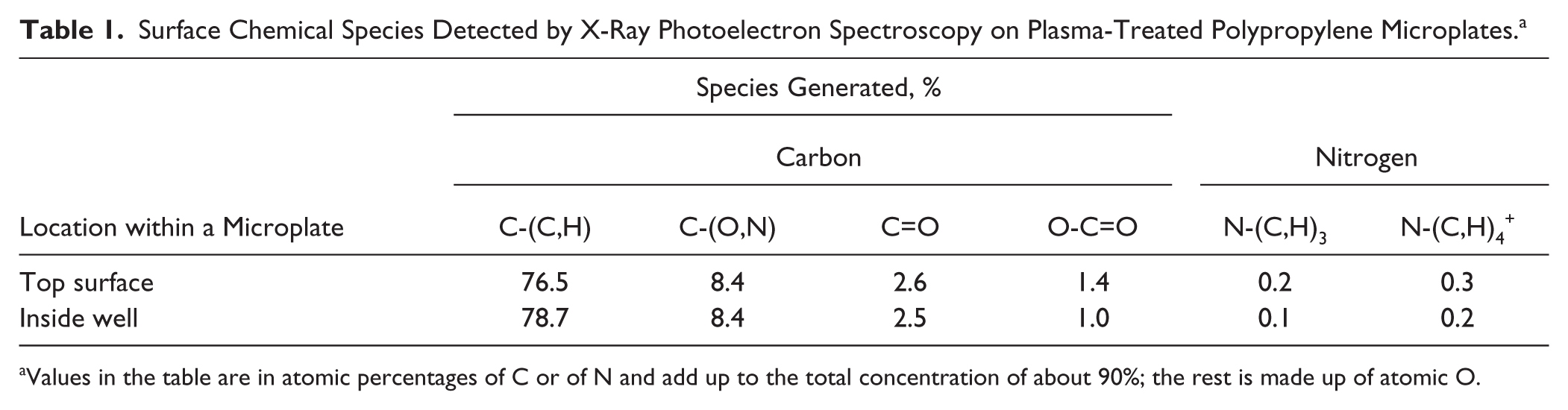
Values in the table are in atomic percentages of C or of N and add up to the total concentration of about 90%; the rest is made up of atomic O.
The plasma-treated surface is nearly uncharged overall due to the low abundance of the charged N-(C,H)4+ chemical species identified. Furthermore, even these positively charged species are likely balanced by negative countercharges, such as OH− (although those could not be identified by the XPS).
Protein recovery experiments were conducted using five different model proteins. The proteins were present at a nominal 1.5-nM concentration in aqueous solution at pH 7.4 (except for pH 8.3 for fibrinogen). Samples were evaluated after incubation at room temperature in standard (untreated) polypropylene 96-well 500-µL microplates (control), in those plasma-treated by SIO, and in Eppendorf LoBind 96-well microplates. The time dependence of protein recovery was determined in all microplates. Treated microplates achieved steady state after 4 h. Untreated microplates reached steady state after 24 h. One can see in Figure 1 that the standard microplates exhibited protein recoveries of merely 1% to 10%, thus vividly demonstrating that most of the protein in solution nonspecifically adsorbed onto the hydrophobic polypropylene surface. These meager remaining protein concentrations, typical for all standard commercial polypropylene microplates, 1 illustrate that there is little, if any, protein in solution. In stark contrast, the SIO plasma-treated microplates exhibited far greater protein recoveries that were in the range from 68% to 100% for all five proteins ( Fig. 1 ). Finally, as seen in Figure 1 , the commercial Eppendorf LoBind microplates exhibited 39% to 77% protein recovery, which is much higher than for the standard untreated microplates but still markedly lower compared with the plasma-treated polypropylene microplates.
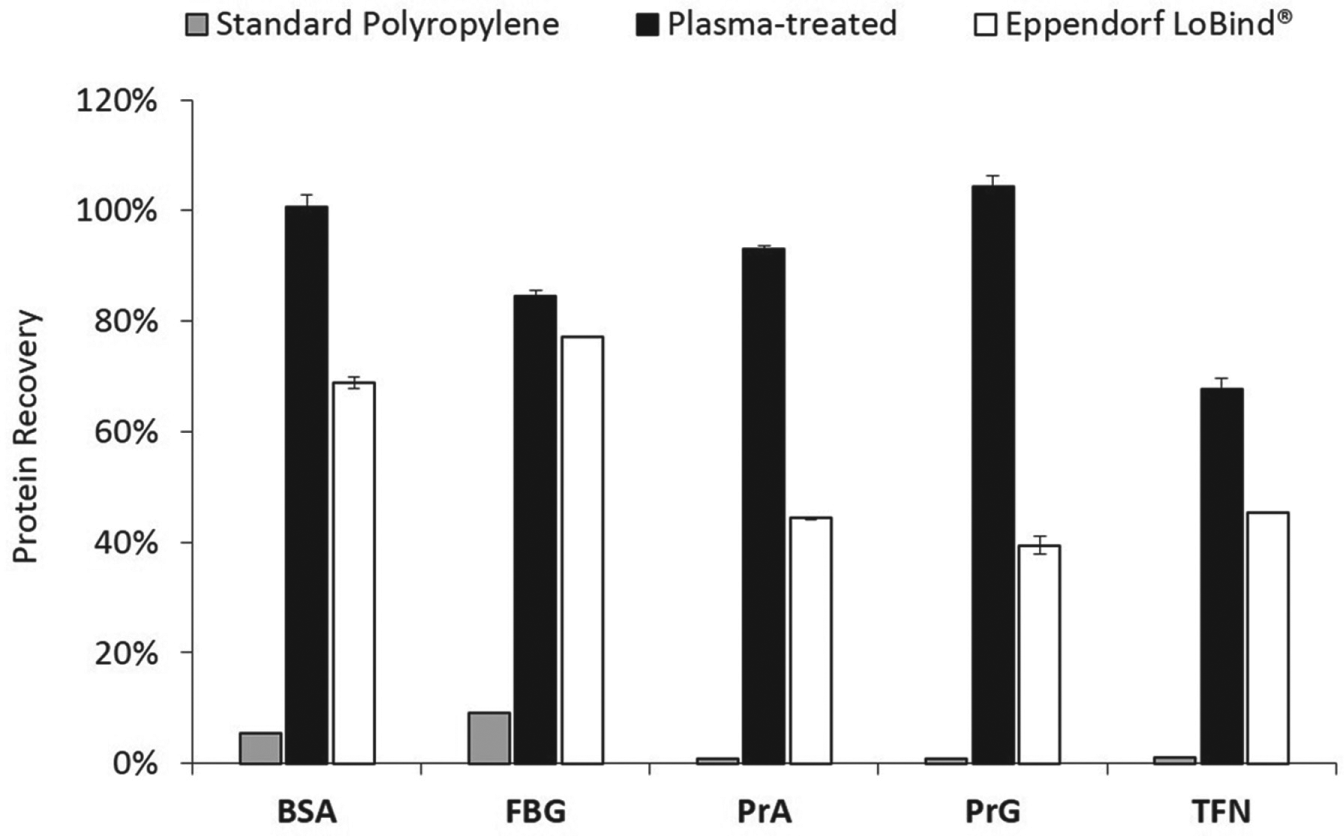
Recovery of five model dye-labeled proteins from their 1.5-nM solutions at pH 7.4 (except for pH 8.3 for fibrinogen) after a 72-h incubation at room temperature under ambient air in standard (untreated) polypropylene microplates (control), in those plasma-treated by SIO, and in Eppendorf LoBind microplates examined for comparison (all were deep 96-well, 500-µL microplates). All experiments were carried out in triplicate, and the bars correspond to the mean values with standard deviations shown. BSA, bovine serum albumin; FBG, fibrinogen; PrA, protein A; PrG, protein G; TFN, transferrin.
Similar experiments were also conducted with shallow 384-well (55-µL well) polypropylene microplates. The protein recovery trends observed for the five proteins at 1.5-nM initial concentrations in aqueous solution were similar to those with 96-well microplates ( Fig. 1 ). Once again, the plasma-treated microplates exhibited significantly greater protein recoveries than the Eppendorf LoBind microplates in all but one case (fibrinogen, where the recoveries were comparable). Note that the protein recoveries of standard untreated microplates exhibited no measurable protein left in solution after the incubation due to nonspecific absorption. This phenomenon of an even greater (and indeed complete) protein loss is not unexpected due to a higher surface area to volume ratio for the 384-well microplates compared with the 96-well microplates.
Protein Recovery as a Function of Protein Concentration
Next, experiments were conducted to examine how protein recovery from microplates depends on the protein concentration in solution. As seen in Figure 2 , for plasma-treated microplates, the recoveries of BSA, protein A, and protein G were all very high and essentially independent of protein concentrations in at least the 1- to 12-nM range. Notably, in this entire concentration range, the protein recoveries remained well in excess of 90% for all three proteins, including being practically complete for BSA and protein G.
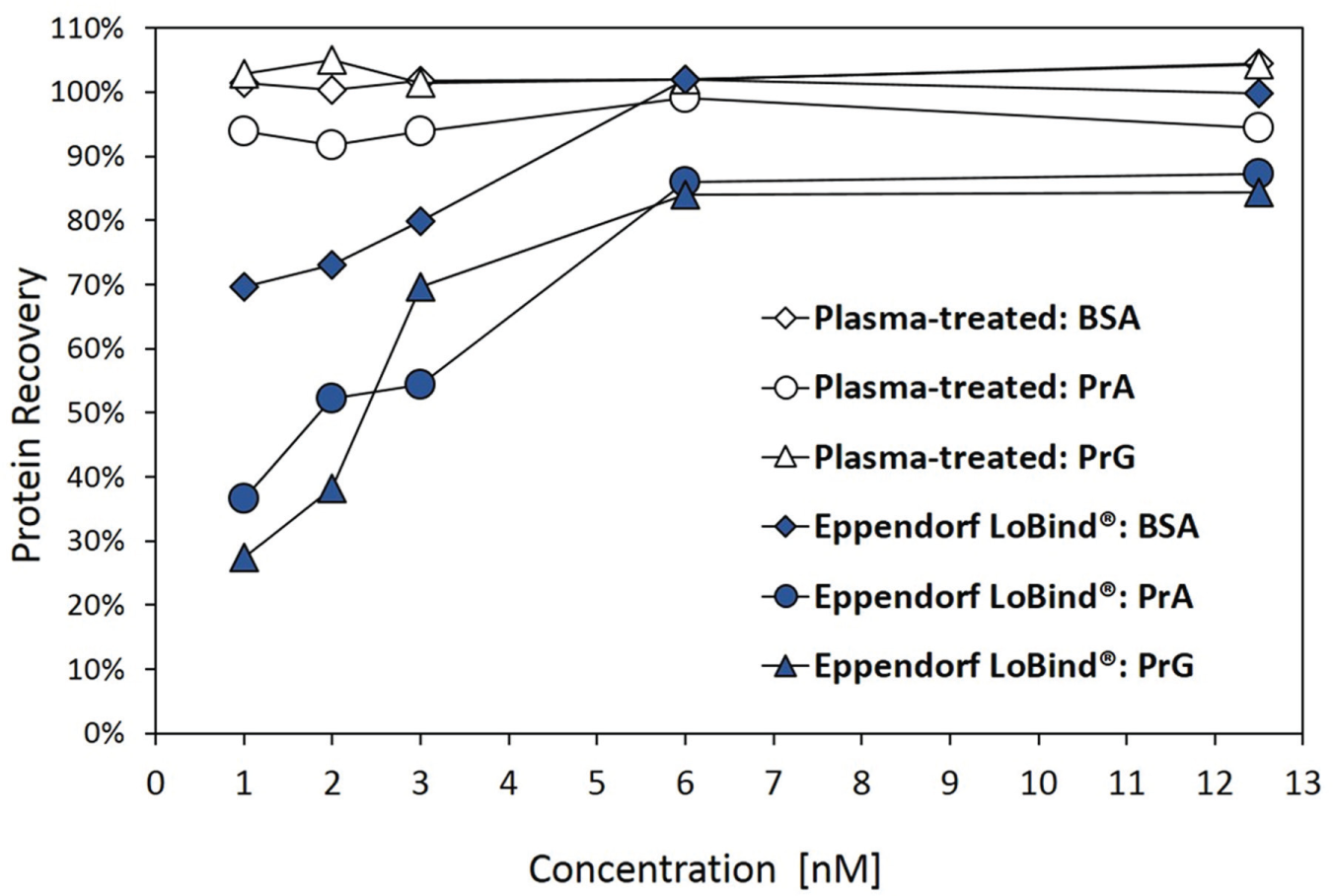
Recovery of BSA (diamonds), PrA (circles), and PrG (triangles) as a function of protein solution concentration after a 24-h incubation at room temperature in deep 96-well microplates (500 µL wells). The microplates were either SIO’s plasma-treated (open symbols) or Eppendorf LoBind (closed symbols) examined for comparison. BSA, bovine serum albumin; PrA, protein A; PrG, protein G.
For comparison, we conducted the same protein recovery experiments with commercial Eppendorf LoBind microplates. For two of the three proteins investigated, the recoveries in Eppendorf LoBind microplates never exceeded about 80%, even at the high end of the concentration range (closed symbols in Fig. 2 ). Moreover, even with these low-protein-binding microplates, a drastic further drop in protein recovery was observed for all three proteins at their concentrations below approximately 6 nM. Since biologic drug development often involves limited quantities of costly protein samples, minimal to no protein adsorption observed herein with plasma-treated microplates allows the use of lower protein concentrations, which effectively increases the number of possible bioassays with the same scant protein supply.
Protein Recovery Consistency
It was important to examine the reproducibility of high protein recovery for multiple microplates within a given batch. To this end, based on testing two sets of 10 plasma-treated 96-well microplates per batch, the batch-to-batch protein A recovery standard deviation was just 2%.
The high well-to-well consistency of protein recovery within any particular microplate is also critical to attain and maintain. To test this parameter, using an initial 2-nM protein A concentration, recovery of the protein was measured from every 500-µL well in a 96-well microplate. For a plasma-treated microplate, the protein recovery values were invariably in the 90% to 100% range. In contrast, Eppendorf LoBind microplates consistently exhibited substantially lower protein recoveries, namely in the 55% to 69% range, under the same conditions.
The well-to-well protein recovery data were then used to produce protein recovery distribution plots (data not shown). The data reveal that a plasma-treated microplate exhibits higher protein recovery compared with an Eppendorf LoBind microplate: a mean and standard deviation of 95% ± 2% versus 64% ± 3%, respectively. It was further established that this high level of protein recovery and consistency across the wells of SIO’s plasma-treated microplate was not limited to the 96-well format tested. To this end, the experimentally observed protein recovery distributions across a 384-well plasma-treated microplate were compared with an Eppendorf LoBind microplate. The mean and standard deviation values obtained, 96% ± 4%, were again very high and similar to the 96-well microplate results. This level is nearly three times higher than the corresponding Eppendorf LoBind microplate data, 33% ± 4%.
The foregoing observations demonstrate that SIO’s plasma-treated microplates maintain a very high level of protein recovery with a narrow distribution across various well formats and volumes.
Storage Stability of Plasma-Treated Microplates
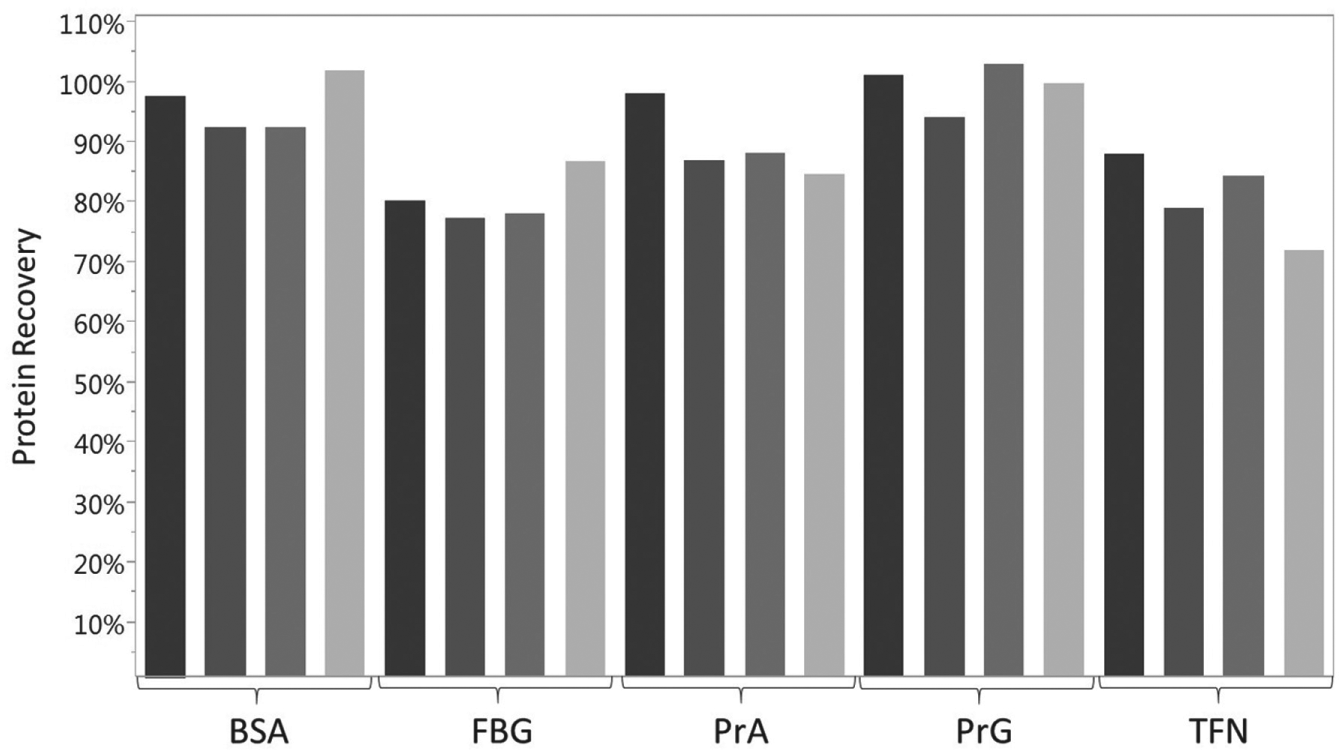
The effect of aging on plasma-treated microplates was investigated to test whether higher protein recoveries would be maintained after prolonged simulated shelf storage at room temperature under ambient air. As seen in Figure 3 , the protein recovery remained essentially unchanged and very high even after a 9-month storage at room temperature for all five proteins examined. These results indicate that the plasma treatment results in stable microplates that exhibit no appreciable increase in nonspecific protein binding upon storage for a number of months at ambient storage conditions.
Statistical distributions of protein A recovery (at a 2-nM initial concentration) across every well of both SIO’s plasma-treated and Eppendorf LoBind 96-well microplates. BSA, bovine serum albumin; FBG, fibrinogen; PrA, protein A; PrG, protein G; TFN, transferrin.
Comparison to Protein Blocking
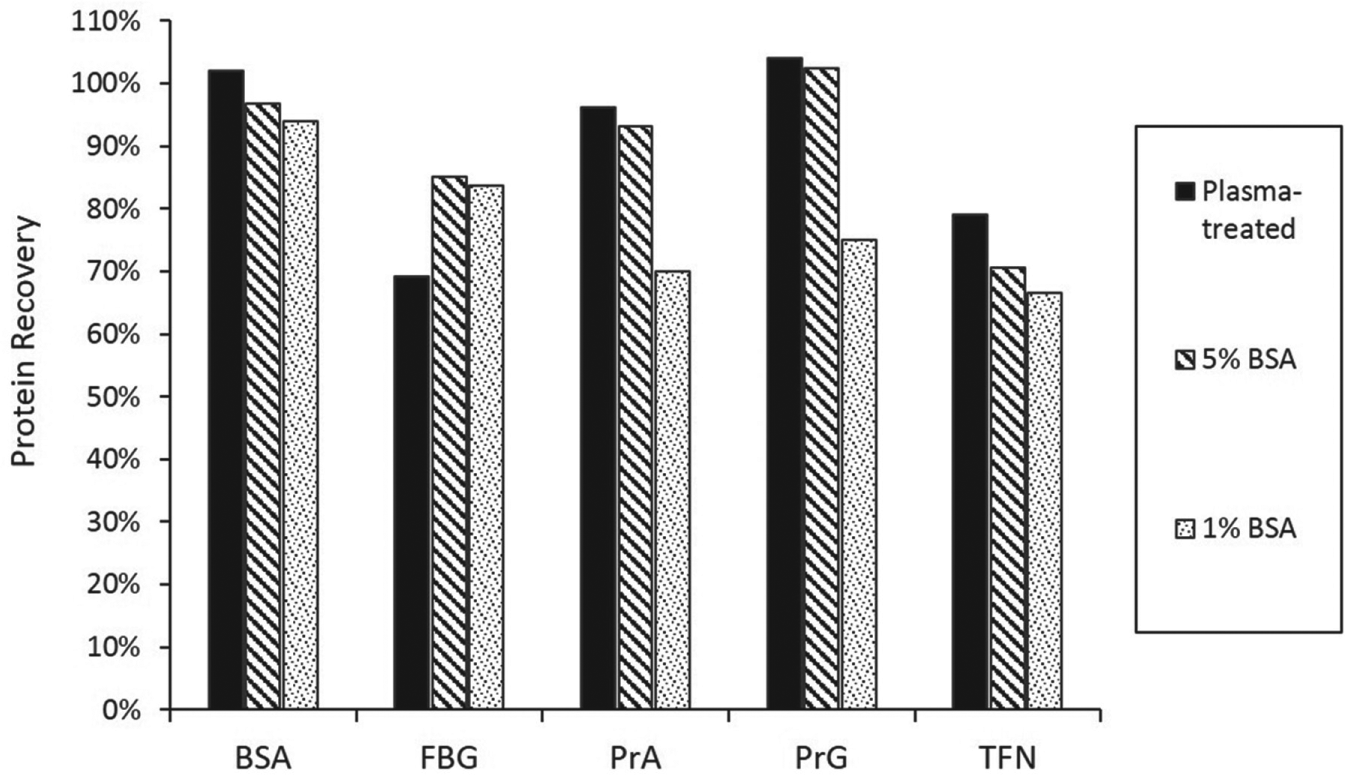
It is a common practice to restrain protein adsorption by passivating microplate surfaces with a blocking agent solution prior to conducting an assay using a microplate. 23 Typical blocking agents, such as BSA, casein, or gelatin, themselves nonspecifically adsorb to binding sites on the microplate surface, thereby preventing adsorption of the protein of interest during subsequent assay incubation steps. While having a potential benefit of improving the signal-to-noise ratio and hence assay sensitivity, the use of blocking agents can be time-consuming and poses a risk of sample contamination with no one blocker and/or its concentration fitting every situation. Therefore, microplates that eliminate the need for a blocking step would be desirable to save time and money.
In light of the foregoing, a comparison of protein recoveries in BSA-blocked microplates versus the plasma-treated microplates was conducted for the five test proteins. As shown in Figure 4 , while both types of microplates performed well, the advanced plasma-treated microplates were found to have higher protein recoveries than the BSA-passivated microplates (whether with 1% or 5% BSA solution) for four of five proteins examined. Therefore, in contrast to standard polypropylene microplates, the plasma-treated microplates do not need to be passivated.
Shelf-life stability with respect to protein recovery (12 nM proteins) of plasma-treated shallow 96-well microplates (1,000 µL wells) after a multimonth storage at pH 7.4 (except for pH 8.3 in the case of fibrinogen) and room temperature under ambient air for time zero (first bar for each protein), 3 months (second bar for each protein), 6 months (third bar for each protein), and 9 months (fourth bar for each protein). BSA, bovine serum albumin; FBG, fibrinogen; PrA, protein A; PrG, protein G; TFN, transferrin.
Extractables and Leachables
Compounds leached from plastics into aqueous solutions pose a serious threat for bioassays and can result in erroneous and/or inconclusive experimental results. In particular, such leachables as antistatic agents, antioxidants, plasticizers, slip agents, and nucleating agents present known contamination risks.15–18 Several prudent steps can be taken to minimize leachables: (1) proper selection of the polymer resin, (2) the injection molding process should be clean and free of contaminants, (3) any treatment or coating aiming to reduce protein binding should not introduce extra leachable compounds, and (4) ensuring that the packaging materials used to ship the microplates are ultra-clean to prevent contamination of the product.
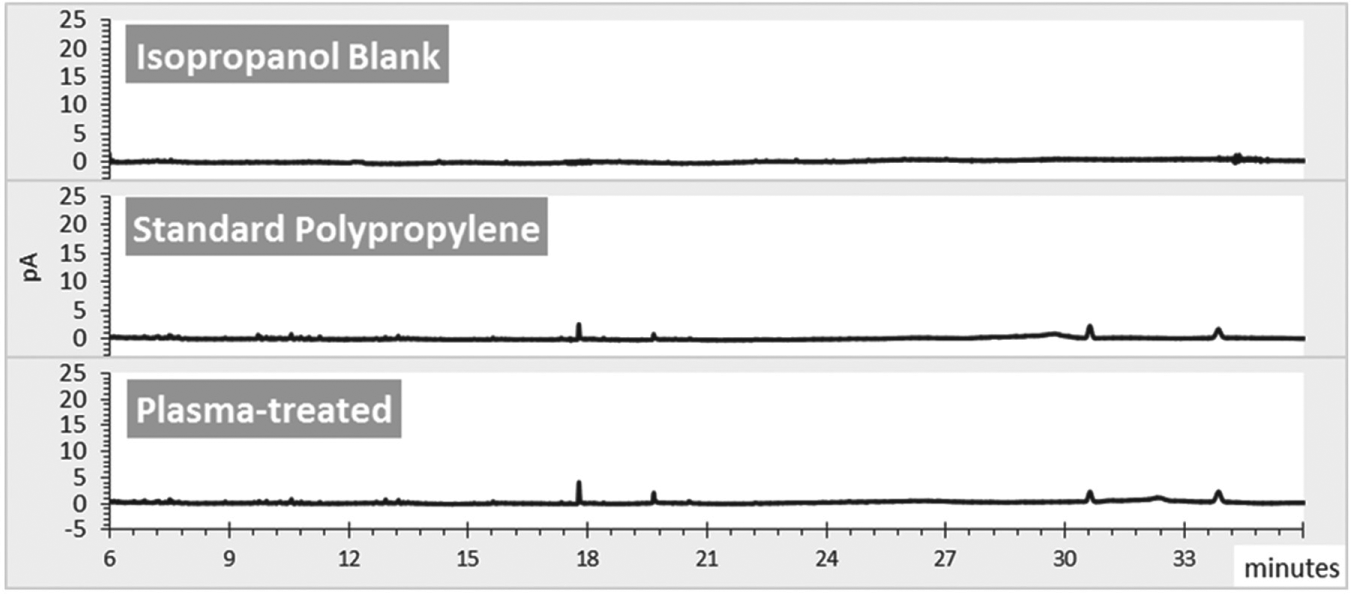
To experimentally survey the compounds with the potential to leach into container contents, species were identified after an aggressive 72-h extraction with acetonitrile of freshly molded microplates and of those following the plasma treatment. The gas chromatograms using an FID detector for both kinds of microplates were found to be identical in Figure 5 , indicating that the plasma treatment introduced no new extractables to the microplate.
Comparison of protein recoveries in plasma-treated 96-well microplates with those in standard commercial polypropylene microplates passivated with 1% or 5% bovine serum albumin.
In addition, plasma-treated microplates were subjected to a 72-h extraction with isopropanol, and the results obtained were compared with commercially available low-protein-binding microplates, namely Eppendorf LoBind. SIO’s plasma-treated microplate (as well its untreated predecessor) resulted in the LC-MS total ion chromatogram depicted in Figure 6 , which was nearly identical to the isopropanol blank, evidencing no detectable extractables. This result confirms that the plasma treatment does not introduce any extractable species to the microplate. In contrast, the commercial microplates did exhibit extractable compounds that included such common plastic additives 24 as Irgofos 168 (an antioxidant), glycerol stearate and glycerol palmitate (slip agents), and bis-(3,4-dimethylbenzylidene sorbitol diacetal) (a nucleating agent).
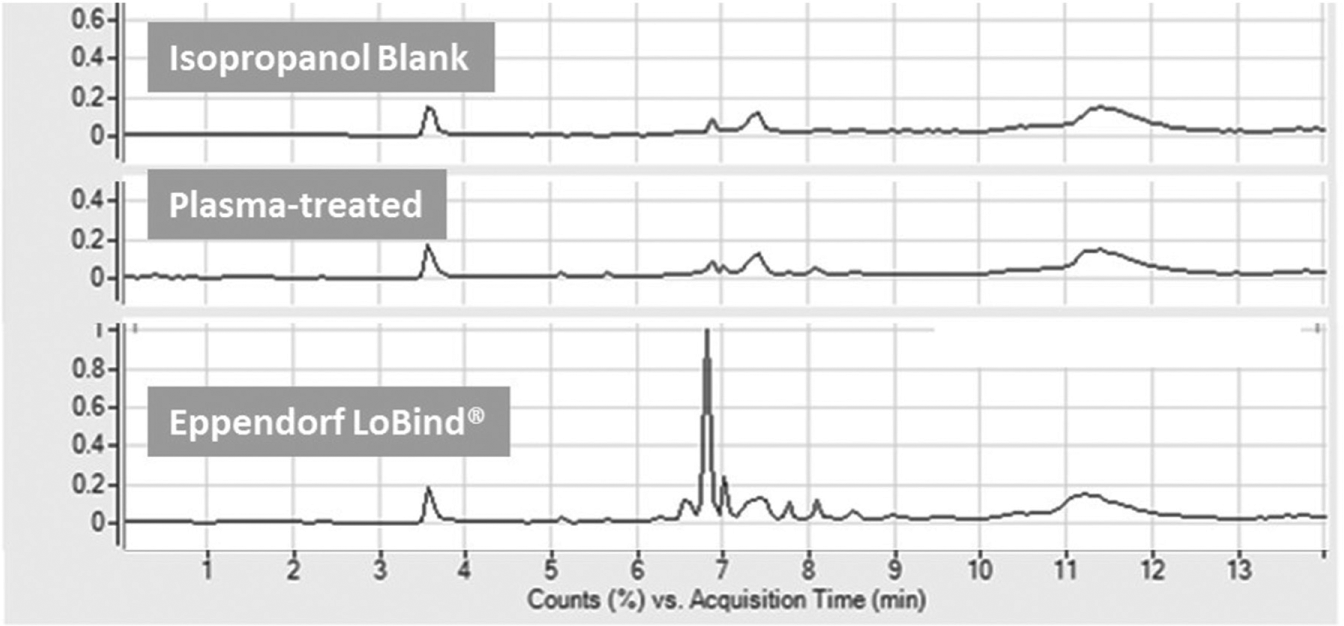
Liquid chromatography/mass spectroscopy total ion chromatogram of extractables from SIO’s plasma-treated microplates compared with those from Eppendorf LoBind commercial microplates (all shallow 96-well microplates). The microplates underwent extraction with isopropanol for 72 h at room temperature.
Conclusions
In conclusion, polypropylene microplates with the combined benefits of both high protein recovery and low extractables were created using the proprietary plasma treatment technology. Two common microplate formats were used to examine their performance with five model proteins compared with those of both commercial standard and low-protein-binding microplates on the market today. The plasma treatment chemically modifies polypropylene microplates, resulting in more hydrophilic surfaces. The plasma-treated microplates were found to be shelf stable and not requiring protein blocking of their surfaces prior to bioassays. The cleanliness of the engineered polymer, combined with the plasma treatment technology, results in a contaminant-free and ultra-low-protein-binding surface for bioassays and storage of proteins.
Footnotes
Acknowledgements
Our special thanks are to Robert Abrams of SiO2 Medical Products for encouraging this study, to Dave Cole at Evans Analytical Group for the analysis and interpretation of the XPS results on plasma-treated microplates, and to Impact Analytical for the LC/MS analyses of microplate extractables.
Declaration of Conflicting Interest
The authors declared no potential conflicts of interest with respect to the research, authorship, and/or publication of this article.
Funding
The authors received no financial support for the research, authorship, and/or publication of this article.