




Abstract
Every year, an unacceptably large number of infant deaths occur in developing nations, with premature birth and asphyxia being two of the leading causes. A well-regulated thermal environment is critical for neonatal survival. Advanced incubators currently exist, but they are far too expensive to meet the needs of developing nations. We are developing a thermodynamically advanced low-cost incubator suitable for operation in a low-resource environment. Our design features three innovations: (1) a disposable baby chamber to reduce infant mortality due to nosocomial infections, (2) a passive cooling mechanism using low-cost heat pipes and evaporative cooling from locally found clay pots, and (3) insulated panels and a thermal bank consisting of water that effectively preserve and store heat. We developed a prototype incubator and visited and presented our design to our partnership hospital site in Mysore, India. After obtaining feedback, we have determined realistic, nontrivial design requirements and constraints in order to develop a new prototype incubator for clinical trials in hospitals in India.
Every hour, an estimated 340 babies die in the first week of birth, with preterm birth and asphyxia being two of the leading causes. Ninety-nine percent of these deaths occur in low- and middle-income countries. 1 Compared with adults, newborns are particularly vulnerable to heat loss. Although passive, low-cost approaches such as the Embrace Infant Warmer are available to prevent heat loss, they lack cooling capabilities, temperature control, and need regeneration of thermal material by hot water, which may not be available. 2 In many tropical countries, temperatures in the shade can reach >40 °C in the summer, and at this point, an incubator warmer can put babies at risk of hyperthermia. Advanced incubators exist, but they can cost thousands of dollars. The “Neonurture,” a design that takes advantage of locally available replaceable parts of automobiles, is not a viable solution for mass production because it is still too complex and expensive (>$1000) for “bottom of the pyramid” rural users. 3
In addition to heat loss, nosocomial infections are an important cause of infant morbidity and mortality in resource-poor countries, where reports of neonatal deaths from sepsis reach 29% of all neonatal deaths.4,5 Preterm birth occurs in 11% of live births globally and accounts for 35% of all newborn deaths. 6 Because preterm newborns have immature innate and adaptive immunity as compared with term babies, mortality due to inadequate immune system response is seen more often in preterm newborns. Routine medical procedures including respiratory support carry an increased risk of infection and associated long-term morbidity in preterm infants. 6 In addition, pediatric respiratory infections appear to contribute to some cases of sudden infant death syndrome. 7
We are developing a thermodynamically advanced low-cost incubator suitable for operation in low-resource environments. The incubator features a modular design for multiple purposes. Primarily, this will enable reusable control modules that have low maintenance, decreasing the fixed costs for the device. The incubator features three innovations:
a disposable infant chamber that will aid in infection control,
a clay pot filled with water coupled with a low-cost heat pipe to passively cool the incubator, and
incorporation of insulated panels and a novel thermal bank using water to effectively preserve and store heat, greatly reducing power consumption. This will permit a standard 12 V 17 Ah sealed lead acid battery to power the incubator for more than 10 h.
These innovative contentions are not conjecture. The proposed solution, shown in Figure 1 , focused on simplicity, high thermal capacity, high visibility, and a low-cost evaporative cooling method. A prototype was developed, refined, and brought to various parts of India to survey target end users. Nurses, doctors, parents, and nongovernment organizations such as Karuna Trust and Swami Vivekananda Youth Movement were surveyed from primary and secondary health care facilities.8,9 The goal of the survey was to obtain feedback on design features of the prototype. Surprisingly, the surveys indicated that the 360° visibility was not necessary as caregivers would be monitoring the infants often and cooling was not a high priority for the doctors, at least at this location. The most desired design features were the ability to operate without electricity for extended periods of time and low cost of the incubator. To incorporate all of the feedback, two major changes were made. First, the clay pot–coupled heat pipe was made to be an optional module that can be attached when needed. Second, the baby chamber materials were changed from clear plastic to materials with more heat insulation.
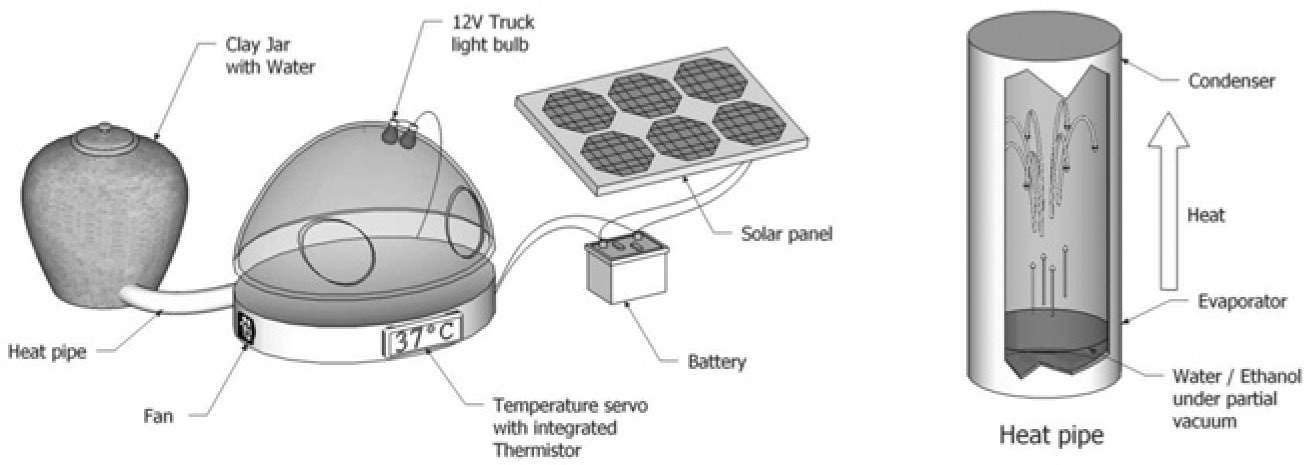
Conceptual design of the proposed multifunctional infant incubator. The unit was designed to be low cost and capable of being heated and cooled and also be able to work off the grid. The insert shows a heat pipe. This is a device that allows efficient heat transfer by using latent heat of evaporation of a fluid in a partially evacuated tube. Heat is transferred from the hot side by fluid that evaporates and condenses on a cold sink. The entire process is repeated until equilibrium. This device is widely used in computers to cool the central processing unit.
Discussions with a partnering incubator manufacturer in India, Phoenix Medical Systems, led to further innovations in the incubator’s design. To address neonatal death due to infection control issues, the main infant chamber was redesigned to be completely disposable. Three additional goals were incorporated in the design of the incubator: biodegradability, local manufacturability, and flat pack ability. As a result of the valuable feedback from the target end users of the incubator, the prototype design was redesigned into the conceptual design displayed in Figure 2 . The total desired cost of the incubator is less than $200, with the disposable baby chamber being less than $10.
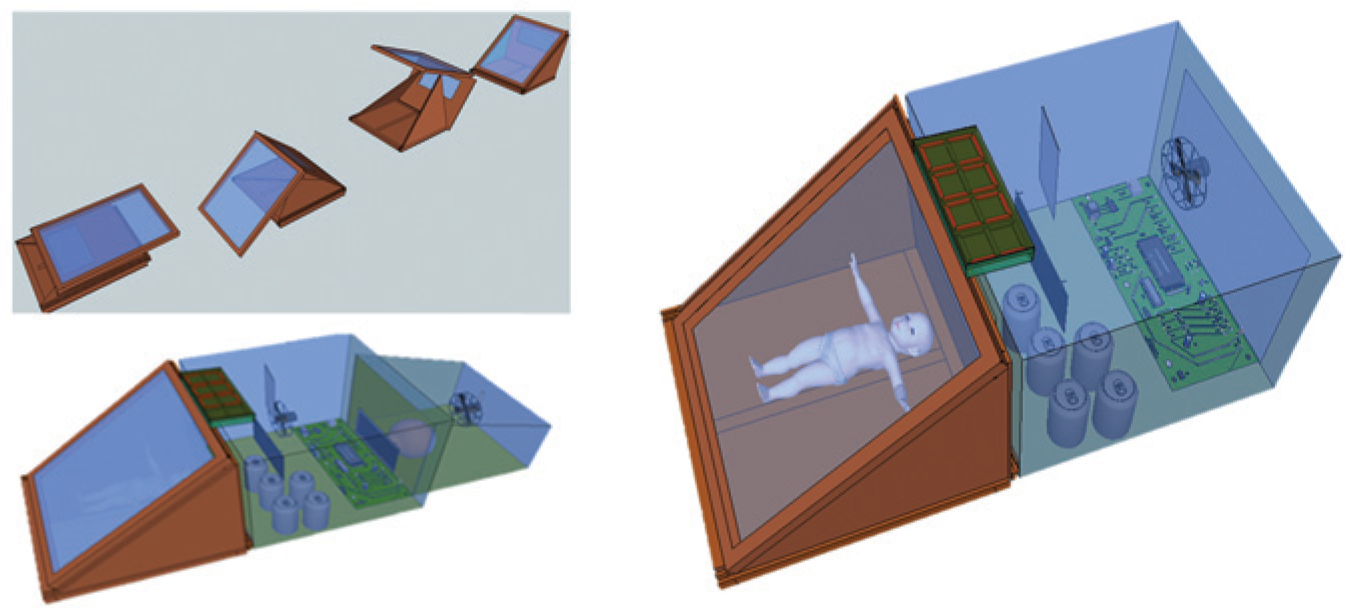
Sequential drawings show how the disposable infant chamber can be made of low-cost insulated cardboard that is flat packed and can be assembled in minutes (top left). The infant chamber can be attached to the modular unit that houses temperature control and power components (right). An optional cooling unit module can be added to the modular power unit (bottom left).
Methods
To measure performance of the design, EI1034 temperature probes from Electronic Innovations Corp connected to a LabJack (U3,U12) data acquisition board were used to record all data continuously. The probe features a waterproof stainless-steel probe, 16-bit resolution, and an accuracy of ±0.56 °C at room temperature. The heat supplied to the testing vessels, ranging from 0 to 200 W, was generated using silicone rubber heat strips attached to a heat sink, controlled by a variac. Standard 5 V, 0.18 A, 120 × 120 × 10 mm computer fans were used to circulate air inside of the testing vessels. Temperature and humidity were regulated. Low ambient temperature and high humidity were initially tested to optimize and design safety precautions to the prototype.
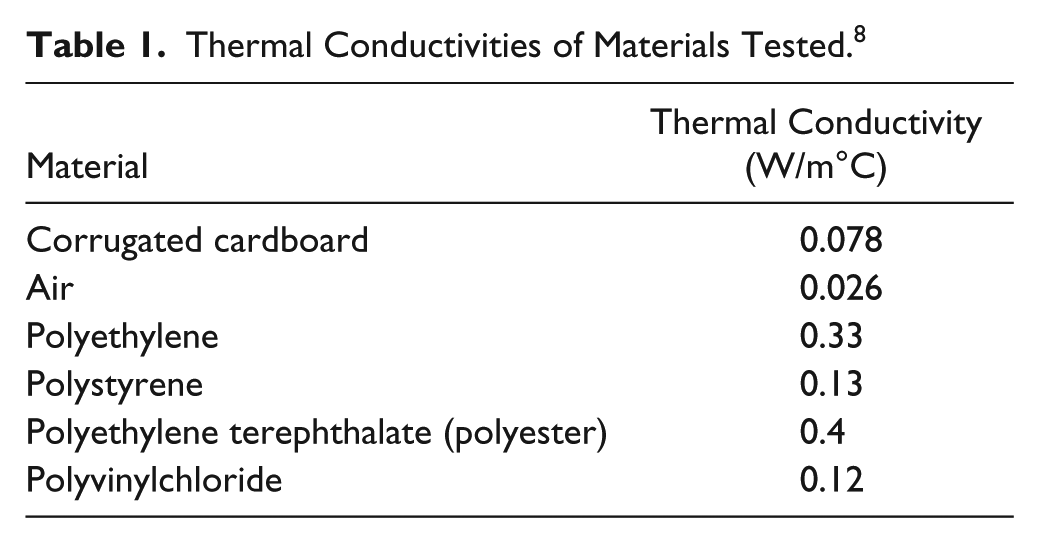
The thermal conductivity describes the rate of heat transfer across a material. Materials with high thermal conductivity transfer heat with higher rates. Thus, in this application, materials with lower heat conductivity are desired to retain heat better. Table 1 summarizes the thermal conductivities of the materials studied. 10
Thermal Conductivities of Materials Tested. 8
Insulation
Insulation capabilities of the incubator materials were identified as a critical factor of design. A study of thermally insulating materials was conducted to determine the optimum configuration for minimal heat transfer. Various materials and configurations of double-paned corrugated cardboard were studied as potential incubator lid materials and side wall materials, respectively.
The effectiveness of a double-pane wall (filled with air) versus a solid wall was studied as potential configurations for a transparent lid. In addition, the effectiveness of varying thicknesses of air inside the lid was briefly studied to determine the design of the lid.
Sixteen watts of heat was consistently supplied to the testing vessel at all times. The heat insulation of the materials was evaluated by comparing the steady-state temperatures and temperature differences between the inside of the incubator and outside ambient temperature.
Thermal Bank
Using a small, cheap 12 V lead battery as a reference power source, the available off-grid power would be about 17 to 20 Ah. This limits the total maximum power of the incubator to about 14 W of consistent power when off the grid for 16 h.
To decrease the total power needed to operate the incubator when off the grid, a thermal bank was designed to effectively preserve and store heat. Water was chosen as the heat storage medium because of its high heat capacity of 4.16 J/g°C.
The effectiveness of the thermal bank was tested by observing how quickly heat was lost with and without a thermal bank once the incubator reached a steady-state temperature of 37 °C. The rate of temperature drop with the thermal bank present compared with when the thermal bank was absent was analyzed.
Cooling
The goal is to achieve passive, natural cooling down to the optimal temperature for infants of 37 °C by using the evaporative cooling properties of a clay pot, coupled with the efficient heat transfer of a heat pipe. The clay pot used for experiments had a height of 165.1 mm and a diameter of 101.6 mm. A fan is required to circulate air or provide additional cooling, but the clay pot itself requires no energy input. A heat pipe was chosen because of its ability to transfer heat efficiently, as it combines the principles of thermal conductivity along with those of phase transition. 11
A simple heat pipe was obtained from a central processing unit cooler of a commercial first-generation Dell XPS Inspiron 9100. The heat pipe consists of three aluminum-plated copper pipes measuring 2 mm in diameter and 50 mm in length and coupled to two heat sinks on each end. Each copper pipe has a grooved wicked structure and uses distilled water as a working fluid. The heat pipe was attached and water sealed to the clay pot using silicone-based caulk. The heat pipe was oriented such that one end of the heat pipe was inside of the clay pot while the other was inserted into the incubator. Small fans direct the air inside of the baby chamber toward the heat sink of the heat pipe. The cooling capacity was determined by the temperature differential between the clay pot and ambient temperature. A heat load of 43 W was supplied to the incubator, and the internal steady-state temperature of the incubator with and without the clay pot was compared. The goal of the experiment is to determine the cooling capacity of the heat pipe–clay pot–coupled apparatus.
Results/Discussion
The theoretical total power needed to keep the incubator at 37 °C based off of heat loss through conduction, convection, and radiation based on the geometry of the incubator at an ambient temperature of 22 °C was calculated to be about 25 W, compared with the measured power consumption of 30 W. It was confirmed that the discrepancy in theoretical versus actual power values was due to small leaks in the incubator at the lid interface. A visual thermal image of this is shown in Figure 3 .
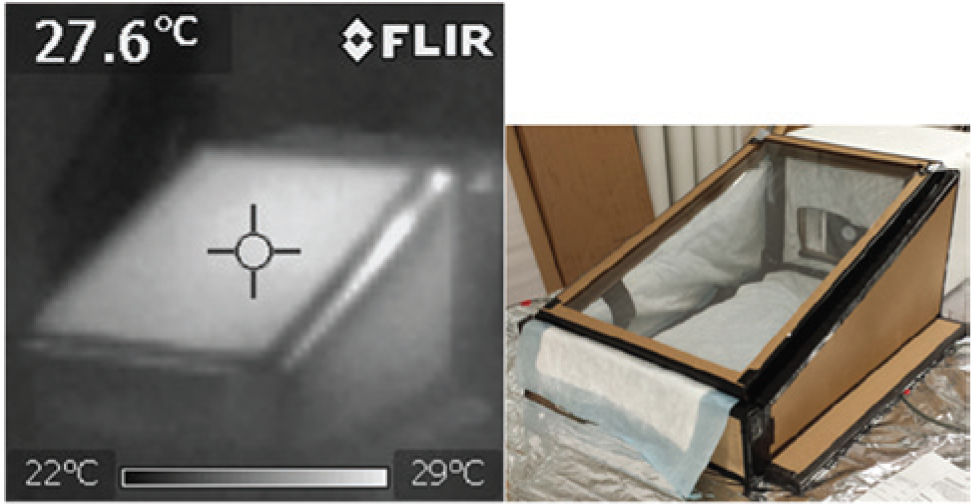
Diagram of controlled environmental chamber that mimics different temperatures and humidity levels of various climates.
Insulation
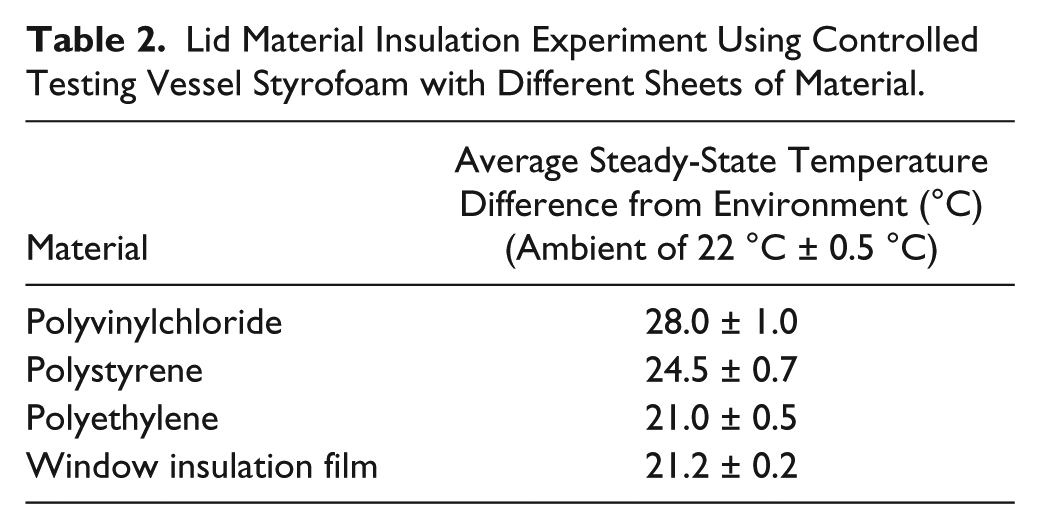
Based on insulation tests, triple-pane clear polyvinylchloride (PVC) film fitted to a corrugated cardboard frame provided the least amount of heat loss. Table 2 summarizes the insulation experiments conducted on different clear plastic films. Unpaired T-statistical tests were performed to compare the PVC film against every other lid material. The PVC was shown to have greater insulation than any other tested material with 95% confidence.
Lid Material Insulation Experiment Using Controlled Testing Vessel Styrofoam with Different Sheets of Material.
From the tests, as the air wall thickness is increased, the heat retention is increased. However, tripling the wall thickness from 12.7 mm to 38.1 mm does not result in a large difference in heat retention. Thus, to simplify the design and increase the flat-pack ability and manufacturability of the design, 12.7 mm walls were chosen for the final prototype.
Thermal Bank
The results of the thermal bank tests show little improvement in heat retention. A cutoff point of 35 °C was chosen because that is a dangerously low temperature for a baby. Without the thermal bank, the incubator would drop from the operating temperature of 37.5 °C to below 35 °C in an average of about 5 min versus 8 min with the thermal bank, slowing the loss of heat in the critical temperature range by about 60%. Other insulating materials are being investigated to improve this effect. Although it is not effective enough as a life saver, it was discovered that the thermal bank acts as a dampener allowing for tighter control of the incubator temperature. The thermal bank effectively acts as a thermal buffer that helps keep the temperature within ±0.5 °C, instead of using a more expensive servo controller.
Cooling
The results of the cooling experiments are shown in Figure 4 .
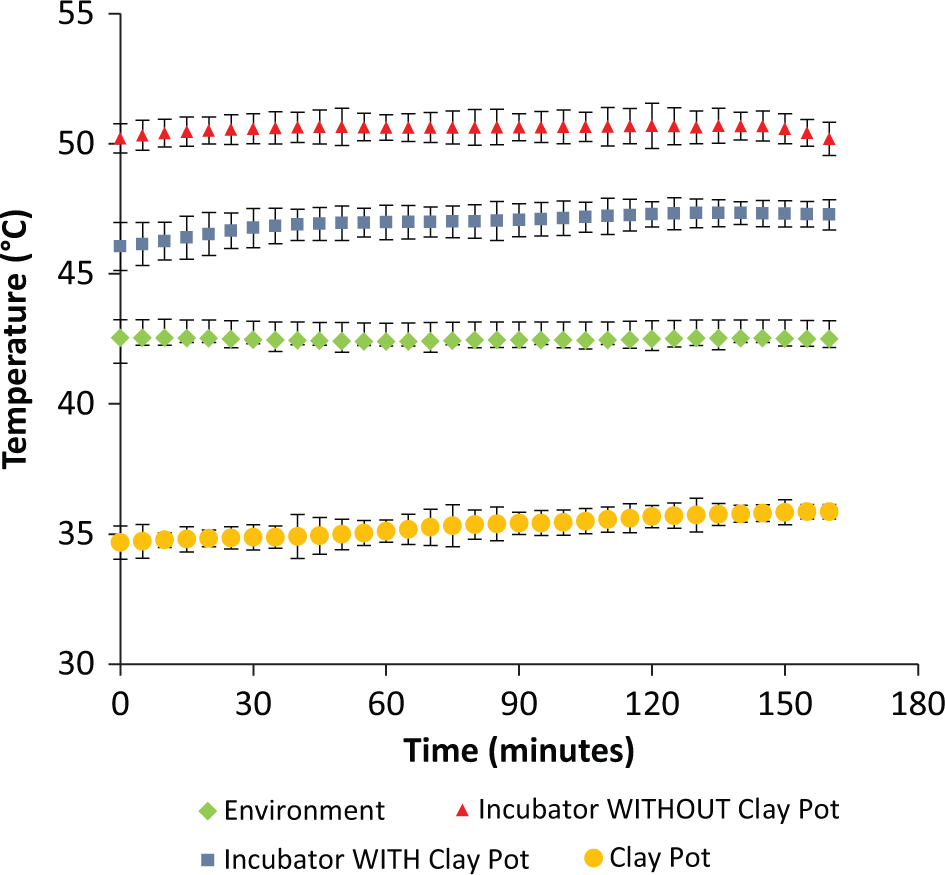
Performance of a passive cooling mechanism made of a clay pot coupled with a heat pipe. The environment outside the incubator was held at 43 °C (diamonds). The inside of the incubator was continuously supplied with 43 W of heat and reached a steady-state temperature (triangles). When the clay pot was added, the temperature inside the incubator dropped (squares). The temperature of the clay pot (circles) was significantly lower than the external environment because of evaporative cooling. Error bars represent the standard deviation of five independent measurements.
A heat load of 43 W was supplied to the incubator to simulate many parts of the world where summer temperatures can regularly exceed 42 °C. It should be noted that our tests were conducted at 90% humidity, which is an unfavorable condition and worst-case scenario for evaporative cooling. It can be seen from Figure 4 that the clay pot is able to consistently maintain an 8 °C temperature differential from the environment.
As can be seen in Figure 4 , the heat pipe–coupled clay pot was able to lower the incubator temperature by 3.5 °C. A temperature gradient within the incubator and limitations in heat transfer between the incubator and the clay pot cause this decrease to be smaller than what the clay pot could theoretically provide. Therefore, improving the heat transfer between the pot and the incubator would improve the overall efficiency of the cooling system.
Material Cost Analysis
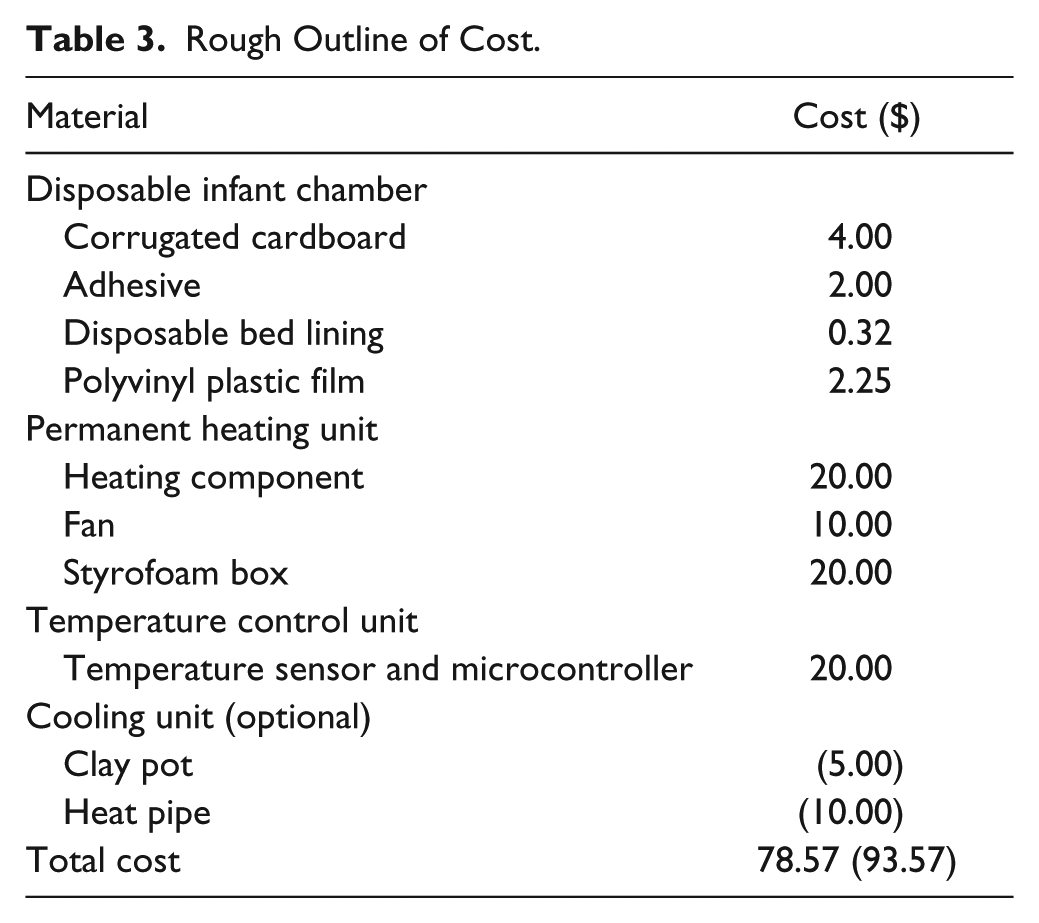
The disposable infant chamber frame is composed entirely of corrugated cardboard. Table 3 displays the breakdown cost of the materials used to construct the entire incubator. The total projected cost is $93.57, which includes the cooling unit. All prices reported are based on single as opposed to bulk purchase rates. It should also be noted that the total cost of the incubator reflects raw material costs only.
Rough Outline of Cost.
Conclusion
Based on the survey results from India and Ethiopia, cost reduction and infection control were concerns that took priority over cooling. For this reason, design and experiments revolved around constructing a suitable infant incubator using low-cost disposable materials with high insulating properties while consuming minimal power. The current prototype design features double-paned cardboard walls with a thickness of 12.7 mm to increase the flat-pack ability. This effectively increases manufacturing and shipping efficiency. The lid was made from triple-paned clear PVC film sheets for increased visibility and insulation. To make the baby chamber entirely biodegradable, alternative materials to PVC such as cellulose acetate plastic sheets are being researched.
At laboratory temperatures of about 22 °C, the incubator was able to achieve a steady 37.5 °C using 30 W of power on average. In India, where the average temperature is much higher, the power consumption will be significantly reduced, making a small battery more than sufficient to power the device. The worst-case scenario was also considered, in which ambient temperatures can reach as low as 15 °C. Studies at different temperatures and humidity are ongoing. Operating the incubator at lower ambient temperatures can be easily achieved with larger batteries that will be able to provide enough power for this application. Alternatively, increasing the number of batteries or using recharging methods such as solar power are possible.
The incubator is also equipped with a cotton bed liner that covers all sides of the interior and will be changed as needed. This serves as an additional line of defense against infection as well as a layer of heat insulation. The incubator lid is being redesigned to incorporate an optional mosquito screen to prevent vector-borne diseases. In addition, we are also exploring an open-air radiant warmer option for the incubator. The incubator design was originally intended for hospital use only, but after surveying end target users, it has been determined that the incubator can be extended to home use because of its low maintenance.
At this stage, the prototype is being finalized for clinical trials for the partnership hospital in Mysore, India. Sequential pictures leading to the construction of the flat-packable, scaled-down incubator prototype can be seen in Figure 5 . This will be the first-generation unit, and the design will undoubtedly evolve based on end-user experience and feedback.
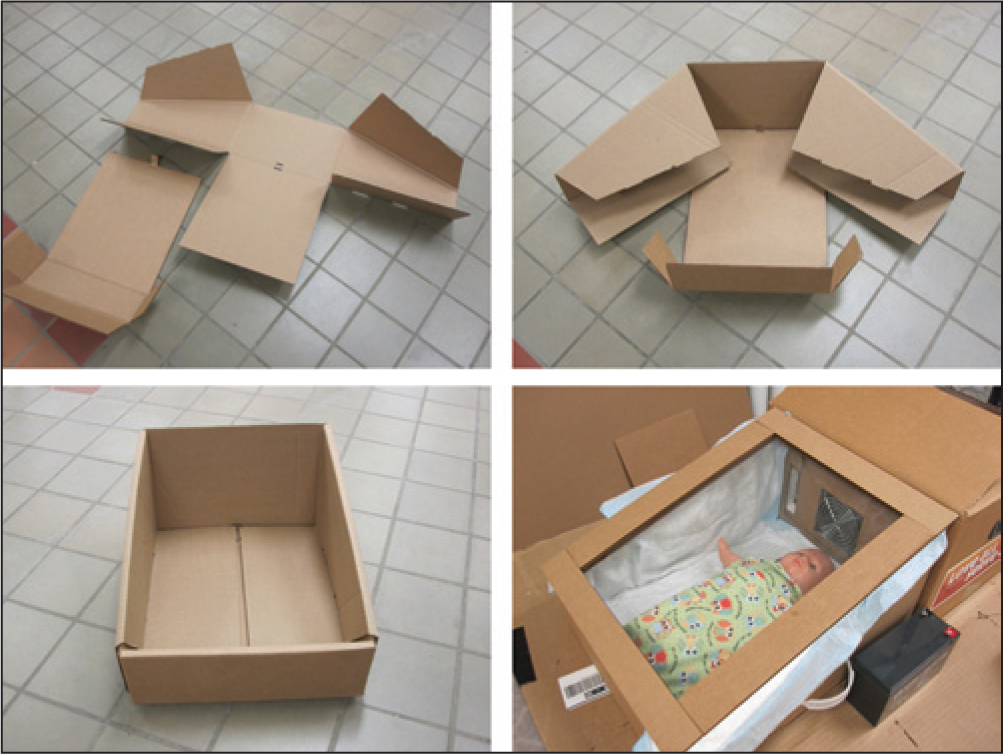
Sequential pictures of the flat-packable infant chamber leading to the scaled-down model of the low-cost disposable incubator prototype.
Footnotes
Acknowledgements
We would like to thank the Karuna Trust Foundation and the Swami Vivekananda Youth Movement (SVYM) for allowing us to visit their hospitals to acquire feedback for our design. We would like to thank Ms. Joyti Pande for connecting us to her colleagues and Dr. Eleanor Fernandez for supplying us with the clay pots. We would also like to thank Pheonix Medical Solutions Systems and the members at the Center for Advanced Sensor Technology (CAST) at the University of Maryland, Baltimore County, for all of their help and time in construction of our design.
Declaration of Conflicting Interests
The authors declared no potential conflicts of interest with respect to the research, authorship, and/or publication of this article.
Funding
The authors disclosed receipt of the following financial support for the research, authorship, and/or publication of this article: This project would not be possible without funding by the National Collegiate Inventors and Innovators Alliance (NCIIA).