




Abstract
Study Design:
A bibliometric review of the literature.
Objective:
Our objective was to identify and analyze the 100 most-cited publications in the field of endoscopic spine surgery (ESS).
Methods:
In order to determine the top cited 100 articles, a 3-step approach was employed. First, the 100 most-cited ESS studies were identified using the key phrase “endoscopic spine surgery.” Then, 8 keywords were identified from the 100 studies of step 1 were used to conduct a second round searching in all databases of the Web of Science. Finally, when the results of the first and second steps were overlapped, duplicated studies were removed. The 100 top-cited articles were used for further analysis.
Results:
The citation number of the top 100 most-cited articles ranged from 44 to 236 with a mean value of 84.4. The most productive periods were from 2001 to 2010. The majority of publications came from Spine and Neurosurgery, where Spine holds the largest number of 35 articles, followed by Neurosurgery with 13 articles. Overall, 10 countries contributed to the 100 articles, with the most productive country being the United States, followed by Germany and Korea.
Conclusion:
This bibliometric study is meant to produce a list of intellectual milestones in the field of ESS. This article’s identification of the most influential articles in the field of ESS gives us a unique and comprehensive insight into the development of ESS in the past several decades.
Introduction
With the aging of the global population, the number of patients with degenerative spine disorders (DSDs) specific to the elderly is on rise. 1 These DSDs severely restrict spinal mobility, walking ability, and quality of life. For that reason, elderly patients with a variety of medical comorbidities pose a serious challenge to the choice of surgical methods of spinal surgeons. The conventional surgical technique for spinal pathology is open surgery. However, postoperative sequelae and long recovery time related to surgical trauma have always been the major problems in spinal surgery. 2,3 Consequently, the need for minimally invasive spine surgery (MISS) is growing as the aging population is dramatically increasing and people pay more attention to quality-of-life issues. 4,5 Moreover, endoscopic spine surgery (ESS) is a subset of MISS that has been evolving rapidly and continuously to help treat elderly patients to relieve pain. 6,7
The advantages of ESS are widely touted to include less injury to paraspinal ligaments and muscles, less extensive epidural scar, feasibility under local anesthesia, minimal neural manipulation, less intraoperative blood loss, a lower infection rate, and a shorter hospital stay. 8 -10 Given the technical evolvement of ESS, including optics design, surgical apparatus, and specific surgical approach, its clinical application has become more practical and standardized. 11,12 In the past several decades, the broad spectrum of pathologies that could be treated by minimally invasive ESS has garnered increased interest from spine surgeons, other spine care providers, and their patients. ESS, which initially limited to the treatment of intradiscal therapy and soft tissue lesions, has expanded to encompass a myriad of complex surgical procedures such as skull basilar invagination, lesions in the clivus and cranio-vertebral junction, resection of the odontoid process, primary and recurrent intervertebral disc diseases, spinal stenosis, spondylolisthesis, radiculopathy, spinal tumors, infections, synovial cysts, dural tears, failed back surgery syndrome, and tethered cord syndrome among other surgical techniques along with reported clinical outcomes. 13 -17 The more recent concepts of endoscopic spine care has been promoted by Dr Anthony Yeung, who is reviewing his over 11 000 endoscopic procedures by promoting a staged concept of surgical spine care to address the pain generators early for patients deemed too young, too old, or having too many comorbidities to be recommended for traditional spine surgery. 18 At the rate of current development, it is reasonable to predict that ESS will be an option to treat an increasing number of spine pathology.
Since the beginning of the 20th century, numerous specialists and researchers are committed to providing new insights into ESS, and a large number of articles about ESS are published annually to showed clinical application, cases report, the surgical technical note, safety and effectiveness. 19 -25 Very recently, a bibliometric study on full-ESS demonstrated that the number of published articles increased by 41 times between 1997 and 2017. 26 However, the newest study focused only on full-ESS and could not fully reflect the field of ESS due to their exclusion of thoracoscopic spine surgery, and laparoscopic spine surgery, and nasoendoscopic spine surgery. 26 And they included all the related articles regarding their quality and citation number. 26 Given this situation, the aim of this study was to determine a ranking of the 100 highest cited articles regarding to all kinds of endoscopies for spine surgery, in order to help researchers better determine the direction of their research. Meanwhile, these articles were further analyzed for better understanding of the qualities of classical studies and highlight the significant contribution of these studies to the field of ESS.
Materials and Methods
On March 15, 2019, we sought to identify the 100 most-cited ESS research articles published between 1950 and 2019, and excluding non-English language studies. All databases of the Web of Science (Web of Science core database, KIC-Korean Journal Database, Medline, Russian Science Citation Index, and SciELO Citation Index) were used to identify eligible studies. In order to achieve a higher comprehensiveness and accurateness of the study, a 3-step approach was adopted, as shown in the flowchart in Figure 1.
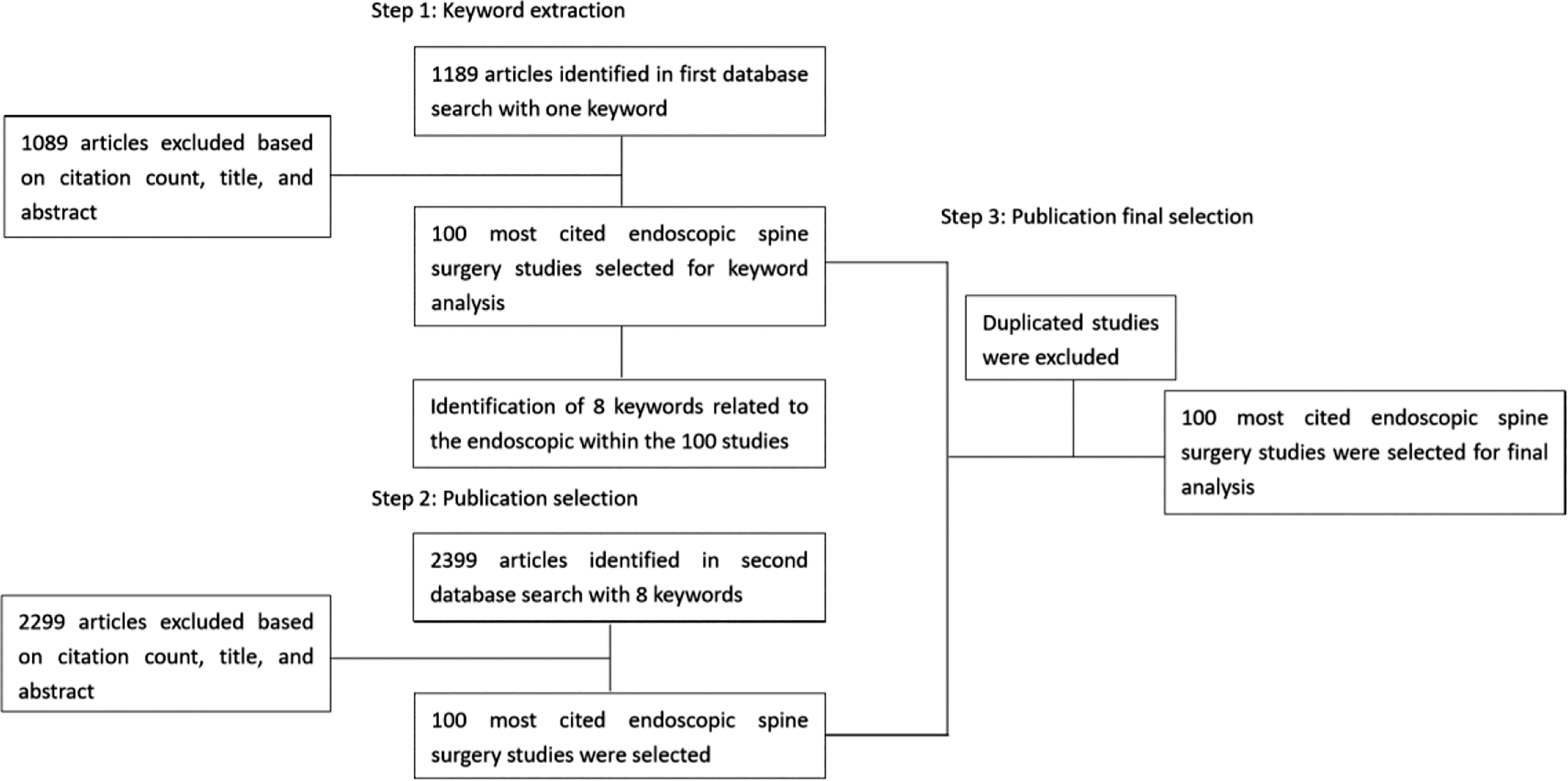
Three-step approach.
The first step, all databases of the Web of Science was searched for the key phrase “endoscopic spine surgery.” The search produced 1189 results, which were then ranked in descending order of the total number of citations. In the initial 500 studies, 100 most-cited papers on ESS were identified based on titles and abstracts. In order to provide a more comprehensive study of ESS, the title and abstract of the 100 most-cited studies were systematically analyzed for possible keywords. Combined with other keywords known to be relevant to the field of ESS research, a search query group composed of 8 phrases was established and used for a second database search by topic. Finally, the 8 key phrase identified were “endoscopic spine surgery,” “endoscopic interlaminar discectomy,” “endoscopic transforaminal discectomy,” “laparoscopic spine surgery,” “microendoscopic spine surgery,” “thoracoscopic spine surgery,” “endoscopic endonasal spine surgery,” and “endoscopic disc surgery.”
The second step, every word is delimited by an OR term, by this means further adding search results. The second search showed 2399 results, again were ranked in descending order of the total number of total citations. In the first 500 preliminary studies, 100 articles related to ESS were selected based on titles and abstracts.
In the third step, the studies of the 2 selections were overlapped, and duplicate studies were removed. The 100 most-cited ESS studies were then selected for final analysis.
To accurately identify the top 100 studies on ESS, each result was examined manually by 2 of the listed authors independently to exclude out-of-scope research articles according to the title and abstract. The exclusion criteria were (1) articles on a broad discussion of interventional surgery; (2) articles discussing the technique of percutaneous injection; (3) articles describing only MIS; (4) articles discussing da Vinci or robot-assisted spinal surgery; (5) articles citing only a broad discussion on the history or progress of ESS; and (6) Articles DISCUSSING only microendoscopic surgery. The 100 articles with the most citations were then analyzed further, and the title, authorship, geographic origin, journal of publication, year of publication, impact factor, and citation numbers were recorded.
Results
We conducted a comprehensive search process that resulted in the finalization of 100 most-cited publications related to ESS. The 100 highest cited articles on ESS were cited from 44 (article numbers 95 to 100) to 263 (top article) times, for a total of 8444 citations, with an average of 84.44 citations per article. In these publications, “Posterolateral endoscopic excision for lumbar disc herniation, surgical technique, outcome, and complications in 307 consecutive cases,” by A. T. Yeung et al, was the most-cited article. In order to show the researchers more clearly, the 100 highest cited studies according to the total number of citations can be seen in Table 1.
The 100 Most-Cited Articles on Endoscopic Spine Surgery.
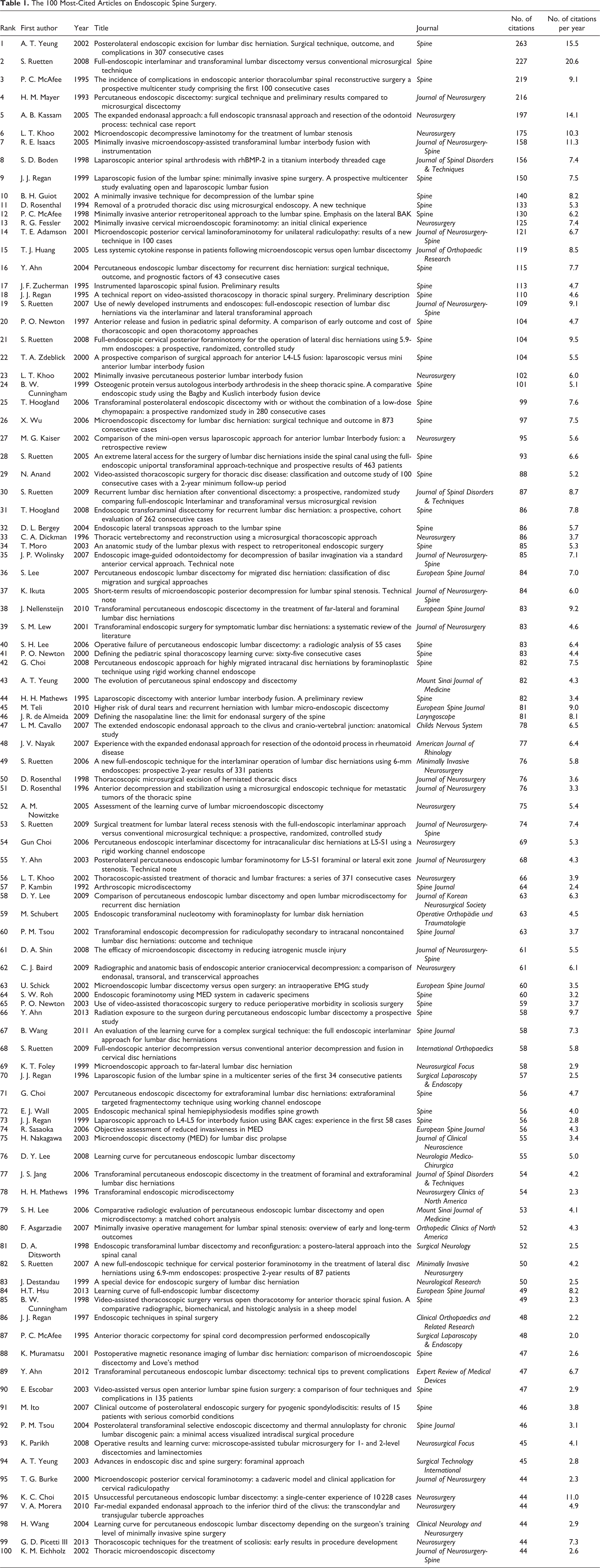
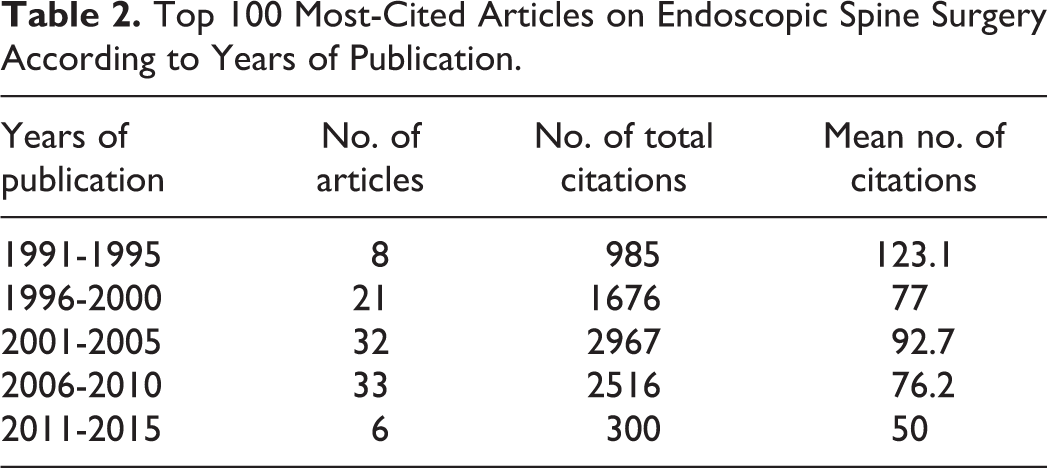
All the 100 most-cited articles were published between 1992 and 2015. The most productive periods were 2001 to 2005 and 2006 to 2010, with a total of 65 articles (Table 2). The oldest of these publications, “Arthroscopic microdiscectomy.” in Arthroscopy: The Journal of Arthroscopic & Related Surgery: Official Publication of the Arthroscopy Association of North America and the International Arthroscopy Association by P. Kambin et al, was published in 1992. The most recent of these articles, “Unsuccessful percutaneous endoscopic lumbar discectomy: a single-center experience of 10 228 cases” was published by K. C. Choi et al.
Top 100 Most-Cited Articles on Endoscopic Spine Surgery According to Years of Publication.
In total, 28 different journals published the 100 most-cited publications, with the Spine contributing most studies (n = 35), followed by Neurosurgery (n = 13 articles), Journal of Neurosurgery, Journal of Neurosurgery-Spine, and European Spine Journal (each published 6 articles of this list) (Table 3).
Journals With More Than One Article in the 100 Most-Cited Articles on Endoscopic Spine Surgery.
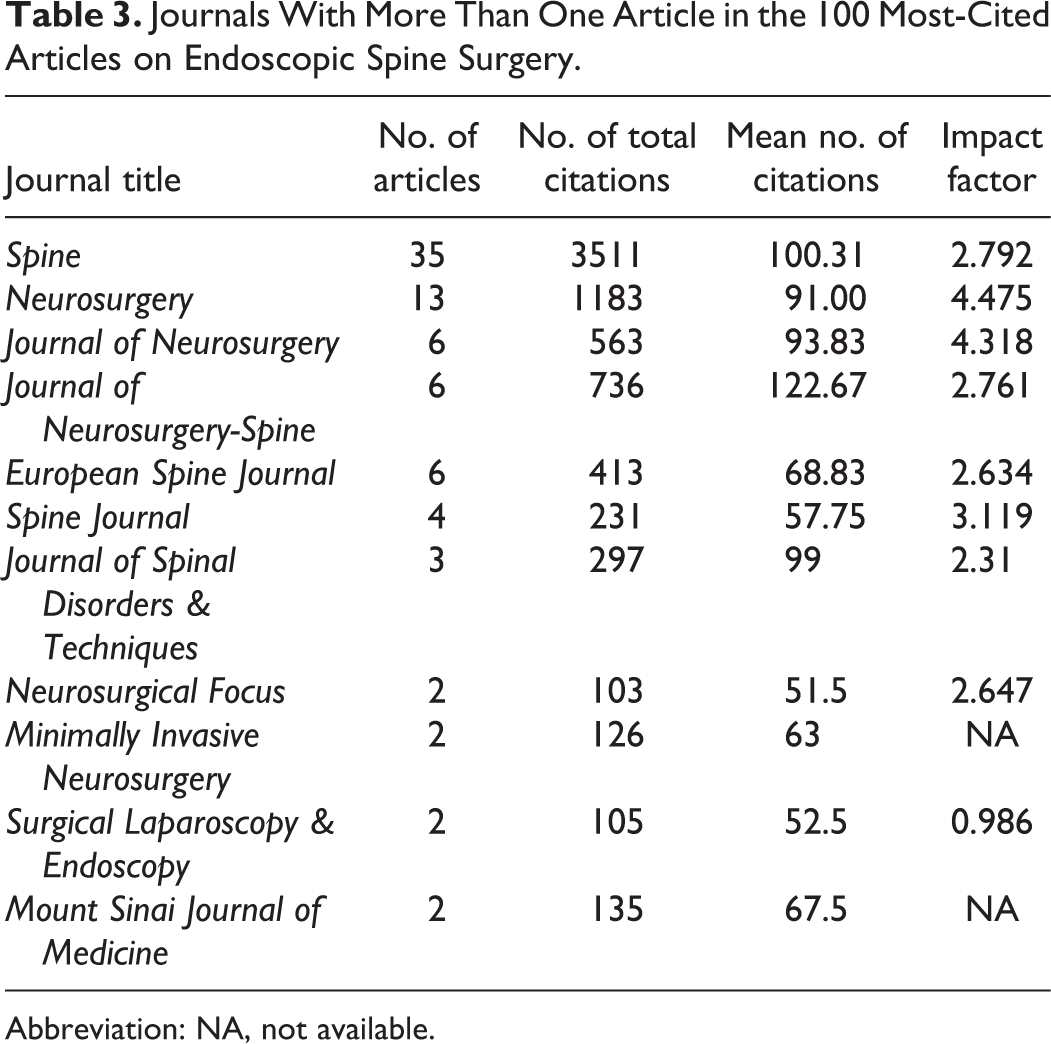
Abbreviation: NA, not available.
The 100 articles originated from a total of 10 countries (Figure 2). The country with the highest number of articles was the United States (n = 49), followed by Germany (n = 19) and then Korea (n = 15), Japan (n = 6), and China (n = 5).
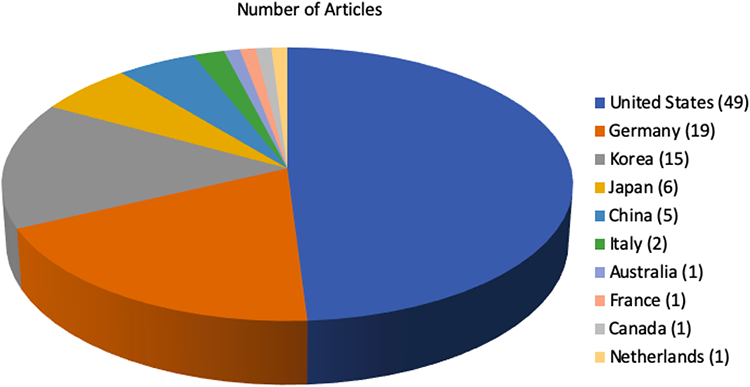
The top 100 cited articles on endoscopic spine surgery based on country.
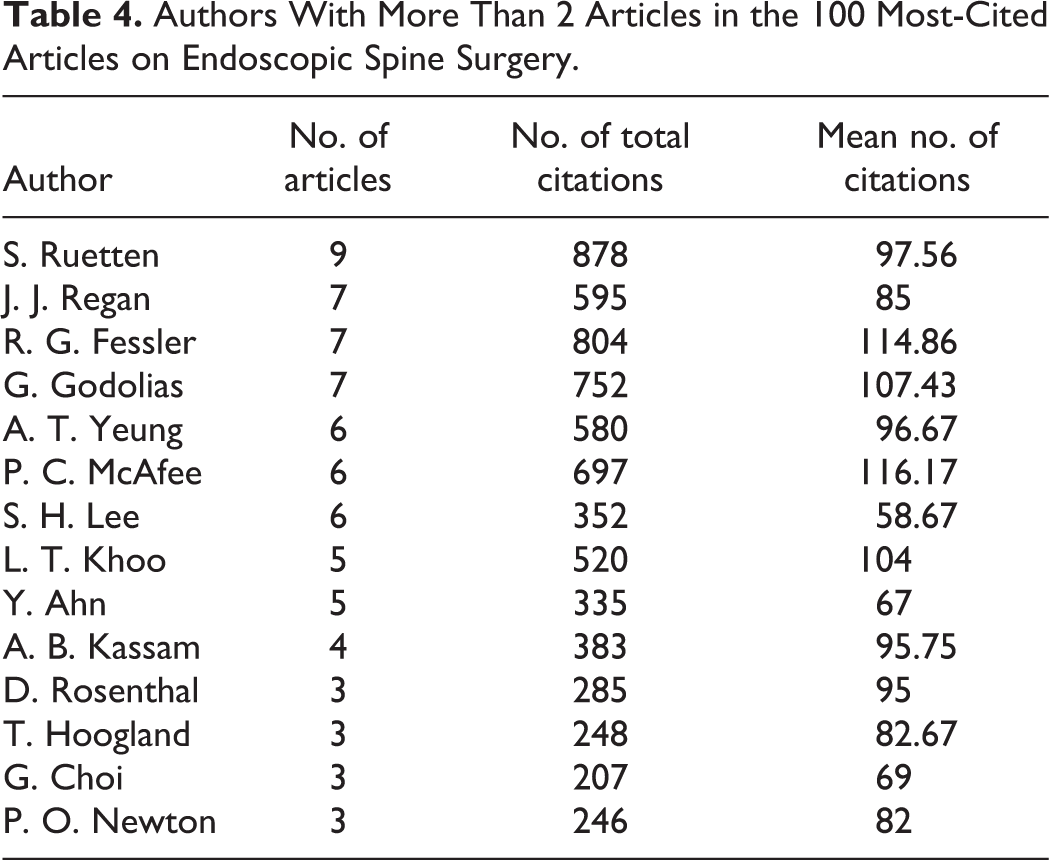
Overall, authors with more than two publications of the 100 most-cited articles on ESS are listed in Table 4. Among them, Dr S. Ruetten contributed the most studies (n = 9), followed by J. J. Regan, R. G. Fessler, and G. Godolias (each of them published 7 articles). Three other authors, A. T. Yeung, P. C. McAfee, and S. H. Lee published 6 articles each.
Authors With More Than 2 Articles in the 100 Most-Cited Articles on Endoscopic Spine Surgery.
All of the 100 most-cited articles involved 5 separate endoscope designs, including spinal endoscopy, thoracoscopy, laparoscopy, arthroscopy, and nasendoscopy. The endoscopic type with the largest number of articles on the top 100 list was spinal endoscopy (n = 75), followed by thoracoscopy (n = 10), and then laparoscopy (n = 9), nasendoscopy (n = 5), and arthroscopy (n = 1) (Figure 3).
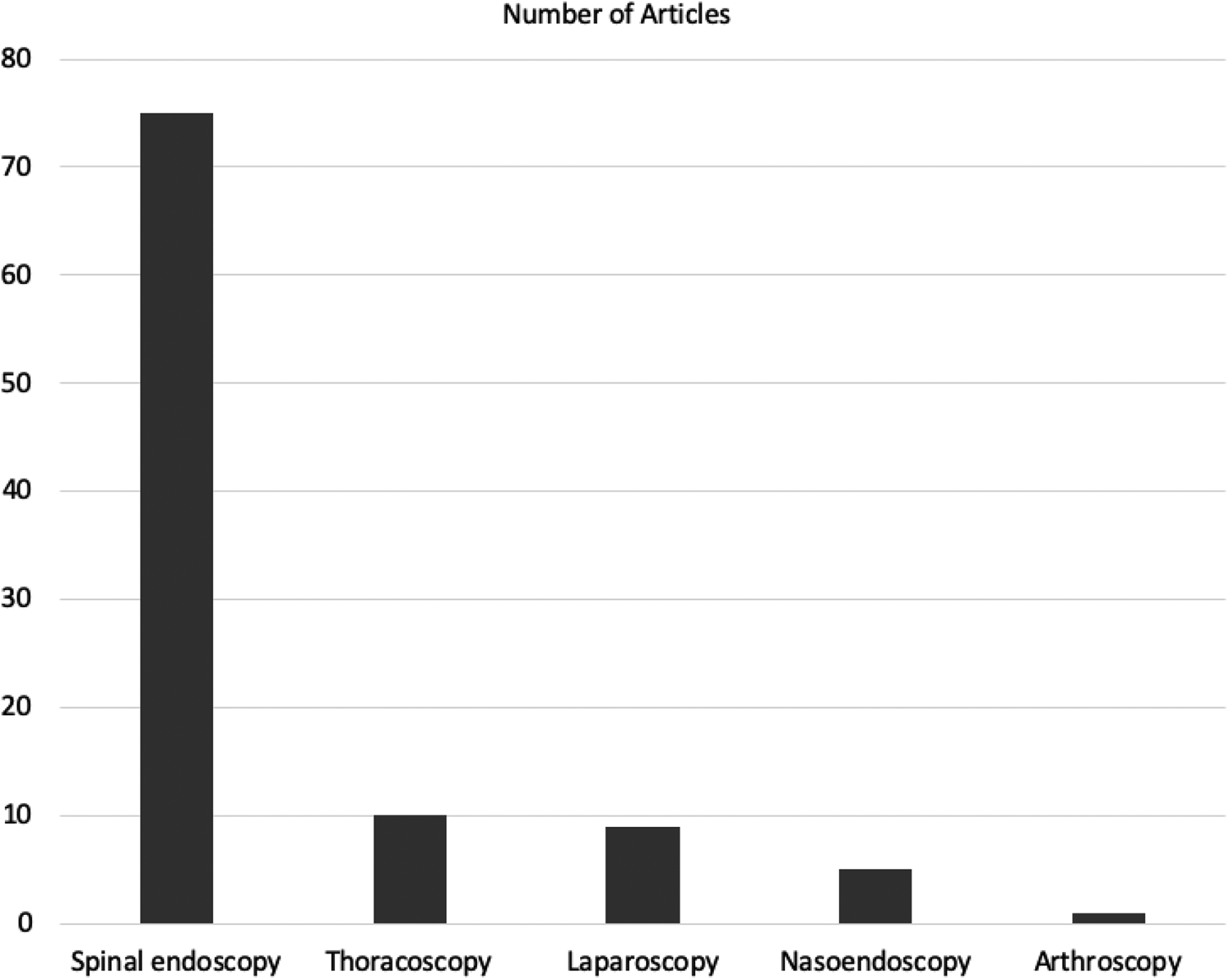
Types of endoscopes used in the top 100 cited articles.
Application of minimally invasive ESS techniques in the top 100 cited articles on ESS was listed in Figure 4. The range of the spinal disease could be covered by ESS is almost anywhere of the entire spine including cranio-vertebral spine, subaxial vertebral spine, thoracic spine, thoracolumbar spine, and lumbar spine. The site with the highest number of articles on the top 100 list was lumbar spine (n = 62), whereas the site with the lowest number was thoracolumbar (n = 2).
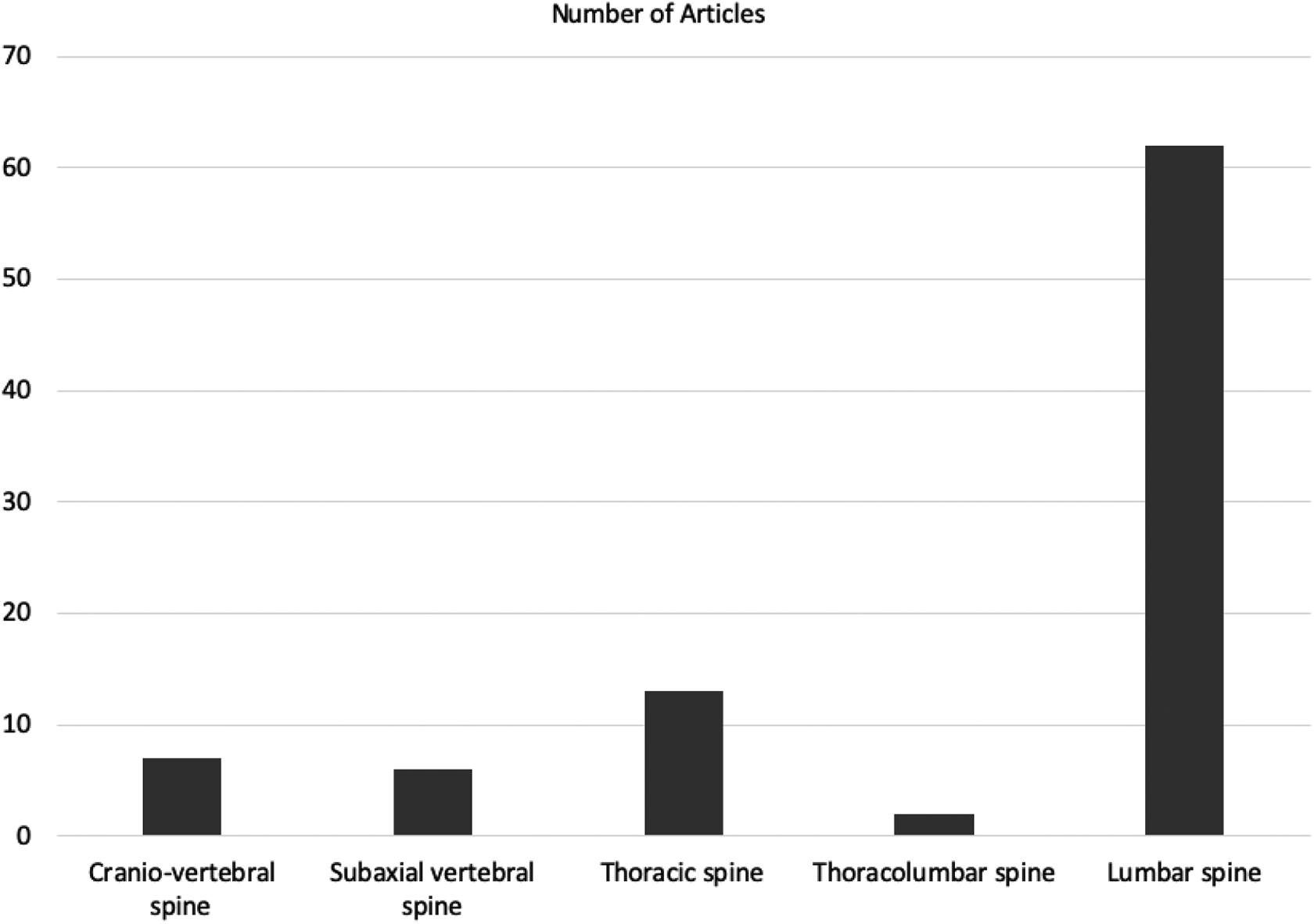
Application of the top 100 cited articles on endoscopic spine surgery.
Discussion
With the development of minimally invasive surgical techniques, as well as the advantages of modern medical imaging and computer science, significant progression in the field of ESS have been made in recent several decades. Numerous specialists and scholars engaged in research of ESS and published a large number of articles. Recently, a bibliometric study included all the publications related to full-ESS and assessed the characteristics of worldwide research productivity. 26 However, there has never been a comprehensive analysis of the literature regarding to all kinds of endoscopies for spine surgery to identify the most influential studies in the field. The current study presents the top 100 most-cited research publications in the field of ESS by measuring the number of citations.
A number of top-cited studies in the field of spinal surgery have been reported. In 2012, Murray et al 27 reported for the first time that the citation number of the top 100 most-cited spine articles ranged from 240 to 1695. Till 2016, Huang et al 28 reported that the citation number of top 100 cited articles on low back pain ranged from 249 to 1638. In the same year, Rüegsegger et al 29 found that the citation number of the 100 most influential publications in cervical spine research ranged from 173 to 879. Most recently, Badhiwala 30 et al reported that the citation number of the top 100 most-cited articles published in spine journals ranged from 343 to 1949. The only article published so far about the top 50 cited articles about MISS was published in 2017, with the citation number up to 321.67. 31 To the best of our knowledge, this present study is the first to identify the 100 most-cited studied focused on all kinds of ESS. However, the current 100 highest cited articles on ESS were cited 44 to 263 times. In comparison, the citation number of articles on ESS was relatively smaller than most of the previous bibliometric studies. This could be attributed to the relatively late application of endoscope in the field of spine surgery. In 1988, Dr P. Kambin et al 32 first proposed the concept of endoscopic lumbar discectomy. Since then, a growing number of researchers and surgeons have focused on ESS. Over the past 2 decades, although ESS has garnered increased attention from spine surgeons and their patients, due to the limited indications of ESS, the acceptance of ESS by some spine surgeons was still relatively limited. Moreover, inexperienced young spine surgeon without formal training are unable to perform ESS well due to the relatively steep and long learning curve compared with classical open surgery. Finally, as a relatively new field, less people participate in the basic research of this surgical technique. As a result, a total of 408 articles only were identified between 1997 and 2018. 26
There is no doubt that the publishing date can affect citation numbers, the longer the time period after the article publication, the greater chance the article could be cited. Our study showed that the most productive periods were 2001 to 2005 and 2006 to 2010, with a total of 65 articles. However, there were only 6 articles (with 300 citations in total) published from 2011 to 2015, because the recently released articles still need time to be cited widely.
In total, 28 different journals published the top 100 most-cited studies, with the Spine contributing most studies, followed by Neurosurgery, which is inconsistent with previous report. 26 The reason why Spine was the most productive journal and highest cited journal may be related to the fact that Spine is a top journal sought after in spine surgery publications, and its articles have a high influence. A recent study showed that the top 3 journals with the highest number of articles were World Neurosurgery, Pain Physician, and Spine. The underlined reason for the difference could be their focus only on full-ESS.
Overall, 10 countries contributed to the 100 articles, and the most productive country was the United States, which was consistent to other bibliometric studies in the field of spine surgery. 33,34 The reasons for this could be closely related to the country’s investment in scientific research and the efforts of researchers. In contrast, Asian countries make a relatively small contribution to the 100 most-cited articles, which indicated that there is still a large gap of scientific studies between Asian countries and Western developed countries. This could partially be attributed to non-English language studies were excluded by our study. However, a recent study showed that if all articles published for full-ESS are considered, the largest number of articles was from China, followed by South Korea and the United States. It could be due to the relative lower quantity and late start of Asian countries. 26
In counting the authors who contributed to the 100 top-cited articles on ESS, we counted both first and last authors. Since the first author usually contributed most and the last author usually was the senior author, counting both authors will be better for elucidation the contribution of the researchers in this field. The authors listed in Table 4 have made a significant contribution to the development of the ESS; however, it does not mean that the contributions of the authors who are not on the list is any less. Although P. Kambin has only 1 article on the list of the 100 top cited articles, he was the pioneer who proposed the concept of endoscopic lumbar discectomy in 1988 for the first time. 32 The worldwide used triangular safe zone contoured by the anterior exiting root, the medial traversing root and the upper endplate of the lower lumbar spine was described and named after Dr P. Kambin too.
There are several limitations to our study. The date for literature search was March 15, 2019, which could theoretically affect the citation numbers by the time. However, the trends are unlikely to change dramatically. Moreover, although the method of bibliometrics is widely used in various research fields, the number of citations does not fully reflect the influence of the articles. It may be affected by many factors, such as the time of publication, the influence of journal, and the field of study. Furthermore, not only will the article be cited when praising an article, but it will still be cited when criticizing the article, and yet increase the citation rate of the article. Finally, since the 100 top-cited articles selected in this study are limited to English, we might have missed out some high-impact articles in other languages.
In summary, despite its limitations, bibliometric analysis is still one of the best tools to quantify the impact of scientific publications in some specific field, and it is also a common tool to quantify the contributions of researchers and their origins. We believe that the current research represents a valuable summary on the topic of ESS, which establishes another scientific milestone in the field of spinal surgery. Our study identified historical milestones and research hotspots of ESS, with its aim to highlight the contribution of responsible researchers and countries. Moreover, this bibliometric analysis also provides interesting research directions for researchers dedicated to the study of ESS in the future.
Conclusions
This bibliometric study is meant to propose a list of intellectual milestones in the field of ESS. The 100 most-cited publications in ESS were searched and analyzed, and the contribution of the authors and their origins were identified. Concepts will also continue to evolve, as new endoscopes, instrumentation, philosophies of surgical spine care, researchers, and surgeons may use the work of our predecessors to guide future ESS-related research.
Footnotes
Declaration of Conflicting Interests
The author(s) declared no potential conflicts of interest with respect to the research, authorship, and/or publication of this article.
Funding
The author(s) disclosed receipt of the following financial support for the research, authorship, and/or publication of this article: This study was supported by grants from Zhejiang Provincial Health Bureau Science Foundation of China (2018KY017).
