




Abstract
Background:
Outdoor workers face unique challenges in preventing heat-related illnesses (HRI). Although preventable, HRI and death from heat exposure continue. A review of the most recent recommendation for HRI prevention in outdoor workers in the United States was warranted. A scoping review using PRISMA guidelines was conducted to compile policy statements and recommendations on the prevention of HRI and synthesize them into a three-step plan for prevention using the Haddon Matrix.
Method:
PubMed, CINAHL, Medline, and websites from organizations and regulating bodies were searched for sources. Key terms such as occupational OR workers OR employers OR policymakers, HRI OR heat stress OR heat, prevention, recommendations OR position statements were used. Inclusion criteria were articles published within the last 5 years written in English and containing recommendations for preventing HRI in outdoor workers. Research not based on U.S. workers was excluded from the review.
Results:
Twenty sources comprised the review. Several themes emerged, indicating deficient recommendations for secondary and tertiary prevention.
Conclusion/Application to Practice:
This review’s findings can be used by occupational health nurses (OHNs) in developing comprehensive interventions for preventing HRI and injury, using clear language, and following evidenced-based practices to increase workplace health and safety and promote equity.
Keywords
Background
Climate change is projected to increase global temperatures; heat waves are expected to increase in duration and severity, severe and damaging storms and droughts are becoming more frequent, and air pollution is expected to increase (National Aeronautics and Space Administration [NASA], 2021). It is also causing an increase in food insecurity and displacement (Gamble et al., 2016). Protecting workers now and in the future from the consequences of climate change is imperative.
Outdoor workers face a unique set of challenges in their everyday routines, engaging in work that is often physically strenuous, where the climate is uncontrolled. Outdoor workers are disproportionately affected by climate change as they have to endure heat waves or other outdoor events such as increased air pollution (Gamble et al., 2016). Due to climate change, average and extreme temperatures are rising, and heat waves are becoming more common (NASA, 2021, putting outdoor workers, especially those with physically demanding jobs, at a higher risk for HRIs; Gamble et al., 2016).
Heat-related illness (HRI) is deadly to workers. In fact in the United States, there were 436 work-related deaths caused by heat between 2011 and 2023, and most deaths by heat occur during the first 3 days on the job (Arbury et al., 2016; Bureau of Labor Statistics, U.S. Department of Labor, 2023). Moreover, the majority of heat-related deaths in the United States are outdoor workers (Roelofs, 2018). HRI can also cause long-term effects such as neurological, cardiovascular, hepatic, hematologic, and renal damage (Adnan Bukhari, 2023).
Plans to prevent and treat HRI are needed to mitigate adverse outcomes. This scoping review had a twofold purpose: (a) compile policy statements and recommendations from research, government and regulating bodies, and other organizations concerned with the prevention of occupational HRI in the United States and (b) synthesize them into a three-step plan for prevention and injury interventions based on the Haddon Matrix (Haddon, 1980).
Method
The Haddon Matrix is a tool for reducing injuries by assisting in developing strategies and planning for risk reduction (Haddon, 1980). The Haddon Matrix has two dimensions. The first is the time phases: pre-event, event, and post-event. The second dimension comprises host, vector, and environment-influencing factors (Haddon, 1980). In this review, the event was defined as occupational HRI stratified into primary (pre-event) recommendations for the prevention of HRI, secondary (event) recommendations, and tertiary (post-event) recommendations. The host is the worker, the vector is the employer, and the environment is the policy. Figure 1 depicts the original phases and factors of the Haddon Matrix with our use of them in parentheses.
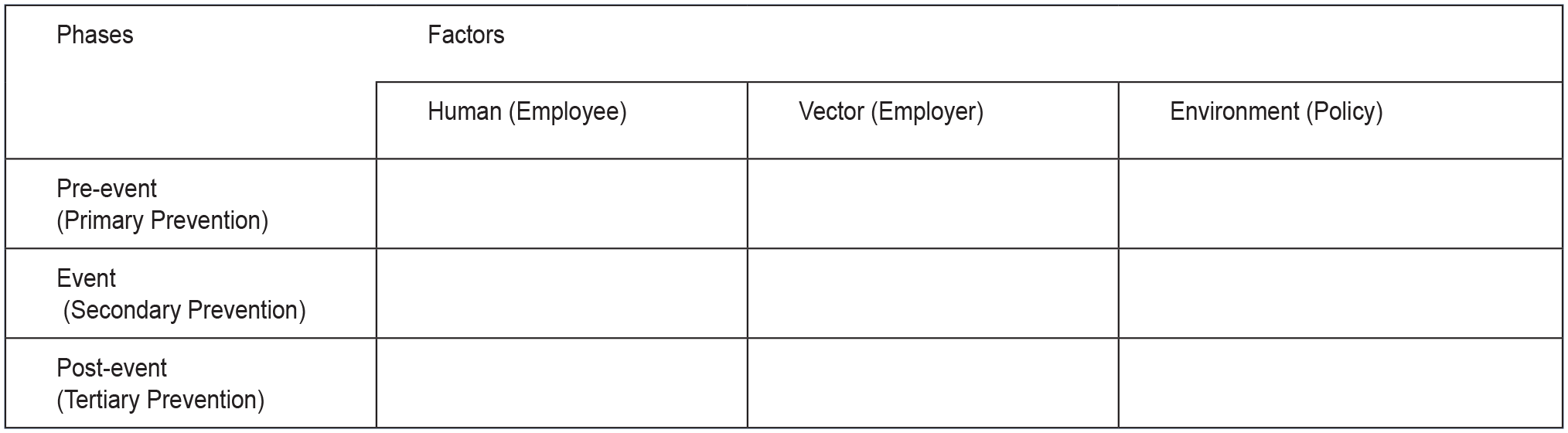
Haddon Matrix Example
Search Strategy
A scoping review was used following Arksey and O’Malley’s (2005) five-stage methodological framework. The framework includes identifying the research question, identifying relevant literature, selecting the included studies, charting the data, which includes sorting information according to themes and reporting the results. We adhered to the Preferred Reporting Items for Systematic reviews and Meta-Analyses (PRISMA) Extension for Scoping Reviews (Tricco et al., 2018). See Figure 2, depicting the PRISMA 2020 Flow Diagram, showing our process of identifying and synthesizing the recommended prevention measures for HRI. A literature search and review of websites from leading authorities on occupational HRI were used to identify relevant literature published from January 2018 through March 2023. Searches occurred for HRI prevention recommendations within the last 5 years, with the results from all sources compiled. The search began with PubMed, CINAHL, and Medline using key terms such as occupational OR workers OR employers OR policymakers, HRI OR heat stress OR heat, prevention, recommendations OR position statements. We limited the searches to exclude sources published before 2018 to obtain the most up-to-date recommendations.
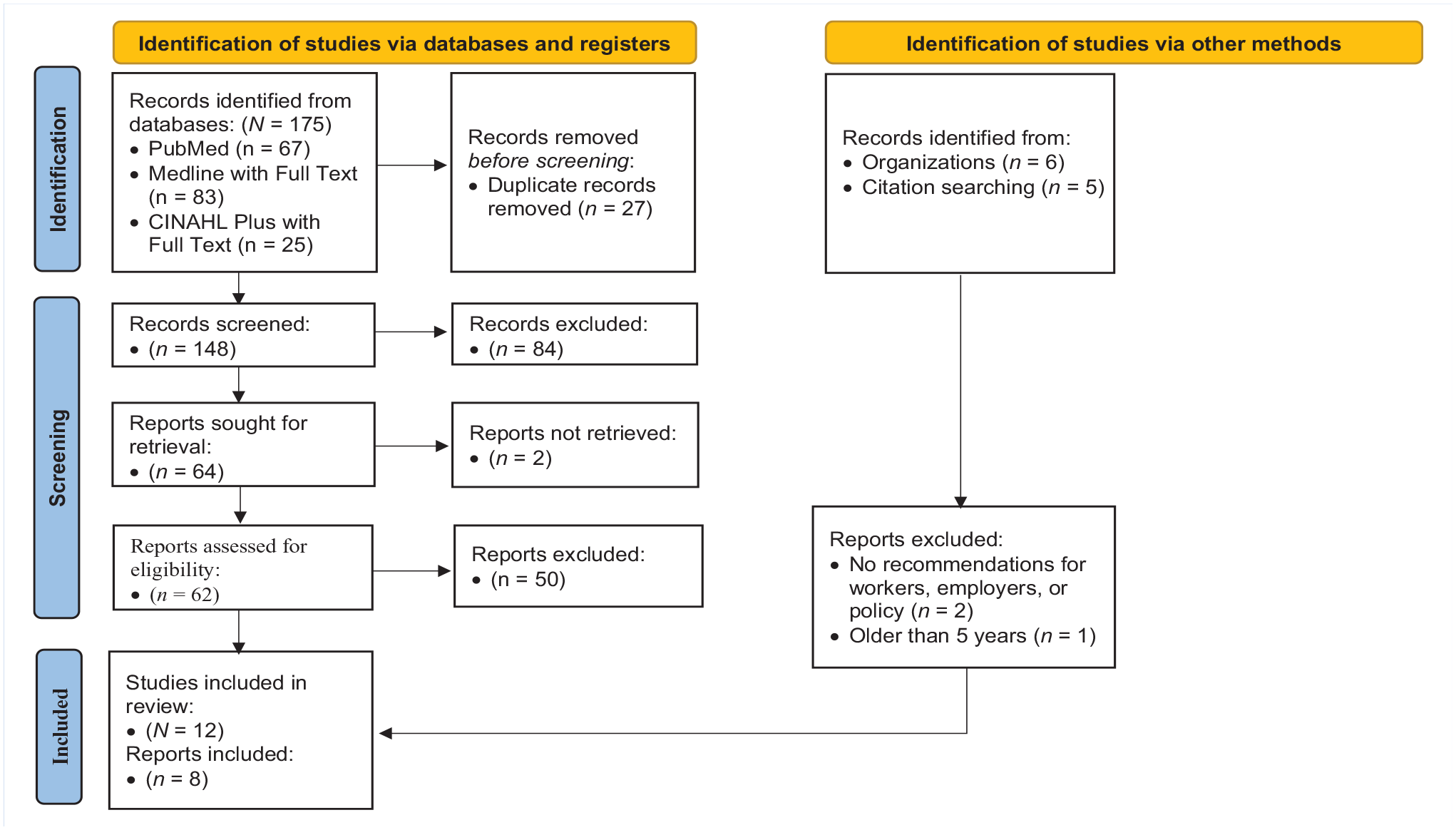
PRISMA 2020 Flow Diagram for New Systematic Reviews
The searches returned 175 records. Searches on PubMed occurred using the MeSH string ((“Heat Stress Disorders” [MeSH Terms] OR “Heat Stress Disorders” [MeSH Major Topic]) AND “occupational groups” [MeSH Terms] AND (“Accident Prevention” [Mesh] OR “prevention and control” [Subheading] OR “Tertiary Prevention” [Mesh] OR “Primary Prevention” [Mesh] OR prevent*[tiab])). Searches on CINAHL Plus with Full Text and Medline with Full Text included the search string (heat stress or thermal stress or hyperthermia) AND (prevention or intervention or treatment or program or control or strategy or management) AND (workers or employees or staff or personnel or worker) AND (recommendations or guidelines or best practice or suggestions).
We searched the websites of authority organizations and regulating bodies including the Environmental Protection Agency, Occupational Safety and Health Administration (OSHA), National Institute for Occupational Safety and Health (NIOSH), American College of Occupational and Environmental Medicine, American Industrial Hygiene Association, and American Association of Occupational Health Nurses for position statements, guidelines, or recommendations and identified six records. Citation searches returned five more records.
We reviewed titles and abstracts for inclusion and exclusion criteria. Inclusion criteria were articles and position statements containing recommendations for preventing HRI in workers. Because our focus is on policy statements and recommendations for U.S. workers, we excluded articles not focused on workers in the United States. Additional sources excluded were those without results for policy, employer, or employee HRI prevention, as uncovering this information was the purpose of this review.
Analysis
We compiled the recommendations and policy statements into an extraction table, separating the data by whom the recommendation was for worker, employer, or policy. Data on the population and setting were collected when relevant. Other data included in the table were the first author and date, source type, and study design.
We read the data line by line and coded them into themes using thematic analysis guidelines (Braun & Clarke, 2006). The thematic analysis process involves familiarizing oneself with the data, creating initial codes, searching for themes, reviewing themes, defining and naming themes, and generating a report (Braun & Clarke, 2006). Generating an initial extraction table familiarized us with the data. Coding was done line by line to generate initial codes. The codes were then sorted into themes that were then defined and named.
Next, the data underwent additional coding in line with the three levels of prevention with the Haddon Matrix format (Haddon, 1980; Table 2). The table presented the recommendations in three categories (or columns): policymakers, employers, and employees. The recommendations were further split by phases (rows) into primary, secondary, and tertiary prevention. We summarized the data to increase comprehension for potential consumers’ ease of access and use while maintaining the experts’ essential information and details.
Results
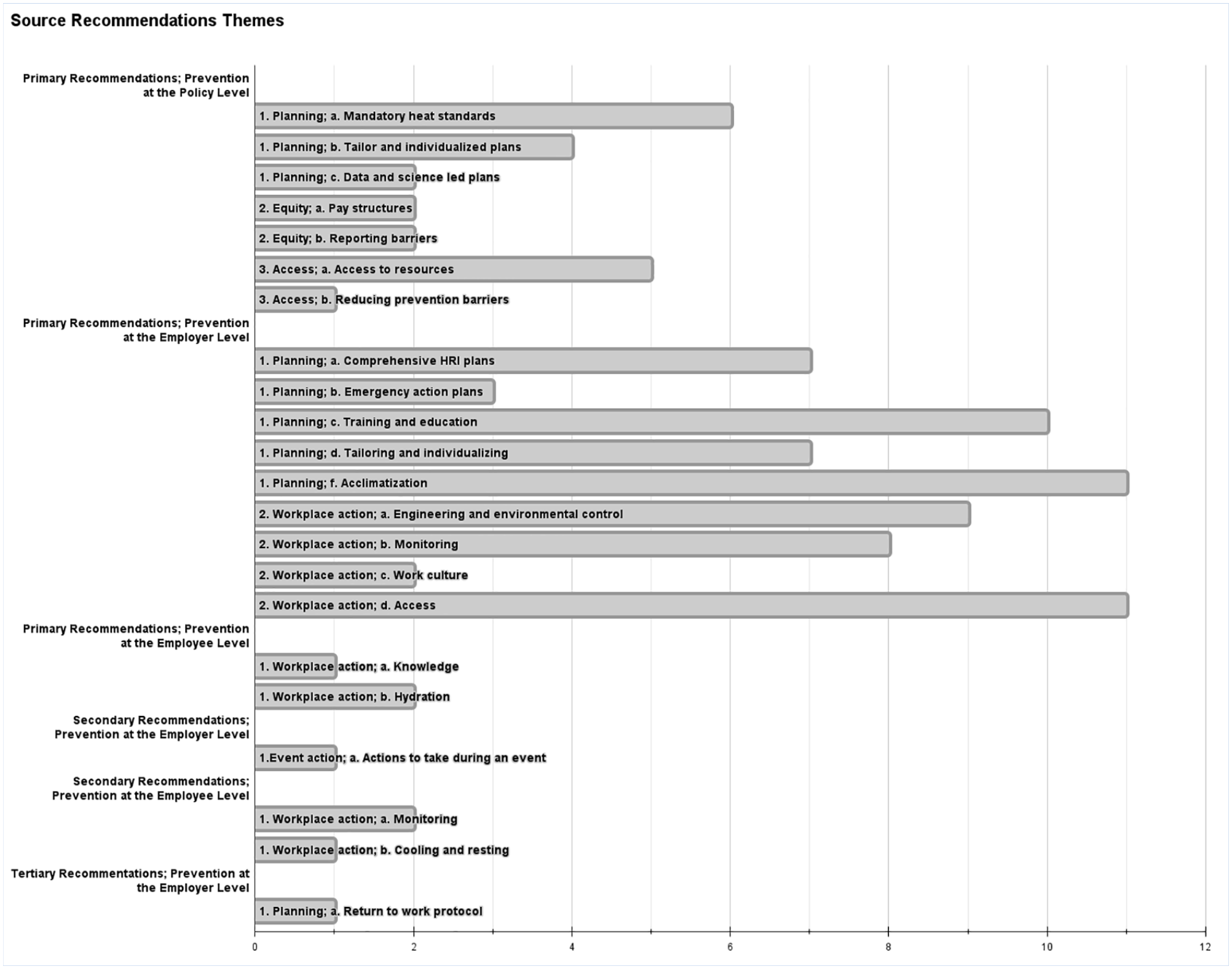
The final analysis included 20 sources: 17 articles and 3 organizational statements. We identified 192 recommendations from the sources. Many of the sources’ recommendations addressed employers n = 14 (Centers for Disease Control and Prevention [CDC], 2018; Dong et al., 2019; Hesketh et al., 2020; Langer et al., 2021; Luque et al., 2020; Methner & Eisenberg, 2018; Morrissey et al., 2021; National Safety Council [NSC], 2022; Smith et al., 2021; Sol et al., 2021; Tustin et al., 2018; Wang et al., 2019). While 11 sources had recommendations aimed at policy (American Industrial Hygiene Association [AIHA], 2023; Arcury et al., 2019; Bartman et al., 2022; Chavez Santos et al., 2022; Dong et al., 2019; Hesketh et al., 2020; Langer et al., 2021; NSC, 2022; Vega-Arroyo et al., 2019), only four included recommendations for workers (CDC, 2018; Methner & Eisenberg, 2018; Morrissey et al., 2021; Smith et al., 2021). See Figure 3 for a diagram of the recommendation themes. The population focus and location in the research articles varied (see Table 1).
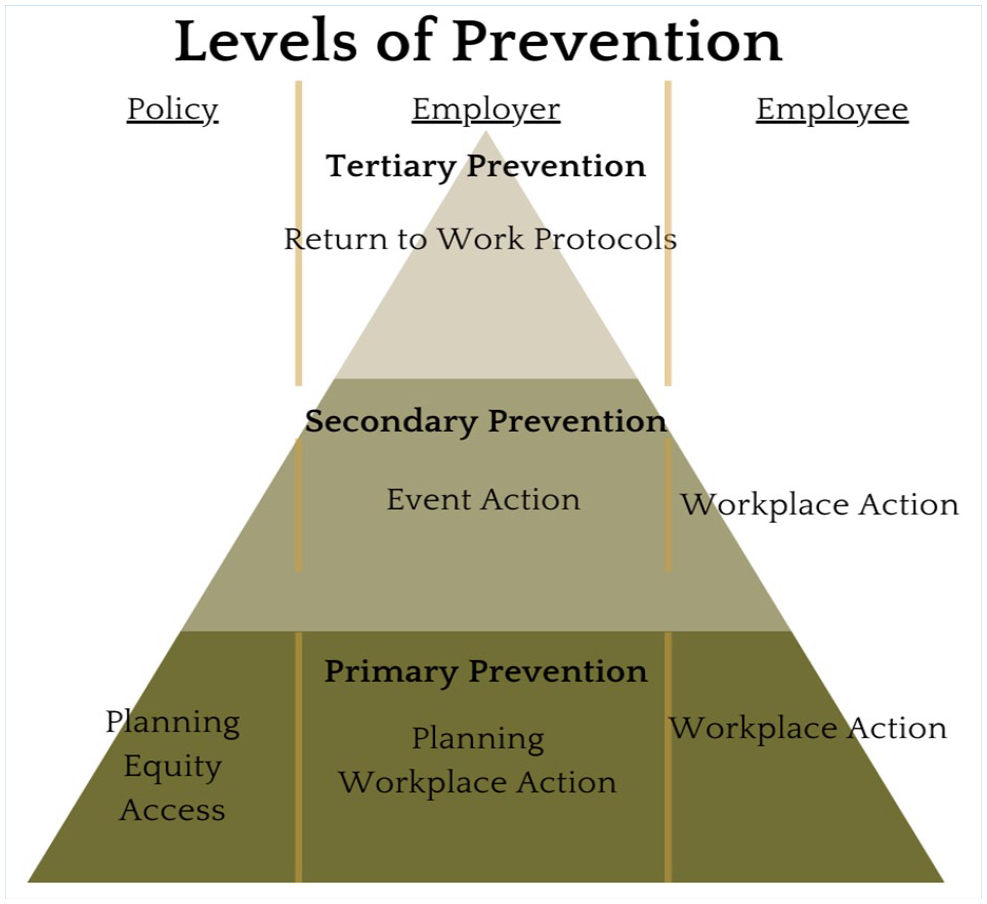
Diagram of Recommendation Themes
Data Extraction Table

Note. Extraction table used to collect and present the data for this scoping review.
Haddon Matrix Table.
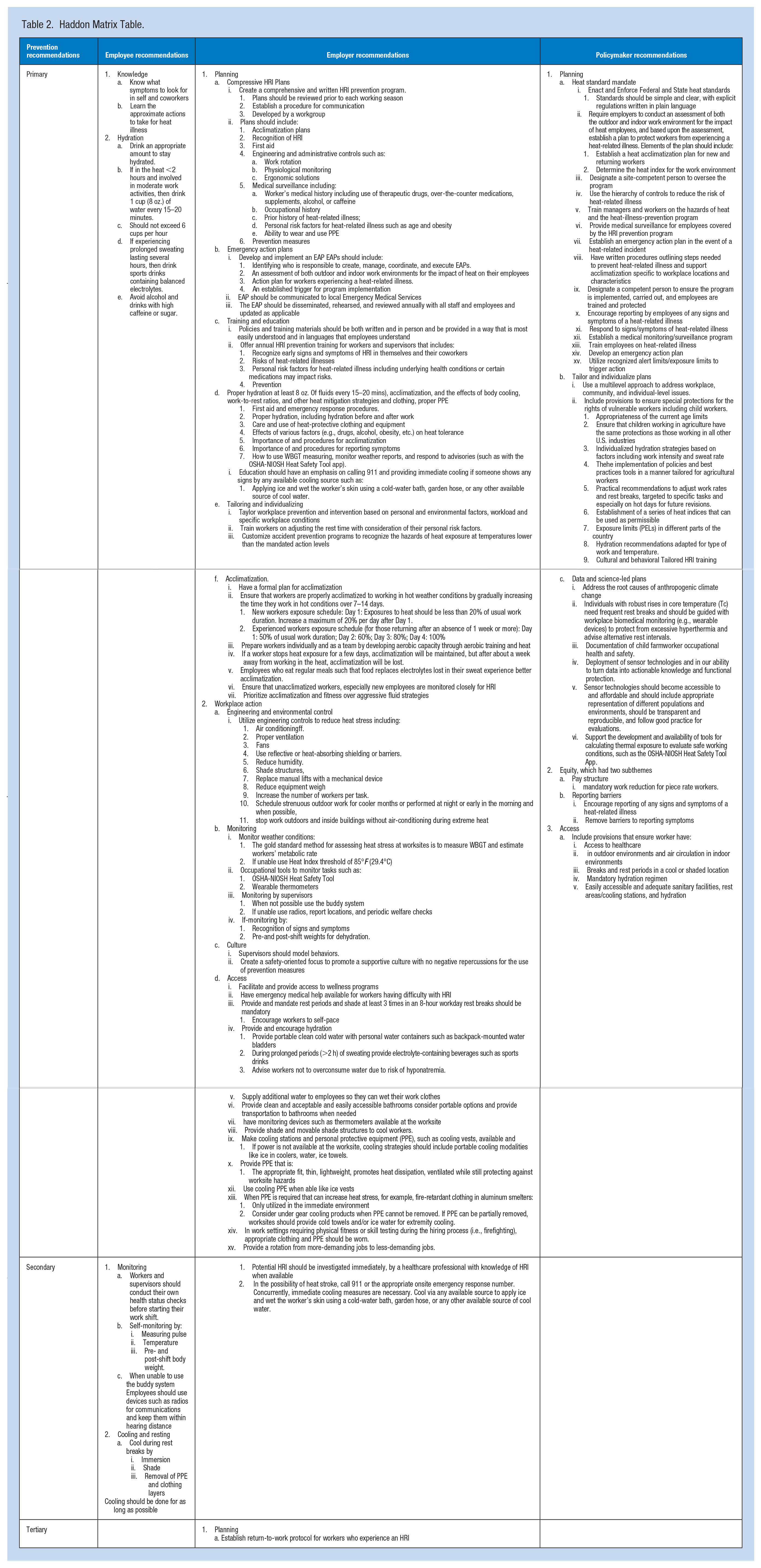
Primary Recommendations
Prevention at the Policy Level
We identified three major themes for prevention at the policy level within primary recommendations: planning, equity, and access. The first theme, planning, addressed mandated heat standards, tailored and individualized plans, and data- and science-led plans. While some sources just recommended that heat standards be mandated, others suggested recommendations for their development, such as wording or topics, including surveillance, training, and reporting (AIHA, 2023; Arnold et al., 2020; Bartman et al., 2022; Dong et al., 2019; Langer et al., 2021; NSC, 2022; Vega-Arroyo et al., 2019). Tailored and individualized plans had recommendations for addressing individual factors that could affect HRI, such as health, age, culture, and behavior; labor/task or work rates; and environmental temperatures (Arnold et al., 2020; Bartman et al., 2022; Chavez Santos et al., 2022; Langer et al., 2021). Data- and science-driven recommendations included the use of research, and data collection through wearable devices, documentation, and other means (AIHA, 2023; Bartman et al., 2022; Dong et al., 2019; Hesketh et al., 2020).
The second theme, equity, addressed pay structures and reporting barriers. Recommendations included addressing factors related to pay structure (Chavez Santos et al., 2022; Vega-Arroyo et al., 2019). Piece rate pay is commonly used to compensate farmworkers, and workers’ pay is based on the amount they harvest instead of paying an hourly wage (National Farm Worker Ministry, 2020). Sources also recommended encouraging reporting and addressing the barriers to reporting (Chavez Santos et al., 2022; NSC, 2021). Access encompassed recommendations to improve access to resources such as healthcare and prevention measures (Bartman et al., 2022). Some recommendations for reducing barriers to prevention included providing restroom access to ensure workers can hydrate adequately (Chavez Santos et al., 2022).
Prevention at the Employer Level
Two themes emerged regarding employer recommendations: planning and workplace action. Planning comprised comprehensive HRI plans, emergency action plans, training and education, tailoring and individualizing, and acclimatization. Recommendations addressing comprehensive HRI plans included suggestions for plans to be written and comprehensive, including training environmental assessments and forming an employee work group to assist in developing policies and procedures (Luque et al., 2020; Methner & Eisenberg, 2018; Morrissey et al., 2021; NIOSH, 2018; NSC, 2022; Smith et al., 2021; Tustin et al., 2018).
The sources’ recommendations for emergency action plans consisted of implementing an emergency action plan and suggestions of what the plan should include (Morrissey et al., 2021; NSC, 2022; Tustin et al., 2021). Recommendations included what types of education and training should be given and suggestions for how and when to provide it (CDC, 2018; Dong et al., 2019; Luque et al., 2020; Methner & Eisenberg, 2018; Mizelle et al., 2022; Morrissey et al., 2021; NSC, 2022; Smith et al., 2021; Tustin et al., 2021; Wang et al., 2019). Some examples include annual training, which is easily understood and incorporates components including recognition and risks of HRI, prevention measures, how to perform first aid, and acclimatization (Morrissey et al., 2021; Tustin et al., 2021).
Recommendations under the subtheme tailoring and individualizing prevention included tailoring interventions to personal and environmental factors such as underlying health conditions and medications that impact HRI risk, job demands, personal protective equipment (PPE) use, workload, and specific workplace conditions (Dong et al., 2019; Hesketh et al., 2020; Mizelle et al., 2022; Morrissey et al., 2021; NSC, 2022; Tustin et al., 2021; Wang et al., 2019).
Most sources had recommendations for acclimatization, such as requiring a plan for acclimatization and what it should look like (CDC, 2018; Luque et al., 2020; NSC, 2022; Sol et al., 2021; Tustin et al., 2018, 2021). The NSC (2022) recommended following an established and formal heat acclimatization program.
The theme of workplace action had four subthemes: engineering controls, monitoring, culture, and access. Recommendations for engineering controls encompassed reducing workplace HRI through various methods, including ventilation, air-conditioning, and scheduling techniques (CDC, 2018; Dong et al., 2019; Methner & Eisenberg, 2018; Mizelle et al., 2022; NSC, 2022; Sol et al., 2021; Tustin et al., 2018, 2021; Wang et al., 2019).
Recommendations for monitoring included monitoring, self, others, and environmental means such as the buddy system, wearable devices, monitoring the weather, and using Wet Bulb Globe Temperature (WBGT) meters (CDC, 2018; Luque et al., 2020; Methner & Eisenberg, 2018; Morrissey et al., 2021; NSC, 2022; Tustin et al., 2018, 2021; Wang et al., 2019). The WBGT is the standard for measuring heat stress, including direct sunlight, temperature, humidity, wind speed, sun angle, and solar radiation (US Department of Commerce, n.d.).
Work culture recommendations were focused on a safety-oriented focus and modeling behaviors (Langer et al., 2021; Smith et al., 2021). Access encompassed workers’ access to prevention such as wellness programs and adequate access to restrooms, hydration, and PPE (CDC, 2018; Dong et al., 2019; Langer et al., 2021; Luque et al., 2020; Methner & Eisenberg, 2018; Morrissey et al., 2021; NSC, 2022; Smith et al., 2021; Tustin et al., 2018, 2021; Wang et al., 2019).
Prevention at the Employee Level
The primary recommendations for prevention at the employee level had the least information and comprised one theme: workplace action, which had two subthemes: knowledge and hydration. The recommendation for knowledge included knowing HRI symptoms and what actions to take (Smith et al., 2021). The recommendations for hydration focused on specific instructions for employees to follow (CDC, 2018; Morrissey et al., 2021).
Secondary and Tertiary Recommendations
Very few sources had secondary or tertiary recommendations. There were no recommendations for prevention at the policy level. Recommendations mostly focused on employers (see Figure 4). Secondary recommendations for prevention at the employer level consisted of event actions such as prompt assessment of possible HRI and calling 911 in case of possible heatstroke (Tustin et al., 2021). Tertiary recommendations for prevention at the employer level suggested establishing a return-to-work protocol for workers who experience HRI (Morrissey et al., 2021).
Source Recommendations Themes
Secondary employee recommendations had one theme, workplace action, with two subthemes: monitoring and cooling and resting. Monitoring consisted of suggestions for several types of monitoring, including health checks, self-monitoring, and the use of devices when unable to use the buddy system to monitor coworkers (Methner & Eisenberg, 2018; Morrissey et al., 2021). Cooling and resting focused on how workers should cool themselves: suggesting that workers cool for as long as possible, removing PPE, and immersing in cold water (Morrissey et al., 2021).
Discussion
Using the Haddon Matrix, we compiled and summarized recommendations from researchers and position statements from leading organizations regarding the prevention of occupational HRI. Several major themes emerged from this scoping review that are important factors to consider in the prevention of occupational HRI.
Implementing primary prevention recommendations at the policy level is the initial step in prevention, as the policy level dictates the responsibilities of both employers and employees. While various sources offered recommendations in this area, they did not constitute the majority. This could be attributed to the lack of the implementation of mandating heat standards, causing sources to feel that their recommendations at the policy level have been disregarded or that they will not produce meaningful outcomes. However, recently, OSHA issued a Notice of Proposed Rulemaking for Heat Injury and Illness Prevention in Outdoor and Indoor Work Settings (Occupational Safety and Health Administration [OSHA], n.d.). While this is a significant step toward protecting workers, it may be a while before the protections take effect, as the process of rule-making at OSHA takes an average of 10 years (US Government Accountability Office, 2012). Delays in the agency’s internal processes could further harm workers, and a reevaluation, incorporating scientific methodologies to expedite the development of standards, is warranted.
When the policies are implemented, it is important to follow expert guidance. For example, policymakers also should be mindful that many recommendations may not be practical for all settings. For example, smaller companies and farms likely cannot hire onsite medical staff for monitoring, and some engineering controls are inaccessible due to cost or settings (Gubernot et al., 2015). Considering this, to protect workers at smaller farms, local governments could partner with organizations to provide medical access to those in need. For example, Farmworker Justice (2024) is an organization that provides training, educational materials, and other resources to assist community health centers provide quality care to farmworkers.
The recommendation inadequately emphasized the crucial need for policy to adapt to the evolving environment impacted by climate change. This aspect holds significant importance and warrants increased consideration. Science-driven policies addressing the effects of climate change are necessary to prevent future problems from occurring due to climate change-related HRI. Policies should be backed by science and follow evidence-based practice. This finding is consistent with the literature in other fields that climate change poses a significant threat to human health and needs action now. There are numerous methods through which policies can mitigate climate change. However, the key factor is taking action. Many countries, including the United States, have signed the Paris Agreement, but few are achieving their objectives (Hamilton et al., 2021). One state, California, has partnered with Japan in an effort to strengthen and coordinate efforts on combating climate change, promoting economic and trade relations through renewable energy, and other climate change mitigation actions (the State of California, United States of America & Japan, 2022).
While equity did not receive as much focus, it is a necessary topic in its contribution to HRI via pay and reporting barriers. Workers should not have to risk their safety or health for fear of retaliation from employers for reporting dangerous working conditions. According to Snipes et al. (2017), up to 69% of injuries that occur on farms go unreported, because Latino workers fear discrimination and threats or fear of deportation. Furthermore, it is essential that workers’ compensation does not jeopardize their well-being. Piece rate pay is problematic as it encourages skipping breaks and working beyond one’s physical limits. According to the National Farm Worker Ministry (2020) in North Carolina, following piece rate pay, a worker would need to pick 635 pounds of sweet potatoes in an hour to make pay equal to minimum wage, as a 35-pound bucket of sweet potatoes is worth roughly 45 cents.
Access to means of HRI prevention is critical. Addressing worker access was a frequent recommendation; however, there was less focus on barriers that exist to prevention (Bartman et al., 2022; Chavez Santos et al., 2022; Langer et al., 2021; NSC, 2022; Vega-Arroyo et al., 2019). This is important as, according to the literature, access does not always result in workers’ use of prevention measures (Bethel et al., 2017). There could be various underlying reasons for not using prevention measures, such as a reduced willingness to stay hydrated due to difficulties in accessing restrooms, particularly for women (AIHA, 2023). Ensuring there are no barriers to prevention is just as important as creating plans to implement them.
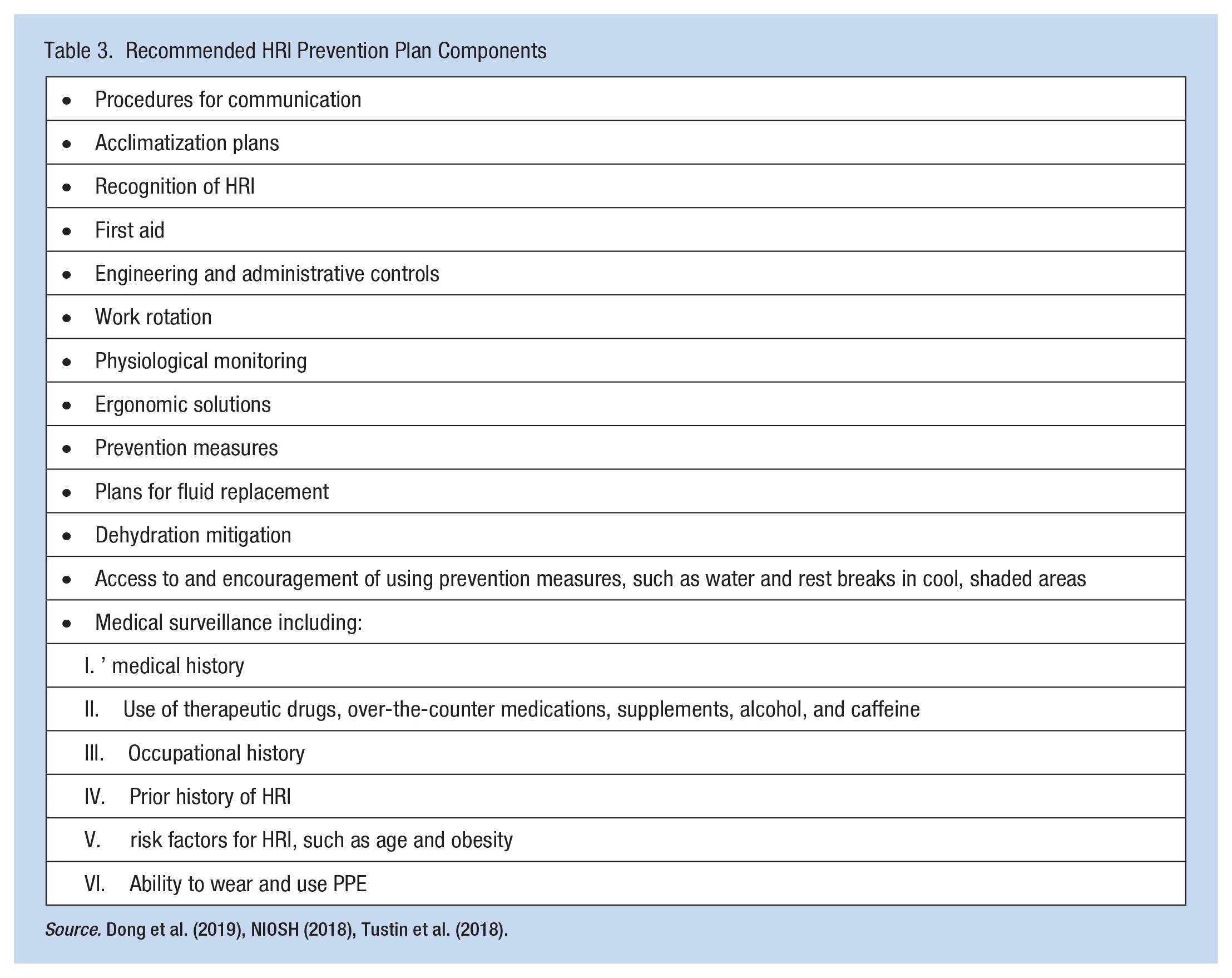
It seems that sources tend to focus their recommendations on the employer level, which could be attributed to their desire for their recommendations to provide the most benefit. Because there are no federal heat standards, employers are in control of preventing HRI. One area of focus was the development of comprehensive HRI plans. The recommended components are listed in Table 3. Emergency action plans are another essential component of planning. Recommended considerations for emergency action plans included establishing a trigger, identifying who is responsible for plan execution, and reviewing and rehearsing the plan (Morrissey et al., 2021; NSC, 2022; Tustin et al., 2021). Recommendations for emergency action plans included having a trigger for when to implement the plan, designating an established person to oversee the plan, communicating the plan to local emergency services, and reviewing and rehearsing plans (Morrissey et al., 2021; NSC, 2022). Triggers for implementing an emergency action plan can include a local heat advisory, an employee showing symptoms, or a specified heat index or WBGT. (US Department of Commerce, n.d.)
Recommended HRI Prevention Plan Components
Source. Dong et al. (2019), NIOSH (2018), Tustin et al. (2018).
Another area in which the majority of sources had recommendations was for training and education. This may be due to the finding that there seems to be a lack of properly educating workers on HRI and prevention and insufficient training to Langer et al. (2021; Smith et al., 2021). For example, when asked about personal risk factors, acclimatization, and hydration, only 14.2% of farmworkers could answer all the questions correctly. A lack of or insufficient training could increase the risk of adverse outcomes if employees cannot recognize HRI or are unaware of proper treatment. It is important to train workers via the most beneficial and effective means. OHNs could create engaging training and educational videos for farmworkers, as it has been previously reported that most workers prefer videos (Courville et al., 2016).
Similar to the recommendations at the policy level, sources had recommendations for tailoring and individualizing. This is probably because certain factors can increase the risk of HRI. For example, workers with two or more risk factors, such as increased body mass index, medications, chronic illnesses, use of alcohol and energy drinks, a history of HRI, working a second job in the heat, and extensive skin pathology, were likelier to develop HRI (34% vs. 19%; McCarthy et al., 2019). While employers cannot personally use this information to protect workers due to the Health Insurance Portability and Accountability Act, hiring OHNs or having access to healthcare where OHNs who are specifically trained in HRI can be advantageous for employers (US Department of Health and Human Services, 2020).
A major focus of primary prevention at the employer level was on acclimatization. This is likely due to the importance of acclimatization in preventing death. The majority of HRI-related deaths occur in the first 3 days of work, with 71% on the day of exposure (Gubernot et al., 2015; Luque et al., 2020). According to the CDC (2018), acclimatization should occur over a 7- to 14-day period with the following guidelines:
• New workers: On Day 1, heat exposure should be less than 20% of the usual work duration, and it should increase to a maximum of 20% per day after that.
• Experienced workers (after an absence of 1 week or more): On Day 1, heat exposure should be 50% of the usual work duration, increasing to 60% on Day 2, 80% on Day 3, and 100% on Day 4.
The recommendations often were not employee-directed, perhaps because the employer is responsible for educating the worker. Recommendations included workers knowing the symptoms of HRI and what actions to take (Smith et al., 2021). However, workers deserve to know more. Workers must understand their rights and responsibilities to advocate for themselves and be partners in their health and safety.
Overall, secondary and tertiary recommendations were limited and absent. Although primary prevention of HRI is critical, HRI continues to occur, indicating the need for secondary and tertiary levels of prevention. Secondary prevention focuses on minimizing the impact when HRI occurs, and tertiary prevention seeks to mitigate any lasting effects of HRI. At a minimum, employees should receive guidance and recommendations for when HRI occurs and what they should do after an event. In addition, policy should address secondary and tertiary prevention in planning and developing standards for HRI.
Limitations
This report has several limitations. As with any review, there is a risk of bias. This scoping review was limited to U.S. studies published within the last 5 years, which could limit the information and, therefore, the results. For example, recommendations from NIOSH (2016), Criteria for a Recommended Standard: Occupational Exposure to Heat and Hot Environments, were not included because they were more than 5 years old. The review does not include guidelines for specific occupations but provides a general overview for all outdoor workers, which may not be generalizable.
Conclusion
This scoping review uncovered gaps in the reported HRI prevention recommendations for workers, employers, and policy. This review showed a significant lack of secondary and tertiary prevention in the literature and position statements from leading authorities. Although primary prevention is essential to prevent the initial event, secondary and tertiary prevention are necessary to mitigate adverse outcomes if an event occurs. We propose that HRI prevention planning and implementation involve all three phases: pre-event, event, and post-event. Occupational HRI is not just the problem and responsibility of the individual worker and employer; it is a complex issue comprising many factors and phases that merit consideration. Creating comprehensive HRI guidelines incorporating all heat event phases and factors would help to mitigate adverse outcomes. The guidelines should provide clear recommendations on preventing, identifying, and managing HRI before, during, and after an event.
Implications for OHN Practice
OHNs are uniquely skilled and positioned in the workplace to address HRI with a holistic approach. To support a safe working environment and mitigate the effects of HRI, OHNs can lead in developing guidelines for the prevention of occupational HRI. Tailored guidelines should incorporate various HRI contributors, including biological factors (e.g., overall health, age, underlying medical conditions, and exertional levels for specific jobs) and environmental factors (e.g., WBGT and heatwaves). Guidelines also should include climate change considerations, such as planning for adverse events and reducing causal factors for climate change. The social determinants of health and vulnerable working populations are additional guideline considerations, as are cultural factors that could impact learning and the use of prevention measures.
OHNs should work with policymakers to implement policies that address all aspects of prevention and disparities and include extra protections for vulnerable working populations. In collaborating with policymakers and stakeholders, OHNs can ensure the guidelines are easily accessible, understandable, practical, and user-friendly. OHNs can assist in developing plans covering all three phases of prevention, which employers can use for their workers’ safety.
In Summary
Including primary, secondary, and tertiary recommendations can provide a more comprehensive plan for HRI prevention.
OHNs can lead in the development of comprehensive heat standards that are easily tailored, uses clear language, promotes equity, and follows science-based evidence.
OHN’s should collaborate with the community to help employers develop effective and comprehensive prevention plans for heat-related illnesses that are easy to understand and follow.
OHN’s should work with the community to identify and address barriers to prevention and ensure that policy and workplace plans are understandable and applicable to specific workplaces.
Footnotes
Conflict of Interest
The author(s) declared no potential conflicts of interest with respect to the research, authorship, and/or publication of this article.
Funding
The author(s) disclosed receipt of the following financial support for the research, authorship, and/or publication of this article: This work was supported by National Institute for Occupational Safety and Health through the University of Cincinnati Education and Research Center (No. T42OH008432). The funders did not influence this study’s design, data collection and analysis, decision to publish, or manuscript preparation.
