




Abstract
Background:
Long-haul truck drivers (LHTDs) face a number of occupational hazards. One such hazard is exposure to diesel engine exhaust (DEE). However, this concept has yet to be analyzed. To address this gap, a concept analysis was conducted to explore the effects of DEE in relation to lung cancer.
Methods:
Walker and Avant’s eight-step concept analysis method was utilized: concept selection, analysis purpose, concept uses, defining attributes, model case, borderline case, antecedents and consequences, and empirical referents. PubMed, Scopus, and CINAHL databases were searched for relevant literature.
Findings:
Diesel engine exhaust was identified as a mixture of gases and particulates that are considered carcinogenic. Defining attributes of DEE for truckers include respiratory effects such as decreased peak flow and increased airway resistance leading to symptoms such as a phlegm-producing cough, eye and throat irritation, exacerbation of asthma symptoms, and allergic responses. The identified level of DEE exposure associated with these attributes is 75 μg EC/m3 for 1 to 2 hours daily or a long-term exposure of 10 μg EC/m3. The conceptual definition of DEE in truckers was illustrated by the attributes, antecedents, consequences, model case, and empirical referents.
Conclusion:
Lung cancer was identified as a significant consequence of occupational DEE exposure for LHTDs. This analysis highlights the need for future research to develop interventions that will safeguard truckers from the adverse health effects of DEE exposure.
Background
In 2021, the long-haul truck driving industry employed a substantial workforce of 2.1 million individuals, with truck transportation companies being the primary employers (U.S. Bureau of Labor Statistics, 2022). Long-haul truck driving is a distinct career path that requires drivers to spend extended periods away from their homes, traversing the United States to transport goods. While long-haul truck driving offers unique opportunities for exploration, it also presents challenges and risks with which drivers must contend. According to the U.S. Bureau of Labor Statistics (n.d.), heavy/tractor-trailer drivers experience an injury and illness incidence rate of 2.1 times higher when compared to other occupations. In addition, days away from work are reported as 264.9 incidences per 10,000 full-time workers compared to other industries. Demands of the job can lead to physical and mental stress due to prolonged sitting, irregular working hours, and sleep deprivation (Onninen et al., 2022). These factors can take a toll on the overall well-being of truck drivers and affect their quality of life (Hege et al., 2019). One of the major concerns in the trucking industry revolves around the adverse health effects associated with occupational exposures. Among these hazards, one specific occupational exposure has gained considerable attention for its carcinogenic effect—diesel engine exhaust (DEE).
Diesel engine exhaust exposure is a significant concern for long-haul truck drivers (LHTDs), as it occurs both inside the truck cabin (Koh et al., 2015) and during fueling activities (The International Agency for Research on Cancer [IARC], 2014). When DEE seeps into the truck cabin from the engine and from other vehicles, the confined space becomes a carcinogenic environment for truckers. The enclosed nature of the truck cabin leads to higher concentrations of DEE (Griffin et al., 2008), posing health risks for drivers who spend considerable time working and sleeping in this environment.
During the combustion phase of the diesel engine, the temperature rises, leading to the formation of various harmful substances such as elemental carbon (EC), polycyclic aromatic hydrocarbons, partially burned fuel, and carbon monoxide (IARC, 2014). Based on studies conducted among mine workers, IARC classified diesel exhaust as a Group 1 carcinogen in 2012, highlighting its carcinogenic properties. Long-haul truck drivers, who are exposed to diesel exhaust daily, face significant health risks (IARC, 2014).
As far back as 1998, it has been recognized that the vulnerability of LHTDs stems from factors such as transience, health risks, medical indigency, disenfranchisement, and a sedentary lifestyle (Renner, 1998). Recognizing the vulnerability of this population emphasizes the need for research to identify interventions that support a healthier work environment. The work environment of LHTDs poses various health risks associated with DEE exposure, and this concept has yet to be analyzed in this population. To address this gap, a concept analysis was conducted: to explore how occupational DEE exposure is referenced in nursing and occupational health-related literature, to explore the effects of DEE in relation to lung cancer, and to provide a clear definition with examples of what characterizes exposure to DEE for LHTDs. The purpose of this article is to report the findings of the concept analysis.
Methodology
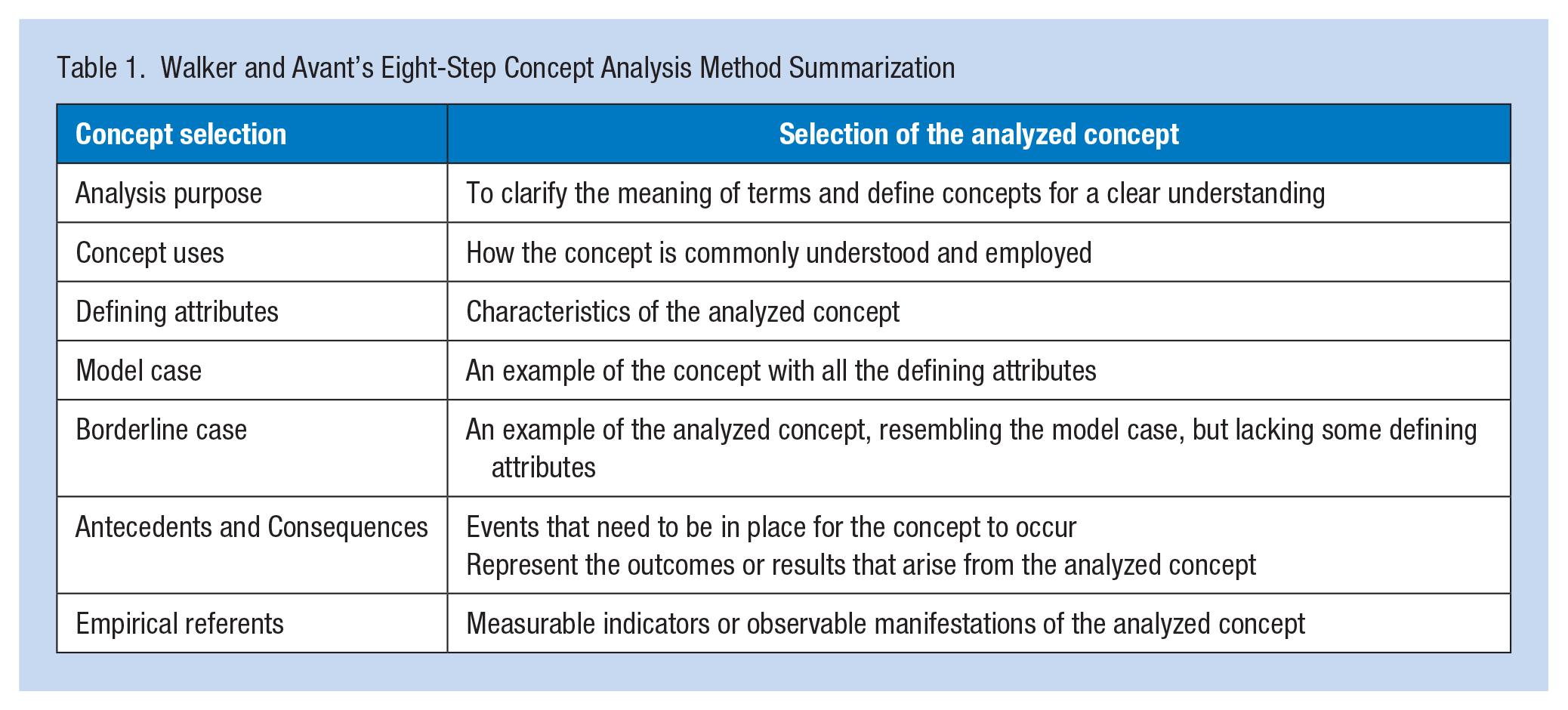
The Walker and Avant (2011) method, a systematic approach, guided this concept analysis of occupational DEE exposure to clarify the meaning of terms and define concepts for a clear understanding. There are various ways to conduct a concept analysis, yet the Walker and Avant method was selected due to its step-by-step process that provides a unique understanding of what the concept is and what it is not. This method encompasses eight distinct steps which are briefly summarized in Table 1. These steps include selecting a concept for analysis, determining the analysis purpose, identifying all the uses of the concept, determining its attributes, identifying a model, identifying a borderline case, identifying antecedents and consequences, and defining empirical referents (Walker & Avant, 2011).
Walker and Avant’s Eight-Step Concept Analysis Method Summarization
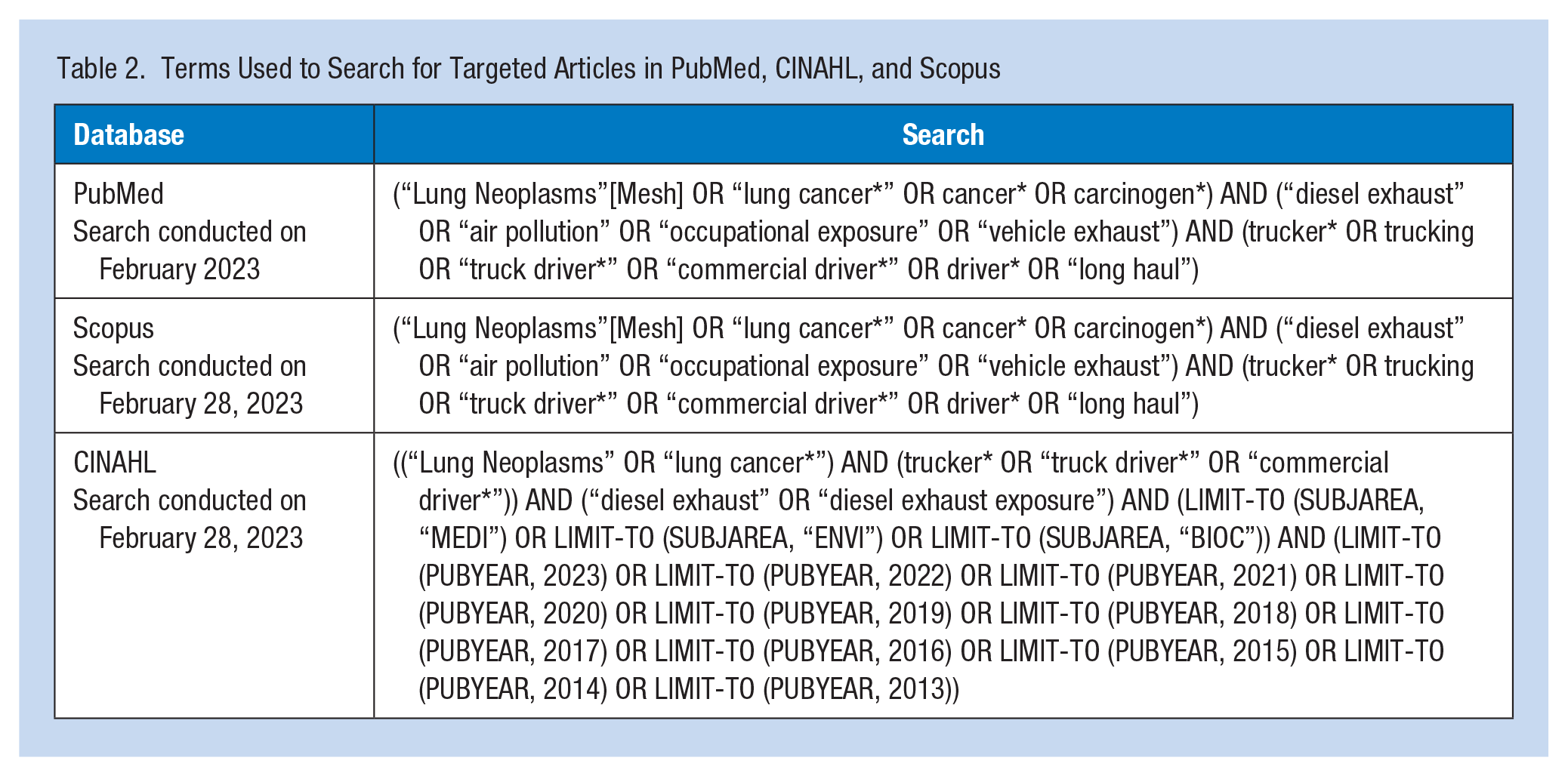
The PRISMA diagram, Figure 1, showcases the process of article selection by demonstrating the screening method for literature search, and Table 2 outlines the specific terms used to search for targeted articles in PubMed, CINAHL, and Scopus. The research began by selecting three databases, namely: PubMed, Scopus, and CINAHL, to search for relevant literature. The inclusion criteria involved articles published between January 2012 and December 2023, available in English and full text. Specific search terms were used for each database, focusing on lung cancer, diesel exhaust exposure, air pollution, and occupational exposure related to truck drivers. For PubMed and CINAHL, search terms were: (“Lung Neoplasms”[Mesh] OR “lung cancer*” OR cancer* OR carcinogen*) AND (“diesel exhaust” OR “air pollution” OR “occupational exposure” OR “vehicle exhaust”) AND (trucker* OR trucking OR “truck driver*” OR “commercial driver*” OR driver* OR “long haul”) and the search terms for Scopus were: ((“Lung Neoplasms” OR “lung cancer*”) AND (trucker* OR “truck driver*” OR “commercial driver*”)) AND (“diesel exhaust” OR “diesel exhaust exposure”) AND (LIMIT-TO (SUBJAREA, “MEDI”) OR LIMIT-TO (SUBJAREA, “ENVI”) OR LIMIT-TO (SUBJAREA, “BIOC”)) AND (LIMIT-TO (PUBYEAR, 2023) OR LIMIT-TO (PUBYEAR, 2022) OR LIMIT-TO (PUBYEAR, 2021) OR LIMIT-TO (PUBYEAR, 2020) OR LIMIT-TO (PUBYEAR, 2019) OR LIMIT-TO (PUBYEAR, 2018) OR LIMIT-TO (PUBYEAR, 2017) OR LIMIT-TO (PUBYEAR, 2016) OR LIMIT-TO (PUBYEAR, 2015) OR LIMIT-TO (PUBYEAR, 2014) OR LIMIT-TO (PUBYEAR, 2013)). These search terms result in several full-text articles from PubMed (n = 121), Scopus (n = 68), and CINHAL (n = 6) for a total of 195 articles. One article was later excluded as a duplicate, leaving 194 articles. From this, titles/abstracts were screened for keywords such as: “occupational diesel exhaust exposure” or “air pollution exposure” related to “lung cancer” or “cancer risk.” From this, 179 were excluded as they failed to provide substantial information related to the concept being analyzed, leaving 15 articles to be assessed for eligibility.
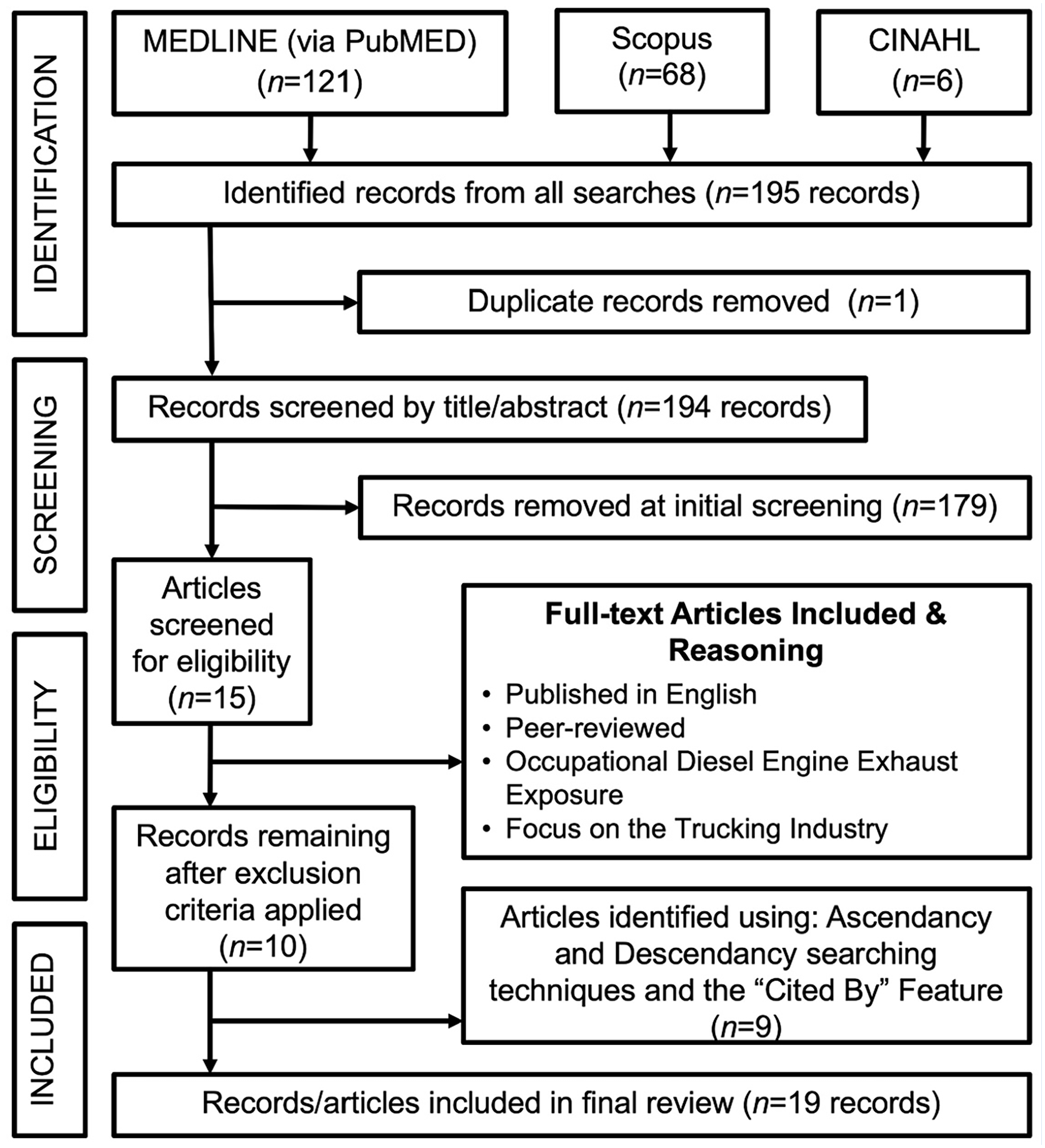
PRISMA Diagram Demonstrating Screening Method for Literature Search
Terms Used to Search for Targeted Articles in PubMed, CINAHL, and Scopus
After downloading all 15 articles, 5 articles were excluded as they did not meet criteria (i.e., not in English, not focused on trucking industry) leaving 10 suitable articles. With these 10 articles, we employed ascendancy and descendancy techniques to locate other appropriate articles. Locating an earlier article that a source cited is an ascending technique, and locating recent articles that a source cited is using a descending technique; this yielded nine additional articles. Ultimately, 19 full-text English articles contributed to this concept analysis. These articles were summarized in a matrix (Table 3) and synthesized into this concept analysis.
Summary of DEE Studies and Reports (N = 19)
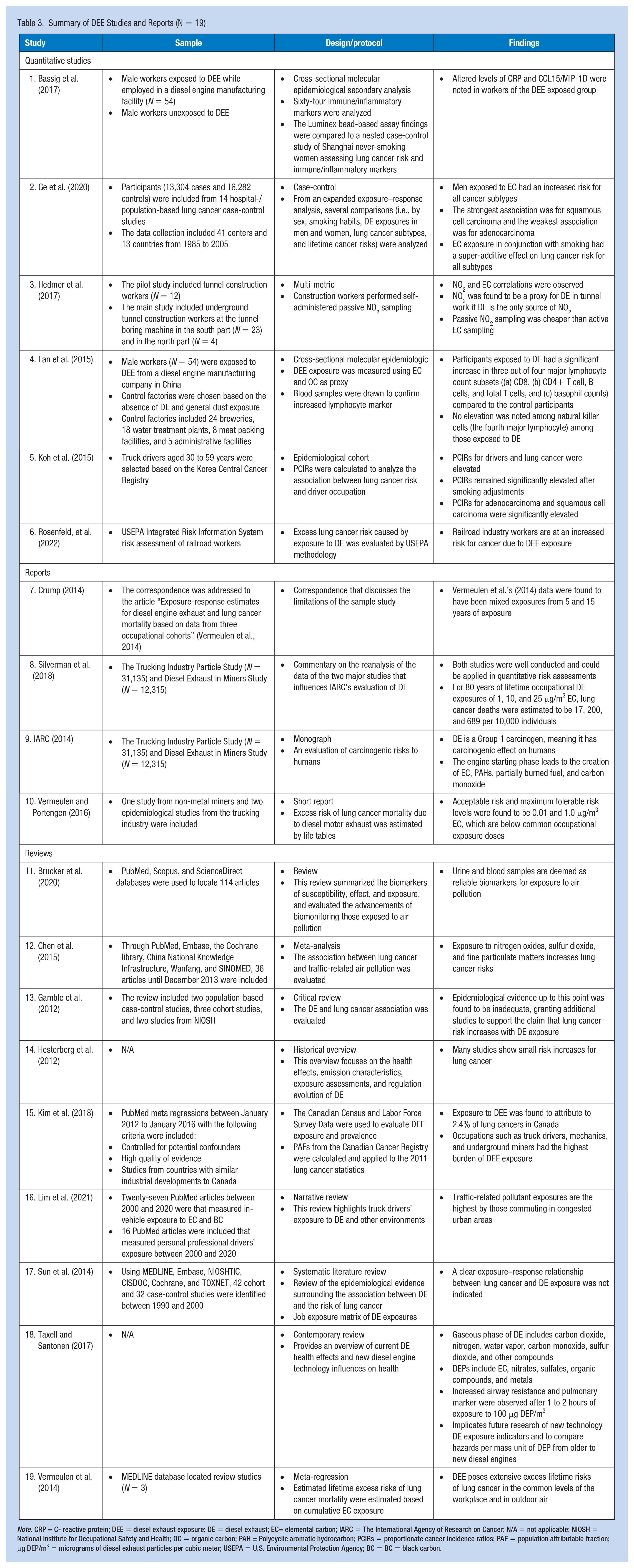
Note. CRP = C- reactive protein; DEE = diesel exhaust exposure; DE = diesel exhaust; EC= elemental carbon; IARC = The International Agency of Research on Cancer; N/A = not applicable; NIOSH = National Institute for Occupational Safety and Health; OC = organic carbon; PAH = Polycyclic aromatic hydrocarbon; PCIRs = proportionate cancer incidence ratios; PAF = population attributable fraction; μg DEP/m3 = micrograms of diesel exhaust particles per cubic meter; USEPA = U.S. Environmental Protection Agency; BC = BC = black carbon.
Results
The Walker and Avant (2011) method of concept analysis, as previously described, was followed as a format for reporting results. Therefore, the results are composed of the following sections: concept uses, defining attributes, model case, borderline case, antecedents, consequences, and empirical referents. A summarization of the attributes, antecedents, consequences, and empirical referents of DEE is provided in Table 4.
Summarization of Defining Attributes, Antecedents, Consequences, and Empirical Referents of Diesel Engine Exhaust Exposure
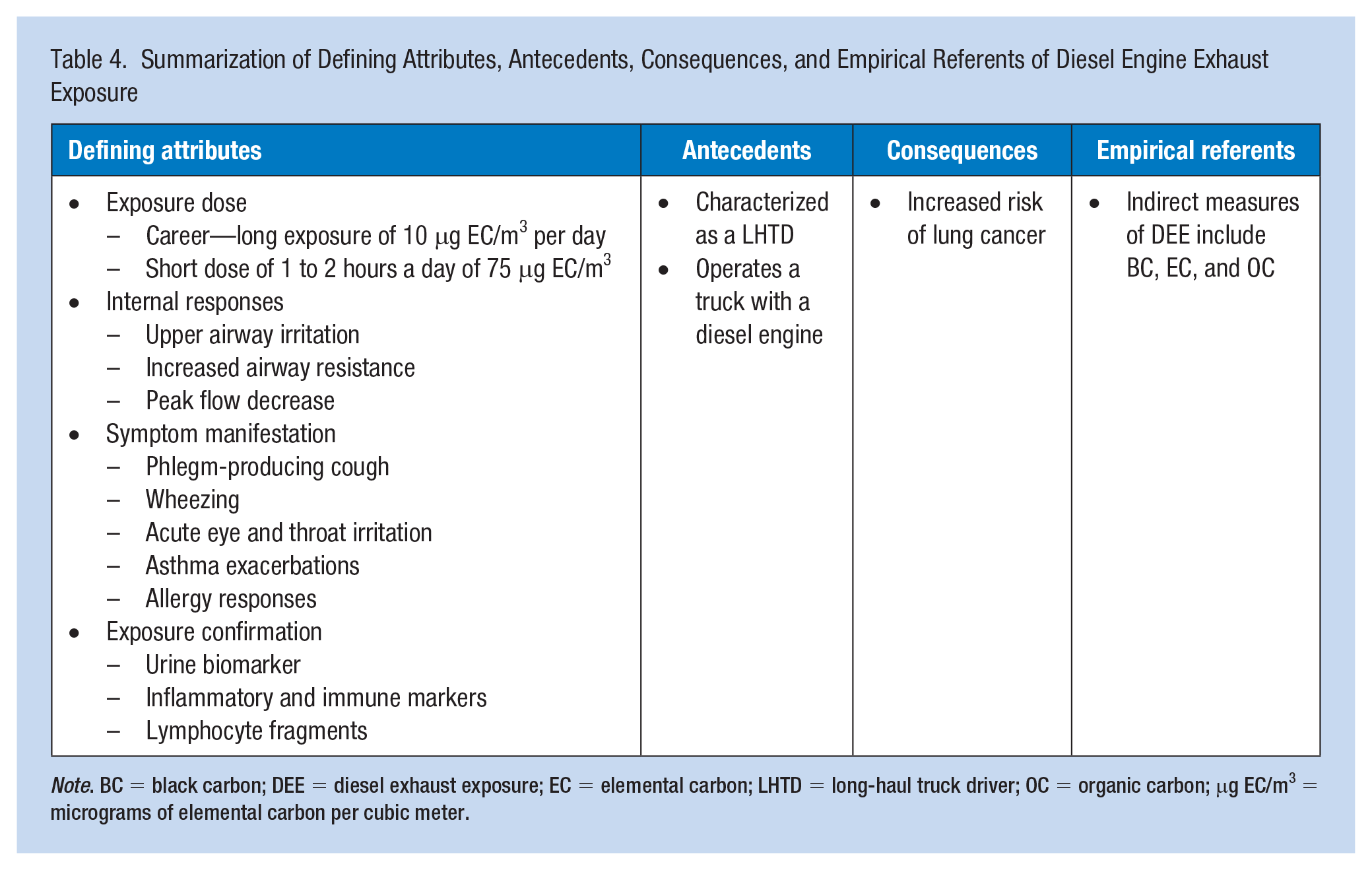
Note. BC = black carbon; DEE = diesel exhaust exposure; EC = elemental carbon; LHTD = long-haul truck driver; OC = organic carbon; μg EC/m3 = micrograms of elemental carbon per cubic meter.
Concept Uses
This section explores the concept uses, which refer to how the concept is commonly understood and employed in various contexts. Many sources including dictionaries, available literature, and thesauruses, for example, are used to locate all the possible operations of a concept (Walker & Avant, 2011). The available literature describes DEE as a human carcinogen after IARC characterized it as a Group 1 carcinogen in 2012, meaning it has a significant carcinogenic effect on humans (Crump, 2014; Ge et al., 2020; Hesterberg et al., 2012; IARC, 2014; Koh et al., 2015; Lim et al., 2021; Sun et al., 2014; Taxell & Santonen, 2017; Vermeulen et al., 2014). By inhaling DEE occupationally, lung cancer risks specifically have been shown to increase among workers, such as truck drivers, miners, and railroad workers (Koh et al., 2015; Taxell & Santonen, 2017; Vermeulen et al., 2014). Diesel engine exhaust consists of gaseous and particulate contents produced during the combustion phase of diesel fuel (Hedmer et al., 2017; Rosenfeld et al., 2022; Taxell & Santonen, 2017). The gas and particulates of DEE include carbon dioxide, oxygen, nitrogen, water vapor, nitrogen oxides, carbon monoxide, sulfur dioxide, sulfates, nitrates, metals, EC, and polycyclic aromatic hydrocarbons (Brucker et al., 2020; Chen et al., 2015; Hedmer et al., 2017; IARC, 2014; Koh et al., 2015; Rosenfeld et al., 2022; Taxell & Santonen, 2017). Studies of the relationship between lung cancer and diesel exhaust began in the 1980s, but the biological relationship connecting the two has not been well understood (Bassig et al., 2017; Lan et al., 2015).
Defining Attributes
Figure 2 provides a visual overview of the DEE exposure attributes ranging from logical progression of exposure dose, internal responses, symptom manifestation, and exposure confirmation. Defining attributes are characteristics of the analyzed concept (Walker & Avant, 2011). First, regarding exposure dose, at an exposure dose of 75 µg EC/m3 (micrograms of elemental carbon per cubic meter) for a period of 1 to 2 hours a day, increased pulmonary inflammatory markers and airway resistance occur (Taxell & Santonen, 2017). A career-long DEE of 10 µg EC/m3 corresponds to 200 extra lung cancer deaths per 10,000 individuals (Taxell & Santonen, 2017). These are the exposure levels at which the attributes or characteristics of occupational diesel exhaust occur. Second, exposure dose leads to internal responses. Specifically, decreased peak flow and increased airway resistance are the underlying mechanisms that cause the occurrence of the attributes or symptoms. Third, the internal responses result in symptom manifestation. The inhalation and dermal absorption of DEE lead to the following attributes: phlegm-producing cough; acute irritation of the eyes and throat; asthma exacerbations such as wheezing and shortness of breath; and allergy responses such as congestion, sneezing, and a runny nose (Hedmer et al., 2017; Hesterberg et al., 2012; Taxell & Santonen, 2017). Finally, exposure confirmation can be noted by urine and blood/plasma biomarkers. For example, urinary 1-hydroxypyrene samples serve as a reliable biomarker for biological exposures such as polycyclic aromatic hydrocarbons included in diesel exhaust composition (Brucker et al., 2020). A urine analysis confirms the internal exposure to diesel exhaust. From blood/plasma samples, exposure–response relationships have also been reported with inflammatory/immune markers (CCL15/MIP-1D) and lymphocyte fragments (CD4+ and CD8+ T cells, total T cells, B cells, and basophil counts) that are fundamental in lung cancer origination (Bassig et al., 2017; Lan et al., 2015; Silverman, 2018). Such inflammatory markers and lymphocyte tests confirm that these attributes can indicate the development of lung cancer.
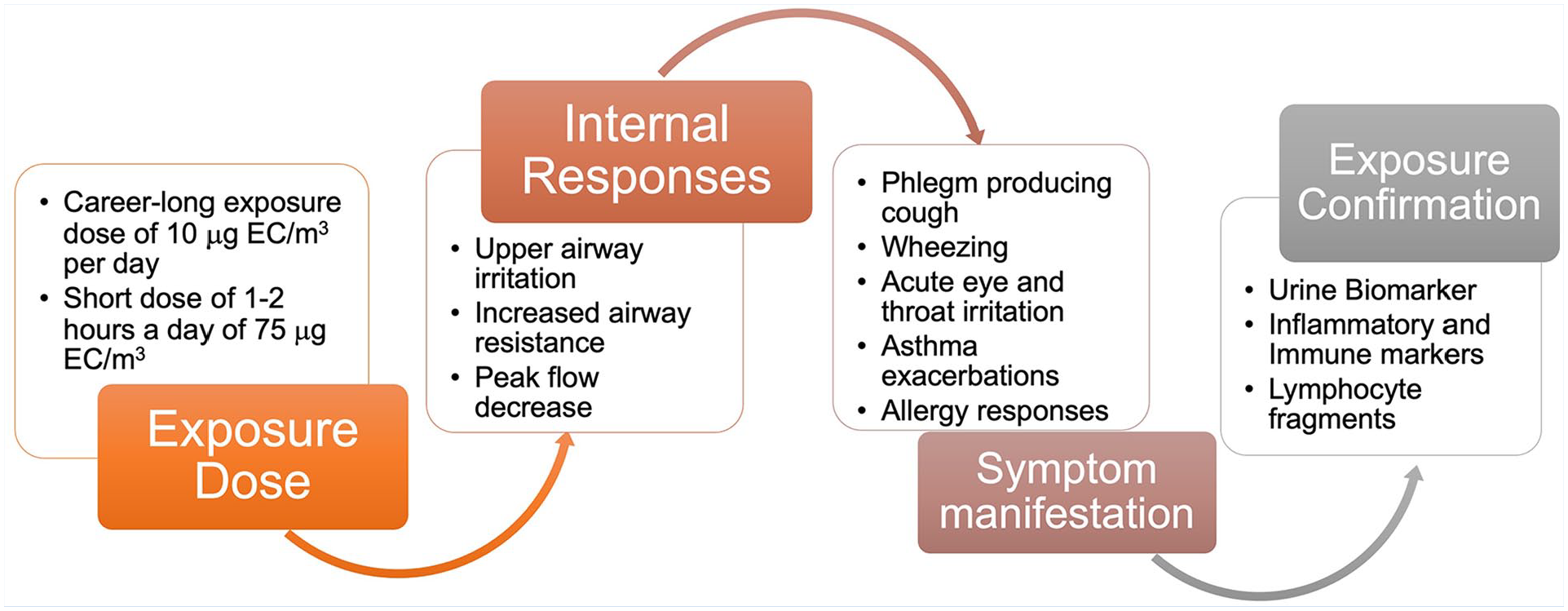
Overview of Diesel Engine Exhaust Exposure Attributes
Model Case
A model case is an example of a concept with all the defining attributes (Walker & Avant, 2011). The model case presented here exemplifies the concept of DEE and its potential health effects on LHTDs. In such a case, a 50-year-old trucker with 20 years of experience reports to an urgent care clinic with a common cold. However, the progression of his symptoms leads to a concerning diagnosis. The truck driver had a long-term career exposure to DEE, which is characteristic of his occupation as a LHTD. Throughout his two-decade career, he has been exposed to DEE daily, contributing to his overall risk of developing health complications. The defining attributes of the concept are evident in this model case. The respiratory symptoms exhibited by the trucker include wheezing, coughing, and an allergic response that elicits eye and throat irritation. As the symptoms worsen over 2 weeks, including a phlegm-producing cough, the trucker seeks further medical evaluation from his primary care physician. A urine sample confirmed the presence of at least 10 μg EC/m3 of DEE, strengthening the link between his occupation and the potential health effects. Sputum cytology confirmed lung cancer with inflammatory and lymphocyte tests supporting the diagnosis.
In this case, the truck driver had a career-long exposure to DEE at a low exposure of 10 μg EC/m3. The individual presented with all the respiratory symptoms (wheezing, phlegm-producing cough, allergies), urine biomarkers confirmed the presence of the components of diesel exhaust, and the inflammatory and lymphocyte markers confirmed the symptoms that led to lung cancer, which was diagnosed at the time. These findings highlight the severe consequences that prolonged exposure to DEE can have on an individual’s health, leading to severe respiratory conditions like lung cancer.
Borderline Case
A borderline case is an example of the analyzed concept, resembling the model case, but lacking some defining attributes (Walker & Avant, 2011). In this borderline case, absence of defining attributes such as wheezing, phlegm-producing cough, and allergies that were present in the model case was noted. While defining attributes are not present in this borderline case, the manifestation of lung cancer underscores the potential health risks associated with high-dose and more acute DEE exposure.
In such a case, a 30-year-old newly hired trucker arrives at the emergency department following a motor vehicle accident after driving for 7 hours. Upon stabilizing care, the truck driver gave a urine sample to confirm a high concentration of diesel exhaust components. After sputum cytology, lung cancer is confirmed with inflammatory and lymphocyte marker tests.
In this borderline case, the truck driver received a very high dose of at least 75 μg EC/m3 within a short period. Due to the individual needing emergency care after the high dose of exposure, the symptoms were not seen in this individual, but the urine, inflammatory, and lymphocyte biomarkers were all present in identifying the lung cancer case. The biomarkers indicated lung cancer, but the defining symptoms or attributes (wheezing, phlegm-producing cough, allergies) were not physically presented.
While the model case illustrated the concept of DEE exposure in a LHTD with all defining attributes, this borderline case focuses on the implications of a sudden, high-dose exposure event in a newly hired truck driver. It underscores the importance of addressing both chronic and acute exposures to DEE in the trucking industry and implementing measures to reduce the risks and promote a healthier work environment for all truck drivers.
Antecedents
Antecedents are events that need to be in place for the concept to occur (Walker & Avant, 2011). The events that must occur before occupational DEE exposure in this population can occur are the following: an individual must be a LHTD who occupies a small, confined area (Koh et al., 2015; Smith, 2015); and operates a truck with a diesel engine (IARC, 2014). Trucking industry drivers have been categorized by the U.S. Bureau of Labor Statistics Occupational Health and Statistics program into two groups: service and long-haul. Service truck drivers carry a freight weight of under 26,000 pounds (Smith, 2015), whereas LHTDs carry a freight weight of at least 26,000 pounds (Smith, 2015).
Consequences
Consequences, as described by Walker and Avant (2011), represent the outcomes or results that arise from the concept under analysis. In the context of DEE exposure, consequences play a crucial role in understanding the potential health impacts on LHTDs and other workers exposed to this occupational hazard. Studies have highlighted that exposure to high doses of DEE during short periods, such as 1 to 2 hours a day (75 μg EC/m3), and exposure to lower doses over an entire career (10 μg EC/m3) can lead to an increased risk of lung cancer (Bassig et al., 2017; Crump, 2014; Ge et al., 2020; Lan et al., 2015; Silverman, 2018). Furthermore, the association between occupational DEE exposure and specific subtypes of lung cancer has been investigated. Studies have revealed that specific lung cancer cell subtypes, including adenocarcinoma, large cell carcinoma, small cell carcinoma, and squamous cell carcinoma, show varying levels of association with DEE exposure (Gamble et al., 2012; Ge et al., 2020). Squamous cell carcinoma (odds ratio [OR], 1.54; 95% confidence interval [CI], 1.39-1.70) and small cell carcinoma (OR, 1.53; 95% CI, 1.32-1.76) have been found to have the strongest association with DEE exposure, while large cell carcinoma shows a moderate association (OR, 1.31; 95% CI, 1.02-1.67; Ge et al., 2020). In contrast, though still associated with DEE exposure, adenocarcinoma (OR, 1.23; 95% CI, 1.09-1.39) exhibits the weakest association (Ge et al., 2020).
This comprehensive exploration of the consequences associated with DEE exposure underscores the importance of recognizing and addressing the potential health risks faced by individuals exposed to DEE in occupational setting. The nuanced understanding of these consequences contributes to informed decision-making regarding occupational safety measures and public health initiatives aimed at mitigating the adverse effects of DEE exposure.
Empirical Referents
Walker and Avant (2011) explain empirical referents to demonstrate the concept occurrence. Empirical referents play a crucial role in concept analysis as they provide measurable indicators or observable manifestations of the concept under investigation. In the context of occupational DEE exposure, direct measurement of DEE can be challenging due to its complex mixture makeup (Koh et al., 2015); however, researchers have employed various indirect measures to assess occupational DEE exposure, primarily focusing on black carbon, EC, and organic carbon (IARC, 2014; Koh et al., 2015; Rosenfeld et al., 2022; Vermeulen et al., 2014). EC is a specific component of black carbon and is considered a robust indicator of DEE exposure in studies focusing on air quality and occupational health (Gamble et al., 2012; Hedmer et al., 2017; Lan et al., 2015; Silverman, 2017; Vermeulen & Portengen, 2016; Vermeulen et al., 2014). It’s worth noting that while these indirect measures provide valuable insights into occupational DEE exposure, they do not directly measure DEE itself. Instead, they serve as proxies or empirical referents to estimate exposure levels. These empirical referents are widely used in research and regulatory settings to assess the potential risks associated with DEE exposure, especially in occupations with high diesel engine usage, such as long-haul truck driving. Regarding biological measures, based on the articles used for this analysis, there were no references to specific biological markers or tests that can directly detect DEE in the human body. The lack of available biological measures for DEE detection may limit understanding of its potential health effects on workers exposed to occupational DEE and requires further research.
Discussion
The current body of literature regarding occupational DEE exposure in truck drivers remains limited. Although studies have shown that LHTDs are at risk of developing lung cancer due to DEE exposure, the existing literature lacks comprehensive interventions aimed to protect these individuals. While certain individual companies may have implemented policies to mitigate DEE exposure, and some states have implemented DEE emission and idling regulations, there are currently no federal regulations to establish a unified standard across the United States. Neither the Occupational Safety and Health Administration (OSHA) nor the U.S. Department of Transportation (DOT) has established DEE emission standards or exposure limits.
In 2005, the U.S. Environmental Protection Agency (n.d.) was granted authority to carry out diesel emission reductions through the Diesel Emissions Reduction Act (DERA) Program. These reduction efforts primarily focus on the development of cleaner engines for trucks. However, given the prolonged lifespan of diesel engines, which can operate for at least 30 years, many older and more pollutant engines are still in use today (Environmental Protection Agency, n.d.). The DERA program has undergone continuous reauthorization through various acts over the years and is currently authorized under the Consolidated Appropriations Act of 2021 until 2024 (Environmental Protection Agency, n.d.).
Considering the absence of OSHA standards pertaining to diesel exhaust, it is imperative to put forth a recommendation to safeguard these LHTDs in this context. A proposed standard should entail that diesel trucks be equipped with sealed cabins incorporating air conditioning. Also cabin windows should remain closed during operation to avoid diesel pollution. In addition, trucking companies should institute regularly screening for employees to assess their exposure to diesel exhaust. To enhance monitoring, truckers should be required to wear DEE detection devices, with data oversight by an external entity, ensuring that exposure does not surpass 75 μg EC/m3 for 1 to 2 hours each day. In the event of elevated exposure levels deemed hazardous, truckers must be fitted with and be trained to consistently wear personal protective equipment (PPE). For LHTDs who are self-employed rather than employed by a trucking company, the responsibility remains on them to undergo screenings for DEE, both for their truck and themselves. Furthermore, they should be responsible for acquiring and correctly utilizing PPE to mitigate potential risks effectively.
Limitations
It is important to acknowledge certain limitations associated with this concept analysis. By relying solely on the PubMed, Scopus, and CINAHL databases, there is a possibility of missing relevant resources that may exist in other databases. In addition, the scope of the analysis was narrowed by excluding older studies, studies not available in English, and studies that were not accessible in full text.
It is also imperative to note the omission of tobacco smoking data related to behaviors as a synergist for DEE in assessing lung cancer risk. Numerous LHTDs contend with occupational demands, overcoming fatigue, and alleviating boredom on the road by engaging in tobacco smoking activities as a coping mechanism (Kagabo et al., 2020). Tobacco smoking is distinct as the number one risk factor for lung cancer (Centers for Disease Control and Prevention, 2023), and its interaction with DEE may yield a super-additive effect, amplifying the risk for lung cancer. However, this concept analysis research focused solely on the concept of DEE in relation to lung cancer, omitting the exploration of DEE in conjunction with smoking behaviors.
Furthermore, it is appropriate to acknowledge that not all articles included in this concept analysis addressed or incorporated smoking behaviors as a confounding variable in their analysis. This omission and limitation introduce a layer of intricacy, as the combined effects of DEE and smoking behaviors possess the potential to increase lung cancer risk for LHTDs. Addressing this limitation in future research endeavors will refine the precision of the findings and contribute to a more holistic understanding of occupational hazards, occupation-specific behaviors, and their impact on lung health.
Conclusion
Using Walker and Avant’s method, this concept analysis delves into the topic of occupational DEE exposure in LHTDs. These individuals play a crucial role in the U.S. economy as they transport essential goods nationwide. However, their occupation exposes them to various health hazards, including DEE.
Research has demonstrated that DEE exposure can significantly elevate the risk of lung cancer among LHTDs. This finding highlights the importance of addressing this occupational health concern to safeguard the well-being of this vulnerable population. Occupational healthcare professionals are vital in advocating for truck drivers’ rights and promoting a safer work environment.
Occupational healthcare professionals should engage in rigorous research efforts to effectively address DEE exposure. By conducting studies and investigations specifically focused on the health effects of DEE exposure in truck drivers, valuable insights can be gained regarding the extent of the problem and its potential consequences. These findings can then be disseminated through various channels, such as academic journals and conferences, to raise awareness among healthcare providers, policymakers, and industry stakeholders.
Implications for Occupational Health Nursing Practice
This concept analysis has implications for influencing policies and regulations concerning DEE exposure in the trucking industry. By showcasing the scientific evidence regarding the adverse health effects of DEE and its link to lung cancer, occupational healthcare professionals can advocate for implementing stringent safety measures and guidelines. Establishing federal regulations, exposure limits, and emission standards through agencies such as OSHA and the DOT is critical.
Furthermore, the concept analysis emphasizes the need for ongoing monitoring and assessment of the effectiveness of these policies and interventions. Regular evaluations can help determine whether the implemented measures protect LHTDs from DEE exposure and its associated health risks. In addition, continuous research can contribute to the continuous development of innovative solutions and technologies, such as cleaner engines, exhaust control systems, worker and management education, PPE, re-exposure consequences, and webinars to mitigate DEE emissions from trucks.
In conclusion, this concept analysis highlights the significance of addressing occupational DEE exposure in LHTDs. Through research, dissemination of findings, and advocacy, occupational healthcare professionals can contribute to creating a safer work environment for this vital workforce, thereby safeguarding their health and well-being.
In Summary
The IARC classifies DEE as a Group 1 human carcinogen.
Diesel engine exhaust is associated with adenocarcinoma, squamous cell carcinoma, large cell carcinoma, and small cell carcinoma.
Protection policies and interventions are needed to safeguard LHTDs from DEE.
Footnotes
Acknowledgements
The University of Alabama at Birmingham (UAB) Blazer Fellowship, Harris (Tuition) National Institute of Occupational Safety and Health (NIOSH), Heaton (Salary T42OH008436)
Author Contributions
David E. Vance is a Professor, School of Nursing, University of Alabama at Birmingham, Birmingham, Alabama, USA. Karen Heaton, PhD, is Professor, School of Nursing, University of Alabama at Birmingham, Birmingham, Alabama, USA. All authors met the following criteria: (a) made a substantial contribution to the concept and design; (b) acquired the data or analysis and interpreted the data; and (c) drafted the article or revised it critically for important intellectual content, and approved the version to be published.
Declaration of Conflicting Interests
The author(s) declared no potential conflicts of interest with respect to the research, authorship, and/or publication of this article.
Funding
The author(s) received no financial support for the research, authorship, and/or publication of this article.
