




Abstract
The majority of long-haul truck drivers are affected by fatigue. Notably, fatigue impacts not only quality of life, but the risk for human error, thus impacting the safety of our nation’s roads. In 2015, 400,000 trucking accidents occurred with the top driver impairment identified as being “asleep or fatigued.” Yet, the current scientific literature reflects different understandings of the concept of fatigue, hindering synchronized measurement and efforts toward its alleviation. The purpose of this work was to analyze the concept of fatigue in long-haul truck drivers using the Rodgers’ evolutionary method. The physical, cognitive, and emotional dimensions of fatigue are presented.
It is thought that at least one million individuals in the United States are affected by chronic fatigue (Centers for Disease Control and Prevention [CDC], 2016). Chronic fatigue negatively affects quality of life (CDC, 2016) and leads to increased risk for human error, thus increasing risk for both accident and injury (Sabir & Isha, 2016). Although a concern in many industries, the long-haul trucking population is of particular concern due to highly demanding environments and low levels of job control among workers (Apostolopoulos, Lemke, & Sönmez, 2014; Friswell & Williamson, 2013; Meuleners, Fraser, Govorko, & Stevenson, 2017) that contribute to the majority of long-haul truck drivers experiencing fatigue (Apostolopoulos, Sönmez, Shattell, Gonzales, & Fehrenbacher, 2013). Fatigue impacts not only quality of life but also cognitive processing (Techera, Hallowell, Stambaugh, & Littlejohn, 2016), which in turn impairs the driver’s capacity to function safely (Jagannath & Balasubramanian, 2014; Saxby, Matthews, Warm, Hitchcock, & Neubauer, 2013; Techera et al., 2016).
In 2015, 400,000 truck crashes occurred, of which 87,000 resulted in injury, and more than 4,000 fatalities (Federal Motor Carrier Safety Administration [FMCSA], 2016). The top driver impairment was identified as being “asleep or fatigued” (FMCSA, 2016). Notably, the second most common driver-related impairment has been identified as “distraction and/or inattention” (FMCSA, 2016). Of note, impaired alertness, concentration, and attention have been described as consequences of fatigue (Jagannath & Balasubramanian, 2014; Techera et al., 2016). Thus, the full impact of fatigue may not yet be realized. Undoubtedly, addressing fatigue is imperative not only to the safety of the individuals employed in the industry but also to other drivers and pedestrians.
The occupational literature describes fatigue in many different forms and dimensions. This variation has resulted in different understandings and operational definitions of fatigue as well as inconsistency in measurement. Hence, a lack of consistency has hindered the advancement of interventions to prevent and alleviate fatigue. The purpose of this review was to describe the methods and results of an analysis of the concept “fatigue.”
Purpose of Concept Analysis
Scientific literature contains many examples of the conundrum associated with the term fatigue. Dimensionally, the experience of fatigue exists within the physical, mental, and emotional domains, each with unique antecedents and attributes (Apostolopoulos et al., 2014; Jagannath & Balasubramanian, 2014; Li, Jiang, Yao, & Li, 2013; Nelson, 1997; Saxby et al., 2013; Smets, Garssen, Bonke, & De Haes, 1995; Techera et al., 2016). Furthermore, the literature often interchanges the concepts of tiredness and fatigue, as fatigue is frequently described as a feeling of weariness or tiredness (Saxby et al., 2013; Techera et al., 2016). Yet tiredness is merely one element of the physical dimension of fatigue (Fournier, Montreuil, & Brun, 2007). The absence of a clear conceptual definition of fatigue renders our efforts toward its alleviation ineffective. The purpose of this analysis was to bring synthesis and clarity to the concept of fatigue within long-haul trucking, including conceptual dimensions, antecedents, attributes, and consequences. Furthermore, this analysis provided distinction between fatigue and related concepts, such as sleepiness and tiredness. Often, as a concept is clarified, a better operational definition is the result. A more appropriate operational definition that captures the full embodiment of fatigue will facilitate the appropriate measurement of this concept and allow for the progression of research within this domain.
Rogers’ Evolutionary Method
To clarify the multidimensional nature of fatigue, the Rodgers’ evolutionary method of concept analysis was used (Rodgers, 2000). This method was chosen because it best reveals the evolutionary nature of concept development and allows for clarity through providing cohesiveness in the current uses of the concept. Also, the Rodgers method was chosen because it provides a more comprehensive goal of providing clarity of dimensional uses across various contexts, compared with other conceptual analysis methods. The analysis begins with identification of the concept of interest, related concepts, surrogate terms, and appropriate scope of data collection. The literature in the chosen realm is then carefully examined to identify variances in contexts, attributes, antecedents, and consequences of the concept (Rodgers, 2000). These data are then analyzed to reveal a holistic perspective of the concept based on current uses in the literature. Within this process, an exemplar embodying the full dimensional nature of the concept is chosen. Finally, the newly proposed concept is used to synthesize new hypotheses and define future aims of research development (Rodgers, 2000).
Literature Search Strategy
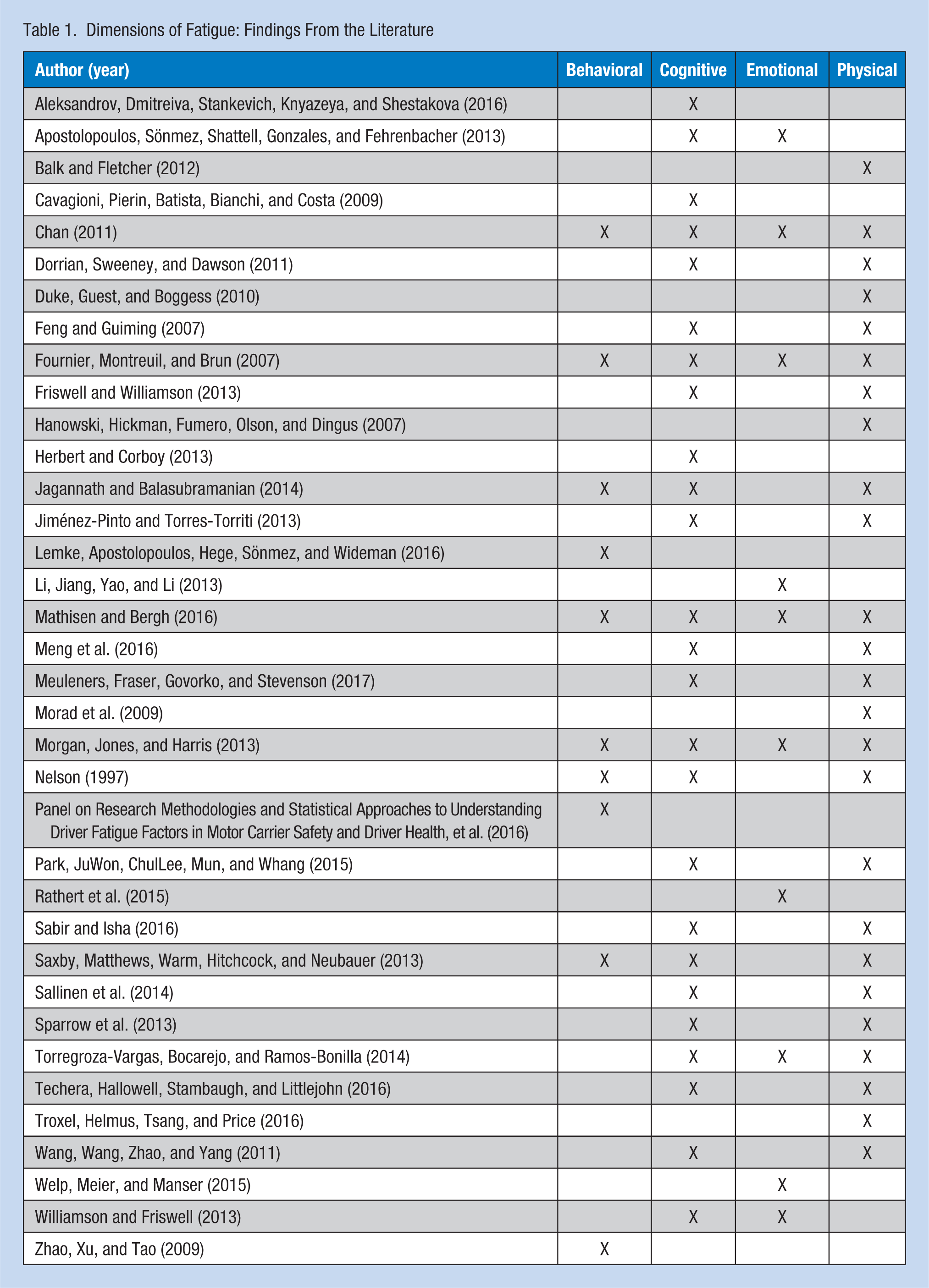
A literature search was conducted in February 2017 using the PubMed, PsycINFO, and Scopus databases (see Figure 1). Initially, the key terms of “truck driver” AND “fatigue” were used. Because the dimension of emotional fatigue was not adequately addressed in the long-haul trucking literature, the key terms “emotional fatigue” AND “occupational” AND “safety” were also included. Articles written in English and published within the last 10 years (2007-2017) were chosen for review. The search yielded 302 publications, including peer reviewed articles, conference papers, and academic theses. Duplicates were removed, leaving 244 manuscripts for the stepwise review. Titles and abstracts were initially examined for relevancy and online availability. Primary studies and literature reviews were included if they (a) appeared to address the real-life conditions influencing fatigue and safety in the long-haul trucking population or (b) appeared to address the influence of emotional fatigue on workplace safety. This initial step yielded 45 manuscripts for full review. Upon full review, manuscripts were included if fatigue was (a) operationally defined, (b) examined under real-life conditions, and (c) influenced workplace safety. Articles were excluded if they (a) failed to capture the essence of fatigue in real-life working conditions, such as the case of simulated environments or (b) fatigue was not operationally defined. Twenty-seven articles were included after full article review. We then consulted the reference lists of the primary articles, as well as identified relevant articles citing the primary articles, resulting in a total 36 articles from all search strategies. Table 1 describes the criteria under which each article included was considered for this review.
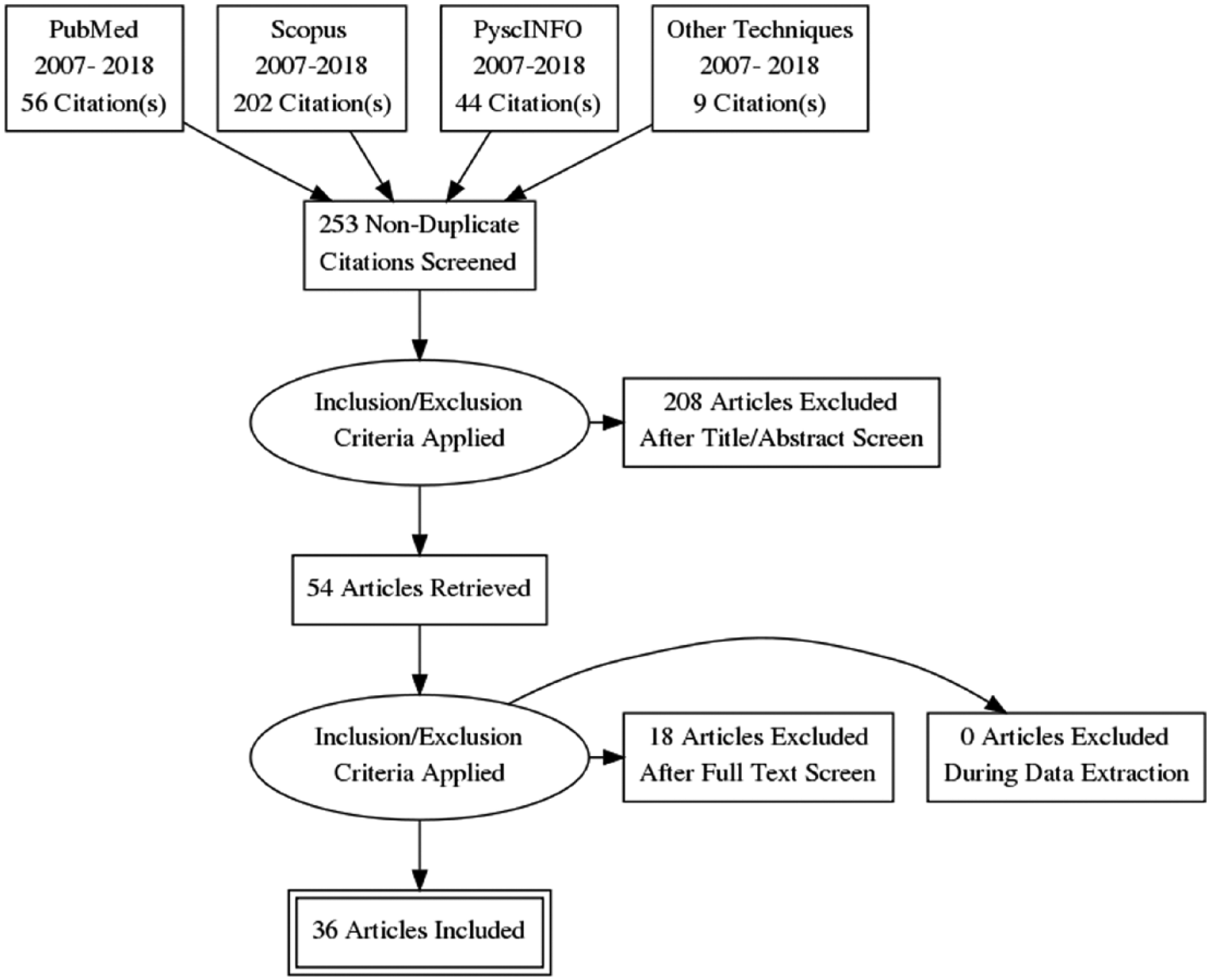
PRISMA diagram provides a pictorial representation of the literature search.
Dimensions of Fatigue: Findings From the Literature
Results
This approach resulted in defining the (a) conceptual and operational definitions of fatigue presented in the literature; (b) attributes of physical, cognitive, and emotional fatigue; (c) surrogate terms commonly used for fatigue in the literature, as well as related concepts of interests; and (d) antecedents and consequences of fatigue. To comprehensively portray findings and increase reader understanding, an exemplar of fatigue as defined through this literature review is also provided.
Conceptual Definition of Fatigue
Conceptual definitions reflect how individuals perceive and understand phenomena (McEwen & Wills, 2014). The literature reflects a wide variety of understanding related to the concept of fatigue. A common conceptual definition of fatigue was a state of tiredness, drowsiness, or weariness brought about by inadequate quantity or quality of sleep (Balk & Fletcher, 2012; Duke, Guest, & Boggess, 2010; Hanowski, Hickman, Fumero, Olson, & Dingus, 2007; Lemke, Apostolopoulos, Hege, Sönmez, & Wideman, 2016; Sallinen et al., 2014; Sparrow et al., 2016). A related conceptual definition was a state of impaired alertness and reduced behavioral capacity (Dorrian, Sweeney, & Dawson, 2011; Jiménez-Pinto & Torres-Torriti, 2013; Panel on Research Methodologies and Statistical Approaches to Understanding Driver Fatigue Factors in Motor Carrier Safety and Driver Health et al., 2016; Zhao, Xu, & Tao, 2009). Fatigue was also understood to be related to the actual or perceived experience of personal asset depletion, such as the perceived ability to handle stress and cope with life’s encounters (Dorrian et al., 2011; Fournier et al., 2007; Li et al., 2013; Mathisen & Bergh, 2016; Rathert, Williams, Lawrence, & Halbesleben, 2012; Welp, Meier, & Manser, 2015). Authors varied in their perception of fatigue as a single physical (Troxel, Helmus, Tsang, & Price, 2016; Wang, Wang, Zhao, & Yang, 2011) or cognitive dimension (Cavagioni, Pierin, Batista, Bianchi, & Costa, 2009). Most commonly, fatigue was understood as a bidimensional experience affecting both the physical and cognitive domains (Dorrian et al., 2011; Feng & Guiming, 2007; Friswell & Williamson, 2013; Jiménez-Pinto & Torres-Torriti, 2013; Sabir & Isha, 2016; Sallinen et al., 2014; Sparrow et al., 2016). The inclusion of an emotional dimension in the concept of fatigue was more likely when searching outside the truck driving literature (Li et al., 2013; Mathisen & Bergh, 2016; Torregroza-Vargas, Bocarejo, & Ramos-Bonilla, 2014; Welp et al., 2015). Still, three authors described fatigue as a multidimensional concept including physical, mental, emotional, and behavioral components (Chan, 2011; Fournier et al., 2007; Morgan, Jones, & Harris, 2013).
Operational Definition of Fatigue
Operational definitions link concepts to concrete measurement (McEwen & Wills, 2014). Fatigue was operationalized in the literature using a variety of techniques reflecting the physical, mental, and psychological manifestations of the concept. Notably, within the long-haul trucking literature, fatigue was not usually measured directly but through proxy measures, particularly because personal motivation and self-awareness influenced the perception of fatigue. For instance, a proxy measure of excessive daytime sleepiness, the Epworth Sleepiness Scale, was frequently used to indicate fatigue (Duke et al., 2010; Friswell & Williamson, 2013; Heaton & Anderson, 2007; Sallinen et al., 2014; Sparrow et al., 2016). Measures of driver performance were also frequently used. This includes measures of driver vigilance including interaction with the environment, corrective action, and reaction time (Dorrian et al., 2011; Fournier et al., 2007; Lemke et al., 2016; Sparrow et al., 2016; Wang et al., 2011). Physiological measures, including eye movement, were also used to noninvasively track and measure fatigue (Feng & Guiming, 2007; Jiménez-Pinto & Torres-Torriti, 2013; Morad et al., 2009; Wang et al., 2011). Emotional, or psychological, fatigue was commonly operationalized using tools such as the Maslach Burnout Inventory that looked at the dimensions of emotional exhaustion, depersonalization, and personal accomplishment (Li et al., 2013; Rathert et al., 2012; Welp et al., 2015).
Attributes of Fatigue
Attributes describe the features or characteristics that construct a real-world definition for a concept (McEwen & Wills, 2014). As described in Table 2, the attributes of fatigue were found to be dependent upon the specific dimension experienced including physically, cognitively, and emotionally (Chan, 2011; Mathisen & Bergh, 2016). Although certain attributes are experienced subjectively, others may be observed, and are thus objective manifestations of fatigue.
Attributes of Fatigue Among Truck Drivers by Dimension Experienced: Findings From the Literature
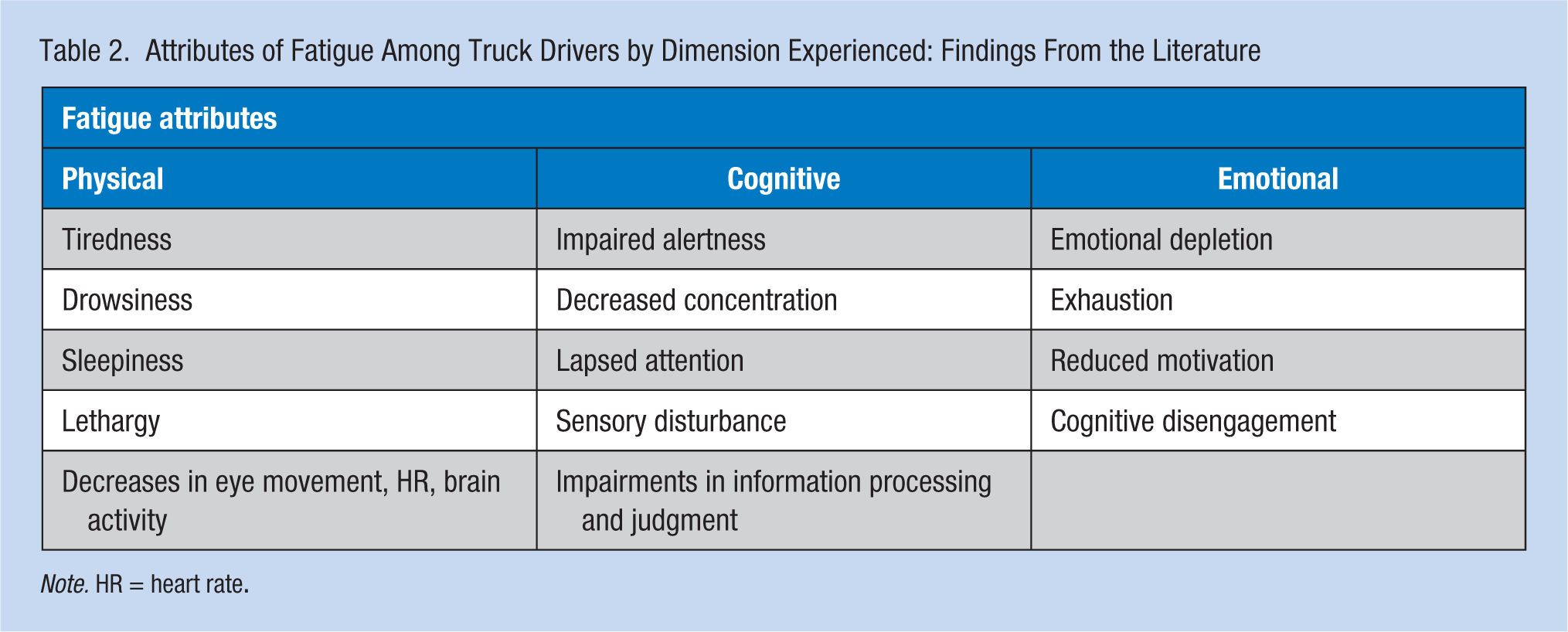
Note. HR = heart rate.
Physical Fatigue
Fatigue exists as a state between asleep and alarm (Sabir & Isha, 2016), so that when an individual becomes fatigued, physical changes may occur more closely to a state of sleep than alarm. Its manifestations, stemming from a depletion of physiologic resources, may include decreased eye movement, brain activity, and muscle response (Feng & Guiming, 2007; Meng et al., 2016). Although personal factors, including motivation and training, influenced the perception of fatigue, fatigue was generally experienced as a feeling of tiredness, drowsiness, lethargy, or sleepiness (Cavagioni et al., 2009; Friswell & Williamson, 2013; Jiménez-Pinto & Torres-Torriti, 2013; Mathisen & Bergh, 2016; Morad et al., 2009).
Cognitive Fatigue
Fatigue is also experienced as an impaired cognitive state (Mathisen & Bergh, 2016; Meng et al., 2016). The attributes of cognitive fatigue included impaired alertness (Chan, 2011; Dorrian et al., 2011; Fournier et al., 2007; Jiménez-Pinto & Torres-Torriti, 2013; Wang et al., 2011), concentration, and attention (Cavagioni et al., 2009; Friswell & Williamson, 2013; Sparrow et al., 2016)—thus, impairing data input from the environment. Moreover, fatigue affected information processing (Meng et al., 2016; Torregroza-Vargas et al., 2014) including difficulty filtering pertinent information from the environment (Aleksandrov, Dmitreiva, Stankevich, Knyazeya, & Shestakova, 2016) and difficulty integrating sensory data in a meaningful way (Herbert and Corboy, 2013). Thereby, cognitive fatigue negated the ability to process situational data rapidly and accurately to make safe decisions (Park, JuWon, ChulLee, Mun, & Whang, 2015). This was observed in cognitive-related behavioral attributes of fatigue including slowed reaction time (Dorrian et al., 2011; Friswell & Williamson, 2013; Meng et al., 2016; Torregroza-Vargas et al., 2014) and decreased vigilance (Wang et al., 2011). There was a connection between cognitive fatigue and physiologic demand evidenced by increases in heart rate secondary to increased oxygen requirements in conditions of heightened brain activity (Park et al., 2015).
Emotional Fatigue
Fatigue can also be experienced in the psychological sense as emotional fatigue (Chan, 2011; Li et al., 2013; Mathisen & Bergh, 2016; Rathert et al., 2012; Welp et al., 2015). The attributes of emotional fatigue included emotional depletion or exhaustion, cognitive disengagement, and reduced motivation (Li et al., 2013; Welp et al., 2015). In this manner, emotional fatigue affected both awareness of the environment and the decisional process to adhere to safety regulations. Safety risks may be perceived as lower than they would otherwise be evaluated (Welp et al., 2015). These psychological attributes were manifested behaviorally with increased incidence of inadvertent errors and shortcut behaviors that foster further safety incidents and near misses (Mathisen & Bergh, 2016; Welp et al., 2015). For example, exposure to a high-demand, low-control working environment may influence a truck driver’s decision to continue driving in spite of physical fatigue. The emotional fatigue stemming from this chronic, emotionally depleting environment may negate safety not only through lowered motivation to adhere to safety rules but also through impaired assessment of the actual risk involved, thus leaving the driver vulnerable to safety risks.
Surrogate Terms and Related Concepts of Fatigue
Surrogate terms were used interchangeably with the primary word identified to express the concept (Rodgers & Knafl, 2000). “Fatigue” was frequently used interchangeably with “sleepiness” (Duke et al., 2010; Friswell & Williamson, 2013; Panel on Research Methodologies and Statistical Approaches to Understanding Driver Fatigue Factors in Motor Carrier Safety and Driver Health et al., 2016; Troxel et al., 2016), “drowsiness” (Friswell & Williamson, 2013; Hanowski et al., 2007), “tiredness” (Williamson & Friswell, 2013), and “exhaustion” (Li et al., 2013; Rathert et al., 2012; Welp et al., 2015). Related concepts were different from surrogate terms in that they had a relationship to the concept, but did not carry the same defining attributes (Rodgers & Knafl, 2000). Although some authors viewed fatigue interchangeably with sleepiness, others identified inadequate sleep or sleepiness as a related concept (Hanowski et al., 2007; Lemke et al., 2016; Mathisen & Bergh, 2016; Morad et al., 2009; Williamson & Friswell, 2013). The concepts of recovery (Balk & Fletcher, 2012; Meuleners et al., 2017; Torregroza-Vargas et al., 2014) and job strain were also identified frequently as related concepts (Apostolopoulos et al., 2013; Cavagioni et al., 2009; Sabir & Isha, 2016). Similarly, psychological stress (Cavagioni et al., 2009; Sabir & Isha, 2016) and emotional burnout have been identified as related to fatigue (Li et al., 2013; Rathert et al., 2012; Welp et al., 2015) with personal factors, emotional state, general well-being, and interaction with the environment mediating the effect of fatigue on the individual (Chan, 2011; Fournier et al., 2007; Mathisen & Bergh, 2016; Sabir & Isha, 2016).
Antecedents of Fatigue
Antecedents are prerequisite events that must happen for a phenomenon to occur (McEwen & Wills, 2014). The antecedents of fatigue were dependent upon the dimension of fatigue experienced (see Table 3). In the review of the literature, several antecedents were prerequisites for both physical and cognitive fatigue or emotional and cognitive fatigue. However, the literature did not present evidence of a single antecedent leading to the multidimensional experience of physical, mental, and emotional fatigue. Although not directly identified, it is reasonable to believe that as holistic beings, each dimension of fatigue holds the capacity to influence each other. Furthermore, there was an interconnectedness of cognitive fatigue and physiologic response (Park et al., 2015), providing further support for the dimensions of fatigue interconnection.
Antecedents of Fatigue by Dimension Among Truck Drivers: Findings From the Literature
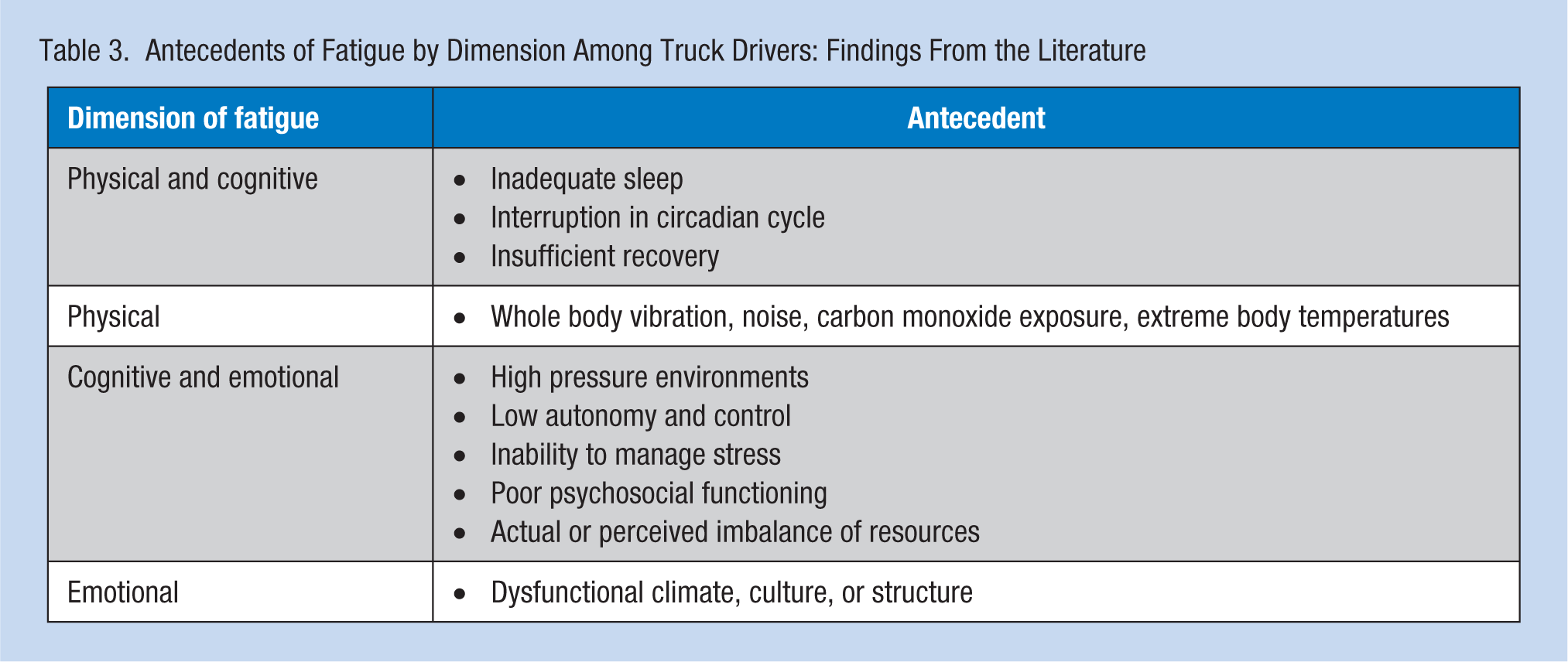
Prolonged wakefulness, inadequate sleep, long duration of sleeplessness, and insufficient recovery from previous work were frequently identified as antecedents to physical and cognitive fatigue (Balk & Fletcher, 2012; Dorrian et al., 2011; Duke et al., 2010; Fournier et al., 2007; Friswell & Williamson, 2013; Hanowski et al., 2007; Lemke et al., 2016; Meuleners et al., 2017; Morad et al., 2009; Panel on Research Methodologies and Statistical Approaches to Understanding Driver Fatigue Factors in Motor Carrier Safety and Driver Health et al., 2016; Sallinen et al., 2014; Sparrow et al., 2016; Torregroza-Vargas et al., 2014; Troxel et al., 2016; Williamson & Friswell, 2013). Erratic scheduling and interruption in circadian cycles were further-known contributors (Duke et al., 2010; Fournier et al., 2007; Friswell & Williamson, 2013; Meuleners et al., 2017; Panel on Research Methodologies and Statistical Approaches to Understanding Driver Fatigue Factors in Motor Carrier Safety and Driver Health et al., 2016; Sparrow et al., 2016; Troxel et al., 2016). Several authors recognized the impact of physical factors as antecedents to fatigue, including whole body vibration, noise, carbon monoxide exposure, and extreme temperatures (Apostolopoulos, Sönmez, Shattell, & Belzer, 2010; Fournier et al., 2007; Troxel et al., 2016). Two authors identified the impact of off-hours activities on fatigue (Fournier et al., 2007; Troxel et al., 2016).
Cognitive fatigue was attributed to long duration demands for both high and low cognitive workload (Sabir & Isha, 2016; Sallinen et al., 2014). For example, high pressure environments with little autonomy and control directly contributed to cognitive and emotional fatigue (Apostolopoulos et al., 2013; Cavagioni et al., 2009; Fournier et al., 2007; Friswell & Williamson, 2008; Meuleners et al., 2017; Rathert et al., 2012; Welp et al., 2015). However, the mandate for constant attention and quick reaction in monotonous, low-stimulus environments led to cognitive fatigue, such as that experienced during long duration, low-lit, night-time hauls. Lack of adaptation, inability to manage stress, and poor functioning within the psychosocial environment were further identified as antecedents in these domains (Cavagioni et al., 2009; Mathisen & Bergh, 2016; Welp et al., 2015). Mathisen and Bergh (2016) noted that dysfunctional climate, culture, and structure also served as precursors to psychological fatigue. The actual or perceived imbalance of demands to resources had also been identified as an antecedent to both cognitive and emotional fatigue (Rathert et al., 2012), meaning that stress in and of itself contributed to fatigue in these domains.
Consequences of Fatigue
Consequences are the resulting state following an event or phenomena (McEwen & Wills, 2014). The literature reflected a wide and varied understanding of the consequences of fatigue. Namely, there was overlap between the attributes of fatigue and its consequences. Most commonly, the consequences of fatigue were described as impaired cognitive processing and judgment, reduced awareness and attentional capacity, and reduced reaction time (Chan, 2011; Duke et al., 2010; Friswell & Williamson, 2013; Hanowski et al., 2007; Jiménez-Pinto & Torres-Torriti, 2013; Mathisen & Bergh, 2016; Panel on Research Methodologies and Statistical Approaches to Understanding Driver Fatigue Factors in Motor Carrier Safety and Driver Health et al., 2016; Sabir & Isha, 2016; Sparrow et al., 2016). As cognitive and motor processing became impaired, driver performance decreased and there was an increased risk for errors, near misses, and accidents (Dorrian et al., 2011; Duke et al., 2010; Feng & Guiming, 2007; Friswell & Williamson, 2013; Hanowski et al., 2007; Jiménez-Pinto & Torres-Torriti, 2013; Lemke et al., 2016; Li et al., 2013; Mathisen & Bergh, 2016; Meuleners et al., 2017; Morad et al., 2009; Panel on Research Methodologies and Statistical Approaches to Understanding Driver Fatigue Factors in Motor Carrier Safety and Driver Health et al., 2016; Rathert et al., 2012; Sabir & Isha, 2016; Sparrow et al., 2016; Torregroza-Vargas et al., 2014; Troxel et al., 2016; Wang et al., 2011; Welp et al., 2015; Zhao et al., 2009). To preserve resources, individuals experiencing fatigue frequently used shortcuts or work-arounds that further negated safety (Chan, 2011; Li et al., 2013; Mathisen & Bergh, 2016; Rathert et al., 2012). For example, a driver who is fatigued may forgo nondriving tasks to save time, such as a vehicle inspection or load securement, which compounds safety risks past those directly related to fatigue. Therefore, the prevention of fatigue is critical to safer long-haul trucking.
Exemplar of Fatigue
To enhance understanding of this concept, the following exemplar is offered. Mr. Ellis is a 40-year-old long-haul truck driver. He has a wife and three children at home and is the sole financial provider for his family. He follows the hours-of-service regulations and frequently drives 11 hours per day with one 30-minute rest-break. He spends hours of his day waiting for loading and unloading of the goods he carries. This is stressful because he has little control over the wait time itself. He is subject to regulations entailing a maximum work time of 14 hours per day and is paid by the mile. To maximize mileage, Mr. Ellis typically drives during the night. He must maintain vigilance at all times even though driving with low traffic and limited lighting is less than stimulating. His truck is clean and functional, but he is exposed to heavy noise and vibration throughout the day. Although he tries to get an adequate amount of sleep, he never feels completely recovered from the previous day. The job strain of the unproductive time spent waiting starts to take its toll on him at times. Mr. Ellis knows he should find healthy ways to manage the stress, but has not been effective in doing so. Furthermore, due to the nature of his job, he is frequently socially isolated. Mr. Ellis’s occupational lifestyle contributes to his experience of fatigue. At night, when driving conditions are monotonous, he has a very hard time concentrating on the road and maintaining awareness of all the factors that should be accounted for while driving. He recently told his wife that he has experienced a near-miss (or near-accident) roughly once a month, and knows he will not always be so lucky to come out of the experience without hurting himself or someone else.
Discussion
The literature represents different interpretations of the antecedents, attributes, and consequences of fatigue. The long-haul trucking literature emphasizes physical and cognitive fatigue with little mention of the emotional dimension. However, long-haul truckers are subject to high-demand environments with little autonomy or control (Apostolopoulos et al., 2014; Friswell & Williamson, 2013; Meuleners et al., 2017). These factors are then compounded by an occupational environment that promotes ineffective coping through insufficient outlets for physical activity and social support (Apostolopoulos et al., 2014). Emotional fatigue is represented as a precursor to error and injury in the occupational literature outside of long-haul trucking (Li et al., 2013; Rathert et al., 2012; Welp et al., 2015). Yet a gap exists in the trucking literature related to the understanding of fatigue in its full dimensional view. In addition, there was no mention within the long-haul trucking literature regarding the relationships between the dimensions of fatigue. It is reasonable to assume that fatigue is a cumulative phenomenon. That is, the experience of one dimension of fatigue influences the experience and vulnerability to its other dimensions. Finally, the experience of fatigue is known to be influenced by personal motivation, training, and personal traits (Morad et al., 2009). Yet there is little data related to the prevention, alleviation, and experience of fatigue as affected by these variables in the trucking literature. Therefore, future research should address the relationships between the dimension of fatigue and the mediation of fatigue by personal factors, motivation, resilience, and training. Furthermore, occupational health nurses should work with at-risk populations, such as truck drivers, to raise awareness of the risks factors for, signs of, and consequences of fatigue so that the critical nature of driving fatigued is recognized and risks mitigated.
Limitations of this analysis included excluding sources that were not readily available online. Although this limitation excluded a small percentage of relevant sources, the decision was made to promote efficiency. An additional limitation exists in the search technique to target the experience of fatigue predominantly in the long-haul trucking population. Although the long-haul trucking literature was searched because this is the population of interest, looking more deeply into a wider realm of occupational literature could have provided insight into the experience of fatigue not yet realized in the trucking field.
Conclusion
Fatigue increases the risk for human error and, thereby, increases the risk for accident, injury, and fatality. The long-haul trucking industry inadvertently places its employees at risk for fatigue through the physical demands of the job, culture of the industry, and accompanying lifestyle. Long-haul truckers are at risk for physical, mental, and emotional fatigue. This vulnerability affects not only the safety of long-haul truckers but also the safety of those who share their roadways. To facilitate advancements in the prevention and alleviation of fatigue, fatigue must be understood and measured in its full dimensions. This entails recognizing fatigue as a biopsychosocial element with potentially interacting dimensions and personal influences. It is in this perspective that the body of knowledge surrounding fatigue and its risk will be advanced.
Implications for Occupational Health Nursing Practice
The schedule, demands, and tasks that long-haul truck drivers are exposed to place them at substantial risk for fatigue, and consequently increases the risk for injury and fatality. Occupational health nurses are prominently positioned to help mitigate these risks. For example, occupational health nurses can screen for excessive daytime sleepiness, a common consequence of fatigue, in their routine clinical practice through well-established tools such as the Epworth Sleepiness Scale (Johns, 1991). By consistently implementing screening practices, populations most at risk for the consequences of fatigue can be systematically identified and educated on the personal risks associated with driving fatigued, including tips for early recognition and prevention. Furthermore, occupational health nurses must advocate within their practice to promote consistency of fatigue screening among all providers. Within their scope as an occupational health expert, nurses are in a key position to strategically vocalize the need for regulation and policy change within professional and governmental agencies to reduce fatigue risk and monitor efficacy of policy change. By reaching out to agencies, such as American Trucking Associations and Federal Motor Carrier Safety Administration, our expertise can be heard and used to inform a safer working environment (American Trucking Associations, 2018; U.S. Department of Transportation, n.d.).
Applying Research to Practice
Long-haul truck drivers are exposed to occupational strains that place them at risk for physical, cognitive, and emotional fatigue. Fatigue impairs the ability to obtain information from the environment and to quickly and accurately process information. Therefore, fatigue impairs safety. Identifying and alleviating the causes of physical, cognitive, and emotional fatigue is critical to the safety of long-haul truck drivers and our nation’s roads. Occupational health nurses can screen long-haul truck drivers for fatigue through validated instruments, such as the Epworth Sleepiness Scale.
Footnotes

Declaration of Conflicting Interests
The author(s) declared no potential conflicts of interest with respect to the research, authorship, and/or publication of this article.
Funding
The author(s) disclosed receipt of the following financial support for the research, authorship, and/or publication of this article: This research is funded by the Deep South Center for Occupational Health and Safety (NIOSH-T42OH008436).
Author Biographies
Jenni M. Wise is a NIOSH Fellow in the University of Alabama at Birmingham’s PhD in Nursing Program. Her research interests include total worker health with a focus on psychological well-being.
Karen Heaton is the Director of the NIOSH Deep South Center for Occupational Health and Safety within Occupational Health Nursing Program at the University of Alabama at Birmingham. Her program of research focuses on the effects of sleep deprivation and obstructive sleep apnea on cognition and injury risk in workers.
Patricia Patrician is an Endowed Chair in the University of Alabama at Birmingham’s School of Nursing. Her program of research focuses on nursing working environments, circadian misalignment in night shift nurses, cognition in circadian misalignment, and data driven decision making for managers and leaders.