




Abstract
Background:
Yearly influenza vaccination is the best way to prevent influenza. Workplace vaccination program for airline cabin crews is an important countermeasure in the management of infectious diseases. Understanding the influenza vaccination behavior of cabin crews is essential to establishing strategies to promote vaccine uptake. This study aimed to examine factors associated with airline cabin crews’ influenza vaccination intention in a workplace-based setting. We applied the theory of planned behavior (TPB) to explain the vaccination behavior of employees.
Methods:
A cross-sectional study was performed in April 2021. Participants self-reported the structured questionnaires that consisted of TPB variables, and reasons for influenza vaccination/nonvaccination in 2020. A total of 253 crew members participated, and 242 were included in the analysis.
Findings:
The influenza vaccination rate was 70.7% in 2020, and vaccination intention was 5.92 of 7 points in 2021. Multiple linear regression showed that influenza vaccination intention was associated with subjective norms (β = .394, p < .001), positive attitude (β = .145, p = .007), perceived behavioral control (β = .170, p = .004), actual behavioral control (β = .145, p = .010), and the previous year’s vaccination (β = .163, p < .001). The model accounted for 57% of the variance in influenza vaccination intention (F = 40.959, p < .001).
Conclusions/Application to Practice:
Our findings indicate that TPB is useful in explaining employees’ influenza vaccination intention and influencing factors. Focusing on positive messages that emphasize the social effects of vaccination and providing free vaccination on specific dates are potential strategies to increase intention. It can be applied to help design on-site workplace vaccination programs for essential frontline workers.
Background
The World Health Organization (WHO, 2017) reported that influenza vaccination reduces the risk of influenza illness in adults by approximately 50%. Individual countries are strengthening their vaccination policy based on the burden of influenza illness estimates and vaccine effectiveness studies (WHO, 2021). According to the vaccination policy of the WHO European Region in 2014/2015, influenza vaccine was recommended for occupational groups, including airline crew members, public transportation employees, police officers, and military personnel, in 86% of the countries, which is an increase from 60% in 2008/2009 (Jorgensen et al., 2018). In 2020, when coronavirus disease (COVID-19) vaccine supply scenarios were set for priority groups, the WHO recommended vaccination for transportation workers as next following older adults, healthcare workers, and high-priority teachers (WHO, 2020). The U.S. Centers for Disease Control and Prevention (CDC) has also designated non-healthcare frontline essential workers, such as firefighters, police officers, public transit workers, and food handling workers, as the same priority phase after healthcare workers (Dooling et al., 2021). Vaccination programs for workers in various social essential facilities can be expanded.
Airline cabin crew members are an occupational group with frequent overseas visits, irregular circadian rhythm, and shift work. They engage in service activities, including encountering multiple people, handling food, and caring for vulnerable passengers, in limited cabin space. As the number of aircraft routes and passengers increases, air travel by individuals vulnerable to infectious diseases, such as older adults, children, and pregnant women, continues to increase (Budd & Ison, 2020). In the event of an infectious disease epidemic, crew members are often excluded from criteria regarding special quarantine or overseas entry restrictions. The countermeasures against infection for cabin crew are considered critical issues (Centers for Disease Control and Prevention [CDC], 2019a). Travel medicine experts pointed out that influenza vaccination is necessary not only for high-risk groups but also for travel companions and crew members, as well as all travelers who want to reduce their health risks while traveling (Goeijenbier et al., 2017). The workplace is efficient for reaching healthy adults with preventive care interventions (CDC, 2016). The provision of vaccination programs (e.g., education, incentive, and free vaccination) in the workplace can help improve vaccine uptake of employees (Landwehr et al., 2021). However, airline vaccination programs and related factors are not well known.
Identifying the level of influenza vaccination implementation and factors affecting it is important in establishing a strategy for continuous influenza vaccination and newly established vaccination uptake. As vaccination behavior shows, previous vaccination experience positively affects future performance. Some studies investigated COVID-19 vaccination intention by focusing on occupational groups, revealing a relationship between it and influenza vaccination uptake (Kwok et al., 2021; La Vecchia et al., 2020). Firefighters and emergency medical service workers who did not receive the influenza vaccine show lower COVID-19 vaccine acceptability (Caban-Martinez et al., 2021), and healthcare workers with influenza vaccination are more likely to receive the COVID-19 vaccine (Galanis et al., 2022).
Ajzen’s theory of planned behavior (TPB) is a representative conceptual framework for coping with social behavior, in which individuals determine their behavior through interactions with environmental factors. The TPB has three determinants of behavior intention, namely, attitude toward the behavior, subjective norms, and perceived behavioral control (Ajzen, 1991). Ajzen (1991) also refers to the performance of behavior based on opportunities and resources, which represent “actual control.” However, since individuals’ perceived beliefs are more valued, previous studies using the TPB (Cornally et al., 2013; Lipovetski et al., 2018; Wu et al., 2020; You & Yang, 2021) did not measure the “actual behavioral control.” Ajzen (2020) explained that having a “good understanding of various internal factors (skills, knowledge, physical stamina, intelligence, etc.) and external factors (time, money, equipment or place, cooperation by others, etc.)” is important to assess the concept of actual control. To accurately understand vaccination behavior, this study applied the TPB, including actual behavioral control.
We investigated factors associated with influenza vaccination among airline cabin crew members using TPB questionnaires by assessing attitude toward influenza vaccination, subjective norms, perceived behavioral control, actual behavioral control, and vaccination intention. In addition, we sought to identify the relationship between TPB variables and influenza vaccination intention and examine the factors that influence influenza vaccination intention among airline cabin crew members.
Methods
This study was conducted on cabin crew members working at a South Korean airline that was implementing an onsite workplace influenza vaccination. The inclusion criteria were cabin crew members performing flight duties, which was in-flight service for passengers. The exclusion criteria included cabin crew members who did not perform flight duties for the past year or who mainly trained on the ground or performed administrative tasks.
Data Collection
This study was approved by the Institutional Review Board of Yonsei University Health System prior to data collection. The survey was conducted in April 2021. A survey recruitment notice was posted at the cabin crew department of an airline in Seoul, Korea. The notice included the purpose and study methods, anonymous participation, voluntary research participation, and the URL address to access the online survey. Study participation was allowed only after reading and indicating whether they provided informed consent. A gift coupon worth US$2 (KRW 3000) was provided to the participants in gratitude for participating. A pilot survey involving five cabin crew members confirmed that participants were able to understand the questions and that the time to complete the survey took 10 to 15 min.
Participants self-reported using structured questionnaires that consisted of items investigating TPB variables, reasons for influenza vaccination/nonvaccination in 2020, and general characteristics. To apply the TPB, the questionnaire was organized based on Ajzen’s questionnaire construction (Ajzen, n.d.-b) and sample TPB questionnaire (Ajzen, n.d.-a), which were confirmed by Ajzen. Each question could be answered from “strongly agree” (7 points) to “strongly disagree” (1 point) on a 7-point Likert-type scale, and the mean value of scores for each variable was measured (Supplemental Table A.).
Vaccination intention, the primary outcome variable, was measured using three items, including “I intend to vaccinate against influenza in 2021.” In contrast to the TPB questionnaire construction, attitudes were divided into positive (three items), such as “Influenza vaccination is necessary to prevent influenza” and negative (three items), such as “Influenza vaccination is not safe” and then measured. This was revised after obtaining approval from Wu et al. (2020) who originally developed the tool. Content suitability was supplemented by collecting opinions from 10 experts comprising of nursing professors, aviation medical examiners, and airline nurses. The content validity index (CVI) score was 1.0. The subjective norms (eight items) were the perceived social pressures applied by important people (such as family and company colleagues) who believe they should perform the behavior (Ajzen, n.d.-b). These norms included the item, “My family members/company colleagues think I should vaccinate against influenza.” The perceived behavioral control (four items) indicated the individual perception level of the degree to which the vaccination behavior can be performed and controlled. It included the item, “Whether I vaccinate against influenza is completely up to me.” The actual behavioral control, not presented in the TPB questionnaire construction, was conducted based on Ajzen’s explanation (Ajzen, 2020), this indicated resources and opportunities that may be necessary or hindered while performing the behavior. The actual behavioral control comprised six items, including two items on individual knowledge and physical stamina regarding influenza vaccination as the internal factors, and four items about money, time, place, and health manager’s guidance as the external factors. It included, a question about place, “I am not uncomfortable visiting the site of influenza vaccination.” Opinions were collected and supplemented from 10 experts concerning the suitability of the content, and the resulting CVI score was 1.0.
The reasons for whether or not a worker was vaccinated in 2020 comprised of question based on a study by Kee (2005) and studies related to influenza vaccination behavior (Lin et al., 2010; Schmid et al., 2017; Seale et al., 2010). The content validity evaluation was conducted and supplemented by 10 experts, and the CVI results of each item were from 0.9 to 1.0.
Data on demographic characteristics, such as sex, age, marital status, educational level, work periods, occupation, and the presence or absence of a housemate, were collected. For personal characteristics related to influenza vaccination, data on past experience of having the flu (within 6 months of vaccination, flu experience) and past vaccination history (before the COVID-19 epidemic in 2019, and during the COVID-19 epidemic in 2020) were collected.
Data Analysis
The IBM SPSS/WIN 25.0 program (IBM Corp., Armonk, NY, USA) was used for data analysis. Distributions of variables were expressed as percentages, mean values, and standard deviations. Differences in vaccination intentions according to characteristics were analyzed using independent t-test and analysis of variance. Pearson correlation analysis was performed to identify the relationship between TPB variables. The factors identified as significant variables on influenza vaccination intention were analyzed using multiple linear regression analysis. The dependent variable was influenza vaccination intention, and the independent variables that were significant in tests for difference and correlation were included in the regression model. All significance tests were two-tailed, and p-values equal to or less than .05 were considered statistically significant.
Findings
A total of 253 crew members participated in the study. Of the surveys returned, 11 were incomplete and discarded, making a final sample of 242 respondents (Table 1). Most participants were female (78.5%; n = 190), ages ranged from 23 to 56 years with a mean of 37.2 (±7.5) years, and were more likely (74.0%) to live with partner/spouse.
Occupational and Demographic Characteristics Among Airline Cabin Crew Participants and Influenza Vaccination Intention (n = 242)
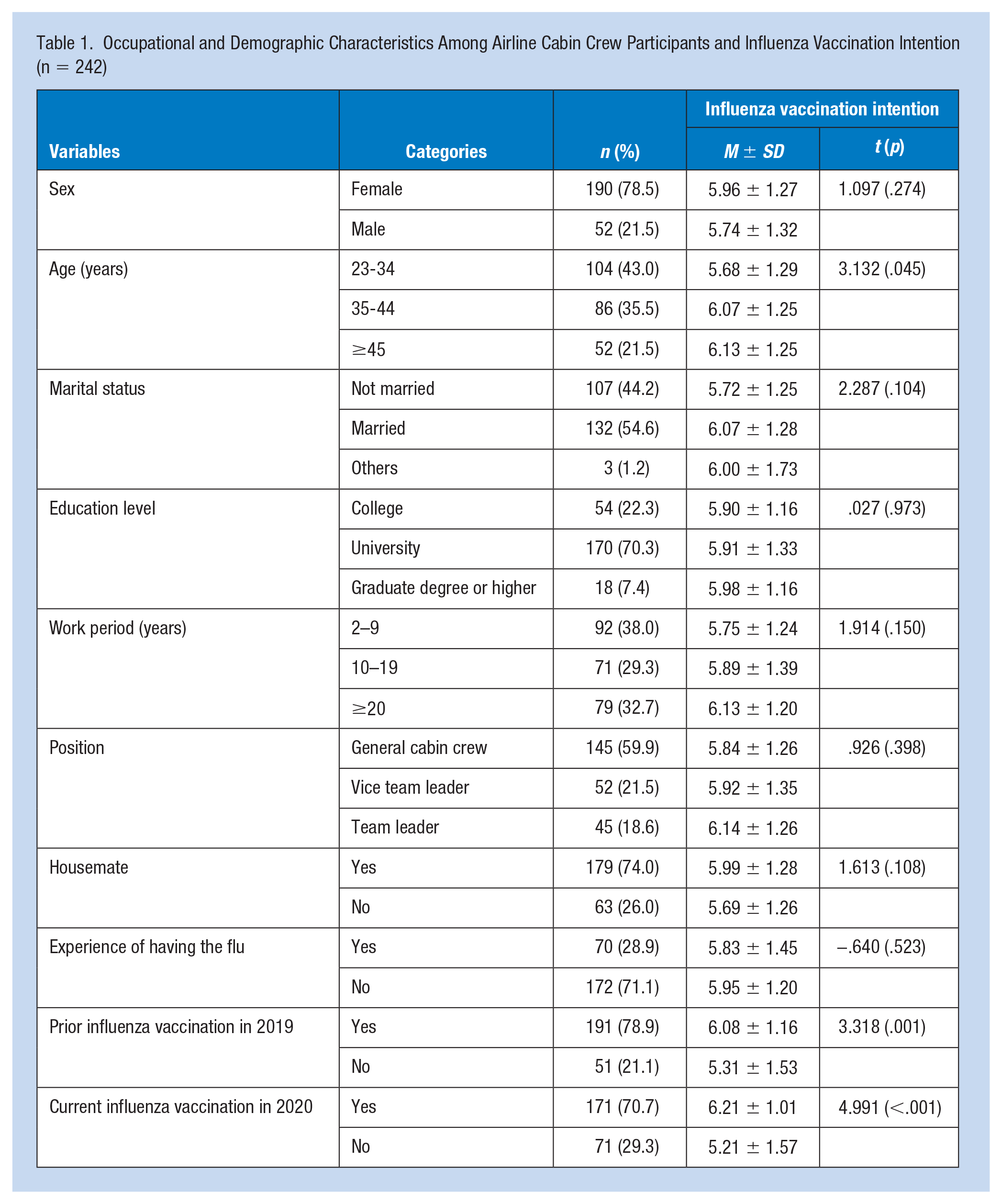
The vaccination intention scores were high for participants aged 45 years or older (p = .045). For influenza-related characteristics, almost one-third (28.9%) had flu in the past, of which 12.8% were vaccinated against influenza within 6 months. The vaccination rate was high almost three-quarters in 2020 (70.7%), although it was lower than in 2019 (78.9%) when COVID-19 was not prevalent. The vaccination intention was significantly higher in the vaccinated group in 2019 (t = 3.318, p = .001) and 2020 (t = 4.991, p < .001). The mean of intention to receive the influenza vaccine was 5.92 (±1.28) of 7 points (Table 2). The intention had statistically positive correlations with all the variables including subjective norms, positive attitude. Only negative attitude showed a negative correlation with intention.
Characteristics of the Theory of Planned Behavior Variables and Correlation With Intention of Being Vaccinated for Influenza Among Airline Cabin Crew Workers (n = 242)
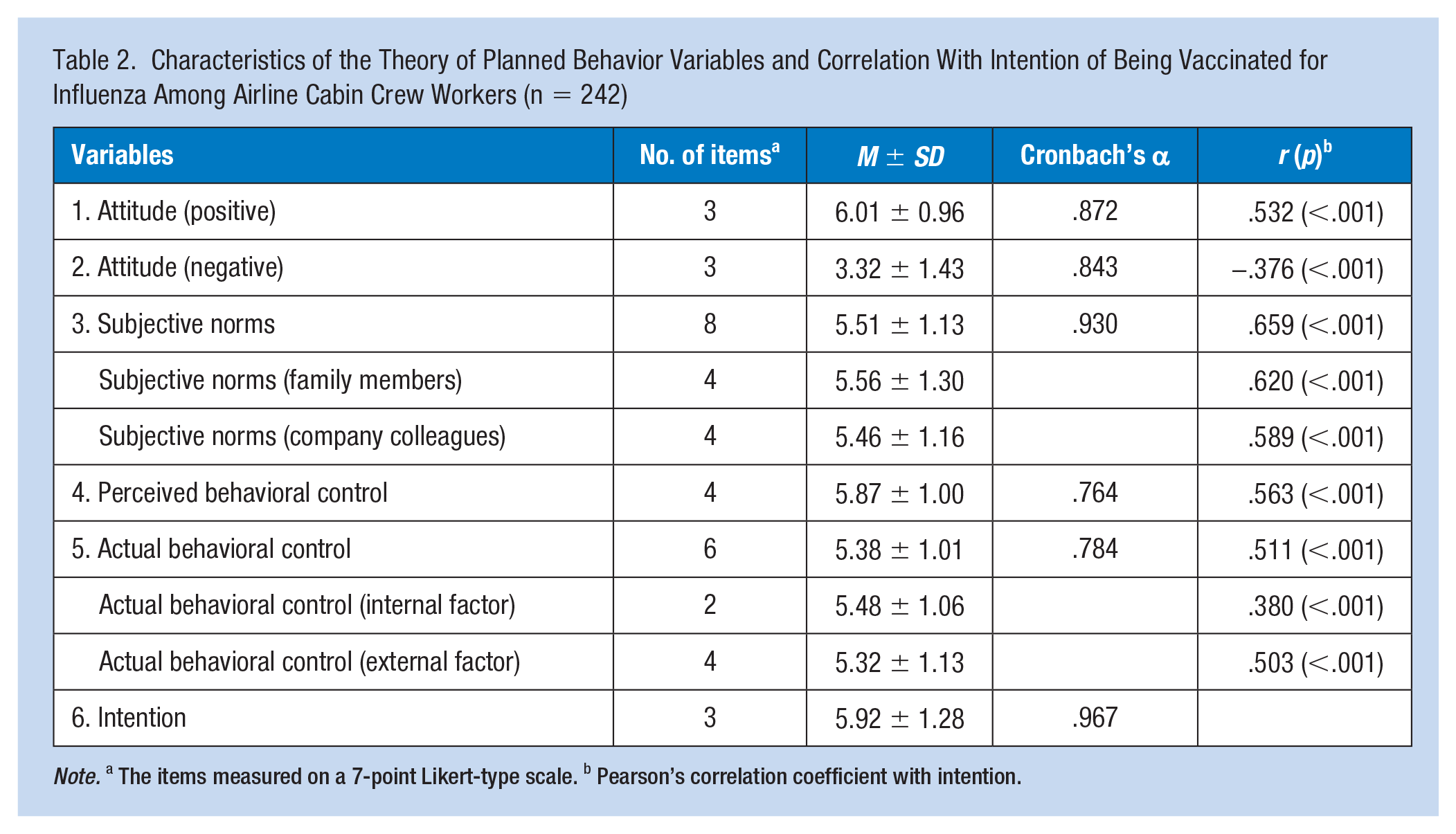
Note. a The items measured on a 7-point Likert-type scale. b Pearson’s correlation coefficient with intention.
Table 3 shows the reasons for influenza vaccination or nonvaccination in 2020. Among the participants who received vaccination in the previous year, the majority (89.4%) selected the item, “Having the flu makes it difficult to perform flight duty and daily life” as the reason for vaccination, followed by access to free vaccination at the workplace (88.7%), consideration of the co-occurrence of influenza and pandemic COVID-19 (86.8%), and cabin crew members at high risk for influenza due to overseas visits (78.8%). Conversely, the most common reason for nonvaccination was because the participants missed the free vaccination period at their workplace (54.4%), and they thought that the risk of catching influenza was low due to limited flight duties and avoidance going out because of the COVID-19 pandemic (45.6%).
Reasons for Vaccination/Nonvaccination in 2020 Among Airline Cabin Crew Workers
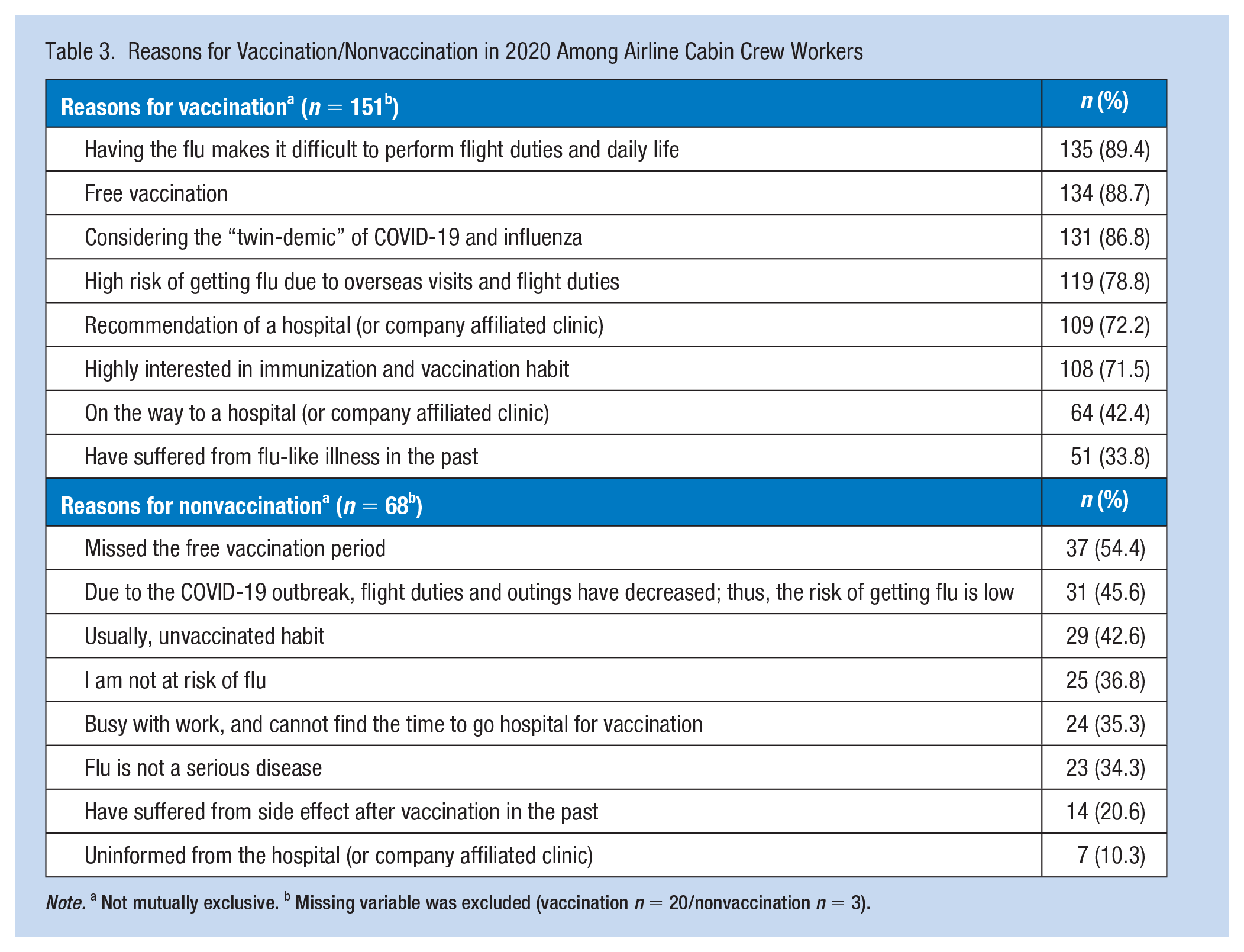
Note. a Not mutually exclusive. b Missing variable was excluded (vaccination n = 20/nonvaccination n = 3).
Multiple linear regression analysis was used to estimate the influencing factors on influenza vaccination intention. Seven independent variables that were significant in prior analyses for difference and correlation were included: age, previous year’s influenza vaccination experience, positive and negative attitude toward influenza vaccination, subjective norms, perceived behavioral control, and actual behavioral control. In the multiple linear regression analysis, the model explained 57% (adjusted R² = .570) of influenza vaccination intention (Table 4). Subjective norms were the most influential factors contributing to intention (β = .394, p < .001). Cabin crew members who had been vaccinated in the previous year had a higher vaccination intention than those who had not (β = .163, p < .001). Negative attitude and age were not statistically significant factors influencing intention.
Multiple Regression Analysis for Influenza Vaccination Intention Among Airline Cabin Crew Workers (n = 242)
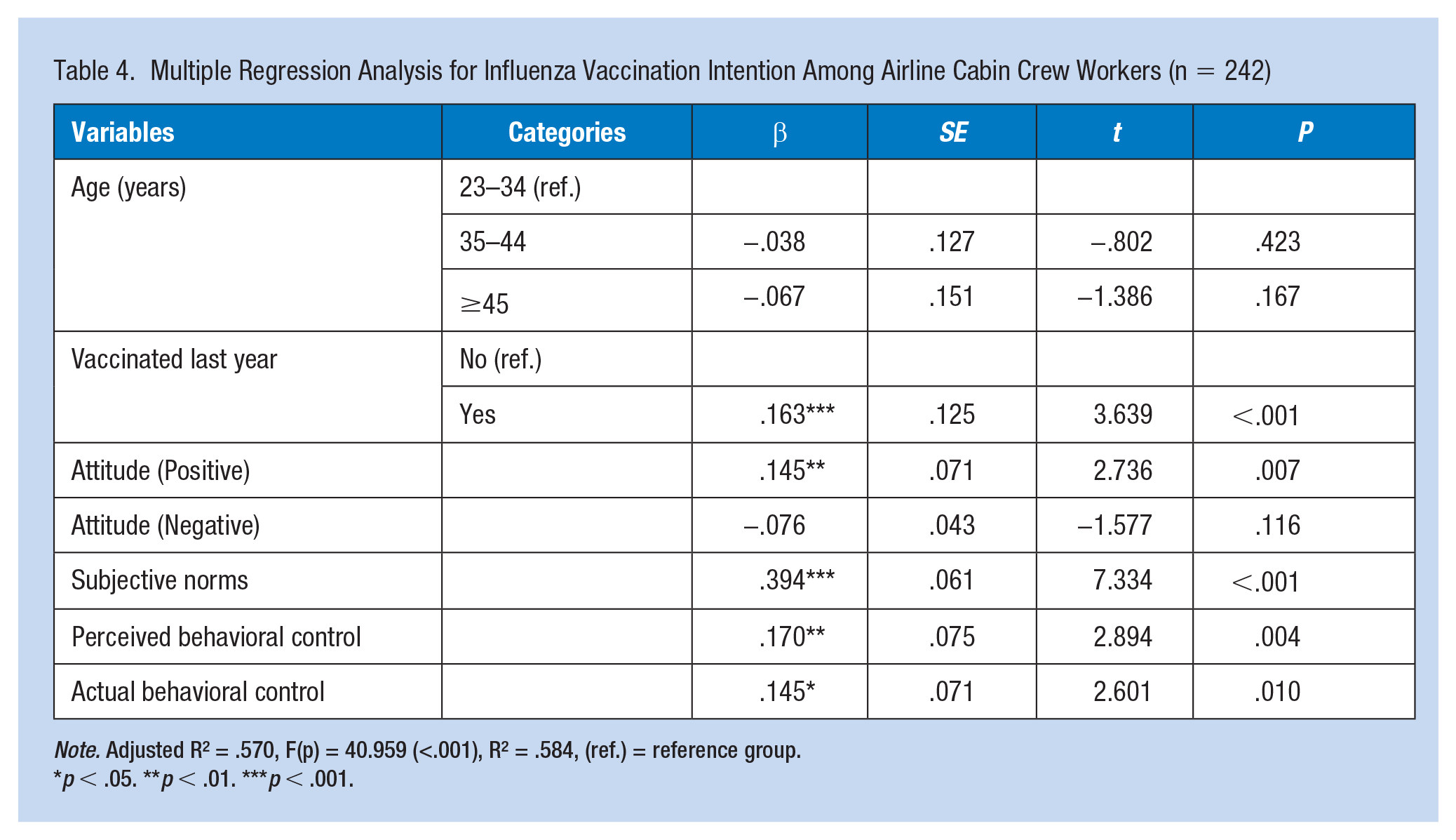
Note. Adjusted R² = .570, F(p) = 40.959 (<.001), R² = .584, (ref.) = reference group.
p < .05. **p < .01. ***p < .001.
Discussion
This study indicated that cabin crew members of the airline implementing the workplace vaccination program had a relatively high influenza vaccination intention and vaccination rate. Cabin crews’ intention was higher than the score of Israeli nurses reported in a prior study, which used the TPB questionnaire (Lipovetski et al., 2018). A study among Italian healthcare workers reported an increase in vaccination rates from 10.2% in 2018/2019 to 39.3% in 2020/2021 (Scardina et al., 2021). In contrast to this finding, the influenza vaccination rate of cabin crew members in our study decreased from 78.9% in 2019 to 70.7% in 2020. This could be attributed to a significant decrease in the number of flight duties and stay-at-home recommendations as airlines temporary closed to maintain employment. The aviation industry experienced a crisis with the global decrease in passengers by 60.2% in the 2020 pandemic (International Air Transport Association, 2021). Regardless of the COVID-19 issue, the vaccination rate in cabin crew members is higher the general population of Koreans aged 19 to 64 years (34.6%) in 2020 (Korean Statistical Information Service, 2022), long-term care workers (45.2%) (Jeong, 2018), and child care teachers (43.2%) (Hwang, 2019) in the occupational group. The high vaccination rate in this study was attributed to the workplace-based vaccination program, which allowed free access to vaccination at in-house clinics near the airport. This program, which usually runs for approximately 3 weeks in October, has a more than 10-year history, including the 2009 H1N1 influenza pandemic. Employees could expect influenza vaccination to take place every October, which would have contributed to establishing the social norms for vaccination. Many crew members thought that contracting influenza would make flight duties and daily life difficult and that there was a high risk for getting influenza due to overseas visits and flight work.
The factors affecting influenza vaccination intention were positive attitude, subjective norms, perceived behavioral control, actual behavioral control, and the previous year’s influenza vaccination experience. Negative attitude toward vaccination had no statistically significant effect on their intention. This finding is similar to that reported by Wu et al. (2020). The positive attitude of parents raising young child increased their child’s vaccination intention but the negative attitude had no effect (Wu et al., 2020). In a separate study that focused on communication strategies for promoting health behavior, vaccination behavior was regarded as an effective alternative to avoiding future risk of disease through risk-avoidance processing. When accepted as a positive message of gain, people have tried to avoid even small uncertainties, such as adverse effects, as they do not prefer losing the gain (Kim & Boo, 2011). Designing a communication campaign that emphasizes the positive function of vaccination to form the belief that the benefits overcome the barriers is important (Gallagher & Updegraff, 2012; B. K. Lee et al., 2014).
This study demonstrated that subjective norms, such as the perceived social pressure family think they should vaccinate against influenza, are the most important variable affecting vaccination intention. This result is different from previous studies that reported that subjective norms showed no better influence (Cornally et al., 2013; Wu et al., 2020; You & Yang, 2021). The high influence of subjective norms is related to collectivist cultures. Korean culture focuses on harmony with families or members of the organization and values group goals by meeting social norms and expectations (J. Lee & Kim, 2014). In March 2021, around the same period as the data collection of this study, a survey of Korean adults also found a great influence from their families on their intention to vaccinate against COVID-19. The reasons for vaccination include family infection prevention (79.8%), group immunity formation (67.2%), and their own infection prevention (65.3%) (Ministry of Health and Welfare, 2021). Although the vaccination programs are phased at population- or occupational-based levels, strategies focusing on the positive effects of family members and colleagues can be commonly suggested to promote vaccination behavior. As a strategy to extend the vaccination effects to the surroundings and strengthen employee engagement, workplaces can consider providing vaccination to employees’ families (CDC, 2021; Koul et al., 2020).
Social norms in the working environment of cabin crew members, who perform flight duties under the team system, directly or indirectly affect the overall work life. The organizational culture, a universal value that organization members take for granted, is a determinant that sufficiently influences the beliefs and behaviors (Ha & Lee, 2017). In the study of Payne et al. (2018), the health-related organizational culture comprised elements such as leadership and coworker support, policy and program support, and employee engagement. Both employees and employers participated in the survey for evaluation. Interestingly, leadership support recognized by employees showed a positive association with health-related organizational culture, while leadership support recognized by employers showed a negative association with health-related organizational culture. Payne et al. (2018) indicated that rather than suggesting that a high level of leadership support worsened results, the level of leadership support perceived by employers was basically low. Accordingly, educational opportunities and social institutional support systems are needed to help employers recognize their role as a supervisor in forming a health-related organizational culture and establishing active company policy. A workplace health promotion program can be effectively implemented only when the program includes well-established responsibilities for both employees and employers. In a study by Douville et al. (2010), 70% of hospital employees in the United States agreed to a mandated influenza vaccination. Among them, 48.5% falsely believed that the vaccination was required, rather than optional, because of the hospital vaccination program. This suggests that the free vaccination policy may exert social pressure on employees to be vaccinated. Meanwhile, compared with employees who recognized that influenza vaccination was not mandatory, those who believed that influenza vaccination was mandatory were more likely to believe that patients in charge had a higher risk of contracting influenza. Therefore, vaccination programs should be designed to raise awareness of the risks of influenza and benefits of vaccination; this would allow the decision to participate in vaccination based on voluntary choices rather than social pressure.
The behavioral control factor contributes to intention, including both perceived and actual behavioral control. Perceived behavioral control represents an individual perception and belief to practice behavior beyond potential conditions. Actual behavioral control refers to a good understanding of internal and external resources that affect behavior. However, perceived behavioral control of Israeli nurses (Lipovetski et al., 2018) and Korean health personnel (You & Yang, 2021) was not a factor influencing the intention. Since medical personnel could be easily vaccinated in hospitals where they were working, the behavioral control score was high, but it did not have a decisive effect. Although cabin crew members could also access the vaccination program at the workplace, the actual behavioral control, particularly external factors including money, time, place, and guidance, still had a significant effect on intention. This suggests that practical improvement is necessary in the current workplace-based program. Considering the mobile work patterns and variable schedules of crew members, they require a more convenient mode of engagement and improved accessibility regarding influenza vaccinations.
This study reports that the model using the TPB variables and previous year’s influenza vaccination experiences could explain 57% of vaccination intention. Vaccination experience is reported as a strong predictor of vaccination intention in many studies. In a longitudinal study by Wu et al. (2020), positive attitudes and subjective norms were identified as factors in predicting vaccination intention among parents with vaccinated children. However, no significant factor was found among parents whose children never vaccinated (Wu et al., 2020). A previous study by Conner and Armitage (1998) reported that experienced behavior is a strong predictor of subsequent behavior and consequently leads to behavior through the process of “past behavior and habit” (Conner & Armitage, 1998). Vaccination intention can be appropriately explained according to attitudes, norms, and behavioral controls of TPB, which are formed by repeated experience of a regularly scheduled annual influenza vaccination program. Our study identified factors affecting influenza vaccination among cabin crew members through attitudes toward influenza vaccination, subjective norms by family and colleagues, and behavioral control; this indicates the perceived and actual factors including practical resources and opportunities.
These findings should be interpreted cautiously considering the study limitations. First, we only included airline crew members at a single company; thus, the generalizability of our study findings is limited. Second, there was a lack of data on the extent to which COVID-19 pandemic affected influenza vaccination intention and subjective norms. Further studies should identify the impact of workplace vaccination intervention based on the findings of this study.
Implication for Occupational Health Practice
Yearly influenza vaccination is the best way to prevent influenza disease and reduces absence from work due to flu-like illnesses (CDC, 2019b). A workplace is an important place for community adults’ uptake of the vaccination programs. For the program to be effective, it should be meaningful, convenient, and acceptable for employees to engage in health behaviors.
Factors contributing to influenza vaccination intention were subjective norms, positive attitude, and the previous year’s vaccination experience. Focusing on a positive message communication that emphasizes the vaccination effects on family and colleagues and regularly implementing a workplace vaccination campaign can form a vaccination culture. Bonnevie et al. (2020) reported that campaigns using social media influencers who post well-established messages can increase positive attitudes within received regions. The positive messages corrected misconceptions about the vaccine, and the soft word “flu shot” was used instead of the hard word “vaccination.” The messages were also changed monthly for dispelling negative concepts throughout the flu season (Bonnevie et al., 2020). At the behavioral control level, particularly external resources, the authors propose three strategies (i.e., time, place, and guidance; excluded “money” because the cost in this study was already free) to realize an effective vaccination program for cabin crew members. First, plot a personal “vaccination date” based on the duty schedule table to avoid missing the vaccination period set by the workplace. Missing the vaccination period was the most common reason for nonvaccination in this study, which is also similar to the reason “too busy” in previously conducted studies (Kee, 2005; Liu et al., 2019; Son et al., 2021). Second, consider setting up a mobile booth at the place where workers must pass through. There was an inconvenient distance between the vaccination site and actual workplace. In hospitals, the use of mobile cart services improved vaccination against influenza of overall workers by 85% (Kang et al., 2019). Third, make announcements through various channels including individual and general public levels. Channels can easily and frequently be checked by workers, such as marking a personal schedule screen online and posting on cafeteria walls. These strategies may consequently increase vaccination behavior among airline crew members. Furthermore, it can be applied to designing effective on-site workplace vaccination programs for essential frontline workers.
Applying Research to Occupational Health Practice
The experience of COVID-19 vaccine distributions has emphasized the vaccination priority including for occupational groups in essential social facilities. Workplace vaccination programs are an important countermeasure to promote vaccine uptake among airline cabin crews, who engage in shift work and overseas travel. For implementing the program (including free vaccination for employees), health providers need to utilize intrinsic and extrinsic resources to improve practical employee-centered approach. This study identified factors that contributed to intention to receive the influenza vaccine by applying the theory of planned behavior; subjective norms, positive attitude, perceived behavioral control, actual behavioral control, and the previous year’s vaccination. The most common reason for nonvaccination was missing the free vaccination period. In summary, vaccination can be encouraged by raising awareness of the impact of the surroundings and usefulness of vaccines, and members should be able to participate in the yearly action for free, and more conveniently.
Supplemental Material
sj-docx-1-whs-10.1177_21650799221151153 – Supplemental material for Factors Associated With Airline Cabin Crews’ Influenza Vaccination Intention in the Workplace-based Setting
Supplemental material, sj-docx-1-whs-10.1177_21650799221151153 for Factors Associated With Airline Cabin Crews’ Influenza Vaccination Intention in the Workplace-based Setting by Layoung Kim, Gwang Suk Kim, Kyung Hee Lee and Jungha Kim in Workplace Health & Safety
Footnotes
Acknowledgements
The authors thank the contribution of the Korean Air Aeromedical Center. This paper is based on the Master’s thesis of the first author. We express our deep gratitude to Prof. Ajzen for approving the construction of the theory of planned behavior (TPB) questionnaire.
Author Contributions
L.K. and G.S.K. contributed to conception, design of the work, data analysis and interpretation. L.K., G.S.K, K.H.L and J.K. contributed drafting, and critical revising of the manuscript. All authors approved final version of the manuscript.
Conflict of Interest
The author(s) declared no potential conflicts of interest with respect to the research, authorship, and/or publication of this article.
Funding
The author(s) disclosed receipt of the following financial support for the research, authorship, and/or publication of this article: L.K. received a scholarship from Brain Korea 21 FOUR Project funded by National Research Foundation (NRF) of Korea, Yonsei University College of Nursing.

Supplemental Material
Supplemental material for this article is available online.
References
Supplementary Material
Please find the following supplemental material available below.
For Open Access articles published under a Creative Commons License, all supplemental material carries the same license as the article it is associated with.
For non-Open Access articles published, all supplemental material carries a non-exclusive license, and permission requests for re-use of supplemental material or any part of supplemental material shall be sent directly to the copyright owner as specified in the copyright notice associated with the article.
