




Abstract
Background:
Workplace psychological distress (WPD) significantly impacts employees’ mental and physical well-being. However, WPD has not been well-defined in the literature as a concept. This concept analysis aims to clarify the concept of WPD and promote the use of the term in occupational health nursing research.
Methods:
Strategies introduced by Walker and Avant’s conceptual analysis method will be utilized to conceptualize WPD and its impact on employees. A literature search was conducted using Cumulative Index of Nursing and Allied Health Literature (CINAHL), Business Source Complete, and APA PsycArticles. The keyword search included the terms “workplace” AND “employee” AND “psychological distress.”
Results:
Antecedents of WPD are an increase in job demands, lack of control, low support, and workplace bullying. Defining attributes for WPD are extreme fatigue, role conflict, and time pressures. Consequences of WPD were identified as mental disorders, physical disorders, and loss in productivity. This concept was further illustrated using a model, borderline, and contrary case.
Discussion/Conclusion:
Identifying signs of WPD is of great importance in caring for employees in the workplace. Occupational health nurses can use information obtained from a workplace assessment to develop policies, implement well-being programs, and provide employee referrals.
Background
The primary responsibilities of occupational health nurses are health promotion, injury and illness prevention, and protection from workplace hazards (American Association of Occupational Health Nurses [AAOHN], 2021). Unfortunately, employees are susceptible to workplace psychological distress (WPD), which may negatively affect an employee’s mental and physical well-being and ultimately impact an organization’s operations (World Health Organization [WHO], 2021). More than 20% of employees will experience at least one episode of WPD (Firouzbakht et al., 2018; Marchand & Blanc, 2011), and all employees are at risk of exposure, directly or indirectly. Employees continuously experiencing WPD events may eventually develop preventable health conditions, such as cardiovascular disease or depression (Ghaddar et al., 2011). This paper intends to define the concept of WPD by using the Walker and Avant concept analysis approach to provide operational guidance for occupational health nurses and reduce the risk of employees experiencing WPD through related workplace policy development.
WPD is the result of combined elements that impact an employee’s well-being (Health and Safety Executive [HSE], 2020) and are linked to an increase in psychological disorders, including stress, anxiety, and depression (Rigotti et al., 2021). Unanticipated disruptions in the work environment, such as the COVID-19 pandemic, directly impact the organization, policies, and employees (Fernandes & Pereira, 2016). In addition, WPD poses a threat to an employee’s physical well-being (Machado et al., 2013; Salazar & Diego-Medrano, 2021; Schmidt et al., 2014). For example, studies have shown that WPD of computer users may lead to musculoskeletal discomfort related to posture and decreased muscle relaxation (Taylor, 2015).
Multiple aspects are associated with WPD, including workplace demands, social relations and leadership, workplace values, personality, worker–work interface, health and well-being, and offensive behavior. It is critical to identify which elements are found in the organizational environment that may have an influential impact on employee well-being (Coutinho et al., 2018). The failure of organizations to assess the prevalence of WPD among the employee population or the lack of appropriate intervention may present a significant financial impact to an organization, as evident by an increase in absenteeism, a decrease in productivity, and associated healthcare costs (Marchand & Blanc, 2011).
Methods
Walker and Avant’s approach was utilized in this WPD concept analysis. A concept analysis is a methodology used to examine a concept’s overall function and intends to formally present the defining attributes to promote a uniform understanding of a phenomenon (Walker & Avant, 2019). This concept analysis aims to clarify the concept of WPD and encourage the use of the term in occupational health nursing research. Walker and Avant’s approach helped identify all related applications of the WPD concept and determine the defining attributes, antecedents, and consequences. The process also included developing a model case, borderline case, and contrary case to explain the findings further. The final step included determining the empirical referents to measure the defining attributes.
As seen in Figure 1, a literature search was conducted using the databases Cumulative Index of Nursing and Allied Health Literature (CINAHL), Business Source Complete, and APA PsycArticles. The terms workplace AND employee AND psychological distress were included in the keyword search. Only peer-reviewed articles written in the past 10 years (2011–2021) in the English language were considered for this concept analysis. The literature search was also limited to full text and all adult populations. The database search resulted in 29 articles found in CINAHL, 52 articles found in Business Source Complete, and 16 articles found in APA PsycArticles. Titles and abstracts were screened and determined to be relevant if a related discussion on WPD was considered applicable to employees in a workplace setting. A total of 46 articles were excluded. The remaining 51 articles were assessed for relevancy to the concept. Due to failure to meet the concept analysis criteria or duplication, 22 articles were removed. The remaining 29 articles were then considered for the development of this concept analysis.
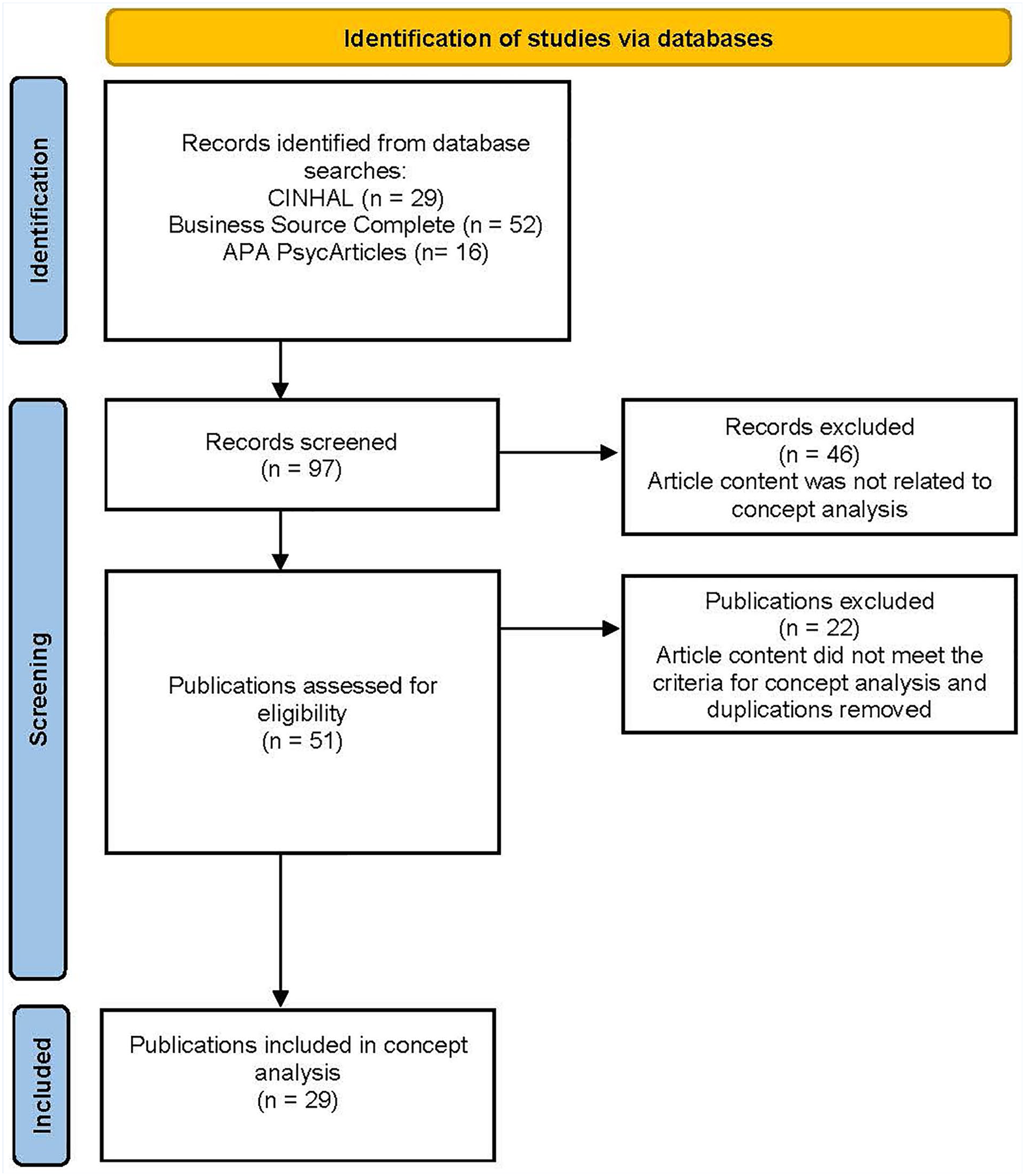
PRISMA diagram of articles related to the concept of workplace psychological distress (Page et al., 2021).
Results
In determining the antecedents, defining attributes, and consequences of WPD, the 29 articles were analyzed. The information was then organized and recorded in Figure 2.
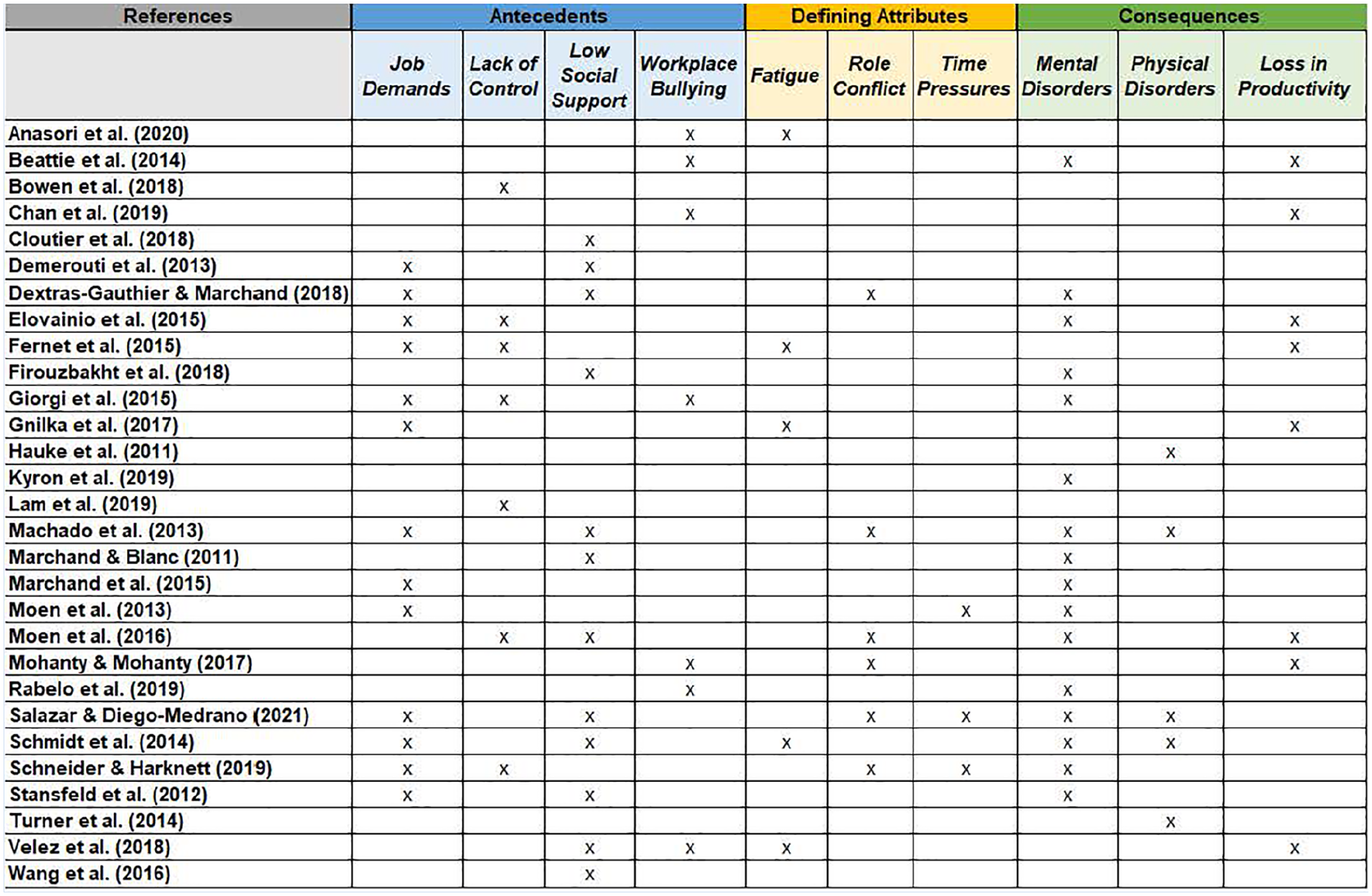
Summary of antecedents, attributes, and consequences related to workplace psychological distress.
Uses of the Concept
The phrase psychological distress is not an unfamiliar term and has been conceptualized in the literature as a patient’s response to illness (Ridner, 2004). Unfortunately, the concept of WPD is not currently utilized in the literature, nor has the term been distinctly described. Although a specific understanding of how psychological distress impacts employees in the workplace has not been provided, Ridner (2004) provides the following operational definition of psychological distress to be considered as a means of clarification: “the unique discomforting, emotional state experienced by an individual [in the workplace] in response to a specific [work-related] stressor or demand that results in harm, either temporary or permanent, to the person” (p. 539).
Some related terminology of WPD that has been published includes Work-Related Psychological Distress and Psychological Distress in the Workforce. The term Work-Related Psychological Distress has been used to describe the state of employees’ mental and physical wellness after being impacted by a stressful work environment, which is characterized by increased levels of non-specific negative emotional states (e.g., stress, anxiety, or depression) (Viertiö et al., 2021; Vogazianos et al., 2019). Furthermore, Cadieux and Marchand (2014) explain how Psychological Distress in the Workforce combines specific workplace, non-work-related, and family-related factors.
Other related terms found in the literature were:
Psychosocial hazards—Related to high job demands, low job control, high work pace, role conflict, inadequate levels of support, time pressures, job demands, and interpersonal relationships. These elements may impact job satisfaction and increase the risk of developing musculoskeletal disorders (Stone & Oakman, 2020).
Psychosocial working conditions—Related to high-strain, low-strain, and passive jobs. Poor psychosocial working conditions have been linked to mental decline and chronic diseases. (Pan et al., 2019)
Psychosocial work environmental—Related to low job control and low social support. An unfavorable psychosocial work environment can cause anxiety, burnout, depression, and sleeping problems (Bláfoss et al., 2019; Sepp et al., 2019).
Defining Attributes
Walker and Avant (2019) suggested that defining attributes are central to any concept analysis. Based on the literature that was reviewed for this concept analysis, three defining attributes were regularly referenced in the illustration of WPD—Extreme Fatigue, Role Conflict, and Time Pressures.
Extreme fatigue
The combination of irregular work with a demanding work environment may result in poor work outcomes, such as extreme fatigue (Velez et al., 2018). Signs of extreme fatigue may include difficulty concentrating and struggling to stay awake (Centers for Disease Control and Prevention [CDC], 2020). Extreme fatigue in the workplace is precipitated by the depletion of emotional resources and often results in increased tension and frustration, which has been linked to absenteeism and poor job performance (Gnilka et al., 2017). The terms burnout and emotional exhaustion are sometimes used interchangeably to describe extreme fatigue (Anasorei et al., 2020).
Role conflict
A conflict between two or more role statuses often leads to psychological distress and is mainly observed between work and family obligations (Dextras-Gauthier & Marchand, 2018; Role Conflict, 2021). The negative consequences of role conflicts may cause psychological distress, which has been associated with decreased productivity and employee engagement; however, role conflicts can be managed with adequate social support (Salazar & Diego-Medrano, 2021).
Time pressures
Time pressures are considered daily stressors that increase with high job demands and lack of control (Schneider & Harknett, 2019; Tsiga et al., 2013). The literature suggests that time pressures may create feelings of employment uncertainty, and the health and well-being of employees is directly affected by the repetitive occurrence of time pressures (Schneider & Harknett, 2019).
Combining these three attributes (extreme fatigue, role conflict, and time pressures) defines WPD as a concept. Figure 3 presents how these three defining attributes are combined to produce the WPD concept.
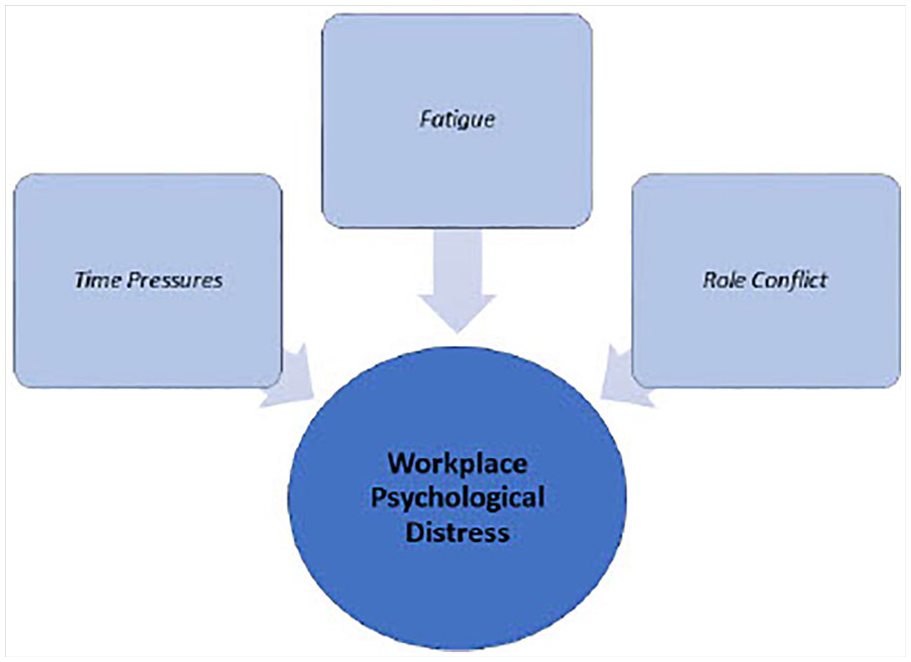
Three defining attributes of workplace psychological distress.
Antecedents and Consequences
According to Walker and Avant (2019), antecedents are identified as the proceeding events of a concept. Common antecedents linked to WPD are the increase in job demands, lack of control, low social support, and workplace bullying (Chan et al., 2019; Jain et al., 2012; Janssens et al., 2016; Moen et al., 2013; Mohanty & Mohanty, 2017; Ropponen et al., 2020; Soares et al., 2012).
Job demand
The literature recognizes an assortment of job demands traits, including mental overload, interpersonal conflicts, task completion restrictions, and organizational constraints (Fernet et al., 2015; Janssens et al., 2016; Marchand et al., 2015). The psychological distress caused by high job demands has been associated with decreased well-being and cardiovascular disease (Stansfeld et al., 2012).
Job control
The characteristics of job control include employees’ skill level and ability to determine work activities (Janssens et al., 2016). The lack of job control has been linked to increased reports of fatigue, distress, and poor physical and mental health (Bowen et al., 2018; Elovamio et al., 2015; Lam et al., 2019; Moen et al., 2013).
Social support
The characteristics of social support include the support of supervisors and coworkers (Janssens et al., 2016). The literature suggests that a lack of social support can negatively impact employees by subjecting them to low self-esteem, low sense of organizational fit, and eventually, burnout (Cloutier et al., 2018; Demerouti et al., 2013; Li et al., 2016; Velez et al., 2018). Furthermore, low social support has been identified as a constant cause of mental disorders, including depression, for employees in the workplace (Stansfeld et al., 2012).
Workplace bullying
An assortment of studies has described workplace bullying as repeated unreasonable or unwanted behavior toward an employee or an employee group that poses a significant threat to the mental and physical health of the person or persons being targeted (Beattie & Griffin, 2014; Chan et al., 2019; Mohanty & Mohanty, 2017). Workplace bullying has also been identified as an agent for emotional exhaustion or extreme fatigue, decreased resilience, and, therefore, a significant predictor of psychological distress (Anasorei et al., 2020; Giorgi et al., 2015; Rabelo et al., 2019).
On the other hand, consequences are the outcomes following the concept occurrence (Walker & Avant, 2019). Prevalent consequences associated with WPD are mental disorders, physical disorders, and loss in productivity (Coutinho et al., 2018; Kouvonen et al., 2016; Pan et al., 2019; Pope-Ford & Pope-Ozimba, 2020; Soares et al., 2012).
Mental disorders
The literature thoroughly documents how long-term exposure to factors such as an increase in job demands, lack of control, low support, and workplace bullying may impact the overall health of an employee, which may develop into chronic mental disorders such as depression and anxiety, and stress (Kouvonen et al., 2016; Moen et al., 2016; Pan et al., 2019).
Physical disorders
WPD may also subject employees to the development of physical disorders by predisposing them to the injury of multiple body parts, including the lower back, neck, shoulder, elbow, hands, and wrists (Pope-Ford & Pope-Ozimba, 2020; Turner et al., 2014). These ailments are related to several factors, including increased muscle tension, varying joint movements, and disrupted blood flow (Hauke et al., 2011; Soares et al., 2012).
Loss in productivity
WPD that results in the development of mental disorders and physical disorders directly impacts organizational productivity and the organization’s overall bottom line, as often observed in increased costs related to injury and increased absenteeism (Coutinho et al., 2018). Furthermore, the effects of WPD can also lower the performance of employees present in the workplace, also referred to as presenteeism, which is estimated to be 5 to 10 times more costly than absenteeism (Evans-Lacko & Knapp, 2016). Figure 4 presents the direct relationship between the Antecedents, Defining Attributes, and Consequences of WPD.
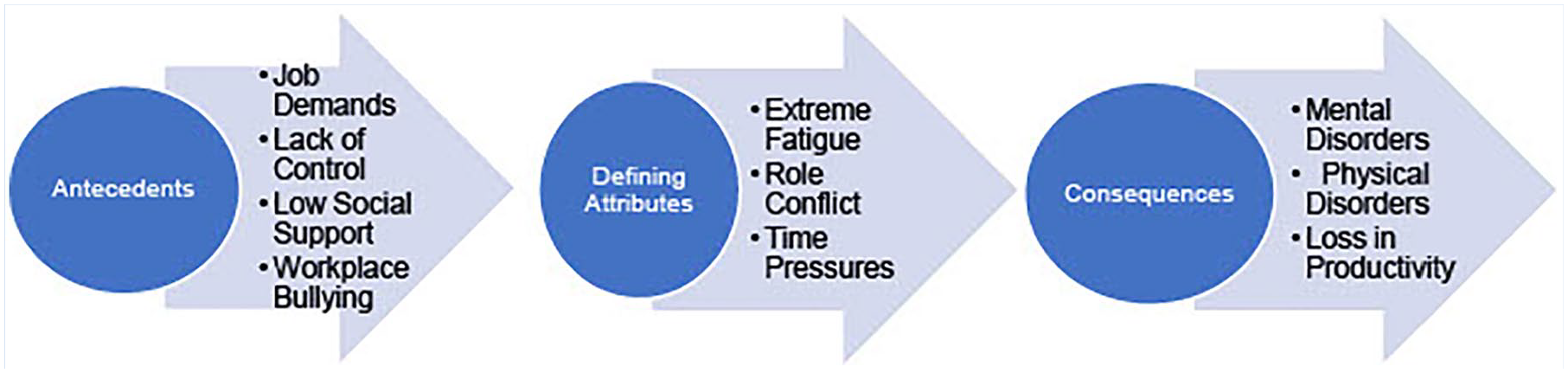
Antecedents, defining attributes, and consequences of workplace psychological distress.
Example Cases
Three example cases (Model, Borderline, and Contrary) were developed to demonstrate the impact of WPD on the employee. According to Walker and Avant (2019), the Model case should include all defining attributes identified in the concept analysis. A Borderline case will contain most, but not all, of the defining attributes, whereas the Contrary case will not present any of the defining attributes. The presentation of these cases will provide further clarity on the antecedents, defining attributes, and consequences of this concept analysis.
Model Case
Alberta, a recent graduate of University X, is employed by Organization Y. Shortly after being hired, several of Alberta’s coworkers were laid off because of the economic impact related to the COVID-19 pandemic. The immediate restructuring of the department staff was required. Consequently, Alberta was directed by her manager to increase her workload significantly. All believed that the COVID-19 pandemic would be short-lived; however, 8 months have passed, and Alberta’s working conditions remain unchanged. Her job demands have increased significantly. With so many deadlines, she has no control over her work speed and must now work an average of 60 hours per week to keep up. Jim, Alberta’s colleague, is beginning to complain about her work performance and has been heard making comments like: “This is why we shouldn’t hire women to do a man’s job.”
Alberta has attempted to voice her complaints to her manager during their one-on-one meeting. Unfortunately, he is focused only on the staffing shortages and does not provide any additional support or resources to help improve her current working conditions. Alberta begins to struggle at work and is unable to meet essential deadlines. The constant exposure to occupational stress has become unbearable. She has already started to experience panic attacks and calls in sick for work an average of once per week due to exhaustion. After several weeks of intermittent absences, Alberta was informed by her manager and human resources that she must submit completed Family and Medical Leave Act (FMLA) paperwork before returning to work or risk termination from Organization Y. As instructed, Alberta met with her primary care physician. She was diagnosed with anxiety and major depressive disorder.
All three defining attributes of WPD (extreme fatigue, role conflict, and time pressures) were presented in this model case. The restructuring of staffing led to Alberta experiencing role conflict. The work deadlines resulted in added time pressures. She complained of extreme fatigue, which eventually led to increased absences. Furthermore, Alberta was subjected to workplace bullying by her colleague. As a result, Alberta experienced significant occupational stress and was later diagnosed with anxiety and depression.
Borderline Case
Charlie is a machine operator for Company O&G. One of Charlie’s colleagues recently went out on sick leave and is expected to remain off work for an extended period. Consequently, management has required all operators on Charlie’s rotation to work overtime. Fortunately, Charlie can always complete his work assignments during his work shifts and has not experienced any time pressures related to increasing job demands. Charlie is also a husband and the father of a 5-month-old baby girl. He appreciates the opportunity to gain extra income by working overtime; however, Charlie is now mandated to work the night shift and is unable to spend quality time with his wife and newborn daughter.
Two attributes of WPD (Extreme Fatigue and Role Conflict) are presented in this borderline case. Charlie’s coworker going out on sick leave led to increased job demands, which resulted in extreme fatigue due to the required overtime. Also, Charlie was forced to work the night shift, and his inability to spend sufficient time with his family has resulted in role conflict between work and home. The time pressures defining attribute was not evident in this case, and therefore, this example is considered a borderline case.
Contrary Case
New owners recently purchased company Z, and the existing employees are preoccupied with adjusting to the work environment. To evaluate employees’ response to the recent organizational changes, management has requested that the occupational health nurses conduct a psychosocial assessment of the entire staff. After reviewing the collected data from a voluntary survey, the occupational health nurses informed management that many employees were at risk of developing WPD due to high job demands, lack of control, and the perception of low social support. The occupational health nurses suggested that immediate action be taken to mitigate the occurrence of undesired consequences. Management and human resources promptly announced that additional staffing would be onboarded to reduce the current job demands. In addition, employees will now be offered flexible work scheduling, including remote work from home.
Although the occupational health nurses’ initial findings revealed that the employees were exposed to antecedents of WPD (high job demands, lack of control, and the perception of low social support), management quickly intervened by improving the work environment. In addition, management showed support by hiring additional staff to reduce job demands, and they supplied the employees with control of their work schedules. This contrary case does not present any of the defining attributes of WPD (extreme fatigue, role conflict, and time pressures).
Empirical Referents
The final step of this concept analysis was to determine the empirical referents. According to Walker and Avant (2019), this step is necessary to measure the defining attributes of the concept analysis. WPD can be measured by using a reliable and valid tool. The Copenhagen Psychosocial Questionnaire (COPSOQ-II) was initially developed to assess the psychosocial work environment (National Research Centre for Safety and Health at Work [NRCSHW], n.d.). There are three different versions of the COPSOQ-II available: small, medium, and large. The medium questionnaire was determined to be sufficient in addressing the elements of this concept analysis.
The medium COPSOQ-II is a self-reporting questionnaire that consists of 87 questions that have been divided into 28 dimensions assessing the perceived psychosocial work environment of employees (NRCSHW, n.d.). Several questions on the COPSOQ-II are related to the elements of this concept analysis, including role conflicts, social support from supervisors and colleagues, work pace, cognitive demands, and workplace bullying. Most of the questions are structured using two different 5-point Likert-type scales. One response scale ranges from Always, Often, Sometimes, Seldom, Never/hardly ever, and the other response scale ranges from To a very large extent, To a large extent, Somewhat, To a small extent, and To a very small extent. Overall, the medium COPSOQ-II has demonstrated internal consistency reliability with high Cronbach alpha ratings measuring above 0.7 for most dimensions (NRCSHW, n.d.). Information obtained from the COPSOQ-II can be used to provide employee referrals when needed, implement programs focused on psychological well-being, and develop workplace policies that focus on the health and safety of employees.
Conclusion
This concept analysis demonstrated that employee exposure to WPD may result in mental or physical disorders (Fernandes & Pereira, 2016). Unfortunately, the available literature provided varying interpretations regarding the essential elements of the concept, and no dependable definition of WPD exists. This conceptualization of WPD offered a foundational understanding for occupational health nurses and employers by identifying the defining attributes, antecedents, and consequences (see Figure 4). In addition, example cases were provided to illustrate employees’ risk for developing WPD. Furthermore, the medium COPSOQ-II measurement tool should be considered for use in the future assessment of WPD exposure. Whether or not employees disclose their experience of extreme fatigue, role conflict, or time pressures, employers’ burden is on employers to mitigate the risks of these incidents by promoting a workplace environment focused on total worker well-being and employee satisfaction.
In Summary
Workplace psychosocial distress (WPD) is a potential threat to employee health and the organization’s overall bottom line.
Psychological distress is not an unfamiliar term and has been conceptualized in the literature, unfortunately, a specific understanding of how psychological distress impacts employees in the workplace has not been provided.
Occupational health nurses will need to assist with the development of workplace programs and policies that promote employee well-being.
Implications for Occupational Health Nursing Practice
As part of their traditional roles and responsibilities, occupational health nurses identify, monitor, and evaluate workplace hazards (AAOHN, 2021). To promote the well-being of employees in the workplace and reduce the risk of WPD, occupational health nurses will also need to assess the impact of specific factors (personal, social, and environmental factors) on the overall well-being of employees (Kyron et al., 2019). With the data collected from a WPD assessment, the occupational health nurse can assist the organization with developing programs that may improve the overall internal workplace environment (Fernandes & Pereira, 2016). Future considerations should also include the induction of organizational health policies structured to reduce the manifestation of WPD (Jain et al., 2012).
Footnotes
Conflict of Interest
The author(s) declared no potential conflicts of interest with respect to the research, authorship, and/or publication of this article.
Funding
The author(s) received no financial support for the research, authorship, and/or publication of this article.

Author Biography
Dawn Mopkins is the Director of Occupational Health Services at the University of Houston. She is currently pursuing her Ph.D. in Nursing Science at Texas Woman’s University. Her area of research interest is the psychological well-being of university employees.