




Abstract
Objectives:
Establishing collaboration with occupational health staff is essential to support workers and organizations in the field of occupational health. Accordingly, occupational health nurses (OHNs) have recognized the need to collaborate with other professionals, including non-health care professionals. This review aimed to examine the components of collaboration in OHNs.
Methods:
This review was conducted using Walker and Avant’s eight-step analysis method on 267 papers (174 in Japanese and 93 in English) identified through an extensive literature review.
Results:
Key attributes, antecedents, consequences, and empirical referents helped shape an operational definition of the concept of collaboration. Collaboration among OHNs is a process that integrates individuals, organizations, and systems. Further, OHNs are responsible for ensuring that employers and workers collaborate to actively promote and facilitate occupational health activities. In addition, OHNs assess the health status of individuals and organizations to determine whether collaboration is needed through the occupational nursing process. The quality and outcomes of collaboration are influenced by social trends and the health culture of each organization. Through collaboration with various stakeholders, OHNs contribute to making the workplace a better environment, improving labor efficiency, increasing worker productivity, and ensuring health and safety.
Conclusions:
This review provides a comprehensive understanding of collaboration in occupational health nursing. Collaboration among OHNs is notably characterized by its “integration.” OHNs can facilitate collaboration between employers and employees in occupational health activities, potentially benefiting both businesses and health care. The clarification of collaboration in this review has the potential to enhance OHN practices and guide future research.
Background
The Social Context of Collaboration Among Stakeholders in Occupational Health Worldwide
In 1985, the International Labor Organization adopted the Occupational Health Services Convention, 1985 (No. 161), which stipulates that occupational health agencies must provide health services for their employees at the workplace (International Labour Organization, 1985). In 1995, the World Health Organization (WHO) developed a global strategy for occupational health, which stated that it is necessary to satisfy workers and workplaces’ needs by providing occupational health services through stakeholder collaboration (WHO, 1995). Furthermore, the 60th World Health Assembly urged WHO-member states to develop national policies and plans for the implementation of the WHO Global Plan of Action on Workers’ Health (2008–2017) (WHO, 2008—2017). Thus, occupational health services provided by stakeholders in occupational health agencies are widespread in developed countries.
The Social Context of Collaboration Among Stakeholders in Occupational Health in Japan
Currently, occupational health faces diverse issues in Japan. For example, there is a growing need for support in relation to overwork, mental health, and balancing treatment and work. To enable employers to improve the health of their employees, the Ministry of Health, Labour and Welfare (MHLW, 2009) formulated the Guidelines for Support for Balancing Treatment and Work (Tachihara, 2018) and the Guidance for Supporting Return to Work. Furthermore, based on scientific evidence, the Kanto Regional Meeting of the Japan Society for Occupational Health published the Guidance for Supporting Return to Work in Mental Health Measures in 2017 (Japan Society for Occupational Health, 2017). These guidelines state that stakeholder support for workers should be provided through cooperation among professionals, including occupational physicians (OPs) and occupational health nurses (OHNs). In Japan, OHNs operate under the licensure of public health nurses (PHNs). Individuals who hold a registered nurse (RN) license are eligible to take the PHN national examination; however, a PHN license is granted only to those who pass the examination (Act on Public Health Nurses, Midwives, and Nurses, 1948). Public health nurses tackle evolving health issues by supporting individuals and communities through problem identification and health assessment (The Japan Academy of Public Health Nursing, 2014). Meanwhile, RNs primarily provide medical treatment and care to injured, ill, and postpartum patients (Act on Public Health Nurses, Midwives, and Nurses, 1948).
In addition, the Ministry of Economy, Trade, and Industry (METI) has launched various health management initiatives. Specifically, health management involves the strategic implementation of health management for employees from a managerial perspective (METI, 2023). Accordingly, the MHLW helps small- and medium-sized enterprises (SMEs) enhance their occupational health activities through grants (MHLW, 2022a, 2022b, 2022cc) Therefore, these ministries have been promoting occupational health activities in companies throughout Japan. Consequently, the demand for OPs and OHNs has been expanding. However, the employment of occupational health staff varies in terms of modality (full-time or part-time), contract, and dispatched workers. Moreover, the smaller the size of the company, the lower the percentage of OHNs employed; furthermore, half of the OHNs employed by small and medium-sized enterprises work alone as occupational health professionals (Japan Organization of Occupational Health and Safety, 2021; Labor Standards Bureau of the MHLW, 2021). Occupational health staff includes OPs and OHNs. As mandated by the Order for Enforcement of Industrial Safety and Health Act (1972), OPs must be full-time in workplaces with over 1,000 employees, whereas OPs in smaller workplaces are hired contractually, often visiting monthly. Many OHNs work solo due to these employment practices. Due to budgetary constraints within corporations, a significant number of RNs continue to be employed in roles traditionally filled by OHNs. However, occupational health staff collaboration is a challenge as registered nurses are not trained to handle the roles of OHNs.
Necessity of Collaboration Between OHNs and Stakeholders
Necessity of OHN’s Collaboration in Occupational Health
In Japan, the employment terms for OHNs vary (working full-time, part-time, or as dispatched workers). Their work patterns differ significantly, ranging from daily to weekly hours. Despite these inconsistencies, OHNs are expected to foster collaboration across all organizational levels to effectively address health issues (Japan Society for Occupational Health, 2022a). In addition, for Japan to comply with the International Labor Organization Convention 161, occupational health activities must be developed by a team consisting of various professionals, while OHNs are expected to play an important role in this process (Japan Society for Occupational Health, 2022a). Consequently, the burden on occupational health staff has increased throughout Japan (MHLW, 2019). Therefore, to ensure the effective and efficient promotion of occupational health activities, the MHLW (2019) issued the Collection of Practical Examples for Promoting Occupational Health Activities as a Team.
Previous studies have shown that with the growing need to balance work with treatment for physical and mental illnesses, collaboration is essential to address the needs of those who suffer from pain and depression while working (Thisted et al., 2020). Thus, multidisciplinary teamwork has been used to assist such individuals by ensuring workplace compatibility and return-to-work support (Durand et al., 2017; Johansen et al., 2019; Kärkkäinen et al., 2019; Kenning et al., 2018; McKeown et al., 2003; Peters et al., 2011). In addition, multidisciplinary collaboration has been implemented in health promotion programs (Carter et al., 2005; Lier et al., 2019). In the workplace, OHNs collaborate with many stakeholders, including employees (Durand et al., 2017), employers (Perrin et al., 2007; Skamagki et al., 2022; Tominaga, 2022), supervisors, colleagues (Skamagki et al., 2022; Tominaga, 2022), and OPs (Muto et al., 2019; Oikawa, 2020). Outside the workplace, OHNs collaborate with primary physicians (Kenning et al., 2018; McKeown et al., 2003) and return-to-work coordinators (Durand et al., 2017). They also play a crucial role in the coordination between OPs and primary physicians (Muto et al., 2019; Oikawa, 2020), and often function as coordinators of occupational health teams (Thompson, 2012). Consequently, previous studies have reported that OHNs must understand the essential elements required to maximize team performance and promote smooth teamwork (Wittayapun et al., 2008). There is no special curriculum for becoming an OHN training in undergraduate education in Japan; however, the Nursing Division of the Japan Society for Occupational Health (2024) has its own certification system. Therefore, those who belong to the society and work as OHNs after undergraduate graduation can receive training through the certification system. As of June 30, 2022, the number of OHN certified individuals are 1,002 (Japan Society for Occupational Health, 2022b). Employers’ belief in and leadership of health maintenance and promotion have facilitated the establishment of a smooth collaboration system (Perrin et al., 2007). However, the lack of budgets for occupational health specialists in the companies was found to make collaboration difficult (Ahonen et al., 2013). The employment status of occupational health professionals (full-time, part-time, temporary, or dispatched) varies across companies depending on the company’s budget, making the collaboration system in Japan ineffective. Furthermore, a study has shown that when individuals perceive social support as a stressor, the social support becomes ineffective. (Hughes et al., 2022). Collaboration among OHNs brings about changes in their health awareness, maintenance, and promotion (Japan Society for Occupational Health, 2024). It also reduces medical costs and increases corporate productivity (Naumanen, 2007).
However, as highlighted earlier, the variety in OHN’s employment structures in Japan complicates collaboration. Consequently, to enhance collaboration, OHNs must possess a high level of collaborative skills (Japan Society for Occupational Health, 2022c). In response to this challenge, professional associations of Japanese OHNs are advocating legislative changes to mandate the employment of PHNs. This movement underscores the need to examine and clearly define the concept of “collaboration” within occupational health nursing, especially in the context of modern business environments.
Necessity of Conceptualizing Collaboration in the Role of OHNs
While OHNs act as coordinators and encourage team collaboration, which is essential and most important for collaboration in occupational health, there are some barriers to collaboration in terms of organizational factors. These include an unstable power balance among professionals, such as between care managers and employment consultants, which hampers the development of a shared work culture (Poulsen et al., 2019). Additional challenges include OHN workforce shortages (Ahonen et al., 2013) and the failure of other professionals to refer OHNs as consultants when needed for collaboration (McKeown et al., 2003).
To address these issues and facilitate collaboration, collaboration in occupational health nursing must be defined. According to the WHO (2010), collaborative practice occurs when multiple health care workers from different professional backgrounds work together with patients, families, caregivers, and communities to deliver the highest quality of care across various settings. However, this definition primarily refers to medical and social services. In occupational health, this definition does not cover non-health care professionals such as managers, supervisors, colleagues, and workers’ families. Team-based support has been highlighted as important, while OHNs have recognized the need to collaborate with other professionals, including non-health care professionals. Previous studies have presented the reality of collaboration using many case studies. However, no effective theory concerning collaboration in occupational health nursing is available in the current literature. Based on this background, it is possible that OHNs’ own experience guides their process of collaboration; in other words, this process is not standardized. Hence, it is necessary to standardize the definition of collaboration in this research. Once standardized, it has the potential to provide OHNs with stable, consistent, and high levels of worker support. In addition, these guidelines will also broaden the perspective of those who practice alone or have been in the field of occupational health nursing for only a short period regarding collaboration, and provide solid guidance when deciding whether to collaborate with other professions to solve workers’ problems. Furthermore, recognizing the gap between ideal and actual support allows for a bottom-up approach to improving practice.
Significance and Purpose of the Study
By defining OHNs’ collaboration, it is possible to gain a broad theoretical understanding of multidisciplinary collaboration in occupational health nursing. It will also clarify not only the meaning of multidisciplinary collaboration in occupational health nursing and how to promote it but also its role and function in both the academic aspect and clinical practice. Furthermore, researchers can use this definition to improve clarity in their research. It is expected to provide a theoretical framework to guide future research on the concept of multidisciplinary collaboration in the occupational health nursing profession. Additional uses of this concept analysis may be considered, for example., the development of standards of practice, care delivery taxonomies, definitions of scopes of practice, and educational materials. Therefore, defining OHNs’ collaboration would be useful for supporting such workers and determining an appropriately academic and rigorous model of collaboration. Accordingly, the present study aimed to examine the components of OHNs’ collaboration.
Methods
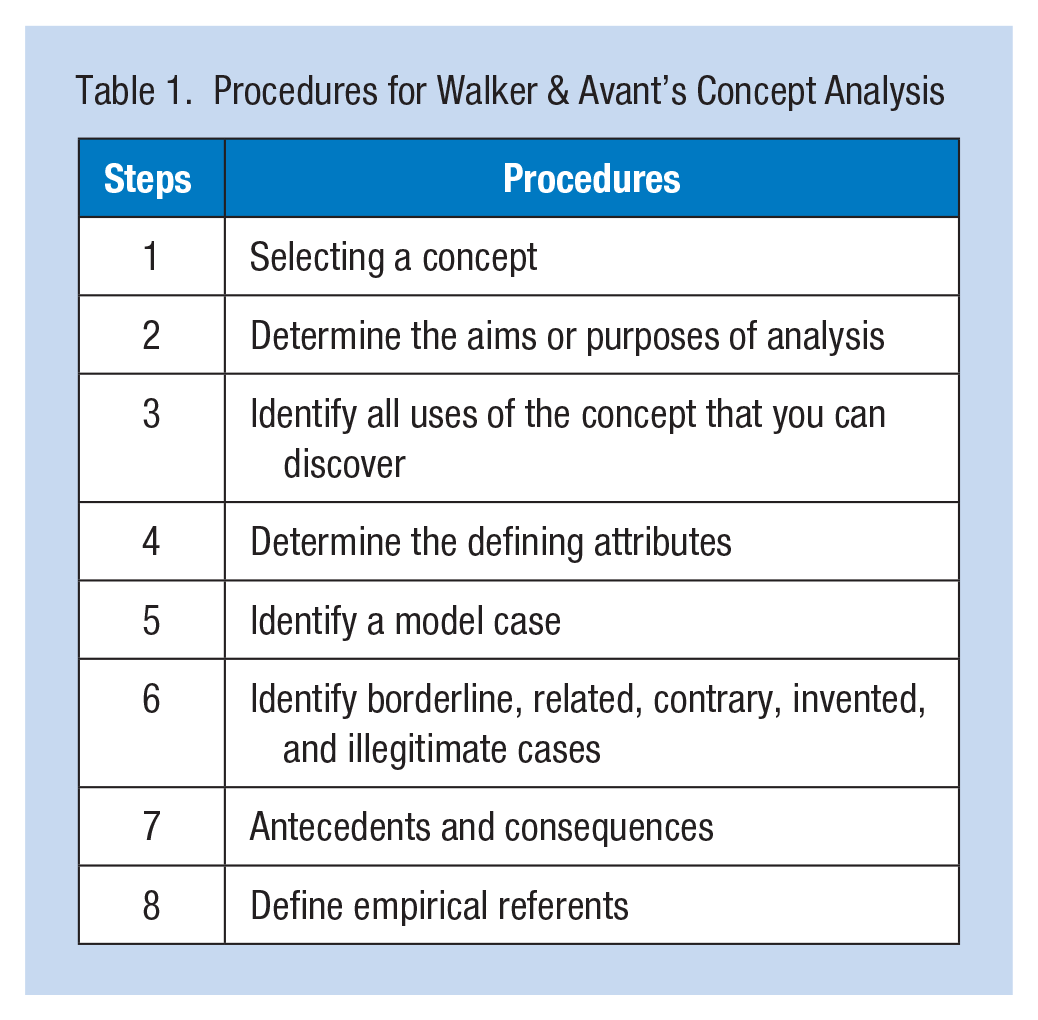
This review used Walker and Avant’s eight-step concept analysis method (Table 1), which is commonly used in the nursing context. This method can clarify the internal structure of a concept. Since concept analysis has been found to be useful in creating measurement tools and interview guides for research (Walker & Avant, 2018), we considered that applying concept analysis in this review would be useful in guiding subsequent research on collaboration involving OHNs. In addition, concept analysis is suitable for enhancing conceptual clarity because it involves systematically and logically analyzing theoretical structures by extracting the attributes necessary to define concepts, which can be applied in practice and research (Walker & Avant, 2018). Furthermore, previous studies have utilized Walker and Avant’s concept analysis method within the context of collaboration, such as for conceptualizing collaboration in nursing (Emich, 2018). Therefore, we applied concept analysis to examine collaboration in occupational nursing.
Procedures for Walker & Avant’s Concept Analysis
To ensure validity, the first author and the last author reviewed the information sources and confirmed the literature content.
Data Sources
Walker and Avant’s approach recommends the identification of as many uses of a concept as possible, using dictionaries, thesauruses, available literature, and even friends and colleagues. Following this rationale, relevant studies were identified via a search of three key databases: PubMed, the Cumulative Index of Nursing and Allied Health Literature (CINAHL), and Igaku Chuo Zasshi WEB (which is a major health and medical bibliographic database used in Japan; most papers in this database are written in Japanese). The following single and/or combined keywords in both English and Japanese were used: “collaboration,” “interprofessional work,” “multidisciplinary collaboration,” “interdisciplinary collaboration,” “teamwork,” “partnership,” “occupational health nursing,” and “occupational health.”
The eligibility of the studies was evaluated in accordance with the objectives of concept analysis. The inclusion criteria were as follows: (a) works published in Japanese or English, including original papers, commentaries, and review articles published between 2015 and 2023; and (b) works whose subject matter concerned collaboration involving OHNs. The exclusion criteria comprised: (a) works on multidisciplinary collaboration outside the field of occupational health (e.g., papers focusing only on medical institutions, end-of-life palliative care, home nursing, pediatric nursing, and school health care); and (b) works involving occupational therapists and occupational therapy, as we could not find any papers on collaboration between occupational therapists and OHNs.
Initially, 5,294 papers were identified. After removing duplicates and reviewing titles and abstracts, 665 papers remained. These 665 papers were thoroughly assessed vis-à-vis the inclusion criteria, which resulted in the exclusion of an additional 403 papers. Consequently, 262 papers (169 in Japanese and 93 in English) were included in the concept analysis (Figure 1). Five additional references in Japanese were added through a manual search of the 267 references included in the concept analysis. We translated the titles of Japanese papers into English.
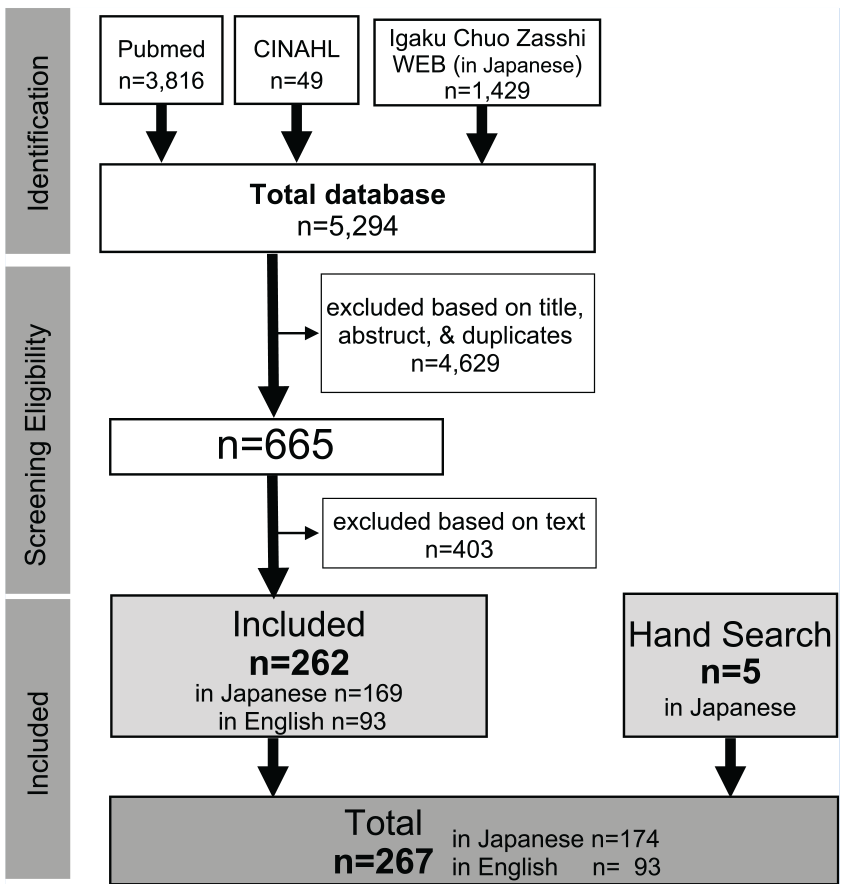
Search Strategy.
Results
The findings of the concept analysis were reported following the eight steps outlined (Table 1) in Walker and Avant’s approach (Walker & Avant, 2018). The results were derived from 267 references; however, this review used a subset of the literature to explain each item. See the Supplemental Appendix for a list of the 267 studies.
Step 1: Selecting a Concept
Step 1 involves concept selection, which should reflect the topic or area of greatest interest to the researchers. In this review, “collaboration” in occupational health nursing was the selected concept for analysis.
Step 2: Determining the Aims or Purposes of Analysis
Step 2 was to determine the aims and purposes of the analysis. This review aimed to clarify the concept and definition of collaboration in occupational health nursing, including the identification of its essential attributes, antecedents, outcomes, and empirical referents or practical indicators.
Step 3: Identifying Uses of the Concept
Step 3 involves identifying the uses of the concept, which means finding as many uses as possible by consulting dictionaries, thesauruses, available literature, and even friends and colleagues. In this review, the central concept was identified using dictionaries and literature reviews.
Literature Definitions
The term “collaboration” and its related concepts, such as cooperation, teamwork, interprofessional work, interdisciplinary collaboration, multidisciplinary collaboration, and partnership, were explored through dictionary definitions (Matsumura, 2006; Stevenson & Waite, 2011). To “collaborate” means working jointly on a project. To “cooperate” can mean working together or, in a different context, working with an adversary. “Cooperation” refers to the process of individuals/groups working together to achieve a common goal. The term “interdisciplinary” involves multiple branches of knowledge. The term “multidisciplinary” refers to involvement in various academic and professional fields. A “partner” is someone who shares in an endeavor, often with shared risks and profits. The term “professional” pertains to an individual engaged in a paid occupation with formal training and qualifications, while “profession” refers to such an occupation. “Team” involves two or more people working together, and “work” is any effort, mental or physical, to achieve an outcome.
Interprofessional collaborative practice is a critical approach in Japanese health care that involves diverse health professionals working alongside patients, families, caregivers, and communities. This collaborative effort seeks to provide the highest quality care, addressing physical, mental, and social well-being through both clinical and non-clinical aspects (Ikuko et al., 2023).
Step 4: Determining the Defining Attributes
Step 4 is at the heart of concept analysis. Attributes comprise the essential qualities and characteristics that frequently arise within a concept. These attributes distinguish the concept from closely related ideas and clarify its meaning. This literature review revealed five attributes that distinguish the concept of collaboration in occupational health nursing. Three of the five attributes were directly related to OHNs’ collaboration: (a) target resources; (b) integration; and (c) responsibility. The other two attributes affect the quality and outcomes of OHNs’ collaboration: (d) social trends, and (e) health culture organizations. Figure 2 shows a visual representation.
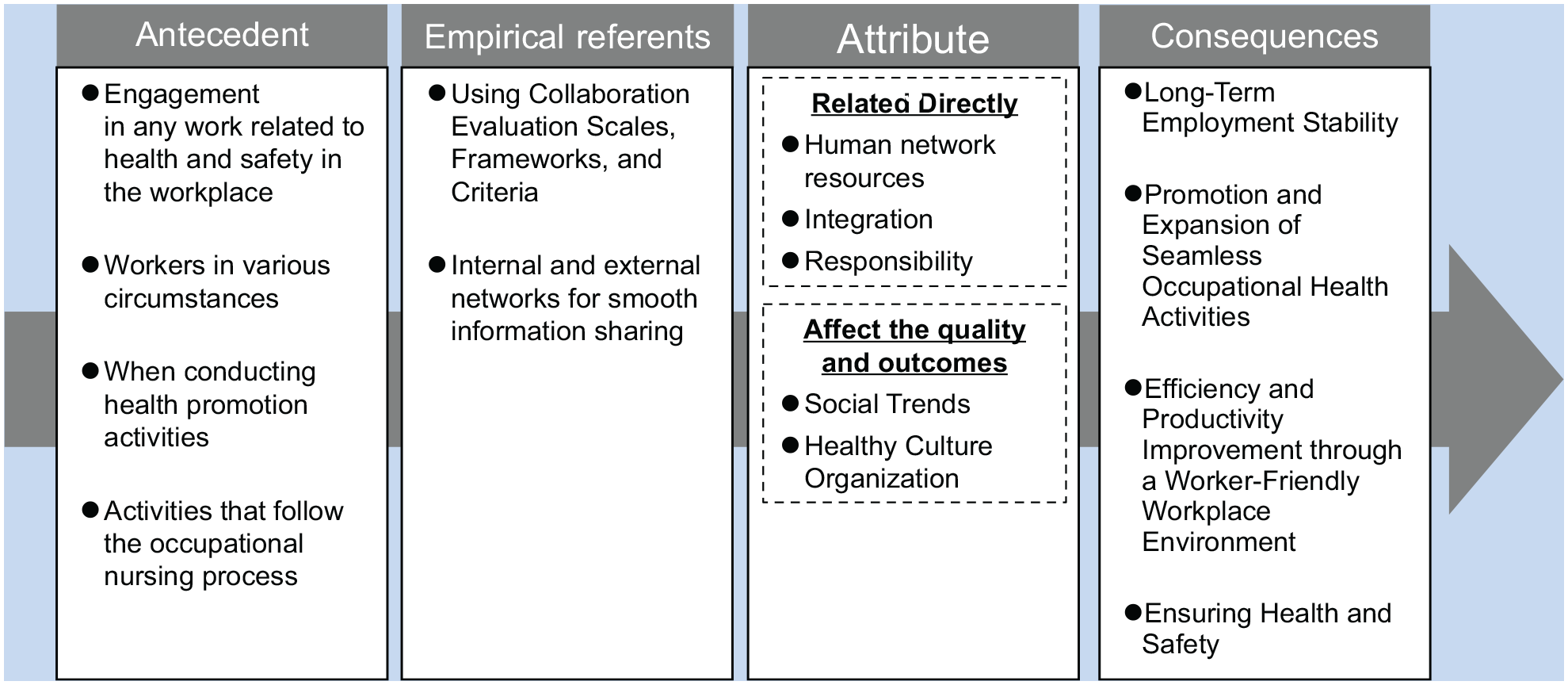
Collaboration in the Occupational Health Nursing Profession.
Attributes Directly Related to Collaboration in OHNs
Human Network Resources
OHNs work with a wide range of individuals. Formal resources within the workplace include various occupational health staff (e.g., OPs and psychologists, Chia et al., 2019; Havermans et al., 2018; Lappalainen et al., 2021), individuals and departments involved in social insurance and labor affairs (Public Interest Corporation Japan Society for Occupational Health Nursing Committee, 2023), and committees (e.g., hygiene committees, Havermans et al., 2018; Hirokawa et al., 2021). Informal resources include employees, colleagues, supervisors, and managers (MHLW, 2022a; Nagata, 2020), as well as employers, such as business owners and executives (Saito, 2020). Outside the workplace, formal resources include government and administrative agencies (Mitsuhashi et al., 2023; Pompeii et al., 2016), researchers from various academic fields (Chia et al., 2019; Lappalainen et al., 2021), specialized professionals within medical institutions such as attending physicians (Taneichi et al., 2022; Watai, 2022), welfare agencies for disabled workers (Eguchi, 2018, 2020; Takase, 2021), health examination facilities (Public Interest Corporation Japan Society for Occupational Health Nursing Committee, 2023), health insurance associations (Ueno & Izumi, 2021), mental health service providers (Public Interest Corporation Japan Society for Occupational Health Nursing Committee, 2023), employment agencies (Public Interest Corporation Japan Society for Occupational Health Nursing Committee, 2023), and professional peers outside companies (Kusumoto, 2018). Informal resources include workers’ families, friends, acquaintances, sports clubs, and neighborhood associations (MHLW, 2022b), among others.
Integration
OHNs have various roles and functions. Specifically, OHNs serve as counselors by providing support, advocacy, and empowerment to those they assist (Inoue et al., 2021, 2022; Koyama et al., 2022). In addition, OHNs collaborate with executives and others to promote occupational health activities throughout organizations, forming teams while cooperating with internal and external resources (Ikegami et al., 2016; Kubo et al., 2016; Public Interest Corporation Japan Society for Occupational Health Nursing Committee, 2023; Yoshikawa et al., 2021). As part of a team, OHNs collaborate with various professionals to enhance the establishment of coordination mechanisms through cooperation (Ikegami et al., 2016; Kubo et al., 2016; Muto et al., 2019). When collaborating, OHNs take on a leadership role (Lalloo et al., 2017; McCullagh et al., 2022), connecting and coordinating stakeholders while adopting a neutral position (Ikegami et al., 2016; Kubo et al., 2016; Muto et al., 2019) and effectively managing both individuals and relevant organizations (Mitsuhashi, 2019). Thus, OHNs serve as professionals in building a collaboration system (Public Interest Corporation Japan Society for Occupational Health Nursing Committee, 2023).
Regarding collaborative methods, OHNs use workflows and tools to exchange and share information (Muto et al., 2019; Public Interest Corporation Japan Society for Occupational Health Nursing Committee, 2023). This involves recording information on paper or electronic devices and exchanging and sharing information through face-to-face meetings, phone calls, emails, electronic media, and written communication (Beyer et al., 2018; Johnsen et al., 2021; Katagiri et al., 2021; Okabe, 2021; Yasuda et al., 2022). It also includes proactive engagement with stakeholders, offering advice, dissemination of information, reporting, presentation, consultation, confirmation, explanation, utilization of personal networks, and information gathering, transmission, provision, exchange, and sharing through internal and external communication (Public Interest Corporation Japan Society for Occupational Health Nursing Committee, 2023; Sugita & Watanabe, 2022; Taneichi et al., 2022; Tsujimoto et al., 2020). Furthermore, OHNs act as information hubs, responding to inquiries after gaining an understanding of the situation (Kono, 2022; Public Interest Corporation Japan Society for Occupational Health Nursing Committee, 2023).
Responsibility
Occupational health nurses will acquire the following abilities and skills to support organizations and their employees through practice: the ability to facilitate the growth of individuals, departments, and organizations; the capacity to effectively address workplace issues; the ability to earn stakeholders’ trust; and the ability to enhance collaboration (Ikegami et al., 2016; Lalloo et al., 2017; Mori, 2018). Furthermore, OHNs’ responsibilities include the following. OHNs must build networks and create cooperative collaboration structures (Yoshizumi, 2019). This includes maintaining and promoting daily communication through work to strengthen connections with employees, supervisors, families, and employers (Iida et al., 2022; Jussli et al., 2022; Kono, 2022; Shimazu et al., 2022; Yoshida, 2022). It also involves networking with external occupational health staff and visiting health centers and similar institutions (Araki, 2018; Haruna, 2020; Sudo, 2021). Furthermore, it involves actively promoting occupational health services to the government, workplaces, and other professions, while adopting an appropriate approach to ensure engagement (Inada, 2018; Saito, 2020). OHNs should establish their own approaches and policies toward health initiatives and understand their position within organizations (Haruna, 2020; Kimura & Watai, 2018; Mitsuhashi et al., 2020). In addition, OHNs are responsible for ensuring that employers and employees work together to actively promote and facilitate occupational health activities. Many of these abilities and skills can be learned through practice.
Attributes That Affect the Quality and Outcomes of Collaboration
Social Trends
The actions of occupational health professionals are determined by regulations such as the Labor Standards Act and the Labor Contract Law (Labor Contract Act, 2007; Labor Standards Act, 1947; Public Interest Corporation Japan Society for Occupational Health Nursing Committee, 2023). In addition, the guidelines and ethical guidelines issued by the government are used to explain occupational health to employers and employees (MHLW, 2022b). As the labor force decreases and social security costs increase, the concept of health management proposed by the METI is becoming increasingly important and permeates companies and industries (METI, 2023; Mori, 2020; Public Interest Corporation Japan Society for Occupational Health Nursing Committee, 2023; Tsuda & Ito, 2020). Furthermore, advancements in information technology have made collaboration with various professions easier (Hatanaka et al., 2022; Ueno & Izumi, 2021).
Health Culture Organizations
The system and approach to collaboration differ depending on the size and workforce of the workplace (Public Interest Corporation Japan Society for Occupational Health Nursing Committee, 2023; Yoshida, 2022). Collaboration occurs in workplaces where management leadership is oriented toward health organizations (Ndione et al., 2021) (which involves a workplace culture that fosters appreciation and trust, Haruna, 2020; Public Interest Corporation Japan Society for Occupational Health Nursing Committee, 2023) with a widespread awareness of the importance of occupational health services (Fuse et al., 2022; Vossen et al., 2022).
Step 5: Identifying a Model Case
Step 5 involves identifying a model case, which is an example of the use of a concept that demonstrates all the defining attributes of the concept. Based on this definition, a model case that includes the five attributes of this review, namely, (a) target resources; (b) integration; (c) responsibility; (d) social trends; and (e) health culture organizations, has been presented for this literature review is presented below.
A small business with 60 employees, guided by a philosophy of health management inspired by the Ministry of Economy, Trade, and Industry (METI), employed a full-time OHN and a part-time OP to prioritize employee health. During a health consultation, Ms. A, one of the employees, expressed concerns about her recent symptoms of insomnia, headaches, and nausea, suspecting that they were job-related. The OHN discussed the case with the OP, who recommended further evaluation at an external medical facility.
Following her diagnosis, Ms. A felt uneasy about discussing her health issues with her supervisor. With her approval, the OHN facilitated the discussion, leading to a workload adjustment by redistributing tasks among Ms. A’s team to reduce her stress.
Concurrently, the OHN conducted a comprehensive mental health assessment for the entire staff, discovering that more than half of them showed symptoms similar to those of Ms. A. This alarming trend was reported to the Health and Safety Committee, prompting the creation and execution of a mental health education plan with the help of an external counselor.
This initiative, supported by the company’s president through dedicated health program funding, cultivated an open culture around health issues, significantly enhancing employee trust and management relationships. This strategic focus on health not only improved individual well-being but also boosted overall productivity and led to an increase in the company’s stock price, demonstrating the substantial benefits of proactive health management in corporate settings.
This case highlights the pivotal role of the OHN in fostering a health-focused culture within a company. The OHN effectively addressed individual and organization-wide health concerns by collaborating with multiple stakeholders, including the OP, the employee’s supervisor, external health care providers, chief executive, and the health and safety committee. This responsible and proactive approach emphasized the importance of comprehensive workplace health management.
Step 6: Identifying Additional Cases: Borderline Case
Step 6 involves identifying additional cases. Examining cases that differ in relation to the concept of interest but are similar to or contrary to it in some ways can assist in evaluating which defining attributes or characteristics have the best fit. According to Walker et al., to clarify these aspects, it is beneficial to present cases such as borderline, related, contrary, invented, and illegitimate instances. This aids in the precise definition of the concepts under discussion. Accordingly, this review presents borderline case.
A Borderline Case
Borderline cases are examples or instances that contain most, but not all, of the defining attributes of the concept being examined.
Ms. A contacted an outsourced OHN at the workplace because she had attempted suicide. After listening to Ms. A’s story, the OHN advised her to consult a psychiatrist. After obtaining Ms. A’s consent, an outsourced OHN made a psychiatric appointment on her behalf.
In this example, the OHN functioned as a counselor, providing advice to Ms. A, who had attempted suicide. However, there were no collaborations with other professionals. Therefore, this case does not qualify as collaboration in the occupational health nursing context.
Step 7: Antecedents and Consequences
Step 7 involves identifying a concept’s antecedents and consequences.
Antecedents
Antecedents are conditions that must be met before the occurrence of a concept. In this review, antecedents are defined as the essential and foundational elements that initiate collaboration in OHNs. Four important prerequisites were identified as necessary for the initiation of collaboration in OHNs:
Engagement in any work related to health and safety in the workplace, including support for balancing work and health (Public Interest Corporation Japan Society for Occupational Health Nursing Committee, 2023; Sugita & Watanabe, 2022; Takasaki, 2020), as well as responding to individual or organizational health issues (Public Interest Corporation Japan Society for Occupational Health Nursing Committee, 2023).
Workers in various circumstances, such as needing support for a balance between work and health by being granted leave and being allowed to return to work (Kenning et al., 2018; Whitaker & Harriss, 2019).
Health promotion activities being conducted; for example, providing health education to those at risk of metabolic syndromes (Mutambudzi & Henkens, 2022; Tanaka, 2018).
Activities being conducted following the occupational nursing process (Kono, 2022).
This process is used when conducting nursing assessments of individuals and organizations (Baba, 2021; Viterbo et al., 2020); it comprises a wide range of perspectives, including the presence or absence of physical or mental health care needs (Igarashi, 2018), the possibility of leave (Mitsuhashi et al., 2020; Whitaker & Harriss, 2019), and the analysis of individual, group, and organizational dynamics (Igarashi, 2018; Public Interest Corporation Japan Society for Occupational Health Nursing Committee, 2023). The assessment allows for the effective identification of a problem (Public Interest Corporation Japan Society for Occupational Health Nursing Committee, 2023). This enables decision-making to foster collaboration with other stakeholders to resolve the problem, as well as the development of a plan to implement solutions (Ueno & Izumi, 2021).
Consequences
Consequences are events that take place because of the occurrence of a concept. In other words, they reflect the outcome of the concept.
Collaboration among OHNs and various stakeholders was found to yield four key outcomes:
Long-term employment stability was achieved by modifying working conditions, workload, and work methods such that re-employment rates improved, reducing the number of repeat leaves or absences (Fujisato, 2019; MHLW, 2022b; Muto et al., 2018; Sato, 2021). This enhanced job satisfaction (Hoorntje et al., 2019; Public Interest Corporation Japan Society for Occupational Health Nursing Committee, 2023), and promoted stable long-term employment (Kamiyama, 2020).
Promotion and expansion of seamless occupational health activities were achieved through sharing information, aligning support goals, and clarifying role responsibilities (Inada, 2018; Kamiyama, 2020; Kashiwagi, 2020; Public Interest Corporation Japan Society for Occupational Health Nursing Committee, 2023; Sakiyama & Nishikido, 2019). Improved communication fostered trust among the stakeholders, forming the basis for occupational health activities (Sato, 2018; Yamazaki & Nishikido, 2020). It was also achieved through expanding occupational health activities, enhancing the understanding of health initiatives, developing tailored strategies, and addressing challenges (Sakuma, 2021). These achievements also improved health checkup rates and deepened mutual understanding between OHNs and attending physicians (MHLW, 2022b; Vossen et al., 2022). Continuous reassessment promoted seamless occupational health services (Eguchi, 2018, 2020; Ikegami et al., 2016; Watai, 2022).
Efficiency and productivity improvement was achieved through ensuring a worker-friendly workplace environment. By sharing information concerning criteria, procedures, rules, and goals (Kamiyama, 2020; Public Interest Corporation Japan Society for Occupational Health Nursing Committee, 2023; Taniyama, 2018), organizations have been able to establish internal collaboration channels and strengthen communication (Kärkkäinen et al., 2019; Public Interest Corporation Japan Society for Occupational Health Nursing Committee, 2023). This reduced the burden on individuals and helped create a cooperative work environment, leading to increased work efficiency, cost reduction, and improved productivity (MHLW, 2022b; Skamagki et al., 2022; Yamazaki & Nishikido, 2020).
Health and safety were ensured, which enabled organizations to fulfill their safety obligations and meet social responsibilities while nurturing a workplace culture focused on safety and hygiene (Igarashi, 2018; Public Interest Corporation Japan Society for Occupational Health Nursing Committee, 2023; Sakuma, 2021).
Step 8: Defining Empirical Referents
Step 8 involves defining empirical referents, which enable the recognition or measurement of defining characteristics or attributes. Thus, they relate directly to the defining attributes and not to the concept itself. The empirical referents of a concept are events that demonstrate its existence. Furthermore, the antecedents of a concept must have occurred before the empirical referents are defined.
Two types of empirical referents were identified in this review:
Collaboration evaluation scales, frameworks, and criteria were used to evaluate collaboration, as verifying the effectiveness of collaboration in occupational health services is important. In addition, a communication framework between OHNs and SMEs (Schulte et al., 2018), a worker health assistance model (Viterbo et al., 2020), and an interprofessional team collaboration evaluation scale (Mouazzen et al., 2022) were also applied. Notably, the development of a best-practice assessment of health promotion in the workplace (Imboden et al., 2020) was required.
Internal and external networks were found to be needed for smooth information sharing by establishing health guidelines and making procedures visible through documentation and standardizing (Inoue et al., 2021). In addition, it was highlighted that each role must be clearly defined (Kono, 2022). The development of collaborative frameworks between workplaces and health care institutions, as well as collaborative health initiatives involving workplaces and health insurance associations, has been undertaken to facilitate and encourage two-way information sharing and exchange (Vossen et al., 2022). For this purpose, building relationships with stakeholders and establishing consultation and education systems through collaboration have been reported as essential (Igarashi, 2018; Kanamori, 2020; Yoshida, 2022). Moreover, creating documents and materials, and establishing networks have been identified as crucial steps in promoting effective collaboration (MHLW, 2022b; Mitsuhashi, 2019; Saito, 2020).
Definition
According to the findings of our review, we propose the following definition of collaboration.
Collaboration is a process that integrates individuals, organizations, and systems. Within this process, OHNs are responsible for ensuring that employers and workers collaborate to actively promote and facilitate occupational health activities. Furthermore, OHNs assess the health status of individuals and organizations, while also determining whether collaboration is needed in the occupational nursing process. The quality and outcomes of collaboration are shaped by social trends and organizations’ health culture. Through collaboration with various stakeholders, OHNs can contribute to making the workplace a good environment by improving labor efficiency, increasing worker productivity, and ensuring health and safety.
Discussion
The findings of this review were compared with those of previous studies on the concept of collaboration in medical health care (Bookey-Bassett et al., 2017; Emich, 2018; Henneman et al., 1995; Petri, 2010; Sawada et al., 2023; Xyrichis & Ream, 2008). This review identified the following attributes of collaboration: (a) target resources, (b) integration, (c) responsibility, (d) social trends, and (e) health culture organizations. A comparison with previous studies showed that occupational health had different characteristics from medical health, with two distinctive characteristics in terms of integration and social trends.
Integration appeared to be a distinctive characteristic specific to OHNs. Occupational health was characterized by the need to work with not only health care specialists such as OPs (Chia et al., 2019; Havermans et al., 2018; Lappalainen et al., 2021), but also non-health care specialists such as managers, supervisors, co-workers, and workers’ families (MHLW, 2022b; Nagata, 2020; Public Interest Corporation Japan Society for Occupational Health Nursing Committee, 2023). Therefore, when professionals were needed to bridge the gap between health care and non-health care specialists, OHNs were likely to be among the best suited for this role (Muto et al., 2018, 2019). Previous research has highlighted an imbalanced power dynamic between physicians and nurses in medical institutions (Henneman et al., 1995). In occupational health, while there has been research on the power imbalance between occupational health professionals and employment consultants (Poulsen et al., 2019), there is a lack of studies addressing power imbalances between Occupational Physicians (OPs) and Occupational Health Nurses (OHNs). In other words, the dynamics at play in occupational health settings are distinct from those in medical environments. Many OPs work part-time and few are stationed at the workplace. Therefore, OHNs, whether full-time or part-time, often practice occupational health activities independently within the legal scope of practice. Some studies have cited difficulties where OPs were unable to collaborate in a timely manner, because they worked part-time (Kono, 2022). Moreover, disagreements may potentially arise in the field of occupational health, as OHNs collaborate not only with occupational health staff but also with various stakeholders, both inside and outside the workplace (Stratil et al., 2018).
In addition, social trends (e.g., laws and regulations, policies, and advances in information technology) had distinct implications for occupational health. For example, the METI has promoted health management among companies. Health management is defined as the strategic implementation of health management for employees from a managerial perspective (METI, 2023). Based on a specific corporate philosophy, companies are expected to invest in the health of their employees, thereby revitalizing their organizations by increasing employee dynamism and productivity, which in turn leads to improved business performance and stock prices (METI, 2023). Due to the impact of health management, companies have increasingly prioritized occupational health initiatives in recent years. To achieve health management goals, there has been a growing trend toward cross-professional support for workers, and the role of OHNs has expanded in line with this trend. Thus, social trends have influenced the expansion of OHNs’ work.
Most of the reviewed studies mentioned attributes such as sharing, respect, trust, interdependence, and role awareness (Bookey-Bassett et al., 2017; Emich, 2018; Henneman et al., 1995; Petri, 2010; Sawada et al., 2023; Xyrichis & Ream, 2008). The findings of this review were validated by being largely consistent with those of previous studies.
Regarding antecedents, the OHNs in this review were (a) involved in all tasks related to occupational health activities, (b) involved with workers in various circumstances, (c) involved in health promotion activities for workers, and (d) involved in activities in line with the occupational nursing process. Prior studies have listed various requirements for health care professionals such as communication skills, interpersonal skills, and the ability to work in a team (Emich, 2018; Henneman et al., 1995; Xyrichis & Ream, 2008); however, in this review, these requirements were identified as key attributes. This suggests that OHNs acquired communication skills, interpersonal skills, and the ability to work in teams while practicing collaboration. It is also possible that collaboration, particularly in the context of OHNs, influenced the classification of antecedents and attributes.
Regarding outcomes, this review found that collaboration was beneficial for workers, companies, workplaces, and occupational health staff. Collaboration allowed workers to continue working without stress, while simultaneously fostering long-term stable employment. Regarding occupational health staff, their professional network was strengthened and their confidence increased via collaboration. The results of previous studies also aligned with the findings of this review, as collaboration with stakeholders was reported to be beneficial for each position in terms of improved patient safety and satisfaction, in redefining team composition and function for the organization, and in building health care providers’ confidence and sense of accomplishment. Thus, practicing collaboration with stakeholders in the occupational health and nursing profession was found to be beneficial and important for developing occupational health.
Identifying empirical referents was difficult. One previous study claimed that all attributes could be considered empirical referents (Sawada et al., 2023), which we also found plausible. However, one possible objective indicator of whether collaboration is occurring could comprise the findings obtained from using collaboration evaluation scales, frameworks, and criteria, as well as the extent of internal and external networks for smooth information sharing.
Limitations
This study had some limitations. First, terms similar to “collaboration,” such as “cooperation,” “teamwork,” “interprofessional work,” “interdisciplinary collaboration,” “multidisciplinary collaboration,” and “partnership,” were analyzed as synonyms without classification; therefore, these terms could not be distinguished. Second, although papers in Japanese and English were included in the analysis, they were not representative of collaborations among stakeholders in the occupational health nursing profession worldwide. However, we reached theoretical saturation by targeting not only original articles but also commentaries and special features, as well as covering over 250 references.
Third, the concept analysis employed in this review involved a literature review that summarized previous studies. Therefore, the findings may not represent the current research landscape.
Conclusion
This review provides comprehensive insights into the concept of collaboration in OHNs. The findings reveal that five attributes are important in defining collaboration in occupational health nursing. Particularly, the type of integration that occurs in OHNs appears to be a distinctive characteristic of the occupational health nursing profession that distinguishes it from other professions. To enable employers and employees to collaborate regarding occupational health activities, the intervention of OHNs as facilitators or coordinators is likely to contribute to more positive workplace and medical/clinical outcomes. Clarifying the concept of collaboration has the potential to enhance occupational health nursing practice and guide future research more insightfully.
Implications for Occupational Health Nursing Practice
Results of this concept analysis may aid in developing measurement tools and interview guides (Walker & Avant, 2018). We aim to use these findings to elaborate on collaboration in occupational health nursing. Although we defined OHNs’ collaboration with stakeholders, further investigation is needed into collaboration barriers and failures. Defining OHNs’ collaboration enhances understanding and promotion of multidisciplinary collaboration in occupational health nursing, benefiting academic and clinical practice, research clarity, and the development of practice standards, care taxonomies, scope definitions, and educational materials.
In summary
Collaboration in occupational health nursing integrates stakeholders to enhance workplace health, productivity, and safety, benefiting both businesses and health care. From an occupational health and safety perspective, the quality and outcomes of collaboration are influenced by social trends and the health culture of each organization. Occupational Health Nurses (OHNs) play a crucial role in assessing and facilitating collaboration to promote occupational health activities.
Supplemental Material
sj-docx-1-whs-10.1177_21650799241291235 – Supplemental material for Collaboration in Occupational Health Nursing: A Concept Analysis Review
Supplemental material, sj-docx-1-whs-10.1177_21650799241291235 for Collaboration in Occupational Health Nursing: A Concept Analysis Review by Kisaki Kobayashi and Hikaru Honda in Workplace Health & Safety
Footnotes
Author Contributions
Conceptualization, K. K.; methodology, K. K. and H. H.; validation, K. K. and H. H.; formal analysis, K. K.; investigation, K. K.; resources, K. K.; data curation, K. K.; writing—original draft preparation, K. K.; writing—review and editing, K. K. and H. H.; visualization, K. K. and H. H.; supervision, H. H.; project administration, K. K. and H. H. All authors have read and agreed to the published version of the manuscript.
Conflict of Interest
The author(s) declared no potential conflicts of interest with respect to the research, authorship, and/or publication of this article.
Funding
The author(s) disclosed receipt of the following financial support for the research, authorship, and/or publication of this article: This research was supported by JSPS Grant-in-Aid for Scientific Research (23K19824) and the General Incorporated Foundation “Health Science Center” in Japan, which conducts research and provides support for the health management of employees in small- and medium-sized enterprises.

Supplemental Material
Supplemental material for this article is available online.
References
Supplementary Material
Please find the following supplemental material available below.
For Open Access articles published under a Creative Commons License, all supplemental material carries the same license as the article it is associated with.
For non-Open Access articles published, all supplemental material carries a non-exclusive license, and permission requests for re-use of supplemental material or any part of supplemental material shall be sent directly to the copyright owner as specified in the copyright notice associated with the article.
