




Abstract
Background:
Employees who spend substantial amounts of time in a workplace away from home are likely to acquire and consume food during work hours. Reportedly, free food at work is a common occurrence in various workplace settings such as business offices and hospitals. Little is known about the nutritional quality, prevalence, or health impact of free food at work. Furthermore, free food at work as a theoretical concept has not been previously analyzed or defined, but it is necessary to differentiate free food from other food sources in the workplace.
Methods:
A concept analysis of free food at work was conducted using the 8-step Walker and Avant framework. A literature review in June and July 2020 provided the basis to delineate the concept and identify its defining attributes including antecedents, consequences, and empirical referents.
Findings:
Free food at work is defined as food that is available for consumption in the workplace at no financial cost to employees. Critical attributes of free food at work include nutritional value, quantity, frequency, and location within the workplace. Antecedents are sources and reasons for free food provision. Consequences include influence on consumption, behaviors, attitudes, emotions, and health outcomes. Additional measurable aspects of the concept and implications are discussed.
Conclusion/Application to Professional Practice:
The concept of free food at work was analyzed; defining attributes and empirical referents were discussed and presented in a conceptual model to encourage further study and theory development. Identifying the health impact of free food at work is an issue requiring consideration for workplace health-promoting programs.
Background
The World Health Organization (WHO) and the Centers for Disease Control and Prevention (CDC) in the United States have endorsed the workplace as “a priority setting for health promotion” (CDC, 2019; WHO, 2017). Over the past several decades, a growing number of employers have also recognized the financial value of a healthy workforce, resulting in workplace health-promoting programs (WHPPs) that focus on improving employee health and wellness. Many WHPPs target dietary behaviors, as proper nutrition is a foundational necessity in long-term health promotion and prevention of chronic disease (Geaney et al., 2013; Mhurchu et al., 2010).
Prior to implementation of nutrition-focused WHPPs, the workplace should be evaluated for current common dietary practices and workplace influences on behavior. Although employees experience multi-level socio-ecological influences on workplace dietary behaviors (Geaney et al., 2013), environmental-level influences such as how employees acquire food in the workplace is one significant factor for consideration (Onufrak, Zaganjor, Moore, et al., 2019; Onufrak, Zaganjor, Pan, et al., 2019). Some employees may acquire food while at work differently than at home or in community settings. Depending on setting and job role, some workplaces allow substantial time and resources for employees to eat off-site, while others provide on-site purchase options. Employees may bring food from home while others may have food delivered to the work site. In many workplace settings, free food, or food that is available to employees in the workplace at no financial cost, is another common way to acquire food (Onufrak, Zaganjor, Pan, et al., 2019). In one survey, 32% of employers in the private sector reported providing free food (snacks including beverages) for employees in 2018, which was an increase from the four previous years (Society for Human Resource Management, 2018). In another analysis of a national survey, 16.8% of employees reported consuming free food at work with an average of 1,206 Kcal per person per week and accounted for 68.5% of all calories obtained at work (Onufrak, Zaganjor, Pan, et al., 2019). The leading types of free foods consumed were foods high in fat, sodium, sugar, and empty calories (pizza, sandwiches, soft drinks, cookies/brownies; Onufrak, Zaganjor, Pan, et al., 2019). Depending on workplace setting, the frequency of occurrence and amount of additional Kcal likely varies. Although healthy foods may be offered, in the hospital setting, nurses and doctors reported free food was common but rarely a healthy option (Horton Dias & Dawson, 2020; Pressel, 2014). Chocolates, in particular, are so common on hospital units during the holidays that some have requested healthier foods be gifted instead (Keogh, 2014). Assessments of sources, frequency, type, and associated nutritional quality of free foods are needed to tailor WHPPs to the particular barriers in the specific setting/industry.
In the context of the COVID-19 pandemic, free food at work may have additional health implications. Protecting the health of essential workers may include more obvious assessments and interventions, such as reducing disease transmission by offering personal protective equipment training. However, attention to nutritional health is also important in optimizing the health of essential workers. Proper nutrition can boost the immune system and provide both short-term and long-term health benefits (Calder et al., 2020; Gibson et al., 2012; Slawson et al., 2013). The prospect of preventing chronic disease is a significant reason for encouraging proper nutrition through workplace interventions as those with chronic illnesses are more likely to experience detrimental effects from COVID-19 (Butler & Barrientos, 2020; Hacker & Briss, 2021; Yang et al., 2020). Furthermore, proper nutrition can boost energy, mood, and feelings of well-being, which are of particular importance in the time of COVID-19 (Opie et al., 2017; Sarris et al., 2015).
Although free food has been cited as a common occurrence in the popular media (Krishna, 2019; Malcolm, 2015; Taber, 2014), and mentioned in several qualitative works (Blake et al., 2009; Horton Dias & Dawson, 2020; Monaghan et al., 2018; Strickland et al., 2015; Tabak et al., 2018), no concept, theory, or empirical referents for free food at work have been defined in the scientific literature. Furthermore, the terminology used for the phenomenon is inconsistent. The lack of coherent conceptual terminology and definitive parameters limit the scientific examination of this phenomenon and its potential implications on employee health. Free food likely has implications of health and wellbeing for all employees who regularly report to a centralized workplace.
The purpose of this concept analysis was to propose a structured concept of free food within the context of the workplace and to provide empirical referents, which are the measurable aspects of the concept, to spur further research and theoretical development regarding workplace dietary behaviors in all settings while highlighting considerations particular to healthcare settings.
Methods
Concept analysis yields a working definition from which empirical referents (measurable aspects) are acquired for further research and theoretical development. Due to the novel nature of free food as a theoretical concept in the scientific literature, the broad and iterative approach for concept analysis from Walker and Avant (2005) was the best fit for initial exploration of a new concept. The following steps were taken in this concept analysis of free food in the workplace: (a) select a concept, (b) determine purpose of analysis, (c) identify all uses of the concept, (d) determine defining attributes, (e) develop a model case, (f) develop borderline and contrary cases, (g) identify antecedents and consequents, and (h) define empirical referents (Walker and Avant, 2005). In this article, the concept, its defining attributes including antecedents, consequents, and empirical referents are identified and explained.
A literature search was conducted in June and July 2020 using PubMed, CINAHL, and GoogleScholar databases. In addition, Google.com search engine was used to search the popular media for additional terminology used to describe the phenomenon and to find gray literature reports not available through GoogleScholar. Gray literature refers to formal documents independently published by public and private entities and include non-peer-reviewed reports, studies, surveys, meeting summaries, and position papers. As this concept has not been uniformly named or defined and to capture the broadest results, many search terms and combinations were used: “free food,” “free food at work,” “free food” AND “work,” “free food” AND “workplace,” “food” AND “gift,” “food” AND “gift” AND “work,” “free lunch” AND “work,” “free meal” AND “work,” “free snack” AND “work,” “office cake,” “cake culture,” “food sharing,” and “food offering.” Searches were conducted in English and without date limitations to produce wide ranging results. Gray literature publications and scientific peer-reviewed literature were included if they (a) were written in English, (b) mentioned free food (any edible offered without financial cost), and (c) occur within the workplace setting. Finally, references from relevant publications were screened for inclusion. See Figure 1 for literature search strategy.
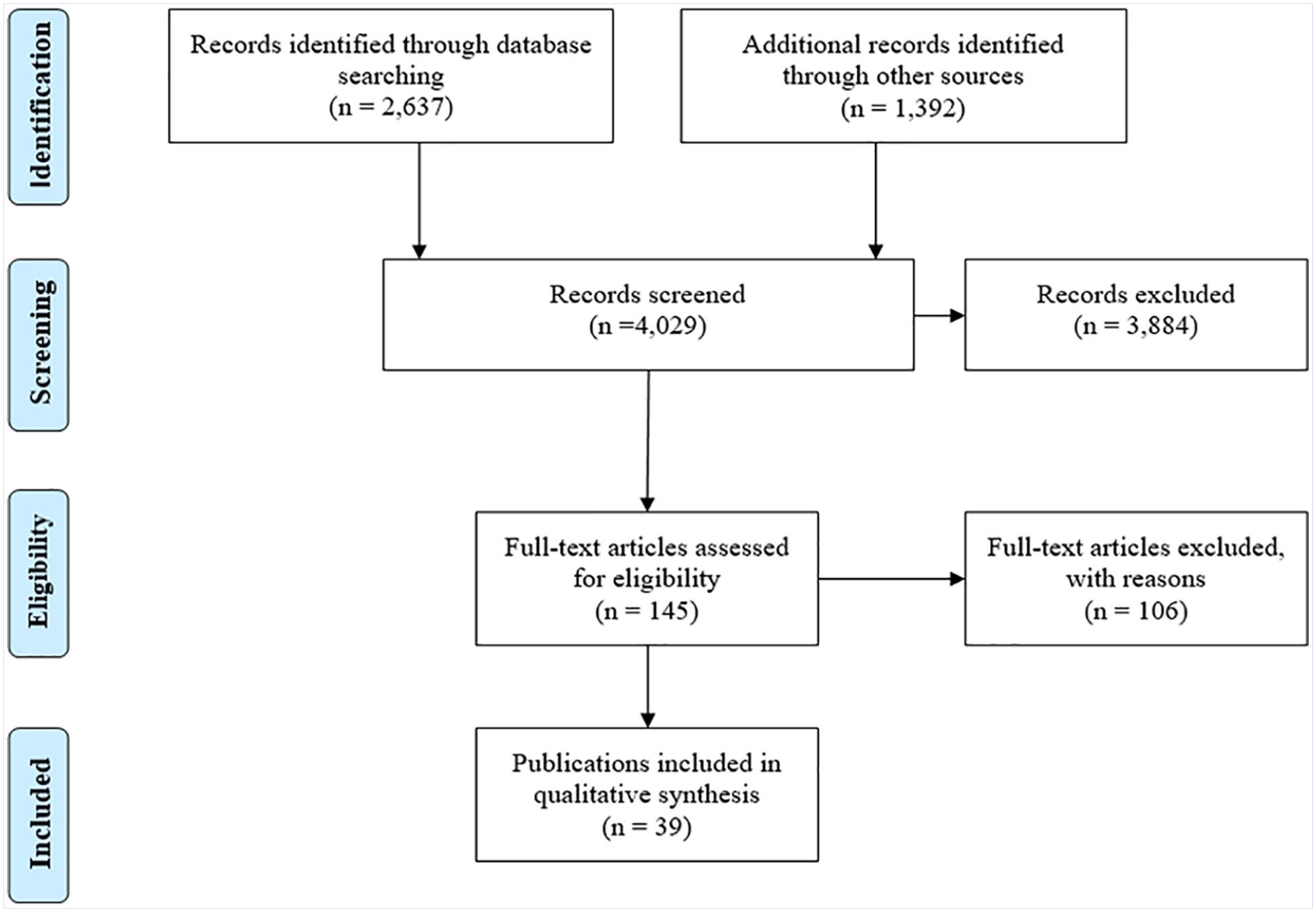
Preferred Reporting Items for Systematic Reviews and Meta-Analyses (PRISMAa) diagram.
Results
Guided by the Walker and Avant (2005) concept analysis framework, we examined all uses of the concept terminology, critical attributes, and antecedents and consequences. In addition, exemplar cases were developed, and the conceptual empirical referents were identified.
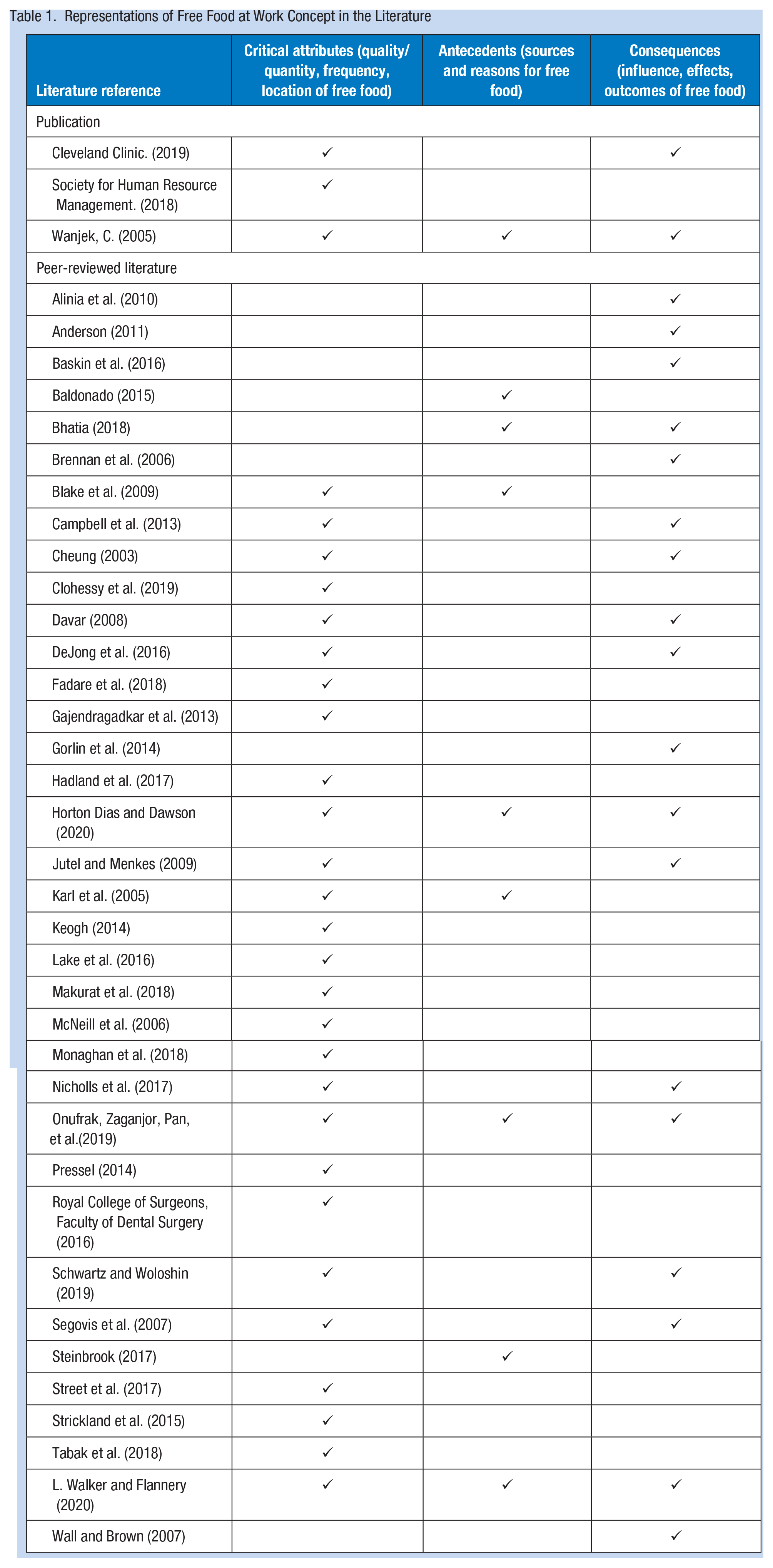
Thirty-nine publications met inclusion criteria. See Table 1 for included publications and identification of which conceptual aspects of free food at work were represented in each. Discussion on free food at work occurred most often in the popular media; however, free food at work, as a theoretical concept for scientific study, had not been consistently defined and rarely explored in the scientific literature. Various names were used to describe the phenomenon such as “free food” (Onufrak, Zaganjor, Pan, et al., 2019), “gifted food” (Nicholls et al., 2017), and “food offering” (Hamburg et al., 2014). The following is an examination of the different names used to describe this phenomenon and an explanation of the label and definition we propose based on the critical attributes of the concept.
Representations of Free Food at Work Concept in the Literature
Hamburg et al. (2014) used the term “food offering” to describe food that was offered from one individual or group to another. However, the term “food offering” specifically referred to an interpersonal interaction, which may not always apply in the workplace, and did not delineate differences according to situational context, such as between family versus between coworkers. In a commentary on Hamburg et al. (2014), the concept was re-named “food sharing” and again did not address the social implications of different settings in which free food occurred (i.e., work vs. church; Alley, 2014). Both terms “food sharing” and “food offering” suggested a focus on the action and interaction of sharing or offering food. While important elements of the free food concept, these terms did not fully express all aspects of the concept. Furthermore, “food offering” could be understood in a religious or ritualistic context, while “food sharing” suggested the act of eating/drinking in the presence of others. “Food sharing” had also been used in a charity-type capacity (Schanes & Stagl, 2019). Therefore, these terms were not general or basic enough to capture all aspects of the concept that needed further study.
“Free lunch” and “free meals” were often used to describe the meals provided for free in office and health care settings (Davar, 2008; Fadare et al., 2018; Jutel & Menkes, 2009; Schwartz & Woloshin, 2019; Steinbrook, 2017; Wall & Brown, 2007). As “lunch” or “meal” typically included a full meal with beverages, it was appropriate to use these terms. However, free food at work can often be candy, drinks, or snacks rather than a meal; therefore, “free lunch” or “free meal” are not inclusive enough to capture all occurrences of the phenomenon.
Studies on the consumption of free chocolates provided to healthcare workers in hospitals assessed different aspects of the concept without a conceptual term, theory, or definition (Cheung, 2003; Gajendragadkar et al., 2013). The consumption of free sweet and ultra-processed foods was deemed “cake culture” by the Royal College of Surgeons Faculty of Dental Surgery in the United Kingdom in a position statement to decrease sugar consumption in the workplace (Royal College of Surgeons, Faculty of Dental Surgery, 2016). Subsequently, L. Walker and Flannery (2020) studied the frequency and perceived social and health consequences of the consumption of sweet foods in the workplace and called the phenomenon “office cake” or “OC.” Here, office cake was defined as “cakes or other sweet foods (biscuits, pastries and confectionery) provided by employees or managers to share with colleagues” (L. Walker and Flannery, 2020). This definition captures only part of the free food at work phenomenon that needs study as free food may include other types of foods that were not sweet (ie. potato chips and pizza) and can be provided by other sources beyond employees and management. Furthermore, “office cake” describes free food only in the office setting. In several studies examining the workplace influences on nurses’ dietary behaviors, the phenomenon of free food was mentioned but called by a variety of terms. Monaghan et al. (2018) spoke of the phenomenon and labeled it “food donations.” Nicholls et al. (2017) described how junk foods and chocolates were “shared,” “gifted,” and “readily available.” Food “donations” or “gifted food” can mean charity and are the terms often used when describing free food provided to address food insecurity (e.g., free food from food banks). Free food in the workplace may be provided as a charitable donation, but this is probably not the most common occurrence. Free food at work occurs for a wide variety of reasons; therefore, a more general term would connote a more inclusive concept that would allow for the study of various reasons why free food was provided at work.
The term “free food” was most appropriately used in describing this concept; however, no definition of the term was found. Onufrak, Zaganjor, Pan, et al. (2019) contributed the first quantitative examination of foods and beverages commonly acquired by employees in the workplace (both purchased and free). In this work, the authors named the food acquired without employee monetary costs as “free food.” “Free food” was mentioned in three separate studies that examined the workplace dietary behaviors of low-wage workers, but the term was not described or studied further (Blake et al., 2009; Strickland et al., 2015; Tabak et al., 2018). Pressel (2014) described the abundance of “free food” available in U.S. hospitals and remarked on the surprising lack of scientific literature on the subject with a call for inquiry into the effects of free food on healthcare employees’ health. “Free food” and “free food at work” were the most commonly used terms in the popular media (Cleveland Clinic, 2019; Findling, 2018; Krishna, 2019; Spear, 2018).
Defining Attributes of Free Food at Work
Based on the dictionary definitions of “free” and “food,” we propose that the concept is best named “free food.” The definition of “free” is the first attribute of free food which denotes no financial cost or “without charge, for nothing, complimentary, gratuitous” (Dictionary.com, 2019). Food is defined as “any nourishing substance that is eaten, drunk, or otherwise taken into the body to sustain life, provide energy, promote growth, etc.” (Dictionary.com, 2019). Free food takes on varying characteristics according to social context (home versus church versus school), and this concept analysis is situated within the workplace. The workplace setting is a critical attribute of this concept and its implications. Free food in alternative settings would need to be studied separately. We propose “free food at work” best represents the concept for study in this analysis with the following definition: food that is available for consumption in the workplace at no financial cost to employees.
The location of free food in the workplace (e.g., breakroom, meeting room) is another critical attribute in need of further study. See Figure 2 for conceptual critical attributes. Location of food options have been shown to influence consumption in general population settings and initial examinations of proximity of drinks and snacks in the workplace suggest that location influences consumption (Baskin et al., 2016; Gorlin et al., 2014; Hunter et al., 2018). Additional research was needed to better understand how and to what extent location influenced behavior. Occupations that operated in busy workflows may be particularly subjected to location restraints and may be more inclined to consume free foods when they were located close to work stations, such as was reported by hospital shift nurses where free food was often available nearby on the unit (Horton Dias & Dawson, 2020).
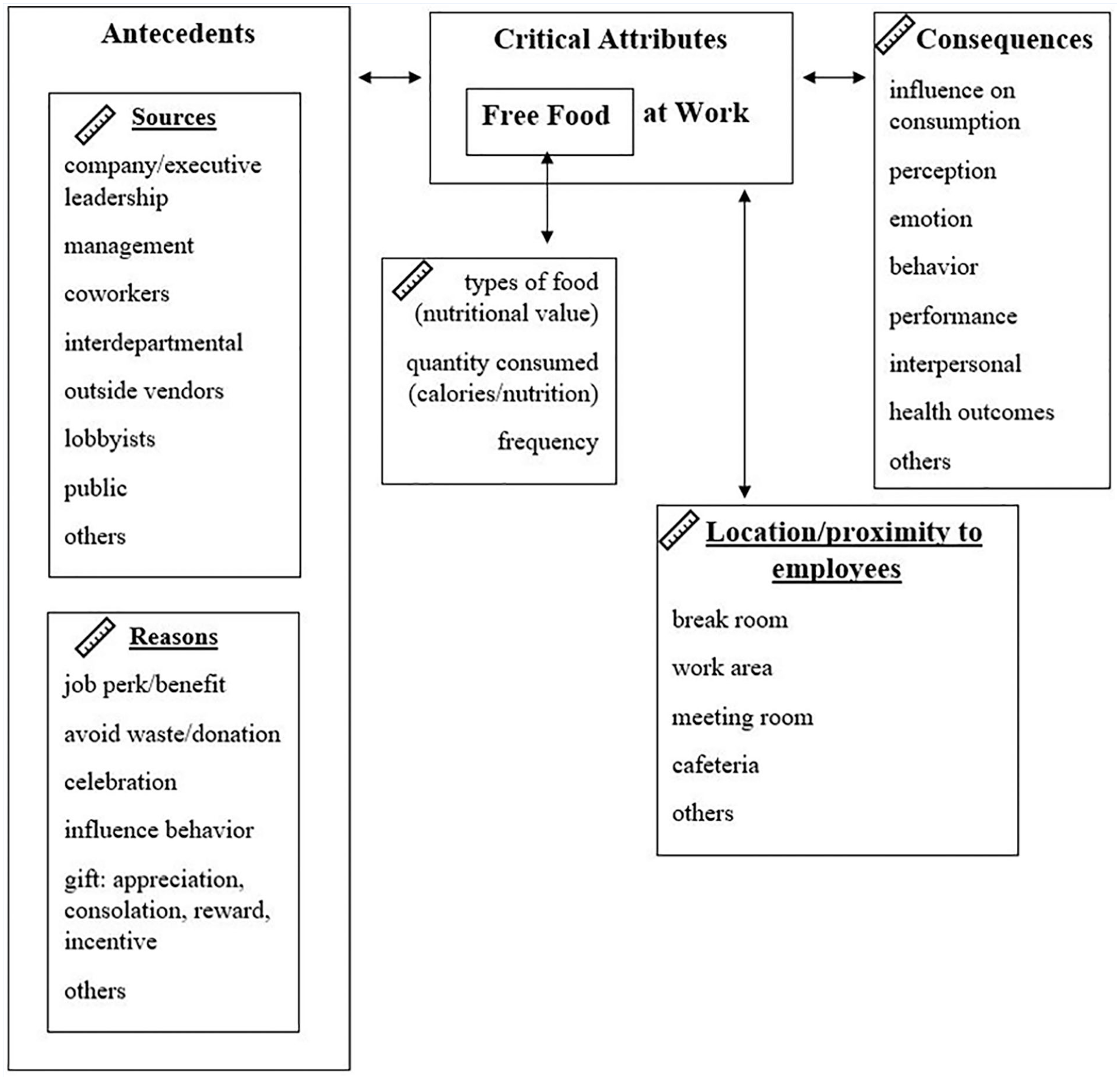
Free food at work conceptual model.
We theorized that the concept of free food at work meant more than the individual components of “free” and “food,” rather it also encompassed the psychological, physical, and social meanings of the words. As a result, free food at work imposes a significant influence over consumption. Food, a basic physiologic necessity, conveys many meanings beyond nutrition and is also consumed for enjoyment, nostalgia, comfort, medicine, and celebration, among many other reasons (Cannon, 2008). In addition, free is a powerful influencer of human behavior. Ariely (2010) and Anderson (2009) both describe the irrational influence of “free” on the human psyche that led most individuals to consume almost anything, even against their best interest, as long as it was offered at no financial cost. Humans seem ill-equipped to calculate the nonfinancial costs associated with free items (Anderson, 2009; Ariely, 2010). The history of “free lunch” as a powerful marketing tool goes back to the U.S. gold rush when saloons began offering free lunch with drink purchase as a way to bring in business during the slow lunchtime hours (Anderson, 2009). Since then, the overwhelming appeal of free food has been harnessed by many who intend to influence behavior. To test the power of free on making irrational economic decisions, Shampanier et al. (2007) tested the consumption of very cheap versus free chocolates of varying quality. The first experimental group offered a common chocolate for one cent or a decadent chocolate in the same size for 15 cents. Both chocolates were significantly price reduced from usual, but the decadent chocolate for 15 cents was a better value given that it was the decadent choice. In this group, participants were able to discern the financial benefit when both chocolates required payment and more often purchased the decadent chocolate. The other two experimental groups offered the decadent chocolate at reduced prices (14 cents or 10 cents) or common chocolate for free. The students were much more likely to consume the common chocolate over the decadent chocolate when the common chocolate was free as opposed to one cent, even though in terms of economics, the decadent chocolate at any of the study prices (10, 14, and 15 cents) was a better value (Shampanier et al., 2007). Similarly, an observational study of free chocolates in a hospital break room revealed the very short time before the chocolates were completely consumed (Gajendragadkar et al., 2013). While at work, nurses have reported eating free chocolates regularly, even though they subsequently experienced negative feelings of wellbeing (Cheung, 2003). Several commentaries on the overwhelming allure of free food at work, even for food items that usually would not be as enticing, have appeared in popular media with titles like “here’s why you can’t control yourself around free office food” (Bratskeir, 2017; Vozza, 2019). The authors of these popular media publications discussed and speculated over the causes of irrational behaviors toward free food in the workplace with little or no empirical evidence.
Alternatively, some WHPPs have harnessed the influence of free food on consumption to promote health in the workplace (Alinia et al., 2010; Clohessy et al., 2019; Lake et al., 2016; Makurat et al., 2018). For example, employer-provided food had the potential to address employee malnutrition, obesity, and chronic illness as illustrated through case reports from around the world (Wanjek, 2005), and could even impact job productivity (Bhatia, 2018). Increased fruit consumption was observed in workplace interventions that offered free fruit to employees (Alinia et al., 2010; Clohessy et al., 2019; Lake et al., 2016), and free lunch increased consumption of leafy greens and fruits while decreasing sugar intake in one intervention study (Makurat et al., 2018). However, healthy free food at work was not always desired as some surveyed staff reportedly preferred nutrition education instead of free fruit (Street et al., 2017).
Free food at work was a socially accepted currency that was exchanged for many reasons and from many sources. The types of free foods were often indulgent comfort foods, which were more desirable in stressful work environments thus impacting the influence on employee dietary behaviors (Clohessy et al., 2019; Horton Dias & Dawson, 2020; Onufrak, Zaganjor, Pan, et al., 2019; Strickland et al., 2015; Tabak et al., 2018).
Model, Borderline, and Contrary Cases
Walker and Avant (2005) recommend exemplars to demonstrate the application of the concept in practice. Following are a model case, borderline case, and contrary case for comparison.
Model Case
In the model case, all attributes, antecedents, and consequences are presented (Walker & Avant, 2005). Here, free food is available in the workplace at no financial cost to the employees (critical attributes). The free food was acquired by a source and given to employees for a reason (antecedents), and the influence of free food on consumption is presented (consequences).
It’s been a long shift with many critical issues and no time for breaks. Tracey’s coworker comes by to let her know that the manager has just delivered pizza to the break room for the staff. Tracey remarks on how thoughtful it was of the manager to do that. Though Tracey has been watching her diet in an attempt to lose weight, she’s hungry and tired and the thought of hot pizza sounds delicious. Tracey hurries to the break room to get a slice . . . or two.
Borderline Case
In the borderline case, some, but not all attributes, antecedents, and consequences are presented for comparison with the model case (Walker & Avant, 2005).
This year’s office charity team has organized a bake sale for fundraising. A wide variety of home-baked desserts are wheeled on a cart throughout the office and generates a lot of excitement. Everyone is anxious to see and try a variety of treats while supporting a good cause. The team sells out after offering a “buy two, get one for free” special.
In this exemplar, free food at work is available but only with purchase. The influence of free food on consumption may be related to the price (free) and/or the reason for the presence of the free food (fundraising).
Contrary Case
The contrary case offers an alternate scenario where none of the concept attributes are presented.
During their lunch break, most company staff head out to nearby restaurants. Others work through their break and eat at their desks. Occasionally, a “brown bag” meeting is planned and everyone brings in their own lunch from home or order delivery.
Antecedents and Consequences
To further define the concept, antecedents and consequences were identified and described. Antecedents of a concept are the components that must occur prior to the manifestation of the concept. Conceptual consequences are the results of the occurrence of the concept. See Figure 2 for conceptual model including antecedents and consequences.
Antecedents
For free food at work to occur, food must first be acquired by someone for some reason and then offered to employees. Free food was made available to employees for many reasons and from various sources; therefore, the antecedents of free food at work are (a) sources, or who is providing the free food and (b) reasons/intentions for providing free food.
Management, coworkers, vendors, and customers were all potential sources of free food at work. Reasons for free food depended on the setting and source, but some of the most common reasons were incentive for attending meetings/education (Horton Dias & Dawson, 2020; Segovis et al., 2007), celebration and comradery (Horton Dias & Dawson, 2020; Lake et al., 2016; Pressel, 2014), to boost morale and induce a fun atmosphere (Baldonado, 2015; Horton Dias & Dawson, 2020; Karl et al., 2005), and to show appreciation (Cheung, 2003; Horton Dias & Dawson, 2020; Pressel, 2014). Third-party vendors, such as pharmaceutical and medical device companies in healthcare settings, provided free food in an effort to persuade providers to prescribe certain drugs or use certain devices over others (Anderson, 2011; Schwartz & Woloshin, 2019; Steinbrook, 2017). Other businesses provided free food as a job perk and to build company loyalty (Findling, 2018; Krishna, 2019). In addition, public service industries where direct payment for service was not allowed, as with healthcare professionals, service recipients offered free food as a gift and symbol of appreciation (Horton Dias & Dawson, 2020; Nicholls et al., 2017; Pressel, 2014). Recently due to the COVID-19 pandemic, several chain restaurants in the United States joined in showing appreciation to healthcare workers and first responders by offering free food (Jiang, 2020). Alternatively, givers of free food may have had no intentions other than to avoid waste by off-loading left-overs of less healthy foods from their homes onto coworkers, who were sure to consume the free food (e.g., left-over Halloween candy; Vozza, 2019).
The many sources and reasons for free food at work need further exploration as each source may include various reasons depending on the situational context, thus influencing type of food provided and consumption. Next, the consequences of free food are discussed.
Consequences
It can be deduced that some of the motives for providing free food at work resulted in the intended consequences. Attendance at meetings/education increased with the promise of free food (Segovis et al., 2007). In many cases, givers of free food positively influenced receivers’ behaviors to their own benefit (e.g., more prescriptions of brand name drugs by physicians; Anderson, 2011; Brennan et al., 2006; Campbell et al., 2013, Davar, 2008; McNeill et al., 2006; Schwartz & Woloshin, 2019; Steinbrook, 2017; Wall & Brown, 2007). Employee recruitment, retention, and satisfaction were improved in companies with regular availability of free food (Baldonado, 2015; Blake et al., 2009; Findling, 2018; Krishna, 2019). Also, stress and negative emotions may be modulated through the act of giving and receiving free food (Hamburg et al., 2014), which may be the intended consequences when free food was provided to stressed employees or to boost morale.
The giver of free food is likely to receive the intended result, but the consequences for the receiver were often more covert. Long-term health effects of regular free food consumption are not known. What little was described in the literature suggested that free foods were often high calorie and of low nutritional value, which could contribute to overweight, obesity, and other metabolic chronic diseases (Onufrak, Zaganjor, Pan, et al., 2019). Some employees who were concerned with eating healthy, may feel sabotaged, guilty, or shamed by free food at work (Cheung, 2003:; Horton Dias & Dawson, 2020; Taber, 2014). More research is needed to determine the effects of free food on employees’ health and wellbeing. Next, we identified the measurable aspects of free food at work for future research.
Empirical Referents
Empirical referents are the measurable aspects of a concept that can be tested. To better understand the workplace food environment and inform WHPPs focused on improving dietary behaviors, more research was needed on all conceptual aspects of free food at work. No validated tools were found for measuring free food at work. However, the critical attributes, antecedents, and consequences of free food at work can be measured using a variety of instruments and methods. Next, the empirical referents (measurable aspects) of the concept were described. See Figure 2 for conceptually proposed empirical referents.
Empirical Referents of Critical Attributes
Little is known about the quantity, frequency, and types of free foods available in the workplace. Calories, serving size, or weight measurements of free food could be measured through self-report or worksite audits. In addition, do findings vary according to workplace setting? Free food needs to be examined for nutritional composition as in the preliminary work by Onufrak, Zaganjor, Pan, et al. (2019), which used the Healthy Eating Index (National Cancer Institute, Division of Cancer Control and Population Sciences, 2020). What foods are most commonly given for free, and does the type of food vary by source, reason, or setting? Identifying free food quality and consumption can infer potential impacts of free food on health outcomes.
Location is another important variable for study of free food as proximity of snacks has been associated with influencing consumption (Baskin et al., 2016; Hunter et al., 2018). When free foods are available in the workplace, where are they located? Location can be measured in various ways using descriptive measures (e.g., cafeteria, staff lounge, meeting rooms) and/or quantitative measures with rulers or pedometers. Furthermore, how does proximity of free food influence consumption and how does consumption compare with foods for purchase in the same location? Which is the more powerful influencer for consumption, type of free food or location of free food?
Empirical Referents of Antecedents and Consequences
Sources of free food and associated reasons for providing free food should also be evaluated and compared between workplace settings. Studying sources of and reasons for free food (antecedents) can also lead to a better understanding of the consequences. Similarly, the influence of free food needs to be better measured. Important information includes to what extent do free foods influence behavior, relationships, attitudes, performance, and health, and are the effects related to source and situation. Amount and frequency of consumption are two potential measures of influence, particularly when compared to the same items available for purchase. Measuring behavioral changes (e.g., meeting attendance), perceptions (e.g., job satisfaction), or attitudes (e.g., loyalty) as a result of receipt of free food can also reveal the influence of free foods (Anderson, 2011; Baldonado, 2015; Segovis et al., 2007).
The health effects of free food at work are not known, but this is an important area for inquiry. If free foods at work are consumed often, are of poor nutritional value and add sugar, fat, and sodium to employees’ diets, what are the long-term health effects and weight status of those employees? Alternatively, if healthy free foods are frequently consumed in the workplace, does that positively impact employee health? Methods to assess employee health status could include measures of weight, percent body fat, blood pressure, cholesterol, and blood glucose. Finally, workplace food policies and guidelines on free food need testing to evaluate efficacy and to inform evidence-based programs.
Discussion
Free food at work is an important food source that is a common occurrence but has been rarely studied. Initial evaluations suggest that free food at work typically consists of foods of low nutritional value, but prevalence, food quality, and consumption according to setting or profession is not known (Onufrak, Zaganjor, Pan, et al., 2019). Moreover, the long-term effects of free food at work on employee health is not known. If free food at work is contributing to obesity and chronic illness, employers will ultimately suffer financial losses in insurance premiums, job productivity, and absenteeism (Kudel et al., 2018; Lehnert et al., 2013; Shrestha et al., 2016). Attention needs to be paid to the quality and quantity of free food at work to better support healthy behaviors, especially in industries where the workforce is over-worked or under-staffed. Stressful work conditions in office-based worksites reportedly increase consumption of less healthy foods (Clohessy et al., 2019). Hospital nurses, in particular, reported stressful shifts with little time for breaks and ultimately exhaustion which depleted their resolve to acquire and eat healthy foods during and after shifts (Horton Dias & Dawson, 2020). The frequent availability of free food at work became a major impediment for hospital nurses to choose healthy foods (Horton Dias & Dawson, 2020). For stressed employees, the influence of free food may be especially strong and needs special consideration.
Although employees gain free food at no financial cost, it is unlikely that there are truly no costs. Gifts carry significance in social contexts and, as theorized by Marcel Mauss in 1925, are representations of social contracts that create reciprocal behaviors and attitudes (Mauss, 1990). To what extent free food influences employees’ behaviors and wellbeing is not currently known, though initial investigations suggest that frequent consumption can negatively affect feelings of wellbeing (Cheung, 2003; L. Walker & Flannery, 2020). Further, certain industries also need to consider the ethical implications of free food at work, particularly based on the source of free food. Givers of free food may have various motives and according to the situational context, free food could produce varying responses.
Currently, guidelines for healthier workplace food environments, including free food in meetings, are available from the CDC (U.S. Department of Health and Human Services et al., n. d.) and initial surveillance suggests that these policies are still not widely adopted with 18.6% of surveyed employees from various sectors reporting a workplace policy for offering healthy foods at meetings (Onufrak et al., 2018). In a survey of U.S. hospitals, of those that had workplace wellness programs, 57.2% included a policy for healthy foods at meetings (Mulder et al., 2020). Although helpful for addressing the healthfulness of free food at work provided by the employer/leadership, the guidelines do not address free food at work from other sources (e.g., peers, clients). More research is needed to test the efficacy of various policies and guidelines on free food in the workplace.
Free food at work is a concept that needs attention and study due to its emergence as a commonly experienced phenomenon. The availability of free food at work could be influencing employees’ consumption, behaviors, perceptions, and potentially their health and wellbeing. Theoretical development of free food within the workplace food environment is needed to guide research and inform effective WHPPs and workplace policies.
The literature search was limited by the lack of standard terminology for free food at work as relevant publications may have been omitted due to variations in terminology. Concept analyses, in general and as applicable here, are transient in nature due to the subjectivity of cultural, temporal, and contextual minutiae. Therefore, we recognize this concept analysis for free food at work as a preliminary description of the concept that may evolve as new evidence emerges. Finally, this concept analysis on free food was limited to the workplace and cannot be generalized to other contexts.
Implications for Occupational Health Practice
Free food at work is a concept that warrants scholarly attention due to its emergence as a commonly experienced phenomenon. The availability of free food at work could be influencing employees’ consumption, behaviors, perceptions, and potentially their health and wellbeing. Theoretical development of free food within the workplace food environment is needed to guide research and inform effective WHPPs and workplace policies. Free food at work is a concept separate from free food in other settings (home, church, community). The attributes of free food may have some overlap with other settings, but the antecedents and consequences should be evaluated as related to the workplace. Identifying interventions that improve employees’ health-promoting dietary behaviors can have many benefits for population health. To understand the various workplace influences on dietary behaviors, the availability of free food warrants special attention. Assessing free food quantity, quality, influence, and sources are all important variables to be able to design and implement appropriate interventions in WHPPs.
Applying Research to Practice
Free food at work is a phenomenon that many have experienced but has not been previously conceptualized and rarely assessed.
A theoretically derived concept of free food at work for further scientific exploration and a conceptual model were proposed.
Occupational health practitioners need to evaluate the prevalence, quality, and location of free food provided to employees from all sources as a part of any workplace food environment assessments.
Footnotes
Acknowledgements
The authors would like to thank Dr. Stephen Onufrak for providing valuable feedback on the manuscript.
Authors’ Note
The findings and conclusions in this report are those of the authors and do not necessarily represent the official position of the NHLBI/NIH or the Centers for Disease Control and Prevention. The funding source had no role in the study design; collection, analysis, and interpretation of data; in the writing of the report; and in the decision to submit the article for publication.
Author Contributions
Conception and design in collaboration by C.H.D. and R.M.D. C.H.D. completed the literature review and wrote the first draft with contributions from R.M.D. All authors reviewed, revised, and commented on subsequent drafts of the manuscript. All authors gave final approval for submission.
Declaration of Conflicting Interests
The author(s) declared no potential conflicts of interest with respect to the research, authorship, and/or publication of this article.
Funding
The author(s) disclosed receipt of the following financial support for the research, authorship, and/or publication of this article: C.H.D., M.D.W., and D.H. received no financial support for the research, authorship, and/or publication of this article. R.M.D. was supported by National Heart, Lung, and Blood Institute (NHLBI)/National Institutes of Health (NIH) (1 K23 HL133596-01A1). Demetrius Abshire was supported by the National Institute on Minority Health and Health Disparities of the National Institutes of Health under Award Number K23MD013899.

Author Biographies
Cynthia Horton Dias is a hospital staff nurse in South Carolina and Jonas Scholar 2018–2020. Her research interests include workplace food environments, improving population dietary behaviors, and preventing chronic disease through diet.
Robin M. Dawson is an associate professor and director of the Smart Start Nursing Program at the University of South Carolina. Her multi-level program of research is focused on understanding the context and processes of communication, as well as the development of practical and innovative interventions designed to facilitate optimal patient-provider communication.
Demetrius A. Abshire conducts research addressing rural health and health disparities. His primary area of scholarly interest is on multilevel influences on obesity and weight-related behaviors among rural populations.
Diane Harris is a senior health scientist in the Division of Nutrition, Physical Activity, and Obesity at the Centers for Disease Control and Prevention (CDC). She is lead for the Healthy Food Environment Team in the Obesity Prevention and Control Branch, which focuses on research and guidance on increasing access to healthy foods through policy, systems, and environmental change approaches, including by creating healthy food environments in institutional food service settings.
Michael D. Wirth is an assistant professor at the University of South Carolina and is trained in epidemiology. His research primary revolves around circadian rhythms which entails a significant amount of research in the field of shiftwork; research related to diet among shift workers is a major component of his work.