




Abstract
Background:
Commercial truck drivers (CTDs) are significantly affected by shoulder injuries; however, little is known about the unique mechanisms of injury (MOIs), specific injuries, or possible preventive measures among this group of workers. This study characterized the MOIs, musculoskeletal disorders (MSDs), and factors associated with MSDs of the shoulder among a group of CTDs.
Methods:
A retrospective medical record review was conducted of CTDs between 21 and 65 years of age who were seen for MSDs of the shoulder between 2007 and 2015.
Results:
A total of 130 CTDs were included, who were aged 21 to 65 years. Commercial truck drivers were most often injured during a fall (35%) or while using chains, tarps, or straps (31%). The two most common MSDs were unspecified sprains/strains (58%) and rotator cuff tears (24%). Age was found to be associated with all MSDs (p = .001) and an increased risk of developing rotator cuff tears (p =.005). Seventy-four percent of CTDs who experienced a rotator cuff tear were 46 years of age or older.
Conclusion/Application to Practice:
This study highlights the course of the injury in terms of diagnostics such as magnetic resonance imaging (MRI) and referral for surgery and describes the occupational activities associated with CTDs. These findings can inform employer injury prevention programs, patient and health care provider education, and future interventional research.
Keywords
In 2018, there were 1,958,000 individuals employed as heavy/tractor-trailer truck drivers in the United States, with an expected 5% increase by the year 2028 (U.S. Bureau of Labor Statistics [U.S. BLS], 2015b), making them one of the largest groups of workers in the country. Commercial truck drivers (CTDs) provide a critical service to the United States and the economy, but they experience injuries and illnesses involving days away from work at rates three and a half times higher than the national average for all other occupations (U.S. BLS, 2016). Importantly, the most common reason for a CTD to miss work is due to musculoskeletal disorders (MSDs; Davis et al., 2014; Smith & Williams, 2014). The incidence rate of MSDs per 10,000 full-time workers among heavy/tractor-trailer truck drivers is three times higher than that of all occupations (108 and 31, respectively) (U.S. BLS, 2016). Past research has consistently shown that the most common MSDs experienced by CTDs are sprains of the body followed by the shoulder, and when CTDs develop MSDs of the back, they miss an average of 9 days of work; however, MSDs of the shoulder can require up to 45 days away from work (Davis et al., 2014; U.S. BLS, 2016). This time away from work significantly impacts the worker and employer, not only in lost productivity but also financially with some of the highest worker compensation claims and increased risk of partial or total disability (Davis et al., 2014; Smith & Williams, 2014).
Commercial truck drivers experience several significant occupational health issues including fatigue, vibration, and motor vehicle crash–related injuries (Apostolopoulos et al., 2013; Bovenzi, 2009; Shibuya et al., 2010; Sieber et al., 2014), but they are significantly affected by MSDs to the back and shoulder, which are commonly due to overexertion or repetitive motion (Davis et al., 2014; Smith & Williams, 2014). Although the incidence and overall costs of shoulder injuries are higher among CTDs compared with other occupations, to date, no research has characterized occupational-acquired shoulder injuries in CTDs. Therefore, this hypothesis-generating retrospective study characterized the mechanisms of shoulder injury, the types of shoulder injuries, and sought to identify factors that were associated with shoulder injuries among a group of CTDs seen in an occupational health clinic.
Methods
This is a retrospective cross-sectional study investigating MSDs of the shoulder in CTDs, which was conducted by reviewing electronic medical records from an occupational health clinic that services several large trucking companies in a large southeastern city. All CTDs evaluated for shoulder injuries at the occupational health clinic between 2007 and 2015 were evaluated for inclusion in the study. International Classification of Diseases Clinical Modification, 9th Revision (ICD-9) codes were used to identify individuals who presented to the clinic with a shoulder injury (840.4—Rotator Cuff Sprain/Strain; 840.7—Superior Glenoid Labrum Lesion; 840.9—Sprain Shoulder non-specific; 959.2—Injury Shoulder and Upper Arm non-specific). The study was approved by the University of Alabama at Birmingham Institutional Review Board (IRB) prior to the initiation of the study. Inclusion criteria included CTDs who were aged 18 to 65 years and who presented with a work-related shoulder injury diagnosed by the occupational health provider between 2007 and 2015. Exclusion criteria included those with a previous history of shoulder surgery in the injured shoulder, a fracture related to the current injury, injuries related to a commercial vehicle crash, and injuries found not to be related to work. Over 500 records were reviewed, and 134 records identified CTDs with an MSD of the shoulder. Of those, two had electronic files that were illegible and removed from the sample, and two were missing more than half of the data. After the exclusion of these four records, 130 records met all inclusion and exclusion criteria and were retained for analysis. All chart reviews were conducted between December 1, 2018, and December 30, 2018.
The independent variables of interest for this study were age at the time of injury, gender (male, female, transgender), race (White, African American, American Indian or Alaska Native, Asian, Native Hawaiian or Other Pacific Islander, or Other), height (height in inches), weight (in pounds), body mass index (BMI—kg/m2) category (underweight (<18.5, normal weight [18.5–24.99], overweight [25–29.99], obesity 1 [30–34.99], obesity 2 [35–39.99], morbid obesity [40 or greater]), mechanism of injury (MOI) category (falls; chains, tarps, and strap; handling cargo; using equipment; other), radiology (Yes/No), date of injury, date of release to full work activity, referral for surgery (Yes/No), and days of work missed (days between date of injury and date of release or date of referral), and the key outcome variable was MSD of the shoulder (rotator cuff, superior labral tear from anterior to posterior [SLAP] lesion, unspecified sprain/strains, other).
Statistical Analysis
Descriptive statistics, including means, standard deviations, and frequency distributions, were calculated. Spearman’s correlation, chi-square analyses, association rules, and simple logistic regression were performed to assess bivariate and multivariate relationships between independent and dependent variables. Once initial bivariate statistics were analyzed and paired variables were assessed for associations, all variables shown to have an association with MSDs at the bivariate level were included in a multivariate logistic model. Association rule analysis is a datamining technique used in analyzing categorical data which have been used and supported in past research investigating MSDs in CTDs (Combs et al., 2018). Statistical analyses were completed using SPSS Software v. 25 and R Studio v. 1.2.1335.
Results
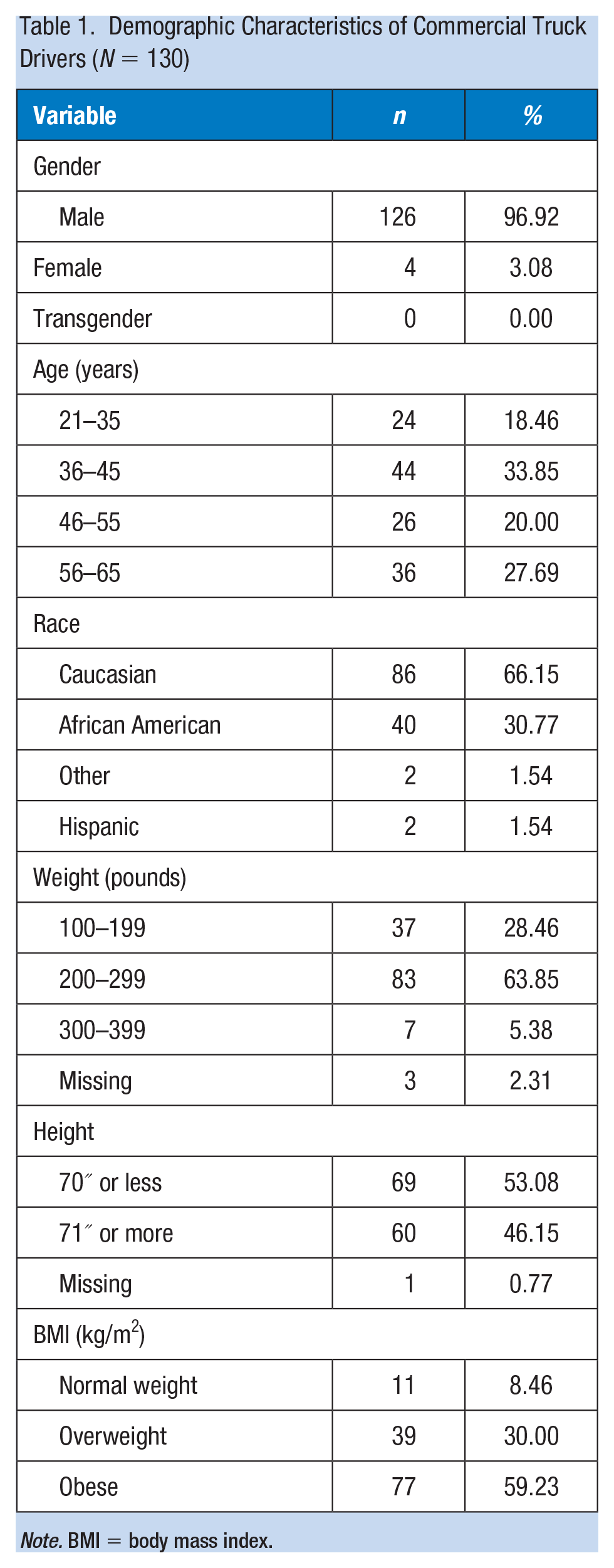
The study sample included primarily males (n = 126; 96.9%) who were almost evenly split between 45 and under and over 46 (Table 1). They were 66.15% Caucasian (n = 86) and 30.77 % African American (n = 40), with only four subjects identifying as Hispanic (n=2; 1.54%) or Other (n=2; 1.54%). The height of the sample was divided; individuals who were 70~ or less made up 53% of the sample (n = 69), with an average overall height of 70.29~ (range: 63~–77~).
Demographic Characteristics of Commercial Truck Drivers (N = 130)
Note. BMI = body mass index.
Characteristics of MOI
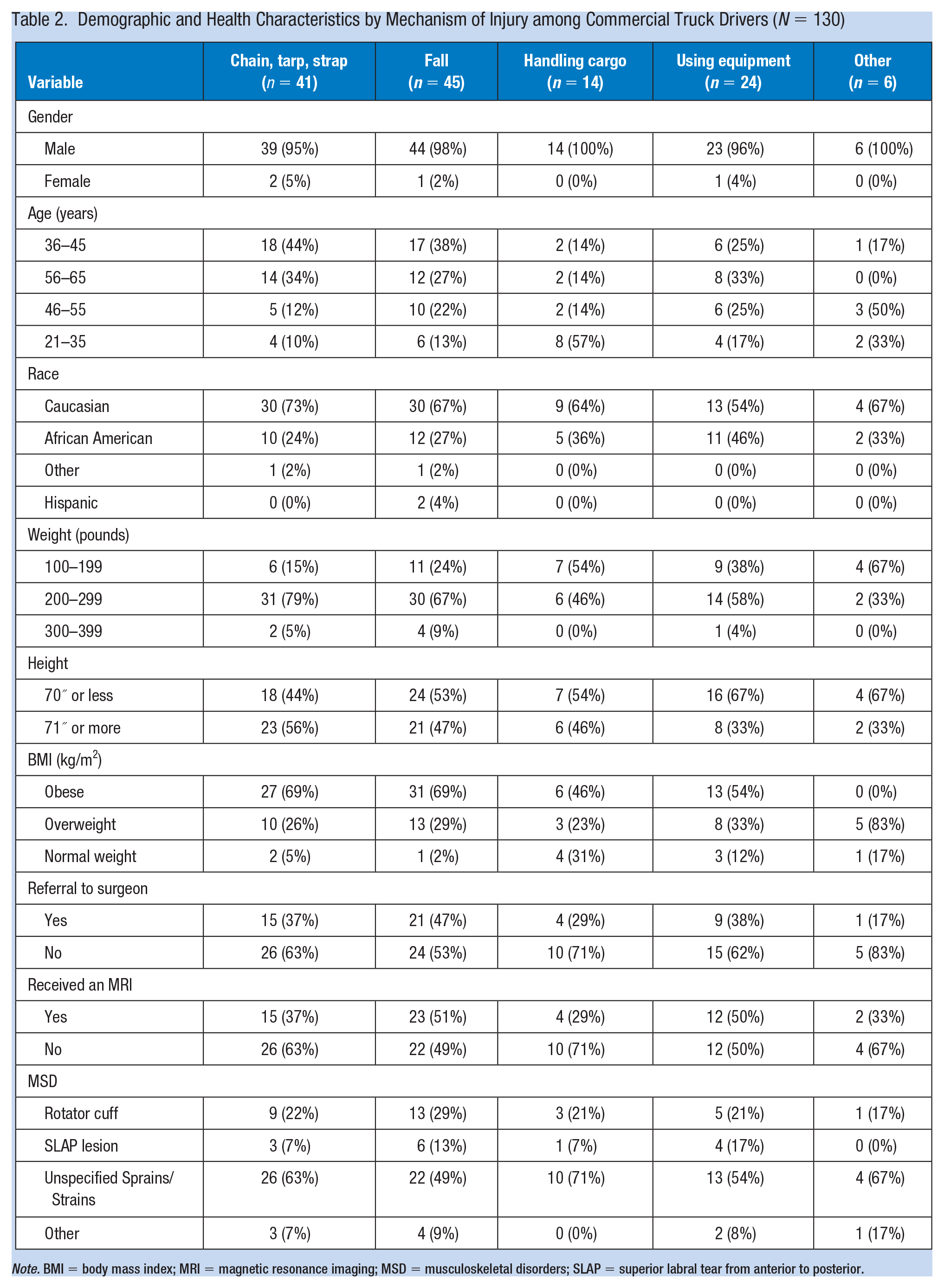
All characteristics of MSDs of the shoulder can be found in Table 2. Falls (n = 45) were the most commonly reported MOI by individuals between 36 and 45 years of age who were most often 70~ or shorter and most often resulted in an unspecified sprain/strain with 51% requiring a magnetic resonance imaging (MRI) and 53% referred to an orthopedic surgeon. The second most often documented MOI was the use of chains, tarps, and straps (n = 41) and it most commonly affected individuals between 36 and 45 years of age but were more likely to be 71~ or taller. The most common injury resulting from the use of chains, tarps, and straps were unspecified sprain/strains (63%), with only 37% requiring an MRI and 37% referred to an orthopedic surgeon. Injuries related to the use of equipment (n = 24) most often affected those between 56 and 65 years of age (33%) and those 70~ or shorter (67%), most often resulting in unspecified sprains/sprains (54%) with half requiring an MRI, but only 38% being to an orthopedic surgeon.
Demographic and Health Characteristics by Mechanism of Injury among Commercial Truck Drivers (N = 130)
Note. BMI = body mass index; MRI = magnetic resonance imaging; MSD = musculoskeletal disorders; SLAP = superior labral tear from anterior to posterior.
Characteristics of MSDs
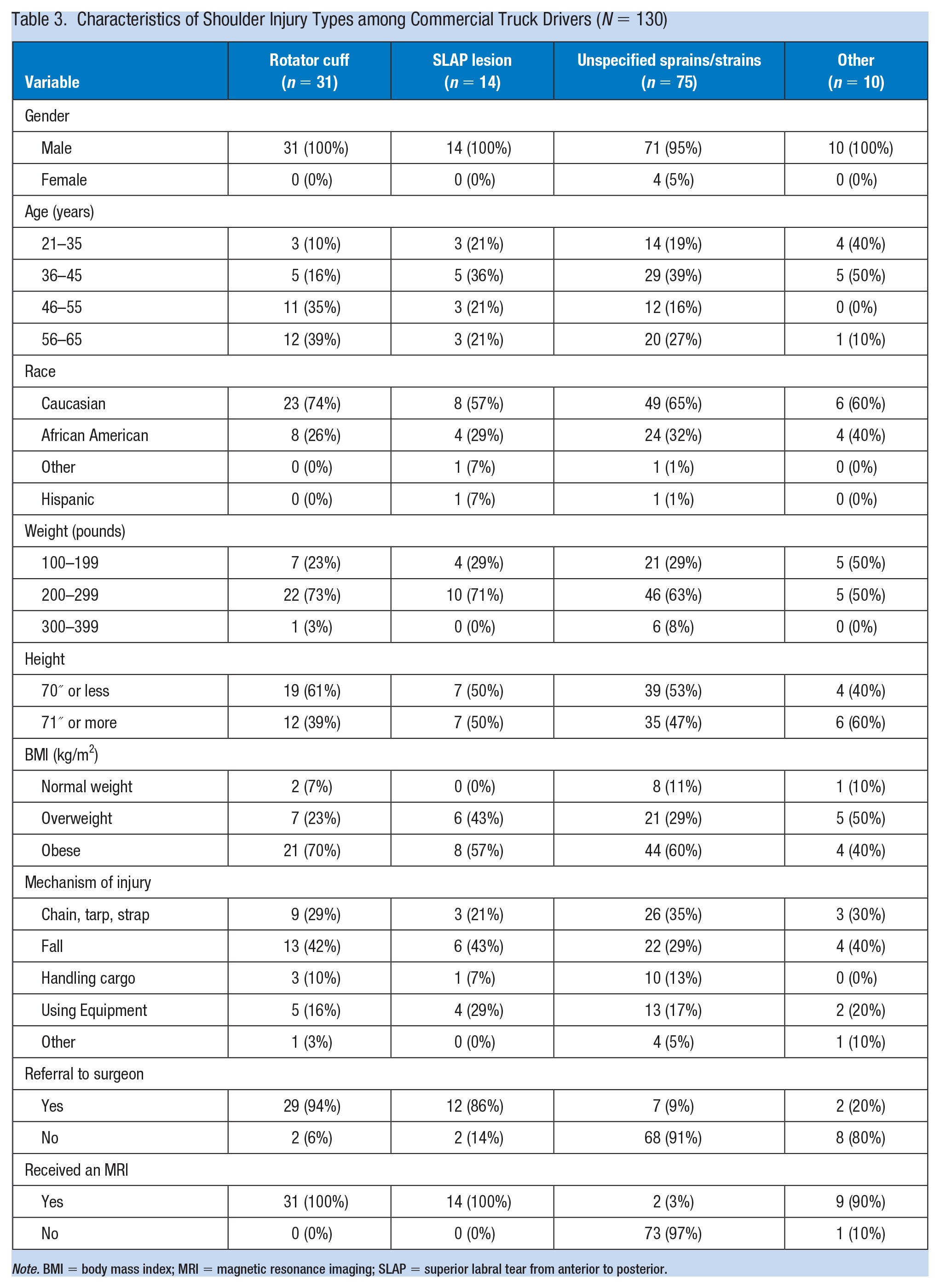
The largest group of injuries was unspecified strain/sprain (n = 75). This is the only diagnosis that affected female drivers (5%) and most often affected individuals between 36 and 45 years of age and were often 71~ or taller, and a majority were caused by the use of chains, tarps, and straps (35%). The second most common diagnosis was rotator cuff injuries (n = 31), which often affected those between 56 and 65 years of age (39%) and were 70~ or shorter (61%) and resulted due to a fall (42%). Those CTDs diagnosed with a SLAP lesion (n =14) were between 36 and 45 years of age (36%) and also most often resulted due to falls (43%) and use of equipment (29%) (Table 3).
Characteristics of Shoulder Injury Types among Commercial Truck Drivers (N = 130)
Note. BMI = body mass index; MRI = magnetic resonance imaging; SLAP = superior labral tear from anterior to posterior.
Correlates of MSDs
The MOI was found to have a statistically significant association with both age (p < .01) and BMI (p < .01). The effect size was small between MOI and age (φc, 0.284), but medium between MOI and BMI (φc, 0.312). An association between MOI and age was also discovered when using association rules; CTDs injured while handling cargo were almost 3 times more likely to be between 21 and 35 years of age (lift, 2.97) when compared with the other age groups.
The only demographic or anthropometric variable found to have a statistically significant association with MSD was age (p < .05), but association rules showed that rotator cuff injury was more often in those CTDs who were 70~ or shorter (confidence, 0.60; lift, 1.12) and obese (confidence, 0.70; lift, 1.15). It is important to note that MSDs did have a very strong association with two other variables: MRI (p < .01; φc, 0.954) and Referral (p < .01; φc, 0.794). Commercial truck drivers diagnosed with a rotator cuff injury and SLAP lesions were just over 2 times more likely to require an MRI (lift, 2.31; lift, 2.27) and be referred to an orthopedic surgeon (lift, 2.46; lift, 2.31).
A multinomial logistic regression analysis showed that age had a statistically significant effect on MSDs (p = .001). The model showed that both age and rotator cuff injuries were statistically significant (p = .005, odds ratio [OR] = 1.06), which suggests that for every unit increase in age the odds of observing the rotator cuff injuries relative to unspecified sprains/strains increased by 6%.
Discussion
In this study, those with the most injuries were obese White males, which is not surprising given the demographics of the sample which is representative of the national population of CTDs. The most commonly reported MOIs were falls, followed by the use of chains, tarps, or straps. In the CTD population, injury related to a fall is one of the two most commonly reported injuries, along with overexertion (Davis et al., 2014; McCall & Horwitz, 2005; Smith & Williams, 2014; Spielholz et al., 2008; U.S. BLS, 2016).
In this study, MOI was examined by expanding on the historical use of overexertion variable; however, MOI was not found to have a statistically significant association with MSDs. There is a body of research that highlights the relationship between environment/equipment and MSDs. In the nursing population, a majority of injuries of the shoulder are related to pushing or pulling patients, which supports the impact of environmental items related to the MOIs of MSDs of the shoulder (Bhimani, 2016). This is comparable to a construction worker lifting a tool required for a task or a CTD lifting a tarp to cover cargo or throwing chains to secure freight on a flatbed trailer. Although this retrospective study could not address all aspects of the CTD environment, it was able to give a more in-depth description than in previous studies of CTDs by being more specific on the environment equipment and factors that were related to overexertion.
This study found that falls were the most commonly reported MOI, which has been supported in past research (Centers for Disease Control and Prevention, 2010; McCall & Horwitz, 2005). But in our study, the only age group in which falls were the most commonly reported MOI were those aged between 46 and 55 years. This can potentially be explained by examining the known causes of falls in occupational settings: slippery surfaces, working from a height above ground level, or proprioception alterations (Evanoff et al., 2014; Greenfield et al., 2016; McCall & Horwitz, 2005; Son et al., 2014). While surface areas and working from different height may not be related to age, it is important to note that, while not measured in this study, as an individual gets older, there is a decrease in proprioception, which can increase the risk of falling (Greenfield et al., 2016; Shaffer & Harrison, 2007; Wingert et al., 2014).
The most commonly reported MSDs in this study were unspecified sprains/strains, followed by rotator cuff injuries and SLAP lesions. Previous studies investigating MSDs in CTDs grouped all soft tissue injuries as sprains/strains. Therefore, this study is the first to distinguish among soft tissue injuries to include a variable for rotator cuff tears and SLAP lesions in this worker population. This means the results in relation to sprains/strains cannot be directly compared with past studies (Bovenzi, 2015; Combs et al., 2018; U.S. BLS, 2016); our study also provides more detailed information about specific medical diagnoses.
A majority of CTDs diagnosed with unspecified sprains/strains were middle-aged and 70~ or shorter. The CTDs with unspecified strains/sprains were most often injured while using chains, tarps, or straps followed by falls, and only 9% of these CTDs had to be referred. Rotator cuff injuries and SLAP lesions were the next most commonly diagnosed MSDs in this population. However, those that were diagnosed with a rotator cuff tear were older than those diagnosed with a SLAP lesion. Those diagnosed with a rotator injury were more likely to be shorter than those with a SLAP lesions, but both were most likely a result of a fall or using chains, tarps, and straps. Each of these two diagnoses required an MRI to be diagnosed, and 86% of those with a SLAP lesion were referred to a surgeon compared with 94% of those with a rotator cuff tear.
Some differences in group characteristics were found when the two most common diagnoses, unspecified strains/sprains and rotator cuff tears, were compared. The individuals with a rotator cuff injury were on average 7 years older than those with an unspecified sprain/strain. Past research has shown that there is an increased risk to develop rotator cuff injuries as people age, particularly in the general and CTD worker population (Andersen et al., 2002; Anderson et al., 2017; Craig et al., 2017; Davis et al., 2014; Gombera & Sekiya, 2014; Leroux et al., 2006). A separate study showed that worker compensation claims related to the shoulder had higher financial costs when the worker is between 45 and 64 years of age (Davis et al., 2014).
In this study, logistic regression showed that as age increased, so did the chance that the CTD would be diagnosed with a rotator cuff tear (data not displayed). The impact of age on MSDs of the shoulder has been supported in past research in both CTDs and other professions (Andersen et al., 2002, 2003; Anderson et al., 2017; Davis et al., 2014; Leroux et al., 2006; Smith & Williams, 2014), yet this is the first to include rotator cuff tears and SLAP lesions specifically. Older workers routinely have increased risk of developing an MSD of the shoulder and have higher worker compensation claims (Anderson et al., 2017; Combs et al., 2018; McCall & Horwitz, 2005; Smith & Williams, 2014). These studies may not have individually isolated rotator cuff tears or SLAP lesions, but it can be surmised that they were part of the injuries most often labeled strains/sprains.
Several limitations must be considered with the design of this study, including available data for collection, participant selection, and the sample size and makeup. The data collected for this study were not designed to be used for research purposes but rather for the care of injured CTDs. It is possible that in some cases, it was not stated that a worker was a CTD and that data would not have been collected. The sample was adequate based on the completed power analyses; however, when using categorical data, a larger sample size may have allowed for a richer analysis of the variables and the groups. The demographics may have been comparable to those of the national working population, but this is still a convenience sample of a CTD population in a large city in the southeast, and findings would not be generalizable to the national population. This does not discount the information that was discovered but should be taken into account in the discussion of the findings and assumptions that are made.
Conclusion
This is the first study that specifically investigated MSDs of the shoulder in CTDs. There were three critical outcomes of this study: the description of demographics, anthropometric and work factors associated with rotator cuff tears, and SLAP lesion among MSDs; the statistically significant association between age and MSDs; and the proportion of MSDs that resulted from the use of chains, tarps, and straps and equipment.
The results of this study are consistent with findings of past research by showing that, in CTDs, unspecified strains/sprains were the most commonly documented MSDs. However, it is the first study to break down sprains/strain more specifically to assess for rotator cuff tears and SLAP lesions as well as which highlights the importance of the study in developing a better understanding of the MSDs of the shoulder in CTDs. In this population, rotator cuff tears and SLAP lesions required more costly diagnostics tests and required referral to an orthopedic surgeon. This has a significant impact on not just the CTDs but their employers and family. Intervention research needs to be developed to help decrease the prevalence of these two injuries in a larger population by initiating preventive programs (e.g., rotator cuff strengthening exercises, stretching protocols) as supported by current and future research.
The relationship between age and rotator cuff injuries is well established in research, but this is the first study to investigate this relationship in a group of CTDs. This study confirmed a statistically significant association between age and MSDs—specifically, rotator cuff tears, which is supported by past research in other professions and highlights the importance this has on practice. Health care providers must be aware of this relationship, and they should work to educate their patients who are CTDs on the risks of developing rotator cuff tears as they age. The earlier CTDs understand the risk of developing rotator cuff tears, the higher the chance they can prevent them from occurring.
Falls were found to be the most commonly documented MOI, which is strongly supported in past research, yet this study is the first to examine the most commonly used MOI variable overexertion in depth. This study also found that almost the same number of CTDs were injured while using chains, tarps, and straps compared with falls, which can have a significant impact on the clinical setting. This study, for the first time, describes MSDs related to the use of chains, tarps, and straps, and this can be used in two important ways. First, this new knowledge can be used to educate patients of all ages of the potential risks that the use of chains, tarps, and straps could have on developing an MSD of the shoulder. Second, intervention research can be developed to investigate the best method for preventing injuries related to the use of chains, straps, and tarps. These could be safe handling education programs, development of assistive devices, or strengthening exercises for the torso and upper extremities.
Applying Research to Occupational Health Practice
This study found a relationship between age and the development of rotator cuff injuries. It also showed the impact that the use of chains, tarps, and straps has on the commercial truck driver in this population. The occupational health care provider can use this foundational knowledge to elicit detailed occupational and work histories; educate their patients on the risks of using chains, tarps, and straps; make injury prevention recommendations to employers; develop return to work recommendations; and stress the proper ergonomics and weight limits when using this type of equipment which could help prevent future injuries. Also, this study found that falls were more common in the older workers, which could also be used in patient education and even interventional practices such as regular proprioception exercises.
Footnotes
Declaration of Conflicting Interests
The author(s) declared no potential conflicts of interest with respect to the research, authorship, and/or publication of this article.
Funding
The author(s) disclosed receipt of the following financial support for the research, authorship, and/or publication of this article: Bryan Combs and Karen Heaston received the salary support from Deep South Center for Occupational Health and Safety (Lungu, PI) - T42OH008436.

Author Biographies
Bryan Combs is faculty UAB School of Nursing since 2013 and Interim-Assistant Dean. He has extensive experience in orthopedics as both a certified athletic trainer as well as a family nurse practitioner. His research has focused on musculoskeletal injuries and occupational health.
Pariya L Fazeli is a developmental psychologist with a background in lifespan development and gerontology. Her research program focuses on factors to promote successful aging outcomes among diverse populations of older adults.
David A. Brown, PT, PhD, FAPTA is senior vice President and Dean, School of Health Professions (SHP). He is also a professor (tenure) in the Departments of Physical Therapy and Division of Rehabilitation Sciences. He received his Bachelor of Arts in Physics and Astronomy from University of Rochester (NY), a master’s degree in Physical Therapy from Duke University, and his Doctor of Philosophy in Exercise Science from the University of Iowa.
Sean Gallagher is currently the Hal N. and Peggy S. Pennington professor in Auburn University’s Department of Industrial Engineering. He is a Fellow of both the Human Factors and Ergonomics Society and the American Industrial Hygiene Association. Dr. Gallagher is a two-time winner of the International Ergonomics Association/Liberty Mutual Medal in Occupational Safety and Ergonomics and is a Certified Professional Ergonomist.
Allison Jones is as assistant professor with 15 years of nursing experience. Her program of research focuses on critical injury, patient blood management across the spectrum of care, and outcomes associated with blood transfusion.
Bruce Romeo is a physician and specializes in occupation health and as an independent medical examiner has performed disability examinations for the Disability Determination Service, independent medical exams, fitness for duty evaluations, impairment ratings, and functional capacity evaluations.
Karen Heaton is the director of Occupational Health Nursing of the Deep South Center for Occupational Health and Safety and the Co-Director of the PhD Program at the University of Alabama at Birmingham School of Nursing.