



Abstract
Background:
The purpose of this project was to determine whether clients were satisfied with their occupational health physical therapy virtual consultations and whether or not they would have preferred a face-to-face consultation instead of a virtual consultation.
Methods:
Clients were mailed an adapted 10-item Telehealth Satisfaction Scale (TeSS) and asked to complete and return it in a prepaid envelope. Clients who returned the TeSS were then contacted by telephone and asked whether they would have preferred a face-to-face consultation instead of a virtual consultation.
Findings:
Overall, clients expressed a high degree of satisfaction with their virtual occupational health physical therapy consultation (96.9%). Most clients (82.1%) stated they would have chosen virtual consultations if given the choice.
Conclusion/Application to Practice:
The cumulative feedback from clients suggested that the benefits of virtual consultations can be sustained post COVID-19 pandemic as clients have accepted and adapted to this new approach within the occupational health physical therapy clinic.
Background
Shortly after the first recorded outbreak that occurred in December 2019 in Wuhan, China (Liu et al., 2020), the World Health Organization (WHO) declared a pandemic due to the rapid spread of infection worldwide (Cucinotta & Vanelli, 2020). Consequently, the U.K. government announced a reduction in all nonessential travel and a partial lockdown (Tack et al., 2021). Outpatient services, such as physical therapy, had to quickly transition to remote working and virtual consultations to comply with the emergency measures.
Despite the relative infancy of virtual consultations in physical therapy, there is an emerging body of evidence that supports its incorporation into clinical practice as both an assessment and rehabilitation tool (Chartered Society of Physiotherapy, 2020). Virtual consultations provided through the occupational health physical therapy clinic at a North London National Health Service Trust in the United Kingdom was a new way to deliver care and has provided a platform for continuity of care during the COVID-19 pandemic. Anecdotally, there has been an initial reluctance in clients within the occupational health physical therapy clinic to accept this new mode of delivery of care. Clients preferred a face-to-face consultation to a virtual consultation, even when they faced inconveniences such as cost, travel, carer, and child care responsibilities, and an increased risk of exposure to COVID-19. While clients may have preferred face-to-face consultations, the pandemic necessitated that all appointments were automatically changed to virtual consultations such as telephone or video.
The purpose of this project was to determine whether clients at a North London National Health Service Trust in the United Kingdom were satisfied with their occupational health physical therapy virtual consultations and whether or not they would have preferred a face-to-face consultation instead of a virtual consultation.
Methods
Data were collected retrospectively from April 1 to June 30, 2020, during the peak of the first wave of the pandemic, at an occupational health physical therapy clinic based within a North London National Health Service (NHS) Foundation Trust in the United Kingdom. This Trust is one of the main healthcare providers within the North London borough of England. It employs approximately 11,000 staff members who are eligible to receive physical therapy consultations for work-related or work-impacting musculoskeletal injuries. Every client who attended a virtual consultation during the review period was contacted by email between 6 and 12 weeks after the actual appointment to inform them of the project and to seek permission to participate.
The virtual appointment whether telephone or video was recorded. Both telephone and video consultations were classified as “virtual consultations” for the purpose of this project. Clients were given a choice of either a telephone or video consultation. Video appointments were undertaken using the Microsoft Teams (MS Teams) communication system.
Demographic data such as age, gender, years of service, site of injury, and work status were captured on a spreadsheet. Clients were mailed an adapted 10-item Telehealth Satisfaction Scale (TeSS) and asked to complete and return it in a prepaid envelope. The TeSS was developed to evaluate satisfaction with telehealth services and the quality of the specialist care. The TeSS is a valid and reliable measurement tool (Morgan et al., 2014). Items are rated on a 4-point Likert-type scale (1 = poor, 2 = fair, 3 = good, and 4 = excellent). The total score on the 10-item TeSS can range from 10 to 40, with higher scores indicating higher satisfaction. Scores 1 and 2 were pooled, and Scores 3 and 4 were pooled. The data were pooled in this way to gain an overall positive or negative impression of the client’s satisfaction.
Finally, clients who returned the TeSS were contacted by telephone and asked to answer the following question: Would you have preferred a face-to-face consultation instead of a virtual consultation? Clients were then asked to elaborate on the reason(s) for their choice. Qualitative data were analyzed using thematic analysis whereby recurring comments were grouped together and presented as common themes under each preference. Quantitative data analysis was performed using the Statistical Software for Excel (XLSTAT) package. This project was classified as a service improvement, and therefore, ethical approval was not required (Health Research Authority, 2017).
Findings
A total of 112 virtual consultations occurred during the evaluation period. Overall, 65 (58%) clients completed and returned the TeSS, and were included in the analysis. Of the 65 clients who completed the TeSS, 39 (60%) responded to a follow-up telephone call. The remaining 26 clients could not be reached even after a second telephone call the following day.
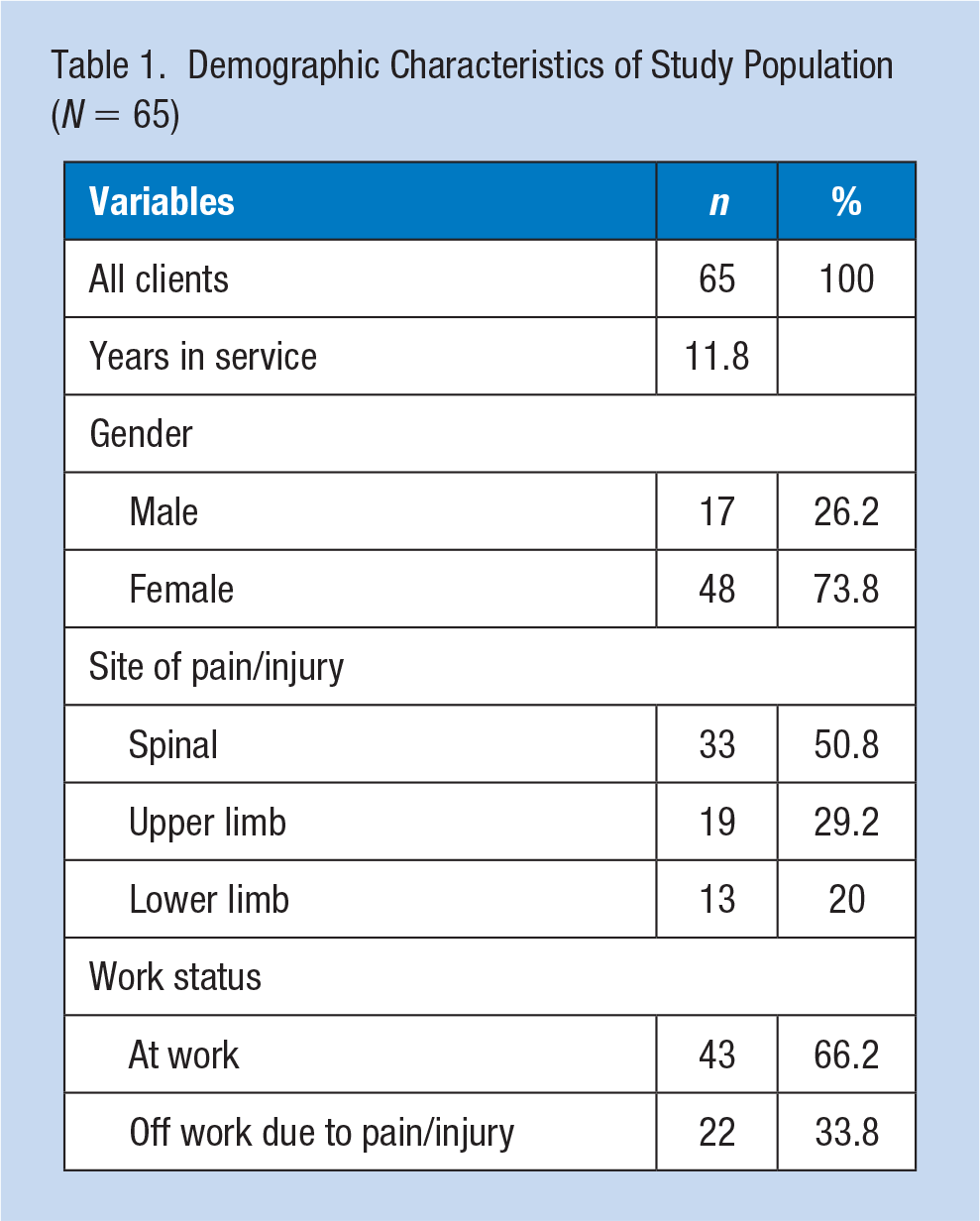
Client characteristics are shown in Table 1. The mean age of clients was 34.9 years, and the mean years of employment were 11.8 years. More females (73.8%) received virtual consultations than males (26.2%). The most common site of pain/injury was reported as spinal (50.8%), followed by upper limb (29.2%), and the least reported site was the lower limb (20%). Of those receiving an occupational health physical therapy virtual consultation, more were at work (66.2%) compared with being off work due to pain/injury (33.8%).
Demographic Characteristics of Study Population (N = 65)
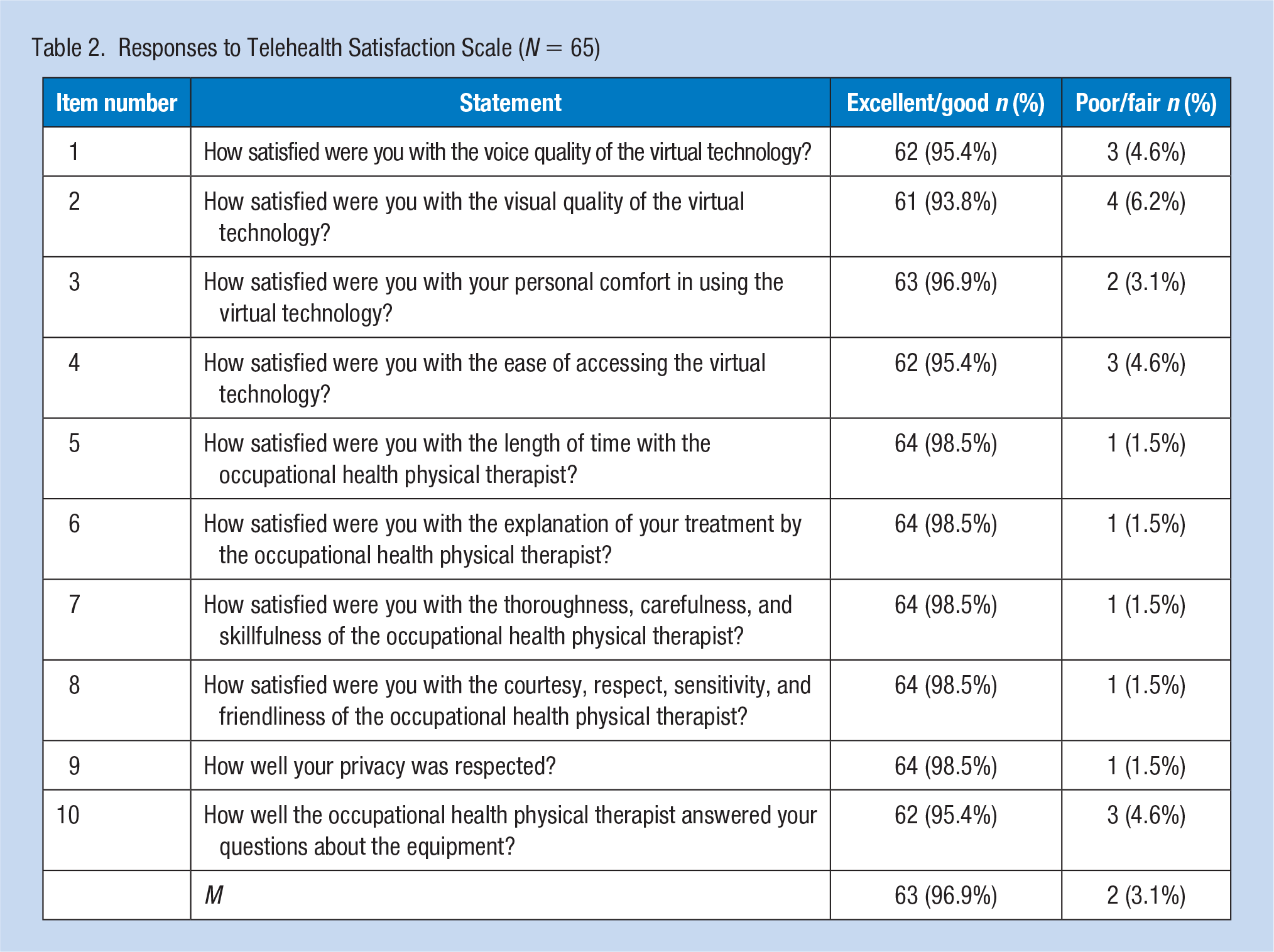
The 10 items in the TeSS are shown in Table 2. Overall, clients expressed a high degree of satisfaction with their virtual occupational health physical therapy consultation (96.9%). The items with the highest scores for satisfaction were length of time with physical therapist (98.5%); explanation of treatment (98.5%); thoroughness, carefulness, and skillfulness (98.5%); courtesy, respect, sensitivity, and friendliness (98.5%); and respect for privacy (98.5%). The items with the lowest scores for satisfaction were visual quality of the virtual technology (6.2%), voice quality of the virtual technology (4.6%), ease of accessing the virtual technology (4.6%), and how well questions about the virtual equipment were answered (4.6%).
Responses to Telehealth Satisfaction Scale (N = 65)
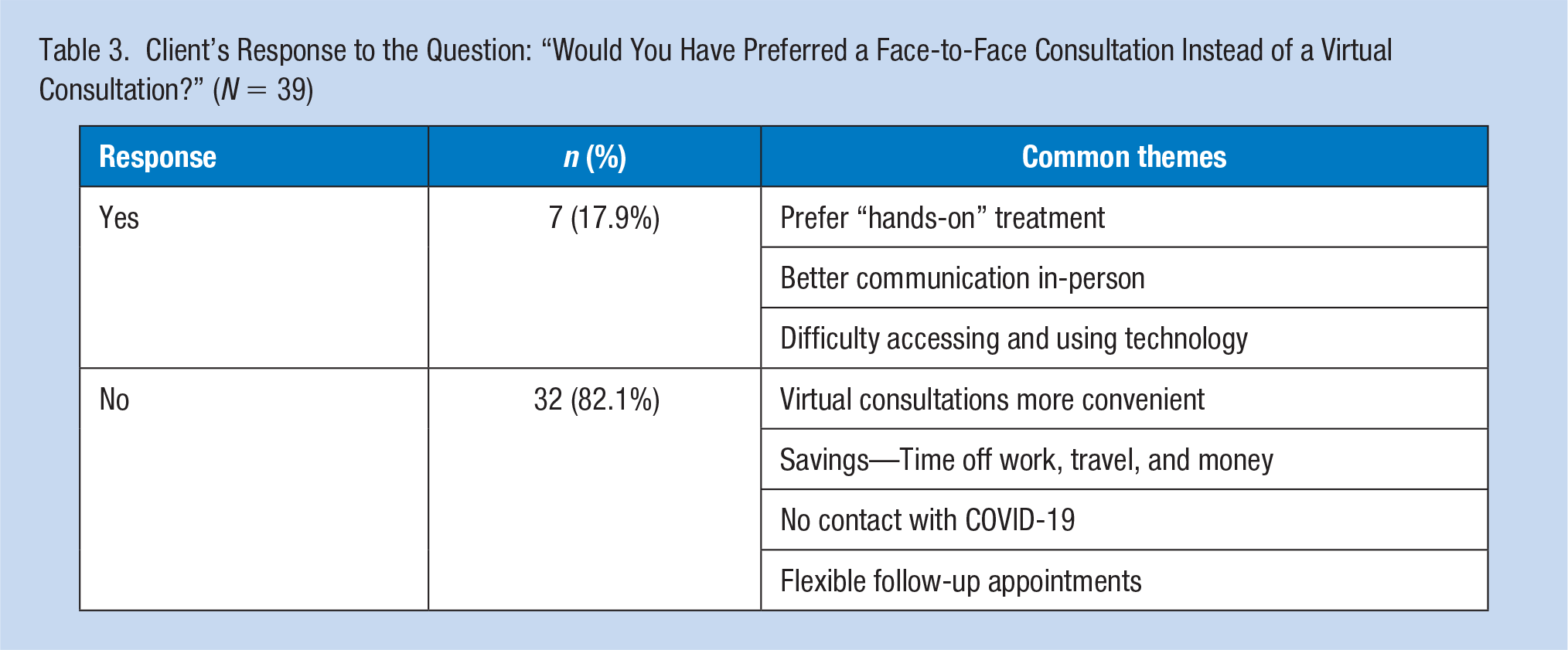
Common themes associated with the question, “Would you have preferred a face-to-face consultation instead of a virtual consultation?” are shown in Table 3. In response to this question, 17.9% of clients stated that they would have preferred face-to-face consultations, while 82.1% said they would have chosen virtual consultations, if given the choice. Of the clients who expressed a preference for face-to-face consultations, the common themes for their choice included preferring “hands-on” treatment, better communication with in-person consultations, and difficulty accessing and using technology. Of the clients who preferred virtual consultations, the common themes expressed were convenience, no cost associated with taking time off work or traveling to the clinic, no contact with COVID-19, and the flexibility of booking follow-up appointments.
Client’s Response to the Question: “Would You Have Preferred a Face-to-Face Consultation Instead of a Virtual Consultation?” (N = 39)
Discussion
Appointments at the occupational health physical therapy clinic were automatically changed from face-to-face consultations to virtual consultations due to the infection prevention measures in place at the time. Prior to the pandemic, virtual consultations had never been offered at the clinic.
This project aimed to determine whether clients were satisfied with their occupational health physical therapy virtual consultations, and whether or not they would have preferred a face-to-face consultation instead of a virtual consultation.
The majority of clients were satisfied with their virtual consultations. The concerns expressed with virtual consultations related to the equipment such as not being able to hear clearly, quality, and access. In the early part of the COVID-19 pandemic, the NHS Trust had to rapidly purchase and implement a new virtual communication system, and many clients were not trained to use the new system and neither was access to the system readily available.
In addition to the high degree of satisfaction, the majority of clients reported that if given a choice, they would have selected a virtual consultation. In spite of the initial reluctance to accept virtual consultations, once clients began to experience the actual conveniences of not having to attend onsite and therefore avoiding unnecessary exposure to COVID-19, they were more willing to accept and adapt to this alternative. This finding is consistent with a previous study early in the pandemic which showed that patients in a rheumatology clinic were willing to accept virtual consultations over face-to-face consultations, especially if they lived further away from the clinic (Cavagna et al., 2021).
The strength of this project is that it is the first to evaluate client satisfaction with virtual consultations within an occupational health physical therapy clinic during the peak of the first wave of the COVID-19 pandemic. A limitation of this project is that client satisfaction with virtual consultations was not measured after social restrictions were lifted in the United Kingdom on July 19, 2021, and therefore, it is unknown how client satisfaction and impressions of virtual consultations may differ after social restrictions were lifted.
Conclusion
In conclusion, this project provided valuable insights into the satisfaction of clients with virtual consultations at an occupational health physical therapy clinic during a pandemic. Post COVID-19 pandemic, virtual consultations in the occupational health physical therapy clinic will continue to be offered as an option to clients who find this mode of care more convenient.
Applications to Professional Practice
Since the start of the COVID-19 pandemic, there have been numerous changes to the way health care is provided worldwide. The pandemic has literally forced healthcare professionals to work in unconventional ways and has encouraged the use of technology. This project has shown that use of virtual consultations has been well received by clients within an occupational health physical therapy clinic and, most importantly, continuity of care was not compromised. The cumulative feedback from clients suggests that the benefits of virtual consultations can be sustained post COVID-19 pandemic as clients have accepted and adapted to this new approach.
Footnotes
Conflict of Interest
The author(s) declared no potential conflicts of interest with respect to the research, authorship, and/or publication of this article.
Funding
The author(s) received no financial support for the research, authorship, and/or publication of this article.

Author Biography
Laran Chetty is a senior physical therapist working in the Occupational Health Department at the Royal Free London NHS Foundation Trust, the United Kingdom. He has worked in the occupational health arena for more than 15 years in corporate and public sectors.