




Abstract
Background: Addiction and mental health (AMH) professionals often experience high levels of burnout, which can lead to detrimental outcomes for patient care and safety and the AMH professional themselves. Interventions aimed at improving well-being can be useful to tackle the issues surrounding burnout. Specifically, implementing activity-based events (ABEs), which encourages individuals to be more physically active, can be useful in improving physical, mental, and social well-being. Alberta Health Services AMH, Edmonton Zone, implemented a Sports Day event to promote well-being as a way to help offset the risk of burnout. Methods: This was an online anonymous cross-sectional, postsurvey evaluation. The postsurvey was administered to 243 AMH staff and physicians who registered for Sports Day. Findings: The responses from 66 AMH staff and physician attendees indicated that individuals were highly satisfied with the event and felt that Sports Day promoted positive mental and physical well-being, helped to develop a sense of community, and strengthened colleague relationships. Conclusions/Application to Professional Practice: The results build on the literature examining the effects of single-day ABEs and can be implemented by health care organizations to promote staff and physician well-being via increased physical activity. Single-day ABEs, like Sports Day, can promote mental, physical, and social well-being. Organizing a sports day event is a feasible way to help offset the risk of burnout and is generally well received by individuals.
Keywords
Background
Health care professionals experience higher rates of burnout compared with the general population (O’Connor, Neff & Pitman, 2018; Shanafelt et al., 2012). For addiction and mental health (AMH) professionals, there are unique stressors that contribute to burnout. Examples of such stressors include work that is emotionally demanding, engaging in challenging interactions with clients and colleagues, receiving violent threats from clients, and having to navigate complicated legal frameworks (Paris & Hoge, 2010; Rössler, 2012). Negative outcomes related to burnout include poor job satisfaction, high staff turnover, increased staff health issues, and lower quality patient care and safety (Acker, 2010; Evans et al., 2006; Hall, Johnson, Watt, Tsipa, & O’Connor, 2016; Morse, Salyers, Rollins, Monroe-DeVita, & Pfahler, 2012; Salyers, Flanagan, Firmin, & Rollins, 2015).
Strategies such as implementing mindfulness interventions, creating workplace exercise and nutritional programs, forming social support groups, and organizing stress management workshops have been used to reduce burnout and improve the well-being of AMH professionals (Brand et al., 2017; Morse et al., 2012; West, Dyrbye, Erwin, & Shanafelt, 2016). In addition, interventions that encourage staff to be physically active at work have been shown to be cost saving and effective in mitigating the negative impact of burnout (Cobiac, Vos, & Barendregt, 2009; Conn, Hafdahl, Cooper, Brown, & Lusk, 2009; To, Chen, Magnussen, & To, 2013). The literature suggests that increasing physical activity levels help to improve physical, mental, and social well-being (Paluska & Schwenk, 2000; Penedo & Dahn, 2005; Ruegsegger & Booth, 2018; Warburton, Nicol, & Bredin, 2006). To increase physical activity in the workplace, health care organizations can implement activity-based events (ABEs), such as intramurals, physical activity clubs, and single-day sporting events. ABEs are popular with organizations because they foster teambuilding and socialization; however, very few evaluations have been reported to determine the effects of single-day ABEs (Artinger et al., 2006).
As few evaluations on single-day ABEs have been conducted, this project aimed to examine the impact of organizing a single-day, AMH Sports Day (Sports Day). The findings were expected to help individuals plan and execute single-day ABEs and provide a framework for health care organizations that seek to promote health and wellness among their staff and physicians to help offset the risk of burnout.
Project/Program Method
An Overview of Alberta Health Services (AHS) AMH, Edmonton Zone (EZ)
Public health care is provided universally to all Alberta residents (approximately 4,252,720 individuals) without direct point-of-service payments through a provincial health insurance program administered by AHS (2017). The province is divided into five administrative health care zones: Calgary Zone, Edmonton Zone, North Zone, South Zone, and Central Zone. AMH is a division within AHS that is present provincially and within each zone. This study focuses on a Sports Day event that was offered only within the EZ.
AHS EZ services around 1,353,653 individuals within the City of Edmonton and surrounding areas such as Evansburg, Leduc, Sherwood Park, and Morinville (AHS, 2017). AHS AMH EZ has several clinical departments including more than 40 outpatient and community clinics and programs, five acute care hospitals, an alcohol and drug detoxification center, and a residential addiction treatment facility. There are about 3,000 AMH staff including nurses, social workers, mental health therapists, and addiction counselors to name a few, and approximately 200 psychiatrists and general practitioners working within AMH clinical programs and sites.
Sports Day Intervention
On September 8, 2018, AHS AMH EZ launched its first free annual Sports Day, which was promoted as a family-friendly event and AMH staff and physicians were encouraged to invite guests to participate in the event. The Sports Day incorporated several activities, including: sport events, laughter yoga, family fun activities, lawn games, live entertainment, a 50/50 draw, food trucks, and a carnival snack stand. The sport events included outdoor volleyball, slow pitch, and soccer games. Laughter yoga was a 30-minute session that took place in the morning to start off Sports Day. Laughter yoga is an activity where one laughs without relying on humor or comedy and laughter is simulated as a body exercise in a group (Shahidi et al., 2011). The Sports Day organizing committee decided to include a laughter yoga event because laughter has been investigated in terms of its ability to decrease negative emotions including stress, anxiety, and depression (Mora-Ripoll, 2010; Papousek & Schulter, 2008; Shahidi et al., 2011). Family activities included horse-cart riding, inflatable jumping castles, and a life-sized inflatable Hungry Hungry Hippo game. Sports Day also had lawn games which included carnival games, bean-bag tosses, horseshoe tosses, and bocce ball. For live entertainment, AMH staff and physicians volunteered to perform throughout the day. Face painters and balloon artists were also hired for the event.
As participating in charitable donations has been shown to promote mental health well-being (Choi & Kim, 2011), a 50/50 fundraising component was included at the event, as well as the opportunity to donate directly to Edmonton’s Mental Health Foundation, which received all funds raised. Two local food truck vendors were present at the event and snow cones, popcorn, and cotton candy were provided at the carnival snack stand.
Data Collection and Analysis
We administered a cross-sectional survey after the intervention for purposes of evaluating the event. An online, anonymous survey was administered through SelectSurvey.NET, an online survey platform. The postsurvey was drafted by the study team and circulated among members of the Sports Day organizing committee for feedback. Once the feedback was incorporated into subsequent drafts, five AMH staff who were not on the committee were asked to provide their feedback and the survey was then finalized.
The postsurvey was administered to AMH staff and physicians who registered to attend Sports Day (n = 243), who were asked to complete it 1 week after the event. All 243 registered AMH staff and physicians were invited to complete the postsurvey regardless of whether they attended the event. Only the responses of individuals who attended the event were analyzed for this study, while those who did not attend were asked why not, which was used for planning future Sports Day events. The postsurvey took less than 10 minutes to complete and no incentives were offered to the survey respondents.
In a “select all that apply” question, attendees were asked why they decided to attend Sports Day. The response options for this question were as follows: “it was a fundraising event,” “the activities,” “spending time with family, friends, and colleagues,” and “other” where individuals could specify their reason for attending.
Individuals were also asked to rate their level of satisfaction for (a) Sports Day overall, (b) the laughter yoga event, (c) the sport events, (d) the lawn games, (e) the family activities, and (f) volunteering at Sports Day. Response options for these questions included “very satisfied,” “satisfied,” “neutral,” “dissatisfied,” and “very dissatisfied.” There was also a “not applicable” option if the attendee did not participate in an activity. The “very satisfied” and “satisfied” responses were collapsed into a single “satisfied” category and “strongly dissatisfied” and “dissatisfied” responses were collapsed into a single “dissatisfied” category for analysis.
Finally, individuals were asked to rate their level of agreement with the perceived well-being benefits of Sports Day. This included asking individuals if they felt that Sports Day (a) helped to promote positive mental health, (b) helped to promote positive physical health, (c) helped to promote a sense of community within AMH, (d) helped to develop new social relationships with individuals outside of immediate working circle, and (e) helped to strengthen/build on social relationships with colleagues. Response options for these questions included “strongly agree,” “agree,” “neutral,” “disagree,” and “strongly disagree.” The “strongly agree” and “agree” responses were collapsed into a single “agree” category and “strongly disagree” and “disagree” responses were collapsed into a single “disagree” category for analysis.
Postsurvey Sports Day attendee responses were analyzed using Microsoft Office Excel and are presented as descriptive statistics.
Findings
An online registration system recorded 522 individuals who preregistered for Sports Day, which consisted of 243 AMH staff and physicians (46.6%) and 279 guests (53.4%). On Sports Day, a total of 202 individuals attended the event, 20 of whom registered on the date of the event. Of the 202 Sports Day attendees, 120 were AMH staff (59.4%), which included 12 physicians, and 82 were guests (40.6%). Of the 120 AMH staff and physicians who attended Sports Day, more than half completed the postsurvey (55.0%, n = 66).
Table 1 shows the demographic information of the postsurvey respondents who attended Sports Day (n = 66). The most common demographic results were as follows: the majority identified as female (65.2%), between 35 and 44 years of age (36.4%), were part of a management team (36.4%) and had worked with AHS between 11 and 19 years (32.3%).
Demographic Information Sports Day Attendees that Completed the Postevent Survey (n = 66)
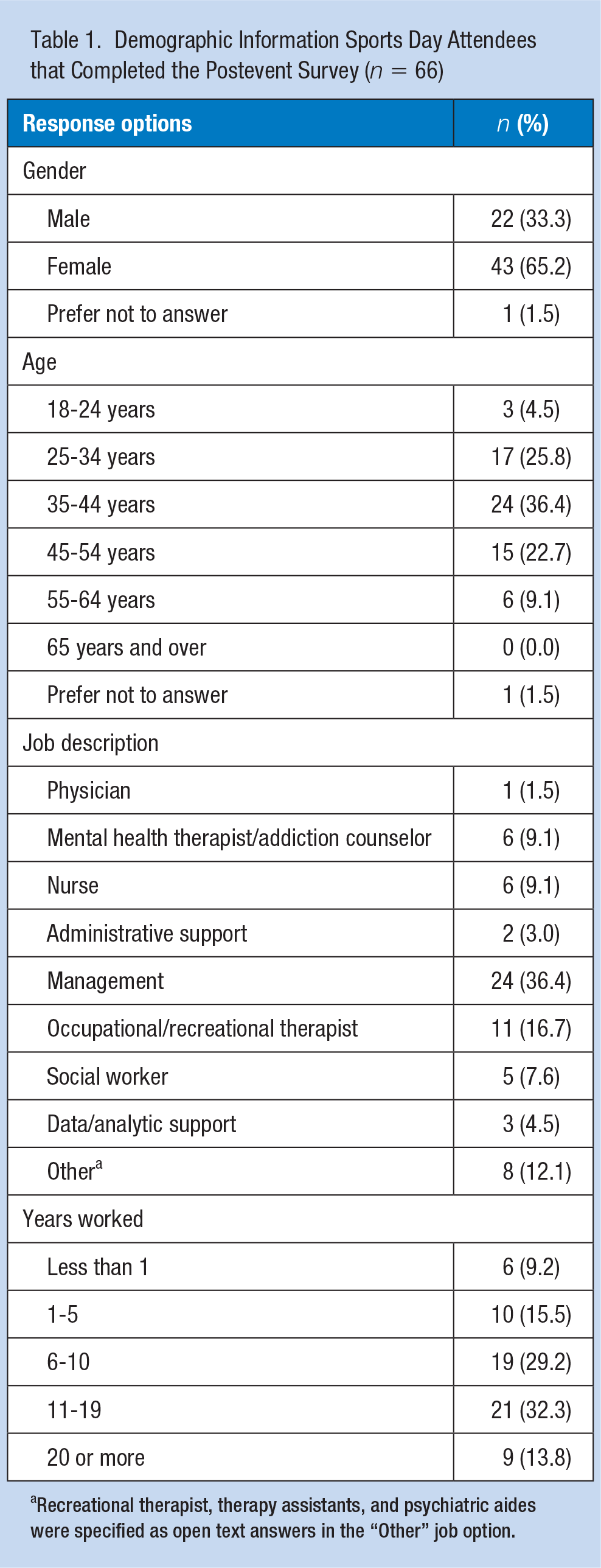
Recreational therapist, therapy assistants, and psychiatric aides were specified as open text answers in the “Other” job option.
In all, 50 respondents shared why they attended Sports Day, and the majority (78.0%) reported that they attended to spend time with family, friends, and colleagues (Figure 1). Almost half of the respondents (46.0%) indicated that they attended because of the activities offered at the event, whereas more than one third of respondents (36.0%) stated they attended because the Sports Day had a fundraiser component. Some of the other reasons for attending (20.0%) included “supporting and boosting staff morale,” “networking,” and “volunteering.”
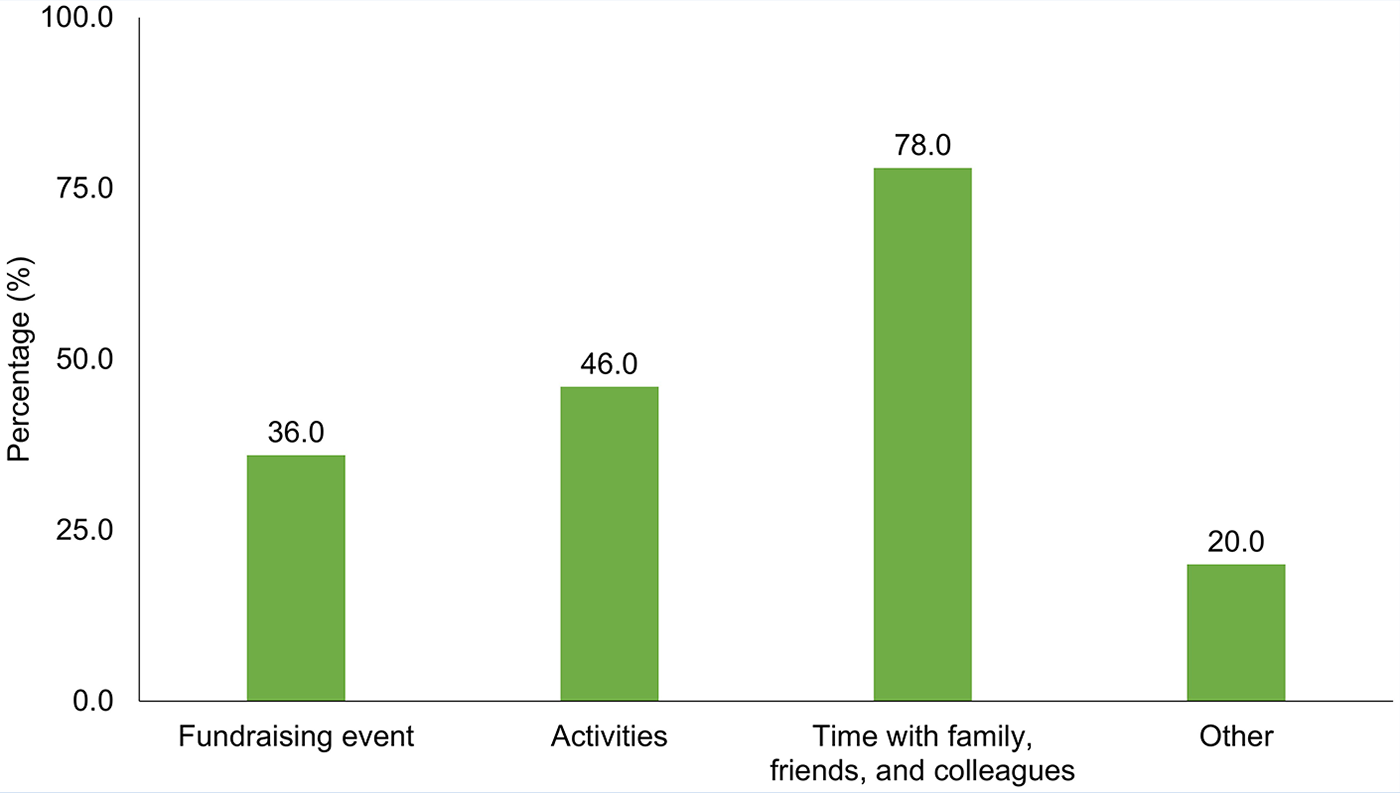
AMH staff and physician response to why they attended Sports Day (n = 50).
Figure 2 illustrates the distribution of AMH staff and physician satisfaction with the Sports Day event. The majority (95.2%) reported that they were satisfied with the Sports Day overall, with a satisfaction level that exceeded 80% for almost every Sports Day activity, with the exception of the laughter yoga (45.8%). Respondents who attended and volunteered at the Sports Day reported high satisfaction with their volunteering experience (84.0%).
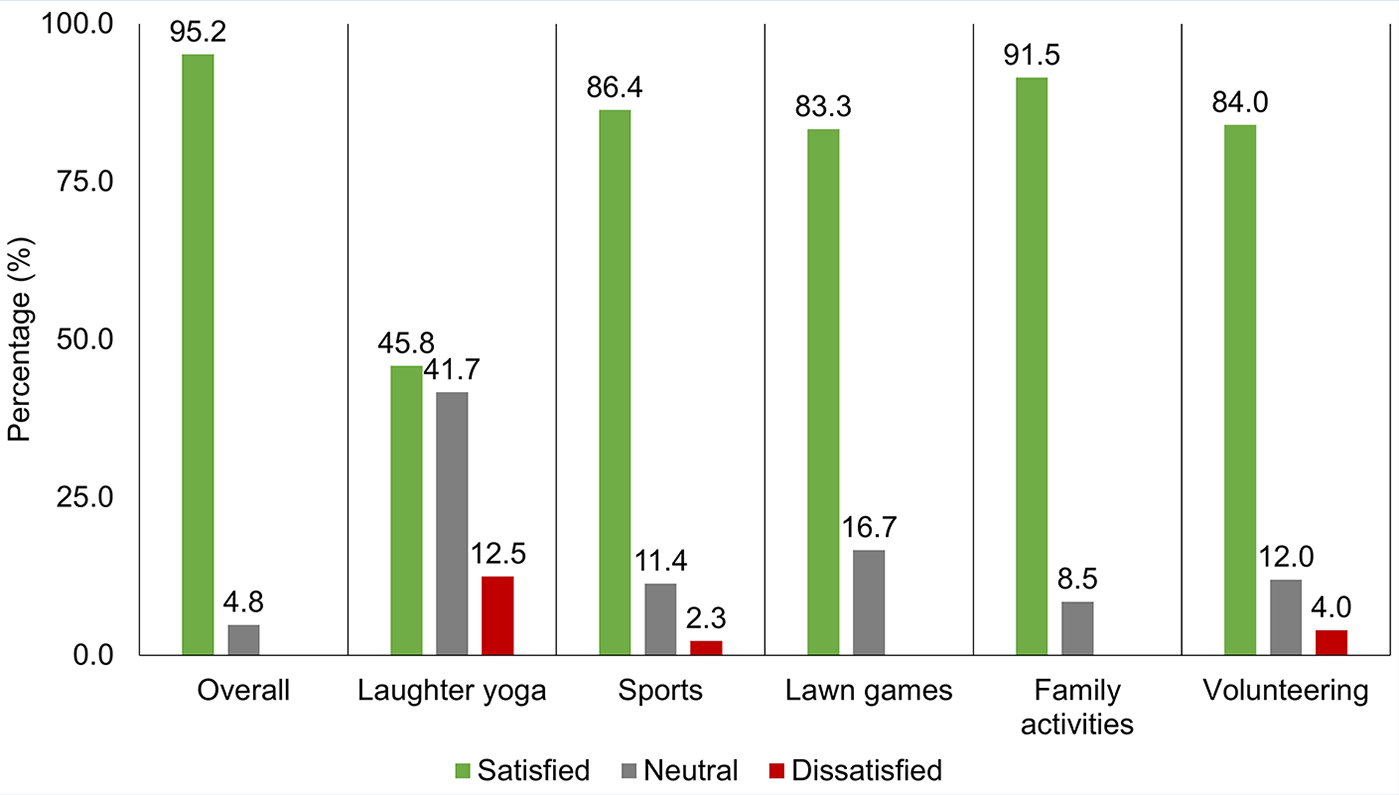
AMH staff and physician satisfaction with Sports Day.
The perceived health and social benefits of the Sports Day are displayed in Figure 3. Individuals reported that the Sports Day promoted positive both mental health well-being (93.5%) and physical health well-being (98.4%). They also agreed that the event helped to promote a sense of community (96.7%) and built on existing relationships with colleagues (85.5%). However, there was less agreement that the Sports Day helped individuals to develop new social relationships with colleagues outside of their immediate working circle (67.2%).
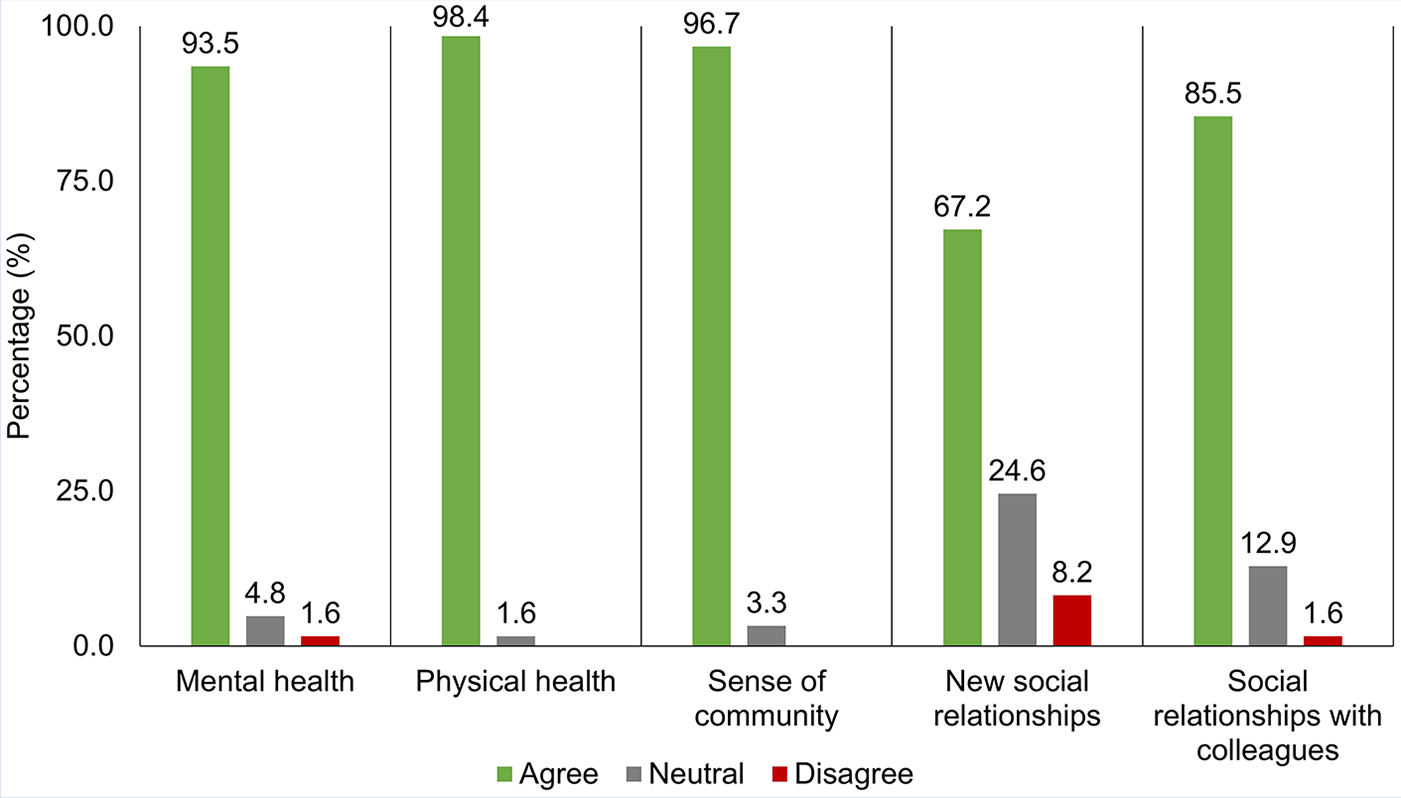
AMH staff and physician perception of the benefits of attending Sports Day.
Discussion
To our knowledge, this study is the first in Canada to examine the satisfaction of a single-day ABE and the perceived benefits of a sports day event as a way to promote well-being among AMH staff and physicians. Based on the findings, the attendees were highly satisfied with the activities offered. Furthermore, it was perceived that the event helped to promote positive mental and physical well-being, contributed to developing a sense of community in the workplace, and strengthened colleague relationships.
Interestingly, participating in physical activities at the Sports Day was not the primary reason why individuals decided to attend the event. Most individuals reported that they did so to spend time with friends, family, and colleagues. It is not surprising then, that individuals perceived that the Sports Day promoted social benefits such as creating a sense of community and building on existing relationships with colleagues. There is evidence to suggest that individuals participate in physical activity events because these events help to create a social support network (Allender, Cowburn, & Foster, 2006). The implication is that health care organizations should be promoting single-day ABEs as a social event, rather than an event where people can be physically active. This could potentially encourage more individuals to attend the event and increase the likelihood that attendees will engage in physical activity and perhaps engage in long-term physical activity.
Most of the attendees were satisfied with the event overall. However, less than half of laughter yoga participants were satisfied with laughter yoga. This may be due to the activity not requiring an extensive physical skill set to participate. Argyle (2003) suggested that activities that are group-based and which require a greater set of physical skills to participate, lend physically active individuals to rate themselves as happier, which may explain the observed response rate. Other possible reasons for the low-reported satisfaction of laughter yoga could include the limited availability of the activity (i.e., it was only offered once), the perceived awkwardness of laughter yoga, the time of day it was offered (i.e., early in the morning), few responses to the question, and possible indifference about the activity. Nonetheless, health care organizations that are planning to organize ABEs should focus on activities that promote group socialization to help encourage individuals to participate in physical activity.
There are several limitations of this study that need to be addressed. The AHS AMH EZ had approximately 3,200 staff, which suggests that this study represents a small sample. As such, our findings may not reflect the majority opinion of AMH staff and physicians. The respondents may have been biased in rating the event more positively because they were more engaged with work-related events or favor participating in physical activity. Second, this study did not demonstrate a causal relationship between a single-day Sports Day event and an increase in mental and physical well-being or socialization. Rather, individuals perceived that the Sports Day helped to promote these aspects of well-being. Finally, this study did not collect preevent staff perception data of Sports Day. As such, a baseline was not established, and changes in perception cannot be determined. It is possible that individuals who attended the event already believed that the Sports Day would promote positive mental, physical, and social well-being.
Despite these limitations, there are important implications to share. First, this work adds to the limited body of literature on single-day ABEs. Most literature tends to focus on ABEs that last several days. In addition, the results may help decision makers support spending decisions regarding future ABEs. Wellness programs, which commonly include physical activity initiatives, tend to generate savings from reduced staff medical costs and absenteeism (Baicker, Cutler, & Song, 2010). Investing in ABEs, such as a Sports Day, can provide a means to promote a more positive workplace culture that values improving mental, physical, and social well-being for staff. There are of course challenges with implementing ABEs, which can include resource constraints, low implementation priority, and a lack of policy or leadership in promoting physical activity (Bailey, Coller, & Porter, 2018). As such, organizational leadership will need to overcome these barriers to successfully create organizational change toward wellness in the workplace.
Individuals evaluating the impact of single-day ABEs can build on this work in several ways. In considering the EZ, it would be useful to examine the current level of burnout among AMH staff and physicians to determine if this particular intervention helps to reduce burnout. This could be achieved by using validated scales that measure burnout and the different facets of well-being. It is also important to determine the long-term effects of single-day ABEs. For instance, understanding how well-being and levels of burnout are influenced by the number of Sports Day iterations and the number of years people attend them, will help to characterize the event’s long-term effects.
Conclusion
AMH professionals often experience higher levels of burnout due to the challenging nature of their work. Burnout negatively impacts patient care and safety and the AMH professional themselves. Several strategies have been used to reduce burnout and improve the well-being of AMH professionals. Increasing physical activity levels by implementing ABEs can be a feasible strategy to improve staff and physician well-being, which in turn can help to offset the risk of burnout. This article described the creation of an annual AHS AMH EZ Sports Day event and reports on attendee postevent survey results. Sports Day was well received by AMH staff and physicians and was perceived to promote various aspects of an individual’s well-being, including mental, physical, and social well-being. If an organizational goal is to promote staff well-being to reduce the risk of staff burnout, leadership and management teams should consider investing in and supporting ABEs, like Sports Day.
Applications to Professional Practice
AHS AMH, EZ recently organized an annual, single-day Sports Day event to promote different facets of staff well-being to offset the risk of burnout. Postsurvey responses from the Sports Day attendees suggested high event satisfaction and favorable perceptions that Sports Day promoted physical and mental well-being and strengthened colleague relationships. This work contributes to the literature examining the effects of single-day ABEs and health care organization can use these findings to justify spending decisions for events aimed at improving staff and physician well-being. Given the negative impact on patient care and safety and on AMH staff and physicians themselves as a result of burnout, organizing a Sports Day event is a feasible way to help offset the risk of burnout and is generally well received. Leadership and management teams should consider implementing single-day ABEs, like a Sports Day, to promote various facets of staff well-being.
Footnotes
Acknowledgements
The authors would like to thank the Mental Health Foundation for event sponsorship, the Sports Day Organization Committee, April Gusnowski, Kacy Doucet, and Benjamin Sperling.
Authors’ Contribution
W.V. contributed to the data collection, data analysis and interpretation, and drafting the article. D.L., J.K., D.H., E.B., and V.I.O.A. contributed to the conception and design of the work, data collection, and critical revision of the article. All Authors provided final approval of the version to be published.
Conflict of Interest
The author(s) declared no potential conflicts of interest with respect to the research, authorship, and/or publication of this article.
Funding
The author(s) received no financial support for the research, authorship, and/or publication of this article.

Authors Biographies
Wesley Vuong, MPH, is a research and evaluation coordinator with Alberta Health Services Addiction and Mental Health, Edmonton Zone.
Denise Ledi, MA, is a program manager with Alberta Health Services, Addiction and Mental Health, Edmonton Zone.
Jill Kelland, BA, MSc, is the director of Young Adult and Cross Level Services with Alberta Health Services, Addiction and Mental Health, Edmonton Zone.
DeAnn Hunter, BA Hon., MBA, is a director with Alberta Health Services Addiction and Mental Health, Edmonton Zone.
Ernie Boffa, MD, FRCPC, is a clinical assistant professor at the Department of Psychiatry, University of Alberta and the lead psychiatrist for Alberta Health Services’ Edmonton Zone Assertive Community Treatment Team.
Vincent I. O. Agyapong, MD, FRCPC, PhD, is a clinical professor at the Department of Psychiatry, University of Alberta and the Alberta Health Services’ Edmonton Zone clinical section chief for Community Mental Health.