




Abstract
Occupational health nursing has evolved since the late 19th century and, with the inclusion of advanced practice nursing, has become essential to the health and safety of workers. A key component of the knowledge required of advanced practice occupational health nurses is an understanding of what it means for workers to be fit for duty. The definition or concept of being fit for duty varies depending on the point-of-view of the health care provider. Health care providers across all professions must have a consistent understanding of what it means to be fit for duty. Literature shows that professions and specialties that often collaborate have varying ideas about what it means to be fit for duty. These differences highlight the need for a consistent concept that can be used across professions, is holistic, and incorporates other concepts critical to all points of view. To better understand fit for duty, a concept analysis, using the Walker and Avant framework, focused on the concept of occupational functionality (OF). Occupational functionality is best defined as the qualities of being suited to serve an occupational purpose efficiently and effectively within the physical, occupational, environmental, and psychological demands of a unique work setting. This concept analysis offers an initial step in understanding fit for duty and gives health care providers a concept that can be used across disciplines.
Keywords
Occupational health is defined as the process of identifying and controlling risks that arise from physical, chemical, or other hazards to establish and maintain a safe working environment (National Institute of Health, 2014). According to the American Association of Occupational Health Nursing (2014), occupational health nursing has evolved from its initial focus of direct care to Pennsylvania coal miners and their families to the tasks of the modern-day occupational health nurse that range from direct care to risk and hazard assessments, case management, counseling, crisis management, health promotion, and regulatory compliance. Given the inclusion of advanced practice nurses in the field of occupational health and safety, the role of assessing both healthy and injured workers has become even more commonplace and complex simultaneously. Occupational health and safety is no longer limited to assessing injured workers for disability or return to work but also involves assessing healthy workers to ensure their fitness for performing a specific job or task safely.
A key component of the knowledge required of advanced practice occupational health nurses is determining whether a worker is fit for duty. The idea of a worker being fit for duty can be best understood by defining the concept of occupational functionality (OF). The purpose of this article is to provide a concept analysis of OF using the Walker and Avant approach to create a clear definition that will address the needs of advanced practice occupational health nurses.
Background
Historically, the fitness of workers to perform specific jobs or tasks has had limited definition. The World Health Organization (WHO) established the International Classification of Functioning, Disability and Health (ICF) to create a framework and common language to both better measure and communicate health and disability (Centers for Disease Control and Prevention, 2012). The ICF model conceptualized functioning and disability within four domains: body functions, body structures, activities and participation, and environmental factors (Table 1; Centers for Disease Control and Prevention, 2012; WHO, 2014).
ICF Domains and Components
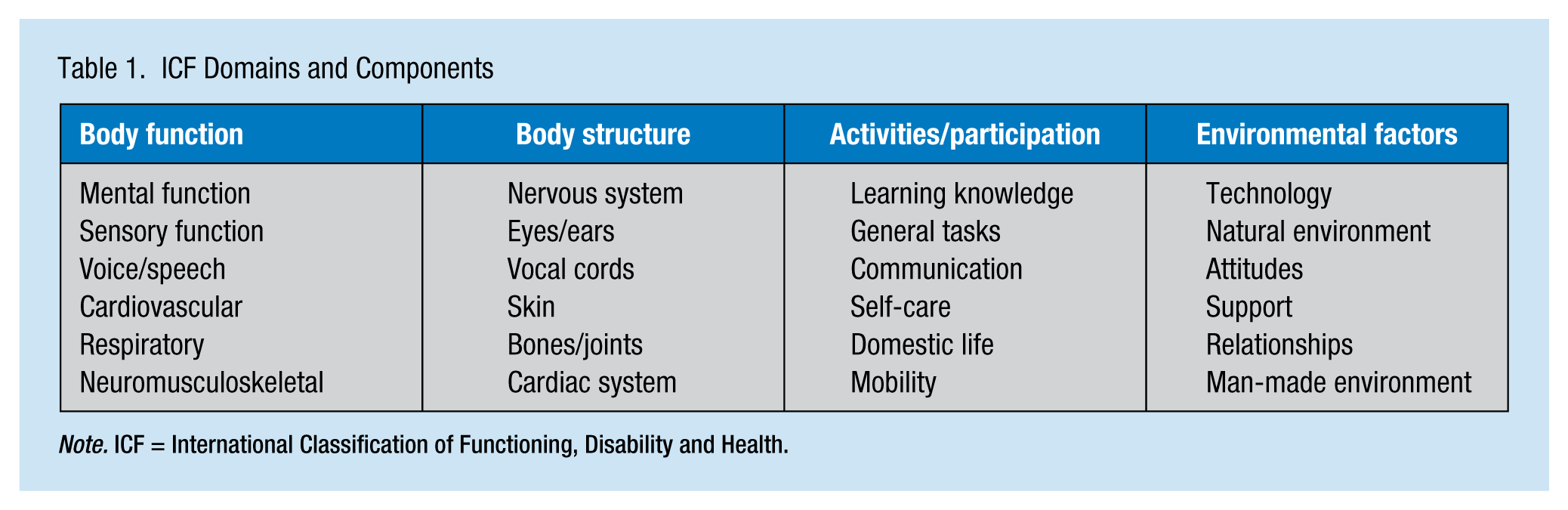
Note. ICF = International Classification of Functioning, Disability and Health.
The ICF model is the gold standard for assessment of workers’ function and disability. The model provides a framework to guide functional assessment, but the model has limitations. The four domains are open-ended and may be defined differently depending on the situation or professionals involved. Evaluation of mobility by an orthopedist may define mobility as a part of body structure. In contrast, an occupational therapist may define mobility as part of bodily function whereas a community-based registered nurse may define mobility as part of daily activities and participation as mobility is defined by the WHO (2014).
Some of the ICF definitions are limited. Using the ICF definition, environment is either a barrier or a facilitator. This definition does not take into account that the environment may be a barrier for some workers and for some occupational groups but a facilitator for others. If an electrician is being treated for trigger finger, she may be told to add thicker handles to her equipment to decrease the flexion needed to grasp which will alleviate some pain and possibly prevent recurrence. This example demonstrates how the environment can facilitate recovery and future health. However, if a worker uses small instruments in confined spaces, the increased handle size may decrease the worker’s ability to perform the required tasks effectively. For this electrician, the change in handle thickness may be both a barrier and a facilitator. These conflicting definitions may create a significant problem as professionals from multiple disciplines care for specific workers. Using the example above, the hand specialist may prescribe increased grip size but the occupational therapist assisting the worker on specific job tasks may realize increasing grip size is not possible due to the electrician’s work. Therefore, the ICF model does not translate accurately across disciplines, although it has been an effective framework for creating common language within a single profession (e.g., physical therapy; Jette, 2006). As occupational health and safety evolves and the occupational health team includes registered nurses, physicians, advanced practice nurses, occupational therapists, and physical therapists, a common definition of OF is needed that will provide a foundation for all specialties.
Occupation is defined as an activity in which one engages that is meaningful and central to one’s identity (O’Brien, Hussey, & Sbonis-Chafee, 2012). According to the British and World Dictionary (2015), functionality is defined as “the quality of being suited to serve a purpose well.” These two definitions show that an occupation is any activity that contributes to the worker’s identify even if compensation is not present, and occupational health nurses should not simply assess the worker’s physical ability to engage in the activity, but rather assess the worker holistically to determine whether the worker is well suited to the work. The purpose of this article is to document a concept analysis of OF, assess current gaps in the literature, and create a clear definition of OF that is both holistic and multidisciplinary for consistency across occupational health providers, teams, and clinics.
Method
Consistency is essential when health care providers work together; health care teams must define the key concepts of care similarly to facilitate communication. The process of understanding a concept from different perspectives is difficult. A concept analysis can clarify a concept across specialties and create consistency. Although there are several ways to analyze a concept, the Walker and Avant framework was chosen for this concept analysis because it provides a stepwise approach.
The benefit of employing this framework is that it assists the author in developing the true purpose of the target concept by defining the key attributes and characteristics of the concept. By using concept characteristics, model cases can be created to illustrate the use of the concept. The antecedents are critical to understanding the concept as are expected consequences or outcomes that may define the appropriateness and implications of using the concept. These sttif culminate in empirical referents, which guide how the concept will be used in the future.
Literature Review
A literature search was completed using two databases: PubMed and CINAHL. The initial strategy for this search used the phrase occupational functionality in English only and published in peer-reviewed journals, but yielded no articles. After this initial search, the search was expanded to include those articles published within the last 25 years and keywords were expanded to include the phrases occupational function and occupational performance. Search terms or phrases included combinations of one term from two separate categories: (a) occupational, occupation or physical, and (b) functionality, function or performance. After the terms were adjusted, the search yielded 265 articles.
The article abstracts were reviewed, and 54 articles were identified relating to occupational health and some variation of function or performance. The remaining 211 articles were removed because they were not related to function or performance within occupational health. The articles selected based on the abstract (n = 54) were reviewed in their entirety to confirm that they addressed or defined the concept of function or functionality from the physical, psychological, or environmental perspective within an occupational setting or population. Thirty-six of the full articles reviewed failed to meet the criteria and were removed leaving 18 articles that met the criteria and were used for this concept analysis.
The references for the selected articles were reviewed for additional publications that could be included in the review. As a result, three additional publications were reviewed. This literature search resulted in publications from occupational therapy, physical therapy, psychology, and physical medicine. Only one nursing publication met search criteria. The literature search was suspended when it reached saturation, and no new relevant publications were found.
Results
The concept of OF as described in this article is not currently used in published literature. However, components of the concept have been published. These articles provided the basis for the final definition of OF. Because OF has not been defined in the past, understanding the uses and purpose of individual terms was the first step in clarifying the concept.
The most relevant definition of the term occupation is “activity that constitutes the social contribution one makes, for which some sort of compensation may generally be received” (Stedman’s Medical Dictionary, 2005, p. 1184). It is important to note that occupation need not be a formal job, but rather a contribution to society that may or may not involve compensation. An example of this definition might be an individual who travels on a mission trip across the country twice a year. Serving on a mission trip may not be the individual’s career or job, but it can and should be seen as an occupation or as taking place in an occupational setting. The most relevant use of the term occupational health care is by the National Institutes of Health (2014) when it described health care in the work setting.
The literature search identified the use of functioning in several different ways resulting in inconsistent use of the term across professions, and the different uses of functioning may derive from differences in core definitions (Kielhofner, 1985; Smee, Anson, Waddington, & Berry, 2012; Sun, Lu, & Kosbreg, 2013; Trombly, 1993; Ustun et al., 2010). Examples of variations in the use of function are as follows:
The ability to perform self-care and activities of daily living (ADLs) in the elderly (Smee et al., 2012);
Physical and cognitive ability to assess for disability (Ustun et al., 2010);
Successful interactions between individuals and their environment as an assessment for occupational function (Kielhofner, 1985);
The ability to perform daily tasks in chronic conditions (Sun et al., 2013); and
The sense of satisfaction and understanding of different roles as a measurement for psychological function in the occupational setting (Trombly, 1993).
These definitions and other examples are listed in Table 2.
Varying Concepts, Uses, and Definitions
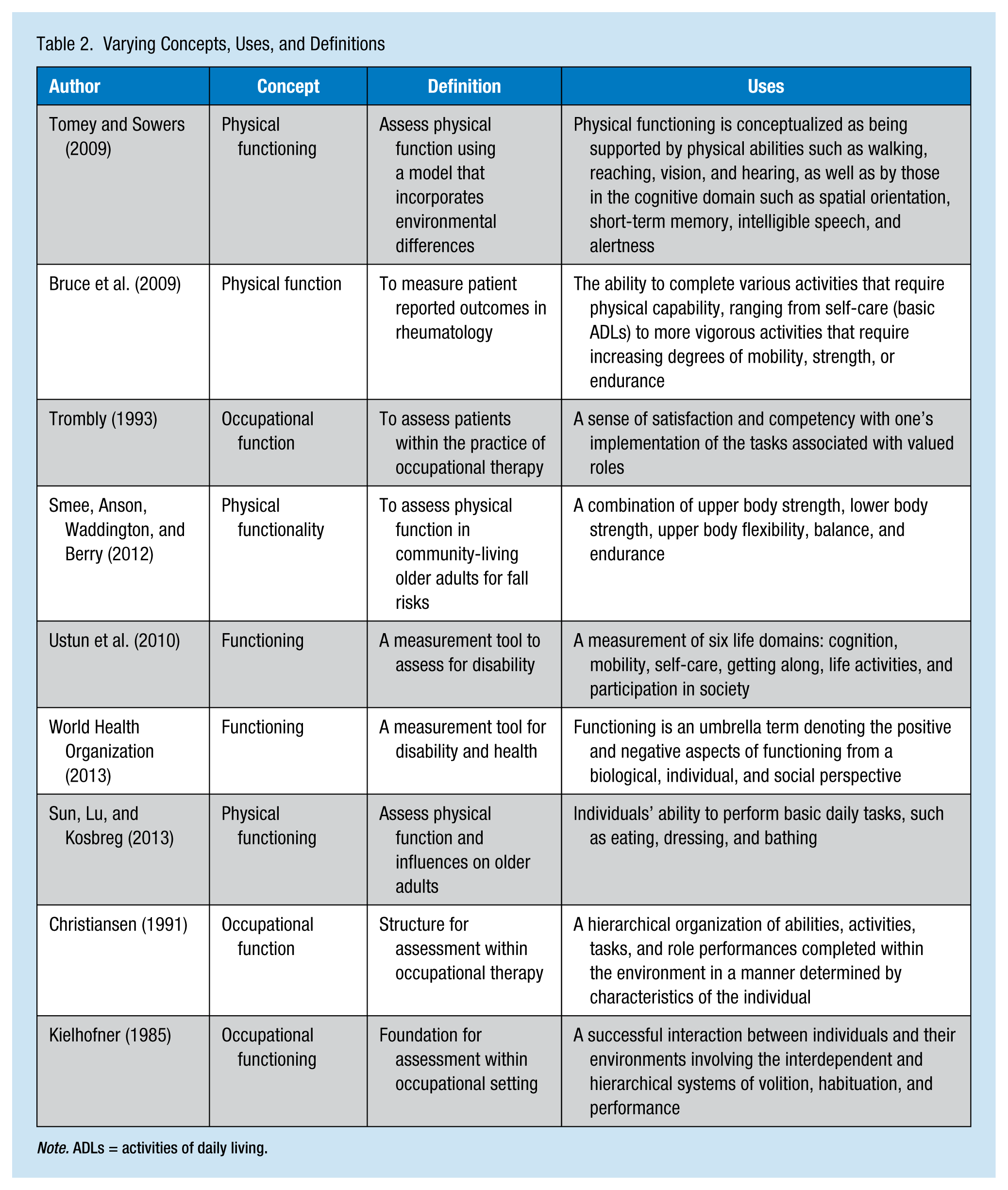
Note. ADLs = activities of daily living.
The terms function or functioning have been inconsistently defined and historically used as measures of performance or ability to perform. The measures vary in their method and foundation, which contributes to their diverse use across professions or studies. These variances support the need for creating a uniform process to evaluate individuals as healthy, injured, or recovering in relation to their ability to perform in an occupational setting by including the physical, environmental, occupational, and psychological aspects of the workplace.
Defining Attributes
Defining attributes are critical characteristics related to all uses of the concept and that differentiate it from other concepts that may be similar in nature (Walker & Avant, 2011). By assessing previous uses of the concepts occupational and physical function, the key attributes used across all definitions were identified and became the foundation for the defining attributes of OF. Occupational functionality is a holistic, multidisciplinary concept that encompasses four separate and overlapping defining attributes of OF: physical, occupational, environmental, and psychological. These attributes are required for the concept of OF to be used effectively.
The first attribute is the physical component of OF, which contributes to an understanding of how the body of the worker is an integral part of understanding workers’ ability, whether healthy, injured, or recovered, to be functional at their jobs. This attribute takes into account any aspect of the physical body (e.g., acute injury, chronic health condition, range of motion, strength) that may affect the worker (Centers for Disease Control and Prevention, 2012).
The second attribute of OF is the occupational component, which is used to understand specific physical and mental requirements and limitations of workers in unique settings (Njelesani, Tang, Jonsson, & Polatajko, 2012). This attribute is required to understand that an individual may have a disability, but how the disability is assessed within the worker’s unique occupational setting is the only way to determine whether the worker is functional. It is crucial to refrain from assuming that a healthy worker can safely do a job or a worker with a disability cannot.
The environmental component is the third attribute and was best described by Tomey and Sowers (2009) as the process of understanding the interaction between the worker and the work environment. This attribute assesses the environment as an ever-changing variable. The environment of the factory or office is not the only environment of concern; this attribute takes into account every environment that workers encounter (e.g., the car ride to work, the walk across campus, or the clothing needed for the job).
The fourth attribute is the psychological component of occupational function. Psychiatric evaluation is critical to defining an individual’s work ability or fitness for duty (Hannula, Lahtela, Jarvikoski, Salminen, & Makela, 2006); the worker’s state of mind is crucial and should not be ignored. The psychological aspect of work is often missing from occupational health evaluation scales when assessing fitness for duty, and yet this aspect is essential to understanding OF. Historically, the psychological component of occupations has focused primarily on job stress, but this component is more complex. This attribute emphasizes not just stress but also posttraumatic stress disorder, job desire, enjoyment, satisfaction, efficacy, and sense of worth.
These four attributes are what truly define OF as a concept and set it apart from concepts in the current literature. It is at the intersection of the four attributes that the concept can best be defined. These four components are critical to each other, and, even though they are independent attributes, they are dependent on each other for concept definition. Attribute overlap illustrates that OF is fluid and ever-changing. Occupational functionality may differ for each worker based on individual situations. The concept of OF will also change over time for individual workers. The area of overlap may also change over time for individual workers based on the unique status of their physical, occupational, environmental, and psychological domains. This concept is illustrated in Figure 1 (Combs, 2015).
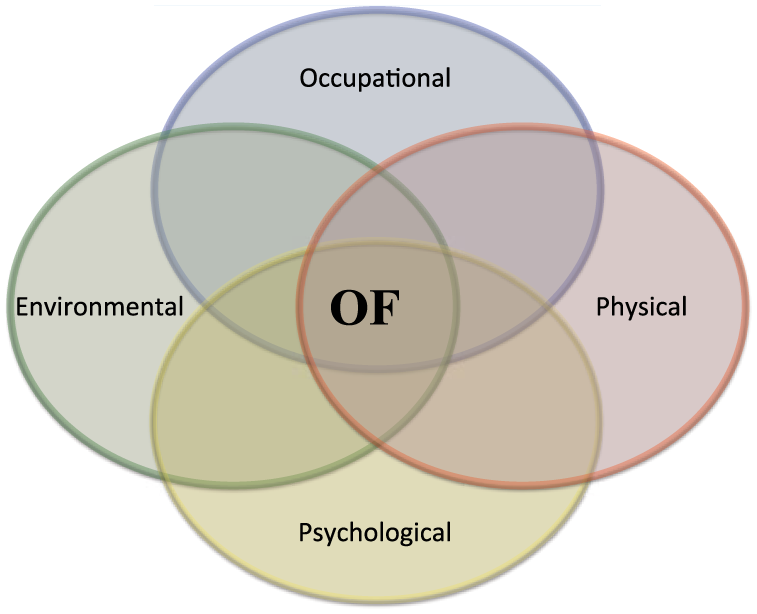
The concept of OF.
Antecedents and Consequences
Antecedents are events that must occur or knowledge that must be present for the concept to occur or be used (Walker & Avant, 2011). Four main antecedents must be in evidence before OF can be understood:
The specific job characteristics and setting of the worker (e.g., construction worker who lifts heavy tools above his head);
Current state of worker’s health (e.g., a female worker with hypertension, diabetes, and a history of right shoulder surgery);
Current worker mind-set (e.g., a male worker who has less motivation and self-efficacy related to his profession); and
Current setting in which the concept is being used (e.g., a worker being evaluated via a new hire physical examination for work clearance).
Walker and Avant (2011) explained consequences as the end result of the concept being used. Three consequences may occur as a result of OF:
Better understanding of specific job risks for a worker (e.g., a female worker who has had shoulder surgery will have increased risk for injury if she is placed in a job that requires lifting items over her head);
Specialized rehabilitation plan for injured workers to return to work (e.g., creating a rehabilitation program based on the injury that occurred and the stressors expected related to occupational and environmental settings);
Specialized job assignment based on new knowledge (e.g., placing a new hire in a position that does not require excessive squatting or lifting with the legs due to the worker having less range of motion and strength than the expected requirements of those particular tasks).
Application to Occupational Health Nursing
The model case
A model case is an example of the analyzed concept used in an ideal, perfect setting or otherwise defined as an exemplar case that incorporates all of the defining attributes of the concept (Walker & Avant, 2011). A model case provides a visual of the concept to clarify its use.
A 54-year-old long-haul truck driver, a worker with 28 years of driving experience, presents at a clinic to be evaluated after a severe occupational motor vehicle crash (MVC), his first. He is recovering from right shoulder surgery and a left femur fracture; he has been off work for 6 months. The occupational health nurse practitioner first evaluated the driver’s range of motion and strength, paying close attention to the right upper and left lower extremities. The physical examination showed no abnormal findings, and the worker appeared to have full range of motion and strength bilaterally in the upper and lower extremities. The nurse practitioner then assessed the driver’s workplace by discussing his job requirements. She discovered that he is required to lift large chains above shoulder height. The nurse practitioner, by asking additional questions about the environmental component of his OF, discovered that he sletif in the bed in the cab of his truck, making it difficult for him to position his shoulder at night and sleep well. He stated that he sometimes awakens with shoulder stiffness. Finally, the nurse practitioner used a psychological assessment tool to evaluate his post-MVC work stress, posttraumatic stress, and self-efficacy. This assessment was within normal limits. Based on the assessment, the nurse practitioner recommended a unique strength training program to prepare the worker to lift items above shoulder height, prescribed medication to prevent inflammation from work, and educated the worker about positioning his shoulder for the night to improve sleep quality and prevent morning stiffness.
This is an excellent model case about OF because it incorporates all four of the domains defined above to assess this worker based on the unique and overarching factors related to his injuries and occupation. The antecedents and consequences are well illustrated, and all attributes critical to the concept are included.
Borderline case
The borderline case is similar to the model case, but only a portion of the defining attributes of the concept are included (Walker & Avant, 2011).
An occupational health nurse practitioner evaluated a newly hired female worker’s fitness to be a mail carrier. The nurse practitioner used the conceptual model, Physical Functioning Assessment in Your Environment (Tomey & Sowers, 2009), as the assessment framework. Range of motion and strength unique to tasks completed by mail carriers was accessed during a physical assessment. No discrepancies were found when joints of the extremities were compared bilaterally. An environmental assessment tool was used to evaluate the woman’s workplace and formulate compensatory mechanisms. The assessment showed no environmental concerns related to her physical status and occupational setting. The nurse practitioner cleared the worker for full duty and documented no concerns for this worker assuming this occupation.
This example includes many of the domains, antecedents, and consequences of OF. However, the psychological component of the concept was not included. When this component is missing, a crucial part of the concept is ignored and limits the full use of the concept in practice.
Contrary case
A contrary case is a case in which no part of the concept in question was used (Walker & Avant, 2011). This case can best be described as the exact opposite of a case when the concept is used.
A 49-year-old male presented to a nurse practitioner for a Department of Transportation (DOT) physical examination and fitness for duty evaluation. The nurse practitioner completed the DOT examination and only addressed the history questions required by the DOT. The nurse practitioner asked the worker about any relevant health history. The worker stated he had left ankle surgery 2 years earlier, and he took medication for depression but discontinued the medicine 5 years ago. The nurse practitioner asked whether he had experienced a problem with the ankle or depression since past episodes. The worker stated he had not noticed any additional problems. Based on the brief visit, the nurse practitioner completed the DOT physical examination and cleared the worker for full duty, documenting no concerns.
This example clearly defines a contrary case. None of the critical characteristics of OF were included, and very few of the antecedents or consequences were evident. In this example, the nurse practitioner did not physically assess the worker’s ankle functionality but rather based her findings on history alone. No mental assessment was documented even though a history of depression was reported. Ankle and mental health assessments were two of several examination areas that did not reflect the concept of OF.
Empirical Referents
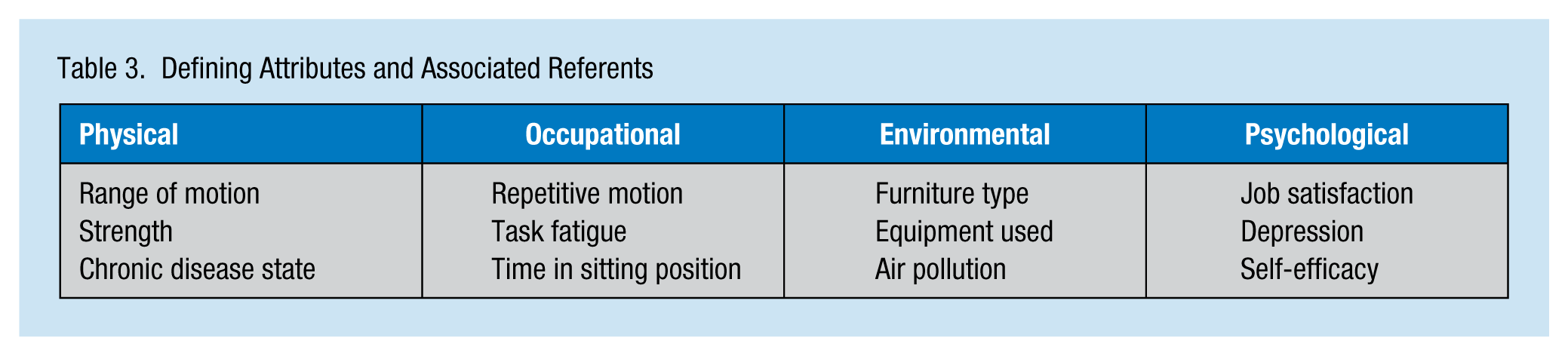
The last step of a successful concept analysis as defined by Walker and Avant (2011) is to determine empirical referents for the defining attributes. Empirical referents are described as classes or categories of actual phenomena that demonstrate the occurrence of the concept. They are related to the individual attributes and not the concept as a whole. The literature search identified several empirical referents or indicators associated with the defining attributes of OF (Table 3).
Defining Attributes and Associated Referents
Discussion
Based on this concept analysis and searches of published literature, OF had not been adequately defined. Assessing workers has historically been based on injury and disability, which has led to models and measurements that focus on physical function alone. Several different tools and measures have been developed to assess function but no clear, consistent defined conceptual foundation was found. The definitions, models, or tools reviewed did not incorporate all four of the defining attributes or their empirical referents. These variations and lack of conceptual definitions have created a significant gap in the literature. The lack of a current conceptual definition of OF that can be translated across disciplines is a significant deterrent to successful multidisciplinary occupational health practice and research. This gap in the literature denies nurse practitioners, physicians, physical therapists, and occupational therapists a consistent concept or language. Defining this gap is the first step in the process of addressing these concerns. A successful concept analysis is the second step.
This analysis has outlined the critical and defining attributes, (i.e., physical, occupational, environmental, and psychological), that have defined the concept of OF. Based on the synthesis of the current literature and this analysis, an effective definition of OF is as follows: The qualities of being suited to serve an occupational purpose efficiently and effectively within the physical, occupational, environmental, and psychological demands of that unique work setting.
This definition, along with the defining attributes, clearly delineates the need to assess the worker as a whole and can be used by multidisciplinary teams.
To improve the practice of occupational health nursing and occupational health across disciplines, it is crucial to use this concept analysis in planning next sttif. First, practitioners and researchers must build upon this concept by developing a model of occupational assessment using OF as its foundation. This model could potentially further clarify the concept, develop measurement tools, and create a framework to guide evidence-based practice.
Occupational health nursing and occupational medicine collaborate to address the rising costs of health care and work loss related to illness and injury. Understanding the concept of OF and developing models and tools in the future will improve communication between disciplines in both clinical and research settings. With consistent communication, OF will benefit health care professionals, employees, and employers in developing new knowledge and applying this knowledge to evidence-based practice.
Conclusion
As this concept analysis has shown, the definitions of occupation and function have been inconsistently defined. It is crucial to clearly understanding every aspect of function in the occupational setting. The gap in OF research requires a holistic view of function, unifying concept variations reported in the literature. Occupational functionality and its defining attributes (i.e., physical, occupational, environmental, and psychological) should be used as the foundation of future models and measurement tools to bridge the gap between disciplines and integrate the concept into evidence-based practice.
Walker and Avant Framework
Step 1: Concept selection
Step 2: Determine the aim or purpose of the analysis
Step 3: Identify all uses of the concept
Step 4: Determine defining attributes
Step 5: Identify a model case
Step 6: Identify borderline, related, contrary, inverted, and illegitimate cases
Step 7: Identify antecedents and consequences
Step 8: Define empirical referents
Footnotes
Conflict of Interest
The author(s) declared no potential conflicts of interest with respect to the research, authorship, and/or publication of this article.
Funding
The author(s) received no financial support for the research, authorship, and/or publication of this article.
Author Biographies
Bryan Combs is a faculty member at the University of Alabama at Birmingham School of Nursing. He currently teaches in the Family Nurse Practitioner Program and works as a Family Nurse Practitioner at the UAB School of Nursing Foundry Clinic as his faculty practice. He has begun his doctoral work at the UAB School of Nursing and will be concentrating his research on occupational health and orthopedics.
Karen Heaton’s program of research is primarily focused on the effects of sleep deprivation and obstructive sleep apnea on cognition and injury risk in workers. For example, she has been involved in projects that explored the impact of distraction and health issues on driving and driving performance among aging truck drivers, and self-assessment of driving performance compared with real-time simulated driving performance among truck drivers.