




Abstract
By improving livelihood, a central policy aim of the Emergency Social Safety Net (ESSN) is to reduce refugees’ onwards migration aspirations in Türkiye. Using data collected by the WFP from to 2018 to 2020, we conducted a series of logistic regressions to compare the migration aspirations of ESSN beneficiaries and non-beneficiaries. The results demonstrate that in 2018, there was no significant relationship between receiving ESSN and Syrian refugees’ migration aspirations; however, this changed in 2020. We used ANOVA analysis to contextualise the changing results in 2020 and find that overall living conditions have deteriorated and insecurity and unemployment have increased for Syrian refugees in Türkiye from 2018 to 2020.
Introduction
Türkiye is currently the largest refugee host country in the world, with over four million refugees, of which 3.77 million are Syrian refugees (Directorate General of Migration Management (DGMM), 2023). The vast majority live outside camps, with only 47,525 refugees living in camps in January 2023 (DGMM, 2023), a significant achievement for such a large refugee population. There is currently no other country globally hosting such a large number of refugees, much less having them live with the host population.
The large number of refugees in Türkiye is a result of the so-called migration crisis of 2015 which Türkiye EU–Turkey Statement. The arrival of roughly 850,000 asylum seekers, over half of whom were Syrian, from Türkiye to Greece in 2015 resulted in the Joint Action Plan between the European Union and Türkiye in November 2015 and, subsequently, the EU–Turkey Statement in March 2016.
The EU–Turkey Statement has two core components: first, increased external border controls, and second, the Facility for Refugees in Türkiye (FRIT), which aims to improve living conditions for refugees in Türkiye as an essential out-of-camp support. The FRIT initially totalled six billion euros, of which 34% was dedicated to the Emergency Social Safety Net (ESSN), marking it the largest humanitarian cash transfer programme in the world (EU Court of Auditors, 2018). By November 2022, the ESSN had helped meet the basic daily needs of 1.6 million refugees through monthly cash transfers (IFRC, 2022).
Research has demonstrated that the conditions for Syrian refugees in Türkiye have improved since the implementation of the ESSN in 2016 (Koc et al., 2020). The ESSN has helped reduce the overall multidimensional poverty rate of refugees in Türkiye by positively impacting refugees’ food security, living standards and education (World Food Programme (WFP), 2020b). By improving livelihoods, a central policy aim of the FRIT was to reduce ambitions for onwards migration, hereafter referred to as migration aspirations. Migration aspirations can be measured in several different ways (Carling, 2019). This study focuses on the plan/intention to move from Türkiye onwards.
Our aim is to examine the following research question: To what extent does being an ESSN beneficiary influence the migration aspirations of Syrian refugees in Türkiye? We chose to focus on Syrian refugees, the largest refugee population in Türkiye and the primary target population of the ESSN. We conducted a multi-year analysis using survey data collected by the World Food Programme from 2018 to 2020. As we describe further in the following sections of this article, our hypothesis changes for the multi-year analysis. Each round of survey data included both ESSN beneficiaries and non-beneficiaries. Logistic regression analysis was used to analyse the relationship between migration aspirations and ESSN receipt.
The next section provides a brief overview of policy interventions and refugees’ onwards migration aspirations in refugee hosting environments. This is followed by an overview of Syrian refugees’ conditions and experiences in Türkiye starting in 2011, with a special focus on changes from 2018 to 2020. Third, we provide an overview of the ESSN, including its implementation and effectiveness to date. The fourth section details the research design, including the data, methodology and results. The fifth section presents a discussion of the results and returns to our hypotheses. Finally, the conclusion discusses the implications of this study.
Policy Interventions and Refugees Onwards Migration Aspirations in Refugee Hosting Environments
Refugees frequently aspire to migrate onwards from refugee hosting environments to improve their lives, seek employment and education, and find permanent solutions to the perpetual temporariness of refugee hosting environments (Stevens & Dimitriadi, 2019). Existing literature on migration aspirations in the current country of stay demonstrates that there is a complex set of factors that shape refugees’ onwards migration aspirations (Kuschminder, 2018). These include individual and household characteristics and resources, social networks and access to information, the use of information and communication technologies, the role of smugglers, conditions and experiences in the current country of stay, perception of destination countries, conditions in the country of origin and policy interventions (Kuschminder et al., 2019; Brekke & Brochmann, 2015; Collyer, 2007; Crawley, 2010; Hess & Heck, 2016; Koser & Kuschminde, 2016; Lyberaki et al., 2008; Muller-Funk, 2019). Furthermore, these decisions change over time in response to changing conditions and refugees’ adaptation to the conditions in their current country of stay (Zimmerman, 2009).
Policies aimed at impacting migration flows in these environments can be described as adverse migration-specific policies or favourable migration-specific policies (Kuschminder & Koser, 2017). Adverse migration-specific policies focus on deterrence, such as increased border controls and deportations. Favourable migration-specific policies include social policies, the ability for refugees and other migrants to work and access to education, health care and other social services. The FRIT can be considered a favourable migration-specific policy aimed at ensuring refugees have access to humanitarian assistance, education and health care.
In terms of the effect of such policy interventions on migration aspirations of refugees and other migrants, research has found that adverse migration-specific policies and deterrence policies often have a limited impact on migration aspirations for refugees on the journey (Kuschminder & Koser, 2017; Crawley, 2010; Triandafyllidou, 2019). The absence of an effect and, in some cases, the opposite effect in fulfilling these policies’ stated goals of deterrence can be explained by the fact that, in reality, refugees rarely have access to accurate and reliable information about asylum and welfare policies in destination countries (Crawley, 2010). Furthermore, the risks associated with migration are often perceived as worth taking, regardless of policies (Triandafyllidou, 2019). While adverse policy interventions that aim to deter refugees and other migrants may initially appear to have success in reducing migration, they often fail to achieve their stated goals and result in unintended consequences (Lyberaki et al., 2008).
There has been little research on how favourable migration-specific policies in refugees’ current country of stay may or may not reduce their migration aspirations. As discussed above, most policy interventions to date have focused on deterrence measures. Other research studies have demonstrated, however, that poor living conditions, unemployment and insecurity are key drivers for onwards migration aspirations of refugees in Türkiye (Kuschminder et al., 2019; Koser & Kuschminder, 2016). Therefore, favourable migration policies that improve the livelihoods of refugees in Türkiye may influence their migration aspirations. Thus, this study explores the factors influencing Syrian refugees who are and are not beneficiaries of the ESSN on onwards migration aspirations from Türkiye through several country-context changes in Türkiye from 2018 to 2020.
Syrian Refugees in Türkiye from 2011 to 2020
In the early years of the Syrian conflict (2011–2014), Türkiye had an open-door policy for Syrian refugees, considering them temporary guests based on the assumption that they would soon return home (Icduygu & Sert, 2019). However, as their stay in Türkiye became protracted and more refugees continued to arrive in Türkiye, not only from Syria but also from other countries, such as Afghanistan, Iraq and Iran, this led to a shift from a humanitarian perspective to a more restrictive approach (Kuschminder et al., 2019; Icduygu & Sert, 2019).
Retaining its geographical limitations to the Geneva Convention, Türkiye grants refugee status only to those who flee from countries that are members of the Council of Europe. To regulate the situation of asylum seekers and refugees from elsewhere, Türkiye introduced the Law on Foreigners and International Protection (LFIP) in 2013 and the Temporary Protection Regulation (TPR) in 2014. Under these new regulations, Syrian refugees can apply for a temporary protection status, giving them access to registration, basic services such as education and health care, and employers can apply for a work permit on their behalf.
In 2016, with the EU–Turkey Statement, significant investment from the European Union led to new optimism for Syrian refugees in Türkiye. Between 2018 and 2019, the situation for Syrian refugees in Türkiye worsened due to a protracted temporariness that was not resolved by the EU–Turkey Statement, political instability, the economic crisis in Türkiye (beginning 2018) and an increasingly indifferent or hostile public attitude by the host population towards refugees. The economic crisis increased inflation and unemployment, resulting in a significant loss of purchasing power and increased vulnerability for refugees as long as the transfer value’s purchasing power was decreasing in real terms (WFP—ESSN Market Bulletin, 2019).
The Emergency Social Safety Net
The ESSN cash transfer programme has been a major component of investment in improving conditions for refugees in Türkiye since its implementation started in 2016. The ESSN provides regular monthly unconditional (meaning that no specific actions are required to be undertaken by beneficiaries to receive the transfers) multi-purpose cash transfers, targeting the most vulnerable refugees living outside of camps in Türkiye. 1 Cash is intended to provide the most vulnerable households among the refugees with the ability to fill the gap between any income they are able to earn and their wide-ranging basic needs expenses, including food, rent, utilities, winter costs, transportation, education, health, debt repayment, etc., thereby enabling a dignified life. The ESSN grew to become the backbone of the refugee response in Türkiye and the largest humanitarian cash refugee assistance programme in the world, reaching over 1.6 million refugees in November 2022 (IFRC, 2022).
Given no individual household assessments were done to assess individual vulnerability, a set of proxy criteria were used to identify those most likely to be highly vulnerable. Applicants who meet at least one of the following criteria are eligible for assistance: at least one disabled family member 2 with a 40% minimum disability threshold; a single female aged 18 or above; a single parent family, comprising one adult aged 18–59 years and at least one child; 3 four or more children; an elderly headed family, that is, one or more adults aged 60 or over with no adults aged 18–59; or a household dependency ratio above or equal to 1.5. 4
The value of the transfer was initially set to TRY 100 per person per month by implementing partners, even though the needs assessment pointed to a higher amount, in order to avoid potential tension between refugee and host communities and to support social cohesion. Also, policymakers always assumed refugees would earn some income in the (informal) labour market.
A number of changes have been made to the ESSN to improve the programme’s effectiveness and efficiency over time. These included loosening the disability and dependency criteria to increase the coverage, increasing the transfer value to 120 TL and later to 155 TL in 2022 to partially compensate for the continued gap in the ability of refugees to meet their basic needs, introducing quarterly top-ups to assist especially small-sized households (who receive larger top-ups than larger ones), given that they cannot take advantage of economies of scale, and introducing disability top-ups to provide further support to households with severely disabled members.
While the ESSN adjusted its transfer value to account for inflation multiple times, these adjustments always came with a significant lag and were partial. In other words, the transfer value in purchasing power terms decreased over time.
In assessing the impact of the ESSN, the programme had a positive impact on refugees in a short period of time. Significant improvements have been observed in beneficiaries’ food consumption, dietary diversity, coping behaviours, expenditure and debt reduction (Maunder et al., 2018). The ESSN has reduced multidimensional poverty among beneficiaries by positively impacting food security, living standards and education (WFP & Oxford Poverty and Human Development Initiative (OPHI), 2021).
Syrian Refugees in Türkiye at the Start of 2020
By 2020, the economic crisis in Türkiye persisted, adversely affecting Syrian refugees. The Minimum Expenditure Basket (MEB) cost for refugees, which represents the minimum living cost required to have a decent life, increased significantly by 43.6% from 2017 to 2020 (264 TL in June 2017 to 379 TL in February 2020), based on WFP (2018) calculations. As a result, families had to opt for coping strategies, such as borrowing money (for more than half of refugee households), and children under 15 had to drop out of school and work to contribute to the household’s income (WFP, 2020b). The WFP survey showed that in 2020, 45% of refugees lived below the World Bank moderate poverty line of less than $5.5 per day and 7% lived below the extreme poverty line of less than $3.2 per day. The number of refugees living under the moderate poverty line was higher among the ESSN beneficiaries (59%) than among non-beneficiaries (22%). One explanation for this is that ESSN is the primary income source for many households, and while the cost of living has increased, the amount of ESSN cash transfers has remained relatively stable. The percentage of households costs covered by the ESSN, therefore, decreased over time.
Although significant progress had been made regarding Syrian refugees’ living conditions and access to rights in Türkiye, research has demonstrated that many Syrian refugees face challenges related to a lack of access to health care, education and the labour market (Kuschminder et al., 2019; Baban et al., 2017; Tanrikulu, 2021; Ustubici, 2019). The majority of Syrian refugees that find employment work in the informal sector (Caro, 2020). By December 2019, 145,232 work permits had been issued to foreigners, of which almost half were granted to Syrians. Although the figure represents a sevenfold increase as compared to 2011 (Ministry of Labour and Social Security, 2019), it remained small when considering the overall refugee population.
As the Turkish economy continued to slow down, public opinion on refugees shifted negatively (Erdogan, 2019; WFP, 2020a). The Syrian Barometer Report (Erdogan, 2019) revealed that while Syrian refugees were initially perceived as war victims in 2016, by 2019 they were viewed as a burden or welfare seeker. This shift led to increased social distancing and decreased compassion (Erdogan, 2019, p. 55). Despite evidence of Syrian migration benefitting Türkiye’s economy (Tanrikulu, 2021), negative perceptions related to economic concerns have also grown (Erdogan, 2019). This change may also be attributed to heightened competition for limited informal job opportunities and a more pronounced anti-refugee political discourse, especially leading up to the 2019 municipal elections (WFP, 2020a).
Social tension and economic pressure coupled with political instability have further hindered the integration process of refugees in Türkiye, making it more difficult to access basic services and employment and, in general, to participate in society. This has led to increased feelings of insecurity among refugee populations.
Research Design
Hypotheses
Based on the above and following the assumed policy logic, we hypothesise the following:
H1: In the 2018 survey round, ESSN beneficiaries were significantly less likely to aspire to migrate from Türkiye onwards than non-beneficiaries.
We consider 2018 to be the end of the optimism period when the effects of the economic crisis were not yet felt and the impact of the ESSN was at its strongest.
H2: In the 2020 survey round, ESSN beneficiaries were not significantly less likely to aspire to migrate onwards than non-beneficiaries.
As described in the previous section, by 2020, the conditions had significantly changed in Türkiye, and the ESSN had not been adjusted to account for the changing situation. Thus, we expect that by 2020, the ESSN will no longer be able to reduce migration aspirations.
Data and Identification Strategy
This study used data collected by the WFP through the Comprehensive Vulnerability Monitoring Exercise in two rounds: (a) between March and August 2018 (2018-Q2) and (b) from November 2019 to February 2020 (2020-Q1). Both surveys were conducted by trained WFP monitoring assistants through face-to-face surveys during household visits on tablets and uploaded using the Open Data Kit. During data collection, the WFP staff were accompanied by Turkish Red Crescent staff.
In order to reach a representative sample, a two-staged approach was used in both rounds. The first stage relied on geospatial analysis using advanced geographic information system (GIS) techniques to identify a spatially representative sample. The second stage randomly identified at least 25 households within each district (identified through the spatial sample) through Respondent Driven Sampling. This process resulted in the selection of 52 geolocations and a sample size of 1,300 households in the first round and 57 geolocations and a sample size of 1,425 households in the second round. The surveys were conducted with ESSN beneficiaries, refugees that were ineligible and refugees who did not apply for the ESSN. For the purposes of this article, we combined the last two groups and created a category of non-beneficiaries. All households were either under International Protection/Temporary Protection (IP/TP), in the pre-registration phase, or planning to seek IP/TP in the future. Participation in the survey was voluntary, and a detailed informed consent process was completed with all respondents.
In 2018, the survey included a cohort of 888 Syrian refugees. In 2020, this number witnessed a notable increase, reaching 1,146 respondents. Notably, the proportion of ESSN beneficiaries exhibited a shift of 53.2% in 2018 (473 of 888) compared to 58.2% in 2020 (668 of 1,146).
Methodology
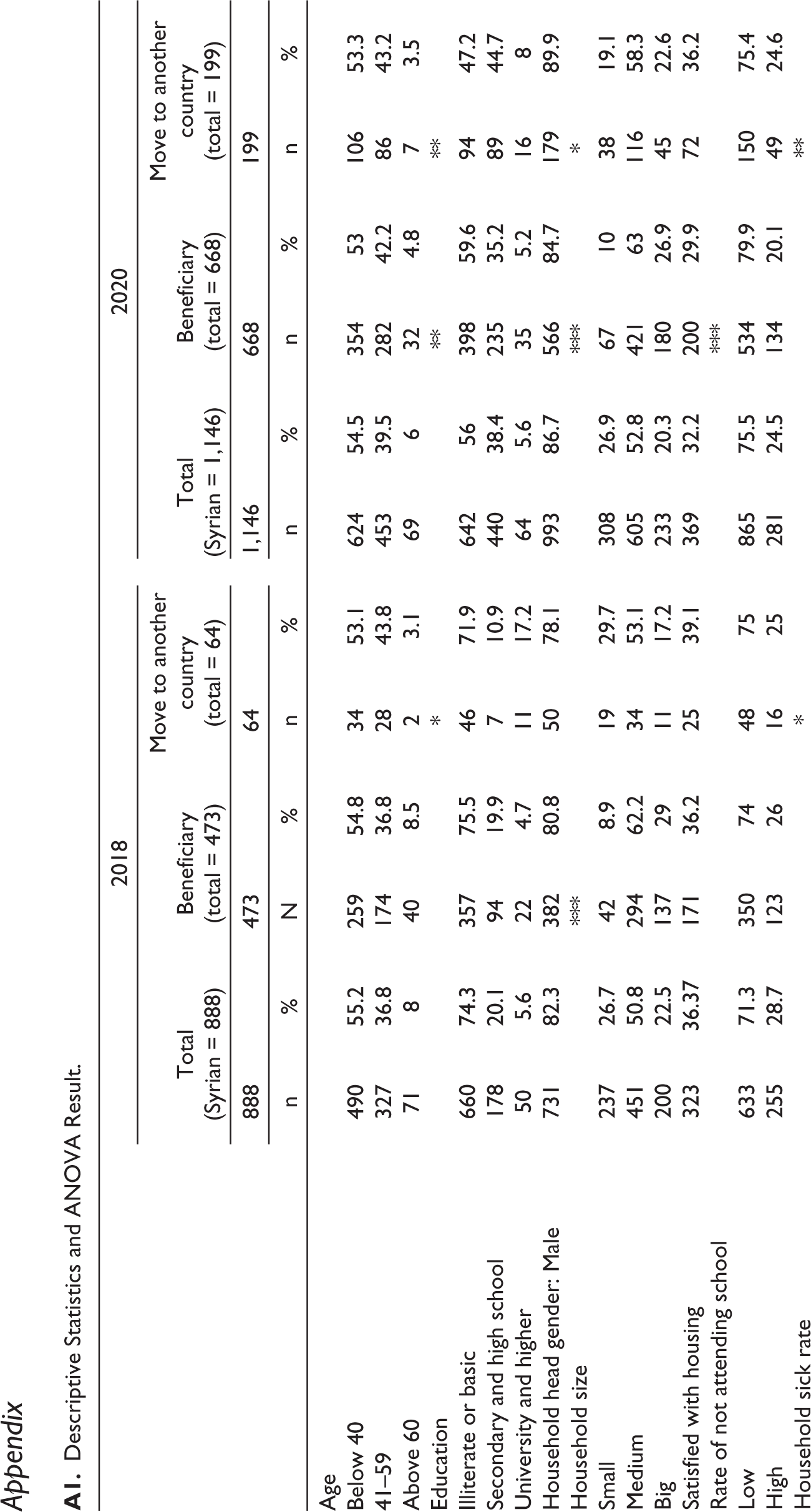
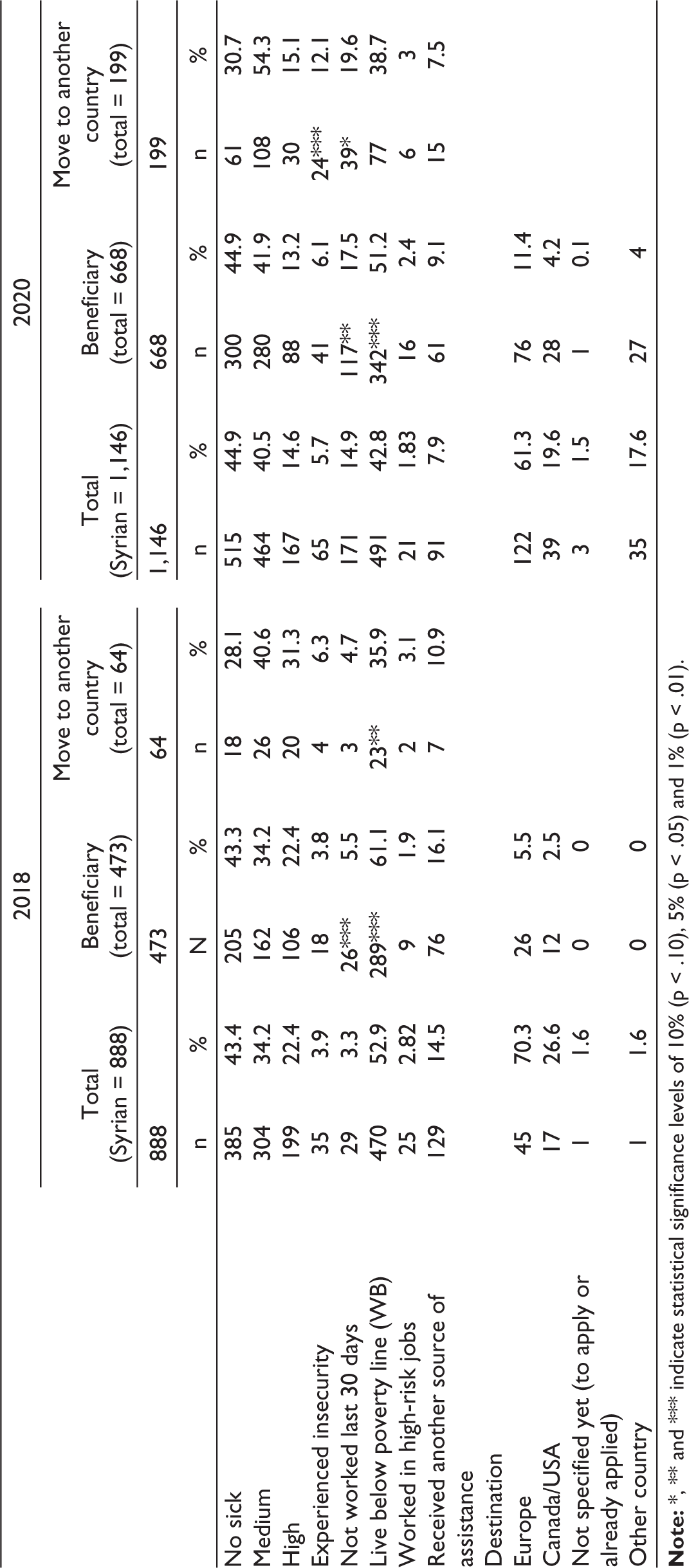
The analysis was conducted in two stages using the Stata 16 software. In the first stage, a descriptive analysis was performed using various tabulations and summary statistics such as means, percentages and Analysis of Variance (ANOVA) (Appendix1).
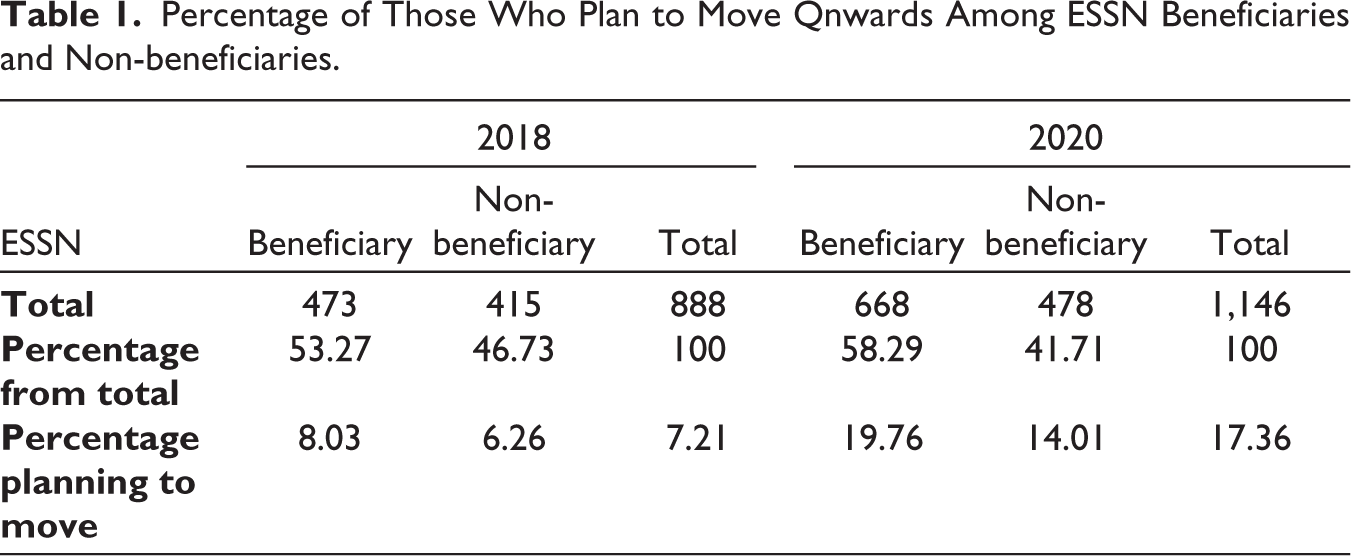
The second stage involved a series of logistic regressions to analyse the impact of development intervention policies and estimate the determinants of migration aspirations. The dependent variable is the migration aspiration using the following question: ‘Does your household plan to move from Türkiye?’ with the options 1 = Europe, 2 = back to home country, 3 = Canada/USA and 4 = Other. In the ‘Results’ section, we refer to the onwards migration aspirations of refugees in Türkiye as the migration plan. In this study, we only analysed the onwards migration aspirations and dropped all respondents choosing 2 = back to home country return from the analysis, which represents 3% of respondents. We do this for two reasons: first, the number selecting returns is quite small, and second, our empirical question focuses on the decision to stay or migrate onwards. Therefore, we operationalised migration aspiration as a binary variable with any of the selected destinations of Europe, Canada, the USA, or others. Table 1 provides a descriptive overview of the migration aspirations of ESSN beneficiaries and non-beneficiaries. Total migration aspirations increased descriptively by more than 10% in the first quarter of 2020 (17.36%) compared to early 2018 (7.21%), and the increase in onwards migration aspirations from 2018 to 2020 was higher among beneficiaries of the ESSN (11.73% increase) than among non-beneficiaries (7.75% increase).
Percentage of Those Who Plan to Move Qnwards Among ESSN Beneficiaries and Non-beneficiaries.
The primary explanatory variable in our analysis was ESSN status, a binary variable that equalled 1 if any of the family members had been the beneficiary of ESSN cash transfer and 0 otherwise. Table 2 presents the list of explanatory variables used in the analysis.
List of Explanatory Variables.
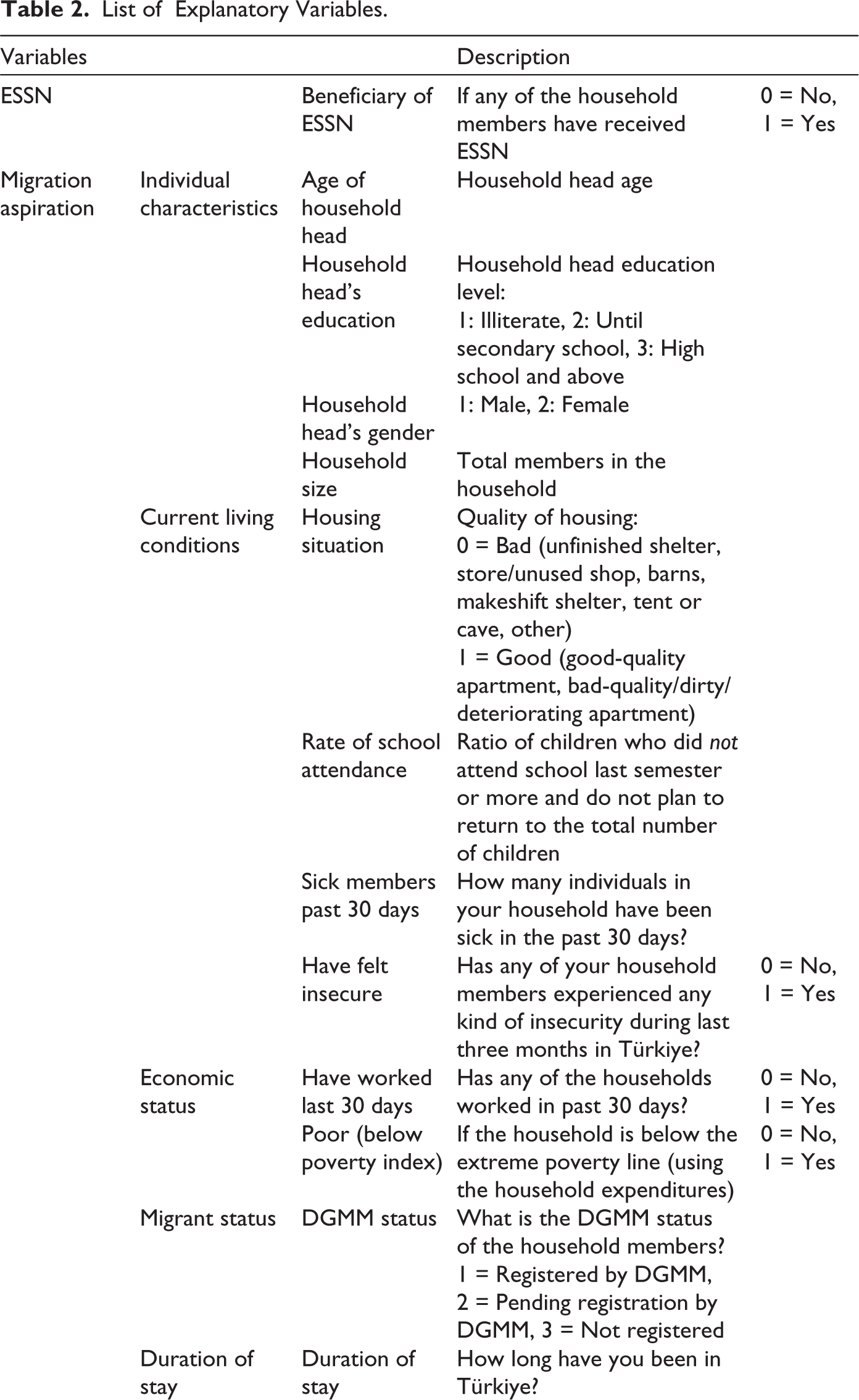
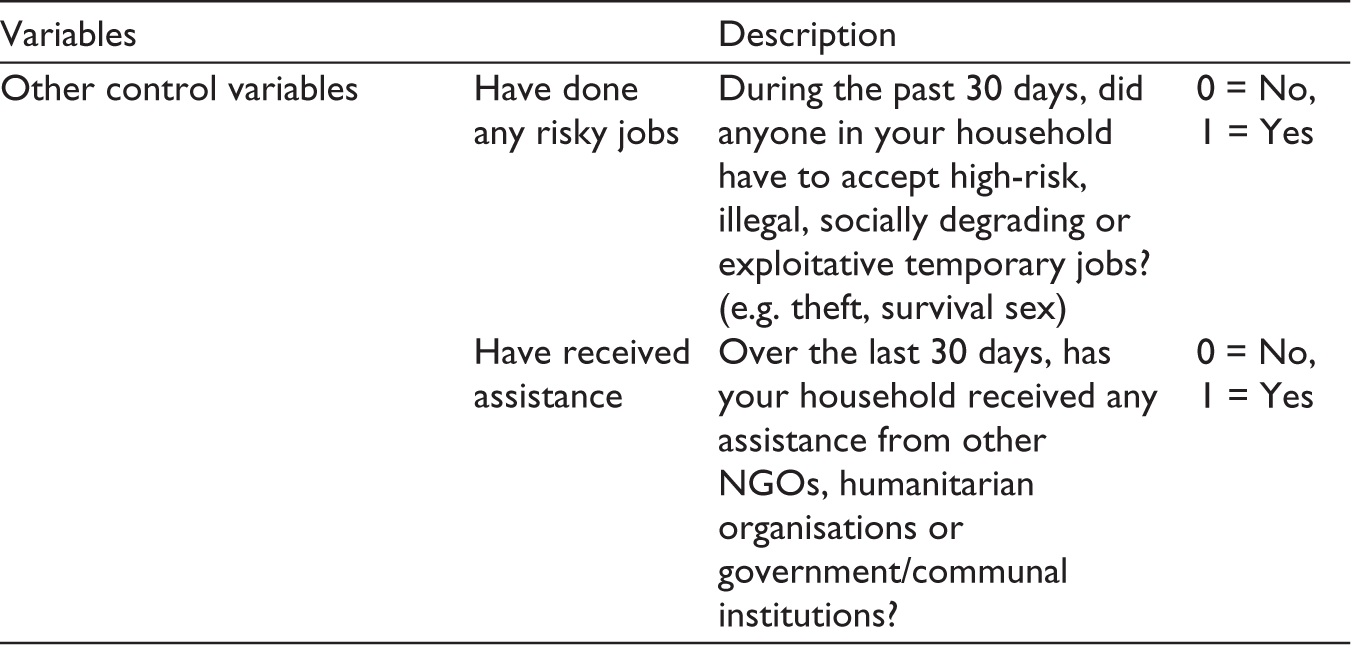
The second set of explanatory variables was selected from the literature on the factors impacting refugees’ aspirations to move onwards. We included five dimensions: The first was individual characteristics of the household head, such as age, education, gender and household size. The second was the respondents’ current living conditions in Türkiye, including housing quality, school attendance rate, sickness and experiences of insecurity. We operationalised housing quality based on subjective perceptions, where 1 = good and 0 = bad. School attendance rate is a continuous variable that measures the ratio of children attending school in the last semester to the total number of children. The variable sickness is measured based on the number of household members who have been sick in the past 30 days. Insecurity is a binary variable that refers to whether at least one household member has experienced insecurity during the last three months in Türkiye.
The third is economic status, included here as the working status and household’s poverty level. Working status is a binary variable representing households with at least one member who has been working in the past 30 days. The World Bank (WB) poverty index is a binary variable that shows families who live below the poverty line. The figures for the poverty line are calculated based on the WB poverty line ($5.5 per person): households whose per capita total expenditures are below the WB poverty line are valued as 1 and the rest are valued as 0. The fourth is the current migration status, which we operationalise as being registered with the DGMM or not. The fifth is the duration of stay in the current country, which we measure as the number of years since the household head arrived in Türkiye.
The interpretation of the results is primarily based on the odds ratio, with the coefficients in parentheses to provide a broader perspective. Notably, there was a significant change in the percentage of beneficiaries who had not worked in the last 30 days. In 2018, this figure stood at 5.5% but surged to 17.5% in 2020, indicating notable changes in labour force participation, most likely due to the COVID-19 pandemic.
Results of the Regression Analysis
Using logistic regression, we examined the factors influencing Syrian refugees’ migration aspirations in 2018 and 2020. Table 3 presents the logistic regression results for the 2018 and 2020 survey rounds in separate columns. The interpretation of the results is primarily based on the odds ratio, with the coefficients in parentheses. The results showed that in 2018, there was no significant relationship between ESSN and migration aspirations. In 2020, this changed, and ESSN beneficiaries were 1.47 times more likely to plan to migrate onwards than non-beneficiaries.
Results of the Logistic Regression (β Coefficients).
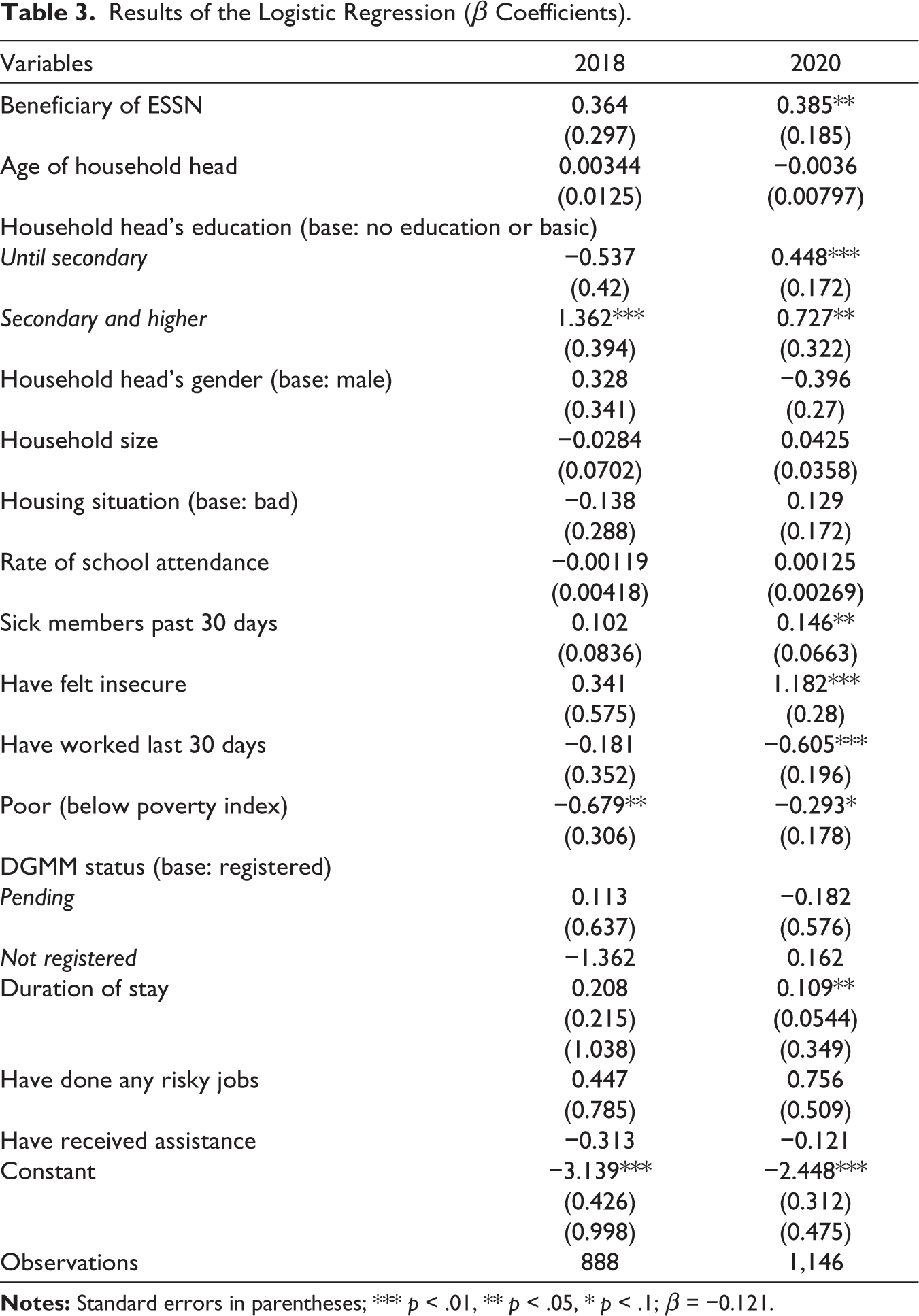
In 2018, only two variables were significant in determining migration aspirations of Syrian refugees in Türkiye. The first is the educational level of the head of the household. When compared to households with no formal education, households where the head had education up to secondary school did not show a significant change in migration aspirations (β = −0.537, not significant). However, households with heads educated beyond secondary school were significantly more inclined to consider moving onwards, approximately 3.90 times (β = 1.362) more likely to do so. This indicates the value and potential impact of education on migration decisions, suggesting that those with higher education levels may possess better knowledge, resources or opportunities to move onwards. Second, households identified under the poverty line were significantly less likely to aspire to migrate at 0.51 times (β = −0.679). Notably, the influence of ESSN cash transfers and other assistance on migration aspirations was not statistically significant in 2018, suggesting that these interventions might not be directly correlated with migration aspirations during this period.
In 2020, several variables were found to be significant in the regression analysis. First, in 2020, beneficiaries of the ESSN programme were significantly more likely to aspire to migrate at 1.47 times (β = 0.385). This is a significant difference compared with that in 2018.
Regarding individual characteristics, similar to 2018, when the household head had education up to secondary school, the likelihood of aspiring to migrate was increased by a factor of 1.57 times (β = 0.448). This propensity further intensified for households with heads educated beyond secondary school, making them roughly 2.07 times (β = 0.727) more likely to aspire to migrate.
In terms of current living conditions, first, households with a sick household member demonstrated a higher propensity to aspire to migrate at about 1.16 times (β = 0.146). Second, respondents that reported feeling insecure were significantly more likely to aspire to migrate at 1.18 times (β = 0.280)
Both variables in economic status were significant. First, respondents who had been employed in the preceding 30 days were significantly less likely to aspire to migrate, at 0.55 times (β = −0.605). Second, as in 2018, households that were classified as poor were 0.75 times (β = −0.293) less likely to aspire to migrate.
The duration of stay was also significant, with refugees residing in Türkiye for over six years being 1.11 times (β = 0.109) more likely than their counterparts who had stayed between one and three years to aspire to migrate. Finally, receiving other forms of assistance was significant, with recipients of other forms of assistance less likely to aspire to migrate at 0.88 times.
Discussion
The objective of this study is to examine the relationship between the ESSN and Syrian refugees’ migration aspirations in Türkiye. We divided our hypotheses to reflect the changing conditions in Türkiye for refugees in 2018 and 2020. Thus, returning to our first hypothesis statement, we predicted that in the 2018 survey rounds, ESSN beneficiaries were significantly less likely to aspire to migrate from Türkiye (H1) than non-beneficiaries. Our assumption in this hypothesis is based on the literature that cash transfers can improve living conditions, possibly inducing individuals to choose to stay in their current environment. The results demonstrate that our hypothesis has been disproven and that there is no significant difference between ESSN beneficiaries and non-beneficiaries regarding their onwards migration aspirations. Therefore, it can be concluded that receiving the ESSN did not significantly reduce migration aspirations.
This leads us to our second hypothesis (H2): In the 2020 survey round, ESSN beneficiaries were not significantly less likely to aspire to migrate onwards than non-beneficiaries. This hypothesis is correct, as the results show that, in 2020, ESSN beneficiaries were significantly more likely to plan to migrate onwards than non-beneficiaries. This finding is in line with our analysis that 2018 was the end of the optimistic period for Syrian refugees in Türkiye, and conditions significantly reduced for refugees. This was further evidenced by the regression results, with two of the four current living condition variables being significant in 2020. Households that reported feeling insecure and having a sick household member reported being more likely to aspire to migrate. In addition, households that had been in Türkiye for longer were more likely to aspire to migrate, showing that there was a loss of hope for Syrians.
In line with previous research, refugees employed in the last 30 days were less likely to aspire to migrate (Kuschminder, 2018). This indicates that employment is the key reason for staying in Türkiye. Thus, the significant increase in unemployment from 2018 to 2020 may be a significant contributor to the change in migration aspirations during this period. This is most likely due to the early effects of the COVID-19 pandemic that would have been felt at the time of the survey data collection in mid-2020.
It is also noteworthy that in both 2018 and 2020, poor households were significantly less likely to aspire to migrate. This is likely because these households lack the capabilities, notably financial resources, to migrate. It is important to reflect here that our measurement of migration aspiration is based on the intention to move; therefore, poor households may dream or wish to migrate, but not intend migration.
Conclusion
The ESSN is the largest refugee cash transfer in history. It represents a significant investment of the European Union through the FRIT as a favourable migration-specific policy aimed at improving living conditions for refugees in Türkiye. A key objective of the FRIT was to reduce the migration aspirations of refugees (primarily from Syria) in Türkiye by improving their living conditions. In this study, we used data collected by the WFP and its partners from 2018 to 2020 to assess the relationship between the ESSN and Syrian refugees’ migration aspirations. As detailed in the discussion above, the results demonstrate that in 2018, there was no significant relationship between receiving ESSN and Syrian refugees’ migration aspirations.
However, from 2020, Syrian refugees receiving ESSN are more likely to seek migration onwards. We conclude that this change was due to deteriorated living conditions and increased insecurity for refugees in Türkiye between 2018 and 2020, as discussed in the background section and evidenced through the regression results. This relationship has the opposite effect on stated policy intentions. Therefore, we can deduct that worsened socioeconomic conditions, due to decreased purchasing power in light of inflation and an insufficiently adjusted ESSN transfer amount, led to increased migration aspirations of Syrian refugees, not the ESSN itself. Increased feelings of insecurity and reduced access to job opportunities among the survey respondents demonstrate the challenges of social cohesion in Türkiye and feelings of permanent temporariness. Therefore, the accumulation of these factors appears to drive increased migration aspirations.
The ESSN was fixed at a transfer amount of 120 TL per person per month from June 2017 to 2021. As discussed in this article, an initial assessment conducted by the European Union in 2016 found that 180 TL was necessary to cover beneficiaries’ basic needs (EU Court of Auditors, 2018). In April 2021, the ESSN cash transfer amount increased to 155 TL per person per month. The change was justified as a response to the deteriorating socioeconomic conditions due to COVID-19 (IFRC, 2022). This increase is encouraging, especially after several years of advocacy for an increase in the transfer value to not jeopardise the gains from the ESSN. Since then, the transfer value has been increased further to keep up with inflation, albeit as mentioned earlier, always with a significant time lag.
It is possible that with the increased ESSN transfer value, the relationship between the ESSN and migration aspirations of Syrian refugees may revert to where it was in 2018. However, given that we cannot quantify the proportion of the increase in migration aspirations among ESSN beneficiaries due to the economic situation versus these other factors, we argue that ensuring an appropriate transfer value for the ESSN beneficiaries is necessary, but may not be sufficient to revert to the earlier situation where the ESSN beneficiaries did not have higher aspirations to migrate than their peers who did not receive the ESSN. Continued survey monitoring is essential for assessing how this relationship will evolve in the future.
The results of this study emphasise that the amount of ESSN is critical to its effectiveness but also caution that the ESSN alone cannot account for migration aspirations and the wider conditions of social cohesion, and long-term opportunities are critical to understanding migration aspirations. As highlighted by Triandafyllidou (2019), the risks of onwards migration are often perceived as worth taking regardless of policies. Although the ESSN is a favourable migration policy, it has been characterised as providing a ‘bare minimum’ for Syrian refugees, reflecting that it is not necessarily enough to change migration aspirations. Assistance provided by the ESSN must be adequate in terms of purchasing power, but the ESSN itself cannot provide a full life, and other policies of work permits and citizenship possibilities must also see advancement as well in order to make meaningful changes in Syrian refugee migration aspirations and plans.
Footnotes
Declaration of Conflicting Interests
The authors declared no potential conflicts of interest with respect to the research, authorship and/or publication of this article.
Funding
The authors received no financial support for the research, authorship and/or publication of this article.
Appendix
Descriptive Statistics and ANOVA Result.
|
|
2018 | 2020 | ||||||||||
| Total (Syrian = 888) | Beneficiary (total = 473) | Move to another country (total = 64) | Total (Syrian = 1,146) | Beneficiary (total = 668) | Move to another country (total = 199) | |||||||
| 888 | 473 | 64 | 1,146 | 668 | 199 | |||||||
| n | % | N | % | n | % | n | % | n | % | n | % | |
| Age | ||||||||||||
| Below 40 | 490 | 55.2 | 259 | 54.8 | 34 | 53.1 | 624 | 54.5 | 354 | 53 | 106 | 53.3 |
| 41–59 | 327 | 36.8 | 174 | 36.8 | 28 | 43.8 | 453 | 39.5 | 282 | 42.2 | 86 | 43.2 |
| Above 60 | 71 | 8 | 40 | 8.5 | 2 | 3.1 | 69 | 6 | 32 | 4.8 | 7 | 3.5 |
| Education | * | ** | ** | |||||||||
| Illiterate or basic | 660 | 74.3 | 357 | 75.5 | 46 | 71.9 | 642 | 56 | 398 | 59.6 | 94 | 47.2 |
| Secondary and high school | 178 | 20.1 | 94 | 19.9 | 7 | 10.9 | 440 | 38.4 | 235 | 35.2 | 89 | 44.7 |
| University and higher | 50 | 5.6 | 22 | 4.7 | 11 | 17.2 | 64 | 5.6 | 35 | 5.2 | 16 | 8 |
| Household head gender: Male | 731 | 82.3 | 382 | 80.8 | 50 | 78.1 | 993 | 86.7 | 566 | 84.7 | 179 | 89.9 |
| Household size | *** | *** | * | |||||||||
| Small | 237 | 26.7 | 42 | 8.9 | 19 | 29.7 | 308 | 26.9 | 67 | 10 | 38 | 19.1 |
| Medium | 451 | 50.8 | 294 | 62.2 | 34 | 53.1 | 605 | 52.8 | 421 | 63 | 116 | 58.3 |
| Big | 200 | 22.5 | 137 | 29 | 11 | 17.2 | 233 | 20.3 | 180 | 26.9 | 45 | 22.6 |
| Satisfied with housing | 323 | 36.37 | 171 | 36.2 | 25 | 39.1 | 369 | 32.2 | 200 | 29.9 | 72 | 36.2 |
| Rate of not attending school | *** | |||||||||||
| Low | 633 | 71.3 | 350 | 74 | 48 | 75 | 865 | 75.5 | 534 | 79.9 | 150 | 75.4 |
| High | 255 | 28.7 | 123 | 26 | 16 | 25 | 281 | 24.5 | 134 | 20.1 | 49 | 24.6 |
| Household sick rate | * | ** | ||||||||||
| No sick | 385 | 43.4 | 205 | 43.3 | 18 | 28.1 | 515 | 44.9 | 300 | 44.9 | 61 | 30.7 |
| Medium | 304 | 34.2 | 162 | 34.2 | 26 | 40.6 | 464 | 40.5 | 280 | 41.9 | 108 | 54.3 |
| High | 199 | 22.4 | 106 | 22.4 | 20 | 31.3 | 167 | 14.6 | 88 | 13.2 | 30 | 15.1 |
| Experienced insecurity | 35 | 3.9 | 18 | 3.8 | 4 | 6.3 | 65 | 5.7 | 41 | 6.1 | 24*** | 12.1 |
| Not worked last 30 days | 29 | 3.3 | 26*** | 5.5 | 3 | 4.7 | 171 | 14.9 | 117** | 17.5 | 39* | 19.6 |
| Live below poverty line (WB) | 470 | 52.9 | 289*** | 61.1 | 23** | 35.9 | 491 | 42.8 | 342*** | 51.2 | 77 | 38.7 |
| Worked in high-risk jobs | 25 | 2.82 | 9 | 1.9 | 2 | 3.1 | 21 | 1.83 | 16 | 2.4 | 6 | 3 |
| Received another source of assistance | 129 | 14.5 | 76 | 16.1 | 7 | 10.9 | 91 | 7.9 | 61 | 9.1 | 15 | 7.5 |
| Destination | ||||||||||||
| Europe | 45 | 70.3 | 26 | 5.5 | 122 | 61.3 | 76 | 11.4 | ||||
| Canada/USA | 17 | 26.6 | 12 | 2.5 | 39 | 19.6 | 28 | 4.2 | ||||
| Not specified yet (to apply or already applied) | 1 | 1.6 | 0 | 0 | 3 | 1.5 | 1 | 0.1 | ||||
| Other country | 1 | 1.6 | 0 | 0 | 35 | 17.6 | 27 | 4 | ||||