




Abstract
Although internal migration is a significant contributor to urbanisation and human development in Africa, it has received modest attention from researchers compared to international migration. Both theory-building and empirical documentation of internal migration processes have been neglected. This study applies international migration frameworks to analyse interviews with young people about their migration from rural northern Ghana to Sunyani, an urban centre in the south. The adapted frameworks offer valuable insights into the intersecting factors that shape internal migration when contextualised within local realities, demonstrating that migration decisions are shaped by overlapping structural conditions, individual agency and aspirations. While some migrants seek economic stability with plans to return to the north, others envision staying or moving on to larger cities to pursue their aspirations for a fulfilling life, mirroring the drivers and aspirations of many international migrants. This study contributes to the growing discourse on migration, examining the intersections between migration drivers and research on internal migration.
Introduction
In Africa, internal migration, particularly from rural areas to cities, is a growing trend that significantly contributes to urbanisation (Kebu et al., 2023). The urban population in Africa had increased from 27% in 1950 to 40% in 2015, with projections suggesting it will surpass 60% by 2050, primarily driven by rural–urban movements (UN DESA, 2014). Despite its significance, internal migration remains under-researched compared to international migration, especially within African countries. The lack of empirical and theoretical attention to internal migration is astounding, as many African countries are marked by significant ethnic and economic disparities, which both drive and pose challenges to internal migration. Some scholars have suggested a ‘significant creative potential for integrating theories of internal and international migration’ to explore causal factors of migration and its connection to development and cultural adaptation (King, 2020, p. 3). This article takes up the invitation to explore this creative potential by adapting international migration frameworks to gain a deeper and more nuanced understanding of the dynamic causes of internal migration in Ghana, considering its critical role in urbanisation processes, socio-economic development and its implications for policy development.
Migration studies have often focused on international migration, supported by theoretical frameworks explaining cross-border movements. While primarily applied to international migration in regions such as Europe and Africa, recent research by Van Hear et al. (2018), Czaika and Weisner (2025) and Masná et al. (2025) suggests that these theoretical frameworks are also relevant to internal migration, particularly where regional socio-economic inequalities reflect global trends. King and Skeldon (2010) suggest that economic disparities, environmental factors and social aspirations influence both internal and international migration. This study aims to expand the discussion by applying international migration frameworks to examine the internal migration patterns of young people in Ghana, where regional inequalities lead to significant movement from the north to the south.
In Ghana, over 80% of migrants move within the country, with approximately 70% heading to urban areas, where they are mostly absorbed into the informal sector (Aboagye, 2021). Ghana’s internal migration generally flows from north to south, motivated by out-migration from the northern regions to the southern areas. Historically, northern males migrated to work in mines and cocoa plantations. This trend has persisted since independence, as indicated by census data from 1960, with a particular focus on urban areas (Caldwell, 1969). Nowadays, many young people, both male and female, move to urban centres in the southern regions after completing high school to avoid working on farms (Arthur-Holmes & Abrefa Busia, 2022; Ghana Statistical Service, 2023). One in every five youths born in the north resides in the south (van der Geest, 2011). The 2021 census reveals that in the Bono region, about 44.3% of inter-regional migrants over the past decade originated from northern Ghana’s five ethnically diverse regions (Ghana Statistical Service, 2023). This highlights the need to explore the factors driving this migration.
The primary causes of migration in Ghana, often cited as poverty and family reunification, represent only one facet of a broader phenomenon (Ghana Statistical Service, 2023). Studies on contemporary factors influencing north–south movements in Ghana have included regional development inequalities (Awuse et al., 2020; Yendaw et al., 2016), environmental challenges (van der Geest, 2011), poverty and security concerns (Awuse et al., 2020). However, they often examine these factors in isolation rather than their interconnections. Research on youth migration aspirations in Ghana typically focuses on first-time migrants (Osei et al., 2022) and overlooks migrants’ agency and their aspirations for repeat migration, key to understanding their social, economic and cultural adaptation challenges. This article contributes to a more holistic understanding of internal migration drivers, using Van Hear et al.’s (2018) Driver Complex Framework to examine the interconnected factors influencing youth migration from northern Ghana to Sunyani’s informal sector. As this framework captures only structural factors, it benefits from being complemented by the Aspirations–Capabilities Framework (ACF) (de Haas, 2021) to better understand how young migrants’ aspirations and agency interact with structural conditions to shape their migration trajectories.
This article argues that several factors influence young migrants’ decisions, with their aspirations evolving in new environments. Migration is a multi-phased journey involving repeated moves. By examining these aspirations, migration theories can be refined to better capture contemporary dynamics. This discussion utilises interviews with young migrants to explore the complex factors influencing their decisions. The following sections outline the conceptual framework of migration drivers for a better understanding of the migration processes. The third section outlines the research design, while the fourth and fifth sections present the results and discussion, and conclusion, respectively.
Conceptual Framework
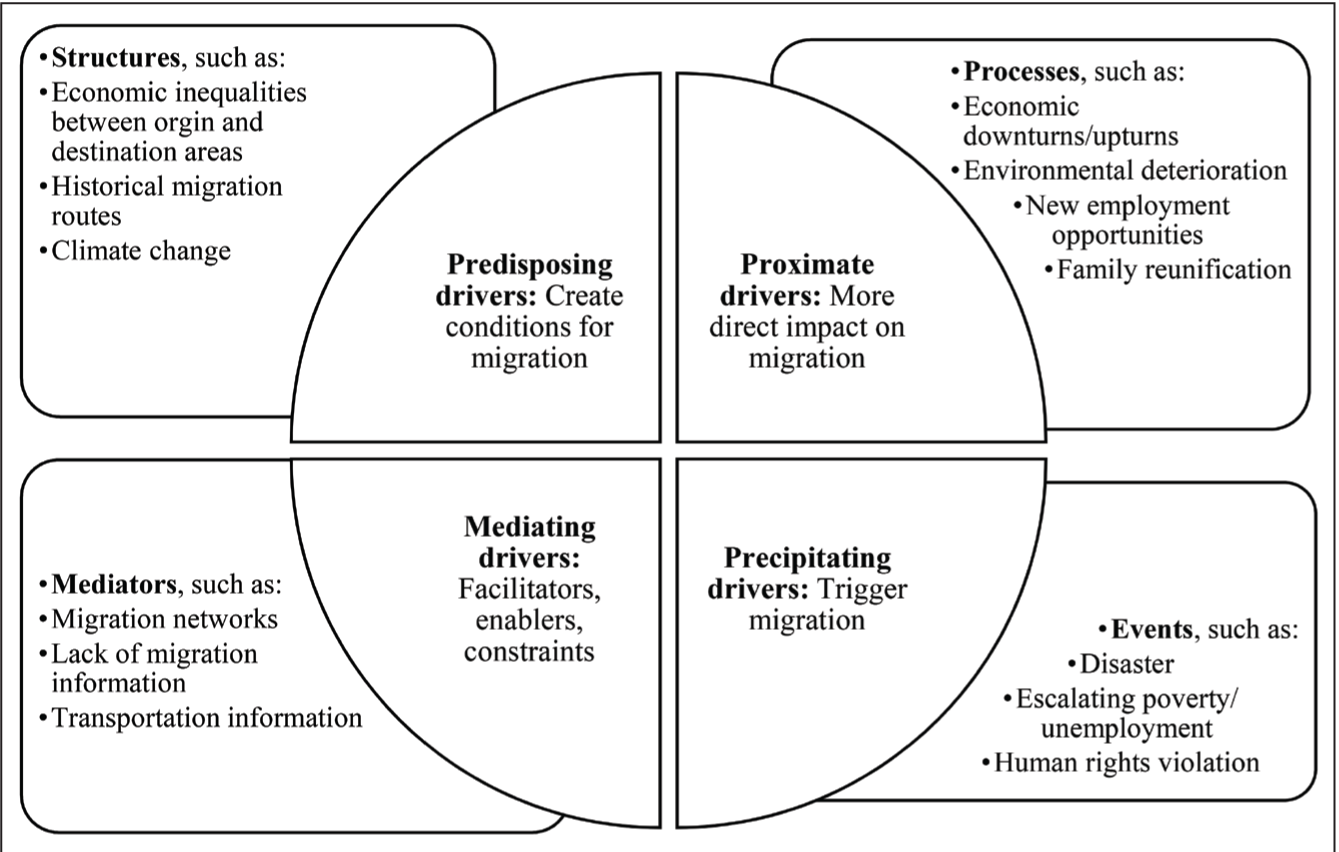
Migration is a complex process that reshapes societies. The explanatory factors of migration have witnessed a shift from the conventional use of terms such as ‘determinants’ and ‘causes’, with a particular focus on drivers (Kebu et al., 2023). Drivers of migration are the factors that initiate and sustain migration and can be both internal and external to the individual or household (Van Hear et al., 2018). One of the early contributions to the theorisation of migration drivers is the push–pull model, which identifies economic, environmental and demographic factors (Lee, 1966). However, the push–pull model has often been criticised as deterministic and static, lacking a comprehensive foundation for understanding the complexities of migration decisions (de Haas, 2011; Skeldon, 1990). In response, Van Hear et al. (2018) refined this model by classifying migration drivers into predisposing, proximate, precipitating and mediating factors in their Driver Complex Framework (Figure 1). While initially designed for international migration, these categories could also explain internal migration patterns, particularly in Ghana, where structural inequalities between the north and the south mirror global migration disparities between developing and developed regions.
Van Hear et al. (2018) argue that several drivers interconnect to form a driver complex that shapes the dynamics of population movements. This concept clarifies how various factors shape migration opportunities and the willingness to move. Predisposing factors include societal structures and disparities that influence migration decisions (Carling & Talleraas, 2016), reflecting economic, social, political and cultural inequalities. Such conditions push individuals to consider migration. Proximate drivers refer to immediate circumstances that increase the likelihood of migration, such as economic downturns, environmental degradation and social opportunities or threats (Van Hear et al., 2018). In Ghana, economic and social opportunities in the southern regions attract migration from the north, particularly among the youth (Abdulai et al., 2018).
Precipitating drivers include events such as sudden increases in unemployment and human rights violations like forced marriage, prompting migration based on their severity. Mediating drivers either facilitate or hinder migration processes and experiences. Facilitating factors include transportation availability, migration networks and resources, while constraints involve inadequate infrastructure and limited migration information (Bakewell et al., 2016) (Figure 1). This study employs this framework to examine the internal migration of youth in Ghana, arguing that economic, social, political and environmental factors intersect to influence migration, whether internal or international.
This framework, while useful, highlights the external structural influences on migration decisions without implying deterministic outcomes. As Van Hear et al. (2018, p. 928) assert, ‘drivers shape the context for migration aspirations and decisions’ but do not dictate them. Factors such as age, gender, education, past behaviours and agency significantly affect decision-making. For many young people, migration is linked to their transition to adulthood (Yeboah, 2021), as successful migration can enhance social prestige and family obligations. Thus, onward movement or return may occur if initial plans do not meet expectations. While some Ghanaian studies investigate young people’s migration intentions, few examine their aspirations post-move (Yeboah, 2021).
This study enhances the Driver Complex Framework with ACF, addressing young migrants’ decisions (de Haas, 2021). The ACF states that migration is influenced by individuals’ goals (aspirations) and their ability to act (capabilities). Aspirations, shaped by culture and education, can be instrumental (economic gain) or intrinsic (personal fulfilment). Capabilities, as defined by Sen (1999), refer to the freedoms needed to achieve valued life outcomes. The ACF challenges the deterministic push–pull view, emphasising migrants’ agency and the interaction of individual choices and structural conditions. It demonstrates individual agency in migration decisions, emphasising that migrants move based on evolving aspirations. This framework, which has been used in migration studies in Ghana to study young people’s migration aspirations (Osei et al., 2022), helps explain why young Ghanaian migrants, despite migrating internally, share aspirations with international migrants, such as seeking economic improvement and social mobility.
Adopting these frameworks clarifies how ‘agency and structure play into one another’ (Van Hear et al., 2018, p. 930), showing that migration is shaped by both aspirations and structural conditions. This shifts internal migration from a mere economic strategy to a broader human development process. As Van Hear et al. (2018, p. 930) rightly note, ‘agency is concerned with people’s capabilities to take their aspirations and transform them into changed positions in the social—and geographical—world’.
Research Design and Methods
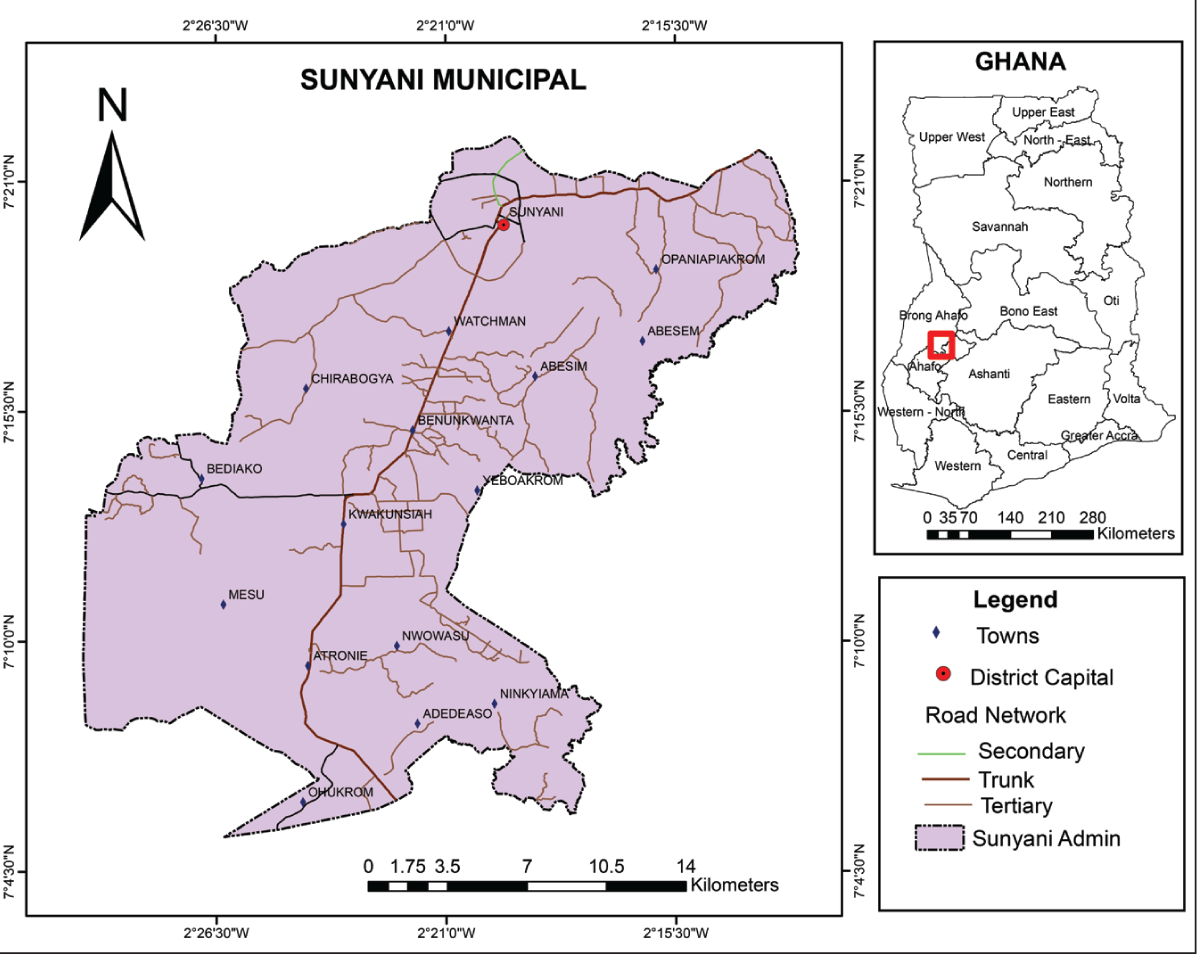
This article is part of a larger research project on ‘contemporary northern Ghanaian migration to the Bono region: causes and wellbeing impacts’, conducted in the Sunyani Municipality between February and June 2023. Sunyani was purposively selected as the study site because of its significance as the capital city and a key economic hub in the Bono region, which attracts many young migrants from the north. Unlike most studies that concentrate on major cities such as Accra and Kumasi, this research emphasises Sunyani as a mid-sized urban centre with a vibrant informal sector that provides employment opportunities to young migrants. Additionally, the familiarity of the first author played a role in the choice of Sunyani, as this facilitated the data collection process. The study focused on young migrants from northern Ghana—Upper West, Upper East, North East, Northern and Savannah regions (Figure 2). A mixed-method design involving a survey and interviews was employed for the larger research project. The first author surveyed 251 young migrants (between the ages of 18 and 35) from northern Ghana working in the informal economic sector in Sunyani who were selected through snowball sampling techniques and social networks. Survey participants were asked if they would like to discuss their migration experiences further. Out of the 251 participants, 56 expressed their willingness to do so, and of these 56 volunteers, 17 were purposively selected for yarning interviews—informal, conversational storytelling that allows participants to share their experiences in a more culturally appropriate and comfortable manner (Bessarab & Ng’Andu, 2010). Participants were selected based on gender, age, region of origin, locality of residence and availability. Ten male and seven female migrants were selected for yarning interviews, with ages ranging from 19 to 35 years. Participants engaged in a range of informal activities, including carrying goods in markets with wheelbarrows, employment in restaurants and local markets, and domestic work.
The yarning interviews lasted 45–60 minutes, conducted in English (for some migrants) and Twi, with interpreters assisting as needed. They were audio recorded and transcribed in English. The first author wrote all the interviews in a translation book and then typed them into Microsoft Word. To verify accuracy, six interviews were randomly selected for transcription by two research assistants, achieving 90% and 95% agreement with the author’s versions. Discrepancies from inaudible responses were discussed within the team. Transcribed interviews were analysed using NVivo 14, employing a narrative descriptive approach to summarise findings by reading transcripts, generating codes and categorising them into shared ideas and frequency. Direct quotes were used to support arguments, with pseudonyms protecting identities.
Why Do Young Northern People Move to Sunyani?
Participants were asked to describe their reasons for moving to the informal sector of Sunyani and the factors that influenced their decision-making process. Responses were grouped into three themes: economic factors (poverty and unproductive agriculture as a livelihood activity), social and cultural factors and the role of relational factors and migration facilitation.
Economic Factors
Poverty
As a multidimensional concept, poverty emerged as a primary catalyst for migration among young people from northern Ghana to Sunyani. The interviews revealed that the frequently mentioned economic poverty is used as a catch-all phrase for the various forms of poverty the young migrants experienced, which encompasses income-based, consumption-based and entitlement-based deprivations (Mabughi & Selim, 2006). Spicker (2012, pp. 554–556) notes that poverty is not just monetary but also social and may include limitations in capabilities, precarious livelihoods, deprivation and insufficient means to avoid such deprivations. While financial constraints, at both the individual and household levels, may have played a pivotal role in their decisions to move, many migrants suffered multiple forms of deprivation, including social exclusion. These forms of poverty are intertwined, where one form exacerbates the others. For example, one migrant, Abraham, described how financial difficulties and familial exclusion drove him to migrate:
My father disowned me because I could not afford to pay the bride price for the woman I impregnated. I left home and lived with a friend, but my father ignored me for six months. I had no money or support, so I left the village. (Abraham, male, 19 years old; interview translated into English)
This example highlights the multifaceted challenges some migrants face and the complex nature of the poverty they described. Financial difficulties and a lack of familial support forced some migrants to seek better opportunities elsewhere. The observed patterns align with De Haan’s (2000, p. 26) assertion that ‘people can be excluded by many different sorts of groups, often at the same time’, and it is this lack of ‘relations … that cause deprivation’. In this study, the migrant’s decision to leave home due to his inability to pay the bride price and disownment by his father reflect ‘self-imposed’ exclusion driven by financial constraints and societal expectations. His migration to Sunyani, meanwhile, demonstrates personal agency and capabilities, a choice to seek economic opportunities to fulfil traditional marriage obligations. This insight shows how structural conditions, such as cultural expectations around bride price, intersect with individual agency in shaping migration decisions.
Interviewees connected financial deprivation with other forms of deprivation, such as lack of access to education and gender-based social exclusion. Amartya Sen (1999, p. 87), whose research has laid the foundation for the notion of human development and multidimensional poverty, defines poverty as ‘deprivation of basic capacities rather than merely as lowness of incomes’ and identifies lack of education and ill health as equally important deprivations as lack of employment and income. Narrating his migration story, Martin, a senior high-school graduate, mentioned:
I came here to work and save money to further my education because my parents could not afford to help me. My siblings did not go to university, but I am determined to change that. (Martin, male, 19 years old; untranslated interview)
Social exclusion based on gender is at play in the story of another migrant, a 22-year-old junior high-school dropout. She recalls:
My parents did not like me moving here, especially my mom. I told her I needed a change and was struggling at home. I was not learning anything and could not afford basic needs. I left without telling my parents. I called them a few days later. Now I am working and learning bead-making. (Milli, female, 22 years old; interview translated into English)
These narratives reveal a link between economic poverty and migration for education and personal fulfilment. Martin’s ambition to overcome his family’s educational barriers and Milli’s aspiration for personal growth exemplify the strong sense of agency among young migrants. The findings align with the instrumental dimensions of the ACF in which migrants use migration as an instrument to achieve higher income or better life-changing opportunities (de Haas, 2021).
Unproductive Agriculture as a Livelihood Activity
Before moving, the participants shared a common background centred around agriculture, including crop cultivation and animal farming. However, as they grew older, most realised that farming in their original communities had many problems: unreliable rainfall, infertile soil, limited land access for women and insufficient income from farming, making it hard for families to escape household poverty. Simon, a 30-year-old male migrant, shared the following:
Farming was my family’s job, but it was unprofitable at the time because of unpredictable rain patterns. When I moved here, I started farming again because it was the only thing I could do well, and the conditions were better.
While some migrants continued to work in agriculture, most lost interest in farming. These migrants decided to work in the informal service sector after leaving their home communities: ‘I left home to find better opportunities, not to do farming. Here, I earn at least GHc300 (A$38.63) weekly, compared to what I could make in a month back home’, a 25-year-old male migrant revealed.
The recognition of deficiencies in local agriculture within their places of origin emerges as a compelling motivator for migrants to seek alternative livelihoods and income by moving. Only three participants persisted in their family’s traditional occupation of farming after moving to Sunyani. This shift is a pragmatic response to the economic challenges faced in their home regions. It indicates the migrants’ adaptability, strategic decision-making and a change towards occupations better suited for urban life.
The unproductive nature of agriculture is closely tied to climate change impacts and environmental deterioration, which makes farming challenging, as observed by the migrants. The effect is low crop yield and low farm income. Studies have highlighted that soil fertility loss and unpredictable rainfall patterns in northern Ghana contribute to northern out-migration to the south (van der Geest, 2011). Additionally, competition for land between farming and other uses, such as roads and housing, is also making it difficult for people to live solely on farming (Nchanji et al., 2023). On the contrary, southern Ghana has more favourable conditions for farming and is attracting people from the north seeking employment and new opportunities for earning a living (van der Geest, 2011).
Social and Cultural Factors
Southward migration to Sunyani was driven by marriage and family reunification, as three women specifically cited joining their husbands as the reason for their move. The 2021 Ghanaian census also identified family reunification as a critical driver of inter-regional migration (Ghana Statistical Service, 2023). While primarily motivated by emotional ties, these women recognised economic opportunities in Sunyani. One shared: ‘I knew I would also get a job if I came here’. This dual motivation of seeking economic opportunities while maintaining emotional and familial connections underscores the multifaceted decision-making process. Women migrating to Sunyani often balance supporting their families with pursuing personal and economic advancement. This balancing act reflects broader migration dynamics in Ghana, where economic imperatives and social bonds are deeply intertwined in shaping migration flows (Awumbila, 2015). It also demonstrates the incremental aspirations of these migrants and the role of migration in human development. This dual motivation is accommodated within the ACF, as women migrate to reunite with their families while also enhancing their economic capabilities. The Driver Complex Framework helps explain how structural factors, economic opportunities and family separation intersect to shape migration aspirations and decisions.
Some female migrants revealed that they migrated due to harmful sociocultural practices, including forced marriage and domestic abuse. These practices, combined with women’s low economic status and lack of entitlements, such as land rights, influenced their migration decisions. For example, Felicia, a 26-year-old woman, migrated due to experiences of domestic abuse: ‘My father forced me to marry a man I barely knew. I disagreed, but he threatened to disown me at the time’. Facing rejection from her family, she forcibly consented to the marriage, but her ordeal worsened when her husband, as she put it, ‘often insulted me and sometimes hit me at the slightest chance he had’. Isolated and without familial support, she eventually escaped the marriage by moving to Sunyani and repaying the bride price.
Another female migrant shared how she escaped arranged marriage:
After I finished junior high school, my father tried to marry me off to an older man. I refused and ran away. I stayed with a friend in Wa for a while, and then she helped me move to Kumasi to be with her sister, from whom I moved here through a woman I worked for. (Mwine, 22-year-old; untranslated interview)
These narratives emphasise the significant role of sociocultural factors, particularly those rooted in patriarchal tendencies, making individuals, particularly women, vulnerable to migration. The excerpts illustrate how forced marriage, a human rights violation, is often used as a coping mechanism for household poverty and to drive migration. The findings align with prior research by Arthur-Holmes and Abrefa Busia (2022) and Awumbila (2015), who highlighted how young women in Ghana often migrate to escape forced and early marriage. A study by the Ghana Statistical Service (2018) reveals that while only 5% of girls marry before turning 19 years nationwide, the rate increases to 34% in northern Ghana. Asare and Forkuor (2024) show that household poverty often leads fathers to arrange early marriages to alleviate financial burdens. However, these arrangements can cause family conflicts, social exclusion and a lack of support for the girls when they rebel (Ahonsi et al., 2019). Consequently, most young women exercise agency in these situations by moving in search of freedom.
Additionally, customary land tenure systems often disadvantage women farmers in the north, limiting their access to productive resources and economic opportunities. This gendered inequality is compounded by women’s marginalised role in agricultural decision-making. As one female migrant revealed:
Two years after my husband left, his brother took control of our farm and told me I could not go there anymore. I eventually gave up and left the farm to join my husband. (Sandra, 27-year-old female migrant)
This extract illuminates the restrictive land use rights among women in northern Ghana, where patriarchal norms rooted in cultural practices restrict women’s land ownership and control. The inability to perform traditional land sacrifices further marginalises women in agricultural decision-making, limiting their economic opportunities (Kaunza-Nu-Dem et al., 2016).
The findings emphasise the interplay between structure and agency in migration decision-making. The Driver Complex Framework reveals how deep-seated structural inequalities, such as patriarchal norms, economic deprivation and restrictive land rights, create long-term vulnerabilities that shape women’s migration decisions. The ACF enhances this understanding by highlighting how young women actively navigate these constraints, using migration to assert their agency and seek better opportunities. Rather than viewing their movement solely as a response to hardship, this perspective acknowledges their capacity to transform adverse conditions into pathways for autonomy, resilience and social mobility.
Desire to Support Family and Gain Social Recognition
Despite gaining socio-economic independence in urban Sunyani, the migrants maintained strong familial ties. They sent money or gifts to help their families, especially with education and household upkeep. Having a family member who has moved away can help manage financial risks. Some parents even encourage their children to move for better opportunities; those who stay might be seen as lacking motivation in life (Mohammed & Apusigah, 2005). The drive for migration influenced the nature and amount of remittances. For example, 26-year-old Alidu, who could not complete high school because of poverty, prioritised helping his sisters get a formal education, reflecting a common reason why people move:
Once I got here and started working, my focus shifted to earning enough money to support my three younger sisters through school. Two are now in their final year of high school, while the eldest is attending university on a scholarship.
This interview excerpt reveals how migration changes gender roles and family responsibilities, altering aspirations and decision-making. Alidu’s support for his sisters’ education reflects an awareness of gendered educational barriers, showing migration can enhance gender equality. Conceptually, migration impacts goals and balances personal sacrifices with family obligations, illustrating how structural constraints and socio-economic realities influence migrant choices. Thus, migration is not just a reaction to hardship; it is a dynamic process that reshapes aspirations and social roles.
Relational Networks and Migration Facilitation
The interviews showed that the participants’ decision to move to Sunyani was mediated by information from their network of friends. They used social connections to gather important information for their migration decisions, supporting existing literature on the significance of social networks in migration decisions in Ghana (Awumbila et al., 2017; Serbeh & Adjei, 2020). Many participants asked for advice and help from family and friends, especially those who had already moved. This shows multiple social networks from which information about migration and help was sought.
Figure 3 illustrates the multiple social networks of three migrants: Mwine, Sylvester and Alidu. Mwine and Sylvester moved to Sunyani through three connections, but Alidu moved with two connections. The difference between the connections is that all of Sylvester’s contacts are connected; they somehow have a relationship, and one is a family member. For Mwine, all the contacts are friends, but only contacts 1 and 2 are connected. Meanwhile, for Alidu, there are no associations between the two contacts, meaning these contacts are not related, but they are Alidu’s friends and acquaintances.
Schematic Representation of the Social Networks of Three Northern Migrants.
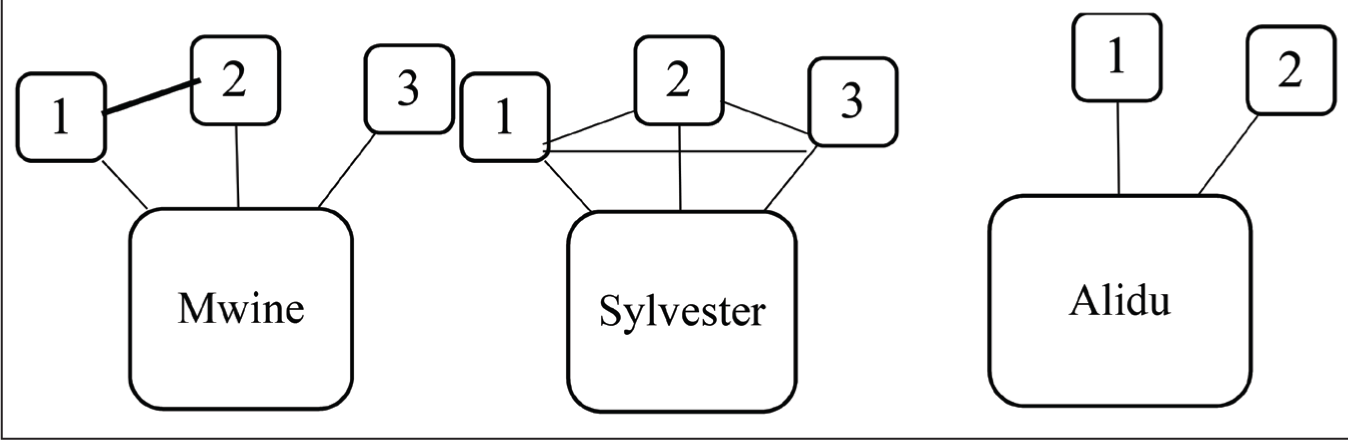
The study found that migrants with strong connections had an easier time moving. Sylvester, for example, received help with transportation and housing from his friends. This shows the importance of having good social networks for migrants. People with strong connections have more support and can easily adjust to new places. In contrast, while still helpful, Mwine’s and Alidu’s networks lacked the same level of interplay and, therefore, may not have provided the same breadth and depth of support. Mwine’s partially connected network and Alidu’s entirely disconnected contacts suggest that while having multiple contacts is beneficial, the nature of these connections significantly impacts the migration experience. This underscores the role of social capital in migration, where the quality and structure of social ties can be as crucial as the quantity. The social networks were mostly friends and acquaintances, not close family, conforming to Granovetter’s (1983) classification of strong and weak social network ties. This is different from other studies in Ghana that show families as the main support system for migration (Awumbila et al., 2017). This research shows that the strength of these migrants’ social networks comes from weak ties. In this study, the weak ties provided helpful information from different places. These networks are bigger because friends can connect migrants to other people with supportive connections.
Understanding the Driver Complex of Young Northern Migration to Sunyani
This section examines the interactions between migration drivers within the Driver Complex Framework as it is applied to internal migration in Ghana. While international and internal migration differ in scale, both are influenced by structural factors that create opportunities or constraints for migration. Similar to other studies in Ghana, the findings of this study indicate that the migration of young people from northern Ghana to Sunyani was shaped by structural factors, such as socio-economic inequalities, including poverty, environmental challenges, social networks and sociocultural factors, aligning with Van Hear et al.’s (2018) predisposing, proximate, mediating and precipitating drivers (Figure 4).
Drivers and Agency in Northern Ghana Youth Migration to Sunyani.
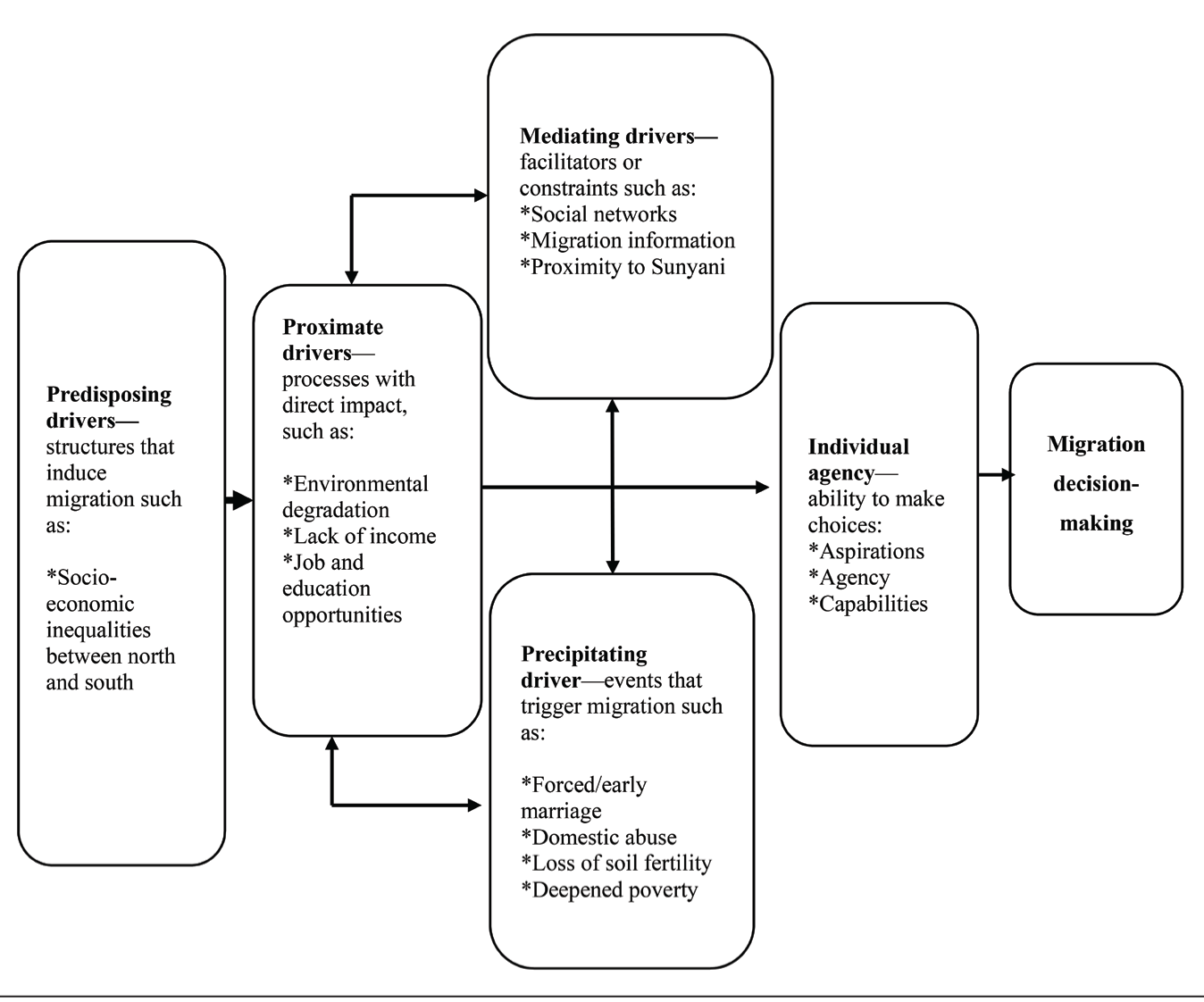
These findings support previous studies, which suggest that in northern Ghana, predisposing factors, including deep-rooted structural inequalities, economic disparities and environmental challenges, create conditions that render migration a long-term appealing strategy (Abdulai et al., 2018). The underinvestment in education, healthcare and infrastructure in northern Ghana, coupled with a history of migration as a livelihood strategy, shapes migration aspirations and reinforces north–south mobility patterns (van der Geest, 2011; Yeboah, 2021). While these structural disparities set the stage, they do not directly trigger migration.
Proximate drivers, which shape direct migration opportunities and constraints, include worsening economic hardship, environmental degradation and social networks. Declining agricultural productivity limits livelihood options, particularly for young people in farming households, making migration a more viable alternative (Martey & Etwire, 2025). In contrast to international migration, internal movement within Ghana is not constrained by laws or policies. Indeed, north–south migration to Sunyani is facilitated by geographical proximity and relatively affordable transportation. Social networks serve as an important mediating driver, reducing risks through accommodation support, job referrals and financial assistance, as revealed in the interviews. These networks, comprising both strong ties (family) and weak ties (friends, acquaintances), facilitate the transition to urban life, mirroring the role of migrant networks in international contexts (Czaika & Weisner, 2025; Massey et al., 1993).
Precipitating drivers serve as immediate triggers for migration. Environmental shocks, such as crop failures, directly reduce household incomes, intensifying economic hardship and limiting local survival options. In such contexts, the interviews have shown that migration shifts from being an aspiration to a necessity, as exemplified by Simon, a study participant who moved due to unprofitable crop farming in his origin community. Social pressures also contribute, particularly for young women, who may face early or forced marriage as a coping mechanism within struggling households (see Mwine’s case). This supports Asare and Forkuor (2024) in their examination of the links between climate change and child marriage rates, emphasising gender vulnerabilities and economic precarity. These factors interact to exacerbate structural inequalities, making migration a pressing response.
The agency of migrants is central to the migration process. While structural constraints are necessary for migration to occur, migrants assess risks and opportunities based on their personal circumstances. As Sen (1999) argues, human agency enables individuals to weigh the costs and benefits of migration. The ACF highlights this, as most young migrants moved independently, as revealed in the interviews. Migrants with high aspirations for upward mobility may migrate despite uncertainties, while those facing financial constraints or weak social networks may opt to stay. This article demonstrates how a combination of these factors influences the decisions of young migrants, reflecting the interplay of migration drivers within national borders, similar to that observed in international migration.
Aspirations to Move Up and On?
The ACF (de Haas, 2021) offers a valuable tool for understanding the diverse migration patterns of young northern migrants in Sunyani. It emphasises that migration is shaped by the interaction between aspirations and the actual capabilities to move. While it is often used to analyse international migration, it is equally applicable to internal movements, particularly in contexts like Ghana, where regional disparities in economic opportunities and infrastructure create conditions similar to those found in global migration inequalities. In this study, participants were asked about their migration aspirations, whether they intended to return home, stay in Sunyani or move to another urban area in southern Ghana. The responses revealed aspirations that were deeply shaped by structural constraints. Economic stability and self-improvement were dominant motivations. Migrants expressed aspirations to invest in enterprises such as farming, retail and services, but structural barriers, including a lack of capital and exclusion from formal financial systems, often hindered their ability to scale their businesses.
For many women, financial independence was particularly significant. A 19-year-old migrant, Raf, emphasised this: ‘I want to be an independent woman. I want my own money and not depend on my husband’. Her goal of becoming a professional hairstylist reflects how skill acquisition serves as a strategy for economic autonomy among female migrants. Nevertheless, migrants’ capability to attain independence is also influenced by the structural and informal nature of their work, which often lacks social protection and long-term security. Assan (2014, p. 12) posits that vocational skill development could mitigate the vulnerability of young northern migrants and ensure their security and well-being in urban areas. The ACF helps to grasp the fundamental point that migration is not solely a response to structural constraints but also a means of realising personal ambitions (de Haas, 2021).
The study also reveals diverse migration aspirations that are shaped by broader structural conditions. Some envisioned returning to their home regions after achieving financial stability, a decision often influenced by strong family obligations and land-based economic opportunities. For instance, a 35-year-old male migrant stated, ‘my wife and children are still in my hometown, so I will finally return. I have already started a business for my wife, and there is family land to farm on’. Others sought to establish permanent lives in Sunyani and are even assisting their friends in joining them, reinforcing the role of social ties in migration. This demonstrates how migration is not merely about moving away but also about forging new social and economic pathways.
At the same time, more than half of the migrants interviewed expressed a strong desire to relocate to larger urban centres like Kumasi or Accra if life circumstances deteriorated, driven by perceptions of greater employment opportunities in these metropolitan areas. In line with the ACF and the Driver Complex Framework, these findings suggest that migration decisions are shaped not only by individual aspirations, agency and capabilities but also by the structural conditions that either enable or constrain mobility. Migrants returning home or settling in Sunyani rely on family stability and economic resources, while those aiming for onward movement may encounter a gap between their aspirations and the structural realities. However, does the aspiration to move again signal underlying dissatisfaction with their current conditions in Sunyani? Does it reflect economic instability, social exclusion or broader challenges of integration? These questions highlight the need for further studies into the lived experience of northern young migrants in Sunyani’s informal sector, especially how their well-being and social integration shape their aspirations for onward migration.
Conclusion
This study aimed to investigate the factors that intersect to influence the movement of young people from northern Ghana to Sunyani’s informal sector. Applying the Driver Complex Framework and ACF, this article offers empirical insights into how aspirations and structural conditions shape migration decisions. The migration Driver Complex Framework offers valuable insights into internal migration if it is applied with a context-specific tweak. The youth migration from northern Ghana to Sunyani can be better understood through Van Hear et al.’s framework as resulting from intersecting structural inequalities, cultural norms (e.g., early marriage), social networks and individual agency. Like international migration, economic opportunity remains the primary driver, with ‘poverty’ as a catchphrase for all forms of deprivation, including income, education and exclusion, underlining the need to adapt global migration frameworks to local realities.
To further explore young migrants’ agency, their aspirations and independent decision-making, it is useful to connect the driver complex with de Haas’s (2021) framework. Many respondents exhibited incremental aspirations, initially moving for economic survival but later considering onward migration to larger cities, mirroring the stepwise mobility aspirations of most international migrants. These findings suggest that while internal and international migration are often treated as separate domains, they share fundamental characteristics that make international migration theories applicable to the study of internal migration. By integrating these frameworks and contextualising them for young people’s migration in Ghana, this study contributes to the growing discourse on the intersections between migration drivers and research on internal and international migration.
Footnotes
Declaration of Conflicting Interests
The authors declared no potential conflicts of interest with respect to the research, authorship and/or publication of this article.
Ethical Approval
The study was approved by the Human Research Ethics Committee of Flinders University (Ethical Clearance Reference Number: 5598) on 29 November 2022.
Funding
The authors disclosed receipt of the following financial support for the research, authorship, and/or publication of this article: the Australian Government Research Training Programme and the College of Humanities Arts and Social Sciences, Flinders University research grant scheme.
Informed Consent
All participants provided written informed consent prior to participating.