




Abstract
This study examined the impact of perceived human likeness (i.e., cognitive and affective) in ChatGPT on users’ perceived benefits (i.e., utilitarian and emotional benefits) and risks (i.e., privacy concerns and AI anxiety), as well as how these factors influence the continuous use intention. Moreover, the current research investigated how perceived AI literacy moderates these connections as a moderated mediation effect. A survey with a preliminary exercise for ChatGPT was conducted on 192 college students in Seoul, South Korea. The results indicated that utilitarian/emotional benefits positively mediated the relationship between cognitive/affective perceived human likeness and continuous use intention. AI literacy negatively moderated the relationships between cognitive/affective human likeness and continuous use intention. Also, the moderated mediation effect of AI literacy negatively affects the relationship between affective human likeness and utilitarian benefits, thereby influencing the continuous use intention.
Plain Language Summary
This study explored how viewing ChatGPT as similar to a human (both in thinking and feeling) affects users’ perceptions about its usefulness and emotional comfort, as well as their concerns about privacy and anxiety toward artificial intelligence (AI). It also examined how these perceptions influence users’ willingness to keep using ChatGPT. Additionally, the study looked at whether users’ understanding of AI (AI literacy) changes these effects. The research involved 192 college students in Seoul, South Korea, who first interacted with ChatGPT and then completed a survey. The findings showed that seeing ChatGPT as human-like in thinking and emotions increased both practical usefulness and emotional comfort, which in turn encouraged continued use intention. However, students with higher AI literacy were less influenced by how human-like ChatGPT appeared. Specifically, higher AI literacy weakened the positive effect of emotional human likeness on perceived usefulness, ultimately reducing intentions to keep using ChatGPT.
Introduction
ChatGPT (Chat Generative Pre-trained Transformer) is a large-scale language model (LLM) developed by OpenAI, a generative AI system that exhibits human-like conversational abilities. It is built upon the Generative Pre-trained Transformer (GPT) architecture, which leverages extensive text data to execute various linguistic tasks. Since its launch, the adoption and usage of ChatGPT have grown significantly, surpassing 100 million active users within 2 months and reportedly processing around 13 million queries daily (Meyer et al., 2023; Wu et al., 2023). Following this success, other major tech companies, including Google, Microsoft, and Meta, have introduced their generative AI models such as Bard, Bing, and LLaMA, respectively.
A central characteristic of ChatGPT is its capacity to engage in interactive and natural conversations resembling human communication. By utilizing advanced AI capabilities, it comprehends user input and generates contextually appropriate responses, thereby facilitating an immersive and dynamic conversational experience (Casheekar et al., 2024). The interactive nature of conversations with ChatGPT fosters a perception of human likeness (Go & Sundar, 2019), making users feel as if they are engaging with another person. The key focus of this study is to examine how this perception of human likeness influences users’ intention to continue using ChatGPT.
Human likeness involves users’ responses to human-like features of AI, which can be elicited through visual cues (e.g., anthropomorphic avatars), identity cues (e.g., human names or labels), and communication cues that enable natural and interactive exchanges (Go & Sundar, 2019; J. Kim et al., 2022). Such perceptions can be conceptualized along cognitive and affective dimensions: cognitively, users may attribute reasoning, intentionality, and consciousness, whereas affectively, they may ascribe empathy and emotional sensitivity to contextual cues (Kühne & Peter, 2023; Waytz, Cacioppo, & Epley, 2010; Waytz, Epley, & Cacioppo, 2010).
This study investigates the extent to which the cognitive and affective dimensions of perceived human likeness influence continuous use intention, with perceived benefits and risks serving as mediating factors. Prior research has shown that anthropomorphism in computer-based agents, including AI, chatbots, and robots exhibiting human-like attributes, has a direct and significant impact on enhancing users’ intention to engage with these technologies (Blut et al., 2021). In addition, considering that emerging technologies offer both opportunities and challenges (Schwab, 2017), the perception of ChatGPT is likely to be linked to perceived benefits and risks. On the benefit side, ChatGPT could offer practical advantages in educational or professional contexts, such as enhanced efficiency (Davis, 1989; Hong et al., 2006; Venkatesh et al., 2012), while also fulfilling emotional needs by reducing loneliness or providing psychological support (Hernandez-Ortega & Ferreira, 2021; Ma & Huo, 2023). Conversely, the risks associated with ChatGPT include concerns over privacy breaches and anxiety about the potential for AI to usurp human roles and identities.
These perceptions, however, are not universal and can vary significantly based on an individual’s AI literacy. AI literacy, defined as the user’s understanding of AI and their capacity to critically engage with the data it generates (Long & Magerko, 2020; Ng et al., 2021), plays a crucial moderating role. Users with higher AI literacy are more likely to appreciate both the advantages and limitations of ChatGPT, which may influence their perceived benefits, perceived risks, and intentions regarding continued usage.
Thus, this study aims to investigate how perceived human likeness in ChatGPT influences users’ perceived benefits and risks, and how these factors affect the intention to continue using ChatGPT. Furthermore, it seeks to explore how AI literacy moderates these relationships, offering a nuanced understanding of the user experience with generative AI models.
Theoretical Gaps and This Study’s Contribution
While extant research has established the importance of anthropomorphism in human-AI interaction, several critical gaps limit our understanding of ChatGPT’s unique characteristics. Table 1 shows key findings from major studies examining AI human likeness and continuous use intention.
The Comparison of the Key Findings from Major Studies on AI/Human Likeness.
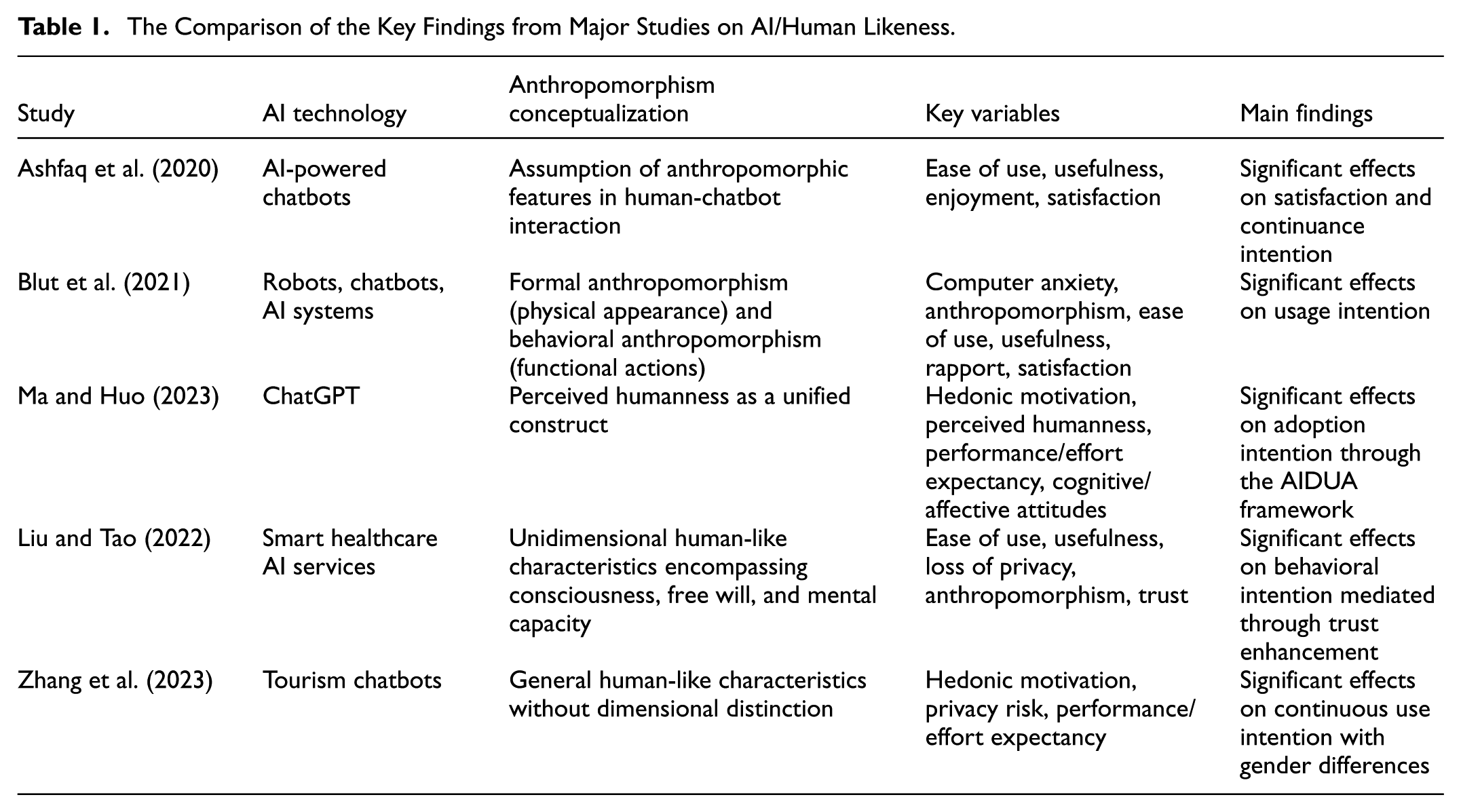
This study advances prior research in three critical ways. First, unlike previous studies that treat anthropomorphism as a unidimensional construct (Liu & Tao, 2022; Zhang et al., 2023), we differentiate between cognitive and affective dimensions of perceived human likeness, following Kühne and Peter’s (2023) multidimensional framework. This distinction enables a more precise understanding of how different aspects of human-like perception operate.
Second, we introduce AI literacy as a critical boundary condition that has been overlooked in research specific to ChatGPT. While general technology acceptance models have examined user expertise (Venkatesh et al., 2012), the role of AI-specific knowledge in moderating anthropomorphic perceptions remains underexplored. Our inclusion of AI literacy addresses Long and Magerko’s (2020) call for research examining how user understanding shapes AI interactions.
Third, we examine both perceived benefits and risks as parallel mediating mechanisms. Previous research has predominantly focused on positive outcomes (Ashfaq et al., 2020; Ma & Huo, 2023), while our dual-pathway model acknowledges that human-like AI can simultaneously evoke both opportunities and threats (Huang & Rust, 2018). This comprehensive approach provides a more nuanced understanding of user decision-making processes.
In particular, the inclusion of both privacy concerns and AI anxiety as distinct risk dimensions reflects the unique concerns surrounding generative AI technologies based on human likeness. Unlike other technology risks such as performance failure, financial costs, or social disapproval, which apply equally to non-anthropomorphic systems, these two risk dimensions become specifically amplified when users attribute human-like characteristics to AI. First, privacy concerns are central because ChatGPT requires continuous user input and processes personal or sensitive data, raising worries about information leakage and surveillance (Kowalczuk, 2018). Unlike traditional technologies, the conversational nature of ChatGPT amplifies these concerns. Second, AI anxiety captures broader existential fears, such as loss of human control, unpredictability, or job displacement (Fast & Horvitz, 2017; Schiavo et al., 2024). These concerns have emerged prominently in recent discussions of large language models and are conceptually distinct from privacy-related worries.
Literature Review
ChatGPT and Perception of Human Likeness
ChatGPT is a conversational AI service built on the Generative Pre-trained Transformer (GPT) model, which leverages extensive datasets to process natural language and perform various tasks such as text generation, translation, and question answering. GPT technology uses pre-trained models to learn complex relationships between sentences and words, enabling more natural conversational interactions (Wu et al., 2023). A key feature of ChatGPT is its ability to facilitate natural, interactive conversations with users through text, resembling human communication (Casheekar et al., 2024; Meyer et al., 2023). The system tracks relationships between sentences and words, mimicking human creativity by learning the context and meaning of conversations. This results in natural language generation, image and voice synthesis, and other outputs seamlessly integrating ChatGPT into the conversation. The main distinction between ChatGPT and traditional chatbots lies in its ability to understand context. Traditional chatbots rely on set rules and templates, making it difficult for them to respond appropriately to complex, unscripted situations. In contrast, ChatGPT, powered by an AI language model, can grasp the context of a conversation and generate natural responses without needing pre-programed rules or templates. This allows ChatGPT to maintain conversational flow, recall previous interactions, and respond appropriately to follow-up questions (Meyer et al., 2023).
Cognitive and Affective Aspects of Perceived Human Likeness
The anthropomorphism that emerges in interactions between human and nonhuman entities is defined as the cognitive process of attributing human-like traits, motivations, intentions, or emotions to non-human objects (Epley et al., 2007; Waytz, Epley, & Cacioppo, 2010). In the context of anthropomorphic perception, prior research has noted that the most salient human-like characteristics are thoughts and feelings (Kühne & Peter, 2023; Ruijten et al., 2019). The emphasis on thoughts and feelings is particularly critical for conversational agents like ChatGPT, which do not rely on physical embodiment but instead generate perceptions of humanness primarily through reasoning and emotional responsiveness. These perceptions can be categorized into two dimensions of perceived human likeness (PHL). The cognitive PHL includes self-reflection, metacognition, deliberate intention, and logical reasoning, while the affective PHL involves emotions, empathy, and imagination (Kühne & Peter, 2023; Waytz, Cacioppo, & Epley, 2010; Waytz, Epley, & Cacioppo, 2010).
In the case of ChatGPT, cognitive PHL can occur when users perceive the AI as possessing cognitive abilities akin to human reasoning, such as intention, consciousness, and logical thought. This perception fosters the sense that ChatGPT is not merely responding algorithmically but engaging in human-like reasoning and judgment. Conversely, affective PHL can arise when users project emotional mental capacities onto ChatGPT, interpreting its interactions as empathetic or emotionally responsive. PHL in ChatGPT is thus the result of users attributing human-like mental states, both cognitive and affective, to the AI. This can be influenced by the nature of the interaction, with cognitive PHL being triggered by the perception of thoughtful, intentional responses and affective PHL arising from interactions that seem to convey empathy or emotional support.
In terms of rational interactions, users may perceive ChatGPT as engaging in intentional, conscious reasoning. These interactions might be characterized by logical consistency, structured problem-solving, and reflective feedback, giving the impression that ChatGPT possesses a human-like cognitive framework (Waytz, Epley, & Cacioppo, 2010). On the other hand, emotional interactions evoke human-like qualities when ChatGPT appears to understand the user’s emotional state or respond empathetically. Cohen and Wills (1985) emphasized the importance of emotional support in social interactions, highlighting behaviors that make individuals feel valued, respected, and cared for. If users perceive ChatGPT as fostering emotional well-being through friendly and empathetic communication, this can enhance their emotional connection to the AI.
Therefore, in the present research, when AI systems like ChatGPT elicit both cognitive and affective PHLs, they can positively impact users’ acceptance and sustained use of the technology. Cognitive PHL can increase the perceived usefulness of the system by enhancing users’ trust in its cognitive abilities, while affective PHL can boost user satisfaction by fostering a sense of emotional connection.
Perceived Human Likeness and Continuous Use Intention
The concept of continuous use intention refers to a user’s willingness to continue utilizing a specific technology or service over time (Bhattacherjee, 2001; Hong et al., 2006; S. S. Kim & Malhotra, 2005). It also encapsulates the user’s tendency to persist in using a technology or service following its initial adoption (Chea & Luo, 2008). This concept has been extensively applied across various fields to explain user behavior post-adoption, often in conjunction with related constructs such as post-adoption intention or behavior (e.g., Chea & Luo, 2008) and continuous use behavior (e.g., Hong et al., 2006; S. S. Kim & Malhotra, 2005).
Previous studies have demonstrated that anthropomorphism in computer-based agents, such as AI, chatbots, and robots with human-like characteristics, has a direct and significant effect on increasing users’ intention to use. For instance, Blut et al. (2021) extensively reviewed the literature on robots, chatbots, and other AI systems, finding that anthropomorphism positively influences users’ intention to use these technologies. As this study is a meta-analysis, the elements of anthropomorphism were categorized into two broad groups: formal and behavioral. The effect of anthropomorphism also varied according to the type of AI system. It had a stronger impact on physical robots, but significant effects were also observed for virtual agents, such as chatbots. These findings suggest that incorporating human-like elements into the design of AI technologies can serve as a strategic approach to enhance customer acceptance and increase long-term intention to use the technology. In addition to examining the positive impact of the human likeness of AI-based nonhuman agents on continuous use intention, as highlighted in previous studies, this study seeks to explore the effects of cognitive and affective PHLs on the continuous use intention of ChatGPT by focusing on the communication style.
As previously discussed, cognitive PHL arises when users perceive an AI agent as possessing qualities such as consciousness, intentionality, and subjectivity. In the context of interacting with ChatGPT, this form of perception occurs when users engage with the AI by asking questions or seeking advice for problem-solving. In these interactions, users may attribute human-like cognitive abilities to ChatGPT, perceiving it as reasoning and responding in a way that mirrors human thought processes. Building on this, cognitive PHL in AI can reduce cognitive barriers to interaction, making it easier for users to comprehend and effectively utilize the AI’s capabilities. In the context of AI-powered smart healthcare services, Liu and Tao (2022) found that cognitive PHL such as consciousness, free will, and the mind of the machine itself significantly increased trust, positively influencing users’ behavioral intention to engage with the service.
On the one hand, affective PHL refers to the emotional and psychological responses elicited by the human-like characteristics of anthropomorphized objects. Such perceptions enable users to experience profound empathy and emotional reassurance, narrowing the psychological divide and fostering strong connections (Blut et al., 2021). Since anthropomorphic perceptions can play a notable role in an individual’s emotional stability and psychological comfort (Epley et al., 2007; Kühne & Peter, 2023), an AI that responds in a warm and understanding manner can make users feel emotionally supported and secure with the technology (Hernandez-Ortega & Ferreira, 2021; Ma & Huo, 2023), thereby enhancing their trust and likelihood to engage continually with the technology. For example, when ChatGPT replies in an empathetic and friendly tone, users perceiving the AI as caring and approachable may develop a bond akin to a human relationship, experiencing positive emotions and viewing the AI as human-like. This, in turn, can induce more frequent use and positive user experiences. A. Kim et al. (2019) examined human-like responses within human-AI interactions, positioning AI speakers within roles resembling friends or assistants. Even though their findings revealed no significance in perceived competence among AI speakers, they found that distinct differences emerged in levels of perceived warmth and enjoyment. Zhang et al. (2023) investigated the factors that predict users’ intention to continue using AI-based chatbots in the tourism field and found that the PHLs of AI chatbots positively affect the intention to continue using them. This study highlighted that AI chatbots contribute directly and positively to continuous use intention, reflecting both cognitive (i.e., viewing the AI as a conscious being) and affective (i.e., recognizing the AI as an emotional being) PHLs.
Perceived Benefits
According to Babin et al. (1994), perceived benefits refer to the utilitarian and hedonic benefits users perceive when evaluating products, services, and technologies. Specifically, utilitarian (or functional) benefits are related to judgments about the functionality and practicality of a product or service and include concepts such as perceived ease of use and usefulness (Komiak & Benbasat, 2006). In contrast, hedonic (or emotional) benefits include emotional factors such as pleasure, enjoyment, satisfaction, closeness, and trust (Agarwal & Karahanna, 2000; Venkatesh et al., 2012). The Value-based Adoption Model by H. W. Kim et al. (2007) explains that individuals engage in a cognitive assessment process when adopting and using technology. In this process, perceived benefits are divided into two concepts: usefulness, a utilitarian benefit as extrinsic motivation, and enjoyment, an emotional benefit as intrinsic motivation.
Therefore, this study investigates the perceived benefits of ChatGPT by distinguishing between utilitarian and emotional benefits, following prior value-based and technology acceptance frameworks. This conceptualization is used consistently throughout the manuscript and will be revisited when examining their mediating role.
The Mediating Effect of Perceived Benefits
As introduced earlier, utilitarian benefits emphasize functional value such as ease of use and usefulness, while emotional benefits emphasize affective gratifications such as enjoyment and satisfaction. Building on this distinction, we examine how PHLs toward AI agents influence these benefits and, in turn, continuance intention.
Blut et al. (2021) conducted a meta-analysis on the role of anthropomorphism in physical robots, chatbots, and other AI systems, focusing on its influence on user experience and service effectiveness. The study identified both direct and indirect effects of anthropomorphism on customers’ intentions to adopt technology, mediated by functional and relational attributes such as likeability, usefulness, ease of use, satisfaction, and trust. Among these, satisfaction, positive affect, usefulness, and ease of use were particularly important mediators. This suggests that human-like AI systems are more approachable to customers and strengthen the relationship with users by increasing perceived benefits as mediators.
According to Ma and Huo (2023), the AI-based technical features of ChatGPT have a positive impact on the intention to continue using ChatGPT. Using the AIDUA (Awareness, Interest, Desire, Use, and Adoption) framework, they showed that perceived humanness positively affected performance expectancy, which in turn flowed through cognitive and affective attitudes to increase intention to use ChatGPT and reduce opposition.
Ashfaq et al. (2020) modeled the factors influencing user satisfaction and the intention to continue using AI-powered chatbots. Their study examined how perceived usefulness, perceived ease of use, perceived enjoyment, information and service quality, satisfaction, and social interaction relate to continued usage intentions. The findings showed that perceived usefulness, ease of use, and enjoyment all positively impact user satisfaction, which in turn strongly contributed to continuance intentions.
Many prior studies have confirmed that anthropomorphism within AI-powered interactive technologies partially influences perceived benefits, subsequently impacting continuance intention (e.g., Ashfaq et al., 2020; Ma & Huo, 2023; Zhang et al., 2023). However, these studies often limit anthropomorphism to simply measuring the degree of “human likeness.” In addition, perceived benefits are typically confined to ease of use or usefulness, as outlined by the traditional Technology Acceptance Model (TAM), or to a few emotional factors relevant to the research context. Therefore, the current research further explores the concept of perceived anthropomorphism by dividing it into cognitive and affective PHLs and examining how they affect the intention to continue using ChatGPT through the mediation of utilitarian and emotional benefits.
Perceived risk
Perceived risk refers to a consumer’s subjective assessment of the uncertainty and potential negative consequences of purchasing or using a product or service (Dowling & Staelin, 1994; Mitchell, 1999; Slovic, 1992). It also encompasses the fear of potential loss or negative outcomes that consumers may experience when purchasing or using a particular product or service. These fears may include the possibility that the product will not perform as expected, financial losses, wasted time, social disapproval or criticism for purchasing or using the product, and psychological discomfort or anxiety (Dowling, 1986). Thus, perceived risk has been considered an important concept in consumer behavior and marketing research. Since Bauer (1967) first introduced the concept of perceived risk, many researchers have studied the various dimensions and effects of perceived risk. As a critical factor in consumer behavior, perceived risk plays a pivotal role in the acceptance process for new technologies or services (Featherman & Pavlou, 2003).
Scholars have classified and analyzed the specific types and concepts of perceived risks associated with emerging technologies. Schwab (2017) categorized the perceived risks into three areas. First, economic risks include job losses and increased unemployment due to automation and AI advancements. Second, technological risks are associated with digital security issues such as cyberattacks, information/data breaches, and identity theft. Third, social risks reflect concerns about an invasion of personal privacy. This categorization provides an insightful framework for understanding the complexity of the risks faced with AI use, considering the multiple impacts of technological innovation on the economy, technology, and society.
The current study attempts to examine the perceived risks of AI-powered services like ChatGPT in two specific ways. First is the fear or concern of personal information leakage. Users of AI services are concerned that their personal information may be misused or leaked. This relates to what Featherman and Pavlou (2003) called “privacy risk.” They argued that as a new technology, the possibility of losing personal information when using online services can negatively affect users’ behavioral intentions. Kowalczuk (2018) further highlights that security and privacy risks are significant obstacles to adopting AI-powered smart speakers. Consumers are concerned that smart speakers are always on and listening to their surroundings. As these devices have the potential to collect sensitive personal information, consumers fear that their privacy may be invaded.
Secondly, perceived risk toward AI-based technology is about AI-related anxiety. This anxiety includes threats to human identity, such as loss of control or the fear of being replaced. Longitudinal research on public perceptions of AI (Fast & Horvitz, 2017) reported that advances in AI have increased concerns over the loss of human control. This stems from the perception that the decision-making process of AI systems is opaque and unpredictable. In addition, anxiety that AI will replace one’s job was found to have a negative impact on acceptance of the technology (Schiavo et al., 2024). Therefore, this study aims to examine perceived risk by dividing it into privacy concerns and AI anxiety.
Mediating Effect of Perceived Risk
In AI-powered technology environments, perceived risk can determine whether a user will continue to use technology. It is a crucial factor, particularly when human likeness impacts a user’s intention to maintain usage, highlighting the need to understand this relationship. Limited research has examined how the two types of PHLs (i.e., cognitive and affective) affect perceived risk. Although AI offers various benefits, it also presents perceived risks, such as privacy concerns and AI anxiety, and research shows mixed findings on whether human likeness can mitigate or heighten these risks. Therefore, the significance of the present study is to examine how PHL, subdivided into cognitive and affective PHLs, affects perceived risk.
Basically, if the user’s interaction with a human-like agent enhances predictability and controllability, the perception of risk may decrease, while the sense of safety may increase (Epley et al., 2007). For example, smart home assistants, which are human-like digital devices, help to alleviate privacy concerns related to potential invasions within the home environment (Benlian et al., 2020). However, in contrast, excessive displays of AI’s capabilities can make users fear that AI may replace them due to its extensive analytical or data-processing capabilities (Huang & Rust, 2018).
Perceived risk has a clear causal effect on the intention to continue using AI. Schiavo et al. (2024) found that AI-related anxiety negatively influences AI acceptance, breaking down this anxiety into four aspects: learning, sociotechnical blindness, configuration, and job replacement. They analyzed how each of these dimensions affects AI acceptance and, ultimately, the intention to use. Their findings showed that concerns about learning, sociotechnical blindness, and configuration negatively impact AI acceptance, indicating that greater discomfort with AI technology reduces the likelihood of adoption. Similarly, Zhang et al. (2023) studied the influence of perceived risks, such as uncertain outcomes, on the continued use of AI chatbots in tourism, categorizing risk into privacy risk (e.g., loss of control over personal information) and time risk (e.g., perception of wasted time). Both risks were found to negatively impact continued chatbot usage. Therefore, the present research aims to determine whether the human likeness of ChatGPT negatively affects users’ intention to continue using it through perceived risk.
Moderated Mediation Effect of Perceived AI Literacy
Literacy traditionally refers to the ability to read and write. It involves the ability to access and understand information through reading and writing, which is essential for societal participation and self-expression (Snow, 2002). As society becomes increasingly complex, the concept of literacy has evolved, with scholars adapting it to various social, cultural, and institutional contexts (Lankshear & Knobel, 2006). In the digital era, Gilster (1997) introduced the concept of digital literacy, defining it as the ability to understand and use information across different digital formats accessible via computer networks. Similarly, Livingstone (2004) also emphasized the importance of media literacy, describing it as the ability to access, analyze, evaluate, and create media content.
More recently, the rapid advancement of artificial intelligence (AI) has led to calls for “AI literacy,” which refers to the skills required to understand, critically assess, and effectively utilize AI systems (Ng et al., 2021). AI literacy is not a static concept but one that evolves alongside technological progress. Ng et al. (2021) identify three interrelated dimensions: (a) technical knowledge of AI’s principles and applications, (b) social and ethical awareness of AI’s broader impact and governance, and (c) critical reasoning that enables users to recognize limitations, biases, and risks in AI outputs. Building on this perspective, AI literacy can be understood as the ability to comprehend the fundamental concepts of AI, interact meaningfully with AI systems, and evaluate their outcomes critically (Long & Magerko, 2020; Ng et al., 2021).
Despite growing attention, limited research has examined how AI literacy influences user perceptions in the context of generative AI systems such as ChatGPT. This study addresses that gap by investigating AI literacy as a moderator in the relationship between cognitive and affective PHLs, perceived benefits and risks, and continuance intention. Although AI literacy is theoretically multidimensional (Ng et al., 2021), the present research focuses on critical-conceptual AI literacy-users’ capacity to distinguish AI from non-AI technologies, differentiate strong from weak AI, compare human and machine intelligence, and evaluate AI’s strengths and weaknesses. This focus captures the analytical competencies most relevant for assessing anthropomorphic cues in ChatGPT.
Prior work demonstrates the importance of this dimension. Long and Magerko (2020) argue that the complexity of AI often hinders public understanding, reinforcing the need for education that strengthens critical literacy. They highlight strategies for improving AI literacy through pedagogical frameworks that emphasize human roles in AI interaction, the interpretation of AI-generated data, and awareness of risks such as privacy violations, algorithmic bias, misinformation, and labor displacement. Users with higher literacy are better equipped to utilize AI effectively while recognizing and managing associated risks, underscoring its relevance as a moderating factor in technology adoption models (Long & Magerko, 2020; Schiavo et al., 2024).
The present investigation addresses this gap by examining technical understanding as a boundary condition that may moderate the relationships between perceived human likeness and usage intentions. Given the increasing prevalence of conversational AI systems exhibiting sophisticated human-like behaviors, understanding how user knowledge shapes anthropomorphic perception processes holds both theoretical and practical significance for the design and adoption of intelligent technologies.
Research model
Figure 1 depicts the hypotheses and research questions described above. The current research investigates the direct impact of cognitive and affective PHL on the continuous use intention of ChatGPT and the indirect effect of perceived benefits (i.e., utilitarian benefits and emotional benefits) and risk perception (i.e., privacy concerns and AI anxiety) and the extent to which these effects depend on levels of AI literacy.
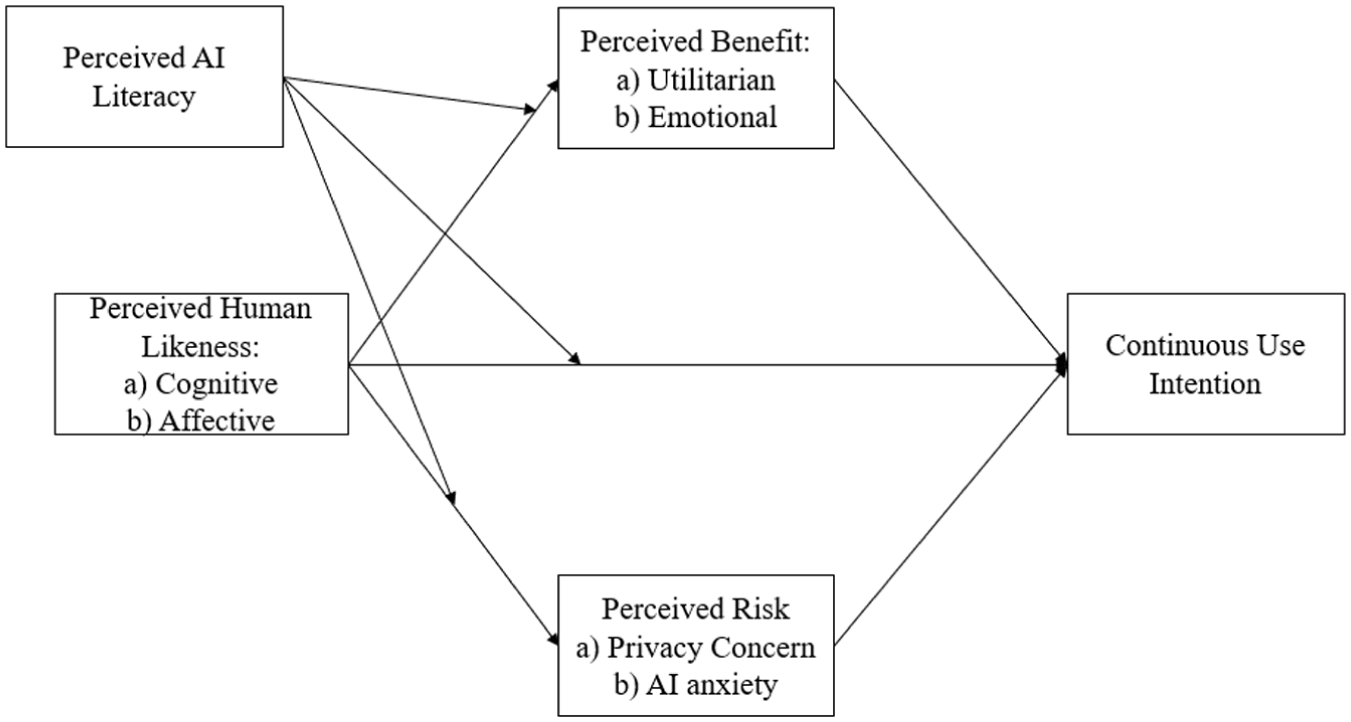
The proposed research model.
Methods
Participants
This study collected data through an experiment with ChatGPT and a follow-up survey at a private university in Seoul, South Korea, on April 10 to 11, 2023. Participants completed the survey after interacting with ChatGPT. Of the 216 students, 192 met the response criteria and were included in the analysis. An a priori power analysis, conducted using G*Power 3.1 (Faul et al., 2007), determined a required sample size of 179 based on a medium effect size of 0.15 (f2), an alpha level of .05, and a desired power of 0.90. Therefore, 192 participants were used for the final analysis.
Procedures
At the point of data collection, only 4 months had elapsed since the launch of ChatGPT (November 30, 2022, OpenAI, n.d), and its adoption in Korea remained relatively limited. This necessitated an introductory exercise and accompanying guidelines. The need for this preparatory step was evidenced by the fact that 33.3% of participants had never used ChatGPT, and 53.6% had used it less than once a week, as shown in Table 1.
The purpose of this preliminary exercise was to provide participants with an opportunity to experience natural and diverse conversations with ChatGPT. To achieve this, we prepared a scenario in advance, which included three conversation topics. Given that the participants were college students, the topics were selected to maximize relevance and engagement: (1) career, (2) interpersonal relationships, and (3) academic pressure.
For each topic, two types of questions were designed to guide the interaction with ChatGPT: information-seeking questions and consultation-style questions. Information-seeking questions aimed to elicit straightforward responses, whereas consultation-style questions facilitated a more discursive, interactive exchange. For instance, within the topic of academic pressure, an information-seeking question might include: “I have too many assignments. How can I best organize them?” or “Is there an app that can help me learn efficiently?” In contrast, a consultation-style question might include: “It’s exam season, and I’m feeling extremely stressed and anxious,” or “Other friends complete their assignments well, but I feel like I’m the only one struggling, which makes me feel frustrated.” Each conversation topic contained 10 information-seeking questions and 10 consultation-style questions. Appendix 1 shows a sample scenario.
Following a brief introduction to ChatGPT, participants selected one of the three conversation topics and engaged in two separate 10-min interaction sessions: one focused on information-seeking questions and the other on consultation-style questions. Participants were encouraged to use the provided scenario questions but were informed that they were not required to use all of them and could incorporate their own questions as the conversation progressed. Each session began in a new dialog window to prevent overlap from previous interactions. Immediately after completing both sessions, participants filled out a questionnaire reflecting on their experiences with ChatGPT.
This preliminary exercise lasted approximately 30 min, during which participants engaged with ChatGPT by posing questions, receiving responses, and experiencing AI-driven interactions.
Measurements
Measurement items that we adapted have been widely applied in contexts such as the World Wide Web, internet banking, and AI speakers, with the wording adjusted to fit each technology. In line with this practice, we tailored the items to ChatGPT while maintaining their conceptual consistency with prior research. The complex conceptual structure of our key constructs, encompassing PHLs (cognitive and affective), perceived benefits (utilitarian and emotional), perceived risks (privacy concerns and AI anxiety), and AI literacy (incorporating multiple conceptual components), necessitated rigorous examination of potential inter-measurement relationships. The latent constructs addressed in this study are conceptually closer to multidimensional factors likely to be correlated rather than mutually independent. When correlations between factors are anticipated in exploratory factor analysis, oblique rotation (e.g., Promax, Oblimin) should be prioritized. Conversely, orthogonal rotation (e.g., Varimax) is appropriate only when factor correlations are minimal (Fabrigar et al., 1999). Particularly in humanities and social science measurements, artificially assuming that theoretically and empirically related constructs are independent can lead to inaccurate loadings and interpretive errors. Therefore, an approach in which oblique rotation is used first to examine pattern matrix and factor correlations, with orthogonal analysis presented as a supplementary interpretation when necessary, is recommended (Costello & Osborne, 2005; Fabrigar et al., 1999). To address this methodological concern, we conducted both orthogonal (Varimax) and oblique (Promax) exploratory factor analyses. Only measurement items that demonstrated adequate performance across both analytical approaches were retained for subsequent analyses, thereby ensuring robust measurement validity and reliability. All major variables were measured using a 5-point Likert scale ranging from 1 (not at all) to 5 (very much). Appendix 2 presents an overview of measurement items.
Perceived Human Likeness
Research in human-computer interaction and anthropomorphism literature offers numerous scales designed to measure perceptions of human likeness in artificial entities (e.g., Liu & Tao, 2022; Pelau et al., 2021; Zhang et al., 2023). However, these existing scales do not clearly differentiate between mental attributes of human likeness, making them insufficient for the present research purposes for cognitive and affective PHLs. Cognitive perceived human likeness (PHL) refers to users’ perceptions that ChatGPT has its own intentions, consciousness, and thoughts, while affective PHL reflects how ChatGPT affects users’ emotions and feelings (Kühne & Peter, 2023; Waytz, Cacioppo, & Epley, 2010; Waytz, Epley, & Cacioppo, 2010). Building on this conceptualization, we adapted and developed measures from previous studies comprising items specifically assessing cognitive and affective PHLs. Nine items were adapted, and factor analysis revealed two distinct dimensions. Cognitive PHL was measured using three items, such as “ChatGPT seems to speak with consciousness” (M = 2.73, SD = 1.08, Cronbach’s α = .88). Affective PHL included five items, such as “ChatGPT seems to understand my emotions” (M = 2.99, SD = 0.92, Cronbach’s α = .85).
Perceived benefit
This study assessed perceived benefits by categorizing them into utilitarian and emotional benefits of using ChatGPT. Utilitarian benefits refer to the improvement of work performance and efficiency due to the usefulness of ChatGPT. Emotional benefits refer to the improvement of the user’s emotional state and reinforcement of positive psychological states through the use of ChatGPT. To measure perceived benefits, this study utilized questions adapted from existing studies (Agarwal & Karahanna, 2000; Blut et al., 2021; Davis, 1989; A. Kim et al., 2019; Lee, 2009; Ma & Huo, 2023). The five items were used for utilitarian benefits (e.g., “ChatGPT seems to increase my work productivity and is useful in real life”; M = 3.82, SD = 0.82, Cronbach’s α = .86). Six items were used for emotional benefits (e.g., “Talking with ChatGPT gives me a sense of stability”; M = 2.65, SD = 0.95, Cronbach’s α = .89).
Perceived risk
Perceived risk refers to the extent to which an individual evaluates the potential threat an individual might face in a specific situation or event (Mitchell, 1999; Slovic, 1992). Perceived risk in this study encompassed two dimensions specifically relevant to anthropomorphic AI interactions. Privacy concerns reflected apprehensions about data security and information misuse during conversational exchanges, which become heightened in ChatGPT due to its requirement for continuous personal input and the conversational format that encourages disclosure (Kowalczuk, 2018). AI anxiety captured existential worries about human-AI relationships, including concerns about autonomy loss, system unpredictability, and potential role displacement based on fears that have gained prominence with large language models (Fast & Horvitz, 2017; Schiavo et al., 2024). These risk dimensions were selected because they are uniquely intensified by human-like attributions, unlike general technology concerns such as system reliability or economic costs that apply uniformly across anthropomorphic and non-anthropomorphic systems. The seven measurement items were adapted from prior research examining technology-related risks and AI-specific anxieties (Featherman & Pavlou, 2003; Lee, 2009; Schiavo et al., 2024) and were grouped into two factors: four items of “privacy concerns” (M = 3.35, SD = 1.03, Cronbach’s α = .90) such as “I think ChatGPT will steal my information” and three items of “AI anxiety” (M = 2.82, SD = 0.97, Cronbach’s α = .71) such as “ChatGPT may one day dominate humans.”
Continuous Use Intention
Continuous use intention refers to a user’s intention to continue using a particular technology or service (Bhattacherjee, 2001; Hong et al., 2006; S. S. Kim & Malhotra, 2005). The measurement items of continuous use intention consisted of five questions, such as “I intend to continue using ChatGPT” using a 5-point Likert scale ranging from 1 (not at all) to 5 (very much) (M = 3.75, SD = 0.96, Cronbach’s α = .94).
AI literacy
While AI literacy is theoretically multidimensional, encompassing technical, critical, and ethical components (Ng et al., 2021), the present study operationalized AI literacy as a critical conceptual understanding that captures users’ foundational knowledge for distinguishing and understanding AI systems and their functions. Drawing upon previous studies (Long & Magerko, 2020; Schiavo et al., 2024), AI literacy was measured with four items using questions such as “I can distinguish between technological artifacts that use AI and those that do not” (M = 3.16, SD = 0.78, Cronbach’s α = .75).
Control Variables
The demographic variables of gender (female: 80.7%), age (20 s: 98.5%), education (Mdn: third year of university), and previous ChatGPT experience were used as control variables for analysis. Previous ChatGPT experience was recorded as either present (66.7%) or absent, along with the average daily usage (Mdn: less than 10 min) and average weekly usage (Mdn: less than one time). Appendix 3 shows the sample description. Additionally, individual differences in perceived anthropomorphism were controlled. Waytz, Cacioppo, and Epley (2010) demonstrated that anthropomorphic interpretations of non-human objects vary among individuals. Recognizing this potential influence, the study measured individual differences in the degree of human likeness in technology based on Goodrich and Schultz’s (2008) framework. Two items were rated including statements such as “When I used a machine, it felt just like a human being.” (M = 2.09, SD = 1.02, Cronbach’s α = .84).
Analysis Method
The data collected to explore the hypotheses and research questions were analyzed using the Process Macro of SPSS 26 (Hayes, 2017). Specifically, Model 4 of the Process Macro assessed the direct effects of the PHLs of ChatGPT on continuous use intention as well as the mediating roles of perceived benefits and perceived risks. Model 8 was used to analyze the moderated mediation effects of AI literacy on the relationship between PHLs, perceived benefits, risks, and continuous use intention. Analysis was conducted with bootstrapping of 5,000 samples at a 95% confidence interval.
Results
The Impact of Perceived Human Likeness of ChatGPT on Continuous Use Intention
The results showed that both direct effects of (H1a) cognitive (β = .02, p = .776, 95% CI = [−0.083, 0.111]) and (H1b) affective PHL (β = .04, p = .551, 95% CI = [−0.101, 0.188]) to ChatGPT were not significant on the intention to continue using ChatGPT.
The Mediating Effect of Perceived Benefit and Perceived Risk
Firstly, for cognitive PHL, (H2a-1) utilitarian benefits (β = .14, 95% CI = [0.041, 0.246]) and (H2a-2) emotional benefits (β = .06, 95% CI = [0.011, 0.118]) had a positively indirect effect on the relationship between cognitive PHL and continuous use intention. However, (H3a-1) privacy concern (β = .00, 95% CI = [−0.012, 0.013]), and (H3a-1) AI anxiety (β = −.01, 95% CI = [−0.033, 0.009]) had no significant mediating effect. Therefore, H2a-1 and H2a-2 were supported, while H3a-1/2 were rejected (see Table 2 and Figure 2).
Regressions of Cognitive Perceived Human Likeness and Study Variables.
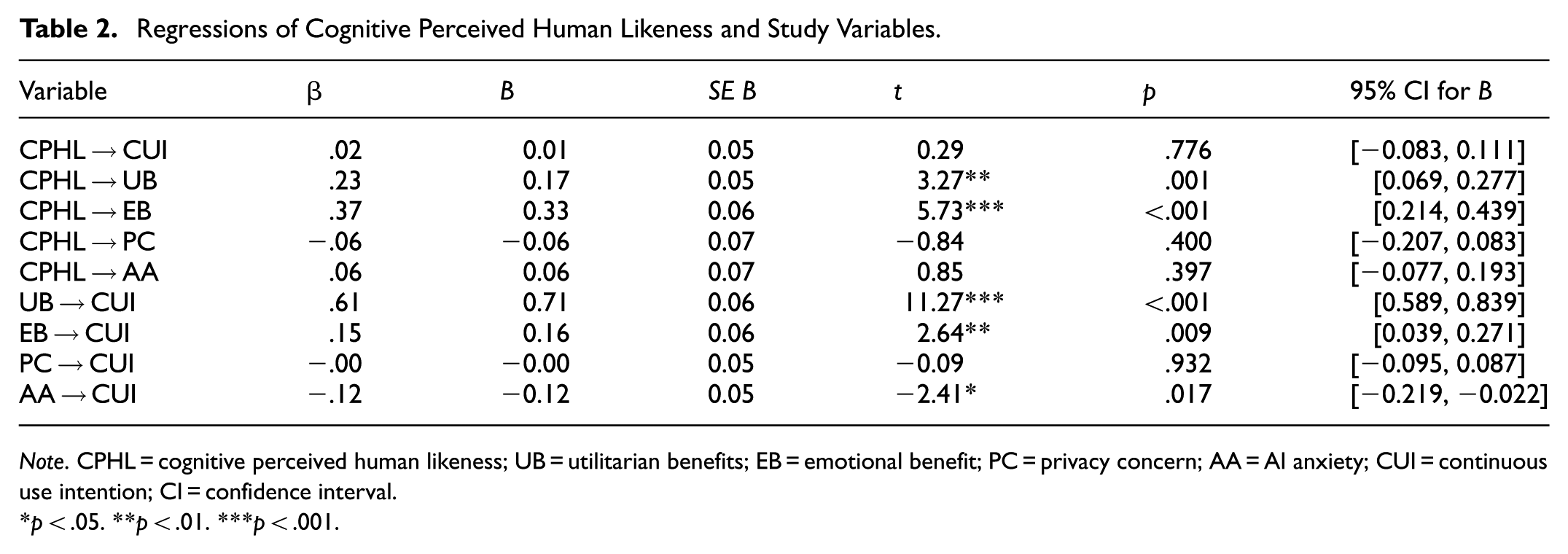
Note. CPHL = cognitive perceived human likeness; UB = utilitarian benefits; EB = emotional benefit; PC = privacy concern; AA = AI anxiety; CUI = continuous use intention; CI = confidence interval.
p < .05. **p < .01. ***p < .001.
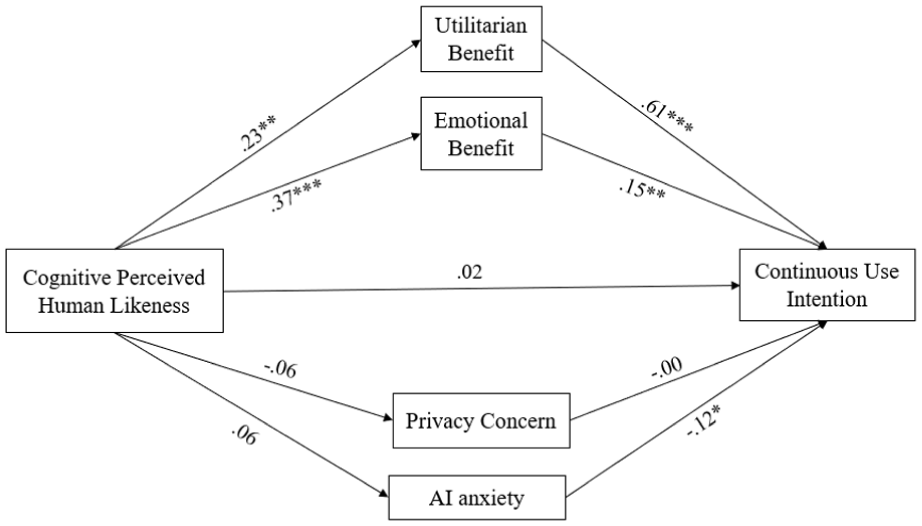
The mediating effect of perceived benefits and risks between cognitive perceived human likeness and continuous use intention.
Secondly, for affective PHL, (H2b-1) perceived utilitarian benefits (β = .19, 95% CI = [0.086, 0.309]) had a positively indirect effect on the relationship between affective PHL and continuous use intention. However, (H2b-2) perceived emotional benefits (β = .08, 95% CI = [−0.019, 0.187]), (H3b-1) privacy concern (β = −.00, 95% CI = [−0.010, 0.011]), and (H3b-1) AI anxiety (β = .00, 95% CI = [−0.016, 0.025]) had no significant indirect effect. Thus, H2b-1 was supported, whereas H2b-2 and H3b-1/2 were rejected (see Table 3 and Figure 3).
Regressions of Affective Perceived Human Likeness and Study Variables.
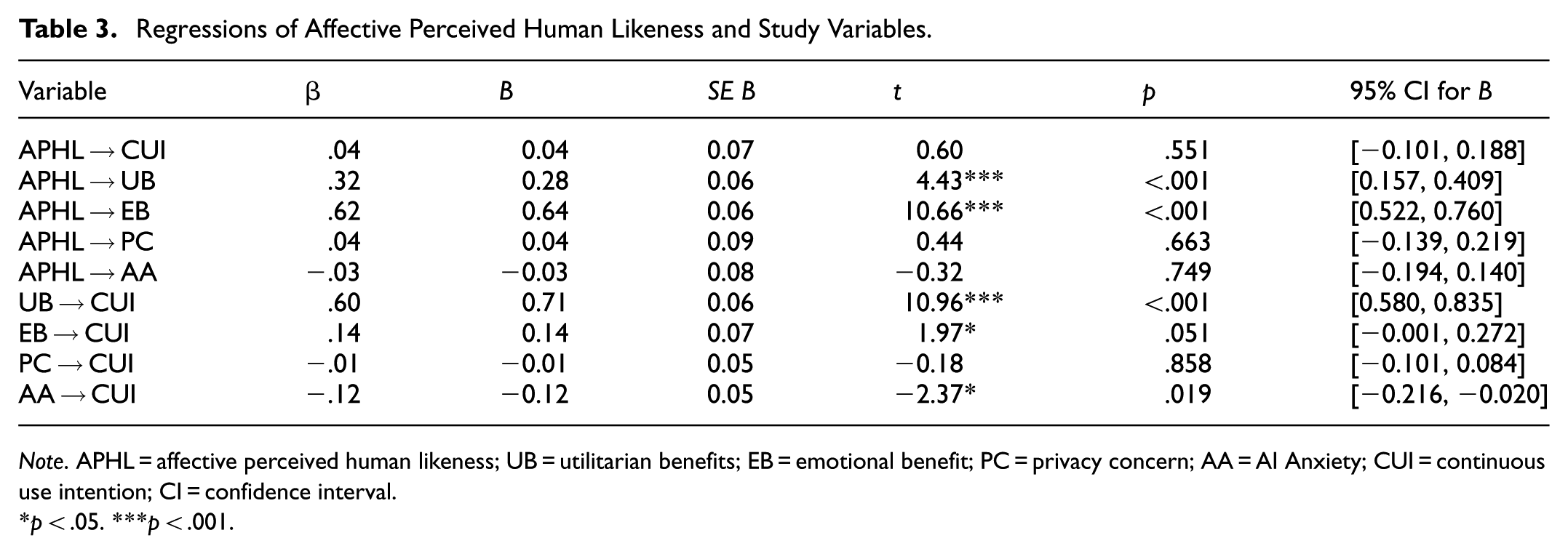
Note. APHL = affective perceived human likeness; UB = utilitarian benefits; EB = emotional benefit; PC = privacy concern; AA = AI Anxiety; CUI = continuous use intention; CI = confidence interval.
p < .05. ***p < .001.
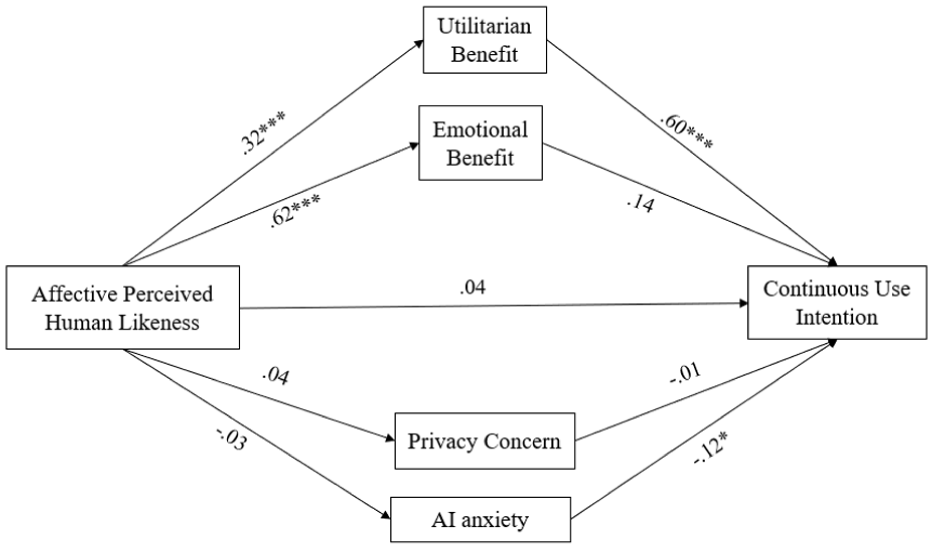
The mediating effect of perceived benefits and risks between affective perceived human likeness and continuous use intention.
The Moderation Effect of AI Literacy
The interaction effects of AI literacy and (RQ1a) cognitive PHL (B = −0.12, 95% CI = [−0.229, −0.016]) and (RQ2a) affective PHL (B = −0.16, 95% CI = [−0.287, −0.027]) on the continuous use intention were negatively significant (see Table 4).
Interaction Effects of AI Literacy and Perceived Human Likeness on the Continuous Use Intention.
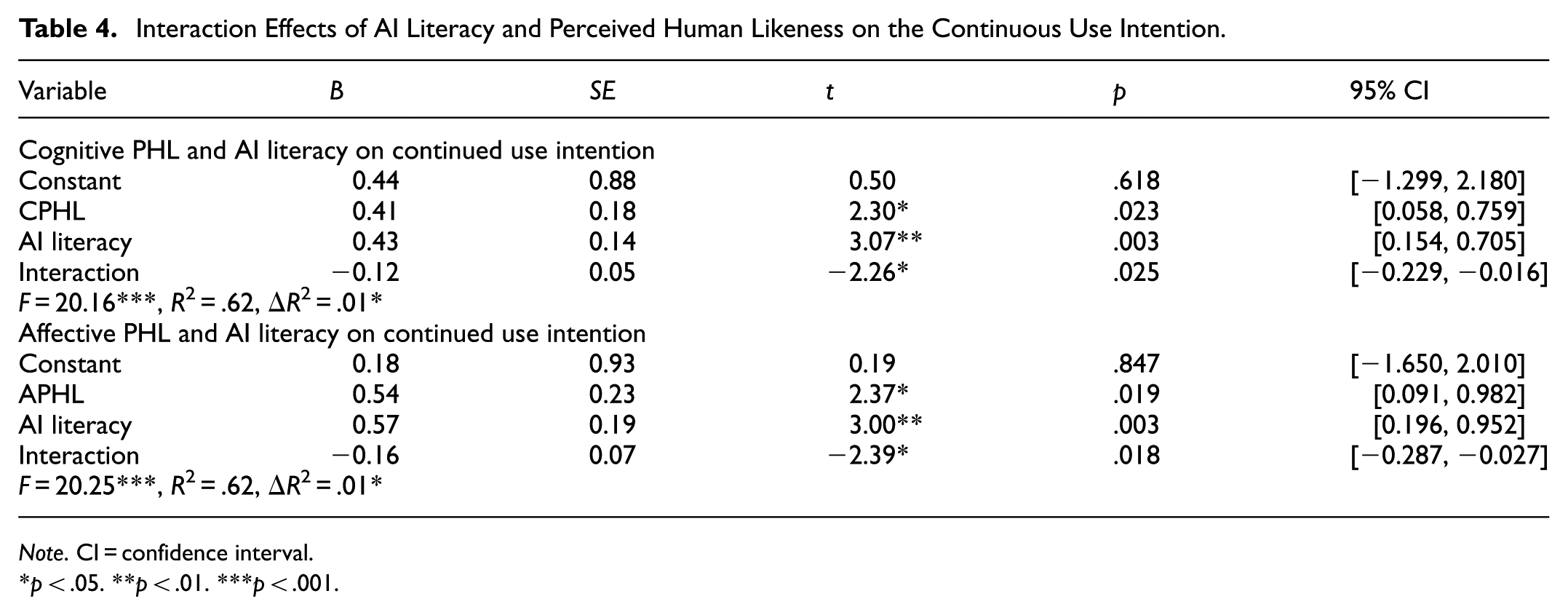
Note. CI = confidence interval.
p < .05. **p < .01. ***p < .001.
Interaction Effects of AI Literacy for Perceived Benefit
First, the interaction effect of AI literacy and cognitive PHL negatively affected (RQ1b) utilitarian benefits (B = −0.13, 95% CI = [−0.250, −0.001]), whereas it had no significant effect on (RQ1c) emotional benefits (B = −0.04, 95% CI = [−0.179, 0.095]). Secondly, the interaction effect of AI literacy and affective PHL negatively influenced (RQ2b) utilitarian benefits (B = −0.26, 95% CI = [−0.403, −0.122]). However, it did not significantly affect (RQ2c) emotional benefits (B = −0.08, 95% CI = [−0.221, 0.055], see Table 5).
Interaction Effects of AI Literacy and Perceived Human Likeness on the Mediating Variables.
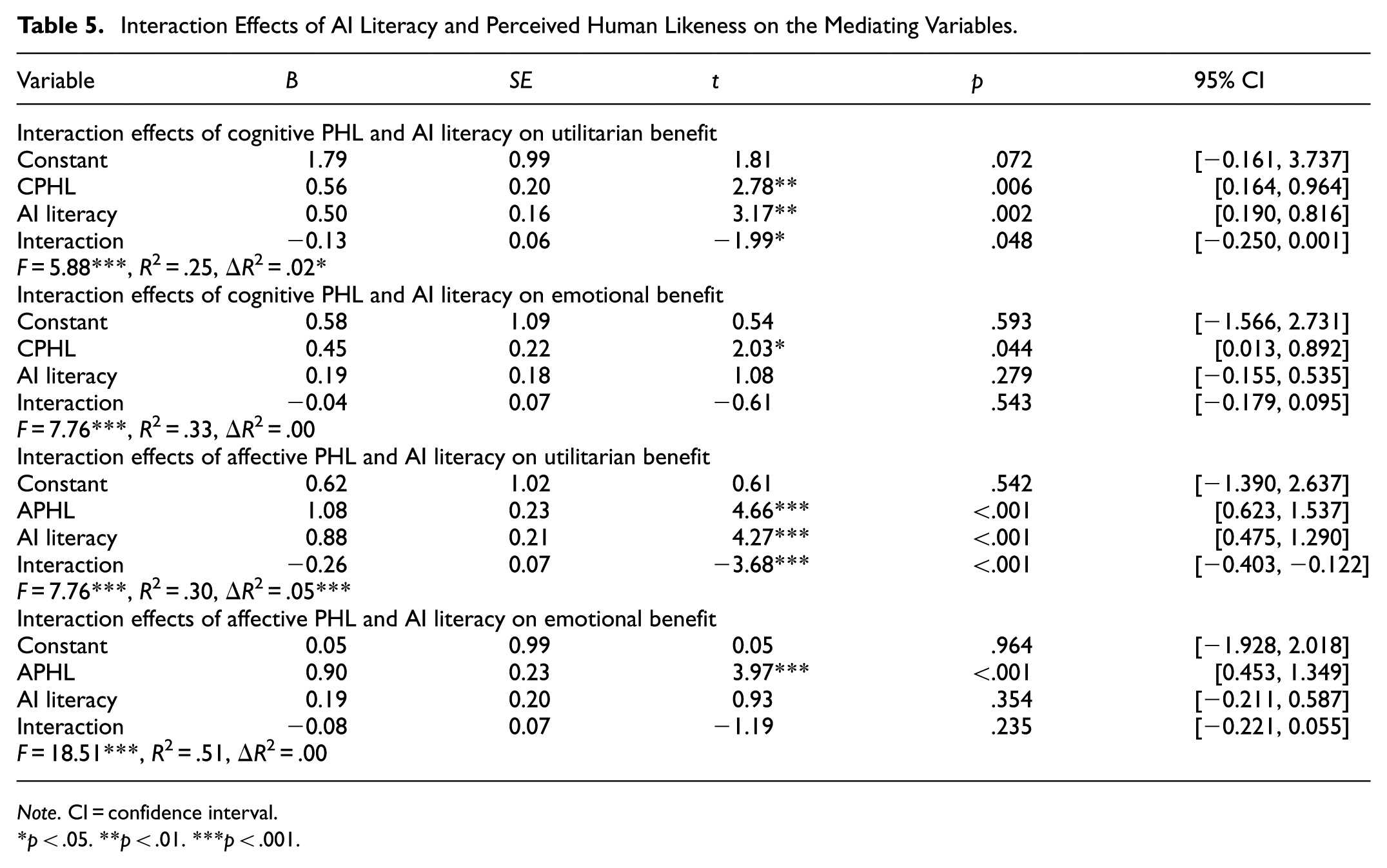
Note. CI = confidence interval.
p < .05. **p < .01. ***p < .001.
This result indicates that the impact of cognitive and affective PHLs on utilitarian benefits can vary by AI literacy level. To be specific, AI literacy moderates the effect of cognitive and affective PHLs on perceived utilitarian benefits, reducing the impact of both PHLs. Among users with high AI literacy, perceived utilitarian benefits tend to decrease as both PHLs strengthen. On the other hand, for users with low AI literacy, perceived utilitarian benefits increase with stronger cognitive and affective PHLs.
Interaction Effects of AI Literacy for Perceived Risk
First, the interaction between cognitive PHL and AI literacy had no significant impact on (RQ1d) privacy concerns (B = 0.05, 95% CI = [−0.131, 0.224]) and (RQ1e) AI anxiety (B = 0.03, 95% CI = [−0.134, 0.196]). Next, the interaction between affective PHL and AI literacy also didn’t have significant effects on (RQ2d) privacy concerns (B = 0.12, 95% CI = [−0.092, 0.325]) and (RQ2e) AI anxiety (B = −0.17, 95% CI = [−0.362, 0.024]).
The Moderated Mediation Effect of AI Literacy
First, the results of the index of moderated mediation showed (RQ3) the moderated mediating effect of AI literacy on the relationships between cognitive PHL and continuous use intention of ChatGPT, mediated by (RQ3a) utilitarian benefits (effect = −0.08, 95% CI = [−0.195, 0.028]), (RQ3b) emotional benefits (effect = −0.01, 95% CI = [−0.032, 0.017]), (RQ3c) privacy concern (effect = −0.00, 95% CI = [−0.016, 0.001]), (RQ3e) AI anxiety (effect = −0.00, 95% CI = [−0.027, 0.017]), were not significant. Figure 4 shows the results of moderation and moderated mediation with key variables, starting from cognitive PHL.
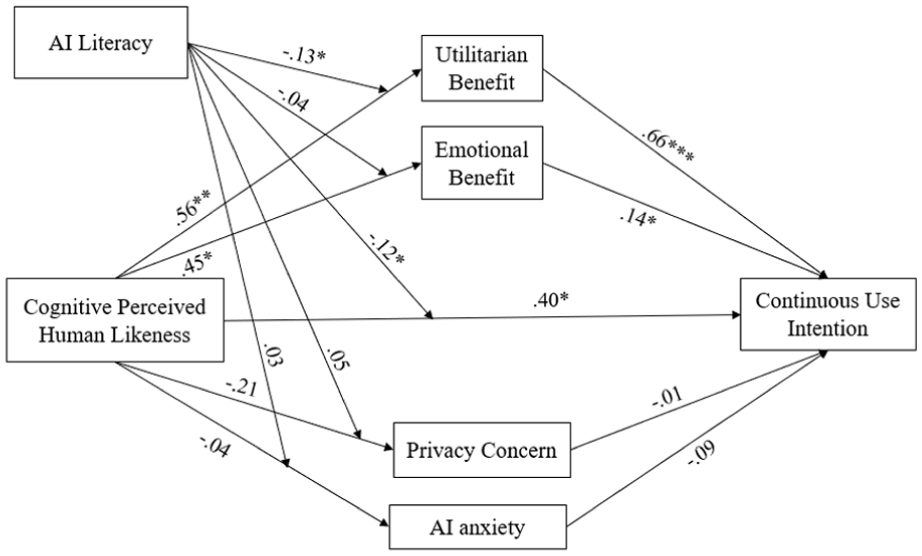
The moderation and moderated mediation effect of AI Literacy between cognitive perceived human likeness and continuous use intention.
Second, the results of the index of moderated mediation revealed that (RQ4) the moderated mediating effects of AI literacy on the relationships between affective PHL and continuous use intention of ChatGPT, mediated by (RQ4b) emotional benefits (effect = −0.01, 95% CI = [−0.042, 0.014]), (RQ4c) privacy concern (effect = −0.00, 95% CI = [−0.024, 0.012]), (RQ2d) AI anxiety (effect = 0.02, 95% CI = [−0.005, 0.055]), were not significant. Nonetheless, the moderated mediation effect of AI literacy negatively affected (RQ4a) the mediating effect of utilitarian benefits (effect = −0.17, 95% CI = [−0.275, −0.037], see Table 6). Figure 5 shows the results of moderation and moderated mediation with key variables, starting from affective PHL.
Moderated Mediation Effect of AI Literacy from Affective Perceived Human Likeness.
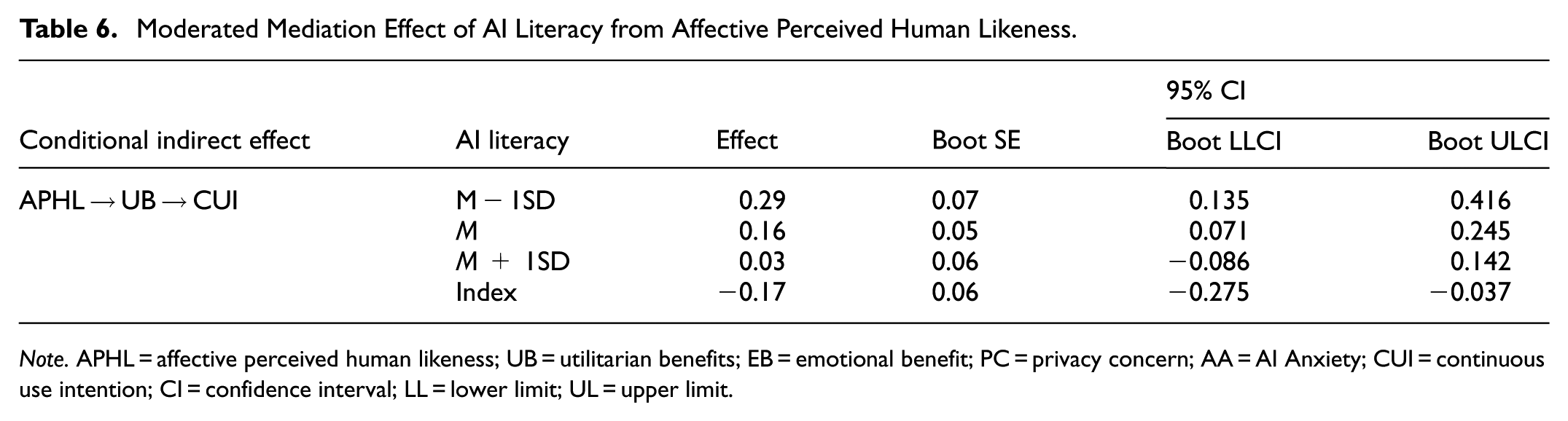
Note. APHL = affective perceived human likeness; UB = utilitarian benefits; EB = emotional benefit; PC = privacy concern; AA = AI Anxiety; CUI = continuous use intention; CI = confidence interval; LL = lower limit; UL = upper limit.
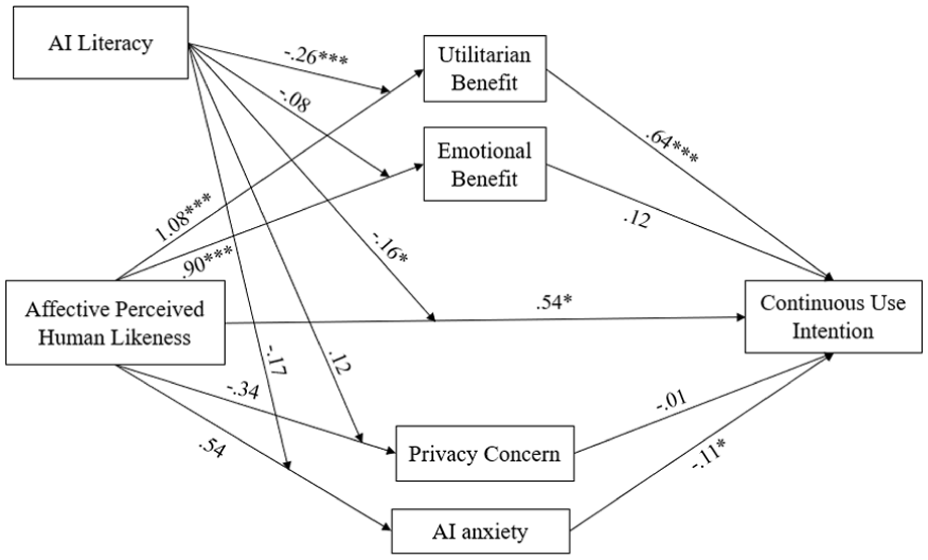
The moderation and moderated mediation effect of AI literacy between affective perceived human likeness and continuous use intention.
A moderated mediation analysis showed that the effect of affective PHL on ChatGPT’s continuous use intention, mediated by utilitarian benefits, weakens as AI literacy increases (i.e., affective PHL → utilitarian benefits → continuous use intention). Specifically, this negative effect was significant among users with low AI literacy (effect = 0.30, 95% CI = [0.135, 0.416]) and average AI literacy (effect = 0.16, 95% CI = [0.071, 0.245]) but became insignificant for higher AI literacy (effect = 0.03, 95% CI = [−0.086, 0.142]). In other words, while the moderating influence of AI literacy is negative, it diminishes at relatively higher AI literacy levels. Thus, utilitarian benefits play a stronger mediating role in linking affective PHL to continuous use intention among users with lower and average AI literacy, and this role decreases as AI literacy increases.
Conclusion
Discussion
The primary objectives of the current study can be summarized in three main points. First, the present research tested the direct effect of cognitive and affective PHLs of ChatGPT on continuous use intention. Second, it explored the mediating effects of perceived benefits (i.e., utilitarian and emotional) and perceived risks (i.e., privacy concerns and AI anxiety) in this relationship. Specifically, it is noteworthy that utilitarian and emotional benefits served as mediators, indirectly affecting the relationship between PHLs and the intention to continue using ChatGPT. Remarkably, this suggests that when users have a higher PHL of ChatGPT, they perceive the benefits of ChatGPT technology to be greater, which in turn leads to their intention to continue using it. However, the mediating effects of perceived risk were not significant. It shows that perceived benefits can play a more critical role than perceived risks in the continuous use intention of AI technologies. Third, the study explored how AI literacy moderates these relationships. The study results revealed that AI literacy significantly moderates the relationship between affective PHL and utilitarian benefits, influencing continuous use intentions for those with lower and average AI literacy levels. These relationships tended to be weaker for users as AI literacy increased. These results suggest that AI literacy moderates differences according to their level of technical understanding of AI. Lastly, examination of the mean scores of all major constructs reveals a subtle pattern of cautiousness in the early stages of ChatGPT use. While utilitarian benefits (M = 3.82), privacy concerns (M = 3.35), AI literacy (M = 3.16), and continuous use intention (M = 3.75) exceeded the midpoint (3.0), several key variables fell below it, such as cognitive PHL (M = 2.73), affective PHL (M = 2.99), emotional benefits (M = 2.65), and AI anxiety (M = 2.82). These below-midpoint scores suggest that participants approached ChatGPT with a moderate degree of caution, recognizing its practical value while maintaining psychological distance for strong human-like qualities or experiencing emotional attachment. Scores below the midpoint, therefore, do not indicate rejection, but rather calibrated engagement reflecting a cautious yet pragmatic stance often observed during the early diffusion stages of emerging technologies. Early-stage users often experience ambivalent attitudes toward emerging AI systems, simultaneously recognizing their usefulness while remaining wary of risks such as unpredictability and privacy threats (Schiavo et al., 2024). That is, users in the current study appear to adopt ChatGPT instrumentally while maintaining psychological distance and moderate risk awareness. Therefore, scores below the midpoint likely indicate a balanced yet cautious orientation among first-generation ChatGPT adopters who utilize its functional and emotional benefits.
Theoretical Implications
The results of the study showed that cognitive and affective PHLs of ChatGPT had a significant impact on the intention to continue using ChatGPT through utilitarian and emotional benefits. This study could serve as one source of evidence on how PHL is linked to continuous use intention for generative AI technology. In particular, the study results suggest that users’ emotional experiences may play a vital role in the acceptance or continued use of AI technologies (Blut et al., 2021; A. Kim et al., 2019). Admittedly, this shows that, as suggested by the Technology Acceptance Model (TAM), the perceived usefulness and ease of use of technology are still important utilitarian factors. However, these relationships may also start from affective human-like factors and demonstrate the need to consider other factors. In addition, the fact that emotional benefit was significant aligns with Venkatesh et al.’s (2012) extended Unified Theory of Acceptance of Technology (UTAUT2), an extension of the TAM, which identifies “hedonic motivation” as one of the main factors influencing the intention to use technology. Our findings support this claim in the context of generative AI technologies like ChatGPT and further suggest that emotional experiences play a key role in developing long-term user relationships. By emphasizing the importance of affective PHL and emotional benefits, this research reveals that emotional aspects are as significant as cognitive and rational factors in existing models. This can raise the need for new models that reflect the unique characteristics of AI in future research.
AI literacy negatively moderated the relationships between cognitive/affective PHLs and continuous use intention. This reveals that expertise reduces rather than enhances anthropomorphic influence through critical evaluation processes rather than distrust. Higher AI literacy enables users to recognize anthropomorphic presentations as algorithmic outputs rather than genuine mental states, understanding that empathetic responses stem from pattern recognition and logical replies emerge from statistical processing (Long & Magerko, 2020). This mechanistic understanding diminishes the psychological impact of human-like characteristics, leading literate users to shift from emotional responses to evidence-based evaluation of actual system capabilities. Rather than reflecting skepticism or resistance, this pattern represents appropriate user calibration where AI-literate individuals maintain realistic expectations about ChatGPT’s capabilities while remaining less affected by potentially misleading anthropomorphic cues (Ng et al., 2021). Less knowledgeable users may overestimate system abilities based on human-like presentations, while expert users appreciate genuine utility without being influenced by surface-level anthropomorphic features. This effect suggests that literacy promotes sustainable technology relationships grounded in actual performance rather than anthropomorphic impressions (Blut et al., 2021).
The finding that the moderated mediation effect of AI literacy affects the relationship between affective PHL and utilitarian benefits, thereby influencing continuous use intention, introduces a differentiated approach to AI technology adoption research based on AI literacy levels. Since user responses and behaviors may differ according to their AI literacy levels, strategies should be adapted accordingly. For low AI literacy users, emphasis can be placed on basic benefits and straightforward instructions. In contrast, for those with higher AI literacy, more in-depth information on advanced features, limitations, and ethical considerations may be provided. In particular, addressing the importance of education and training in AI technology to enhance user experience is particularly relevant. This suggests that understanding how technology operates and recognizing its limitations can significantly shape user attitudes and behaviors. Users with high AI literacy are more likely to be influenced by technical rather than emotional factors, offering valuable insights into how AI literacy affects continuous use intention for AI technology.
Practical Implications
From an industry perspective, this study highlights the importance of improving the emotional experience of users for AI technology developers and marketers. When designing a generative AI system like ChatGPT and how users interact with it, it’s essential to consider factors that foster positive emotions in users, beyond merely demonstrating intelligence and functionality appearing human or showing human likeness. For example, adopting a friendly and empathetic conversational tone, providing features that recognize and respond to users’ emotional states, or using a visually appealing interface can support sustained user engagement. Given the crucial mediating role of perceived utilitarian and emotional benefits, it can also be necessary to clearly and effectively communicate the benefits of AI technology in both ways. In developing marketing strategies, it may be beneficial to emphasize not only the utilitarian benefits of ChatGPT (e.g., time savings or increased efficiency) but also its emotional advantages (e.g., stress relieving or confidence building).
The results of this study basically suggest that PHL can affect long-term usage intention. In other words, since the perceived utilitarian and emotional benefits, according to PHL, ultimately affect long-term usage, it seems that strategies can be established based on the direction of increasing interactivity based on human likeness (J. Kim et al., 2022). Therefore, it seems it can also help develop or launch new products or recommended products of generative AI with these characteristics. Furthermore, it is expected that it can play a role in purchasing intention, especially in the appeal of subscription to paid services. This long-term usage intent can be a rationale for increasing users of paid versions as well as free versions of services currently offered by many generative AI services. Providing better performance based on high human likeness and emotional benefits can lead to more users and profits.
Limitations and Future Research
Firstly, the non-significant direct pathways from cognitive and affective human likeness to usage intention, despite significant mediation through perceived benefits, illuminate the psychological mechanisms underlying user decision-making. This pattern indicates that anthropomorphic attributions function as remote influences rather than immediate determinants of behavioral choices. Users transform human-like perceptions into usage decisions through intermediary evaluations of functional utility and emotional satisfaction. The significant mediation effects through utilitarian (cognitive PHL: β = .14; affective PHL: β = .19) and emotional benefits (cognitive PHL: β = .06) demonstrate that individuals assess what anthropomorphic characteristics signal about system value rather than responding directly to human-like features. This mechanism aligns with established technology adoption frameworks where users engage in deliberative benefit assessment before forming behavioral intentions (Bhattacherjee, 2001; Venkatesh et al., 2012). However, unlike traditional acceptance models, where perceived usefulness often exhibits both direct and indirect effects, anthropomorphic perceptions require cognitive processing through utility evaluations. The findings suggest users implicitly question what human-like behaviors reveal about ChatGPT’s capabilities rather than expressing inherent preferences for anthropomorphic interfaces.
Second, regarding the data collection, the timing of data collection (April 2023, 4 months after the ChatGPT launch) captured early-stage adoption patterns, as 33.3% of participants had never used ChatGPT and 53.6% used it less than weekly. This limited exposure may have amplified novelty effects while minimizing the influence of extended usage experience on perceptions. Future research should examine how these relationships evolve as users develop more sophisticated mental models of AI capabilities through extended interaction. Besides, the cross-sectional research design used here prevented the observation of changes in user perceptions and behaviors over time. As proposed in Fast and Horvitz’s (2017) and Long and Magerko’s (2020) studies, future research could address this by adopting a longitudinal design to examine how users’ attitudes and usage behaviors toward ChatGPT evolve.
Third, the exclusive use of college students (98.5% in their 20s) presents notable limitations for generalizability (i.e., external validity). Since the participants were university students in Korea, they may not accurately represent the broader ChatGPT user base. University students typically exhibit higher technology adoption rates, greater comfort with digital interfaces, and more experimental attitudes toward new technologies compared to general populations (Prensky, 2001). Additionally, the Korean cultural context may influence perceptions differently than Western contexts, given varying cultural attitudes toward human-AI relationships (Castelo & Sarvary, 2022; Ge et al., 2024). Future studies should consider expanding the sample to include a more diverse demographic range, such as varying ages, income levels, and regions.
Fourth, the perceived risk did not significantly mediate the relationship between cognitive and affective PHLs and the intention to continue using ChatGPT. A feasible explanation is that ChatGPT’s capacity for emotional responses makes interactions feel more natural, overwhelming the risk perception. Specifically, given that anthropomorphic AIs tend to increase user satisfaction (Ashfaq et al., 2020; Blut et al., 2021), AIs showing appropriate affective PHL will likely lead users to have a more positive perception of the technology. This is expected to reduce unnecessary fears or negative risk perceptions of AI technology. However, concerns still exist about the risks associated with highly interactive anthropomorphic AI products and services, necessitating further, more sophisticated research. While this study broadly examined privacy concerns and AI anxiety, future research should explore perceived risks more specifically. For instance, privacy concerns could be expanded to include issues like identity theft or financial risks.
Next, the moderated mediation effects of AI literacy were insignificant, except for the utilitarian benefit’s mediating role between affective PHL and continuous use intention. Nonetheless, AI literacy remains important as it significantly moderates anthropomorphic perceptions and intentions for continuous use. With ChatGPT still relatively new to users, establishing AI literacy will take time, underscoring the need for targeted education. The study found that 66.7% of users had tried ChatGPT at least once, with an average use time of less than 10 minutes and about once weekly. Given the limited user base and short usage time in Korea, further research on AI literacy is recommended as ChatGPT adoption and usage time increase.
In addition, this study measured only the critical conceptual understanding dimension of AI literacy. Specifically, AI literacy was measured using a four-item scale reflecting participants’ ability to distinguish AI from non-AI systems, differentiate strong from weak AI, and evaluate AI’s strengths and limitations. While this dimension is most relevant to processing anthropomorphic perceptions of AI, the broader multidimensional construct of AI literacy includes additional components such as ethical awareness, practical application skills, and critical evaluation capabilities (Ng et al., 2021). Future research should examine how these other dimensions might moderate the relationships between perceived human likeness and ChatGPT usage intentions. Also, they can incorporate multidimensional or context-specific measures to further clarify how different facets of AI literacy may interact with anthropomorphic perceptions.
Lastly, the current research did not fully theorize the distinct mechanisms through which cognitive and affective PHL operate in shaping users’ perceptions of benefits and risks, as well as their continuance intention. While the findings provide preliminary evidence that different dimensions of PHL may exert unique influences, the underlying psychological processes and boundary conditions remain insufficiently specified. Future studies should therefore build on these exploratory results by advancing a more refined theoretical account that clarifies how cognitive PHL, such as knowledge and comprehension, and affective PHL, such as emotional comfort or anxiety, interact with one another and connect to users’ evaluations and behavioral intentions. Such theorization could also benefit from integrating insights from related domains, such as technology acceptance, risk perception, and affective information processing, to better explain when and why particular dimensions of PHL become more salient in predicting technology use.
Footnotes
Appendix 1
Sample scenario: Topic Academic pressure

Ethical Considerations
Dongguk University, where data collection (survey questionnaire) was conducted, does not require ethical approval for reporting individual cases or case series.
Consent to Participate
Informed consent was obtained from all respondents involved in the study.
Author Contributions
Conceptualization, Se Jung Kim and Yongkuk Chung; methodology, Se Jung Kim and Yongkuk Chung; software, Se Jung Kim; validation, Se Jung Kim and Yongkuk Chung; statistical analysis, Se Jung Kim and Yongkuk Chung; investigation, Se Jung Kim and Yongkuk Chung; resources, Se Jung Kim, Sheng Ji Jin, and Yongkuk Chung; data curation, Sheng Ji Jin and Yongkuk Chung; writing—original draft preparation, Se Jung Kim, Sheng Ji Jin, and Yongkuk Chung; writing—review and editing, Se Jung Kim and Yongkuk Chung. All authors have read and agreed to the published version of the manuscript.
Funding
The authors received no financial support for the research, authorship, and/or publication of this article.
Declaration of Conflicting Interests
The authors declared no potential conflicts of interest with respect to the research, authorship, and/or publication of this article.
Data Availability Statement
The datasets generated during and/or analyzed during the current study are available from the corresponding author on reasonable request.