




Abstract
Electric vehicles (EVs) hold promise for attaining sustainable development objectives and mitigating the effects of global climate change due to their substantial benefits, such as high energy efficiency and low carbon emissions. Research on purchase intentions and behaviors may accelerate the adoption of EVs. Considering that the number of studies on EVs increases in tandem with the size of the market and that mutual interaction supports this two-way growth, conducting studies on consumer behavior in this area in countries where the electric vehicle market is developing, such as Turkey, will provide valuable insights for both the industry and the government. In this study, published articles on the consumer behavior of current and potential purchasers of electric vehicles were analyzed on the axis of Turkey, and the trend of academic studies in the literature was systematized from a holistic standpoint. Co-citation, co-keyword, geographical, and thematic analysis were applied to articles about EV consumer behaviors published between 2004 and 2022 in journals indexed by WoS, Scopus, TR Index, and DergiPark. The results of this study can inform numerous inter-disciplinary studies and researchers on the consumer behavior of electric vehicles. The bibliometric analysis of academic studies on electric vehicle consumers not only closes the market’s knowledge gap and accelerates the adoption process by increasing consumer awareness, but also provides industry representatives and policymakers with insights for the expansion of the EV market.
Keywords
Introduction
The 2030 Agenda for Sustainable Development is a plan of action for people, the planet, and prosperity that was adopted by all United Nations (UN) Member States in 2015 through a global partnership. The 17 Sustainable Development Goals (SDGs) are a call to action to end poverty and other deprivations, improve health and education, reduce inequality, promote economic development, and combat climate change. Climate change, which places plants, animals, and human communities at risk due to factors such as increased frequency and impact of extreme weather events such as flooding, drought, and deadly cyclones, rise in ocean and sea water levels, increase in ocean acidity, and melting of glaciers, is one of the world’s top concerns, and climate action is therefore one of the most important SDGs. The greenhouse effect, which causes global warming by retaining the sun’s heat, is the primary cause of climate change, and the fact that carbon dioxide (CO2) emissions reach net zero globally is crucial for preventing climate change. In 2020, the concentration of CO2 in the atmosphere due to human activities such as the combustion of coal, oil, and gas, deforestation, and an increase in livestock has increased by 48% above the pre-industrial level (before 1750) (European Commission, 2022a). A temperature increase of 2°C relative to the pre-industrial era because of global warming is associated with severe deleterious effects on the natural environment and human health and well-being. To prevent damage to the environment and to leave a livable world for future generations, more environmentally sensitive choices should be made.
The transport sector is the fastest-growing greenhouse gas (GHG) emitter, expected to account for more than 30% of total GHG emissions in the future (UNEP, 2018). Road transport accounts for more than 70% of all GHG emissions from transport in Europe in 2019. Globally, the highest increase in carbon emissions from 2019 to 2021 occurred in Turkey with 7.9% (Crippa et al., 2022). Moreover, carbon emissions in the Turkey transportation sector increased by 3% in 2021 compared to the previous year. Approximately 60% of CO2 emissions in transportation are emitted from fossil fuel vehicles in the traffic of big cities such as Istanbul (Ferraris et al., 2018). Transport emissions need to be reduced by 90% by 2050 to ensure climate neutrality (European Commission, 2022b). Since vehicle exhaust is one of the primary sources of urban air pollution and carbon emissions, the demand for innovative solutions and technologies has increased across many industries, including the automobile industry. Electric vehicles have risen to prominence as an effective solution presented by the industry to reduce greenhouse gas emissions and air pollution by supporting the global transition to electric mobility.
While electric cars in use in the 1900s almost disappeared by the mid-1930s as gasoline-powered cars became relatively affordable and gasoline prices fell, rising oil prices and environmental concerns made EVS and hybrid vehicles a rapidly growing segment of private transportation (UNFCCC, 2022). EVs accounted for more than 10% of total car sales in Europe in 2020. Electric car sales doubled in 2021 to a new record of 6.6 million, according to the latest edition of the Annual Global Electric Vehicle Outlook, and the number of electric cars on the world’s roads is approximately 16.5 million by the end of 2021 (International Energy Agency [IEA], 2022).
Transportation that is safe, sustainable, and affordable for all is essential for economic growth and sustainable development. Decarbonization of the transportation sector by providing electric mobility with renewable energy sources will contribute to governments’ development goals. Environmentally friendly electric vehicles, which offer economical transportation with low energy consumption and have relatively low maintenance costs, contribute to reducing air pollution and improving air quality by not producing carbon dioxide while driving. If the power required to charge EVs is not supplied from conventional fossil fuels, it is clear that EVs can reduce GHG, thus having the potential to be an effective solution to reducing global warming (Ghosh, 2020). EVs also contribute to reducing dependency on fossil fuels, improving public health, and increasing employment and education opportunities.
Initiatives to phase out fossil fuel vehicles and to make zero-emission vehicles accessible, affordable, and sustainable are supported by countries (UNEP, 2021). While EV sales are supported by governments with various subsidies and incentives, sectoral efforts to direct consumers to EVs are also increasing. Consumer intentions to adopt EVs, which are shaped by factors such as willingness to pay and socio-economic background, as well as government fiscal incentive policies, are also influential in EV use and sales (Ghosh, 2020).
Bibliometric analyses performed to obtain a comprehensive view of EVs show that the number of publications on EVs has increased significantly in the last decade (Barbosa et al., 2022). China is the leading country in the field of EV research, followed by the (United States, and the United Kingdom (Ullah et al., 2023). When the publications in the last two decades in the journals indexed in the Scopus database are examined, it is revealed that the number of studies on EVs has increased rapidly in the last 10 years, and there are strikingly fewer publications from developing economies compared to developed economies (Bhat & Verma, 2023). In a study that analyses research published on EVs over the past three decades in the Web of Science™ (WoS) core collection (CC), charging strategies for Vehicle to Grid (V2G), EVs powertrain, battery technologies, charging technologies, and charging infrastructure are found to be the key technical aspects (Pinto et al., 2022). Keyword analyses show that work on EVs over the past two decades has focused on themes related to energy management and storage, infrastructure and charging systems, and environmental issues (Barbosa et al., 2022). Another keyword analysis of journals indexed in Scopus shows that EV research over the past decade has focused on battery management systems, energy storage, charging infrastructure, and environmental concerns (Ullah et al., 2023). Various mapping studies were carried out on specific topics such as control strategies and suitable business models (Secinaro et al., 2020; Wahid et al., 2022). These studies provided insights that can assist policy makers, practitioners, and associations in accelerating the adoption of EVs by end users (Brescia et al., 2023).
Although studies on EVs are increasing in Turkey, research on the factors affecting consumer behavior and purchase intention must focus on the missing aspects of previous academic studies. The cultural background will be influential in the adoption and purchase of EVs, as it is in almost every sector. Studies carried out in different countries can guide research in Turkey. However, it is important to examine the factors affecting the purchasing decisions of Turkish consumers. This research will provide valuable information to develop these studies to fill the gaps in the literature, and at the same time, bring the fragmented research findings together for both the sector and policymakers.
Within the scope of this study, which is intended to contribute to the determination of the main characteristics and behaviors of EV consumers as well as provide an opportunity to offer industry recommendations for future strategies, two main research questions (RQs) have been raised in the analysis of consumer behavior in the country:
RQ1: What are the main factors influencing current and potential consumer behavior regarding EVs in Turkey?
RQ2: What factors influence the likelihood of EV adoption at the national level?
This study, in which a bibliometric and thematic analysis of the literature on consumer behavior in Turkey was carried out, is aimed at identifying important knowledge gaps, and suggesting topics that future research can contribute to by allowing the findings of previous research to be evaluated together. The fact that no bibliometric analysis has been conducted on the subject, covering both national and international databases, reveals the uniqueness of this study in terms of the findings to be revealed. The bibliometric analysis will allow us to monitor the geographical densities of studies in the field (Biancone et al., 2022) and obtain information about international research networks (de Bem Machado et al., 2022). The thematic analysis will be useful in identifying trends and current issues that researchers are addressing concerning EVs. This study will provide the opportunity to evaluate the findings revealed by numerous studies. By synthesizing the existing literature, a comprehensive overview of research on consumer behavior related to EVs in Turkey will be presented, and potential areas of study for future research will be proposed. In this way, this research can contribute to determining marketing strategies and government policies for accelerating electric vehicle adoption, and thus helping to achieve the targets of decarbonization with electricity from clean energy sources in Turkey, located in a geography that is directly exposed to the effects of global climate change, supporting economic growth with high fuel efficiency, improving public health, and achieving many other sustainable development goals.
Literature Review
Emerging as a promising solution for a sustainable future with the advantage of low carbon emissions and high energy efficiency, EVs have made efforts to develop the necessary strategies to expand the market by increasing the number of potential buyers and the number of vehicles using clean fuel in the transportation system to achieve their environmental goals. To present the results, researchers have turned their attention to examining the factors that affect consumers’ attitudes, intentions, and behaviors toward EVs. Various studies have been carried out in the field as the government and producers need information about consumers, behaviors, and barriers. Researchers are increasingly interested in the evolution of consumer behavior regarding EVs due to automakers examining the most appropriate market strategies to meet consumer expectations and environmental needs with their green-energy vehicles. A study conducted in the UK to find the characteristics of potential early adopters of EVs, the vehicle features they deem important for their purchasing decisions, and the key barriers slowing the adoption of EVs, showed that the trend to be a potential EV early adopter is youth, education, being a student, being married, and having a higher-income (Mandys, 2021). A study was conducted with 1,216 participants in Beijing to understand the key factors affecting the EV purchasing decisions of Chinese vehicle buyers. It has been found that being male, having a higher household income, number of electric bikes at home, and having electric vehicle experience (as a driver or passenger) increase the likelihood of purchasing an EV (Ling et al., 2021). A study focusing on the relationship between purchase intention and consumer innovativeness, which expresses the tendency to buy and use new products faster and more frequently than other people, within the framework of the Theory of Diffusion of Innovation (DOI) and Theory of Planned Behavior (TPB), examined variables such as purchase intention, attitude, and personal norms with mediation analysis for high-involvement sustainable products (e.g., electric vehicles) and low-involvement sustainable products (e.g., organic food) and found that hedonist innovativeness and social innovativeness have different effects on the purchase intentions of sustainable products (Li et al., 2021). In another study, the EV purchase intention of fossil fuel vehicle consumers was measured with parameters such as environmental awareness, hedonism, affordability, and independence, and it was determined that motives other than hedonistic had a positive effect on consumers’ purchase intentions (Yang & Chen, 2021). A study examining the factors needed for electric vehicles to take a significant share of the passenger car market in South Tyrol, Italy, found that significantly increasing future cost savings increases the likelihood of choosing electric vehicles. However, it is limited to individuals who prefer large vehicles and value future benefits, displaying high values in a pro-environmental self-identity measure (DellaValle & Zubaryeva, 2019). A Dutch study examining the instrumental, environmental, and symbolic qualities of innovations as well as the extent to which perceived norms of adoption affect the likelihood of adopting innovations showed that people are more likely to adopt a sustainable innovation when they positively evaluate the characteristics of these sustainable innovations and when they think important people will consider adopting more (i.e., when adoption norms are strong) (Noppers et al., 2019).
By evaluating the controversial and positive aspects of EVs, many researchers aimed to identify the themes of consumers’ behavioral intentions toward EV purchases. Some researchers have also suggested exploring perceived risks to address consumers’ reservations about purchasing an EV. Egbue and Long (2012) emphasized that for large-scale adoption of EVs, both technical issues and uncertainties in consumer behavior must be resolved. According to Ajzen’s (2019) Planned Behavior Theory (TPB), the consumer’s attitude, subjective norm, and behavioral control are reflected in the intention to perform the said behaviors. Thus, despite the technical problems being resolved, the contradictions associated with consumers’ behaviors toward EVs may not be resolved due to their uncertainty. Since the TPB theory accepts that individuals are rational decision-makers and access information systematically, it seems appropriate to interpret their purchasing intentions from an environmental perspective (Hale et al., 2002). However, understanding behaviors exhibits a strong irrational feature, and thus the theory is less effective (Koenig-Lewis et al., 2014; Mohammed et al., 2022). The study by Lane and Potter (2007) described and predicted consumers’ adoption of EVs that use clean energy by utilizing TPB. In the study of Moons and De Pelsmacker (2012), consumer attitude toward EV adoption behavior based on the TPB framework was determined using general attitudes toward EVs and EV attributes such as purchase cost, driving distance, and EV maintenance cost. According to Berveling and Van De Riet (2012), while the intention to purchase a vehicle arises from rationally meeting physical and economic needs, it can be influenced by status as an irrational choice. Purchasing intent for EV consumer adoption may differ for each community internationally, and therefore, information on this topic is systematically presented through literature reviews on EVs (Rezvani et al., 2015).
Beak et al. (2020), focused on determining the preferences of consumers for electric vehicles in South Korea, and as a result of their study, they determined that the increase in the range of vehicles and the decrease in their prices are the two most important factors in consumer preference. However, the environmental friendliness of EVs did not attract much attention from the participants. Rezvani et al. (2015) focused on psychological factors in EV adoption studies and found that psychological barriers such as range, battery life, and charging stations make it difficult for consumers to adapt to electric vehicles. Wang et al. (2016) used extended model of TPB to measure consumers’ intention to adopt hybrid electric vehicles (HEV) with attitude, subjective norm, behavioral control effect, and environmental impact (Torun et al., 2019). While environmental influences indirectly affect consumers’ intention to adopt, other factors have been found to have a positive effect on their intention to adopt HEVs.
In Europe, most EVs are purchased by consumers in high-income countries such as Norway, Germany, the UK, France, the Netherlands, and Sweden. Similar to half of the EU member states, the market share of EVs in Turkey is below 1% (N. Öztürk, 2022). The transition from fossil fuel vehicles to EVs has also been the focus of researchers’ attention in Turkey. Karamehmet and Morgül (2018) presented the factors that affect consumers’ intention to use EVs as instrumental, environmental, social-symbolic, and political-marketing (Ustabaş, 2015). N. Öztürk (2022) discussed the factors that affect EV consumers’ purchase and behavioral intention. Önder and Kaya (2019) examined the impact of socio-economic factors on EV sales to consumers and found that electric car sales were statistically more affected by the urbanization parameter than the country’s education level, renewable energy production, and oil prices.’Yeğin and Ikram (2022) investigated the behaviors that affect EV purchase intention by considering internal combustion vehicle users to examine the behavioral factors related to consumer adoption of EVs in Turkey. In a study investigating the effects of consumer innovativeness, uniqueness, and purchasing behavior on the consumer’s intention to purchase electric vehicles, Paşalıoğlu and Cengiz (2019) found that lifestyle has a partial effect on purchase intention. Yıldırım and Özdemir (2021) explored the degree to which consumers’ intention to purchase domestic EVs is centralized and tends to be innovative. These researchers found that the centralized regime is an important point in marketing and that EVs should be marketed while keeping their functional characteristics. The study by Karamehmet and Morgül (2018) was conducted on the conceptual perceptions of consumers’ electric vehicle preferences, and suggestions were made for the promotion of EVs and the development of environmental awareness in Turkey (Gündüz & Yakar, 2020).
While the number of papers on EVs around the world is increasing rapidly, the number of publications in this field, especially in the framework of consumer preferences, should increase in countries that strive to increase the level of adoption of EVs, based on the parallel progress in the development of the market and the increase in the number of publications. In this context, this study, which will reveal the research gaps in the field, aims to create the opportunity to provide direction for new research.
Methodology
Various scientific methods are available, such as theme-based, framework-based, and theory-based (Paul & Feliciano-Cestero, 2021) for bringing together and systematizing studies written in a particular field and for performing open and reliable analyses of scientific sources (Hulland & Houston, 2020). Bibliometric analysis, which enables robust and systematic research (Furrer et al., 2020), enables thematic analyses to be obtained according to selected studies by using bibliometric parameters such as authors, citations, keywords, and countries of publication (Zupic & Čater, 2015).
This study was carried out through academic databases, namely Web of Science (WoS), Scopus, DergiPark, and TR Dizin, to identify articles written on the behavior of EV consumers. The Web of Science is a website that offers subscription-based access to multiple databases containing exhaustive citation data for a variety of academic disciplines. Scopus is an abstract and citation database that scans a large number of peer-reviewed journals. DergiPark is an infrastructure that provides electronic hosting and editorial process management services for academic refereed journals published in Turkey under the umbrella of the Scientific and Technological Research Council of Turkey (TUBITAK) National Academic Network and Information Centre (ULAKBIM). TR Dizin is a national citation index that can be searched on the web page and includes articles in national, peer-reviewed, scientific journals and bibliographic and full-text information on TUBITAK projects.
In the analysis performed for English language articles, publications containing the words “consumer* AND behaviour” OR “customer* AND behaviour” AND “electricity AND car*” OR “electricity AND vehicle*” were searched. Turkish language articles are searched with the words “electric car” (elektrikli araba) OR “electric vehicle” (elektrikli araç) OR “electric” (elektrik) AND “consumer” (tüketici) OR “buyer” (alıcı). The terms “consumer,”“customer,” and “buyer” also used as suggested in the study of Arora and Chakraborty (2021) to evaluate all possible keywords describing EV users as the basis of the research. The search area is defined as consumer behavior and adoption of EVs in Turkey through the identified keywords. Full-text articles published in English and Turkish in blind peer-reviewed journals scanned in Scopus, Web of Science, TR Index, and DergiPark databases were scanned in November 2022. Only articles published in English or Turkish are considered and the focus country was Turkey. The time range of the articles was determined to be 2004-2022. As a result of the scanning, 102 articles were found. To guarantee the quality and relevance of the articles included in the analysis, exclusion criteria have been utilized, and after the elimination of 19 articles that were out of the scope of the research, a total of 83 articles were reached. Objectivity has been ensured in the data accessed by the application of the specified definition and limitation processes in the selection of the articles to be used in the bibliometric analysis (Centobelli et al., 2020). The bibliometric data of the articles was combined into a common document and analyzed using the R-Studio and VOSviewer programs.
Two research questions were formulated to achieve the targeted results of the research. “What are the main factors influencing current and potential consumer behaviour regarding EVs in Turkey?” and “What factors influence the likelihood of national adoption of EVs?” To find answers to the questions, author co-citation analysis, geographical analysis, and thematic analysis were applied for the country specified in the analysis.
Common Citation Analysis
Co-citation analysis is defined as the joint citation of researchers, journals, and authors to the same scientific contribution (Small, 1973). Co-citation analysis is a bibliometric technique that has been proposed in the past for mapping the structure of a topic by examining co-referenced articles (Cobo et al., 2011).
The analysis enables the capture of meaningful networks between authors. However, while this analysis explores past research topics, it examines past contributions rather than new ones (van Eck & Waltman, 2010). Despite this, the analysis technique effectively gives a holistic perspective to a particular subject area (Ruggieri et al., 2018). All classified articles are used as input to create a map of their subject. The batch is then processed via the VOSviewer software. The output uses the weighted sum of the squares of the distances between all broadcast pairs according to their similarities (van Eck & Waltman, 2010).
Keyword Analysis
A keyword analysis is a bibliometric technique that analyzes the main source content of leading publications and displays it together with keywords in a search database. In addition, when used with analysis in years, it allows for finding the most common words by studies conducted over some time (Aria & Cuccurullo, 2017). VOSviewer, which is a software tool for constructing bibliometric networks, is used to visualize co-occurrence networks of important terms extracted from the keywords of articles analyzed.
Geographical Analysis
Bibliometrix, a statistical package available in R-Studio helps to obtain geographic information on relational networks among the top contributors to the topic (Aria & Cuccurullo, 2017). The software aggregates bibliometric information, including authors, citations, country of publication, and keywords. Then, the concept map and citation network are created from the Biblioshiny web interface application. Our study made use of the data on country relations to find out where it is most discussed and to examine whether there is a correlation between the contributions of the authors and those who are interested in the subject, in accordance with Donthu et al. (2021).
Thematic Analysis
This analysis, which is highly preferred in text mining, provides a systematic, unbiased, and guided review of the literature content. It is a form of ontological research used to research the meanings of words used at a study level by shifting them to the right or left (Biesenthal & Wilden, 2014). Qualitative analysis of a specific sample enables it to be scanned from multiple sources, such as written texts (Elo & Kyngäs, 2008). We made use of various software based on artificial intelligence for this purpose (Krippendorff, 2018). However, this study was used to perform thematic analysis with Biblioshiny via R-Studio (Aria & Cuccurullo, 2017).
Results
This section answers RQ1 by discussing the findings on EV potential buyers and actual consumer behavior in Turkey (What are the main factors affecting the existing and potential consumer behaviors regarding EVs in Turkey?) Especially in the first subsection, the common citation analyses of the articles were examined in the software environment. A thematic analysis of the collected article series was also performed using Biblioshiny software.
Table 1 shows that a total of 83 articles were published between 2004 and 2022 (November 20, 2022) by national and international researchers in Turkey, according to Scopus, WoS, TR Dizin, and DergiPark. The total number of keywords in all articles is 316 that is, consumer behavior has been evaluated from many thematic perspectives. In addition, the number of commonly used keywords in the title of an article is more than four times the number of articles. While there are 155 authors involved in the studies, the average number of co-authors per article is two. The mean number of citations for each article by researchers in the country was calculated as 2.44 with the international co-authorship rate of 3.6%.
Main Information About the Data.

When the distribution of publications by years is examined, it has been observed that interest in the subject was limited in 2015 and before, and then the number of studies in the field increased significantly. The Paris Climate Agreement was accepted by many countries of the world, including Turkey, at the end of 2015, and since then, research on consumer behavior toward electric cars has gained importance, as shown in Figure 1.

The annual scientific production from Turkey.
In 2004, when EVs were not yet available in the country’s automotive market, it was observed that research was conducted on consumer behavior and the service quality of automobiles (Sekerkaya, 2004). Later, with the effect of the Paris Climate Agreement, an article on the carbon emission-based vehicle taxation system was published in Turkey in 2016 (Kiliç, 2016). From that year on, according to the authors’ research, consumer behavior toward EVs began to be studied in 2018 as with other vehicles (Karamehmet & Morgül, 2018).
Co-Citation Analysis
In the study, the co-citation network of articles from different sources is shown by bringing them together. It has been observed that consumer behavior toward electric vehicles in the country that is the subject of our research is not adequately addressed in articles in national journals. Due to the low number of publications, it is observed that the number of co-citations, which means that researchers, journals, and authors jointly cite the same scientific contribution, is also low. Figure 2 shows the results of the citation network among researchers.

The co-citation by the authors from Turkey.
Eight authors in the country have formed a well-structured network based mainly on two different fields, as can be seen in Figure 2. While the blue nodes deal with the purchasing behavior of current and potential EV consumers (Köylüoğlu et al., 2018a, 2018b; Yeniçeri & Güner, 2013; Yeniçeri et al., 2009), the red area includes studies on consumer assessments, changes in preferences, intentions, and motivations for EVs (Akal et al., 2019; Kiliç, 2019; Kocagöz & İğde, 2022; Kocagöz et al., 2020). Although it is observed that studies in both areas create similar common citation networks, it can be stated that there is a tendency toward the factors that motivate EV consumers and their preferences in Turkey.
Co-Keywords Analysis
The networks and co-occurrences of keywords used by the authors of the reviewed articles are explored in this section. The minimum co-occurrence value was taken as one to identify all cases in keyword attribution nationally. This resulted in 15 clusters, 300 lines, and 116 items in the visualization. The realized keyword network is shown in Figures 3 and 4, respectively, and the keywords overlap in co-occurrence and annual average publication scores.
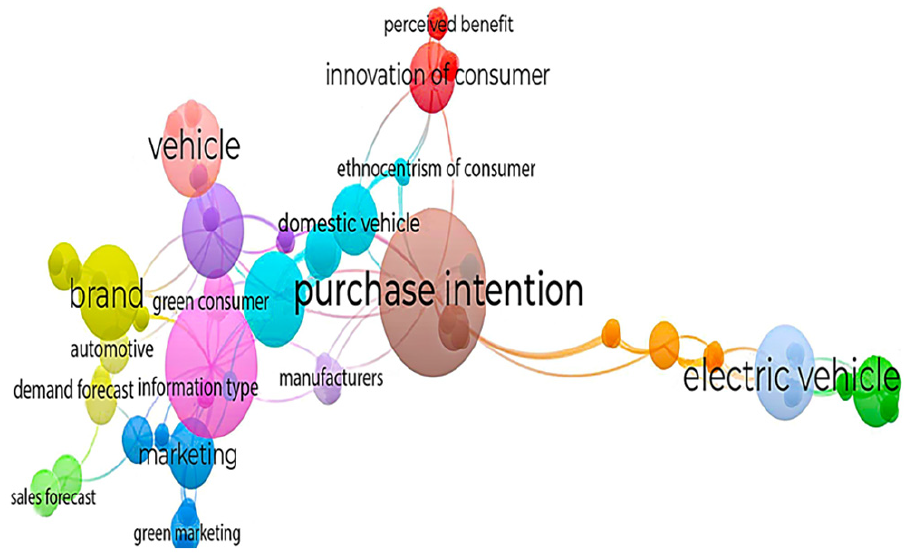
The co-occurrence keywords in the articles from Turkey detailed by the VOSviewer.

The change trending of co-occurrences keywords in the articles from Turkey detailed by the VOSviewer.
Figure 3 shows a set of keywords co-existing with circles of different sizes. This means that the more keywords, the stronger they will be in the search string. Also, a classification of similar topics is indicated by a search set of the same color. As a result of the classification, five main clusters were identified. Keywords related to consumer innovation, such as perceived usefulness and innovation, appear in the red cluster in the upper left. In the purple cluster in the middle left, there are keywords for consumer behaviors such as automobile, automotive, brand, and purchase intention. The cluster in light blue on the right indicates keywords related to electric vehicles such as the EV market, the European Union, social media (Barin et al., 2021), multi-criteria decision-making, and car-buying. The pink cluster below is associated with keywords such as consumer behavior, marketing, sales forecasting, consumer, and domestic automobile. Finally, the middle brown cluster links keywords related to purchasing intention, such as consumer ethnocentrism, innovation, electric vehicle, and electric car. Also, in Figure 4, different colors are used to represent the associations of keywords over time, from 2016 (dark blue) to 2022 (yellow).
The most used words in publications between 2016 and 2022 are electric cars, electric car market, domestic cars, perceived price, and perceived usefulness. Table 2 shows the trend of keywords related to the topic of Turkey. Also, the trend of the keywords used since 2004 in two different periods in Turkey is shown in Figure 5.
Keywords Using Trends.


The change in the trends of keywords over the years detailed by Bibliometrix.
From the beginning until 2019, researchers used energy efficiency, factor analysis, consumer behavior, the automotive industry, and manufacturers as themes, respectively. After 2020, it is seen that the domestic automobile, which was announced to be developed in the country, stands out as one of the important factors determining consumer preferences. Sustainable energy and social media were the other two prominent topics in the keyword analysis.
Geographical Analysis
In this section, it is evaluated which countries cooperate most in the academic debate with articles on consumer behavior. However, the geographical analysis in this study has limitations in revealing academic collaborations with different countries since the studies examined are limited to the Turkish region. Since the search results are limited to Turkey in the region selection for obtaining the article set, and most of the publications obtained as a result of the search have been published in national journals, the geographical analysis seems weak in terms of showing the interaction between countries. Figure 6 shows the joint scientific productions with other countries on the potential and current consumer behavior regarding electric vehicles in Turkey.

Scientific production with other countries detailed by the Bibliometrix.
When the results are limited to Turkey in the search made with the determined keywords, 83 articles from this country are found. Turkey is followed by Cyprus, Kuwait, Morocco, and the United States with one joint article. This map reveals that researchers in Turkey often collaborate with national authors for their scientific networks. It also shows that the publications in the country have not yet entered into international scientific discussions with different countries. However, the fact that most of the studies included in the analysis were published in journals from Turkey via DergiPark has a great effect on the low level of international interaction and cooperation.
Factorial, Dendrogram, and Thematic Analysis
This section performs thematic analysis to explain which critical keywords and concepts influence consumer behavior and answers RQ2 accordingly. The critical factors according to the Multidimensional Scaling Method used in the thematic analysis are shown in Figure 7 (Tucker-Drob & Salthouse, 2009).

Factorial analysis with conceptual structure map detailed by the Bibliometrix.
When the thematic analysis is made according to the conceptual structure map, consumer behavior and environmental concerns emerge as the most influential factors within the framework of electric vehicles. Additionally, Figure 8 presents a dendrogram map of the inter-subject relationship by articles.
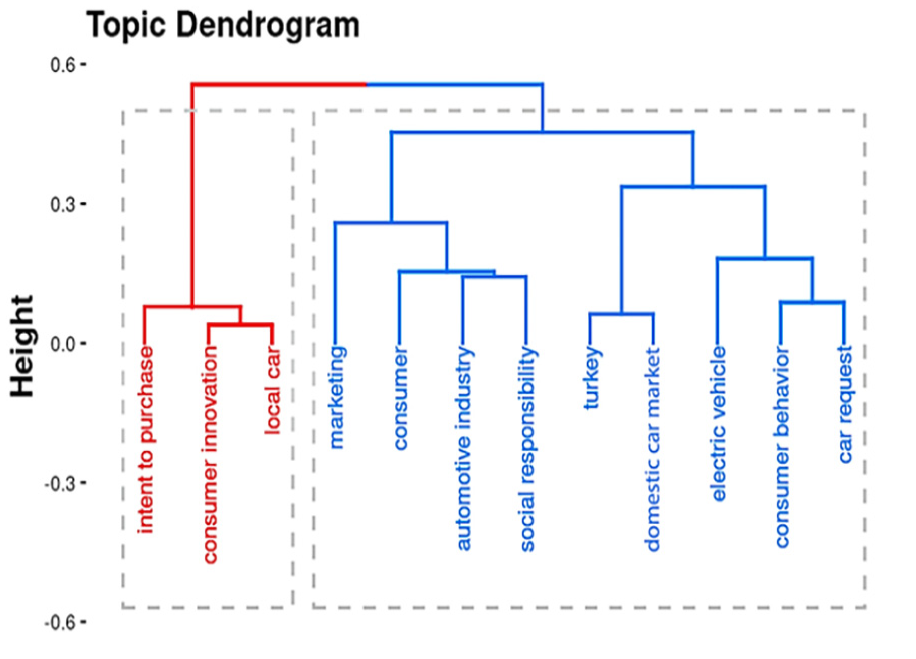
The country topic dendrogram detailed by the Bibliometrix.
The topic dendrogram revealed which keywords were most associated with the topical keywords in the articles with a bottom-up approach. Accordingly, the domestic car shown in red is closely related to consumer innovation, and both are linked to purchase intention. The automobile industry has a very strong relationship with social responsibility, a strong relationship with the consumer, and a moderate relationship with marketing. While the need for a car is the most important factor determining consumer behavior, the fact that it is an electric vehicle has emerged as a less effective factor. It is also interesting that the newly introduced domestic electric vehicle in Turkey appears to have a strong relationship in the articles.
Finally, the thematic mapping of the 25 most used keywords in the articles by the Bibliometrix program is presented in Figure 9.

Thematic analysis with keywords detailed by the Bibliometrix.
According to the thematic analysis, the importance of electric vehicles in the sustainable development of the country is seen in the red area in Figure 9. Market, service quality, brand, factor analysis, and social responsibility have a direct impact on electric or domestic electric vehicle consumer behavior in the green zone. Consumers have a connection to the product and innovation in the purchase of a domestic vehicle. The automotive industry and ethnocentrism may have effects on domestic vehicles purchased by consumers. As a result, according to these three analyses carried out within the framework of the concepts and topics of nationwide publications, the answer to the RQ1 research question emerges as three main research clusters: domestic electric cars, consumer behavior, and environmental concern. The analysis to explore RQ2 determined that the main factors influencing consumer behavior are innovation, brand, sustainability, service quality, domestic tools, social responsibility, and ethnocentrism.
Finally, the word cloud was used in Figure 10 to identify the most commonly used keywords by bringing together the keywords of the articles in the research.
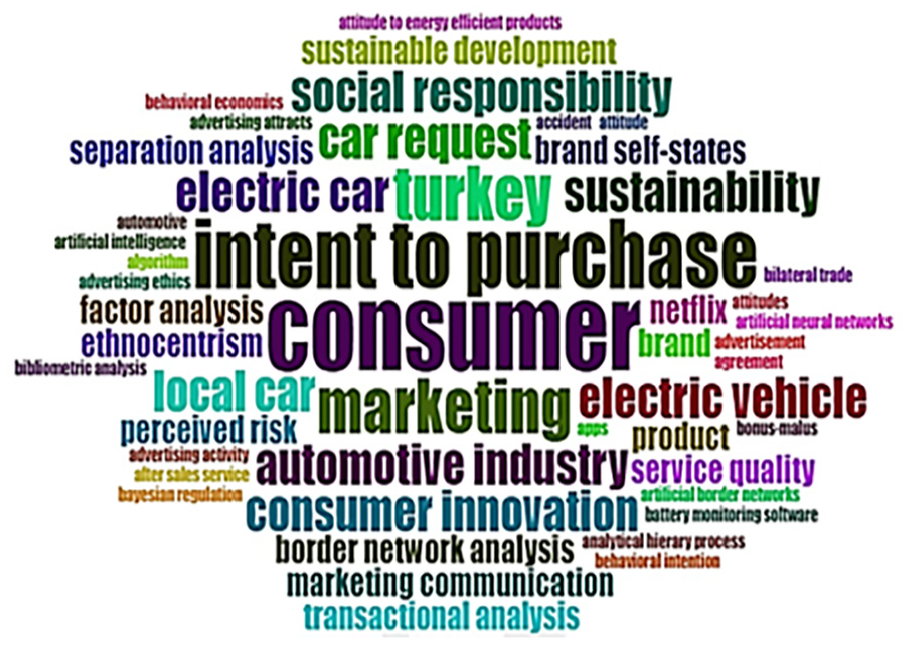
The word cloud of papers’ topic keywords detailing by the Bibliometrix.
In the word cloud, it was found that the most commonly used 10 words or phrases, respectively, are consumer behavior, consumer, purchase intention, marketing, electric vehicle, electric car, domestic vehicle, consumer innovation, social responsibility, and sustainability.
Discussion and Future Works
To prevent climate change and mitigate its effects, nations must accelerate the transition to low-carbon technologies and reduce their consumption of fossil fuels. Electric vehicles are crucial to reducing emissions from the transportation sector, while automobile manufacturers’ investments in this area are swiftly increasing and new brands and models are entering the market. The transformation of the market for electric vehicles is reflected in sales at the same rate. In 2021, global sales of electric vehicles will reach an all-time high of 6.75 million, up 108% from the previous year. The market proportion of electric vehicles increased from 0.2% in 2012 to 8.3% in 2013 due to record-breaking sales. In 10 years, the global market share of electric vehicles has increased 41-fold to 8.3%.
In China, 3.4 million electric vehicles were sold last year, more than any other country. While Europe sold 2.3 million electric vehicles, the United States ranked third with 735 thousand transactions. As a result of this market expansion, the global electricity consumption of electric vehicles reached 30 terawatt hours in 2021. This quantity is equivalent to 1 year of Ireland’s electricity production (Teker, 2022).
Although the Turkish market cannot be compared to those of other nations, a gradual expansion is currently taking place. It is evident that the hybrid segment is the key participant in the electric car market’s transition process, which has seen significant growth compared to the previous year. In the Turkish automobile market, 4,312 electric and hybrid vehicles were sold in 2018, 11,237 vehicles in 2019, 17,780 vehicles in 2020, and 2,849 electric cars and 20,915 hybrid vehicles would be sold in 2021 (H. Uslu & Demiärel 2022).
According to periodic sales data published by the Turkish Electric and Hybrid Vehicles Association, electric car sales increased from 173 in the first half of 2020 to 894 in the first half of 2021. The reported sales figures for hybrid automobiles are also noteworthy. In the first 6 months of 2020, hybrid vehicle sales were limited to 4,698 units. In the first six months of 2021, hybrid vehicle sales increased to a record 11,851 units. The analyses conducted within the scope of this study have determined that the increase in academic studies parallels the rise in sales figures. When examining the publication increase by year, the publication increases in 2019, 2021, and 2022 stand out. This increase is believed to be related to the Paris Climate Agreement and related legislation, Karamehmet and Morgül (2018), concluded in their study on consumers’ preferences for electric vehicles that, in light of growing technological expertise and tax regulations resulting from the Paris Agreement, researchers who examine symbolic and emotional factors will gain a deeper understanding of consumer behavior in the long run.
Co-Citation Analysis
The co-citation analysis of this paper sheds light on the current state of EV consumer behavior research in Turkey. The results indicate a lack of attention to this topic in national journals, which has led to a lower number of global and local co-citations among articles. This indicates that researchers in Turkey are not adequately addressing the crucial variables of EV adoption and consumer behavior. The results of the citation network among the researchers who have done the most work in this field reveal a well-structured network of eight authors who are primarily focused on two distinct fields: purchasing behavior and consumer assessments, preferences, intentions, and motivations for electric vehicles. Rather than focusing solely on purchase intentions, there has been a notable shift toward examining the factors that motivate consumers and their preferences. This shift in research emphasis is a positive development because it reflects a greater comprehension of the complex factors that influence EV adoption and consumer behavior. By examining the factors that motivate consumers to choose EVs, for instance, researchers can identify key adoption barriers and devise effective strategies to overcome them. Understanding the preferences and attitudes of consumers toward EVs can also inform the development of more effective marketing campaigns and policy interventions. It is essential to note, however, that the current analysis is restricted to the co-citation network of articles in Turkey and does not reflect the broader research landscape on EV consumer behavior. Future research could expand the analysis to include a broader range of sources and nations, resulting in a more complete understanding of the main trends and gaps in this field. Overall, the co-citation analysis presented in this study highlights the need for continued research and attention to EV consumer behavior in Turkey and suggests promising future research directions in this area.
Co-Keywords Analysis
Co-keyword analysis provides an understanding of the most significant themes and topics associated with consumer behavior toward electric vehicles in Turkey, as well as their evolution over time. The analysis of co-occurring keywords in the articles that were analyzed generated 15 clusters, 300 lines, and 116 items in the visualization. Five major categories were identified, each representing a distinct topic pertaining to consumer innovation, consumer behaviors, electric vehicles, marketing, sales forecasting, and purchasing intent. The close relationship between the keywords in each cluster indicates a distinct focus on themes in the literature. Particularly relevant are keywords associated with electric vehicles and purchase intent. The analysis indicates a growing interest in the Turkish domestic automobile market, as exemplified by the increasing trend of domestic automobile-related keywords after 2019. This trend emphasizes the significance of domestic automobile production and consumption as a major research focus in Turkey and also reflects the country’s expanding role in the global electric vehicle market.
The rapid increase in sales of electric vehicles on both the global market and in Turkey attracts the attention of both the media and the academic community. In 2021, 118 thousand seventy-one news stories about electric and hybrid vehicles were published in the Turkish media. The Country’s domestic electric vehicle, branded TOGG, was discussed in the media, and its debut in Las Vegas caused significant ripples (A. Uslu, 2022). The interest in the domestic car suggests that the nationalist structure of Turkish society and the preference for electric vehicles should be utilized to promote the domestic and national TOGG. It is believed that Turkish car consumers are particularly interested in domestic automobiles and that ethnocentrism will be a major factor in influencing both the market and academic studies in the future. The analysis also gives insight into the most frequently used keywords in publications between 2016 and 2022, including electric vehicle, electric vehicle market, domestic vehicle, perceived price, and perceived usefulness. In general, the co-keyword analysis provides valuable insights into the themes and topics that have been investigated in the Turkish literature on consumer behavior and electric vehicles.
Our analysis indicates that sustainable energy is another important topic. Environmental concerns are a significant factor influencing the decision to purchase and operate electric vehicles. Ecological, financial, and independence motives were found to be positive factors in the purchase of electric vehicles in a study conducted by Uzel (2015) in Istanbul. In academic research on consumer behavior to disclose the factors in accepting or rejecting electric vehicles, utilitarian and hedonistic factors come to the forefront in consumers’ decisions to purchase electric vehicles. It can be said that utilitarian and hedonistic factors play a prominent role.
Paşalıoğlu and Cengiz (2019) investigated the influence of consumer lifestyle on the intention to purchase electric vehicles within the context of consumer innovativeness, consumer uniqueness, and the mediating effect of exploratory behavior. It was determined that the consumer’s need for uniqueness, consumer innovativeness, and exploratory behavior tendencies mediated the relationship between lifestyle and the intention to purchase an electric vehicle. Therefore, as revealed by the research, it is suggested that future studies revealing purchase intention and demand forecasts, such as green marketing and perceived benefit, concentrate on innovative consumer behaviors and perceived usefulness.
The high cost of ownership and the limited maximum range of electric vehicles were identified as the two primary obstacles to their widespread adoption (Mandys, 2021). In the Turkish automobile market, where 446,664 vehicles were sold in the first 10 months of 2022, approximately 40 electric car models are available for between $44,000 and $325,000 as of November 2022 (Nagihan, 2022). According to the Turkish Statistical Institute (TUIK), the gross national product per capita in the country will be approximately $9,500 in 2021. The initial prices of EVs are comparable to the prices of vehicles powered by fossil fuels. To achieve a price advantage and accelerate adoption by making EVs more accessible, EV manufacturers must also produce a variety of models that will attract more customers (Ghosh, 2020).
According to our analysis, social media is another emerging topic in this discipline, indicating possible future research directions. In the study conducted by Kocagöz et al. (2020) to determine the first impressions of the TOGG, it was determined that consumers placed a strong emphasis on being local and national in tandem with a strong emphasis on media content. Security concerns that have begun to surface with the development of connected, integrated, and smart vehicles may delay the “diffusion of innovation,” and it has been argued that Turkish consumers must be prepared for the smart/autonomous experience. In the study by G. Öztürk et al. (2021), it was determined that sales of hybrid and electric vehicles increased progressively due to government support and consumer awareness. Within the context of the research findings, it can be stated that feeding the new media platforms with content that will mediate the spread of innovations, eradicating the lack of information in this field, and raising awareness can contribute to sectoral development, as it has been determined that social media is effective, particularly in the academic studies conducted over the past 2 years.
Our analysis reveals a growing interest in the domestic automobile market and emerging topics, such as sustainable energy efficiency and social media, that may provide promising avenues for future research. To gain a more comprehensive understanding of the field and to identify new research directions, it is essential, however, to continue tracking these trends over time using longitudinal analysis.
Geographical Analysis
This study’s geographical analysis indicates that academic collaborations between Turkey and other nations in the field of consumer behavior are limited. The region selection was limited to Turkey, and the majority of the publications obtained from the search were published in national periodicals, which weakens the geographical analysis. The joint scientific productions with other nations on the potential and current consumer behavior regarding electric vehicles in Turkey demonstrate that Turkish researchers primarily work with national authors for their scientific networks. The map also reveals that the country’s publications have not yet participated in international scientific discussions with other nations. The limited international interaction and cooperation can be attributed to the fact that many of the included studies were published in Turkish journals using the DergiPark database. Thus, the low level of international collaboration can be attributed to the publications’ lack of exposure to international scientific discussions. It is recommended that Turkish researchers establish academic partnerships and collaborations with researchers from other countries to increase the exchange of knowledge and expertise in consumer behavior.
Factorial, Dendrogram, and Thematic Analysis
This study sought to identify the most important consumer behavior factors and themes studied by Turkish researchers in the context of electric vehicles. To accomplish this objective, a series of analyses utilizing multidimensional scaling, dendrogram mapping, and factorial analysis were conducted. In the thematic analysis, our findings indicate that three major research clusters emerged, including domestic electric vehicles, consumer behavior, and environmental concerns. Innovation, brand, sustainability, service quality, domestic tools, social responsibility, and ethnocentrism were determined to be the most influential factors in consumer behavior.
In many academic studies on EV adoption behavior, psychological, social, and performance characteristics were the most stable factors. Positive factors for improvement have been identified as the expansion of supporting infrastructure, charging, and service facilities (Bhat & Verma, 2023). N. Öztürk (2022) examined innovative consumer behavior by analyzing the factors influencing the utilization intentions of potential electric vehicle users in Germany and Turkey using an integrated model based on the Theory of Planned Behavior and Technology Acceptance Model. Perceived usefulness is the most influential variable on innovative consumers’ behavioral intentions regarding electric cars, followed by perceived simplicity of use. As prospective electric car users increase their knowledge of technology, the perceived benefit they attribute to electric vehicles also increases, according to research findings. In this context, it can be concluded that providing prospective purchasers with systematic, up-to-date information about electric vehicles will contribute to market growth.
Cost of purchase, performance, maximum range, and environmental friendliness were found to be important vehicle features for potential buyers (Mandys, 2021). In the study by Köksal et al. (2021), which examines the charging infrastructure for electric vehicles, it is suggested that a strategy be developed to promote the acquisition of electric vehicles while ensuring the accessibility and deployment of charging infrastructure. The publication of the Charging Service Regulation in 2022 to establish the procedures and principles for the establishment of charging units and stations where electrical energy is supplied to electric vehicles, the operation of the charging network and charging stations connected to the charging network, and the provision of charging service are also crucial for the widespread adoption of electric vehicles. The availability of charging stations will hasten the adoption of electric vehicles. The fact that the charging of EVs has remained the primary focus of analyses conducted in many countries over a variety of time periods is a clear indication of the direction in which both technologies and policies should be supported. Developing battery technologies, expanding and disseminating charging opportunities to eliminate one of the primary perceived risks affecting purchase intent, and informing potential consumers to alleviate their concerns will undoubtedly increase the adoption of electric vehicles.
Although it is believed that the lack of charging stations will have a negative impact on consumers’ intentions to purchase electric vehicles, it has been determined that consumers’ beliefs that they will save fuel due to the use of electric vehicles are among the positive factors. In addition, it has been disclosed that high purchase prices and limited range are the obstacles to adoption, and it is suggested that scientific research concentrate on batteries (Mandys, 2021).
The newly introduced domestic electric vehicle in Turkey seems to have a significant relationship with the articles, which is one of the most intriguing results of our study. This suggests that domestic electric vehicle development has the potential to influence consumer behavior and determine the future of the automotive industry in Turkey. This emphasizes the significance of considering consumer preferences and requirements when designing and marketing electric vehicles. Moreover, our findings indicate that social responsibility is an important factor. It has a significant impact on consumer behavior and a close connection to the automobile industry. This suggests that to recruit and retain customers, automobile manufacturers must prioritize social responsibility in their business practices. Moreover, we discovered a close relationship between consumer innovation and marketing, highlighting the need for innovative marketing strategies to attract and retain consumers in the extremely competitive electric vehicle market. To develop the EV market, it is suggested that direct monetary incentives and EV driving experiences be offered, particularly to potential vehicle purchasers with middle and low incomes (Ling et al., 2021).
This study offers valuable insights into the factors and themes that influence consumer behavior in Turkey regarding electric vehicles. Policymakers, automobile manufacturers, and marketers can use these findings to design effective strategies to promote the adoption of electric vehicles and accomplish sustainable development in the country. However, our study is limited to a review of national publications; additional research is required to investigate international collaboration and the broader context of electric vehicle adoption in Turkey.
Conclusion
Various studies utilizing a variety of techniques to forecast the future of the market investigate consumer behavior toward electric vehicles. The bibliometric and thematic analysis conducted for this study allowed for the identification of the most influential consumer behavior factors in academic studies. Examining Turkey-related publications published in Turkish and English between 2004 and 2022 reveals that the number of publications has increased significantly, particularly after 2015. A significant increase is also observed, particularly in 2016, 2019, and 2022. This increase appears to be related to the Paris Climate Agreement and Turkey’s plan to manufacture its own electric vehicle. Analysis of co-citations reveals that the articles focused primarily on the purchasing behavior of current and potential EV consumers, as well as consumer evaluations, and changes in preferences, intentions, and motivations for EVs.
Purchase intention, consumer innovativeness, consumer behaviors, and an electric car are the main clusters containing the most frequently occurring keywords in the articles examined by co-keyword analysis conducted with VOSviewer software. It has been determined that the terms electric car, electric car market, domestic car, perceived price, and perceived utility are the most prevalent in recent publications. The geographical analysis revealed that the majority of Turkey-related articles published in DergiPark-indexed journals are written by local authors. Although the research-related publications were accessed through the DergiPark search, which encourages publications at the national level, it is possible to conclude that the level of awareness regarding consumer behavior for electric vehicles is increasing, despite the limited number of articles in WoS and Scopus, which are international indexes. With the expansion of the market, this situation will likely alter, and the subject will garner more academic interest. According to the thematic analysis, the articles focused on the significance of electric vehicles to the sustainable development of the nation as well as factors that had a direct impact on electric vehicle consumer behaviors, such as service quality, brand and social responsibility, innovation, domestic electric cars, and ethnocentrism. This study offers valuable insights into the factors that influence the behavior of current and potential EV consumers in Turkey. This can help fill the present gap in the literature on the consumer behavior of electric vehicles. In addition, it can contribute to the development of a theoretical framework for EV consumer behavior in Turkey that can serve as a foundation for future research in this area. This study can also provide valuable information regarding the preferences and requirements of EV consumers in Turkey, which can be used to develop marketing strategies and product designs. By understanding the factors that influence EV purchase decisions, manufacturers and dealers can create more effective marketing campaigns and enhance their products to better meet consumer demands. They can be provided with information to assist them in making more informed decisions regarding the purchase of an EV. By understanding the factors that influence EV purchase decisions, potential EV purchasers can evaluate the advantages and disadvantages of purchasing an EV and make an informed decision. In addition, this study can assist in identifying the barriers that prevent some consumers from adopting EVs, thereby informing the development of policies and programs designed to promote the adoption of EVs in Turkey.
The research conducted has revealed the increasing trend of publications over the years, the approaches of researchers to collaboration, the topics that are frequently mentioned in the research, and the factors influencing consumer behavior in the electric vehicle market. Various methods of analysis were used to address the research questions, and the results were discussed. This investigation has revealed that research on the topic focuses on similar axes. However, the preference of consumers for electric vehicles or vice versa is influenced by numerous factors. Issues including the technical characteristics of electric vehicles, such as range, charging time, and battery life; infrastructure facilities, such as charging stations and technical service; total cost; autonomy; and smartness; as well as society’s openness or resistance to innovation, should be addressed in academic studies of the field. Consumer trends should be tracked using surveys, focus group interviews, and similar techniques so that the academy’s research topics are shaped by the demands and expectations of society. Academics should facilitate the decision-making of potential buyers by presenting society’s informative content on various platforms as well as scientific publications in the most accurate and comprehensible manner to alleviate society’s anxiety about rapidly changing technologies and improve technology literacy. Because the transition to renewable energy sources is necessary to prevent the devastation caused by global climate change, safeguard a livable environment for human health, and ensure sustainability, it is crucial to take political initiatives, enact legal regulations, and provide tax incentives that will encourage consumers to embrace electric vehicles. In addition, consumer-perceived risk factors should be identified, and the industry should be able to implement technological changes to alleviate these concerns. All these topics are addressed in academic studies, and academicians are responsible for advising both industry and political actors. It is the social responsibility of researchers to broaden the scope of academic studies to raise environmental awareness and promote the use of renewable energy resources, and particularly electrical vehicles, which that will reduce carbon emissions by eliminating the use of fossil fuels. To ensure the transformation of society as well as the technological and political moves necessary for the expansion of the market by increasing the adoption of electric vehicles and thereby ensuring sustainability, it is crucial to develop research on purchasing intentions and consumer behavior based on the findings of this study.
Footnotes
Declaration of Conflicting Interests
The author(s) declared no potential conflicts of interest with respect to the research, authorship, and/or publication of this article.
Funding
The author(s) received no financial support for the research, authorship, and/or publication of this article.
