



Abstract
Teaching satisfaction plays a crucial role in educators’ occupational mental health and directly affects instructional quality and student achievement. University English teachers often face high emotional regulation demands, emphasizing the need to examine how individual and environmental factors contribute to their satisfaction. Grounded in Emotional Labor Theory and Conservation of Resources Theory, this study developed and tested a structural model incorporating emotional intelligence, school climate, emotional labor, and teaching satisfaction. The study also investigated the mediating role of emotional labor and the moderating effect of teaching experience. A total of 976 English teachers from higher education institutions in China participated in the study. Partial Least Squares Structural Equation Modeling (PLS-SEM) was used to analyze the data. The results showed that both emotional intelligence and school climate positively predicted teaching satisfaction. Emotional labor partially mediated these relationships, indicating that teachers’ internal emotion regulation processes serve as a psychological mechanism linking personal and contextual resources to satisfaction outcomes. Furthermore, teaching experience moderated the path between emotional labor and teaching satisfaction. These findings provide theoretical and practical insights into how emotional processes shape teachers’ professional experiences and suggest implications for designing experience-sensitive interventions and training programs to improve emotional resilience and job satisfaction in higher education settings.
Introduction
In recent years, curriculum reform and the modernization of higher education have continued to progress in China. University teachers are expected to complete multiple tasks in teaching, research, and service under higher standards (Cao et al., 2024; Tian et al., 2024). For university English teachers, frequent classroom interactions, diverse instructional goals, and varied student needs have increased the demands on emotional regulation and classroom adaptability (L. Li, 2025). Teaching satisfaction, as an important indicator that reflects teachers’ teaching experience, emotional state, and professional identity, has increasingly been seen as a key factor in evaluating teaching quality and supporting teachers’ sustainable professional development (González-García et al., 2025; Villalobos Iturriaga et al., 2025; Wang et al., 2024). Previous studies have found that higher teaching satisfaction is often linked to a positive classroom climate, greater teaching engagement, and more stable occupational well-being, and it is also associated with improved student learning outcomes (J. Han et al., 2021; Luque-Reca et al., 2022; Marcionetti & Castelli, 2023). In this context of educational modernization and foreign language teaching reform, it is meaningful to examine the teaching satisfaction of Chinese university English teachers from both practical and policy perspectives.
When exploring the mechanisms that shape teaching satisfaction among university English teachers, recent studies have highlighted the interaction between individual psychological resources and organizational contextual support (Capone et al., 2022; X. Chen & Xie, 2025; L. Li et al., 2025). Among these factors, emotional intelligence is referring to the capacity to perceive, understand, and regulate one’s own emotions and those of others. It has been regarded as an important psychological resource for teachers’ professional development (Su et al., 2022; Zaky, 2022). Su et al. (2022) found that higher emotional intelligence is often accompanied by smoother classroom communication, more stable emotional responses, and more positive teacher–student relationships, which are positively associated with teaching satisfaction. School climate is a supportive environment at the organizational level. It involves administrative support, collegial collaboration, and shared values (Barnová et al., 2022; Metrailer & Clark, 2022). A positive school climate can reduce teachers’ psychological burden during teaching and strengthen their feeling of identification and accomplishment in educational work, thereby improving their general teaching satisfaction (Fang & Qi, 2023; Uras Eren & Atay, 2025). In addition, emotional labor is defined as the regulated control of emotional expressions and states during classroom interactions, which is a common requirement in teaching contexts (Y. Chen et al., 2025). Appropriate and effective emotional labor can help maintain classroom order and interaction quality, enhance teachers’ sense of role competence and emotional rewards, and contribute to higher levels of teaching satisfaction (Hao, 2024; Jalilzadeh et al., 2024). Teaching experience may also play a role in this process. It reflects teachers’ accumulated professional knowledge, classroom management skills, and emotional regulation ability developed through long-term practice (Sim & Mohd Matore, 2022). Taken together, emotional intelligence, school climate, emotional labor, and teaching experience may jointly influence the teaching satisfaction of university English teachers.
Although earlier research has examined the effects of emotional intelligence, school climate, and emotional labor on teachers’ professional status independently, there is still a lack of systematic exploration of how these three factors jointly influence teaching satisfaction within the same model. Most existing studies have treated emotional intelligence, school climate, and emotional labor as single overall variables, without conducting in-depth analyses of the differentiated effects of their dimensions on the formation of teaching satisfaction. In addition, empirical research focusing on Chinese university English teachers remains limited. In the context of ongoing educational modernization and foreign language teaching reform in China, it is necessary to test and enrich related theoretical models in the Chinese context. Guided by Conservation of Resources (COR) Theory and Emotional Labor Theory, this study establishes a moderated mediation model to systematically examine how emotional intelligence and school climate influence university English teachers’ teaching satisfaction through emotional labor. It further investigates the moderating role of teaching experience in this relationship. Questionnaire data will be collected from Chinese university English teachers, and SEM will be applied to examine the fit between the theoretical framework and the data.
The purposes of this study are to: (1) identify the main factors influencing the teaching satisfaction of university English teachers; (2) reveal the mediating role of emotional labor in the relationships between emotional intelligence, school climate, and teaching satisfaction; and (3) examine the moderating role of teaching experience in the relationship between emotional labor and teaching satisfaction.
Based on this objective, this study proposes the following key questions: (1) How do different dimensions of emotional intelligence and school climate influence university English teachers’ teaching satisfaction? (2) Does emotional labor mediate the relationships between the dimensions of emotional intelligence, school climate, and teaching satisfaction? (3) Does teaching experience moderate the relationship between emotional labor and teaching satisfaction? By addressing these questions, this study aims to deepen the understanding of the mechanisms underlying teaching satisfaction among university English teachers in China and to provide theoretical and practical implications for supporting teacher professional development and informing education policy.
Theories and Hypotheses
Theoretical Basis
COR Theory proposes that individuals strive to acquire, maintain, and protect valuable resources, and that they tend to allocate resources to gain greater returns when resources are sufficient (Hobfoll, 1989). In the teaching profession, this theory has been extensively applied to elucidate how teachers adapt when facing occupational stress and emotional challenges (Jõgi et al., 2023; H. Liu, 2024; Wu et al., 2025). For instance, Wu et al. (2025) showed that teachers who perceived higher emotional and structural support exhibited greater work engagement and a lower risk of occupational burnout. H. Liu (2024) also noted that teachers with sufficient resources tend to sustain enthusiasm for teaching and demonstrate stronger psychological resilience. In this study, emotional intelligence is considered an internal personal resource for teachers, while school climate is regarded as an external contextual resource. These two types of resources can help teachers sustain a positive outlook and remain engaged in their teaching under pressure. According to COR Theory (Hobfoll, 1989), when teachers possess higher emotional intelligence or work in a supportive school climate, they are more capable of recognizing and regulating their emotions and more willing to invest additional emotional labor to obtain positive emotional rewards and a stronger sense of professional satisfaction.
Emotional Labor Theory (Hochschild, 1983) states that individuals regulate their emotions through three strategies: surface acting, deep acting, and genuine emotional expression (Brotheridge & Lee, 2003). In the teaching profession, many studies have confirmed the widespread presence and importance of emotional labor in instructional processes (Kiyanfar et al., 2025; Peng et al., 2023). For example, Peng et al. (2023) found that teachers often use deep acting during classroom interactions to create a positive atmosphere, while those who rely heavily on surface acting over time tend to undergo emotional exhaustion and occupational burnout. This study views emotional labor as a core psychological mechanism through which teachers transform personal and contextual resources into positive emotional experiences and teaching satisfaction. In a supportive school climate, teachers experience a stronger sense of emotional security, which facilitates authentic emotional expression. These processes can enhance positive emotional experiences and occupational well-being, thereby improving their teaching satisfaction.
This study adopts COR Theory (Hobfoll, 1989) as its overarching framework and incorporates Emotional Labor Theory (Hochschild, 1983) as the core psychological mechanism to explain the teaching satisfaction of university English teachers. According to COR Theory, when individuals possess sufficient internal resources including emotional intelligence and external resources including school climate, they are more willing to invest additional resources to obtain emotional and professional rewards. Emotional Labor Theory explains the specific ways in which teachers invest these resources. Through strategies such as surface acting, deep acting, and genuine emotional expression, teachers can transform personal and environmental resources into positive emotional experiences and occupational well-being. Based on this perspective, this study argues that teachers with greater emotional intelligence and school climate are more capable of and more willing to adopt positive emotional labor strategies, thereby improving their teaching satisfaction. This integrated framework reveals a psychological process linking resources, mechanisms, and outcomes, and provides a unified theoretical basis for the research hypotheses.
Emotional Intelligence and Teaching Satisfaction
Emotional intelligence was first proposed by Salovey and Mayer (1990) and is defined as the capacity to perceive, understand, regulate, and use emotions at both intrapersonal and interpersonal levels. Wong and Law (2002) further divided it into four dimensions: self-emotion appraisal, others’ emotion appraisal, use of emotion, and regulation of emotion. Existing empirical studies have generally supported a positive relationship between emotional intelligence and teaching satisfaction (Kartol et al., 2024; Sukhragchaa et al., 2021; Xu & Choi, 2023). In educational contexts, emotional intelligence is considered a key factor that helps teachers adapt to teaching environments, maintain professional stability, and promote career development (Jiang & Tong, 2025; Zhao et al., 2024). Teachers with high emotional intelligence are better able to recognize and regulate negative emotions, transform them into constructive teaching motivation, and respond more sensitively to students’ emotions. This enables them to adjust instructional strategies more effectively and improve the quality of classroom interactions (M. Li et al., 2024; Owusu & Arthur, 2025). Moreover, Geraci et al. (2023) reported that high emotional intelligence can reduce teachers’ perceived teaching stress and strengthen their teacher self-efficacy, leading to higher teaching satisfaction and occupational well-being. According to COR Theory, emotional intelligence is an internal psychological resource that helps teachers regulate emotional responses when facing teaching stress, prevent resource depletion, and ultimately enhance their teaching satisfaction (Hobfoll, 1989). However, in the context of university English teaching in China, most studies have only investigated the overall effect of emotional intelligence and have rarely explored how its specific dimensions are related to different aspects of teaching satisfaction. Therefore, the following hypothesis is proposed:
School Climate and Teaching Satisfaction
School climate is generally defined as teachers’ subjective perception of the overall psychological and organizational environment of a school, which is shaped by factors such as school policies, management styles, interpersonal relationships, and shared values (Thomas, 1976). School climate reflects the cultural characteristics of schools as organizations and directly influences teachers’ emotional experiences, professional attitudes, and sense of professional identity (Uras Eren & Atay, 2025; Yada & Savolainen, 2023). Empirical studies have shown that teachers working in a supportive school climate tend to maintain positive emotions and higher teacher self-efficacy, which can reduce emotional exhaustion, enhance work engagement, thereby fostering higher teaching satisfaction and occupational well-being (Admiraal, 2025; X. Han et al., 2022; Otrębski, 2022). For language teachers, a supportive school climate can also enhance their classroom adaptability and instructional creativity, which helps improve classroom atmosphere and teaching effectiveness (L. Li, 2025; Zhang et al., 2023). Based on COR Theory, school climate can be considered an external contextual resource. It provides emotional support and institutional security, which help teachers conserve or acquire additional resources, buffer the resource loss caused by teaching stress, and motivate them to invest more resources in teaching activities to gain positive rewards (Hobfoll, 1989). Although existing studies have confirmed the beneficial effect of school climate on teaching satisfaction, there is still insufficient systematic investigation into university English teachers. This is especially important in the context of ongoing foreign language education reform and educational modernization in China, where the multiple instructional goals and complex classroom situations faced by university English teachers may make the role of school climate more prominent. Therefore, the following hypothesis is proposed:
Mediating Role of Emotional Labor
Emotional labor was first proposed by Hochschild (1983) and refers to the practice in which individuals regulate and manage their emotions according to organizational expression rules in professional contexts. It mainly includes three strategies: surface acting, deep acting, and genuine emotional expression (Brotheridge & Lee, 2003; Grandey, 2000). For teachers, emotional labor constitutes an indispensable part of daily teaching activities and is closely associated with their professional experience and teaching satisfaction (Yuan et al., 2025; Zhu & Zhou, 2022). He et al. (2022) found that appropriate and effective emotional labor is associated with maintaining a positive classroom atmosphere and teaching motivation, which contributes to higher teaching satisfaction (Peng et al., 2023). In contrast, excessive or inappropriate emotional labor is often linked to emotional exhaustion and professional detachment, which may reduce teachers’ well-being and teaching motivation (P. Sun et al., 2025). Based on Emotional Labor Theory, emotional labor is a type of emotional regulation behavior performed to meet organizational emotional norms. Appropriate emotional labor can help teachers create a positive classroom atmosphere, stimulate positive emotional experiences, and strengthen their sense of professional accomplishment, thereby enhancing their teaching satisfaction (Hochschild, 1983). This suggests that emotional labor is not only a form of emotional regulation but also an important psychological mechanism linking teachers’ professional well-being and teaching satisfaction.
Regarding the antecedents of emotional labor, researchers have mainly focused on emotional intelligence and school climate as two key factors. As an internal psychological resource, emotional intelligence helps teachers more effectively identify, understand, and regulate personal and others’ emotions, thereby enhancing their capacity for emotional regulation in teaching (Yuan et al., 2025). P. Sun et al. (2025) reported that teachers with higher emotional intelligence tend to adopt positive emotional labor strategies to reduce the resource cost of emotional dissonance and maintain stable and authentic emotional expressions during classroom interactions. Meanwhile, school climate, as an external contextual factor, also significantly influences teachers’ emotional labor (Çakar et al., 2021; Xia et al., 2024). Xia et al. (2024) found that a supportive school climate can provide teachers with emotional security and organizational resources, reduce the burden of external stress, and encourage them to engage more actively in emotional management during teaching activities. According to COR Theory, emotional intelligence represents an internal resource, while school climate represents a contextual resource. Both can lower the resource cost of emotional labor and improve resource conversion efficiency, which makes teachers more capable of and inclined to engage in positive emotional labor strategies (Hobfoll, 1989). However, although earlier research has examined the effects of emotional intelligence, school climate, and emotional labor on teaching satisfaction separately, research that explicitly tests the mediating role of emotional labor is still limited, especially in the high emotional-demand setting of university English teaching in China. Therefore, the following hypotheses are proposed:
Moderating Effect of Teaching Experience
Teaching experience reflects the professional knowledge, classroom management skills, and emotional regulation abilities that teachers develop through long-term teaching practice (Fernández-Arias et al., 2024; von Knebel et al., 2023). Early studies, drawing on career stage theory (Huberman, 1989), suggested that teachers at different career stages differ in their psychological characteristics and coping styles. Teachers with less experience are prone to resource depletion when managing classroom emotions, whereas experienced teachers are better able to use mature strategies to reduce the burden of emotional labor (Zheng et al., 2019). Recently, studies have increasingly adopted a resource-based perspective, suggesting that teaching experience functions as an accumulative resource. Teachers with limited experience are more likely to encounter resource loss during intensive emotional labor, which may make their teaching satisfaction more vulnerable to negative influences (Hobfoll, 1989). In contrast, experienced teachers may rely on more abundant resources and coping strategies to buffer or even transform the pressure of emotional labor, which may weaken or reverse its association with satisfaction (Graham et al., 2020). According to COR Theory, teaching experience can be regarded as a psychological and practical resource accumulated over time, which strengthens teachers’ resource reserves and coping capacity in high-pressure emotional labor contexts (Hobfoll, 1989). Nevertheless, in the high emotional-demand setting of university English teaching in China, teaching experience may play a more complex role in the relationships among variables, which requires further empirical investigation. Therefore, the following hypothesis is proposed:
The theoretical model proposed in this study is illustrated in Figure 1.

Hypothesized research model.
Method
Data Collection
The survey data were gathered online from February to March 2025 using the Wenjuan Xing system (https://www.wjx.cn/). The participants were English teachers from three universities in a province of China, including one higher vocational college and two undergraduate universities. The selection of these institutions was based on two main considerations: First, there are notable differences between vocational and undergraduate universities with respect to teacher training models, job responsibilities, and teaching environments. Including universities at different levels helped increase the representativeness of the sample. Second, all three universities offer foreign language programs, particularly English-related majors, and have a stable group of university English teachers, which facilitated the collection of a sufficient number of valid responses. This study adopted simple random sampling. Before data collection, the research team obtained the complete list of all in-service English teachers from the academic affairs offices of the three universities. Using a computer-generated random number list, the researchers selected the target sample with equal probability. They then sent the questionnaire link and study information to the selected teachers via email, inviting them to participate in the survey. Prior to data collection, participants voluntarily agreed to partake in the research by providing informed consent, affirming the study’s ethical integrity and respect for individual rights and confidentiality.
To ensure data quality, this study applied strict screening criteria. Questionnaires were excluded if they (a) came from duplicate IP addresses, (b) showed uniform responses (i.e., more than 95% of the items had the same option selected, indicating a tendency toward mechanical responding; Meade & Craig, 2012), (c) had completion times deviating from the sample mean by more than three standard deviations (M = 252.20 s, SD = 28.95 s), or (d) lacked essential demographic information such as age. The ±3 SD rule is a commonly used criterion for identifying outliers in survey research (Hair et al., 2022). Under the assumption of a normal distribution, approximately 99.7% of data points fall within the range of the mean ± 3 SD, and only about 0.3% fall outside this range. Such extreme values are more likely to reflect careless or erroneous responses rather than genuine answers, and it is therefore often recommended to remove them during data cleaning to reduce their potential impact on model estimation. After applying these criteria, a total of 976 valid questionnaires remained. To assess whether the sample size was adequate, an a priori power analysis was performed using G*Power 3.1 (Faul et al., 2009). Assuming a medium effect size (f2 = 0.15), α = .05, and power = 0.95, the analysis indicated that a minimum of 178 participants was required. The final sample in this study far exceeded this threshold, ensuring sufficient statistical power.
The final sample is presented in Table 1. It comprised 198 male teachers (20.3%) and 778 female teachers (79.7%). This gender imbalance is consistent with the general trend in the field of English education. Due to factors such as gender role perceptions, preferences for occupational stability, and the higher proportion of female students in teacher-training English programs, women account for a larger share of teachers in this field. Regarding age distribution, 18.6% of the teachers were under 30 years old, 24.6% were between 31 and 40, 30.4% were between 41 and 50, and 26.4% were 51 or older. Overall, more than half of the teachers were over 40 years old, indicating that the sample included a substantial number of experienced teachers. In terms of teaching experience, 49.2% of the teachers had 5 years or less of experience, while 50.8% had more than 5 years. It is worth noting that some teachers may have accumulated more than 5 years of teaching experience before the age of 40 because they entered the profession relatively early, which explains why the distributions of age and teaching experience were statistically consistent. With respect to the types of students taught, 59.0% of the teachers mainly taught English-major students, while 41.0% taught non-English-major students, showing a relatively balanced distribution on this dimension. In terms of educational background, 55.6% of the teachers held doctoral degrees and 44.4% held master’s degrees or below, reflecting the generally high educational level of university English teachers in China.
Demographic Characteristics of Participants.

Measurement Method
During the scale adaptation and validation process, this study strictly followed established procedures for cross-cultural scale use. First, a conventional forward-backward translation process was used to translate all of the original scales into Chinese. To guarantee semantic equivalency, two independent experts back-translated the scales into English after two bilingual experts translated them into Chinese. The study team discussed and eventually came to a consensus on any translation differences. Next, three experts in educational psychology were invited to review the wording and cultural appropriateness of the items to further ensure their semantic and content validity. Before the formal survey, a pilot test was conducted with 60 English teachers who were not included in the final sample. Based on their feedback, minor revisions were made to several items to improve clarity and comprehensibility. After data collection, the proportion of missing values was less than 2%. Therefore, the expectation-maximization method (Schafer & Graham, 2002), which is widely recognized for its applicability and stability in survey research, was used to handle the missing data.
Emotional Intelligence
Emotional intelligence was measured using the Wong and Law Emotional Intelligence Scale (WLEIS) developed by Wong and Law (2002). The WLEIS has a clear structure and is easy to administer, making it particularly suitable for large-scale survey research. It has also demonstrated good cross-cultural adaptability in the Chinese educational context. This scale has been widely applied among Chinese teachers (Fu, 2025; X. Han et al., 2025). The WLEIS consists of 16 items covering 4 dimensions: self-emotion appraisal, others’ emotion appraisal, regulation of emotion, and use of emotion. A seven-point Likert scale was used, with higher scores indicating higher levels of emotional intelligence. In the present study, the Cronbach’s α for the overall scale was .900, and the Cronbach’s α values for the four dimensions were .831, .852, .844, and .821, indicating good internal consistency.
School Climate
School climate was measured using the School Climate Scale revised by Ding (2020). This scale has been widely used among Chinese teachers (X. Han et al., 2022). It consists of 14 items covering 4 dimensions: organizational management, teamwork, teaching efficiency, and resource utilization. A five-point Likert scale was used, with higher scores indicating a more positive school climate. In the present study, the Cronbach’s α for the overall scale was .899, and the Cronbach’s α values for the four dimensions were .780, .739, .707, and .734, indicating good internal consistency.
Emotional Labor
Emotional labor was measured using the Teacher Emotional Labor Strategy Scale (TELSS) developed by Yin (2012). This scale has been widely used among Chinese teachers (Y. Chen et al., 2025; Ma et al., 2023). It consists of 13 items covering 3 dimensions: surface acting, deep acting, and genuine emotional expression. A five-point Likert scale was used, with higher scores indicating a higher frequency of emotional labor use. In the present study, the Cronbach’s α for the overall scale was .867, and the Cronbach’s α values for the three dimensions were .836, .846, and .815, indicating good internal consistency.
Teaching Satisfaction
Teaching satisfaction was measured using the Minnesota Satisfaction Questionnaire (MSQ) developed by Weiss et al. (1967). The MSQ is one of the most widely used classic instruments for measuring satisfaction, known for its comprehensive coverage and strong comparability. It has been widely applied among Chinese teachers (Y. Liu et al., 2023). The original questionnaire consists of 20 items rated on a five-point Likert scale, with higher scores indicating higher levels of teaching satisfaction. To improve measurement quality, item purification was conducted based on commonly used thresholds in PLS-SEM. Three items were removed because they had relatively low outer loadings and were lower than those of other items measuring the same construct. As a result, the scale was refined from 20 to 17 items. In the present study, the Cronbach’s α was .949, χ2/df = 1.054, CFI = 0.999, GFI = 0.985, TLI = 0.999, and RMSEA = 0.007, indicating good internal consistency.
Statistical Analysis
Data analysis was conducted using SmartPLS 4.0 and AMOS 24.0. The research model included 4 latent variables and 63 observed indicators, and several dimensions were further analyzed using a hierarchical approach, making the overall structure relatively complex. PLS-SEM offers several advantages: it handles non-normally distributed data more effectively, it is suitable for studies with moderate sample sizes, and it is more appropriate for exploratory modeling and testing complex path relationships (Hair et al., 2022). Therefore, PLS-SEM was chosen as the main analytical approach in this study to systematically examine the mechanisms linking emotional intelligence and school climate to teaching satisfaction among university English teachers, as well as to test the mediating role of emotional labor. In addition, this study conducted confirmatory factor analysis (CFA) to validate the refined scales after item deletion.
For the CFA, model fit was tested using AMOS, and the fit indices reported included χ2/df, GFI, CFI, TLI, and RMSEA to ensure an acceptable model fit. For the PLS-SEM, the model was evaluated based on commonly used reliability and validity criteria. Specifically, outer loadings, composite reliability (CR), and average variance extracted (AVE) were reported to assess convergent validity, and discriminant validity was assessed among the constructs. Additionally, R2, Q2, and f2 were reported to evaluate the explanatory power and predictive relevance of the model. During hypothesis testing, the significance of path coefficients was assessed using bootstrapping. Specifically, 5,000 bootstrap samples were drawn with a significance level of α = .05, and two-tailed tests were conducted to calculate the confidence intervals and significance levels of the path coefficients. This process ensured the robustness and reproducibility of the inferential statistics, thus strengthening the reliability of the study’s conclusions.
Result
Measurement Model
Reliability Assessment
The validity and reliability of the measurement model were evaluated in accordance with Hair et al. (2022) recommendations (Table 2). Regarding reliability, all retained items exhibited standardized factor loadings above 0.70, indicating that each item effectively reflected its corresponding latent construct. All constructs had Cronbach’s α and CR values above the suggested cutoff of 0.70, indicating adequate internal consistency. Notably, the CR value of the teaching satisfaction construct was slightly above 0.95. While high α and CR values together suggest strong internal consistency, they may also indicate potential item redundancy due to high homogeneity among items. To mitigate this risk, the content coverage, cross-loadings, and external VIF values of the items were examined. The results revealed no significant multicollinearity, and the items covered distinct aspects of teaching satisfaction; thus, all items were retained to ensure content validity. Regarding validity, convergent validity was evaluated using the AVE as recommended by Fornell and Larcker (1981). The results showed that the AVE values of all constructs were above 0.50, indicating that each latent variable explained more than 50% of the variance in its items, thereby demonstrating good convergent validity. The measurement model’s overall convergent validity and adequate internal consistency served as a strong basis for the structural model analysis that followed.
Reliability Assessment.
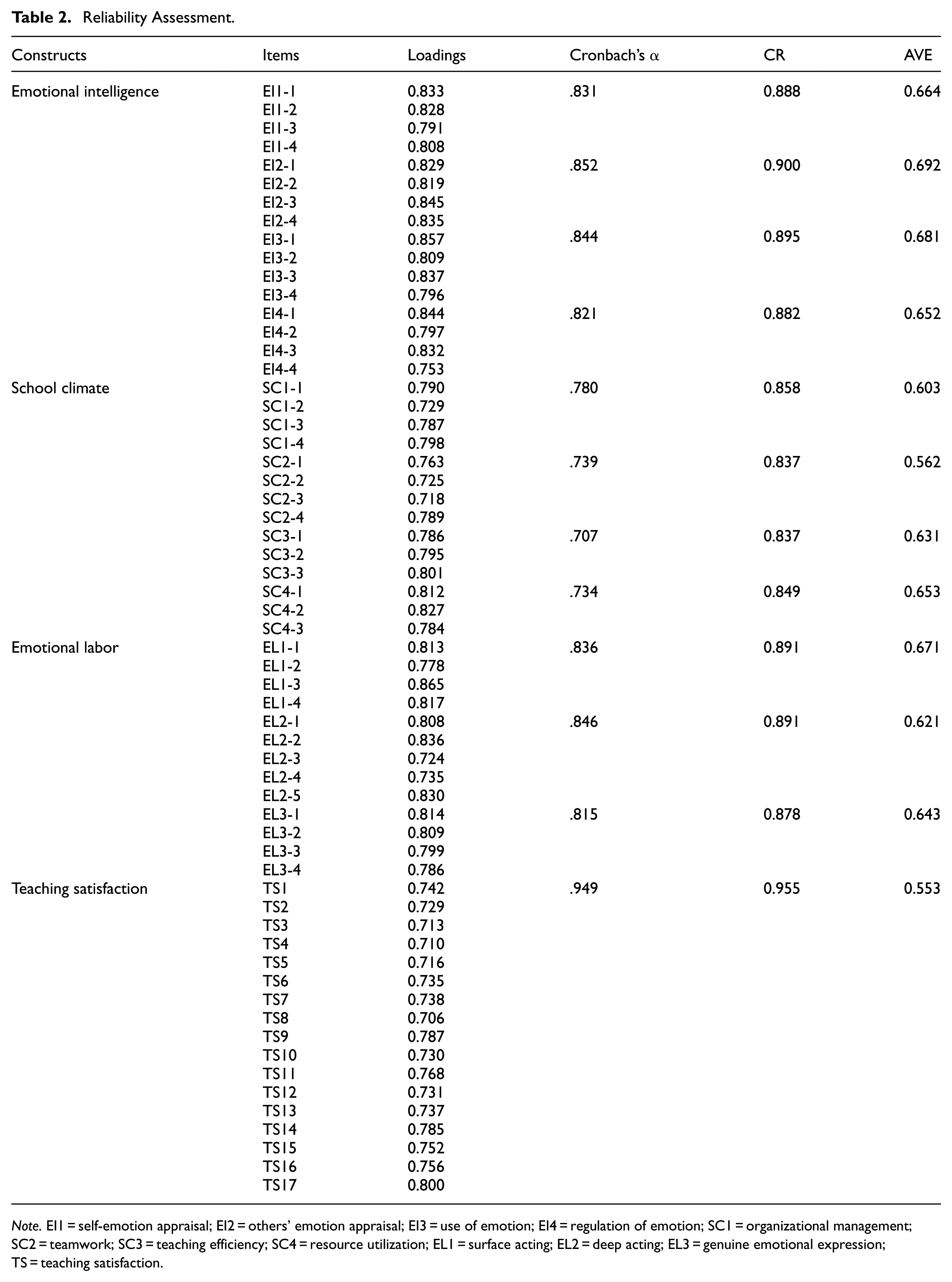
Note. EI1 = self-emotion appraisal; EI2 = others’ emotion appraisal; EI3 = use of emotion; EI4 = regulation of emotion; SC1 = organizational management; SC2 = teamwork; SC3 = teaching efficiency; SC4 = resource utilization; EL1 = surface acting; EL2 = deep acting; EL3 = genuine emotional expression; TS = teaching satisfaction.
Discriminant Validity Assessment
This study first evaluated discriminant validity using the Fornell–Larcker criterion in accordance with the guidelines provided by Fornell and Larcker (1981). Each latent construct’s square root of the AVE is compared to its correlations with other constructs using this procedure. Discriminant validity is supported if a construct’s square root of its AVE is higher than its correlations with other constructs. This means that the construct shares more variance with its own indicators than with other constructs. Table 3 indicates that the model’s discriminant validity was good since the square roots of the AVE values for each concept were higher than their inter-construct correlations.
Discriminant Validity Assessment Using the Fornell–Larcker Criterion.

Note. Diagonal values in bold represent the square root of the AVE for each construct. EI1 = self-emotion appraisal; EI2 = others’ emotion appraisal; EI3 = use of emotion; EI4 = regulation of emotion; SC1 = organizational management; SC2 = teamwork; SC3 = teaching efficiency; SC4 = resource utilization; EL1 = surface acting; EL2 = deep acting; EL3 = genuine emotional expression; TS = teaching satisfaction.
Although the Fornell–Larcker criterion is a classic method for assessing discriminant validity, recent studies have noted its limitations in detecting high correlations between latent constructs. Therefore, to enhance the robustness of the assessment, this study further employed the HTMT method (Henseler et al., 2015). HTMT evaluates the ratio of correlations between different constructs, and values below 0.90 indicate that the constructs are clearly distinct and not highly overlapping, thereby supporting discriminant validity. The HTMT values were calculated with 5,000 bootstrap resamples to obtain confidence intervals and ensure the reliability of the statistical results. All of the HTMT values in this investigation fell below the 0.90 cutoff, as indicated in Table 4, further demonstrating the model’s acceptable discriminant validity.
HTMT for Discriminant Validity.

Note. EI1 = self-emotion appraisal; EI2 = others’ emotion appraisal; EI3 = use of emotion; EI4 = regulation of emotion; SC1 = organizational management; SC2 = teamwork; SC3 = teaching efficiency; SC4 = resource utilization; EL1 = surface acting; EL2 = deep acting; EL3 = genuine emotional expression; TS = teaching satisfaction.
Collinearity Diagnostics
In the structural model analysis, this study examined multicollinearity among the latent constructs to ensure the reliability of path estimates and the robustness of the model results. Specifically, the VIF values of the predictor constructs were calculated to assess their predictive relationships. According to the recommendation of Hair et al. (2016), VIF values below 5 indicate no serious multicollinearity issues. All VIF values were below the threshold of five (Table 5), suggesting that there were no significant multicollinearity problems among the predictor constructs in the research model.
Collinearity Diagnostics of the Structural Model.

Note. EI1 = self-emotion appraisal; EI2 = others’ emotion appraisal; EI3 = use of emotion; EI4 = regulation of emotion; SC1 = organizational management; SC2 = teamwork; SC3 = teaching efficiency; SC4 = resource utilization; EL1 = surface acting; EL2 = deep acting; EL3 = genuine emotional expression; TS = teaching satisfaction.
Common Method Bias (CMB)
There was a chance of CMB because this study only used self-reported questionnaire data. The questionnaire made it clear at the outset that answers would be anonymous, that all data would be utilized exclusively for academic study, and that confidentiality would be scrupulously upheld in order to lessen participants’ evaluation anxiety and the impact of social desirability. Several statistical techniques were used to evaluate common procedure bias. First, Harman’s single-factor test was recommended by (Podsakoff et al., 2003) as a means of making an initial diagnosis. Four factors with eigenvalues greater than one were identified by exploratory factor analysis, and the first factor explained 33.283% of the variance, which was less than the 40% threshold and suggested no significant CMB. Second, all observed variables were connected to a common latent factor (CLF), which was included to the measurement model. The model was then compared to the baseline model that did not have the CLF (Podsakoff et al., 2003). The findings demonstrated that CMB had no discernible effect on the outcomes, with the chi-square difference between the CLF model (χ2 = 5877.041, df = 1,703) and the baseline model (χ2 = 5879.887, df = 1,704) being 0.000 (df = 1) and not statistically significant (p > .05). Lastly, the overall model fit was evaluated using a CFA. The findings demonstrated a good model fit with χ2/df = 1.704, CFI = 0.963, GFI = 0.901, TLI = 0.961, and RMSEA = 0.027. In conclusion, common procedure bias had little effect on the results.
Structural Model
Coefficient of Determination (R2) and Predictive Relevance (Q2)
To determine the overall quality of the structural model, this study evaluated the endogenous constructs’ explanatory power (R2) and predictive relevance (Q2; Hair et al., 2019). Conventional standards state that significant, moderate, and poor explanatory power are indicated by R2 values of 0.75, 0.50, and 0.25, respectively. As shown in Table 6, the R2 value for teaching satisfaction was 0.741, close to the 0.75 benchmark, suggesting that the model explains teaching satisfaction well. The R2 values for the three dimensions of emotional labor were 0.358, 0.404, and 0.440. The first indicates weak explanatory power, while the other two reflect moderate levels. The Q2 values were obtained using the blindfolding cross-validated redundancy approach, and all were greater than zero. This shows that the model not only fits the sample data well but also has predictive relevance. Overall, the model explains and predicts teaching satisfaction among Chinese university English teachers effectively, although future studies could include factors such as teachers’ personal traits or organizational support to further improve its explanatory and predictive power.
Explanatory Power and Predictive Relevance.

Note. R 2 = the explanatory power of the model; Q2 = the predictive relevance of the model; SRMR = standardized root means square residual; EL1 = surface acting; EL2 = deep acting; EL3 = genuine emotional expression; TS = teaching satisfaction.
Path Hypothesis Analysis
To examine the significance and magnitude of the path coefficients, this study conducted structural model analysis using the pls bootstrapping procedure with 5,000 resamples (two-tailed test, α = .05). The main results are presented in Table 7 and Figure 2. The path analysis showed that all four dimensions of emotional intelligence and all four dimensions of school climate significantly and positively predicted teaching satisfaction. In addition, the surface acting dimension of emotional labor negatively predicted teaching satisfaction, whereas deep acting and genuine emotional expression positively predicted teaching satisfaction.
Path Analysis Results.

Note. EI1 = self-emotion appraisal; EI2 = others’ emotion appraisal; EI3 = use of emotion; EI4 = regulation of emotion; SC1 = organizational management; SC2 = teamwork; SC3 = teaching efficiency; SC4 = resource utilization; EL1 = surface acting; EL2 = deep acting; EL3 = genuine emotional expression; TS = teaching satisfaction.
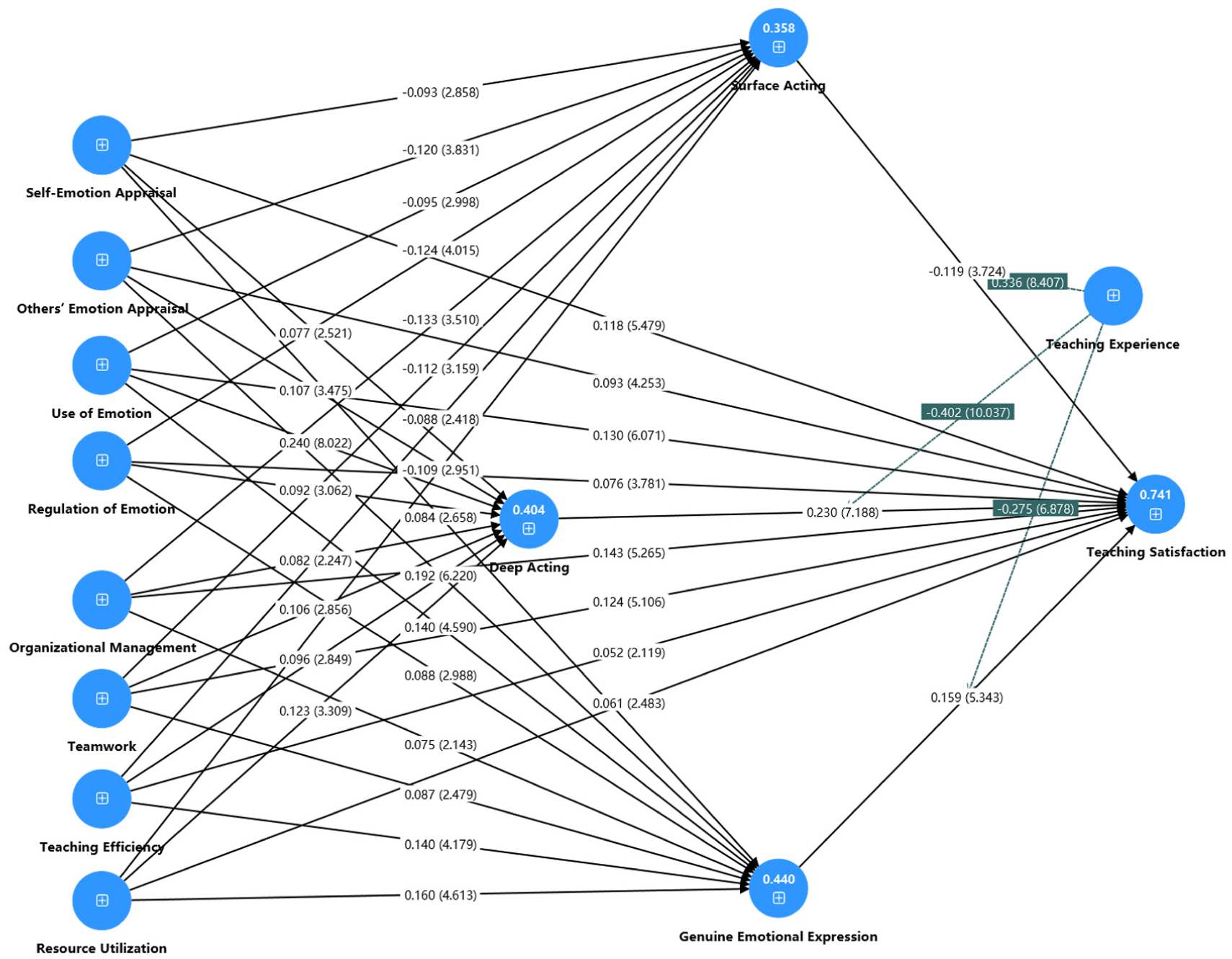
Path analysis results.
As shown in Table 8, the mediation analysis indicated that emotional labor mediated the relationship between emotional intelligence and teaching satisfaction. In addition, emotional labor also mediated the relationship between school climate and teaching satisfaction. A comparison of the effect sizes across different paths further revealed that genuine emotional expression and deep acting showed stronger mediating effects in most paths, whereas the mediating effect of surface acting was relatively weak. This suggests that positive and authentic emotional expression, as well as the deep mobilization of emotions, are key mechanisms through which emotional intelligence and school climate are translated into teaching satisfaction. Overall, these findings highlight the bridging role of emotional labor in shaping teachers’ teaching satisfaction and provide empirical support for understanding how emotional intelligence and organizational context enhance teachers’ occupational well-being through specific emotional management strategies.
Mediation Analysis Results.

Note. EI1 = self-emotion appraisal; EI2 = others’ emotion appraisal; EI3 = use of emotion; EI4 = regulation of emotion; SC1 = organizational management; SC2 = teamwork; SC3 = teaching efficiency; SC4 = resource utilization; EL1 = surface acting; EL2 = deep acting; EL3 = genuine emotional expression; TS = teaching satisfaction.
As shown in Table 9, the moderation analysis followed the guidelines proposed by Hair et al. (2022) for assessing moderating effects in PLS-SEM. A moderating effect is considered present when the path of the interaction term is statistically significant. The results indicated that teaching experience significantly moderated the relationships between emotional labor and teaching satisfaction. Further simple slope analyses (see Figures 3 –5) revealed that among teachers with lower teaching experience, higher levels of surface acting were associated with lower teaching satisfaction, whereas among teachers with higher teaching experience, surface acting was positively associated with teaching satisfaction. Moreover, among teachers with lower teaching experience, deep acting and genuine emotional expression were positively associated with teaching satisfaction, while among teachers with higher teaching experience, the relationships between deep acting or genuine emotional expression and teaching satisfaction became negative.
Moderation Analysis Results.

Note. The symbol “×” represents an interaction term; TE = teaching experience; EL1 = surface acting; EL2 = deep acting; EL3 = genuine emotional expression; TS = teaching satisfaction.
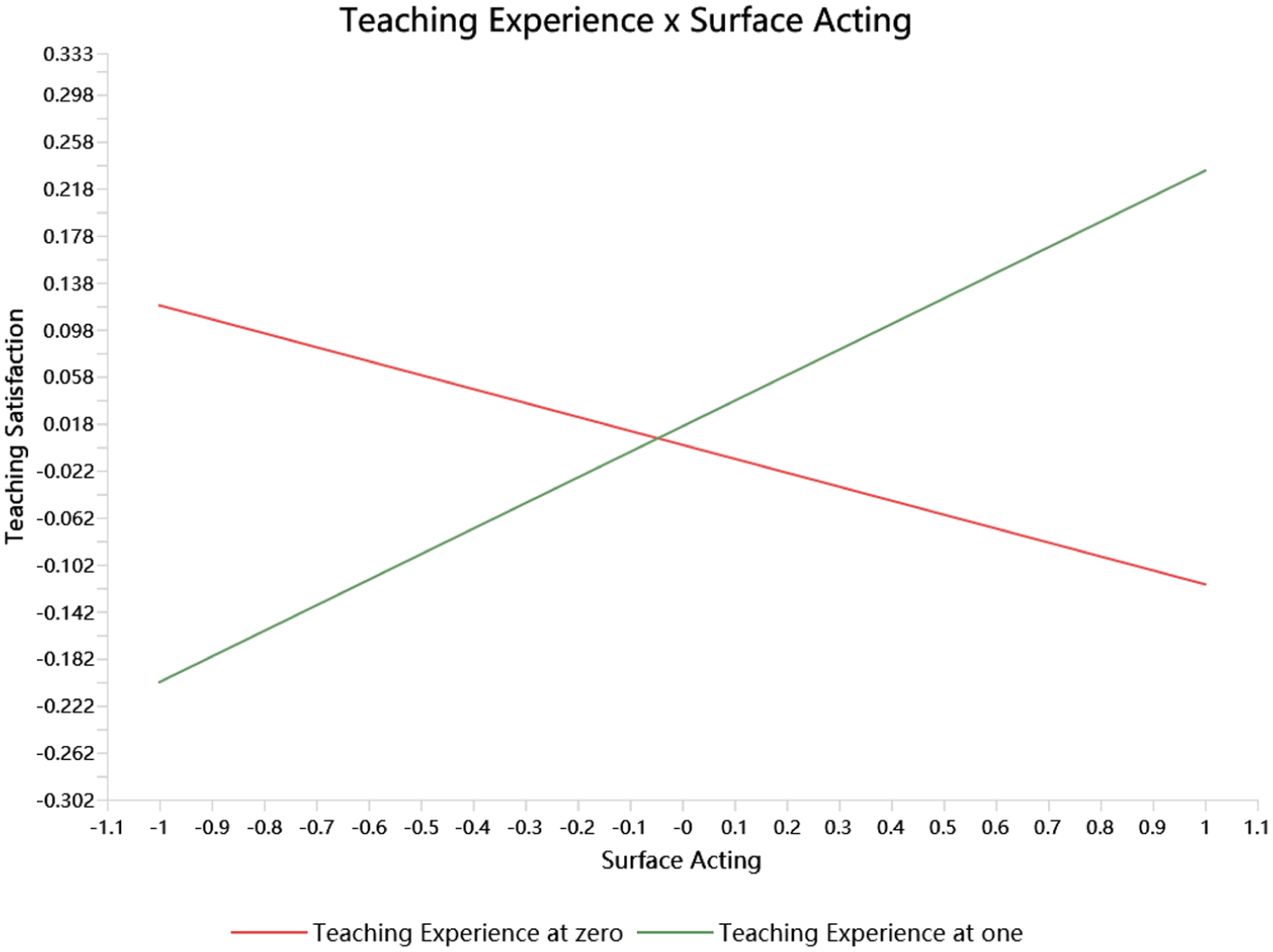
Interaction effect of TE and EL1 on TS.
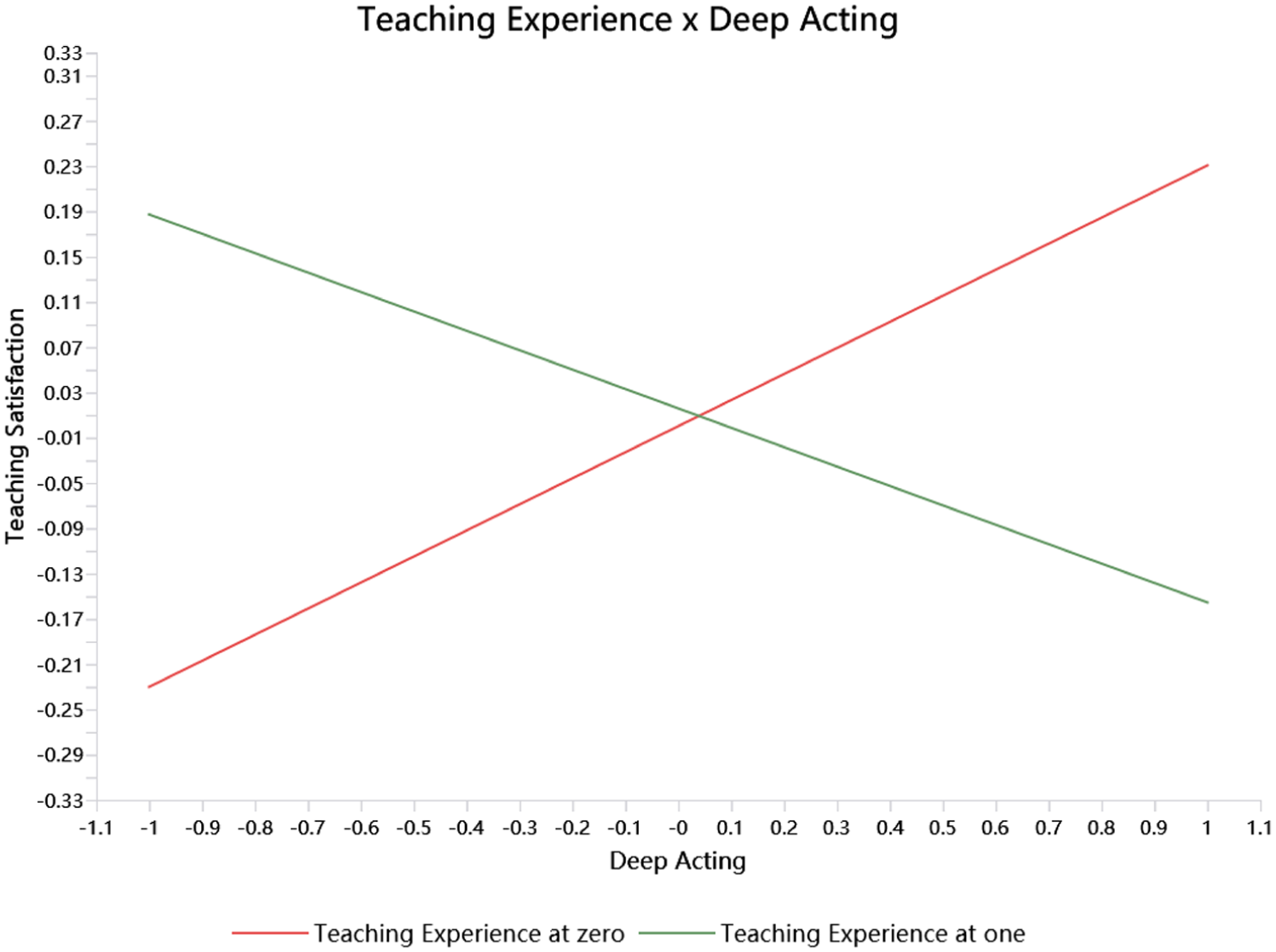
Interaction effect of TE and EL2 on TS.
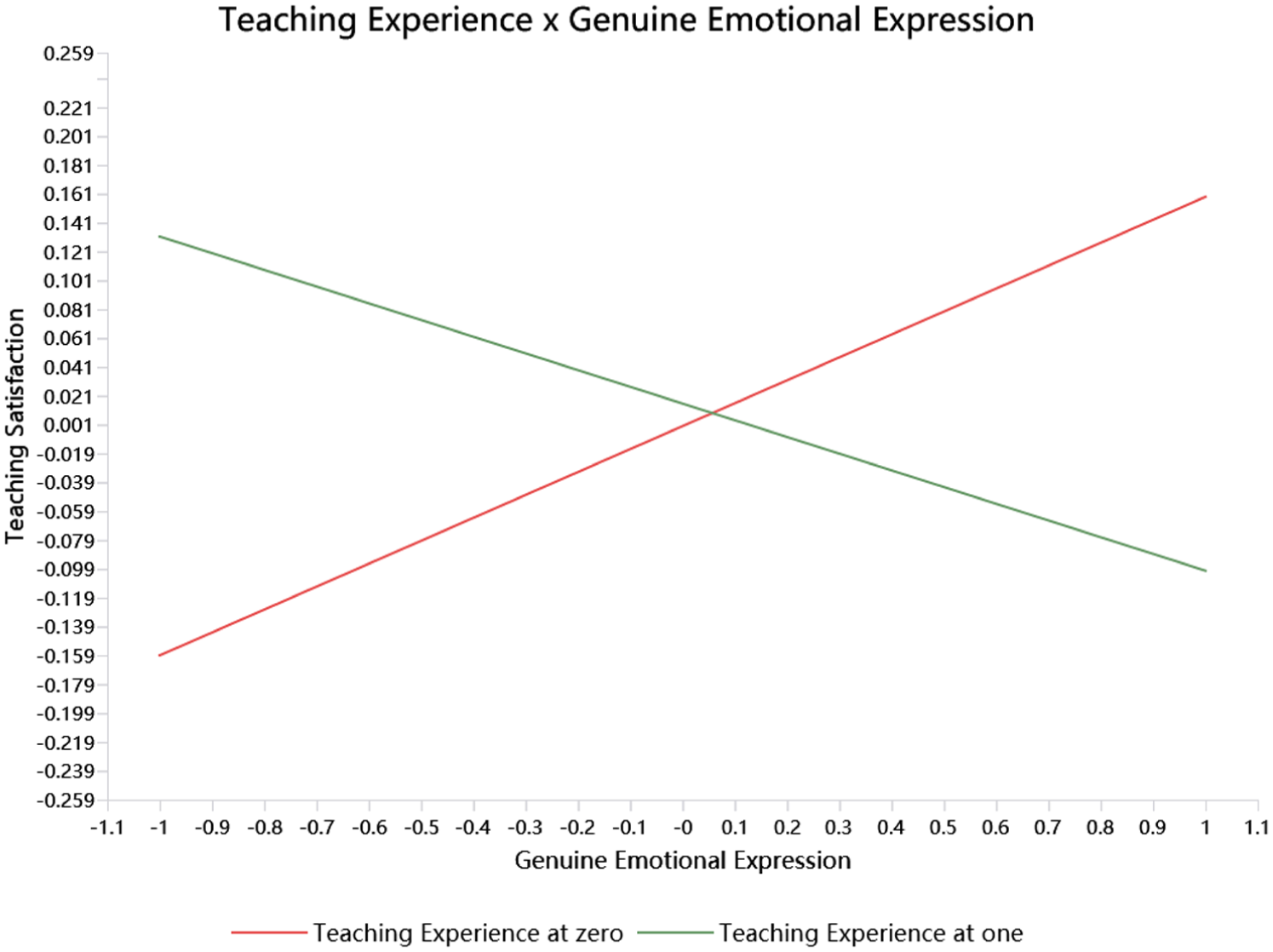
Interaction effect of TE and EL3 on TS.
Discussion
This research explored whether emotional labor functions as an intermediary mechanism linking emotional intelligence and school climate to teaching satisfaction in the context of English language instruction in China. Additionally, it examined whether teaching experience moderates the relationship between emotional labor and teaching satisfaction. The SEM results showed that the model demonstrated good explanatory power and predictive relevance (R2 = 0.741, Q2 = 0.674, SRMR = 0.033), providing a solid empirical basis for the discussion.
Emotional intelligence (self-emotion appraisal, others’ emotion appraisal, use of emotion, and regulation of emotion) was found to be positively associated with teaching satisfaction, supporting H1. Specifically, teachers who can accurately recognize their own emotions are more likely to remain calm when facing teaching pressure or unexpected classroom situations, which helps prevent negative emotions from disrupting the teaching process (Aldrup et al., 2024). In addition, teachers who are skilled at recognizing students’ emotions can promptly detect students’ emotional cues and respond appropriately, thereby fostering positive teacher–student interactions (Lozano-Peña et al., 2021). Teachers who can effectively use their emotions tend to maintain enthusiasm and engagement in teaching activities, which enhances the classroom atmosphere and student participation (Yang, 2022). Moreover, teachers with strong emotional regulation abilities are better able to restore psychological balance when encountering stress or conflict, reducing emotional exhaustion (S. Chen & Tang, 2024). These positive emotional management processes help alleviate the emotional burden caused by teaching stress and facilitate the positive transformation of emotional experiences, thereby significantly improving teachers’ teaching satisfaction. Schools and educational administrators should emphasize the development of emotional intelligence in teacher training, particularly systematic training in emotion recognition and regulation, to help teachers build stable emotional management mechanisms.
School climate (organizational management, teamwork, teaching efficiency, and resource utilization) was found to be positively associated with teaching satisfaction, supporting H2. Specifically, well-structured organizational management can provide teachers with clear institutional guidelines and work objectives, which reduces role conflict and institutional stress and allows them to concentrate on instructional tasks (Xia et al., 2024). A collaborative teamwork atmosphere can strengthen teachers’ sense of collegial support and emotional connection, buffer the negative emotions caused by interpersonal conflict, and enhance their sense of belonging and job satisfaction (Toropova et al., 2021). A strong climate of teaching efficiency can help optimize the allocation of instructional resources and processes, reduce repetitive task-related effort, and enhance teachers’ sense of professional accomplishment (Shalgimbekova et al., 2024). Moreover, sufficient resource utilization can provide teachers with essential instructional facilities, training opportunities, and institutional support, helping them obtain both emotional and instrumental support when facing teaching stress and reducing the risk of burnout (Huo, 2025). These positive elements of school climate offer teachers stable external support resources that alleviate the emotional burden caused by organizational stress, boost their teaching motivation and emotional energy, and in turn enhance their teaching satisfaction. Schools and educational administrators should strive to create a supportive and collaborative organizational culture, provide sufficient instructional resources and institutional guarantees, and build strong emotional support networks to enhance teachers’ organizational identification and sense of professional value, thereby fostering their teaching enthusiasm and long-term professional development.
Emotional labor (surface acting, deep acting, and genuine emotional expression) was found to mediate the relationship between emotional intelligence and teaching satisfaction, supporting H3. Specifically, teachers with higher emotional intelligence are more capable of flexibly regulating their emotional labor when facing students’ needs and classroom pressure, which helps maintain emotional stability, reduce emotional exhaustion, and create a positive classroom atmosphere (S. Sun et al., 2025). Teachers who are skilled in expressing and regulating emotions are also more likely to build harmonious relationships during teaching interactions, thereby gaining a stronger sense of accomplishment when fulfilling their teaching duties (Peng et al., 2023). In addition, emotional labor was found to mediate the relationship between school climate and teaching satisfaction, supporting H4. A supportive school climate not only directly enhances teachers’ job satisfaction but also reduces the need for surface emotional display and encourages sincere and positive emotional engagement, which helps decrease emotional exhaustion and improve teaching satisfaction (Ma et al., 2023). From the perspectives of emotional labor theory and COR Theory, high emotional intelligence enables teachers to achieve a dynamic balance between emotional investment and resource consumption, thereby sustaining their emotional energy and professional satisfaction in long-term teaching.
Teaching experience was found to moderate the relationship between emotional labor and teaching satisfaction, supporting H5. For surface acting, inexperienced teachers often suppress their genuine emotions passively, which can lead to emotional dissonance and exhaustion, thereby reducing their teaching satisfaction (S. Li et al., 2026). In contrast, experienced teachers are able to internalize surface acting as a strategic tool for classroom management and interaction, using controlled expressions and tone of voice to achieve instructional goals, which in turn enhances their teaching satisfaction. In comparison, deep acting and genuine emotional expression can help teachers in the early stages of their careers engage sincerely in the classroom, compensate for their lack of professional skills, and strengthen students’ sense of connection and their own self-efficacy, thereby improving satisfaction (Peng et al., 2023). At later career stages, teachers rely more on professional norms and strategies to maintain classroom effectiveness, and excessive emotional investment may instead lead to resource depletion and role conflict, resulting in lower satisfaction (Zhai et al., 2025). Therefore, teacher training and professional development programs should provide differentiated emotional labor guidance according to teachers’ career stages. For less experienced teachers, schools and training institutions should focus on developing their deep acting and genuine emotional expression skills. For experienced teachers, training should emphasize emotional resource management and strategic acting techniques to help them maintain classroom effectiveness while avoiding resource depletion and role conflict caused by excessive emotional involvement. Such stage-specific emotional labor interventions can enhance teaching satisfaction and occupational well-being among teachers at different stages of their careers.
In addition, this study extends Emotional Labor Theory (Hochschild, 1983) by empirically demonstrating that emotional labor serves as a key psychological mechanism linking emotional intelligence and school climate to teaching satisfaction. Previous studies have often examined individual and contextual factors in isolation, whereas this study reveals their interactive mechanism and clarifies how teachers transform emotional resources into positive professional outcomes under teaching stress. Furthermore, this study integrates emotional labor theory with COR Theory (Hobfoll, 1989) to construct a comprehensive theoretical model linking emotional intelligence, school climate, emotional labor, and teaching satisfaction. By placing emotional labor at the center between individual and contextual resources, this study addresses the lack of theoretical integration in previous research and enriches the framework for studying teachers’ occupational well-being and satisfaction. Finally, this study expands the career stage perspective by showing that emotional labor is more likely to function as a resource gain at the early stage of teaching careers but may become a resource burden at later stages. This finding reveals stage-specific differences in the mechanisms of emotional labor and offers a new theoretical perspective for incorporating career stage as a variable when applying COR Theory in educational contexts.
Conclusion
Main Findings
Based on COR Theory and Emotional Labor Theory, this study constructed and tested an integrated model to examine the relationships among emotional intelligence, school climate, emotional labor, and teaching satisfaction, while also testing the moderating role of teaching experience. The model demonstrated good fit (SRMR = 0.033) and high explanatory power for teaching satisfaction (R2 = 0.741, Q2 = 0.674), indicating strong stability and predictive relevance. The results showed that the dimensions of emotional intelligence (self-emotion appraisal, others’ emotion appraisal, use of emotion, and regulation of emotion) and school climate (organizational management, teamwork, teaching efficiency, and resource utilization) were significantly associated with teaching satisfaction. Among the three dimensions of emotional labor, surface acting was negatively associated with teaching satisfaction, whereas deep acting and genuine emotional expression were positively associated with teaching satisfaction. Mediation analyses further revealed that emotional labor mediated the relationships between emotional intelligence, school climate, and teaching satisfaction, with the indirect effects of deep acting and genuine emotional expression being stronger than that of surface acting. In addition, teaching experience significantly moderated the relationships between emotional labor and teaching satisfaction. Specifically, among teachers with lower teaching experience, surface acting was negatively associated with teaching satisfaction, whereas deep acting and genuine emotional expression were positively associated with teaching satisfaction; in contrast, among teachers with higher teaching experience, surface acting was positively associated with teaching satisfaction, whereas deep acting and genuine emotional expression were negatively associated with teaching satisfaction.
Theoretical Contributions
This study addressed existing theoretical gaps in the field of teaching satisfaction. First, previous studies have generally treated emotional intelligence, school climate, and emotional labor as unitary variables, with limited attention to the differences among their internal dimensions and little effort to incorporate individual and contextual resources into a unified theoretical framework. By examining the dimensional pathways of emotional intelligence (self-emotion appraisal, others’ emotion appraisal, use of emotion, and regulation of emotion), school climate (organizational management, teamwork, teaching efficiency, and resource utilization), and emotional labor (surface acting, deep acting, and genuine emotional expression), this study constructed an integrative structural model. Second, this study extends Emotional Labor Theory. Unlike previous research that often-treated emotional labor as a single construct, this study examined its three dimensions separately and found distinct differences in their directions and magnitudes of effects. These results provide more fine-grained, dimension-based evidence for emotional labor theory and overcome the limitations of earlier studies that relied solely on overall scores. Finally, this study integrates emotional labor theory with COR Theory to build an integrative model linking individual resources, contextual resources, emotional strategies, and professional outcomes. The results show that emotional intelligence and school climate not only directly predict teaching satisfaction but also indirectly affect it through different types of emotional labor, suggesting that emotional labor serves as a mediating channel connecting individual and contextual resources. This finding addresses the long-standing lack of theoretical integration in the literature and provides a unified resource-based explanatory framework for understanding how teachers’ internal emotional abilities and external contextual support are transformed into occupational well-being through specific emotional strategies.
Practical Implications
The findings of this study offer practical implications for teachers, schools, and policymakers to enhance teachers’ occupational well-being and teaching quality. First, teachers should consciously strengthen their emotional competencies, particularly in the areas of effectively using emotions and recognizing their own emotions. They can participate in on- and off-campus workshops on emotional management and communication skills, such as emotional journaling, emotion recognition training, and group role-play, to improve emotional awareness and self-regulation. In classroom practice, teachers may incorporate “emotional projection points” (e.g., stories, humor, or case-based activities) into their lesson designs to proactively evoke positive emotions and foster student engagement. When applying emotional labor strategies, teachers should also take their level of teaching experience into account to adjust their approaches accordingly. Inexperienced teachers should reduce their reliance on mechanical surface acting and instead engage more in deep acting through setting positive goals and internalizing the meaning of their emotions, combined with authentic genuine emotional expression, to enhance classroom engagement and student rapport. Experienced teachers, in contrast, should avoid consistently high levels of emotional investment by using surface acting strategically in classroom management and lesson organization while moderately reducing the intensity of deep acting and genuine emotional expression to prevent resource depletion and role conflict caused by emotional overinvestment. Second, schools should create a sustainable external support environment for teachers, focusing especially on improving organizational management and teamwork. In terms of organizational management, schools can reduce role conflict and institutional stress by clarifying job responsibilities, establishing transparent evaluation and reward systems, and allocating teaching and administrative tasks reasonably. Regarding teamwork, schools can promote resource sharing and emotional support among teachers by implementing mentoring programs for novice teachers, forming interdisciplinary teaching teams, and organizing regular peer support groups. Schools may also designate “teacher development periods” in the semester schedule, reserving time for lesson preparation and emotional recovery to help teachers replenish emotional resources and maintain teaching energy. Finally, policymakers should promote emotional competence development and supportive systems for teachers at the institutional level. Pre-service teacher education programs should incorporate practical modules on emotional intelligence and classroom emotional labor management, such as classroom emotion-handling simulations and analyses of emotional labor strategies. In in-service training, teachers should receive targeted programs on emotional stress management and positive psychological development, learning how to distinguish the appropriate use of surface acting, deep acting, and genuine emotional expression to build strategic emotional regulation skills. At the policy level, initiatives such as “emotional support allowances” or “mental health service quotas” could be introduced to provide teachers with continuous access to psychological counseling, stress relief, and emotional health screening. These measures can help teachers replenish their emotional resources, prevent burnout, and sustain their teaching motivation.
Limitations and Future Research Directions
Limitation 1: Research Design
This study adopted a cross-sectional design, and all data were collected at a single time point. As a result, it was not possible to establish causal relationships or capture the dynamic changes of key variables over time. Therefore, the significant associations identified in this study should be interpreted as correlational rather than causal. Future research could employ longitudinal or multi-wave designs to examine the trajectories of emotional labor and teaching satisfaction over time, which would enhance the robustness of causal inferences.
Limitation 2: Sample Characteristics
All participants were from three universities in a province of China. Although both undergraduate and vocational institutions were included, the geographic concentration of the sample may limit the external validity of the findings. In addition, the sample included a relatively high proportion of female teachers. While this partially reflects the gender distribution in the field of English education, it may also have introduced sampling bias and reduced the generalizability of the results. Moreover, the demographic information collected in this study was relatively limited and did not include potentially relevant variables such as teaching workload. Future studies could expand the geographic scope of the sample, improve gender balance, and incorporate more demographic indicators to more comprehensively examine the role of individual differences in the proposed model.
Limitation 3: Data Sources
This study relied primarily on self-reported questionnaire data, which may be subject to social desirability effects and self-perception biases. Although no serious CMB was detected through the Harman’s single-factor test and the CLF test, relying solely on self-report data may still affect the accuracy of estimating the relationships among variables. Future research could integrate multiple data sources, such as student evaluations, peer assessments, or classroom behavioral observations, to improve the objectivity and validity of the findings.
Footnotes

Ethical Considerations
The researchers confirms that all research was performed in accordance with relevant guidelines/regulations applicable when human participants are involved (e.g., Declaration of Helsinki or similar).
Consent to Participate
The participants received oral and written information and provided written informed consent before participating in the study.
Author Contributions
Conceptualization: Su Zou, Lisheng Liu; Methodology: Su Zou; Formal analysis and investigation: Su Zou; Writing–original draft preparation: Su Zou; Writing–review and editing: Su Zou; Supervision: Su Zou. All the authors have read and agreed to the published version of the manuscript.
Funding
The authors received no financial support for the research, authorship, and/or publication of this article.
Declaration of Conflicting Interests
The authors declared no potential conflicts of interest with respect to the research, authorship, and/or publication of this article.
Data Availability Statement
The data that support the findings of this study are available from the corresponding author*.