




Abstract
This article aims to examine the impact of developing and applying relationship intelligence in team-based practice to provide a clear understanding of the role relationship intelligence plays in team productivity in mainland China. Relationship intelligence, a component of emotional intelligence, focuses on interpersonal interactions that are crucial in team-building but receives less attention. Exploratory qualitative research was undertaken, with emotional intelligence as the theoretical framework and the input-process-output criteria indicating group effectiveness. Data collection was based on semi-structured interviews with managers and staff of the private sector based in mainland China after utilizing the Strengths Deployment Inventory 2.0 as a learning tool. The findings identify three ways in which the integration of relationship intelligence positively affected team practice: high overall performance, a positive work climate, and improved attitudes toward coworkers and work-related tasks. The positive outcomes provide researchers and practitioners with valuable information on how relationship intelligence might be leveraged to enhance communication, collaboration, and overall team performance.
Plain Language Summary
The purpose of this article is to explore the role of relationship intelligence in team productivity in mainland China. We conducted an exploratory qualitative study in which emotional intelligence provided a theoretical framework and input-process-output criteria indicating group effectiveness. Data collection was based on semi-structured interviews with China’s private sector managers and employees. After applying relationship intelligence using SDI 2.0 as a learning tool, the results identified three ways relationship intelligence brought to team practices: high overall performance, a positive work climate, and improved attitudes toward coworkers and work-related tasks. These positive results provide researchers and practitioners with valuable information on how to use relational intelligence to improve communication, collaboration, and overall team performance.
Introduction
In today’s fiercely competitive business environment, people must work in teams to tackle increasingly complex tasks and achieve organizational results. Since the late 1990s, for organizations across most countries, the amount of time laborers spent working collaboratively has surged (R. Cross et al., 2016). In a group practice, however, it can be detrimental for an organization if working groups are not always productive due to poor group relationships that lead to ineffective communication, conflict, and a lack of trust. The effectiveness of a working team is often correlated to the quality of its team member relationships (Khawam et al., 2017). Emotional intelligence (EQ), especially relationship skills, helps improve interpersonal relationships (Saarni, 1999). Therefore, the building of quality group member relationships can benefit from applying EQ in daily interactions, with a particular focus on relationship competency—relationship intelligence (RQ). A global research study found that 83% of organizations consider EQ skills for employees as a necessity for future success, yet only 17% train non-senior employees on EQ (Capgemini Research Institute, 2019). Thus, organizations need to integrate applied EQ into group practice covering both executives and staff members to achieve desired performance objectives and develop teaming skills to embrace new, even more, complex challenges in the future. To achieve effective teams leveraging interpersonal relationships, it is crucial for organizations to implement the RQ measure concentrating on improving team member relationships.
The importance of EQ can be seen in the fact that it drives 80% of organizational performance (Goleman, 1995). Researchers have broadly applied their study of EQ to a wide array of management and leadership contexts, discovering its contribution to team management (Broughton, 2017; Masaldzhiyska, 2019). Previous research presents a positive association between EQ and team performance, team cohesiveness, work satisfaction, and conflict resolution in studies of EQ and group-based practice conducted mainly in Western contexts (Black et al., 2019; Feyerherm & Rice, 2002; Miao et al., 2017; Michinov & Michinov, 2022; Skordoulis et al., 2020). This association, however, can only be applied to regions with similar social and economic systems (Rezvani et al., 2019). Hence, the contribution of EQ to team behavior in mainland China requires additional research. Furthermore, in every cultural context, “people have relationships within themselves, with each other, and with their work,” so these contexts should be considered (Scudder, 2019, p. 1). Achieving team results depends on excellent interpersonal relationships predicated on better communication, less conflict, and mutual support. RQ—a particular focus of EQ that emphasizes the necessary adjustments in an approach that should be made as one works with different types of people—offers powerful insight into the attitudes and behaviors that contribute to effective teamwork. However, RQ has received limited attention in the literature. Compared to the broader topic of EQ, a review of the refereed literature revealed scant studies concentrated on RQ, especially its impact on overall group productivity in non-western cultures.
When applied to performance and behavior, EQ has been previously measured or developed by measurements for different purposes (Wong & Law, 2002). Though referred literature on various EQ measurements is diverse, there has been little consideration of the focus of the Strengths Deployment Inventory (SDI) 2.0, a valid and reliable psychometric designed to develop RQ and improve interpersonal interactions globally. Since the SDI 2.0 contributes to an understanding of one’s identity in terms of motives, values, and strengths, and that each person’s identity is rooted in a culture influencing their response to the outside world, this widely used tool deserves to be considered in a variety of diverse culture settings (McAdams, 1996). However, only a few studies have demonstrated the role of SDI in leadership development, workplace stress reduction, and organizational change in North America (Bortner, 2018; D. Cross et al., 2014; Greer, 2019; Kerr, 2012). This study aims to fill a gap in the literature regarding the effectiveness of the RQ developed by SDI 2.0 for team effectiveness in mainland China.
EQ involves people’s awareness of and interaction with their surroundings. Scholars have, however, debated whether the application of EQ is influenced by culture. Other scholars have debated whether the measurement of EQ must somehow factor in cultural influences and awareness (Law et al., 2008). According to Farris (2001), the SDI is more valid when applied in the U.S. than in Hong Kong influenced by China’s collectivist culture. Hence, relative to this ongoing debate, this present study explores the effectiveness of applying RQ developed using SDI 2.0, in Chinese employees’ team-based practice. As a result, this study contributes to an understanding of the role of RQ in elevating team results and the efficacy of SDI 2.0 as a learning tool for managerial practice in non-western cultures.
This study aims to explore the effectiveness of applying RQ in employees’ team practice in mainland China. The study provides a clear and in-depth understanding of how RQ contributes to a more collaborative environment when incorporated into work teams. Moreover, this study is designed for employees working in teams in the Chinese private sector to explore the impact of the SDI 2.0 intended to develop interdependence and collaboration at work. The research is guided by the research question: what is the impact of integrating RQ into Chinese employees’ team-based practice? The premise that RQ, developed with the SDI 2.0, drives team effectiveness and improved performance fueled this study; therefore, it is crucial to obtain the reactions and perceptions of Chinese employees working as teams.
The main contribution of this study is to identify and elucidate how SDI 2.0 creates RQ and enhances team-based practice and effectiveness in a Chinese private-sector context. These insights solidify RQ as a key component of EQ and provide an introduction to SDI 2.0 to a broader audience of scholars and practitioners. Previous research on EQ and team-based practice has largely been conducted from Western and quantitative perspectives. However, RQ has rarely been studied directly on team effectiveness in non-western regions. Through a phenomenological investigation, this research reveals a rich, descriptive, and exploratory resource of RQ and Chinese collaborator team practices, which can provide a better understanding of the role of RQ in boosting team productivity in mainland China, how the application of RQ and its development tool SDI 2.0 may have broader application in the future, as well as the significance of EQ literature in global regions.
The rest of the article is structured as follows. First, the authors provide a foundational discussion of EQ, a broader and well-studied concept in which the key ideas of RQ are included, and how EQ and RQ are practiced globally. The following section presents the research methodology adopted in conducting this research. The findings section then follows, uncovering the effectiveness of RQ as a practice for elevating team outcomes, nurturing a positive working environment, and achieving team members’ attitudes toward coworkers and the work itself. The discussion and implications of RQ to team practice precede limitations and further research, as well as a conclusion.
Literature Review
EQ
The emergence of EQ originates from the development of various intelligence theories, including Thorndike’s (1920) social intelligence theory, Gardner’s (1987) multiple intelligences theory, and Sternberg’s (1985) triarchic intelligence theory. In addition to intelligence theories, the evolution and development of EQ also benefited from theories covering behavior and personality traits (Alhamami & Ismail, 2016; Emmerling & Goleman, 2003). Grounded on various theories and areas of study, theorists have different ideas on how to understand, measure, and promote EQ, thus developing different models consisting of various EQ competencies (see Table 1).
EQ Theory.

Salovey and Mayer (1990) introduce EQ and define it as “the ability to monitor one’s own and others’ feelings and emotions, to discriminate among them, and to use this information to guide one’s thinking and actions (p. 189).” They consider EQ an internal cognitive ability to control human behaviors (Daus & Ashkanasy, 2005; Kong, 2014). To Bar-On (1997), EQ is a group of non-cognitive skills that help individuals cope with the pressure and demands of life. This concept is related to the role of personality traits in managing people’s psychological well-being (Stys & Brown, 2004). Goleman (1995) brings EQ to the world’s attention. His model also covers mixed emotional and social elements while emphasizing workplace success (Bennis, 2003; Broughton, 2017). Though theorists hold different opinions in discussing EQ, they all agree that EQ and its competencies can be developed and enhanced through learning or therapy (Bar-On et al., 2007; Goleman, 2001; Mayer et al., 2002). Hence, relevant instruments, including psychometric learning tools, are developed to measure or develop different EQ dimensions (Sosik & Megerian, 1999). Although a few scholars were critical of EQ models, assessments, and their positive impact, this emerging body of knowledge became significant in education, psychology, business, government, the military, and other settings. (Cole et al., 2018; Fernández-Berrocal & Extremera, 2006; Gerbeth et al., 2021; Grubb & McDaniel, 2007). As most studies concerning the significant role of EQ in these settings have been primarily conducted in Western regions, more research on investigating the importance of EQ in mainland China would have the potential to benefit employee development and workplace practice in non-Western cultural settings.
RQ
RQ, like the relationship competency in Meyer and Salovey’s and Goleman’s EQ models, is the process of applying knowledge in specific settings to produce meaningful results and the insight to adapt one’s approach to achieve more effective interactions (Scudder, 2019, 2021). Through RQ (see Figure 1), people can better understand past interactions and develop a more effective method of communicating with others, which allows them to control their future actions and behavior (Scudder, 2019). By possessing RQ skills, people can build a collaborative working climate that helps foster the effectiveness of team-based practice. Involving understanding one’s and others’ intents, needs, and motivations, RQ could help elevate team results as effective team practice depends on members’ perceptions of each other’s strengths and limitations and leveraging or circumventing them if possible (Bar-On, 2006; Gardner & Hatch, 1989).
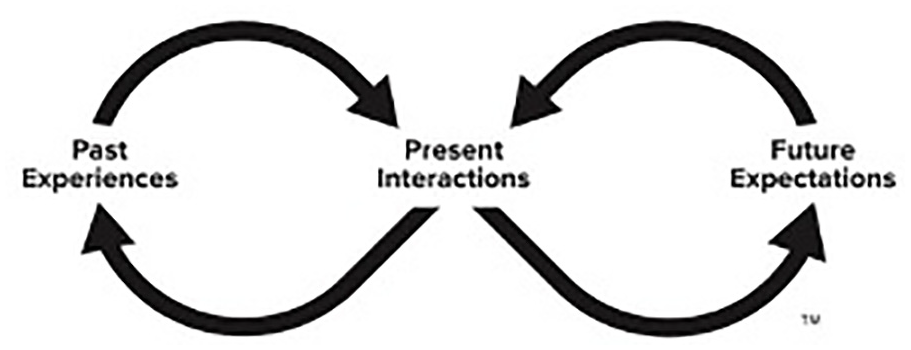
Relationship Intelligence Model.
SDI 2.0, initially published in 1971 by Dr. Elias Porter, is a personality-based assessment tool focused on understanding how motives drive strengths and how more effective deployment of strengths can improve interactions and create better outcomes between people. It provides a systematic view of people by identifying how a person values, prioritizes, and blends three core motives using simple, easy-to-remember, color-coded language. Experts have acknowledged the SDI 2.0 tool’s reliability and validity (Barney, 1998; Cunningham, 2004; Scudder, 2013, 2019). Due to its popularity, it has been utilized by more than 5 million individuals coming primarily from Western countries and regions (Scudder, 2021). Research has shown that SDI, the RQ development tool, contributes to authentic leadership, workplace stress decreasing, and organizational change and productivity in the West (Bortner, 2018; D. Cross et al., 2014; Greer, 2019; Kerr, 2012). White (2019) also suggests that academia, government, military, and industry can leverage the complimentary outcome of SDI in promoting RQ for leadership development. However, a gap exists in the peer-reviewed literature regarding the effectiveness of RQ and SDI 2.0 in driving team effectiveness in a mainland Chinese context. The purpose of this research is to bridge that gap.
SDI 2.0 is a learning tool most often delivered in a workshop led by a trained facilitator and attended by members of the same team or organization. In this context, learners use the results of their assessment and hear from colleagues who have different results to create deeper awareness and explore better approaches to interpersonal communication and collaboration among team members. The learning is supported by a digital job aid that allows colleagues to compare their results with those of their peers and receive practical tips for communicating more effectively in meetings, through messages, and in daily conversation.
The assessment section takes about 25 min to complete and is administered via a web-based questionnaire consisting of the motives and strengths sections. The motives section has 60 items of dual-state and ipsative that require respondents to indicate different degrees to which three descriptions in work situations represented them by allocating 10 points among three descriptive sentences. The strengths section covers 56 strengths statements that require the respondents to assume a work mindset and then prioritize those strengths statements in sets of four. After several iterations, the software algorithm creates a prioritized list of strengths one is most and least likely to use at work. The exact process is used to identify strengths that are most likely to be overdone or misapplied in a work context and least likely to be overdone or misapplied.
After completing the assessment, every respondent will get a report identifying their Motivational Value System (MVS), Conflict Sequence, prioritized list of 28 strengths, and 28 overdone strengths. The results are typically explained and discussed during a team-based workshop that emphasizes making adjustments when communicating with others based on their SDI 2.0 results. The workshop is facilitated by a professional facilitator using interactive lessons, discussions, videos, hands-on exercises, and job aids. It takes about 8-hours to complete the instructor-led learning experiences designed by the publisher. After the workshop, the Core Strength Platform (performance-support-software) is used to reinforce RQ in team practice. Employees can get customized and real-time guidance from the platform for interacting most effectively with particular coworkers. Since EQ and its competencies can be developed and enhanced only with valid tools and practical application (Goldstein & Ford, 2002), the SDI 2.0-based workshop is the ideal choice for studying the integration of EQ skills—particularly RQ—into team-based practice in a Chinese private enterprise context.
EQ, RQ, and Group-Based Practice
The main characteristics of group-based practice are people, interdependence, and a specific context. This working style covers individuals, interpersonal relationships, communication, collaboration, conflict, trust, empathy, flexibility, cohesion, and environment. Group effectiveness, involving outcomes and actions of a group, is based on the criteria of input, process, and output (I-O-P) (McGrath, 1964). Among the three criteria, input involves characteristics, abilities or skills, and climate in levels of individuals, teams, and organizations; process is about team communication, collaboration, cohesion, and conflict management; and output includes team performance, member development, satisfaction, and team viability (Gladstein, 1984; Guzzo & Dickson, 1996; Hackman, 1987; Hoegl & Gemuenden, 2001; Salas et al., 2008). Hence, building and developing relevant personal, team-building, and social capabilities is compulsory for work teams to obtain productivity. In this study, the effectiveness of team-based practice can be achieved by a dynamic system correlated with individual behavior, team performance, and practice climate (Aubé & Rousseau, 2005).
While IQ and technical skills are considered critical in work settings, EQ is regarded as an even more critical component (Goleman et al., 2002). For group work, EQ plays a vital role in enhancing productivity, because it develops relevant social skills needed for team effectiveness (Druskatt & Wolff, 2001; Mayer & Salovey, 1997). In addition to differentiating high from average group performance, EQ can also help increase group satisfaction (Afolabi et al., 2010; Kelley & Caplan, 1993; Winton, 2023). Research also shows that people with high levels of EQ tend to perform well in management roles because successful team management requires the ability to understand and leverage interpersonal relationships (Pastor, 2014). Group productivity relies on better member relationships, so this aspect of teamwork may benefit from improved RQ. At present, however, there is little empirical evidence to support these contentions. With this in mind, research on integrating relationship competency in achieving effectiveness for team practice via qualitative methodology is useful (Hess & Bacigalupo, 2013; Zijlmans et al., 2015).
EQ, RQ, and Group Performance
Group performance involves quantity, quality, and speed (Guzzo & Dickson, 1996). Relative to IQ and other management competencies, EQ makes a more substantial contribution to improving team performance (Barinua et al., 2022; Dulewicz et al., 2005), with this illustrated in a variety of countries and industrial settings. Measured by the Wong and Law Emotional Intelligence Scale (WLEIS), EQ shows effectiveness for Chinese scientists’ work performance in a Hong Kong-based company (Law et al., 2008). In France, Michinov and Michinov (2022) used a short version of the Workgroup Emotional Intelligence Profile to demonstrate the validity of EQ in predicting team performance. Bulgarian managers, on the other hand, reported higher work performance with increasing EQ (Masaldzhiyska, 2019). Specifically, EQ promotes both contextual and task performance for the United Arab Emirates employees (Bozionelos & Singh, 2017). Furthermore, the EQ of American salespeople has a positive impact on their creativity, which leads to better work performance (Lassk & Shepherd, 2013). And knowldege-intensive workers in the U.S., including postdoctoral and industrial researchers, also benefits from EQ in terms of task performance and creative performance (Stawicki et al., 2023). However, when examining leaders’ EQ, opinions differ on the impact of EQ on group performance and productivity, and further investigation is required (Feyerherm & Rice, 2002; Jamshed & Majeed, 2023; C. C. Lee et al., 2022; Pastor, 2014; Wong & Law, 2002). Based on these data, the benefits of EQ do not seem to be constrained by country or culture.
Moreover, group performance is enhanced through individual development, effective communication, team composition and cohesion. The increase in an individual’s EQ lifted their motivation in resolving tasks to promote individual performance contributing to collective effectiveness (Lam & Kirby, 2002). EQ can help employees enhance their communication skills, form stronger bonds with coworkers, and relieve job stress, all indicators of performance (Kim et al., 2014; Lu & Zhu, 2019). The SDI application of the RQ development tool helps individuals develop and adapt to adjusting approaches to achieve better communication and organizational results (Kerr, 2012; White, 2019). EQ, together with team composition, also impacts Spanish college students’ team productivity (Rodríguez Montequín et al., 2013). Additionally, mediated by self-efficacy, team cohesion reaches its highest point when team members possess higher-level EQ (Black et al., 2019). While the literature on the significance of EQ, including RQ, in predicting group performance is broad and compelling, additional research conducted in natural work settings using diverse employee populations, industries, and locales will create a deeper understanding.
EQ, RQ, and Team Member Attitudes
In team practice, member attitude is embodied in satisfaction, engagement, and turnover intention (Aubé & Rousseau, 2005; Hackman, 1987). Although mediated by a negative team emotional climate, Chinese leaders’ use of EQ improves the job satisfaction of their workers (Liu & Liu, 2013). The same concept was proven in a study by the Chinese hotel industry, mediated by emotional labor strategy (Wen et al., 2019). In relation to a U.S. nonprofit organization, Udod et al. (2020) also demonstrated how EI construct and workplace empowerment can help build CEO-manager relationships, thereby increasing work satisfaction to sustain workplace creativity. For mid-level tourism and hospitality managers in the UK, EQ contributed positively to increased staff satisfaction and motivation, thus improving overall business productivity (Stoyanova-Bozhkova et al., 2022). Aside from satisfaction, emotionally intelligent employees are more likely to be fully engaged at work and to have the support of their colleagues (Miao et al., 2017). Furthermore, EQ indicates team viability with reduced turnover intentions, thereby increasing team effectiveness (Mohammad et al., 2014; Mysirlaki & Paraskeva, 2020; Sanchez-Gomez & Breso, 2020). In contrast, other studies have shown that EQ has a small effect on job engagement and can only be observed in job satisfaction at a specific age cohort (Baksh et al., 2014; Kafetsios & Loumakou, 2007; Shamsuddin & Ujang, 2008). In addition, only partial results from the Porter (2005) SDI version of the RQ development tool presented by Giffen (2015) were statistically significant in predicting person-organization fit for employee turnover intention among upscale hotel workers in southern California, USA. These results indicate that extra research is needed to investigate the important role of EQ, including RQ, in improving people’s satisfaction, dedication, and retention.
EQ, RQ, and Practice Climate
A favorable climate fosters a positive mood that uplifts an individual’s positivity, self-efficacy, and performance (Livi et al., 2015; Tsai et al., 2007). EQ helps promote positive moods and behaviors, making team members more likely to collaborate with others. Relationships and connections seem to become more effective in companies with high emotional intelligence, improving performance by creating team spirit and making the workplace happier and more peaceful (Bal & Firat, 2017). Trust in supervisors also mediates the positive impact of EQ on work-related outcomes (Alsayed, 2022). In relation to an American university, students’ enhanced team EQ improves their team trust as a means of increasing productivity (Barczak et al., 2010). Aside from trust, in an insurance company in India, employees’ EQ competencies help create a better organizational environment in terms of communication and stress management (Mittal, 2016). Meanwhile, participants from companies in Spain underscore the importance of team EQ in boosting the positive emotional state or passion of subordinates collectively when coupled with transformational leadership behaviors (Mindeguia et al., 2021). Wan et al. (2023) further reveals the significance of EQ in cultivating the intimacy and supportive nature of teacher-student relationship, facilitated by openness and empathy in mainland China. Although promoting trust and communication, EQ measured by the Emotional Intelligence Scale does not show significance in conflict resolution among Asian university students (Der Foo et al., 2004).
However, other U.S. research argues that individuals with high EQ tend to resolve conflict in a more collaborative way and develop a work climate with less conflict among team members (Ayoko et al., 2008; Jordan & Troth, 2004; Skordoulis et al., 2020). Team members’ EQ skills help decrease task and relationship conflict, negatively affecting the effectiveness and positively increasing team cohesion for South Korean employees (C. Lee & Wong, 2019). Similarly, EQ, utilizing the WLEIS, acts as a significant tool in offering Chinese managers appropriate tactics for resolving conflict with coworkers at different levels in the organization (H. X. Chen et al., 2019). Increased trust and decreased conflict within a team can strengthen EQ and thus enhance team productivity (Rezvani et al., 2019). Likewise, research conducted by Bortner (2018) in the United States also shows that RQ is established through SDI to improve relational management among leaders. Despite the literature on the significance of EQ, including the importance of relationships in promoting positive environments of trust and conflict mitigation, this research is helpful in understanding the impact relational insight has on fostering a healthy team atmosphere in non-western organizations.
Methodology
Research Design
A qualitative methodology guided by the phenomenological inquiry was used to explore the lived experience of Chinese private corporate employees who experienced RQ practice. The purpose of the research was to examine the impact of increased RQ on team-based practice. The phenomenological approach helped the researchers collect descriptive data from Chinese private corporate employees’ reactions, perceptions, and understandings garnered from RQ practice and further identified the meaning from their shared experience associated with RQ (Creswell, 2013). The use of semi-structured interviews enables flexibility in conversations that helps researchers pursue an idea or response in greater depth and detail in a certain area, thus enriching the qualitative data and increasing the accuracy of the gathered data (Alamri, 2019; Dörnyei, 2007; Horton et al., 2004). Through in-depth semi-structured interviews, researchers gathered rich evidence, insights, and meanings on RQ and team productivity aspects related to the I-P-O criteria, which had not been investigated deeply in previous research (Howorth et al., 2004). Sample sizes in phenomenological studies can range from 1 person to 20 people following the data saturation concept (Bryman, 2015; Ellis, 2016; Patton, 2002). The authors conducted interviews with 18 employees who met the participant criteria for this research.
Participation Selection
A purposive sampling strategy was used in selecting interviewees. Specifically, the researchers contacted potential participants by leveraging their personal and professional networks to identify groups of employees to experience the RQ workshop via Zoom (https://zoom.us) led by a professional training facilitator who was an expert on SDI 2.0. The facilitator was not associated with the operations of those participating companies and the employees participating in the workshop had no ties with the authors. Hence, the gathered data did not negatively influence their standing in their organizations.
Following the workshop and upon approval from the authors’ university’s Institutional Review Board, the researchers contacted participants via emails and messages, with an invitation to voluntarily participate in an interview to discuss their experience with the RQ application and how it had affected their group practice. The criteria for participating in the interview were simply that they had experienced the workshop and regularly worked in a team environment. Information describing the interviewee participants is provided in Table 2. All interviewees were 18-55-year-old Chinese citizens who possessed college degrees and worked in private enterprises located in urban areas.
Characteristics of Interviewee Participants.

Data Collection and Analysis
This study adopted semi-structured interviews (see Appendix A) to collect data. The first author conducted in-depth interviews lasting 25 to 50 min in Chinese, the first language of all participants, utilizing Zoom with a prepared interview protocol covering semi-structured interview questions. The interviewer asked further follow-up questions during the interview when needed to gain more robust responses (Bell et al., 2018). To protect the interviewee participants’ privacy and encourage them to share their views freely and without concern for repercussions on the job, their identities were anonymized. The researcher recorded all interviews after gaining the interviewees’ permission so that all details of the conversations were accurately captured to allow for textual analysis at a later time. Of the employees engaged in the workshop, 18 agreed to participate in in-depth interviews. The interviewees were asked open-ended questions to recall the impact of RQ on their team productivity related to the I-P-O criteria after their RQ experiences.
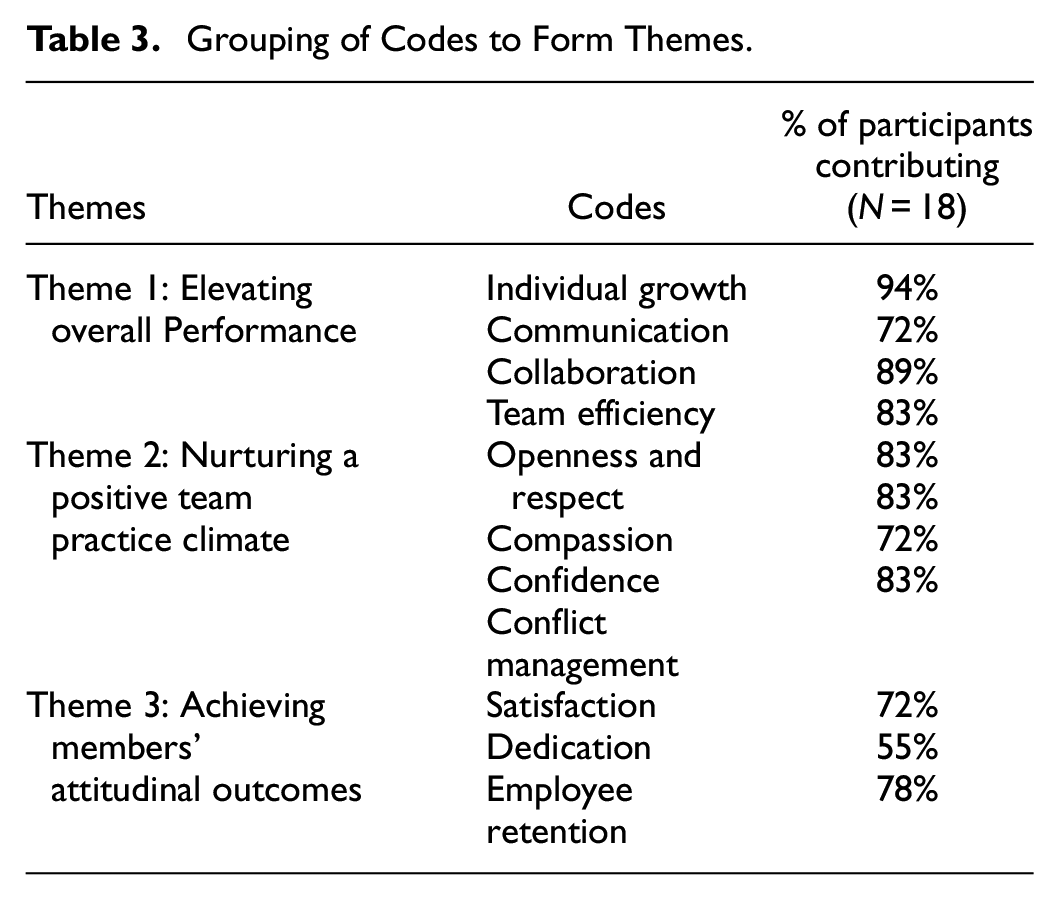
Each recorded interview was transcribed and then reviewed by the interviewees to verify the accuracy of the transcription to validate further the responses offered. Later, each interview was translated into English and checked by a professional translator to verify the accuracy of the translations. The researchers then analyzed the interview transcripts to identify meaningful themes before using NVivo 12 software for thematic analysis. An inductive approach was used for this purpose to pursue recurring themes identified from the interview data. The researchers then used verbatim examples to highlight the themes and create findings using the authentic voices of the respondents. (Bansal & Corley, 2011; Ryan & Bernard, 2003). All interviews were transcribed and peer-reviewed, and data triangulation of the superior/subordinate approach was adopted to ensure the validity of the findings (Harrison et al., 2016). Information about the grouping of codes to form themes is presented in Table 3.
Grouping of Codes to Form Themes.
Findings
Elevating Overall Performance
Both managers and individual contributors who participated claimed that RQ’s application immediately helped them work more effectively when colleagues are engaged, with specific comments about individual growth, communication, collaboration, and team efficiency. The embedding of RQ contributed to personal productivity that benefited the performance of the entire group. Where they had previously identified shortcomings in team practices, they were now able to identify new approaches that would help them improve both their individual and team performance. Participants widely acknowledged that understanding what motives drive behavior, how to better integrate and tailor the use of their strengths, and how some strengths might be perceived as overdone and thereby off-putting for certain coworkers, helped them gain insight into what they needed to do differently and have the confidence to initiate new approaches when engaging with their peers.
With improved self-discovery, they had a starting point for making meaningful changes that would honor colleagues’ feelings and communication preferences. This strengthens the way they view themselves and their relationship with others under the influence of collectivism, making it clearer and easier. One manager changed her behavior by focusing on procedural management rather than caring too much about the emotional feelings of her group. A member of the team noticed an improvement in the outcomes of her interactions with certain colleagues as a result of the RQ application: After getting to know myself and applying it to my work practice, I found that work is my element. Then I learned to respond appropriately and promptly to different people, which ultimately made us more comfortable with each other.
Most participants stated that the application of RQ positively affected their team performance. One individual contributor felt as though he could perform his job better because of knowing how to engage colleagues more effectively and as a result, he felt that the team was operating more efficiently and reducing the time needed to perform specific complex tasks.
Elevated team performance depends on effective collaboration that seemed to benefit from the application of RQ. RQ empowers employees to understand the motives that drive their behavior and the behavior of others, how people use strengths, how they might use different strengths to be more effective in certain situations, and how overdoing one’s strengths can detrimentally impact one-on-one interactions and team performances. Knowing strengths most and least likely to employ and overdone strengths about self and others can bring out the best in each other when working together. One staff member believed this would reduce the time and effort required to complete certain projects to meet customer satisfaction.
More developed RQ enabled employees to feel unhindered and relaxed in collaboration. They are less likely to suppress personal feelings, emotions, and interests, even if they are collectivists who value compliance with others. Because employees could more accurately recognize the motives that drive their own and others’ behavior and more effectively deploy strengths to meet the demands of a situation. This awareness led to advanced cooperation, as evidenced by a comment from an employee, who explained that her job involved coordinating and cooperating with each team member to create videos that could be used in teamwork. She claimed that by applying her pieces of knowledge of her colleagues’ motivations and preferences, she completed work-related tasks more smoothly.
Some participants also felt as though RQ would help them build better teams by bringing together people who possess various strengths, abilities, and skills that complement those of other team members. As a result, they were optimistic about their ability to work together in a more effective manner to improve team performance. Based on the experience, a team member also suggested that RQ was helping them better assign specific tasks based on team members’ strengths. She felt that by assigning certain tasks to certain people who enjoyed specific tasks, outcomes would improve, and team members would thrive with new assignments. She recalled: Because we understand that certain issues, such as process or people, can be better addressed by colleagues with different MVS on the team, we have adjusted the types of clients we manage for application and non-application seasons. This is a practical help.
Nurturing A Positive Team Practice Climate
Most participants felt that RQ enabled their teams to operate in a more favorable climate because their practice was filled with openness, inclusion, respect, compassion, and confidence. It also reduced conflict among team members. Increased openness and respect as well as reduced conflict, including between subordinates and superiors, appear to be particularly effective in a hierarchical relationship of the Chinese work environment.
Those elements are always missing from the member-to-leader relationship compared to the flat work environments of Western companies. The development of RQ made employees know what they were supposed to do and not to do to maintain a healthy working climate. Hence, the employees confirmed that the embedding of positive values into their team boosted the effectiveness of team practice. That is, a healthy environment boosts employees’ positive attitudes and better performance. Based on her observation, a manager noticed that their team climate had changed for the better due to positive actions, including praising and respecting.
An individual contributor who had participated in the workshop and the follow-up interviews said that a positive work setting was based on mutual respect. This attitudinal and behavioral mutuality among team members fostered better collaboration. She mentioned: My most significant change was being respectful and tolerant toward my colleagues. If people show that, others could feel their kindness, patience, and understanding. I believe it makes our workplace more collaborative.
In team practice, openness among team members played a vital role in gaining a quality team relation. The application of RQ provided an opportunity for the employees to willingly open their hearts in communication, thus getting to respond with compassion and have confidence in better collaboration. A staff member recalled: After the workshop, we openly discussed our big and small problems and identified ways to resolve them. We then told our teammates about these issues so we could work together better on future projects. We may not be able to talk about this openly without the SDI experience.
In addition, the application of RQ lets employees get to know their coworkers objectively and comprehensively rather than through sporadic, subjective, and potentially biased interactions. This objectivity and comprehension made them appreciate others’ needs and vulnerabilities. In this way, they were more likely to be better understanding and inclusive toward others’ words and behaviors.
The employees stated that improved understanding and empathy helped them to appreciate others’ perspectives. This exchange of angles enabled the employees to change or adjust from a self-focused view to a view that included others’ needs and concerns. The adjustment boosted their confidence in working together with others successfully, paving the way for gaining positive effects in collaboration. A team member revealed: I may have wondered in the past why he did this, why he was so stubborn. I can be very emotional. But now I can jump out and fully understand it. Everyone has a different personality. Certain points may be sacred and untouchable to them. It would be better if I communicated with them from another angle.
Some employees also shared that they and their team members were becoming close friends, and a more friendly team atmosphere made them feel more comfortable and relaxed.
Strong connections are an integral part of guanxi, one of the most distinctive features of Chinese workplace culture that leads to cohesive teamwork. The development of guanxi depends on how well people understand and are friendly to each other. By building guanxi, they were more willing to communicate, provide feedback, and collaborate with each other.
While conflict is common in team practice, RQ also assisted the employees in understanding other team members’ conflict triggers and offered them methods to minimize or resolve disagreement or conflict. One person commented that she now understood her manager’s triggers for initiating conflict, that is, shirking duties, so she could better tailor her behavior to prevent any perception of threatening behavior that might trigger conflict between them. Additionally, another team member added: When I clashed with my leader, I just offered multiple solutions directly to the problem without engaging in combat.
Negative emotions were harmful to team relations and hindered a healthy team climate. A staff member stated that his RQ improvement helped remove or dispel some negative emotional feelings in the process of conflict with other coworkers. Instead, it taught her to only concentrate on work tasks per se because she learned that her manager was focused on things with nothing personal even if she was being fierce in conflict.
Achieving Members’ Attitudinal Outcomes
The improvement of team RQ was conducive to the attitudinal change among the leaders and members. Participating employees shared how their RQ experience helped them develop a more positive attitude toward their work. This positive attitude toward the outside world by superiors and subordinates ultimately leads to changes in job outcomes. They suggested that a more positive attitude toward their team and coworkers led to greater satisfaction, dedication, and intention to stay with their team. Since the RQ application teaches that positive motives drive behavior, employees gained a more positive attitude toward their team members as they began to view them with positive regard and service orientation. This sense seemed to permeate the teams that had received the RQ in a way that uplifted the mood of the team and created the perception of satisfaction. One individual contributor shared: Being able to work with someone as passionate, dynamic, and adventurous as your leader will bring you great joy and satisfaction. This results in a high level of satisfaction and dedication in our work and team.
RQ also empowered team members as they felt a greater sense of control regarding how they communicated with and engaged with associates. Moreover, some participants reported that they felt more understood and supported after the RQ application than before. The backup behavior of providing information, help, and other resources can enhance task-required cooperation, effectively assist in problem-solving and task completion, and facilitate interpersonal interactions and group performance. Some said they perceived that they were being treated with more incredible kindness and that more colleagues helped them post-training. This led one staff member to recall that his level of passion and commitment to his sales responsibilities in collaboration with his manager was higher after the manager pledged his support.
The cheerful team climate created as a result of the RQ application also seemed to generate personal growth and openness to communication, uplift positive mood, and dispel negative emotions among team members, helping to improve employee retention, as indicated by this statement: I don’t need to worry about my colleagues, cope with their emotions, and avoid them. Being part of this fairly open team makes me feel happy and safe, so I tend to work here.
Furthermore, RQ appeared to provide a more profound and comprehensive understanding of oneself in terms of motives, strengths, and overdone strengths. This self-understanding enables the participating employees to evaluate and self-correct their interpersonal interactions at work and determine their suitability for their job positions. This sentiment was reflected in the statement: It shows that I am flexible and tolerant. This position handles all kinds of tasks and people with different personalities, so I think I am quite suitable for my job and I enjoy it.
Discussion
Based on in-depth qualitative interviews conducted after applying RQ via SDI 2.0 for these teams, members reported gaining new insights and practices that contributed to increased productivity, job satisfaction, engagement, and positive interactions with coworkers. This outcome inspired high performance and nurtured a more positive team climate. When employees clearly and consciously know each other’s motives, strengths, overdone strengths, and conflict triggers and make the most of advantages and minimize disadvantages, they can gain personal growth, better collaboration, and team efficacy, resulting in whole team effectiveness. The study introduces RQ and SDI 2.0 as well as their positive effect on group productivity in an Eastern context to the current EQ literature. In particular, RQ applications help Chinese teams achieve higher individual and overall performance, create a positive work environment that is compassionate, open, respectful, and less conflictual, and improve perceptions of colleagues and work-related tasks through satisfaction, commitment, and willingness to remain in the team.
The research shows the significant role of EQ, especially its relational competency RQ, in boosting team effectiveness in the Chinese private sector, covering improved overall performance and attitudes toward peers and tasks and a positive work climate, which supports the quantitative studies confirming good associations between EQ and team performance, job satisfaction, and conflict resolution in Western EQ and team-based practice studies (Black et al., 2019; Feyerherm & Rice, 2002; Michinov & Michinov, 2022). For Chinese teams, in addition to effective communication and willing cooperation, collectivism, perceptions of task interdependence, and guanxi also play an important role in fostering teamwork (X. Chen & Barshes, 2000). The research reinforces collectivism and corroborates the task interdependence perception and guanxi established due to the embedding of RQ in Chinese work teams.
China has a cultural and perceptional difference from Western cultures and workplaces. For example, Chinese culture places great emphasis on seniority and the hierarchical structure of organizations, expecting employees to publicly defer to managers (Tian, 2021). This is unlike many Western workplaces with a flatter organizational structure and an expectation that employees will respectfully push back on their managers’ ideas when disagreements arise. The application in Chinese teams demonstrates the effectiveness of RQ in Chinese workplace culture, maintaining balanced and harmonious relationships while keeping hierarchy (Lau et al., 2023). Although conducted in mainland China, this research differs from Farris’s (2001) study in that the SDI of the RQ development tool was less effective when applied in Hong Kong influenced by Chinese culture than in the United States. The study results also add additional evidence to the claims of Rezvani et al. (2019) that the favorable relationship between EQ and team effectiveness only applies to regions with similar Western social and economic systems. Furthermore, research data collected from both managers and subordinates focusing on their work results fill the gap in Pastor’s (2014) suggestion that a growing number of researchers identify emotional intelligence as a fundamental variable affecting executive performance, while there is little evidence that the emotional intelligence of managers and subordinates has an impact on job outcomes.
These findings are aligned with the view that an individual’s EQ is a key contributor to personal productivity and favorably affects team performance (George et al., 2022; Lam & Kirby, 2002). Organizations that intentionally work to develop the EQ of their employee population make gains with more efficient communication and greater collaboration among more emotionally intelligent workers (Kim et al., 2014; Lu & Zhu, 2019). In addition, group performance is elevated when team members’ EQ increases (Deb et al., 2023; Michinov & Michinov, 2022; Rodríguez Montequín et al., 2013). Employees enjoy respectively when others notice their good performance or achievements, resulting in better performance (Alawi & Khan, 2021). The positive outcomes of developing RQ through SDI 2.0 in terms of personal growth, communication, and conflict resolution among Chinese work teams are consistent with research conducted in the U.S. and Canada applying the RQ development tool SDI to individuals in terms of development and adaptation for better communication, less conflict, and organizational outcomes (Bortner, 2018; Kerr, 2012; White, 2019). The more precise application of RQ that focuses on the way people interact in the workplace can create a positive working team atmosphere due to greater compassion, openness, inclusion, respect, confidence, and less conflict. This positive shift uplifts employees’ moods and stimulates their behaviors to work together better to realize effectiveness. Openness, compassion, inclusion, and respect underpin trust among team members for quality teamwork. Rezvani et al. (2019) supported this statement by presenting EQ’s positive impact on team productivity supported by trust and less conflict. At the same time, EQ competencies nurture trust and decrease task and relationship conflict within a team (C. Lee & Wong, 2019; Mittal, 2016). The study provides additional evidence for developing compassion, openness, inclusion, respect, and confidence in effective collaboration within a team through the RQ application. The RQ practice also obtains team members’ positive attitudes, including satisfaction, commitment, and employee retention. This statement is consistent with the argument that people with high EQ are satisfied and engaged in their jobs and intend to continue working in their organizations (Miao et al., 2017; Mohammad et al., 2014; Wen et al., 2019). Moreover, qualitatively collected data related to the positive impact of applying RQ through SDI 2.0 on employee retention in mainland China complements Giffen’s (2015) quantitative study, which was only partly derived from Porter’s (2005) SDI version of the RQ development tool was statistically significant in predicting person-organization fit for U.S. hotel workers’ turnover intentions. Work satisfaction and commitment are related to work performance (Yandi & Bimaruci Hazrati Havidz, 2022). The lasting of these attitudes positively affects their behavior and performance.
Implications
Current research measuring EQ on team productivity focuses on Western nations, quantitative designs, and various measurements but omits the focus on RQ with a relationship-focused psychometric tool like SDI 2.0 in non-Western cultures. Given the critical role relationship-building plays in team effectiveness, it is crucial to understand people’s perceptions in more depth, which can only be retrieved from a phenomenological perspective. This study enriches the current EQ literature by introducing and incorporating RQ with the SDI 2.0 tool. The application of RQ via SDI 2.0 demonstrated that RQ helps the working groups gain improved performance as well as positive practice climate and attitudinal outcomes.
These results contribute to the existing body of knowledge on the function of EQ in team development by qualitatively advancing the significant role of EQ’s relational competency. The application for Chinese private sector teams—including the relationship between superiors and subordinates—reveals the potential for achieving higher overall performance and greater employee satisfaction through greater understanding, improved collaboration and communication, and reduced interpersonal conflict. These aspects of team development, important for all teams, plus elements of reinforced collectivism and established task independence perception and guanxi that characterize Chinese teamwork, are now better understood in a Chinese setting and open the door to continued study that may unlock further quantitative and qualitative gains for individual teams and organizations. This further motivates Chinese to accept the similar utility of EQ and its powerful psychometric tool RQ application in both Western and Chinese work settings, compensating for the relatively low use of them due to their less familiarity with the value of Western-invented psychometric tools, bias resulted from cultural appropriateness, and adverse effect of the possible misuse of psychological tests.
Our research also offers a better understanding of the importance and effectiveness of RQ practice for team-based practice, especially in mainland China-based corporations. The positive outcomes from our study could aid researchers and practitioners in developing human resources in gaining knowledge on the approach and contributions of RQ in elevating team productivity. RQ application via SDI 2.0 could be incorporated into team training and is recommended as an effective instrument for Western and Eastern applications. The evidence of RQ practice also helps promote awareness and offers opportunities for Chinese organizations to obtain team and organizational effectiveness through implementing the SDI 2.0 tool with accredited systematic professional training in personnel development programs.
Limitations and Future Research
The study is exploratory and aims to better understand the impact of RQ on Chinese employees’ team-based practice. As with all qualitative research, investigators must rely on participants to be forthcoming and honest, as well as accurate in their self-reflections and perceptions of others, but there is no way to prove particular statements made by participants. Future studies involving both qualitative and quantitative methodology should be conducted to obtain greater insight into the efficacy of RQ application and practice in mainland China. Further studies might concentrate on group-based outputs from others like external stakeholders and quantifiable metrics like sales, market share, waste and cost reduction, absenteeism, and turnover over time. In the current research, the sample size is admittedly small, which might also limit the broader application of the research. Future research with more participants from a wider array of industries and geographic locales could deepen the understanding of how RQ enhances team effectiveness in mainland China.
Additionally, the length, format, and content of the SDI 2.0 workshop in this research were much shorter, less interactive, and less robust than what was recommended by the assessment publisher due to COVID-19-related restrictions that prevented face-to-face gatherings. The study did not use additional digital job aids and continued learning resources due to time and other resource constraints. This absence means that the implementation of additional performance support resources that might improve the application of RQ was not deployed for this research. Future studies should fully deploy all learning and performance support resources to maximize and sustain the impact of RQ practice. Future qualitative research might also add additional interviews spaced out over time to explore whether gains are sustained, diminished, or enhanced. In summary, this research is only the starting point in the journey to explore the implications of applied RQ in China.
Conclusion
This study aimed to investigate the effectiveness of applying RQ in team-based practice in the context of the Chinese mainland private sector. The results indicated that the contributions of RQ to team productivity by McGrath’s (1964) I-P-O model include: (1) RQ practice elevates overall performance within the team, (2) RQ practice nurtures a positive team-based practice climate, and (3) RQ practice drives team members positive attitudinal outcomes. These findings imply that RQ when practiced in the workplace can significantly boost a group and help them achieve effectiveness. As a result, the SDI 2.0 learning tool is an effective means to increase RQ and should now be considered an investment in organizational contexts within mainland China.
Footnotes
Appendix A
Acknowledgements
This article is adapted from part of Dan Li’s dissertation manuscript:
Source: Li, D. (2022). The qualitative effects of training for improved workplace relationships in a Chinese context [Doctoral Dissertation, Pepperdine University]. ProQuest Dissertations and Theses.
Declaration of Conflicting Interests
The author(s) declared no potential conflicts of interest with respect to the research, authorship, and/or publication of this article.
Funding
The author(s) received no financial support for the research, authorship, and/or publication of this article.
An Ethics Statement
This research is conducted under Pepperdine University’s Institutional Review Board (IRB) approval (Protocol #: 21-09-1645). The IRB has reviewed my submitted IRB application and all ancillary materials. Upon review, the IRB has determined that my research project meets the requirements for exemption under the federal regulations 45 CFR 46.101 that govern the protections of human subjects.

Data Availability Statement
Data sharing not applicable to this article as no datasets were generated or analyzed during the current study.