




Abstract
This systematic review (SLR) evaluated the effectiveness of interventions aimed at enhancing psychosocial well-being and empowerment (PWE) for women affected by gender-based violence (GBV). Following PRISMA 2020 guidelines, studies were systematically analyzed from Scopus and Web of Science, published between 2018 and 15 January 2024. The PICO framework guided inclusion criteria: (P) women affected by GBV, (I) interventions to enhance PWE, (C) comparison between initial and final intervention phases, and (O) assessed outcomes related to PWE. The Joanna Briggs Institute (JBI) tools assessed the risk of bias, while the GRADE system evaluated evidence quality. Thirteen studies involving 1,813 participants met the inclusion criteria. The experimental groups demonstrated significant improvements, including reductions in symptoms of depression, anxiety, stress, and PTSD, and increased resilience, self-esteem, self-efficacy, and quality of life. Mindfulness and relaxation techniques, counseling, and expressive therapies emerged as the most effective strategies. This review highlights the positive impact of targeted interventions on PWE among women affected by GBV. Nonetheless, limitations such as small sample sizes, methodological quality, and geographical diversity indicate the need for larger, culturally sensitive studies. These findings inform future intervention development and stress the importance of integrating structured and evidence-based interventions into health and social policies to enhance PWE for women impacted by GBV. Culturally adapted approaches are recommended to maximize their effectiveness. This SLR is registered with CRD42024514325. Madalena Cruz is a research fellow of the Foundation for Science and Technology (FCT) of Portugal.
Introduction
Gender-based violence (GBV) refers to acts of violence aimed at individuals because of their gender. It includes various forms of harmful actions, such as physical, emotional, and sexual abuse, frequently committed by intimate partners (Mazhambe & Mushunje, 2023). Gender-based violence (GBV) continues to be a widespread global concern with serious effects on the health and safety of women. In recent years, considerable efforts have been made to research, comprehend, and address gender-based violence (GBV), especially regarding violence against women (Mazhambe & Mushunje, 2023). The World Health Organization (WHO, 2021) estimates that approximately one in three women worldwide has experienced physical and/or sexual violence in their lifetime, predominantly at the hands of an intimate partner. Recent data from UN Women (2023) confirms that approximately 30% of women aged 15 to 49 experience physical and/or sexual violence by an intimate partner during their lifetime, highlighting the persistence of this problem in varied contexts. This statistic underscores the problem’s significance, affecting millions of women across various cultures, economies, and ages (WHO, 2021).
The dominant patriarchal cultural context limits autonomy and access to support, which in turn worsens gender-based violence (GBV; M. V. Ali & Tariq, 2022). It impacts health to a greater extent by causing several physical problems such gastrointestinal and reproductive problems (Grillo et al., 2021; Iqbal & Fatmi, 2018) and mental health issues such PTSD, mood and anxiety disorders (García-Moreno et al., 2013; Karakurt et al., 2014; Orang, 2018). Gender-based violence (GBV) is also associated with suicidal tendencies and adverse social well-being (M. V. Ali & Tariq, 2022; Daneshvar et al., 2022; García-Moreno et al., 2013).
Its effects reach far beyond the person, affecting families, communities, and society (Amarsanaa et al., 2024; Oram et al., 2022). These consequences are exacerbated by the cognitive distortions associated with gender-based violence (GBV), for example: self-blame and low self-worth, which make recovery nearly impossible without targeted interventions (Cromer & Smyth, 2010; Koss & Figueredo, 2004). This highlights the urgency of creating and putting into practice adequate interventions to reduce the consequences derived from the gender-based violence (GBV). Primary interventions aim to prevent violence before it occurs. Secondary interventions aim to address and reduce ongoing violence. Tertiary interventions seek to repair the damage done and minimize the risk of the violence that has already occurred (García-Moreno, Hegarty, et al., 2015). Supporting pathways to recovery and empowerment through interventions fostering coping strategies and resilience, as well as positive psychological outcomes, is vital for women (Hamrick & Owens, 2019; Perez-Blasco et al., 2016).
The concept of Psychosocial well-being is based on a eudaimonic approach (Ryff & Singer, 2008). It includes six dimensions: (1) self-acceptance, (2) positive relations with others, (3) autonomy, (4) environmental mastery, (5) purpose in life, and (6) personal growth (Leontopoulou & Triliva, 2012; Ryff, 1989). PWE, being a distinctive concept, relates to the individual’s comprehensive psychological well-being across emotional, psychological, and social aspects. It denotes the person’s capacity to harness emotions and technologies to form significant connections with others and engage in societal activities (Buecker et al., 2023; Lee et al., 2016). Gender-based violence (GBV) has significant impacts on psychosocial well-being (Choden et al., 2022; Eckhardt et al., 2022). Research indicate that higher levels of self-esteem and effective social problem-solving skills are associated with a reduced risk of intimate partner violence (IPV) victimization (Cherrier et al., 2023). Women with stronger problem-solving abilities and a more positive self-perception are better equipped to manage interpersonal conflicts and make assertive decisions, thereby reducing vulnerability to IPV and facilitating recovery (Cherrier et al., 2023). These psychological assets serve as protective factors, enhancing emotional resilience and fostering greater autonomy in the context of abusive relationships. Focused psychosocial interventions are critical to assist them in finding their new identity, to build resilience and maintain positive mental health. Mindfulness and compassion-focused strategies have shown particular promising results in reducing PTSD symptoms and enhancing adaptive coping skills making them a potentially valuable modality for addressing the psychosocial consequences of gender-based violence (GBV; Daneshvar et al., 2022; Gilbert, 2009; Segal et al., 2013).
In recent years, various interventions and strategies have been suggested to prevent and address gender-based violence (Ellsberg et al., 2015; Ghazanfari, 2010). In this context, empowerment has been a vital construct defined as the process by which woman improve their position in the power structure of society (Bhuyan, 2006). Empowerment, in the context of gender-based violence (GBV), involves not only psychological, emotional, and cognitive processes in which the person can think positively about themselves and their abilities and master individual and social aspects of their life, but also social and relational processes, since violence occurs in relationships with others (Amirroud et al., 2022), and therefore, empowerment allows women to assert their rights, build confidence, and engage actively in social and economic activities (Malhotra & Schuler, 2005). In general, empowerment is a bridge that crosses the border between the self and the social world (Cattaneo & Goodman, 2015) and is considered a determinant of women’s health and well-being (S. Schuler et al., 2018). Empowerment is both a pathway to recovery and a protective factor against future violence (S. R. Schuler & Nazneen, 2018). Empowerment is thus an essential outcome in gender-based violence (GBV) interventions, as it not only addresses immediate recovery but also contributes to long-term resilience and well-being (Amirroud et al., 2022), improves skills and resources to cope with future stressors and traumas (Johnson et al., 2005) and self-esteem (Cherrier et al., 2023).
This review seeks to evaluate the existing evidence on interventions designed to improve psychosocial well-being and/or empowerment for women affected by gender-based violence (GBV). It analyzes the effectiveness of different strategies and their potential implications for practice and policy.
Materials and Methods
This Systematic Literature Review (SLR) adhered to the PRISMA 2020 guidelines, which provide updated standards for the preparation and publication of systematic reviews (Page et al., 2021). In this section, we will describe in detail the procedures adopted in carrying out this systematic review, following the PRISMA 2020 guidelines, with an emphasis on methodological rigor and transparency of decisions.
Data Collection Strategies
The search was conducted using the Topic Search (TS) field in both Scopus and Web of Science. These two databases were selected for this research because of their representativeness and multidisciplinary nature that are critical to the subject of the research. By using stringent publication selection criteria, these databases also ensure that only high-quality studies are included in our review, enhancing its methodological quality. The collection of articles took place on 15 January 2024, based on previously defined inclusion and exclusion criteria. We include studies published from 2018 to the final collection date to ensure the most recent and relevant interventions are included. The selected time frame (2018–2024) aimed to capture recent developments and trends in the design and implementation of interventions addressing PWE in women affected by gender-based violence (GBV). Although the search included articles in English, Portuguese, and Spanish, only studies published in English met all inclusion criteria and were available in full text, which explains the language restriction in the final analysis.
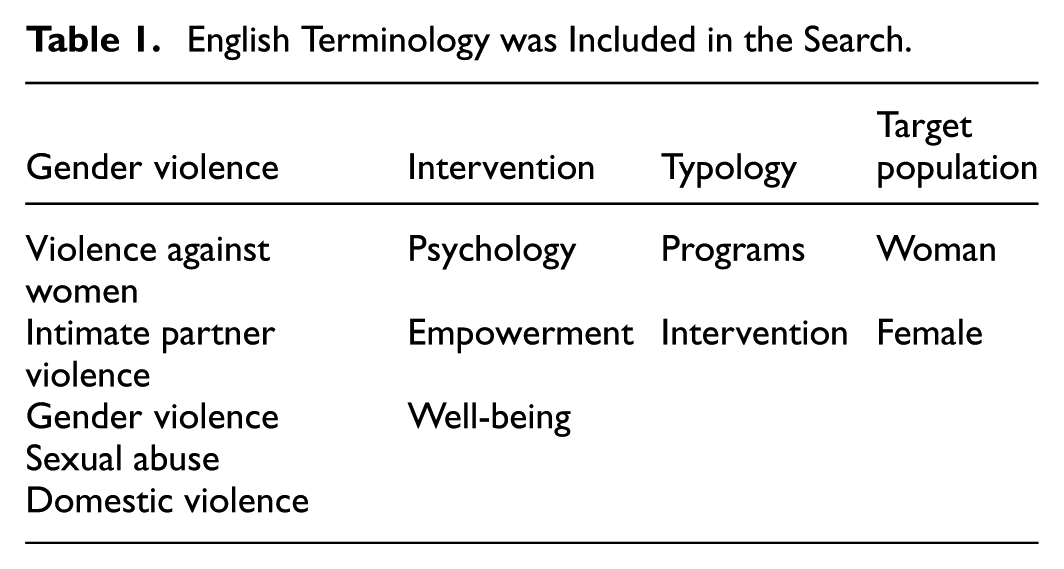
Following a thorough search related to gender-based violence, the search terms included topics related to gender-based violence, intervention, empowerment, and well-being, all in English. Table 1 presents the terminology used in the search. To optimize the search, the words were combined using tools such as the TS field (topic), Boolean operators AND, OR, and the wildcard character * (asterisk) in both databases.
English Terminology was Included in the Search.
In the first screening round, all studies were screened by title or abstract. Excluded from the search were articles that did not fulfill inclusion criteria and literature reviews, nonpublished articles, and incomplete protocols. Two independent reviewers performed the screening process to minimize bias and consensus was achieved for any discrepancies.
Inclusion and Exclusion Criteria (PICO)
In developing and applying the inclusion and exclusion criteria, we used the PICO strategy (Participants, Intervention, Comparison, and Outcomes). These criteria were independently applied by two reviewers during the screening process, ensuring methodological consistency and minimizing bias. Any disagreements were resolved through discussion or by consulting a third reviewer. The participants included in the study were women over 18 years of age who were victims of gender-based violence. Studies conducted with female victims of gender-based violence under 18 years old, pregnant women or those in the postpartum period, women experiencing homelessness or living in shelters, war veterans, women with physical or intellectual disabilities, substance abuse issues, suicidal ideation, or suicide attempts were excluded. We also excluded studies involving perpetrators, studies aimed at professionals or healthcare workers, and studies involving couples. The interventions included were only those specifically designed to improve the psychosocial well-being and/or promote the empowerment of female victims of gender-based violence. We defined interventions as “clearly identified” based on two criteria proposed by Silva and Pereira (2023): (1) The study must specify and describe the intervention in detail, including the type of intervention (e.g., counseling, psychoeducation). (2) The intervention must specifically aim to enhance psychosocial well-being (PWB) and/or empowerment among female victims of gender-based violence. Studies that were not based on at least one of these domains were excluded. Exclusions included interventions directed at pregnancy, parenting, substance abuse, physical health problems, microfinancing, and homelessness. We excluded studies if they did not involve interventions specifically targeting women victims of gender-based violence, did not include comparisons between the baseline and after intervention, or were not by structured protocol. Thus, studies without a defined intervention script that characterized the sessions, techniques used, duration, and frequency were excluded (Silva & Pereira, 2023).
Comparisons refer to the requirement for studies to present comparisons between groups (control and experimental) and between the initial and final, post-intervention phases. All studies that did not meet this requirement were excluded. The included studies employed a quantitative design (controlled trials, quasi-experimental design, and pre-test/post-test studies) or a mixed design (quantitative and qualitative methodology). Outcomes refer to the type of results presented in the studies, which in this case had to include an analysis of the effect of the intervention on psychosocial well-being and/or empowerment. Studies that did not assess these constructs were excluded. As proposed by Silva and Pereira (2023), we classified measures and analyses reported those studies that used specific measures and analyses, allowing the evaluation of the intended measures and enabling study replication. All articles that did not meet the inclusion criteria, literature reviews, unpublished articles, and articles with undeveloped protocols were excluded. After a detailed analysis of the articles found, we identified 13 relevant studies, with one being eliminated for not meeting quality criteria. Appendix A provides more information on this process.
Screening and Selection Process
The articles collected from the two databases were analyzed and classified using EndNote Online, where the articles were stored by title, abstract, year, and authors. A total of 4,977 articles were initially identified, with 1,944 from Web of Science and 3,033 from Scopus. Before starting the analysis according to the PICO parameters, duplicate articles were identified and archived, first through EndNote (834) and then manually (441). Next, we moved on to the analysis of the titles, keywords, and abstracts of 3,702 articles to exclude those that did not meet the inclusion criteria and to identify the articles for a full review. A detailed log of exclusion reasons was maintained throughout the review process to ensure transparency and replicability. This log included codes for each exclusion reason (e.g., IR for irrelevant population, NR for no results on PWE) and was cross validated by the research team. In the initial phase, the analysis of titles and keywords resulted in the exclusion of 3,203 articles that were outside the scope of the topic or involved a different target population. From the abstract analysis, 414 articles were excluded, with the main reasons being as follows: population not meeting the inclusion criteria (142), focusing on non-victims of gender-based violence, pregnant women, perpetrators, children and adolescents, refugees, homeless women, or couples; the intervention not matching the criteria (40), such as those related to physical issues such HIV, parenting, microfinancing, or training of professionals; the study was not validated (49); the article did not describe an intervention (157) or was completely off-topic (23). We excluded three articles for not meeting the publication year criteria.
After this screening, the remaining 85 articles proceeded to full analysis, during which 69 articles were excluded due to reasons such as the population or intervention (49) being inadequate, the psychosocial well-being and/or empowerment not being targeted or assessed, or the study not being validated; lack of a control group (20). We excluded two articles because access to them was not possible. One article was excluded for not meeting quality criteria. A total of 13 studies were included in this publication.
Data Extraction
After analyzing the articles and identifying the selected studies, a standardized data extraction template was developed and piloted on a sample of the studies to ensure clarity and consistency. The following information was collected: authors, year of publication, country of the study, study methodology, inclusion and exclusion criteria, sample size, type of intervention, and its characteristics, assessment instruments, type of data analysis, key overall results, psychosocial well-being and/or empowerment outcomes, financial benefits for the participants, and limitations. All this data was summarized in an Excel sheet shared among the authors.
Table 2 provides a summarized description of key information extracted from each included study, which supported the comparative analysis across interventions. Specifically, the table includes the following elements: author(s), year of publication, country of origin, study methodology, details on the frequency, duration, and format of intervention sessions, participant characteristics, and the main outcomes observed in both the experimental and control groups. This detailed overview facilitates a clearer understanding of each study’s structure and findings, thereby enhancing the transparency and reproducibility of the review process (Figure 1).
Summary Table of Included Studies.


PRISMA flowchart of article search and selection.
Descriptive Synthesis of the Studies
Design of Studies
The included studies were published between 2018 and 2023 and were conducted in China (Cheung et al., 2019), Canada (Ford-Gilboe et al., 2020), USA (Gallegos et al., 2020; Glass et al., 2022; Newlands & Benuto, 2021; Özümerzifon et al., 2022), Netherlands (van Gelder et al., 2023), Australia (Leach et al., 2020), Iran (Nikparvar et al., 2023; Zarean et al., 2024), Ecuador (Sabina et al., 2023), Italy (Procaccia & Castiglioni, 2022), and Spain (Sáez et al., 2023). All the studies utilized a pre- and post-intervention design (N = 13). Four studies were single-blind randomized clinical trials (Cheung et al., 2019; Nikparvar et al., 2023; Sáez et al., 2023; van Gelder et al., 2023), one was a double-blind randomized controlled trial (Ford-Gilboe et al., 2020), ten were randomized pilot clinical trials (Cheung et al., 2019; Ford-Gilboe et al., 2020; Gallegos et al., 2020; Glass et al., 2022; Leach et al., 2020; Nikparvar et al., 2023; Özümerzifon et al., 2022; Procaccia & Castiglioni, 2022; Sáez et al., 2023; van Gelder et al., 2023), and two were quasi-experimental (Sabina et al., 2023; Zarean et al., 2024). In total, two quasi-experimental, non-randomized studies (Sabina et al., 2023; Zarean et al., 2024) and eleven experimental randomized studies (Cheung et al., 2019; Ford-Gilboe et al., 2020; Gallegos et al., 2020; Glass et al., 2022; Leach et al., 2020; Newlands & Benuto, 2021; Nikparvar et al., 2023; Özümerzifon et al., 2022; Procaccia & Castiglioni, 2022; Sáez et al., 2023; van Gelder et al., 2023) were included. The studies conducted assessments at the following intervals: at baseline (n = 13), 2 weeks (Procaccia & Castiglioni, 2022), 4 weeks (Cheung et al., 2019), 6 weeks (Özümerzifon et al., 2022), 8 weeks (Gallegos et al., 2020; Leach et al., 2020; Nikparvar et al., 2023; Sáez et al., 2023), 12 weeks (Gallegos et al., 2020), 14 weeks (Zarean et al., 2024), 16 weeks (Leach et al., 2020; Nikparvar et al., 2023), 18 weeks (Zarean et al., 2024), 1 month (Sáez et al., 2023), 3 months (Ford-Gilboe et al., 2020; van Gelder et al., 2023), 6 months (Ford-Gilboe et al., 2020; Glass et al., 2022; Sabina et al., 2023; van Gelder et al., 2023), and 12 months (Ford-Gilboe et al., 2020; Glass et al., 2022; Sabina et al., 2023; van Gelder et al., 2023). All studies included a control group (CG) and an experimental group (EG). However, in some cases, these groups were labeled differently, such as personalized or non-personalized intervention (Ford-Gilboe et al., 2020), EG and limited intervention control group (van Gelder et al., 2023), and expressive writing condition or neutral writing condition (Procaccia & Castiglioni, 2022). Study (Nikparvar et al., 2023) comprised three groups: an ACT treatment group, a schema therapy group, and a no-treatment control group.
Characteristics of Participants
A total of 1,813 women who were victims of gender-based violence were assessed, with 969 receiving some type of intervention aimed at improving their psychosocial well-being and/or empowerment. Additionally, 874 women belonged to the control group, with 264 receiving access to a non-tailored intervention (Ford-Gilboe et al., 2020), 99 to a limited intervention (van Gelder et al., 2023), and 34 to a neutral writing condition (Procaccia & Castiglioni, 2022). On average, sample sizes ranged between 24 and 531 participants. The minimum age for participation in the studies was 18 years. Inclusion criteria across the studies commonly involved being at least 18 years old (n = 12) or 19 years old (n = 1), having experienced some form of intimate partner violence (n = 13), proficiency in the language of the intervention (n = 19), and access to the internet, email, and/or a computer (n = 3). Exclusion criteria included the presence of medical or psychiatric conditions (n = 5) or substance abuse issues (n = 3).
Characteristics of Interventions
Intervention strategies varied, with health education (n = 10) identified as the most prevalent approach, followed by counseling (n = 7). The interventions addressed a range of strategies and topics, including the provision of resources and emergency contacts (Ford-Gilboe et al., 2020; Glass et al., 2022; van Gelder et al., 2023); information and strategies pertaining to mental health, well-being, and empowerment (Leach et al., 2020; Newlands & Benuto, 2021; Nikparvar et al., 2023; Özümerzifon et al., 2022; Sáez et al., 2023; van Gelder et al., 2023; Zarean et al., 2024); as well as insights on relationships and violence (Glass et al., 2022; Sabina et al., 2023; van Gelder et al., 2023). Mindfulness and relaxation techniques were used in seven studies, including Qigong (Cheung et al., 2019) and meditation (Gallegos et al., 2020; Leach et al., 2020; Newlands & Benuto, 2021; Nikparvar et al., 2023; Özümerzifon et al., 2022; Zarean et al., 2024). Expressive approaches, such as music workshops (Sabina et al., 2023), expressive writing (Procaccia & Castiglioni, 2022), and dance (Özümerzifon et al., 2022), were explored in three studies. Cognitive interventions, such Compassion-Based ACT and Schema Therapy (Nikparvar et al., 2023) and Dialectical Behavior Therapy (Newlands & Benuto, 2021), were used in two studies. A holistic or integrative approach was utilized in two studies, specifically self-healing training (Zarean et al., 2024) and adventure activities (Sáez et al., 2023).
The duration of the interventions ranged from 1 week (Procaccia & Castiglioni, 2022), 6 weeks (Özümerzifon et al., 2022; Sabina et al., 2023), 8 weeks (Gallegos et al., 2020; Leach et al., 2020; Nikparvar et al., 2023; Sáez et al., 2023), 14 weeks (Zarean et al., 2024), to 22 weeks (Cheung et al., 2019). In Qigong study (Cheung et al., 2019), the intervention consisted of a 2-day group session followed by daily messaging over 22 days. Activities were conducted exclusively on an individual basis (Ford-Gilboe et al., 2020; Glass et al., 2022; Procaccia & Castiglioni, 2022; van Gelder et al., 2023) or involved a combination of individual and group exercises/sessions (Cheung et al., 2019; Gallegos et al., 2020; Leach et al., 2020; Newlands & Benuto, 2021; Nikparvar et al., 2023; Özümerzifon et al., 2022; Sabina et al., 2023; Sáez et al., 2023; Zarean et al., 2024). Three studies were conducted via digital platforms, allowing participants greater autonomy in time management and resource utilization (Ford-Gilboe et al., 2020; Glass et al., 2022; van Gelder et al., 2023). Appendix B describes the interventions in each study.
Instruments for Data Collection and Analysis
Data were collected using several instruments, with a focus on gathering personal information (n = 13), medical information (n = 7), mental and psychological health (n = 11), well-being and quality of life (n = 3), self-assessment and self-image (n = 4), coping strategies and skills (n = 8), relationships and social support (n = 5), and conflict and abuse (n = 6). The most frequently used instruments were the Beck Depression Inventory-II (BDI-II; n = 4), The Posttraumatic Stress Disorder Checklist-DSM IV (n = 2), Perceived Stress Scale (PSS; n = 2), Center for Epidemiologic Studies Depression Scale Revised (CESD-R; n = 2), General Self-Efficacy Scale (GSE; n = 2), Pearlin’s 7-item Mastery Scale visual analog scales (VAS; n = 2), Revised Conflict Tactics Scales (CTS2; n = 2), Decisional Conflict Scale (DCS; n = 2), and the 30-item Composite Abuse Scale (CAS) based on women’s reports (n = 2). Certain instruments were utilized in only one of the studies (n = 40). Six studies (Ford-Gilboe et al., 2020; Newlands & Benuto, 2021; Özümerzifon et al., 2022; Procaccia & Castiglioni, 2022; Sabina et al., 2023; van Gelder et al., 2023) gathered qualitative data, while one study (Cheung et al., 2019) collected blood samples, and two studies (Gallegos et al., 2020; Özümerzifon et al., 2022) measured heart rates. Regarding data analysis, all studies conducted descriptive analyses. The T-test was the most frequently used statistical test (Ford-Gilboe et al., 2020; Gallegos et al., 2020; Glass et al., 2022; Leach et al., 2020; Newlands & Benuto, 2021; Nikparvar et al., 2023; Özümerzifon et al., 2022; Sabina et al., 2023; Sáez et al., 2023), followed by ANOVA (Nikparvar et al., 2023; Özümerzifon et al., 2022; Procaccia & Castiglioni, 2022; Sabina et al., 2023; Sáez et al., 2023; Zarean et al., 2024), Chi-squared test Qigong (Cheung et al., 2019; Glass et al., 2022; Sabina et al., 2023), Mixed-effects models (Cheung et al., 2019; Glass et al., 2022; Leach et al., 2020), Cohen’s f (Gallegos et al., 2020; Newlands & Benuto, 2021; Özümerzifon et al., 2022), the Shapiro-Wilk test (Newlands & Benuto, 2021; Sáez et al., 2023; Zarean et al., 2024), and ANCOVA (Newlands & Benuto, 2021; van Gelder et al., 2023). The remaining tests were used only once (n = 12). The study with the highest number of analyses was 11 (N = 7), while the lowest was 2 (N = 2). Appendix C provides a detailed description of the instruments used for data collection and analysis in each study.
Quality of Studies
We used the Joanna Briggs Institute (JBI, 2020) Assessment Checklist Tools to assess the risk of bias in each included study. Quasi-experimental studies (Glass et al., 2022; Sabina et al., 2023; Zarean et al., 2024) were evaluated with the JBI checklist for Quasi-Experimental Studies (9 items), while experimental studies (n = 10) used the JBI checklist for Randomized Controlled Trials (13 items). We retained studies that met at least 70% of the quality criteria (i.e., a minimum of 6 out of 9 for quasi-experimental studies and 9 out of 13 for experimental studies). Among the included studies, three quasi experimental studies (Glass et al., 2022; Sabina et al., 2023; Zarean et al., 2024) fulfilled 8 criteria. For experimental studies, three met 12 criteria (Ford-Gilboe et al., 2020; Gallegos et al., 2020; Procaccia & Castiglioni, 2022), five met 11 criteria (Cheung et al., 2019; Leach et al., 2020; Newlands & Benuto, 2021; Nikparvar et al., 2023; Sáez et al., 2023), and two met 10 (Gallegos et al., 2020; Özümerzifon et al., 2022). Table 3 displays the requirements and scores per study.
JBI Appraisal Checklist for Risk of Bias in Quasi-Experimental (9 Items) and Experimental (13 Items) Studies.

Note. Met requirement (X), didn’t meet the requirement (o), confused (#), not applicable (NA).
Participants were blinded to treatment assignment in five studies (Ford-Gilboe et al., 2020; Newlands & Benuto, 2021; Nikparvar et al., 2023; Procaccia & Castiglioni, 2022; van Gelder et al., 2023). On the other hand, for three studies (Cheung et al., 2019; Leach et al., 2020; Özümerzifon et al., 2022), authors did not blind participants, whereas in one study (Gallegos et al., 2020), the blinding status is unclear or not applicable. With respect to the delivery of the intervention, the person delivering the intervention was blinded (Ford-Gilboe et al., 2020), and not blinded (Cheung et al., 2019; Gallegos et al., 2020) in two studies. For seven studies (Leach et al., 2020; Newlands & Benuto, 2021; Nikparvar et al., 2023; Özümerzifon et al., 2022; Procaccia & Castiglioni, 2022; Sáez et al., 2023; van Gelder et al., 2023; see Table 3), it was unclear or not applicable whether blinding of the intervention deliverer was performed. Four of those studies (Cheung et al., 2019; Ford-Gilboe et al., 2020; Leach et al., 2020; Sáez et al., 2023) had blinded evaluators to the outcome, while three (Gallegos et al., 2020; Nikparvar et al., 2023; van Gelder et al., 2023) did not. Blinding status in three studies (Newlands & Benuto, 2021; Özümerzifon et al., 2022; Procaccia & Castiglioni, 2022) was unclear or not applicable.
In addition to the quality factors assessed by the JBI Appraisal Checklist, other criteria that could affect the validity of the results were considered. One of these factors was the provision of compensation to participants. A total of six studies (Ford-Gilboe et al., 2020; Gallegos et al., 2020; Glass et al., 2022; Leach et al., 2020; Newlands & Benuto, 2021; Sabina et al., 2023) offered some form of financial compensation. The studies identified several limitations, particularly in relation to their sample size and representativeness (Ford-Gilboe et al., 2020; Gallegos et al., 2020; Leach et al., 2020; Newlands & Benuto, 2021; Nikparvar et al., 2023; Procaccia & Castiglioni, 2022; Sabina et al., 2023; Sáez et al., 2023; Zarean et al., 2024). Also, some drawbacks of the evaluation process were reported such as biases (Newlands & Benuto, 2021) and challenges in determining the cause-effect relationship (Ford-Gilboe et al., 2020; Newlands & Benuto, 2021; Nikparvar et al., 2023; Sáez et al., 2023; van Gelder et al., 2023; Zarean et al., 2024). Some of the studies lacked methodological homogeneity, either due to the use of convenience sampling (Cheung et al., 2019; Glass et al., 2022), or because statistically significant differences were found between the intervention and control group at baseline. Glass et al. (2022) which may also compromise the internal validity of the findings.
Following the recommendation of Silva and Pereira (2023), we conducted an evaluation using the Grading of Recommendations Assessment, Development, and Evaluation (GRADE) approach to determine the level of certainty and quality of the included studies. We assessed study limitations, bias checklist scores, sample characteristics, data quality, the analyses performed, and the clarity of result communication. A 4-point Likert scale was used to categorize studies into high, moderate, low, or very low level of certainty and quality. One study was rated as very low quality and was thus excluded from the final review. Consequently, the grades identified were that four studies (Ford-Gilboe et al., 2020; Glass et al., 2022; Sabina et al., 2023; van Gelder et al., 2023) were classified as low quality, seven studies (Cheung et al., 2019; Gallegos et al., 2020; Leach et al., 2020; Newlands & Benuto, 2021; Özümerzifon et al., 2022; Procaccia & Castiglioni, 2022) as moderate quality and two studies rated as high quality (Nikparvar et al., 2023; Zarean et al., 2024).
Data Analyses to Access PWE
The selected articles were analyzed to summarize the main results of the interventions regarding the psychosocial well-being and/or empowerment of women victims of gender-based violence (GBV). We classified the outcomes presented in each article into three categories: promotes psychosocial well-being, promotes empowerment, and promotes both. In addition to this classification, we chose to evaluate the effectiveness of the interventions by including the following criteria: outcomes related to psychosocial well-being and/or empowerment, study quality, and article description. The research, analysis, and writing of the paper involved two phases. In Phase 1, the first author (Madalena Cruz) collected and analyzed the studies, selected the final 13 articles, and extracted the information based on the defined criteria. In Phase 2, the second author (Henrique Pereira) checked the extracted data and made the necessary revisions. Any discrepancies regarding inclusion, quality, data analysis, and bias were discussed between the two authors (Madalena Cruz and Henrique Pereira). Whenever necessary, a third researcher, an expert in the field, was consulted for the final decision.
Results
Intervention Outcomes on Psychosocial Well-Being and/or Empowerment
Psychological well-being is a complex and often difficult-to-define concept, encompassing different constructs such as feelings of competence, autonomy, and personal growth, life satisfaction, resilience, a sense of belonging, and social support (Burns, 2016; García-Cid et al., 2020; Kumar, 2020; Martikainen et al., 2002). It has been associated whit positive functioning, both in their relationships with others and in how they see and relate to themselves (Burns, 2016). Gender-based violence often undermines this well-being, leading researchers to recommend holistic approaches that address the different dimensions of the lives of women (Krantz & Garcia-Moreno, 2005). Kabeer (1999) defines empowerment as follows, “Empowerment is the expansion of people’s ability to lead the lives they value.” It is an integration of improving access, increasing agency (the ability to make good decisions), and realizing outcomes. Empowerment involves a process that can take place at a wide range of levels, from individual to family to community to institutional (Ellsberg et al., 2015; Sen & Batliwala, 2000). It not only includes dimensions of autonomy and decision-making capacity (Anderson, 1997), access to resources that make a life without violence feasible (Heise, 2011), knowledge of rights, violence, and equality (Stromquist, 2015), but also social and political participation (Cornwall & Edwards, 2010). When exploring the issue of gender-based violence (GBV), empowerment can be understood as a process through which individuals become stronger and more confident, particularly in gaining control over their lives and asserting their rights. According to P. A. Ali and Naylor (2014), empowerment plays a vital role in supporting women in the development of a new identity and in strengthening their decision-making abilities. Furthermore, empowerment is essential in the process of violence prevention by fostering knowledge and effective strategies for rejecting the normalization of violence and traditional gender roles, thus increasing women’s advocacy and autonomy. In this section, we will explore the effects of the interventions on these two constructs
Comparison Between Control Group (CG) and Experimental Group (EG)
Comparisons between the control and intervention groups consistently revealed significant post-intervention differences, with the Experimental Group (EG) outperforming the control group in nearly all measured variables. The heterogeneity in intervention format—ranging from individual sessions to group formats and differing durations—may also contribute to variations in outcomes, making direct comparisons across studies more complex.
All reviewed studies assessed psychosocial well-being. Across interventions, participants in the experimental groups consistently demonstrated greater improvements than those in control groups, regardless of the intervention type. In several studies (Cheung et al., 2019; Ford-Gilboe et al., 2020; Leach et al., 2020; Newlands & Benuto, 2021; Nikparvar et al., 2023; Procaccia & Castiglioni, 2022; Sáez et al., 2023), the experimental group demonstrated a reduction in depressive symptoms following the interventions. Specifically, in the research conducted by Procaccia and Castiglioni (2022), expressive writing about traumatic events resulted in a notable reduction in depressive symptoms, especially among participants who had more severe symptoms at the outset. Similar reductions were noted for anxiety (Leach et al., 2020; Newlands & Benuto, 2021; van Gelder et al., 2023), stress (Cheung et al., 2019; Leach et al., 2020; Nikparvar et al., 2023), PTSD-related symptoms (Ford-Gilboe et al., 2020; Gallegos et al., 2020; Newlands & Benuto, 2021; Özümerzifon et al., 2022; Procaccia & Castiglioni, 2022), and emotional dysregulation (Gallegos et al., 2020). In study (Özümerzifon et al., 2022), the experimental group demonstrated a decline in PTSD symptoms and psychological distress, whereas the control group experienced an increase in distress over time. Several studies reported a positive impact on mental health and overall well-being, with improvements observed in various domains, including quality of life (Leach et al., 2020), general well-being (Nikparvar et al., 2023; Zarean et al., 2024), general health (Sabina et al., 2023), self-esteem (Sabina et al., 2023; Sáez et al., 2023), social support (Sabina et al., 2023), marital satisfaction (Zarean et al., 2024), self-sufficiency and self-efficacy (Sáez et al., 2023), pleasure (Özümerzifon et al., 2022), and body connection (Özümerzifon et al., 2022). The combined approach of integrative community therapy and a music workshop (Sabina et al., 2023) demonstrated significant improvements in general health, self-esteem, social support, a sense of purpose and value, confidence, and the ability to enjoy life, contributing to the development of a renewed outlook on life.
Empowerment was assessed in seven studies (Ford-Gilboe et al., 2020; Glass et al., 2021; Newlands & Benuto, 2021; Nikparvar et al., 2023; Sabina et al., 2023; Sáez et al., 2023; van Gelder et al., 2023), whit findings indicating that the experimental group demonstrated significantly greater improvements in empowerment measures compared to the control group. These enhancements encompassed increased empowerment (Ford-Gilboe et al., 2020), improved resilience (Nikparvar et al., 2023), a rise in the number of adopted safety behaviors (Glass et al., 2022), better control over coercive situations (Glass et al., 2022), heightened confidence (Sabina et al., 2023), elevated self-esteem (Sabina et al., 2023; Sáez et al., 2023), and enhanced self-efficacy (Sáez et al., 2023). A qualitative analyses supported the quantitative results revealing that women in the experimental condition reported feeling more emotionally empowered and more prepared for future trials than women in the control condition. Participants in the experimental group (Sáez et al., 2023) emphasized that peer support and adventure activities facilitated the acquisition of enduring skills in self-care. Moreover, participants from the dance and movement program (Özümerzifon et al., 2022) also noted several important benefits, including enhanced awareness of their body, expressive movement, a sense of community, relaxation, positive emotions, and the engagement of self-care in their lives. Despite the differences found, not all empowerment outcomes were reported uniformly across studies, and in some cases, the tools used to measure empowerment varied substantially, which may affect the reliability and comparability of findings.
Although some studies reported improvements in both groups, the experimental group consistently demonstrated greater gains across a broader range of outcome domains. In Ford-Gilboe et al. (2020), both the tailored and non-tailored intervention groups improved over time in various domains, the EG, which received the personalized intervention, reported a more positive perception of the intervention’s suitability and utility. At van Gelder et al. (2023), the eHealth SAFE intervention (EG) did not exhibit greater efficacy than the minimal intervention (CG); however, women in the experimental group rated the intervention’s appropriateness and usefulness significantly higher. In study (Glass et al., 2022), both groups demonstrated improvements in outcomes related to violence and decisional conflict; however, the Experimental Group (EG) outperformed the CG in several additional domains, with effects that were both stronger and more statistically significant. In contrast, study (Sáez et al., 2023), found no significant differences between groups regarding body dissatisfaction. At Newlands and Benuto (2021), significant improvements were noted in six outcome measures for both groups, but the Experimental Group (EG) achieved superior results compared to the CG across multiple domains.
Strongest Interventions for Promoting Psychosocial Well-Being (PWB) and Empowerment in Women Victims of Gender Violence
This systematic literature review (SLR) identifies various interventions aimed at enhancing the psychosocial well-being and empowerment of women survivors of gender-based violence, based on an analysis of the included studies. Certain interventions, such as mindfulness and relaxation techniques, counseling, and expressive or arts-based approaches, demonstrated more significant effects in terms of quality and effect size. This section examines the interventions that demonstrated the most significant improvements, whit an emphasis on the most effective approaches.
Mindfulness and relaxation techniques were employed in seven studies (Cheung et al., 2019; Gallegos et al., 2020; Leach et al., 2020; Newlands & Benuto, 2021; Nikparvar et al., 2023; Özümerzifon et al., 2022; Zarean et al., 2024). In four studies (Cheung et al., 2019; Gallegos et al., 2020; Leach et al., 2020; Özümerzifon et al., 2022), the intervention was centered on Mindfulness and relaxation. Qigong (Cheung et al., 2019) led to a significant reduction in perceived stress and depressive symptoms in the experimental group (EG), particularly during the first 6 weeks. The Mindfulness-Based Stress Reduction (MBSR) program (Gallegos et al., 2020) was associated with a significant decrease in PTSD symptoms and emotional dysregulation. Transcendental Meditation (TM; Leach et al., 2020), performed twice a day for 8 weeks, proved to be significantly more effective than conventional support in improving participants’ quality of life by reducing depression, anxiety, and stress levels. The results of one study (Özümerzifon et al., 2022) support the efficacy of the Mindfulness-Based Meditation and Therapy (MTMBTM) approach, indicating that it is effective in improving emotional well-being and alleviating distress. Although meditation and relaxation were incorporated as strategies in the interventions (Newlands & Benuto, 2021; Nikparvar et al., 2023; Zarean et al., 2024), they were not the primary emphasis. These techniques have proven to be especially helpful for improving psychosocial well-being. These interventions have been associated with reductions in stress, anxiety, and depression, as well as improvements in body awareness and overall perceptions of quality of life (Cheung et al., 2019; Gallegos et al., 2020; Leach et al., 2020; Newlands & Benuto, 2021; Nikparvar et al., 2023; Özümerzifon et al., 2022; Zarean et al., 2024). Additionally, in terms of empowerment, the benefits include increased resilience, improved interpersonal effectiveness, better decision-making skills, greater mental health literacy, a clearer understanding of available resources, and strengthened social support networks. Some of these studies (Cheung et al., 2019; Gallegos et al., 2020; Leach et al., 2020; Newlands & Benuto, 2021; Özümerzifon et al., 2022) were rated as moderate quality in the GRADE evaluation, while others were rated as high quality (Nikparvar et al., 2023; Zarean et al., 2024). The quasi-experimental study (Zarean et al., 2024) scored 8, while the rest scored 11 (Cheung et al., 2019; Leach et al., 2020; Newlands & Benuto, 2021; Nikparvar et al., 2023) and 10 (Gallegos et al., 2020; Özümerzifon et al., 2022) on the JBI Checklist for risk of bias. Although these results are promising, it is important to consider that some studies lacked long-term follow-up, making it difficult to assess the durability of the observed effects.
Interventions centered on counseling were carried out in seven studies (Ford-Gilboe et al., 2020; Newlands & Benuto, 2021; Nikparvar et al., 2023; Özümerzifon et al., 2022; Sabina et al., 2023; Sáez et al., 2023; Zarean et al., 2024). Acceptance and Commitment Therapy (ACT) and Schema Therapy (Nikparvar et al., 2023) demonstrated considerable effectiveness in reducing depression and stress levels, while also enhancing participants resilience and overall well-being. These advantages were sustained over an extended period, offering robust evidence of the efficacy of these interventions in mitigating the psychological and emotional trauma linked to gender-based violence. The integration of Dialectical Behavior Therapy (DBT) with Video Intervention Adjuncts (VIAs) resulted in greater improvements in PTSD, depression, and anxiety symptoms, as well as an increased in the use of emotion regulation skills, compared to the control group, yielding significant clinical benefits. Such psychosocial interventions increased psychosocial well-being and were associated with reduced depression, stress, and PTSD, as well as improvement in general health. Results directly related to empowerment were consistently positive, whit reported improvements in empowerment, resilience, confidence, and self-esteem. Among the studies reviewed, some were rated as high quality (Nikparvar et al., 2023; Zarean et al., 2024), others as moderate quality (Newlands & Benuto, 2021; Özümerzifon et al., 2022; Sáez et al., 2023) and a few as low quality (Ford-Gilboe et al., 2020; Sabina et al., 2023). The quasi-experimental studies (Sabina et al., 2023; Zarean et al., 2024) scored 8, while the rest scored 12 (Ford-Gilboe et al., 2020), 11 (Newlands & Benuto, 2021; Nikparvar et al., 2023; Sáez et al., 2023), and 10 (Özümerzifon et al., 2022) on the JBI Checklist for risk of bias.
Three studies focused on different forms of expression, namely a music workshop (Sabina et al., 2023), expressive writing (Procaccia & Castiglioni, 2022), and dance (Özümerzifon et al., 2022). Procaccia and Castiglioni (2022) demonstrated a significant reduction in depression and PTSD symptoms in the (Procaccia & Castiglioni, 2022) sub-group of individuals experiencing higher levels of emotional distress. The dance/movement program (Özümerzifon et al., 2022) fostered improved body awareness, reduced emotional tension, and enhanced overall health. This intervention proved especially effective in alleviating stress and promoting positive emotions. Collectively, these interventions had a profound impact on psychosocial well-being, resulting in decreased depressive symptoms and PTSD, increased feelings of pleasure, reduced tension, and greater body connection.
In terms of empowerment, participants reported heightened confidence, enhanced self-esteem, a stronger sense of purpose and value, and increased social support. While some studies were rated as moderate quality (Özümerzifon et al., 2022; Procaccia & Castiglioni, 2022), others received a low-quality rating (Sabina et al., 2023). According to the JBI Checklist for bias assessment, the quasi-experimental study (Sabina et al., 2023) scored 8, while the others received scores of 12 (Procaccia & Castiglioni, 2022) and 10 (Özümerzifon et al., 2022), respectively (see Table 3).
Additionally, some interventions demonstrated minimal or no statistically significant differences between groups in specific domains, such as body dissatisfaction or problem-solving skills, highlighting areas that warrant further investigation.
Discussion
Effects of Interventions on PWB of Women Victims of Gender-Based Violence
The studies include in this review demonstrated significant enhancements in psychosocial well-being. Women who participated in the Experimental Groups (EG) exhibited not only notable improvements in general well-being and health, but also significant reduction in symptoms of depression, anxiety, stress, PTSD, tension, and emotional distress. These findings are consistent with previous research underscoring the importance and effectiveness of interventions aimed at promoting the psychosocial well-being of women victims of gender-based violence, particularly by enhancing self-esteem, self-efficacy, decision-making, and reductions in depression and anxiety (Crespo et al., 2021; Trabold et al., 2020). However, many of these studies relied on self-report measures, which may be subsect to social desirability bias, particularly in sensitive contexts such gender-based violence (GBV). Furthermore, the therapies used in these studies were consistent with those found in our SLR, such as counseling (Crespo et al., 2021; Mahapatro & Singh, 2020), advocacy (Coker et al., 2012; Ogbe et al., 2020), and mindfulness and relaxation techniques (Boyd et al., 2018). Regarding empowerment components, several interventions (Ford-Gilboe et al., 2020; Newlands & Benuto, 2021; Nikparvar et al., 2023; Sabina et al., 2023; Sáez et al., 2023; van Gelder et al., 2023) that included counseling (Ford-Gilboe et al., 2020; Glass et al., 2022; Newlands & Benuto, 2021; Nikparvar et al., 2023; Sabina et al., 2023; Sáez et al., 2023), health education (Ford-Gilboe et al., 2020; Glass et al., 2022; Newlands & Benuto, 2021; Nikparvar et al., 2023; Sabina et al., 2023; Sáez et al., 2023; van Gelder et al., 2023), mindfulness and meditation techniques (Newlands & Benuto, 2021; Nikparvar et al., 2023), expressive techniques (Sabina et al., 2023), and holistic/integrative approaches (Sáez et al., 2023) demonstrated positive effects in promoting the empowerment of women victims of gender-based violence. These interventions led to increased self-esteem, self-efficacy, resilience, social support, and the use of safety behaviors and coping strategies. Specifically, in Glass et al. (2022), both counseling and psychoeducation not only had significant effects on the adoption of active, positive coping strategies, self-distraction and planning but also led to a reduction in depressive symptoms, as evidenced in the literature (Mahapatro & Singh, 2020). According to previous research, improvements in self-esteem and self-efficacy may enhance women’s confidence in their abilities and increase their preparedness to face new challenges in a more positive and proactive manner (Bandura, 2004; Sapkota, Baird, Anderson, et al., 2022). Furthermore, strengthening social problem-solving skills can make it easier to identify and overcome obstacles and challenges that may arise throughout their lives, especially in the context of gender-based violence (M. V. Ali & Tariq, 2022; Amirroud et al., 2022). Moreover, the increase in general and safety-related empowerment provides women with a greater sense of control and security over their lives, which is a crucial factor in their recovery (M. V. Ali & Tariq, 2022; Ghoshal et al., 2023; see Table 4 for a brief resume of the study). Still, the conceptualization and operationalization of “empowerment” varied widely among the studies, suggesting the need for standardized definitions and outcome measures in future research.
Summary of Critical Findings.

Effectiveness of Mindfulness and Relaxation Techniques, Counseling, and Expressive Strategies for PWB of Women Victims of Gender-Based Violence
Based on the findings of this Systematic literature review (SLR), mindfulness and relaxation techniques, counseling, and expressive strategies emerged as the most effective interventions for promoting psychosocial well-being and empowerment (PWE) among women victims of gender-based violence. These intervention methods demonstrated not only effectiveness in reducing negative symptoms, such as depression, anxiety, and stress, but also in fostering resilience, self-esteem, and a greater capacity to cope with adversity.
Mindfulness and relaxation techniques were commonly employed in the included studies (Cheung et al., 2019; Gallegos et al., 2020; Leach et al., 2020; Newlands & Benuto, 2021; Nikparvar et al., 2023; Özümerzifon et al., 2022; Zarean et al., 2024), showing their effectiveness in improving mental health and general well-being. Interventions such as Transcendental Meditation (Leach et al., 2020) and Qigong (Cheung et al., 2019) demonstrated significant reductions in perceived stress, anxiety, and depressive symptoms, particularly during the initial weeks of intervention. According to findings mindfulness and movement-based approaches that combine mindfulness, yoga-like exercises, and body awareness (i.e., Mindfulness-Based Body Therapy and Meditation [MTMBTM]), demonstrated significant improvement in emotional well-being, reductions in psychological distress, and improved body mindfulness. These interventions are versatile and implementable in clinical and community settings. Because they are defined in a standardized way, the impact of interventions on outcomes can be assessed convincingly (Keng et al., 2011).
Counseling-based interventions (Ford-Gilboe et al., 2020; Newlands & Benuto, 2021; Nikparvar et al., 2023; Özümerzifon et al., 2022; Sabina et al., 2023; Sáez et al., 2023; Zarean et al., 2024) such as Acceptance and Commitment Therapy (ACT) and Schema Therapy (Nikparvar et al., 2023) have shown promising results in promoting psychological well-being, include significant reductions in depression and stress levels, as well as increased resilience and empowerment. These results are in line with existing literature, which highlights the central role of counseling and psychoeducation in the treatment of victims of gender-based violence, providing tools to deal with trauma, promoting more assertive decision-making, and contributing to improving self-efficacy, social support, mental health, and quality of life (Daley et al., 2020; Sapkota, Baird, Saito, et al., 2022). Among the various expressive approaches, significant reductions in depression and PTSD were observed through methods such as expressive writing (Procaccia & Castiglioni, 2022) and music workshops (Sabina et al., 2023), especially among participants experiencing high levels of emotional distress. These interventions are nonverbal, making them especially beneficial for women who may find it challenging to articulate their trauma. The trauma literature highlights the effectiveness of expressive methods in both trauma intervention and empowerment, suggesting that such approaches may be particularly beneficial in addressing gender-based violence (GBV). Interventions involving mindfulness, relaxation, counseling, and expressive techniques have been associated whit positive outcomes, especially in terms of psychological well-being and empowerment. Due to their accessibility, flexibility, and ease of implementation, these approaches are suitable for various contexts. These findings align with prior research highlighting the effectiveness of integrative and person-centered strategies in supporting victims of gender-based violence (García-Moreno, Zimmerman et al., 2015). Some studies included in this review found no statistically significant differences between the experimental and control groups, particularly in social support and problem-solving skills. This variability may be due to differences in the type of intervention, the characteristics of the samples, and the assessment measures used. Future research should prioritize the development of more standardized and culturally adapted interventions that address the specific needs of women who are victims of gender-based violence, as well as the barriers they may encounter in accessing these resources (see Table 4 for a summary of the study).
Limitations and Future Directions
Some methodological limitations of the included studies were highlighted in this systematic review. These ranged from moderate (Cheung et al., 2019; Gallegos et al., 2020; Leach et al., 2020; Newlands & Benuto, 2021; Özümerzifon et al., 2022; Procaccia & Castiglioni, 2022) to low methodological quality (Ford-Gilboe et al., 2020; Glass et al., 2022; Sabina et al., 2023; van Gelder et al., 2023) with only two studies demonstrated better quality (Nikparvar et al., 2023; Zarean et al., 2024). A limitation common to multiple studies was small sample size in some studies (Gallegos et al., 2020; Leach et al., 2020; Newlands & Benuto, 2021; Procaccia & Castiglioni, 2022; Sáez et al., 2023; Zarean et al., 2024). Small sample sizes reduce the statistical reliability of analyses and limit the applicability of findings to larger populations. This situation may increase the risk of Type II errors, which occur when effects are not detected, even if they exist in the study samples. Two studies (Cheung et al., 2019; Glass et al., 2022) relied on convenience samples, which threatened the internal validity and increased the potential selection bias. The use of self-report measures to assess psychological variables (Cheung et al., 2019; Ford-Gilboe et al., 2020; van Gelder et al., 2023; Zarean et al., 2024) may introduce response bias- particularly in sensitive contexts, such as gender-based violence—since these instruments rely on individuals to subjectively report their own experiences and behaviors, which can significantly influence study results. As the studies were set in particular regions or cities (Cheung et al., 2019; Nikparvar et al., 2023; Sabina et al., 2023), the geographic diversity is low and the extension of the findings to other populations and cultures may be limited. This is exacerbated by a lack of geographic and cultural diversity that restricts the generalizability of the findings; the experiences of and impacts of interventions can be, and often are, quite different in different social and cultural contexts. Another common problem is the failure to blind participants (Cheung et al., 2019; Leach et al., 2020; Özümerzifon et al., 2022; Sáez et al., 2023) or those administering the interventions (Cheung et al., 2019; Gallegos et al., 2020). Future research should include larger and more representative cohorts of women from diverse geographic and socioeconomic backgrounds. Moreover, the implementation of randomized controlled trials (RCTs) with matched control groups will further improve the robustness of comparisons for the reliability of results. Long-term follow up phases are critical to verify effect persistence of the interventions over time. Finally, it is crucial to standardize data collection and analysis methods to enable cross-study comparison and support future meta-analyses. Future research should incorporate objective measures of psychosocial well-being and empowerment alongside participants’ subjective self-reports. Future studies should include objective measures to assess psychosocial well-being and empowerment alongside subjective reports from participants. Research should also include a wider range of groups, such as sexual minorities and women from diverse educational backgrounds who experience different types of violence or discrimination. It is also important to culturally and linguistically tailor these interventions to ensure that all participants can fully benefit. This strengthens the evidence base and can inform more effective practices and policies to support women impacted by gender-based violence (GBV).
Originality and Implications
This study represents an innovative contribution to the field of intervention for the psychosocial well-being and empowerment (PWE) of women victims of gender-based violence. Through the systematic analysis of the included studies, we identified that interventions based on counseling, health education, mindfulness, and relaxation, as well as expressive therapies, demonstrated effectiveness in promoting well-being and empowerment for women. These interventions resulted in significant reductions in depressive, anxious, and stress symptoms, post-traumatic stress reduction, and increased resilience, self-esteem, self-efficacy, and quality of life.
The conclusions of this review provide valuable insights into the development of more effective and comprehensive interventions for this vulnerable population and have the potential to influence clinical practices and public policies. Emphasizing interventions such mindfulness and counseling can serve as a foundation for consolidating robust scientific evidence, strengthening health professionals’ practices, and facilitating the implementation of future interventions. Due to their structured and easily implementable nature, these approaches can be incorporated into specific mental health and well-being programs, yielding positive and significant impacts for the target population.
Moreover, the review identified gaps in the literature pointing to areas that need additional investigation. The diversity of study designs and analyzed interventions also underlines the importance of personalized approaches that address the individual needs of women victims of gender-based violence. Each woman’s experience is unique and reflects her social, cultural, and economic context, as well as her experience of violence. As such, future interventions should consider the cultural, linguistic, and contextual differences of participants. PSB ensures appropriate and effective responses that protect psychosocial well-being.
Through this review, we hope to facilitate additional studies to examine how best to promote personal well-being among women victims of gender-based violence. It helps shape more inclusive and sensitive policies and practices that are designed to address the specific needs of this group. The challenge lies in adequately addressing participants cultural experiences—as essential strategy for achieving this is cultural adaptation of interventions (Table 5).
Implications of the Review for Practice, Policy, and Research.

Conclusions
The results of this systematic literature review (SLR) revealed promising effects of interventions targeting psychosocial well-being and empowerment (PWE) among women affected by gender-based violence (GBV). While all the results of the different studies differed, the data from the included studies indicated that the interventions of the experimental groups (EG) had significantly better outcomes in most, if not all, of the analyzed variables compared to control groups (CG). Mindfulness, relaxation techniques, counseling, and expressive therapies are all interventions that have had a greater impact on participants psychosocial well-being and empowerment. The interventions significantly reduced depression, anxiety and post-traumatic stress, and enhanced resilience, self-esteem, self-efficacy and quality of life, contributing to women’s recovery and empowerment. These findings highlight the need for holistic interventions that not only provide protection and promote women’s empowerment but also address the underlying psycho-emotional processes that may resulted in reinforce such acts of violence. The systematic literature review (SLR) found several limitations of the included studies: small sample sizes, potential biases, inconsistencies between methods and results. Moreover, the interventions examined demonstrated limited geographic and cultural diversity. These factors restrict the generalizability of results and therefore demonstrate the need for more solid research in the future. Future interventions need to be tailored to the women who have experienced violence and culturally sensitive so that the delivery of any intervention will be more effective and relevant. Must implement culturally and socioeconomically appropriate needs. Future studies should use larger sample sizes and include randomized-controlled trials to assess the efficacy of therapeutic agents with higher levels of scientific evidence. This will allow to generalize the findings in other populations. Results of this review will be relevant for clinicians and policy makers. They serve as a guide for culturally tailored interventions and public policies for women victims of gender-based violence. Investing in research and programs that empower women and improve their psychosocial health will foster independence and quality of life for them and enrich their contribution to society.
Footnotes
Appendix A
Appendix B
Appendix C

Ethical Considerations
The study was conducted in accordance with the Declaration of Helsinki and approved by the Institutional Ethics Committee of UNIVERSITY OF BEIRA INTERIOR, with protocol code o CE-UBI-Pj-2023-050 on 26/10/2023.
Consent to Participate
Informed consent was obtained from all subjects involved in the study.
Author Contributions
Conceptualization, M.C. and H.P.; methodology, M.C.; software, M.C.; validation, H.P.; formal analysis, M.C.; investigation, M.C.; data curation, M.C.; writing—original draft preparation, M.C.; review and editing, H.P.; supervision, H.P.; project administration, M.C.; funding acquisition, M.C. All authors have read and agreed to the published version of the manuscript.
Funding
The authors disclosed receipt of the following financial support for the research, authorship, and/or publication of this article: The principal investigator (MC) is a research fellow by the Foundation for Science and Technology of Portugal (FCT), grant number 2023.02638.BDANA.
Declaration of Conflicting Interests
The authors declared no potential conflicts of interest with respect to the research, authorship, and/or publication of this article.
Data Availability Statement
To request the dataset extracted for this SLR, send an email to Madalena Cruz at