



Abstract
This study aims to map global research trends on the structure and organization of music education faculty in higher education from 1980 to 2025. Using a quantitative bibliometric approach, data were extracted from the Scopus database and analyzed through PRISMA screening, VOSviewer network visualization, and Biblioshiny statistical mapping. A total of 1,046 publications were identified and examined to reveal patterns in publication growth, authorship, geographic distribution, thematic clusters, and collaboration networks. Results indicate a steady increase in research productivity since 2015, with a significant surge during 2020 to 2025 reflecting digital transformation and post-pandemic restructuring in higher education. The analysis identifies five core thematic clusters shaping research on music education faculty structure: Faculty Development and Learning Communities; Academic Leadership and Governance; Digital Pedagogy and Hybrid Learning; Equity, Diversity, and Faculty Well-being; and Interdisciplinary and Global Collaboration. These findings reveal a paradigm shift from traditional pedagogy toward data-driven, inclusive, and technology-enhanced faculty management models. The study concludes that research by music education faculty has evolved into a globally connected, interdisciplinary field that aligns artistic practice with institutional innovation. It recommends fostering international partnerships, digital competencies, and sustainable faculty development policies to enhance the resilience and inclusivity of higher music education worldwide.
Plain Language Summary
Universities around the world rely on music education faculty not only to teach and perform music, but also to carry out research, manage programs, and support students’ artistic development. Over the past several decades, these roles have changed significantly due to digital technology, global collaboration, and new expectations for equity and well-being in higher education. However, there has been little comprehensive research showing how these changes have unfolded over time. This study reviews published research from 1980 to 2025 to understand how the structure and responsibilities of music education faculty in universities have evolved. It examines patterns in academic publications to identify major trends, key topics, and international connections in this area of research. The analysis shows that interest in music education faculty issues has grown rapidly since 2015, with especially strong growth after 2020. Five main themes emerge from the literature. These include professional development and learning communities, leadership and governance, digital and hybrid teaching, equity and faculty well-being, and international and interdisciplinary collaboration. Together, these themes show a clear shift away from traditional, isolated teaching roles toward more connected, technology-supported, and inclusive faculty models. Overall, the findings highlight how music education faculty work has become more complex and globally interconnected. The study suggests that universities can strengthen music education by supporting faculty development, encouraging collaboration across countries and disciplines, and creating policies that balance artistic creativity with sustainable working conditions.
Introduction
Faculty structure in higher education determines how institutions organize teaching, research, and creative engagement among academic staff. In this study, faculty structure is analytically understood as an organizational configuration encompassing governance arrangements, faculty roles, workload allocation, evaluation mechanisms, and professional development pathways within music education institutions. Within music education, this structural design is uniquely complex because faculty simultaneously embody roles as performers, scholars, and educators (Conway, 2020; Hautala et al., 2024; Lukovska, 2024; X. Wang et al., 2024). These dual artistic and academic identities often lead to hybrid governance models, in which institutional expectations must reconcile creative autonomy with accountability, performance evaluation, and measurable academic outcomes. Over the past four decades, waves of globalization, digital transformation, and accountability reforms have significantly reshaped academic careers, compelling universities to reimagine human-resource policies and professional development structures (Manchanda & Arora, 2023; Przytuła et al., 2024; Rosenbusch, 2020). This ongoing evolution underscores the need for systematic examination of how music-education faculties are structurally organized and how faculty roles evolve in response to shifting institutional and societal demands.
While considerable research has explored curriculum innovation, pedagogical practice (Aldahdouh et al., 2020; O’Connor, 2022; Verma & Kaur, 2024; Zalat et al., 2021), and student learning outcomes, relatively few studies have systematically examined the organizational dynamics of music faculties themselves (Olvera-Fernández et al., 2023; Verma & Kaur, 2024). The expansion of higher-education systems globally, particularly in Asia, Europe, and North America, has diversified faculty compositions and performance expectations (Abbasi et al., 2025; Roessler & Catacutan, 2020; Rumbley et al., 2023). Increasingly, music departments are expected to balance artistic excellence with administrative efficiency, research productivity, and community engagement, and institutional accountability (Berghaeuser & Hoelscher, 2020; Rius-Ulldemolins & Klein, 2020). Against this background, bibliometric mapping emerges as a robust quantitative method for analyzing large bodies of literature, identifying emerging themes, and tracing intellectual influence across time and geography (Ismail et al., 2025; Pessin et al., 2022; Yan & Zhiping, 2023).
The present study aims to fill this scholarly gap by conducting a comprehensive bibliometric analysis of global research on music-education faculty structure in higher education, spanning 1980 to 2025. Drawing from the Scopus database, this research identifies publication and citation trends, leading authors, institutions, and countries, and visualizes thematic evolution through a PRISMA-guided screening process and network analyses using VOSviewer (Borgohain et al., 2022; Ejaz et al., 2022; Ghani et al., 2022). Consistent with the definition stated above, this study examines faculty structure through bibliometric patterns related to governance, faculty roles, workload organization, evaluation practices, and professional development in higher music education. The approach enables an interdisciplinary perspective that situates music-education research within broader discourses of academic labor, institutional governance, and knowledge production (Ellefsen & Karlsen, 2020; Kallio, 2020; Zhang et al., 2023). Furthermore, the restriction to Scopus-classified open-access (OA) documents improves retrievability and supports replication by users with Scopus access.
The years 2020 to 2025 represent a turning point in music-education scholarship and faculty organization. The COVID-19 pandemic and its aftermath accelerated the transition toward hybrid learning environments, digital pedagogy, and performance-based assessment reforms (Sia et al., 2023; Simelane & Pillay, 2024; Zach et al., 2025). During this period, new challenges emerged in faculty well-being, equity, and workload management, prompting calls for more sustainable and inclusive academic ecosystems (Kolomitro et al., 2020; Zorde & Lapidot-Lefler, 2025). Research increasingly highlights interdisciplinary collaboration, data-driven governance, and AI-assisted human resource management as transformative forces shaping the future of higher education (Alangari, 2024; George & Wooden, 2023; Rosário, 2025). By mapping 45 years of global scholarship, this study contributes a comprehensive and evidence-based understanding of how faculty structures in music education have evolved and continue to adapt amid rapid social, technological, and institutional change.
Literature Review
Faculty Structure and Governance
Faculty structure in higher education defines how academic labor is distributed, rewarded, and coordinated across teaching, research, and service (Ross & Savage, 2021; Spinrad et al., 2022). Within music-education institutions, this structure is particularly nuanced because faculty roles encompass artistic performance, creative scholarship, and pedagogy (Gaunt et al., 2021; Lukovska, 2024). Governance models in conservatories and university music departments often merge hierarchical administrative systems with collegial artistic decision-making (Byrnes, 2022; Hahn, 2023; Warshaw & Ciarimboli, 2020). Recent comparative studies emphasize that effective faculty governance fosters transparency, equity, and professional recognition, encouraging collaboration between practitioners and scholars (Aithal & Aithal, 2023; Silvernail et al., 2021). Consequently, institutional models increasingly adopt hybrid frameworks that balance managerial accountability with academic autonomy, an approach that reflects broader transformations in higher-education policy (Bohlens, 2024; Hsieh, 2023). Taken together, these studies suggest that faculty governance in music education is not merely an administrative arrangement but a dynamic organizational construct shaped by artistic values, professional identity, and institutional accountability. This body of literature provides a conceptual foundation for examining governance-related patterns that later emerge as prominent thematic clusters in bibliometric analyses of music education research.
Human-Resource Perspectives
From a human-resource management (HRM) standpoint, universities are re-examining faculty evaluation systems through competency-based frameworks and inclusive recruitment strategies (Farooq et al., 2022; Mishra et al., 2021). Music-education faculties, where performance and pedagogy intersect, face distinctive challenges in measuring productivity and creative contribution (Cardoso et al., 2023; Williamon et al., 2021). Contemporary HRM research highlights the integration of analytics, artificial intelligence, and digital dashboards in faculty-performance appraisal, enabling data-driven decision-making. These innovations align with the “smart HRM” model that seeks to improve transparency and fairness in academic labor management (Gouda & Tiwari, 2024; Kasubi et al., 2025; Pillai & Srivastava, 2024). Moreover, global reforms emphasize diversity and gender equity, reflecting the growing ethical responsibility of institutions to support underrepresented faculty and cultivate psychological well-being (Brandao De Souza & Jacomuzzi, 2025; Hashemi Toroghi et al., 2024). Thus, HRM perspectives have become central to understanding the evolving ecology of music-education faculties in higher education. From an integrative perspective, HRM-oriented studies contribute a managerial and analytical lens through which faculty structure can be examined systematically. These discussions anticipate the increasing prominence of keywords related to evaluation, workload, equity, and well-being that are quantitatively identified in bibliometric mappings of recent music education scholarship.
Post-2020 Developments
The years following 2020 marked a decisive transformation in faculty structure due to the COVID-19 pandemic, which accelerated digitalization and redefined academic workloads (Buele & Llerena-Aguirre, 2025; Su et al., 2022). Music-education programs, traditionally reliant on in-person ensemble and studio teaching, rapidly adopted hybrid models integrating virtual platforms, asynchronous instruction, and multimedia collaboration (Beirnes & Randles, 2023; Karkina et al., 2022). These adjustments exposed disparities in technological access and pedagogical readiness, particularly among senior faculty accustomed to conventional modes of performance training. Studies conducted between 2020 and 2025 report increased stress and workload imbalance but also highlight opportunities for innovation, interdisciplinary cooperation, and digital creativity (Alieto et al., 2024; Mohanty et al., 2025). The shift toward online learning prompted institutions to re-evaluate assessment criteria, faculty-development programs, and resource allocation, key dimensions influencing structural resilience and sustainability in higher music education. This post-2020 literature signals a structural inflection point in higher music education, where digital pedagogy, faculty well-being, and adaptive governance converge. Such developments provide critical contextual grounding for interpreting the sharp growth in publication output and thematic diversification observed in bibliometric trends during the same period.
Bibliometric Studies in Education
Bibliometric analysis has emerged as an indispensable method for synthesizing large research corpora and revealing patterns of scholarly collaboration, citation influence, and conceptual evolution (Hassan & Duarte, 2024; Khanra et al., 2020; Yan & Zhiping, 2023). Recent studies demonstrate its value in mapping research frontiers across educational subfields: S. Wang et al. (2023) charted 40 years of bilingual-education research; Sánchez-Pérez and Manzano-Agugliaro (2021) traced the impact of AI on HRM scholarship; and Sharma and Chanana (2024) analyzed the growth of forensic-linguistics studies. Within music education, however, a systematic bibliometric synthesis of faculty-structure and governance literature remains absent. Addressing this gap, the present study employs PRISMA screening and VOSviewer network visualization to examine 1980 to 2025 Scopus-indexed publications. By integrating quantitative mapping with qualitative interpretation, it contributes to the mission to advance interdisciplinary, data-driven insights into the social organization of knowledge and the evolution of higher-education systems. By positioning bibliometric analysis as both a methodological and integrative tool, this study connects fragmented strands of prior research and enables a comprehensive examination of how governance, HRM, digital transformation, and faculty development intersect within the global literature on music education.
Method
Design and Framework
This study employed a quantitative bibliometric research design to examine publication trends, intellectual structures, and collaboration patterns related to music-education faculty in higher education. The analysis was guided by the Preferred Reporting Items for Systematic Reviews and Meta-Analyses (PRISMA) framework to ensure methodological transparency, reproducibility, and objectivity (Page et al., 2021). Following best practices in bibliometric research (Arya et al., 2021; Haddaway et al., 2022), the process combined descriptive statistical mapping with network visualization to trace thematic evolution over a 45-year period. Based on the conceptual definition outlined in the Introduction, faculty structure was operationalized through bibliometric indicators related to governance, role distribution, workload, evaluation, and professional development within music education research. The study’s design aligns commitment to quantitative rigor in the social and behavioral sciences while emphasizing open-access data ethics and replicable research protocols.
Data Source and Search Strategy
The Scopus database was selected because of its extensive coverage of the social sciences, arts, and humanities, providing broad international representation of music-education scholarship (Sánchez-Marroquí & Vicente-Nicolás, 2025; Zhang et al., 2023). The search was conducted in September 2025 using the Boolean query, as shown in Appendix A .
The query incorporated related descriptors such as Higher Education, Music Teacher Education, Teacher Training, and Faculty Structure. Only peer-reviewed journal articles at the final publication stage were included. This strategy yielded a dataset representing 1980 to 2025 publications indexed under music education and faculty-related themes, forming the empirical foundation for the bibliometric analysis.
PRISMA Screening and Data Inclusion
All retrieved records were subjected to a PRISMA screening procedure to ensure the inclusion of high-quality, relevant documents. The search produced 22,228 records, of which duplicates were removed prior to screening. The remaining records were screened by title and abstract, resulting in the exclusion of studies that were not aligned with the scope of music education faculty structure in higher education. Following full-text eligibility assessment, 3,430 reports were assessed for eligibility, of which 2,384 were excluded due to thematic irrelevance, incomplete metadata, or lack of focus on faculty-related organizational issues. This process resulted in a final dataset of 1,046 studies included in the bibliometric analysis. Minor discrepancies observed in later replication attempts reflect routine indexing updates in Scopus after the September 2025 retrieval and do not affect the analytical scope or conclusions (Figure 1).

PRISMA flow diagram.
Data Analysis and Citation Window
The final dataset was exported in CSV and BibTeX formats for analysis using VOSviewer v1.6.20 and Biblioshiny (for R Bibliometrix). VOSviewer generated co-authorship, co-citation, and keyword-co-occurrence networks, revealing intellectual clusters and collaboration structures within music-education scholarship. Biblioshiny facilitated descriptive statistics on publication volume, authorship patterns, institutional productivity, and thematic evolution.
Network construction in VOSviewer was based on normalized co-occurrence and co-citation matrices, with links established when items exceeded minimum frequency and citation thresholds. For co-authorship and co-citation mapping, only authors, documents, and sources with at least 5 publications or 10 citations were included. Full counting was applied, and association-strength normalization was used to ensure comparability of link weights across networks.
For keyword co-occurrence analysis, author keywords were selected as the primary unit of analysis. Only keywords with a minimum occurrence of five were retained, while low-frequency or isolated terms were filtered to enhance network clarity and conceptual coherence. This filtering process reduced conceptual noise and strengthened the interpretability of thematic patterns within the network.
Clusters were generated using VOSviewer’s modularity-based clustering algorithm, which groups items according to network proximity, density, and total link strength. This approach aligns with the science mapping tradition and co-word analysis frameworks commonly used in bibliometric research to identify latent thematic structures within large textual corpora.
The interpretation of clusters followed a content-based thematic synthesis process, in which dominant keywords, central nodes, and inter-cluster linkages were examined to infer shared conceptual meanings. These empirically derived clusters were subsequently consolidated into higher-order themes reflecting analytically defined dimensions of faculty structure, including governance arrangements, faculty roles, workload organization, evaluation mechanisms, and professional development pathways. This procedure provided a transparent conceptual link between network outputs and the final thematic framework.
Although the dataset spans 1980 to 2025, interpretive emphasis was placed on the 2020 to 2025 citation window to capture post-pandemic transformations in faculty structure and governance (Ejaz et al., 2022; Kumar et al., 2023). As records were retrieved in September 2025, 2025 outputs reflect coverage up to the search date. This mixed bibliometric–visual approach aligns with interdisciplinary standards for integrating data analytics with sociocultural interpretation in higher-education research.
Inclusion Criteria, Screening Protocol, and Scope Justification
To ensure methodological transparency and purposeful data curation, explicit inclusion and exclusion criteria were systematically applied throughout the bibliometric process. First, only peer-reviewed journal articles published in English were included to ensure scholarly quality, consistency of reporting, and international comparability. Second, eligible documents were required to focus substantively on music education within higher education contexts, with explicit relevance to faculty-related organizational, pedagogical, or governance issues.
Studies were excluded if they focused exclusively on primary or secondary education settings, performance analysis without institutional or organizational context, or music psychology topics unrelated to educational structures or faculty organization. Documents lacking sufficient bibliographic metadata or clear thematic relevance were also excluded during the title–abstract screening and full-text eligibility assessment stages.
The screening protocol followed the PRISMA framework, progressing sequentially through identification, duplicate removal, title–abstract screening, full-text eligibility assessment, and final inclusion. Scope boundaries were deliberately defined to align with the study’s objective of mapping structural dimensions of music education faculty in higher education, rather than surveying general music education research.
Document relevance was determined through thematic alignment with analytically defined faculty structure dimensions, including governance arrangements, faculty roles, workload distribution, evaluation practices, and professional development pathways. This protocol ensured that the final dataset reflected a coherent and theoretically grounded corpus rather than an undifferentiated aggregation of music education publications.
Results
The results highlight publication growth, leading authors, global distribution, thematic clusters, and collaboration networks. Research output has expanded significantly since 2015, reflecting digital transformation, inclusion, and post-pandemic reforms. The findings reveal increasing international collaboration, the rise of interdisciplinary research linking music, pedagogy, and management, and a global shift toward sustainable, data-informed faculty governance, underscoring the evolving role of music educators in higher education worldwide.
Publication Growth and Research Dynamics
The body of scholarship on the structure of music education faculty in higher education expanded steadily between 1980 and 2025, with a particularly sharp increase after 2015 and an exponential surge during 2020 to 2025. This rising trend corresponds to the broader digital transformation of academia, equity-oriented reforms, and structural shifts in higher education following the COVID-19 pandemic (Osei-Tutu et al., 2025; Sá & Serpa, 2020). The Figure 2 shows that this field has transitioned from limited, localized studies to a robust and globally engaged research domain. The continuous upward curve highlights a growing scholarly consensus on the centrality of faculty organization, human resource management, and digital pedagogy in sustaining music education as both an artistic and academic discipline. Furthermore, the 2020s mark an era of remarkable diversification, as studies increasingly integrate insights from sociology, psychology, education policy, and technology-enhanced learning (Cheng, 2024; Merrick, 2024), demonstrating how bibliometric evidence mirrors the evolving priorities and interdisciplinary character of music education research worldwide, as shown in Figure 2.
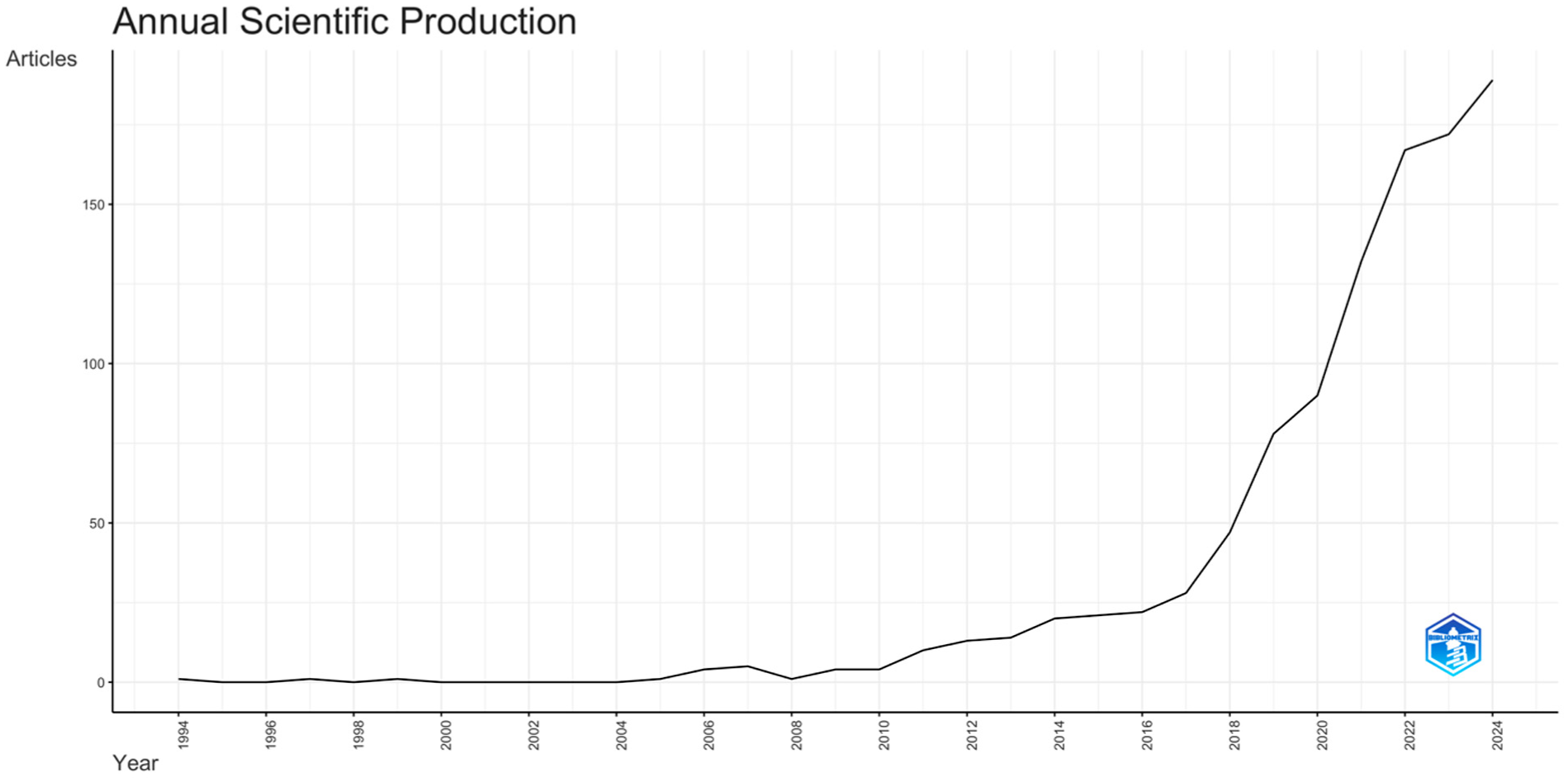
Annual scientific production.
Authorship and Research Productivity
Authorship trends reveal how research on the faculty structure of music education in higher education has evolved from fragmented contributions to a coherent scholarly field. Between 1995 and 2015, publication output was relatively sporadic, suggesting an emerging area of inquiry focused primarily on pedagogical reform and institutional development. However, from 2018 onward, a distinct rise in research productivity and co-authorship networks became visible, signaling greater collaboration and disciplinary consolidation. The most influential contributors, H. Gaunt, H. Westerlund, J. Hallam, and U. Teichler, demonstrate how leadership and identity in music education intersect with higher education governance (Conway, 2020; Gaunt et al., 2021; Lei, 2024). The increase in citations per year post-2020 reflects heightened academic engagement during the pandemic and post-pandemic period, as scholars explored digital pedagogy, workload balance, and faculty well-being (Rapanta et al., 2021; Rastegar & Rahimi, 2023). Collectively, the figure visualizes a transformation from individual scholarship to a collaborative, cross-institutional research ecosystem, where shared authorship and global visibility define the maturing field of music-education faculty studies, as shown in Figure 3.

Authors’ production over times.
Geographic and Institutional Distribution
Research on the structure of music education faculty in higher education shows a strong international distribution pattern. The map highlights the United States, the United Kingdom, Finland, Spain, and Australia as the leading contributors to global scholarly output. These nations possess well-established music conservatories and higher education institutions that serve as central hubs for artistic and pedagogical research. Finland demonstrates a unique integration of music teacher education with community engagement and a social innovation approach, influencing educational governance across Europe (Aleixandre-Tudó et al., 2021; Avis, 2020).
Emerging regions such as China, Thailand, Brazil, and Malaysia have experienced significant growth in publications since 2020, reflecting increased investment in arts-based curriculum design, faculty development, and higher-education modernization. The map’s visualization underscores a gradual shift away from traditional Western dominance toward a more globally distributed research landscape, mirroring the democratization of access to academic publishing and the rise of open-access platforms.
Figure 4 presents the geographic distribution of scientific production on music education faculty research based on country-level publication counts indexed in the Scopus database. Color gradients represent the relative volume of publications, with darker shades indicating higher numbers of indexed articles and lighter shades indicating lower research output. The visualization reflects publication frequency rather than collaboration intensity or citation impact. Countries were categorized automatically by the visualization software according to publication volume, enabling comparative interpretation of global research activity patterns. Collectively, as shown in Figure 4, the global expansion of music education research signifies not only academic diversification but also a redefinition of excellence in higher education through equitable collaboration and cross-border knowledge sharing.

Country scientific production map.
Keyword Structure and Thematic Clusters
The thematic structure presented in this section was derived from keyword co-occurrence networks generated using VOSviewer. Keywords with high frequency and strong co-occurrence linkages were clustered based on network proximity, total link strength, and density measures. These clusters were subsequently interpreted and consolidated into analytically coherent themes that reflect core dimensions of faculty structure in music education within higher education. This data-driven clustering process ensured that the thematic framework emerged from bibliometric patterns rather than interpretative preference.
Prior to network construction, a keyword cleaning and normalization procedure was conducted to enhance data reliability and reduce conceptual noise. Singular and plural forms were merged, and semantically equivalent terms were manually consolidated. General and non-informative terms (e.g., “human,”“humans,”“article”) were removed, and acronyms were standardized to their full expressions to ensure consistency across records. Following this process, dominant keywords were identified based on frequency and total link strength, allowing clusters to be meaningfully interpreted and aligned with higher-order thematic categories.
The keyword co-occurrence analysis reveals the intellectual architecture of music education faculty structure in higher education through five interconnected thematic clusters. Each cluster reflects the dominant conceptual trends and evolving research priorities between 1980 and 2025, as shown in Figure 5.

VOSviewer co-occurrence map.
Figure 5 visualizes keyword co-occurrence patterns in research on music education faculty in higher education. The size of each node indicates keyword frequency, while links represent co-occurrence relationships. Distinct color clusters reflect major thematic areas, including faculty development, governance, digital pedagogy, equity and well-being, and interdisciplinary collaboration, highlighting the multidimensional structure of the research field.
The first cluster, Faculty Development and Learning Communities, centers on mentoring, professional identity, and institutional leadership, underscoring the importance of peer collaboration and reflective teaching practices in faculty growth. The second cluster, Academic Leadership and Governance, highlights discussions on workload distribution, organizational justice, and performance appraisal issues increasingly relevant in higher education’s post-pandemic restructuring. The third cluster, Digital Pedagogy and Hybrid Learning, captures the rapid integration of online instruction and technological innovation in music education, particularly following 2020 (Ghamrawi et al., 2024; Weinberg et al., 2021).
The fourth cluster, Equity, Diversity, and Well-being, emphasizes inclusion, gender representation, and faculty mental health, demonstrating a human-centered shift in academic policy. Lastly, the fifth cluster, Interdisciplinary and Global Collaboration, links music education with sociology, psychology, and artificial intelligence-driven human resource management, marking a growing intersection between creative and data-informed domains (Ekuma, 2024; Shen et al., 2022).
Complementing these patterns reinforces the prominence of terms such as “music education,”“higher education,” and “faculty development,” confirming their centrality to the field’s evolving discourse. Together, Figures 5 and 6 depict a discipline that has matured into a multidimensional, globally connected research ecosystem, where the interplay of digital innovation, inclusivity, and institutional reform defines the modern trajectory of music-education scholarship, as shown in Figure 6.

Word cloud.
Figure 6 shows the word cloud illustrating the relative prominence of keywords in the dataset based on their frequency of occurrence. Larger terms indicate higher usage, with “music education” and “higher education” emerging as central concepts. The distribution of terms reflects the thematic concentration of the literature on faculty-related issues, pedagogical contexts, and institutional dimensions within higher music education.
Emerging Topics and Collaboration Networks
The field of music education faculty structure in higher education has undergone a dynamic thematic evolution between 2020 and 2025, characterized by a substantial shift toward emerging areas such as inclusion, artificial intelligence, and higher music education. The trend map demonstrates how the earlier focus on pedagogy and faculty development has progressively expanded to include data-driven decision-making, sustainable governance, and digital competency frameworks (Aithal & Aithal, 2023; Elugbaju et al., 2024). These topics reflect a global movement toward evidence-based faculty management, where analytics and AI tools assist institutions in optimizing academic performance and workload distribution, as shown in Figure 7.

Trend topics visualization.
Figure 7 presents the temporal evolution of key research topics in music education faculty studies between 1980 and 2025. Earlier research focused primarily on pedagogy and teacher education, while more recent trends (post-2020) show a growing emphasis on digital pedagogy, higher music education, inclusion, and data-informed governance. The visualization highlights a clear thematic shift toward technology integration, sustainability, and organizational dimensions of faculty work.
Complementing this, Figure 8 visually maps the connections among countries, journals, and keywords, illustrating the collaborative and interdisciplinary nature of the field. The analysis highlights Music Education Research, and International Journal of Music Education, as major publication venues, each serving as a nexus for global discourse. The strongest research linkages occur between the United Kingdom, Finland, the United States, and China, indicating an expanding international research network and shared focus on faculty sustainability and institutional innovation, as shown in Figure 8.
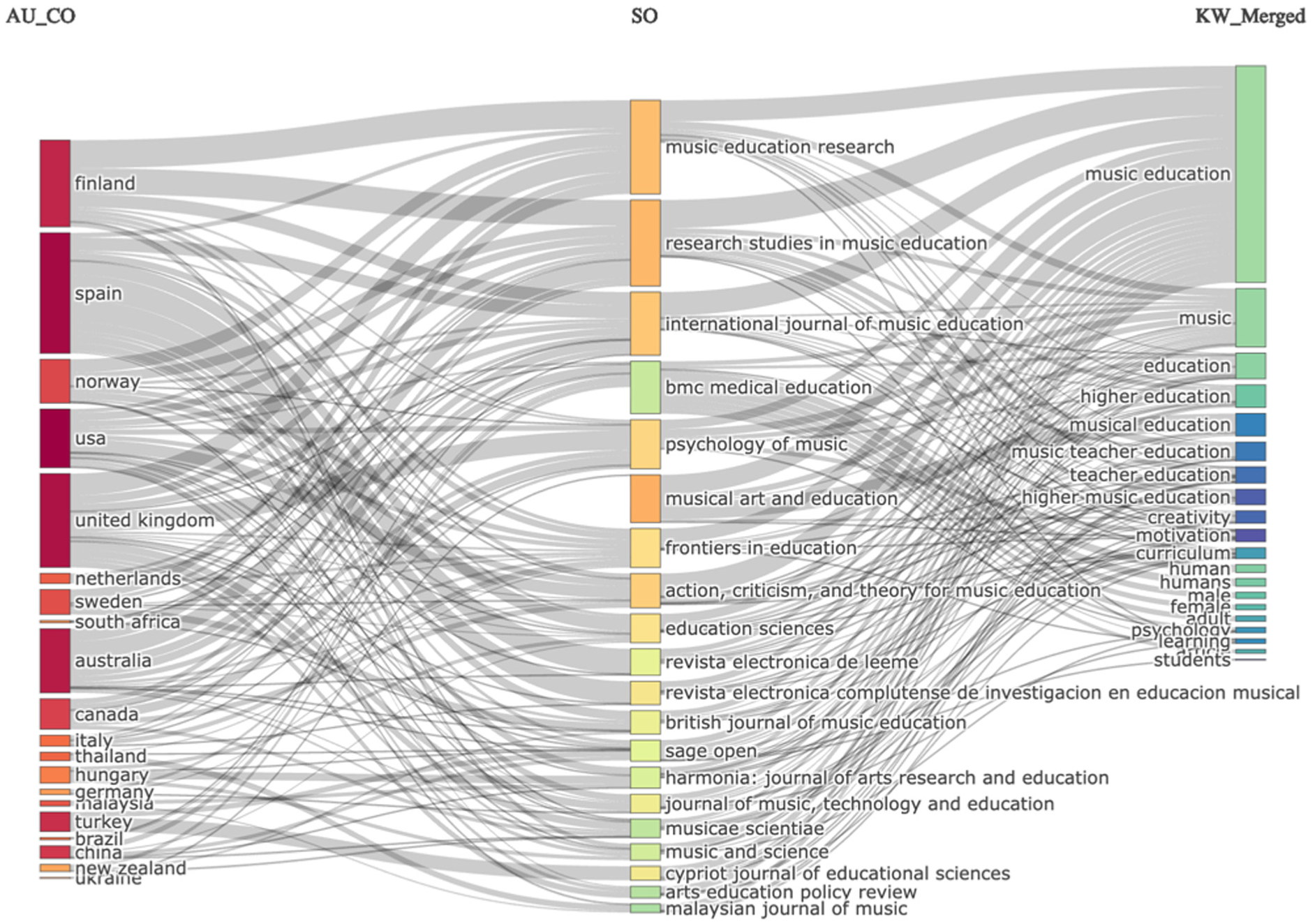
Three-field plot.
Together, Figures 7 and 8 reveal a distinct transformation in the discipline’s knowledge structure from national studies to a globalized, data-informed ecosystem of music-education scholarship. The integration of technology, inclusivity, and human resource management within higher education underscores a paradigm shift: music-education faculty studies are not only expanding in scale and diversity but also redefining how universities conceptualize and manage human capital in creative disciplines. These findings affirm the field’s growing relevance to broader educational policy, aligning with a commitment to advancing interdisciplinary and globally impactful research.
Discussion and Conclusion
The findings of this bibliometric analysis illuminate the evolving dynamics of music education faculty structures in higher education over the past four decades. The significant rise in publication output after 2015 and the exponential surge between 2020 and 2025 reveal that music-education scholarship has entered a transformative era shaped by digitalization, institutional reform, and global collaboration. This evolution resonates with the growing discourse in higher-education research, which highlights the increasing complexity of academic roles and governance models (Hautala et al., 2024; Ross & Savage, 2021). By synthesizing large-scale bibliometric evidence, the present study advances understanding of faculty structure as an organizational configuration encompassing governance arrangements, faculty roles, workload distribution, evaluation mechanisms, and professional development pathways within music education institutions.
The five standardized themes discussed below were derived directly from keyword co-occurrence clustering and network analysis, ensuring that the interpretive discussion is grounded in observed bibliometric patterns rather than subjective thematic selection.
The identification of five thematic clusters—Faculty Development and Learning Communities; Academic Leadership and Governance; Digital Pedagogy and Hybrid Learning; Equity, Diversity, and Faculty Well-being; and Interdisciplinary and Global Collaboration—reflects a multidimensional paradigm shaping contemporary music education faculty structures. The prominence of Faculty Development and Learning Communities underscores the continued emphasis on mentorship and reflective teaching practices, aligning with studies that recognize professional growth as the cornerstone of sustainable faculty performance (Aithal & Aithal, 2023; Gaunt et al., 2021). This theme is empirically supported by the frequent co-occurrence of keywords such as “faculty development,”“professional identity,”“mentoring,” and “learning communities,” as well as by highly productive authors visible in the co-authorship network, including Gaunt, Westerlund, and Hallam.
Similarly, the growing attention to academic leadership and governance demonstrates how institutional accountability is increasingly balanced with creative autonomy, confirming the hybrid governance models discussed by Hsieh (2023) and Warshaw and Ciarimboli (2020). Network evidence shows strong linkages among keywords such as “governance,”“leadership,”“workload,” and “evaluation,” with notable contributions from institutions in the United Kingdom and Finland, where governance reform and faculty agency are prominent research foci.
The digital transformation of music education represents a particularly striking trend. The emergence of Digital Pedagogy and Hybrid Learning as a core research area after 2020 supports earlier claims that technological integration has redefined music teaching and faculty engagement (Beirnes & Randles, 2023; Rapanta et al., 2021). The COVID-19 pandemic acted as a catalyst for this shift, forcing institutions to adopt online collaboration tools and multimedia platforms to sustain performance-based learning. This theme is reinforced by dense keyword clusters around “online learning,”“digital pedagogy,” and “hybrid teaching,” alongside increased publication output from countries such as the United States, China, and Australia during the 2020 to 2025 period.
Another noteworthy outcome is the increasing focus on Equity, Diversity, and Faculty Well-being. This mirrors the growing institutional responsibility toward inclusive and human-centered academic environments (Brandao De Souza & Jacomuzzi, 2025; Hashemi Toroghi et al., 2024). The salience of this theme is reflected in the co-occurrence of keywords including “well-being,”“equity,”“gender,” and “mental health,” which emerged more prominently in post-2020 networks, indicating a structural redefinition of faculty excellence beyond productivity alone.
Finally, the rise of “interdisciplinary and global collaboration” points to the internationalization of music-education research. The interconnectedness among countries such as the United States, the United Kingdom, Finland, China, and Thailand aligns with global trends in higher-education reform emphasizing cultural diversity and cross-border knowledge sharing (Rumbley et al., 2023; Zhang et al., 2023). Collaboration networks and three-field plots reveal strong linkages between music education, sociology, psychology, and technology-oriented journals, highlighting the growing integration of artistic practice with data-informed governance and interdisciplinary scholarship.
In light of these results, this study contributes to the body of knowledge by providing the first large-scale bibliometric synthesis of research on music education faculty structures in higher education. By systematically linking bibliometric evidence to organizational and governance dimensions, the study extends existing theoretical perspectives connecting artistic pedagogy, human-resource management, and digital transformation. Beyond academia, the findings have societal implications: they underscore the importance of investing in inclusive faculty-development frameworks and transnational collaboration to sustain the creative and educational mission of music faculties worldwide.
Despite these contributions, several limitations should be acknowledged. First, the analysis is restricted to the Scopus database and English-language journal articles, which may exclude relevant studies indexed in other databases or published in different languages. Second, because this is a bibliometric study, the results show trends in publication, citation, and keyword use rather than providing detailed insights into how institutions operate or the lived experiences of faculty members. Consequently, the results should be interpreted as indicative of scholarly trends rather than definitive evaluations of policy effectiveness.
Future research could address these limitations by using more databases, sources in different languages, and methods that combine bibliometric mapping with qualitative case studies or interviews. Looking at different regions, types of institutions, and fields of study would help us understand how music education faculty structures are changing due to digital advancements, fairness efforts, and new governance rules. Such research could deepen the evidence base for policy development and support more resilient, inclusive, and sustainable higher music education systems.
Footnotes
Appendix A
Acknowledgements
The author sincerely thanks the College of Music, Mahasarakham University, for its continuous academic support and research resources that made this study possible. Gratitude is also extended to colleagues and research collaborators for their valuable insights, and to Scopus and Bibliometrix developers for providing the analytical tools that facilitated this bibliometric investigation.

Ethical Considerations
These considerations were not applicable to this study, as it involved no human or animal participants. The research was based solely on secondary bibliometric data obtained from the Scopus database. Therefore, ethical approval was not required, consistent with standard practices for non-experimental, data-driven analyses in the social sciences and humanities.
Consent to Participate
These considerations were not applicable to this study, as it involved no human or animal participants. The research was based solely on secondary bibliometric data obtained from the Scopus database. Therefore, informed consent was not required, consistent with standard practices for non-experimental, data-driven analyses in the social sciences and humanities.
Author Contributions
All authors contributed substantially to the conceptualization and design of the study. Shujia Dong, Ph.D. student at the College of Music, Mahasarakham University, Thailand, and lecturer at Chongqing Vocational College of Culture and Arts, China, conducted the data collection, analysis, and content preparation. Asst. Prof. Dr. Sayam Chuangprakhon drafted and edited the manuscript. Assoc. Prof. Dr. Wang Guangguo and Qianqian Liu critically reviewed and provided scholarly feedback. All authors read and approved the final version for publication.
Funding
The authors disclosed receipt of the following financial support for the research, authorship, and/or publication of this article: Mahasarakham University MSU-IPSS 2024-GD-01/2567
Declaration of Conflicting Interests
The authors declared no potential conflicts of interest with respect to the research, authorship, and/or publication of this article.
Data Availability Statement
No new primary dataset was generated in this study. The bibliometric records were retrieved from the Scopus database in September 2025 (date of search) and restricted to documents classified as open-access (OA) by Scopus. The analysis was conducted on the exported results from that retrieval. The search can be replicated by registered users with Scopus access using the exact query reported in Section 3.2 and applying the same filters.