




Abstract
With the advancement of arts education policies and digital technologies, chorus education has attracted increasing global scholarly attention. This study aims to visualize the intellectual landscape and identify key trends and future directions in chorus education research. Following a structured retrieval process informed by PRISMA principles, 1,893 articles published between 2015 and 2024 were collected from the Web of Science Core Collection. Using CiteSpace software, we conducted co-occurrence, cluster, and burst analyses across authors, institutions, countries, and keywords. The results reveal a steady growth in publication output, expanding international collaboration networks, and increasing interdisciplinary integration. Research hotspots have shifted from traditional music instruction to themes such as digital learning, choral pedagogy, inclusive education, intergenerational choir, and mental health, reflecting the field’s growing alignment with social, psychological, and technological concerns. Theoretically, this study contributes to the understanding of chorus education as an evolving interdisciplinary field, offering a structured knowledge map that connects educational, cognitive, and community-centered perspectives. Practically, the findings provide valuable implications for music educators, policy designers, and institutional leaders aiming to advance digital innovation and inclusive practice in music learning. However, limitations remain in terms of database scope and language restrictions. Future studies could integrate broader data sources and explore comparative analyses across regions to enrich the global dialogue on chorus education development.
Plain Language Summary
Choral education focuses on teaching group singing and plays a vital role in arts education by promoting teamwork, creativity, and cultural understanding. This study explores global trends and developments in choral education research over the past decade, covering 1,893 academic articles published between 2015 and 2024. We analyzed data using software to map collaborations among researchers, institutions, and countries while identifying key topics and emerging trends. Results show a growing emphasis on digital tools and online teaching, which are transforming traditional approaches to choral education. Researchers increasingly explore themes like digital education, remote learning, and interdisciplinary methods, reflecting the impact of technological advancements. The study highlights how choral education fosters collective learning and adapts to modern educational demands. It also points to the need for innovative frameworks and stronger international partnerships to support the field’s growth. These insights can guide educators, policymakers, and institutions in creating accessible and inclusive programs for diverse learners. By embracing these trends, choral education can continue to inspire and connect people globally through music, ensuring its relevance in the digital age.
Introduction
Art education is undergoing a global transformation, characterized by the integration of emerging technologies and a gradual shift toward multimodal practices aimed at fostering visual literacy (Zhao et al., 2024). This evolution reflects a broader cultural transition from traditional text-based approaches to a multiliterate society. As a core component of art education, music education extends far beyond the acquisition of musical skills, carrying profound significance (Guo et al., 2020). It enhances language proficiency, fosters emotional intelligence, and stimulates creativity while equipping students with essential transferable skills such as discipline, collaboration, and critical thinking (Korucu-Kış, 2024). Furthermore, music education exposes students to diverse musical traditions, fostering an appreciation of cultural diversity, promoting social cohesion, and cultivating global awareness (Crooke et al., 2023). These attributes are critical in preparing students to actively engage and contribute in an increasingly interconnected world. Thus, as art and music education continue to evolve, their emphasis on technological integration, cultural understanding, and skill development underscores their vital role in shaping well-rounded individuals and addressing the demands of contemporary education systems.
In recent years, chorus education, as a vital component of music education, has garnered increasing academical attention and educational communities. Chorus education plays a crucial role not only in cultivating students’ musical literacy, artistic appreciation, and teamwork skills but also in enhancing national cultural quality and strengthening cultural soft power (Crawford, 2019).
The United Nations Educational, Scientific and Cultural Organization (UNESCO) actively promotes music education, including chorus education, as a vital means to foster cultural diversity, social cohesion, and sustainable development (C. Grant et al., 2022). Through initiatives such as the International Music Council and the Universal Declaration on Cultural Diversity, UNESCO advocates for the integration of music education into school curricula worldwide (Gwerevende & Mthombeni, 2023). Notably, UNESCO has supported programs like the International Choral Festival and regional workshops in Africa and Asia to enhance teacher training and promote choral practices in underrepresented regions (Boarin & Martinez-Molina, 2022). These efforts aim to enhance mutual understanding among cultures and contribute to the holistic development of individuals.
Focusing on chorus education is significant due to its multifaceted benefits. Participating in choral activities enhances students’ musical literacy, fosters teamwork, and cultivates active listening skills (Bussu & Mangiarulo, 2024). Additionally, choral singing serves as a powerful medium for cultural expression and preservation, promoting inclusivity and social harmony (Crooke et al., 2023). Culturally diverse choral repertoires play a crucial role in fostering an appreciation for global traditions. Additionally, the therapeutic potential of choral participation has been demonstrated through its ability to improve emotional well-being and enhance social integration, further emphasizing the importance of advancing chorus education (Juan-Morera et al., 2024).
In developed countries such as Finland, Norway, and Germany, chorus education is a fundamental component of the educational system, supported by policies that integrate choral programs into national curricula (Mellizo & Cabedo-Mas, 2024). Finland’s comprehensive music education framework mandates choral activities as part of its national strategy for cultural education. Recognizing the value of chorus education, developing countries like China and South Africa are increasingly incorporating it into compulsory education, often with UNESCO’s technical assistance (Boarin & Martinez-Molina, 2022). This trend is driven by evidence that choral activities enrich students’ artistic experiences, cultivate life skills such as discipline and collaboration, and foster community cohesion, all of which contribute to individual and societal development.
Chorus education has yielded notable outcomes, particularly in compulsory and senior education settings. In primary and secondary schools, structured choral programs have been instrumental in improving students’ musical literacy and fostering collaborative abilities (Myers, 2023). In China, national initiatives have successfully implemented choral activities as part of extracurricular programs to enhance students’ artistic growth (Wang, 2024). Among elderly populations, participation in choral groups has been linked to improved cognitive function and heightened social engagement (Särkämö,2018). Choral singing alleviates feelings of isolation and promotes a sense of community, underscoring its therapeutic and societal value (Hendry et al., 2022).
Chorus education across diverse educational contexts, providing a robust foundation for fostering cultural understanding, social inclusion, and individual well-being. The integration of global and localized efforts underscores its enduring relevance and transformative potential in contemporary educational systems (De Villiers & Oellermann, 2024).
The foundational surveys on chorus education research were conducted by Hylton (1983) and J. W. Grant and Norris (1998), providing comprehensive overviews of studies from 1972 to 1995, which identified trends and significant areas of interest. However, it has been acknowledged that these analyses are now outdated, with a notable lack of systematic reviews or bibliometric analyses addressing developments in the field since the early 21st century. This limitation makes it challenging to discern evolving knowledge structures and emerging research themes in chorus education.
Recent research has been conducted to explore specific aspects of chorus education. It has been reported that innovative learning environments for choral conducting education were explored (Zhou, 2023). Literature on teaching culturally diverse choral music with intentionality and care was reviewed (Bennett, 2021). The lifelong interplay of competence, identity, and meaning in choral conducting education was examined (Jansson & Balsnes, 2021), while changing perceptions and pedagogies in choral music education were investigated (Howard, 2020). Additionally, the effects of teaching experience and cultural context on choral directors’ descriptions of choral tone were analyzed (Frizzell & Windsor, 2021).
Despite these contributions, it has been recognized that current studies lack systematic integration and fail to employ bibliometric methods or knowledge mapping techniques to provide a comprehensive understanding of the field’s development (Bennett, 2021; Zhou, 2023). The absence of such approaches emphasizes the necessity for bibliometric analysis to identify research trends, knowledge structures, and emerging themes effectively. For instance, Constructing knowledge graphs through bibliometric visualization tools such as VOSviewer and CiteSpace enables researchers to explore intellectual structures and developmental trends in various academic fields, including recent applications in music and chorus education research (Van Eck & Waltman, 2010).
In recent years, bibliometric and visualization analyses have been increasingly applied to the field of music education, yielding significant insights into research trends, influential works, and collaborative networks. Current bibliometric analyses in music education primarily focus on research dissemination patterns and their academic influence (Hancock, 2015), thematic trends and key publications in musical creativity (Ozenc-Ira, 2023), regional and thematic focuses on scientific production and historical development (Vicente-Nicolás & Sánchez-Marroquí, 2024; Xin et al., 2023), international collaboration networks and thematic clusters (Sánchez-Marroquí & Vicente-Nicolás, 2024), as well as the evolution of assessment methodologies in Chinese music education practices and their alignment with international standards (Yunchao & Kamarudin, 2024). These studies demonstrate the growing integration of bibliometric and visualization methods in music education, which enable researchers to synthesize fragmented knowledge, uncover research gaps, and identify directions for future exploration.
However, it is regrettable that bibliometric visualization analyses or systematic literature reviews in chorus education remain relatively scarce (Lehimler, 2023). Bibliometric analyses can contribute significantly to advancing chorus education research by identifying key research trends, mapping collaboration networks, uncovering thematic clusters, and highlighting influential publications, thereby fostering a deeper understanding of the field and guiding future research directions. Hence, this study aims to:
exam the temporal distribution of publications to identify growth patterns in chorus education research.
uncover international collaboration networks and key contributors.
investigate research hotspots and emerging themes through keyword co-occurrence and thematic evolution analysis.
summarize key academic outputs and dissemination patterns by identifying highly cited works and influential journals.
This paper is divided into five sections. The first section introduces the background, current state, and significance of the study. The second section details the research methodology, including data sources, analytical tools, and analytical frameworks. The third section presents the results of the bibliometric analysis, covering temporal trends, research hotspots, and collaboration networks. The fourth Section discusses the key findings in relation to theoretical contributions and practical implications. The fifth Section concludes the study by addressing its limitations and proposing directions for future research.
Research Methods
The Web of Science (WoS) Core Collection database is a highly respected academic resource known for its extensive coverage of peer-reviewed literature across disciplines, providing high-quality, reliable datasets essential for bibliometric studies. It offers standardized metadata, detailed citation data, and global coverage, making it ideal for analyzing scholarly impact and identifying research trends. This study selected the WoS Core Collection to ensure robust and accurate bibliometric analysis, enabling an in-depth exploration of the intellectual structure and collaborative networks in “chorus education” research.
Bibliometric analysis, a quantitative method, systematically evaluates scientific literature to uncover research trends, collaboration patterns, and knowledge structures (Farooq, 2024). It is particularly effective for identifying research hotspots, mapping intellectual landscapes, and assessing the scholarly impact of authors, journals, and institutions. By employing bibliometric analysis, this study investigates the evolution of “chorus education” research, offering insights into its development, key contributors, and future research directions.
This study employs bibliometric analysis to systematically examine the literature on “chorus education” from the Web of Science (WoS) Core Collection database, focusing on the period from January 1, 2004, to October 25, 2024. The search query used was “chorus education” as the topic term, with the language limited to English, and the time range set from January 1, 2015, to October 25, 2024. A total of 1,985 relevant articles were retrieved. To ensure the accuracy and consistency of the data, the research utilized CiteSpace software to remove duplicates, resulting in 1,893 unique documents for further analysis.
In the analysis, CiteSpace, a bibliometric visualization software developed by Chen (2006), was employed to map and analyze the intellectual structure of chorus education research. This widely used tool enables the detection of emerging research trends, the identification of research frontiers through burst analysis, and the exploration of co-authorship and institutional collaboration networks. In this study, the analysis encompassed multiple dimensions, including publication trends over time, keyword co-occurrence and burst analysis, and patterns of scholarly collaboration among authors, institutions, and countries.
First, the study analyzed the annual publication volume of the retrieved articles, constructing a time series graph to illustrate the growth trend of research in the field of chorus education. To quantify this trend, the annual growth rate of publications was calculated using the following formula:

Where Nt represents the number of publications in a given year, and N t − 1 represents the number of publications in the previous year. This calculation helps to identify the level of research activity and the developmental trajectory of the field.
Secondly, high-output authors and institutions were identified, and their influence was evaluated using CiteSpace’s Betweenness Centrality measure. The Betweenness Centrality formula is:

Where σ st is the number of shortest paths from node s to node t, and σst(v) is the number of shortest paths passing through node vvv. This measure helps identify key contributors and their collaborative networks in the field.
In this study, keyword burst analysis was a focal point. By examining keyword co-occurrence, CiteSpace identifies emerging research hotspots and frontier areas. The Burstiness of keywords is calculated using the formula:
Where f t is the frequency of the keyword in the current time period, and f t − 1 is the frequency in the previous time period. This method helps uncover keywords that show significant growth, revealing trends in the research topics of chorus education.

Moreover, the study analyzed research collaboration networks, including the relationships between authors, institutions, and countries. By calculating indicators such as Clustering Coefficient and Modularity, the structure and cohesion of these networks were evaluated. The formula for the Clustering Coefficient is:

Where e is the number of edges between the neighbors of node k, and k is the degree of node k. This analysis allows for the identification of cooperation patterns and the internationalization trends within the research field of chorus education.
Finally, CiteSpace was used to generate various visual representations, including keyword co-occurrence maps, author collaboration maps, and institutional cooperation maps. These visualizations provide a clear, intuitive understanding of the research trends, collaboration networks, and emerging topics in the field of chorus education, facilitating a better comprehension of the current state and future directions of this research area.
Results
Trend of Literature Publication
Figure 1 presents the publication trends in the field of “chorus education” from 2015 to 2024. It is evident from the figure that the research on chorus education began to increase gradually from 2015, with a significant rise in publications after 2016, demonstrating a clear growth trend.

Research trends in chorus education.
Firstly, from 2015 to 2017, the number of publications remained relatively stable. In 2015, there were 166 articles, which slightly decreased to 164 in 2016, but increased to 214 in 2017, with an average annual growth rate of 30.49%. This phase reflects a relatively slow growth, indicating that the academic attention to chorus education was still in its early stages. From 2019 to 2020, the number of publications increased significantly. In 2018, there were 181 publications, followed by 171 in 2019, and 204 in 2020, with an average annual growth rate of 19.29%. Additionally, as chorus education gained more attention from the government, schools, and society, researchers’ interest grew, and the number of related publications began to increase significantly. After 2021, the number of publications continued to rise, but the growth rate began to slow down, with an average annual growth rate of approximately 5.46%. In 2021, there were 209 publications, followed by 201 in 2022, 212 in 2023, and 170 in 2024 (as of October 25). Although the growth rate has declined, the overall number of publications remains stable, suggesting that the research in this field has entered a relatively mature phase.
Based on the analysis of the publication trends, it can be concluded that research on chorus education has gradually increased since 2015, going through three main stages: the preliminary development stage (2015–2017), fluctuating growth stage (2018–2020), and the mature stage (2021–present).
Authors Collaboration Knowledge Map
Table 1 shows that research on “chorus education” in this period was led by a small group of highly productive authors. Early outputs were concentrated in scholars such as Bortnik, Reeves, Kurth and others, while Wang, Shui displayed the highest centrality, indicating a hub position in connecting different research groups. Authors such as Chen, Lunjin and Li, W also formed part of this early core and helped shape the foundational knowledge base. Figure 2 visualizes this structure through an author co-citation network, where node size and link density reflect scholarly influence and collaboration intensity (Reza HabibAgahi et al., 2022). The map reveals a dense central cluster around the above core authors and a looser periphery of later entrants. From 2015 onward, especially after 2016, more emerging scholars (e.g., Lu, Quanming; Gao, Xinliang) joined the network, increasing its complexity but not yet changing the dominance of early contributors. Overall, the author co-citation map highlights a field still organized around a few central figures, with newer researchers mainly located at the margins. This pattern suggests both the continued influence of early contributors and the potential for future work to trace how these emerging authors develop stronger connections and form new collaboration clusters.
Statistics on the Published Research Results.

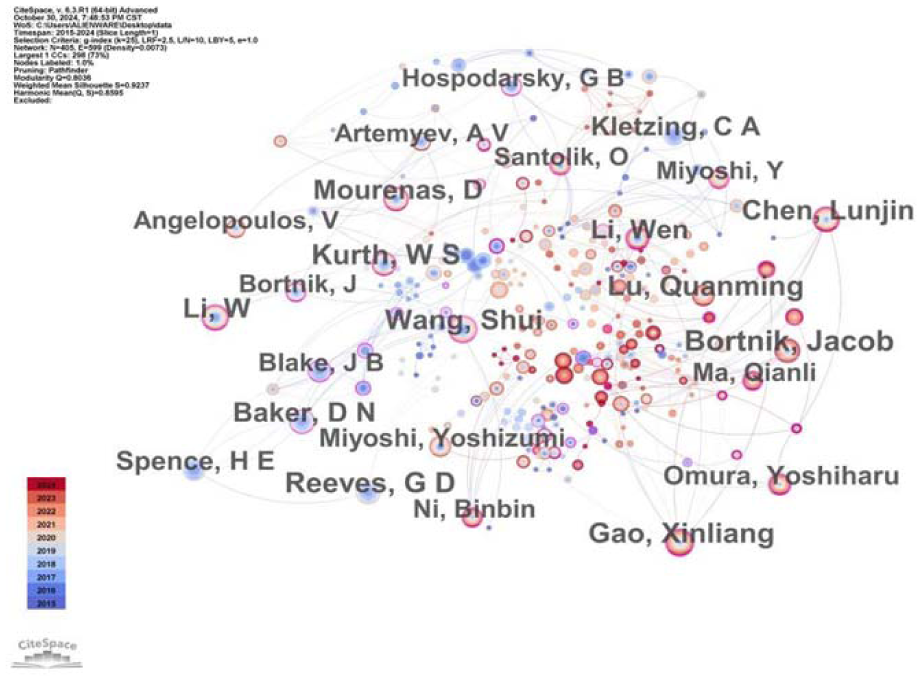
Author collaborative network analysis.
The Institutional Collaborative Knowledge Maps
The institution co-occurrence knowledge map shows how universities and research organizations collaborate in the field of chorus education. Each node represents an institution, and co-occurrence in publications reflects their collaborative ties and relative influence within the network (de-Marcos et al., 2024). Table 2 and Figure 3 together indicate that research is concentrated in a core group of institutions. The University of California System occupies a central position, supported by the University of California Los Angeles, the Chinese Academy of Sciences, the University of Iowa, the University of Colorado System and the University of Texas System. These institutions form a dense cooperation cluster that drives much of the knowledge production in this field. In recent years, institutions from Asia and Europe, such as Kyoto University, Nagoya University and the Centre National de la Recherche Scientifique (CNRS), have become more visible. Their presence suggests a gradual shift from a structure dominated by institutions in the United States to a more globally distributed collaboration pattern. Overall, the institutional collaboration network has expanded and become more diversified, creating broader space for cooperation across regions and across disciplines in chorus education research.
List of Major Institutions.


Institution co-occurrence knowledge graph.
Countries Co-Occurrence Knowledge Graph
Table 3 observed the major publishing countries in 2015 and their respective influence. The United States published the most papers in 2015, with a total of 1,011 publications and a centrality value of 0.66, indicating its dominant academic influence and positioning as the center of global research in this field. China (People’s Republic of China) followed with 299 papers, and a centrality value of 0.06, reflecting its strong academic contributions despite its relatively lower centrality. Other important countries include the England (188 papers), Japan (186 papers), and France (158 papers), all of which made significant contributions to the field.
Major Publishing Countries.

In 2015, Germany and Canada contributed 125 and 143 papers, respectively. Although their centrality values were relatively lower, 0.29 and 0.04, their contributions to the field remain noteworthy. In contrast, countries such as Russia (94 papers), Australia (85 papers), and Italy (68 papers) had fewer contributions and lower centrality values, indicating their relatively weaker academic position in the field of “chorus education.”
Figure 4, further understand us the collaboration networks of these countries, Each node in the map represents a country, and the lines connecting the nodes indicate academic cooperation between these countries. The size of each node is proportional to the country’s influence in the academic network, while the density of the lines reflects the degree of cooperation between countries. Through this visualization, we can clearly see the central position of leading countries like the United States in this field, as well as the roles of China, the England, and other countries in the global collaboration network.

National co-present map.
From the analysis of the map, we reveal that the United States and China have a close cooperation relationship, indicating a significant amount of academic collaboration between the two countries in this field. Additionally, European countries such as the England, France, and Germany form relatively tight academic cooperation networks. Although the academic contributions of Russia, Australia, and Italy are smaller, their collaborations with other countries are still reflected in the map, demonstrating the global nature of academic exchange.
As China and the United States have developed close collaborations, European countries have increasingly joined in, showing that international cooperation in this field is deepening, with cross-border and multidisciplinary collaborations becoming key drivers of academic progress. Although the academic contributions from Russia, Australia, and Italy are relatively small, their participation in the global collaboration network is still significant, reflecting the globalized nature of academic cooperation.
Keyword Co-Occurrence Knowledge Graph
The keyword co-occurrence analysis provides insights into the thematic landscape of chorus education research. By examining frequently co-occurring terms, this method enables the identification of prevailing topics, pedagogical concerns, and emerging interdisciplinary directions within the field.
As shown in Table 4, the term “choir” appears most frequently (213 times), confirming its foundational role in the literature. “chorus education” (187 times) and “vocal music” (164) reflect the core disciplinary focus on structured vocal instruction and ensemble training. High centrality values for these terms indicate their integral function in connecting other subtopics in the research network. Several keywords relate to teaching and learning processes, such as “music pedagogy” (138), “rehearsal” (131), and “music curriculum” (94). These terms highlight growing scholarly interest in instructional design, curriculum development, and classroom-based choral practices. Their presence suggests that researchers are increasingly concerned with how chorus education is implemented and assessed in formal education systems.
Analysis of High-Frequency Keywords.
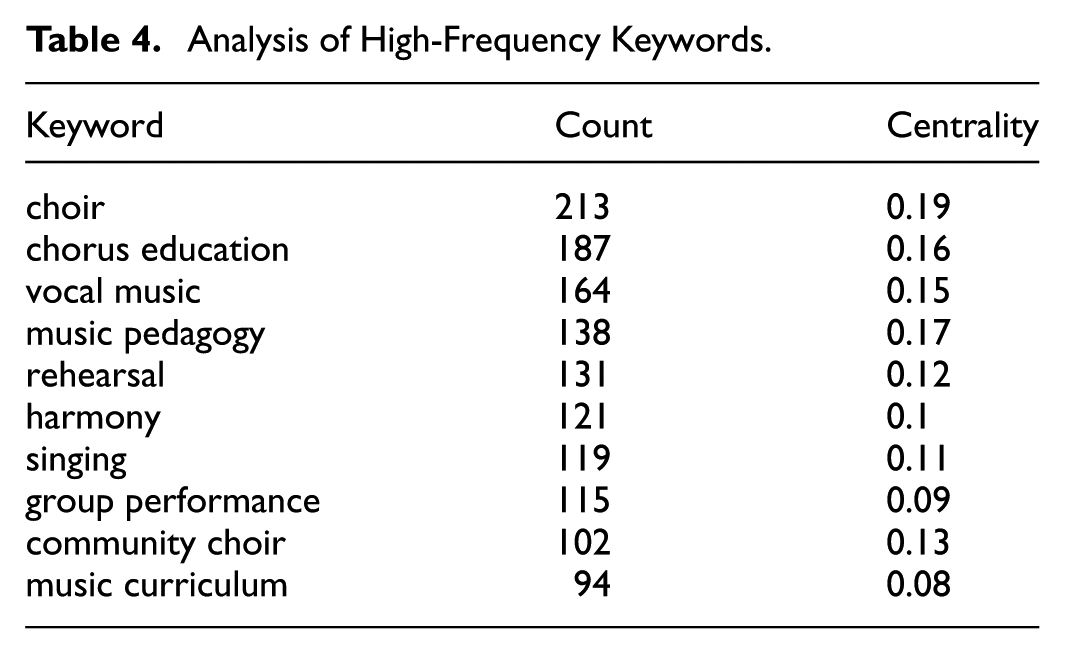
Technical-musical concepts such as “harmony” (121) and “singing” (119) underscore the centrality of music theory and vocal techniques in choral training. These keywords indicate sustained attention to performance quality, ensemble balance, and musical expressiveness, especially in school-based and youth choir contexts. Notably, keywords like “group performance” (115) and “community choir” (102) reflect a more socially embedded orientation of the field. These terms point toward research that links choral singing to community engagement, intergenerational participation, and social cohesion—aligning with broader goals of inclusivity, wellbeing, and public cultural development.
The keyword co-occurrence network in Figure 5 visualizes the conceptual structure of chorus education research over the past decade. Central nodes such as choir, vocal music, and music pedagogy are densely connected, forming the disciplinary backbone of the field. In contrast, peripheral but emerging terms like community choir and curriculum reflect diversification toward applied and policy-relevant areas. The network’s overall structure suggests a shift from a purely performance-oriented tradition to a more pedagogical and socially responsive paradigm. This visualization also highlights opportunities for future integration between technical musical expertise and community-oriented choral practices.

Keyword co-occurrence knowledge graph.
Keyword Cluster Map Analysis
By clustering keywords, researchers can identify the main directions of study, analyze the connections between different research areas, and uncover potential research gaps and future research opportunities. In this paper, we apply cluster analysis to keyword data from the literature and identify 18 major research clusters, as shown in Table 5. Through these clusters, we explore the current state of research in the field and future trends.
Keyword Cluster Analysis.

Cluster 0, titled Pedagogy, includes keywords such as choral instruction, music pedagogy, curriculum design, vocal training, and music literacy. This cluster emphasizes the foundational frameworks and instructional methodologies central to choral education. Research in this area focuses on how curriculum structures, pedagogical strategies, and ensemble-based instruction contribute to students’ overall musical development and literacy within formal educational contexts.
Cluster 1, Technique, encompasses keywords like vocal health, resonance, breath control, tone production, and adolescent voice change. This cluster highlights the technical and physiological aspects of choral singing, particularly in relation to vocal training and development. It reflects growing scholarly interest in optimizing vocal production and supporting singers through anatomical transitions, especially among adolescent choristers.
Cluster 2, labeled Technology, includes terms such as virtual choir, online rehearsal, remote instruction, music software, and digital collaboration. This cluster reflects the rapid digitalization of choral education, particularly in response to the global shift toward online learning. Studies within this theme explore how technological tools have transformed rehearsal practices, pedagogical delivery, and global participation in virtual choir ensembles.
Cluster 3, Performance, comprises intonation, ensemble blend, conducting gesture, rehearsal strategies, and musical interpretation. The focus here is on live performance quality and ensemble dynamics. Researchers investigate how interpretive practices and conducting techniques influence musical coherence, aesthetic delivery, and the expressive capacity of choral groups.
Cluster 4, Community, features keywords like community engagement, adult choirs, intergenerational singing, social inclusion, and civic participation. This cluster addresses the social functions of choral singing in non-academic settings, emphasizing its role in fostering inclusion, lifelong learning, and civic identity through community-based ensembles.
Cluster 5, titled Multiculturalism, includes folk songs, multicultural repertoire, cultural identity, text setting, and choral arrangement. The cluster explores how choral repertoire rooted in diverse traditions promotes intercultural understanding and reinforces identity. It highlights the integration of global musical styles into choir programs, reflecting educational commitments to diversity.
Cluster 6, Wellbeing, is defined by keywords such as group singing, well-being, emotional expression, therapeutic music, and social cohesion. This cluster captures the intersection between choral singing and health, showing how participation in group singing can enhance mental health, emotional regulation, and interpersonal connectedness.
Cluster 7, Acoustics, involves choral acoustics, venue design, reverberation, space acoustics, and sound projection. Studies in this cluster examine how physical performance environments affect auditory perception, vocal output, and ensemble coordination, offering implications for rehearsal planning and venue selection.
Cluster 8, Leadership, consists of terms like choral conducting, leadership styles, gesture clarity, rehearsal management, and non-verbal communication. This cluster focuses on the conductor’s role in shaping ensemble identity and instructional tone, addressing both pedagogical influence and interpretive authority in choral contexts.
Cluster 9, Adolescence, features youth choir, vocal maturation, self-perception, peer interaction, and gender identity. Research in this cluster examines how choral participation affects adolescents’ musical, psychological, and social development, especially in relation to identity formation and peer dynamics.
Cluster 10, labeled Innovation, includes AI-assisted composition, choral apps, digital score reading, music analysis, and audio recording. This cluster represents emerging technological frontiers in choral practice, exploring how artificial intelligence and digital tools are being integrated into creative processes and instructional design.
Cluster 11, Motivation, includes student motivation, choir retention, achievement goals, competition, and engagement strategies. The focus here is on psychological engagement, aiming to understand how motivation influences continued participation in choir and how educators can foster long-term commitment.
Cluster 12, Gender, includes keywords such as voice classification, gender-neutral repertoire, treble voices, mixed choir, and inclusive programming. This cluster examines gender inclusivity in repertoire and ensemble structure, emphasizing the need for equitable vocal representation and sensitive pedagogical practices.
Cluster 13, titled Policy, features education policy, national curriculum, arts funding, choral mandates, and music advocacy. Studies here explore how governmental and institutional frameworks influence choral program design, access, and sustainability within formal education systems.
Cluster 14, Musicianship, involves sight-singing, pitch accuracy, rhythmic dictation, ear training, and music notation. This cluster addresses the development of core musical skills necessary for ensemble proficiency, focusing on strategies to cultivate aural and theoretical literacy in choral learners.
Cluster 15, Anxiety, is characterized by terms like stage confidence, performance anxiety, self-efficacy, coping strategies, and audience perception. Research in this area focuses on the emotional and psychological aspects of performance, offering insights into how singers manage stress and present themselves publicly.
Cluster 16, Collaboration, includes global partnerships, international exchanges, choral festivals, educational alliances, and collaboration. This cluster reflects the rise of transnational engagement in choral education, illustrating how international cooperation enhances cultural dialogue and pedagogical innovation.
Cluster 17, Improvisation, features vocal improvisation, spontaneous composition, text painting, extended vocal techniques, and creative choral methods. Studies in this cluster emphasize creative expression and experimentation, advocating for improvisational elements in choral curriculum and performance.
Cluster 18, titled Soundscape, includes concert hall acoustics, outdoor choral events, urban noise impact, environmental influence, and sound adaptation. This cluster focuses on the interaction between choral sound and environmental context, exploring how choirs adapt to diverse sonic landscapes for performance optimization.
The keyword cluster analysis demonstrates the diverse landscape of choral education research, spanning 18 themes such as pedagogy, technique, technology, wellbeing, and collaboration. These clusters reflect the field’s shift from traditional instruction to more inclusive, digital, and interdisciplinary approaches, offering a concise overview of current priorities and future directions.
A keyword cluster map is a visualization tool that groups keywords from a large body of literature based on their similarities, helping to identify core themes and emerging research trends in a specific academic field. By clustering related or similar keywords together, this map allows researchers to quickly pinpoint the main research directions, hot topics, and developmental trajectories within a field. Moreover, it reveals the intersections between different research areas, identifying potential research gaps and future opportunities.
Figure 6 illustrates the keyword cluster network map generated through co-occurrence analysis, which reveals 18 distinct research clusters in the field of choral education. These clusters, aligned with the thematic labels in Table 5, show clear structural separation and topical concentration. Central clusters such as Pedagogy (#0), Technology (#2), and Leadership (#8) are densely connected and positioned at the center of the map, indicating their foundational role in the research landscape. In contrast, clusters like Improvisation (#17) and Soundscape (#18) appear at the periphery, suggesting emerging or more specialized areas. The spatial proximity of clusters such as Policy (#13), Motivation (#11), and Anxiety (#15) reflects their conceptual interrelations, particularly regarding student engagement and educational reform. Overall, the map offers a comprehensive visualization of the thematic architecture of choral education scholarship, highlighting both established domains and frontier topics.

Keyword cluster network map.
Burst Analysis of Keyword
The burst analysis of keywords reveals the evolving trajectory of research in chorus education from 2004 to 2024. By identifying the intensity of keyword bursts, this analysis captures the shifting focal points within the academic discourse, delineating distinct phases of development that reflect a progressive deepening and broadening of the field. Overall, the evolution can be characterized by four major stages: conceptual foundation, educational application, interdisciplinary integration, and expansion into social value.
In the initial stage (2004–2010), keywords such as “choral singing” (burst strength: 3.87), “music instruction” (3.21), and “aesthetic education” (2.94) emerged prominently. These terms reflect an emphasis on foundational concepts, with researchers focusing on the role of choral singing in general music education and its contributions to aesthetic development. This phase laid the theoretical groundwork for understanding chorus education as a core component of music pedagogy.
Between 2011 and 2015, scholarly attention shifted toward the educational outcomes associated with choral practice. Keywords like “group cohesion” (3.77), “self-esteem” (3.63), and “interpersonal skills” (3.41) illustrate a growing interest in the psychosocial benefits of choral participation. Studies during this period highlighted the capacity of choral activities to foster personal development, social adaptation, and emotional intelligence, introducing psychological and educational dimensions into the discourse.
The period from 2016 to 2020 marked a transition toward interdisciplinary integration. Keywords such as “cognitive benefits” (4.02), “neuroaesthetics” (3.89), “choral pedagogy” (3.76), “community singing” (3.44), and “inclusion” (3.29) indicate a broadening of research perspectives. Scholars began to explore the cognitive, neuroscientific, and sociocultural dimensions of chorus education, expanding the scope to include learning outcomes, pedagogical strategies, and social justice in music education.
Since 2021, the research focus has increasingly centered on the broader societal impact of chorus education. Terms such as “intergenerational choir” (3.95), “mental health” (4.21), “aging population” (3.83), “cultural identity” (3.64), and “music and wellbeing” (3.52) suggest a growing emphasis on public health, social integration, and cultural sustainability. Recent studies have addressed the therapeutic and communal aspects of chorus singing, particularly among vulnerable populations, positioning it as a vehicle for promoting social cohesion and psychological well-being.
The burst keyword analysis presented in Table 6 underscores the temporal shifts in scholarly attention within the field of chorus education over the past two decades. Keywords such as “mental health” (4.21), “cognitive benefits” (4.02), and “intergenerational choir” (3.95) demonstrate recent surges in academic interest, reflecting a trend toward exploring the psychosocial and community-based dimensions of choral participation. Earlier high-intensity bursts, including “choral singing” (3.87), “aesthetic education” (2.94), and “music instruction” (3.21), indicate the foundational concerns of music pedagogy and artistic development. Mid-phase terms such as “group cohesion” (3.77), “self-esteem” (3.63), and “inclusion” (3.29) mark a transitional focus on social-emotional learning and educational equity. The distribution of burst strength across these keywords reveals a gradual expansion from instructional priorities to interdisciplinary intersections involving psychology, sociology, and public health. Collectively, the findings confirm the diversification and maturation of chorus education research, with emerging themes pointing toward its broader cultural and societal relevance.
Analysis of the Present Strength of Keywords.

Figure 7 visually encapsulates the temporal emergence and intensity of pivotal research themes in chorus education by illustrating the burst strength of 25 high-frequency keywords. The distribution and magnitude of these bursts corroborate the developmental trajectory identified in the textual analysis. Stronger bursts in terms such as “choral singing,”“inclusive education,”“digital learning,” and “community choir” reflect both pedagogical evolution and the expanding socio-technological context of choral practice. Meanwhile, emergent terms like “performance anxiety,”“chiral improvisation,” and “virtual rehearsal” suggest increasing scholarly interest in psychological and technological dimensions of choral engagement. The color gradients in the chart mirror the chronological and thematic clustering of these bursts, reinforcing the field’s transition from traditional music instruction to inclusive, technology-integrated, and health-oriented research. This visual evidence substantiates the conclusion that chorus education is progressively embracing interdisciplinary approaches and broader educational implications.

Top 25 burst keywords in chorus education (2004–2024).
Taken together, the keyword clusters and burst terms suggest that the future development of choral education will depend increasingly on the interaction between traditional ensemble practice and new technological and social agendas. Themes such as Technology, Innovation, virtual rehearsal, digital learning, and AI assisted composition indicate that digital platforms and intelligent tools will not simply replace conventional choir rehearsals but are more likely to support intonation training, score preparation, feedback, and long distance participation in ways that extend access to choral experiences. At the same time, the growing prominence of wellbeing, mental health, intergenerational choir, community choir, and social cohesion shows that choral education is moving toward a stronger concern with public health, community building, and cultural identity rather than focusing only on artistic excellence. These trends imply that future choral educators will need to integrate AI, digital media, and evidence from psychology and health studies into curriculum design, rehearsal strategies, and assessment, so that choir programs can respond to demographic change and achieve broader educational and social goals.
Timeline Atlas Analysis
Figure 8 presents a timeline map that visually illustrates the emergence and duration of key research themes in chorus education between 2004 and 2024. By mapping the temporal span of each keyword’s prominence, the timeline provides an effective tool to trace the evolution of scholarly attention, revealing how the field has transitioned from foundational pedagogy to interdisciplinary integration and social impact. In this timeline, the horizontal axis represents the progression of time, while each horizontal line indicates the active period during which a particular keyword showed significant research intensity. This longitudinal perspective offers a comprehensive view of the discipline’s shifting intellectual priorities.

Timeline atlas analysis.
From 2004 to 2010, the field was characterized by foundational pedagogical research. Keywords such as “Choral Singing,”“Music Literacy,” and “Aesthetic Education” dominated this phase, reflecting an academic emphasis on defining the basic instructional goals, aesthetic values, and literacy components of choral participation. These themes laid the groundwork for establishing chorus education as a formal domain within music education theory and practice.
Between 2011 and 2015, the focus began to shift toward the psychosocial functions of choral engagement. Keywords like “Group Cohesion,”“Self-Esteem,” and “Interpersonal Skills” gained prominence, indicating a growing awareness of the social-emotional benefits of choral participation. This stage reflects a deeper inquiry into how group singing fosters individual well-being, peer relationships, and social development, especially in educational and therapeutic contexts.
From 2016 to 2020, the field expanded into more interdisciplinary and inclusive areas. Terms such as “Inclusive Education,”“Choral Pedagogy,”“Neuroaesthetics,” and “Community Singing” point to a broader scope of inquiry encompassing neuroscience, pedagogy, and social equity. This period saw a diversification of research methods and objectives, including the cognitive impact of musical learning and the role of chorus education in community engagement and inclusive learning environments.
The most recent stage, from 2021 to 2024, is marked by a focus on digital transformation and public health relevance. Keywords such as “Online Choir,”“Virtual Rehearsal,”“Performance Anxiety,”“Mental Health,” and “Intergenerational Choir” dominate this period, reflecting how chorus education research has responded to contemporary societal challenges. The COVID-19 pandemic accelerated interest in remote choral practices, while increased attention to mental well-being and aging populations broadened the application of choral activities beyond traditional educational settings. These developments indicate a shift toward leveraging chorus education for social cohesion, intergenerational engagement, and emotional support.
In summary, Figure 8 provides a structured visualization of the evolving thematic landscape of chorus education research. The sequential appearance and overlapping durations of keywords highlight a continuous deepening and broadening of the field—from traditional instruction to psychosocial exploration, and from interdisciplinary integration to societal impact. This timeline serves as both a historical record and a forward-looking tool, offering valuable insight into the maturation of chorus education as a multifaceted academic discipline.
Discussion
Overview of Main Research Results
This study employed bibliometric methods, including co-authorship network analysis, institutional collaboration mapping, keyword co-occurrence, burst detection, clustering, and timeline mapping, to systematically examine the intellectual landscape and evolving research trajectories in chorus education from 2004 to 2024. Drawing on data from the Web of Science Core Collection, the study identified significant publication trends, scholarly collaborations, thematic developments, and emerging focal points in the field. The results reveal not only quantitative growth in the number of studies but also qualitative transitions in research themes and disciplinary intersections, offering a comprehensive view of the field’s academic evolution and its increasing societal relevance.
The upward trend in publication output indicates a growing academic interest in chorus education, especially after 2015. However, the data also reflect certain fluctuations, suggesting that chorus education remains sensitive to broader social contexts, such as the COVID-19 pandemic, which may have both constrained and stimulated scholarship—particularly in relation to virtual choirs and digital learning. This trend underscores the dual nature of the field: while deeply rooted in traditional educational and aesthetic practices, it remains responsive to technological, demographic, and policy-driven changes.
The author co-citation analysis reveals a concentration of early intellectual leadership, particularly among scholars who shaped the theoretical foundations of choral pedagogy, music psychology, and group dynamics in educational settings. Over time, the network expanded to include more diverse contributors, reflecting a democratization of scholarly engagement and the globalization of choral research. High centrality authors such as Wang Shui and Chen Lunjin not only link fragmented clusters but also suggest emerging interdisciplinary bridges—particularly in areas intersecting with sociology, health education, and inclusive practices. This indicates that influence within the chorus education domain is no longer confined to traditional music education experts but increasingly includes scholars engaged in community, intercultural, and therapeutic contexts.
Institutional and national collaboration maps further reinforce this trend. While the University of California System, Chinese Academy of Sciences, and University of Iowa remain influential hubs, there is increasing visibility of Asian and European institutions post-2020, including Kyoto University and CNRS. This spatial diffusion of knowledge production reflects a shift toward more decentralized and cross-regional collaboration, aligning with global trends in higher music education and cultural diplomacy. Notably, the relatively low centrality of some newer institutions suggests that while participation has diversified, structural inequalities in research visibility and access still persist—raising important questions about resource distribution and scholarly inclusion in global chorus education.
The keyword co-occurrence analysis reveals a conceptual broadening of the field. Initial research focused on core pedagogical themes such as “choral singing,”“music literacy,” and “vocal technique.” In subsequent years, the discourse shifted toward psychosocial and community-oriented terms like “self-esteem,”“group cohesion,” and “inclusive education.” In more recent years, keywords such as “mental health,”“virtual rehearsal,” and “performance anxiety” have emerged, reflecting contemporary concerns with learner well-being, technological adaptation, and the affective dimensions of choral participation. The burst keyword analysis confirms these transitions, highlighting distinct stages in the field’s evolution: from foundational and pedagogical, through psychosocial and cognitive, to technologically mediated and socially engaged practices.
The clustering analysis deepens this insight by identifying thematically cohesive subfields. Clusters such as “choral pedagogy,”“community singing,” and “intergenerational choir” show how chorus education has expanded into interdisciplinary zones, including gerontology, public health, and social inclusion. Importantly, the presence of clusters related to “teacher training,”“choral composition,” and “digital learning” point to an increasing convergence between curriculum innovation and practice-oriented research. Such cluster distributions suggest that chorus education is not only a research field but also a transdisciplinary practice domain—integrating performance, instruction, policy, and well-being.
The timeline analysis synthesizes the temporal evolution of these thematic developments. It shows how early attention to “choral singing” and “aesthetic education” has given way to newer themes like “online choir” and “intergenerational choir.” This trajectory reflects not just scholarly interests but broader societal transformations, including digital disruption, aging populations, and global health challenges. The field’s responsiveness to these issues indicates its potential for contributing to pressing social agendas, such as mental health promotion, community resilience, and educational equity.
Overall, this study contributes to a refined understanding of chorus education as an expanding and diversifying research field. The integration of cognitive, social, technological, and therapeutic dimensions reveals a paradigmatic shift from isolated pedagogical concerns toward a more holistic vision of choral practice. The field is moving beyond the rehearsal room, engaging with broader human development goals and interdisciplinary discourses. This shift underscores the necessity for future research to further consolidate these connections, develop new theoretical models, and promote more inclusive, collaborative, and context-sensitive approaches to chorus education research.
Recent studies published in 2025 further consolidate and extend the developmental patterns identified in this bibliometric review. Across different age groups and learning contexts, these works show that choral participation is increasingly understood as a resource for learning, identity formation, and wellbeing. Blagojević et al. (2025) demonstrate that youth choir singers experience wellbeing in different ways depending on whether they participate in formal or informal ensembles, which suggests that the design of participation settings is an important variable for choral pedagogy. Han et al. (2025) report that participation in university choirs enhances international students’ identification with their institution and reduces loneliness, indicating that choirs can function as supportive spaces for adjustment and belonging in higher education. At the level of individual differences, Robens et al. (2025) identify distinctive personality profiles among choral singers in comparison with non singers, which provides new evidence on personal characteristics that may sustain long term engagement in ensemble singing.
In the context of early and middle childhood, Welch and Baxter (2025) synthesize evidence that links singing with children’s cognitive, emotional, and health related development, while Zhu and Theerapan (2025) emphasize that gender inclusive approaches in primary school choral education are essential for equitable access to foundational musical experience. Zhukov (2025) adds a complementary perspective by analyzing the musical identities and disciplined performance practices of middle school elite choristers, which underlines the pedagogical significance of structured ensemble training during adolescence. Research in 2025 also pays increasing attention to groups that were less visible in earlier choral education literature. Moisseinen et al. (2025) shows that choir singing produces measurable neurocognitive and emotional benefits for older adults. Kennedy et al. (2025) documents how a community choir supports social participation and communicative development among neurodiverse adults. Magowan (2025) examines an Australian choir formed by people with disabilities and finds that such ensembles can nurture emotional expression, social connection, and meaningful cultural participation. Taken together, these studies confirm that contemporary choral education research is expanding beyond traditional school contexts toward a wider set of developmental, therapeutic, and inclusive applications, and they provide recent empirical support for the thematic shifts mapped in this study.
Theoretical Significance
This study offers a field-specific bibliometric investigation into chorus education research between 2004 and 2024, positioning itself uniquely within the broader landscape of music scholarship. Unlike previous studies that conducted bibliometric analyses on general music research or genre-specific domains such as K-pop or music culture, this research narrows its focus to chorus education, revealing its distinct developmental trajectory through multi-dimensional mapping techniques including co-authorship, institution and country networks, keyword co-occurrence, clustering, bursts, and timeline visualization. While a general upward trend in music research output has been established globally between 2010 and 2022, the specific trajectory of chorus education—marked by its pedagogical evolution, the rise of inclusive practices, and psychosocial engagement—had not been systematically mapped before this study was conducted (Rahman & Rahaman, 2023). In contrast to research that emphasized popular culture phenomena or fan-centric themes, this study foregrounds chorus education as an evolving academic discipline with implications for pedagogy, identity, and wellbeing (Chansanam et al., 2022). Moreover, while musical creativity and improvisation have been studied from behavioral or neuroscientific angles, few have explored how these themes manifest within formal chorus education contexts, which has now been clarified through cluster and burst keyword analysis in this study (Yujia & Foong, 2024).
Furthermore, this research contributes novel insights into the institutional and geographic dynamics of chorus education scholarship, diverging from prior studies that primarily focused on regional topics, historical theses, or limited databases. In contrast to previous analyses of Turkish graduate theses that emphasized traditional and religious music culture, this study demonstrates the global and interdisciplinary expansion of chorus education as a research domain (Yilmaz & Yakup, 2023). Similarly, while music psychology research has been predominantly centered on Western academic circles, the present study highlights the increasing diversification of choral research through international collaboration networks and emergent themes such as online choirs and performance anxiety (Anglada-Tort & Sanfilippo, 2019). Though prior works have examined music education technology trends, they tended to generalize findings without distinguishing the subfield of chorus education, a gap this research fills by identifying the integration of virtual rehearsal, digital learning, and inclusive pedagogy in choral contexts (Marín-Suelves et al., 2022). Additionally, while inclusive education and special needs in music have been discussed, this study further reveals how these priorities have transitioned from therapy-oriented models to community-driven and educationally embedded frameworks within choral settings (Xin et al., 2023). Finally, whereas studies on music education assessment in China have focused on curricular shifts and performance evaluation, this study extends the discourse by situating choral assessment within broader pedagogical and emotional landscapes, reflecting a multidimensional understanding of student outcomes in chorus education (Yunchao & Kamarudin, 2024).
Practical Significance
The findings of this bibliometric study offer valuable implications for multiple stakeholders engaged in the field of chorus education, particularly policymakers, curriculum designers, institutional leaders, and music educators. For educational policymakers and administrators, the identification of research hotspots such as “inclusive education,”“digital learning,” and “intergenerational choir” provides evidence-based guidance for allocating resources and formulating music education policies that reflect global and temporal trends. The surge in keywords related to community engagement and psychosocial well-being underscores the necessity of integrating choral programs into broader educational and public health initiatives, especially in aging societies and marginalized communities. These findings support the development of strategic frameworks that position chorus education not only as an artistic endeavor but also as a tool for social cohesion, emotional resilience, and cultural sustainability.
For front-line practitioners such as music educators, choral conductors, and teacher trainers, this study presents a detailed map of evolving pedagogical priorities, from “vocal technique” and “repertoire selection” to “virtual rehearsal” and “choral assessment.” These insights can inform the refinement of teaching content, the adoption of hybrid or digitally mediated rehearsal models, and the professional development of choral instructors to meet the demands of contemporary learners. Additionally, the emerging themes of “performance anxiety,”“collaborative learning,” and “cultural diversity” highlight the need for adaptive, inclusive, and psychologically informed pedagogies. Music education institutions may use these insights to revise curricula, develop interdisciplinary courses, and promote international academic exchange to align choral training with the dynamic realities of education in the 21st century.
Conclusion
This study employed a bibliometric approach to map the knowledge structure and development trajectory of global research on chorus education from 2004 to 2024. Using tools such as CiteSpace and VOSviewer, it analyzed 1,893 academic records, focusing on publication trends, author and institutional collaboration, keyword co-occurrence, clustering, burst detection, and timeline visualization. The results revealed an overall upward trend in publication output, with the United States, China, and England leading in research productivity. Influential scholars such as Wang Shui and Chen Lunjin emerged as central nodes in the author network, while institutions like the University of California System and the Chinese Academy of Sciences showed significant collaborative influence. Thematic analysis of keywords indicated a clear progression from foundational music instruction to interdisciplinary themes such as mental health, inclusivity, and digital learning in chorus education.
Theoretically, this study enriches the existing body of literature by offering a decade-long, data-driven synthesis of global chorus education research. Unlike previous bibliometric studies that centered on music therapy, creativity, or specific national trends, this work presents a comprehensive, global-scale mapping of chorus education and highlights its interdisciplinary integration, especially with cognitive science, technology, and inclusive pedagogy. In doing so, it provides a macro-level framework for understanding the evolution and diversification of scholarly attention in this field.
Practically, the study offers valuable insights for multiple stakeholders including curriculum designers, music educators, arts administrators, and cultural policymakers. It identifies emerging focal points—such as virtual rehearsal, intergenerational choirs, and social cohesion—that can guide practical innovations in teaching strategies, community programs, and public health initiatives. The identified trends provide an evidence base to support future reforms in music education policy, promote cross-sector collaboration, and enhance the social value of choral practice.
Nevertheless, this research has limitations. It relies exclusively on the Web of Science Core Collection and English-language literature, which may underrepresent significant regional or non-English contributions. Additionally, the use of bibliometric methods, while powerful for macro-level mapping, may overlook nuanced theoretical debates or qualitative insights. Future research could integrate mixed methods approaches and expand multilingual databases to deepen interpretive understanding. Exploring how chorus education intersects with evolving technologies, marginalized communities, and global education frameworks remains a fertile avenue for subsequent inquiry.
Footnotes
Acknowledgements
The authors would like to acknowledge the support of Yunnan Tourism College and Xishuangbanna Vocational and Technical College for providing access to research facilities and resources. Special thanks to Shuo Huang and Han Wang for their dedicated contributions to the research, analysis, and manuscript preparation. Additionally, we thank all collaborators who contributed valuable insights during the research process.

Ethical Considerations
This study did not involve any human or animal participants and therefore does not require ethical approval.
Funding
The authors received no financial support for the research, authorship, and/or publication of this article.
Declaration of Conflicting Interests
The authors declared no potential conflicts of interest with respect to the research, authorship, and/or publication of this article.
Data Availability Statement
The data supporting the findings of this study are available from the corresponding author upon reasonable request.