




Abstract
Using panel data from 38 leading agricultural and forestry universities in China from 2018 to 2023, this study employs a difference-in-differences (DID) model to assess the impact of the second round of the “Double First-Class” initiative on the research performance of sectoral (Agricultural and Forestry) universities. The empirical results show that the policy significantly improves research performance. Following its implementation, the Category Normalized Citation Impact (CNCI), the number of ESI-indexed publications, and total citation counts increased by approximately 9.5%, 49.9%, and 74.6%, respectively. This indicates that the “Double First-Class” initiative has achieved notable gains in terms of research output quantity, quality, and international academic impact. These findings are robust to a series of sensitivity checks. Further heterogeneity analysis shows that the policy promotes the publication of TOP papers in universities jointly sponsored by central ministries and provincial governments, raises citation counts in non–jointly sponsored universities, and significantly increases both citation frequencies and CNCI scores for agricultural and forestry universities in both northern and southern China. Based on these findings, we put forward policy recommendations for the next phase of the “Double First-Class” initiative.
Keywords
Introduction
Against the backdrop of intensifying global competition in higher education, research funding and project-based grants have become central policy instruments for enhancing university development and scientific output—as exemplified by initiatives such as the United Kingdom’s Research Excellence Framework (REF) and Germany’s Excellence Strategy (DeSanto, 2023; Jungblut & Jungblut, 2017). As a developing economy with a vast and comprehensive higher education system, China launched the “Double First-Class” initiative in 2015, marking the third major national upgrade following the “Project 211” and “Project 985” programs. Unlike the previous model of resource-concentrated development, the “Double First-Class” initiative aims to optimize the structure of higher education, strengthen scientific and technological innovation capacity, and enhance the nation’s educational competitiveness and level of knowledge creation. Its essence goes beyond resource integration and institutional innovation, embodying a development logic of higher education driven by quality enhancement and disciplinary leadership (Qian et al., 2025). Within this process, research performance serves as a key variable in evaluating the effectiveness of the “Double First-Class” initiative—it not only reflects the core competitiveness of universities but also constitutes a crucial foundation for sustaining disciplinary advancement and achieving policy objectives. Consequently, the “Double First-Class” policy has become a major driving force behind the qualitative leap in China’s higher education, offering valuable insights and practical implications for global higher education governance and innovation in research systems.
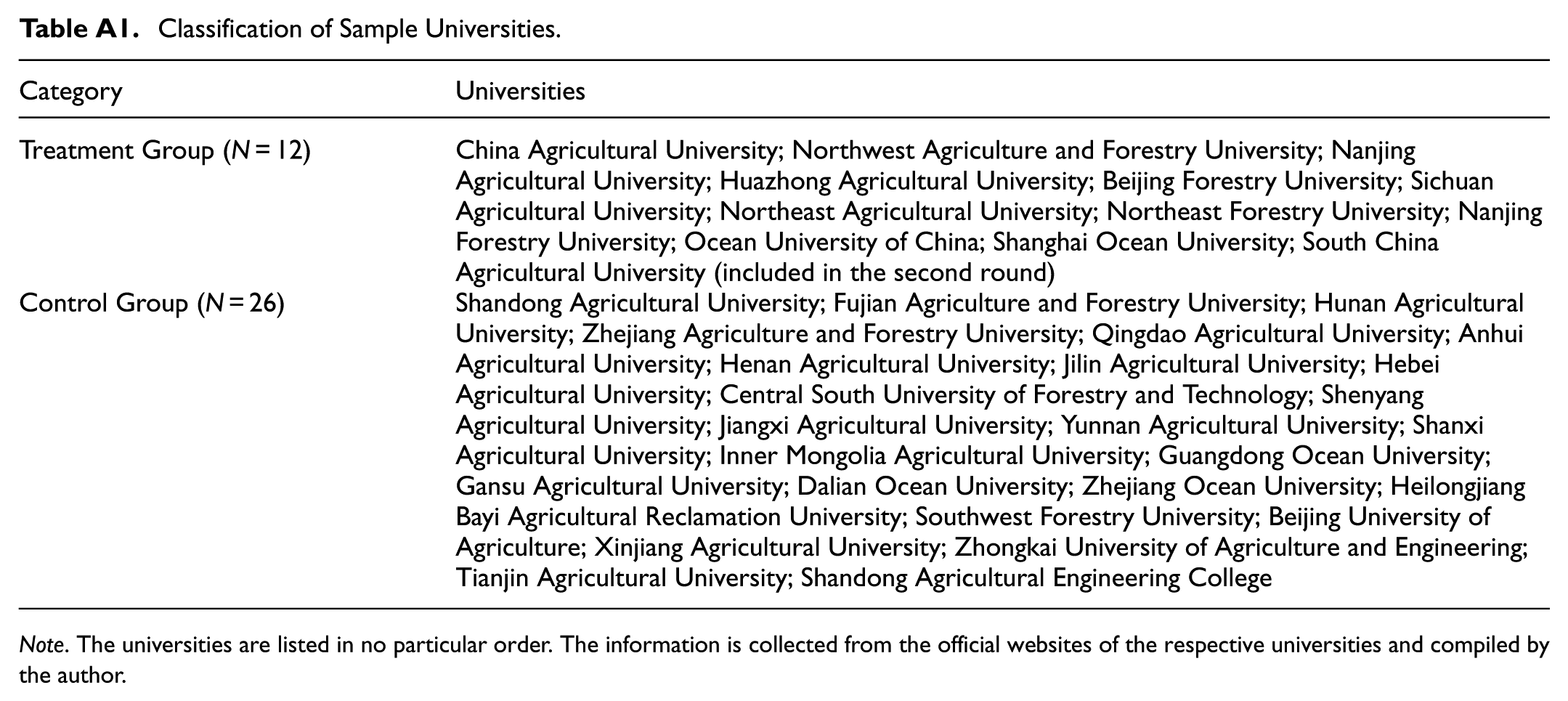
As the policy’s benefits unfold, the real-world circumstances and developmental logic of local industry-oriented universities warrant close attention. Compared with comprehensive and research-intensive universities such as the “985” and “211” universities, local industry-oriented universities—particularly those specializing in agriculture and forestry—tend to assume more prominent roles in industrial support and regional service. As typical sector-oriented universities, their disciplinary structures and research orientations are highly aligned with major national strategic tasks such as food security, ecological civilization construction, and rural revitalization, so that their research agendas are tightly coupled with national strategic demands and often generate considerable social benefits. However, owing to long-standing unequal resource allocation, biases in disciplinary evaluation systems, and differences in policy support mechanisms, agriculture and forestry universities remain in a structural dilemma within the “Double First-Class” framework, characterized by high mission alignment but limited resources. Although some of these universities have been included in the “Double First-Class” list (see Table A1), as the initiative enters its second cycle, it remains an open question whether such industry-oriented universities can truly achieve a substantive leap in research performance, or instead risk a policy misalignment that “emphasizes resources while neglecting outputs,”-an issue that calls for in-depth investigation.
At present, most research on the “Double First-Class” initiative focuses on its construction connotation (Han et al., 2023; Jing, 2016), the evaluation of discipline-building effectiveness (H. W. Li & Jiang, 2021), development goals and paths (L. Liu & Liu, 2021), and the dilemmas and breakthroughs in its implementation (Bingchao, 2020). Scholars employing the DID model have found that the “Double First-Class” policy significantly improves universities’ efficiency in scientific research innovation and technological output (X. Liu et al., 2024; M. Yang et al., 2023; You, 2019). The integration of industry, academia, and research within selected universities has also effectively promoted new quality productive forces (H. W. Li et al., 2023; Xiaoxiao, 2025). The higher overall research efficiency of these universities is largely attributed to the national priority policy, which enables them to attract leading technologies and resources (Chen et al., 2024; Shi et al., 2022). World-class universities typically combine high-performing disciplinary clusters with highly concentrated resource investment. The development of first-class universities is fundamentally grounded in first-class disciplines, and together these elements jointly underpin research output and international reputation (Salmi, 2009).
At the disciplinary level, the development of “Double-High” disciplines within the “Double First-Class” initiative demonstrates a broad distribution of plateau disciplines alongside deep specialization in peak disciplines (Y. Li, 2023). The first round of implementation substantially enhanced the competitiveness of priority disciplines by improving research productivity, academic influence, and STEM output quality (Jiping, 2019; Y. Yang et al., 2023). Nevertheless, several deficiencies persist: international publications often fail to reflect distinctive disciplinary characteristics, humanities and social sciences show excessive dependence on policy incentives, and overall research efficiency remains inadequate (Wang & Geng, 2022). Moreover, disproportionate resource allocation toward highly ranked disciplines has contributed to structural imbalance and has weakened the continuity of characteristic discipline development. In response, scholars emphasize maintaining an academic-driven logic, reinforcing endogenous motivation, and enhancing disciplinary competitiveness (Zhang & Li, 2021). This includes using discipline construction as a strategic foundation, applying performance evaluation as a policy lever, and advancing the principle of supporting excellence, essentiality, specialization, and emerging fields, while fostering interdisciplinary collaboration (Hailiang, 2017; Ying, 2020). In the new phase of the initiative, agricultural and forestry universities are encouraged to pursue five strategic pathways: cross-disciplinary integration, differentiated development, talent-driven advancement, endogenous strength building, and institutional renewal (Shen Xi & Tong, 2022).
Overall, existing studies on the performance evaluation of the “Double First-Class” initiative and the marginal effects of research output provide valuable theoretical foundations and empirical insights for this study. However, two key gaps remain. First, most of the literature focuses on theoretical discussions and the analysis of development pathways, with limited systematic quantitative assessment of the current outcomes of the “Double First-Class” initiative. Second, prior research has predominantly concentrated on comprehensive or elite universities, with insufficient attention to traditional, discipline-specific universities whose academic structures are strongly shaped by industry characteristics. As one of the pivotal forces promoting agricultural and rural modernization, agricultural and forestry universities play a crucial role: their research performance not only serves as an important dimension for evaluating policy effectiveness but also directly affects their capacity to support major national strategies.
Against this backdrop, this study selects 38 major agricultural and forestry universities in China from 2018 to 2023 and employs a difference-in-differences (DID) approach to systematically evaluate the impact of the second round of the “Double First-Class” initiative on their research performance. The analysis addresses the following questions: Does the “Double First-Class” initiative significantly enhance the research performance of agricultural and forestry universities? How does the policy influence the quantity, quality, and academic impact of their research output? Are there notable differences in policy effects across universities of different types or regions? This study aims to fill the gap in the literature regarding the evaluation of the “Double First-Class” policy with respect to regional, industry-oriented universities. The findings not only contribute to assessing the implementation effectiveness of the policy but also provide theoretical and empirical support for promoting institutional diversity and optimizing resource allocation mechanisms within the “Double First-Class” framework.
Analysis of Influencing Mechanisms
Impact Mechanisms of the “Double First-Class,” Policy on Research Performance in Industry-Specific Universities
The “Double First-Class” Initiative primarily transforms the research development logic of industry-oriented universities through national-level resource allocation and policy incentives. According to resource dependence theory, the survival and development of universities rely on external resources, and their ability to acquire and integrate critical resources determines their competitive advantage. For industry-oriented universities, research funding, talent support, research infrastructure, and academic reputation constitute the core resources affecting research performance. The implementation of the “Double First-Class” policy essentially represents a process in which the state, by strengthening resource allocation and incentive mechanisms, reshapes research behaviors and the performance structure of these universities. This study takes agricultural and forestry universities—typical examples of industry-oriented universities in China—as a case to analyze in depth the mechanisms through which the policy influences their research performance, as follows.
The policy’s effect on the quantity of research outputs is primarily reflected at the level of resource provision. The “Double First-Class” Initiative has provided agricultural and forestry universities with increased financial investment, access to research projects, and opportunities for platform development, leading to significant improvements in research funding, equipment, and talent recruitment. This expansion of resources lowers the opportunity costs of research activities, motivating faculty and research teams to intensify their efforts, thereby directly increasing the quantity of research outputs. Moreover, the concentration of resources and the associated competitive mechanisms drive improvements in research quality. As resource competition intensifies, these universities no longer focus solely on increasing output quantity but place greater emphasis on producing high-level research outcomes to secure advantages in evaluation systems and disciplinary rankings. The aggregation of high-quality resources, such as top-tier researchers and major projects, enhances the originality and complexity of research activities, thereby improving the academic quality and innovative depth of research outputs. Furthermore, improvements in quality amplify research impact. High-quality research outputs are more likely to be published in leading international journals, attracting higher academic citations and broader societal attention. Simultaneously, the “Double First-Class” policy encourages the application, commercialization, and international dissemination of research, promoting deeper collaboration between universities, enterprises, government agencies, and international academic networks. This re-embedding of external resources expands the reach and societal influence of research outputs, creating a virtuous cycle from quantitative expansion to qualitative enhancement and ultimately to impact diffusion, thereby significantly elevating the overall research performance of agricultural and forestry universities.
Meanwhile, improvements in research performance at sector-specific universities are also conditioned by structural factors and external environments. First, the level of regional economic development affects the supply of research resources and the broader innovation ecosystem: universities located in regions with higher GDP are more likely to secure external research collaboration, industrial support, and policy attention, thereby exerting a potential positive influence on research performance. Second, research funding directly enhances the availability of research resources—including improved laboratory conditions, expansion of research teams, and acquisition of data-related infrastructure—and can therefore independently raise both the quantity and quality of research output. Finally, the stock of high-level research talent reflects an institution’s foundational academic capacity and innovation potential; such individuals typically demonstrate stronger capabilities in research coordination and academic leadership, and are thus more likely to generate breakthrough findings and research outputs with substantial societal impact. Based on the preceding discussion, Research
Heterogeneity Effects of Organizational Attributes and Regional Contexts
Agricultural and Forestry Universities—with their strong emphasis on disciplines such as agriculture, forestry, and ecology, which align closely with national strategic priorities—feature distinct sectoral and academic profiles. Under the “Double First-Class” initiative, provincially co-administered universities in this category have received targeted policy support. Joint investments from central and local governments have significantly strengthened their institutional capacity, research infrastructure, and contributions to regional socioeconomic development (Eberle et al., 2020). From a resource allocation perspective, provincially co-administered universities generally benefit from enhanced financial support, higher-level talent recruitment, and more academic exchange opportunities. These advantages help optimize the research environment and foster breakthroughs in first-class disciplines. Consequently, high-quality research outputs have increased—reflected in the growing number and influence of ESI-indexed publications—demonstrating the policy’s role in boosting international competitiveness. Compared with non-provincially co-administered counterparts, these universities exhibit stronger resource acquisition and organizational coordination capabilities, enabling more efficient translation of policy inputs into research outcomes. Moreover, provincially co-administered universities maintain close ties with local governments and industries, reinforcing their regional service function and amplifying the societal impact of their research.
However, regional disparities in economic development, educational resources, and research ecosystems lead to uneven policy effects across China. Universities in southern regions often benefit from stronger local fiscal capacity, greater research investment, and more mature innovation ecosystems, aligning better with the policy’s objectives and thus achieving higher performance in metrics such as ESI paper counts and CNCI. In contrast, many northern universities, supported by robust research traditions and institutional foundations, still show strong potential for high-quality output. Such regional variation not only reflects spatial differences in policy impact but also underscores both the challenges and opportunities for the “Double First-Class” initiative in promoting balanced development in higher education. Based on the above analysis, this study proposes the following
Research Design
Measurement Model Construction
In 2020, the first cycle of the “Double First-Class” initiative was completed, and the second-round construction plan subsequently entered its implementation stage. This study treats the “Double First-Class” construction program as a quasi-natural experiment and develops a difference-in-differences (DID) model to empirically examine the impact of the second-round “Double First-Class” policy on the research performance of China’s agricultural and forestry universities, thereby evaluating the effectiveness of the policy.
The model specification is based on the following considerations: First, the DID approach is adopted because the selection of agricultural and forestry universities into the list of “First-Class Disciplines” is exogenous, which helps avoid endogeneity concerns arising from reverse causality. This also aligns with the mainstream policy evaluation framework widely employed in domestic and international research (Ma & Luo, 2022). Second, in view of the potential lagged effects of policy implementation, the year 2020 is designated as the “policy intervention year.” (The choice of 2020 as the policy implementation point for the “Double First-Class” initiative is based on the following considerations. In December 2020, the Ministry of Education and two other ministries jointly issued the Measures for Evaluating the Effectiveness of the Double First-Class Initiative (Trial), marking the substantial completion of the first construction cycle and the full initiation of the second round of the initiative. Given that policy effects typically exhibit phasing and time lag, this study designates 2020 as the intervention point. Since universities selected in the first round continue into the second construction cycle, the policy setting is consistent with the conditions required for a quasi-natural experimental framework.)
Since unobserved heterogeneous factors exist across universities that generate institution-specific effects influencing their development under the “Double First-Class” initiative, and given that universities may also be affected by year-specific external shocks that accumulate over time, it is necessary to account for both individual and temporal effects in the estimation. A joint significance test shows Prob > F = 0.0000, indicating rejection of the null hypothesis for the pooled OLS model and confirming the presence of individual effects. Subsequently, the Hausman test yields a p-value of .000, leading to rejection of the null hypothesis of random effects and suggesting that the fixed-effects model is more appropriate. Finally, a Wald test indicates that the time effects are significant at the 1% level, supporting the choice of the individual fixed-effects specification. The final empirical model is therefore constructed as follows:

In Equation 1,
Variable Selection and Description
The definitions, means, standard deviations, and other descriptive statistics for all variables are presented in Table 1.
Descriptive Statistics of Each Variable (N = 228).

Note. QTY, CFRE, TOP, AGDP, NSFC, and NSSF are log-transformed.
Explained Variables
In this regard, according to the common characteristics of the research objects and the main indicators to judge the overall ability of scientific research performance and output of universities from the current international comparative perspective, this study selects the number of ESI papers published, the number of citations, the number of TOP papers and the CNCI index as proxy variables to measure the level of scientific research performance in terms of the quantity, quality and influence of scientific research output. To reduce the impact of heteroscedasticity, the number of ESI papers published, the number of citations and the number of TOP papers are treated logarithmically.
Core Explanatory Variable
The core explanatory variable is the interaction between institutional inclusion in the “Double First-Class” initiative and the policy implementation period. Specifically,
Control Variable
The selection of control variables is based on the following considerations: Generally speaking, the economic strength and scientific research investment of the region where the institution is located determine the quantity of scientific research output of the institution to some extent, while the top talents have a heavy weight in the scientific research performance output, which mainly determines the quality of scientific research and the depth and breadth of the influence of scientific research results. In addition, to better study the impact of “Double First-Class” construction on the scientific research performance of agricultural and forestry universities in China, the missing variables should be reduced to reduce the bias of the estimated results. With reference to the existing research (S. Liu et al., 2023), the regional GDP of the university and the national scientific research fund input were selected and logarithmic, as well as the main scientific research manpower input were included in the model as control variables for estimation and analysis.
Data Sources
Based on research requirements and data availability, universities with underrepresented samples or substantial missing data were excluded from the analysis. For the remaining observations, missing values were imputed using variable-wise mean substitution. Ultimately, 38 representative agricultural and forestry universities from 2018 to 2023 in China were selected as research samples. Among them, 12 “Double First-Class” universities were identified as the experimental group, and the other universities were selected as the control group. Data on the number of ESI papers published, citation counts, TOP paper counts, and the CNCI index were obtained from the Web of Science, ESI, and Incites databases. GDP data were sourced from the China Statistical Yearbook. Data on the National Natural Science Foundation of China (NSFC) were obtained from its official website. Data on the National Social Science Fund of China (NSSF) were sourced from the official website of the National Office for Philosophy and Social Sciences Planning (the office has recently disclosed the number of funded projects under the NSSF in recent years; specific figures were calculated by the author based on officially announced funding amounts). Data on the scale of key R&D personnel were obtained from the official websites of the Chinese Academy of Engineering and the Chinese Academy of Sciences.
Analysis of Empirical Results
Benchmark Regression Results
This study used Stata 17 software to empirically analyze the impact of the “Double First-Class” construction policy on the research performance of China’s agricultural and forestry universities based on the DID model. The results are shown in Table 2.
Results of Baseline Regression.

Note. Values in brackets are robust standard errors.
, ** and *** indicate significant at 10%, 5% and 1% levels respectively. The following table is the same.
In general, the implementation of “Double First-Class” construction has a significant positive impact on the research performance of agricultural and forestry universities in China. In the second construction cycle, the quantity, quality and influence of scientific research output have been significantly improved, indicating that the implementation of “Double First-Class” policy has a positive effect on the improvement of scientific research performance of agricultural and forestry universities in China, and
Specifically, in terms of the impact of scientific research achievements, the CNCI index is significantly positive at the 1% level, indicating that the implementation of the “Double First-Class” policy has a positive promoting effect on improving the citation influence of discipline standardization. The CNCI index of agricultural and forestry universities entering the “Double First-Class” construction has increased by 9.5% compared with that of non-entering universities. In terms of the number of scientific research output, the number of ESI papers published is significantly positive at the level of 10%, indicating that the implementation of “Double First-Class” policy has increased the number of ESI papers published by agricultural and forestry universities by 49.9%; In terms of the quality of scientific research output, the number of citations is significantly positive at the 1% level, and the coefficient is 0.746, indicating that the percentage of citations of papers of universities in the “Double First-Class” construction has increased by 74.6%; However, for TOP paper output, although the coefficient is positive, it is not statistically significant, which suggests that the “Double First-Class” initiative has not yet exerted a significant impact on promoting TOP paper publications in agricultural and forestry universities. This may reflect persistent gaps in theoretical accumulation, methodological innovation, and international academic engagement in these fields, resulting in higher thresholds and longer cycles for producing breakthrough research. Therefore, establishing a sustained funding support mechanism for “Double First-Class” development and strengthening international and interdisciplinary research collaboration networks would help improve the efficiency of generating high-quality research outcomes, thereby more effectively fostering the production of TOP papers.
Regarding the control variables, the GDP of the province where each institution is located is significantly positive at the 1% level, indicating that higher regional economic development fosters improvements in the research performance of local agricultural and forestry universities. Research funding is intrinsically linked to both the short-term output and long-term benefits of scientific research, primarily including support from the NSFC and NSSF. The NSFC funding received by these universities is significantly positive at the 1% level, suggesting that sufficient financial support actively contributes to the renewal of research equipment, the improvement of scientific infrastructure, and the motivation of R&D personnel. NSSF support shows the most significantly positive effect in promoting TOP paper publication, while its influence on overall research output and quantity is relatively limited. In addition, the scale of key research personnel is positively significant at the 10% level in facilitating TOP paper publication, indicating that a greater number of high-caliber researchers contributes to TOP paper output, thereby enhancing institutional research performance.
Robustness Tests
To ensure the robustness of the research conclusions, we conduct a parallel trend hypothesis test, Propensity Score Matching (PSM) method will be used to verify the homogeneity hypothesis and randomness hypothesis premise of DID model, and winsorization test will be used to re-estimate the baseline regression model. The results are shown in Table 3.
Robustness Test Results.

Parallel Hypothesis Test
To determine whether the parallel trend assumption is satisfied, it is necessary to test whether the development of agricultural and forestry universities has the same change trend when the “Double First-Class” policy is not implemented. This study draws on the research method of Beck et al. (2010) and conducts the parallel trend test using an event study approach. On the one hand, given the heterogeneity in the intensity of the policy’s impact on university development, the implementation effects of the “Double First-Class” policy are subject to both a buffer period and a temporal lag. On the other hand, when the policy selected in this study is 2020, universities selected in the first round—as well as former Project 985 and 211 universities—may have exhibited higher levels of “Double First-Class” development compared to ordinary undergraduate or non-“Double First-Class” universities. However, because they pass the DID parallel trend test, it will not affect the estimated results. The following model is set up:
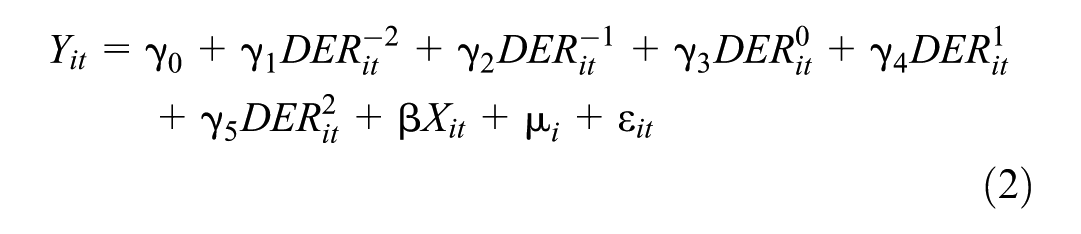
In Equation 2, Yit represents a series of explained variables reflecting the level of scientific research performance and output of agricultural and forestry universities;
Figures 1 to 4 illustrate the evolution of the estimated coefficients (

Number of ESI papers published.

Number of citations.
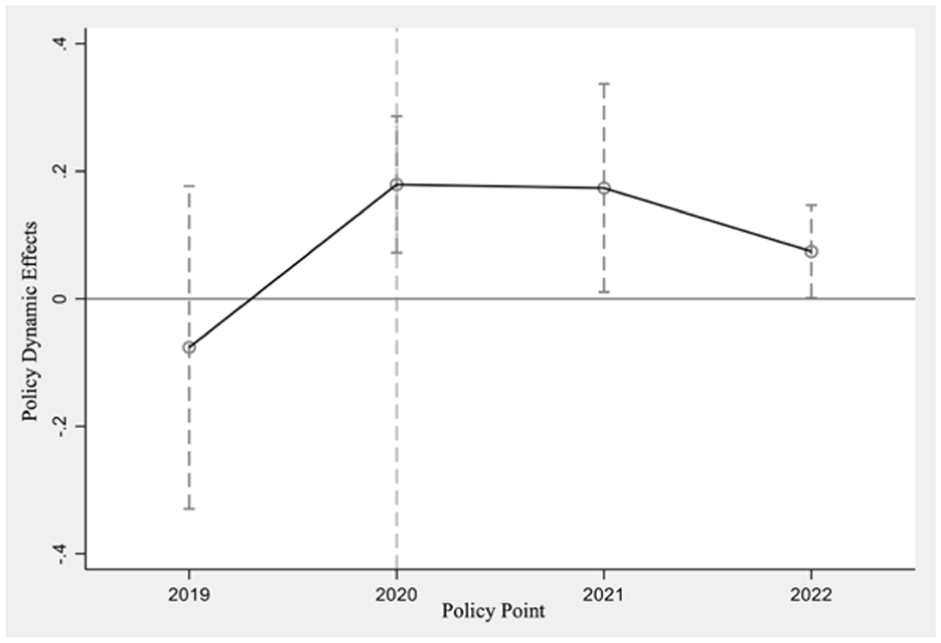
TOP number of papers.

CNCI index.
PSM-DID Test
China’s “Double First-Class” agricultural and forestry universities are not randomly assigned, and potential systematic differences may threaten the reliability of the baseline DID estimates. To mitigate concerns regarding sample-selection bias, this study uses Treat as the dependent variable and includes regional agricultural GDP (AGDP), research funding (including NSFC and NSSF support), and the scale of key R&D personnel (HLT) as covariates. Propensity scores are calculated using a Logit model, and a 1:1 nearest-neighbor propensity score matching (PSM) procedure is implemented to conduct robustness checks. The results (see Figures B1–B4) show that, after PSM, all covariates exhibit no significant differences between the treated and control universities, indicating a satisfactory matching quality. Based on the matched sample, the baseline DID model is re-estimated. As reported in Table 3, the coefficients of the interaction term
Winsorization Test
To further prevent extreme values from affecting the robustness of the baseline regression results, this study conducts a robustness check by winsorizing the dependent variables at the 1% and 5% levels, respectively, and re-estimating Equation 1. The results are presented in Table 3. After winsorization, the number of ESI publications, citation counts, and the CNCI index all remain statistically significant at the 1% level, and the signs of the coefficients are consistent with those of the baseline regression, thereby providing additional evidence for the robustness of the baseline findings.
Heterogeneity Analysis
To further examine the specific mechanisms through which the policy operates and to reinforce the baseline regression results demonstrating the positive impact of the “Double First-Class” initiative on the research performance of China’s agricultural and forestry universities, this study conducts a heterogeneity analysis based on institutional categories and regional characteristics, as detailed below.
Heterogeneity Analysis of Classified Universities
Based on whether universities are jointly administered by provincial and ministerial authorities, we conduct subgroup regressions to examine the differential impact of the “Double First-Class” policy.
The results in Table 4 show that the policy significantly increases both ESI paper output and the CNCI index for both categories, with a more pronounced effect on the research influence of provincially–ministerially co-administered universities, confirming
Heterogeneity Analysis Results of Classified Universities.

Regional Heterogeneity Analysis
Based on China’s administrative division between southern and northern regions, this study conducts subsample regressions to compare the heterogeneous effects of the “Double First-Class” initiative on research performance across these two groups of agricultural and forestry universities.
The results in Table 5 show that the policy positively promotes citation counts for both southern and northern universities. It also has a significant positive impact on the CNCI index for both regions, although southern universities exhibit a more pronounced policy advantage. Meanwhile, the initiative significantly increases ESI paper output for southern universities at the 10% level, whereas its effect on northern universities—while positive—does not reach statistical significance. This may be due to southern universities’ locational advantage, enabling earlier alignment with the initiative’s objectives and more effective matching of research resources, thereby enhancing research performance. By contrast, the policy has a significantly positive effect on TOP paper output for northern universities, as high-caliber agricultural and forestry universities are more concentrated in northern China, giving them a potential advantage in producing high-level research. Southern universities, however, still need to further leverage the “policy dividend” of the initiative to strengthen research capacity and enhance the quality of scholarly output.
Results of Regional Heterogeneity Analysis.

Research Conclusions and Discussion
The findings of this study clearly demonstrate that the “Double First-Class” initiative has generated a significant “policy dividend” for the research performance of local specialized universities, as exemplified by those in agriculture and forestry. The details are as follows:
The “Double first-class” Initiative has not only effectively enhanced university research performance but has also revealed the critical pathway through which national strategic priorities guide resource allocation and translate into research outputs via policy signaling. The “Double First-Class” policy, as a powerful policy signal, significantly strengthens a university’s advantage in attracting talent and securing competitive funding. The significance of control variables such as provincial GDP and research funding further indicates that the policy effect relies on an efficient transmission mechanism combining macro-level policy signals with micro-level resource mobilization. This highlights the importance of synergy between top-level design and resource support in stimulating universities’ endogenous motivation.
Furthermore, while creating broad-based incentives, the “Double first-class” Initiative has also reshaped the competitive landscape among universities. Universities under joint provincial-ministerial support and those located in southern China have benefited more markedly, reflecting a “Matthew effect” whereby resources tend to concentrate in universities with stronger initial conditions and geographical advantages, thereby facilitating the rapid formation of research excellence. However, the policy has also exerted positive influences on certain dimensions—such as the citation counts of non-jointly-supported universities and the number of top-tier publications from northern universities—indicating its potential to address structural weaknesses in specific areas. Such differentiated effects suggest that the policy is not merely a single-dimensional incentive tool but a complex mechanism of selection and shaping, which requires more nuanced design in balancing equity and efficiency in the future.
The conclusions drawn from the study of agriculture and forestry universities offer valuable insights for a wide range of local specialized universities. The “Double First-Class” Initiative presents a dual opportunity for such universities: first, to consolidate their strengths in traditional disciplines and enhance their influence within specific sectors; and second, to expand into interdisciplinary areas and promote the modernization of research paradigms, thereby increasing the originality and impact of their outputs. Nevertheless, this study has certain limitations. First, the indicator system primarily relies on bibliometric data and does not sufficiently capture applied performance dimensions such as technology transfer and industry engagement, thus underrepresenting the practice-oriented nature of agriculture and forestry universities. Second, due to policy overlap and a limited observation period, the long-term effects of the policy remain to be verified. Future research could proceed in two directions: first, by constructing a comprehensive performance evaluation framework that incorporates industry-specific indicators such as patents and knowledge transfer outcomes; and second, by conducting longitudinal tracking and cross-sector comparisons to examine the sustained impact and generalizability of the policy, thereby strengthening the economic rationale for policy evaluation.
Footnotes
Appendix A
Classification of Sample Universities.
| Category | Universities |
|---|---|
| Treatment Group (N = 12) | China Agricultural University; Northwest Agriculture and Forestry University; Nanjing Agricultural University; Huazhong Agricultural University; Beijing Forestry University; Sichuan Agricultural University; Northeast Agricultural University; Northeast Forestry University; Nanjing Forestry University; Ocean University of China; Shanghai Ocean University; South China Agricultural University (included in the second round) |
| Control Group (N = 26) | Shandong Agricultural University; Fujian Agriculture and Forestry University; Hunan Agricultural University; Zhejiang Agriculture and Forestry University; Qingdao Agricultural University; Anhui Agricultural University; Henan Agricultural University; Jilin Agricultural University; Hebei Agricultural University; Central South University of Forestry and Technology; Shenyang Agricultural University; Jiangxi Agricultural University; Yunnan Agricultural University; Shanxi Agricultural University; Inner Mongolia Agricultural University; Guangdong Ocean University; Gansu Agricultural University; Dalian Ocean University; Zhejiang Ocean University; Heilongjiang Bayi Agricultural Reclamation University; Southwest Forestry University; Beijing University of Agriculture; Xinjiang Agricultural University; Zhongkai University of Agriculture and Engineering; Tianjin Agricultural University; Shandong Agricultural Engineering College |
Note. The universities are listed in no particular order. The information is collected from the official websites of the respective universities and compiled by the author.
Appendix B

Ethical Considerations
This article does not contain any studies with human or animal participants.
Consent for Publication
This manuscript has not been published or presented elsewhere in part or in entirety and is not under consideration by another journal. All the authors have approved the manuscript and agree with submission to your journal.
Author Contributions
Conceptualization: Guanghui Qian, Chunhua Du; Methodology: Guanghui Qian, Jie He; Formal analysis and investigation: Chunhua Du; Writing—original draft preparation: Guanghui Qian, Wenjie Ji; Writing—review and editing: Guanghui Qian, Wenjie Ji, Hua Qin; Supervision: Hua Qin.
Funding
The authors received no financial support for the research, authorship, and/or publication of this article.
Declaration of Conflicting Interests
The authors declared no potential conflicts of interest with respect to the research, authorship, and/or publication of this article.
Data Availability Statement
The data analyses during the current study are available from the corresponding author upon reasonable request.*