



Abstract
Within the context of the Healthy China initiative, this study aims to explore the impact of participation in sports communities on the well-being of older adults and to develop a conceptual model to elucidate this relationship. This study employed a literature review and questionnaire survey to collect data. A combination of random and convenience sampling was used to recruit 631 older adults. Data were analyzed using SPSS and AMOS software. The structural equation model exhibits a high degree of fit; The impact of older adults’ experience of sports benefits in sports communities on their well-being is statistically significant (β = .53, p < .001), Similarly, the influence of sports community culture (β = .43, p < .001), community social networks (β = .26, p < .001), and community belongingness (β = .19, p < .01) on well-being is also statistically significant. The experience of exercise benefits, community culture, community social networks, and community belongingness in sports communities can enhance the physical and mental health and overall well-being of older adults. These factors also help them maintain a positive mindset. Therefore, it is recommended that older adults actively participate in sports and community activities.
Plain Language Summary
The well-being of older adults. The experience of the benefits of sports in sports communities has the most significant impact on well-being.
Keywords
Introduction
Background
The paramount importance of public well-being is a core tenet of the Thought on Socialism with Chinese Characteristics for a New Era, providing both theoretical guidance and practical direction for fulfilling the people’s aspirations for a better life. This is further emphasized in the “Healthy China 2030 Plan Outline” issued by the State Council, which emphasizes public well-being. In 2021, China began actively implementing a national strategy to address population aging. Strategy involves integrating the concepts of active aging and healthy aging into the overall economic and social development process. The value orientation of a positive view of aging and healthy aging is consistent with the people-centered essence of the Chinese path to modernization, aiming to meet the needs of older adults for a better life and to promote their free and comprehensive development throughout their entire lifespan. Literature confirms that health issues, psychological problems, and dissatisfaction with life are primary factors affecting the well-being of older adults (C. Chen et al., 2022; Shang & Tian, 2024). Participating in sports activities is one effective way to enhance their well-being. Tailoring sports community activities to older adults’ social relationships and characteristics is the most effective approach to improving their well-being. Therefore, the study of the relationship between sports communities and the well-being of older adults is a timely and relevant topic.
Scholars, both domestically and internationally, recognize that older adults’ sports communities are not only groups promoting physical health but also “fields” that enhance their members’ quality of life (Tsuji et al., 2022; Y. Wei, 2014). These communities serve as micro-organizations where older adults engage in sports activities, forming complex social networks. They are more than mere hobby gatherings, and they also represent a new lifestyle that meets the dynamic living needs of older adults. Active social interactions and exercise within sports communities lead to a more fulfilling life and increased well-being for older adults.
Current research mainly focuses on the impact of exercise experience, frequency, and intensity on well-being. It also examines the influence of factors such as exercise motivation, sports programs, leisure satisfaction, stress, self-esteem, family relationships, interpersonal relationships, social capital, social support, and economic status on well-being (Adams et al., 2011; Huang et al., 2022; Yu et al., 2025; Zheng, 2019). The characteristics of the existing literature are as follows: first, while most studies use random sampling and experiments, research specifically focused on sports communities is limited. Additionally, existing studies tend to be “fragmented,” highlighting the need for more in-depth, thematic research. Secondly, given the temporal and dynamic nature of both sports communities and the well-being of older adults, continuous research is imperative. Thirdly, as China enters a new era of socialism with Chinese characteristics, the national health strategy deepens, and people strive for a better life, grassroots sports communities for older adults are playing an increasingly important role. The daily activities of these communities are closely linked to the evolving social and cultural environment, necessitating new research to address these changes. Therefore, this study aims to investigate the impact of participation in sports communities on the well-being of older adults. The objective is to explore the relational pathways through which the behavior, culture, and social networks of sports communities influence seniors’ well-being, and to develop a model that provides a theoretical foundation for active aging.
Research Hypothesis
Analysis of the Impact of Exercise Benefits Experience in Sport Communities on Older Adults’ Well-Being
It is well known that participation in physical exercise can improve older adults’ physical fitness, reduce the risk of chronic diseases, and have a positive impact on both their physical and mental health. Therefore, encouraging older adults to engage in physical exercise is significant for improving their physical and mental health, reducing disease risks, and enhancing subjective well-being. Some scholars suggest that older adults who participate in team sports experience greater health benefits compared to those who exercise alone. However, the health benefits of team sports vary depending on the type of activity. For example, older adults who participated in group activities such as hiking, walking, tennis, golf, or weightlifting showed greater improvements in preventing multidimensional physical frailty (Tsuji et al., 2022). Other scholars argued that different types of exercise influenced well-being in distinct ways. Through a comprehensive analysis of various exercise types, scholars concluded that engaging in fashionable leisure activities can promote both physical and mental health in older adults, thus enhancing their subjective well-being (Y. Y. Chen et al., 2023).
Y. Wei (2014) found that the greater the engagement of older adults in group leisure activities, the more positively they evaluated those activities’ benefits. This perception of benefit, in turn, is linked to greater well-being. To this end, older adults are encouraged to consistently participate in group leisure activities to gain social benefits, enhance their mental well-being, and relax, ultimately boosting their overall life satisfaction. Some scholars have found that music-accompanied dance helps older adults experience positive emotions, which contributes to both mental and physical well-being. Additionally, such activities enhanced their sleep quality and improved their mood state (Song & Huang, 2014). Moreover, exercise intensity influences subjective well-being. When the intensity of exercise is appropriate, it promotes relaxation and a sense of pleasure. In contrast, excessive intensity can lead to discomfort, including muscle soreness and fatigue. Therefore, engaging in moderate exercise was beneficial for enhancing happiness and overall well-being (Qiao & Fan, 2020).
The theory of active aging comprises the pillars of “health,”“participation,” and “security,” emphasizing the self-reliance and self-actualization of older adults. It encourages them to contribute meaningfully to society and remain active in their later years (Man & Jiang, 2025). In the field of sports sociology, active aging is understood as an individual proactivity, in which personal physical and mental health, social activities, aging perspectives, and certain demographic factors can be improved to promote active aging. For instance, fostering older adults’ interest in physical activity, raising their fitness awareness, enhancing their physical health, delaying the aging process, preventing and treating age-related diseases, improving their educational level, and enhancing their overall quality of life. All these contribute to advancing active aging. Factors such as interpersonal interaction, role-playing, and resource sharing in social participation among older adults can give them a sense of belonging, social identity, and achievement (Stenner et al., 2020; Zhou et al., 2023; Zhu et al., 2024). Some scholars have applied the Theory of Planned Behavior to examine the impact of Tai Chi on well-being. They found that participants’ perceived behavioral control, attitudes, and subjective norms were significantly positively correlated with participation in Tai Chi, indicating a positive and significant impact on the mental health of older adults (J. Li et al., 2019).
Based on the above analysis, research
Analysis of the Impact of Sports Community Culture on Older Adults’ Well-Being
Participating in community sports activities can promote both physical and mental health among older adults, helping them maintain a positive outlook on life. By engaging in community activities, older adults can experience a sense of life fulfillment, which in turn enhances their overall satisfaction. Active participation in sports and community activities helps older adults feel needed and recognized by society. This sense of recognition boosted their self-esteem and self-confidence, thereby increasing their overall well-being (Alanazi, 2024). Sports community activities offered older adults a rich and diverse lifestyle in their later years, enabling them to maintain a positive attitude toward life and enjoy its pleasures. Jiang (2023) posited that gate-ball development for older adults should focus on three key dimensions: leisure involvement appeal, centrality, and self-expression. It is essential to enhance the fun and innovation of gate-ball to meet the diverse experiential needs of older adults. Moreover, social gatherings should be organized in ways that are close to daily life, allowing interaction with family and friends and providing a platform for older adults to express themselves and connect with others. Compared to their sedentary peers, older adults who regularly participate in square dancing report significantly higher levels of happiness. This increased happiness is attributed to their enhanced ability to regulate emotions while dancing. They can relax and experience a high level of joy, even amid occasional health concerns. Additionally, they can enhance their positive sense of honor and mutual intimacy when dancing, further enhancing their subjective well-being (Zhao et al., 2022). Some scholars argue that older adults’ air volleyball groups act as hubs for individuals with shared interests. Air volleyball activities allowed more older adults to foster new social connections and enjoy the fun of sports. Moreover, this activity also promotes spiritual connections, leading to personal growth and self-improvement. These factors positively affected the happiness and quality of life of older adults, offering valuable insights into building harmonious communities and promoting social integration (T. F. Liu & Wu, 2024).
Community culture can be interpreted through the lenses of self-determination theory, Serious leisure, and group dynamics. Self-determination theory mainly examines the extent to which behavior is self-determined or voluntary, emphasizing both the motivational role of self-determination and the ways external environments shape it. Self-determination theory underscores that meeting basic psychological needs (autonomy, competence, and relatedness) is crucial for optimal well-being (X. W. Wei, 2025). Some scholars believe that leisure activities resonate with retirees’ intrinsic motivation and meet their psychological needs, thereby significantly improving their quality of life (Alanazi, 2024). Serious leisure refers to leisure pursuits marked by depth and breadth, characterized by personal growth and a striving for self-actualization (J. Wang & Tian, 2024). Drawing on survey data, Wei found that cycling groups characterized by specialized leisure develop clear community norms, and participants exhibit characteristics of deep learning, dedication, and willingness to support the group’s development (Ye, 2024). In a study of older adults’ Tai Chi groups, participants showed parallel progress in skill development and in accumulating experience. Participants enhanced their self-esteem, self-confidence, and self-identity, established connections with fellow participants, and promoted interpersonal interaction. This helped alleviate negative emotions such as loneliness, anxiety, and depression arising from the pandemic, while also allowing them to enjoy the health benefits and well-being brought by the activity (Qiu et al., 2023). Over time, many members expressed a desire to improve their skills, expand their knowledge, and share their experiences with newcomers. This fostered group commitment, strengthened participants’ group identity, and contributed to improved well-being (Stuart, 2022). Group dynamics theory, a key framework in social psychology, examines the interactions among group members and their influence on overall behavior. It emphasizes the dynamic system formed by the interplay between individuals and their living environment (X. Q. Xu et al., 2024). For example, the core factors that encourage older adults to participate in sports teams continuously include adhering to group norms, establishing clear role positions, maintaining team cohesion, and gaining a sense of social support, personal development, and social connection (Gayman et al., 2022).
Following the above analysis, research
Analysis of the Impact of Sports Community Belongingness on Older Adults’ Well-Being
Most studies on the well-being and life satisfaction of older adults in Europe, America, and Asia identify common predictors, such as health, socioeconomic status, and social support. However, specific indicators may vary across studies. Some studies have pinpointed economic difficulties, health issues, and loneliness as the primary determinants of older adults’ life satisfaction (Cai & Wang, 2024). In some research, income or financial stress was considered the most significant factor contributing to depression among older adults (Inoue et al., 2020). However, other studies have found that the scale of personal networks and perceived social support are more critical than income in determining well-being. Perceived social support typically reflected an individual’s sense of being accepted, loved, and valued by other members of their social network (Gray et al., 2008). Interactions among older adult residents, whether one-on-one or in group settings, allow them to derive meaning in life through friendships with other peers. These friendships can also cultivate a sense of belonging and purpose. All these factors contributed to improving their well-being (Badri et al., 2023). In sports communities, older adults can showcase their talents and abilities, gaining recognition and praise from others. This sense of achievement enhanced their self-worth and made them feel valued and respected by society (Xiong, 2020). Sports communities provide an emotional exchange platform for older adults, where they can express their feelings, share joy, and alleviate feelings of loneliness and depression. This emotional exchange helps strengthen bonds among older adults, fostering close community relationships.
When participating in community activities, older adults developed shared life goals, fostering mutual trust, cooperation, and teamwork. By participating in group organizations, their interpersonal relationships were enhanced, and their cognitive perspectives tended to align, creating a sense of belonging (X. Q. Wang, 2023). On a broader scale, the participation of older adults in community activities contributes to the sharing of skills and resources, reflects their shared pursuit, and, in turn, leads to improvements in their lives and a happier life.
The sense of belonging and social support can be explained by theories such as belongingness theory, social capital, and Maslow’s hierarchy of needs. Scholars generally believe that the sense of belonging results from the satisfaction of basic human needs. It encompasses both individuals’ cognition and emotions regarding collective membership, as well as the behavioral motivations and manifestations that result from it (Peng et al., 2024). Participation in sports can enhance social support for marginalized groups, strengthen cultural identity, expand their social networks, and, in turn, boost their sense of belonging (Ge et al., 2023). Some scholars regard a sense of belonging and social support as components of social capital for older adults, arguing that participation in leisure activities is conducive to expanding interpersonal relationships, enhancing self-esteem, providing interpersonal support, and providing emotional and informational resources. These activities help older adults release emotional pressure and improve their problem-solving abilities (A. C. H. Kim et al., 2021). According to theories such as Maslow’s hierarchy of needs, leisure activities provide older adults with more opportunities to interact with others. This increases their need for belongingness and rebuilds self-confidence and self-worth. It also helps them find meaning in life and offers opportunities for spiritual growth (H. M. Hu, 2022). Through sports, individuals can alleviate negative emotions caused by social role transitions. Physical presence in these activities shortens social distances, enhances social participation, and provides high levels of social support and psychological capital. Furthermore, group exercise activities create an interactive space that transcends social class and age, strengthening group belongingness (He & Wang, 2025).
Based on the above analysis, research
Analysis of the Impact of Social Networks in Sports Communities on Older Adults’ Well-Being
Research has shown that active social participation is positively correlated with the well-being of older adults. Social engagement among older adults involves interpersonal interactions, resource sharing, active participation, and personal satisfaction. Higher level of social participation was linked to better psychological health and greater social support, fostering positive interactions and communication among older adults (Shah et al., 2021). Therefore, active social participation is a crucial factor influencing the well-being of older adults. Physical exercise also significantly impacts the social network of urban empty nesters. Those who engage in physical exercise for longer periods tend to have stronger social networks and greater support than those who exercise less frequently—moreover, urban empty nesters who regularly exercise report higher subjective well-being than those who do not. Additionally, empty nesters living with their spouses experienced higher subjective well-being than those living alone (Ma, 2023).
Well-being was significantly positively correlated with factors such as education, income, daily activities, and quality of life. As education and income increased, so did the well-being of older adults. Moreover, those with access to social capital and cognitive resources reported greater happiness (Mishra & Sekher, 2022). This suggests that well-being is closely tied to a positive social environment. Thus, social connections and lifestyle are vital factors for older adults in achieving happy, healthy, and successful aging.
Older adults often experience fatigue due to poor physical condition. Illness can impair their ability to engage in both functional and social activities, leading to a gradual loss of contact with existing social connections. This can result in feelings of loneliness and helplessness, which exacerbate their feelings of depression and isolation. However, the development of online social platforms and technology has significantly reduced interpersonal distances. An increasing number of older adults were learning to use these online social platforms and seeking to expand their daily interactions through them (Inoue et al., 2020). From the perspective of social network theory, broader social networks provided members with greater social capital (Fu et al., 2024). For middle-aged and older adults, this social capital includes various forms of emotional support and financial assistance. Companionship and care among network members can foster positive emotions, thereby enhancing overall well-being (C. Liu, 2024).
The socioemotional selectivity theory explains the continuity and changes in social patterns and networks among adults. With increasing age, people become more selective, prioritizing socially and emotionally rewarding experiences in their relationships. Older adults, in particular, tend to prefer smaller, more intimate social networks, allocating their limited resources to close, meaningful relationships that help them manage emotions and enhance their quality of life (Carstensen, 2021). Alanazi (2024) applied the socioemotional selectivity theory to examine the relationship between leisure activities and well-being among Saudi retirees. He found that leisure activities contributed to a moderate increase in overall well-being among participants, significant improvements in health benefits, and moderate enhancements in emotional and social well-being, while improvements in self-actualization were not evident. One study explored the socioemotional selectivity of members of an older women’s softball team. It found that friendship and social relationships were the primary motivations for players to join and remain in the team. Team members fostered social interaction during games. By playing softball, participants established a social network that helped alleviate life stress and improve quality of life (Choi et al., 2022).
Based on the above analysis, research
Methods
Research Design
Older Adults’ Sports Community
The community primarily focuses on sports and has at least five members. All members are 60 years of age or above and have at least 6 months of experience in community sports and community life.
Regarding the age classification of older adults, the World Health Organization (WHO) defines “young older adults” as those aged 60 to 74. However, classification standards for older adults vary significantly across regions worldwide. In developing countries, people aged 60 and above are typically considered older adults, whereas in developed countries, such as those in Europe and America, the age threshold is generally set at 65 and above. The Chinese Medical Association’s Geriatrics Branch defines people aged 60 and above as older adults.
Based on previous research experience, a purely random sampling method may result in non-cooperation from community management or elderly participants, or in the selection of communities without active older adult groups. Such issues could impede the progress of the research. Furthermore, the status of older sports community activities can only be ascertained through introductions from community managers or older adults, making alternative methods challenging. To address these issues, the researcher developed a research approach tailored to the specific circumstances. Firstly, random sampling was employed to select cities and urban communities. Then, convenient sampling was applied to select sports communities, preceded by a preliminary assessment to determine the number of older adult groups. Finally, with the assistance of the sports community leaders, older adults were gathered for the survey. This approach ensures scientific rigor in its sampling methodology.
This study was conducted in Henan Province and supported by a research project funded by the Education Department of Henan Province. Random sampling was employed to select three cities: Luoyang, Zhoukou, and Shangqiu. Subsequently, several districts within these three cities were also randomly selected as research sites: Jianxi District and Xigong District in Luoyang City, Huaiyang District in Zhoukou City, and Liangyuan District and Suiyang District in Shangqiu City.
Firstly, under the guidance of local older adults, researchers employed convenience sampling to select sports communities after gaining an understanding of the situation in these communities. A total of 28 sports communities for older adults were selected as research subjects, comprising eight communities from Jianxi District, seven from Xigong District, four from Huaiyang District, five from Liangyuan District, and four from Suiyang District. Researchers provided training on research content to the heads of the sports communities to ensure they understood the material.
In the second stage, older adults (aged 60 and above, with physical mobility and verbal communication abilities) were gathered with the assistance of sports community leaders. Researchers, along with the leaders, then provided a detailed explanation of the research purpose, content, and the method for completing the questionnaire. Participants were recruited voluntarily after ensuring they had a complete understanding of the research, as confirmed by a signed informed consent form. The questionnaire was anonymous, and the survey data were solely used for project research. Questionnaires were distributed and collected on-site, with researchers offering assistance to those who encountered difficulties in completion.
Inclusion Criteria
Older adults with mobility, language expression ability, and visual and auditory abilities sufficient for self-care, who are willing to participate in the study and sign the informed consent.
A total of 681 questionnaires were distributed. Some older adults withdrew midway, resulting in 647 questionnaires being returned. After removing incomplete questionnaires, 631 valid questionnaires remained.
The sample comprised 247 males (39.14%) and 384 females (60.86%). Regarding age, 155 participants were aged 60 to 65 years (24.56%), 292 were aged 66 to 70 years (46.28%), and 184 were aged 71 and above (29.16%). In terms of educational level, 109 had junior high school education or less (17.27%), 315 had completed high school or attended a technical or vocational school (49.92%), and 207 had attended college degree and above (32.81%). The duration of community involvement varied: 84 participants had been involved for 0.6 to 1 year (13.31%), 221 for 1 to 2 years (35.02%), and 326 for 2 years or more (51.66%). Regarding their economic status, 124 participants reported being in a difficult situation (19.65%), 321 in an average situation (50.87%), and 186 in a good situation (29.48%). Regarding residence status, 147 participants lived alone (23.30%), while 484 did not (76.70%).
Research Tools
With reference to Y. Wei’s (2019) survey questionnaire and aligned with the research objective, the Questionnaire on the Impact of Sports Community Participation on the Well-being of older adults has been revised. This instrument includes five sub-questionnaires: sports community benefit experience, well-being, sports community culture, sports community belongingness, and sports community social network.
For the convenience of statistical analysis, questionnaire factors are represented by symbols (Table 1). By verifying the reliability of the five sub-questionnaires, it helps the accuracy of the factors. The reliability of the survey questionnaires for sports community benefit experience, well-being, sports community culture, sports community belongingness, and sports community social network is 0.895, 0.809, 0.722, 0.795, and 0.742, respectively, comply with the statistical rules.
List of Factors.

Note. A, B, C…, Symbols represent names, not abbreviations.
The questionnaire centered on sports communities as its core theme. The following prompts guided the response framework and direction: “I gain… from sports communities”; “Sports communities enable me to ….”; “I am willing to …. for sports communities.”
The questionnaire was revised twice by four sports science experts and 20 older adults to ensure content validity. A pilot test was conducted with 30 older adults to confirm its reliability.
Drawing upon previous research experience, the researcher meticulously refined the question. This iterative process aimed to minimize the need for revisions before finalizing the questionnaire. This study, investigating “The Impact of Sports Community Participation on the Well-being of Older Adults,” employed a previously tested questionnaire. The initial revision primarily focused on updating language to reflect current times. The suggested changes were minimal, such as: “The community I participate in has a WeChat group, where I can obtain the information I want” → “The sports community I participate in includes WeChat groups (or other media groups), from which I can obtain desired information.”; “I like the sports community and am willing to contribute to it” → “I am willing to contribute to maintaining the harmony of the sports community.” During the revision process, two older adult participants expressed concerns about the questionnaire’s clarity and suggested that the language be more life-related. In response, the researchers, drawing on prior experience, decided to offer assistance to participants with comprehension challenges during the survey.
In the second revision, the questionnaire content was further refined, and participants did not suggest extensive changes. The primary modifications focused on clarifying ambiguous terms. For example, “I believe that group sports can eliminate fatigue and enhance physical health” → “The sports community can enhance my physical fitness.”
The following day, the researcher recruited 30 older adults to complete the predictive questionnaire. Cronbach’s Alpha was .772, indicating good reliability.
All the above questionnaires are measured using a five-point Likert scale, with scores ranging from 1 (strongly inconsistent) to 5 (strongly consistent). Higher scores indicate a greater degree of the measured attribute.
Data Processing
Data were processed using SPSS and AMOS software. The primary analytical methods employed were descriptive, exploratory, and structural equation modeling. A p-value of <.05 was considered statistically significant.
Results
Analysis of Goodness of Fit for Factors
The principle of absolute score judgment is generally applied to the assessment of skewness and kurtosis coefficients. In structural equation modeling, non-normality is indicated when the absolute value of the skewness coefficient exceeds two or the absolute value of the kurtosis coefficient exceeds 5. As shown in Tables 2 and 3, after conducting descriptive analysis of the 38 factors, the skewness and kurtosis values range from 0.012 to 1.802, which comply with statistical guidelines. A principal factors analysis has been conducted on the 38 factors, with varimax rotation employed to establish the factor structure. Due to the small number of sub-factors (two each) in the dimensions of belonging and community-based social networks, separate calculations are deemed unnecessary and not meaningful. These sub-factors are combined into two overarching dimensional factors. The principal factor analysis indicates that all factors have eigenvalues greater than one and factor loadings exceeding 0.5 (criteria: ≥0.5). The cumulative explained variance for each sub-questionnaire exceeds 63.383%, indicating good construct validity (standard: ≥50%). The formal questionnaire yields a reliability of 0.853 after exploratory analysis, which meets statistical standards.
Analysis of Factor and Model Fit.

Total Variance Explained by Factors.

Confirmatory Factor Analysis
Using Amos 26 software, the 38 sub-factors of the questionnaire show AVE values ranging from 0.444 to 0.667 and CR values from 0.729 to 0.802. All factor standardized loadings exceed 0.5. The χ2/df values range from 0.857 to 1.386, and RMSEA values from 0.001 to 0.025. The IFI, CFI, and NFI indices range from 0.974 to 1.00. Based on fit criteria (χ2/df < 3, RMSEA < 0.05, NFI/CFI/IFI > 0.90, AVE > 0.5, CR > 0.7), the model demonstrates adequate fit.
*Note: The ideal AVE standard should exceed 0.5, with values 0.36 to 0.5 considered acceptable ( Fornell & Larcker, 1981). Abbreviations: AVE: Average Variance Extracted; CR: Composite Reliability. Other abbreviations are presented below in Table 4 .
Summary of Factor Estimates.

Note. S.E. = standard error.
p < .05. **p < .01. ***p < .001 (the same below).
Fitting Degree and Parameter Status
The regression coefficient parameters are estimated using the Maximum Likelihood method. Table 4 shows that there are no negative error variances in the estimated factor loadings of the measurement model. Four reference indicators are set to 1 and are not evaluated. All other estimates range from 0.065 to 1.252. At the p = .05 significance level, all estimates are statistically significant. The validated results indicate that the estimated parameter values of all observed variables in the factor measurement system meet the basic conditions required for structural equation modeling analysis.
Goodness-of-Fit of the Initial Mode
The study is evaluated based on three indices: absolute fit, incremental fit, and parsimonious fit. As shown in Table 5, χ2/df < 3, RMR < 0.05, RMSEA < 0.05, GFI, AGFI, IFI, TLI, and CFI ≥ 0.9, and PGFI, PNFI > 0.5. Following validation, the initial model meets the confidence interval requirements for basic fit, indicating good model fit and supporting the theoretical model’s hypotheses.
Summary of Basic Fit Indices for the Initial Mode.

Note. GFI = Goodness of Fit Index; AGFI = Adjusted goodness of fit index; RMR = Root Mean Square Residual; RMSEA = Root Mean Square Error of Approximation; IFI = Incremental Fit Index; CFI = Comparative Fit Index; TLI = Tucker Lewis Coefficient; PNFI = Parsimonious Normalized Fit Index; PGFI = Parsimony Goodness of Fit Index.
Model Stability Test
After randomly removing 40 participants from the original 631, structural equation modeling analysis is conducted. The estimated values for all factors range from 0.068 to 1.269, with p < .05. Four path coefficients show changes (community culture/community social network/community belonging/benefit experience → Well-being: 0.62/0.15/0.11/0.45), but all remain statistically significant. The study was evaluated using three indices: absolute fit, incremental fit, and parsimony fit. The χ2/df value is 2.498, the RMR value is 0.05, the RMSE value is 0.05, and the values of GFI, AGFI, IFI, TLI, and CFI are all greater than or approximately equal to 0.9. The PGFI and PNFI values are both greater than 0.5. After the initial model is validated, it meets the confidence interval requirements for basic fit, indicating good model fit and supporting the validity of the theoretical model assumptions. This suggests that the model is stable.
Discussion
Analysis of the Impact of Sports Benefits Experience From Older Adults’ Participation in Sports Communities on Their Well-Being
As indicated in Table 4 and Figure 1, the path from older adults’ experience of exercise benefits in sports communities to their well-being is statistically significant (β = .53, p < .001).
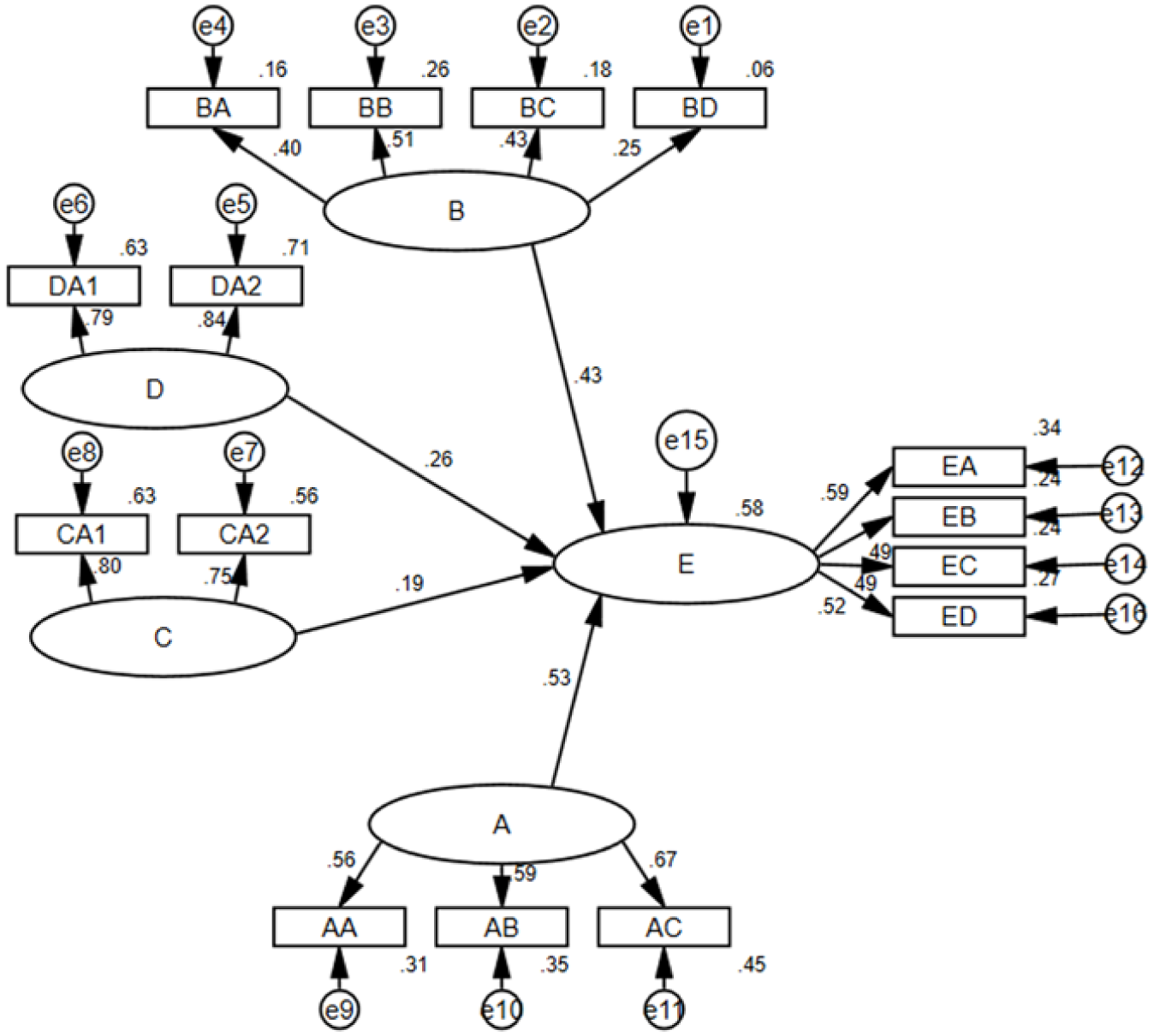
Structural equation modeling.
Participation in sports activities enhanced the emotional experiences and well-being of older adults. Moderate physical exercise helped them achieve a sense of achievement, such as improved physical fitness, better sleep, and reduced physical discomfort. Furthermore, physical exercise enabled older adults to make friendships with like-minded individuals, expand their social networks, and enhance their lives (Pengpid & Peltzer, 2021). Research shows that participation in community-based sports not only promotes health but also offers social benefits. Participants can gain affirmation and recognition from other members and derive pleasure from sports. Exercise is often regarded as a panacea. Some scholars believed that perceived exercise benefits had a direct and significant impact on older adults’ well-being. They also noted that exercise intensity and frequency directly influenced perceptions of exercise benefits and overall well-being (Y. Wei, 2021). Some researchers categorize participants into three groups (low, moderate, and high) based on their duration of physical activity participation and their mental health status after participating in sports activities. They find significant differences in loneliness, happiness, and positivity among participants in the three groups, with no adverse effects observed. Compared with the low-duration group, older adults in the high-duration activity group exhibit lower loneliness and higher well-being.
Furthermore, older adults in the high and moderate-duration activity groups reported greater life positivity than those in the low-duration group (J. Kim & Han, 2022). Some scholars believe that Tai Chi can positively impact the well-being of middle-aged and older adults, particularly in the prevention and treatment of diseases. Moreover, the cultural appeal of Tai Chi can effectively improve practitioners’ social behavior, strengthen interpersonal relationships, and, in turn, increase life satisfaction and well-being (J. Xu et al., 2021). In a study comparing individual versus group cognitive exercise training on the subjective well-being and quality of life of older adults, Amini et al. (2023) found that group cognitive exercise training yielded better outcomes. Older adults who engaged in group cognitive exercise reported higher subjective well-being and quality-of-life scores than those who received individual training. Moreover, older adults participating in group training had higher scores in social, emotional, and psychological functioning. Through literature analysis, some scholars found that participating in any form of sports (team or individual) was beneficial for improving the mental and social health of adults (D. Wang et al., 2022; Zhang, Miao, et al., 2025). These benefits include improving mental health (e.g., higher self-esteem and life satisfaction) and reducing mental illnesses (e.g., lower levels of depression, anxiety, and stress), as well as improving social health (e.g., increased self-control, prosocial behavior, interpersonal communication, and a strong sense of belonging). However, interpersonal interaction in team sports provided additional and more effective benefits for adults’ mental and social health (Royse et al., 2023). Therefore, sports communities serve not only as venues for health promotion but also as spaces for sharing fitness experiences and emotional exchange.
Based on the literature above, it is evident that older adults strive to enhance their quality of life through various health promotion avenues, particularly exercise, to maintain optimal physical and psychological states and align with societal development, aiming to achieve active aging through “participation.” According to research, sports communities help older adults strengthen their physical health, prevent disease, create social opportunities, alleviate loneliness, establish new friendships, enhance social connections, and boost self-worth and well-being.
Currently, China is actively promoting the “Integration of Sports and Medicine” initiative, enabling “sports + medicine” to serve as a “protective umbrella” for health. In recent years, many policies have highlighted this integration, which has garnered increasing attention from all sectors of society. This approach enables individuals to engage in science-based sports rehabilitation and improve their overall health. Therefore, it was necessary to effectively implement the “integration of sports and medicine” initiative, reduce the risk of health impacts, and enhance residents’ well-being (Lin, 2023). In recent years, proactive health initiatives that align with the “Integration of Sports and Health” initiative have gained widespread acceptance. In implementing the Healthy China initiative, which shifts the focus from treating diseases to prioritizing public health, experts advocate advancing healthcare and developing a new sports-health model. This model emphasizes collaboration between sports and health departments, social participation, and active health and sports well-being, contributing to active aging.
Analysis of the Impact of Sports Community Culture on Older Adults’ Well-Being
As shown in Figure 1 and Table 4, the path through which sports community culture influences the well-being of older adults is statistically significant, with a coefficient of β = .43 and p < .001. Research
For older adults, participation in leisure sports communities was indispensable in their lives. Leisure sports communities contributed to health promotion, social engagement, self-confidence building, anxiety reduction, happiness, and stress relief for older adults. They also enhanced life satisfaction and self-identity, thereby enhancing the quality of life (Y. Wei, 2014). According to research, sports communities foster norms of mutual care, providing members a sense of belonging and a feeling of “home.” These communities are often led by experienced senior members who generously share their expertise in sports, health, and life. As a result, older adults can easily access valuable information on life or health matters within their community.
Furthermore, through mutual support and interaction, older adults experience care and sharing with their teammates, fulfilling specific desires through community engagement. All of these contribute to enhancing their well-being. When older adults’ values align with the group’s mainstream culture, they can act as social lubricants, facilitating smooth daily interactions and even fostering friendship and camaraderie. This, in turn, reinforces collective identity and pride, fostering well-being. However, when older adults’ values diverge from group culture, it may hinder social relationships, ultimately reducing their overall well-being. Some scholars argue that when an individual’s intrinsic value beliefs align with the community’s shared culture, this can create a synergistic effect (Yun et al., 2025). This alignment can lead to numerous benefits, including more positive emotions, higher self-esteem, and greater well-being, improved life performance, and even increased longevity and good health. Y. Wei (2020) posited that older adults could easily obtain the necessary information on life or health issues and build social connections within their communities, thus expanding their social capital. Furthermore, the community’s attractiveness also motivated older adults to volunteer for its development. Therefore, a positive community culture is conducive to enhancing the well-being of older adults.
Older adults fulfill their intrinsic needs through participation in sports community activities. For instance, engaging in sports community activities can enhance their sense of experience and value, reduce feelings of loss associated with role transition, thereby improving life satisfaction and well-being. By dedicating themselves to sports communities, they gain a sense of achievement, promote physical and mental health, and social connections, resulting in sustained benefits and a strong sense of identity. Group interaction also influences individual behavior, strengthening members’ sense of belonging and self-efficacy by shared goals. Some literature shows that engaging in deep leisure activities is conducive to enhancing interpersonal interaction among older adults, improving a sense of belonging, fulfillment, and achievement, and promoting physical and mental health (Z. L. Wang et al., 2017). Evidently, self-determination theory, deep leisure, and group dynamics theory provide complementary perspectives to improve the well-being or quality of life of older adults. Through autonomous activity choice, deep leisure, and group interaction, older adults can effectively enhance their well-being and social adaptability.
Analysis of the Impact of Sports Community Belongingness on Older Adults’ Well-Being
As evident from Figure 1 and Table 4, sports community belonging has a statistically significant impact on the well-being of older adults (β = .19, p < .01).
Leisure sports in the sports community can help older adults combat loneliness and boredom. This engagement fosters connections with others, promotes more social interactions, and enhances the joy derived from leisure activities. Consequently, older adults experience greater life satisfaction. Life satisfaction reflected a sound quality of life and happiness in daily life for older adults. Furthermore, the positive experiences gained through participation in leisure sports were internalized as a sense of community belonging (Lee et al., 2020). The surveyed older adults believe that the sports community provides them with a sense of home, belonging, and support. Many older adults view the community as a platform for spiritual sustenance. Some scholars have found that social support is positively correlated with psychological well-being. Through participation in sports, older adults can expand their social circles, establish new social roles, and receive adequate social support. This, in turn, enabled them to generate more positive emotions and enhance their well-being. Furthermore, when older adults interacted with friends through various means and experience greater intimacy, their well-being also increased (G. F. Yang et al., 2012).
A sense of belonging is a crucial factor influencing psychological well-being. According to the belongingness theory, strong interactive behaviors can fulfill older adults’ need for belonging. This is because belonging arises from interactions with close friends, which may include emotional support, sharing important resources, or even making significant sacrifices for friends. These interactions enhanced older adults’ positive feelings toward the group, fostered dependence, and created a sense of indispensability within the group, ultimately helping individuals gain a sense of belonging and psychological well-being (Cai & Wang, 2024).
Some scholars argue that social capital is a unique form of social interaction or human communication, facilitating social connections, norms, bonds, and trust networks that support individual and collective actions within specific environments or structures. Collective participation in movements is more likely to generate social capital (such as social networks, participation, reciprocity, trust, volunteerism, etc.) than individual participation and is more likely promote mental health (Y. Yang & Zang, 2023). In addition, research indicates that demand is the intrinsic motivation for older adults to participate in sports communities, they believe that sports communities are an essential way to meet their diverse needs, such as health, social interaction, and self-actualization. Moreover, having comprehensive and high-quality social support plays a vital role in helping older adults maintain a high quality of life and well-being.
In daily family life, family members should encourage older adults to participate in sports, pay closer attention to their physical health and emotional well-being, and spend time together on activities such as chatting and walking. These actions will enhance the mental health of older adults. Older adults themselves should also strengthen their understanding of the importance of exercise for health and gradually improve their well-being. The research by Zhang, Yan, et al. (2025) and Lai et al. (2022) indicated that a strong sense of belonging could significantly improve the life satisfaction of older adults.
Analysis of the Impact of Sports Community Social Networks on the Well-Being of Older Adults
As shown in Figure 1 and Table 4, the impact path of sports community social networks on older adults’ well-being is statistically significant, β = .26, p < .001. Research
Socio-emotional Selectivity Theory posits that social networks play a crucial role among factors influencing mental health, especially for middle-aged and older adults. With increasing age, people tend to seek more emotional support and invest more energy in managing social relationships to derive emotional support and a sense of meaning in life (L. J. Xu, 2022). Consequently, possessing a robust social network was vital for maintaining mental health in middle-aged and older adults, who, in turn, experienced stronger subjective well-being (Yang, Wang, et al., 2024). Despite the yearly decline in physiological and cognitive functions for older adults, along with significant changes in their social roles and social networks, old age remains a critical period from a lifelong development view. Progress, achievements, and happiness are still possible at this stage. As long as older adults actively adapted to changes in their social roles, established and maintained a comprehensive social network, and actively participated in community activities, their life satisfaction and well-being would continue to improve (W. Wang, 2022). Research on social networks in older adult communities has found that participation in sports-related social activities fosters a sense of achievement. Regular communication and interaction among community members provide older adults with social benefits. Social networks can positively impact the subjective well-being of older adults by increasing social participation, enhancing social trust, and reducing social comparison. The more extensive an older adult’s social network, the more likely they are to feel well-being. Further research on the classification of social networks revealed that neighborhood-, friend-, and relative-based social networks had a greater impact on the subjective well-being of older adults, with friend-based networks exhibiting the strongest influence (C. Liu, 2024). Hou et al. (2018) found that older adults participating in air volleyball experienced significant improvements in self-esteem and self-confidence. This involvement also helped expand their social circles, alleviate negative emotions, reduce life stress, enhance emotional communication, and improve their subjective well-being. Numerous studies have explored the empirical relationship between social participation and subjective well-being. Yang, Chen, et al. (2024) underscored that social participation was key to expanding social networks and enhancing older adults’ subjective well-being by fostering team identity and providing emotional support. Additionally, older adults’ social participation could help alleviate social isolation. This finding further supported the positive correlation between social interaction and the pursuit of happiness, as well as the perceived significance of activities (Gong et al., 2025).
Critical Perspectives
The above research findings present distinct and common conclusions regarding the multifaceted influences on the well-being of older adults. Several factors impact how older adults perceive their well-being. Specifically, subjective psychological health, a key component of well-being (Badri et al., 2023). Some researchers have conflicting opinions on the impact of active aging on quality of life. They have found that participating in activities outside the home can increase life satisfaction, but not well-being (Ramia & Voicu, 2022). Regarding exercise, senior master athletes reported benefits when engaging with family or friends, regardless of their participation frequency—whether once or twice weekly or five or more times weekly. However, there was a threshold frequency beyond which older participants may experience adverse effects from exercise (Deck et al., 2021).
Additionally, some scholars argue that the well-being of individuals with disabilities stems not solely from exercise itself, but from the experience of “high-quality engagement.” This perspective emphasizes that the quality of participation far outweighs its quantity (C. Li et al., 2026). Other scholars argued that leisure sports did not reduce anxiety among older adults, possibly because they were infrequent and short in duration (Çol et al., 2022). Furthermore, if older adults derived insufficient enjoyment from exercise, excessive exercise may lead to a decline in well-being (D. Wang et al., 2022). Literature also indicated a nonlinear relationship between age and well-being among older adults, with well-being increasing after middle age but declining at advanced ages (Becker & Trautmann, 2022). Numerous studies have demonstrated that social networks are a primary factor in enhancing well-being (Gao et al., 2021; Gong et al., 2025; Wang et al., 2025). However, scholars such as Y. S. Hu et al. (2024) argued that older adults who were comfortable with solitude experience more positive emotions (such as calmness and relaxation) and fewer negative emotions (such as anxiety and loneliness) when alone. This, in turn, helped them maintain self-continuity and integration, enhancing their sense of life meaning and well-being.
Unique conclusions drawn from numerous research findings on the well-being of older adults may stem from the multidisciplinary nature of the research, which spans fields such as philosophy, economics, sociology, psychology, and other related disciplines. The integration of these diverse perspectives contributes to a multidimensional understanding of well-being. While each field emphasizes distinct factors that influence well-being, the overall scope typically includes individual characteristics, family traits, life experiences, economic factors, and social activity-related factors. Consequently, many research findings present unique or common conclusions. Overall, these findings will encourage scholars to refine the design and analysis of future research on well-being, promoting a deeper exploration into the nuances of this concept.
Conclusion
Participation in sports communities has a profound impact on the well-being of older adults. Among the various factors, the experience of benefits from exercise in sports communities has the greatest impact on their well-being. In contrast, the sense of community belonging has the least impact. It is recommended that older adults engage more in community-based sports to enhance their well-being. Society should strive to provide more accessible micro-spaces for exercise, allowing people to participate in community sports. Social media, family members, and friends should collaborate to promote the health benefits of sports communities to enhance the well-being of older adults further. Additionally, older adults should embrace digital and smart devices to experience the benefits of exercise better and deepen their sense of well-being.
Research Limitations and Future Research
This study, conducted among older adults in Henan Province, yields findings that primarily demonstrate regional characteristics. One limitation of the current study is the narrow range of variables included: benefit experience, community culture, sense of community belonging, and community social network. This restricted scope prevents a comprehensive understanding of the factors influencing older adults’ well-being, potentially biasing the findings. Furthermore, the study did not independently examine potential differences in well-being based on factors such as educational background, economic status, living conditions, age, or gender.
For future research, it is recommended to expand the geographical scope to include older adults from a broader range of regions. Additionally, more antecedent factors should be incorporated to provide a more holistic understanding of the influences on well-being. Exploring the pathways through which these factors influence well-being would also be valuable. Finally, conducting a grouped analysis based on variables such as educational backgrounds, economic status, living conditions, age, and gender will allow for a deeper examination of the well-being of different groups.
Footnotes
Acknowledgements
I would like to express my gratitude to all those who participated in the research.
Ethical Considerations
The research project was approved by the Ethics Committee of the School of Physical Education, University of Science and Technology (No. 20240202). Compliance with the Declaration of Helsinki.
Consent to Participate
Informed consent was obtained from all participants.
Author Contributions
Y.W. Undertook all the scientific research work for the thesis. J.T.C. Put forward suggestions for revision and revised the paper’s content.
Funding
The authors disclosed receipt of the following financial support for the research, authorship, and/or publication of this article: Supported by the General Project of Humanities and Social Sciences Research in Universities of Henan Province (No. 2023-ZZJH-280).
Declaration of Conflicting Interests
The authors declared no potential conflicts of interest with respect to the research, authorship, and/or publication of this article.
Data Availability Statement
Data: https://www.jianguoyun.com/p/DcDLsI8Q78KuDBj2-4UGIAA; Questionnaire: 