




Abstract
The aim of this research is to reveal the components of child-friendly hotel experience by analyzing the holiday experiences of families staying in child-friendly hotels through online reviews. Adopting a qualitative case study design, the research draws upon the theoretical lens of the service ecosystem approach, which conceptualizes value as co-created through the dynamic interactions among multiple actors including guests, children, hotel staff, and the physical environment. In the study, user-generated online reviews on the TripAdvisor platform in 2023 and 2024 were collected. As a result of the content analysis, it was determined that the experiences of guests staying in child-friendly hotels consist of five main dimensions defined as “quality of service,”“activities for children,”“food variety and quality,”“comfort and cleanliness of rooms,” and “safety and accessibility.” These findings demonstrate how family vacation experiences are not shaped solely by isolated service elements, but rather emerge from interconnected and context-dependent value processes. The findings of this study contribute to the development of strategic recommendations to improve the service quality of child-friendly hotels and ensure families’ vacation satisfaction.
Keywords
Introduction
Today, the tourism sector has been developing various service models in line with rapidly changing consumer needs and expectations (Ravishankar & Christopher, 2020). Child-friendly hotels, one of these service models, are specially designed to ensure that families have a safe, fun and comfortable vacation with their children (Malerba et al., 2024b). Child-friendly hotels aim to provide a safe and comfortable environment where families can receive the most suitable service for both themselves and their children during their vacation (Buzlu et al., 2025; Pawlikowska-Piechotka, 2011). These hotels positively affect families’ vacation experiences by offering many services such as special activities for children, entertainment areas, healthy food options, and safety measures (Khoo-Lattimore et al., 2018).
In addition to providing a competitive advantage in the tourism sector, the child-friendly hotel concept has become an important factor that directly affects families’ vacation preferences (Gram, 2005; M. Yang et al., 2025). The fact that families prioritize the needs of their children when making vacation decisions increases the importance of the services offered by such hotels (Kozak, 2010). In recent years, family vacations have been seen as an experience that supports children’s developmental processes and improves their social, emotional and cognitive skills, rather than just for rest and entertainment (Yu et al., 2018). In particular, parents consider it a priority for their children to learn new things, strengthen their social relationships and spend quality time in a safe environment (Carbines et al., 2017). In this context, increasing the quality of service and customer satisfaction of child-friendly hotels stands out as a critical success factor for tourism businesses (Durko & Petrick, 2013; Seraphin et al., 2020).
Detailed and in-depth analyses on how the services offered by these hotels shape families’ vacation experiences have not yet been conducted sufficiently. In the body of knowledge, it is seen that the child-friendly hotel concept is generally addressed by adopting quantitative research methods. However, vacation experience is a subjective process and has a multi-layered structure that needs to be evaluated not only with quantitative indicators but also with qualitative data. Therefore, conducting qualitative research that analyzes the experiences of child-friendly hotel customers through real user reviews can fill an important gap in the sector and guide better service designs in the future.
Although the number of studies on child-friendly tourism has increased in recent years, there are still significant gaps in the literature (Buczkowska-Gołąbek & Schänzel, 2025; Khoo-Lattimore & Jihyun Yang, 2020; Malerba et al., 2024a; Miyakawa & Oguchi, 2022; Rojas-de-Gracia, 2025; Song et al., 2020). In particular, there is a lack of both empirical and qualitative research that examines in-depth the effects of services offered in child-friendly hotels on children and families (M. J. H. Yang et al., 2020). The existing literature does not sufficiently address issues such as overall customer satisfaction with such hotels, intention to revisit, and the long-term effects of children’s experiences during their vacation. On the other hand, there is no qualitative research that examines the components that shape the experience of child-friendly hotel customers collected from online platforms where customers can easily share their experiences.
The aim of this study is to reveal the key dimensions that shape the experiences of families staying in child-friendly hotels. The study analyzes the comments of guests who stayed at child-friendly hotels in Antalya, one of the most popular tourist destinations in Turkey, on the TripAdvisor website. In this research, families’ child-friendly hotel experiences are not only considered from a service quality or customer satisfaction perspective, but also as an outcome of multi-actor interactions within the framework of service ecosystem theory (Vargo & Lusch, 2016). This approach aims to understand the dynamics in which actors such as children, parents, hotel staff, and the physical environment mutually create value. In this respect, the service ecosystem approach, which is rarely used in the child-friendly tourism literature, constitutes the theoretical novelty of the research.
The study offers insights to hotel managers by revealing the elements of the services offered by such hotels that may affect families’ vacation preferences. The study seeks to answer the question of what are the main service elements that shape the holiday experiences of families staying in child-friendly hotels, based on customer experiences of the child-friendly hotel concept, which is becoming increasingly important especially in the tourism sector. The current research also aims to guide the development of strategic recommendations to improve the service quality of child-friendly hotels.
Literature Review
Child-Friendly Tourism
Child-friendly tourism is a tourism model that includes services and facilities designed to ensure that families have a safe, fun and memorable vacation with their children (Song et al., 2020). This tourism approach seeks to maximize the vacation experience of families by offering special arrangements and activities to meet the needs of both children and parents (Rime et al., 2018). Child-friendly tourism has gained an important place in families’ travel preferences and vacation expectations, especially in recent years, and academic studies in this field have increased (Tseng et al., 2024).
At the basis of child-friendly tourism is the tendency for families to shape their travel decisions in line with the needs of their children (Carr, 2011; Fouad & Elsaid, 2021). Such tourism services allow children to engage in fun and educational activities during their vacation, while allowing parents to relax and enjoy their vacation (Kim & Lehto, 2013). Therefore, child-friendly tourism is not only a form of vacation, but also a service model that supports family structure and dynamics (Chiang et al., 2022).
In the literature, the concept of child-friendly tourism has been analyzed through the services offered by tourism destinations and accommodation establishments for families with children (Fan et al., 2024; Seraphin et al., 2023). In this context, the provision of child-friendly services leads touristic facilities to be preferred more by families and increases the market share of these facilities (Malerba et al., 2024b). The rise of child-friendly tourism also reshapes competition in the tourism sector and encourages businesses to offer family-oriented services (Habibah et al., 2015). In this context, studies on child-friendly tourism provide important findings in terms of understanding the effects of these services on families’ vacation preferences and the changes they create in the tourism sector (Buzlu et al., 2025). For instance, a research on child-friendly trips investigated how these trips are realized from the perspective of tour guides and found that child-friendly trips have different interpretation styles for tour guides (Celebi, 2024). Qeidari et al. (2024) examined children’s memorable experiences on child-friendly trips to rural Iran and found that these experiences affect children’s future travel preferences. Seraphin et al. (2023) investigated the effects of childhood experiences on diaspora tourism behaviors in adulthood and stated that child-friendly tourism strategies are important for the diaspora market.
Malerba et al. (2024a) examined how families and children interact in the context of wine tourism and found that wine tourism destinations do not offer child-friendly services. In another research, Malerba et al. (2024b) analyzed the different profiles of families traveling in Portuguese wine routes, highlighting the lack of child-friendly activities. Khoo-Lattimore et al. (2015) investigated the factors affecting the vacation decisions of families with children in Asia and found that child-friendly amenities and family-oriented activities are important in hotel choices. Pawlikowska-Piechotka (2011) explored the concept of child-friendly cities in Poland and found that children’s relationship with their living space has changed significantly over time. Song et al. (2020) conducted a preference experiment to determine preferences for services and facilities for young children. Researchers are increasingly interested in the topic, but significant gaps remain.
Child-Friendly Hotels
The concept of child-friendly hotels has gained increasing attention as a distinct service model within the hospitality industry, characterized by its emphasis on creating safe, engaging, and developmentally supportive environments for families traveling with children (Brey & Lehto, 2008; Hay, 2018; Siwek et al., 2022). These hotels go beyond conventional accommodation by integrating services tailored specifically to children’s needs, including specialized amenities, structured activities, and spatial arrangements conducive to child-centered use (Blichfeldt et al., 2011; Lehto et al., 2009).
The services offered in such hotels are aimed not only at the safety and entertainment of children, but also at the relaxation and enjoyment of parents (Ben Lahouel & Montargot, 2020; Liu & Filimonau, 2020). By offering facilities for children, child-friendly hotels increase families’ vacation satisfaction and increase their likelihood of return visits (Liu & Filimonau, 2020). Therefore, child-friendly hotels stand out as an attractive option for families and offer a sustainable competitive advantage for businesses in the tourism sector (Canosa & Graham, 2023; Khoo-Lattimore et al., 2018). These elements, however, do not operate in isolation; they are embedded within a broader system of social interactions and environmental cues that give meaning to the vacation experience.
Family experiences in child-friendly hotels are shaped by a layered interaction among human actors, spatial arrangements, and institutional norms (Jansson et al., 2022). The service ecosystem perspective conceptualizes this structure as an interdependent configuration, where meaning and value emerge through the alignment of roles, expectations, and contextual conditions (Zaman et al., 2020). Rather than focusing solely on what services are provided, this approach highlights how they function relationally how each element gains significance through its connection to others in the experiential system (Frow et al., 2019). This theoretical framing allows for a more comprehensive analysis of how family satisfaction is constructed in a setting where multiple actors continuously influence one another.
The service ecosystem approach, rooted in service-dominant logic, reconceptualizes value creation not as a linear outcome of service provision but as a dynamic and emergent process shaped through multi-actor interactions, institutional arrangements, and physical-material configurations (Vargo & Lusch, 2016). Rather than seeing services as discrete units delivered by providers and consumed by guests, this perspective situates all actors—including guests, children, staff, and environmental elements as co-contributors to the service experience. In the context of child-friendly hotels, such an approach allows to interpret vacation satisfaction, emotional safety, and experiential meaning as outcomes of interdependent relationships, rather than isolated service encounters. The emphasis thus moves from “what is offered” to “how it is experienced and co-constituted” through situated actor engagements.
Although child-friendly tourism has increasingly become a focal point in hospitality research, much of the existing literature tends to emphasize service features in isolation rather than examining how these elements interact within a broader system of meanings, roles, and relationships (Gram, 2005; Hilbrecht et al., 2008, etc.). This limits the analytical depth with which family experiences are understood, particularly in contexts where multiple actors, such as children, parents, and staff, continuously shape one another’s experiences. The service ecosystem perspective provides an opportunity to address this gap by reframing hotel environments not simply as venues of service delivery, but as dynamic and co-constructed systems.
Traditional service studies have generally analyzed the service experience by evaluating its characteristics separately. However, such approaches fall short in explaining how these characteristics interact to form a meaningful whole and how they translate into a service experience. Therefore, a more holistic and relational understanding is needed. The service ecosystem approach considers value creation not only as an output resulting from service delivery but as a process shaped by the interaction of multiple elements (environment, regulation, expectations, presentation style) within a context. Although this study does not contain direct multi-actor interaction data, it focuses on how the experience is interpreted in user comments and draws conclusions about how service elements come together. Therefore, the service ecosystem approach is used here not as a direct representation of data but as a theoretical lens that guides contextual analysis.
Method
Service ecosystem approach (Vargo & Lusch, 2016) explains the service experience not only in terms of the services provided by the business, but also in terms of the joint value production processes of multiple actors (parents, children, staff, physical environment). In order to evaluate the family vacation experience from this holistic perspective, this research analyzed the thematic interpretations of content analysis in relation to the principles of this approach.
Building on the evaluations of the experiences of guests staying in child-friendly hotels, the aim of this study is to reveal the main dimensions of these experiences and to contribute to the development of more satisfying and qualified accommodation services in the context of family vacations. In line with the purpose of the research, this study was structured using content analysis, one of the qualitative research methods. Considering that customer experiences are shaped by context and have a multi-layered structure, qualitative content analysis was preferred in this study. In addition to the gap in the literature, analyzing such experiences based solely on quantitative data or pre-structured interview forms may limit the participant’s scope of expression and risk ignoring contextual diversity. In contrast to structured forms, online user comments are texts in which participants express their experiences according to their own priorities and meanings, and in this respect, they offer the opportunity to capture the contextual dimensions of the service experience (Tanriverdi, Çiki, Öğretmenoğlu et al., 2025). Therefore, in this study, the comments that users voluntarily share after their stay are considered as a rich and authentic data source to capture the unique, contextual and multidimensional nature of the service experience.
Content analysis makes large-scale data more accessible and understandable for readers by summarizing them in a clear and concise manner (Camprubí & Coromina, 2016; Gill & Persson, 2008; Quang et al., 2024; Ramos et al., 2023). This approach was deemed appropriate because of its ability to systematically interpret textual data and identify patterns, categories, and themes that reveal the subjective nature of customer experiences in tourism studies (Ciki & Tanriverdi, 2023; Tanriverdi, Çiki, Uygun et al., 2025).
Accordingly, the comments of guests staying in child-friendly hotels in Antalya, one of Turkey’s most popular tourist destinations, on the TripAdvisor website after their accommodation experience were collected and analyzed. The fact that Antalya hosts millions of tourists with its historical richness, natural beauties and modern tourism facilities, as well as attracting attention with its child-friendly hotels, has influenced the selection of this region as the research area. TripAdvisor website was preferred for various reasons such as its large user base, global reach, easy accessibility, and usability of the data (Stoleriu et al., 2019; Tanrıverdi & Ciki, 2022). Moreover, as TripAdvisor is a prominent platform for user-generated content and facilitates authentic customer insights, it has been widely adopted in contemporary hospitality and tourism research (Schuckert et al., 2016; Figure 1).

Research process.
The data for this study was collected from user reviews shared on the TripAdvisor platform between July 30 and August 15, 2024. To analyze current and relevant experiences, only reviews made by guests who stayed at child-friendly hotels in Antalya up to July 2024 and 2023 were considered. Furthermore, only English reviews were included to ensure linguistic clarity and consistency. During the data preparation phase, a total of 551 reviews were initially obtained. However, 42 entries were excluded based on predefined criteria: reviews with fewer than 10 words, duplicate entries, those lacking relevance to the family or child-related hotel experience (e.g., purely business-related comments), and those focused entirely on external factors such as transportation or weather. After this screening, 509 usable reviews were retained for analysis. In the first phase of the coding process, the researcher conducted a line-by-line reading to identify recurring expressions, sentiments, and patterns. These textual elements were then grouped into open codes, which were further refined into axial categories through constant comparison (Figure 2).
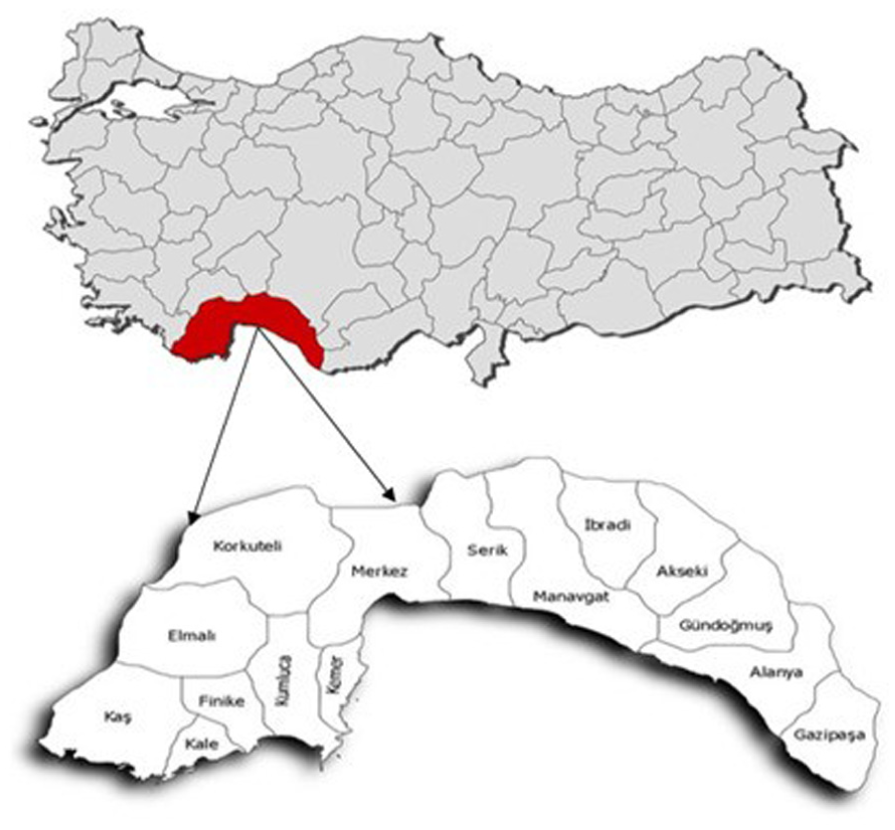
Research area.
All stages of coding, interpretation, and theme development were conducted with the support of MAXQDA software. Analytical memos were maintained to document reasoning and decision-making. This audit trail allowed for transparency and replicability, both critical components of qualitative rigor. The interpretation of the themes was guided by the service ecosystem framework (Vargo & Lusch, 2016), which conceptualizes value creation in service encounters as co-produced among actors, environments, and institutional logics. This lens facilitated a contextualized reading of how families, children, staff interactions, and physical hotel elements interrelate to produce the overall experience. During the analysis process, the researcher also consulted with another academic colleague experienced in qualitative research to review the initial coding logic and category development. Following the completion of the main analysis, additional independent feedback was obtained from a field expert specializing in tourism and service marketing, who reviewed the thematic structure and confirmed the consistency and conceptual validity of the identified themes.
Findings
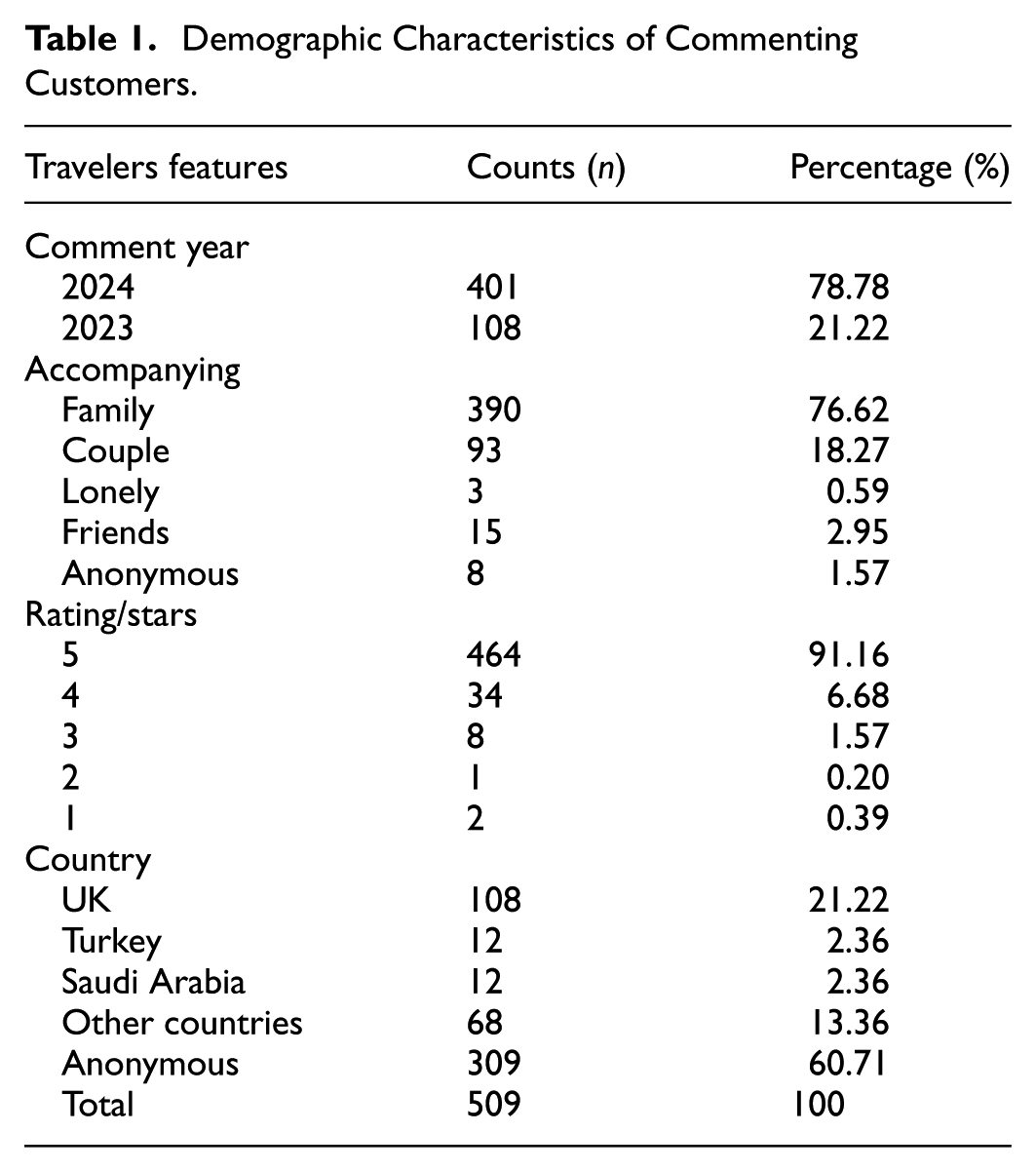
Before the content analysis, demographic characteristics of child-friendly hotel customers were examined and the findings are presented in Table 1. When the distribution of the comments included in the study according to years is analyzed, it is seen that the comments from 2024 constitute the majority with 401 comments. Considering with whom the participants traveled, it was seen that the majority traveled with family (76%), and this finding shows that the right choice was made in terms of research site selection. On the other hand, family travelers were followed by couples (18%). An analysis of customers’ ratings of their child-friendly hotel experience shows that the satisfaction rate is quite high (91%). In terms of country distribution, the highest number of commenters were from the United Kingdom (21%), while 60% of commenters did not provide information about their country or city of residence.
Demographic Characteristics of Commenting Customers.
Results of Content Analysis
This research has shown that child-friendly hotel experiences do not only emerge through the services offered, but also as a result of multi-actor interactions within a service ecosystem. This approach demonstrates the potential of this theory, which has previously been used to a limited extent in the context of children’s tourism, to explain the customer experience holistically.
As a result of the content analysis conducted to reveal the dimensions underlying the experiences of visitors staying in child-friendly hotels, six main components were identified. These components, which constitute the main elements of visitor experiences, are defined as quality of service’, “activity opportunities for children,”“food variety and quality,”“comfort and cleanliness of rooms,” and “safety and accessibility.” To support the reliability and validity of each component, original comments linked to the relevant themes are presented under these components (Figure 3).

Dimensions of the child-friendly hotel experience.
Quality of Service
It has been determined that the experiences of visitors staying in child-friendly hotels are influenced by the quality of service and that it is one of the most important elements necessary for a good experience. This finding is similar to previous research investigating customer experience (Öğretmenoğlu et al., 2023; Singh & Nika, 2019; Tanriverdi, Çiki, Uygun et al., 2025). Most of the commenting child-friendly hotel customers emphasized that the services provided by the hotel staff exceeded their expectations and that this contributed positively to their holiday experience. Commenters particularly emphasized the staff’s attention and care toward children. This expectation is reasonable, given that the primary motivation for guests choosing the hotel is its child-friendly orientation. Customers also stated that the professional, helpful and friendly approach of the staff had a great positive impact on their accommodation experience.
In the context of service ecosystem approach (Vargo & Lusch, 2016), child-friendly hotels are not only physical service providers, but also social spaces that pave the way for mutual value creation between children, parents, and employees. In this context, elements such as “activities” or “food variety” create value not only in terms of service quality but also in terms of strengthening family ties and supporting children’s individual development. Therefore, the findings theoretically support the family-centered experience design approach and contribute to the service experience literature. Some of the comments made by customers are presented below.
Hotel team were fantastic and showed us such great hospitality. We truly had an amazing time here. We were very well looked after especially with food. We are vegetarian and do not eat fish or eggs and therefore have a very challenging diet to accommodate for in Turkey compared to the UK. All of the staff were very attentive to our dietary requirements and ensured they prepared food for us … (V1 from UK). … We had a wonderful chambermaid who cleaned the room every day to a very high standard. Staff in the restaurants were also incredibly helpful, taking time to explain everything to us and always with a smile. The service throughout our stay was impeccable … Every member of staff we encountered were so helpful and friendly and could not do enough for you. We loved the WhatsApp assistants and used them a few times and they really did go above and beyond to help us out each time. Every one made an effort with our son too which we appreciated … (V84 from UK). Best Staff and best hotel … From the moment we arrived, we were impressed by the beautiful location and the warm welcome from the amazing staff … A special mention must go to the hotel staff. Their professionalism, courtesy, and willingness to assist made our stay even more enjoyable. It’s clear that they take great pride in ensuring guests have a memorable experience … (Anonymous Visitor 129).
Activities for Children
One of the most important factors for families staying in child-friendly hotels is the activities and entertainment opportunities offered for children. As a result of the analysis, child-friendly hotels were identified as one of the components of the customer experience. Çıkı et al. (2025) demonstrated that the amenities provided by the hotel constitute one of the primary factors shaping the customer experience. A variety of activities such as kids’ clubs, playgrounds, swimming pools, and special events ensure that children have fun and develop social skills. Such activities are part of a shared value creation that emerges through the interactions of various actors in the service ecosystem, such as parents, children, and animation staff. Activities in which children are actively involved are not only service delivery but also experiential value creation. Visitors’ comments show how such activities enrich a family vacation and are a decisive factor in choosing a hotel. Below are some of the many comments that support this component:
… My 3 year old loved the workshops at Hotel and the children’s pool and slides. The kids club area was great, they have a small indoor soft play area, trampolines, and a park. It really does cater for families and have thought every little detail through … (V2 from UK). … The hotel really does celebrate our young people and goes above and beyond for the kids. Our son loved the kids club and the facilities; the staff itinerary of events was excellent. A brilliant and safe splash park was the highlight for him. One day there was even a children’s festival with magicians, bubble makers, dancers, games, balloons—you name it, and it was there … (V53 from UK). … They really were so helpful and made things effortless for us - an absolute game changer! Our football mad son absolutely loved the football academy that was on whilst we were there. I believe it runs from the beginning of May to the end of August, the coaches were great with the kids and would give them high fives when they saw them around the during the day. There were 2 sessions a day, one at 9am and one at 5pm - he only made the 9am once due to the late nights but he could go to as many or as few as he wanted without any pressure. They also give the kids free game kits which was a nice touch … (Anonymous Visitor 144).
Food Variety and Quality
Consistent with prior studies by Egeli et al. (2024), Sthapit (2017), and Öğretmenoğlu et al. (2023), this study confirms that “food variety and quality” constitutes an integral component of the customer experience. It has been observed that delicious and high quality meals offered in a wide range for both children and adults are among the factors that increase hotel satisfaction. The fact that the food served in hotels is both delicious and healthy is of great importance, especially for families with children. In addition, the availability of special menus and alternative meal options for children makes families’ vacation experience more enjoyable. This reflects the collaborative value creation in the service ecosystem at the intersection of providing food that meets the developmental needs of children and the expectations of parents. The flexible and responsive approach of the hotel staff makes the families’ experience a collective interaction process.
Some of the comments made by child-friendly hotel customers are as follows: “… The steakhouse is in such a beautiful building and setting and the food was just as amazing to match … The main buffet restaurant had a wide range of food available. Such lovely food and we could always find something we all liked. To note, we didn't actually realize there was a children's buffet area until 5 days into our holiday …” (V72 from UK). “… Food is delicious and lots of choices between a la carte and buffet restaurants, so it’s easy throughout the day to grab a bite or have a sit-down lunch depending on the mood. Kids are so happy too, roaming around, eating when they want, where they want. They have their own exercise program and entertainment schedule …” (Anonymous Visitor 238). “… We really liked the children's menu. My 18-month-old daughter, who eats little and is very selective, ate with great pleasure all kids menu provided by the hotel. The menu is really varied and healthy for children and for adults. Everyone can find everything they like …” (Anonymous Visitor 238).
Comfort and Cleanliness of the Rooms
Another important issue emphasized by guests staying in child-friendly hotels is “comfort and cleanliness of the rooms.” The “comfort and cleanliness of the rooms” theme identified in this study corresponds with the “hygiene and cleanliness” theme reported by Çıkı et al. (2025), emphasizing the decisive role of physical environmental conditions in shaping customer experience. It has been observed that child-friendly hotel guests especially care about comfort and have high expectations for hygiene. The physical arrangements of accommodation spaces are shaped by the expectations of parents and the comfort needs of children within the service ecosystem. In this context, room comfort becomes not just a physical space, but an interactive experience space between the user and the provider. In addition, family-friendly rooms and additional amenities play an important role in shaping the guest experience and increasing satisfaction. Some of the comments supporting this component are as follows:
… Kids area (club/play-room, pools, restaurant, playground) is awesome and our daughter was never bored… Our room was spacious and clean with a well-stocked mini bar full of drinks and snacks. The bathroom was large with all the toiletries that you need. Both the mini bar and bathroom were stocked daily … (V23 from Poland). … Our room was clean and spacious and our maid was so lovely. We were provided with kids' toiletries with a cute sponge and slippers-such a cute touch … (V44 from UK). … Our room was spacious, clean, and very comfortable, perfect for a family stay. We had a wonderful chambermaid who cleaned the room every day to a very high standard. The room was so quiet and we never heard any other guests from above or out in the corridors, which is unusual for a holiday hotel … (Anonymous Visitor 109).
Safety and Accessibility
Safety and accessibility in child-friendly hotels is another important component that directly affects families’ vacation experience. Safety and accessibility involves not only a physical but also a psychosocial dimension of the service ecosystem. Families’ trusting relationship with the hotel creates a shared experience of trust at the intersection of their children’s expectations of protection and the arrangements offered by the hotel. Providing a safe and comfortable environment for both children and parents is a critical factor for these hotels, as it is necessary to ensure that families have a peaceful and less worried experience for their children during their vacation. Additionally, the hotels’ central positioning and logistical convenience reduce travel-related strain, offering guests smoother access and enhanced spatial comfort. Some online comments on safety and accessibility as one of the dimensions of a child-friendly hotel experience are quoted below.
… We came with our 4 year old child and had the best time. One of the best features of the resort is the rixy kids club. Being able to lounge on a sunbed while keeping an eye out on our child was bliss. We also left our child very well cared for at the kids club a few times while we went to eat/relax/get massages … (Anonymous Visitor 124). … We also left our child very well cared for at the kids club a few times while we went to eat/relax/get massages. It was reassuring and comfortable for us … (Anonymous Visitor 295). … This hotel was really enjoyed by my 5-year-old. It was safe; there were lifeguards watching and monitoring the slides. Within Rixy club, there were so many things to do—soft play, baby area, cinema/quiet room … (Anonymous Visitor 482).
Discussion and Conclusions
The main purpose of this study is to reveal the main components underlying the vacation experiences of families staying in child-friendly hotels through online data. As a result of the content analysis conducted within the scope of the research, five main themes shaping the experiences of families were identified: quality of service, activities for children, food variety, and quality, comfort and cleanliness of rooms, safety and accessibility.
Quality of service has been identified as an important dimension of customer experience in many previous studies conducted in various contexts (Egeli et al., 2024; Öğretmenoğlu et al., 2023; Ryu et al., 2012). In this study, it was determined that families are one of the most influential factors affecting the experience in child-friendly hotels. Special attention to children, professional service and smiling faces are among the main factors that increase the satisfaction of families. As a result of the study, it was observed that the online support system, apart from pre-sales support, worked flawlessly even while at the hotel and was used with great appreciation. This is an important clue for other child-friendly hotels. Customers also appreciated that the staff were trained in all other areas, especially in communicating with children.
The provision of child-oriented activities constitutes an essential component of the service offerings in child-friendly hotels. To the best of our knowledge, this study is the first to empirically identify “activities for children” as a distinct experiential dimension derived directly from user-generated content in the context of child-friendly hotels. Various activities such as kids’ clubs, playgrounds, swimming pools, and special events allow children to have fun and develop their social skills during their vacation, while allowing parents to have a comfortable holiday. Such activities are an important factor in shaping families’ experience of a child-friendly hotel. However, designing these activities in a way that is not only fun but also contributes to children’s development can make the hotel experience richer and more meaningful. For example, with “themed days for children,” the hotel can set a different theme for each day. One day could be “science day” and children could conduct simple experiments, while another day could be “nature day” and children could go on nature walks and ecosystem introductions. Such themed activities allow children to have fun and learn at the same time. In addition, special activities such as “outdoor adventure trails” can help children gain self-confidence while doing physical activities. A safely designed adventure course within the hotel grounds allows children to develop their physical skills and enjoy a vacation in touch with nature.
The variety and quality of food is another important factor shaping families’ vacation experiences. A wide range of delicious and healthy food options that appeal to both children and adults is very important for families. Offering special menus and healthy alternatives especially for children makes families’ vacation experience more memorable. For instance, “kids chef workshops” can be organized. In these workshops, children can prepare their own meals accompanied by professional chefs. Consuming the healthy meals they prepare themselves provides children with a fun experience and helps them develop healthy eating habits. In addition, this activity makes the process of eating more interesting for children and turns food diversity into a fun learning opportunity.
With the global flavors kids’ buffet app, children can try different flavors from around the world. Meals inspired by the cuisine of a different country each day will broaden children’s palates and make their dining experience more exciting. Finally, a “healthy dessert corner” offers healthy desserts with low sugar content for children. This dessert corner can include options such as fresh fruits, yogurt-based desserts and whole grain products. This way, children can satisfy their sweet tooth in a healthy way and parents can be satisfied with their children’s eating habits. These innovative catering services make the vacation experience more satisfying and enjoyable for both children and families, increasing hotel satisfaction and encouraging healthy eating habits.
The comfort and cleanliness of the rooms is a critical element that increases holiday satisfaction for families staying in child-friendly hotels. Spacious, comfortable and hygienic rooms are important for every customer, but especially for families with children. In addition, rooms with special services for children positively shape families’ vacation experiences. For example, the “personalized kids room themes” application can offer special room decorations designed according to each child’s interests. When booking a vacation, children’s favorite themes (e.g., an undersea world, space adventure, or princess theme) can be selected and rooms can be decorated accordingly. This ensures that children are in for a big surprise when they arrive at the hotel and makes their time in the room more enjoyable.
On the other hand, products such as bath products, toothbrushes, soaps and shampoos for children can be delivered to families. In addition, “relaxing pre-sleep experiences” can be offered. Smart lighting systems in the rooms, night lights and sound systems specially designed for children can create a relaxing atmosphere before sleep. For instance, storytellers specially designed for children or a sound system that plays calming lullabies can help them sleep peacefully. Such features promote relaxation for both children and parents.
Safety and accessibility have emerged as one of the key elements that make up child-friendly hotel customers. The main reason for the prominence of this element is travel with children, and it shows the importance given to ensuring children’s safety both in playgrounds and in all other areas of the hotel. This component shows that child-friendly hotels should ensure that families do not have to worry about the safety of their children during their vacation.
Child-friendly hotels provide safety and accessibility, which are important for families. For example, staff can be regularly trained and certified in child safety, first aid and crisis management. In addition, “advanced child monitoring systems” can be used. For example, lightweight and comfortably designed wristbands for children can monitor their movements in certain areas of the hotel. With these wristbands, parents can track their children’s whereabouts via a mobile app and ensure their safety. This system ensures that children stay safe, especially in large hotels or facilities that span large areas. With “barrier-free access and security services,” the hotel can also offer a fully accessible vacation experience for children with disabilities and their families. In this context, all areas throughout the hotel should have accessibility elements such as ramps, wide doors, special toilets and elevators in swimming pools. In addition, specially trained staff for children with disabilities can provide continuous service to ensure that families have a comfortable holiday. Finally, “safety information boards and digital guides” can be placed in various areas of the hotel. These boards inform families and children about the hotel’s security protocols, while digital guides provide instant access via mobile devices.
To support the unforgettable experience, the children of the departing family can be gifted with a coloring book or a creative storybook featuring areas of the hotel. This can positively influence the child’s desire to come back again in the family’s future planning. In addition, tree planting activities, surprise services and gifts can add a unique dimension to the experience. Activity lists can be prepared according to age group and children or families can choose from this list according to their wishes. On the other hand, for parents who want to see what younger and older children are doing in the playground, live online images of the playgrounds can be provided. Finally, by creating “shared family activity areas,” activities can be organized where children and parents can participate together. For example, families can participate in art workshops with their children, do joint projects or participate in a gaming tournament together. Such activities strengthen family bonds and make the hotel experience more meaningful and memorable.
Theoretical Contributions
The findings contribute to the limited body of knowledge on child-friendly hotels. One of the most important theoretical contributions of this research is that it integrates the service ecosystem approach into the child-friendly hotel context and presents the family vacation experience as a multi-actor, interactional and contextual value production process. Although no direct interviews with children were conducted, the user-generated content (UGC) analyzed in the study provides rich indirect data regarding the role of children in shaping the family service experience. Through parents’ narratives, it becomes evident how children’s enjoyment, comfort, safety, and engagement are central criteria for evaluating the success or failure of a tourism service. In this context, children do not appear as direct actors in the ecosystem but rather as reflected reference points that shape the direction and quality of interactions. Thus, the current research offers a new perspective to understand the factors that shape the experiences of families vacationing in child-friendly hotels.
One of the most distinctive theoretical contributions of this study is its introduction of a proxy-based perspective on value co-creation within the service ecosystem approach. While children are not physically or communicatively present in the user-generated content analyzed, they emerge consistently as referential anchors in parental narratives—shaping judgments, guiding expectations, and mediating satisfaction. This brings forth the notion of representational agency: children influence the system not by direct participation but through their symbolic and emotional salience in the eyes of decision-making actors. In doing so, the study challenges the conventional emphasis on direct actor involvement in ecosystem models and proposes an alternative mechanism of value co-creation rooted in perception, proxy influence, and relational priority. This positions the study as a rare and valuable example of expanding the theory’s boundaries beyond interactional visibility toward interpretive and symbolic participation.
Moreover, this study can provide a basis for future research by identifying the main components that shape families’ vacation experiences in child-friendly hotels. Accordingly, quantitative and qualitative research can be conducted to provide important practical implications for child-friendly hotel managers and tourism industry professionals. This would allow for theory-informed comparisons and help refine the model’s applicability across different service environments.
Practical Contributions
Hotel managers and tourism industry professionals can use the findings of this study to improve the services offered in child-friendly hotels and increase families’ vacation satisfaction. Future research can focus on more specific areas in line with these components and develop strategies to improve the quality of child-friendly tourism services. For example, studies examining the vacation experiences of children of different age groups can make important contributions in this field.
The research findings show that children have the potential to form emotional attachments and the permanence of hotel experiences. This presents an important opportunity for hoteliers to develop loyalty strategies not only for parents but also for children. In this context, a digital system can be created for each child staying at the hotel. Through this system, various individual information such as the activities that children participate in, the meals they prefer, their height, weight and the observations of the staff can be recorded. For example, if a child attends a soccer academy or likes dinosaur-themed activities, this can be used to design tailored welcome experiences for the next visit. In this way, the “personal history” of the child who comes back a year later is recognized, for example, “Welcome! Last year you loved the dinosaur costume, this year our space theme is waiting for you!.” This approach goes beyond traditional customer loyalty practices and becomes an emotional bonding strategy centered on the child. Such customized attention to the child indirectly increases the parent’s loyalty, strengthening the likelihood of the hotel being preferred again.
The experiential dimensions identified in this study can serve as a foundational framework for tourism certification bodies or governmental tourism boards aiming to establish or revise child-friendly hotel accreditation criteria. For instance, the five dimensions ranging from service quality to safety and accessibility can be transformed into specific assessment metrics within child-centered tourism audit protocols. Tourism authorities may develop checklists or scorecards based on these dimensions to objectively evaluate hotels’ readiness to host families with children. Furthermore, the model could guide regional tourism development programs in identifying strategic investment areas to enhance child-friendly infrastructure across destinations.
For hotel managers and hospitality trainers, the findings offer a data-driven basis to design tailored training modules for staff working in family-oriented establishments. Each experiential dimension can be translated into practical learning objectives: for example, “comfort and cleanliness” may guide housekeeping training in room setup preferences for families with toddlers, while “activities for children” may inform animation teams on developmental appropriateness and diversity of programs.
On the other hand, enhancing child-friendly tourism should involve planning strategies beyond hotel premises at the urban level. For instance, incorporating child-oriented icons into city signage can improve families’ spatial navigation. Designing stroller-accessible sidewalks and shaded rest areas in tourist zones increases mobility and comfort. Additionally, collaborating with municipalities to develop off-site child activities—such as themed walking routes or urban play stops—can help extend the child-friendly experience across the entire destination.
In addition to the results of this research, hotel managers can create experience satisfaction maps by time of day based on user data extracted from reviews on UGC-based websites such as TripAdvisor. In this map, for instance, 9 to 11 a.m. may be the high interaction hours for children (activities, breakfast quality), while 20 to 22 p.m. may be the time when complaints are concentrated. This information can be used for “time-based service reinforcement.”
Limitations and Future Research
Some limitations of this study should be considered in terms of generalizability and interpretation of the findings. First of all, this study analyzed child-friendly hotel experiences in a multi-layered way through data derived from online user reviews. However, the “self-generated” nature of the data is simultaneously the greatest advantage and structural limitation of this study. Because user comments are generated completely independently of the researcher’s guidance, they include only those aspects of the experience that are “deemed worthy of expression,” meaning that omitted experiences or neutral responses are excluded from the analysis.
In this study, the service ecosystem approach has been used as a theoretical lens to understand value creation through relational and contextual processes. However, the research data does not allow for direct observation of the multi-actor, real-time interaction dynamics, which is one of the fundamental assumptions of this approach. Therefore, the service ecosystem approach has not been applied directly and holistically in this research; instead, the findings obtained from user comments have been evaluated in line with the intellectual perspective offered by the relevant theoretical framework. While this approach enhances the theoretical interpretive power of the study, the fact that the theory has not been empirically tested in all its dimensions constitutes a significant limitation in terms of the scope of the research.
The findings of this study are shaped within a specific contextual frame namely, user reviews related to child-friendly hotel experiences in Turkey. Since the research data is based only on user comments from child-friendly hotels in Antalya, the generalizability of the findings for different geographical regions is limited. However, the fact that Antalya is an advanced destination in terms of child-oriented service provision allows contextual inferences to be made for tourism regions with similar structures. In addition, only English-language reviews were included in the dataset, and among these, the majority of comments happened to come from visitors based in the United Kingdom. This does not imply a focus on any particular nationality, but reflects the language-based scope of the data collection process. However, what constitutes “child-friendliness” may vary significantly across cultures, national backgrounds, parenting styles, and socioeconomic conditions. Therefore, the proposed framework should be interpreted with caution when applied to different cultural or geographic contexts. Future research is encouraged to explore how localized expectations and values shape family tourism experiences, thereby contributing to a more nuanced and culturally sensitive understanding of service ecosystems in the child-friendly tourism domain.
On the other hand, this study is based only on user reviews in English on the TripAdvisor platform. This excludes customer experiences from different cultural contexts, different language groups, or different booking platforms. Future studies can overcome this limitation by collecting data from more diverse platforms or including multilingual content. In future studies, multi-criteria decision making (MCDM) approaches can be utilized to evaluate the experience themes presented in this study, along with other themes in the literature, in a more systematic and quantitative manner. In this context, the Fuzzy Delphi Method (FDM) can be used to obtain the opinions of experienced parent participants to reach a consensus on the accuracy and deficiencies of the existing themes. The resulting dimensions can then be presented through the Analytic Hierarchy Process (AHP) to professionals in the field, such as tourism academics, child-friendly hotel managers, or customer experience experts, for pairwise comparisons to calculate weighted scores on which dimensions are more critical in the decision-making process. Such an approach would enable the redesign of child-friendly services through scientific prioritization and provide an evidence-based contribution to managerial decision-making.
The analysis of children’s experiences is based on parental comments, which is an indirect third-person narrative. This is a “mirrored” and therefore filtered version of children’s experience. In future studies, the experience can be analyzed in a multisensory way, especially using visual, tactile and behavioral data sources such as the pictures children draw, the toys they choose or their interaction behaviors during the holiday. This approach makes it possible to rethink child-friendly tourism as a child-centered experience architecture rather than just a parent-centered service area.
In addition, this study is based on comments made in one time period (2023–2024). However, family experiences can change over time, depending on the age of the child, level of education, and global events such as pandemics. In the future, user reviews of the same hotel over the years can be analyzed comparatively to reveal the evolution of the experience over time and the adaptive capacity of the hotel. Thus, not only static but also dynamic customer experience models can be developed.
Finally, this study has considered child-friendly hotels as singular service providers within a destination. However, the holiday experience of families with children is part of a multi-actor chain ranging from airport transfer to playgrounds in the city, from restaurant choices to transportation infrastructure. Therefore, future studies should focus on broader systems analysis at the level of the child-friendly destination ecosystem (city, region, country) and develop child-centered joint strategies between tourism planning, local government services, and hotel operators.
Footnotes

Ethical Considerations
There are no human participants in this article and ethical approval is not required.
Consent to Participate
Informed consent was not required, as the study did not involve human participants.
Funding
The authors received no financial support for the research, authorship, and/or publication of this article.
Declaration of Conflicting Interests
The authors declared no potential conflicts of interest with respect to the research, authorship, and/or publication of this article.
Data Availability Statement
The data is available upon reasonable request from the corresponding author.
Declaration of Large Language Model
The authors used large language model (LLM) tools to improve the grammar, clarity, and translation quality of the manuscript. All content generated by these tools was thoroughly reviewed and edited by the authors to ensure accuracy and integrity.