




Abstract
This study examines China’s policy initiatives aimed at poverty alleviation and job creation for the Bai ethnic minority in Yunnan Province, focussing on sustainable tourism promotion. Findings reveal that nearly one-third of ethnic minorities faced economic hardship between 2000 and 2002. However, targeted policies have since improved rural poverty rates; poverty in Yunnan decreased from 14.03% in 2015 to 5.39% in 2018, with 1.51 million people overcoming poverty. Our study reveals that despite this progress, many ethnic minorities like the Bai still face poverty due to limited income and employment opportunities. We observe that employment in rural areas remains notably lower than in urban centres, especially among ethnic minority groups such as the Bai. Our research identifies the absence of decent work opportunities as a primary factor perpetuating poverty in Yunnan’s Dali and Lijiang. We find that rural development policies prioritise industrial growth (75.2%), while cultural (52.8%), ecological (61.5%), and livelihood (62.5%) factors lag. Through rigorous policy analysis and case study analysis, informed by one-to-one communication with participants, we explore the role of sustainable tourism in enhancing the livelihoods of the marginalised Bai ethnic minority, aligning with Sustainable Development Goals (SDGs) 1 and 8.
Keywords
Introduction
Tourism is widely recognised as a pivotal force in advancing essential goals, including poverty eradication (SDG 1) and promoting sustainable economic and employment growth (SDG 8). Its impact extends far beyond leisure, serving as a powerful catalyst for social and economic development. The Sustainable Development Goals (SDGs), a pivotal component of the United Nations (UN’s) “2030 Agenda,” serve as a comprehensive and coordinated response to the urgent challenges presented by imminent environmental predicaments, looming employment crises, and widespread poverty (Kreinin & Aigner, 2022; UN, 2015) among all sections of vulnerable people, including the ethnically marginalised groups.
To resolve these challenges, the significance of sustainable tourism (ST) has emerged as a crucial component in mitigating poverty alleviation and empowering ethnic minority groups in the workforce. By prioritising sustainable work opportunities and human resources growth, along with efforts to include marginalised groups from disadvantaged backgrounds or with disabilities, the tourism and hospitality industries can establish a sustainable and diverse workforce for 2030 and beyond (World Travel and Tourism Council, 2021). Due to cultural diversity and limited vocational training, ethnic minorities often face discrimination in professional environments, hindering their employment and advancement prospects despite being legally entitled to equal treatment.
China has seen a significant rise in its SDG Index score, climbing from 59.1 in 2016 to 72.1 in 2021. This signifies that China has successfully reached 72.1% of the desired outcome for the SDGs (Sachs et al., 2021). According to the Sustainable Development Report (SDR [Sustainable Development Report], 2025; see online version https://dashboards.sdgindex.org/profiles/china), China’s SDG Index Score is 70.85, SDG Index Rank 68 out of 166, and its Spillover Score is 90.32. Per SDR 2025, China has successfully met the targets of SDG 1. Nonetheless, the nation faces considerable obstacles in advancing towards SDG 8, with progress either remaining static or advancing at a rate below 50% of the necessary pace (SDR, 2025)
Scholars around the world are currently endeavouring to evaluate the extent to which SDGs are integrated into the strategic frameworks of tourism entities across all tiers (Berbeka et al., 2024), as well as to determine the degree of goal attainment and the resulting impact of their implementation (Hall et al., 2023). The 2030 SDGs agenda advocates for advanced sustainable development through vigilant oversight of natural resource utilisation, fostering conservation initiatives, supporting local communities (including ethnic minorities) through job creation, and preserving Indigenous cultural heritage and products to boost economic prosperity for developing countries (UNWTO [United Nations World Tourism Organisation] & UNDP [United Nations Development Programme], 2017).
Numerous literary works have been dedicated to exploring the topic of poverty and economic growth in China, with a particular emphasis on the experiences of ethnic minority groups. One example is the study by Gustafsson and Sai (2009), which examines the poverty scenario faced by the ethnic population and the majority in rural China. Zeng and Ryan (2012) explore the significance of tourism in alleviating poverty in China. Mao et al. (2020) investigated the poverty alleviation scenario of Tujia and Miao minorities in Chongqing, China. Shen and Li’s (2022) study analyses the historical decline of poverty in rural China. The study of Jin et al. (2023) illustrates the shifting patterns of fertility within various ethnic communities in China. Chen et al. (2023) explore the economic perspective of ST in the Chinese context. Chia and Hruschka (2023) examine the disparity between schooling and earnings among the various minority groups in China. The most influential study was conducted by S. Liu (2023), which provides a historical perspective on China’s anti-poverty efforts in ethnic minority regions. Nevertheless, while previous studies have focussed on comparing the poverty drivers and employment constraints of minorities and majorities, none have explored the intricate relationship between SDGs 1 and 8 within the context of ST and its potential to improve the livelihoods of ethnic minorities in China.
In the realm of academic scientific research, our study on SDG 1 and SDG 8 within the Chinese context is not unprecedented. However, what sets our research apart is its unique focus on the interconnectedness of these goals with ST, specifically within the Chinese ethnic minority community. As far as we are aware, this study is the first to examine the impact of ST on the lives of the Baizu (白族) Chinese ethnic minority, thereby making our research a pioneering and invaluable contribution to the field. Thus, this research inquiries into two questions:
(1) Is China’s ST policy approach able to achieve SDGs-1 and 8 within the Baizu ethnic minority group in Yunnan, China?
(2) How can the barriers in ST be removed to achieve SDGs 1 and 8 in the Chinese context?
The objective of this research is to examine the role of ST in improving the livelihoods of the Baizu, a marginalised Chinese ethnic minority group, in alignment with SDGs 1 and 8.
In the following sections, the paper is organised in the manner outlined below: The Literature Review section provides a contextual background for the study. The Results section analyses the case study and provides an in-depth examination of the ST and SDGs 1 and 8, followed by policy analysis and an evaluation of the efficacy of China’s ST policies. Following that, the Discussion section illustrates the prospects and challenges of ST in achieving SDGs 1 and 8. It also provides nature-based solutions to achieve the goals. The paper concludes with a final section summarising the key insights of the study and policy recommendations.
Literature Review
Yunnan is recognised as one of the provinces in China facing significant economic hardship, comprising 10% of China’s officially designated impoverished counties. As of 2019, Yunnan had an estimated 442,000 individuals living in poverty, marking the province as a critical area in China’s comprehensive efforts to alleviate poverty nationwide (The State Council, 2020). Hipsher (2017) argues that Yunnan has not succeeded in attracting substantial investments from the economies of the Greater Mekong Sub-region (GMS). Although the Chinese government’s increased focus and investment in the region have, in recent years, enhanced cross-border trade, Yunnan has not benefitted from significant levels of foreign direct investment (FDI). Despite the national government’s support for the GMS programme, Yunnan’s FDI inflow remains limited.
Through various policy-making efforts, China aims to eradicate absolute poverty in these regions. In Yunnan’s impoverished rural regions, the per capita disposable income increased significantly from approximately $682.90 in 2012 to $1,818.50 by 2021. Similarly, the per capita net income of individuals living in poverty rose from $388.7 in 2015 to $1,712.4 in 2021 (Y. Q. Li, 2022). A total of 88 impoverished counties and 8,502 impoverished villages have successfully emerged from poverty, marking a substantial historical breakthrough by eradicating absolute poverty and highlighting the poverty issue across the entire region (China Daily, 2022). The poverty rate in Yunlong County, Dali, experienced a significant decline from 28.1% in 2014 to 1.35% in 2019. On May 16, 2020, due to comprehensive cooperation from central governments and other development partners (Tongji University, 2020). The 2018 government work report of Lijiang indicates that the city intends to alleviate poverty in 56 villages and assist 23,000 impoverished rural residents in overcoming their economic hardships by allocating $4,188,000 in special funds dedicated to poverty alleviation.
Tourism is widely utilised by governments worldwide as a strategic tool for growth, aimed at alleviating poverty and enhancing regional growth (Stoffelen et al., 2020), while in China, the government is increasingly utilising promoting traditional tourism to combat poverty in minority villages, which are renowned for their distinctive cultural heritage or picturesque landscapes (Tian et al., 2023). This strategy involves transforming these rural areas into tourist attractions, catering to urban dwellers seeking a retreat from the pressures of urban life.
Scholars such as H. Xu and Sofield (2016) and Schönherr et al. (2023) emphasise that, besides achieving SDGs 1 and 8, ST policies prioritise the strategic management of energy, water, and land. These policies are designed to safeguard resources, mitigate the effects of tourism, and minimise energy usage. In this context, ST often prioritises environmental and cultural preservation over direct poverty metrics, which may result in poverty reduction being overlooked. In ethnically diverse regions such as Yunnan, ST policies also aim to protect indigenous culture, promote economic growth, and reduce poverty through tourism.
In 2016, Yunnan Province initiated a 3-year strategy aimed at the comprehensive expansion of tourism to eradicate poverty. In accordance with the proposed plan, 174 tourism companies within the city are set to provide support to 91 impoverished villages located in the surrounding areas under the jurisdiction of Lijiang (China Daily, 2016). This initiative was announced at a conference designed to encourage local businesses to support nearby villages. The initiative aims to incentivise businesses to create additional employment opportunities, offer competitive purchase prices, and conduct career training sessions for residents of economically disadvantaged villages. Empirical evidence shows a significant reduction in poverty incidence across most villages in Lijiang between 2014 and 2018, which is attributed to China’s poverty alleviation strategy (P. Gao et al., 2020). According to official statistics, approximately 200,000 individuals are employed in the tourism sector in Lijiang (China Daily, 2016).
With the assistance of Shanghai’s Tongji University, this initiative led to a substantial increase in the number of individuals employed in the tourism sector, with a steady increase in the visitor number rate of approximately 30%. By 2019, Dali’s Yunlong County had attracted 1,268,700 visitors, generating tourism revenue of $136,808,000, which represented a 63.5% increase compared to the previous year. This revenue accounted for 13.8% of the county’s GDP (Tongji University, 2020), indicating a robust retrospective advantage in the tourism economy.
As an integral part of China’s sustainable development strategy, ST has emerged as a pivotal driver. Given China’s status as the foremost developing nation and the second-largest economy globally, the focus on its economic progress and social-environmental challenges remains paramount (Z. Xu et al., 2020). China’s approach to sustainable development is built upon four key principles: accelerating monetary growth, enhancing the well-being of its citizens, promoting social equity, and safeguarding the environment (Islam & Wang, 2023).
However, the minority groups are predominantly clustered in the northeastern, northwestern, southwestern, and coastal regions (Figure 1). Several studies have indicated that effectively tackling the disparity in the SDG Index at the provincial level (Y. Liu et al., 2021), particularly in the central and southwestern regions where ethnic communities are abundant, remains a significant obstacle in China.

Geographical distribution of Chinese ethnic minority communities (Image credit: Britannica).
A significant number of individuals in these areas are characterised by their distinct cultural identities and inhabit remote, underdeveloped regions, mainly in the fringe zones of southwestern and western China. Starting from the 1990s, these ethnic populations and their cultural sites have become increasingly popular among tourists, particularly the growing middle-class Han group from eastern China (Fan et al., 2021). China, which is home to 55 ethnic minority groups (representing nearly 8.90% of the country’s entire population) apart from the majoritarian Han Chinese (91.1% of the population; Jin et al., 2023), is struggling hard to improve the livelihoods of all people, including minorities, aligning with the SDGs.
These ethnic minority-concentrated regions’ minority groups are historically deprived of basic fundamental rights, and their interests have often been overlooked (X. Liu, 2024). Furthermore, these regions experience the highest levels of concentrated and severe poverty in China. Ultimately, across the globe, minority ethnic groups often face disadvantages in accessing socio-economic opportunities compared to the dominant population within a nation (Chia & Hruschka, 2023). They frequently possess diminished levels of human capital, social status, and income (Wei et al., 2023). While China has made substantial strides in achieving SDG 1, the benefits of this progress are not uniformly distributed across the country. The western and southwestern regions, predominantly inhabited by ethnic minorities, continue to experience higher levels of poverty (X. Liu, 2024) and have less capacity for generating income and improving livelihoods compared to the other areas.
However, through the implementation of several policies, China has significantly improved the well-being of these rural ethnic communities to a certain extent and successfully met the SDG of eradicating poverty by 2030, achieving the goal 10 years in advance under Agenda 2030 (Islam, 2024). Yet, the livelihood improvements of the ethnic minority groups in China are still lagging.
Tourism in China’s ethnic minority regions has become a pivotal industry and focal point for scholars, playing a crucial role in poverty elimination through economic growth (S. Liu, 2023). Tourism enables minority regions to overcome poverty and develop rapidly, fostering financial gains, personal growth, and long-term sustainability for marginalised communities. Tourism revenue in China increased from $8.7 billion in 1995 to $40.3 billion in 2018 and $11.3 billion in 2021 (Chen et al., 2023). Rural tourism provides the livelihood for residents while preserving rural areas by converting existing structures and cultural sites into accommodations and attractions. Rural tourism serves as a valuable tool for preserving and revitalising rural communities’ cultural heritage.
The strategy of employing tourism initiatives to mitigate economic challenges faced by impoverished populations is rooted in policies designed to foster equitable income distribution. The concept of “pro-poor tourism” has gained prominence since the late 1990s, with its potential to aid poverty reduction through its effects on the tourism sector being widely recognised (Scheyvens & Hughes, 2019). This approach is deemed effective in alleviating poverty in economically disadvantaged areas (J. Gao & Wu, 2017), particularly among ethnic groups that heavily rely on local revenue. It emphasises the inclusion of marginalised communities in tourism planning, thereby fostering a direct link with them.
The diverse aspects of empowerment processes in the tourism industry have been thoroughly explored, highlighting economic, psychological, social, and political facets (Scheyvens, 1999). Tourism-driven economic upliftment reflects a community’s ability to gain sustainable revenue streams from visitor economies. Empowerment at the psychological level arises when residents’ self-esteem and pride increase through tourist recognition. Social empowerment emerges as tourism strengthens community bonds and supports development projects. Political empowerment emerges through collective civic engagement in tourism-related decision-making, facilitated by established power structures and effective communication channels (Tian et al., 2023).
Community participation is widely regarded as an effective means to build collective power through community-led initiatives (Dolezal & Novelli, 2022). Community-based tourism has increasingly gained traction as a preferred strategy for tourism development, primarily due to its promise of fostering more inclusive opportunities for community empowerment. This strategy supports the core objectives outlined in the UN’s SDGs. Despite this, numerous barriers hinder the realisation of effective participation. Scholars like H. Xu et al. (2019) have posited that institutional transformation is essential to advance participatory governance and collective action, which in turn would promote a more equitable distribution of tourism-related benefits—an inherently challenging task. Furthermore, the effectiveness of participatory village tourism and the degree of community empowerment are contingent upon comprehending the nature of collaborative efforts.
Before the rise of ethnic tourism in China, Yunnan Province’s Lijiang was recognised as one of the most economically disadvantaged areas in the region. However, with the increased focus from governmental bodies, this locality, along with the broader Yunnan Province, has evolved into a flagship destination for local and foreign tourists. For instance, the Lijiang orchestra, renowned for its presentation of traditional music, features seasoned musicians and historical instruments, drawing millions of visitors each year.
The prominence of major ethnic festivals (e.g., Third Month Fair 三月街 Sānyuè Jiē, Torch Festival 火把节 Huǒbǎ Jiē, Raosanling 绕三灵, Zhongyuan Festival 中元节 Ghost Festival, Shibaoshan Song Festival) has significantly increased, largely due to the active participation of government bodies and their integration into the tourism sector. These festivals attract considerable interest from external audiences, primarily because of their distinctive cultural attributes and symbolic importance, thereby catering to the desire for engaging with exotic and varied cultural experiences (Lei, 2024).
The Bai ethnic community is mainly distributed in Yunnan and Guizhou provinces. According to the 2020 Chinese Census, nearly 2,091,543 people belong to this community. In Yunnan province alone, the Bai people constitute 1,505,644 individuals. Eighty per cent of the population resides within closely-knit communities from Shigu along the upper Yangtze River to Dali (Xiaguan) in the Dali Bai Autonomous Prefecture, located in the Yunnan Province of southwest China (Figure 2). The remaining individuals are dispersed across Yunnan’s Lijiang, Xichang in Sichuan Province, and Bijie in Guizhou Province.

The study area (Dali and Lijiang) of the Baizu ethnic minority group in China’s Yunnan province. Dali and Lijiang are shown in square brackets.
Ethnic tourism in China, particularly in the Lijiang region, centres on immersing oneself in the cultural practices of local ethnic communities. Visitors to Yunnan not only visit Kunming, Dali, and Shangri-La, but also frequently travel to Luoshui, a prominent village, to experience the daily life of the Naxi and Moso peoples, along with other ethnic communities, such as the Bai. Since the establishment of these tourist sites, Luoshui has risen to become 1 of the 10 wealthiest villages in Lijiang (Howard, 2024). This indicates that implementing appropriate policies and initiatives to promote ethnic tourism could enable many ethnic communities, such as the Bai, to achieve improved living standards comparable to those of other citizens in China.
Methods and Data Collection
Data Collection and Participant Interaction
This study employs a mixed-methods, qualitative research approach, complemented by a comprehensive legal analysis. The first author conducted fieldwork in the Bai region, specifically in Dali and Lijiang, from October 29 to November 2, 2024, to engage with the local Baizu community through spot interviews and communication. The initial phase of communication took place in the Lijiang region from October 29 to 31. Subsequently, the second phase of interactions occurred from November 1 to 2 in the Dali region, where the majority of the Bai ethnic population is concentrated. The interactions have been included in the “case study analysis” section.
The study gathered primary data through in-person, semi-structured interviews with members of the Bai ethnic community in Dali and Lijiang, Yunnan. The first author employed a convenience sampling method, engaging participants in their natural work environments, such as markets, tourist sites, and small businesses, to ensure contextual authenticity. Interviews were conducted in Mandarin, with a mobile translator application available when necessary. Each session lasted approximately 10 to 20 min and concentrated on livelihood challenges, income sources, and the perceived impact of tourism on their economic well-being. Due to cultural reservations and distrust of external researcher(s), only five participants (three women and two men) consented to participate. Field notes and photographing (with consent) were employed to document responses, supplemented by observational data on daily economic activities. To protect the identities of participants, pseudonyms were assigned.
Policy Documents and Report Analysis
We analysed the Chinese legal system pertaining to poverty alleviation and employment opportunities. Additionally, we employed the UN Tourism Data Dashboard (https://www.unwto.org/tourism-data/) to access valuable data and analysis on key metrics related to both incoming and outgoing tourism on a global, regional, and national scale. We visited the UN’ SDG (https://sdgs.un.org/goals) and SDG 12 Hub (https://sdg12hub.org/) to retrieve SDGs 1, 8, and 12 as well as other relevant SDG targets and indicators. We also relied on the China National Bureau of Statistics (https://www.stats.gov.cn/english/) to obtain China’s domestic tourism, economic, and ethnic minority statistics. We have specially reviewed the “Piloting SDG Localisation at the Village Level Impact Report - Phase 1 (2017-2021)” (in Chinese), which focuses on poverty alleviation and sustainable economic growth among women ethnic minority groups in Yunnan Province, prepared by the United Nations Development Programme.
Data Limitations
Although the small sample size offers valuable insights, it limits the generalisability of the findings, and self-selection bias may skew the perspectives towards those more willing to engage with outsiders. Additionally, the absence of formal randomisation and reliance on self-reported data may introduce potential inaccuracies. Time constraints and limited access to broader demographic groups, such as younger Bai migrants or government officials, further restricted the study’s scope. Despite these limitations, the qualitative depth provides significant insights into the lived experiences of Bai individuals in tourism-dependent economies.
Results
Case Study Analysis of the Baizu Ethnic Minority Group
Prior to the establishment of modern China, the Bai region experienced significant disparities in social and economic development. The feudal landlord economy predominantly prevailed, casting a long shadow over the area. However, in certain dam regions and select towns situated along key transportation routes, the capitalist economy witnessed noteworthy growth. Conversely, in the more remote mountainous areas, particularly those characterised by high elevations and scattered settlements, vestiges of feudalism, primitive communal structures, and even remnants of slavery persisted (National Ethnic Affairs Commission of the People’s Republic of China, 2020).
The Bai indigenous community primarily resides in the Dali Bai Autonomous Prefecture, one of China’s renowned tourist attractions (Figure 3) in Yunnan Province, with deep roots in the Erhai Lake region of Dali. It has thrived for generations, embodying a rich cultural heritage that deserves recognition and appreciation. The Erhai region has been home to human inhabitants since the Neolithic period, where they established their lives alongside streams. While their economic practices remained in a rudimentary state, evidence suggests the presence of textile production, as well as fishing and hunting activities. It is also possible that early forms of agriculture were beginning to take root during this era (Baidu, 2024). Over time, their traditional lifestyle has shifted to a modern one in many aspects, which has impacted their earnings. The most prominent reason could be the influx of an increasing number of outsiders, especially the Han people. Many Han people buy houses and live there because of their comfortable lifestyle. A large portion of the Bai people still practise the traditional way of life, such as fishing, livestock cultivation, and handicrafts, among others. Conversely, a few Bai ethnic people migrate to economically stable, large cities like Guangzhou, Shenzhen, and Hangzhou.

Famous tourist attractions in Dali.
This study examines the livelihood circumstances of the Bai ethnic community in Dali and Lijiang, with a particular focus on a poignant case that exemplifies their resilience. Our narrative begins with a woman (A) who skilfully adorns the hair of tourists in the historic Dali ancient town (Figure 4). She is one of many who engage in this artful practice to support themselves financially. Hailing from a village with limited employment opportunities, she has leveraged her talent for hairstyling, using traditional ribbons to earn an impressive USD 704 monthly. Her earnings are closely tied to the tourist influx, peaking from April to August, when her income increases significantly. Complementing her efforts, her husband operates a food stall in the same bustling area, while their 26-year-old son takes on various odd jobs in Dali. Lacking advanced educational qualifications, they have chosen to remain in their familiar surroundings rather than seek opportunities in larger cities.

A Baizu woman decorates the hair of the first author to make money in Dali.
Figure 5 portrays a Baizu woman (B) who supports her family by operating a three-wheeler near the historic Dali town. As she relies on an electric vehicle, her ability to travel greater distances is constrained, capping her monthly earnings at a modest USD 400. Her husband also navigates the same tourist area on a three-wheeler, and together, their combined income has enabled them to sustain their livelihood, though they face considerable challenges. She perceives their limited earnings as a source of hardship in their daily lives. Residing a bit farther from the picturesque Erhai Lake, she cultivates land to generate additional income. Furthermore, she harbours deep concerns for her son’s future as he pursues his undergraduate studies at a university in Guangxi province that specialises in ethnic minority education.

A Baizu woman riding a three-wheeler vehicle to support life in Dali.
Participant C, a Bai woman, serves as a front-desk representative in a restaurant nestled within the Dali ancient town (Figure 6). She is among many Bai women who either embark on the entrepreneurial journey of establishing their restaurants or contribute as dedicated employees. Running a restaurant has become a thriving venture, mirroring the popularity of Dali as a premier tourist destination in China. Visitors are increasingly drawn to the authentic flavours of local and traditional cuisine, which not only enhances their experience but also bolsters the business prospects of these establishments, ultimately elevating the livelihoods of the Bai community. In addition to her role, numerous Bai women are engaged in other enterprises, selling exquisite traditional crafts that showcase their rich heritage.

A Baizu woman works in a restaurant in Dali as a front-desk representative.
The temperate climate of Dali fosters a thriving agricultural landscape, particularly renowned for its abundant fruits and vegetables. During a recent exploration of this picturesque area, the first author observed elderly individuals (D) diligently transporting their homegrown produce to market (Figure 7). This vulnerable demographic faces limited alternatives as the demands of labour-intensive work become increasingly challenging with age. However, there lies a promising opportunity for their rehabilitation through active participation in cultural initiatives. Such engagement would not only safeguard and celebrate their rich traditional heritage but also provide them with a supplementary income, enhancing both their livelihoods and their sense of community.

Baizu elderly people sell fruits and vegetables in Dali.
In the scenic setting of Lijiang City, a taxi driver (E), hailing from the Bai community, supports his livelihood through car sharing. Renowned as a prime tourist destination, much like Dali, Lijiang is a vibrant hub that draws visitors, making E’s income largely reliant on the influx of tourists. He describes his work as seasonal, with earnings peaking during the high season from April to August, as well as during various government holidays. Unlike many who seek opportunities in bustling urban centres, E cherishes the prospect of remaining close to his family in their local home. He believes that the relentless pursuit of wealth can erode familial bonds and negatively impact individuals’ well-being. With a heartfelt plea, he hopes the government will extend support to ethnic communities by fostering local job opportunities, thereby aiding in the preservation of their rich cultural heritage, as the Bai people, especially ethnic women, boast a profound and intricate tradition that is worthy of safeguarding.
Role of Ethnic Women Improving Livelihoods and Preserving Ethnic Identity
The socio-economic transformation of Baizu society in Dali has been significantly influenced by the diverse practices of Baizu women, who have emerged as pivotal contributors to local development. In sectors such as agriculture, tourism, and cooperative economies, these women exhibit unique capabilities that not only sustain economic engagement but also actively redefine the social roles of Baizu women. Within the cultural framework of the Baizu ethnic group in Dali, the traditional tie-dye craft (in Chinese Zhā Rǎn) is intricately linked to women’s roles, representing a crucial aspect of how ethnic identity is embodied and perpetuated through gendered labour (Figure 8). Tie-dyeing represents a traditional Chinese method of textile dyeing. Among the numerous regions celebrated for this artisanal practice, Dali’s Zhoucheng village stands out as the most distinguished (China Daily, 2017).

The Bai ethnic group engaged in tie-dyeing activities in Dali.
Various techniques and styles of tie-dye emerged independently across different regions of the ancient world, including Peru, Nigeria, China, Japan, and Southeast Asia (Fagan, 2023). Since the Ming and Qing dynasties, Baizu villages in southwestern China have gradually emerged as significant hubs for tie-dye production, with the craft expanding to the extent that “every household owns a dye vat, and every family produces tie-dye” (S. S. Li et al., 2017). Originally, Baizu women engaged in tie-dyeing as a practical skill to sustain their households. Over time, this practice has evolved into a symbolic art form that reflects aesthetic values, cultural heritage, and the collective identity of the Baizu ethnic group. The tie-dye technique has gradually evolved into a prominent cultural symbol of the Baizu community. This craft, when combined with traditional Baizu folk songs sung by women during their work, transforms into a vibrant and tangible representation of ethnic and cultural identity (Yin, 2015). Female kinship networks primarily support the transmission of this craft across generations. Thus, the persistence of tie-dye serves not only as a technical legacy but also as a dual mechanism for reinforcing both familial connections and ethnic identity.
In the Baizu tradition of tie-dye, women are recognised as the primary custodians of this craft, with expertise passed down mainly through oral instruction and practical engagement, typically from mothers to daughters and from mothers-in-law to daughters-in-law (Bian & Li, 2021). Men generally contribute to secondary tasks such as preparing dyes and transporting materials, whereas the central creative activities—design, patterning, and aesthetic innovation—are exclusively undertaken by women. This gender-specific division of labour positions Baizu women as vital repositories of intangible cultural knowledge. A distinguished example is Duan Yinkai, a nationally acclaimed inheritor of the craft, who was born into a family of tie-dye artisans and mastered the entire production process by the age of 12. Her family has maintained this tradition for 18 generations. By organising over 15 training programmes and educating more than 750 individuals, as well as teaching in academic settings, she has developed over 70 new tie-dye techniques by combining traditional stitching methods with modern design elements (Baijiahao, 2018).
Thus, the expansion of tourism has led to a noteworthy transformation in the roles of Baizu women, who have transitioned from traditional producers to cultural entrepreneurs. Duan, in collaboration with her husband, established the Tie-Dye Art Museum and played an essential role in promoting the craft through experiential tourism and partnerships with academic institutions. Her work’s inclusion in the National Arts and Crafts Museum underscores the elevation of Baizu cultural heritage to a form of national symbolic capital (Baijiahao, 2018). This evolution reflects a dual dynamic of tradition and modern enterprise, enabling Baizu women to emerge as active managers of cultural capital and representatives of ethnic identity rather than merely transmitters of cultural techniques. The designation of Baizu tie-dye as a National Intangible Cultural Heritage in 2006, along with the official recognition of female artisans as custodians of cultural tradition, further highlights this shift (Inchina, 2006; S. H. Liu, 2014). State media representations have amplified the personal narratives of these women, elevating them to the status of ethnic symbolism (Su et al., 2010).
As a result, this symbolic ethnic capital has been effectively transformed into tangible economic capital, with the tie-dye industry in the Dali region generating an annual output exceeding 10 million yuan (USD 1,391,000) and women constituting over 80% of the workforce (Yang, 2011). The interaction between Baizu women and the tie-dye tradition thus illustrates a complex interplay of gender, tradition, and modernity in shaping ethnic identity. Through their daily practices, these women not only elevate the craft to a cultural symbol but also redefine their social roles and agency within both local communities and broader national narratives.
China’s ST Policy in Eliminating Poverty in the Ethnic Minority Group
China introduced the Targeted Poverty Alleviation (TPA) programme in 2013 to eradicate poverty from society. This strategy involves identifying vulnerable groups within communities and providing essential support for their well-being and sustenance. The integration of TPA into rural tourism encompasses economic and educational initiatives aimed at supporting impoverished households. Support, such as tourism subsidies, microfinance, and tax exemptions, enables participation in tourism projects to alleviate poverty.
The pro-poor initiative, launched by the UK government in the 1990s, has captured the attention of the international community. This approach is believed to offer net advantages to impoverished populations by engaging local communities, with a particular focus on ethnic groups, in small-scale non-agricultural enterprises such as ethnic tourism. Scholars like Wu et al. (2025) assert that such activities serve as a central source of income and employment for economically disadvantaged individuals in rural regions, thereby fostering new avenues for local economic development. The “pro-poor tourism” policy is a key pillar of China’s poverty alleviation strategy, helping over 10% of the population rise above poverty through tourism opportunities (Qin et al., 2022). Pro-poor tourism in developing regions seeks to fulfil travellers’ altruistic desires while enhancing the quality of life for local ethnic populations (Buhalis et al., 2023). However, the tourism industry’s low wages hinder inclusivity and economic progress. Most jobs require minimal education and offer meagre compensation, limiting growth potential for those in need (Alam & Paramati, 2016).
In the Yunnan Province, 2018 saw 1.51 million individuals rising above the poverty line, with the poverty rate falling from 14.03% in 2015 to 5.39% in 2018 (Y. Wang & Ding, 2021). In 2019, Yunnan, a province with a majority ethnic minority population, focussed on addressing its most impoverished regions, prioritising the “Two Assurances and Three Guarantees.” China committed to providing vulnerable citizens with food and clothing “two assurances” and access to compulsory education, medical services, and secure housing “three guarantees.” This lifted 1.3 million individuals out of poverty, eradicated poverty in 2,457 villages, and empowered 31 counties to break free from poverty in Yunnan province (Ruan, 2019). This initiative ensures that all members of the seven “directly-entering-socialism ethnic groups” were liberated from poverty.
China’s ST Policy in Increasing Employment and Economic Growth in the Ethnic Minority Group
Between 1978 and 1985, China’s “Large-Scale Poverty Reduction Driven by Institutional Changes” initiative highlights the transformation from rural migrants into non-agricultural sectors and township enterprises in the countryside, which included promoting rural tourism through employment opportunities. This programme highlights the government’s role in fostering these enterprises, which have invigorated local non-agricultural industries and driven rural economic growth.
China has long adopted “employment as a means of relief” throughout its history. The welfare-to-work initiative has been crucial to poverty alleviation and development since 1984 (Lan et al., 2024). This policy combines social welfare with economic development, emphasising tourism and small enterprises for rural development. The policy engaged impoverished citizens in infrastructure projects, improving fields, roads, waterways, housing, and sanitation facilities. Workers received compensation in the form of essential goods, including grain, cotton, textiles, and industrial products.
In November 2020, the National Development and Reform Commission outlined a vision for implementing welfare-to-work policies within agricultural and rural infrastructure development. This initiative aims to enhance rural production and living conditions across transport networks, water management systems, heritage tourism corridors, sustainable forestry, and pastoral ecosystems. This aligns with China’s “three regions and three prefectures” policy, which focuses on poor, multi-ethnic areas, including the Tibetan areas of Sichuan, Yunnan, Gansu, and Qinghai provinces, as well as the Liangshan Yi, Nujiang Lisu, and Linxia Hui Autonomous Prefectures. Under this policy, the population in ethnic poverty-stricken areas, such as Yunnan, decreased from 1.72 million to 430,000, with poverty rates falling from 8.2% to 2% (Wei et al., 2023).
To address systemic disadvantages faced by ethnic minorities and promote diversity in the workforce, governments and businesses worldwide, including those in China, have implemented policies that foster equal opportunities for all employees, regardless of their ethnic background (Holck, 2018). Meanwhile, the World Bank reports that youth unemployment in China reached 15.9% in 2022 (Figure 9), while the government projects a rate of 14.9% in 2023. According to International Monetary Fund (IMF) data, China’s GDP growth is estimated at 4.6% in 2023, declining to 4.1% in 2025 (Figure 10; IMF, 2024). However, the October 2024 report suggests 4.5% in 2025. These factors create pressure on Chinese economic growth and affect minority groups who lag economically.
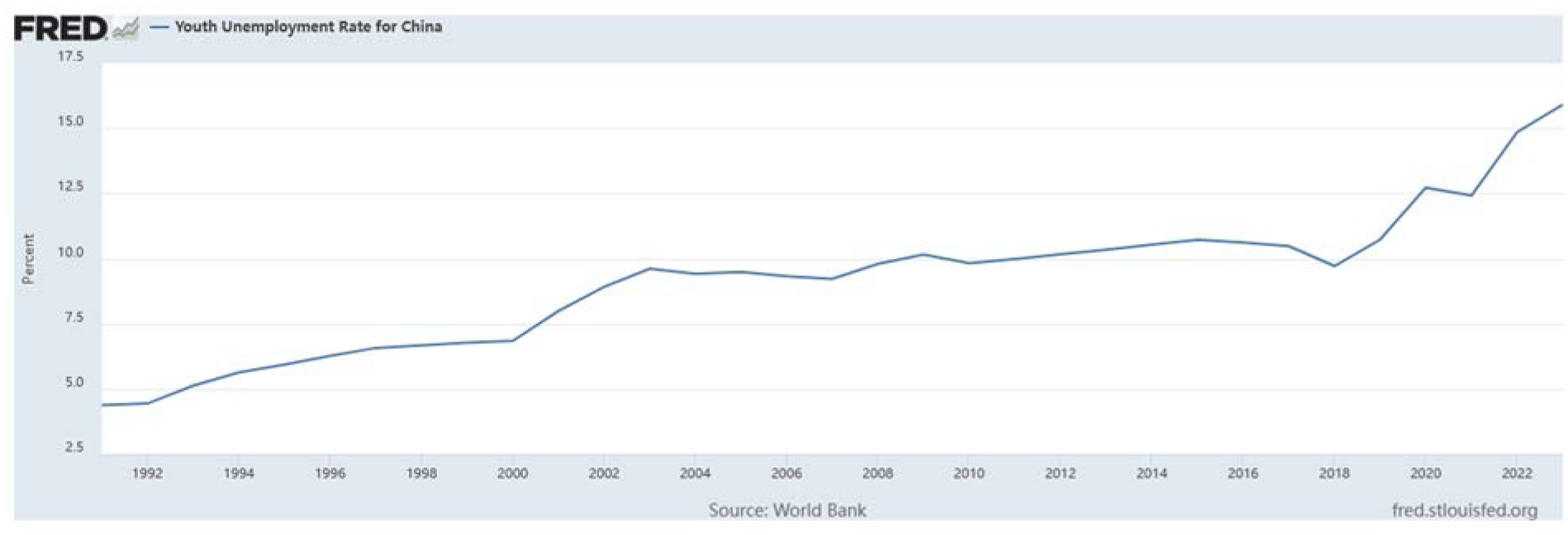
Youth unemployment rate in China from 1992 to 2022.

Real GDP growth of emerging market and developing economies, including China, from 1980 to 2024.
China’s initiatives, which engage rural communities in afforestation projects, transform agricultural lands into forests and grasslands, protect existing forests, grasslands, and wetlands, cultivate woody oil plants, and promote forest tourism, have empowered impoverished communities to enhance their livelihoods. These efforts uplift their economic status while enriching the ecological landscape of disadvantaged regions, creating benefits for both people and the environment (China Daily, 2021).
Moreover, in alignment with the World Bank’s “three-pillars” strategies, China’s developmental approach prioritises labour-intensive industries through employment-centred policies, mandatory education in rural regions, and comprehensive healthcare and social security systems for the elderly (Wei et al., 2023). This model fosters economic growth in rural areas while ensuring that the benefits of development are equitably distributed across all societal segments, particularly among disadvantaged ethnic minorities with limited access to employment opportunities.
China’s Policy Measures in Improving Ethnic Minority Communities
The 13th and 14th Five-Year Plan
During the 13th Five-Year Plan, China has significantly enhanced its economic capabilities, which substantially contribute to improving the economic conditions of poor communities in China, where ethnic communities are particularly vulnerable. Concerning financial, material, and technological support, the state plays a vital role in aiding ethnic minorities to overcome poverty. It systematically identifies and fosters the advancement of regions facing severe poverty, strengthens infrastructure development, and enhances the growth of key sectors, including education, employment, entrepreneurship, social security, healthcare, and cultural initiatives (Ministry of Agriculture and Rural Affairs-World Bank, 2019). With the elevation of 55.75 million rural populations out of poverty, China has achieved a historic resolution to the issue of extreme income deprivation, which has beleaguered the nation for millennia (ADB, 2021).
This accomplishment represents a remarkable milestone in the global history of livelihood enhancement. The 14th Five-Year Plan (2021–2025) for National Economic and Social Development emphasises the pursuit of multidimensional sustainability and the enhancement of human flourishing conditions. The Plan delineates strategies to elevate public services ecosystems to catalyse widespread prosperity, encompassing initiatives to boost household earnings while growing quality job creation. As China aspires to attain the status of a moderately developed country by 2035, it is imperative to double the size of its economy through the growth of labour productivity. The strategy prioritises holistic rural revitalisation, encompassing the modernisation of the agricultural industry. Proactive measures enable rural transformation through climate-smart agricultural technologies, promoting high-value employment and sustainable investment in agrarian communities (ADB, 2021).
As the trend of urbanisation continues to expand across the country, rural areas are witnessing a steady migration of their populations to bustling urban centres. This shift results in a diminished workforce, economic decline, and an intensification of the urban-rural divide. In response, the Rural Revitalisation Strategy of 2018 highlights the importance of strategically expanding the diverse functions of agriculture to promote balanced and equitable development between urban and rural regions (Islam, 2024).
The Plan seeks to enhance the mechanisms for safeguarding and transmitting intangible cultural heritage, while also reinforcing the preservation and perpetuation of the distinguished traditional crafts of diverse ethnic communities. The Plan aims to address the needs of poverty-stricken counties in the western region, such as Yunnan, by directing government support towards a select group of key counties identified for rural revitalisation. This initiative involves a strategic allocation of resources, including government fiscal funding, financial resources, land, talent, infrastructure, and public services. The primary aim is to strengthen the capacity to safeguard and scale anti-poverty success and to promote sustainable, self-sufficient growth (CSET, 2021).
The Plan purposes to transform the rural socio-economic landscape by creating employment opportunities to encourage the return of labour migrants and diversify income through agri-services, ecotourism, and green jobs (ADB, 2021). Focus areas include rural land reform for farm modernisation, climate-smart agricultural value chains, fiscal incentives for private investments and small enterprises, improved public services for returning migrants, and ecosystem management to protect biodiversity and livelihoods through nature-based solutions.
While the 13th and 14th Five-Year Plans have specific targets to enhance the livelihoods of ethnic groups, such as the Bai, China’s social assistance system provides a subsistence allowance and various specialised social assistance programmes for the ethnic populations (Y. Wang, 2022a). The subsistence allowance system is designed to provide differential financial support to target individuals below the national poverty line, thereby ensuring their essential living needs are met. This system functions in delivering immediate anti-poverty benefits to economically disadvantaged households. Consequently, the subsistence allowance system serves as the cornerstone of China’s social security-based anti-poverty strategies. The implementation of these development schemes offers numerous advantages to marginalised ethnic communities, such as the Bai, who often choose to reside in their ancestral regions to safeguard their historical and cultural heritage. The Plan aims to transform the rural landscape by investing in sustainable and environmentally friendly development initiatives designed to attract tourists to ethnic minority areas. Furthermore, this approach is anticipated to generate increased employment opportunities for rural ethnic populations.
Ethnic Minority Development Fund
China aims to eradicate poverty and promote rural revitalisation among ethnic populations through a range of strategic initiatives, one of which is the Ethnic Minority Development Fund. Consequently, China Daily reports that China has allocated approximately $ 926.5 million to support rural revitalisation in regions with significant ethnic minority populations. Since 2021, a total of $ 4,101,300,000 has been allocated to support the implementation of over 24,000 projects, including the development of characteristic industries (People’s Daily, 2024). This investment has significantly advanced the inclusive development in minority-concentrated regions. The 1993 Regulations on Administrative Work in Ethnic Townships aim to safeguard the legitimate rights and interests of individuals in ethnic people-concentrated areas, promote national cohesion, and foster the development of the national economy and culture.
Under the Measures for the Management of Funds for Ethnic Cultural Projects in Yunnan Province 2025, Yunnan Province has established a funding initiative for ethnic cultural projects, with a maximum allocation of $ 139,500 per project. The province has also introduced management measures to ensure the effective administration of these funds.
Provincial Policy Measures
Since 2021, Yunnan Province has been actively promoting the development of modern, thriving villages. This effort has been significantly supported by the effective allocation of funds aimed at advancing ethnic minority communities, in addition to the mobilisation of over $ 1.813 billion from various other sources. These combined efforts have culminated in the successful completion of 13,400 projects (National Ethnic Affairs Commission, 2025). Under the “Pairing Assistance Programme,” the Pudong district of Shanghai has facilitated the alleviation of poverty in 11 counties within the Dali Bai Autonomous Prefecture. Pudong has extended financial support, deployed government officials, initiated projects, and established innovative working mechanisms to enhance the local industrial structure and elevate the income levels of villagers (China Daily, 2020). With Pudong’s assistance, other counties in Dali have also developed distinct industrial brands, such as tea in Nanjian, pigs in Midu, and fruits in Binchuan.
Like Bai ethnic villages, Liulangcheng Village, representative of the Zhuang ethnic community in Yunnan Province, has benefitted from the “Pairing Assistance Programme” facilitated by Shanghai. Through this initiative, a reservoir has been constructed, guaranteeing mountain spring water access for all households. In 2023, there were 696,200 tourist arrivals, making revenue exceeding $3,064,815. Consequently, this development has facilitated employment for over 800 individuals within proximity to their residences (BRNN, 2023).
The Yunnan Provincial Department of Agriculture and Rural Affairs is undertaking initiatives to enhance the rural living environment across the province and to promote sustainable ethnic tourism. By the end of 2024, it is projected that a total of 380,000 rural sanitary household toilets and 3,408 public sanitary toilets will have been renovated and constructed throughout the province, achieving a coverage rate of 75% for sanitary household toilets (Department of Agriculture and Rural Affairs of Yunnan Province, 2025).
Yunnan Province has implemented programmes to enhance the livelihoods of the Bai ethnic group, supporting SDG 1 and SDG 8. The Relocation for Poverty Alleviation has relocated Bai families from isolated mountainous regions to modern communities with improved infrastructure and facilities, thereby lowering poverty rates through increased access to employment opportunities. Vocational training has equipped Bai youth with skills in tourism, handicrafts, and e-commerce, while preserving traditional crafts like Bai tie-dye. The “Rain and Dew Plan” provides scholarships and training to Bai students, with graduates contributing to the strengthening of local economies through employment in various sectors. E-Commerce Villages (TaoBaocun 淘宝村) enable Bai artisans to market their traditional products online, supported by digital marketing training. Ethnic tourism initiatives have helped preserve Bai culture while promoting economic growth, with households in Dali and Xizhou converting homes into homestays. Events like the “Third Month Fair” (San Yue Jie 三月街) and heritage sites generate employment in hospitality and cultural activities.
Through these integrated approaches, Yunnan has improved the living standards of the Bai while advancing sustainable development goals, creating a model for ethnic poverty alleviation in China. Through the implementation of integrated strategies, Yunnan has successfully enhanced the living standards of the Bai community and promoted sustainable development objectives. This approach provides a replicable model for alleviating ethnic poverty within China.
Efficacy of China’s Policy Initiatives in Achieving SDGs 1 and 8 for Bai Ethnic Communities
In China, numerous ethnic groups are experiencing poverty, prompting the government to strategically develop tourist attractions as a means to generate revenue and stimulate inclusive GDP growth in these regions. Consequently, ethnic tourism in China is rapidly evolving into an industry that provides support to those in need (Howard, 2024). The primary challenge hindering the progress of pro-poor tourism is the significant deficiency in knowledge and skills among impoverished populations, which further limits the ability of rural communities to engage effectively in the planning and development processes of tourism projects (Rao et al., 2022).
According to Ramos and Prideaux (2014), the presence of unskilled leadership within a community, coupled with knowledge deficits and resource limitations, generates negative externalities across community subsystems that are disempowered, despite individuals having a strong inclination to participate in tourism-related activities. Conversely, factors such as the scarcity of economic resources and the absence of social support from local communities, coupled with the entrenched power structure among governing and business elites, limit the involvement of local residents in tourism related activities in China, despite their ability to elect a Village Head to manage local affairs (Tian et al., 2023).
Agriculture has historically served as the economic backbone for ethnic communities, such as the Bai, which often struggle with inadequate infrastructure and limited access, and challenges in independently developing tourism due to insufficient experience, skills, and financial resources. Lo et al. (2019) highlight the potential for conflict between local communities and tourism developers, attributing this to the ambiguity surrounding land use rights in rural areas, which may lead to disputes over the authority to alter land use.
Consequently, various levels of the Chinese government have engaged external tourism organisations to facilitate and manage tourism development in rural villages (Tian et al., 2023). Research conducted by Q. Lin and Bao (2015) demonstrates that the expansion of tourism in Yunnan’s ethnic regions augments the value of traditional agricultural and tea resources by incentivising the local population to safeguard their living heritage landscapes.
Y. Wang (2022b) posits that the endogenous growth foundations in Yunnan Province is notably singular, which poses challenges for farming communities attempting to increase their earnings and alleviate poverty. Additionally, the limited development of commercialised agri-food systems contributes to the sluggish advance of farmers’ earnings derived from agricultural product businesses.
However, prior to the designation of Lijiang as a World Heritage site, agriculture constituted the primary source of income for Lijiang’s residents, albeit generating only modest earnings. Following its inclusion in the World Heritage List, Lijiang experienced an economic surge, with tourism emerging as the predominant industry. This development has substantially enhanced both the regional economy and the income levels of local ethnic minorities (Howard, 2024).
In contemporary times, the tourism industry in Yunnan Province has increasingly focussed on ethnic minority festivals, drawing significant interest from local authorities and tourism stakeholders; however, this burgeoning sector faces challenges, notably the trend towards homogenisation and superficiality in festival tourism products (Lei, 2024). The drive for economic profit has led to the commercialisation of these festivals, posing a substantial threat to the preservation of authentic ethnic and traditional culture. This issue is especially evident in areas where government-constructed ethnic villages fail to maintain the genuine cultural essence, which should ideally be deeply rooted in their original cultural and ecological environments.
In Yunnan Province, small family enterprises involved in ethnic tourism serve as the cornerstone of rural tourism, but they have encountered significant challenges in the aftermath of the pandemic. While there has been some recovery, the unpredictability of events such as the pandemic necessitates the implementation of long-term strategies to prevent these marginalised communities from experiencing severe economic repercussions.
The pro-poor framework can play a pivotal role in strengthening the sustainable development potential of a tourism destination, thereby advancing local economic growth and ensuring social stability; nevertheless, there has been a notable lack of attention from government and private stakeholders regarding human resource management in ethnic rural regions of China’s Yunnan Province. On the contrary, Weng and Peng (2014) argue that the challenges in achieving community empowerment in historic Chinese villages are primarily due to the ineffectiveness of mechanisms intended to ensure equitable societal benefit and the extractive institutional arrangements in grassroots administration, which further contribute to internal power imbalances within the community.
Tourism has transcended its traditional role as a profit-driven industry, evolving into a vital process for bolstering local capacities in promoting ethnic identity, cultural heritage, and communal pride (Q. Lin & Wen, 2021), with community-based family enterprises taking the forefront in advancing sustainable tourism within the ethnic regions of Yunnan. These enterprises, rather than functioning independently, engage in collaborative efforts with the local community. This synergy fosters the development of a destination profile that is not only physically inviting but also accessible in virtual spaces.
The endeavour to eradicate poverty among all households and individuals through economic development and TPA is fraught with challenges due to a multitude of influencing factors. In China, particular attention is directed towards ethnic minority regions, with a particular emphasis on underserved rural communities in the western part of the country, such as the Bai in Yunnan Province, which are prioritised in development-oriented rural poverty alleviation strategies.
The greatest challenge in alleviating poverty through tourism lies in rural regions, particularly in remote ethnic communities, such as the Bai in Yunnan province, which face significant economic hardship. Needless to say, these areas represent key efforts to use tourism to uplift those in need. Regional economic development through tourism aligns with rural revitalisation and national policies aimed at alleviating poverty. This initiative promises sustainable growth (J. Wang & Lv, 2023). However, it is worthwhile to mention that some regions, driven by rapid development goals, have exceeded the capacity of their environmental resources, creating stakeholder conflicts and highlighting the need for balanced development. Effective rural governance has become essential for sustainable rural revitalisation.
It is widely contended that enhancing the capabilities of economically disadvantaged populations is best achieved through investment in formal education, encompassing technical extension and vocational training (Akita & Lethro, 2024); nevertheless, Wu et al. (2025) opine that this disproportionate reliance on educational investment may lead to mismatches between the recipients and the educational content, as the majority of individuals engaged in tourism development are beyond the typical age for schooling. China’s homogenous educational system disregards ethnic identity and religious expressions of minority groups, excluding them from mainstream inclusion (Xue & Li, 2020). While national literacy reached 96.7% in 2020, minority access to quality education (SDG-4) remains low. As noted by scholars Xue and Li (2020), China’s educational policies aimed at including ethnic minority populations have yielded both progress and setbacks. These initiatives have significantly contributed to fostering national integration, sustaining national unity and regional stability, enhancing the academic achievements and cross-cultural skills of minority students, and ensuring a fair distribution of educational resources (Xue & Li, 2020).
Educational programmes provide disadvantaged populations with the skills and knowledge necessary for the tourism industry (Dang et al., 2024). Targeting and assisting the poor in tourism operations fosters sustainable development and enhances their well-being. Nevertheless, Zeng and Ryan (2012) argued that governments have historically overseen tourism development in rural areas as operators, policymakers, and coordinators, resulting in industry monopolisation and TPA policies.
The utilisation of SDG indicator 8.9.1 in measuring the “Tourism Direct GDP” plays a crucial role in monitoring Target 8.9, which actively urges countries to “by 2030, devise and implement policies to promote sustainable tourism that creates jobs and promotes local culture and products,” as outlined in Goal 8. Similarly, indicators 8.9.2, “Proportion of jobs in sustainable industries out of total tourism jobs,” and 12.b.1, accentuate “Implementation of standard accounting tools to monitor the economic and environmental aspects of tourism sustainability.” However, there is no clear definition of “tourism jobs” unless it is described as “the measurement of employment is limited to employment in the tourism industries, and the variables used to express this volume are the number of jobs and hours worked” (UNWTO, 2017). Across the globe, we have witnessed a remarkable increase in labour productivity alongside a decrease in unemployment rates. However, it is essential to pursue further progress to improve job opportunities, especially for the younger generation, and to reduce the prevalence of informal employment. This includes addressing inequalities in the labour market, advocating for safe and secure work environments, and facilitating access to financial services to foster enduring and equitable economic development.
Evidence from international contexts underscores the importance of a comprehensive social security system as the final safeguard against poverty for all societal members (Y. Wang, 2022a). Consequently, the establishment and enhancement of such a system are imperative for the complete eradication of poverty.
Discussion
The study results illustrate that the correlation between the advancement of tourism and its positive impact on economic growth, as well as the reduction of poverty within ethnic minority communities, has captured the world’s interest and concern. This study argues that the ethnically marginalised population in China, particularly in central and southwestern provinces such as Yunnan, faces significantly more challenging circumstances compared to their urban counterparts, which serve as case study examples. The challenging natural surroundings, delicate ecological systems, limited infrastructure, underdeveloped economy, and inadequate human resources in ethnic minority regions present formidable obstacles in the structural poverty alleviation programme for all ethnic minority communities in China, including the Baizu minority in Yunnan province.
As noted in the case studies section of the Bai ethnic community, tourism workforce development offers women opportunities to achieve both economic and social independence. We see women hold a significant role in family dynamics due to their economic contributions. By participating in small businesses related to tourism, Bai ethnic women have gained empowerment and autonomy, reducing their economic dependence on men and societal structures. Scholars like Gu et al. (2024) argue that women’s involvement in the local tourism industry mitigates negative conditions, such as feelings of emptiness and reliance on family. Additionally, they have shifted from passive roles to active engagement in cultural tourism initiatives, thereby fulfilling their broader social responsibilities. Furthermore, referring to the example of ethnic minorities in southwestern regions, L. Zhang et al. (2014) articulate that women, such as those from the Bai community, possess an enhanced ability to engage with tourists by utilising the cultural practices of their local communities, thereby advancing the commercialisation of ethnic culture.
In recent years, the rapid growth of ecotourism in the Bai ethnic areas has led to increasing signs of over-commercialisation, gradually eroding the authenticity of Baizu culture. Moreover, the development of ecotourism reveals the harsh reality of an imbalanced distribution of economic benefits. Certain tourism enterprises, like greedy behemoths, leverage their substantial capital and market advantages to dominate the development and operation of tourism resources, monopolising most of the economic gains. As a result, despite their hard work, local residents are left to struggle at the bottom of the tourism value chain, engaging in low-value-added jobs with meagre income (G. Z. Zhang, 2024). The Dali Municipal Bureau of Culture and Tourism has undertaken a dual approach in response to these issues. On the one hand, they have utilised online platforms to advance the standardisation, equalisation, and quality of public cultural services. On the other hand, they have addressed the root causes of problems by tightening market oversight, enforcing strict laws, and eliminating unscrupulous operators who harm tourists’ legitimate rights, thereby striving to maintain a positive image and an orderly market for Dali tourism.
While the tourism market in Dali has seen some improvement under government regulation and strict enforcement, a noticeable issue persists in certain Baizu areas. Specifically, there are cases of non-local Han individuals masquerading as Baizu people in business transactions. This reflects a pursuit of economic gain, where pretending to be of Baizu ethnicity enables businesses to attract more tourists by leveraging the appeal of ethnic identity, thereby securing greater economic benefits. For instance, claiming that handicrafts are authentically Baizu-made can enhance product appeal and value, allowing merchants to charge premium prices. In the highly competitive tourism market, some businesses believe that branding themselves as Baizu can help them stand out. Compared to ordinary Han merchants, tourists are often more inclined to patronise shops they perceive as having ethnic characteristics. This has led some Han merchants to impersonate the Baizu to gain a competitive edge and capture a larger market share, ultimately increasing their profit margins. However, this phenomenon has harmed the commercial development of authentic Baizu merchants.
This situation highlights the economic value embedded in Baizu culture. Elements such as traditional attire, architectural styles, culinary customs, and cultural practices have become key attractions for tourists. The fact that Han merchants impersonate Baizu individuals demonstrates their recognition of the commercial benefits of ethnic and cultural characteristics, exploiting tourists’ curiosity and fascination with ethnic traditions to boost business. However, while these businesses utilise Baizu cultural elements for commercial gain, such impersonation often reduces cultural heritage to a superficial, profit-driven symbol rather than genuinely preserving and promoting Baizu traditions. This trend indicates that, in the pursuit of commercial profit, some individuals’ understanding of and respect for ethnic culture remain shallow, focussing solely on economic returns while disregarding the deeper aspects of cultural preservation. Over time, this could lead to the misinterpretation and exploitation of ethnic culture, threatening its authenticity and sustainable development.
Such unethical and dishonest practices violate principles of business integrity and fair competition, ultimately harming consumer interests. Tourists, drawn by the promise of an authentic ethnic experience, may find that the products or services they receive do not align with what was advertised. This issue underscores the lack of effective certification mechanisms and regulatory oversight by local authorities regarding merchants’ claims of ethnic identity in ecotourism-related commercial activities. The absence of a clear system requiring businesses to provide verifiable ethnic identity information or demonstrate that their offerings align with the advertised cultural characteristics allows for the arbitrary appropriation of ethnic identities. This disrupts market order and may contribute to misunderstandings or tensions between ethnic groups, undermining national unity and social stability.
Furthermore, the behaviour of some Han merchants reveals a lack of accurate and comprehensive understanding of ethnic culture, as well as a deficiency in respect for ethnic identity. They fail to recognise the potential negative impact of impersonation. This situation also reflects a broader social issue: the need to enhance the dissemination of ethnic and cultural education. It is not only essential for members of each ethnic group to deepen their understanding of their own culture, but also for other groups to develop a respectful appreciation of diverse ethnic traditions. This would promote mutual understanding and inclusiveness among different ethnic groups, contributing to a harmonious social and cultural environment.
It is to be noted that China does not recognise the term “Indigenous people” within its territory, instead accepting 55 ethnic minority communities (in their counterpart to the majority Han population). The Law of the People’s Republic of China on Regional Autonomy (REAL) serves as a foundational statute guiding the governance of minority nationalities within the nation (IWGIA, 2020). This legislation empowers the establishment of autonomous regions, enabling these communities to create their own local governments and preserve and promote their unique languages and cultural practices. Criticising this Law, H. T. Zhang (2012) argues that in practice, the autonomous powers conferred under the REAL framework often resemble those of non-autonomous local governments, exhibiting no significant distinction from local governments situated outside the autonomous regions. Yet, minority groups in China play a crucial role in the country’s long-term development, as they reside in resource-rich regions that encompass nearly 60% of the country’s land area. Their presence and contributions are vital for harnessing and managing these valuable resources, thereby shaping the country’s future prosperity.
The government must enhance community-led ethnic tourism in China’s minority-concentrated regions, such as Yunnan, through strategic planning, poverty alleviation strategies, human resource investments, diverse employment opportunities, distinctive tourism offerings, and ecological conservation measures (Z. Z. Wang & Wang, 2018). J. Wang and Lv (2023) advocate for a comprehensive approach to eradicate poverty through tourism, emphasising the need for departments to unite and involve residents in a collective effort. By addressing community needs comprehensively, China can enhance its poverty alleviation initiatives. This collaboration promotes sustainable tourism for inclusive prosperity, embedding pro-poor components in regional value chain development. However, mitigating poverty through tourism requires the collaborative engagement of all societal stakeholders.
Policy Recommendations
Yunnan’s local governments have implemented tourism policies aimed at achieving pro-poor outcomes. However, more progress is needed to ensure sustainable tourism reduces poverty (SDG 1) and increases employment (SDG 8) in Bai ethnic areas. Research in Dali and Lijiang suggests ST policies should focus on (1) policy supports, (2) integration, and (3) skill development.
These policies will enable Bai minorities to participate in tourism and contribute economically to their villages. Community-based tourism has boosted the economy in Dali Xizhou Ancient Town, but some villagers are unable to participate due to a lack of funds or skills. As more tourists visit Xizhou and other destinations in Dali and Lijiang, outside investors benefit more than the villagers. Engaging the local community is crucial to ensure that ST benefits the locals. The local government can provide loans, offer tax incentives, enhance business capabilities, or establish village cooperatives to support community-based tourism, thereby keeping income within the community.
Align tourism policies with China’s rural revitalisation strategy by improving infrastructure (roads, transport, telecommunications, accommodations, safety) to support tourism accessibility. Many villages lack tourist infrastructure. Efforts should begin with renovating roads, water supply systems, sewage systems, and other infrastructure to expand the accommodation capacity of Bai ethnic villages. The government and development partners assist in restoring architecture and infrastructure in villages like Shaxi, Yunnan, providing rural communities with tourism training and loans. By 2023, the village had 93 catering businesses, 122 guesthouses, and 39 handicraft shops, with over 1,000 people in tourism (1/3 women). However, current facilities cannot accommodate millions of tourists visiting Dali and Lijiang’s premier destinations.
To enhance competitiveness and develop skills, provide training to the Bai population in the hotel and restaurant, local food manufacturing industries (e.g., Dali Er Kuai (大理饵块), Dali Rushan (大理乳扇 Dàlǐ Rǔshàn), Dali Baba (大理粑粑), Yunnan Rice Noodles (云南米线 Yúnnán Mǐxiàn), Dali Grilled Fish (大理烤鱼 Dàlǐ Kǎoyú), Lijiang Baba (丽江粑粑), Yak Meat Hotpot (牦牛肉火锅 Máoniúròu Huǒguō), Jidou Liangfen (鸡豆凉粉)), digital marketing to sell local food and cultural items, and handicraft innovation. Multi-channel brand marketing and digital strategy are fundamental. Official channels and social media platforms, such as TikTok (DouYin in Chinese) and Redbook (Xiaohongshu in Chinese), can promote Bai ethnic homestays and culture.
The China National Tourism Administration conducts training programmes on tourism poverty alleviation for rural tourism leaders and officials in areas such as Yunnan’s Dali and Lijiang, maximising social forces in poverty alleviation. Yunnan local governments have included poverty reduction KPIs in officials’ performance evaluations for tourism projects, with some regions deploying officials to support tourism development in rural villages. While government involvement in rural tourism brings advantages, economic prosperity remains a key factor in its development. Therefore, support should also extend to local Bai villagers who develop other businesses, including agricultural processing, Bai ethnic handicrafts, and cultural products.
In summary, although Yunnan’s ST policy has promoted regional development and reduced poverty among the Bai ethnic group to some extent, targeted interventions are still needed in areas such as the protection of the Bai ethnic minority culture (cultural equity and cultural invasion) under the ST policy.
Conclusions
This research aims to illuminate the intersection of SDGs 1 and 8 from the perspective of the Bai ethnic community, which actively participates in tourism in Yunnan Province, southwestern China. Our objective is to assess how effectively these goals align with and support the developmental aspirations of the Bai people. Additionally, this study aims to investigate the livelihood conditions of the Bai ethnic minority, who face considerable challenges in sustaining their daily lives in comparison to their urban counterparts and the Han majority. The Bai community, constrained by limited resources, finds it difficult to alter its circumstances without substantial government support. Traditionally reliant on agricultural practices for their livelihood, the Bai people now confront the pressing issue of urbanisation in their region, which poses significant threats to their way of life. Compounding this challenge is the influx of non-ethnic individuals settling in their territory, which raises concerns about the preservation of their unique cultural identity. While the interaction between these diverse communities, influenced by globalisation and economic factors, may foster connections, it also presents a potential risk to the continuity of the Bai’s ethnic heritage. While our research focussed specifically on the Dali and Lijiang regions, where the Bai minority is predominantly located, we encourage future investigations to explore this topic from a wider lens, potentially uncovering richer insights and a more comprehensive understanding.
Footnotes
Acknowledgements
All errors and omissions relating to this article remain the authors’.

Ethical Considerations
The participants who have been communicated in this study are chosen voluntarily with their oral approval. Due to cultural issues, their identities were not disclosed. Thus, no further approval is required.
Author Contributions
Funding
The authors disclosed receipt of the following financial support for the research, authorship, and/or publication of this article: This research is supported by Wuhan Business University 2022-2024 Startup funds for high-level talents (Z2024083016285621).
Declaration of Conflicting Interests
The authors declared no potential conflicts of interest with respect to the research, authorship, and/or publication of this article.
Data Availability Statement
Data sharing not applicable to this article as no datasets were generated or analysed during the current study.