




Abstract
Small and medium-sized enterprises (SMEs) in the food and beverage industry often struggle with service recovery due to changing customer expectations and behaviors. This study investigates the influence of authentic leadership on service recovery performance, emphasizing the mediating role of organizational citizenship behavior. Guided by Social Exchange Theory, the research draws on data from 334 employees working in Thai food and beverage SMEs. A structured questionnaire was used to collect responses, and the relationships among key variables were analyzed using structural equation modeling. The findings reveal that authentic leadership positively affects service recovery performance, with organizational citizenship behavior playing a partial mediating role. These results underscore the importance of leadership practices that foster trust and employee engagement. The study contributes to a deeper understanding of how leadership and organizational behavior can enhance service recovery efforts, offering practical implications for SME management in the highly competitive food and beverage sector.
Keywords
Introduction
The food and beverages services sector in Thailand has been experiencing notable expansion, growing by 7.1% and reaching an estimated value of 4.35 hundred billion baht in 2023 (Kasikorn Research Center, 2023; Ratasuk & Charoensukmongkol, 2019). Thai small and medium-sized enterprises (SMEs) significantly contribute to this sector, constituting 99.83% of the total businesses, with 384,777 establishments recorded in 2022 (Trade Policy and Strategy Office, 2023). Despite this growth, entrepreneurs in the food and beverage industry face formidable challenges arising from heightened competition and the dynamic evolution of consumer behavior (Government Savings Bank, 2023; Kasikorn Research Center, 2022; Techsaurce, 2022). These challenges necessitate continuous service development to align with evolving customer preferences and meet heightened expectations regarding quality, hygiene, and overall service standards (Trade Policy and Strategy Office, 2023).
In the service sector, service failures are both inevitable and frequent, making recovery efforts crucial for future behaviors (Kim et al., 2022). The restaurant industry, characterized by extensive personal interaction between staff and customers, is particularly prone to errors, mistakes, and complaints during service delivery (Othman et al., 2013). Service recovery, defined as proactive actions taken in response to potential service failures (Zeithaml & Bitner, 2000), is essential for addressing instances where service performance falls below customers’ expectations, leading to negative emotions and dissatisfaction (Zeithaml et al., 1996). Effective service recovery is critical for customer retention and improving customer loyalty (Ahmad et al., 2018; Amoako et al., 2023). However, the current success rate of service recovery is often inadequate (Zou & Migacz, 2022); for instance, issues such as food not being cooked to order, food containing hair, wrong orders being delivered, or incorrect change being given highlight the need for improved service recovery systems as a competitive advantage for service organizations (Cao et al., 2008; Dutta et al., 2007).
Enhancing service recovery performance is a growing priority for firms in the food and beverage sector, particularly among SMEs operating in highly competitive and customer-driven markets. This study examines the influence of authentic leadership on service recovery performance within Thai food and beverage SMEs. Authentic leadership, characterized by self-awareness, moral integrity, transparency, and relational openness (Avolio & Gardner, 2005; George & Bennis, 2008; Walumbwa et al., 2008), has been associated with positive organizational outcomes (Intesarach & Ueasangkomsate, 2021). As an emerging leadership paradigm, authentic leaders are defined by their commitment to core values, honest communication, and the ability to foster collaboration (Khan & Ahmed, 2021).
While previous studies have explored the effects of transformational leadership on service recovery across various service industries—including hospitality, travel, public services, and aviation (Khoshlahn & Ardabili, 2016; Kim Quy et al., 2023; Luo et al., 2019)—most were conducted outside of Thailand and have not specifically addressed authentic leadership. In the Thai context, limited research has examined leadership in relation to SME performance, and even fewer have focused on service recovery (Sanguanwongs & Kritjaroen, 2023). Furthermore, the few existing studies linking authentic leadership to service recovery have concentrated on pharmaceutical and hotel sectors (Bin Abd Razak & Bin Fauri, 2022; Luu, 2020), leaving a significant research gap in the food and beverage industry—an industry vital to Thailand’s economic growth.
This study also considers the mediating role of organizational citizenship behavior, which involves voluntary and proactive employee actions that extend beyond formal job duties (Graham, 1991; Ru-zhe & Agmapisarn, 2023). In service-oriented contexts, organizational citizenship behavior includes behaviors such as assisting colleagues, volunteering for additional responsibilities, and taking initiative to resolve customer issues—all of which are essential for effective service recovery. Previous studies have linked organizational citizenship behavior to improved organizational performance and customer satisfaction (Bienstock et al., 2003; Organ, 1988; P. M. Podsakoff et al., 2000), yet limited attention has been given to its mediating role in the relationship between leadership and service recovery. In Thailand, only one study has examined organizational citizenship behavior in connection with job performance in the hotel sector (Boonparkob, 2019), further underscoring the need to explore this dynamic within food and beverage SMEs.
By addressing these gaps, this study contributes to both theory and practice. Theoretically, it extends the application of authentic leadership and Social Exchange Theory in the context of service recovery. Practically, it offers insights for SME managers seeking to strengthen service outcomes through leadership development and employee engagement.
Hence, this study investigates the relationship between leadership and employee behavior within food and beverage SMEs in Thailand, using Social Exchange Theory (SET) as its conceptual foundation. According to SET, the quality of interactions and reciprocal exchanges between individuals within organizations shapes employee attitudes and behaviors (Blau, 1964; Emerson, 1976). Authentic leadership—characterized by openness, trust, and ethical conduct—can foster an environment where employees feel respected and supported (Hsiung, 2012; Wang et al., 2014). In such environments, employees are more likely to reciprocate positive treatment by going beyond formal job roles, demonstrating organizational citizenship behavior, and engaging more effectively in service recovery efforts. By drawing on SET, this research aims to deepen the understanding of how authentic leadership influences service recovery performance through organizational citizenship behavior in the context of Thai food and beverage SMEs.
The value of this study lies in both its theoretical and practical contributions. Theoretically, it extends the application of SET to leadership and service performance in a specific SME context. Practically, it offers insights for SME managers seeking to improve service quality through leadership development and employee engagement, ultimately supporting the resilience and competitiveness of Thailand’s food and beverage sector.
The structure of this paper is in four parts. The first discusses the theoretical background and hypotheses, followed by an introduction to the conceptual framework. The research methodology is explained in the second part, followed by the presentation of results with statistical analysis in the third. The final part includes conclusions and discussion, encompassing theoretical implications, managerial implications, societal impacts, limitations, and suggestion for future research.
Theoretical Background and Hypotheses
Authentic Leadership, Service Recovery Performance, and Organizational Citizenship Behavior
Authentic leadership is a leadership style characterized by genuineness, self-awareness, moral integrity, and transparent relationships (Avolio & Gardner, 2005; George & Bennis, 2008; Walumbwa et al., 2008). According to a study by Owusu-Bempah et al. (2011), it was argued that authentic leadership has been proposed as the new leadership paradigm that can meet the demands of organization. Authentic leadership promotes both positive psychological capacities and a positive ethical climate, fostering an environment between leaders and followers where balance in information processing and relational transparency is maintained (Mohammad et al., 2023; Walumbwa et al., 2008). Such an environment is essential for effective service delivery and employee engagement. While service recovery performance refers to an organization’s ability to effectively respond and rectify service failures, aiming to restore customer confidence and maintain positive relationships (Bitner et al., 2008; Hartline & Ferrell, 1996; Parasuraman et al., 1988). Effective service recovery is essential in customer retention and enhancing the overall customer experience. Regarding organizational citizenship behavior, this refers to discretionary, extra-role behaviors exhibited by employees that go beyond their formal job responsibilities and contribute positively to the overall functioning of the organization. These behaviors include actions, such as helping colleagues, volunteering for additional tasks, and displaying a positive attitude (Organ, 1988; Organ & Ryan, 1995).
Social Exchange Theory (SET)
Social Exchange Theory (SET) is a foundational framework in understanding social behavior as a series of transactions, encompassing social and psychological aspects such as trust, loyalty, and respect (Blau, 1964; Homans, 1958). At its core, SET is driven by the principles of reciprocity, where the exchanges of resources or services are expected to be reciprocated, where individuals seek to gain maximum returns for their investments in social interactions (Molm, 2003). These principles underscore the interdependent nature of social relationships, requiring continual management to maintain balance and fairness. In organizational contexts, SET explains the dynamics of employee-organization relationships, particularly highlighting how authentic leadership can influence employee behaviors through transparent and ethical exchanges (Cropanzano & Mitchell, 2005; Leroy et al., 2012). Leaders who exhibit authenticity are likely to foster high-quality social exchanges that enhance employee engagement and commitment (Hoch et al., 2018). This leads to increased organizational citizenship behavior, where employees voluntarily exceed job requirements in response to the supportive environment, further contributing to effective service recovery performance (Hoch et al., 2018). Such behaviors are seen as employees reciprocating the positive treatment they receive, thus enhancing customer service and satisfaction in challenging service recovery scenarios (Bolino & Turnley, 2003).
Hypothesis Development
Authentic leadership is essential in instilling confidence among employees and enhancing their performance by fostering an environment that promotes the exchange of ideas and the proposal of innovative service recovery methods (Avolio & Mhatre, 2011). The honesty and transparency demonstrated by authentic leaders are crucial for driving employee performance in service recovery, as these traits build trust and motivate employees (Luu, 2020). Research by Bin Abd Razak and Bin Fauri (2022) highlights the connection between authentic leadership and service recovery within the hotel sector, underscoring the effectiveness of authentic leadership in customer-facing industries. Furthermore, authentic leaders engage in thorough analyses of relevant information before making decisions, which contributes to improved employee performance by ensuring that service recovery strategies are well-informed and effective (Walumbwa et al., 2008). In customer-oriented organizations, these leaders collaborate with their employees to establish guidelines, procedures, and a corporate culture that supports high-performing service recovery (Wong & Heather, 2012). Additionally, authentic leaders influence employees to acknowledge their limitations in customer service and be receptive to customer feedback. Authentic leadership promotes responsible employee performance in rectifying service failures according to customer needs and addressing complaints appropriately (Baquero, 2023; Helmuth et al., 2023; Henson & Hemby, 2023). Based on a comprehensive review of the literature, we propose the following hypothesis:
Avolio et al. (2004) asserted that employees exhibit higher levels of organizational citizenship behavior when they are under the supervision of an authentic leader, thus leading to the motivation for employees to have positive attitudes and behaviors. Qiu et al. (2019) explored this relationship in the hospitality sector, finding a significant positive correlation between authentic leadership and organizational citizenship behavior. Additionally, Alomari et al. (2019) demonstrated that authentic leadership positively impacts organizational citizenship behavior across various sectors, corroborating the findings of Farid et al. (2020), Ramalu and Janadari (2022), and Iqbal et al. (2018). Recent studies continue to support this view. For example, Jun et al. (2023) and Amran et al. (2023) explain that authentic leadership fosters employee identification with supervisors and workgroups, which is crucial for enhancing organizational citizenship behavior. Jabri and Ghazzawi (2019) suggested that authentic leadership fosters a positive work environment, resulting in higher employee productivity. Thiruvenkadam et al. (2017) found that the more employees perceive the authentic leadership of their supervisors, the greater their level of job satisfaction, commitment, and willingness to perform their duties. In customer-oriented organizations, authentic leadership significantly impacts service innovative behavior and performance of front-line employees (Verbeke et al., 2010; Yamak & Eyupoglu, 2021). Such leaders effectively communicate the importance of customer service, remain open to listening to customer feedback, and ensure that services are performed responsibly and complaints are addressed promptly (Luu, 2020). This comprehensive evidence suggests that authentic leaders not only build trust and motivation but also create a supportive environment that enhances organizational citizenship behavior. Considering the extensive review of the literature, we propose the following hypothesis:
When employees engage in organizational citizenship behavior, they demonstrate a consistent interest in the organization and go beyond their assigned duties to serve customers. Organizational citizenship behavior leads employees to anticipate customer needs, adapt service to meet customer expectations, and continually seek ways to enhance service quality (Dimitriades, 2007). Dawson et al. (2023) revealed that organizational citizenship behavior positively impacts service recovery performance in the hotel sector, highlighting its critical role in effective service recovery. Hung et al. (2022) indicated that organizational citizenship behavior strongly influences employee performance in service enterprises, leading employees to exert great effort in their jobs and complete assigned tasks effectively. Similarly, Putri (2022) emphasized that organizational citizenship behavior is a significant factor contributing to overall employee performance. Furthermore, Bienstock et al. (2003) explained that organizational citizenship behavior drives employees to exceed the organization’s service standards when evaluating and recovering service failure, resulting in greater customer satisfaction. Employees with high level of organizational citizenship behavior actively seek innovative ways to deliver service that address and overcome failures, thereby achieving superior service recovery performance (Luu, 2020). This proactive approach ensures that service recovery meets the highest levels of customer satisfaction. Based on the comprehensive preview of previous studies, we develop the following hypothesis:
After reviewing of the conceptualization, theories and research related to authentic leadership, service recovery performance, and organizational citizenship behavior, we have defined the conceptual framework presented in Figure 1. These hypotheses are grounded in the principles of SET, which posits that the quality of social exchanges within an organization influences the behavior and performance of its members. Authentic leadership, by fostering high-quality exchanges, creates a work environment that promotes both high levels of organizational citizenship behavior and effective service recovery performance. Moreover, organizational citizenship behavior serves as a mediating variable in this relationship, as it bridges the influence of authentic leadership on service recovery performance. This mediation suggests that authentic leadership enhances organizational citizenship behavior, which in turn leads to improved service recovery performance. This reciprocal relationship reinforces positive social exchanges, creating a virtuous cycle of favorable organizational behavior. This dynamic underscore the integral role of authentic leadership in cultivating a supportive and high-performing organizational culture through the mediation of organizational citizenship behavior.
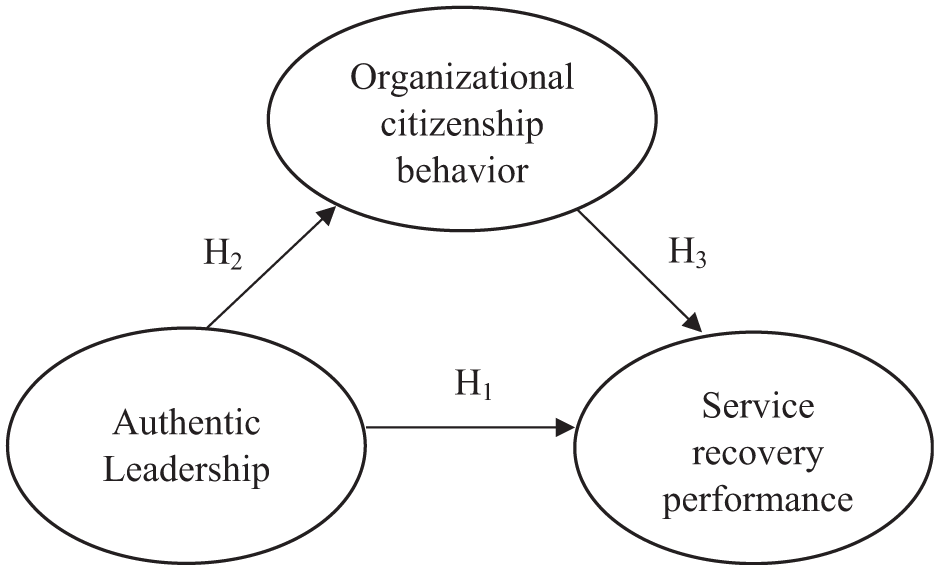
Conceptual framework.
Research Methods
Instrument Development
The survey was structured into five parts, with the first pertaining to the respondent profile and characteristics of the Thai domestic food and beverage SMEs. Then, authentic leadership, organizational citizenship behavior, and service recovery performance were probed in the second to fourth parts of the survey, respectively, which required responses to statements on a 5-point Likert scale for each item (1 = the least agreement, 5 = the most agreement).
Multiple items were adapted from the studies by Walumbwa et al. (2008), Qiu et al. (2019), and Luu (2020) to measure authentic leadership, consisting of five items in total. Organizational citizenship behavior was measured using a 5-point Likert scale with three items based on the research by Amah (2017), Qiu et al. (2019), and Luu (2020). To assess the level of service recovery performance, four items were adapted from Othman et al. (2018), Rod et al. (2008), and Luu (2020). To ensure the appropriateness of the questionnaire in the Thai food and beverage industry context, a comprehensive validation process was undertaken. Initially, the questionnaire was translated from English to Thai. The translated questionnaire underwent a thorough review by experts familiar with the Thai food and beverage industry. Their feedback was instrumental in refining the questionnaire to better align with the specific nuances of the Thai context. A pilot test was then conducted using a sample of 30 respondents from the target population within the Thai food and beverage industry. This pilot test aimed to identify any difficulties that respondents might encounter while answering the questionnaire. Based on the feedback received during this phase, minor adjustments were made to improve the clarity and relevance of the questionnaire items, ensuring that respondents could understand and respond accurately.
Sample and Data Collection
The sample of this study were the employees working in the domestic food and beverage SMEs (e.g., restaurant, café, dessert shop, bistro, or ice-cream shop) in Thailand. They work with their leaders, including entrepreneurs or managers, running the food and beverage business for customers in the form of dine-in, take away or delivery. For the sampling method, convenience sampling with nonprobability sampling was utilized to gather the data from respondents and the data collection was carried out by distributing the questionnaires in person.
The questionnaires were completed by employees from food and beverage SMEs located in four provinces in Thailand, including Bangkok, Nakhon Pathom, Pathum Thai, and Chanthaburi. There were 388 surveys returned, of which, 334 responses were usable for statistical analysis. The Thai domestic food and beverage SMEs’ characteristics and respondents’ profiles are presented in Table 1.
Food and Beverage SMEs’ Characteristics and Respondents’ Profiles (n = 334).
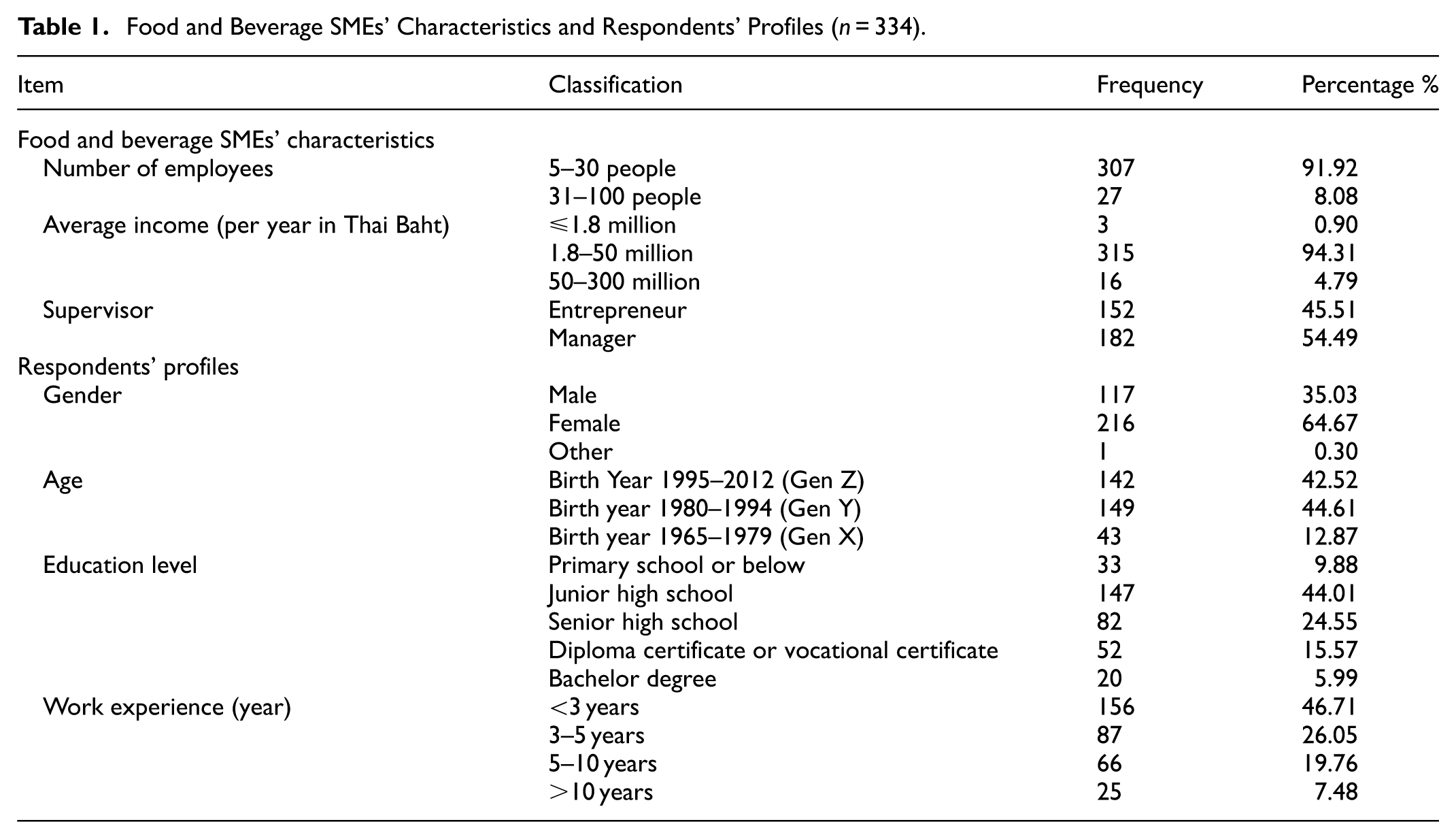
The vast majority of the domestic food and beverage SMEs in this study had between 5 and 30 (91.92%) employees. Additionally, it was found that all samples come from SMEs with an income more than 1.8 million and less than 50 million baht per year (94.31%). Most of the respondents were supervised and assigned duties directly from their managers (54.49%) and the rest, by their entrepreneurs (45.51%). The respondents were 64.67% female. Most of them had obtained a certificate of high school (68.56%) and most of them had less than 5 years (72.76%) work experience.
Statistics Analysis
The analysis was conducted using a final dataset comprising 334 questionnaires. Statistical analyses were performed using SPSS, while all hypotheses were tested through Structural Equation Modeling (SEM) using AMOS.
Data Analysis and Results
Reliability and Validity
In the initial phase, the reliability of each variable was assessed using Cronbach’s alpha, with a criterion of exceeding .70. Additionally, the factor loading for each item within dimensions was required to be above 0.60. The model’s reliability was examined using construct reliability (CR), which should surpass the threshold of 0.70. Convergent validity was evaluated through Average Variance Extracted (AVE), with the expectation that it exceeded the recommended level of 0.50 (Fornell & Larcker, 1981). The results of the reliability and validity analysis are presented in Table 2. It shows these meeting the minimum required criteria, except for the AVE value, which indicates that the SRP construct was lower than 0.50. However, the value of 0.4 is acceptable due to condition that, if AVE value is less than 0.5, but CR is higher than 0.6, the convergent validity of the construct is still adequate (Fornell & Larcker, 1981).
The Results of the Reliability and Validity Analysis.

The heterotrait-monotrait ratio of correlations (HTMT) was selected to assess discriminant validity. According to Table 3, the HTMT value of each construct was below the 1 threshold, thus indicating discriminant validity (Henseler et al., 2015).
Discriminant Validity Assessment.

Structural Equation Modeling
The statistical program generated a measure of goodness of fit and explained variance for the model. Additionally, the coefficients were interpreted as standardized regression coefficients (β), incorporating path analysis decomposed into direct effect, indirect effect, and total effect. Model evaluation included adequacy indexes, such as relative chi-square (χ2/df) = 2.705, goodness of fit index (GFI) = 0.940, comparative fit index (CFI) = 0.947, incremental fit index (IFI) = 0.947, Tucker–Lewis index (TLI) = 0.931, root mean square residual (RMR) = 0.021, and root mean square error approximation (RMSEA) = 0.072. Considering the comprehensive statistical values of the indices (χ2/df < 3.00; GFI, CFI, IFI, TLI > 0.90; RMR < 0.05; RMSEA < 0.08, as per Byrne, 2010; Hair et al., 2010; Kline, 2011), the model is deemed suitable for estimating the structural model.
To examine the hypotheses, we employed the decomposition of effect approach, wherein the overall impact of an independent variable on a dependent variable is separated into its direct and indirect effects. Subsequently, Structural Equation Modeling (SEM) was employed to explore the causal connections between variables, with organizational citizenship behavior serving as the mediator. Figure 2 depicts the path analysis derived from the SEM results.
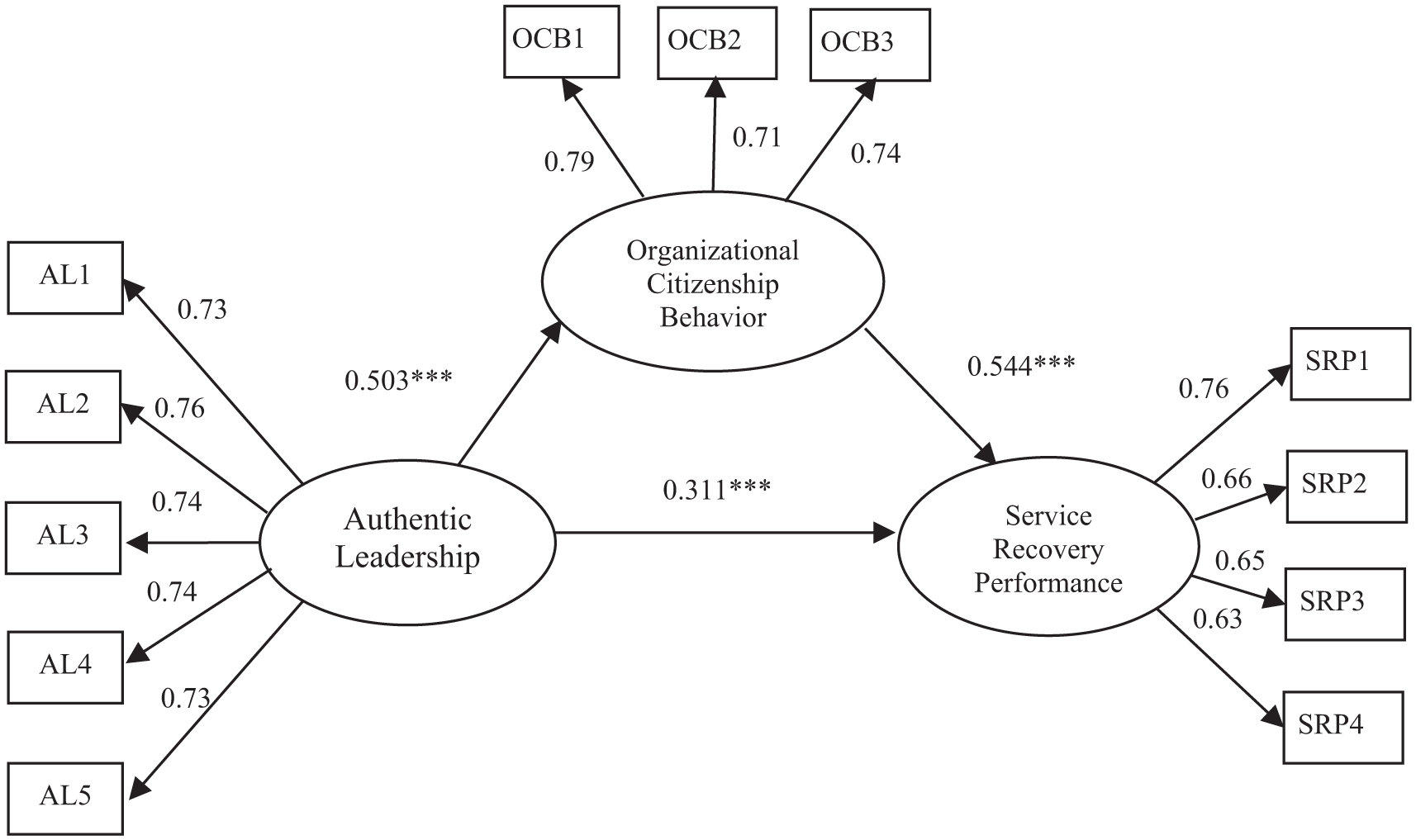
Results of the structural equation model. ***p-Value ≤ .001.
The results of the hypothesis testing are outlined in Table 4, indicating support for all hypotheses. In alignment with the first hypothesis (H1), authentic leadership exhibited a significant positive impact on service recovery performance (β = .31, p < .001). Hypotheses 2 and 3 (H2–H3) were also confirmed, revealing a positive association between authentic leadership and organizational citizenship behavior (β = .50, p < .001), as well as a positive link between organizational citizenship behavior and service recovery performance (β = .54, p < .001). This signifies that organizational citizenship behavior acts as a mediator in the relationship between authentic leadership and service recovery performance.
Results of Hypothesis Testing and Path Coefficients.

Note. S.E. = Standard Error.
p-Value ≤ .001.
As depicted in Table 5, the results indicate that authentic leadership has a stronger impact on service recovery performance (β = .31) compared to organizational citizenship behavior, which functions as a partial mediator (β = .27).
Results of Direct Effect, Indirect Effect, and Total Effect.

Note. DE = Direct Effect; IE = Indirect Effect; TE = Total Effect.
p-Value ≤ .001.
Conclusions and Discussion
This study explored how authentic leadership influences service recovery performance in Thai food and beverage SMEs, with a particular focus on the mediating role of organizational citizenship behavior. Based on survey data collected from employees across four provinces—Bangkok, Nakhon Pathom, Pathum Thani, and Chanthaburi—the results show that authentic leadership has a significant positive impact on service recovery performance. Moreover, organizational citizenship behavior was found to partially mediate this relationship, suggesting that authentic leaders help create a workplace culture where employees are more willing to go above and beyond their formal roles. These findings highlight the importance of leadership styles that promote trust, transparency, and ethical behavior—especially in service-based industries where responsiveness to customer concerns is critical. By fostering organizational citizenship behavior, authentic leadership contributes not only to individual employee motivation but also to broader organizational effectiveness.
Theoretically, this study extends the application of Social Exchange Theory in the SME context, offering new insights into the mechanisms through which leadership can influence service outcomes. It addresses a gap in the existing literature by focusing on authentic leadership and organizational citizenship behavior within Thai food and beverage SMEs—a setting that has received limited scholarly attention. From a practical perspective, the results suggest that business owners and managers should invest in leadership development programs that cultivate authenticity, self-awareness, and strong ethical foundations. At the same time, building a workplace culture that recognizes and supports organizational citizenship behavior can strengthen an organization’s ability to manage service failures and retain customer loyalty.
In conclusion, this research underscores the role of authentic leadership in driving service excellence through employee engagement. It offers both theoretical value and practical guidance for organizations aiming to improve performance in competitive service environments.
Discussion
The findings of this study offer meaningful contributions to the existing literature by underscoring the role of authentic leadership in enhancing service recovery performance, both directly and indirectly through organizational citizenship behavior. Leaders who act with genuineness, self-awareness, and moral integrity help build a work environment grounded in trust and openness. Such environments encourage employees to engage in organizational citizenship behavior—voluntary behaviors that go beyond job expectations and are essential in addressing service-related challenges (Avolio & Gardner, 2005; Walumbwa et al., 2008). These results are consistent with Social Exchange Theory (Blau, 1964), which suggests that positive and fair exchanges between leaders and employees foster reciprocal behaviors. In this context, authentic leadership promotes high-quality social interactions that motivate employees to support colleagues, take initiative, and respond effectively to customer issues—all of which contribute to improved service recovery (Cropanzano & Mitchell, 2005). Importantly, the study also reveals that authentic leadership exerts a stronger influence on service recovery performance than organizational citizenship behavior alone, indicating both a direct leadership effect and an indirect path via employee behavior. This dual pathway highlights the broader impact of leadership authenticity on organizational outcomes. While previous studies have linked authentic leadership and organizational citizenship behavior in sectors such as hospitality and healthcare (Luu, 2020; Qiu et al., 2019), this research extends those findings to the relatively underexplored context of Thai food and beverage SMEs. By doing so, it addresses a gap in the literature and offers culturally specific insights that may inform leadership practices in similar emerging markets.
Theoretical Implications
This research offers several theoretical implications. By linking authentic leadership to service recovery performance via organizational citizenship behavior, this study extends the application of authentic leadership to the context of Thai SMEs in the food and beverage sector. This underscores the versatility and applicability of authentic leadership across different cultural and industrial settings (George & Bennis, 2008). The study integrates SET with authentic leadership and organizational citizenship behavior, providing a robust framework for understanding how leadership styles influence employee behaviors and organizational outcomes (Emerson, 1976). This integration highlights the importance of reciprocal relationships in achieving organizational goals. The findings emphasize the mediating role of organizational citizenship behavior in the relationship between authentic leadership and service recovery performance, highlighting organizational citizenship behavior as a critical mechanism through which leadership impacts organizational performance (Organ, 1988; P. M. Podsakoff et al., 2000).
Managerial Implications
The findings of this study have several managerial implications. Organizations, particularly in the Thai food and beverage sector, should focus on developing authentic leadership qualities among their managers and entrepreneurs. Training programs that enhance self-awareness, ethical behavior, and transparent communication can foster a more supportive and proactive organizational culture. Leaders should create an environment that encourages and rewards organizational citizenship behavior. By recognizing and incentivizing discretionary behaviors that go beyond formal job duties, organizations can enhance their service recovery performance and overall customer satisfaction. The study highlights the importance of effective service recovery strategies. Organizations should invest in training employees to handle service failures effectively and to go the extra mile in addressing customer complaints. This not only improves customer loyalty but also enhances the organization’s reputation. For multinational companies or those looking to expand, understanding the cultural context and adapting leadership styles to fit local norms and values is crucial. This study provides insights into how authentic leadership can be effectively applied within the Thai cultural context, offering a blueprint for similar adaptations in other regions.
Societal Impact
This research has several potential societal impacts. By highlighting the importance of authentic leadership, the study can influence public attitudes toward leadership styles that prioritize ethical behavior, transparency, and genuine interactions. Improved service recovery performance in the food and beverage industry can enhance customer satisfaction and loyalty, leading to better customer experiences and improved quality of life. Effective service recovery can help businesses retain customers and maintain a competitive edge, contributing to the economic stability and growth of the SME sector in Thailand. The findings can inform public policy by emphasizing the need for leadership development programs that focus on authenticity and ethical behavior, which can be promoted through government and industry initiatives.
Limitations and Future Research
This study engaged employees from SMEs in the Thai food and beverage sector across Bangkok, Nakhon Pathom, Pathum Thai, and Chanthaburi provinces. However, it is important to note that the research did not encompass all regions of Thailand. Therefore, we recommend gathering data from additional provinces to enhance the generalizability of the findings.
Footnotes

Funding
The authors received no financial support for the research, authorship, and/or publication of this article.
Declaration of Conflicting Interests
The authors declared no potential conflicts of interest with respect to the research, authorship, and/or publication of this article.
Data Availability Statement
Data sharing not applicable to this article as no datasets were generated or analyzed during the current study.