



Abstract
Scholars have paid great attention to unethical pro-organizational behavior (UPB), however, there is a lack of a comprehensive review to uncover the consequences of UPB. It is important to fulfill the need for a quantitative review of the outcomes associated with UPB. Therefore, we construct a holistic framework to explore the difference between actors and observers in responding to unethical pro-organizational behavior and test it using meta-analysis technology (k = 53, n = 18,710). The meta-analytic results show that actors’ UPB is positively related to actors’ counterproductive work behaviors (CWBs), actors’ organizational citizenship behaviors (OCBs), and observers’ UPB. Actors’ UPB increases actors’ CWBs via actors’ psychological entitlement, and it increases actors’ OCBs via actors’ guilt. In addition, actors’ UPB also increases observers’ UPB via observers’ moral disengagement. Actors’ organizational tenure positively moderates the relationship between actors’ UPB and actors’ CWBs. Our findings draw attention to the outcomes of UPB and have reference significance for future research on UPB.
Plain language summary
Researchers have shown great interest in the outcomes of UPB, which has led to an expansive body of research. In light of this work, the current article fulfills the need for a comprehensive review and meta-analysis of the consequences associated with UPB. Specifically, we propose a holistic framework to examine how UPB links to actors’ and observers’ behavior using meta-analysis technology. We found that actors’ UPB is positively related to actors’ CWBs, actors’ OCBs, and observers’ UPB. Actors’ UPB increases actors’ CWBs via actors’ psychological entitlement, and it increases actors’ OCBs via actors’ guilt. In addition, actors’ UPB also increases observers’ UPB via observers’ moral disengagement. Actors’ organizational tenure positively moderates the relationship between actors’ UPB and actors’ CWBs. The relationship is stronger among actors with higher organizational tenure. The results of our study can provide reference significance for future research on UPB.
Keywords
Introduction
In the dynamic and uncertain business environment, individuals may admit to engaging in unethical behavior to avoid damaging the interests of their organizations (M. Chen et al., 2016; Yang et al., 2022). Such behavior that contributes to the organization is widespread in the workplace (M. Chen et al., 2023; Thau et al., 2015), namely, unethical pro-organizational behavior (UPB). Although UPB can help an organization obtain goodwill and short-term profit (Luan et al., 2023), it may reduce the number of new and repeat customers and even cause harm to the image of the organization and the loss of competitive advantage (Boston & Bernhard, 2017; Cialdini et al., 2004). In other words, UPB is likely to have destructive consequences that are unbeneficial for the sustainable development of an organization in the long run (Umphress et al., 2010).
Given the power of UPB, it is no surprise that previous studies have identified its attitudinal and behavioral outcomes for actors and observers from different theoretical perspectives. Actors are the executors of UPB, and observers refer to individuals who observe UPB (Fehr et al., 2019; Tang et al., 2020). On the one hand, actors are likely to consider UPB commendable because they sacrifice their own moral standards to maintain organizational benefits based on moral licensing theory (Umphress et al., 2010; Yam et al., 2017), which will increase actors’ subsequent bad behaviors (Liu et al., 2022). And engaging in UPB that causes harm to UPB targets may also elicit actors’ feelings of guilt, according to moral cleansing theory, thus resulting in positive extra-role behaviors (M. Chen et al., 2023; Ramanathan & Williams, 2007). On the other hand, social learning theory points out the contagious effect of UPB (Bai et al., 2019). Observers may believe that such unethical behavior is reasonable and acceptable in the organization when observing actors’ UPB and then entertain thoughts of performing UPB (Lian et al., 2022; Zeng et al., 2022). By comparison, moral licensing theory and moral cleansing theory focus on the effects of actors’ UPB on themselves using a within-person perspective, that is, the actors’ characteristics and subsequent reactions (Liu et al., 2022; Tang et al., 2020). Social learning theory pays attention to the extent to which actors’ UPB influences how observers behave (Lian et al., 2022). These theories not only reveal the dual nature of the UPB but also help us understand the effects of the actors’ UPB on the actors themselves and on the observers.
Prior research can only explain the relationship between specific variables and UPB, unfortunately, there is a lack of a holistic framework to uncover the consequences of UPB. Considering that a qualitative literature review is unable to accumulate empirical results to establish the relationship between UPB and its outcomes, it is critical to provide a quantitative review to deepen our overall understanding of the effects of UPB. Indeed, because UPB is simultaneously prosocial and unethical, actors are more likely to generate conflicting psychological states (M. Chen et al., 2023; Jiang et al., 2023), leading to paradoxical behaviors, such as counterproductive work behaviors (CWBs) and organizational citizenship behaviors (OCBs). In addition, actors’ UPB with a pro-organizational intention offers a legitimate model for observers who can learn and imitate how to behave (L. Chen et al., 2021), resulting in observers’ UPB. Therefore, the current study constructs a holistic framework to investigate how UPB links to actors’ and observers’ behaviors using a meta-analysis. Specifically, the study examines the process by which actors’ UPB leads to their future CWBs and OCBs via psychological entitlement and guilt according to moral licensing theory and moral cleansing theory (Yam et al., 2017; Y. Zhang et al., 2018). And we also discuss how actors’ UPB is associated with observers’ UPB through observers’ moral disengagement based on social learning theory (Bandura, 1971). Given the different theoretical perspectives and conflicting conclusions in empirical research, we analyze the moderating role of organizational tenure in the influence of actors’ UPB.
The study offers four primary contributions. First, the current study develops a comprehensive framework for the effects of UPB from both actors and observers perspective. This framework offers a theoretical basis for expanding UPB research and also provides explanatory justification for the consequences of UPB. Second, this study reveals the important psychological process of the influences of UPB through examining the mediating roles of psychological entitlement, guilt, and moral disengagement. It can help us better understand the “black box” in the relationship between UPB and its outcomes. Third, we offer a quantitative review of the literature on UPB’s influences, which can further strengthen the conclusions of previous studies and uncover some new research questions. Finally, this study sheds light on the boundary conditions of the influence of UPB by identifying organizational tenure as a moderator. The results reveal how organizational tenure differentially influences the reaction to UPB and contributes to the UPB and organizational tenure literature. In conclusion, this study not only takes stock of the existing theorization, but also provides a systematic review of the current body of knowledge on the influences of UPB.
Theory and Hypotheses
Actors’ UPB and Actors’ CWBs
CWBs are defined as voluntary behaviors that violate organizational and social norms (Robinson & Bennett, 1995; Spector & Fox, 2005), such as stealing and fraud. Such actions are not only harmful to other employees, who may reduce their effectiveness in the workplace (Fox et al., 2001), but also bring organizations additional losses of dollars (Marcus & Schuler, 2004). Prior research indicates that individuals are more likely to engage in CWBs motivated by self-interest and moral license (Loi et al., 2020). As a basic motivation, self-interest may induce individuals to commit CWBs for the sake of survival and success (Liu et al., 2022; Rocha & Ghoshal, 2006). It is noticed that individuals are more willing to perform CWBs when they obtain the moral license, in which they are confident in escaping punishment (Klotz & Bolino, 2013).
UPB refers to “actions that are intended to promote the effective functioning of the organization or its members and violate core societal values, mores, laws, or standards of proper conduct” (Umphress & Bingham, 2011, p. 621). Such behaviors encompass acts of omission and commission (Umphress et al., 2010). UPB involves two distinct characteristics, namely, immorality and pro-organizational intentions (Lian et al., 2022; Umphress et al., 2010). Although UPB may be conducive to helping or benefiting organizations, the ultimate results of such actions may be destructive and harmful (Cialdini et al., 2004). UPB has been proven to link to significant negative outcomes, such as reputational damages or other bad behaviors (Boston & Bernhard, 2017; Yang et al., 2022). Indeed, UPB may be incidental to the self-interest that triggers actors to rationalize subsequent negative behaviors (Liu et al., 2022; Wiltermuth et al., 2013). According to moral licensing theory, individuals may comfortably engage in bad behaviors when they are aware of their own ethical or socially approved behaviors that benefit their organization or others (Miller & Effron, 2010; Yam et al., 2017). For actors, UPB will bring short-term benefit to the organization, so it can be considered commendable behavior (Umphress et al., 2010). Due to actors convincing them that they make valuable contributions to their organizations (Tang et al., 2020), they may rationalize the subsequent CWBs to obtain other benefits. As such, we propose the following hypothesis:
H1: Actors’ UPB is positively related to actors’ CWBs.
The Mediating Role of Psychological Entitlement
Psychological entitlement is the pervasive sense that individuals feel entitled to receive preferential treatment and can be exempted from social responsibilities (Campbell et al., 2004). In the workplace, it reflects the expectation of compensation for the organization and is related to self-esteem and self-sufficiency (Lee et al., 2019; Naumann et al., 2002). Psychological entitlement occurs when individuals consider that their contributions exceed what they have earned (Vincent & Kouchaki, 2016; Yam et al., 2017). Sacrifices, such as working overtime and putting forward constructive ideas, can make individuals feel entitled (Vincent & Kouchaki, 2016). There is considerable evidence that individuals’ previous behaviors are vital to activating and shaping their psychological entitlement (Zitek et al., 2010). Because entitled individuals believe that they deserve higher rewards and privileges (Westerlaken et al., 2017), they may put their own interests over the interests of the organization and others, resulting in several undesirable consequences (Harvey & Martinko, 2009).
Moral licensing theory points out that individuals may perceive a sense of psychological permission when performing socially approved behaviors, which in turn provides a reasonable basis for their subsequent harmful behaviors (Merritt et al., 2010; Yam et al., 2017). As described above, UPB can make actors believe that they deserve preferential treatment and higher privileges because they sacrifice their own ethical standards to maintain the interests of organizations (Westerlaken et al., 2017). Indeed, UPB is generally excluded from the formal job description so that actors may take credit for such behaviors and overestimate their contribution, consequently developing a high level of psychological entitlement (H. Zhang et al., 2023). Entitled actors will hold that they are qualified to act unethically without punishment, and they are more likely to engage in CWBs out of a desire to gain benefits (S. Chen et al., 2022; Loi et al., 2020). Naseer et al. (2020) proved that psychological entitlement could drive actors to perform CWBs to receive what they want, as they were authorized to have more leniency. Additionally, actors’ CWBs can serve as a regulation mechanism to maintain internal moral balance (Yam et al., 2017). Thus, we propose the following hypothesis:
H2: Actors’ psychological entitlement mediates the relationship between actors’ UPB and actors’ CWBs.
Actors’ UPB and Actors’ OCBs
Individuals tend to engage in voluntary actions to contribute to the social and psychological context in which task performance can be performed, that is, OCBs (Organ, 1997, p.95). These behaviors, which are neither included in the employment contract nor acknowledged by the job requirement, are typically voluntary (Jiang et al., 2023), but nevertheless can be conducive to the effective operation of the organization (Ilies et al., 2013). There is considerable evidence that individuals are prone to carry out OCBs for the motive of maintaining the interest of an organization, restoring self-regard, or expressing prosocial values (Finkelstein & Penner, 2004; Jiang et al., 2023; Rioux & Penner, 2001). Individuals may generate action intentions aimed at repairing harm in the aftermath of engaging in undesirable behaviors (Ilies et al., 2013). Jiang et al. (2023) also indicated that OCBs could be considered an important way to repair moral deficits because of the previously conducted negative behaviors.
UPB is conducted by actors with the intention to benefit the organization or its members, however, its unethical characteristic may lead to some detrimental consequences (Tang et al., 2022; Umphress et al., 2010), which will make actors produce a bad feeling about themselves (Gollwitzer & Melzer, 2012). In order to counter the threatened moral self-regard, actors are likely to conduct desirable behaviors, such as OCBs (Jiang et al., 2023; West & Zhong, 2015). Moral cleaning theory considers that individuals strive to engage in compensatory behaviors to keep a balance between their ideal moral self-image and actual moral self-image (Sachdeva et al., 2009). As a type of moral transgression, UPB may be at odds with the laudable morality in actors’ self-concept because it fails to abide by ethical norms (Lian et al., 2022). When actors have an awareness of the unethicality of UPB, they may believe that the self-worth balance has been broken (Miller & Effron, 2010). Consequently, actors tend to restore moral self-image through performing OCBs (Burmeister et al., 2019). Indeed, OCBs can be seen as the most appropriate actions for actors to show their ideal moral self-image again (Jiang et al., 2023). Therefore, we propose the following hypothesis:
H3: Actors’ UPB is positively related to actors’ OCBs.
The Mediating Role of Guilt
Individuals can experience different emotional reactions through appraising their behaviors (Barrett & Bliss-Moreau, 2009). When individuals consider that they violate the universally identified moral standards or cause harm to others, they may produce guilt, namely, a negative emotion related to regret over a wrong action (Baumeister et al., 1994; Ferguson & Stegge, 1998). Guilt reflects a self-conscious moral emotion and is the result of actors’ negative moral self-appraisal (Tangney et al., 2007). Previous studies also pointed out that guilt concentrated on the behavior itself instead of the agent (Tangney et al., 2007). It is noted that guilt generally links to beneficial outcomes (Ghorbani et al., 2013; Robins et al., 2007). For example, Tang et al. (2020) found that individuals who experience guilt were more likely to seek out self-compensatory behaviors for the purpose of amending their deficient self-evaluations.
According to moral cleaning theory, prior unethical behaviors enable individuals to develop a negative emotion that may activate the clean mechanism, resulting in future desirable deeds (Ramanathan & Williams, 2007; Sachdeva et al., 2009). For actors, UPB undermines their ideal moral image because of the nature of unethicality (A. Chen et al., 2020). On the one hand, UPB that violates moral standards or norms represents actors’ past wrongdoing, which is inconsistent with their internal moral self-regard (Aquino & Reed, 2002) and thus may evoke guilt in actors (M. Chen et al., 2023). When actors experience guilt, they may entertain thoughts of repairing their deficient self-representation by engaging in OCBs (Zhong & Liljenquist, 2006). Indeed, compared with in-role behaviors, OCBs with spontaneous and additional features are more conducive to reducing actors’ guilt as well as amending their damaged moral image (Ilies et al., 2013). On the other hand, because UPB may be harmful to the stakeholders of the organization, actors will hold self-blaming feelings and perform OCBs as compensation for the harm done to victims (M. Chen et al., 2023). Therefore, we propose the following hypothesis:
H4: Actors’ guilt mediates the relationship between actors’ UPB and actors’ OCBs.
Actors’ UPB and Observers’ UPB
It is noted that actors’ UPB may influence how observers perceive and behave within organizations because such behavior involves a core part of the perception of morality (Fehr et al., 2019). In other words, the contagion of UPB may exist in the workplace (Lian et al., 2016; Ruiz-Palomino et al., 2019). Social learning theory states that behaviors can be transferred among members of the organization, that is, individuals learn how to behave by observing the behaviors of others (Bandura, 1977; Mawritz et al., 2012). Actors’ UPB may convey the information that such behavior is expected by the organization (Zeng et al., 2022), which will make observers abstract the principles expressed in the behavior and use the same principles to behave, such as engaging in UPB (Lian et al., 2022). Indeed, actors provide a legitimate model for observers who may be able to form an understanding of UPB through the learning process (Dahling et al., 2012). Consequently, observers are more likely to imitate and perform UPB. Nguyen et al. (2021) had also demonstrated that employees were willing to mirror UPB when they were aware of supervisors’ UPB. Therefore, we propose the following hypothesis:
H5: Actors’ UPB is positively related to observers’ UPBs.
The Mediating Role of Moral Disengagement
Moral disengagement is conceptualized as the cognitive mechanisms through which individuals ignore or distort the consequences of unethical behaviors (Bandura, 1986). It means the failure of the moral self-regulatory process and can be used to explain why individuals conduct unethical acts without guilt (Bandura, 1999; Duffy et al., 2012). When individuals acquire some justification for engaging in unethical behaviors, they may disengage from moral standards and self-sanctions (Detert et al., 2008). Prior studies have found that moral disengagement could be activated by various situations, such as incentive systems (Kish-Gephart et al., 2014). As a pre-transgression justification, moral disengagement enables individuals to receive a sense of psychological freedom to act unethically without remorse or self-censure (Detert et al., 2008; Welsh et al., 2015). Consistent with this view, M. Chen et al. (2016) also denoted that individuals with moral disengagement would engage in UPB since they diffused their sense of moral responsibility.
Similarly, we contend that observers’ moral disengagement may play a mediating role in the relationship between actors’ UPB and observers’ UPB. Based on social learning theory, individuals can abstract behavior-generative principles by modeling in a social environment, which in turn guides their subsequent behaviors (Bandura, 1990, 1999). For observers, actors can be viewed as role models, thereby, they may abstract behavioral principles that UPB is acceptable and reasonable (Lian et al., 2022) and then develop moral disengagement (Bandura, 1986). In addition, actors’ UPB also means that organizations may acquiesce to such behavior that violates moral principles, which can blur the moral accountability boundary and activate observers’ moral disengagement (Wildschut et al., 2002). In this case, observers are more likely to conduct UPB followed by actors. Indeed, moral disengagement provides justification for observers to engage in UPB, that is, reframing such actions as serving the greater good (M. Chen et al., 2016). Previous research has shown that moral disengagement could be seen as a cognitive process (M. Chen et al., 2016; Lian et al., 2022). Therefore, we propose the following hypothesis:
H6: Observers’ moral disengagement mediates the relationship between actors’ UPB and observers’ UPBs.
The Moderating Role of Organizational Tenure
Given that individuals with different organizational tenures may have distinct knowledge of their organizations (Ng & Feldman, 2011), our study contends that organizational tenure may moderate the effects of UPB on actors’ and observers’ behaviors. More specifically, organizational tenure reflects the length of individual employment in an organization (Zeng et al., 2022), and it can influence individual moral judgment processes. Actors who hold a longer organizational tenure may pay attention to the balance of employment relationships, thereby, those individuals will take credit for UPB that benefits their organizations and members (Umphress et al., 2010). Based on moral licensing theory, actors are more likely to engage in CWBs since they believe that they make a valuable contribution to their organizations (Tang et al., 2022). While higher organizational tenure also indicates that actors have a stronger capacity to show social influence on others (Salancik & Pfeffer, 1978), which may make actors more willing to maintain a desirable moral self-image. In this case, actors may consider OCBs as the appropriate way to restore moral self-image (Burmeister et al., 2019), according to moral cleaning theory. In addition, observers may be prone to enact UPB through a learning process rooted in social learning theory when observers’ organizational tenure is low because it is easier to regard actors as role models and learn how to behave (Dahling et al., 2012). As such, we propose the following hypothesis (Figure 1):

Research framework.
H7a: Actors’ organizational tenure moderates the positive relationship between actors’ UPB and actors’ CWBs. The relationship is stronger among actors with higher organizational tenure.
H7b: Actors’ organizational tenure moderates the positive relationship between actors’ UPB and actors’ OCBs. The relationship is stronger among actors with higher organizational tenure.
H7c: Observers’ organizational tenure moderates the positive relationship between actors’ UPB and observers’ UPB. The relationship is weaker among observers with higher organizational tenure.
Method
Only one or a small number of outcome variables and samples can be obtained for an empirical study. However, a meta-analytic test can include multiple variables and distinguish the effects of UPB on different outcome variables based on a wide range of empirical research samples, which is conducive to simplifying and revising the theory (Leavitt et al., 2010). Given the extensive and complex nature of current research, we provide a quantitative review drawing on meta-analysis technology to extend prior qualitative review efforts (Mishra et al., 2022).
Literature Search
In order to establish a meta-analysis database, multiple strategies were used to identify research that empirically involved UPB and its outcomes. Searches were conducted in March 2024 in the following databases: PsycINFO, Google Scholar, Web of Science, and EBSCO. Based on the measurement scale of UPB developed by Umphress et al. (2010), we used unethical pro-organizational behavior and UPB as the keywords to obtain relevant studies. The retrieved studies were read and screened, and a secondary search was conducted to discover empirical research on relevant topics through consulting the references.
Inclusion Criteria and Exclusion Criteria
Studies are included and excluded in this meta-analysis according to the following criteria: (a) being empirical research; (b) being written in English; (c) reporting complete sample size, effect size (correlations), variable reliability, effect value, and other data; (d) ensuring the independence of the samples and excluding studies with repeated or cross-samples. In the case of multiple research samples in one paper, relevant data can be included in the meta-analysis database. Studies are excluded for two reasons: (a) not measuring UPB, for example, case studies or only measuring unethical behavior; (b) not including correlations that we find interesting. Finally, there were 115 independent correlations from 53 papers that met the criteria, and the sample size was 18,710.
Coding
To ensure the quality of coding, we prepared a coding manual that includes research information, sample information, and effect information. Subsequently, based on Luan et al.’s (2023) coding operation, two trained researchers independently coded all the documents according to the coding manual, including publication year, authors, title, sample size, effect size, the reliability of all scales, and organizational tenure. After the completion of the first encoding, both parties shall cross-review the encoding content following Lipsey and Wilson (2001). For inconsistent literature, they shall conduct group discussions and secondary checks on relevant data until reaching an agreement. Finally, the consistency of the two coders reached 92%, indicating that the reliability of the literature coding in this study was high.
Analytical Approach
To explore the effects of UPB, Comprehensive Meta-Analysis V2 was used to calculate the results. More specifically, measurement error was corrected using reliability (Hunter & Schmidt, 2004) and then analyzed using the main effects of actors’ UPB. Fail-safe k and Egger’s regression were performed to estimate the publication bias in this study. That is, whether fail-safe k was greater than 5K + 10 (Rothstein et al., 2005) and whether the p value of Egger’s regression was significant (Begg & Mazumdar, 1994). Then, the heterogeneity test is used to determine whether the research is based on the fixed effect model or the random effect model to conduct a meta-analysis of the relationship between variables. Whether the Q statistic of each variable is significant is an important judgment criterion. We also tried to calculate all correlation matrices for path analysis. Based on the matrices, Mplus7.0 was used to complete the path analysis. Finally, the moderating roles of organizational tenure were analyzed, and the QB, p-value, and 95% confidence interval were created by Comprehensive Meta-Analysis V2.
Result
Publication Bias Test
In order to test the possible publication bias, fail-safe k and Egger’s regression were used to determine the stability of the results. We adopt the judgment criteria generally accepted and recognized in previous studies, that is, if the fail-safe k is greater than 5K + 10 (K is the research number), there is no publication bias (Rothstein et al., 2005). If the p-value of Egger’s regression were significant, it indicates the existence of publication bias (Begg & Mazumdar, 1994). The results of Table 1 showed that the fail-safe k between UPB and its outcomes was greater than 5K + 10, and the p-values of Egger’s regression were not significant (p > .05), which indicated that there is no publication bias in the results of the meta-analysis of this study.
Results of Publication Bias Test.

Heterogeneity Test
A heterogeneity test is a judgment on the degree of heterogeneity in multiple independent studies. Considering the differences in sample size, study design, study objects, and variable measurement among the studies included in the meta-analysis, we used Q and I2 to test the heterogeneity (Hatala et al., 2005). As shown in Table 2, the Q statistics of the variables were significant, and the I2 was greater than 75%. Because of the high level of heterogeneity of each effect size, this study selected a random effects model to analyze.
Results of Heterogeneity Test.

Main Effects Test
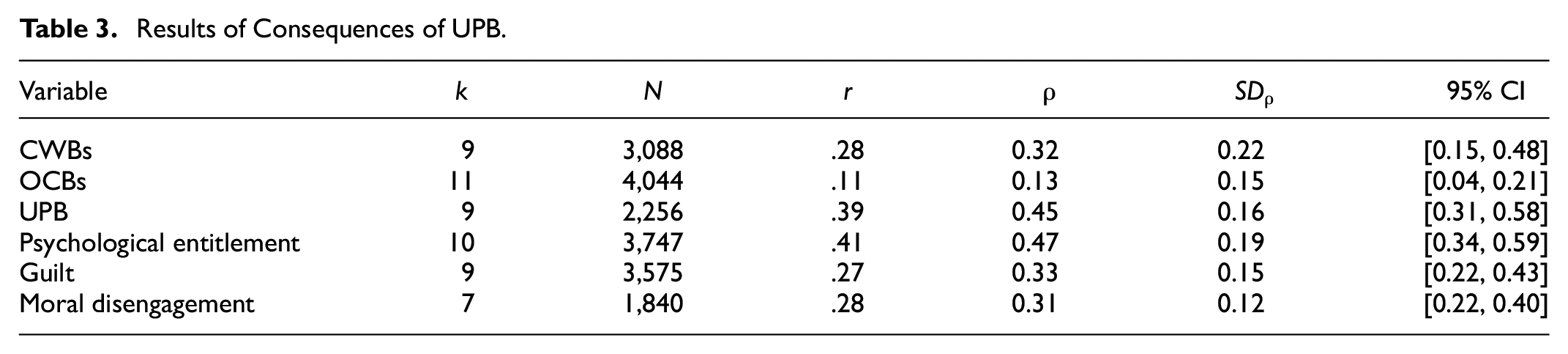
Table 3 also represents the results of the consequences of UPB. Actors’ UPB is significantly related to actors’ CWBs (r = .28,
Results of Consequences of UPB.
Mediator Analyses
To examine the mediating role of actors’ psychological entitlement in the relationship between actors’ UPB and actors’ CWBs, we first built the meta-analytic correlation matrices that are shown in Table 4. Then, we used Mplus7.0 to complete the mediation path analysis. The results of Table 5 indicated that actors’ psychological entitlement positively mediated the link between actors’ UPB and actors’ CWBs (estimate = 0.05, 95% CI [0.04, 0.07]), supporting H2.
Meta-analytic Correlation Matrix for Actors’ CWBs.

Note: PE refers to psychological entitlement.
Results of Mediation Model for Actors’ CWBs.

Note. PE = psychological entitlement.
Similarly, Table 6 is the meta-analytic correlation matrix for actors’ OCBs. And the results, as shown in Table 7, indicated that the mediating effect of actors’ guilt on the relationship between actors’ UPB and actors’ OCBs was 0.07, with a 95% confidence interval [0.06, 0.09] that did not include 0. Therefore, H4 was supported.
Meta-analytic Correlation Matrix for Actors’ OCBs.

Results of Mediation Model for Actors’ OCBs.

Finally, the meta-analytic correlation matrix for observers’ UPB is shown in Table 8. And the results of the mediation model for observers’ UPB from Table 9 suggested that the mediating effect of observers’ moral disengagement on the link between actors’ UPB and observers’ UPB was 0.15, with a 95% confidence interval of [0.13, 0.17], excluding 0. Thus, H6 was supported.
Meta-analytic Correlation Matrix for Observers’ UPB.

Note. MD = moral disengagement.
Results of Mediation Model for Observers’ UPB.

Note. MD = moral disengagement.
Moderator Analyses
We tested whether organizational tenure influenced the effects of actors’ UPB on actors’ and observers’ behaviors, which was coded as “0 to 3 years” or “more than 3 years.” The results of Table 10 suggested that actors’ organizational tenure moderated the relationship between actors’ UPB and actors’ CWBs (QB = 6.19, p < .05), and the coefficient of high organizational tenure was significant (r = .46, 95% CI [0.29, 0.60]), but the coefficient of low organizational tenure was not significant (r = .09, 95% CI [−0.17, 0.33]). However, actors’ organizational tenure did not moderate the link between actors’ UPB and actors’ OCBs (QB = 0.02, p > .05). Similarly, observers’ organizational tenure could not moderate the relationship between observers’ UPB and observers’ UPB (QB = 1.51, p > .05). As such, H7a was supported, while H7b and H7c were not supported.
Results of Moderator Model for Organizational Tenure.

Discussion
In the workplace, individuals may admit to engaging in UPB to avoid damaging the interests of their organizations (M. Chen et al., 2016; Yang et al., 2022). Using meta-analysis, the study constructs a holistic framework to explore the difference between actors and observers in responding to unethical pro-organizational behavior (UPB) with 115 correlations from 53 empirical studies. The results show that actors’ UPB is positively related to actors’ CWBs and OCBs. Actors’ UPB increases actors’ CWBs via actors’ psychological entitlement, and actors’ guilt mediates the relationship between actors’ UPB and actors’ OCBs. Besides, actors’ UPB is positively related to observers’ UPB, and observers’ moral disengagement plays a mediating role in the relationship between them. Observers’ organizational tenure positively moderates the effect of actors’ UPB on actors’ CWBs. Specifically, the effect of actors’ UPB on observers was less positive when observers’ organizational tenure was at a low level.
Theoretical Contributions
The study offers four primary contributions. First, the study develops a holistic framework for the effects of UPB based on the perspectives of actors and observers. Given the power of UPB, previous studies have attempted to identify its attitudinal and behavioral consequences (Tang et al., 2022; Wen et al., 2020). However, these studies are scattered and lack integration and refinement of UPB’s outcomes. This study explores the effects of actors’ OCBs and CWBs, as well as observers’ UPB, which not only enhances a comprehensive understanding of the influences of UPB, but also can provide a theoretical basis for future research.
Second, this study sheds light on the psychological mechanisms by which actors’ UPB indirectly influence actors’ and observers’ behaviors. On the one hand, based on social licensing theory, the element of pro-organization may make actors believe that they benefit the organization and deserve preferential treatment, resulting in psychological entitlement and CWBs (Yam et al., 2017). And the unethical part of UPB will elicit actors’ guilt because of the deficient self-regard, and thus actors are likely to conduct OCBs, according to social cleaning theory (Ramanathan & Williams, 2007). On the other hand, actors’ UPB can also provide moral justification for observers, which leads to observers’ moral disengagement and UPB rooted in social learning theory (Nguyen et al., 2021). In doing so, this study proves that there are differences in the psychological processes between UPB and its outcomes.
Third, this study provides a quantitative review of the literature on UPB’s effects. Considering the dual nature of UPB, prior research has tried to investigate the possible outcomes of UPB (Lee et al., 2019; Nguyen et al., 2021). Unfortunately, an empirical study means that it can only analyze a few variables based on a limited number of samples, which is unable to offer an overall analysis of the effects of UPB. Using meta-analysis, this study examines how actors’ UPB links to actors’ CWBs, actors’ OCBs, and observers’ UPB. The results of the meta-analysis can advance research by empirically assessing the conclusions and discovering some new questions that can be further explored.
Finally, this study reveals the condition of the effect path of actors’ UPB by analyzing the moderating role of organizational tenure. As a quantitative indicator, organizational tenure reflects the length of individual employment in the organization (Zeng et al., 2022), and it may affect individual moral processes. This study examines whether actors’ organizational tenure moderates the effects of actors’ UPB on actors’ CWBs and OCBs, as well as the moderating role of observers’ organizational tenure in the link between actors’ UPB and observers’ UPB. The results of the meta-analysis show that actors’ organizational tenure positively moderates the relationship between actors’ UPB and actors’ CWBs, which can contribute to the UPB and organizational tenure literature.
Practical Implications
Our findings are also useful for managerial practice. First, although UPB can benefit organizations and be associated with OCBs, organizations should not overlook its potential negative impacts that may harm long-term interests. It is essential for organizations to acknowledge the unethical nature of UPB and avoid being confused by its pro-organization characteristics, instead of tolerating or even covertly encouraging such behaviors. In daily management, organizations should take active measures to curb UPB, such as establishing strict ethical standards to prevent UPB for any purpose. Second, organizations should be alert to the effect of UPB on employees’ psychological processes, such as psychological entitlement and moral disengagement. Organizations can help employees develop their moral bravery, moral efficacy, and sense of responsibility by providing ethical training and fostering a positive ethical culture. Third, organizations should pay attention to both UPB actors and observers. Our study reveals that UPB can run rampant through observers’ vicarious learning. Therefore, organizations should enhance employees’ morality and improve their deontological injustice to stop UPB contagion. Finally, managers should take the necessary steps to assist employees with high tenure in realizing that their UPB may ultimately be detrimental to their organization. Managers can deliver such information through case analysis of UPB and moral training, especially for core positions and higher ranks of staff.
Limitations and Directions for Future Research
There are also some limitations. First, we only coded the papers related to UPB written in English, and papers written in other languages were excluded from the meta-analysis process. Different languages may represent different cultural backgrounds that will influence the way people think and act. Only considering literature written in English may weaken the applicability of the results. Future research can include relevant articles written in other languages and explore the effects of cultural differences. In addition, some literature, like case studies, was also excluded according to the requirements of meta-analysis, which may limit the number of samples and ignore other outcomes of UPB. Future research can incorporate qualitative research using other methods to provide a more comprehensive analysis. Second, this study only investigated the moderating role of organizational tenure and did not analyze other possible boundary conditions. Indeed, individuals with different personalities may have different attitudes toward UPB, which may also influence the link between UPB and its consequences. Future research can explore other potential moderating variables at the individual level.
Footnotes
Acknowledgements
No.
Declaration of Conflicting Interests
The author(s) declared no potential conflicts of interest with respect to the research, authorship, and/or publication of this article.
Funding
The author(s) received no financial support for the research, authorship, and/or publication of this article.
Ethics Statement
A meta-analysis method was used in this study, and data were obtained from published papers.

Data Availability Statement
The data that supports the findings of this study is available from the corresponding author.